
.svg)




Helping a startup design video games to build kids’ emotional strength
A one-month sprint to develop new products—and a new way of working.
For 6-year-old Dave Jr., a long line at Disneyland triggered a massive meltdown. His parents were concerned and a little embarrassed, but not surprised; Dave Jr. struggled to keep his emotions in check.
Hoping to help, Dave Jr.'s uncle, entrepreneur Craig Lund, joined forces with researchers at Harvard Medical School and Boston Children’s Hospital, along with a video game designer who had worked on Quick Hit and NBA 2K. Together, they set out to design something that could teach coping skills to kids like Dave Jr. who need to manage “big emotions,” as well as children suffering from anxiety, ADHD, and other behavior issues, which are on the rise.
Their collaboration resulted in a video game called Mightier and a startup called Neuromotion Labs—a 10-person team of psychologists, game designers, and engineers who embedded at IDEO Cambridge for a one-month sprint to improve the game and get ready for launch.
To play Neuromotion's game, kids are first taught simple, calming breathing exercises. During gameplay, kids wear heart-rate monitors on a wrist or arm that detect spikes caused by stress or anger; as their heart rates go up, the game's difficulty increases. Kids have opportunities to pause and try deep breathing to counter the ramped up challenge. As it turns out, "gamifying" restraint builds strong incentives for kids to take charge of their emotions—they have to if they want to win.
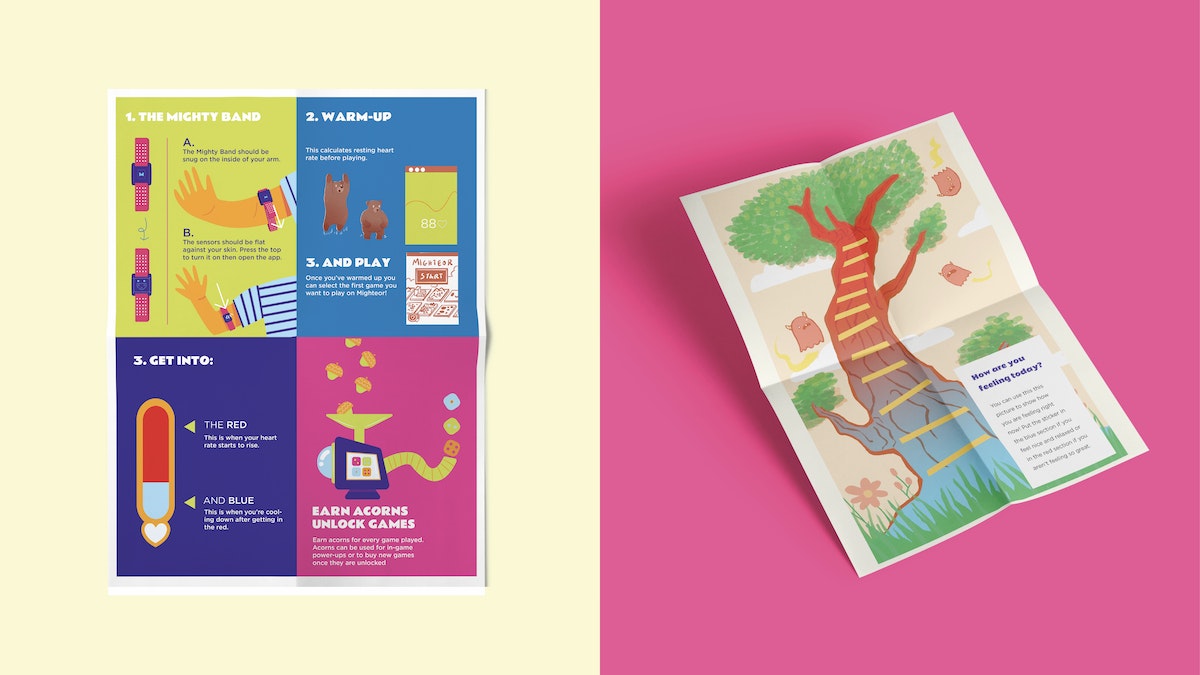
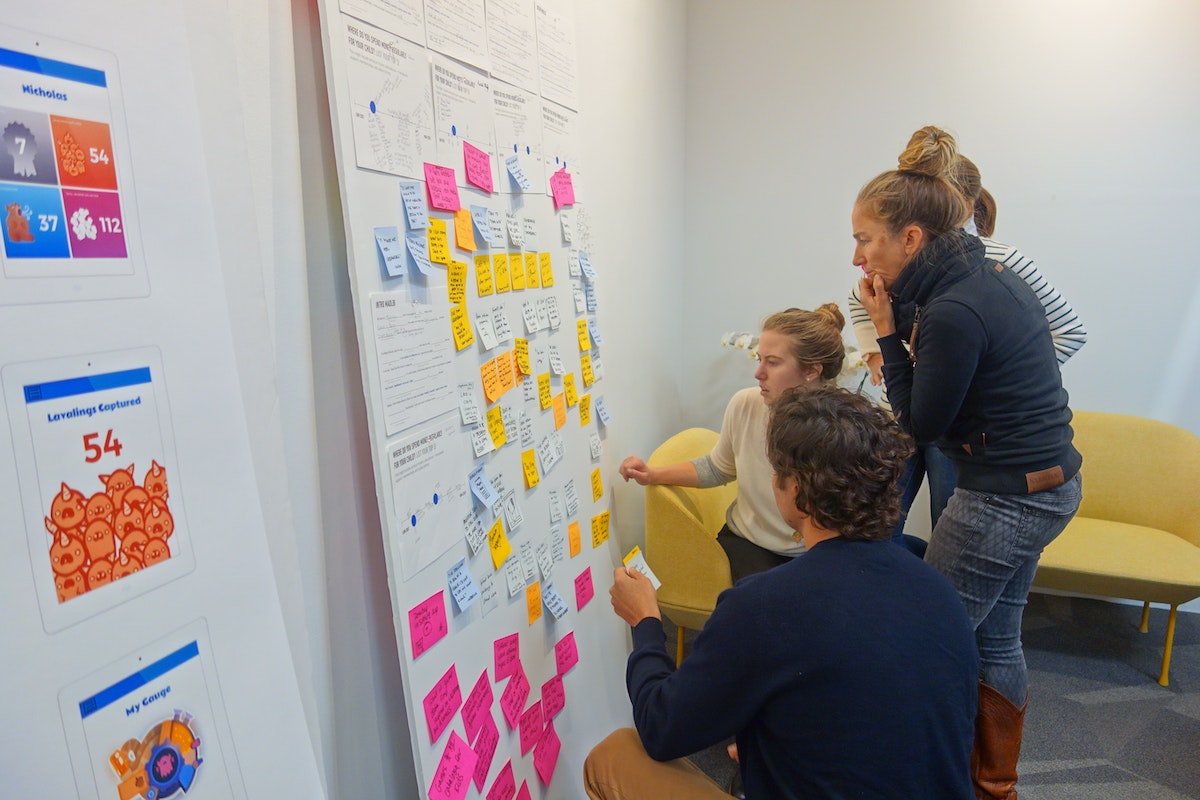
Already activated around boosting mental and emotional health, IDEO's design team worked side-by-side with Neuromotion to study how parents and children experience Mightier. From home visits to group interviews to a summer camp-style design session with kid players, live feedback fueled the next iteration of the gaming platform and better product-market fit.
IDEO helped Neuromotion hone the visual design and mechanics of Mightier and expand it's suite of games. The team observed that the Mightier program was more successful the more involved parents of players became, which revealed a need for additional resources for adults. So they created new supports, including a more detailed orientation and a personalized coaching service for parents staffed by trained therapists.
But can a video game actually help kids cope? Early peer-reviewed studies showed that playing Mightier reduced outbursts by 62 percent, oppositional behaviors by 40 percent, and parental stress by 19 percent. After 12 weeks of using Mightier, a survey of kids and parents showed that 96 percent of parents saw positive behavior changes in their children, while 92 percent of kids learned new coping skills.
Shortly after the design sprint, Neuromotion secured its next round of funding and officially launched Mightier’s array of “bioresponsive games.” The games have already been played more than a million times, and Neuromotion has measured more than a 100 million heartbeats. Mightier games are helping kids and families across the country.
What about Dave Jr.? Recently, his sister told Lund she "accidentally" bumped Dave Jr.’s bike off a pier and into the ocean. She was expecting an outburst of anger, but after eight months of playing Mightier, Dave Jr. stayed cool. His uncle couldn’t be prouder.
Designing waste out of the food system
IDEO partnered with hotels, food banks, foundations, and entrepreneurs to combat food waste.
Many of us have let vegetables wither in the crisper drawer, or thrown out a child’s half-eaten restaurant meal, but the sheer scale of food waste around the globe is hard to grasp. According to the United Nations, about a third of the food the world produces every year—1.3 billion tons—is lost during production or tossed by consumers, with North Americans throwing out the most food per capita. The average American wastes enough food each month to feed another person for 19 days.
IDEO received a series of grants from The Rockefeller Foundation to find solutions, given the power of IDEO’s human-centered design approach to address systemic challenges. Through a number of projects with The Rockefeller Foundation and other organizations, IDEO designers from across the U.S. devised novel ways to tackle food waste.
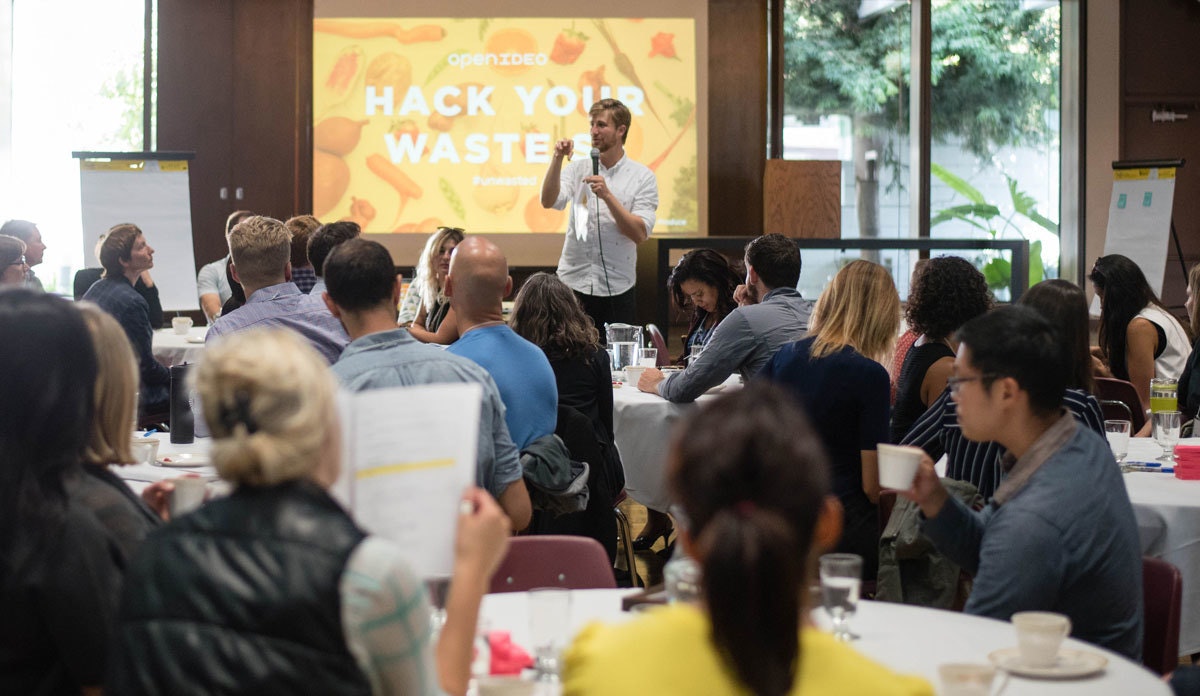
For IDEO’s first initiative, designers tapped into the enthusiasm of the broader creative community, in partnership with The Rockefeller Foundation, the City of San Francisco’s Department of Environment, the Closed Loop Foundation, ReFED, and other groups. In the summer of 2016, OpenIDEO—IDEO’s open innovation practice—launched the Food Waste Challenge, asking how people might curtail waste by rethinking our relationship with food. Between June and October, more than 20,000 people from 113 countries took part in the challenge, tracking their personal waste and brainstorming solutions.

Challenge participants submitted more than 450 ideas. A team of food industry experts helped select the 12 top proposals, which included software to help people buy food collectively from wholesalers and a service that delivers extra meals from corporate events to those in need. Ultimately, the Closed Loop Foundation chose to award Full Cycle Bioplastics a $50,000 grant to scale up its idea to convert inedible food and paper waste into a fully compostable alternative to oil-based plastic.
At the conclusion of the Food Waste Challenge, OpenIDEO launched the Food Waste Alliance, a platform for participants and experts to stay engaged with the most promising ideas and innovators. The alliance helped entrepreneurs share resources, prototype new concepts, secure funding, hire staff, and form partnerships. OpenIDEO invited hundreds to join the alliance, and 92 percent of members told IDEO they made progress in their work as a result. One member company, RISE, received funding from another participant who discovered RISE through the alliance. This investment let RISE prototype its concept for milling spent grain from beer brewing into flour for baked goods and ultimately join the prestigious Food-X accelerator.
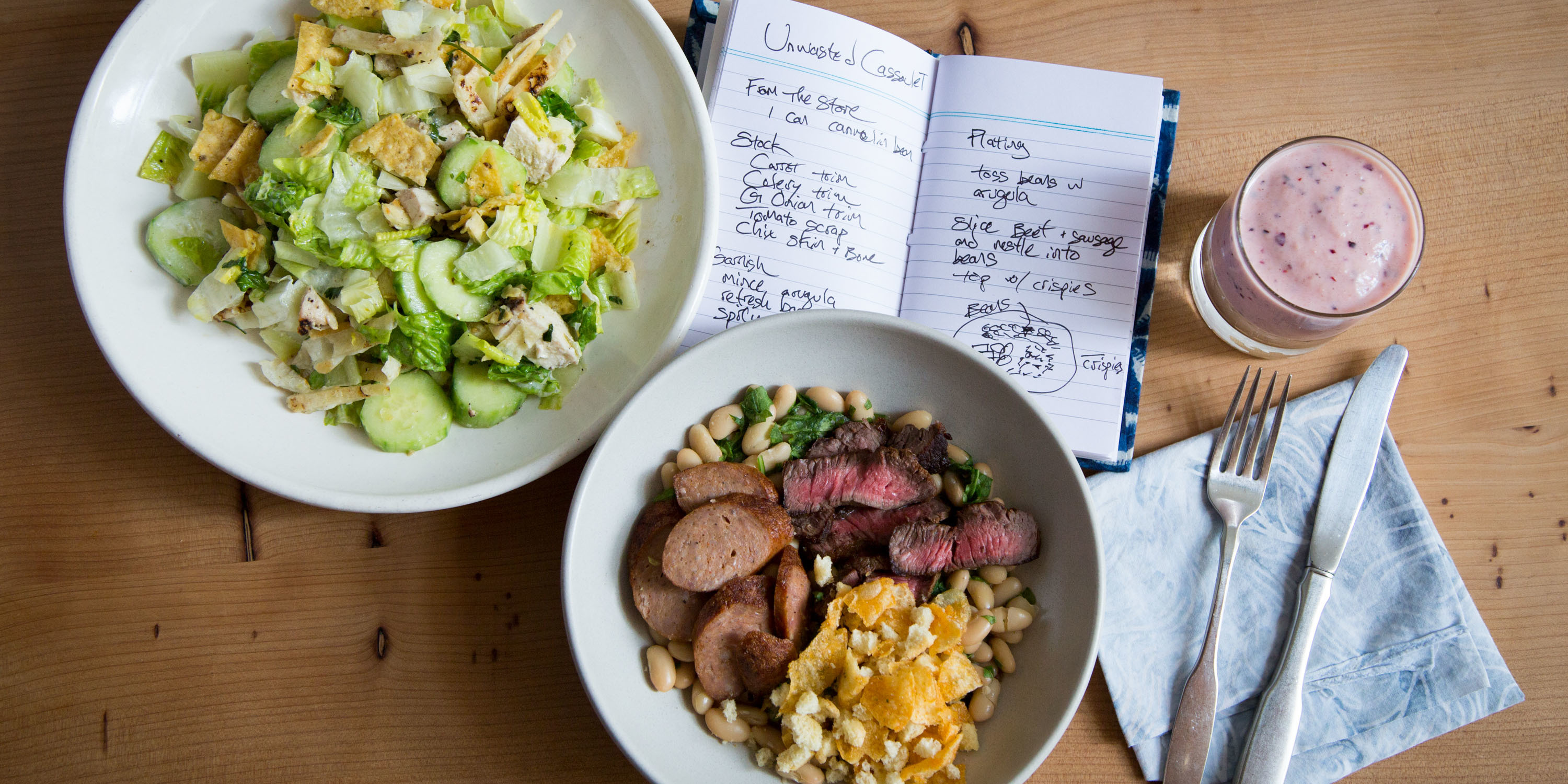
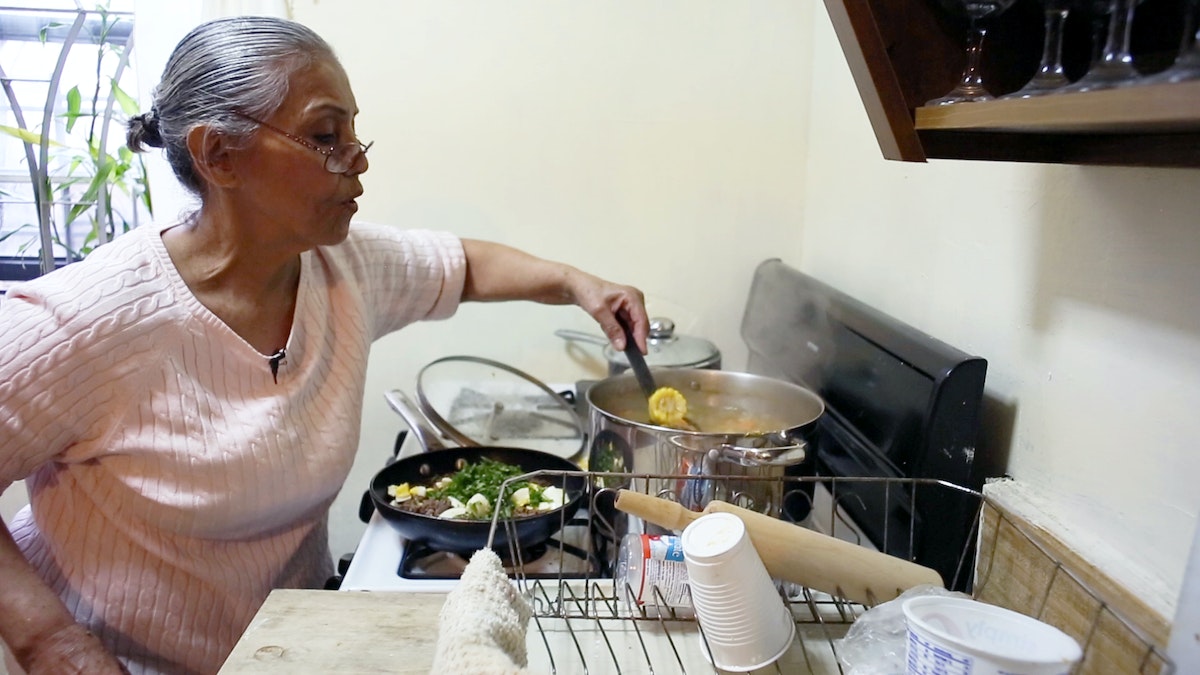
The Rockefeller Foundation also supported IDEO’s work with City Harvest, a New York organization that collects 160,000 pounds of unused food each day and delivers it to soup kitchens and food pantries. City Harvest wanted to understand the habits of local families who visit food banks in an effort to ensure all the food the group distributes gets eaten. To get a peek into these families’ kitchens, in January 2017, IDEO researchers conducted observations and interviews across New York City’s five boroughs. Pantry customers cooked for the researchers, giving them an inside look at how the families engaged with the food they had available and what food meant to each of them: tradition, stability, even adventure. Based on insights from pantry visitors, IDEO made recommendations for City Harvest, including community-run cooking classes and a way for families to request specific foods or reserve pick-up times by text message. IDEO also created three video vignettes to help build even greater empathy between City Harvest and the people it serves.
In spring 2017, capping IDEO’s work with The Rockefeller Foundation, the organizations teamed up with World Wildlife Fund and Hyatt hotels in Florida, New York, and New Jersey to rethink all-you-can-eat buffets. IDEO studied diners and staff at Hyatt buffets and found that employees—from event planners to kitchen staff—each add a cushion of extra food to cover their bases, while guests overfill their plates to avoid missing out. In the end, diners eat just half the food organizers serve, while the rest goes to waste. This and other data-driven insights gleaned about diners’ habits led to subtle substitutions, including smaller plates of meats and cheeses that can be ordered from servers and individual pastries rather than whole cakes. These alternatives have not only built on Hyatt’s existing food waste management strategies, but have also helped reduce buffet costs at Hyatt Regency Orlando and continued to receive support from guests.
The problem of food waste is too enormous to ignore. Wasted food means squandered resources, lost money, and ultimately, hungry people—more than 15 million in the United States alone. Designers and innovators from coast to coast have helped find solutions to the crisis that fulfill a variety of needs, from preserving produce sent to food pantries to keeping plastic packaging out of the oceans. The Rockefeller Foundation and other IDEO partners are leveraging powerful design techniques to pave the way for a waste-free future.
Launching a bootcamp for data scientists
Designing a rigorous program that prepares students for a career in the data-driven economy.
In 2017, IDEO acquired longtime partner Datascope and integrated the company’s data scientists and engineers. Datascope team members aren’t just passionate data scientists; they’re human-centered designers who happen to work with data, as illustrated by successful collaborations like this one:
In today’s job market, there’s no such thing as being "done" with your education. This is particularly true in the fields of data science, machine learning, and AI, where significant advances are made on a monthly basis. To meet this need for more in-depth training, Metis—part of Kaplan—wanted to create a comprehensive data science program for students from all backgrounds. Metis asked Datascope to design the curriculum from scratch, drawing on the company’s deep expertise in the field.
Datascope spoke with practitioners across industries to identify the key skill sets that make them successful: a grasp of design; fluency with data management, coding, and algorithms; and effective communication with coworkers and the wider world. The team crafted a 12-week bootcamp that develops these specific abilities.
In order to prepare students for the work world, the bootcamp is structured less like a class and more like a company, where students are “hired” as data scientists—with projects to complete—starting on day one.
Students collaborate on group projects and presentations in a way that mirrors real workflows, and practice pair programming to learn from one another. Using techniques drawn from design, students are invited to refine their project briefs and continually reevaluate their approach.
Instead of a final exam, at the end of the course, students tackle five real-world, open-ended data science projects inspired by Datascope’s client work. One project involves using data from subway turnstiles to detect patterns in the volume of street traffic; another asks students to use data they scrape from the web to predict a movie’s box office profits using regression analysis.
After students complete the bootcamp, they receive an additional three months of career support, from mock interviews to site visits with potential employers. In addition to designing the curriculum, Datascope taught the first three student cohorts and helped Metis build its teaching team as it expanded the program from New York to San Francisco, Chicago, and Seattle. Metis now offers online courses, evening classes, and corporate trainings in data science.
If you’re going to take a data science bootcamp, it’s best to take one designed by data scientists.

Designing the Levi’s Commuter Trucker Jacket with Jacquard by Google
When Google teamed up with Levi’s to craft a jacket with technology woven in, the company turned to IDEO to help make the experience of wearing the garment feel seamless, intuitive, and familiar.
You’re whizzing along on your bike, en route to a new restaurant for a client meeting. You reach an unfamiliar intersection; which way to go now?
Instead of dismounting and digging for a phone, you brush your hand along your jacket sleeve for directions, then double-tap the denim to re-start your music. Without taking your eyes off the road, you’ve taken care of the problem.
This intuitive interface for connected apparel began with Levi's, makers of durable workwear for 140 years, and Google, creators of forward-looking technology, which joined forces to fashion the first item of clothing with touch-sensitive, copper-core threads woven directly into the fabric. Once it was established that the first connected garment from the partnership would be a jacket within Levi’s Commuter line, with interaction on the sleeve, Google worked with IDEO, leaders in designing for human needs, to develop the gesture language of the jacket and industrial design of the technology within.
This is the first connected garment that helps us break free from devices. It seamlessly incorporates Jacquard by Google technology to perform digital tasks, such as navigation, communication, and music playing with a few swipes or taps on the sleeve.
Jacquard by Google—a platform that makes it possible to integrate touch and gesture interactivity into fabrics using conductive yarn and standard, industrial looms—was inspired by a curious twist of history. The Jacquard loom, invented in France in 1804, used punch cards to automate the process of weaving complex patterns into fabric. In the 1940s and ’50s, engineers employed a similar punch-card technique to program the first computers.
IDEO spent time on the project early on, collaborating with Google engineers and Levi’s clothiers on the jacket’s development, helping craft an experience that would make the intelligent threads intuitive to wearers.
Working alongside Google and Levi’s, IDEO’s work included:
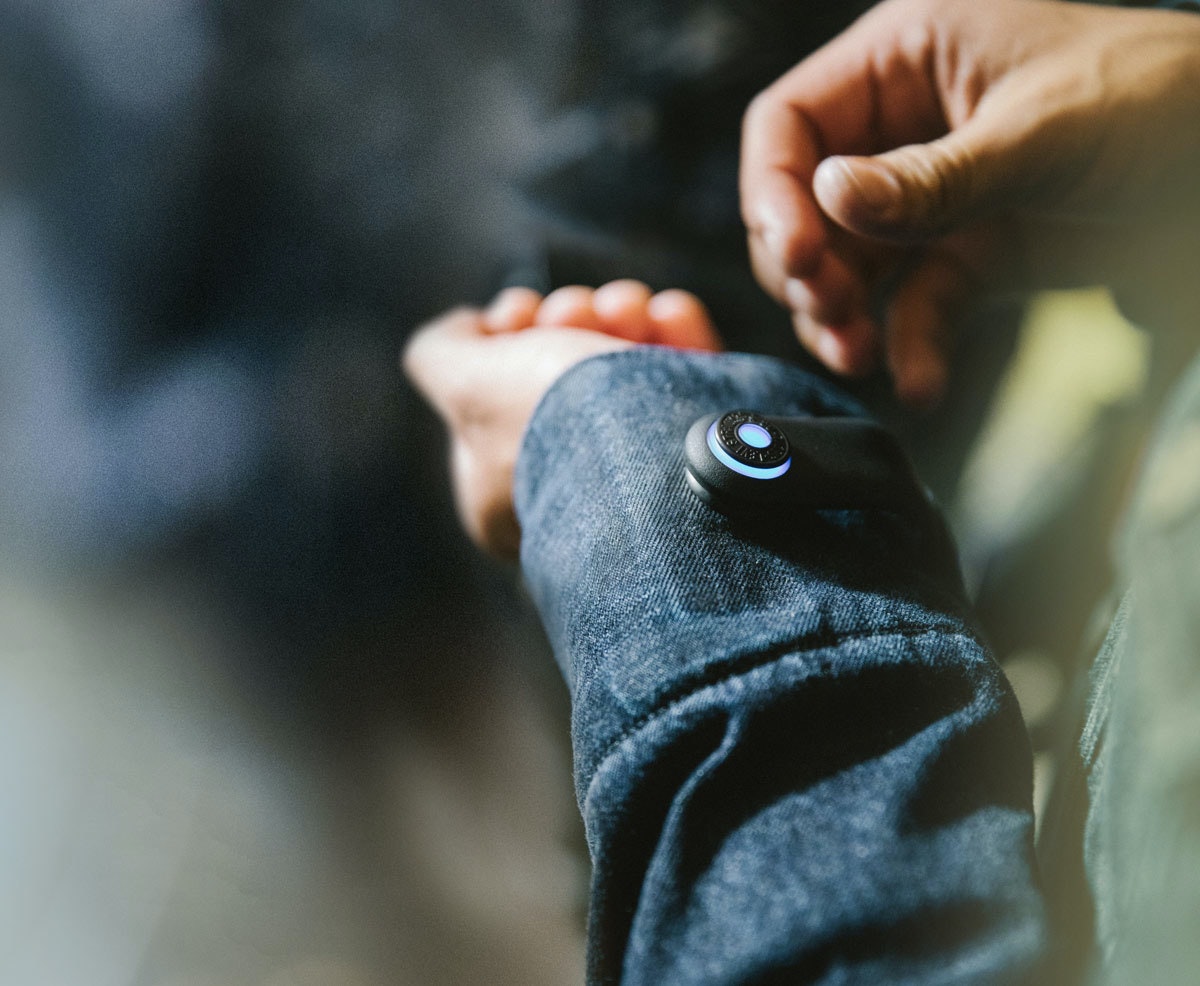
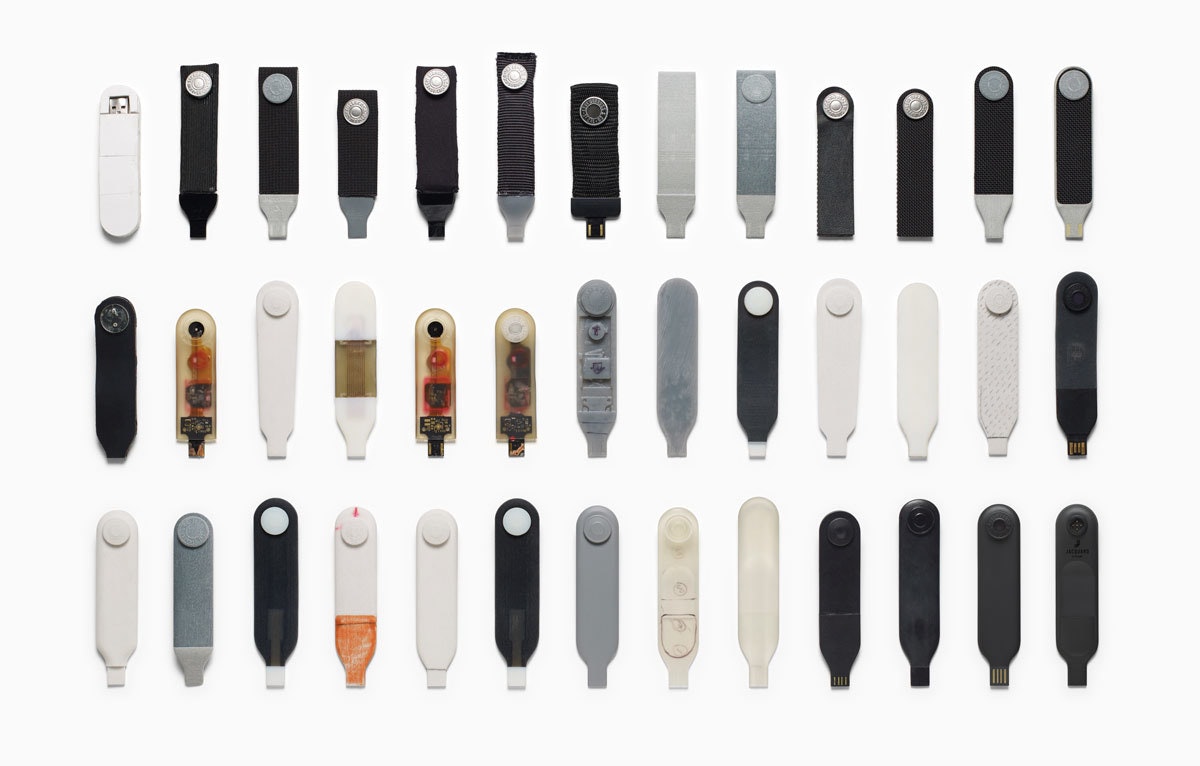
- The industrial design of the electronics integrated into the snap tag and connector (the tag snaps onto the jacket’s cuff and connects to your phone via Bluetooth)
- A vocabulary of gestures on the cuff of the jacket that lets you interact with the jacket’s technology
- Early exploration of the basic design philosophy and conceptual design for the interaction model of a corresponding smartphone app that ties it all together (works with both iOS and Android phones)

The IDEO team’s first task was to validate what commuters of all stripes wanted from the garment, in addition to the work Levi’s did in researching with its consumers. In interviews, group exercises, and wear tests with urban cyclists and other workers on the go, the team learned that cyclists needed a way to stay connected, while still living in the moment. That meant being able to answer calls, hear text messages, get the next direction, and control their music without using a screen.
Levi’s, Google, and IDEO developed a language of movement for Jacquard-enabled fabric that feels familiar and human and builds on the ways people would naturally interact with a garment (a whole-hand brush along the sleeve, as opposed to a one-finger tap on a touch screen, for instance).
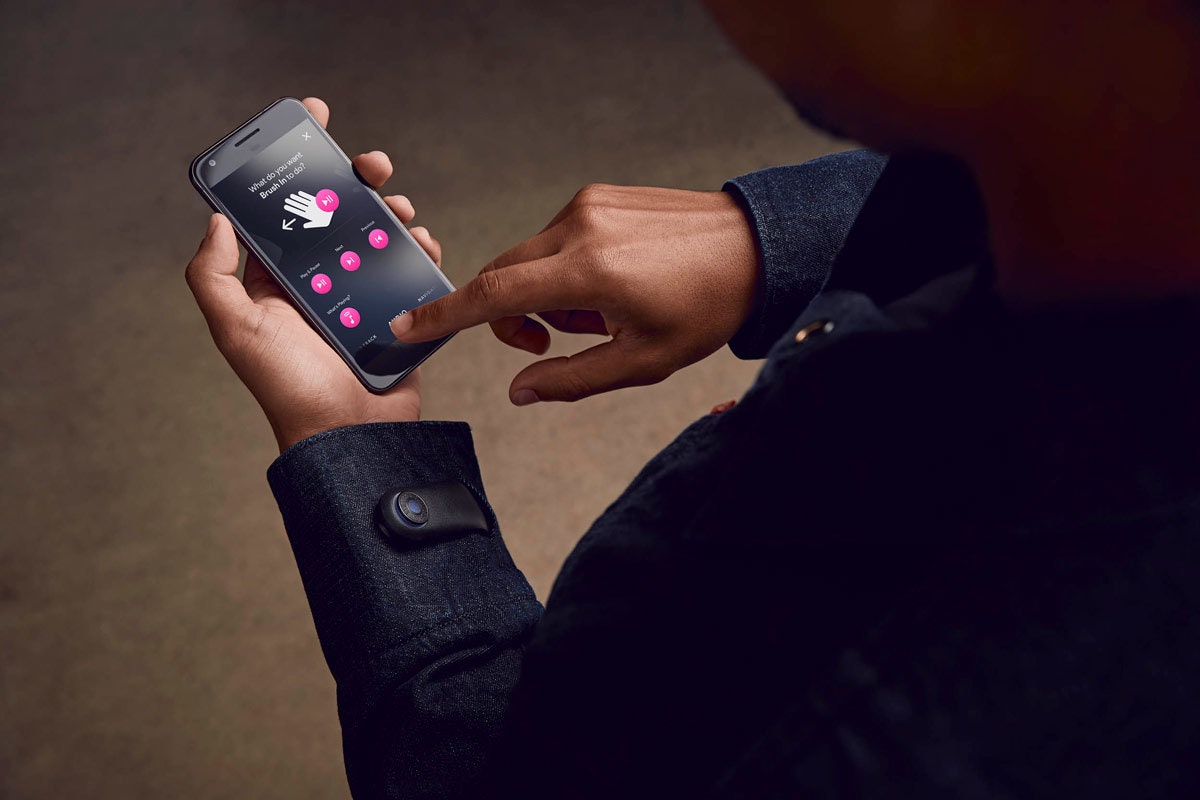
Then came the design and engineering of the snap tag on the jacket’s cuff, which gently notifies you of calls, texts, and other jacket interactions with light and vibration feedback. The flexible, lightweight strap incorporates the look and feel of a Levi’s jean button, while housing advanced electronics that capture touch data. The tag is removable, charges via USB connection, and works in conjunction with a mobile app that lets you configure settings for the garment, set notifications, and customize gestures and interactions.
The Levi’s Commuter Jacket with Jacquard by Google changes the game because it’s simply that—a jacket—with technology that adds new utility and value, allowing us to wear our everyday interactions on our sleeves.
The Levi’s Commuter Trucker Jacket with Jacquard by Google hit stores in October 2017.
IDEO and Google have a long history of collaboration. Learn more about our work on Google Bloks here.
How We Designed a Studio Space That Reflects Our Values
At IDEO, our values are the guideposts for everything that we do. And that commitment extends to our office spaces.
As with any design challenge, we started by breaking the big question—what matters to us—into smaller questions. How could we bring the intimacy of our much smaller former office into this new space? How can we use our studio to bring diverse groups together, both within our office and in the broader community? And how do we celebrate our commitment to collaboration and making?
We created a list of priorities, and, together with our architects Feilden Fowles, found ways for our studio to reflect our values and support our work. Here’s a glimpse into what we focused on, and how it affected our design.
1. Focus on storytelling
The goal of the overall design was to create a natural flow through the new space that works as a design narrative, explaining how IDEO works and what it cares about—from that first view of the maker space to social gathering areas to projects and meeting rooms. The design is also open enough that it’s easy even for visitors to navigate without signs or a map.
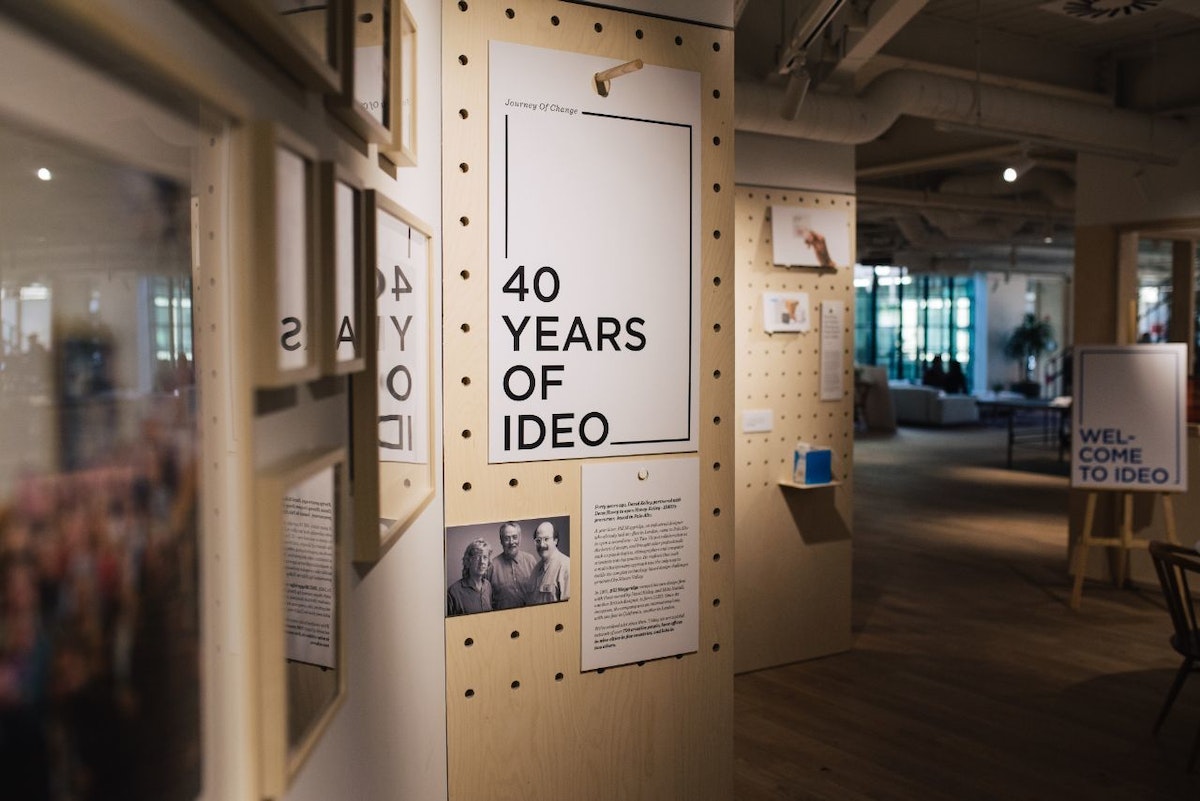
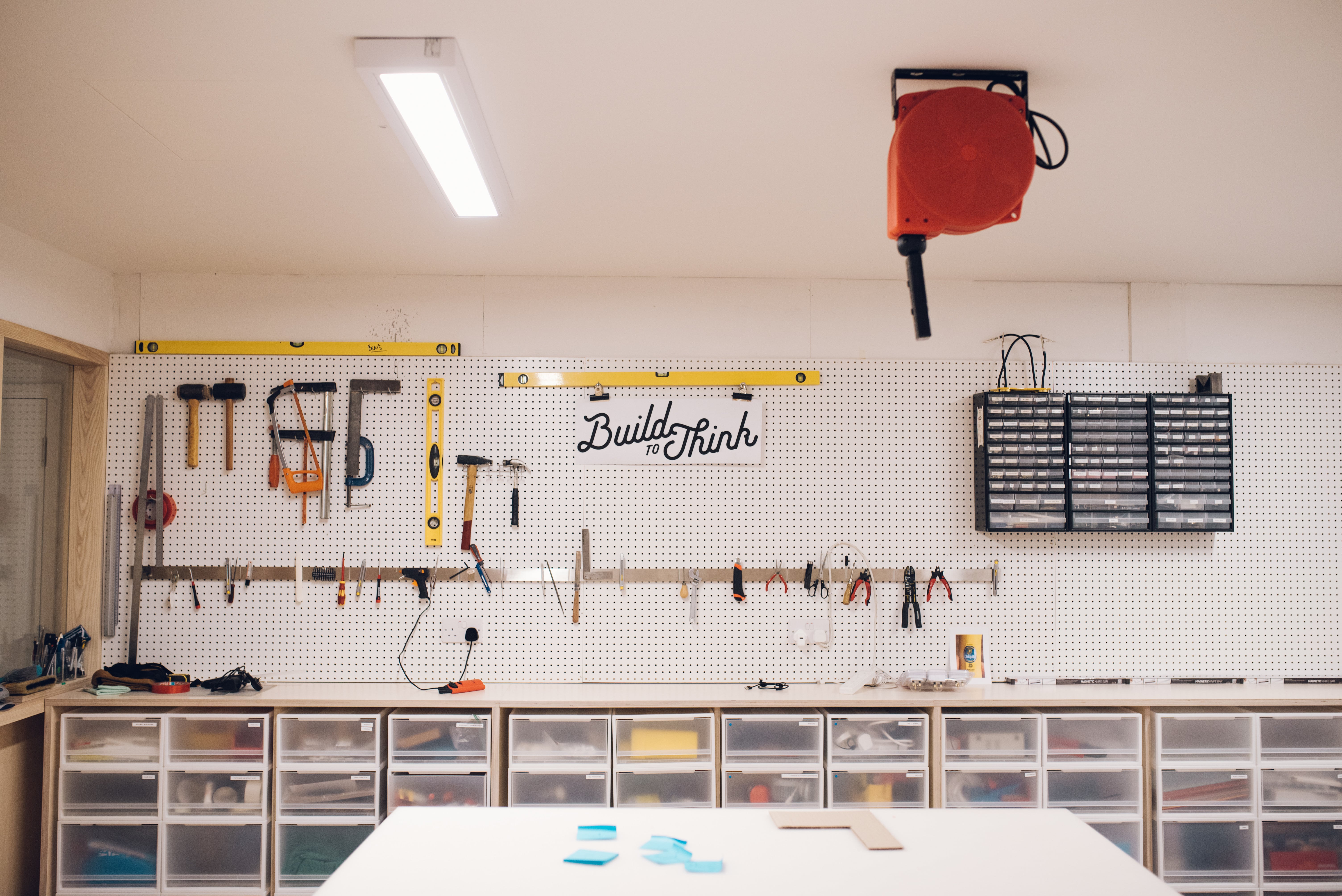
“We wanted to showcase IDEO’s creative innovation on immediate arrival,” architect Fergus Feilden says. To that end, when visitors and employees walk in the door, they see a presentation wall with display niches that showcase the London studio’s work, as well as small meeting booths outfitted with pegboards for additional exhibitions. “We also brought forward the workshop into this area, and designed it to be as open as possible in order to immediately celebrate the making that takes place at the heart of IDEO’s design process,” he says.
2. Prioritize collaboration
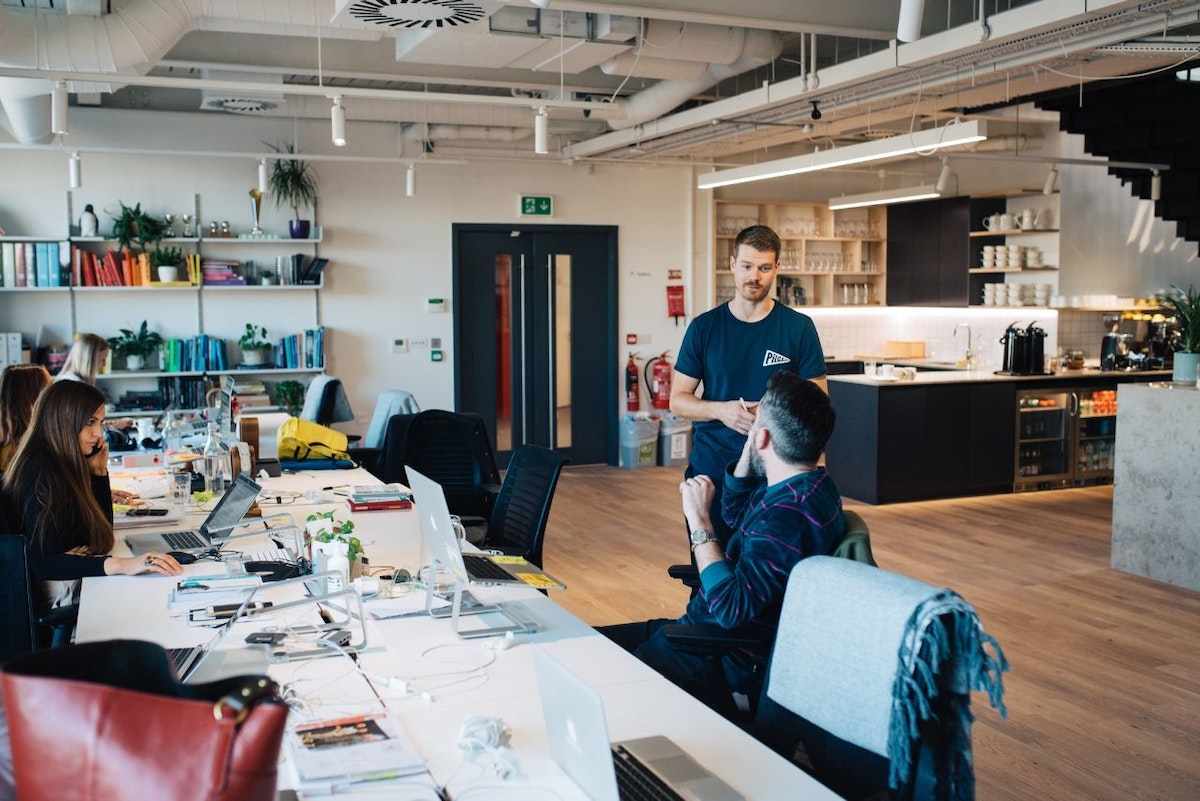
Because our work is built on collaboration, it’s very important to us to provide teams with dedicated spaces they can make their own. We wanted these spaces to be open, flexible and inviting, and we purposely limited enclosed area to only those that are strictly necessary. Our work often entails not only helping to create a new product or venture, but building a team around it, so the spaces are meant to facilitate collaboration. “The layouts are fundamentally social, and even the divided rooms have glazed walls or windows to introduce natural light and maintain the ethos of transparency throughout,” Fergus says.
At the same time, because we often work on confidential client work, it’s important to be able to keep some projects private, so these spaces have been designed so that they can be closed off if necessary. Aside from the designated team spaces, there are also several break-out areas with soft furnishings or working tables for group meetings or individual workspace.
3. Talk less, do more
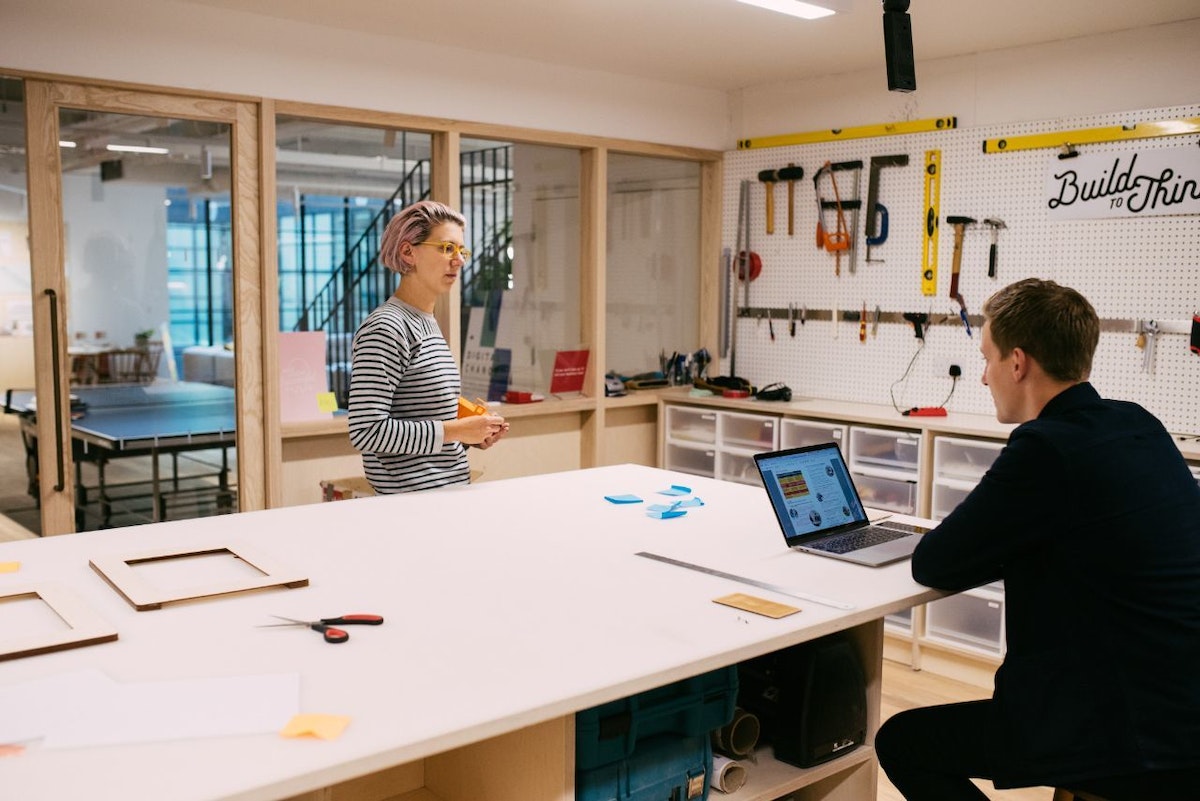
We wanted to make the workshop as accessible as any of the social spaces so that there are no barriers to making ideas tangible early. The idea is that you can walk directly from a meeting into the workshop and start building. It was designed to be neutral and understated—the life and color come over time from the projects and prototypes are teams are working on.
We’ve also limited meeting rooms to only two. When clients and partners come into our office, we don’t want them only to see the inside of a conference room. We want our teams to bring them into their work spaces instead. We also saw that many meeting rooms were actually mostly used for video calls with one or two people, so we put in phone booths that can fit up to four instead.
4. Embrace ambiguity
We know as well as anyone that a design that seems ideal today might not support the work we take on down the road. “A key part of the original brief was to allow a ‘loose-fit’ transition into the new space, and to provide a backdrop to IDEO’s creative process—not an over-designed space, and one that doesn’t shout,” Fergus says.
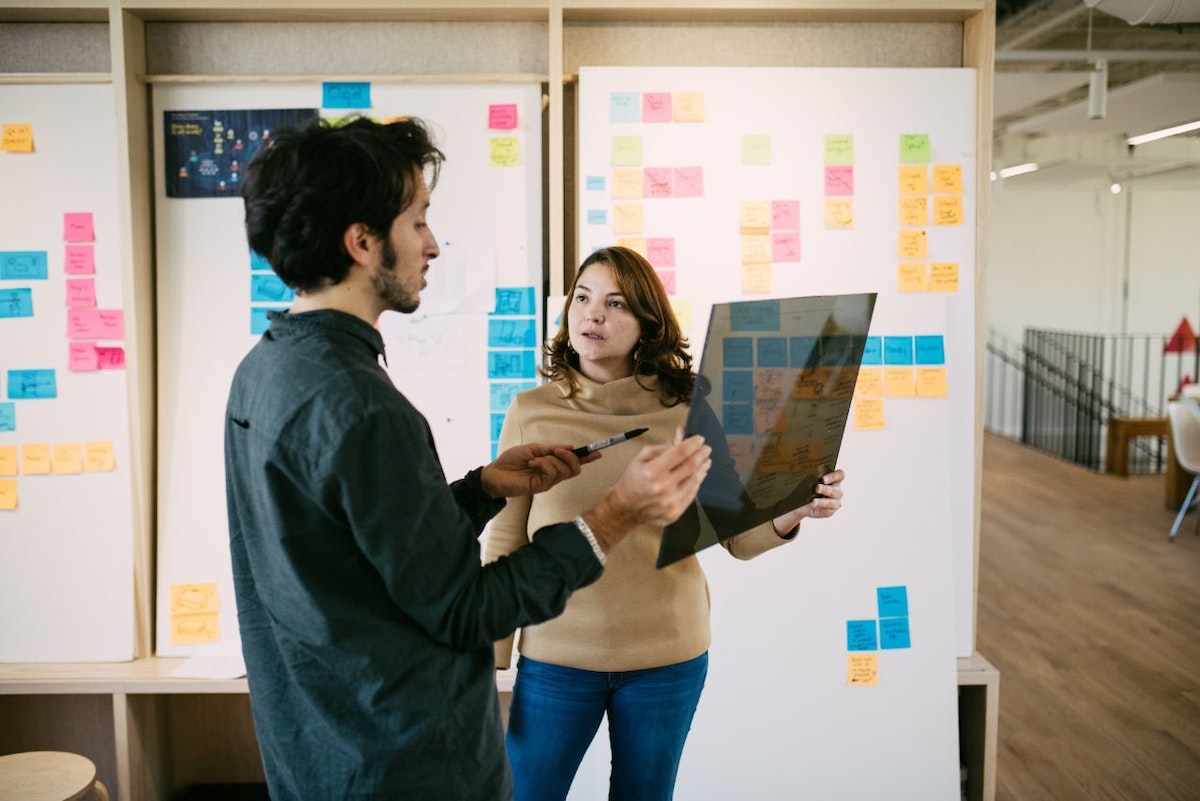
By keeping open space, making designed work areas extremely flexible, and making sure to maintain social spaces for everything from events to client dinners to casual coffee with coworkers, we’re keeping the doors open for all kinds of projects and functions. “In theory the whole studio is flexible to host different sorts of working including the coffee bar, dining and terrace spaces as well,” Fergus says.
Above all, though we wanted to create a space that our community could bring to life—the teams in our studio, the clients we work with, and members of our greater community. We’re a company founded on the idea of working with friends, and this space was built to enable that philosophy.
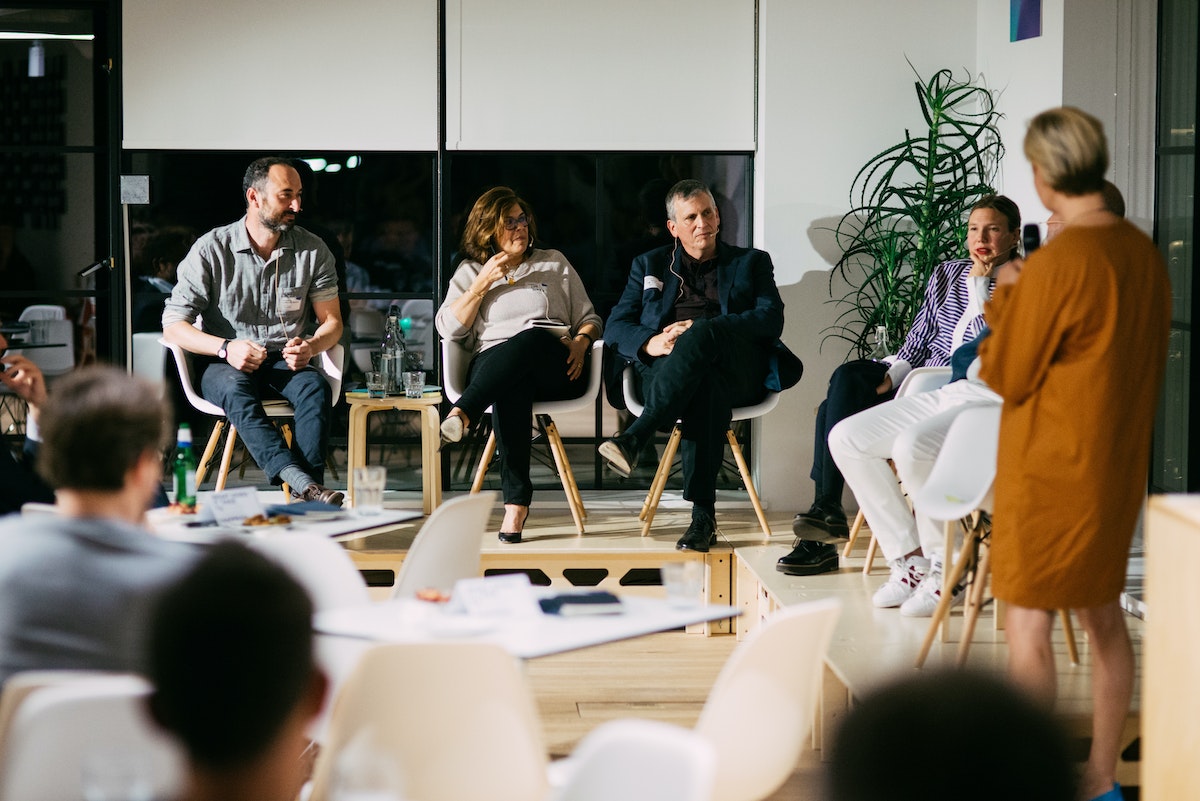
At IDEO, our values are the guideposts for everything that we do. And that commitment extends to our office spaces. As our London studio looked to create its new home, we envisioned an environment that embodies design and innovation, serves as a hub to welcome clients and visitors, and sets a tone for our employees to do their best work. And, as designers who work on projects that help shape the future, we also wanted to be sure that the design would be flexible enough to fit our needs and work for years to come.
Build Your Creative Confidence: Empathy Maps
A fundamental principle of innovation or creative thinking is to start with empathy. On the path from blank page to insight, sometimes people need a tool to help with what comes next: synthesis.
Creativity Challenge # 4: Lessons from observing human behavior
A fundamental principle of innovation or creative thinking is to start with empathy. On the path from blank page to insight, sometimes people need a tool to help with what comes next: synthesis. You’ve gone into the field in search of knowledge, meeting people on their home turf, watching and listening intently. But synthesizing all that data can be a little daunting.
Take control of your field observations by organizing them with an “empathy map”—a tool inspired by IDEO and further developed at the Stanford d.school.
Tool: Empathy Maps
Participants: Solo or groups of 2-8 people
Time: 30 to 90 minutes
Supplies: Whiteboard or large flipchart, Post-its, and Sharpies
Instructions
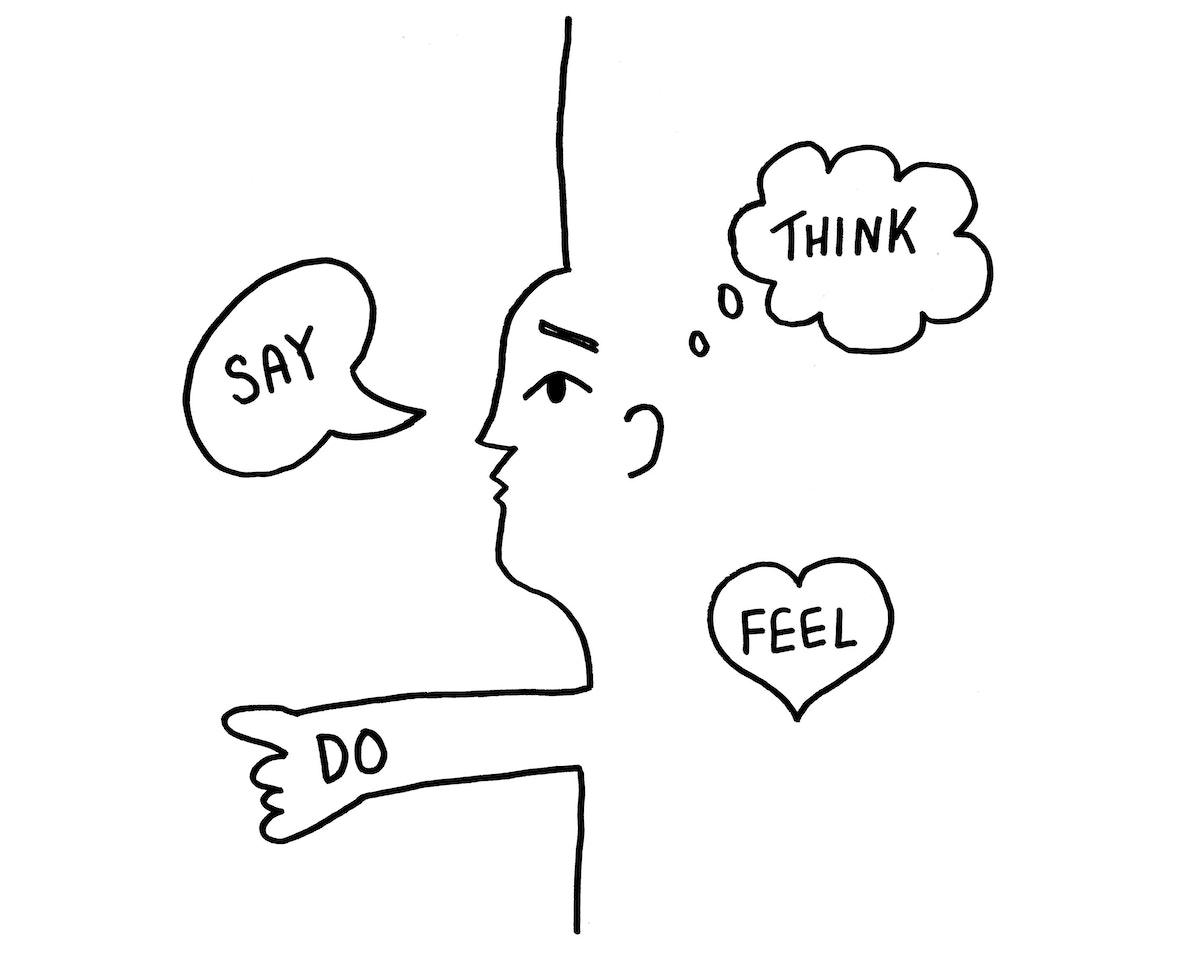
Step 1: On a whiteboard or a large flipchart, draw a 4-quadrant map. Label the sections with “say,” “do,” “think,” and “feel,” respectively.
Step 2: Populate the left-hand quadrants with Post-its that capture each of your individual observations—using one Post-it per idea. Place observations of what people do in the lower-left quadrant, and place observations of what people say in the upper-left quadrant. Try color-coding positive things with green Post-its, yellow Post-its for neutral, and pink/red for frustrations, confusion, or pain points. The key is not to record everything, but instead to capture what stands out.
Step 3: When you run out of observations (or room) on the left side, begin to fill the right side with Post-its, inferring what people think in the upper-right quadrant and what they feel in the lower-right quadrant. Pay attention to people’s body language, tone, and choice of words.
Step 4: Take a step back and look at the map as a whole. Try to draw some insights or conclusions from you have just written down, shared, and talked about. These questions serve as a good prompt for a discussion of insights. What seems new or surprising? Are there contradictions or disconnects within or between quadrants? What unexpected patterns appear? What, if any, latent human needs emerge?
Tips from the Field
The key to extracting value from observing human behavior is to come away with real insights. This can be challenging, but the exercise is worth the time and effort. As you build up confidence, ask yourself, “Is this a real insight?” Our advice is to look for takeaways that help you see your topic or subject from a new perspective. Try to come up with several that feel novel. As you spend more time with others exploring your topic or subject, patterns will emerge. Some insights will prove to be more pivotal than others.
This post was taken from Chapter 7 of Creative Confidence. Purchase the book for more on how to use creativity to solve problems.
Everyone is creative. This belief runs through everything we do at IDEO, and in 2013, it led my brother David and me to write a book that would help others—even those who don’t think of themselves as “creative types”—to unleash their creative potential. Creative Confidence has inspired thousands of people to adopt a creative mindset and apply it to the diverse real-world challenges they face. In this series, we’ll share some exercises from the book that can help you approach your challenges from a new perspective.

Thoughtless Acts: Going With Gravity
Thoughtless Acts: Going With Gravity. The intuitive ways we adapt and react to things in our environments

It’s yet another summer at our seaside house, and my nonna is heading to the gardens to pick up some herbs for her pesce al forno. She says that freshly picked lemongrass adds a completely new flavor to her signature dish.
At 12 p.m., she walks down the rocky stairs and heads to the herb bush she carefully planted 33 years ago, the same year she bought the villa and restored it to host our ever growing family tree. As I watch her, I witness something unusual that I have never seen her doing before.
She is literally hanging from the muretto, or wall. Nonna is 94 and not really a geriatric athlete, so I run towards her. “Tutto bene, Luca!” she says as she bends back up. She tells me that this is ‘her new way’ of picking herbs in the garden.
With age, small actions become a big effort, so leaning down or bending started to become an obstacle to her recipes. The dwarf wall serves the purpose of protecting her back from injuries and keeping her from falling. As she nicely puts it, “I use gravity to my advantage. At my age, you have to find ways around things, to keep feeding your family the way they deserve.”
Human-centered design requires us to observe human behavior with beginner's eyes, so that we can spot the innate ways people interact with the world around them. We call these intuitive and unconscious reactions Thoughtless Acts, and IDEO designers collect photos of them to inspire their work.
A Designer’s Daily Diary of Learning to Draw in VR
Practice may not always make perfection, but it definitely builds proficiency, as this new IDEOer discovered.
Drawing in VR is a whole new world—one that feels as challenging and daunting as drawing once felt. Luckily, having progressed through hard work in one artistic field, I now trust that the same steady pursuit can get me to a new level in VR.
I recently joined IDEO’s New York office, and part of my job is to keep current on emerging technologies. So I took advantage of our studio’s newly-mounted VR station and spent a week drawing in Tilt Brush, Google’s 3D painting VR app. Together with IDEO’s creative technologist, known as Fuzzy Wobble, I came up with a goal: to draw a 3D portrait of IDEO’s David Kelley.
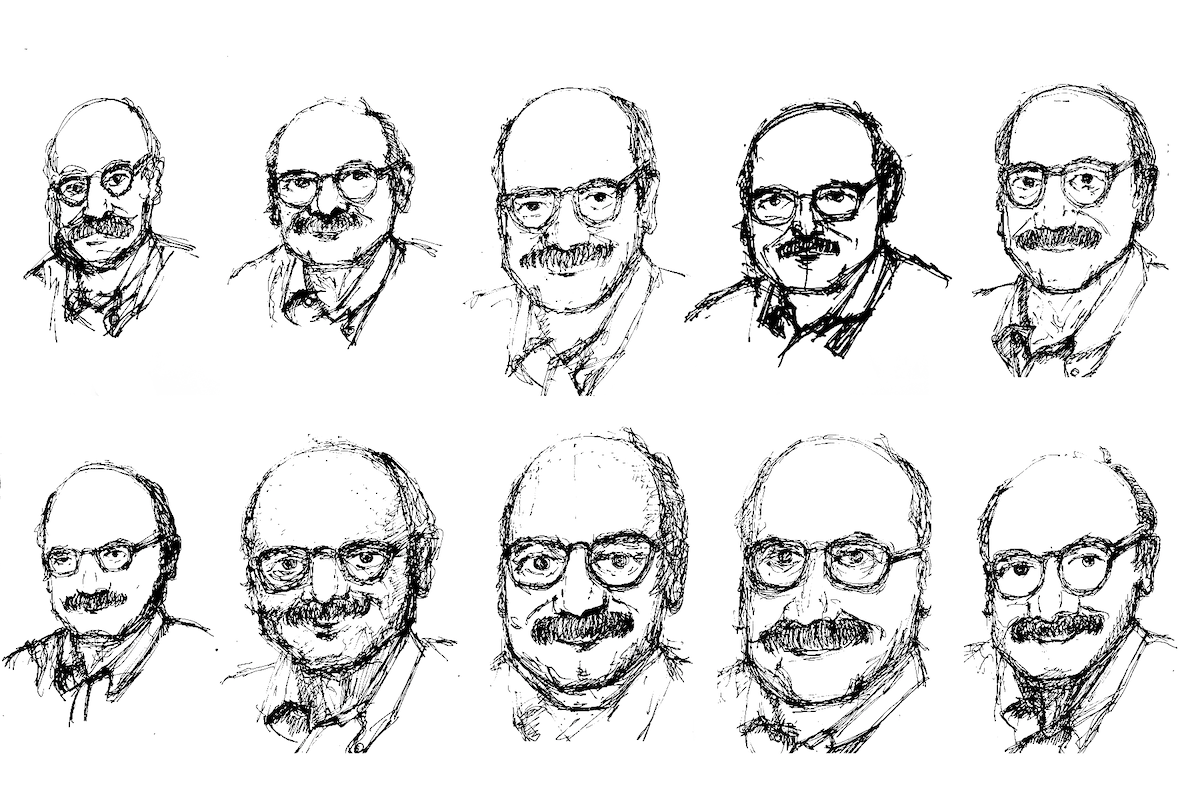
For anyone curious about making things in VR, this post will give you a sense of what to expect, the hurdles you may encounter, and the fun you can have.
Day 1: Getting started
Okay, it’s hard. And it’s almost nothing like drawing with a real brush (no matter what the ad says). The definitive difference is that there’s a whole dimension added to your brush strokes, so you are constantly falling into open space while trying to make what used to be a simple line on a paper. This poses a technical challenge, but as you figure it out, it opens the opportunity to instantly create lots of cool “dimensional” animations using different brushes.
Let’s review some of the fundamentals:
Uploading a reference image
My first step was to figure out how to put a photo of David Kelley into my VR bubble for use as a reference image. This can be done pretty easily within the Settings panel (gear icon) / Labs panel (flask icon) / Reference Images. That would be the first fundamental thing for bringing any graphical reference into your personal VR drawing lab.
Choosing a brush
After trying them all, I settled on a simple wire brush. I recommend it as a first step on the ladder of your immersive experience because in comparison to calligraphic and wide-angle brushes (not to mention special effect and animation brushes), it offers even sides and predictable behavior.
Using three-dimensional guides
As I mentioned before (and as you can see from the portrait progress so far), it’s quite unusual to think within the 3D space while drawing, so the first handy tool I discovered was guides. If you came from a graphic or web design background, as I did, you’ll instantly notice that nasty extra dimension added to them as well. A good way to start here would be to compose your portrait (or whatever you want to draw) as a set of shapes, similar to how you’d be taught in a classical art class, and then adjust them until it feels done.
Day 2: Getting better
The second day started with an attempt to combine multiple shapes (using guides) into what would resemble a human silhouette. I decided to get away from Kelley portraits for a moment and gain general confidence in drawing in VR by fooling around and building “robots.”
Simply put, you stack a couple of 3D guides on top of each other and paint over them, like I explained above. It was easier than I’d thought it would be, so after spending about an hour assembling those statues, I switched back to Kelley and here’s what I’ve got.
Day 3: Drawing without guides
Day 3 started with an attempt to break free from floating yellow bubbles and get a little bit more real. I browsed Google Poly Gallery for some inspiration and came back with the above. It still looked far from good, but I finally felt some progress in terms of confidence and drawing without guides. The next challenge was to learn how to properly fill my surfaces without creating a total mess.
I hope the following sequence of GIFs shows some progress:
Day 4: Finding new applications
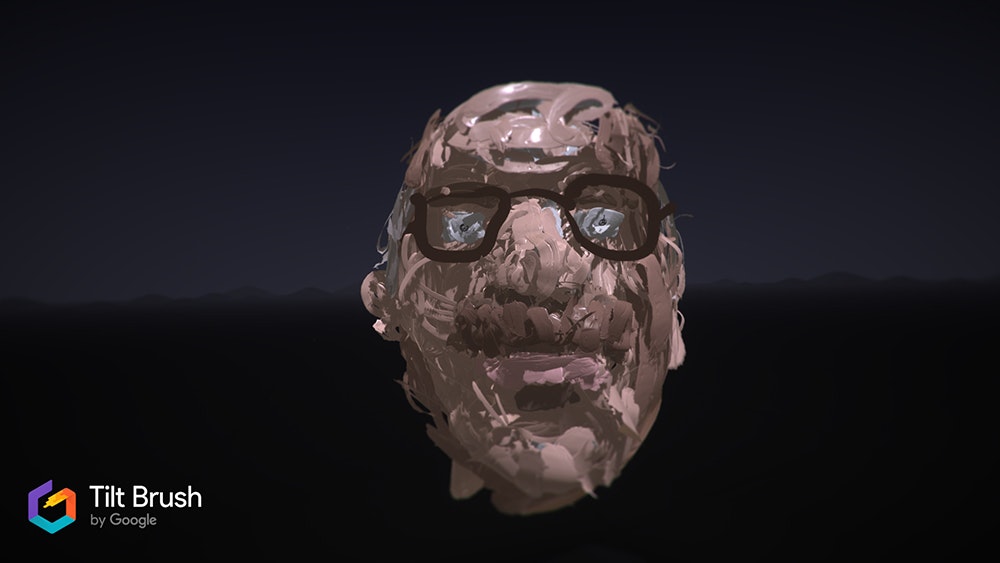
Since there was only one day left before the conclusion of my little experiment, I decided to try out more brushes than just the “wired” one, and I must say, renderings of those were executed really well within Tilt Brush. My doodles instantly got more texture, depth, and light reflections without any additional settings on my side.
My takeaway
Disregarding the fact that my drawings didn’t get anywhere close to perfect in the first week, I’ve had lots of fun drawing in space—an experience that was practically unavailable to anyone without a spacious drawing studio and a Matisse-like drawing setup prior to VR headsets. To build on top of that, I can’t help but to mention that VR drawing quite effectively stripped the 3D creation experience from its clumsy and complex environment, switching its engineering component into a purely artistic one, and making an entry point that’s surprisingly easy for everyone. That may sound optimistic but that’s exactly the path that graphic design or photography made through the last century—from being an exclusive skill that only few could master to being something that everyone can try and start getting better at.
I used to think drawing was hard. Maybe because I was bad at it. But it’s my personality to court challenge, so at some point I decided to commit to improving my skills. I attended drawing classes and worked with a personal tutor to develop a daily drawing habit, and while I wouldn't say I think drawing is easy now, I'm more comfortable with it than I was. So I've decided to reset my learning curve to zero and try mastering a new medium: drawing in virtual reality.

Lindsey Turner
I’m passionate about building brands, products, and experiences that help organizations show up with meaning and momentum.
I help organizations cut through complexity by shaping how they show up, through brand strategy, identity, and storytelling.
Working at the intersection of brand and business, I bring an editorial eye and a bias toward making—turning ideas into tangible experiences that people can understand, trust, and believe in.
My work spans government, healthcare, financial services, media, and consumer goods, from launching Gen Z-focused ventures to building innovation labs and reimagining legacy brands. I relish moments of ambiguity and enjoy translating across teams, perspectives, and priorities to move ideas forward.
I started my career in editorial and digital design, shaping cross-platform experiences and identity systems in publishing and agency environments. That foundation still shapes how I work today: I’m detail-oriented, collaborative, and overreliant on the Oxford comma. I hold a BFA in Visual Communication from the School of the Art Institute of Chicago.

Rachel Young
My work helps organizations see who their products aren't working for—and build the will and the tools to do something about it
For 25 years, I've asked the same question: Who does this design exclude—and what are we going to do about it?
My work spans human-centered strategy, inclusive design, and qualitative research, with clients ranging from Microsoft, Google, and Verizon to the National Science Foundation, and San Francisco Unified School District.
Before IDEO, I taught elementary school in East Palo Alto and spent a decade doing design work with social service organizations—where I learned firsthand what it costs people when systems are built without them in mind.
I am currently writing User Error, a nonfiction book about digital access and the design decisions behind it. I live in Oakland, California.

Brian Pelsoh
I lead with craft, ensuring our work is creatively excellent: rooted in deep human insight and imagination, while also grounded in the realities of business and technology.
My expertise spans brand, communication, and product design across tech, education, the arts, and social impact.
I believe great work demands both high-level vision and obsessive attention to detail, and only happens through collaboration.
I bring an inclusive, hands-on approach and a deep understanding of business, which enables me to consistently deliver excellence while always asking why.
Before joining IDEO, I worked at the brand firms Pentagram and VSA Partners. I began my career as a designer, leading teams at the School of the Art Institute of Chicago and the Milwaukee Art Museum. I hold an MFA in graphic design from Maryland Institute College of Art and a BFA in communication design from the Milwaukee Institute of Art & Design, and have taught at some of the best design schools in the US.

Tony Wong
I am responsible for IDEO’s long-term success in China and working with clients to use design as a tool to enable growth.
I am responsible for IDEO’s long-term success in China and working with clients to use design as a tool to enable growth. Specifically, I have helped Chinese companies design holistic brand solutions through the development of their products, communication, services, and innovation teams, and I have helped multinationals expand their presence and influence in China.
I advise global leaders on developing China-led innovation and capabilities.
In over 15 years in IDEO Shanghai, I have worked on projects that use design to elevate the quality of the experience of healthcare products and services, streamline processes that increase productivity, create spaces and programs that promote and enable inclusive communities, and build next generation mobility solutions that are planet-positive.
Before joining IDEO, I worked at Philips Electronics and the Electrolux Group in Italy, the Netherlands, and Singapore on a number of breakthrough commercial products. I am a member of the Young President Organization in Shanghai.

Building a personal AI for the messiness of life: Sida Li
Most AI products today are built for work—a space with clear problems and established systems. One founder noticed a gap: personal life is messier, harder to systematize, and mostly left behind by the AI boom. So she built Cue, a personal AI that lives inside iMessage and group chats, to go where the other tools haven't.
In this episode, Becca Carroll, IDEO's Chief Strategy Officer, talks with Sida Li, co-founder and CEO of Shared Context Lab, about staying anchored to a human need while the technology around her keeps changing shape, why she treats her business model with the same rigor she'd bring to a product, and what it feels like to build a company at this particular, disorienting moment in AI.
The conversation also gets into how Sida makes design decisions: the language Cue uses to describe itself, the tradeoffs behind building inside iMessage instead of a new app, and a real story about a business idea that didn’t pan out.
This is the second in a two-part series profiling founders from IDEO's Startups-in-Residence program. The first conversation is with Johannes Seemann, founder of Sooner, on designing GenAI for the emotional side of money.

Designing GenAI for the emotional side of money: Johannes Seemann
Most personal financial tools are built to run the numbers and optimize towards a budget. While that works for some, most people experience money as a lived relationship that does not neatly fit into a spreadsheet. Johannes Seemann and Becca Carroll discuss why money is emotional before it is mathematical, and what a human-centered approach to building a generative AI financial product looks like in practice.

The curious leader's edge in uncertainty: Scott Shigeoka
Mina Seetharaman talks with Scott Shigeoka, author of Seek and Head of Curiosity Cultivation at the Eames Institute, about what distinguishes genuinely curious leadership from performative curiosity, how power dynamics shape curiosity, and why practicing curiosity can restore energy rather than drain it.

How constraints make us more creative: David Epstein
Mina Seetharaman talks with David Epstein, author of Inside the Box and Range, about why total freedom often produces average work, how leaders can design useful limits on purpose, and what organizations such as General Magic and Pixar reveal about the relationship between boundaries and creativity.
Looks like you might be in search of something very specific?
Or reset the filters above and try another angle.
Here’s some random inspiration

Podcasts about creative leadership

Articles about the power of prototyping
