
.svg)


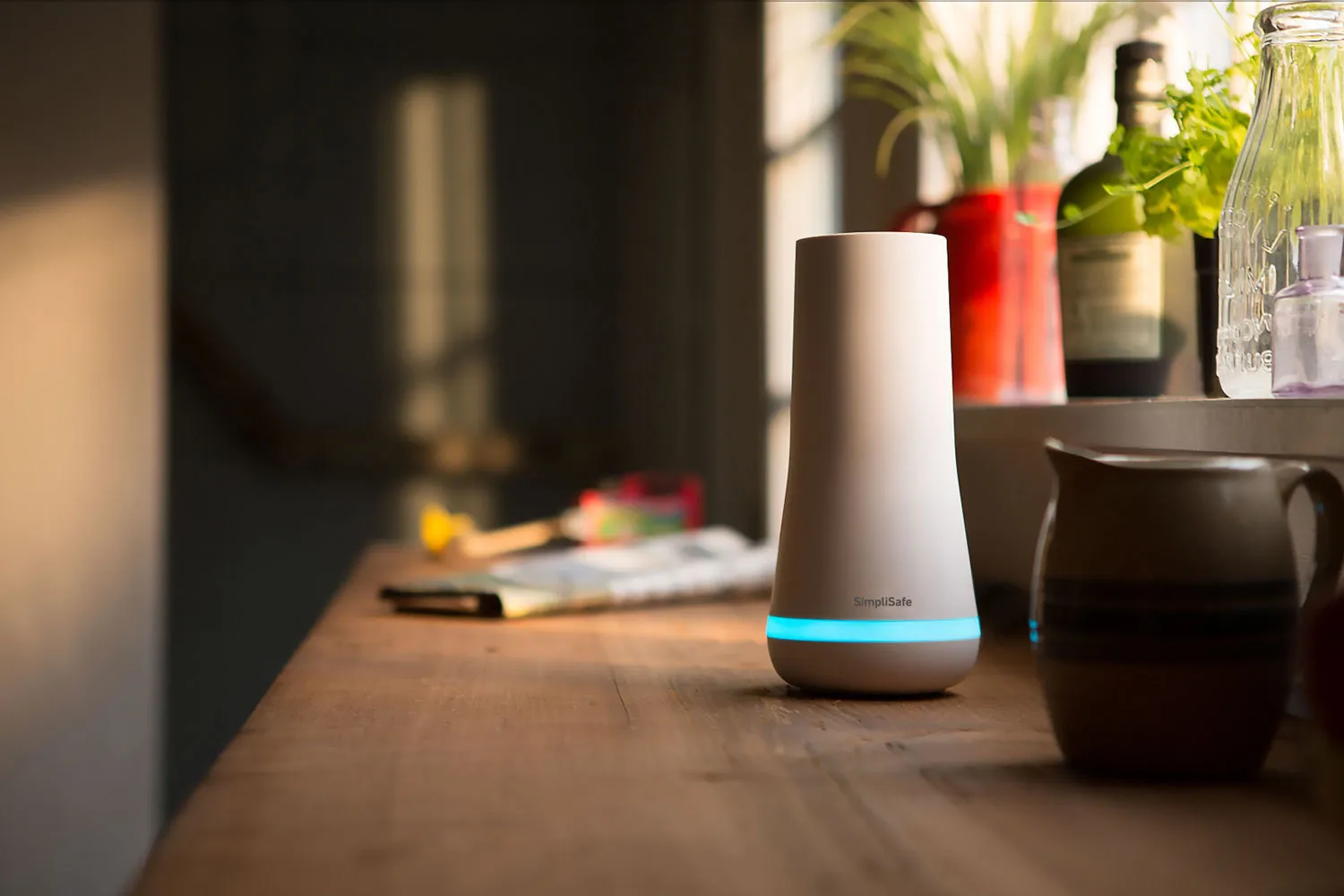

Designing for peace of mind with a leader in home security
Rethinking the hardware, experience, and interaction of connected products designed to protect you.
Only 20 percent of American homes are protected by security systems, and most of these systems are installed after a break-in.
Home security veteran SimpliSafe hoped to convince the other 80 percent of home-dwellers to invest in preventative technology so the break-in never happens. The company approached IDEO to refresh and simplify the look and feel of its connected products to reach this wider audience and help them feel safe.
Interviews with potential customers revealed insights that informed the new design. Families told the researchers that existing security systems are expensive, bulky, and hard to install and use. Instead, systems should be unobtrusive, but responsive to your needs. They should react appropriately in emergencies, while also protecting your privacy.
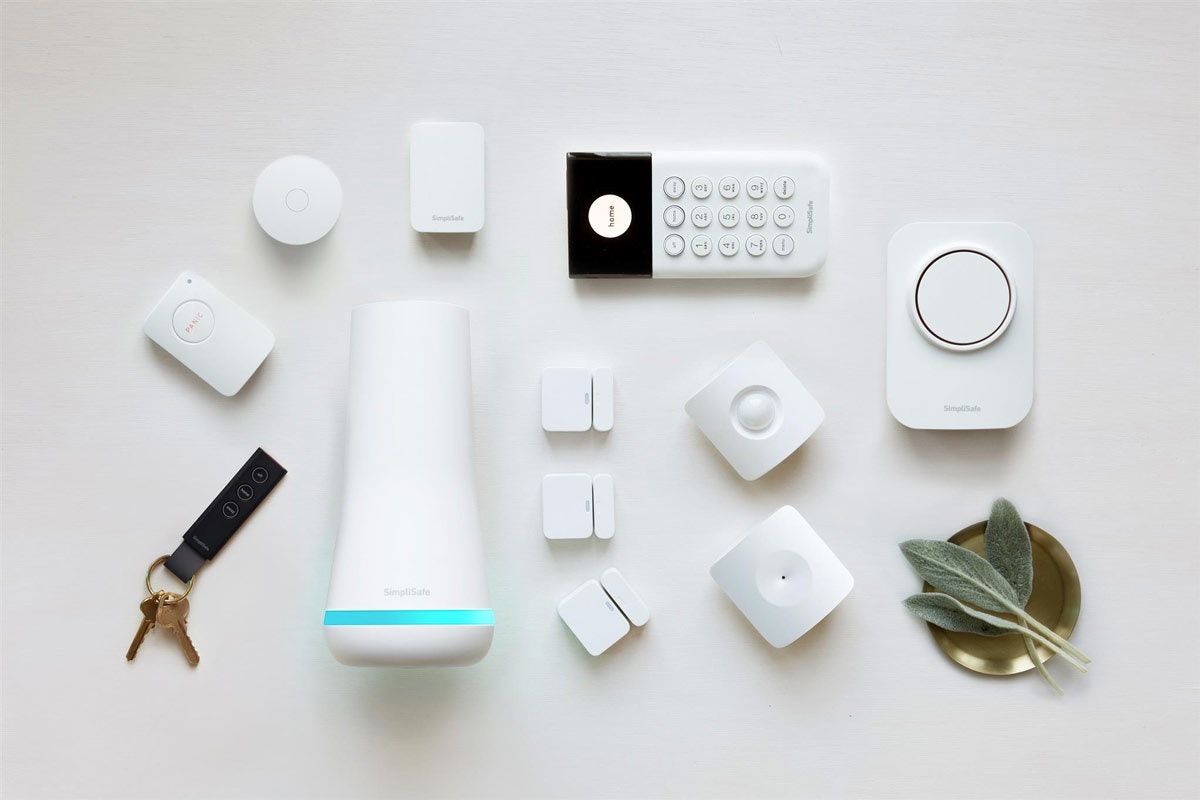
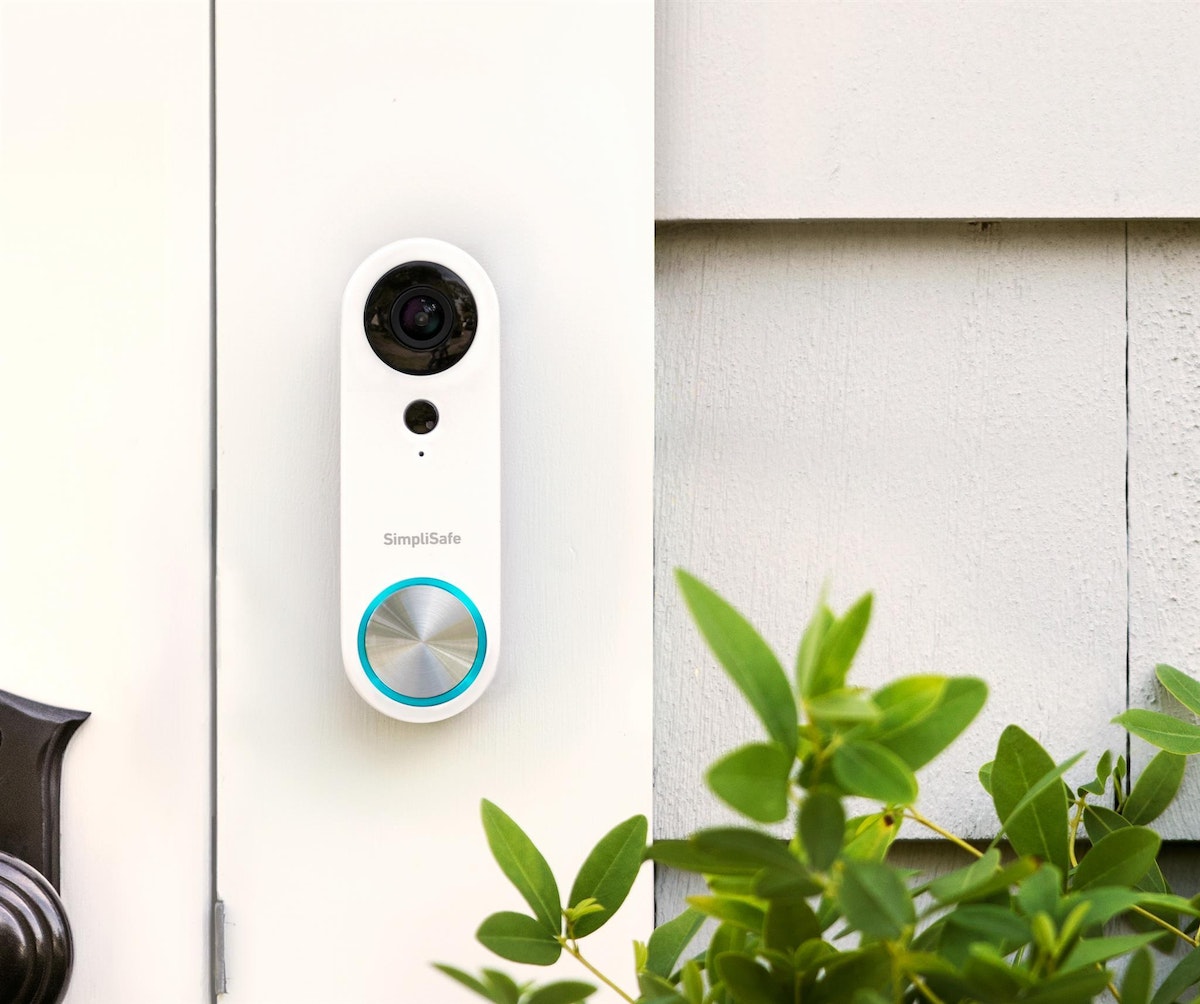
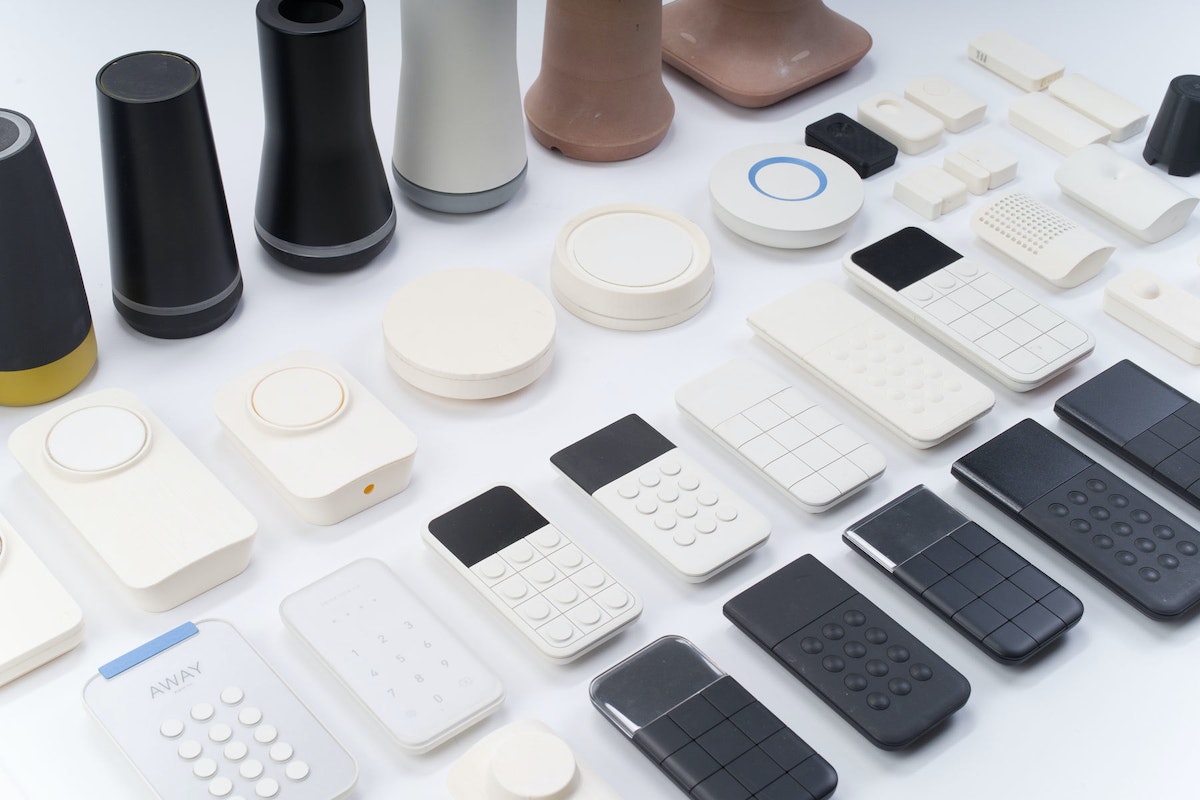
Responding to those requests, IDEO overhauled the design and interaction of more than a dozen SimpliSafe products, including a wireless, touch-to-wake keypad; easy to install sensors; and a smart home base that acts as the brains of the system. Additionally, IDEO designed SimpliSafe's first step outside of the home—a video doorbell that can be used in tandem with the namesake home security system or on its own. Making the system enjoyable and intuitive to use means families are more likely to use it consistently—and correctly.
The team developed a consistent design language across SimpliSafe’s physical products, user interface, and digital presence. That clear visual language lets you know what each component does right out of the box; for example, the glass break sensor looks like a human eardrum that might actually hear a window shattering. The design also reduced the size of entry sensors by four times, while improving their range and battery life. Tapered backs and swept-front surfaces for all of these sensors help them blend into your home. The new system’s clean, understated appearance instills confidence without stoking fear of what could happen.
SimpliSafe’s keypad and base station guide you through setting up the system with voice feedback, while gentle LED lights and sound cues let you know at a glance that the system is armed correctly and you’re in safe hands. The system is also equipped with multiple layers of backup, so you don’t have to worry if the power or Internet goes down.
And the system responds intelligently, tailoring the way it reacts to match different scenarios. For instance, it sends a gentle reminder if a window is left open but a police response if a window is broken in. The design team also incorporated a first-of-its-kind privacy shutter on the system’s security camera so families can opt out of being recorded at home.
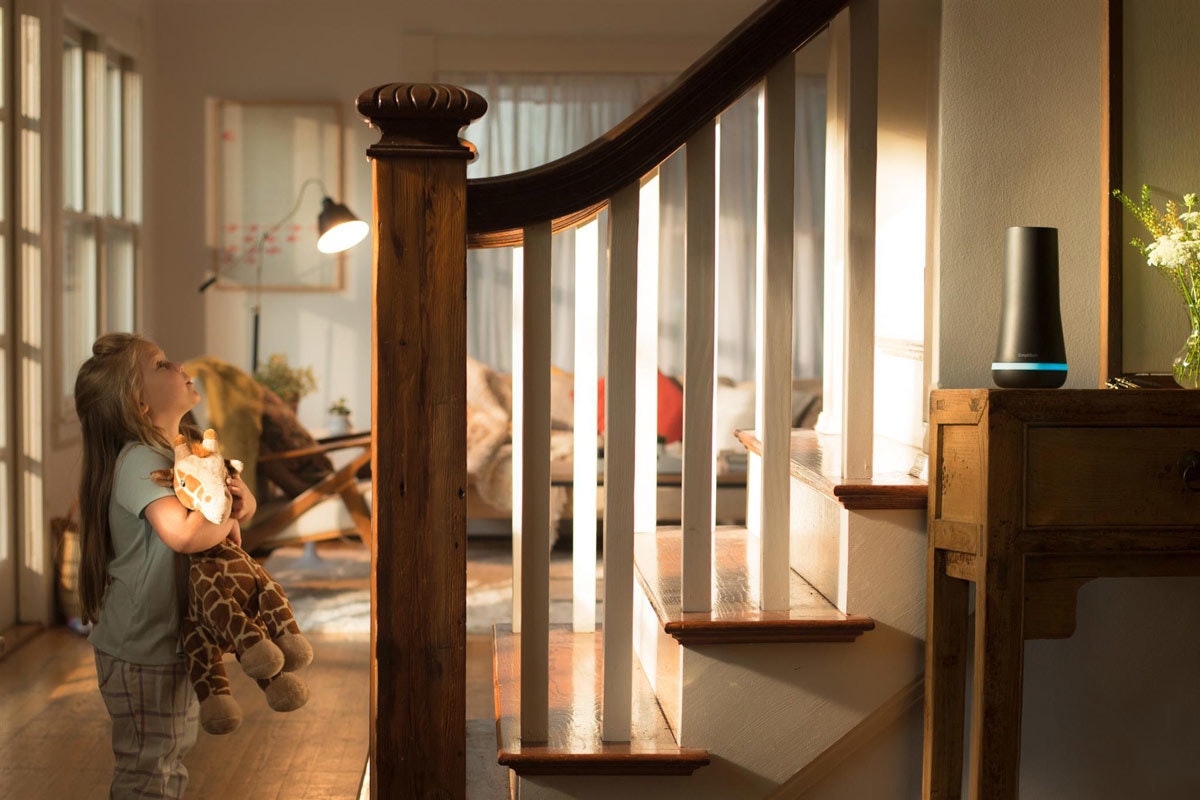
SimpliSafe launched its redesigned security system in early 2018, replacing the company’s two previous generations of products at the same price point. Already, the revamped system has cut the number of support calls from new customers.
In June 2018, venture fund and private equity firm Hellman & Friedman acquired SimpliSafe in a deal that valued the company at about $1 billion.

Rethinking college admissions
Designing a more efficient and inclusive way to read applications.
With a record number of applicants, stiff competition for top students, and a desire to make classes more diverse, college admissions teams are feeling the strain. Bowdoin College in Maine, one of the top liberal arts schools in the U.S., received more applications for the class of 2022 than for any other in its 224-year history.
Whitney Soule, Bowdoin’s Dean of Admissions and Student Aid, saw her staff at risk of burning out. On the advice of Bowdoin’s president, Clayton Rose, she invited IDEO to embed at the college and help design a new way of working. The IDEO team studied Bowdoin’s workflow and zeroed in on the application process as an area ripe for redesign.
By observing how Bowdoin counselors read applications, IDEO learned what drove their decisions. Mindful of how their choices could impact young people’s lives, counselors prioritized a meticulous reading of each application. But this thorough approach meant they often engaged in redundant work or delayed making final decisions.
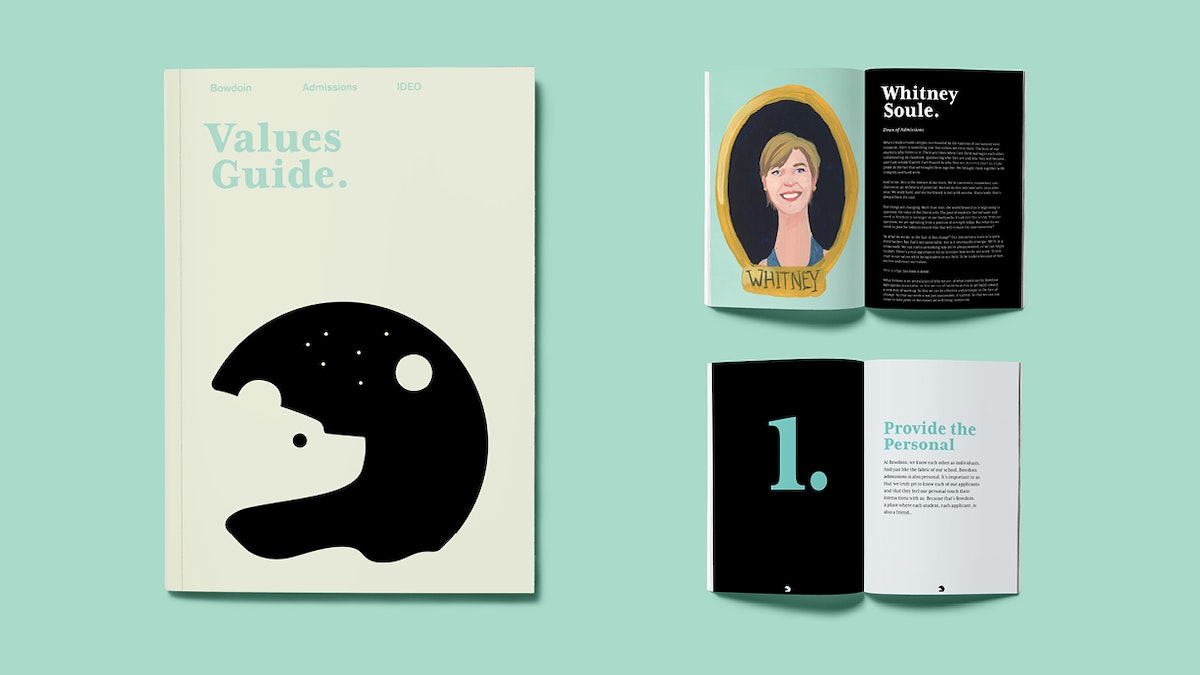
IDEO designers translated their insights into a book for staff, featuring watercolor portraits of the admissions team and a clear articulation of their values—from integrity to inclusion. The book was IDEO’s promise that introducing a new reading process wouldn’t mean sacrificing Bowdoin’s personal touch.
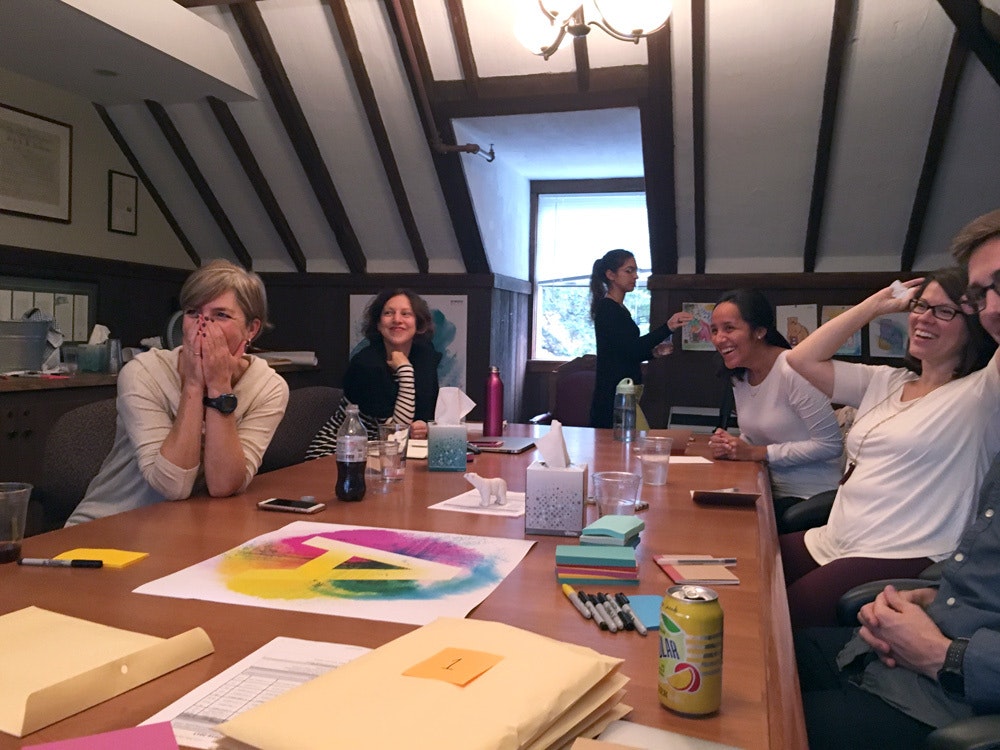
Then, the designers and counselors ran A/B tests using real applications from past years, unwinding long-held beliefs about how they “should” be read. Soule and her team experimented by adjusting timelines and other factors that determine when and how applications move from a first read to a second read to a committee discussion.
Soule gave her team explicit permission to toss their typical playbook. Seeing their own process with fresh eyes, counselors realized they could be more confident in their expertise and tweak their workflow to meet changing demands.
A/B testing proved that some variables had little effect on the team’s final admissions decisions. With that in mind, IDEO redesigned the reading process and included a system called “magic sort,” which helps parse groups of applications based on a new set of counselor assessments in order to route each to its next round of reviews more efficiently.
The IDEO-Bowdoin team put the revised technique to work right away, processing 300 new applications from the annual QuestBridge program for low-income students. Counselors found they were able to make equally valid decisions while cutting the amount of overlapping work they faced by 40 percent, compared to years past.
Working with IDEO challenged us to change the way we work together—and we learned a new method of problem solving that we continue to use. We are better equipped to elicit creativity, then channel it into the practical implementation of new solutions. It’s been transformative!
WHITNEY SOULE, DEAN OF ADMISSIONS AND STUDENT AID, BOWDOIN COLLEGE
The new reading method let staff cope with a growing volume of applications, while balancing the need to evaluate individual students with the need to think holistically about the makeup of Bowdoin’s student body. Counselors adapted the technique to the rest of the year’s admissions cycle, including early-decision, regular decision, and transfer applications.
To extend what her team learned to other departments, Soule has led several design thinking workshops across campus. Her success as a leader has mirrored the growth of her team and the college; by empowering staff with new tools and the freedom to experiment, Soule and Bowdoin are leading by example in the evolving world of higher education.

Reinventing the chandelier
Designing an elegant, modern lighting experience for an iconic brand.
For half a century, Swarovski has crafted iconic chandeliers dripping with the brand’s signature crystals. With the rise of new interface technology, the company came to IDEO for help to design the chandelier of the future.
IDEO designers set out to create beautiful, emotional experiences by layering technology onto Swarovski’s lighting offerings. Whether it’s setting the tone for a sophisticated retail experience, creating subtle ambiance at a romantic dinner for two, or providing true quality light to read a book, the team considered how a chandelier can enrich personal moments throughout the day.
Swarovski and IDEO assembled a multidisciplinary group, including industrial and UX designers, brand experts, and engineers to quickly vet, build, test, and refine their ideas.
Designers from IDEO and Swarovski worked together to completely reimagine the crystal chandelier.
Together, the team designed a new tech-infused chandelier and family of other light fixtures. At first glance, the chandelier resembles a simple, sleek metal disc. But when you turn it on and peer inside, an endless number of crystals swirl far into the distance—an Infinite Aura.
The Infinite Aura collection also includes pendant and wall lights. The team developed a mobile app that proactively modifies light settings based on the time of day, and also lets users customize their experience—including adjusting brightness and color to set a personal mood, or “Aura.”
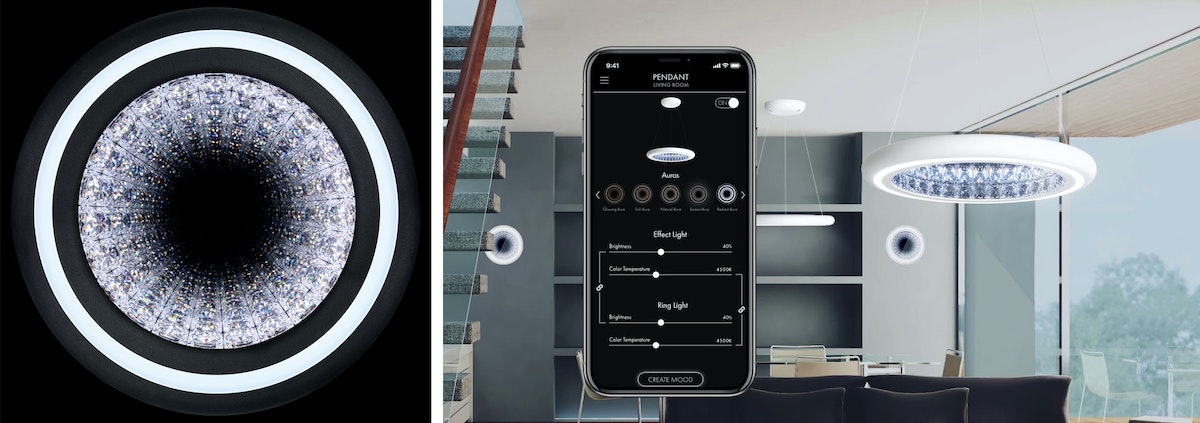
Unlike most fixtures, Infinite Aura doesn’t just give off ambient light; families can also benefit from high-quality functional light, directed downward to help them focus on a task or diffused upward and downward to create a subtle ambiance. In a similar way, the chandelier can expertly illuminate a library, hotel lobby, or concert hall.
The new lighting line adds greater functionality and emotional resonance to today’s smart buildings, while retaining Swarovski’s timeless elegance. Infinite Aura debuted in Frankfurt, Germany in March and will be available internationally in fall 2018.


A new employment venture to increase customer engagement and financial security
Introducing Moonrise, a digital platform that helps companies hire untapped talent and workers make ends meet.
More than half of Americans don’t have the cash to cover a $400 emergency expense like a car repair or trip to the hospital. Taking that reality to heart, American Family Insurance, a Fortune 500 company that offers auto, home, business, and life insurance, was seeking a way to make an impact by helping people earn and protect—not just insure—the things they value.
American Family approached IDEO with an ambitious goal: to innovate in a way that would help working families—many of them existing American Family customers—who need a financial cushion in case of the unexpected. This new mission fell in line with American Family’s overall orientation toward increased social responsibility, including committing to a liveable wage for all employees, helping with student loans, and providing college scholarships and tuition reimbursement for employees’ children.
In early discussions, American Family thought people might need budgeting tools, but from the very first research interview, a different urgent need emerged: people needed a way to shore up their savings enough to protect against unforeseen needs. This same story came from numerous places. In Tennessee, the IDEO design team sat in the kitchen of a working single mom of four, who explained how her lifestyle was built around her extremely constrained budget. She couldn’t afford childcare, so she’d organized her home to allow her 11-year-old to watch the younger kids: partitioned snacks, timers on the TV, chore charts on the fridge. She managed her budget meticulously, it was clear, and she didn’t need new financial tools. What she really needed, she said, was extra income cushions so a surprise expense like a doctor’s visit or stretch investment like a kid’s basketball uniform wouldn't derail her plans. Like many of the people the team visited across the country, she didn't want to take on debt; she wanted extra work and the dignity and peace of mind that comes with it.
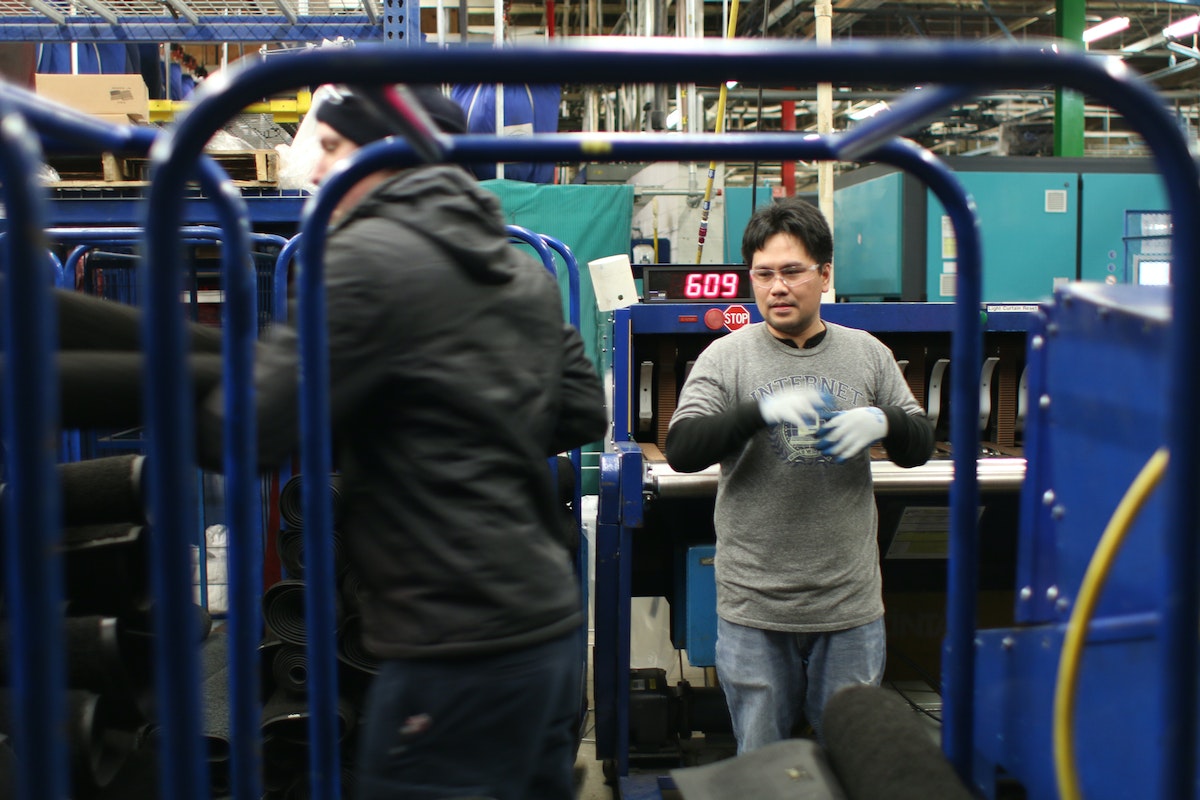
Could we, the team wondered, offer people who already have jobs the extra hours and income they need in a way that reduces, rather than exacerbates, the stress they already face? Would employers get on board?
The short answer was yes. Today’s businesses depend on on-demand work, including seasonal warehouse and retail shifts. Typically, companies look to temp agencies whose model is built on staffing with the goal of permanent placement. Moonrise enables companies to tap into a workforce that's already employed, allowing them the benefits of passive recruiting (reliability, consistency), but for short term work.
Knowing innovation was the path to growth, American Family took a chance by embracing a radically new brief: Create a service to help families living on the edge bridge the gap between the size of their paychecks and the size of their dreams. The result was a new business venture called Moonrise.
When customers told us that having an easy way to earn extra money could improve their lives, we were compelled to pursue a solution. Moonrise is a business with a human-centered mission. We’re proud it’s part of our American Family.
Jack Salzwedel, Chairman & CEO, American Family Insurance
The Moonrise platform lets workers sign up for shifts with partner organizations through a simple text message interface, and get paid as soon as their shifts are done. Employers who sign up to partner with Moonrise can list open shifts on the platform.
“Moonrisers” are W-2 employees of Moonrise, not contractors, so they don’t have to pay self-employment taxes. They also get personalized business and comment cards to take to job sites, making their interactions with employers feel more professional. In this way, Moonrise helps workers not only build a buffer against unexpected bills, but also explore new positions and fields—and perhaps even land new full-time work with Moonrise partners.
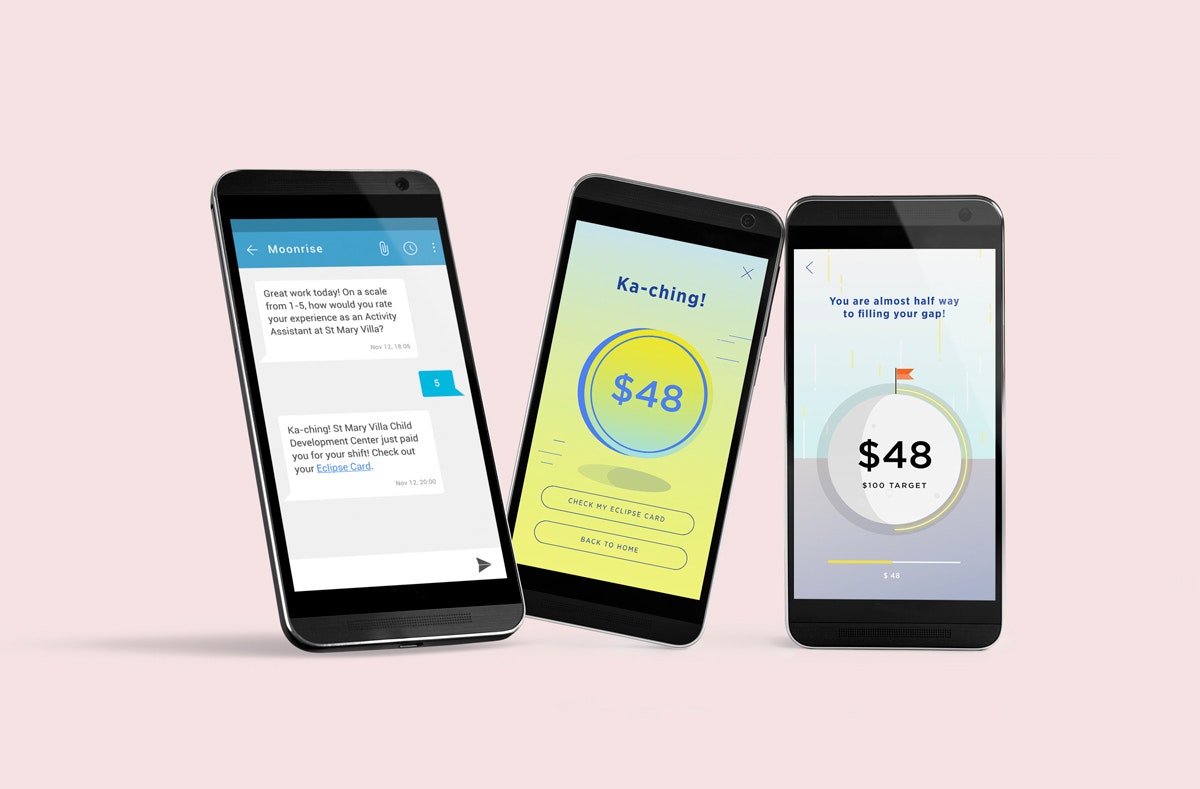
To test the program in real time, IDEO and American Family assembled 11 Moonrisers, six employers, and a team of designers and programmers to work out kinks in the platform. During a one-week live pilot in Wisconsin, Moonrisers finished a combined 28 work shifts, earning an average of $121 each, while IDEO designers worked behind the scenes to keep the process running smoothly.
Based on the success of the pilot, American Family created a new startup company called Moonrise, which became a wholly owned subsidiary of American Family. Moonrise launched to the public in the Chicago area in 2018, with plans for an eventual nationwide rollout. Moonrise signed Enterprise Rent-A-Car as its first employer and actively matches workers in Chicago with shifts, while continuing to build more corporate partnerships.
Since launching in 2018, over 7,000 people have applied to become Moonrisers, more than 7,000 shifts have been fulfilled, and over $500,000 has been put into the pockets of hardworking Moonrisers. Additionally, Moonrise will be expanding into 3 additional states in 2019.
IDEO and American Family Insurance interviewed customers of The General—a division of American Family—about how they budget to make ends meet. In this conversation, customer Chandra told designers how $62 could be the difference between breaking down and breaking even for her family.
It’s not always easy for established companies to innovate, especially outside their core business. But innovation is a high priority for American Family. Creating an employee -centered startup like Moonrise solves an urgent problem and distinguishes them from their competition. Together, American Family and IDEO identified a pressing human need and built a program from the ground up to meet it.

A not-quite-textbook definition of systems design
How a systems designer learned to explain what a systems designer is
When I started at IDEO six years ago, I had no idea what a systems designer was—only that I was one. Now, six years later, I have an answer, but I’m still perfecting the great-aunt-approved dinner table pitch.
The secret? It’s actually something you probably learned in your grade school language arts class: a good analogy.
If you’ve got approximately 10 minutes, I can tell you what I’ve learned about what I now proudly call my job—and how I’ve learned to explain it.
Systems and automobiles
An iPhone, the human body, buildings, cities, organizations, economies, the universe—all of those things count as systems, even though one can fit in your pocket and one is infinite. So what makes them all systems?
In a series of excellent lectures, Russell Ackoff, a pioneer in systems thinking, uses a simple analogy to explain systems: an automobile.
As Ackoff explains, a car needs to carry you from point A to point B. No individual part of a car can move you on its own—not the wheel, the axle, the seat, or the engine. But a car can. And if you take a car apart, you no longer have a car: you simply have the pieces, because “a system is not the sum of the behavior of its parts; it’s the product of their interactions.” That’s as true for a computer as it is for the universe—or any other system.
Systems design and architecture
Ackoff, a professor at Wharton Business School, criticized managers for focusing on business silos (marketing, operations, finance). He urged them to take a wider systems view—to think about the interactions that create the whole.
I couldn’t agree more. But if that’s systems thinking, what is systems design? What’s the difference?
Ackoff heralded one profession for understanding systems best: architecture. Architects begin with the needs of the client—bedroom, kitchen, living room, bathroom—but they don’t stop there. It wouldn’t make sense to design the rooms separately; they need certain adjacencies and sizes.
Importantly, Ackoff explains, the architect “will never modify the house to improve the quality of the room, unless the quality of the house is simultaneously improved.” To take this analogy a step further, think about it this way: you wouldn’t make the kitchen bigger if it meant getting rid of the bathroom. That would be a weird house.
Ahhh, so you're an architect?
Not exactly, although it’s no coincidence that I used to be a designer at an architecture firm. I think of myself as a “human-centered systems designer,” but that wouldn’t be the clearest thing to have on a business card.
IDEO is known for human-centered design, a process that takes inspiration from the needs and aspirations of people, most often end users. Human-centered systems design also starts with people, but requires looking at all the diverse stakeholders within a system—not just end users.
Let’s dive into another analogy: a school. If you’re designing a school, students are the end user. But the needs of teachers, parents, and administrators are equally important. For example, a few years ago we wanted to create a way for schools to change their culture. Since culture is intangible, it can’t be designed in and of itself. But you can design spaces, schedules, processes, roles, rituals, and incentives—tangible “levers for change” that help create culture. We zeroed in on the needs of school leaders, and developed School Retool, a professional development program that empowers principals to evolve their school culture.
When you’re designing a system with a lot of moving pieces, it’s hard to know where to start, and very easy to get lost in the “What if’s?” Design needs constraints, and focusing on human needs provides them.
But why human-centered systems design?
Let’s return to my man Russell Ackoff. He writes, “No problem ever exists in complete isolation. Every problem interacts with every other problem and is therefore part of a set of interrelated problems, a system of problems.” Ackoff even coined a term for systems of problems—he called them “messes.”
Indeed, our biggest problems—in education, health care, criminal justice, government—are systems challenges. And surprise: These are all human systems. When the parts of a system are made up of people, complexity is exponentially high because human feelings and needs are unpredictable and constantly changing. Despite good intentions, these important societal systems can be some of the least human-centered experiences we encounter today.
None of these problems can be solved in isolation, but it’s also easy to get a headache just thinking about tackling them.
Our most complex systems need human-centeredness the most. As a systems designer, I specialize in zooming in and out. I’m constantly jumping back and forth between the big picture and the details. I work with teams to bring the best of all disciplines together to design individual elements that form an integrated, cohesive experience for end-users. I ask questions like, “How might the environment support the new behaviors we’re trying to create? How might digital tools enable a new mindset?” I create intentional interactions between parts.
As the holidays creep closer and closer, I no longer dread the questions about work and career that come along with the appetizers. I finally have something my family is more likely to understand, thanks to the powerful and beloved literary device known as the analogy. Getting to this point feels like learning how to ride a bike—you pedal hard, gather speed, and finally crest the hill.
And if nothing else, I’ll just send all my family members a link to this piece. Hi, mom and dad!
Fall has arrived in the northern hemisphere, and you know what that means: cool weather, warm cider, and sitting around the holiday dinner table with my extended family, trying to explain to them what I do for a living as a systems designer.

Can digital therapeutics revolutionize medicine?
How technology will take treatment beyond pills and procedures
In the not-too-distant future, patients with chronic obstructive pulmonary disease could be equipped with a sensor that monitors their medication and inhaler use and prevents acute events. People suffering from clinical depression could be prescribed an app-based therapeutic program in place of a drug.
The digital therapeutics global market is estimated at $1.8 billion today, but predicted to reach $7.1 billion by 2025. Much of the growth is predicted to come through investment from traditional pharma, but there are several new players emerging from the tech and start-up worlds as well with the hopes of evolving into a digital therapeutic. Omada Health, which creates behavior change programs for managing chronic disease, makes its hundreds of thousands of patients feel seen and heard with personal coaching. Click Therapeutics develops software to support smoking cessation and address major depressive disorder in adults. The meditation app Headspace has convinced more than a million people to integrate meditation into their daily lives, with proven wellness benefits.
Companies like these are revealing transformative new approaches to helping patients tackle the thorny challenges at the core of chronic disease, mental health disorders, and a growing number of other diagnoses—and in the process, they’re creating and growing thriving markets where none existed before.
Might these digital products, one day soon, be prescribed by a physician who is concerned about her patients’ heart disease, diabetes, or weight? If Tesla released software that clinically validated reductions in car accidents, even for the most dangerous drivers, would that qualify as a digital therapeutic? We are just beginning to imagine and design the future of this industry.
But these products still face the age-old challenge: how to get people to actually use them. If patients don’t love and trust the experience enough to sustain engagement over long periods, many of these therapies—and products—will fail.
Any new approach needs to begin with the needs of real people, and to follow those needs toward products that are not only desirable, but also have viable business models behind them. Here are our four big takeaways drawn from IDEO’s experience working in this field, designing digital therapeutics that engage patients—and the market.
Put down the competitive landscape report
Innovations in science and health tend to be incremental, but by looking to other industries, it’s possible to identify opportunities for more radical change. Studying analogous experiences—services, products, and other offerings that deliver something tangentially related but not exactly the same—will clarify what kinds of experiences give patients a sense of meaning, delight and value.
A partner of ours in the biotech industry recently launched its first digital therapeutic, focused on helping patients manage diabetes. In piloting the experience, we encountered a big challenge: Patients were struggling to connect the at-home testing device to the bluetooth on their phones. Without it, the experience fell apart.
Instead of buying all of our competitors’ devices to look at their solutions, we brainstormed a list of organizations that were particularly good at helping people with a set of complex instructions—IKEA, ballroom dance instructors, piano teachers, NASA-to-spacecraft communications specialists, and others. We discovered that LEGO had made its first bluetooth-connected toy and—master of instruction that it is—had created instructions to guide even little kids through a simple series of steps. Inspired by LEGO, the team created a new set of instructions. Once they were integrated into the patient onboarding experience, nearly every patient was able to connect their medical device to their phones.
Prioritize the patient
It can be easy to fall into the trap of addressing the needs of payers and providers above the patients’. After all, if a digital therapeutic isn’t reimbursable, the underlying business may not be successful; and if a physician doesn’t know it well enough to prescribe it, a company can’t increase market share. These are critical pieces of the puzzle, but they need to come after the foundational concern of any new digital health venture: fitting your therapy into patients’ lives.
During early stages of design, we rely on user research to inspire countless possibilities, and revisit our insights when we need to refine (or flip) our ideas. User research informs the business model, helps define the path to market, and may also lead to other product features.
What does this look like in practice? Consider the digital mental health company Headspace. Headspace was designed to teach people the fundamentals of meditation, engaging them in an experience that might encourage practice and adherence over time. Initially, Headspace played with incentives like badges and friendly social competition, but it slowly came to understand that the most profound motivation was mental health itself. The company prompted meditators to remember why they meditate, and asked them who in their lives would be better off because they meditated. This consistent call for reflection and awareness led to higher overall engagement.
Headspace’s popularity has catapulted the company to $100M in annual revenue and more than a million subscribers. Once the company designed an experience that people loved, subscribers embraced the product and took it upon themselves to host Facebook groups, meet-ups, and events. Headspace then opened up partnerships within the formal health industry, adapting to the needs and requirements of providers, payers, and regulators. Today, Headspace is a benefit offered to employees of over 350 large companies worldwide, and providers and health systems across the globe offer it to their patients. If you design an effective product that patients love, players in the health system have incentive to offer access.
Design with and for your most extreme, hard-to-engage patients
Designing for extreme users illuminates the wide range of people who might use a product. In IDEO’s earlier days, we saw this most clearly when we designed physical products like ice cream scoopers and pizza slicers for older adults, people with arthritis, and children with limited motor skills. We ended up creating something those populations could use, but in doing so, we developed a universally easier user experience. The product design outshone its competitors and became a top consumer choice.
In the world of digital therapeutics, this approach might entail designing for patients with limited experience using digital technology, or focusing on patients living with multiple chronic conditions, or with profound barriers to accessing care. These patients can help shape a more equitable and inclusive therapeutic experience.
One of our most challenging digital therapeutic projects involved creating an app-based experience to combat depression. To engage with potential users, we traveled to the rural Rocky Mountains to an isolated community where we met Dan, a cowboy and rancher living 40 miles away from his closest neighbor. Dan had struggled with depression for most of his adult life. On a good day, it was hard for him to get out of bed. On a hard day, he struggled with suicidal thoughts.
Before talking to Dan, we considered all of the technological features that could encourage adherence, like enabling offline access and fast download speed in low-bandwidth contexts. But through talking to Dan, it became clear that the tactical challenges weren’t the biggest problem to solve. Even in more populated areas, depression itself can be isolating. Dan helped us co-design a digital tool that even he would be willing to come back to, day after day. One of the key features a digital therapeutic could offer would be connection to others—in real life—and a chance not only to receive help, but to give it. Informed by Dan’s story, we designed an experience that could connect people living with depression to each other and engage them as supporters, mentors, and advocates.
Launch a thousand prototypes
One of the biggest challenges facing health innovation today is the belief that you need to have a solution before you really grasp what people want and how they want it. That’s how the industry is constructed. You would never write a grant proposal without telling the funder exactly what you will deliver, nor allocate budget at a pharmaceutical company without a detailed plan and anticipated ROI.
For digital therapeutics, those constraints are blown wide open. Our task is to come up with as many ideas as we can and test what will actually stick. Prototypes pave the way to a solid, working product, and patient input on prototypes can be used in countless safe, thoughtful ways.
Recently, we worked on a digital therapeutic that helps people manage the tremors associated with motor disabilities such as Parkinson’s Disease. Instead of the typical treatment, which solely relies on an oral medication known to have serious side effects, we were tasked with working on a software and hardware system that delivers targeted electric pulses to the part of the brain that calms tremors. We began with a long list of open questions about what patients living with Parkinson’s would find acceptable, usable, and engaging.
When we went into the field to interview patients, we quickly realized that they had no idea what it might be like to rely every day on a digital device that’s crucial to their health. They were curious about the inner workings of the therapy, and asked questions about the technical, logistical, and philosophical implications.
Our first prototypes included a dozen hats, headbands, or pillows that a patient might wear to charge the implanted device. We also prototyped many digital interactions, from Alexa add-ons to iPhone apps, that might guide them to administer digital medication. To take advantage of bio-monitoring data, we created numerous dashboards, exports, and communication portals that might help patients, providers, and caretakers make sense of what was happening neurologically.
A lot of those ideas were failures, but the things we learned were priceless. For example, it turns out that despite the growing number of retirees on Alexa, many of our patients didn’t trust a voice-controlled app with a task this important. It also turns out that the headgear a person needed to wear could easily make them feel embarrassed, unattractive, or emasculated. One of the most important discoveries was that faster charging is not better, if slower charging meant you could fold laundry, watch your favorite TV show, or weed the garden at the same time. At the end of the day, we designed a hundred prototypes before we landed on the key value propositions, features, and usability standards that would shape the experience.
Tying it all together
Breakthrough products and experiences like Click Therapeutics and Headspace all align with the framework outlined above. But to be clear: They aren’t successful because they have a silver bullet for engagement or the best theory of behavioral economics. They are market-movers because they focused on their users and designed their products around what they found. That led to creating something people love, and success quickly followed. It’s a formula you can apply to creating your own digital therapeutics—or any product you want users to love enough to use in their daily lives.
Illustrations by Nien-Ken Alec Lu.
The next era of digital health has arrived, and it’s booming.

Here's how to get started designing with data
Use these 4 steps to keep data scientists involved throughout the design process
But in practice, when we’re making something genuinely new, we often don’t have data to begin with, nor do we even know what kind of data we will need. We’re staring at a blank canvas, so the only way to dive in is to listen, observe, and sketch.
Making ideas real didn’t just mean collecting biometrics about patients and displaying the data in a smart way. It was much more important to use data to help experts and patients build and maintain a relationship, track progress, adjust course, and figure out next steps. These elements are all an integral part of how the service operates. And in the process, I came away with a few principles for data scientists to keep in mind when using data as a medium for design.
1. Be part of research
We needed to know what experts ask their patients to help support them in their journey to self-management, and what is reasonable to ask patients for. Is it fair to ask somebody who mainly eats at restaurants to accurately track the micronutrients of everything they eat? Probably not.

It’s critical to understand people’s real needs in their context to understand what data is meaningful and feasible to collect. Qualitative field research is key in the process of developing empathy for those we design for and for getting a feel for what life challenges might get into the way of data collection. Understanding when we can collect data—and when we can’t—provides valuable information.
2. Sketch by hand and share
Informed by research and armed with crayons, we created a variety of data visuals aimed at tracking patient progress in various aspects of their day-to-day lives—basically, sketches of the features that might be helpful. Drawing is much faster than writing code. We made the visuals a prominent part of the project room to serve as a catalyst for brainstorming and discussion with other members of the team who aren’t data scientists. We explored trends of activity and sleep over time, and played around with visual ways to track mood and to inform people of healthier food options without asking them to count calories and micronutrients.

This approach allowed us to make significant progress in two ways. One, showing our sketches to experts allowed us to narrow down which metrics were useful, and to start tracking down potential data sources. Sketching in crayon versus writing in code also helps us fail faster and narrow in on the right questions to ask.
And two, sharing our sketches with the broader team, which included designers from a broad spectrum of disciplines (communication, interaction, research, software, business), made our work more transparent and helped us establish a common language. It also sparked conversations, inspiring us and helping us to gather further feedback.
3. Gather up and agree on all your data
Once we identified useful visuals, algorithms, and interfaces, we began hunting for the data that could fill them in and move us to higher fidelity prototypes. In our case, data included the client’s historical data, simulated data, and team data. We simulated data about meals and snacks and plugged it into publicly available nutritional APIs. This exercise allowed us to identify the types of data that might be suitable as input for these APIs.

We also bought a bunch of trackers for the team to explore ways we might keep tabs on activity, which showed us where a tracker might go wrong (moving your arm in a circle might count as a step, when in actuality you’re not taking a step at all) and narrowed down the types of data that are meaningful to collect (for example, movement vs. steps). By diving in with our own data, we were able to fill our communcation, interaction, and software designers in on how we would approach collecting patient info.
4. Look to the future
As we were exploring data solutions for the various components of this service, we had to keep in mind that design and development take time and resources. For example, tracking micronutrients via nutritional APIs relies heavily on the assumption that patients are willing—or will even remember—to share their meals. In reality, we didn’t know what patients were willing to share about the foods they eat, nor did we know what food-related information experts need to track a patient's progress.

Redirecting the team’s effort to a lower-fidelity solution to track these behaviors (say, allowing patients to share a food journal) can save a lot of time and effort while still informing the future development of the service.
As a data scientist, starting with people and crayons rather than data and a keyboard felt uncomfortable at first, but it made the process of identifying what’s important and doable much more efficient. Making data science a visual part of the project space also helped the data scientists on the team become co-designers from the very beginning—meaning that we could contribute a lot more to the project. Hopefully, the tips above will empower you to do the same.
A big thank you to Mike Stringer for his help shaping this piece.
You might think the first thing data scientists do on a project is grab a bucket of data and run with it. And for good reason—that’s how many data scientists write about projects after the fact.

Prototype the future of your business with this 4-step design exercise
To envision your company’s next era, eliminate today's constraints
In business, new models and offers are further constrained by the need to satisfy current stakeholders and follow market trends. So how can you break free of present-day realities to envision a genuinely novel future?
In other words: Design can move us beyond the imagination-traps of our own experience to uncover truly new possibilities.
When I founded IDEO’s CoLab four years ago, one of our goals was to find new ways to catalyze visionary business leaders and to activate new models by assembling diverse perspectives from across industries. We frequently employ design fiction exercises with our partners to open up more exploratory approaches to tough problems—particularly the ever-changing nature and role of technology. The process helps connect the dots between an aspirational vision of the future and a business approach that can make that vision a reality.
How to apply design fiction to your business
The futures that we imagine are based on a few catalytic data or trends—“inevitables”—that serve as foundational elements of a future vision. By anchoring on these inevitable factors, we can then imagine the implications that ripple across a business, industry, or society. For example, five or 10 years ago, one might have assumed that smartphone ubiquity was inevitable and started to imagine the implications (good and bad) of everyone in the world having access to a super computer, the internet, a camera, and more. By extending from what’s already true to what might soon be true, it becomes possible to exert some agency in the way you move forward, even when you can’t know exactly what’s ahead.
The late Bill Moggridge (an IDEO founder who came up with the concept of a folding laptop) referred to this as “preferred futures.” In this view, rather than viewing the future as something that happens to you and can’t be controlled, you adopt the mindset that you can influence what happens, asking, “What future do we want to create? And how do we reverse engineer the pathway to get there?”
It sounds pretty heady—perhaps something to be left to experts—but the process of creating design fiction is actually accessible to most people by following a four-step process. This exercise is inspired by an activity from a class at UC Berkeley’s Haas School of Business called “Designing the Future” that I taught alongside two IDEO business designers, Becca Carroll and Sandeep Pahuja.
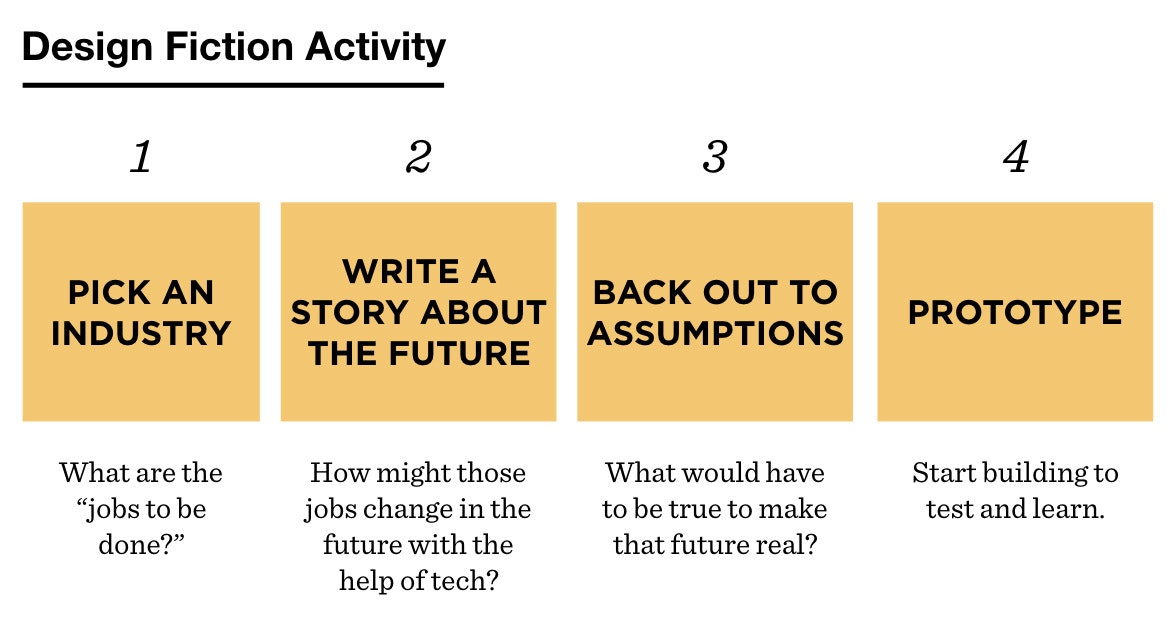
1. Pick an industry and describe its role in the consumer’s life
Let’s take insurance as an example. Insurance is a safety net for when something bad happens. But insurance customers don’t simply want protection—they also want to understand and manage risk, find the most agreeable policy to ensure support when they need it, and trust that their claims will be processed and paid. These criteria are often referred to as the “jobs to be done”—in short, they are the things the consumer has “hired” the product to do.
2. Write a story about the future, free from today’s constraints
If you focus on the “jobs to be done” (and don't get caught thinking about existing insurance companies and how they operate), you can begin to imagine new ways to do those jobs for customers with the help of new technologies and other shifts (behavioral, regulatory, etc.) we believe will be relevant in the future.
For example, if we take the job of understanding risk, there’s a story to be told about machine learning and the explosion of sensor data, which will allow us to create more sophisticated risk models. More sophisticated risk models could lead to a more personalized approach to assessing risk and ultimately the ability to provide more relevant products to customers. In this future, perhaps insurance companies shift from being the safety net after something happens to proactive behavior change coaches who help protect you before something happens.
When writing a story about the future, we continually ask, “What future do we want to create?” This helps us focus on the ultimate goal of creating value for people and preventing harmful consequences, not just creating new technical capabilities and hoping for the best. In this case, we answer it by imagining how the experience of insurance might take on an entirely new form and function when enabled by the tools of the near future.
3. Back out to the assumptions that would make this future real
Taking this vision of the future as possible, we can work backwards to uncover the assumptions need to be in place to support it coming to be. Our go-to provocation is inspired by Roger Martin and Jennifer Riel: What would have to be true to make this future a reality?
Asking what has to be true is a powerful tool to help you optimistically articulate the key assumptions implied by your story and connect them to your current offers and potential path forward. It’s easy to come up with a long list of reasons why something won’t work, and this often leads to risk aversion and incremental thinking. By surfacing the criteria for success you can pragmatically assess how realistic these assumptions are and design experiments or milestones to demonstrate if you’re on track. Invite your colleagues to get imaginative alongside you and uncover even more ideas.
Elon Musk famously published his master plan (and then a second) for Tesla that stepped through five key assumptions that would allow Tesla to move the automotive industry towards an electric future. These included making electric vehicles high performance and cool—a shift from the pervasive negative view of EVs’ aesthetics and functionality; and changing the notion that these cars are too expensive for average consumers, riding the scale/cost curve to reduce the price and range of vehicles, and making them more accessible to the mass market.
4. Prototype
So now you know what would have to be true. Are those things possible? Rather than speculate and debate, prototyping is your way to find out. Begin with scrappy, low-fidelity prototypes to test your assumptions and continually iterate forward, incorporating your learnings into higher-fidelity prototypes. Getting really clear on these key assumptions enables you to take an evidence-based approach to making investment decisions in risky innovation projects.
As quickly as possible, you’ll want to test your assumptions in the market. This is another sticky point where risk aversion and desire to jump to scale can grind progress to a halt. Designing in-market experiments that are right-sized and laser focused on testing key assumptions is an organizational skill that is difficult to cultivate. Successful startups often are forced to be quite scrappy in the market and increasingly, larger companies are building these capabilities. The founders of Airbnb famously tested their idea out by renting out air mattresses in their apartment during a conference. Established companies are getting into the act too, LEGO, Coca-Cola and General Electric have all market tested new products on crowdfunding site Indiegogo.
It’s unlikely that there’s only one viable solution to get to any preferred future—there are many avenues that may get you there and thus it’s important to diversify and have a number of bets. Many entrepreneurs will tell you that their current business is not exactly like their original business idea. Often, it’s pretty far from it. That’s because the steps required to go from idea to reality involve a lot of prototyping, experimentation, and openness to change along the way. Whether you work in the field of innovation, you’re an entrepreneur with a startup, or you have an idea for a business that you’re ready to explore, using the principles of design fiction and cross-organizational collaboration can help.
Hear more on design fiction and cross-organizational collaboration in this episode of IDEO U's Creative Confidence podcast.
Illustration by Mark Conlan.
There’s no such thing as a truly original idea, or so the saying goes. Even the most imaginative inventors and artists are limited by the boundaries of their own experience, and every fresh idea is derivative of something that came before.

Lindsey Turner
I’m passionate about building brands, products, and experiences that help organizations show up with meaning and momentum.
I help organizations cut through complexity by shaping how they show up, through brand strategy, identity, and storytelling.
Working at the intersection of brand and business, I bring an editorial eye and a bias toward making—turning ideas into tangible experiences that people can understand, trust, and believe in.
My work spans government, healthcare, financial services, media, and consumer goods, from launching Gen Z-focused ventures to building innovation labs and reimagining legacy brands. I relish moments of ambiguity and enjoy translating across teams, perspectives, and priorities to move ideas forward.
I started my career in editorial and digital design, shaping cross-platform experiences and identity systems in publishing and agency environments. That foundation still shapes how I work today: I’m detail-oriented, collaborative, and overreliant on the Oxford comma. I hold a BFA in Visual Communication from the School of the Art Institute of Chicago.

Rachel Young
My work helps organizations see who their products aren't working for—and build the will and the tools to do something about it
For 25 years, I've asked the same question: Who does this design exclude—and what are we going to do about it?
My work spans human-centered strategy, inclusive design, and qualitative research, with clients ranging from Microsoft, Google, and Verizon to the National Science Foundation, and San Francisco Unified School District.
Before IDEO, I taught elementary school in East Palo Alto and spent a decade doing design work with social service organizations—where I learned firsthand what it costs people when systems are built without them in mind.
I am currently writing User Error, a nonfiction book about digital access and the design decisions behind it. I live in Oakland, California.

Brian Pelsoh
I lead with craft, ensuring our work is creatively excellent: rooted in deep human insight and imagination, while also grounded in the realities of business and technology.
My expertise spans brand, communication, and product design across tech, education, the arts, and social impact.
I believe great work demands both high-level vision and obsessive attention to detail, and only happens through collaboration.
I bring an inclusive, hands-on approach and a deep understanding of business, which enables me to consistently deliver excellence while always asking why.
Before joining IDEO, I worked at the brand firms Pentagram and VSA Partners. I began my career as a designer, leading teams at the School of the Art Institute of Chicago and the Milwaukee Art Museum. I hold an MFA in graphic design from Maryland Institute College of Art and a BFA in communication design from the Milwaukee Institute of Art & Design, and have taught at some of the best design schools in the US.

Tony Wong
I am responsible for IDEO’s long-term success in China and working with clients to use design as a tool to enable growth.
I am responsible for IDEO’s long-term success in China and working with clients to use design as a tool to enable growth. Specifically, I have helped Chinese companies design holistic brand solutions through the development of their products, communication, services, and innovation teams, and I have helped multinationals expand their presence and influence in China.
I advise global leaders on developing China-led innovation and capabilities.
In over 15 years in IDEO Shanghai, I have worked on projects that use design to elevate the quality of the experience of healthcare products and services, streamline processes that increase productivity, create spaces and programs that promote and enable inclusive communities, and build next generation mobility solutions that are planet-positive.
Before joining IDEO, I worked at Philips Electronics and the Electrolux Group in Italy, the Netherlands, and Singapore on a number of breakthrough commercial products. I am a member of the Young President Organization in Shanghai.

Building a personal AI for the messiness of life: Sida Li
Most AI products today are built for work—a space with clear problems and established systems. One founder noticed a gap: personal life is messier, harder to systematize, and mostly left behind by the AI boom. So she built Cue, a personal AI that lives inside iMessage and group chats, to go where the other tools haven't.
In this episode, Becca Carroll, IDEO's Chief Strategy Officer, talks with Sida Li, co-founder and CEO of Shared Context Lab, about staying anchored to a human need while the technology around her keeps changing shape, why she treats her business model with the same rigor she'd bring to a product, and what it feels like to build a company at this particular, disorienting moment in AI.
The conversation also gets into how Sida makes design decisions: the language Cue uses to describe itself, the tradeoffs behind building inside iMessage instead of a new app, and a real story about a business idea that didn’t pan out.
This is the second in a two-part series profiling founders from IDEO's Startups-in-Residence program. The first conversation is with Johannes Seemann, founder of Sooner, on designing GenAI for the emotional side of money.

Designing GenAI for the emotional side of money: Johannes Seemann
Most personal financial tools are built to run the numbers and optimize towards a budget. While that works for some, most people experience money as a lived relationship that does not neatly fit into a spreadsheet. Johannes Seemann and Becca Carroll discuss why money is emotional before it is mathematical, and what a human-centered approach to building a generative AI financial product looks like in practice.

The curious leader's edge in uncertainty: Scott Shigeoka
Mina Seetharaman talks with Scott Shigeoka, author of Seek and Head of Curiosity Cultivation at the Eames Institute, about what distinguishes genuinely curious leadership from performative curiosity, how power dynamics shape curiosity, and why practicing curiosity can restore energy rather than drain it.

How constraints make us more creative: David Epstein
Mina Seetharaman talks with David Epstein, author of Inside the Box and Range, about why total freedom often produces average work, how leaders can design useful limits on purpose, and what organizations such as General Magic and Pixar reveal about the relationship between boundaries and creativity.
Looks like you might be in search of something very specific?
Or reset the filters above and try another angle.
Here’s some random inspiration

Podcasts about creative leadership

Articles about the power of prototyping
