
.svg)



Sparking a conversation around policing in NYC
Helping the New York Civil Liberties Union activate a city-wide, nontraditional campaign centered on listening.
New Yorkers experience policing differently depending on who they are and where they live. Some communities are patrolled; others are profiled. When your neighbors’ experiences are starkly different from your own, it can be almost impossible to understand their perspective.
The New York Civil Liberties Union (NYCLU), a state branch of the ACLU, hoped to spark a dialogue around race and police tactics in over-policed communities, and to engage voters on this divisive issue before New York City’s mayoral election. But the NYCLU also understood that traditional slogans and billboards weren’t enough to foster deep personal conversations and effective political action—the city needed real talk.
The organization engaged IDEO to help create a city-wide, nontraditional campaign. In talking with New Yorkers, the NYCLU advocates and IDEO designers honed in on two simple truths: Transformative conversations happen only when people feel safe enough to listen—and to speak. And people become more compassionate listeners once they themselves feel heard. In a time of entrenched interests and growing social conflict, listening can be a radical act.
Together, IDEO and the NYCLU designed Listening NYC, a grassroots campaign to promote interpersonal listening, meaningful discussion, and collective action around policing.
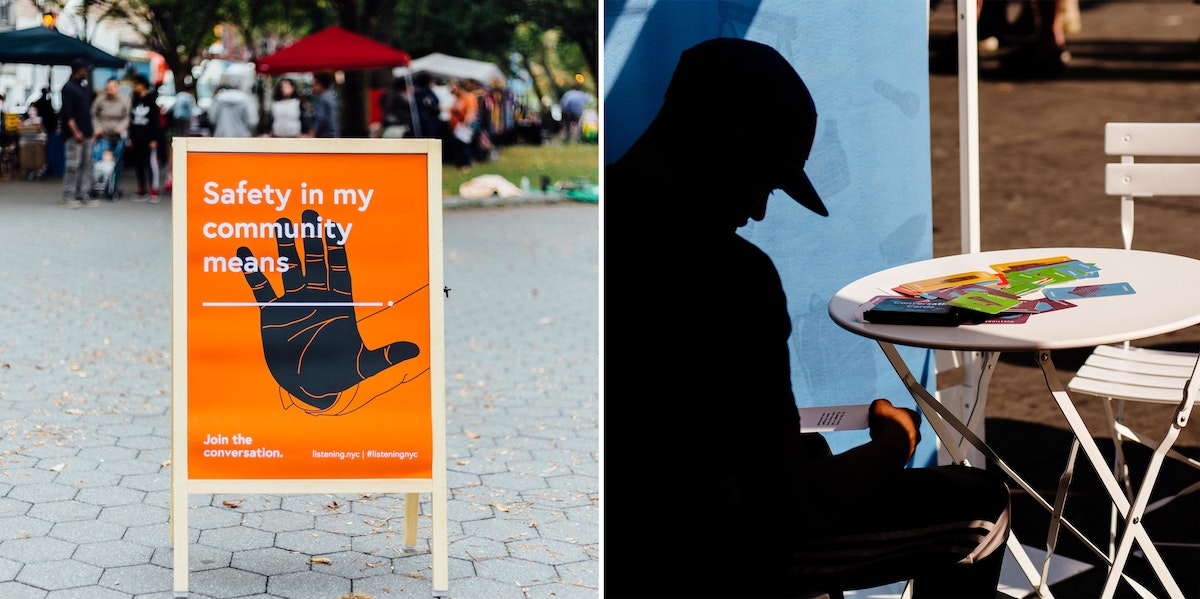
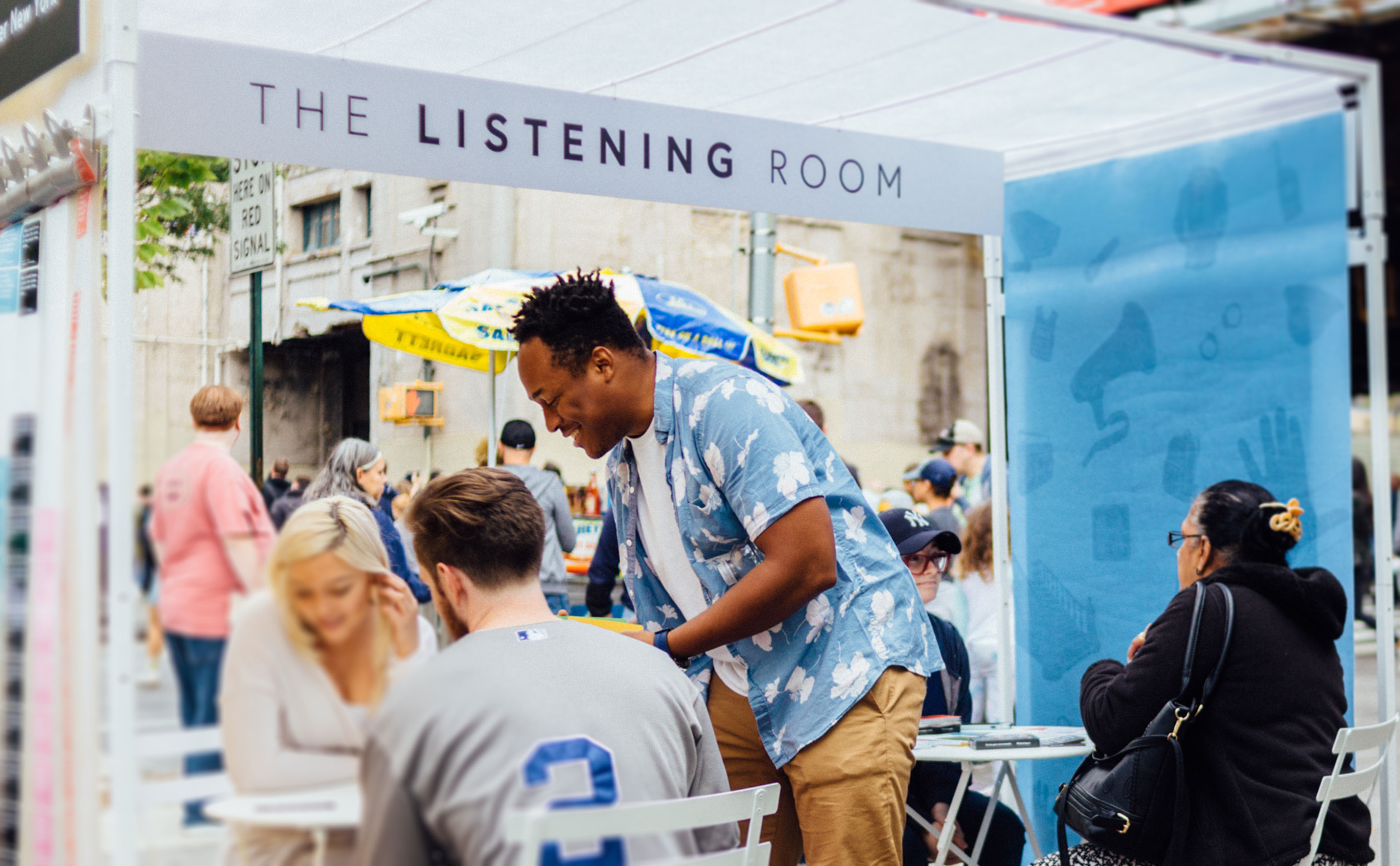
To get New Yorkers—famously brash and always bustling—to stop and listen to their neighbors, they created a pop-up installation called the Listening Room that travels through the city to catalyze one-on-one conversations. It’s a portable safe space, with tables, chairs, two walls that provide a degree of intimacy, and two sides left open for a feeling of psychological safety.
At the center of the experience is a deck of Conversation Cards that encourage New Yorkers to share their stories and hear those of others. Simple prompts like “I believe the role of police is to _____,” and questions like “A cop stops you in your neighborhood. What do you do?” empower people to find common ground. Through straightforward but structured activities like these, many New Yorkers who enter the Listening Room expecting to disagree instead find themselves sharing stories and opinions in ways they never imagined.
Beyond face-to-face dialogue, the Listening Room also features a radio loaded with stories from different neighborhoods across the city’s five boroughs. By turning the dial, visitors can learn about encounters with policing culture from fellow New Yorkers, including two NYPD officers.
To turn talk into action, visitors are invited to send a postcard to the mayor. People choose the policy proposals most important to them—from, “Police shouldn’t be disciplining kids in school” to, “If police want to read our emails, they should have to get a warrant”—and add them to a pre-stamped postcard dropped into a special “ballot box.” The NYCLU delivered more than 2,000 of these cards to Mayor Bill de Blasio upon his reelection in late 2017.
IDEO and the NYCLU also led an interactive campaign event at the Brooklyn Academy of Music. Residents, students, philanthropists, and police were led through an exercise called Creative Tensions, positioning themselves around the room according to their views on everything from surveillance technology to school safety. Experts helped guide the conversation including Sheriff Jerry Clayton, director Liesl Tommy, and NYCLU organizer Brandon Holmes. The process allowed participants to see how fluid people’s positions can be.
Listening NYC has now reached thousands of New Yorkers at more than 35 locations. Schools, from a public middle school to the John Jay College of Criminal Justice, have requested visits from the Listening Room, and the installation’s modular design has inspired new incarnations on topics including student safety and discipline.
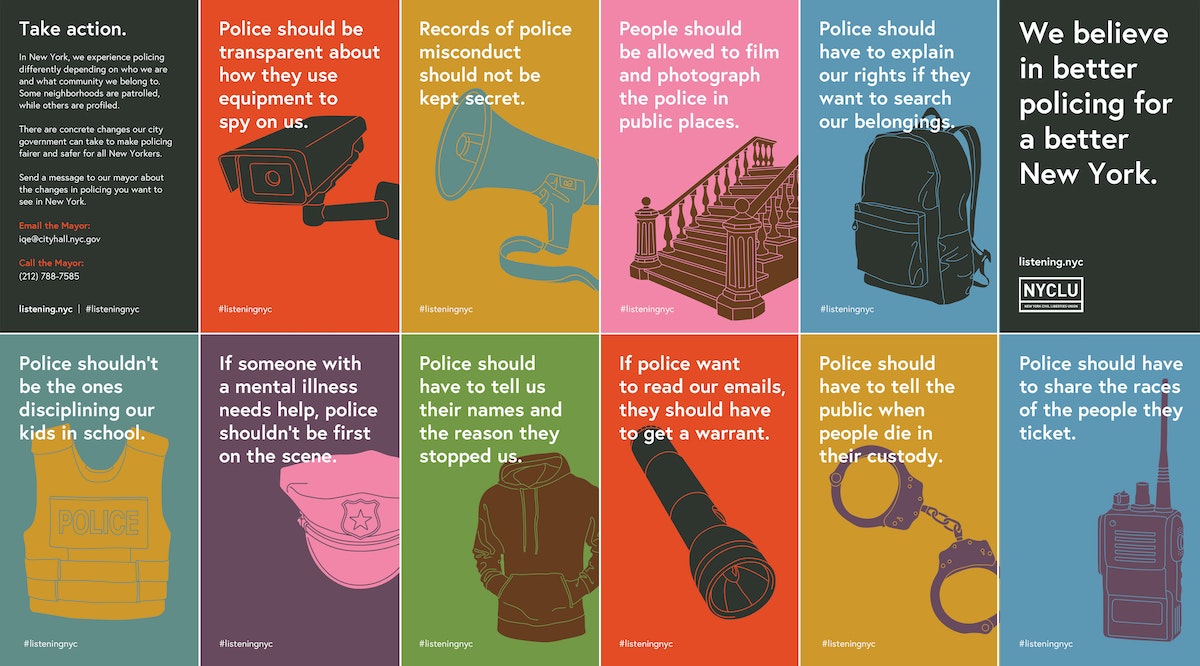
The NYCLU has sent Conversation Cards to celebrities, influencers, and every member of the New York City Council. Sending postcards to Mayor de Blasio and Conversation Cards to the city council led directly to passage of the Right to Know Act—legislation that incorporates some of the NYCLU’s proposals for police reform.
Today, the impact of Listening NYC has moved beyond city limits. The NYCLU’s Syracuse chapter is introducing the pop-up installation there, while in Boston, mayoral candidate Tito Jackson even promised a visit from the Listening Room if elected. To keep dialogue flowing, the ACLU plans to distribute Conversation Cards nationwide.
Driving growth at Europe’s largest online fashion retailer
How Zalando redesigned the way it works and saw profits soar.
Fashion thrives on reinvention. Now, digital platforms and tools are reinventing fashion. E-commerce has reshaped the shopping experience and social media has democratized the once-exclusive industry.
Amidst this furious whirl of change, the fashion platform Zalando, founded in 2008, has become one of Europe’s fastest-growing tech companies. Headcount has ballooned to 15,000 and revenues grew 23 percent year over year. More than €1 out of every €100 spent on clothing in Europe is spent at Zalando.
In 2014, Zalando’s co-founder and CEO Robert Gentz approached IDEO to help think about the organization’s future in the face of increasing competition. Gentz realized that building design thinking capabilities across the company would allow Zalando to make systemic business shifts, like building better experiences for customers, and balancing operational excellence and execution with innovation.
So, he invited a team of IDEO designers and Zalando employees to create an innovation lab in its Berlin headquarters. They called it The Studio, and in the three years since its launch, it has helped the company build new products, experiences, and modes of working that are powering a digital transformation across Zalando and in the broader fashion world.
Finding purpose
Gentz came to IDEO with a simple request: “I want my daughter to be proud of the company I created.” With that directive, the first order of business was to home in on the organization’s new strategy—to shift from an e-tailer to a full-blown fashion platform—and resurface purpose. After a series of interviews and workshops across the company, a unifying intent emerged:
Zalando exists to reimagine fashion, for the good of all.
To share that message, the team designed a five-day Festival of Purpose at the company’s Berlin headquarters and satellite locations, coupled with a long-term plan to help leaders and their teams weave that sense of purpose into everything they do.
WATCH: Learn how Zalando used purpose to mobilize its community
Building Innovation Capacity
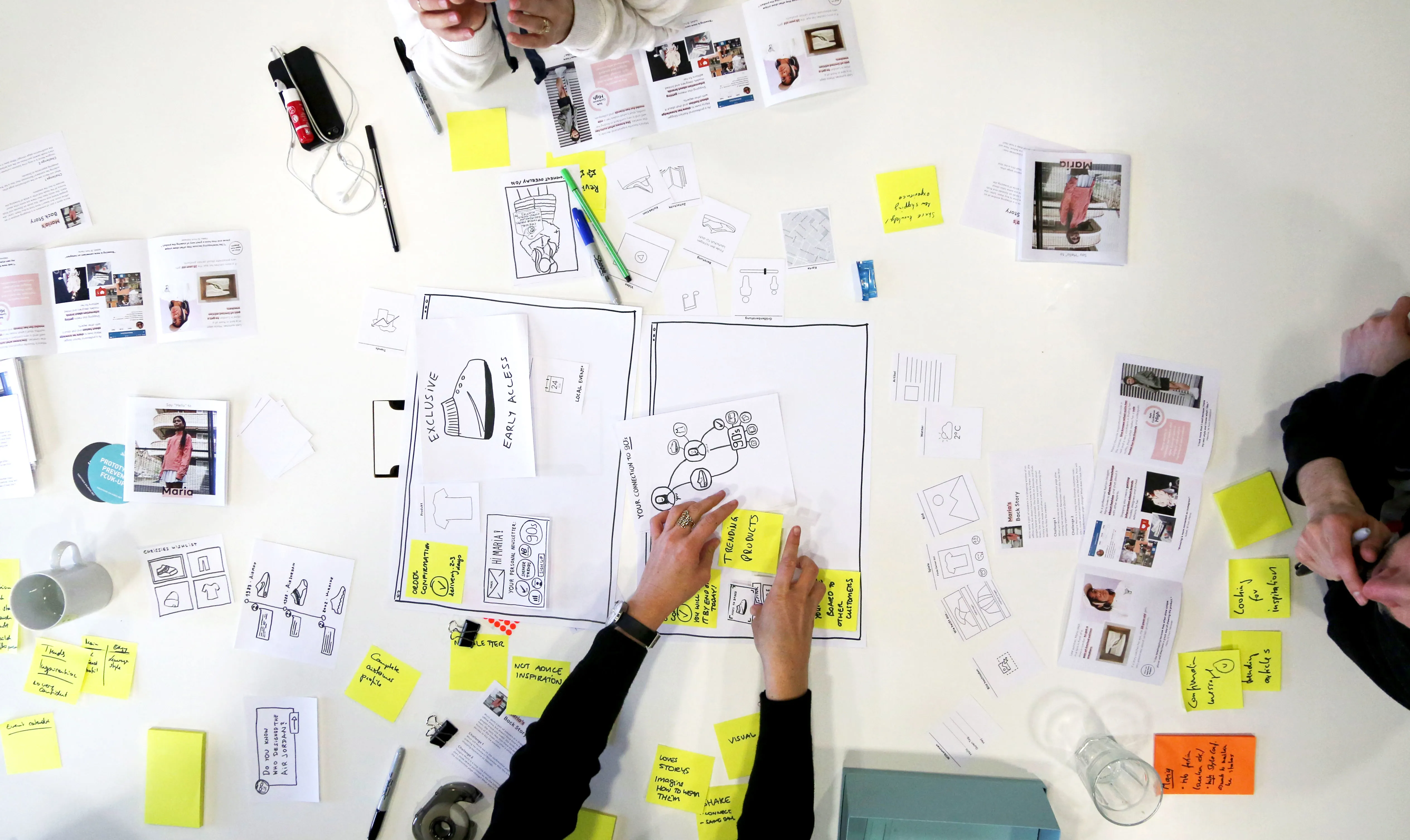
With a shared purpose to rally around, Zalando started to design and build at a clip. The Studio experimented and prototyped, launching products like Seen At, a mobile app that allows members to upload street style photos, and a digital tool called Collabary that connects online fashion influencers with brands. Projects are enabling cross-disciplinary teams to get into the practice of aligning around joint goals, making fast decisions, and building with agility.
But just as important as identifying growth opportunities for the company has been The Studio’s role as a hub. Zalando employees from across business units cycled into the Studio, teaching IDEOers about their business and the company’s culture, while IDEOers helped them master the design thinking process so they could lead future projects.
Studio graduates ensure that anything prototyped there is implemented, and integrate what they’ve learned into their day jobs. Their experience makes them design ambassadors who spread the practice of experimentation, prototyping, and storytelling across the organization.
WATCH: Learn how Zalando pioneered a new innovation studio
Teaching Leaders How to Scale Change
It’s one thing to start working differently in a small innovation lab, but how do you scale change across an organization and determine how it will affect each major business unit—product, technology, commercial, and logistics? IDEO interviewed Zalando employees to better understand how to embed what we called new Ways of Working (WoW), a method that combines design thinking with lean and agile approaches. WoW was then deployed by a centralized team that ran workshops and coaching sessions to help leaders adopt it, measure its impact through OKRs, KPIs, and NPSs, and help their teams understand the new processes.
Today, the Ways of Working method is being rolled out across the entire organization, reaching all 15,000 employees.
Together, the relationship between IDEO and Zalando and their multi-year project of change is spurring double-digit growth, and making good on the company’s vision of reimagining fashion, for the good of all.
WATCH: Learn how Zalando scaled new ways of working across their organization
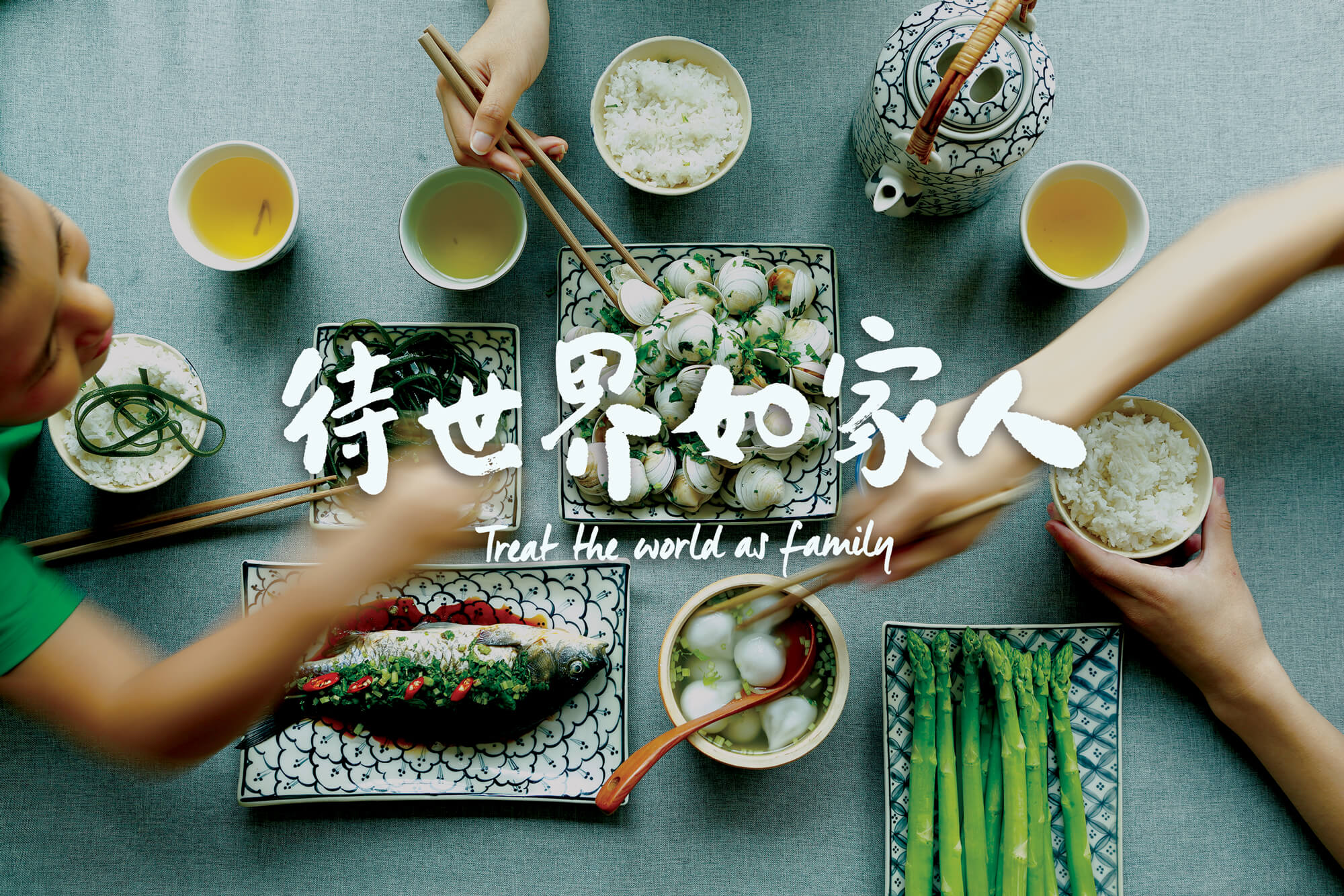
Elevating the craft of Chinese cuisine
Helping a packaged foods company in China define its purpose and take its place on the international stage.
IDEO helped position Shinho’s ingrained respect for food, family, and good health as a guiding principle for how the organization interacts with its employees and the wider world. The IDEO team integrated a new motto—“treat the world as family”—into every part of Shinho’s work, from sourcing and hiring to new ventures to the care employees take in handling each bottle of sauce destined for someone’s table.
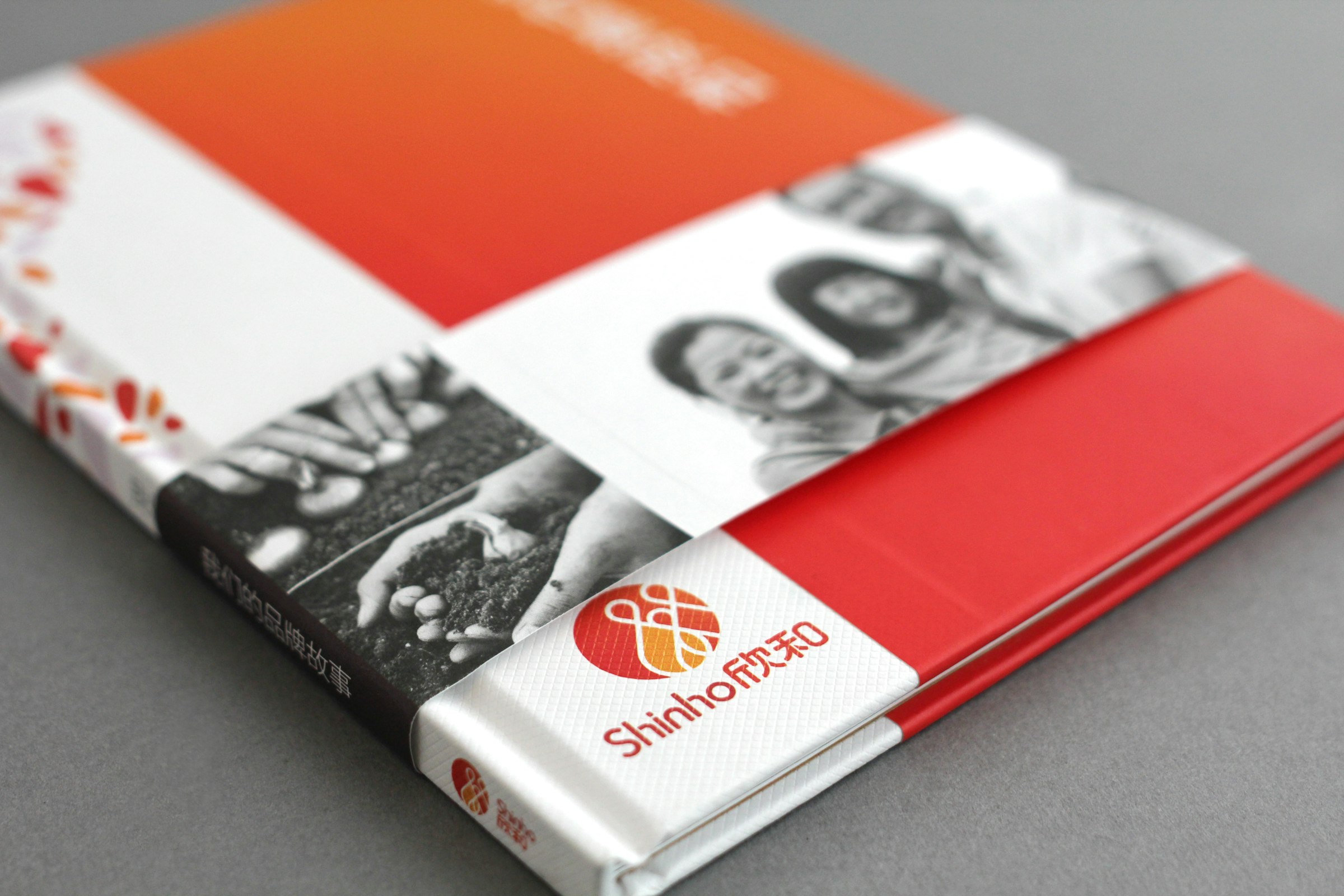
To help transform Shinho’s internal culture, the IDEO team also crafted a narrative to communicate the company’s beliefs to new staff and outside partners. The team expressed Shinho’s foundational story through a published brand book and film, reimagined logo, and codified employee values.
“My proudest moment was when we brought the brand identity IDEO developed to life, and interpreted Shinho’s mission and vision through that lens in front of 2,000 employees at our annual meeting,” said Hanzhong Dong, Shinho's Head of Product, “It made me feel that even though we’re a group of ordinary people, we’re working on a great and meaningful thing."
Shinho’s heightened confidence and focus on supporting families has empowered the company to expand beyond soy sauce and snacks and explore new offers, from culinary training to sustainable farming to food experiences.
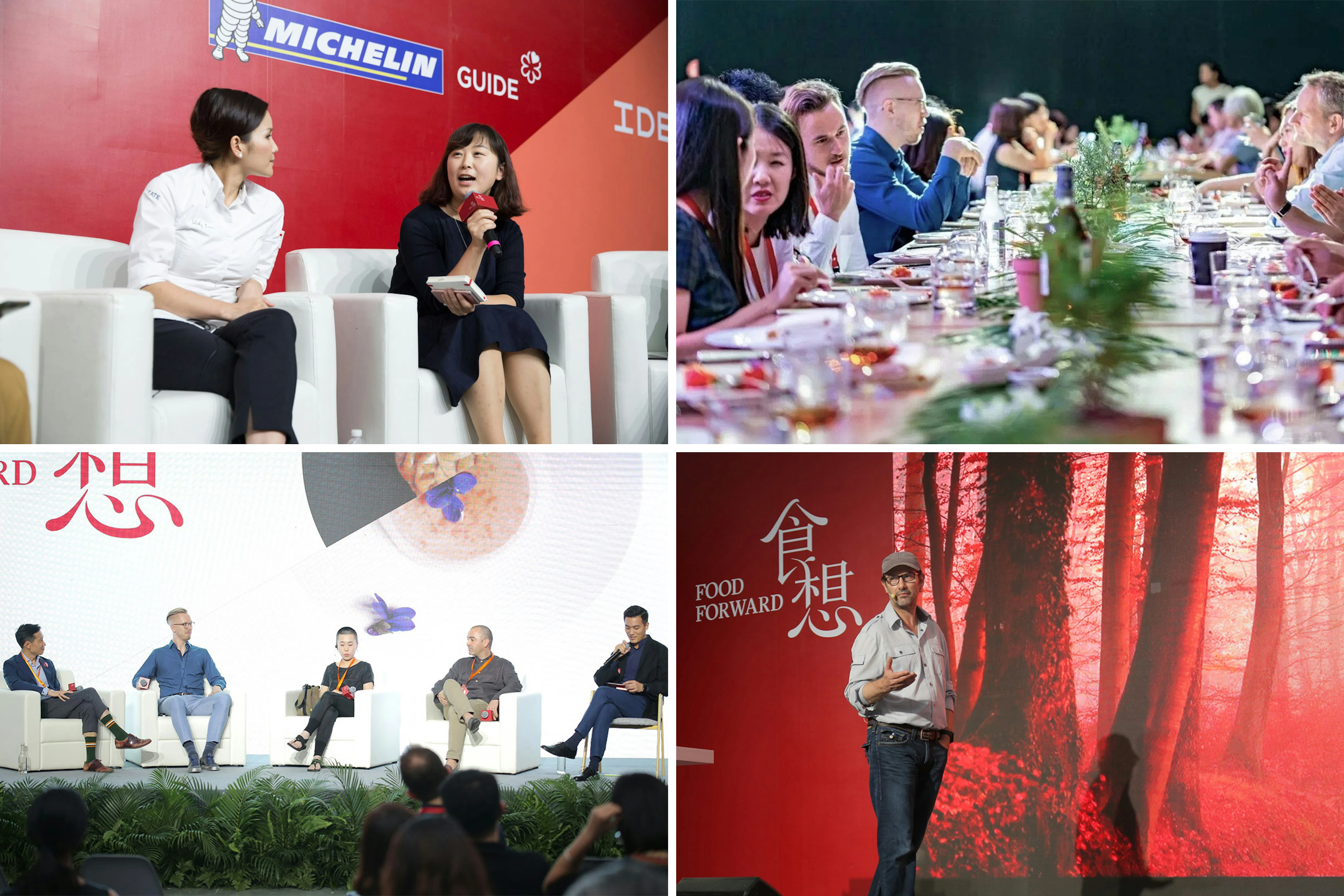
In July 2017, Shinho stepped onto the international stage as a tastemaker by participating in an event called Food Forward, hosted by the Michelin Guide and IDEO. Michelin-starred restaurants are synonymous with superb ingredients and service. Shinho crafts safe, organic, high-quality products that are staples for Chinese chefs, and the company shares the Michelin Guide’s aim to celebrate and expand the role of fine dining in China. IDEO brought all parties together with the shared goals of elevating China's culinary craft and culture, inspiring people around the future of food in China, and encouraging fruitful connections and partnerships.
IDEO and the Michelin Guide organized the day-long event, which included guest speakers, panel discussions, and tastings with four international, Michelin-starred restaurant chefs. Speakers and panelists discussed culinary education, inclusion, and the interplay between tradition and innovation in food. More than 200 people attended from across the food ecosystem: chefs, restaurateurs, journalists, investors, and educators. The event’s livestream garnered 30 million global views and 800,000 engagements.
Shinho’s products now reach 30 million families in 232 cities around the globe, driven by a cohesive mission and brand message. This kind of values-driven growth and hunger for new partnerships is setting the course for the future of food in China and throughout the region.
Despite the rapid growth of China's economy and increased access to a wider variety of food since the opening up, the market is saturated with unhealthy, processed snack foods. Consumers are increasingly seeking better-quality options, highlighting a significant gap in the food system.
30M families
purchase Shinho’s products
60 countries
around the globe offer Shinho products
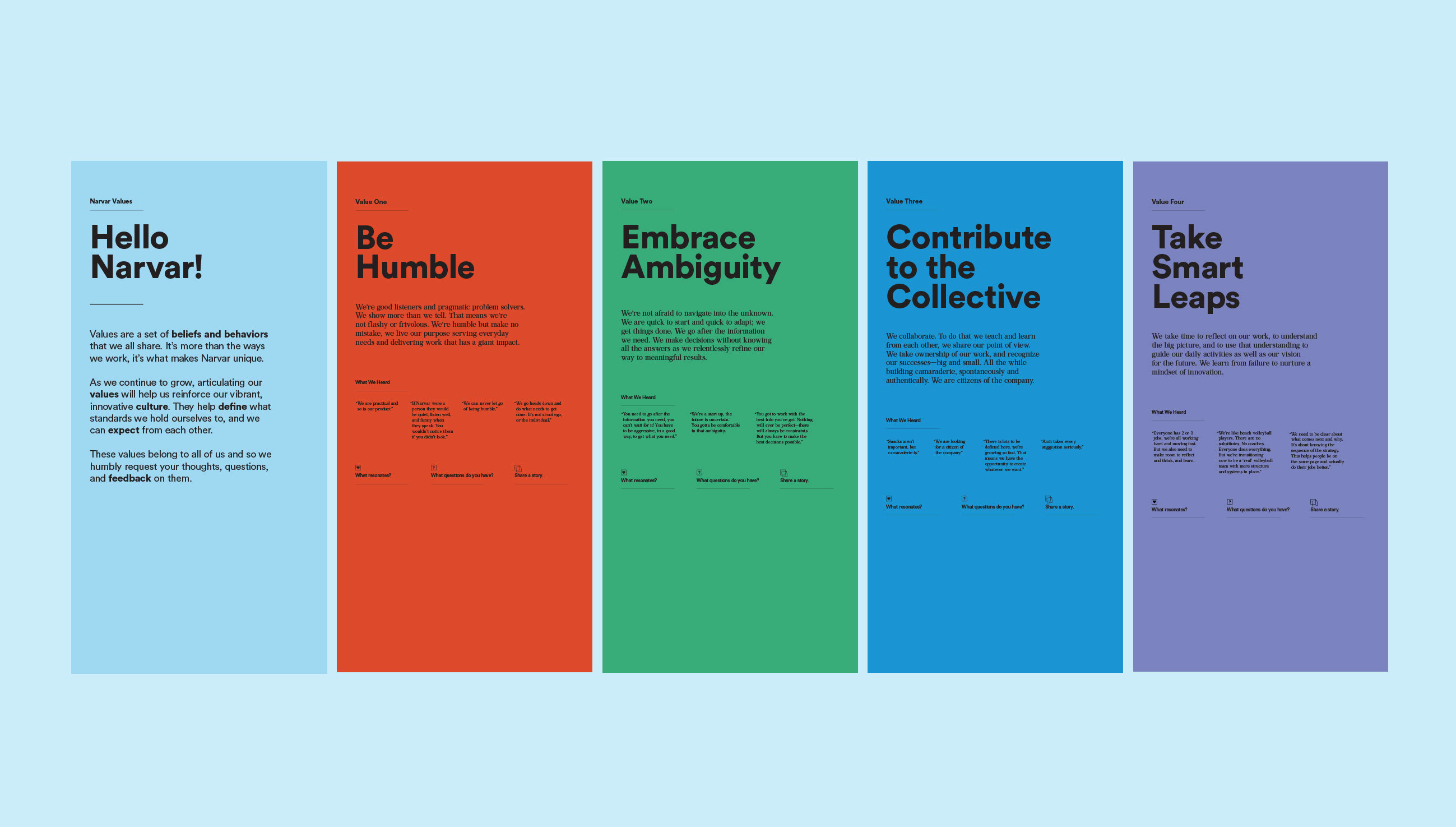
Defining values to set the stage for future growth
In helping a startup codify its values, IDEO prepared its team to scale—fast.
Narvar, a software-as-a-service startup that provides a post-purchase engagement platform for retail clients, was scaling fast. The company had grown from 20 to 90 employees, and was well on its way to reaching 300 over the next two years. As the company grew, its leaders wanted to make sure it could sustain its vibrant, innovative culture. Narvar came to IDEO for help identifying and defining its values in a way that would would scale with the organization.
For the IDEO team, that meant articulating a system of values that supported existing behavior, reflected the company’s aspirations, and aided in evaluating new talent and development. The team started by interviewing key “culture carriers,” from the CEO to new hires, to learn what makes Narvar special. Based on this research, the team crafted a working set of values, then invited the entire company to share their feedback. In doing this work, IDEO was also able to surface organizational issues and tensions within the company for Narvar leaders to address.
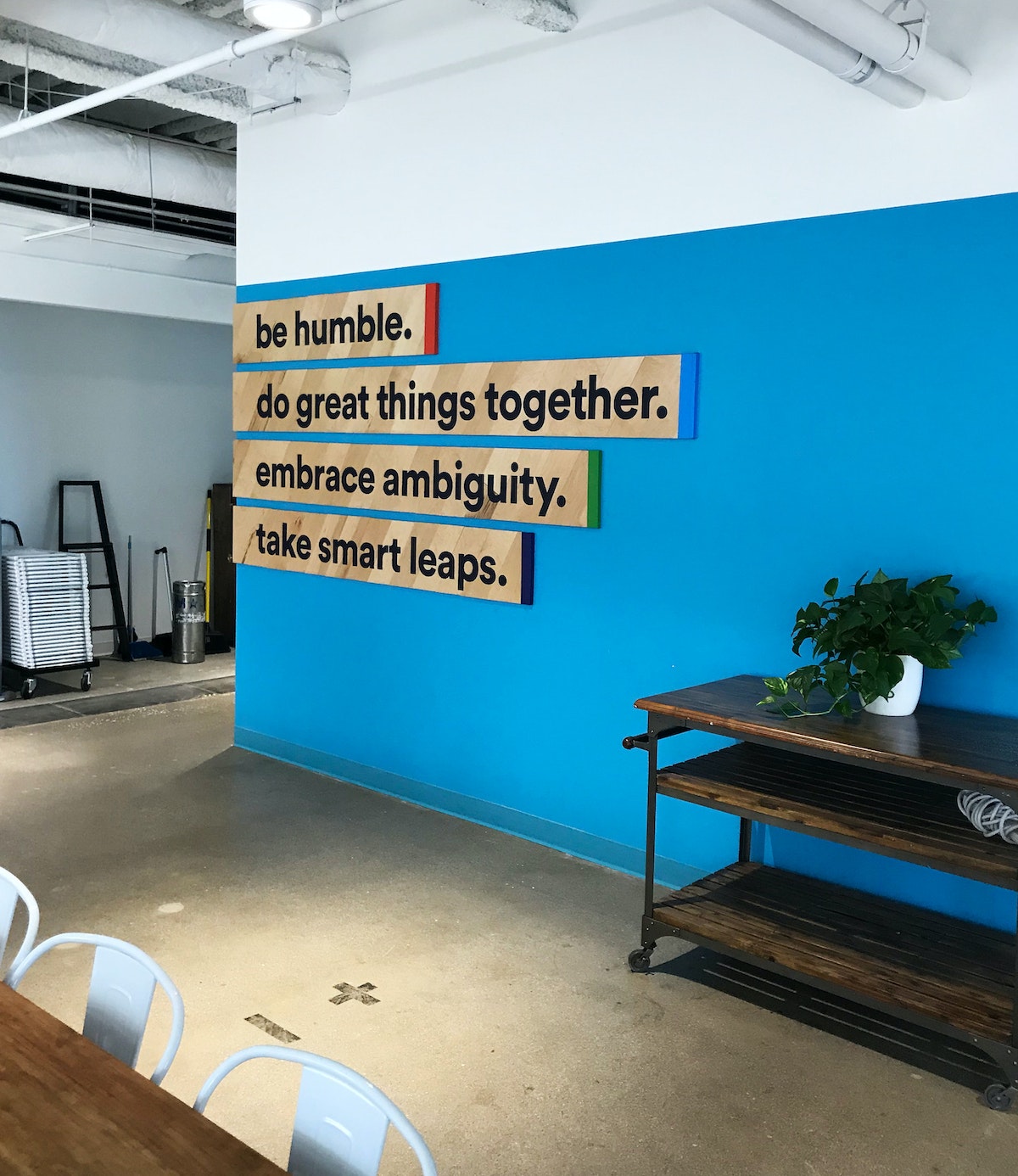
Now, Narvar lives its values every day. Team members use them during candidate interviews, employees see them daily on company walls, and managers reinforce them during performance reviews. Every quarter, leadership gives out a Narvar values award to reinforce their importance. Through this project, Narvar was able to not only capture its core values, but also use them as an active ingredient in the company’s growth.
“We engaged IDEO to really understand the challenges we faced as an organization, and IDEO helped us define and articulate our culture and values. I can honestly say that all the growth and success we’ve achieved in the past two years—we couldn’t have done that without the foundation from IDEO,” said Narvar CEO and founder Amit Sharma.
Design Thinking for Libraries
Design Thinking for Libraries is an approach to improving libraries through creative problem-solving.
This toolkit guides you through design thinking so you can start coming up with solutions to everyday challenges within the library. Design thinking, or human-centered design, is all about starting with people—the users that visit your library.
IDEO has been using similar methods to envision new products, services, spaces, and experiences that bring them to life. IDEO created this toolkit specifically for the library setting and is looking forward to seeing how you might create impact by seeing your work through a fresh perspective: the design thinking lens!
Learn more here.
Design Thinking for Libraries is an approach to improving libraries through creative problem-solving.
5 Invaluable Work Tips from Introverts
Introverts are the sleeping giants
Apparently I’m not the only one. Aya Jaffar’s exploration, “Introvert at IDEO”, reveals that I am healthier and far less freakish than I ever could have dreamed. As an intern, Aya took on the task of asking her fellow IDEOers how they embrace their introversion in such an extroverted environment.
IDEO is filthy rich with fascinating people. Every week we have stimulating lunch-hour talks and raucous happy hours. Our office is the ultimate embodiment of an extroverted workspace. We think out loud! We brainstorm together! We eat in teams! We have walk and talks, just like in The West Wing!
That’s all well and good for about half the population. But the best work cultures make space for those of us who seek occasional refuge from the chatter.
Here are a few comforting things I learned from Aya’s “Introvert” piece:
There's a spectrum
Carl Jung was a pretty smart fellow. He suggested that everyone falls somewhere on the Introvert <---> Ambivert <---> Extrovert scale, so none of us are purely one thing or another. Big Bird? Michelle Obama? Your bus driver? Probably all extroverts with introverted traits. Just like me.
Introverts recharge with solo time
Introverts aren’t shy! They’re exhausted and they need to step away from others to think things out or recharge. That’s also why they have monstrously large noise-cancelling headphones on. Always.
They've got skillzzzzz
While extroverts’ positive qualities are easy to identify and praise, we should be quick to notice the greatness and strengths of introverts too. They are world-class listeners, thoughtful synthesizers, and often gifted at lifting others up. They also thrive when working independently so they can get just about anything done if you leave them alone for a bit.
Introverts need thoughtful workspaces
While our colorful, collaborative work style might suggest otherwise, our office actually considers introverts more than we know. We have phone booths built for one, the hushed Lighthouse workroom, enclosed project spaces, and breakout couches that allow anyone to focus in a way that works best for them. Plus, IDEO expects us to manage our own space and schedule, allowing us the freedom to work from home on occasion without ever being judged.
So bring on that big dinner! And some wine! And a cheese platter!
You’ll find me in the bathtub, gearing up for tomorrow.
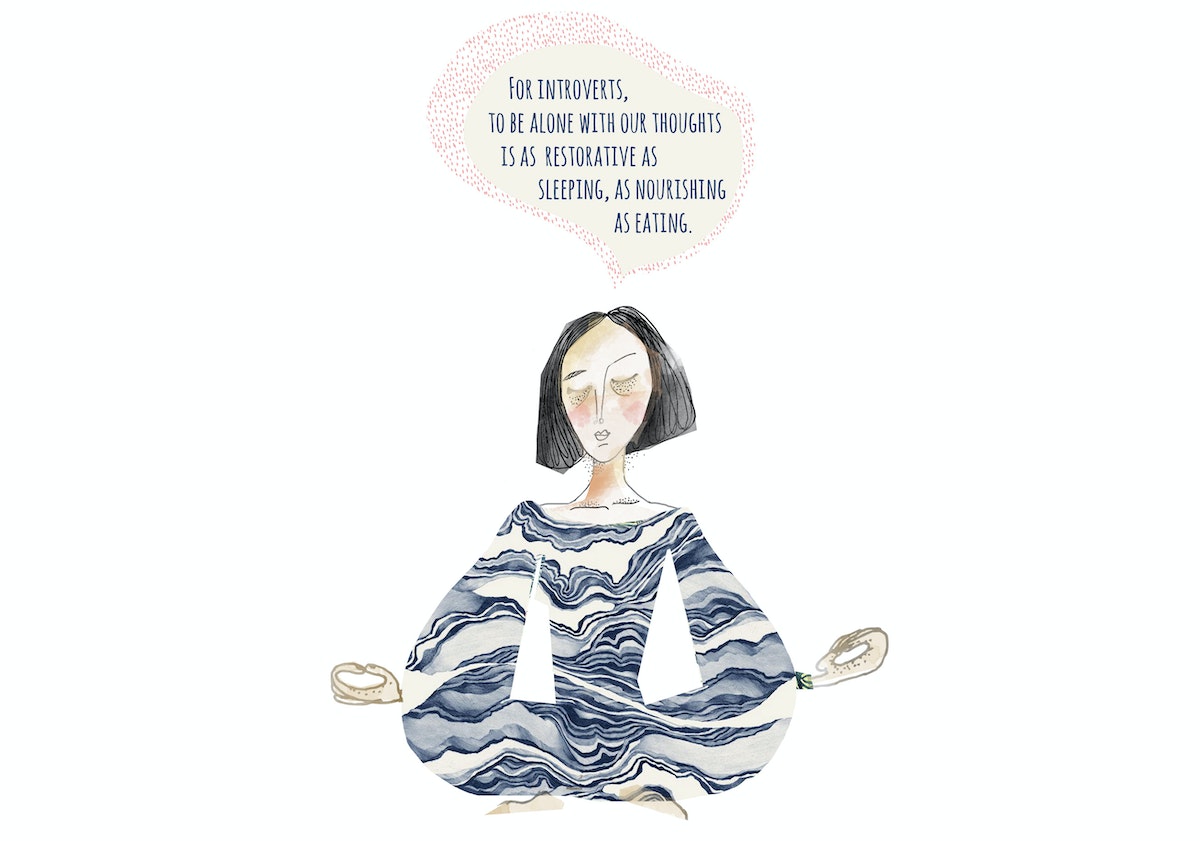
Hi. My name is Tal. I have to go home and hide in a bathtub. That’s not exactly a socially acceptable thing to say at a client dinner, but as an introvert in extrovert’s clothing, the thought has scurried through my head many times.
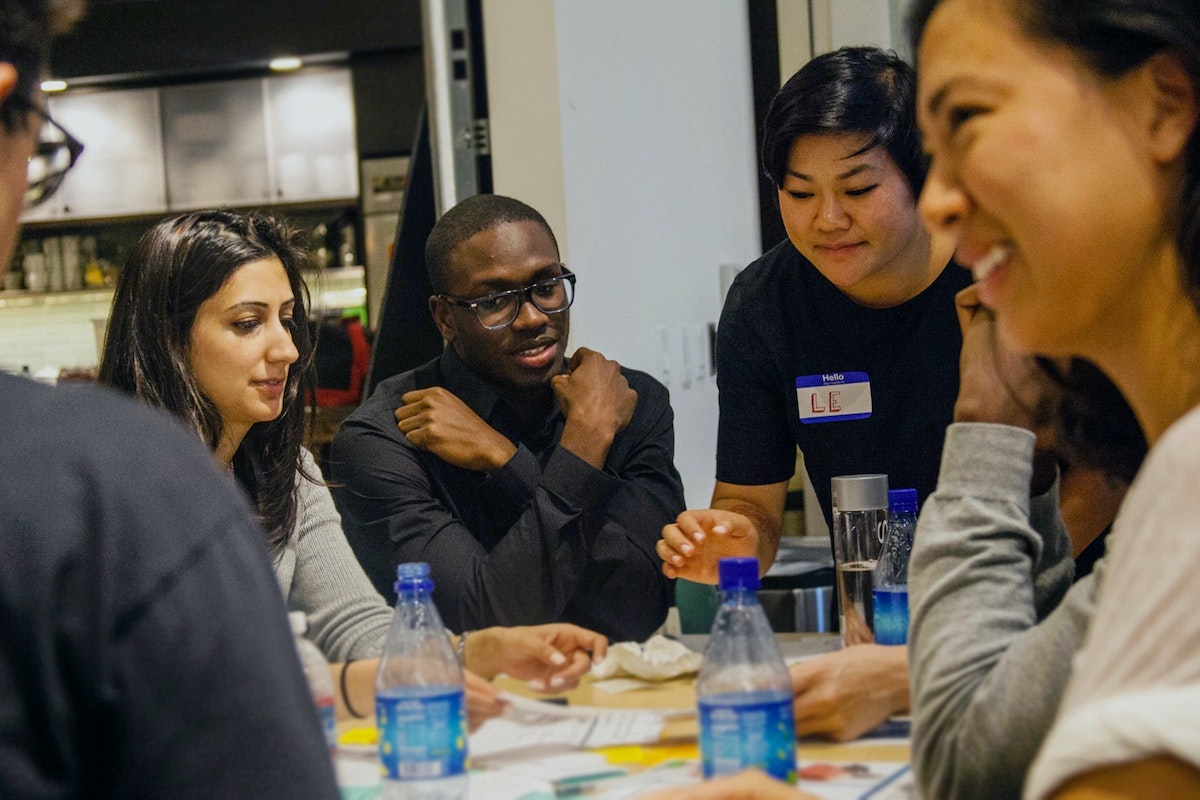
OpenIDEO: A Platform to Harness Collaboration for Social Good
OpenIDEO is an open innovation platform where people from all corners of the world collaboratively tackle some of the toughest global issues through launching Challenges, programs, and other tailored experiences.
OpenIDEO is an open innovation platform where people from all corners of the world collaboratively tackle some of the toughest global issues through launching Challenges, programs, and other tailored experiences.
A Challenge is a three-to-five month collaborative process that focuses attention on the topic and creates a space for community members to contribute and build off each other. This approach is modeled on IDEO's design thinking methodology.
You can learn more about it here.
Active Challenges
The Beyond the Bag Challenge, launched in partnership with Closed Loop Partners and leading retailers, seeks to identify, test, and implement innovative new design solutions that serve the function of today’s single-use plastic retail bag. Winning Ideas are eligible to receive a portion of $1 million in funding, participate in a Circular Accelerator program to receive further assistance in scaling, and access testing and potential piloting opportunities. Find out how you can be involved in the Beyond the Bag Challenge and sign up to receive email updates
‘Agents of Change' Atopic Dermatitis Challenge: Navigating Uncertainty
The ‘Agents of Change' Atopic Dermatitis Challenge: Navigating Uncertainty aims to find creative ways to help people with atopic dermatitis navigate through the ambiguity surrounding the condition with confidence while building awareness and empathy among those around them. Sign up to receive email updates and join the Challenge starting on September 14 to help change the way people think and feel about atopic dermatitis.
The $2M Food System Vision Prize is an invitation for organizations, institutions, companies, governments, universities, and other entities across the globe to develop a concrete and actionable Vision of the food system that they aspire to see in the year 2050. Together, we’re seeking answers to the question How might we envision regenerative and nourishing food futures for 2050? $2M will be distributed to the Top Visionaries, who will be eligible to receive a prize of $200,000 each.
Intrigued? Read about the many ways to be involved in the Food System Vision Prize and sign up to receive email updates.

5 Mindblowing Things We Heard at SXSW
Our pick of the techfest's best panels, people, and provocations
1. "85 percent of cancer can be cured in the next five years."
—Dr. Sanjay Patil
The health care industry missed the PC and internet revolution, but they won't miss the big data and analytics revolution, said Dr. Sanjay Patil, chief medical informaticist at MDLIVE, and John Sculley, a board member. According to the American Medical Association, 75 percent of in-person visits could be handled virtually. But they cautioned that it took 10 years for people to get comfortable with online banking and ATMs. Still, Patil and Sculley believe genomics and precision medicine will trigger massive shifts sooner than we might think, and had some very hopeful predictions. —Betsy Fields Smith, senior design and research lead

2. Robots would be smarter if we didn't interrupt them.
If we want robots to learn from us, we have to design them with the human capability of expressing their intent and emotion said Panellists Leila Takayama, senior UX researcher, Google[x]; product designer Nuri Kim, Fellow Robots CIO Thavidu Ranatunga, and Stanford Center for Design Research executive director Wendy Ju spoke about
For example, a robot often learns that a door is a door by staring at it for hours on end. If a person walks in front of a robot while it is learning, this can compromise the training session and hours of work. We need to design careful and intuitive indicators as to what state robots are in. If, for example, a robot was learning by staring at a door while scratching its chin or tapping its forehead, it would serve as a reminder to not interrupt their lesson.
This relates to work we are doing with autonomous vehicles. We will need to develop a new vocabulary of mobility through which vehicles and people can communicate. What sort of cues, both subtle and bold, have we come to expect drivers that help you anticipate their behavior? How might we thoughtfully design some of these cues into autonomous vehicles to make the future safer and more intuitive to move through? —Danny Stillion, partner/executive design director

3. The Jetson’s-style kitchen of the future is here.
The "kitchen of the future" technology exists and there are businesses being built upon it right now. We heard why in a panel called "From Palate to Plate: Defining a Taste Platform." It was framed as a panel about food data, but spoke more to how we interact with food today and might do so in the future, including replacement cycles for appliances, the lack of a portable “taste profile”, and so forth. We're thinking about these things at IDEO, too. Check out the Concept Kitchen 2025, work we collaborated on with IKEA.
While we've realized much of the Sputnik-era vision of the kitchen of the future, there's a fourth circle—system interconnectivity—that we need to start to consider. —Justin Massa, director of business strategy
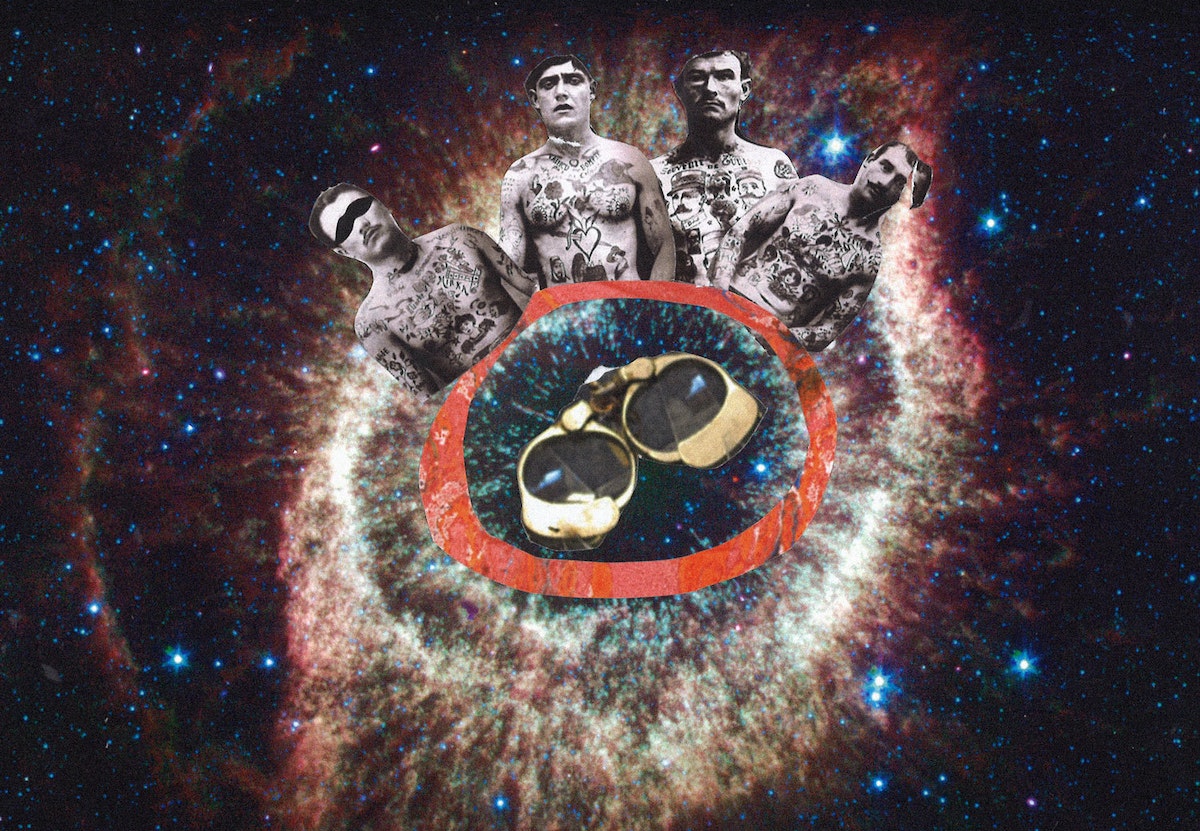
4. Data will reform our criminal justice system.
What does the rise of information design for a complex social problem such as criminal justice reform look like? There is a growing movement to use open, public data for political advocacy and reform. And yet, even with a wealth of data, we’re unable to design for more accurate, immediate, and actionable ways of using it.
This panel, made up of experts and innovators using data for policy reform and program development said the most vulnerable in the system—offenders and their families—could benefit from the use of more transparent and actionable data, such as preventing false confessions in interrogation or exonerating prisoners from false convictions with DNA testing. They also spoke about the power of predictive policing in cities, and protecting those who are re-entering civilian life with data privacy so that they can secure a job or a loan. —Yennie Lee, impact manager, IDEO.org

5. Virtual Reality may change your beliefs.
Unsurprisingly, there was a lot of hype around VR at SXSW. But outside of finding a second home outside gaming, the use cases I'm most excited about are empathy building, and overcoming trauma. VR can deliver sophisticated, deep storytelling that stays with you. It puts you very close to being in someone else's shoes.
Planned Parenthood is doing just that, showcasing its seven-minute film "Across The Line", which follows one woman's journey from her car to the abortion clinic as she confronts a sea of pro-life protesters. Some footage is live action, some animated, but the audio is a live recording from outside a clinic in Illinois. It’s upsetting. And it may just change someone's mind on this issue. —Karoline K, communications designer
Huge thanks to Karoline K for the illustrations in this story.
President Obama, the hyperloop, Wired's Kevin Kelly, Microsoft's HoloLens, Twitter's Biz Stone and, wait for it... Pee Wee Herman! Among the thousands of conversations at SXSW, it can be hard to separate the signal from the noise, so we asked IDEO's SXSW speakers to share their greatest hits. What they came back with—robots, genomics, VR, criminal justice, privacy—proves that design is going places it's never gone before.

Lindsey Turner
I’m passionate about building brands, products, and experiences that help organizations show up with meaning and momentum.
I help organizations cut through complexity by shaping how they show up, through brand strategy, identity, and storytelling.
Working at the intersection of brand and business, I bring an editorial eye and a bias toward making—turning ideas into tangible experiences that people can understand, trust, and believe in.
My work spans government, healthcare, financial services, media, and consumer goods, from launching Gen Z-focused ventures to building innovation labs and reimagining legacy brands. I relish moments of ambiguity and enjoy translating across teams, perspectives, and priorities to move ideas forward.
I started my career in editorial and digital design, shaping cross-platform experiences and identity systems in publishing and agency environments. That foundation still shapes how I work today: I’m detail-oriented, collaborative, and overreliant on the Oxford comma. I hold a BFA in Visual Communication from the School of the Art Institute of Chicago.

Rachel Young
My work helps organizations see who their products aren't working for—and build the will and the tools to do something about it
For 25 years, I've asked the same question: Who does this design exclude—and what are we going to do about it?
My work spans human-centered strategy, inclusive design, and qualitative research, with clients ranging from Microsoft, Google, and Verizon to the National Science Foundation, and San Francisco Unified School District.
Before IDEO, I taught elementary school in East Palo Alto and spent a decade doing design work with social service organizations—where I learned firsthand what it costs people when systems are built without them in mind.
I am currently writing User Error, a nonfiction book about digital access and the design decisions behind it. I live in Oakland, California.

Brian Pelsoh
I lead with craft, ensuring our work is creatively excellent: rooted in deep human insight and imagination, while also grounded in the realities of business and technology.
My expertise spans brand, communication, and product design across tech, education, the arts, and social impact.
I believe great work demands both high-level vision and obsessive attention to detail, and only happens through collaboration.
I bring an inclusive, hands-on approach and a deep understanding of business, which enables me to consistently deliver excellence while always asking why.
Before joining IDEO, I worked at the brand firms Pentagram and VSA Partners. I began my career as a designer, leading teams at the School of the Art Institute of Chicago and the Milwaukee Art Museum. I hold an MFA in graphic design from Maryland Institute College of Art and a BFA in communication design from the Milwaukee Institute of Art & Design, and have taught at some of the best design schools in the US.

Tony Wong
I am responsible for IDEO’s long-term success in China and working with clients to use design as a tool to enable growth.
I am responsible for IDEO’s long-term success in China and working with clients to use design as a tool to enable growth. Specifically, I have helped Chinese companies design holistic brand solutions through the development of their products, communication, services, and innovation teams, and I have helped multinationals expand their presence and influence in China.
I advise global leaders on developing China-led innovation and capabilities.
In over 15 years in IDEO Shanghai, I have worked on projects that use design to elevate the quality of the experience of healthcare products and services, streamline processes that increase productivity, create spaces and programs that promote and enable inclusive communities, and build next generation mobility solutions that are planet-positive.
Before joining IDEO, I worked at Philips Electronics and the Electrolux Group in Italy, the Netherlands, and Singapore on a number of breakthrough commercial products. I am a member of the Young President Organization in Shanghai.

Building a personal AI for the messiness of life: Sida Li
Most AI products today are built for work—a space with clear problems and established systems. One founder noticed a gap: personal life is messier, harder to systematize, and mostly left behind by the AI boom. So she built Cue, a personal AI that lives inside iMessage and group chats, to go where the other tools haven't.
In this episode, Becca Carroll, IDEO's Chief Strategy Officer, talks with Sida Li, co-founder and CEO of Shared Context Lab, about staying anchored to a human need while the technology around her keeps changing shape, why she treats her business model with the same rigor she'd bring to a product, and what it feels like to build a company at this particular, disorienting moment in AI.
The conversation also gets into how Sida makes design decisions: the language Cue uses to describe itself, the tradeoffs behind building inside iMessage instead of a new app, and a real story about a business idea that didn’t pan out.
This is the second in a two-part series profiling founders from IDEO's Startups-in-Residence program. The first conversation is with Johannes Seemann, founder of Sooner, on designing GenAI for the emotional side of money.

Designing GenAI for the emotional side of money: Johannes Seemann
Most personal financial tools are built to run the numbers and optimize towards a budget. While that works for some, most people experience money as a lived relationship that does not neatly fit into a spreadsheet. Johannes Seemann and Becca Carroll discuss why money is emotional before it is mathematical, and what a human-centered approach to building a generative AI financial product looks like in practice.

The curious leader's edge in uncertainty: Scott Shigeoka
Mina Seetharaman talks with Scott Shigeoka, author of Seek and Head of Curiosity Cultivation at the Eames Institute, about what distinguishes genuinely curious leadership from performative curiosity, how power dynamics shape curiosity, and why practicing curiosity can restore energy rather than drain it.

How constraints make us more creative: David Epstein
Mina Seetharaman talks with David Epstein, author of Inside the Box and Range, about why total freedom often produces average work, how leaders can design useful limits on purpose, and what organizations such as General Magic and Pixar reveal about the relationship between boundaries and creativity.
Looks like you might be in search of something very specific?
Or reset the filters above and try another angle.
Here’s some random inspiration

Podcasts about creative leadership

Articles about the power of prototyping
