
.svg)


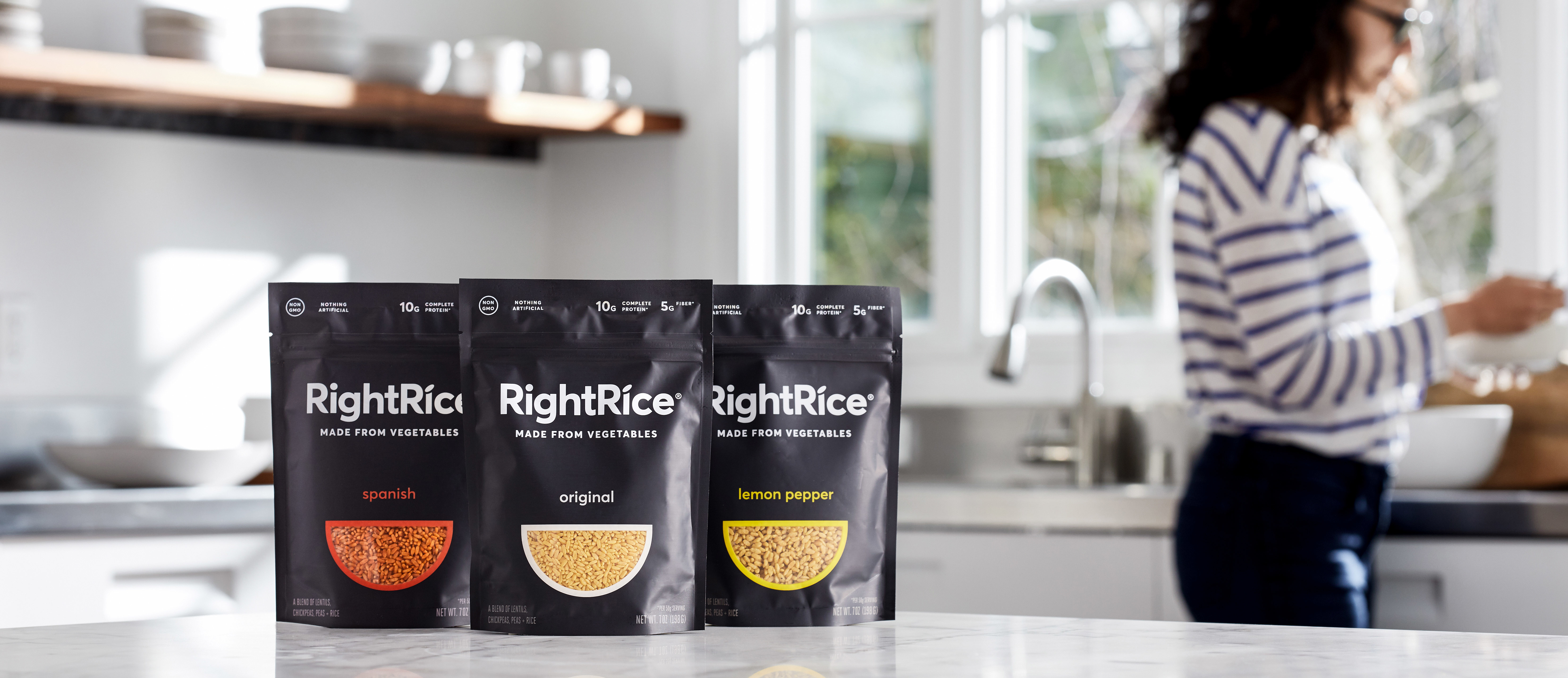

Building a brand for a new, more nutritious rice
RightRice makes one of the world’s favorite foods healthier and easier to prep.
When it comes to food, we often have to choose between health, convenience, and taste. Parents struggle to get their kids to eat veggies. The same daily salad can become boring or bland over time. Produce often withers in the crisper drawer.
Betterer Foods set out to make one of the world's favorite foods healthier. Rice is a beloved food across many cultures, but many people now avoid simple carbohydrates due to diet restrictions or health concerns. Innovations and alternative options have mostly been limited to products in the freezer section, like riced cauliflower.
Betterer Foods created RightRice: a dry, shelf-stable grain made from rice and vegetables, including lentils, chickpeas, and green peas. RightRice has more than double the protein, five times the fiber, and 40 percent fewer net carbs than traditional rice. But the product still tastes and looks like rice, and is faster and easier to cook.
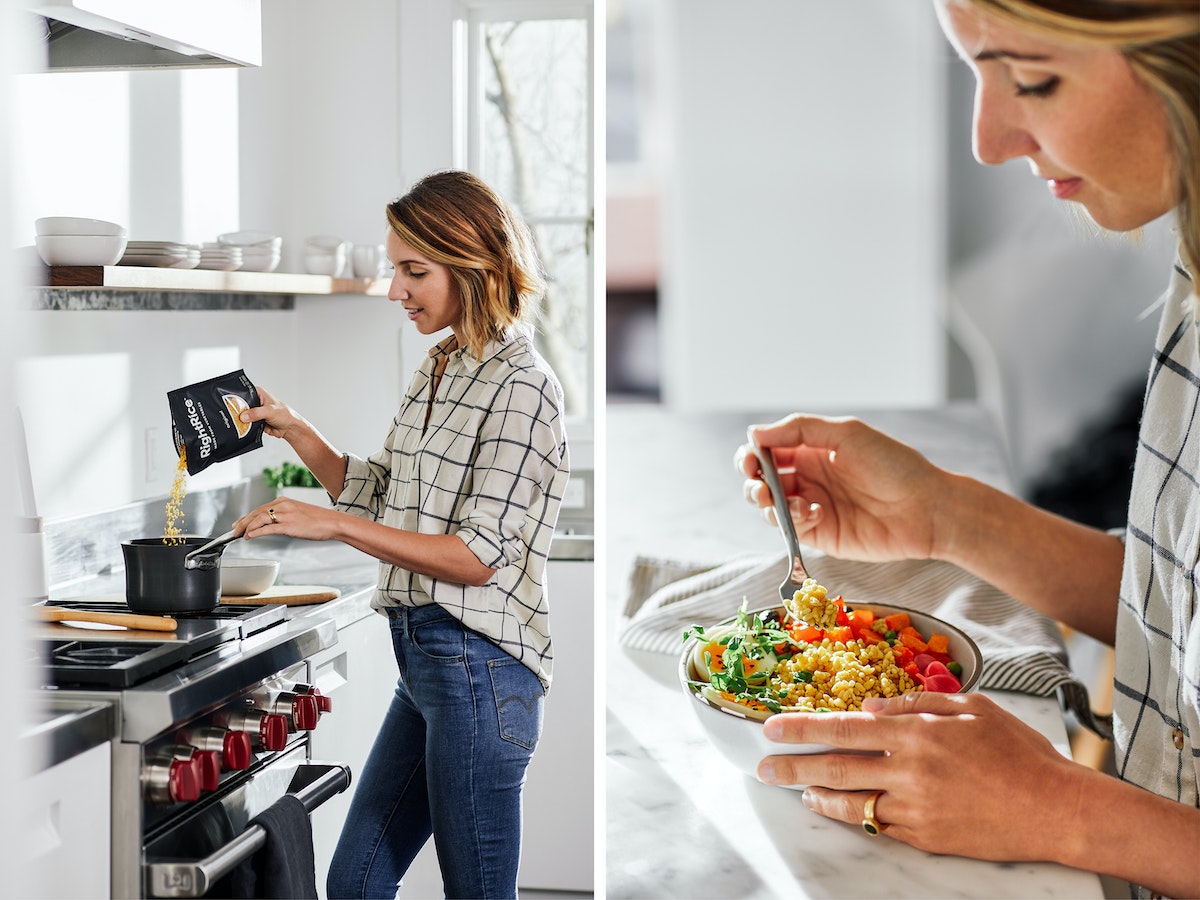
RightRice founder Keith Belling, the founder and former CEO of popchips, asked IDEO to design a brand that would communicate the product’s benefits. The start-up needed everything from a defined target consumer and brand story to a stand-out package design, website, and go-to-market materials.
The team listened to people's challenges with rice and eating healthfully: home cooks find it difficult to store fresh foods without them going bad, busy professionals are strapped for time when preparing balanced meals, and parents sneak vegetables into dishes like casseroles or mac and cheese. Some consumers say they avoid rice because it’s a carbohydrate, which is forbidden in so many of today’s diets. People describe themselves as “carb phobic” or say they consider rice a “guilty pleasure.” Others don’t eat rice because it makes them feel sluggish or bloated, or is too difficult or time-consuming to prepare. Overall, people wished rice could be healthier, simpler to cook, and still taste delicious.
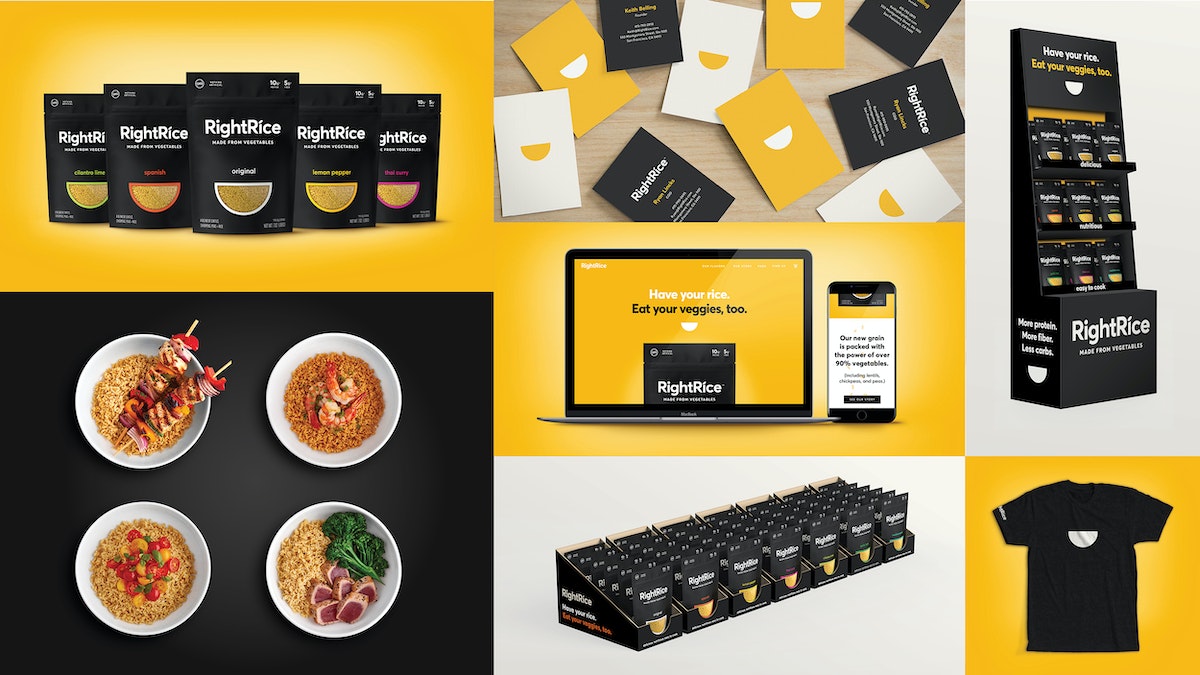
IDEO translated these insights into a brand foundation that helped RightRice come to life on shelves, online, and in the world. The package messaging emphasizes the vegetable ingredients, and the cut-out window lets consumers see that the product looks like rice. The shape of the window simultaneously forms a bowl of rice and a smile.
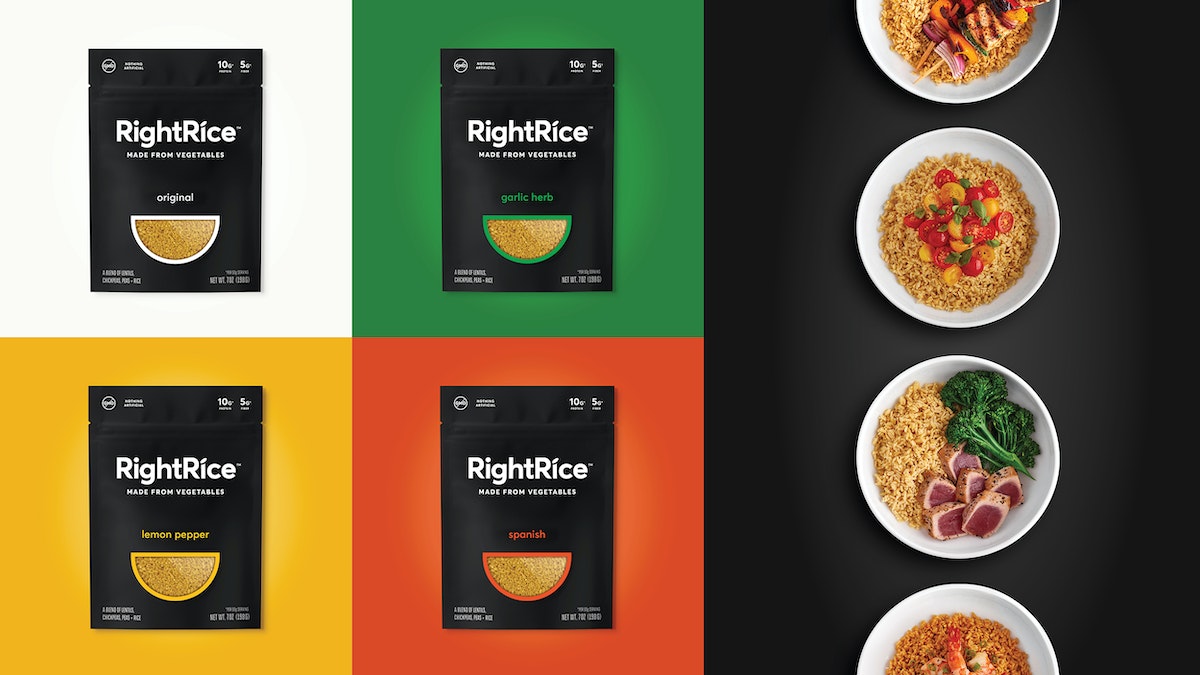
Rice is a household staple around the world. The RightRice brand makes it easier for consumers to have health, convenience, and good taste in one accessible product. RightRice launched nationwide in Whole Foods and Amazon in February 2019.
Since this launch, the company has expanded both its reach and product line. RightRice is now available in nearly 5,000 retailers nationwide in addition to Whole Foods and Amazon, including Sprouts, Wegmans, and approximately 1,800 Kroger stores. Over one million bags have been sold.
The company has received numerous awards and acclaim, including being named “Best Plant-Based” by People’s 2019 Food Awards. Building on the success of RightRice, Belling and his team launched RightRice Medley, a blend of RightRice, ancient grains, and vegetables, in 2020. This new product, which features the same branding the company created with IDEO, has doubled the company’s shelf presence at Whole Foods.
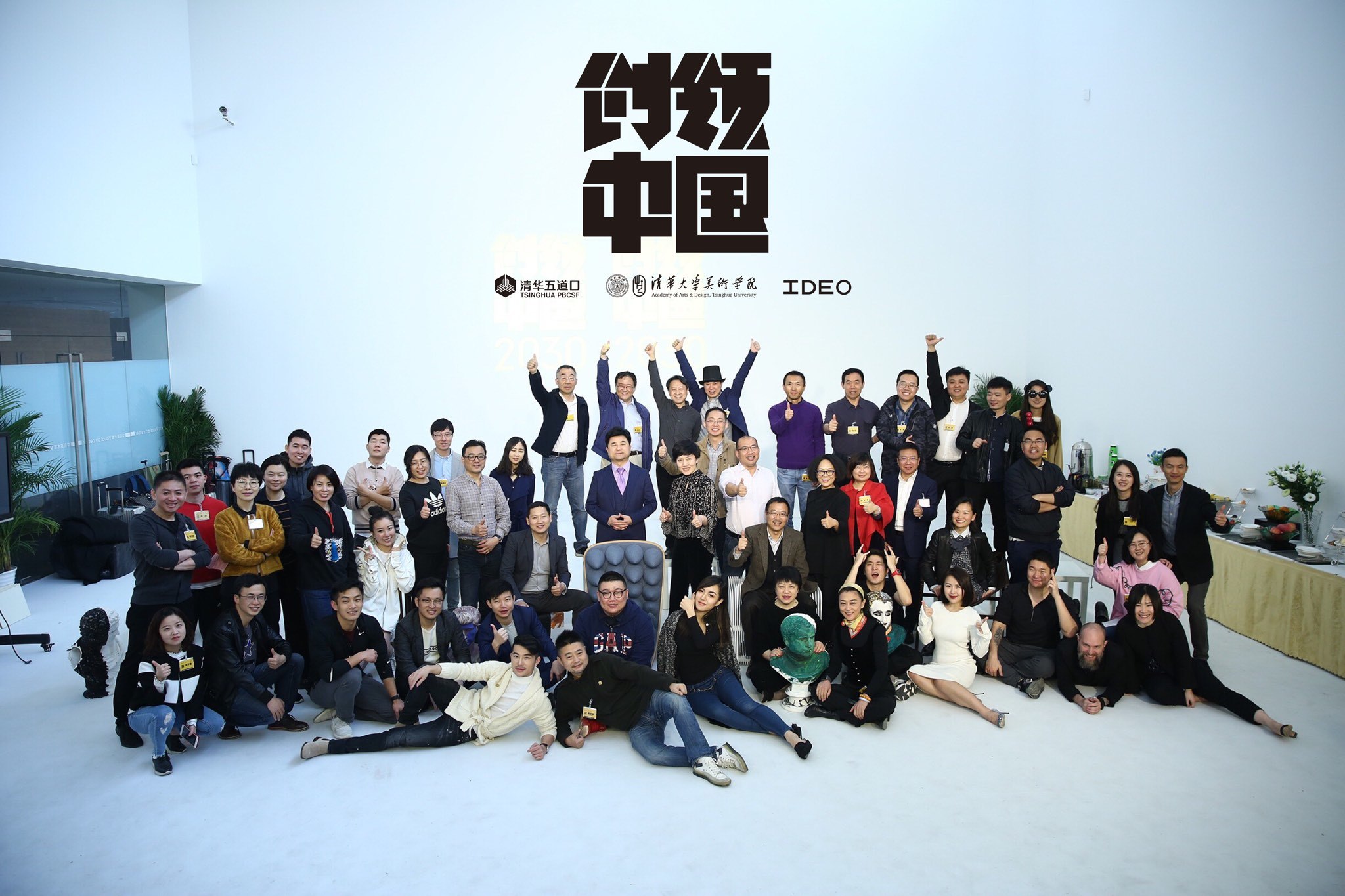
How creative leadership can transform companies and society
Joining hands with PBC School of Finance, Tsinghua University, and Tsinghua Academy of Fine Arts to create the first innovative leadership course with design thinking as the core in China.
After 40 years of rapid development, China's economic growth has reached a critical turning point.
However, looking at the world, today is also the most complex and uncertain era in human history. The traditional engine of economic development is slowing down, while innovation and other emerging ideas are helping the economy burst into dynamism. To ride this trend, China has already put in place comprehensive policies to ensure that the country can achieve this magnificent transformation—not only to maintain economic growth, but also to achieve high-quality development. To this end, what China needs most is a group of new business leaders with a sense of cooperation and innovation to lead and realize this change as a pioneering force.
People of insight can often see the situation clearly with a forward-looking eye. China's society and economy are undergoing transformation and upgrading, and market demands are constantly changing driven by technology. While seeking business development, many mature entrepreneurs with successful experience have realized that they need to explore some of the most essential issues inwardly, including: The original intention and mission of the enterprise and the role that enterprise leaders should play. However, without a systematic approach, transformation and upgrading, strategic decision-making, management mode and cultural construction cannot truly serve the enterprise
As a top institution of higher learning in China, Tsinghua University has always placed an important strategic position on cultivating innovative talents for China. IDEO is the world's leading design and innovation consulting firm. As a pioneer of design thinking, IDEO has always been committed to applying design and innovation capabilities to solve the world's most complex problems. After discovering the need for China's economic and social transformation and the need for innovative leadership by Chinese entrepreneurs, Tsinghua University and IDEO jointly launched the "Leading China" program in 2018. This program is aimed at senior management of Chinese enterprises, and aims to train entrepreneur trainees to use new perspectives and ideas through a one-year innovative leadership course to seek solutions for the systemic changes that need to be achieved in the process of social transformation in China.
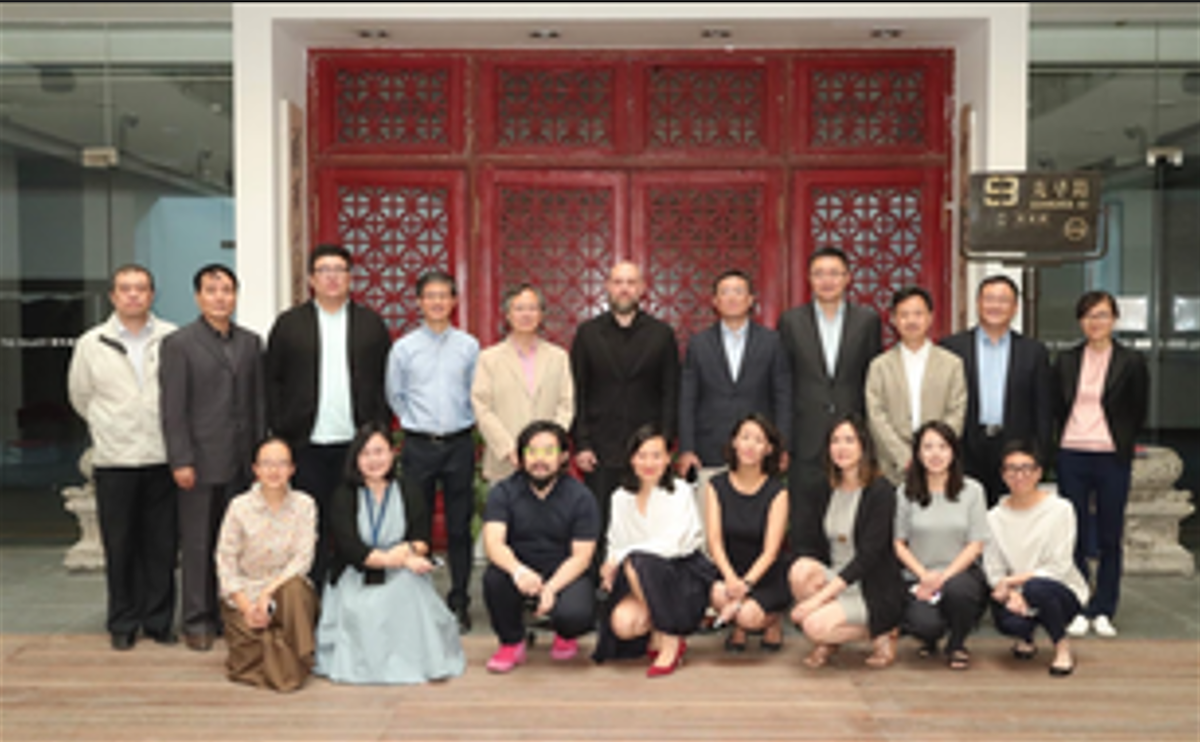
The students of the first "Leading China" program came from more than 30 entrepreneurs from 20 different industries. The teachers who participated in the lecture included 73 Chinese and foreign experts including Shan Jixiang, the former dean of the Forbidden City, Masahiro Kuroyama, the father of Japanese industrial design, and Jake Knapp, the inventor of "Design Sprint". As China's first innovative leadership course with design thinking as the core, the project is equipped with "design to open enterprise creativity", "reshape enterprise competitive advantage", "forge innovative business system", "innovate with the help of finance", "embracing Industrial Revolution 4.0" and "Win-win China Created 2030" six modules. The trainees traveled to nine cities in one year, and completed the courses in the interactive teaching of inspiration and the exchange and sharing of practical experience. Many students said that the course not only helped them find the direction and path of enterprise reform, but also improved their way of thinking, strategic planning and leadership models.
Liu Feng, the founder of Top Intelligence, gave an example of the inspiration brought by the six pillars of "vision-led" enterprise reform. Through "vision leadership", he not only sorted out the original intention and values of the company, but also launched a series of measures based on this starting point, which improved the company's various aspects from the telephone customer service process to the organization of the annual meeting, and mobilized the enthusiasm of employees. This greatly improves the company's efficiency and flexibility. Ting Zhihong, chairman of Hongtu Logistics Co., for example, said that the biggest change brought by the course is her awareness of the importance of empowering the team. The company has now built many platforms to give employees more room to play, to create markets, to put decision-making on the front line, and to let employees play the role of company operators. Her company doubled its profits in 2018. Hu Chao, founder and CEO of Leyou Pregnancy and Baby, introduced that what most executive courses learn is knowledge, and what this course learns is people-oriented values and ways of thinking.
The students of the first class of "Leading China" graduated in December 2018. Regarding the course of this year, Wang Jingwei, former assistant dean of the PBC School of Finance, Tsinghua University, commented: "Since the project was launched, we have not only witnessed the true value of design in a business context, but also experienced first-hand the use of people-oriented The difference between the designed executive courses is that the entrepreneurs who participated in the courses quickly entered a state of immersive learning, and many students quickly began to practice the methods they learned in the enterprise.”
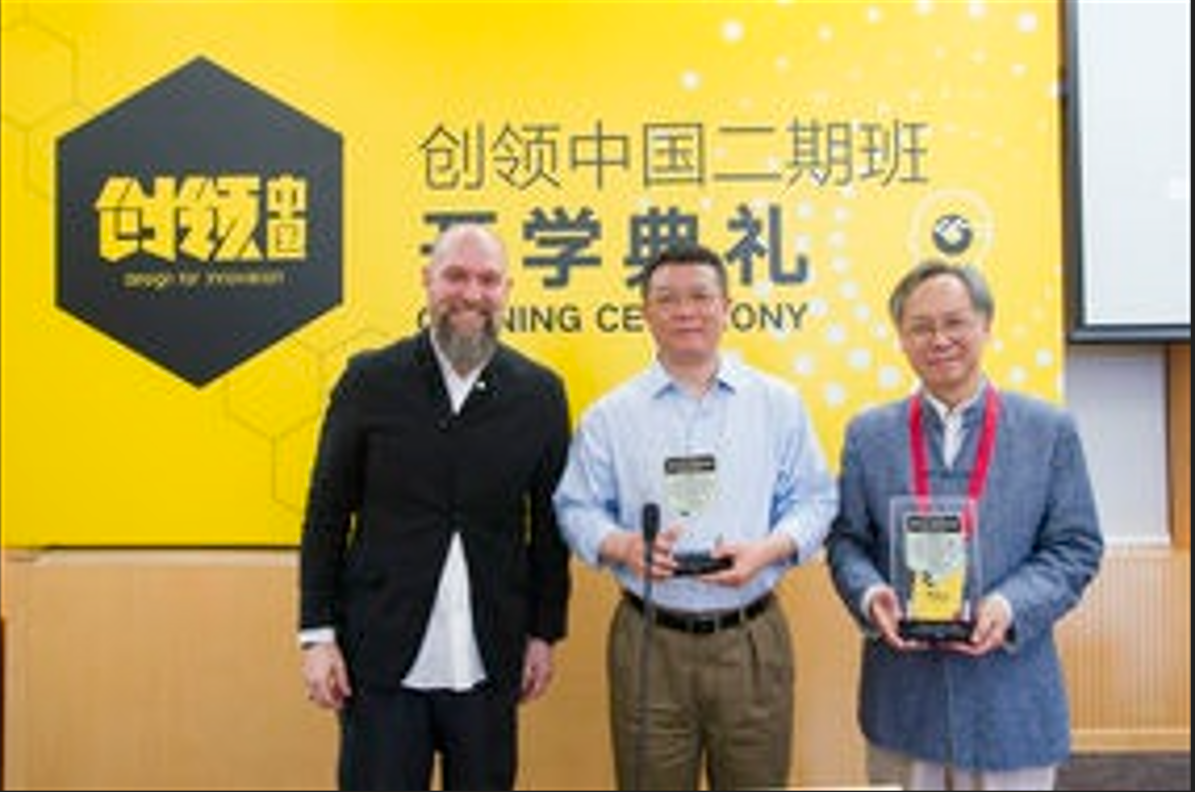
On April 8, 2019, the list of winners of the 3rd "Changing the World Innovation Award" was announced, and the "Leading China" project was shortlisted for case nomination, becoming the only Chinese innovation case in the education category. The "Change the World Innovation Award" was announced by Fast Company, one of the world's three major financial and business media organizations.

Helping a technology brand connect with China’s young consumer
Accelerating vivo's transformation journey from a smartphone manufacturer to a beloved technology brand.
As one of the world’s leading smartphone manufacturers, the Chinese brand vivo is widely known for its exceptional technological innovation and top-of-the-line photography and gaming hardware. But in an increasingly saturated phone market, vivo understood that it wasn’t enough to lead the pack based solely on technological excellence. To win the hearts of young Chinese consumers, they needed to become a beloved brand.
China consumes roughly 30 percent of the world’s smartphones, presenting a tremendous market opportunity to brands who wish to capture young consumers’ loyalty. In order to achieve that, vivo wanted to design a complete brand experience beyond the devices themselves—one that would express the joyful vivo brand spirit through services and retail experiences. One of their first key initiatives was to build its first concept store in an iconic building in Shenzhen, China.
Before building the concept store, vivo approached IDEO to explore what kind of in-store experience would resonate with young Chinese people. The concept store needed to convey joy in a meaningful, tangible way, while also setting the stage for vivo’s future brand systems. With this in mind, IDEO set out to explore how vivo’s young consumers experience fun.
After conducting research in four different cities, IDEO shared the stories of young Chinese consumers back with the vivo team. Their interviews revealed that young people value experiences that enrich their lives and create a feeling of positive personal transformation. They seek opportunities to expose themselves to new experiences, express themselves in different ways, expand and deepen their social connections, and build knowledge and skills.
Through this understanding of how young Chinese define “enjoyment,” IDEO helped vivo identify the value proposition of the concept store as expressing oneself in new and different ways. The store would allow every visitor to see something unique and find a fresh perspective. The vivo team took that value proposition into a design brief and later built out the space and interactive experiences.
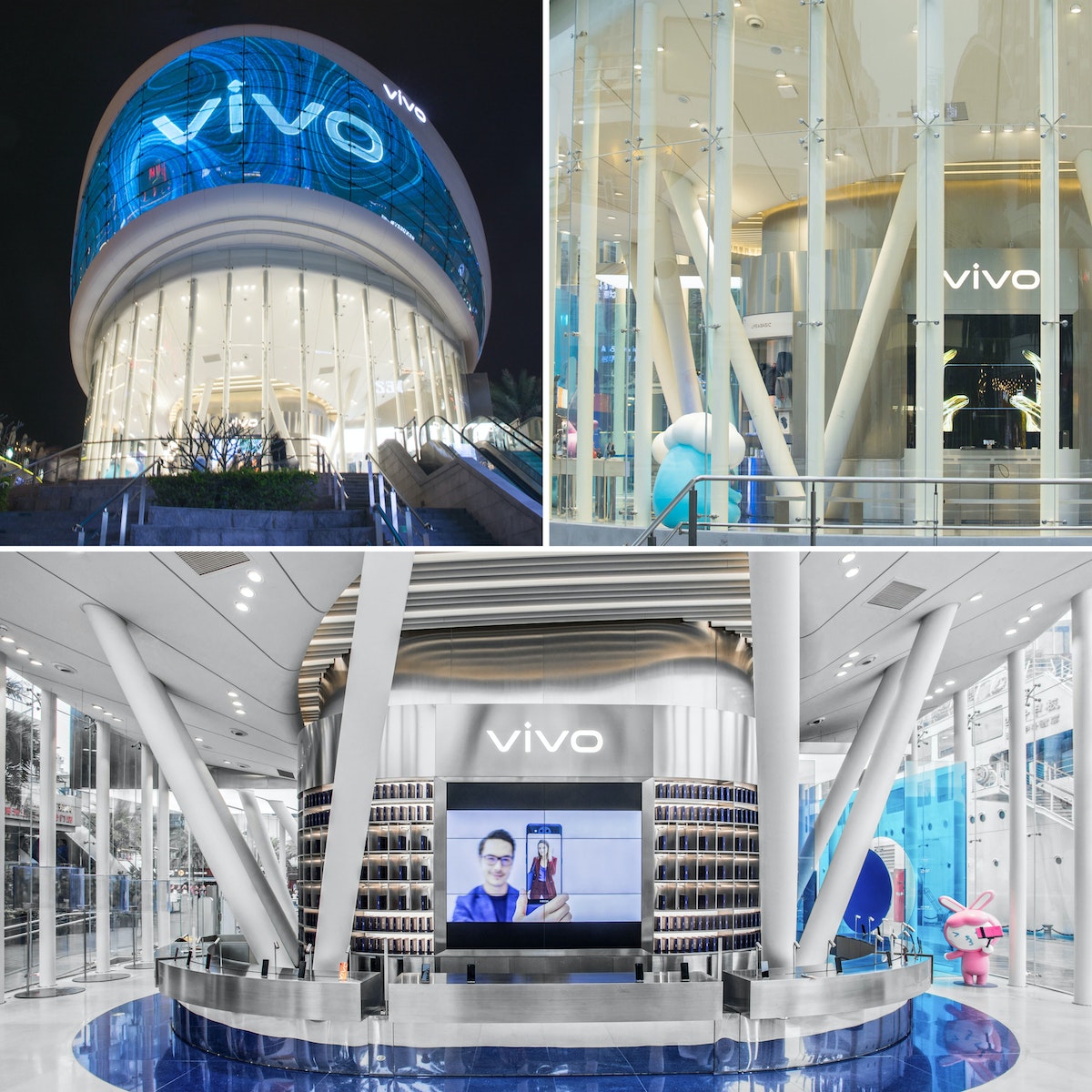
The concept store launched at Shenzhen on March 22, 2019, featuring an upper level dedicated entirely to interactive experiences with photo booths, sound recording, and lighting technology. The engaging, lively and positive atmosphere of the store represents a major milestone in vivo’s transformation from a smartphone maker to a consumer brand.
WATCH: Official launch video provided by vivo.
Equipping agricultural retailers to empower rural farmers in China
How Bayer Crop Science set out to scale its service to Chinese farmers in a highly fragmented market.
As China's agriculture moves towards scale and sustainability, helping farmers grow healthier food with resilience is a matter of national economic security and individual livelihoods.
Bayer Crop Science—with its mission to accelerate China's agricultural modernization and benefit Chinese farmers and consumers—has provided high-quality products for millions of growers in China over 18 years. Yet its service relies heavily on multi-layered distributors and retailers across the country. The last mile of Bayer’s product delivery spreads across tens of thousands of highly fragmented retail stores, making the quality of service difficult to monitor and control.
Together with IDEO, Bayer Crop Science aimed to uncover new ways to engage with local farmers and retailers, and develop design concepts for its diverse set of retailers—establishing local relevance as well as the potential to scale nationwide.
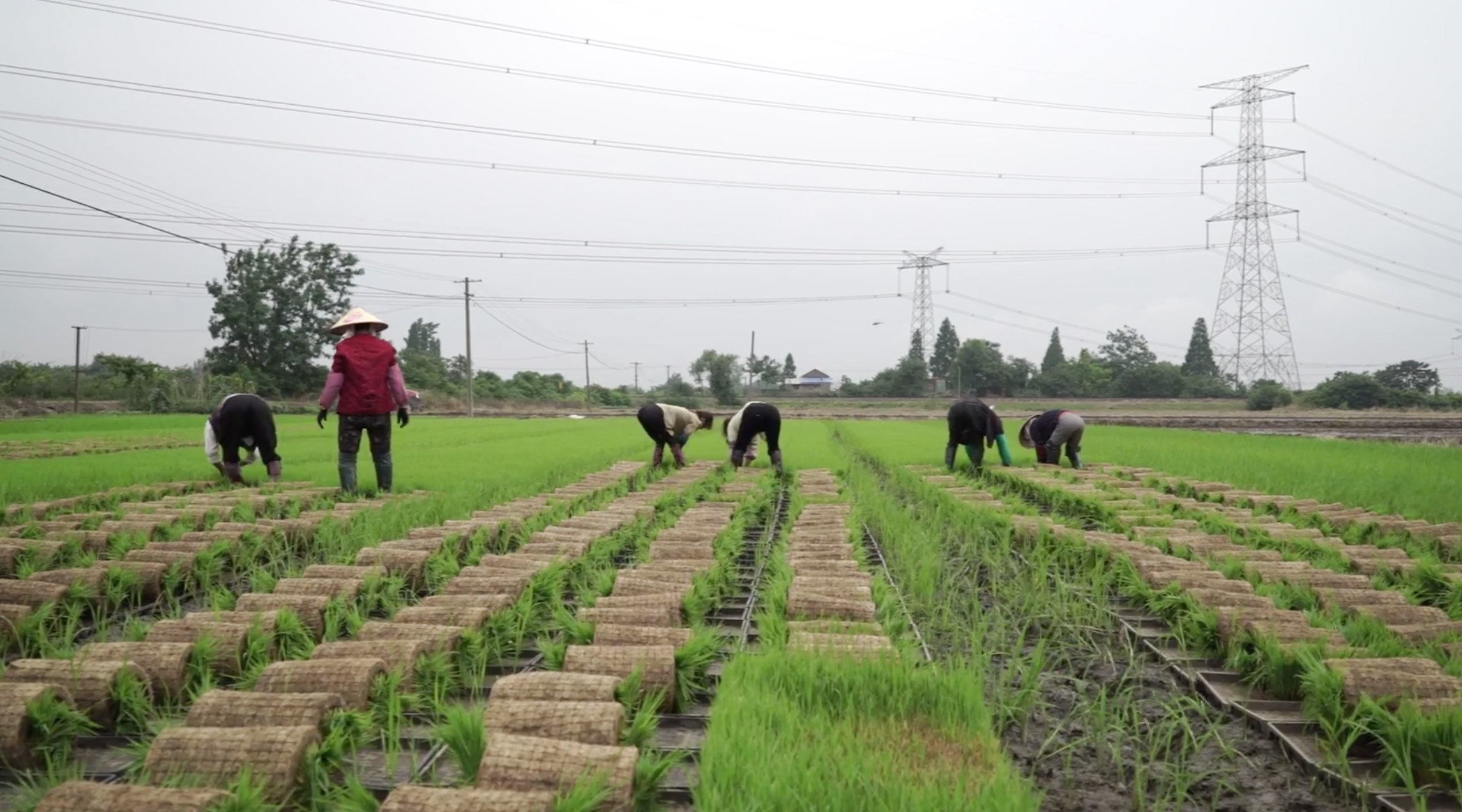
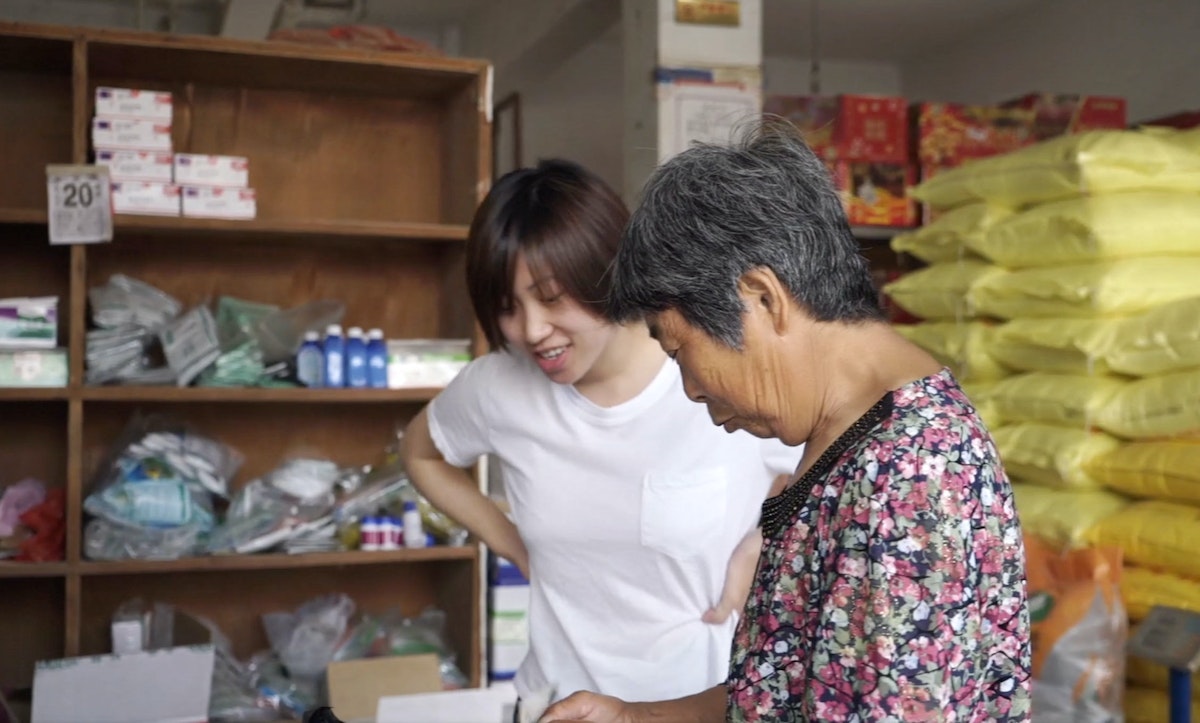
With this ambition in mind, a team formed by Bayer Crop Science and IDEO launched into a design sprint in the rice fields of China’s Anhui province. Field research uncovered multiple challenges facing Bayer Crop Science’s retailers. First, each store needed to serve more than one hundred farmers, many of whom rely solely on the store owner to understand how to use the products. Retailers struggled to meet a high daily demand for direct support in a way that provided a positive customer experience.
In turn, farmers felt they had insufficient access to expert advice. While many farmers shared similar needs, there was no system for aggregating requests or arranging group instruction. Given that many rice farmers are illiterate, pre-printed educational pamphlets had limited impact, and retailers lacked tools for providing targeted support. And because the retail stores were also used for storage, little space remained for educational or community programming.
With these constraints in mind, the team needed to come up with ideas and design concepts that could be easily integrated into the daily lives of the retail store owners. The team brainstormed hundreds of concepts and quickly prototyped a select few. One retail store in Dangtu was transformed entirely into a live prototype set. Over three days, more than 50 farmers and retailers came through and provided feedback. From there, the team was able to make daily iterations of the concept, evolving the experience in real-time.
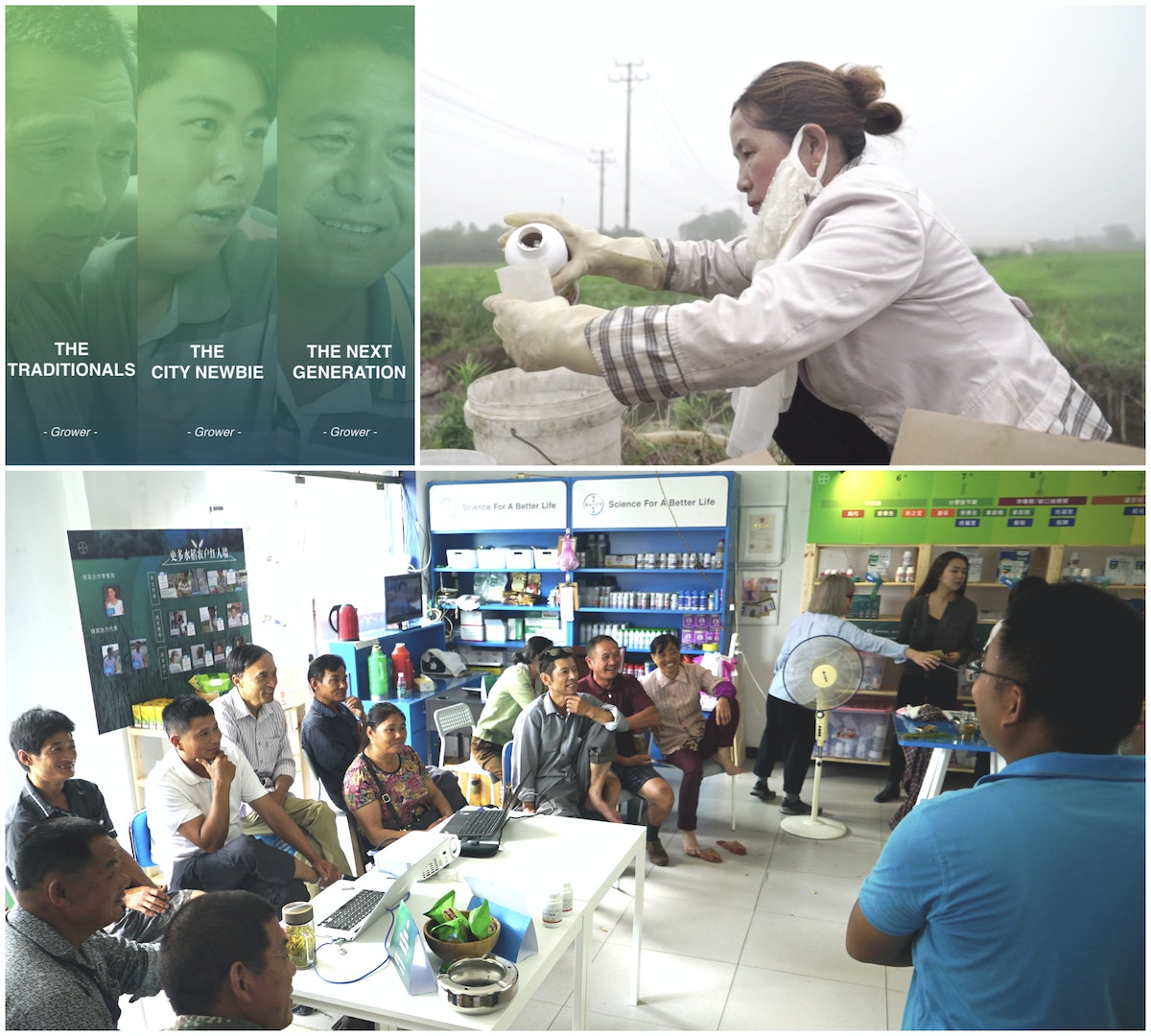
The Bayer team was energized by the potential of these prototypes to enable more customer-centered retail experiences. An exhibition of the concepts was set up during the National Annual Sales Conference of Bayer Crop Science in China, during which a much wider audience from Bayer experienced not only the concepts, but also the immediate feedback from farmers.
One year after the project’s completion, more than half of the design concepts have been included in Bayer's support kit for dealers. In 2019, these concepts will be rolled out in more than 1,000 flagship stores across China.
The work has also accelerated Bayer Crop Science’s efforts to build an ongoing engagement mechanism with its retailers and growers. Its online platform, Bayer Joy Grower, now has more than 10,000 retailers and will be expanded to growers soon.
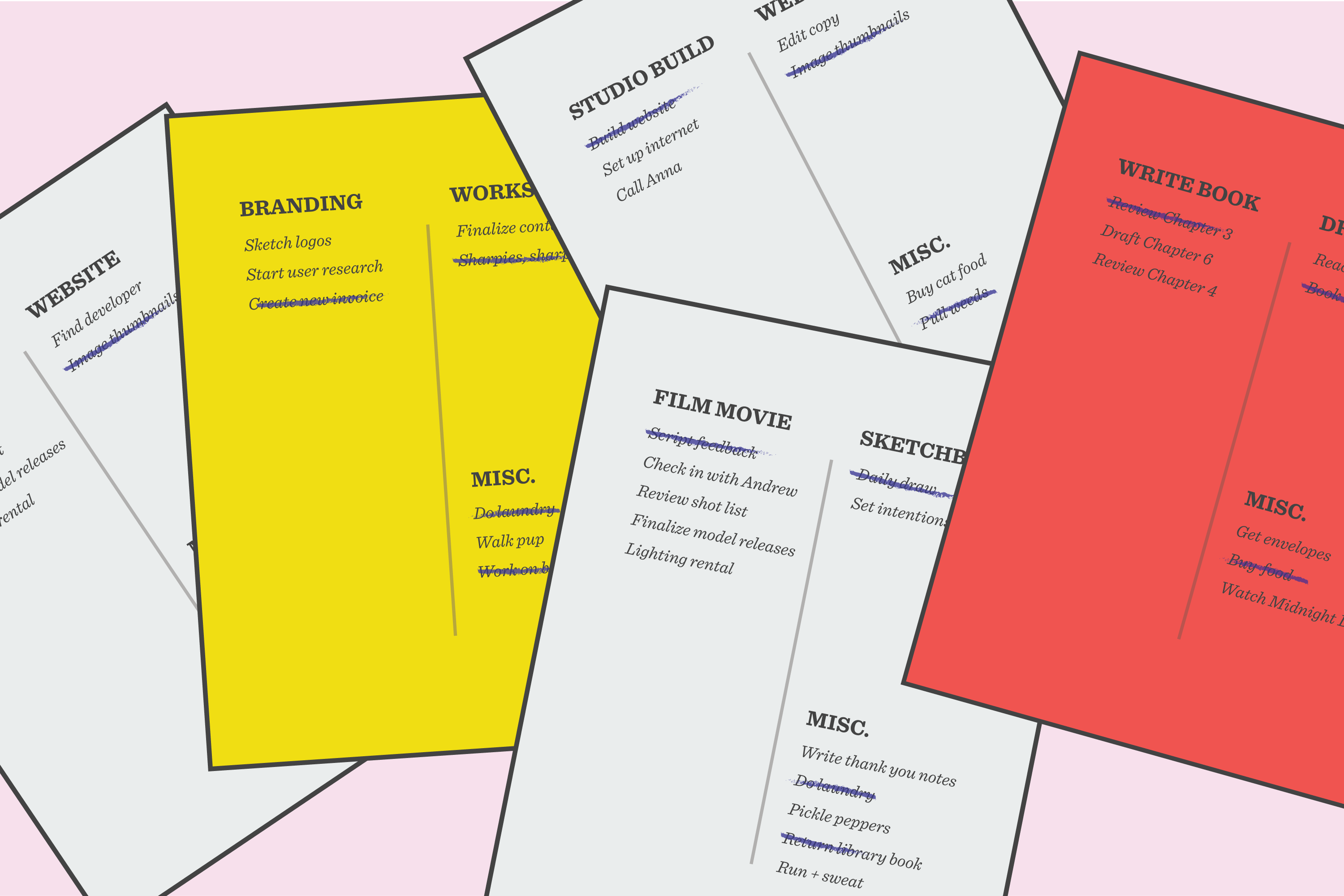
“Sprint” Author Jake Knapp Built You a New To-Do List
Jake Knapp's simple, paper-based system for focused to-dos
But to-do lists aren’t all bad. To-do lists let me capture things so I don’t stress out over having to hold it all in my brain. To-do lists let me see everything in one place. They’re a necessary evil.
So as much as I dislike to-do lists, I need to have one. There are a billion to-do list apps and methods out there, and I think I’ve tried 900 million of them. My favorite was David Allen’s paper-based Getting Things Done. But I constantly fell off the wagon. When I organized my tasks with GTD, I was damn organized—but every time the system fell apart, I not only lost sight of the big picture, I felt guilty, too.
So after a lot of ups and downs, I started doing my own simplified, imperfect thing. I’ve been using my system for a while now, and figured I might share it in case it’s useful to others. Yes, I know, another to-do list system! But you clicked on this story, so maybe you need one.
I call my system the “Burner List”
I’ll explain the name in a sec, but FYI, it has nothing to do with Burning Man. Basically it’s a simple-as-hell to-do list designed to force me to prioritize.
The Burner List is not perfect. It won’t keep track of every detail, or help you juggle a million projects. But that’s exactly the point. The Burner List is intentionally limited—and therefore focused. Here’s how to make one:

1. MAKE TWO TALL COLUMNS
You can fold the paper, draw a line down the middle, or just eyeball it. Precision is unimportant. What is important is the metaphor you’ve just created: Left = front burner. Right = back burner.
2. PUT YOUR MOST IMPORTANT PROJECT ON THE FRONT BURNER
You are allowed to have one and only one project on the front burner. Not two, not three — just one. In the top left-hand corner, write the name of your most important project and underline it. Then list the to-dos for your top project — any task you can do in the next few days to move it forward.
3. LEAVE SOME COUNTER SPACE
Leave the rest of the first column empty. The Burner List is not intended to make an efficient use of the damned paper surface area — it’s intended to make good use of your time and energy! The blank space gives you room to add more tasks for the top project, but, just as important, extra visual space makes it easier to focus on the important stuff.
4. PUT YOUR SECOND MOST IMPORTANT PROJECT ON THE BACK BURNER
In the top of the right-hand column, write the name of your second most important project and underline it, then write related to-dos underneath.
5. MAKE A KITCHEN SINK
Finally, about halfway down the right-hand column, list any miscellaneous tasks that you need to do but don’t fit with project 1 or project 2. It doesn’t matter if they’re part of project 3 or 4, they just get chucked into the kitchen sink with everything else. Yes, this goes counter to all organizational and productivity advice — but by constraining the space and attention you give to other stuff, you'll help yourself spend your time well.
Now get cooking
Imagine there was a chef standing to the left of your page. He’ll naturally focus most of his attention on the front burner. He’s aware of the back burner, and sometimes he stirs a pot or flips a pancake back there, but the front burner is where the action is.
The Burner List is intentionally limited. It won’t have room for everything. You’ll have to let go of things that aren’t as important.
The Burner List is also disposable. It gets stale fast as you cross off finished to-dos. I “burn” through my list every few days and then recreate it, over and over. This act of recreation is important, because I always discard some unfinished tasks that no longer matter, and I reconsider what belongs on the front burner right now. Sometimes it’ll be a work project, sometimes it’ll be a personal project—over time, I’ve realized that it’s okay and natural for the spotlight to shift. What’s important is there can only be one most important project a time.
To learn more about Jake's methods, subscribe to his newsletter here.
Man, I hate to-do lists. Checking off finished tasks feels good, but the glow of accomplishment masks an ugly truth: Most to-dos are just reactions to other people’s priorities, not mine. And no matter how many tasks I finish, I’m never done — more to-dos are always waiting to take their place. To-do lists just perpetuate the feeling of “unfinishedness” that dogs modern life.
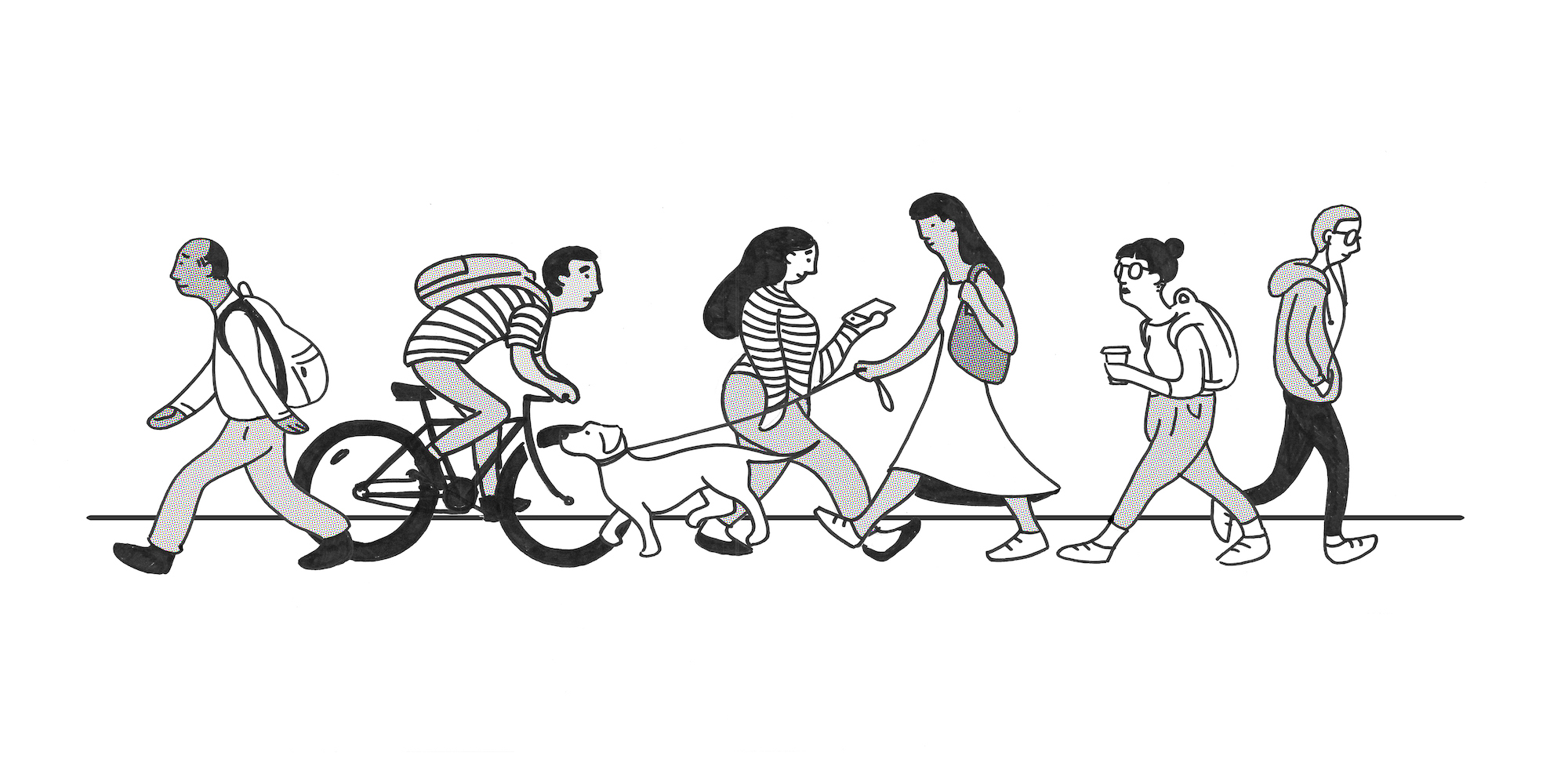
6 Ways to Get Inspired on Your Commute
How to turn your commute from a time sink into a springboard
1. Embrace Randomness
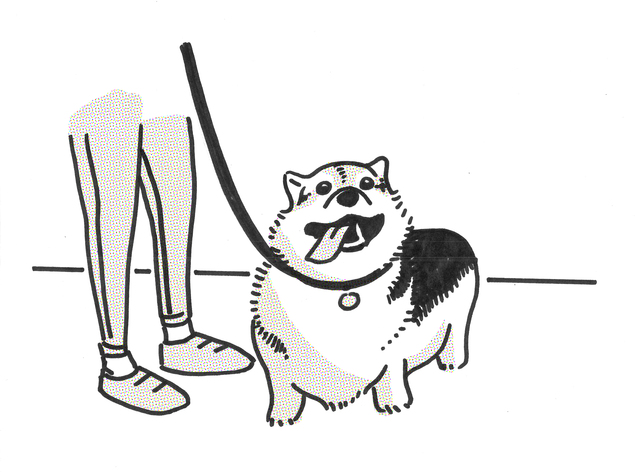
On my 20-minute walk to work, I'll use chance to determine my route. "Don't walk" sign? Cross the other way. See a dog? Walk on that side of the street. Does the time of day end with an odd number? Make a right. I won't walk the wrong way, of course, but I'll use random cues to make myself choose different paths so I'm forced to notice new things along the way.
I also use my commute to connect with strangers in small but meaningful ways. I make sure to give a warm, real "hello" to bus drivers—no earbuds, please! Compliment well-dressed people on their style choices. Flirt with outgoing dogs to get their owners to smile. Thank people cleaning the streets for keeping things tidy for the rest of us. Little things like this make a city feel more like a small town. —Annette Ferrara, IDEO Chicago
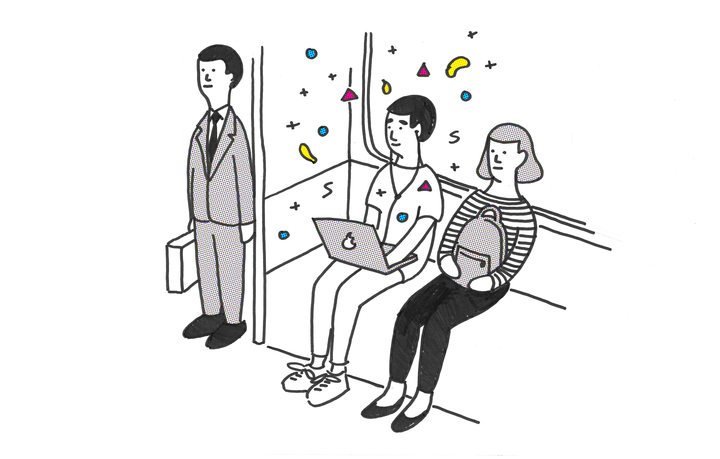
2. Ride with Strangers
I'm new to the San Francisco Bay Area and I'm finding the "casual carpool" here a total novelty. It's essentially organized hitchhiking. You arrive at the designated carpool stop and wait your turn as two to three people at a time hop into strangers’ cars. The incentive for drivers is being able to use the HOV lane, which requires a minimum of three passengers and can shave 30 minutes off your commute.
There are very strict, unwritten rules for casual carpool: You don't make conversation unless the driver initiates, you don't eat or wear too much perfume, and you absolutely don’t take phone calls. The default radio station is NPR. You offer the driver a dollar at the end of the ride for gas.
At first, I thought it was so weird that people don’t talk, but now I like the quiet ride. Every now and then, I'll jump into a car and we’ll have conversation for 20 minutes as we cross the Bay Bridge. I like this too; connecting with strangers on my way to work is a great way to start the day.
If there isn’t a casual carpooling option in your city, look into organizing one for yourself. —Maria Scileppi, IDEO San Francisco
3. Spin with Your Inner DJ
One era of music that’s splendid fun is early ’90s—rave, jungle, techno, happy hardcore, etc. Much of this music was written using software called a "tracker." With trackers, you can enter notes using a standard computer keyboard.
Fast forward to modern times, and I find that a new tracker has been developed—RENOISE—that works the same way as trackers of old, but with modern-day functionality. Well, I had to have a go on that.
I installed it on my work laptop and now spend my journey home lost in the sounds of chopped Amen breaks, 808 and 909 hits, and rude-boy vocals. There's a lot to learn in terms of production techniques, sound design, and arrangements.
I start a new track each trip; these are my "train tracks." I find a great deal of enjoyment in seeing where they end up after the hour-long ride, but then I'm happy to abandon them. There's always tomorrow. —Iain Smyth, IDEO London
4. Unplug and Observe
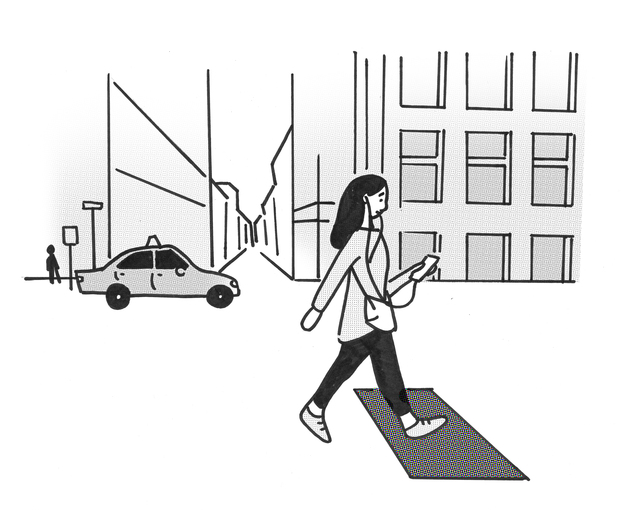
I walk 10 minutes to the ferry building, take a 15-minute ferry ride across the river, and then walk 25 minutes to the office. I used to fill all that time listening to podcasts, checking email, surfing Facebook, or otherwise trying to get a head start on my day—which meant I'd developed a bad habit of looking at my phone while walking.
One day, I decided to end the habit for safety's sake. With my phone now tucked away during my commute, that time is spent letting my mind wander, observing my surroundings, and pondering the day ahead. The result is that I feel more prepared for my day mentally and energetically. I’m less frazzled and magically seem to have more down time. —Anna Silverstein, IDEO New York
5. Work Your Muscles, Free Your Mind
I bike to work because it's an easy way to build in regular exercise without having to carve out special time. It's a 30-minute ride each way.
I often have lightbulb moments and am able to connect the dots around things happening at work or in my personal life. There's something about the intense focus of weaving through traffic while letting thoughts percolate in the background that works for me.
For example, earlier this year, a large education company in India reached out to IDEO to talk about collaborating. On our call, it didn’t seem like a great opportunity for partnership, but then on my evening commute home, the dots connected.
I called the company back the next day to propose a program that would bring together the strengths of both our organizations (IDEO U's curriculum expertise and the partner company’s established marketing and distribution channels) to provide a great executive education experience for the Indian market. —Danoosh Kapadia, IDEO San Francisco
6. Get in the Right Headspace
I walk eight minutes to the 2nd Avenue subway and then take a 16-minute ride to Canal Street. I've been meditating every day for a few years, and this year I decided to listen to guided meditations on my commute.
I typically choose from a selection of meditations by Sarah Blondin on the Insight Timer app. Most are about 10 minutes long. She has a wonderful voice, and I select based on my mood. Usually, I choose something to pick up, reaffirm, or inspire me. Sometimes she nearly brings me to tears, but usually she just helps me be more present.
Listening to guided meditations while commuting has made me more mindful of my surroundings, more compassionate toward my fellow commuters, and generally calmer. —Caitlin Fitzmaurice, IDEO.org, New York
Next time you find yourself staring into space on the way to work, try one of these techniques to reboot your commute.
What were you doing at 8:30 this morning? If you’re like me, you were slogging through the least fun part of your day. The average employee spends nearly 53 minutes a day getting to and from work, but you don’t have to sit there feeling miserable. There are all sorts of creative ways to wring positivity out of your daily grind.
I asked IDEO designers and other creatives for their commuting best practices. Here are the top six:

Why You Should Start Prototyping—Right Now
How early prototypes can kickstart your project
With this in mind, we selected key interaction moments from our client's current product. Then we prototyped three distinct new directions—usability experiences we were excited to bring to their industry. These experiments, we hoped, would spark an early conversation that was less about “we need to do this” and more about “what if we do that?”
Kickoff day arrived and we shared the prototypes with the client.
Cue uncomfortable silence.
Then, finally, one of the executives exclaimed, “This is mind blowing! This could be the future of our product.” He was not applauding the user interface or visual style we used to illustrate our idea, but the essence of what the experience did for him. An excited conversation followed and he wanted to share his own design ideas.
It doesn't always go this way. Early prototyping entails plenty of risk, too. What if you've been blind to user needs? What if the client just doesn't see the magic?
Here are 4 steps you should consider when creating early prototypes:
1. Take advantage of your fresh perspective
Before diving into industry or product constraints, take a step back and imagine if there were no limits to what you could design. What would that look like?
2. Identify what excites you and the team
What personally inspires you to be on this project and how can that be translated into the experience? Don't over think it. Take one key interaction from the current experience and add something unexpected to it. This is an opportunity to test initial assumptions with a beginner’s mind and generate radically new ideas.
3. Translate your excitement into prototypes (with content your client understands)
Use your client's current product content as a starting point. Having something they can easily recognize and understand is a great way to bring them into a design conversation. Don't think about creating long flows at this early stage. Imagine your prototype as a teaser to a product that is about to come to life and focus on key interaction moments.

4. Highlight where your client sees design opportunities
Quick prototypes are a great way to tackle hopes and fears and learn, from a usability point of view, where your client sees design opportunities at a very early stage of the project—so you don't head off in the wrong direction.
And above all, remember: A sense of excitement and momentum shared by you and the client on the very first day gives your team an important confidence boost. It helps set expectations, and gets everyone inspired to push to a new level.
For a recent design project, we decided to try something new. We were tasked with rebuilding a product experience, but instead of starting with our usual process where we gather inspiration, we thought: What if we share a prototype we are really excited about with the client right away? Just jump in.
Meet the Sisters Behind Block Shop
There are creative crushes, and then there are girl crushes. This qualifies as both.
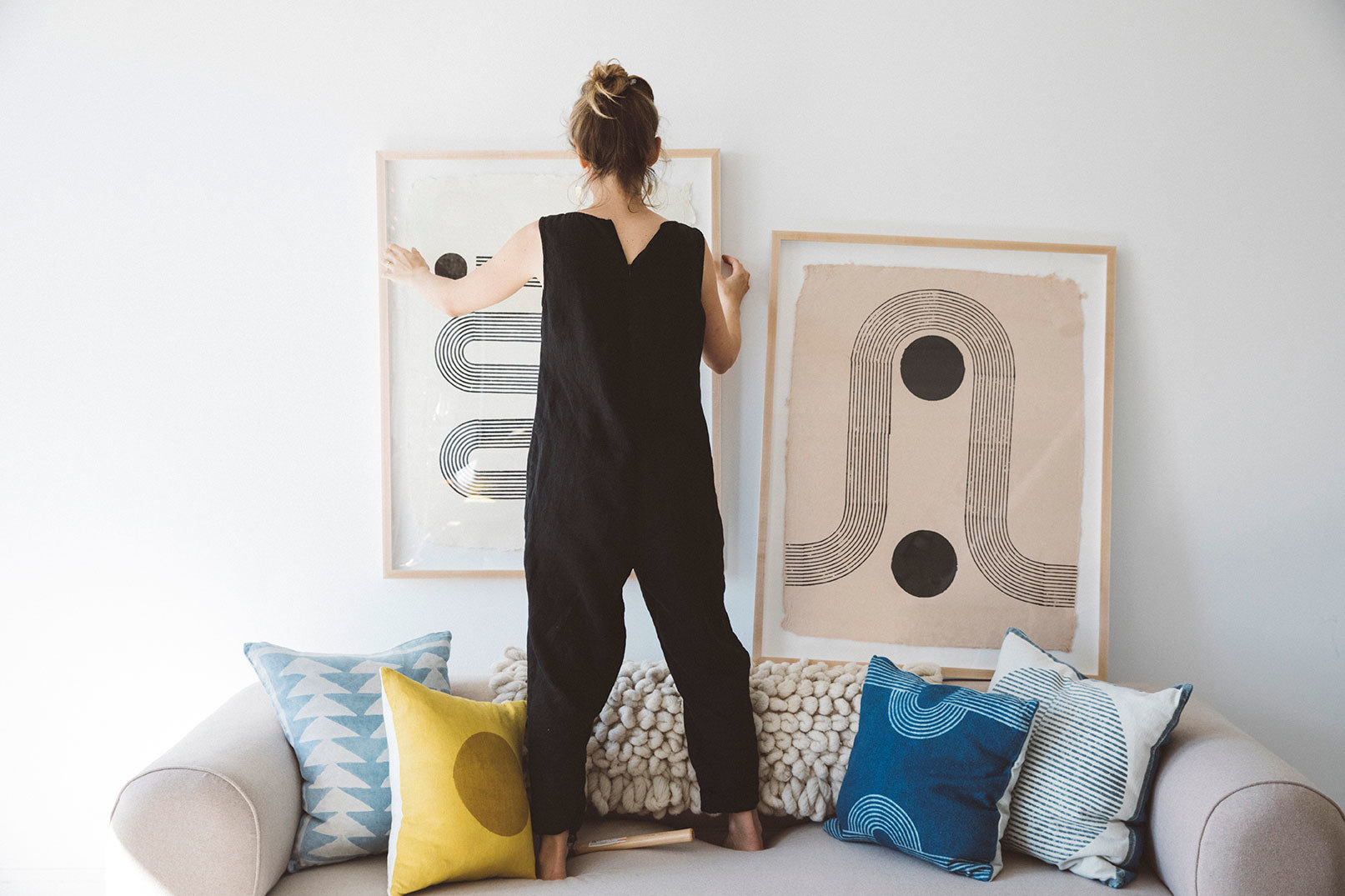
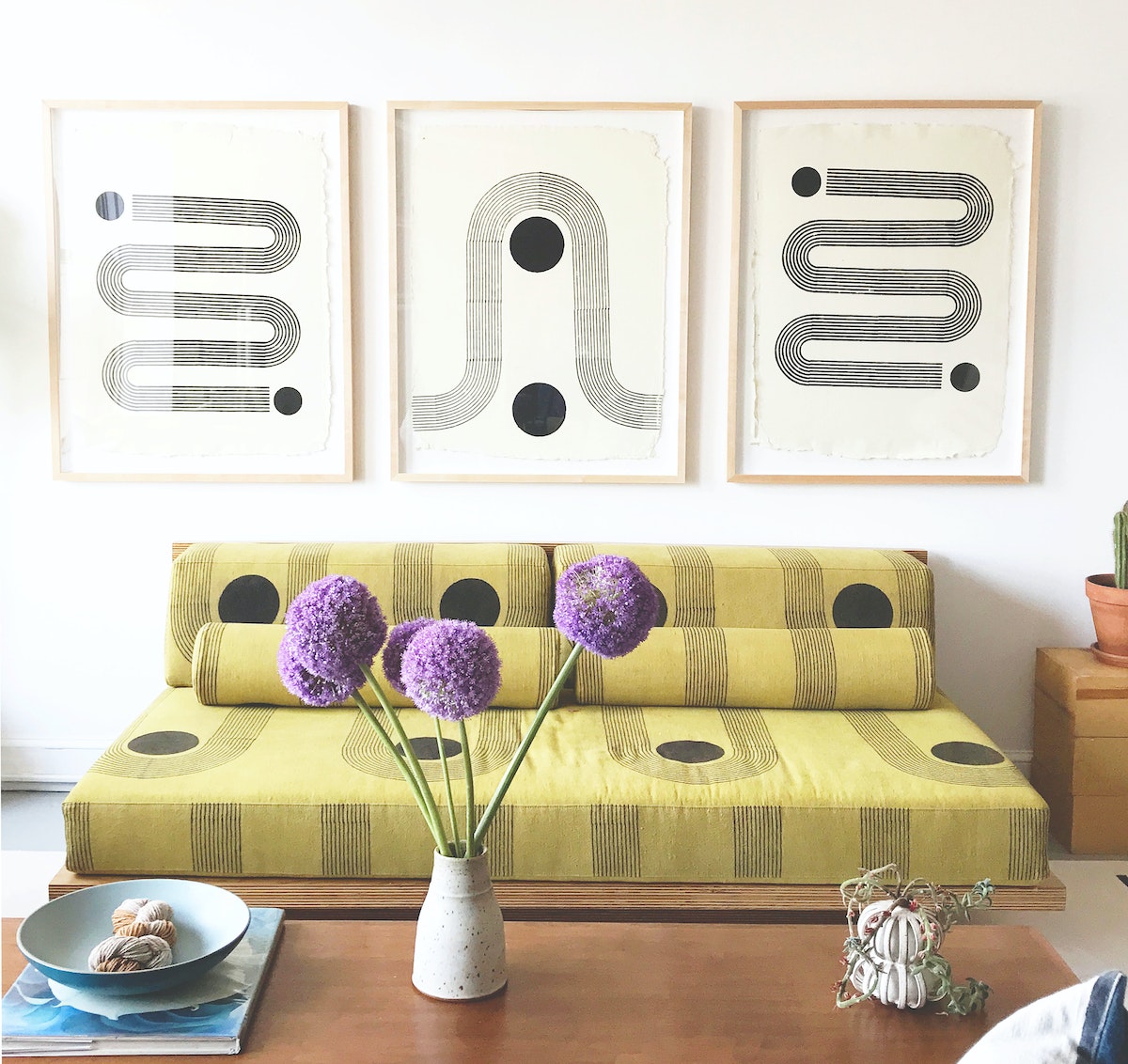
While beautiful textiles (and now prints!) are Block Shop’s most recognizable output, there’s a good deal more going on behind the scenes. The duo created Block Shop in partnership with a family of printers and dyers in Bagru, Rajasthan to keep the artistry and craft of Indian block printing alive. (They donate five percent of their profits each year to building and implementing community healthcare programs.) If their reverence for craft and respect for humanity isn’t enough to make you weak in the knees, this interview should do it.

In one sentence, who are you?
Hopie Stockman: Josephine March with an MBA.
Lily Stockman: Gertrude Bell on a camel after too much coffee.
What do you do? How did you learn it?
HS: I run Block Shop—a textile and design studio—with my sister, Lily. In reality, I work seven days a week, but five of them take place in our 11th floor downtown Los Angeles studio. I design everything from rugs to public murals to business strategy and Grand Central Market lunch orders for Block Shop.
We both went to grad school; I went for for business and Lily for painting. Rather than dividing our work rigidly between business and creative, we’ve found that it works best when we share responsibilities.
A lot of our education happens in Jaipur, India. In 2010, Lily was living in there and apprenticing under master Indian miniature painter Ajay Sharma when she first met our printers. Since then, we've gone back to Jaipur twice to year to work with them on new designs and products. Everything we know about wood block printing we've learned on the ground while prototyping with our team, lending a hand in all aspects of the process, from dye-mixing to block registration on the fabric.
On the business side, the most valuable advice has all come from the (mostly) women running their own small and successful businesses here in LA. For example, our friend who runs a candle company helped us build our wholesale strategy. When we started out, we thought we wanted just a few huge department store-style accounts to streamline our operations and provide reliable cash flow. She helped us to understand the marketing power of wholesale: that smaller, well-aligned shops could be better storytellers and champions of our brand, and likely wouldn't discount as aggressively.
Another friend who has an independent furniture line shared invaluable advice on how to collaborate with large companies, emphasizing the importance of control over the design and fabrication process. Megaretailers actually need the cool factor of small, independent brands in order to be relevant. The question for small brands is whether the paycheck and promise of exposure is worth the potential chargebacks, brand dilution, and even customer alienation. For us, we've learned that it doesn't work unless we're making the products ourselves and have control over the storytelling.
What are your 3 favorite possessions?
HS:
- Otto, our bearded mutt.
- A painting of a rabbit that my great grandfather painted 60 years ago.
- The Kishore Kumar Bollywood poster that my now-husband and I bought together at the Chor Bazaar in Mumbai, when we had only been dating a few months. It sort of signified that leap into a shared life—jointly owning things.
LS:
- My baby Olympia.
- My dog, who I bought from the pound for $85.
- My gold bangle bracelets given to me by our surrogate grandmother, collected from her travels around the world.

What does a typical work session look like?
LS: On design days, we hide our laptops and put the screens away. No phones, no nothing! Out come the old art books on Anni Albers, Arp, Matisse, and Sheila Hicks. We put some Grateful Dead on, get the watercolors out, and swap sketches back and forth across the table. The result is so much better when we do it together. We’re always improving each other’s work. We try to design like this for two-to-three hours once a week, which is pitiful, but that’s the reality of running a small company; the actual drawing sessions take up only a small percentage of our time.
When it comes to our work, we have a simple design rule: Everything Block Shop touches must hold up as a holistic composition. That means it needs to have balance and a sense of quiet. My favorite painting teacher said, "You know a painting is done when it's quiet. Nothing on the canvas is yelling at you." And if it doesn’t look good hanging on the wall, then it doesn’t go into production.
How do you get over creative block?
HS: Take Otto for a walk past the old movie palaces in downtown L.A. to remember that inspiring design lives everywhere in architecture. On a recent prototyping trip to India, I started panicking that we’d exhausted all geometric patterns—THAT’S IT, WE’RE FINISHED! WE’VE USED EVERY ITERATION OF CIRCLES AND TRIANGLES! Then we went for a walk to get chai with our sketchbooks in hand, and boom! All sorts of ideas emerged from the marble latticework and archways in the old city. We simply needed to look.

What was the last item on your to-do list?
LS: Plan a Texas road trip starting in Marfa, where our friends run the El Cosmico.
How do you see the world in 2078?
HS: A degree or two warmer. Governed by data and manufactured by robots, with no boundaries between advertising, entertainment, and politics. Hopefully, I’ll be with the people who’ve returned to hands-on, empathy-based, slow living….off with my grandkids somewhere outside making pinch pots.
What's your number one bucket list item?
HS & LS: Design a boutique hotel.
Who are you creative crushin’ on lately?
HS: Katja Blichfeld, co-creator of High Maintenance. (If you’re out there, hey.)
There are creative crushes and then there are girl crushes. This qualifies as both—squared. Sisters Lily and Hopie Stockman are the founders of Block Shop, a textile company based in Los Angeles and Joshua Tree. I discovered Lily and Hopie a few years ago through an online web of women makers, and have been feverishly following their work ever since.

Lindsey Turner
I’m passionate about building brands, products, and experiences that help organizations show up with meaning and momentum.
I help organizations cut through complexity by shaping how they show up, through brand strategy, identity, and storytelling.
Working at the intersection of brand and business, I bring an editorial eye and a bias toward making—turning ideas into tangible experiences that people can understand, trust, and believe in.
My work spans government, healthcare, financial services, media, and consumer goods, from launching Gen Z-focused ventures to building innovation labs and reimagining legacy brands. I relish moments of ambiguity and enjoy translating across teams, perspectives, and priorities to move ideas forward.
I started my career in editorial and digital design, shaping cross-platform experiences and identity systems in publishing and agency environments. That foundation still shapes how I work today: I’m detail-oriented, collaborative, and overreliant on the Oxford comma. I hold a BFA in Visual Communication from the School of the Art Institute of Chicago.

Rachel Young
My work helps organizations see who their products aren't working for—and build the will and the tools to do something about it
For 25 years, I've asked the same question: Who does this design exclude—and what are we going to do about it?
My work spans human-centered strategy, inclusive design, and qualitative research, with clients ranging from Microsoft, Google, and Verizon to the National Science Foundation, and San Francisco Unified School District.
Before IDEO, I taught elementary school in East Palo Alto and spent a decade doing design work with social service organizations—where I learned firsthand what it costs people when systems are built without them in mind.
I am currently writing User Error, a nonfiction book about digital access and the design decisions behind it. I live in Oakland, California.

Brian Pelsoh
I lead with craft, ensuring our work is creatively excellent: rooted in deep human insight and imagination, while also grounded in the realities of business and technology.
My expertise spans brand, communication, and product design across tech, education, the arts, and social impact.
I believe great work demands both high-level vision and obsessive attention to detail, and only happens through collaboration.
I bring an inclusive, hands-on approach and a deep understanding of business, which enables me to consistently deliver excellence while always asking why.
Before joining IDEO, I worked at the brand firms Pentagram and VSA Partners. I began my career as a designer, leading teams at the School of the Art Institute of Chicago and the Milwaukee Art Museum. I hold an MFA in graphic design from Maryland Institute College of Art and a BFA in communication design from the Milwaukee Institute of Art & Design, and have taught at some of the best design schools in the US.

Tony Wong
I am responsible for IDEO’s long-term success in China and working with clients to use design as a tool to enable growth.
I am responsible for IDEO’s long-term success in China and working with clients to use design as a tool to enable growth. Specifically, I have helped Chinese companies design holistic brand solutions through the development of their products, communication, services, and innovation teams, and I have helped multinationals expand their presence and influence in China.
I advise global leaders on developing China-led innovation and capabilities.
In over 15 years in IDEO Shanghai, I have worked on projects that use design to elevate the quality of the experience of healthcare products and services, streamline processes that increase productivity, create spaces and programs that promote and enable inclusive communities, and build next generation mobility solutions that are planet-positive.
Before joining IDEO, I worked at Philips Electronics and the Electrolux Group in Italy, the Netherlands, and Singapore on a number of breakthrough commercial products. I am a member of the Young President Organization in Shanghai.

Building a personal AI for the messiness of life: Sida Li
Most AI products today are built for work—a space with clear problems and established systems. One founder noticed a gap: personal life is messier, harder to systematize, and mostly left behind by the AI boom. So she built Cue, a personal AI that lives inside iMessage and group chats, to go where the other tools haven't.
In this episode, Becca Carroll, IDEO's Chief Strategy Officer, talks with Sida Li, co-founder and CEO of Shared Context Lab, about staying anchored to a human need while the technology around her keeps changing shape, why she treats her business model with the same rigor she'd bring to a product, and what it feels like to build a company at this particular, disorienting moment in AI.
The conversation also gets into how Sida makes design decisions: the language Cue uses to describe itself, the tradeoffs behind building inside iMessage instead of a new app, and a real story about a business idea that didn’t pan out.
This is the second in a two-part series profiling founders from IDEO's Startups-in-Residence program. The first conversation is with Johannes Seemann, founder of Sooner, on designing GenAI for the emotional side of money.

Designing GenAI for the emotional side of money: Johannes Seemann
Most personal financial tools are built to run the numbers and optimize towards a budget. While that works for some, most people experience money as a lived relationship that does not neatly fit into a spreadsheet. Johannes Seemann and Becca Carroll discuss why money is emotional before it is mathematical, and what a human-centered approach to building a generative AI financial product looks like in practice.

The curious leader's edge in uncertainty: Scott Shigeoka
Mina Seetharaman talks with Scott Shigeoka, author of Seek and Head of Curiosity Cultivation at the Eames Institute, about what distinguishes genuinely curious leadership from performative curiosity, how power dynamics shape curiosity, and why practicing curiosity can restore energy rather than drain it.

How constraints make us more creative: David Epstein
Mina Seetharaman talks with David Epstein, author of Inside the Box and Range, about why total freedom often produces average work, how leaders can design useful limits on purpose, and what organizations such as General Magic and Pixar reveal about the relationship between boundaries and creativity.
Looks like you might be in search of something very specific?
Or reset the filters above and try another angle.
Here’s some random inspiration

Podcasts about creative leadership

Articles about the power of prototyping
