
.svg)



A leading food company’s human-centered transformation spurs rapid growth
How The J.M. Smucker Company embraced customer centricity to build a culture of innovation.
Over more than a century of leadership in the food and beverage industry, The J.M Smucker Company has expanded its range of products to maintain its relevance and address market demand. Today, the company leads numerous categories, with beloved products like Jif, Milk-Bone, and Folgers, which are the top choices of millions of Americans. By growing and diversifying their brands over the decades, Smucker has successfully weathered major shifts in consumer habits and technology. Today, though, CPG companies are experiencing unprecedented disruption, and leaders at Smucker understand that the escalating pace of change will require more than just new products.
Geoff Tanner, Senior Vice President, Growth & Consumer Engagement at The J.M. Smucker Company recognized the need to identify new market opportunities and establish practices that put innovation and growth at the heart of their business. And he saw the potential to bring those goals to life through his relationship with IDEO.
WATCH: Balancing innovation and efficiency through design has helped Geoff Tanner, Senior Vice President, Growth & Consumer Engagement at The J.M. Smucker Company, brave the unfamiliar, transform organizations, and ultimately bring game-changing ideas to market faster.
Geoff has stewarded a close partnership with IDEO for over a decade and throughout roles at numerous organizations. Together, Geoff and IDEO have worked on 25 projects, beginning while Geoff was VP of Marketing at Big Heart Pet Brands, and continuing on throughout his career at The J.M. Smucker Company. By working with IDEO to adopt a design thinking approach, Geoff has enabled collaboration across teams and empowered his organizations to find new ways of working that result in measurable business impact. For The J.M. Smucker Company, the partnership has brought creativity and human-centered design to the forefront of its operations, strengthening its ability to bring new products and brands to market and create a pipeline of growth.
WATCH: The J.M. Smucker Company has shifted to embrace growth and innovation as a mindset throughout the organization to bring more consistency to the innovation process.
Looking to the past to creatively connect with the future
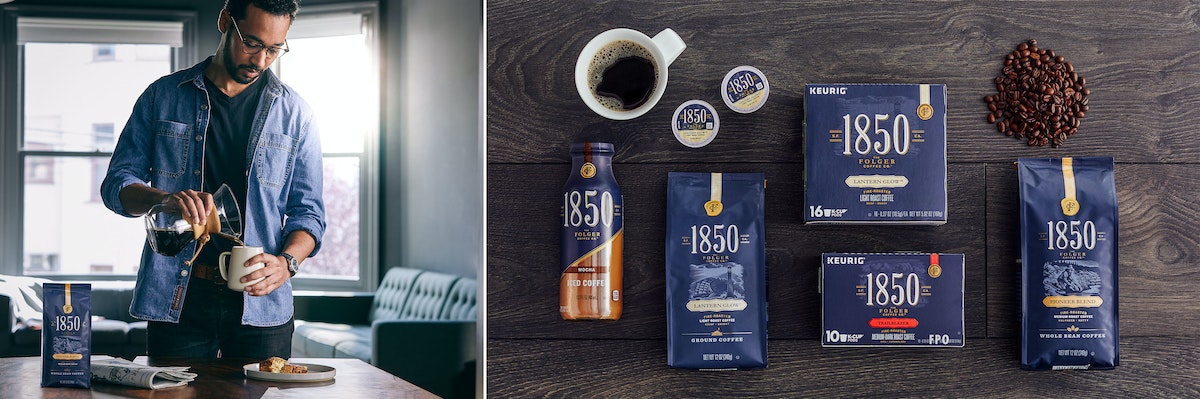
As an example of this, Geoff and The J.M. Smucker Company suggested to IDEO that they explore how Folgers, America’s leading at-home coffee brand, might resonate more deeply with a millennial audience. Design research revealed that the mindset of today’s millennial coffee drinkers aligned with Folgers entrepreneurial brand roots. The teams collaborated to create a new concept: a brand called 1850 and an end-to-end, go-to-market product experience, including packaging, retail, and merchandise. 1850 hit shelves in 2018 and has since been reported by IRI Advantage as the top launch in the Coffee Category for 2019.
Frankly, I don’t think innovation gets any easier. You just get a little more comfortable with the discomfort, and that’s when the work starts to get consistently better.
Geoff Tanner, Senior Vice President, Growth & Consumer Engagement, The J.M. Smucker Company
Creating an innovation pipeline that’s inspired by consumers’ needs
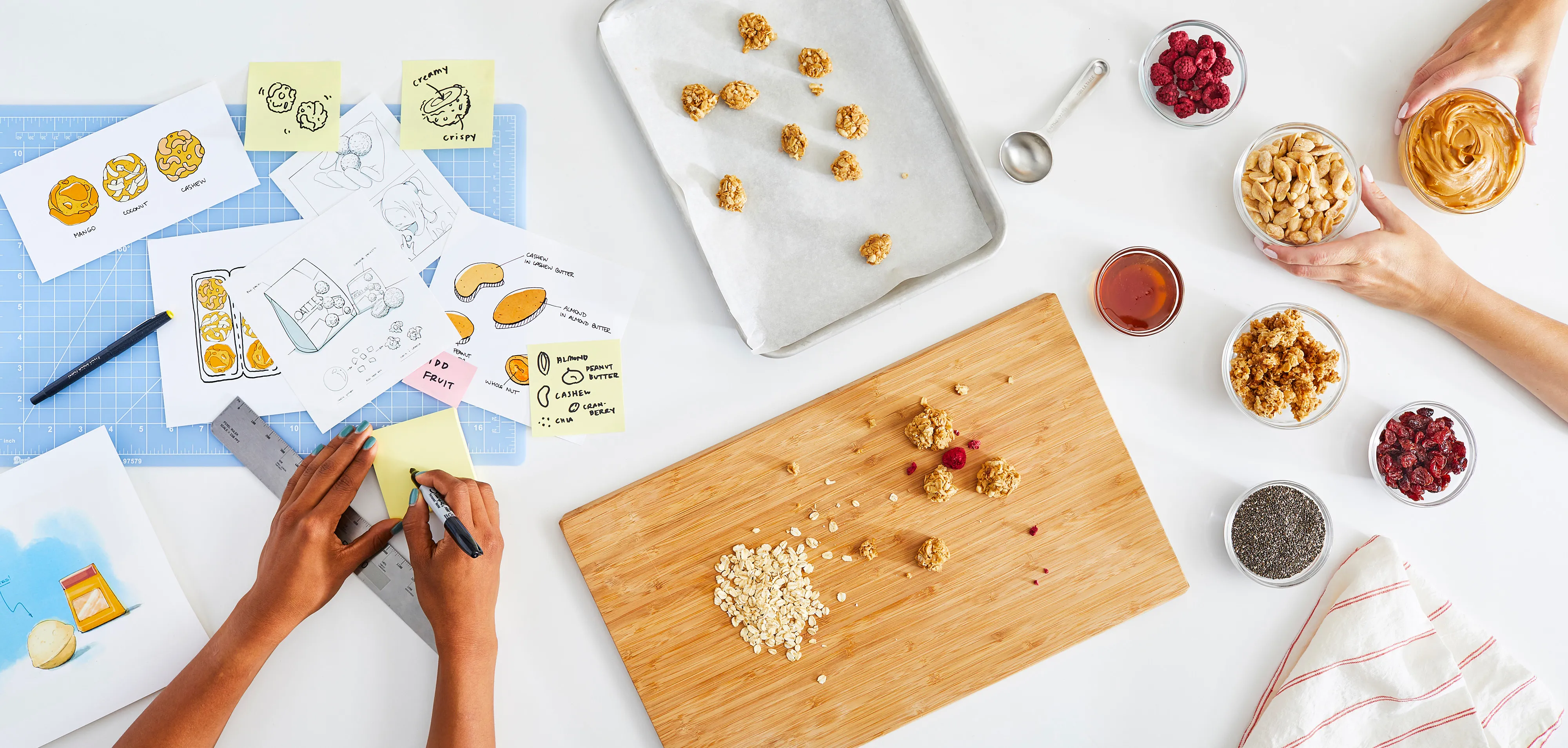
With 1850 underway, Geoff and The J.M. Smucker Company continued to invest in human-centered design to drive new offerings. The next collaboration with IDEO explored how Jif, the iconic peanut butter brand, could extend beyond the jar and become more readily accessible and appealing to busy parents who want to feel confident about the snacks they give their kids.
The design team was moved by the challenges that parents face: They want the best for their kids, but struggle to choose between what’s wholesome and what’s convenient on a daily basis. The ideal foods are filling, nutritious, and energizing, but often take more time to prepare and aren’t backpack or carpool-friendly. On the other hand, more convenient options tend to be full of empty carbs. Based on this insight, IDEO and Jif decided to tackle the snack-time parenting struggle. The IDEO and Jif teams worked side-by-side to prototype multiple product ideas and formats and tested them with on-the-go families to ultimately create Power Ups.
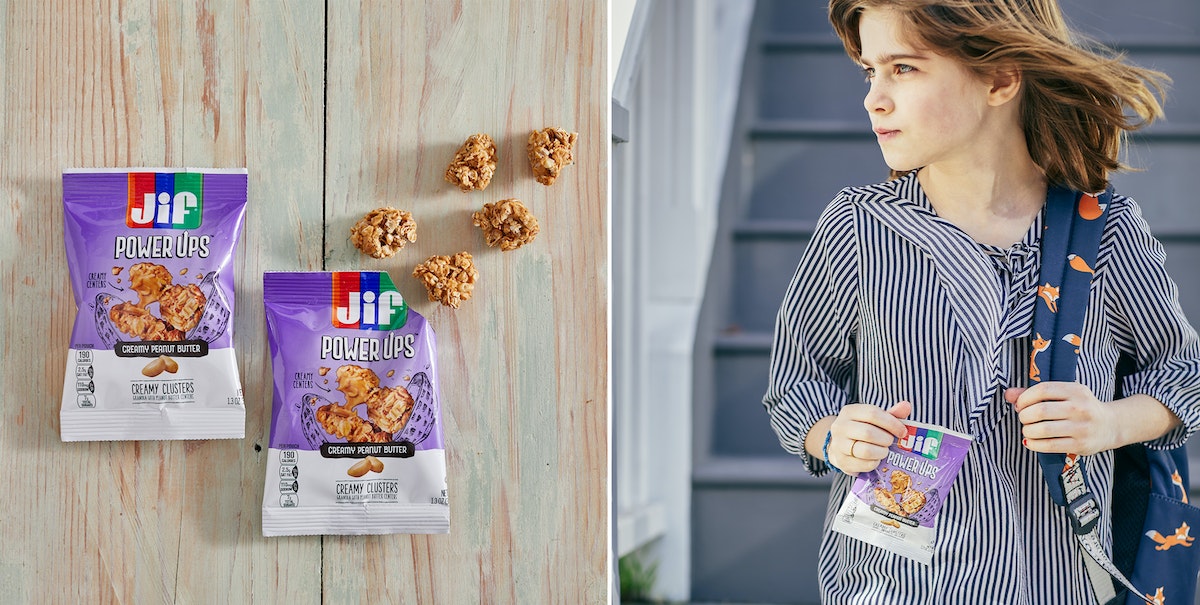
Available at over 200 retailers worldwide and online at Amazon, Jif Power Ups make wholesome, delicious grab-and-go snacking possible for kids and parents alike, across products ranging from Soft Baked Bars to Creamy Clusters, which are filled with peanut butter and rolled in whole grain oats. All are made with peanuts as the first ingredient and contain no high fructose corn syrup. Since going to market in 2018, Jif Power Ups has been named the top innovation launch in the Snack Bars category by IRI Market Advantage.
Design thinking underpins everything we do.
Geoff Tanner, Senior Vice President & Corporate Officer, Growth & Consumer Engagement, The J.M. Smucker Company
WATCH: The J.M. Smucker Company is on a transformational journey, committed to three pillars of growth: Lead in the best categories, build brands consumers love, and be everywhere.
The J.M. Smucker Company has experienced accelerated growth and speed to market by testing bold new ideas and evolving the role of innovation at the company. Design thinking and consumer empathy have permeated the organization’s new product development process, making it easier to uncover sharp, human-centered insights that lead to thoughtful and uniquely differentiated brands in a competitive, ever-shifting, and overcrowded industry. The work has fueled Geoff’s vision to inspire a culture of innovation at the company so that it can move at the speed of consumers and remain a best-in-class family of brands for future generations.
Creating a fresh, modern take on the Indian culinary experience
Designing a scalable restaurant, retail, and packaging experience that highlights the diversity of regional Indian foods.
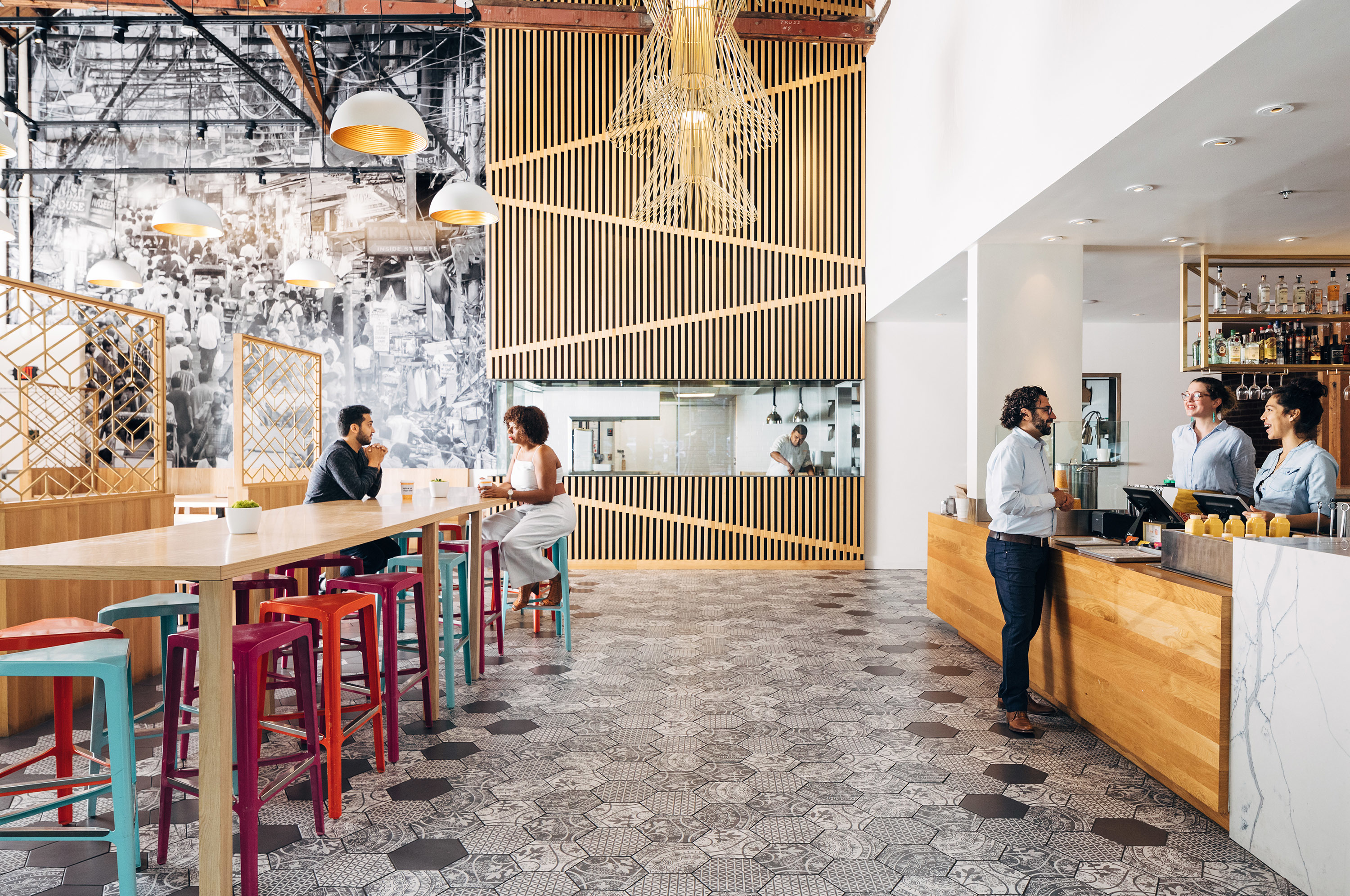
It’s a Thursday afternoon in Oakland, California. A line of lunchtime diners snakes out the door of dosa by DOSA. Upon entering, eaters are greeted by the smell of tangy dosa—a large paper-thin crepe made from a fermented batter of rice and lentils—and sweet, spicy chai. Turquoise chairs pop against a floor-to-ceiling mural by Oakland artist Namita Kapoor that transports diners to Chandni Chowk, one of the busiest markets in Old Delhi, as if enjoying their food at a local vendor.
In 2003, Emily and Anjan Mitra spent their honeymoon in India, savoring the street food of Anjan’s childhood in Mumbai (often still called Bombay). After returning to San Francisco, they found themselves longing for those distinctive flavors and dishes. Realizing that most Bay Area diners had never seen nor tasted these foods, Emily and Anjan founded DOSA, an upscale, full-service restaurant that introduced the Bay Area to Southern Indian cuisine. Locals came to try the unique, plant-forward dishes, and left with satisfied bellies and a broader understanding of Indian culture.
The entrepreneurs envisioned a brand extension of DOSA: a counter-service restaurant that could scale nationally. The hospitality venture, called dosa by DOSA, would offer healthful Indian street food made from local and seasonal ingredients. Emily and Anjan also set out to expand their existing product line-up—including cold lassi beverages, simmering sauces, and grab-and-go-meals—to national grocers and retailers and needed launch-ready packaging that was convenient, eye-catching, and environmentally-friendly. The new expression would enable consumers to experience dosa by DOSA and Southern India in a variety of forms and places. Emily and Anjan partnered with IDEO to establish a cohesive and consistent brand experience, from the restaurant and to-go meals to retail stores and mobile delivery.
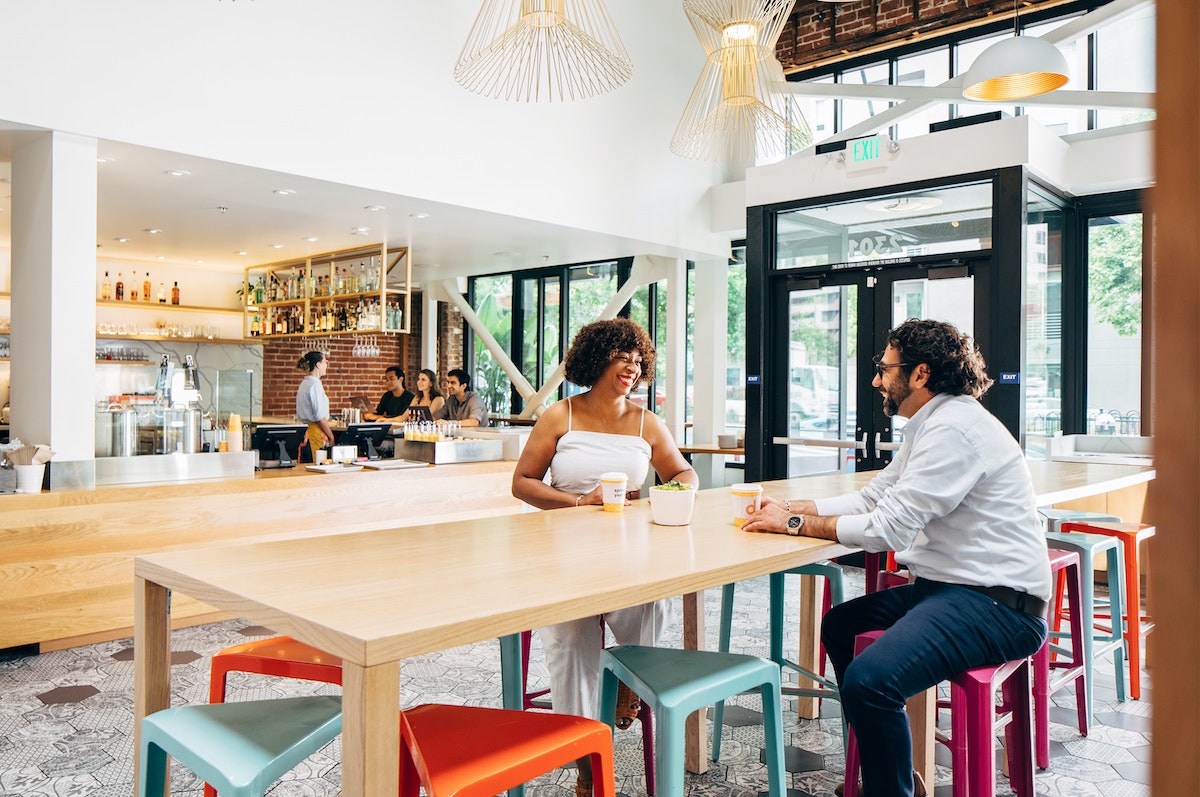
In close partnership with the founders, their staff, Feldman Architecture and MPADA, IDEO set out to bring dosa by DOSA to life and help it scale through brand, environment, and experience design. This included creating everything from the logo and packaging to the menu and operations strategy, with each element tying back to the founders’ vision of sharing Indian heritage and traditions through cuisine.
The group began by seeking cultural inspiration for dosa by DOSA’s brand identity system—the logo, colors, values, fonts, and messaging—to guide future designs. They were inspired by Indian truck drivers who decorate their trucks with garlands, signs, or flags that engage other drivers or bring luck. The dosa by DOSA logo design and its wood-cut typeface are inspired by the dimensionality of this homespun art form, while the vibrant, eclectic colors reflect the streets and textures of urban Mumbai.
The goal of opening people’s minds to Indian cooking and culture extends to the packaging, which meets customers’ needs and playfully educates them. The food containers—made from recycled and compostable material—feature brightly patterned labels reminiscent of the trucks. Some have built-in compartments suited to multiple dipping chutneys, making it convenient to sample a variety of Indian flavors. Paper tray covers resembling Mumbai newspapers offer eating tips like “Be civilized. Eat with your hands,” encouraging diners to experience an Indian custom.
The vibrant brand comes to life across an array of packaging, including cold cups printed with the phrase “thanda thanda pani”—meaning “cold cold water”—which comes from a popular Indian parody of the Vanilla Ice song "Ice Ice Baby."
To design the diner experience and restaurant environment in a way that invites curiosity about the culture and cuisine, the team started with diners: They identified key moments in their experience like entering, waiting in line, and paying. The floor plan, furniture, lighting, signage, and menu were designed around these touchpoints. For example, while customers wait in line, they can watch dosa being prepared, as if they’re eager and hungry travelers awaiting street food.
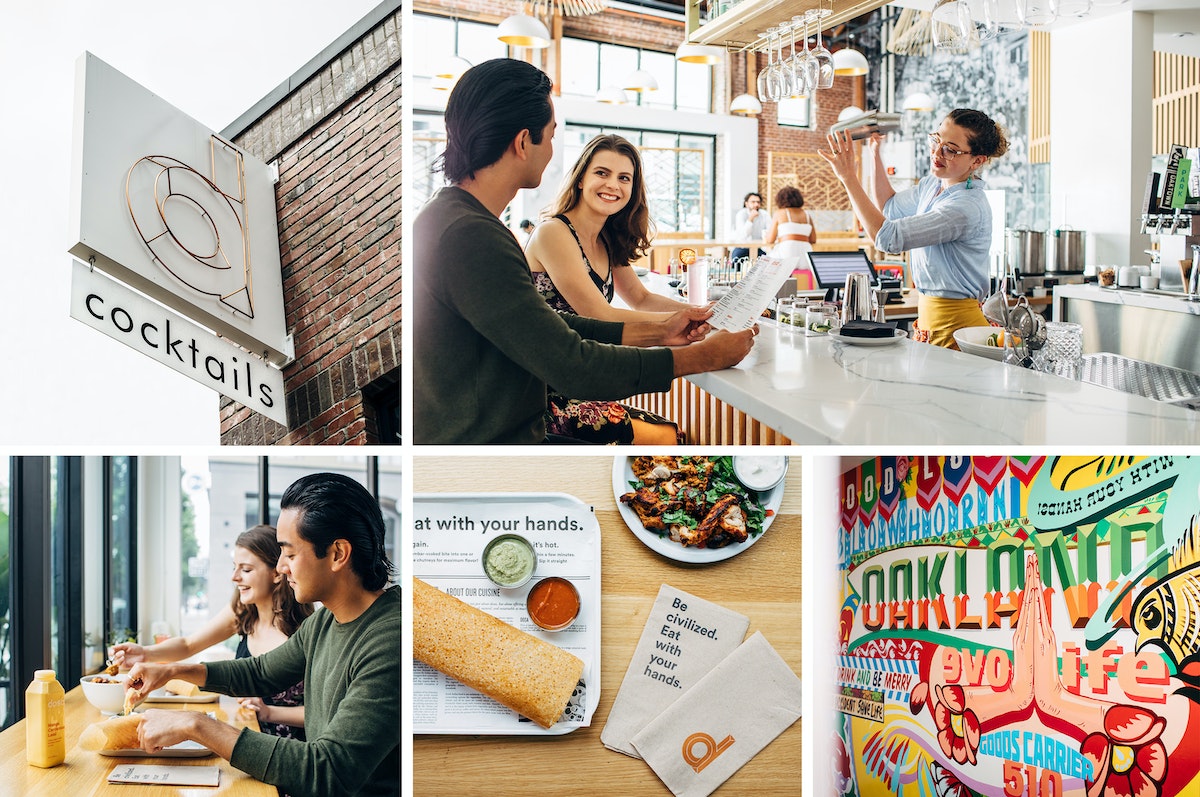
The dosa by DOSA menu includes distinctive items like coconut kale mung bean salad and hot masala chai made with caramelized milk—the way Anjan’s mother prepared it. To help the restaurant scale, the team created a preliminary furniture, fixtures, and equipment (FF&E) budget, 3D renderings of the space, and an operations strategy for the founders and their employees.
The dosa by DOSA flagship launched in January 2018 in Oakland, California. The IDEO brand guidelines have enabled the dosa by DOSA team to independently and easily shepherd new product lines to market, including salads, wraps, curry bowls, samosas, and simmer sauces. The brand’s packaged food launched in over 200 natural food stores in 24 months—including over 100 Whole Foods locations—as well as online retailers and delivery services like Good Eggs and Caviar. These items and the restaurant have helped Emily and Anjan realize their vision of bringing the flavor and spirit of Southern Indian cuisine to new communities around the world.
Revitalizing Japan’s food industry through design and software
Redefining the “middleman” role of produce wholesalers in Japan.
In recent years, due to shifts in Japan’s demographics, the food industry has faced challenges such as a decrease in market size and a shrinking number of producers. As a result, social impact opportunities abound in this field.
When Japanese software company NJC (Nippon Jimuki Co. Ltd.) approached IDEO seeking to identify new business opportunities that would build on the company’s core strengths, the food and agriculture industry rose up as a promising area of focus.
NJC is a well-established software company that has spent over 50 years helping to build backend business systems for small to medium enterprises. NJC works across healthcare, retail, and food and beverage, computerizing core processes to support and improve operations.
In partnership with IDEO, NJC explored its strengths and potential as an organization, as well as the ideas and visions of the employees, and emerged with the goal of using their capabilities to address large-scale issues facing regional farmers.
During research across Japan, local growers described challenges with multi-layered supply chains and analog systems, which led to “overwork for minimal profit,” as well as a gap between supply and demand. Because agricultural wholesalers lacked clear information in advance on the status of crops or the volume to be harvested, they struggled to negotiate with buyers, which led to wasted food On the other hand, the farmers who grow the crops are engaged in manual labor, and do not always have the energy to focus on business aspects such as efficiency or the pursuit of increased profitability, which leads to a diminished interest in farming among young people.
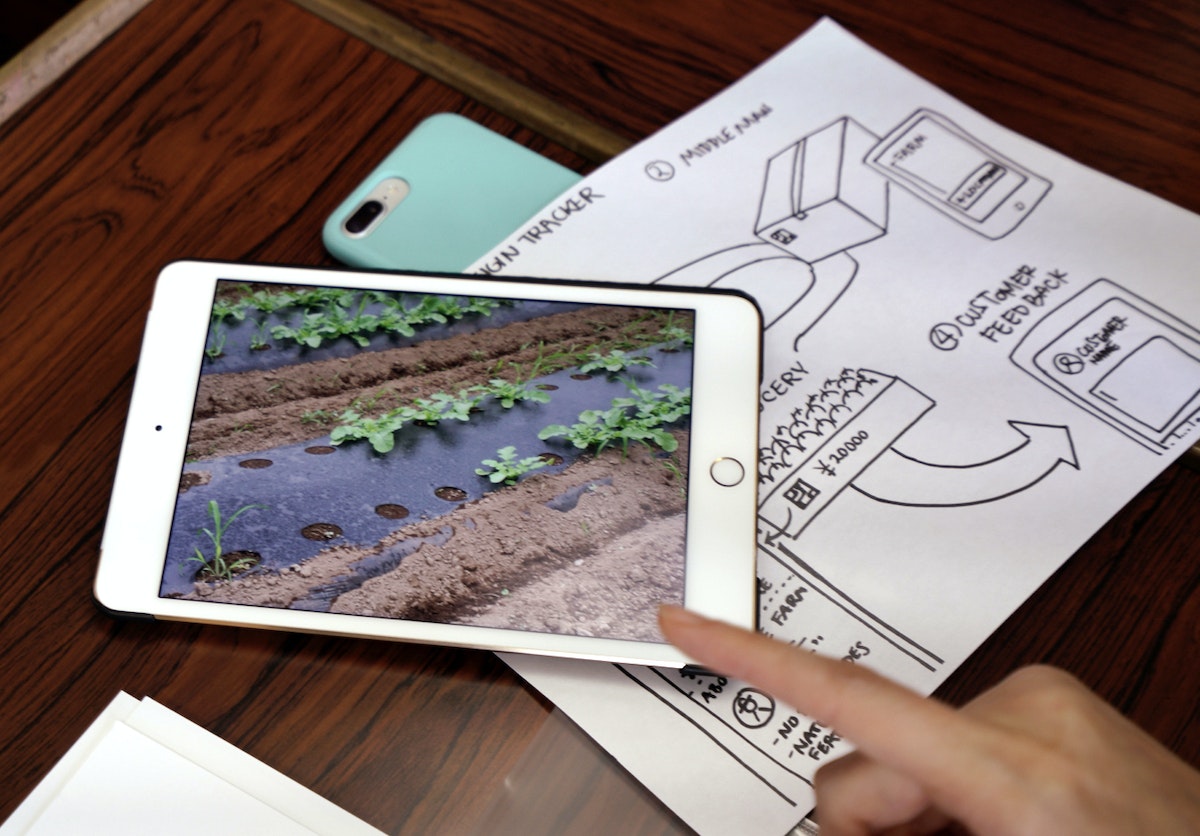
One question that emerged through research was why agricultural producers weren’t utilizing IT. This evolved into “How can profitability be improved for all stakeholders?” and, “How might we create a system that will provide useful data without creating a burden for either farmers or agricultural wholesalers?”
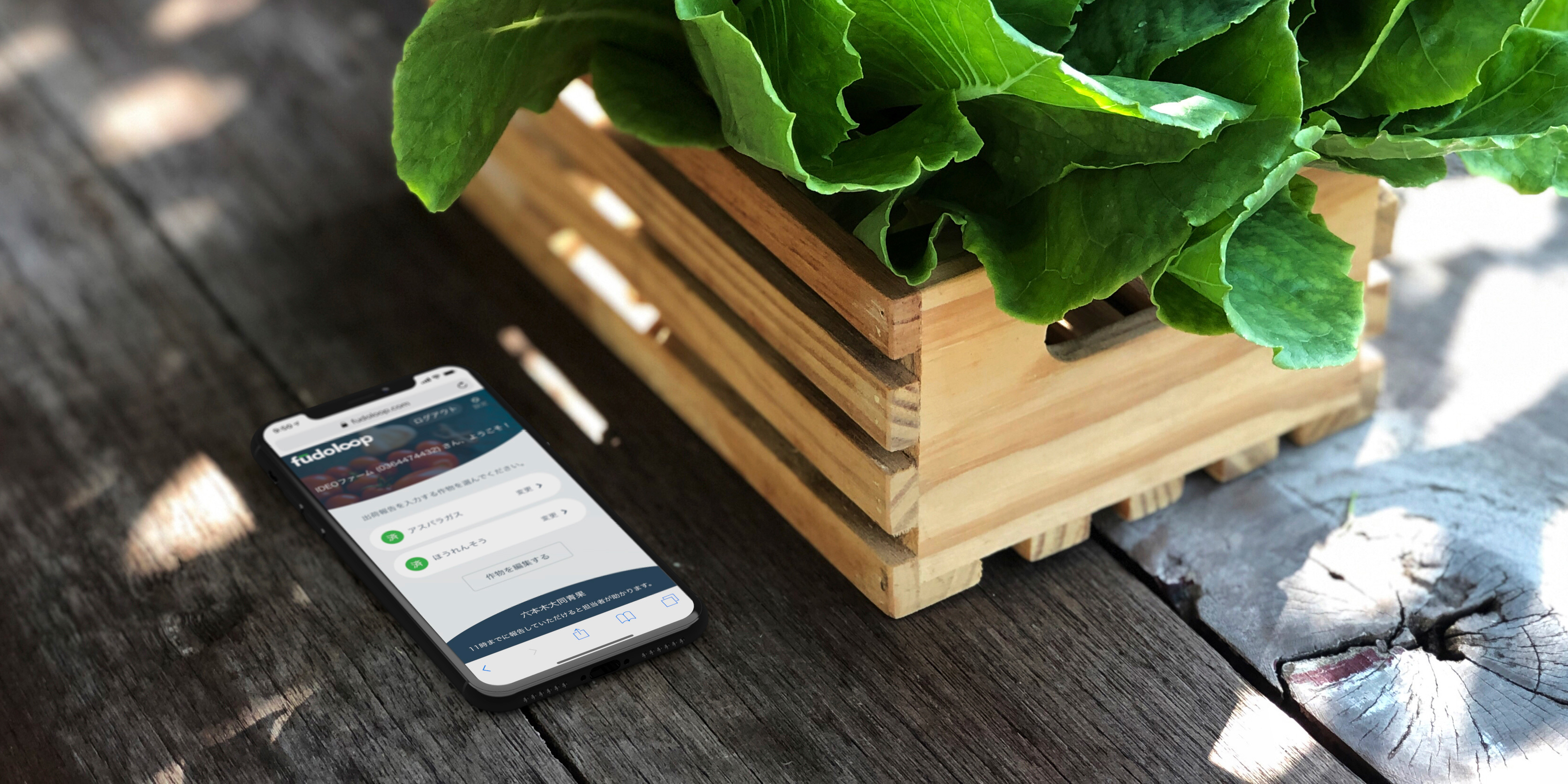
The result was fudoloop.
fudoloop is an app that enables farmers and wholesalers to conduct business more profitably by bringing transparency to the fluctuating produce market. Through fudoloop, wholesalers receive information from farmers a day in advance, and can coordinate the various requests of buyers, such as order size, production location and other special requests. As a result, wholesalers can function as “community managers,” doing business with both producers and buyers at a more appropriate price point.
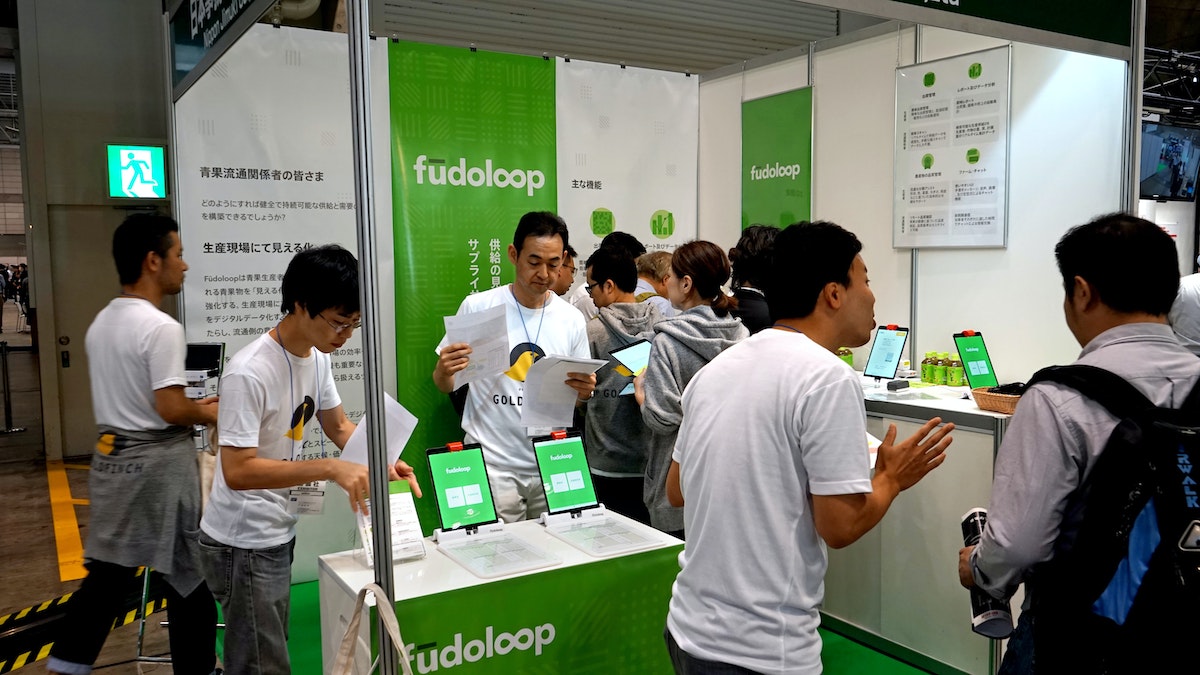
NJC aims for fudoloop to be the first step in a cycle that brings value to all stakeholders, from farmers to wholesalers, retailers and even customers, by redefining the “middleman” role of produce wholesalers.
Designing a new digital experience for a world-renowned Japanese railway
A new, human-centered wayfinding app for one of Japan's biggest railways.
The population of Tokyo’s metropolitan area is twice as big as New York, and the daily influx of workers from the suburbs increases that number sixfold. Congestion on trains traveling through the center of Tokyo during commuting hours is said to reach somewhere close to 200 percent of the trains’ capacity.
East Japan Railway Company (known as JR East) is the world’s largest railway company by revenue, operating 12,000 trains daily and serving 6.4 billion passengers per year.
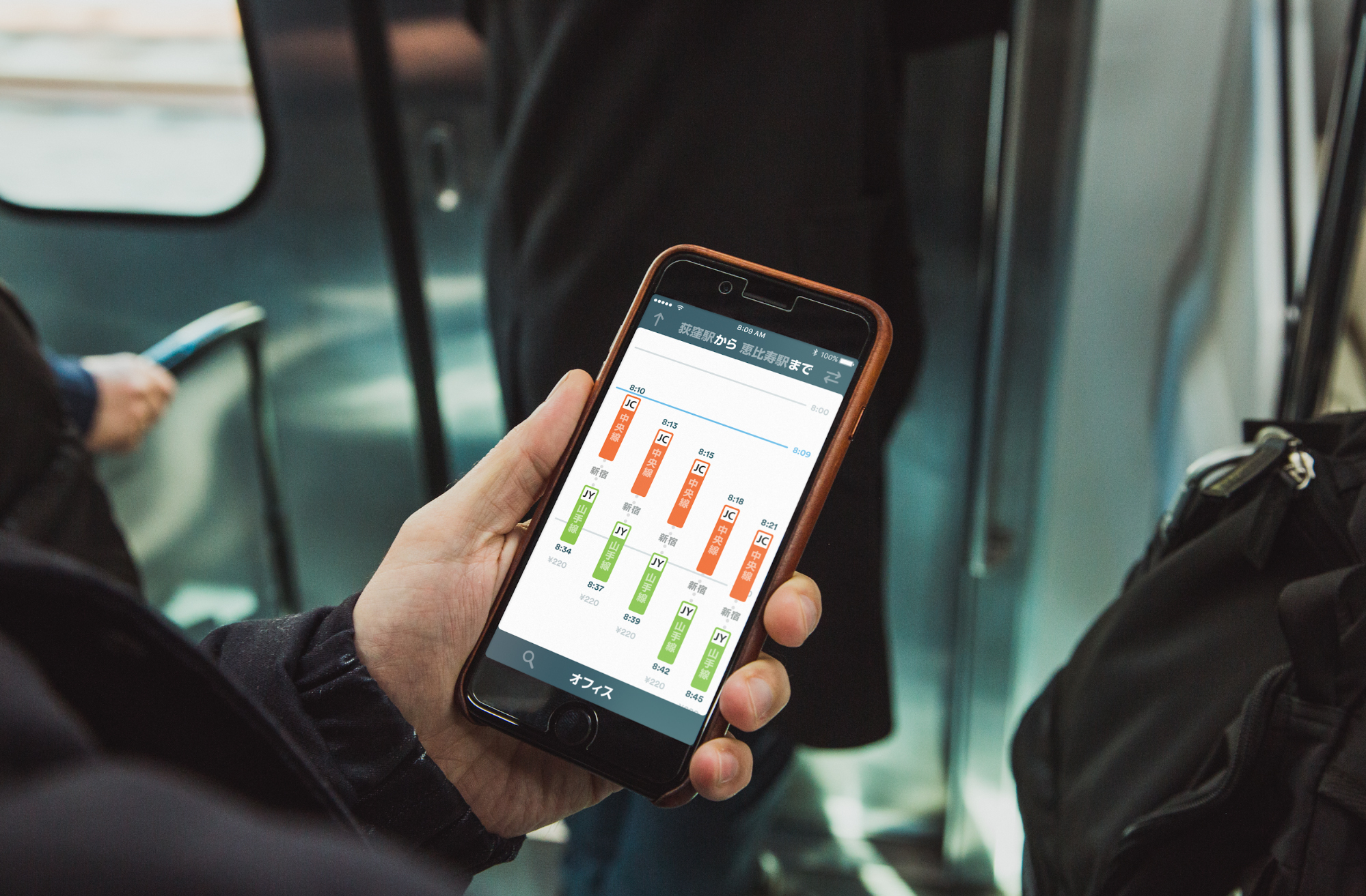
In March 2014, JR East leveraged their extensive operations and passenger data to publish a consumer app that provided train location information, congestion status, air conditioning temperature, and wayfinding tools.
The app was downloaded more than 3.8 million times; however, its features and usability proved unsatisfactory to users. In an attempt to be comprehensive in addressing passenger needs, the app was weighed down with data and worked sluggishly. Competitors’ apps were named above JR East in customer satisfaction surveys, highlighting the company’s need to address the tool’s usability.
JR East’s Technical Division approached IDEO to help design an attractive and consistent user-centered experience through its digital ecosystem. With a team of interaction designers, they launched a project to create a new version of their app.
During the research phase, the IDEO team observed passengers’ behaviors and decision-making processes and noticed that people were using several apps at once to get more personalized and complete information.
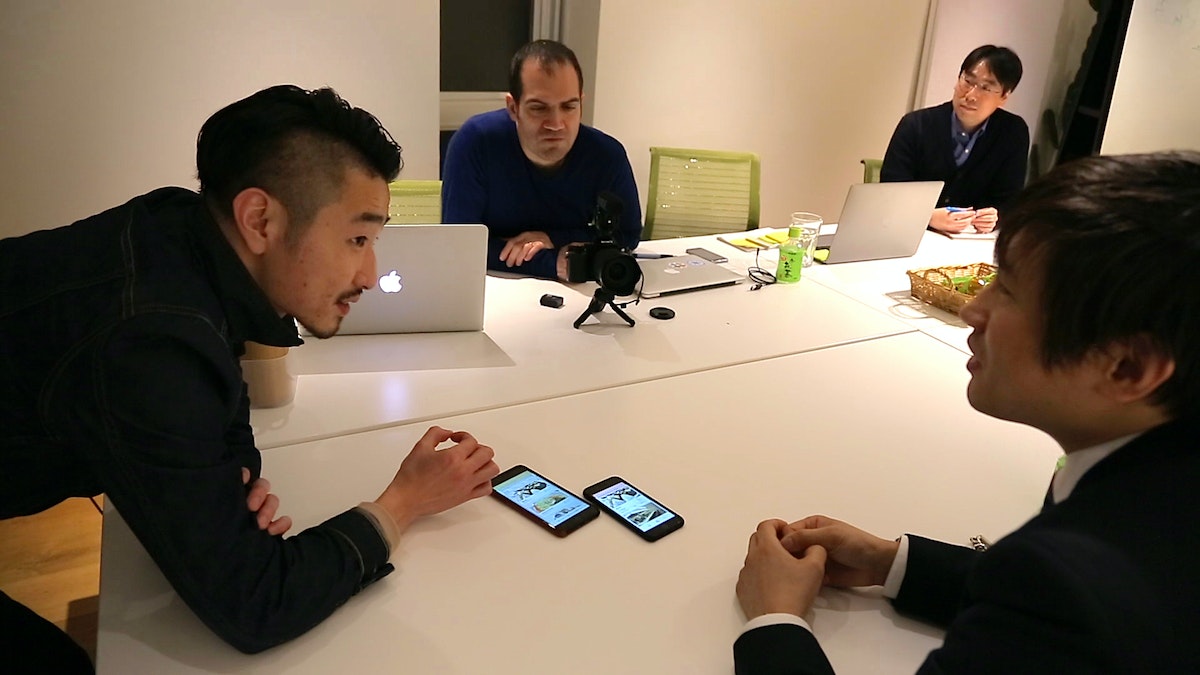
The team created a set of paper-based prototypes to test how users would react to various functionalities. Surprisingly, users ranked versions with limited functionalities higher than those with a broad range of features.
This insight informed a new prototype that enabled a customized user experience based on traveler needs. Wayfinding proved to be the most frequently selected feature, so the new app was designed around helping passenger navigate during their trips.
Although JR East had traditionally outsourced their app development, IDEO encouraged them to organize their own internal team. In cooperation with Pivotal—a frequent IDEO partner familiar with human-centered approaches—the internal team was trained in agile development and built the new app themselves. A prototype was released in November 2017 as “Go! by Train.” It was so successful in the market that the earlier JR East app was replaced entirely with the content of the new design.
JR East's internal development team was recognized by the company for their exceptional output, and will be integral to the company's human-centered digital transformation going forward.

Steal These 8 Design Tips for Thanksgiving
Steal These 8 Design Tips for Thanksgiving
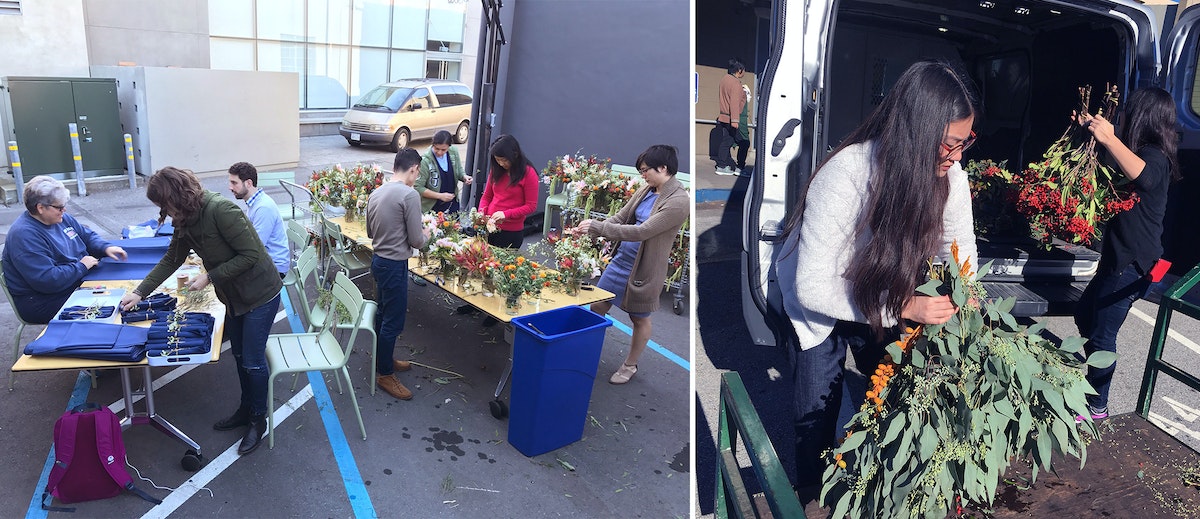
1. HIT UP YOUR LOCAL FLOWER MART
Go to where your neighborhood florists get their flowers. Arrive early and look for things which will give you bang for your buck such as large bundles of greens which can be trimmed and pulled apart, put into vases, laid on tables as runners or even piled around candles. Buy a smaller quantity of more expensive branches which have colored buds or leaves and use them as accents. Stay away from live flowers which need water and you can set up your table and other decor starting on Wednesday.
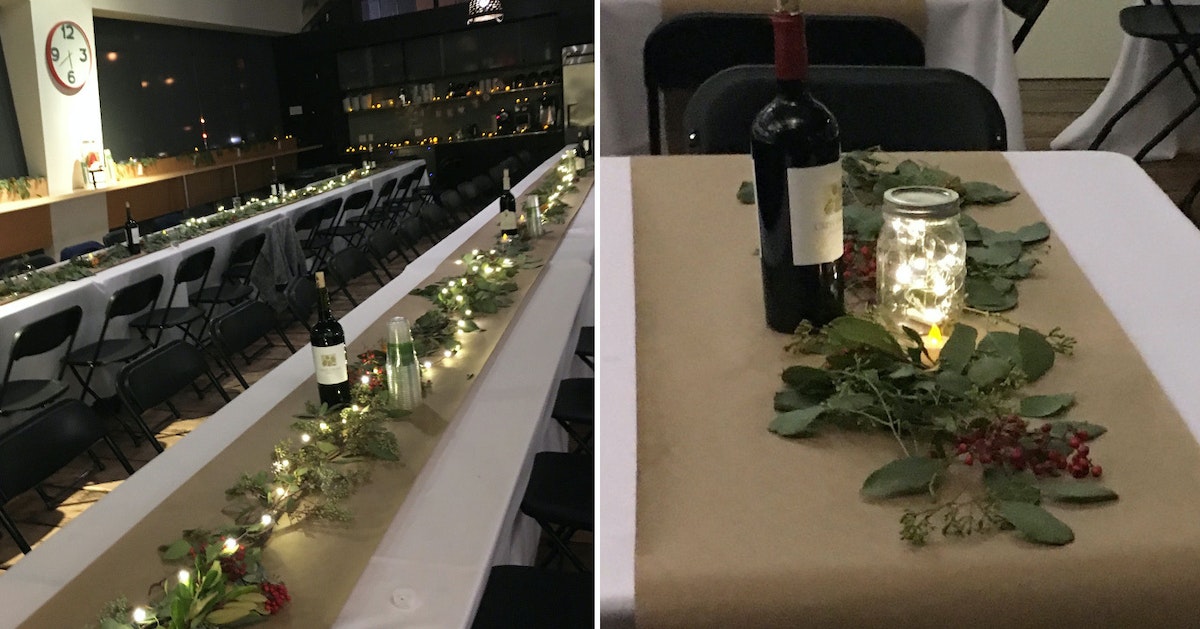
2. STRING LIGHTS AREN'T JUST FOR WINTER HOLIDAYS
Place small fairy lights in mason jars, string them around your mantel flanked with pumpkins and bay leaves, and even add to the walls of your bathrooms. Warm glowing lights go a long way to make your space feel celebratory.
3. USE INEXPENSIVE BUTCHER PAPER AS A TABLE RUNNER
For fun, you can stamp the paper with festive images or sayings. Leave a glass jar of colored pencils or crayons on the table and watch your guests color, draw and let their creative confidence shine. Butcher paper over a white table cloth looks more refined, or you can use just the paper as your entire table covering for a more rustic look.
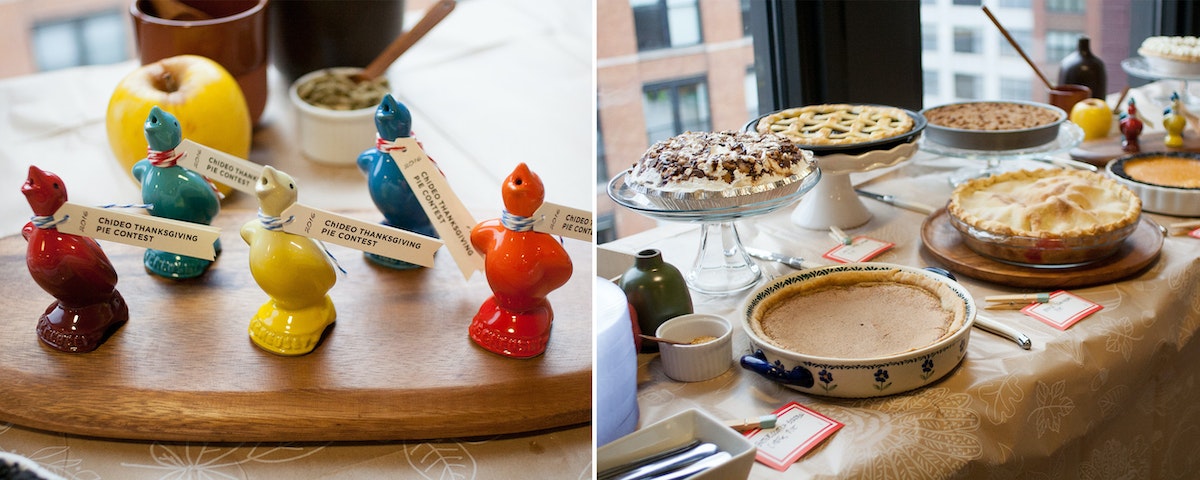
4. HOLD A PIE CONTEST
Everyone loves a little friendly competition. And pie. They love pie! Why not combine both and off load some of the baking? Invite a few outside friends to act as “judges” and whip up some awards like these cute Le Creuset pie birds to up the ante.
5. SET UP A BAR OUTSIDE THE KITCHEN
Setting up a designated spot for the bar is a big plus to keep people out of the kitchen while you are cooking or serving, but don't forget to have wine and water on the table where people are seated for dinner. This allows your guests to have that toasty communal feel even if you aren't serving family style.
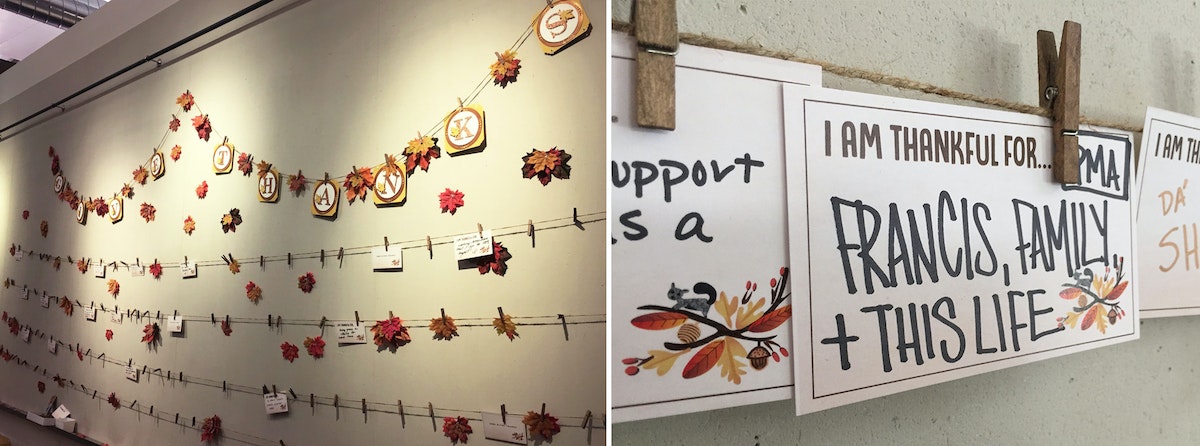
6. DESIGN SOMETHING THAT ALL YOUR GUESTS CONTRIBUTE TO
Have everyone write an "I am thankful for ____" card and hang them from a clothespin on twine (shown above), or put a Polaroid camera and a bowl of thumbtacks on a stool let people create a photo wall. A communal craft or experience brings people together (even when their politics don't).
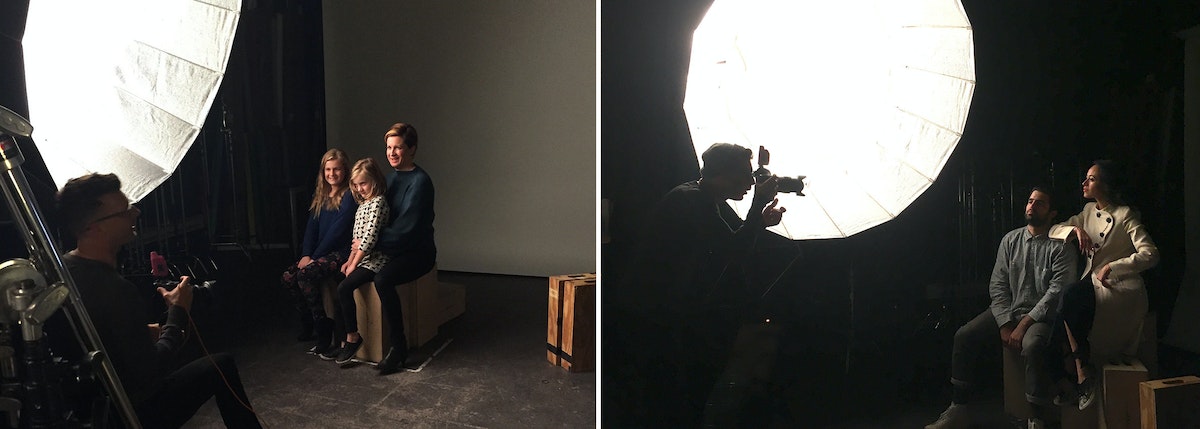
7. SET UP A PHOTO BOOTH
Our resident photographer, Nico, invited us all to pay a visit to his "fish locker" on the way out to get our portraits taken. But you don't need a professional setup to create great snapshots. Simply mount an iPhone on a tripod, reserve a wall, and fill a box with a stash of fall props like turkey hats, a cornucopia, giant utensils, a plastic drumstick, and maybe a bonnet (yes, there's a pilgrim costume category on Amazon).
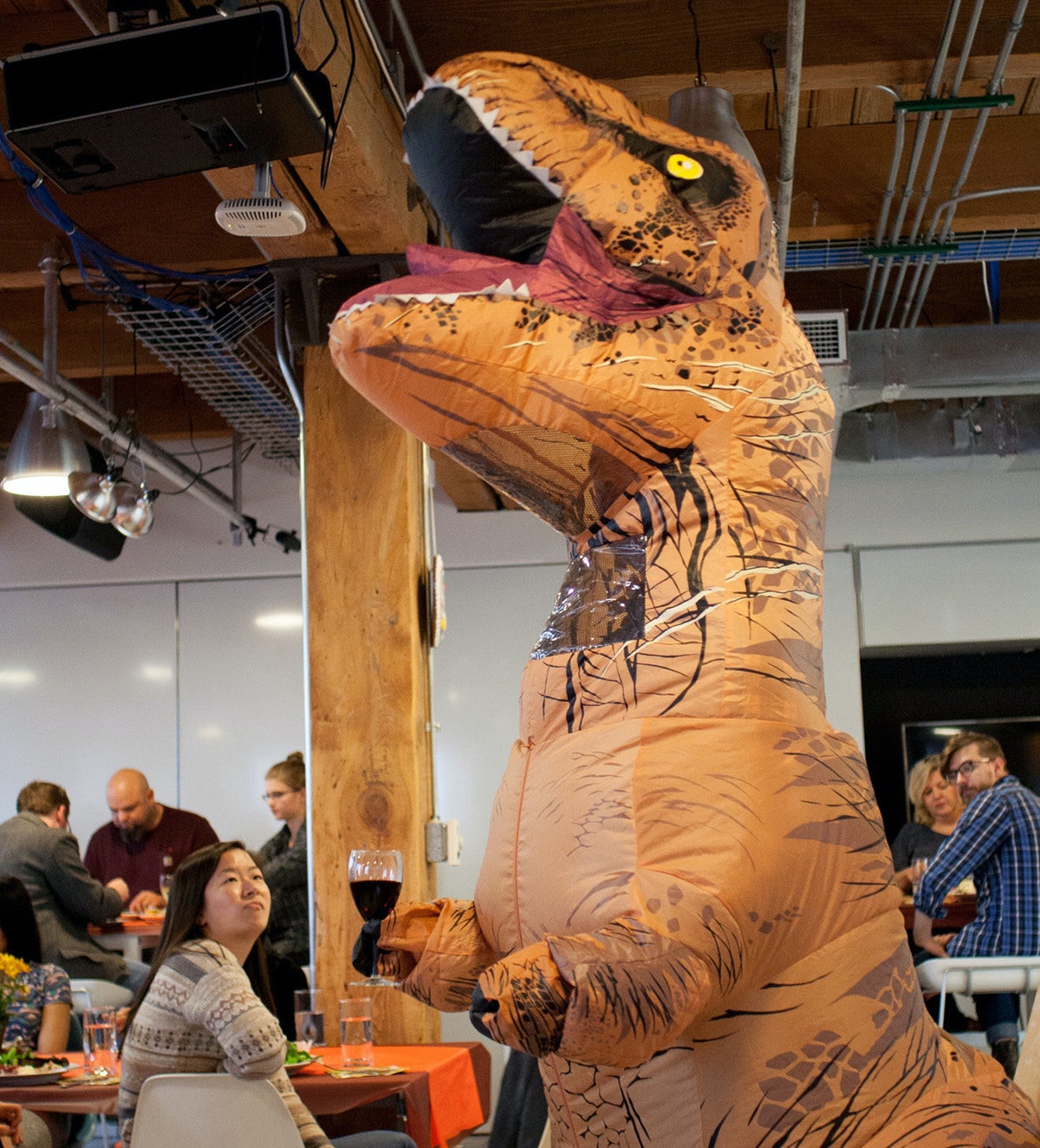
8. INVITE A T.REX TO DINNER
Our Chicago Managing Directors gave the studio’s traditional Thanksgiving toast wearing an inflatable dinosaur costume. You don’t have to go to such Mesozoic extremes, but it never hurts to throw some random, unexpected sumpin’ sumpin’ in the mix to make an event extra memorable—and Instagrammable.
How do we throw a Thanksgiving dinner for 400 employees and their families? Very carefully. My team, who focus on our collective experience in the IDEO San Francisco office, plans all of the logistics and details for the night and then execute fast and furiously. As with most event production, it’s part creative exercise, part leap of faith. Hosting your own feast of gratitude this year? Go ahead, steal these ideas.
In Pursuit of the Platonic Ideal of Apple Pie
One designer’s tasty obsession
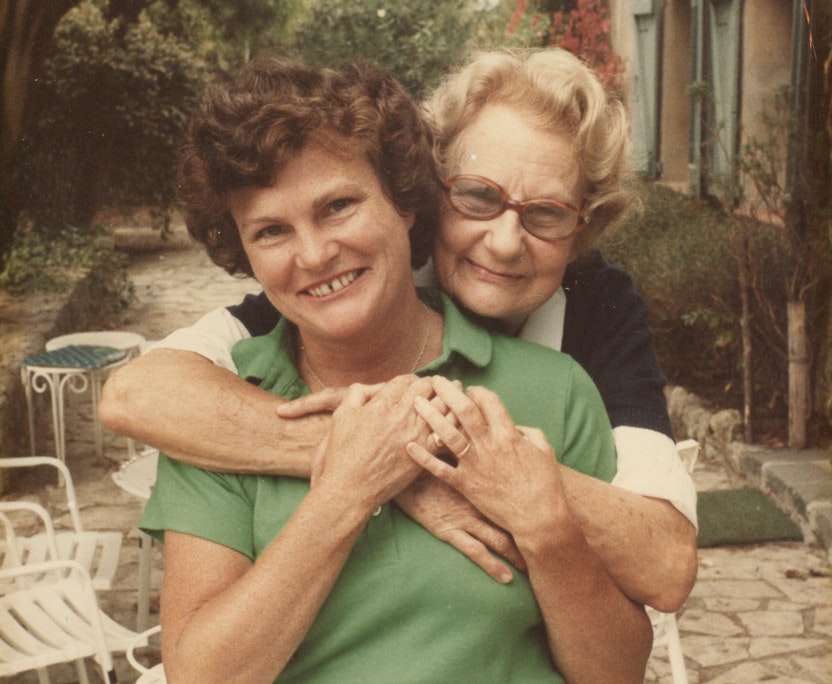
As it happened, our trip coincided with Simca’s annual cocktail party, a magnificent affair. Surrounded by strange people speaking a strange language, I focused on eating. I had my hands and my mouth full, which is why I didn’t notice when an unspeakably tall older woman joined me at the sprawling buffet. Reaching across the table to pluck a wrinkly black olive from a dish, she looked down at me kindly and said, Bon soir. It was Julia Child.
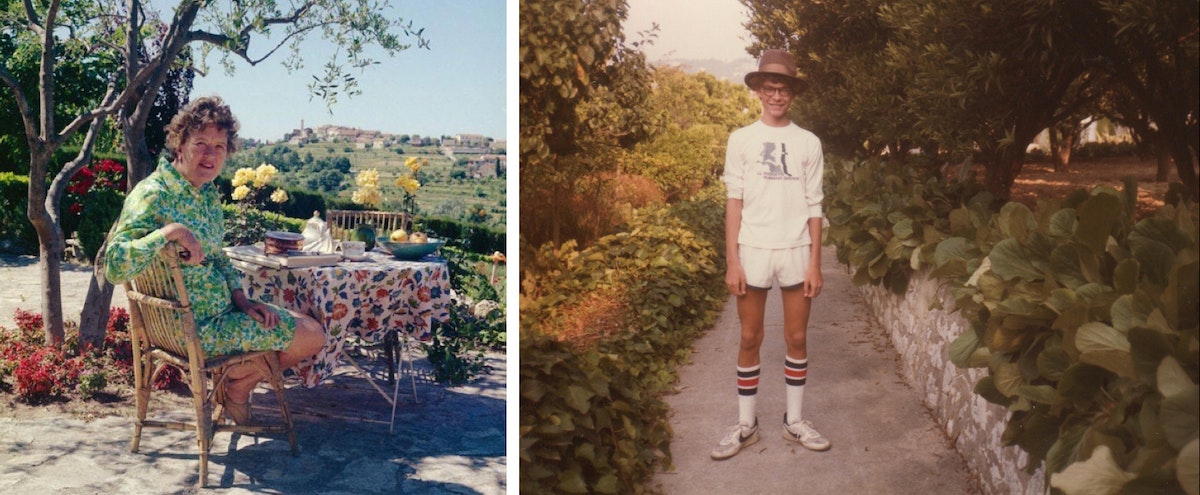
It wasn’t until after college that Julia and Simca came back into my life. My mom gave me their cookbooks as a graduation present. Living on my own for the first time, I was starting to learn how to cook—mostly to impress girls. I would peruse their books for recipe ideas and would make regular calls to my mom to explain the “why” behind a recipe. We’d talk endlessly about converting from fresh to dry herbs, how to beat egg whites into stiff white peaks, and how to make pie dough, especially for apple pie.
Growing up, my mom’s apple pies were identical year to year. They were massive, doubled-crusted affairs stuffed with at least four pounds of Granny Smith apples. And that’s exactly how I made my apple pies, too—at first.
Fast forward a decade. I was living in Bucktown, a neighborhood on Chicago’s Northwest Side, with my now wife and our two young daughters. (The “cooking to impress girls” thing worked.) We were hosting our first Thanksgiving. I had discovered a new way of forming an apple pie by folding over the edges of the pastry to keep the apples in. When I presented it to our guests I said, “Now I can make an apple pie even if I don’t have a pie plate!” After recovering from laughter, they insisted I enter the Bucktown Apple Pie Contest. I thought it was the wine talking. But in 2011, and dozens of family-pleasing pies later, I thought, “Why not?”
The Bucktown Apple Pie Contest is the largest apple pie contest in the country. It’s held at the Holstein Park Field House and features local pastry celebrities like the owners of Hoosier Mama Pie Company and Tipsy Cakes who judge over 150 eager entries.
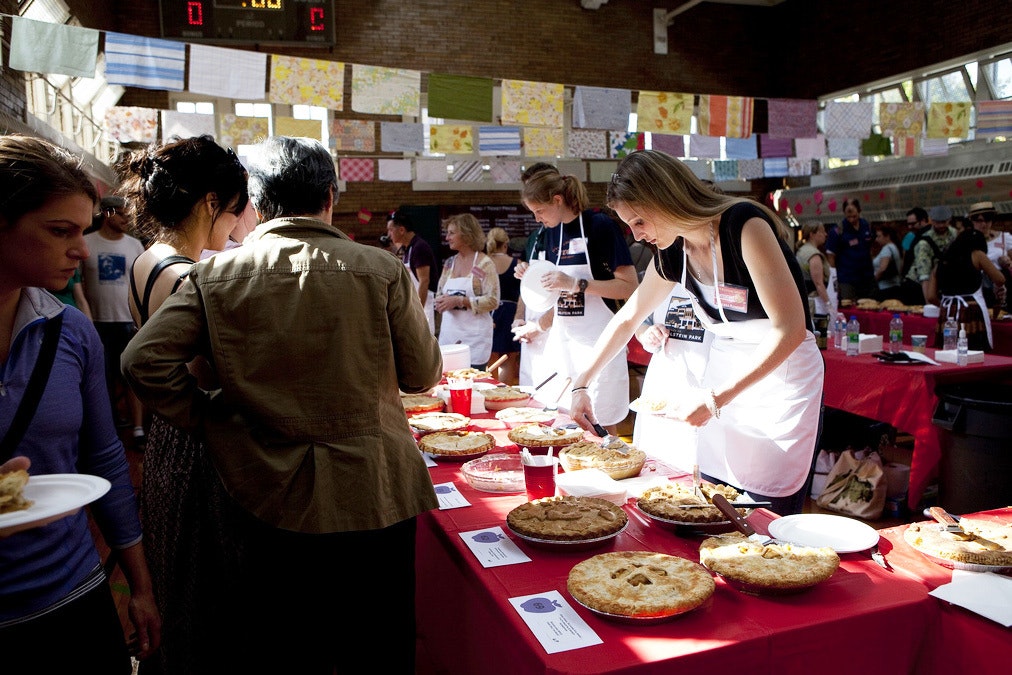
The two Field House gyms were filled with tables loaded down with pies. In the auditorium, a honky tonk band belted out tunes. I fought my way through the crowd and quickly scanned the list on the door with the semi-finalists. Not me. Oh! But, there's a list of finalists! Also, not me. Merde.
I felt like a loser. (Technically, I was a loser.) "Those were great pies," I thought. "My best possible pies..." Or were they?
When the 2012 contest rolled around, I was determined to make the Best. Goddamn. Pie. Period. It was time to break my recipe down.
I dug deep into my primary sources. Simca was an intuitive cook, confident in her methods. She was always trying new things, whereas Julia was more concerned about perfecting. She tested and re-tested her recipes, trying and tracking different techniques. I needed both Simca’s confidence to change my recipe and Julia’s discipline to learn. And I needed a hotline to my mom who has cooked everything under the sun.
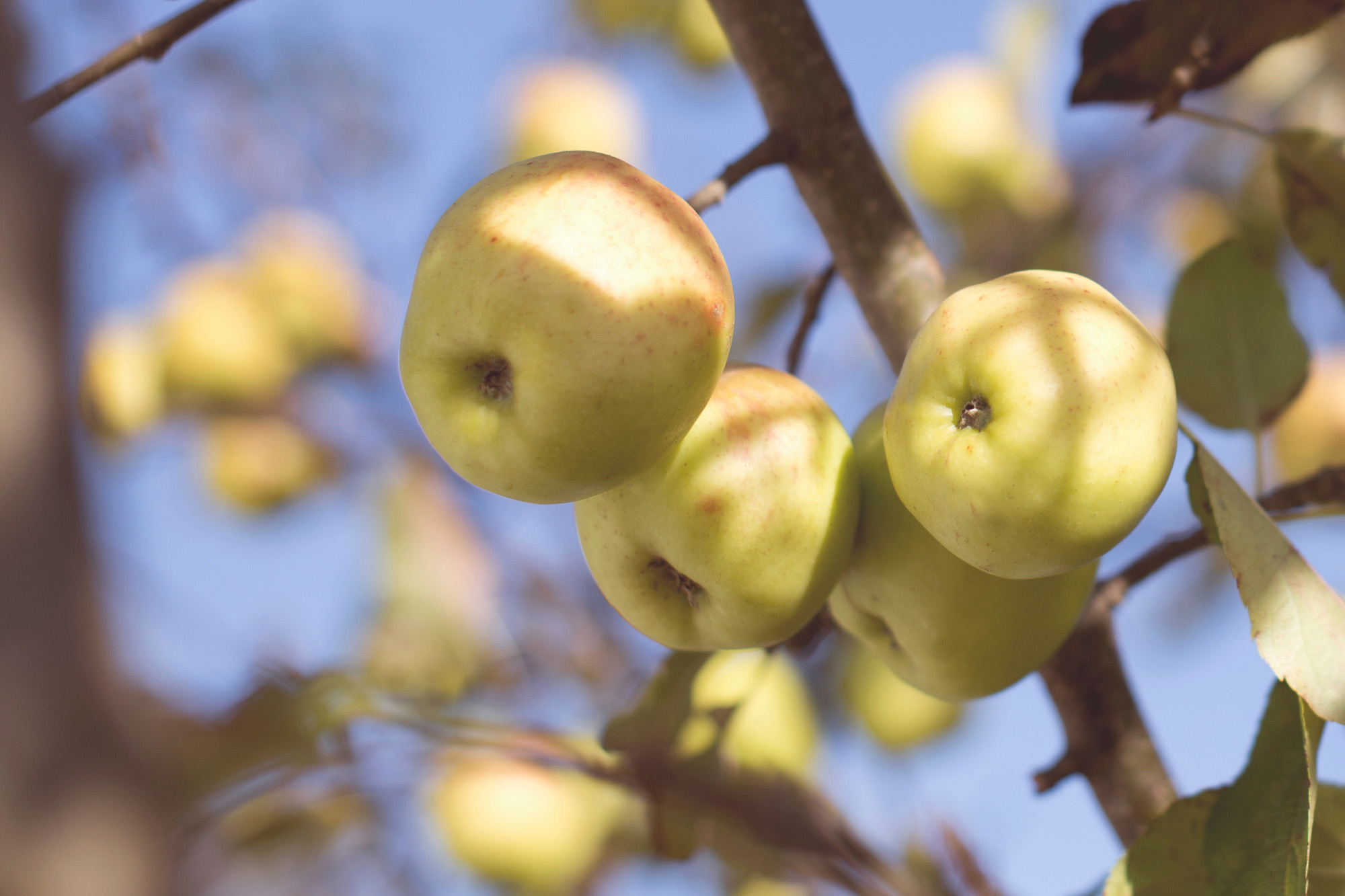
After consulting with my mom, I said, “Screw the vegetarians!” and went back to lard. The crust got richer and flakier. I suspected my mom’s Granny Smith’s, while tried and true, weren’t artisanal enough, so I tried Northern Spy and Cox’s Red Pippin, which has a great name but dissolves in cooking. A pastry-chef friend recommended combining Fuji and Granny Smith apples, a thrill because it combined my favorite eating and cooking apples.
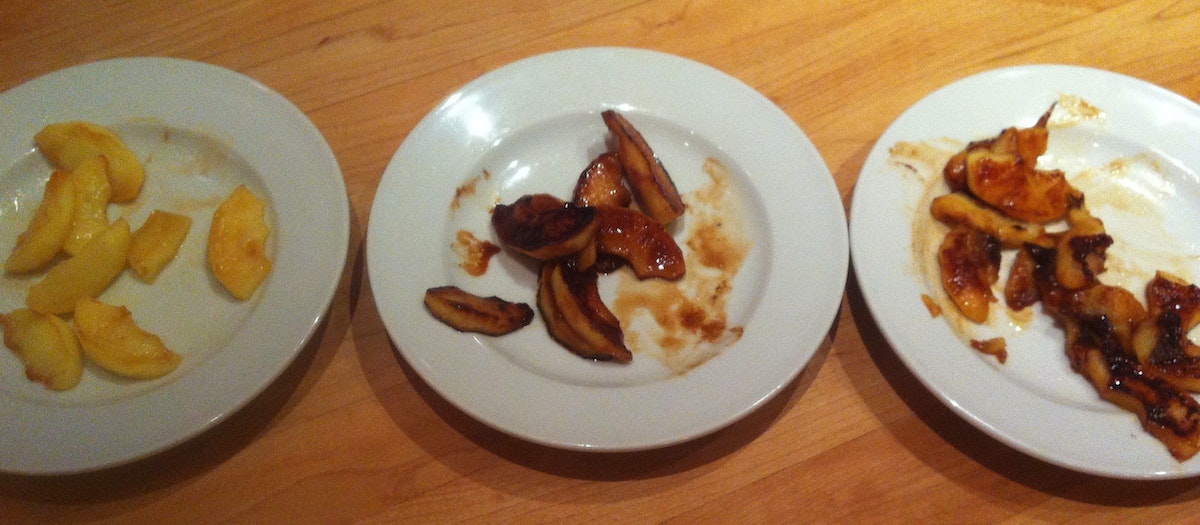
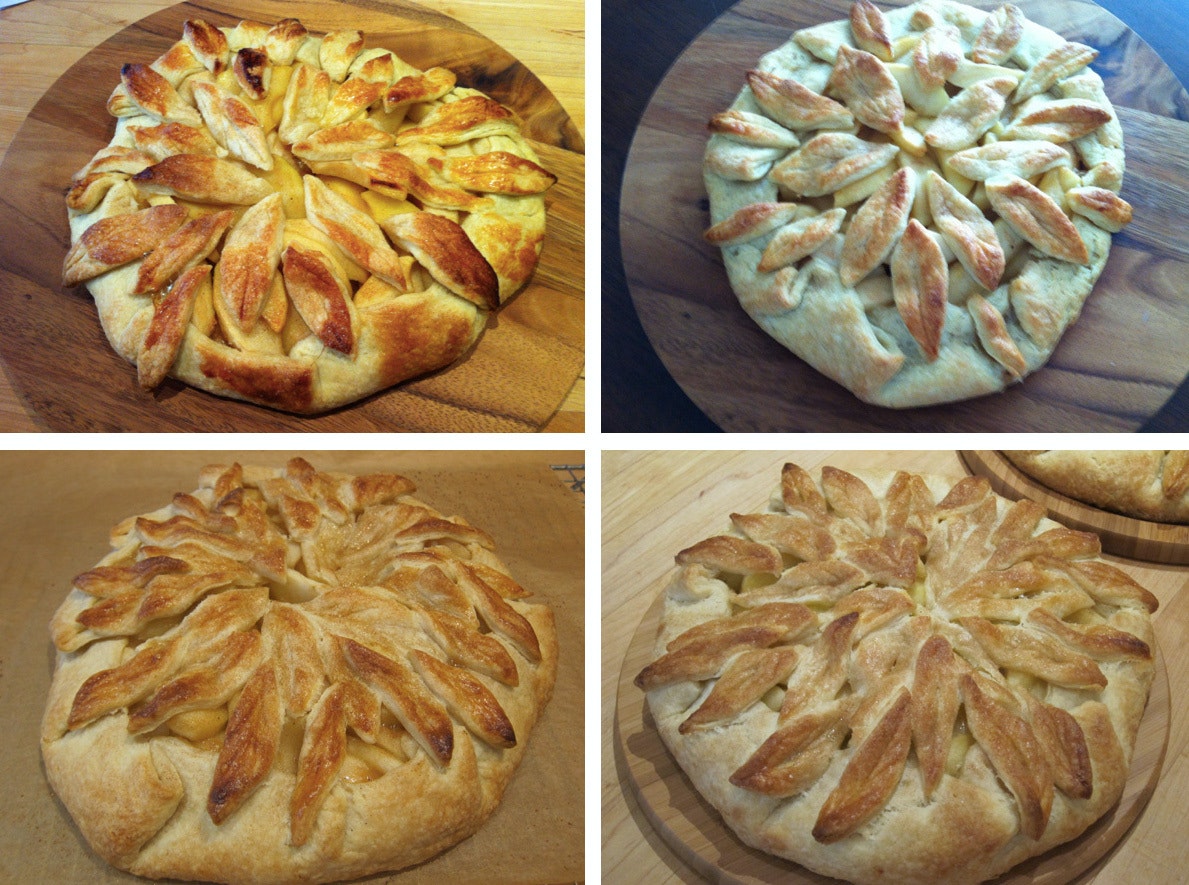
I went “off-recipe” and doubled the sugar in the pastry. Too sweet on its own perhaps, but not when paired with the tart apples and lemon of the pie. The contest demanded a double-crust, but I thought lattice tops were mundane, so my wife researched alternatives, which led to me devising a method of cutting apple-leaf shapes with a mezzaluna and trying three different knives before hitting on the perfect leaf-veining technique. When the dough leaves browned unevenly, a friend suggested glazing them individually before assembling. I taught my daughters how to peel apples in one strip and even experimented with prettier ways to core the apples
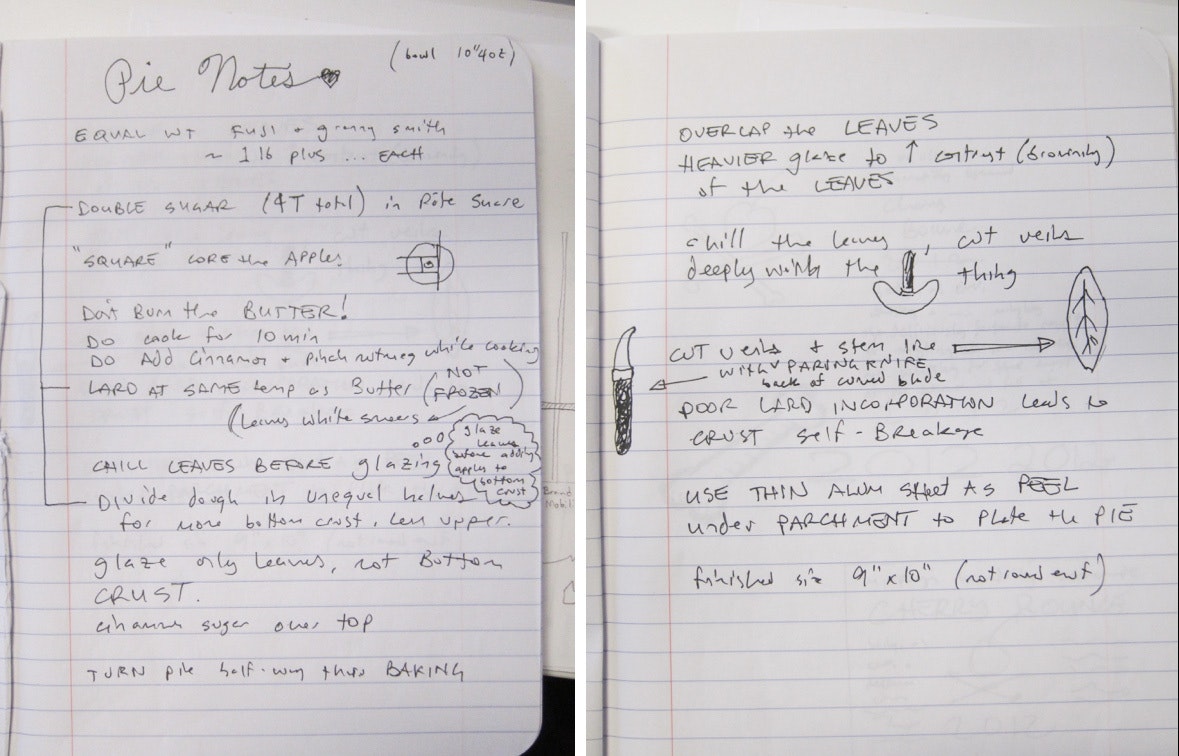
My wife described my obsession as the pursuit of the Platonic Ideal of Apple Pie.
I made pies every week for the month before the contest. While I was crazily dissecting the look, taste, and mouth feel of my pies, my family was blissfully happy. After all, every Sunday, they got pie.
The day of the contest came. It was a Sunday in October, threatening rain. I put two pies in a basket and headed to the Holstein Park Fieldhouse. The place was a madhouse. The two gyms were filled with tables loaded down with pies. In the auditorium, a honky tonk band belted out tunes.
After the judging, I fought my way through the crowd and quickly scanned the list on the door with the semi-finalists. My name was nowhere in sight. “Really?!? After all that?!?” I thought. But wait! My pies were on the Finalists’ table, and while there were some delicious looking entries, my breath caught when I noticed more of MY pie had been eaten by the judges than any of the others.
Suddenly, the honky tonk band stopped playing and they began the announcements. My eyes scanned the big board with gloriously gaudy ribbons. The judges started to announce the winners. I stood still, unable to speak or move. They announced third place… Then second place… And then… Time stopped and I heard my name coming over the loud speakers. I stumbled up on stage and a judge pinned a blue ribbon with a little silver pie on it on my shirt.
There was noise and camera flashes and my girls were jumping up and down. There was even a TV crew with giant cameras and flood lights. Still shaking with excitement, I stumbled into the thick crowd. A young woman came up to me and asked: “Butter or lard?!” “Both,” I whispered, and she gasped with delight.
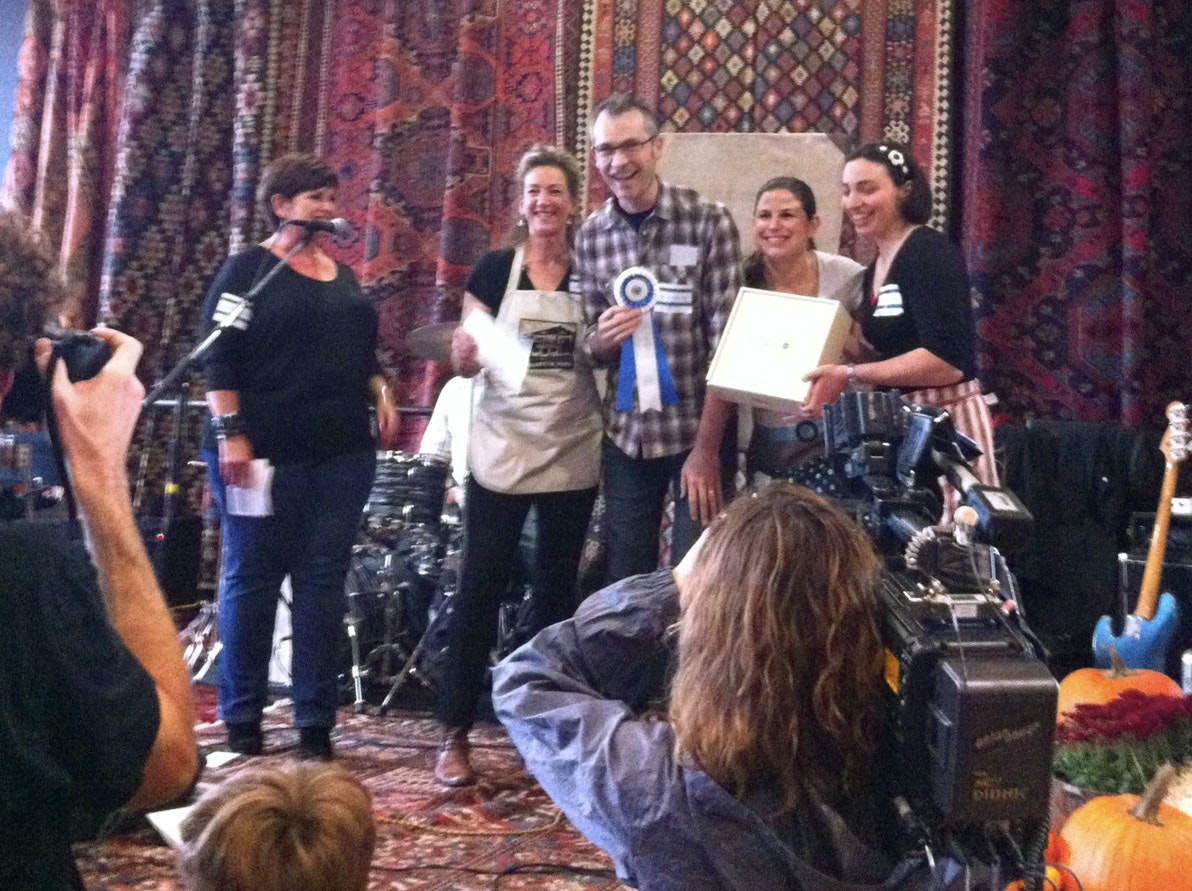
My family and I floated downstairs and across the park to our car giggling and hugging and talking about pie. The first person I called on our way home was my mom. She was so happy and proud. “Which recipe did you use?” she asked.
And I thought back to that warm August night in France, when I first met Simca and Julia, and all the subsequent hours pouring over their recipes. My pursuit of the Platonic Ideal of Apple Pie felt serious, but somehow new, which Simca would approve of. While my relentless testing of techniques was something Julia would have liked.
And then I remembered all the beautiful food my mom made for our family and her patient instructions over the phone as I slowly learned how to cook for myself.
And in that moment I felt like I had arrived. “Which recipe did you use?” my mother asked again.
“My own,” I said, smiling.
Murphy MacDonald’s Award-Winning Rustic Apple Pie Recipe
Crust
1½ c unbleached all-purpose flour
½ c unbleached cake flour
¼ t salt
4T sugar
6 oz butter (lightly salted), chilled, and diced
2 oz lard, chilled
½ c ice water
- Place dry ingredients and diced butter in a food processor bowl fitted with the steel knife. Pulse 5-6 times to break up the butter.
- Add the lard, turn on the machine, immediately and steadily pour in the ice water, and turn off the machine. Pulse 2-3 times. The dough should look like small lumps. Do not run the machine so long that the dough masses on the blade.
- Turn the mostly crumb dough onto a lightly floured surface and press it into a single mass. For the final blending, use the heel of your hand to smear egg-sized clumps of the dough crumbs together. Work through the dough until all crumbs are combined.
- Divide the dough into two unequal portions, approximately 3:2. Form the dough into discs, wrap in plastic, and refrigerate up to 3 hours or overnight.
Filling
2 lb apples, mix of Fuji and Granny Smith
1T lemon juice
¼ c sugar
2 oz butter
1/8 t cinnamon
pinch nutmeg
- Peel, core, and slice the apples ~¼”+ thick.
- Toss apples, lemon, and sugar together.
- Melt the butter in a large skillet over medium heat, add the apples, and cook for 10 minutes, stirring frequently. After 5 minutes, add the cinnamon and nutmeg and stir to combine.
- After 10 minutes, remove from heat and let rest.
Assembly
Glaze made by beating droplets of water into 1 egg white
- Preheat the oven to 375˚ F.
- Remove the smaller of the two pastry discs and roll out to 1/8” thickness.
- Using a mezzaluna or other round-blade knife, cut the dough into 16-24 apple leaves (elongated football shapes) and set them on a wax-paper lined baking sheet.
- Use the back of a paring knife blade to score veins into the leaves. Refrigerate the leaves while you prepare the glaze and roll out the bottom crust.
- Roll out the larger of the two pastry discs to 1/8” thickness, about 12” diameter or more. Use a pizza cutter to trim and clean up the edge of the rolled-out pastry. Transfer the round to a parchment-paper-lined baking sheet.
- Remove the leaves from the fridge and brush them with the egg white glaze.
- Spoon the apples (and caramel-y sauce) onto the pastry round, heaping them up to leave a 2” border all around the edge of the pastry.
- Turn up the edge of the pastry all around, lightly pinching folds together to enclose the apples.
- Beginning in the center, arrange leaves radiating out to cover the top surface of the apples.
- Sprinkle with cinnamon sugar and bake for 35 minutes.
Serve warm if possible, with vanilla ice cream.
Recipe copyright 2013 Murphy MacDonald.
I distinctly remember when my obsession with food began. It was August 1984 and I was 14. My family and I were traveling across Europe. In France, we stopped in Provence to visit my mom’s friend, Simone Beck, also known as Simca. Simca had written Mastering the Art of French Cooking with Julia Child.
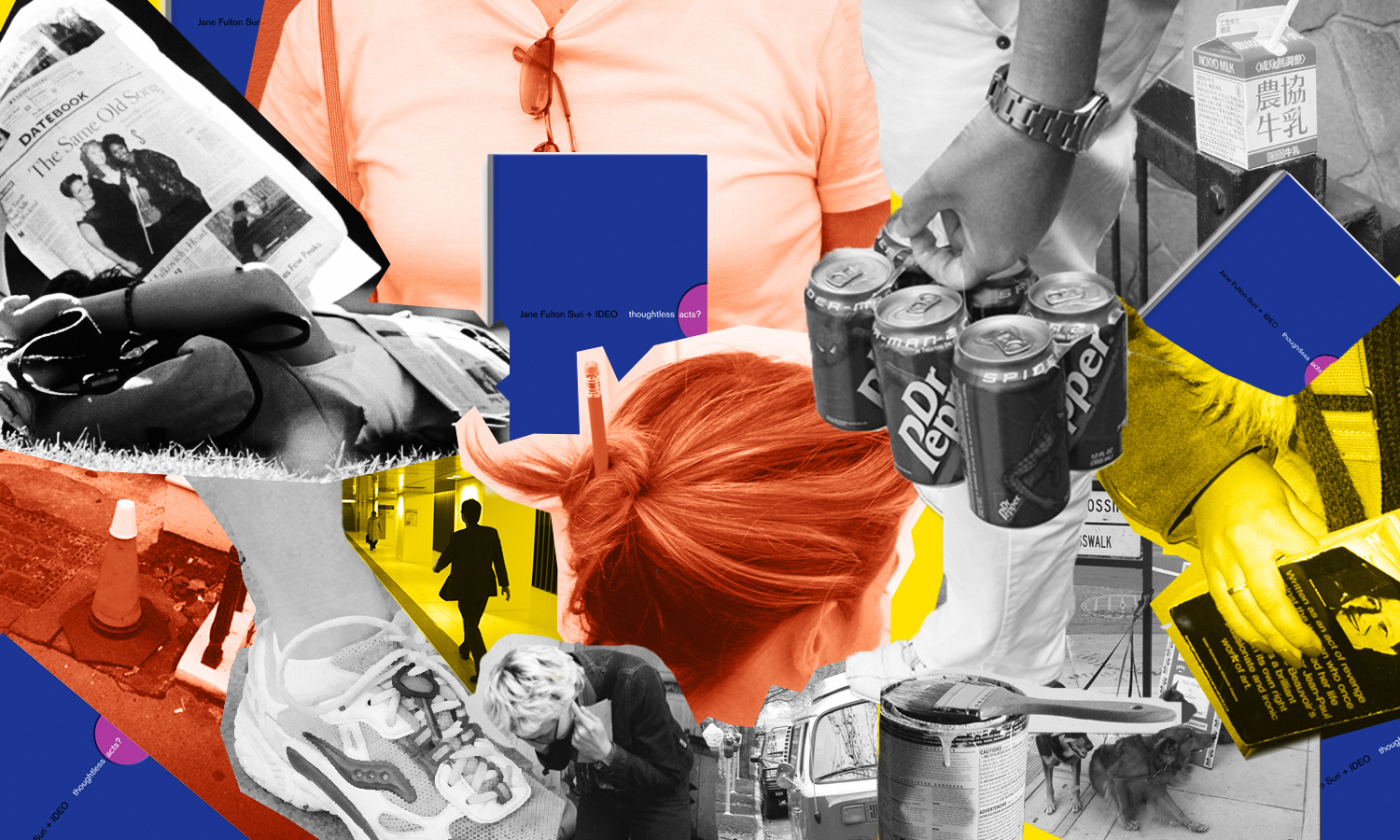
Thoughtless Acts: Saved by the Trash
Thoughtless Acts: Showing Off Shades. The intuitive ways we adapt and react to things in our environments
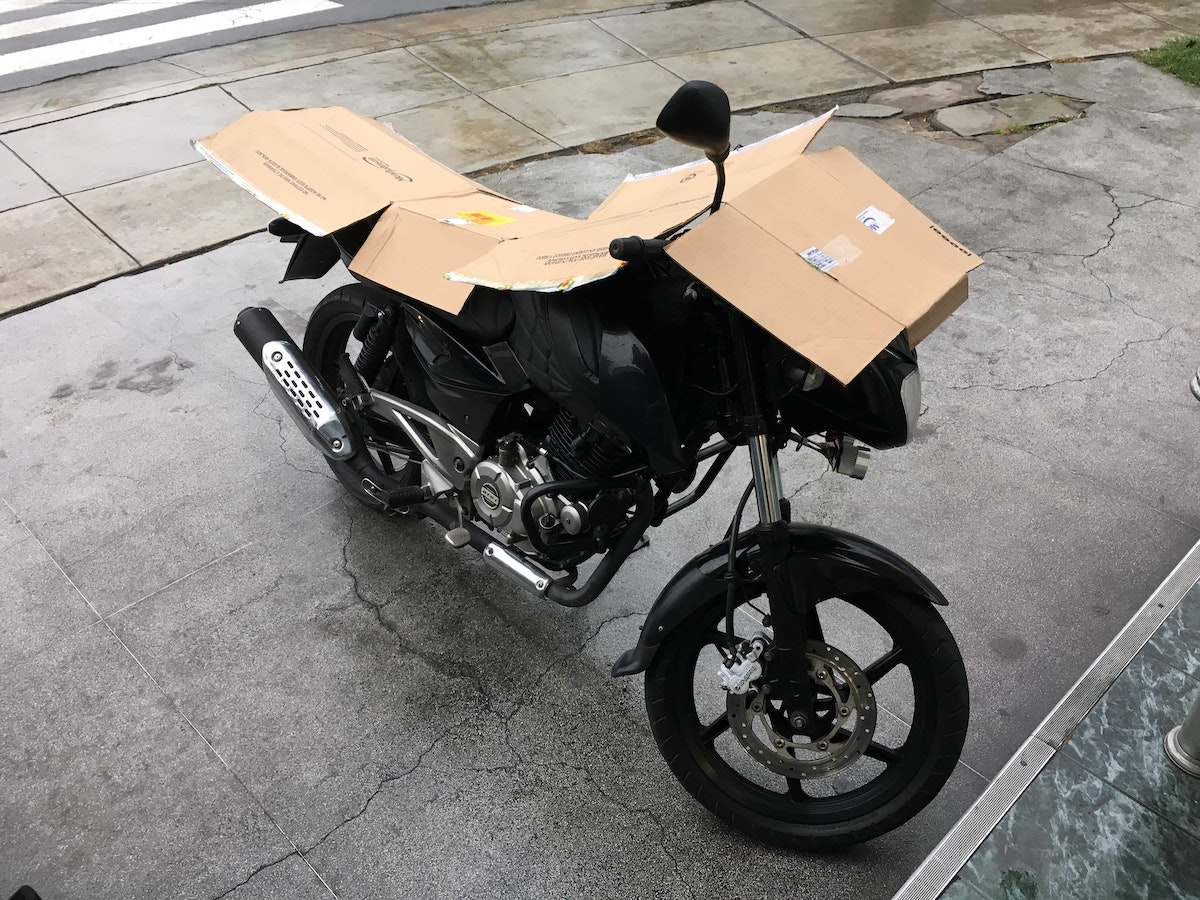
I took this picture in Lima, Perú. A delivery guy used the cardboard to protect his motorcycle from the rain while picking up orders in the store.
Lima is often gray and cloudy: the locals refer to this weather as “panza de burro" — the "underbelly of the donkey.” However it doesn’t actually rain much. The lack of rain is something of a joke (for example, there’s a theatre play called "Nunca llueve en Lima” — “It never rains in Lima"). So the need to cover your possessions from rain is one that only comes up infrequently.
The owner of this motorcycle was able to improvize, in part because the attitude towards trash is somewhat different. In the West, discarded objects tend to be hidden away and inaccessible. Here, there are more shades of gray: trash is more available and may find more utility before it's discarded for the last time.
Human-centered design requires us to observe human behavior with beginner's eyes, so that we can spot the innate ways people interact with the world around them. We call these intuitive and unconscious reactions thoughtless acts, and IDEO designers collect photos of them to inspire the invention of new products, services, and experiences.
Prototyping VR Games with Team Future
How we went from a hackathon to the Oculus store
Here’s how we went from a hacked-together prototype to a popular game.

Idea Seed
Our initial inspiration for the game came from “The Matrix.” There’s a scene in the beginning of the movie where the hero, Neo, gets a call from a mysterious stranger. “They're coming for you, Neo, and I don't know what they're going to do.” It’s Morpheus, who warns Neo that there are dangerous agents who are hunting him down. He then gives Neo directions to help him escape.

Our game works the same way. Player one runs around in a 3D VR maze, and player two sees a map and types out instructions for player one to follow. By making the communication of asymmetric experiences our key game mechanic, people can enjoy the experience together. This is important because VR is an immersive medium, but it can be socially isolating.
Refining the Game
Since each of the players sees a different screen (one in 3D and one in 2D), we tried my best to play to the strengths of each medium. VR is great at immersive and suspenseful experiences, so the VR player is the player of action, sneaking around to get treasure and running like hell to escape from enemy agents. A screen is great at showing flat data, and the player who sees it has access to a keyboard. So the hacker player sees a very detailed map and types to control everything.
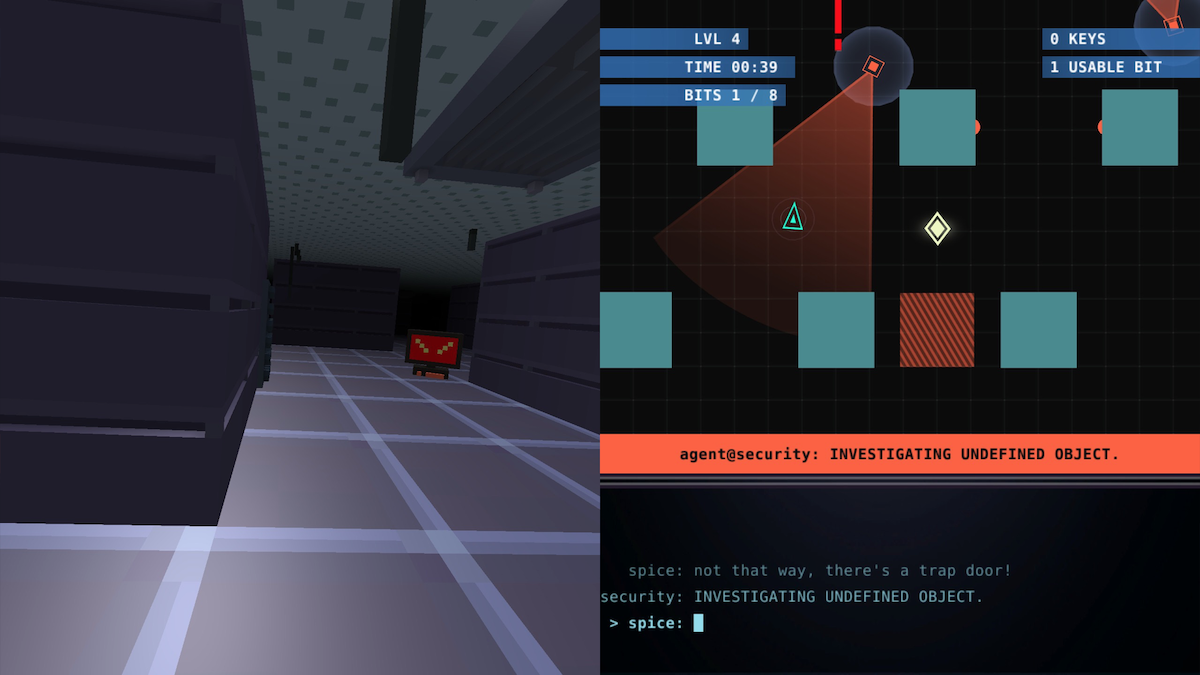
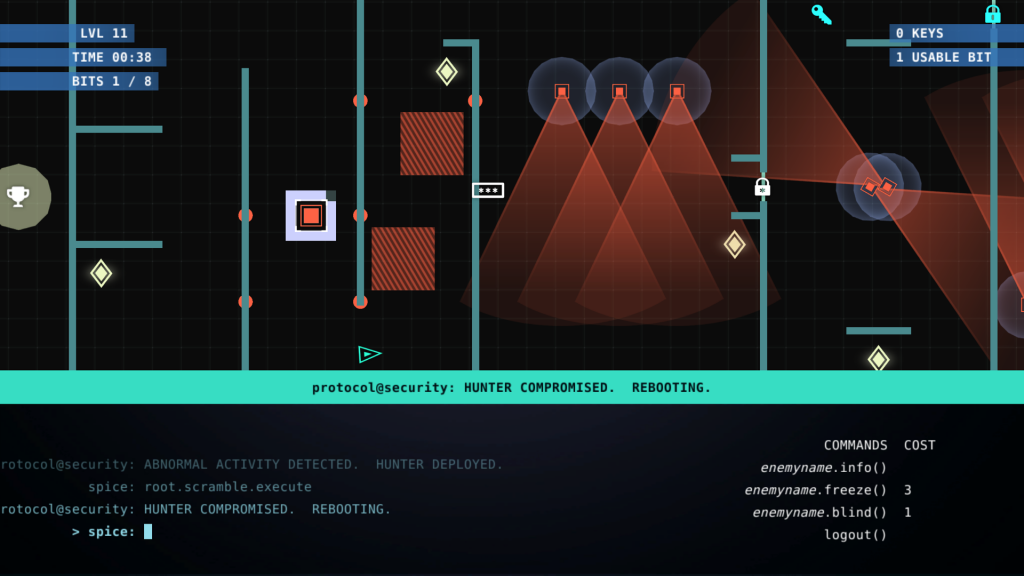
Cooperation is critical to this game. We designed it be impossible to win by yourself—unless you cheat by looking at both screens. The VR player determines where the game goes, but there are agents around the corner that only the hacker can see, as well as hidden trap doors and lasers. On the screen below, the VR player is blocked by a door. But there’s a password that they can give the hacker player to unlock it.
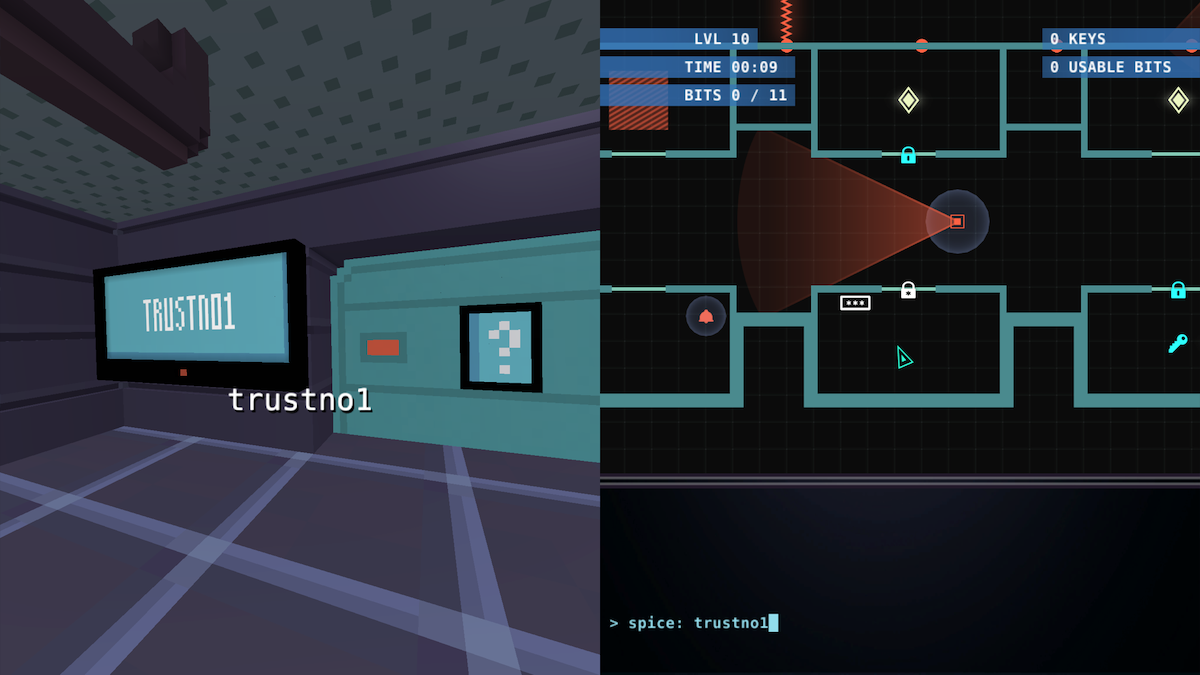
There’s also a mechanic for the VR player to scan enemies and gather “bits,” the diamond-looking things, which are used to purchase bonus abilities like freezing or blinding enemies. This spices things up, so they have more agency in the game.

Design Tools
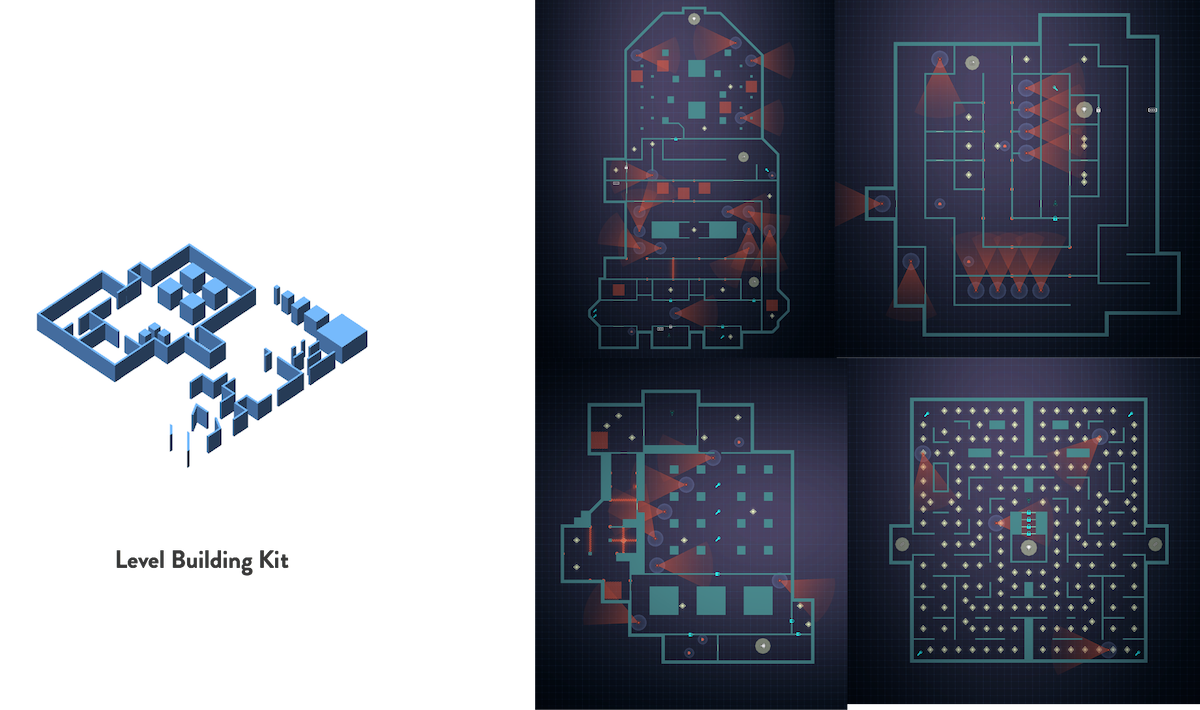
Part of designing something well is also designing how you work. With a team of four, we didn’t have the time to carefully craft every aspect of the game. So Mark, the developer, and I made a modular level building kit in Unity that allows people to build a level in just a few minutes. Everyone on the team could pitch in to create VR content. We’re in the process of preparing these tools for Steam Workshop, a website that allows developers to release game creation tools to the greater gaming community.
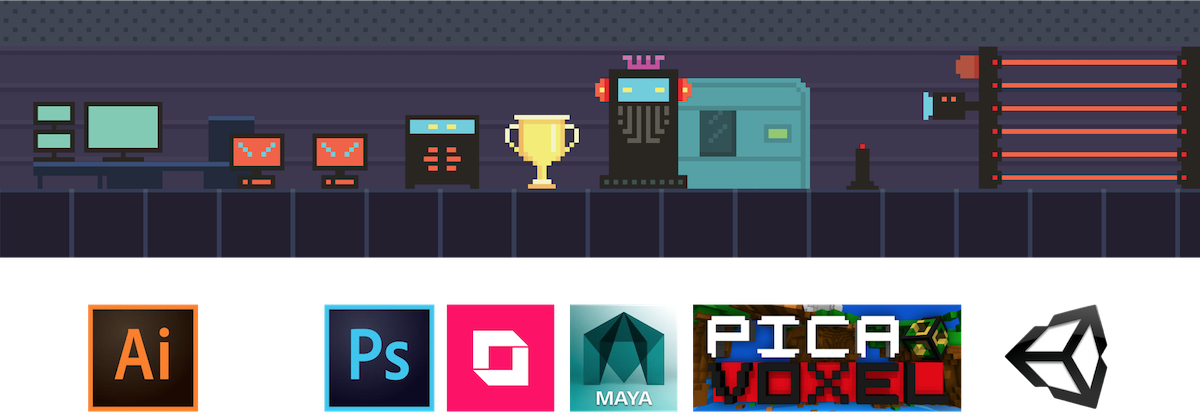
Our art pipeline got pretty crazy. I made the 2D assets in Illustrator so that I could avoid fussing with the resolution. For 3D assets, I made pixel sketches in Photoshop, turned them into 3D voxel art using Qubicle, played with the textures in Maya, and transferred models to Unity using Picavoxel. Finally, I set up prefabs in Unity so that I could easily swap the art in and out. The process allowed me to quickly pump out consistent and professional art, and instantly test it out in VR—a huge help for a solo artist.
Key Tips for Would-Be VR Designers
This process wasn’t always easy. Here are some important things to keep in mind as you work on your own games.
- VR is not 2D. Or even 3D. I’ve done a ton of 2D and 3D design before, but VR is nothing like it. I had to develop entirely new design processes, and it was critical to test the game over and over again inside VR to get things just right.
- Details matter, even for a baseline experience. If 2D UI just a little bit off, it looks funny. Misplace VR UI and people throw up. Getting everything right—from careful sizing of the environment to UI placement to 3D audio cues—is critical.
- Offer alternative control schemes. This was a tough lesson. When we initially launched, we had a firestorm of complaints because we only had the default control scheme. We had to scramble to create a snap turn comfort mode and a teleportation mode.
- Test in VR. Some of our biggest missteps happened because we had ideas that we didn’t test quickly enough.I foolishly made the controls more complicated than they needed to be. Since players have VR headsets covering their eyes, we had to constantly remind them about controller locations because they couldn’t see them.
- Allow the audience to engage. VR can become an amazing social experience when you let your players share the game.
Launching the Game
We’re pretty thrilled with we managed to put together. Here’s a quick video to show what it feels like in action.
In June, we finally launched the game on the Oculus Store and Steam. Over the past 5 months, we’ve sold more than 2300 units. We’re the fourth highest ranked game on the Oculus store. Give it a try—I’d love to hear what you think.
Around the time Oculus Rift completed its Kickstarter, I brought my virtual reality headset to a weekend hackathon called the Global Game Jam. Over 48 hours, my team and I built a game prototype where one player navigates his way through a maze, while a second player types instructions to him. The prototype was pretty simple—thrown together in 48 hours, after all—but people had a blast playing it. So a few friends and I decided to build it into something bigger. Over the past three years, we’ve worked nights and weekends to create Black Hat Cooperative, a multiplayer stealth game. We just launched this June on Oculus and Steam, and today our game is one of the highest rated experiences on the Oculus Store.

Lindsey Turner
I’m passionate about building brands, products, and experiences that help organizations show up with meaning and momentum.
I help organizations cut through complexity by shaping how they show up, through brand strategy, identity, and storytelling.
Working at the intersection of brand and business, I bring an editorial eye and a bias toward making—turning ideas into tangible experiences that people can understand, trust, and believe in.
My work spans government, healthcare, financial services, media, and consumer goods, from launching Gen Z-focused ventures to building innovation labs and reimagining legacy brands. I relish moments of ambiguity and enjoy translating across teams, perspectives, and priorities to move ideas forward.
I started my career in editorial and digital design, shaping cross-platform experiences and identity systems in publishing and agency environments. That foundation still shapes how I work today: I’m detail-oriented, collaborative, and overreliant on the Oxford comma. I hold a BFA in Visual Communication from the School of the Art Institute of Chicago.

Rachel Young
My work helps organizations see who their products aren't working for—and build the will and the tools to do something about it
For 25 years, I've asked the same question: Who does this design exclude—and what are we going to do about it?
My work spans human-centered strategy, inclusive design, and qualitative research, with clients ranging from Microsoft, Google, and Verizon to the National Science Foundation, and San Francisco Unified School District.
Before IDEO, I taught elementary school in East Palo Alto and spent a decade doing design work with social service organizations—where I learned firsthand what it costs people when systems are built without them in mind.
I am currently writing User Error, a nonfiction book about digital access and the design decisions behind it. I live in Oakland, California.

Brian Pelsoh
I lead with craft, ensuring our work is creatively excellent: rooted in deep human insight and imagination, while also grounded in the realities of business and technology.
My expertise spans brand, communication, and product design across tech, education, the arts, and social impact.
I believe great work demands both high-level vision and obsessive attention to detail, and only happens through collaboration.
I bring an inclusive, hands-on approach and a deep understanding of business, which enables me to consistently deliver excellence while always asking why.
Before joining IDEO, I worked at the brand firms Pentagram and VSA Partners. I began my career as a designer, leading teams at the School of the Art Institute of Chicago and the Milwaukee Art Museum. I hold an MFA in graphic design from Maryland Institute College of Art and a BFA in communication design from the Milwaukee Institute of Art & Design, and have taught at some of the best design schools in the US.

Tony Wong
I am responsible for IDEO’s long-term success in China and working with clients to use design as a tool to enable growth.
I am responsible for IDEO’s long-term success in China and working with clients to use design as a tool to enable growth. Specifically, I have helped Chinese companies design holistic brand solutions through the development of their products, communication, services, and innovation teams, and I have helped multinationals expand their presence and influence in China.
I advise global leaders on developing China-led innovation and capabilities.
In over 15 years in IDEO Shanghai, I have worked on projects that use design to elevate the quality of the experience of healthcare products and services, streamline processes that increase productivity, create spaces and programs that promote and enable inclusive communities, and build next generation mobility solutions that are planet-positive.
Before joining IDEO, I worked at Philips Electronics and the Electrolux Group in Italy, the Netherlands, and Singapore on a number of breakthrough commercial products. I am a member of the Young President Organization in Shanghai.

Building a personal AI for the messiness of life: Sida Li
Most AI products today are built for work—a space with clear problems and established systems. One founder noticed a gap: personal life is messier, harder to systematize, and mostly left behind by the AI boom. So she built Cue, a personal AI that lives inside iMessage and group chats, to go where the other tools haven't.
In this episode, Becca Carroll, IDEO's Chief Strategy Officer, talks with Sida Li, co-founder and CEO of Shared Context Lab, about staying anchored to a human need while the technology around her keeps changing shape, why she treats her business model with the same rigor she'd bring to a product, and what it feels like to build a company at this particular, disorienting moment in AI.
The conversation also gets into how Sida makes design decisions: the language Cue uses to describe itself, the tradeoffs behind building inside iMessage instead of a new app, and a real story about a business idea that didn’t pan out.
This is the second in a two-part series profiling founders from IDEO's Startups-in-Residence program. The first conversation is with Johannes Seemann, founder of Sooner, on designing GenAI for the emotional side of money.

Designing GenAI for the emotional side of money: Johannes Seemann
Most personal financial tools are built to run the numbers and optimize towards a budget. While that works for some, most people experience money as a lived relationship that does not neatly fit into a spreadsheet. Johannes Seemann and Becca Carroll discuss why money is emotional before it is mathematical, and what a human-centered approach to building a generative AI financial product looks like in practice.

The curious leader's edge in uncertainty: Scott Shigeoka
Mina Seetharaman talks with Scott Shigeoka, author of Seek and Head of Curiosity Cultivation at the Eames Institute, about what distinguishes genuinely curious leadership from performative curiosity, how power dynamics shape curiosity, and why practicing curiosity can restore energy rather than drain it.

How constraints make us more creative: David Epstein
Mina Seetharaman talks with David Epstein, author of Inside the Box and Range, about why total freedom often produces average work, how leaders can design useful limits on purpose, and what organizations such as General Magic and Pixar reveal about the relationship between boundaries and creativity.
Looks like you might be in search of something very specific?
Or reset the filters above and try another angle.
Here’s some random inspiration

Podcasts about creative leadership

Articles about the power of prototyping
