
.svg)




Connecting the underserved to the digital economy
Designing inclusive digital financial services for the last mile.
Money works differently in communities traditionally excluded from formal banking, which makes designing products that really serve their needs a very different kind of challenge. People who live in the last mile often prefer cash because it’s physical. They can see it, touch it, and access it at any time.
While digital money offers many benefits, such as securely sending money over long distances and accessing new forms of credit, many don’t trust it because the places where they can access digital currency have often been too far away.

In 2017, over 500 million adults lived more than three miles from a financial access point in eight emerging markets studied by the Gates Foundation. This may not sound like much of a barrier, but for those living in the last mile, it means having to close their shops, lose a day of earnings, arrange family care, and pay for travel, which can be time-consuming and difficult, especially during rainy seasons. For low-income people, the inaccessibility of financial services has been a deal-breaker for adopting digital money. On the flip side, banks, telecoms, and other companies struggled to reach these customers because their products were not inclusively designed for them, and their distribution models failed to scale in rural areas.

Amid these myriad challenges, IDEO and the Gates Foundation saw an opportunity to introduce innovative ways to provide access to digital financial services even in the most remote areas of the world. And to make bold new bets: Could we design new digital experiences centered around the financial needs of people in the last mile? What would happen if we mobilized hundreds of actors to develop new ways to address financial access at the last mile? What if we took the most exciting financial innovations that worked in East Africa and piloted them in South Asia—and vice versa?
Working with more than 70 partners, including local startups, corporations, including Google, Unilever, Telenor, Standard Chartered, and BNI, as well as IDEO.org’s Women & Money program, LMM adopted a collaborative, ecosystem approach to drive and scale new digital financial products and systems.
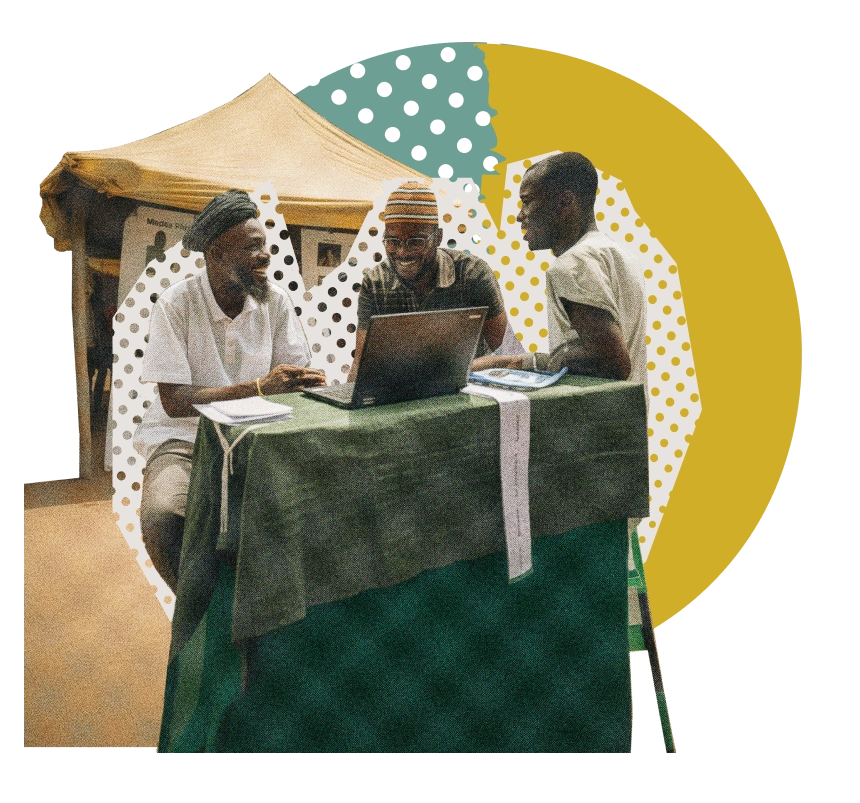
A few of the life-changing innovations launched by LMM and its partners include:
- Finja’s intuitive small-business app that helps micro-merchants in Pakistan access flexible, interest-avoiding Islamic credit to order products from fast-moving consumer goods companies like Unilever. Finja now serves 45,000 merchants and reaches 10.2 million customers.
- Accessing government benefits can be a challenge, especially when it’s through a mobile phone, so IDEO helped Indian startup Haqdarshak develop a robust digital experience for its 52,000 community agents to facilitate access for low-income people. The agent network—70 percent of whom are women—now serves more than 7.6 million families and has unlocked $2.2 billion in social benefits for those who need it most.
- Making micro-credit nearly instantaneous was a solution that startup Kuunda offered to financial agents in Tanzania. IDEO helped adapt the product to deliver working capital for merchants in Pakistan. Today, Kuunda continues to grow across markets in Africa, totaling 6.1 million active users and distributing $1.1 billion in loans globally.
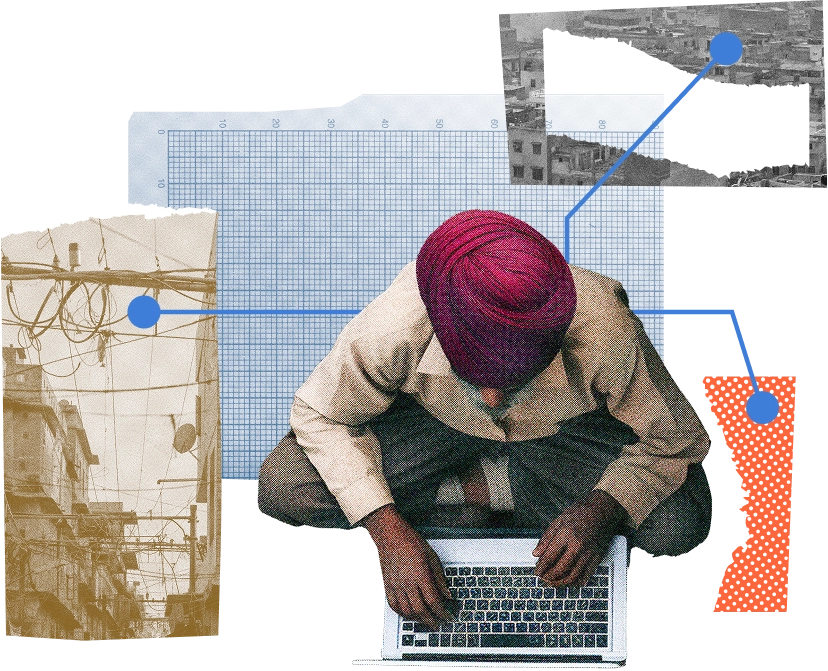
While the LMM program officially concluded in 2024, lessons, tools, and case studies from the program are accessible on IDEO’s Financial Futures website. Those looking to catalyze equity and inclusion in digital financial services for the last mile can consult LMM’s Financial Confidence Playbook, the open-source Digital Confidence Toolkit (created in collaboration with Google), or the Gender Evaluation Framework, among other helpful resources.
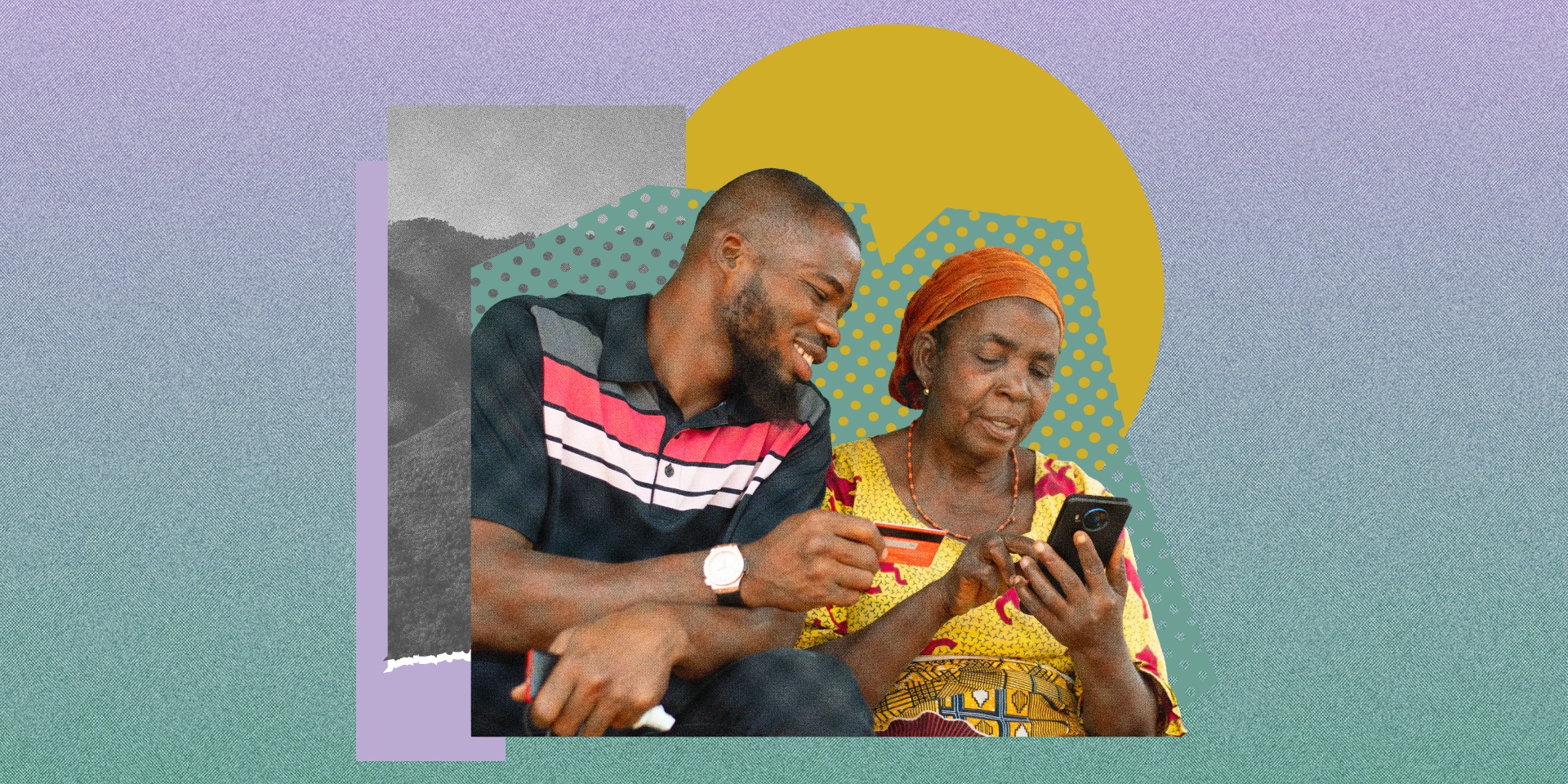
Over 1.3 billion people worldwide in poor and rural areas are excluded from formal financial services, including savings accounts, credit lines, and insurance, making it harder for them to move out of poverty.
34M
underserved users reached by 100+ new financial products, pilots, and prototypes
70+ LMM partners
including Google, Unilever, Grab, Standard Chartered, Cargill, Airtel, Celo Foundation, and BNI

Disrupting the beauty goliaths
How a new Peruvian brand overcame the odds—by design.
Multinational CPGs excel at creating popular, mass-market products for large countries. When they enter smaller countries like Peru, they often parachute their brands onto store shelves and skip consumer product testing altogether, largely relying on brand recognition to drive sales. This oversight presented Alicorp and IDEO with an opportunity: flip the script and invite young Peruvian women to work together with them to create a new hair care brand from scratch. Over the course of a four-year transformational journey, IDEO worked closely with Alicorp, adopting a “learn by doing” approach to foster a culture of innovation, launch a new brand, and drive growth for the company through consumer-centric design.
The collaboration began with an inspirational trip 10,000 miles away to Seoul, South Korea, the epicenter of global beauty trends. To expand their thinking, the Alicorp/IDEO team received K-Pop glow-ups and explored other cutting-edge beauty experiences. They were inspired by the Korean market’s unwavering focus on meeting the particular hair care and skin needs of Korean women.
Back in Peru, the team conducted multiple rounds of in-depth interviews with young women, teenagers, beauty influencers, and experts across the country. They learned about their beauty goals, personal care routines, and “mixto” hair texture. They heard about women’s struggles with regional weather—the Andean region’s extreme dryness versus Lima’s humidity and the city’s hard water. The research revealed that Peruvian women wanted natural products that worked hard, wouldn’t harm their hair, and celebrated what made them unique. They wanted a brand that spoke to them honestly and authentically. That represented and empowered them. That didn’t overpromise, underdeliver, or hold up European and American beauty ideals that didn't resonate with Latin American women like the multinationals did.

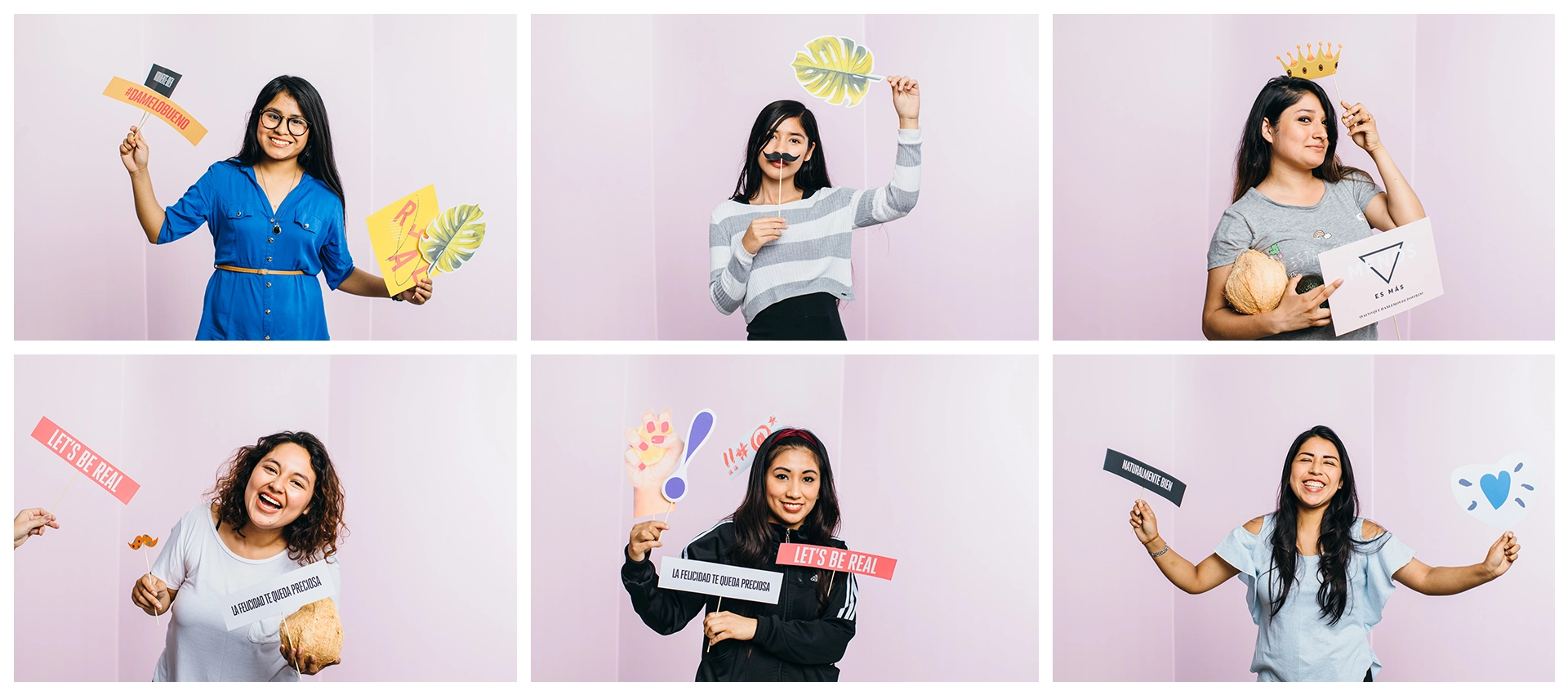
Armed with these insights, the Alicorp/IDEO team developed tangible brand prototypes for women to respond to during successive rounds of user research, including in a beauty pop-up store in Lima. The team shared various bottle types, ingredient mixtures, and brand positioning options. Should the new brand’s personality be an outspoken feminist or a gal pal? Au naturel or sophisticated? The iterative feedback cycles informed everything from brand strategy and ingredient recommendations to product line-up, brand and product naming, launch strategy, and digital activations.
The final design, Amarás (“you will love”), is a personal care line that centers the needs and aspirations of Peruvian women. Hitting shelves in 2022, its shampoos and conditioners feature local, bio-diverse ingredients, including mangoes, macadamia nuts, and goldenberries, that help address the specific hair texture needs of women in LATAM and the climate realities of the Andean region. The brand’s launch campaign included TV and print ads featuring Peruvian models from every region as well as commissioned murals celebrating local beauty by artists across Peru. Most notably, the unapologetically authentic Peruvian hair care brand became a TikTok sensation, garnering over seven million organic views and more than 300 viral videos from enthusiastic new fans.
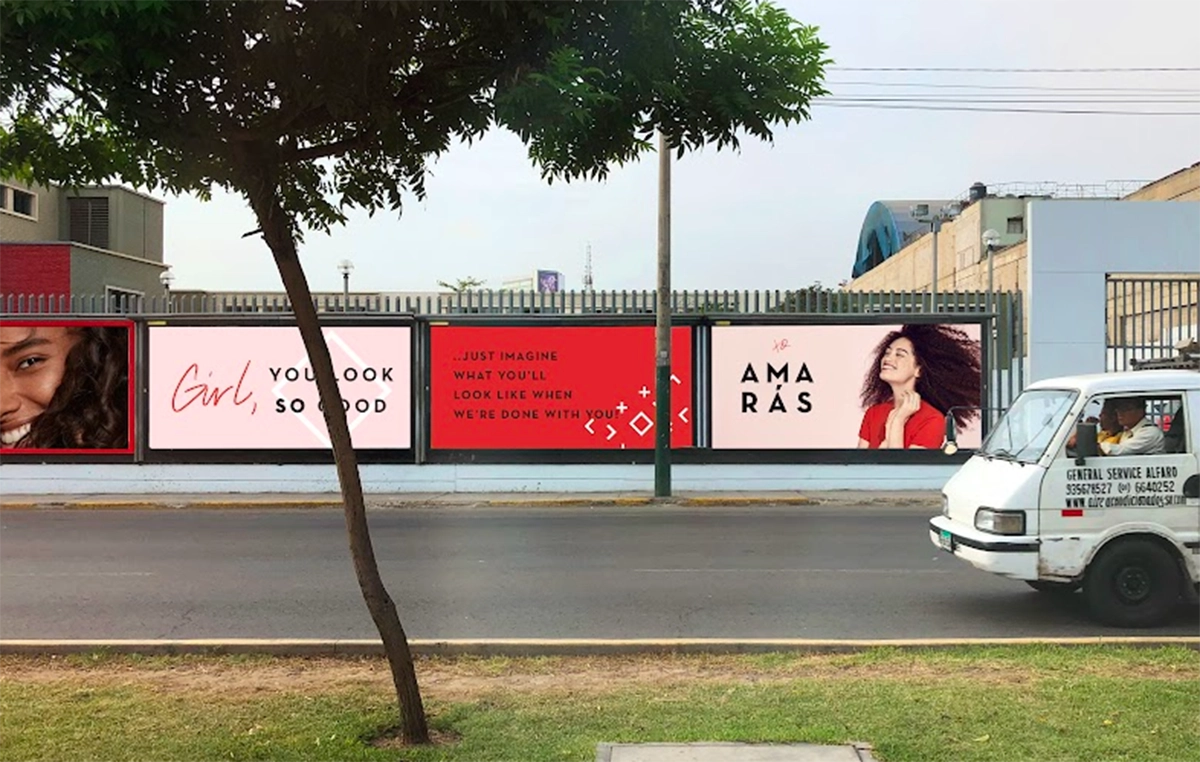
Three months after its launch, Amarás seized a 7.5 percent share of the personal care aisle—a remarkable goal it had set for year three.Since then, Alicorp has continued to expand its creative capabilities, designing personal care products tailored to the cultural and beauty needs of Latin American consumers.

Alicorp launched numerous successful brand extensions across its food and home care categories, but was unable to crack the $340M USD hair care product market in its home country of Peru.
7.5%
Amarás’ share of the Peruvian hair care market 3 months after launch—a goal Alicorp had set for year 3
7M+ organic views and 300+ organic fan videos
created on TikTok during Amarás’ launch campaign
Enhancing garment worker well-being with AI
Introducing Aitu, “Smart Machines, Uplifting People.”
Thirty years ago, China-based Jack Technology started as a home sewing machine manufacturer. A decade ago, the innovative global leader began investing in robotics and exploring AI, a decision that positioned it well to address today’s urgent need for smarter manufacturing solutions.
Believing that a new, strategically positioned sub-brand could draw in larger, more premium global manufacturing customers, Jack Technology and IDEO set out to understand their needs. IDEO began by visiting more than a dozen garment factories across China, Vietnam, and Bangladesh, conducting in-depth interviews with factory managers, industrial engineers, pattern-making leaders, and frontline workers. It soon became clear: the apparel manufacturing industry is at a critical juncture. The way apparel manufacturers navigate the promises of intelligent technology—while addressing deep-rooted structural issues like labor shortages and working conditions—will shape the industry's development for years to come.
For premium clothing brands, garment factory compliance and worker well-being are priorities when selecting production partners, so many owners proudly showcased their improvement efforts. They discussed investing in quieter machines and air conditioning, enhancing lighting, adding greenery, and implementing no-overtime policies. Amid rows of identical sewing stations, the IDEO team noticed small human gestures, such as a small vase of flowers. As one operator said, “I just want to uplift myself during work.”
The research helped IDEO identify a core opportunity for differentiation. Create human-centered products and services that further enhance working conditions in large apparel factories, strengthen their ability to attract and retain talent, and drive the industry toward a more sustainable future. Through multiple rounds of co-creation with the Jack Technology team and key apparel-sector stakeholders, a clear brand direction for Aitu began to take shape: “Smart Machines, Uplifting People.”
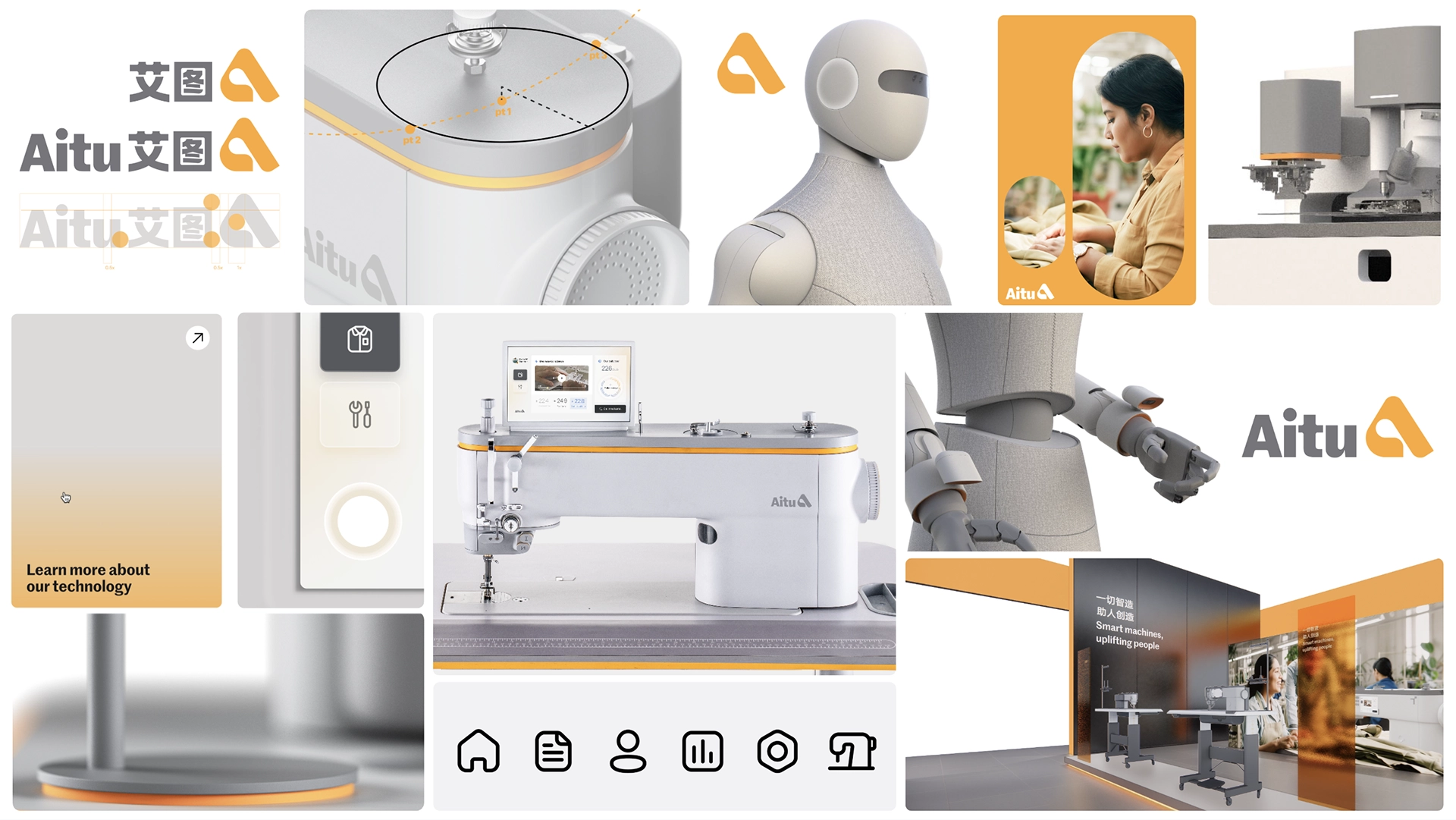
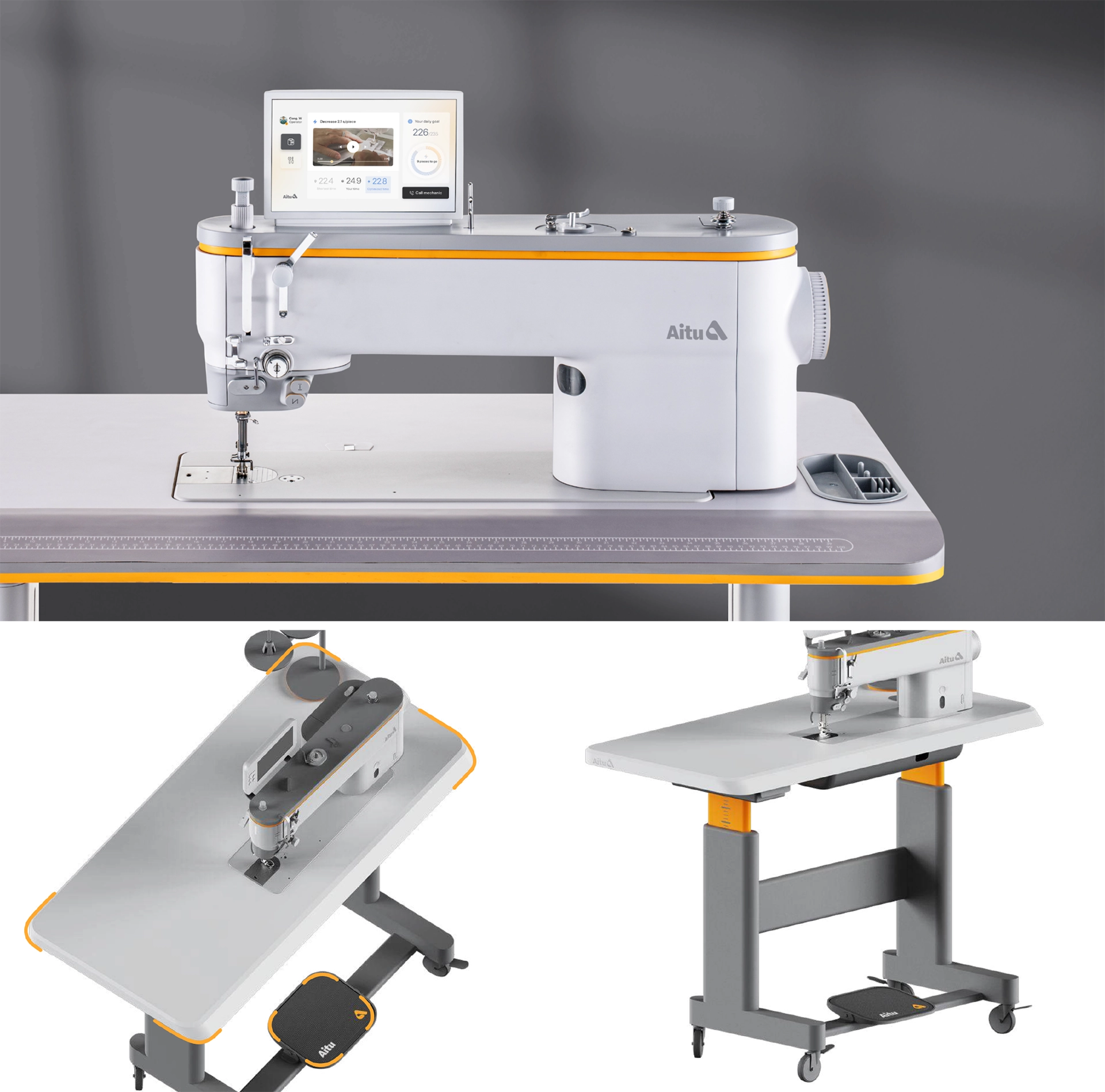
Guided by this human-centered ethos, IDEO helped build a comprehensive brand system for Aitu. The idea of “uplifting people” and showcasing garment workers’ professionalism and skill is expressed throughout all brand communications, the industrial design of its smart sewing machines, and the interaction and industrial design of a humanoid sewing robot.
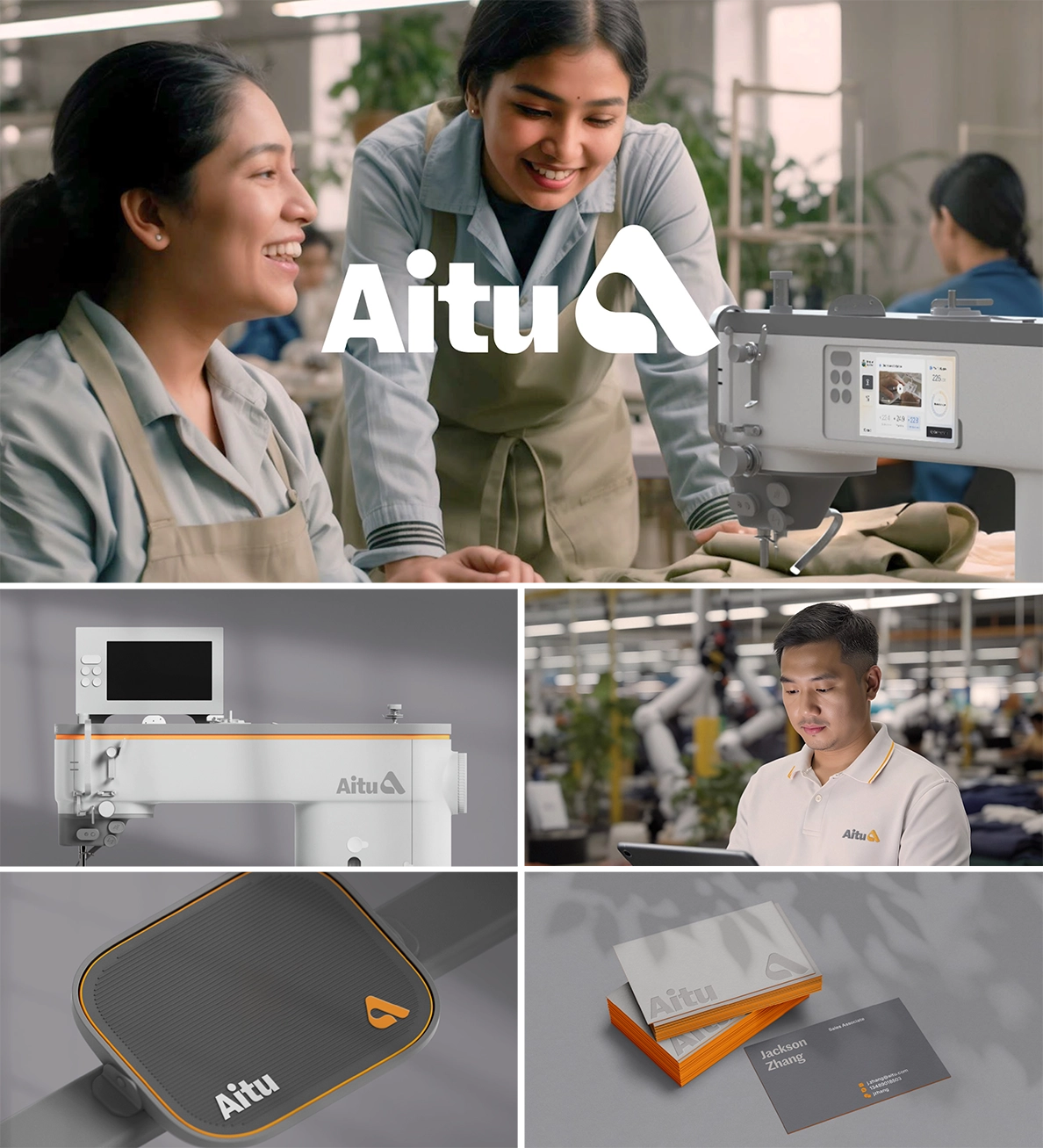
In the eyes of factory workers, this is the new work experience Aitu brings to life. Compared with traditional bulky industrial machinery, the clean lines and soft edges of Aitu’s new AI-powered sewing machines feel more like the professional office tools found in bright, organized workplaces. Concave surfaces and soft materials diffuse glare from overhead lighting, reducing eye strain, while clear interaction logic and icon-based visuals accommodate operators with varying levels of skill and education. AI technology, seamlessly embedded in the machine’s core functions, automatically adjusts parameters for different fabrics and tasks, allowing operators to achieve high-precision results with less effort. A soft halo-like light glows whenever the AI-assisted function is active, fostering users’ trust in both the technology and the AI-powered sewing machine as a whole. When hundreds or thousands of Aitu machines are arranged together in a factory, the overall effect is a modern, professional, and high-end work environment.
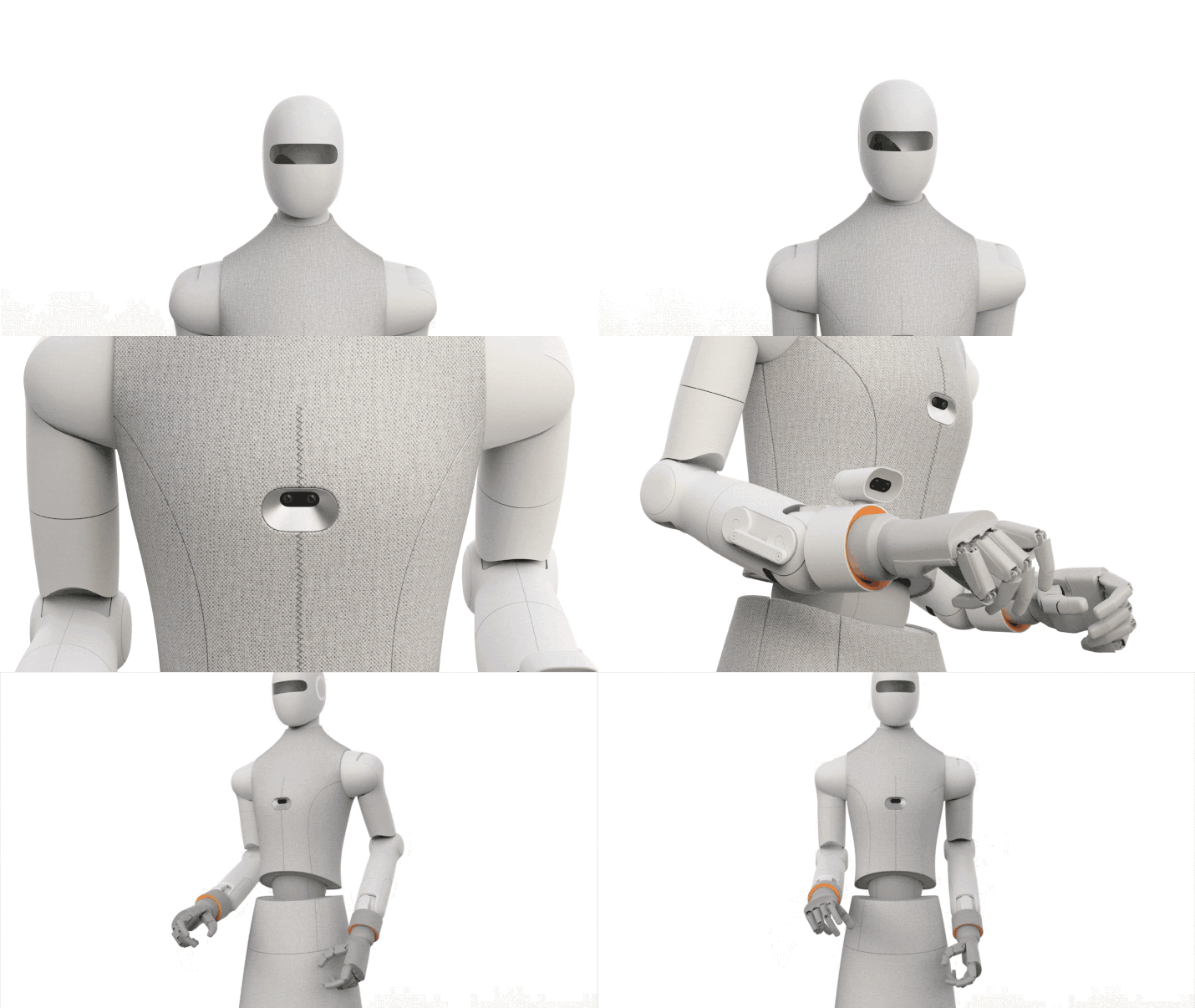
Working closely with Aitu’s robotics team, IDEO’s final design challenge was to bring a human-machine collaboration to life through a full-scale AI robot, AI10. The robot has an elegant, biomimetic silhouette. Its fabric-like outer finish features design elements commonly found in garment making, such as cutting and stitching lines, giving the robot the approachable look and the feel of a skilled tailor companion who can assist with simple, repetitive tasks. When AI10 is in operation, a circular light ring gently pulses at the sides of the robot’s ears as well as on the paired sewing machine’s display screen, clearly signaling the robot’s activity to its human co-workers.

In September 2025, Jack Technology debuted its new Aitu brand, along with its first AI sewing machine and a humanoid robot prototype, at a launch event at Shanghai Tower and at the China International Sewing Machine & Accessories Show. IFA Berlin, Europe’s largest trade show for consumer electronics, honored Aitu with a Gold Award for AI Product Innovation for seamlessly integrating AI technology and industrial design. Jack Technology’s humanoid robot is expected to go into full-scale production in 2026.
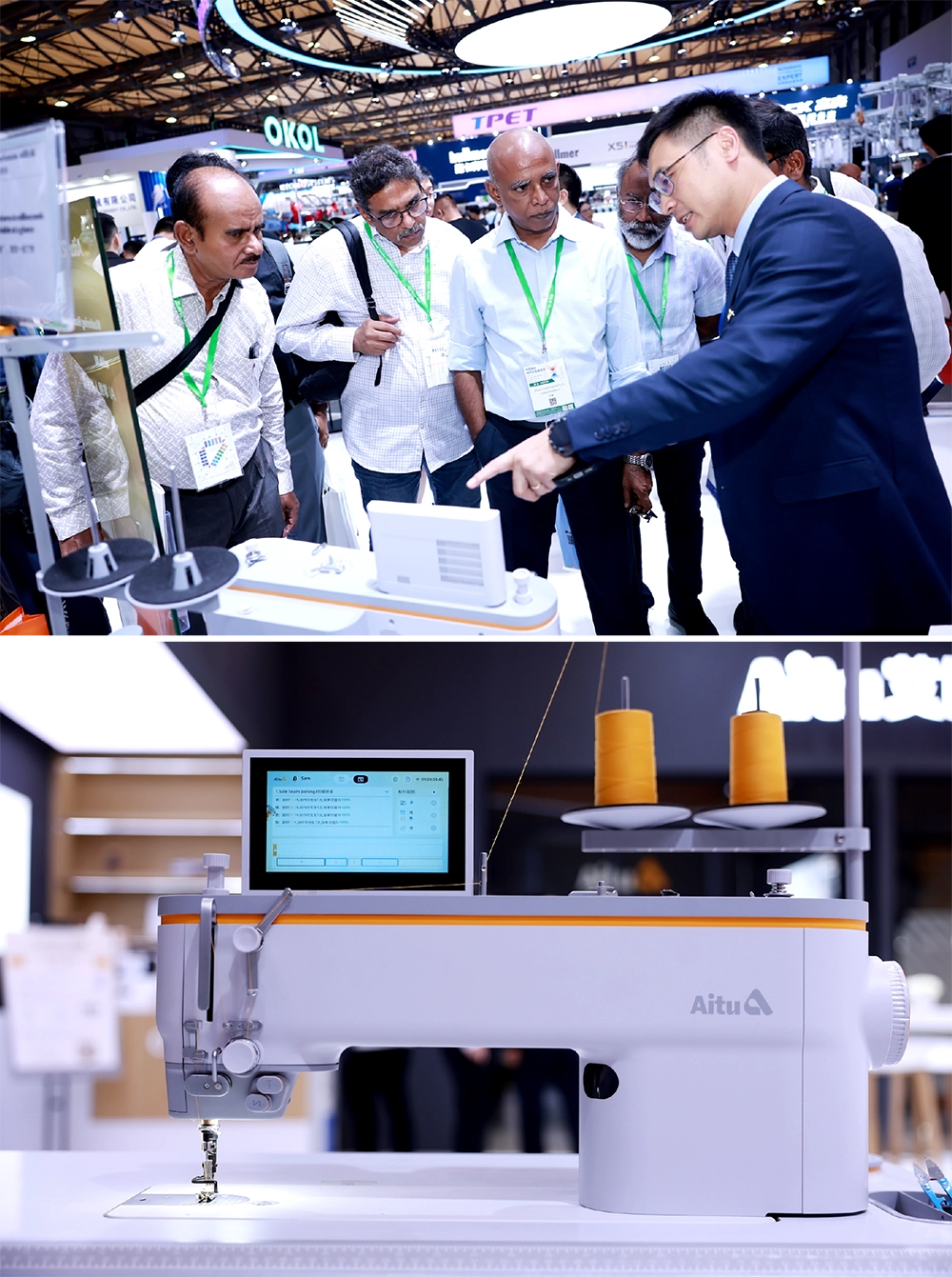
Before AI, the apparel manufacturing industry had experienced little fundamental change since the invention of the lockstitch sewing machine nearly two centuries ago.
2025 Gold Award for AI Product Innovation
from IFA, the world’s largest home and consumer tech event
Helping Peru’s top hot sauce find US success
Introducing Tari, a flavorful new kick for everyday American foods.
Alicorp has direct operations in Peru, Bolivia, Ecuador, and Chile, manages export operations in more than 30 countries, and oversees over 150 brands. While its AlaCena sauces are ubiquitous in South America, the brand’s North American market primarily consisted of purchases made via Amazon by Peruvians living abroad. To help the CPG giant expand meaningfully and sustainably onto US grocery shelves—and achieve its ambitious $50 million retail sales goal in five years—Alicorp and IDEO collaborated on multiple projects over a two-year period. The partnership began in early 2020 with consumer research and product strategy, ultimately leading to the development of initial product branding, positioning for launch, and an in-market pilot in late 2021.
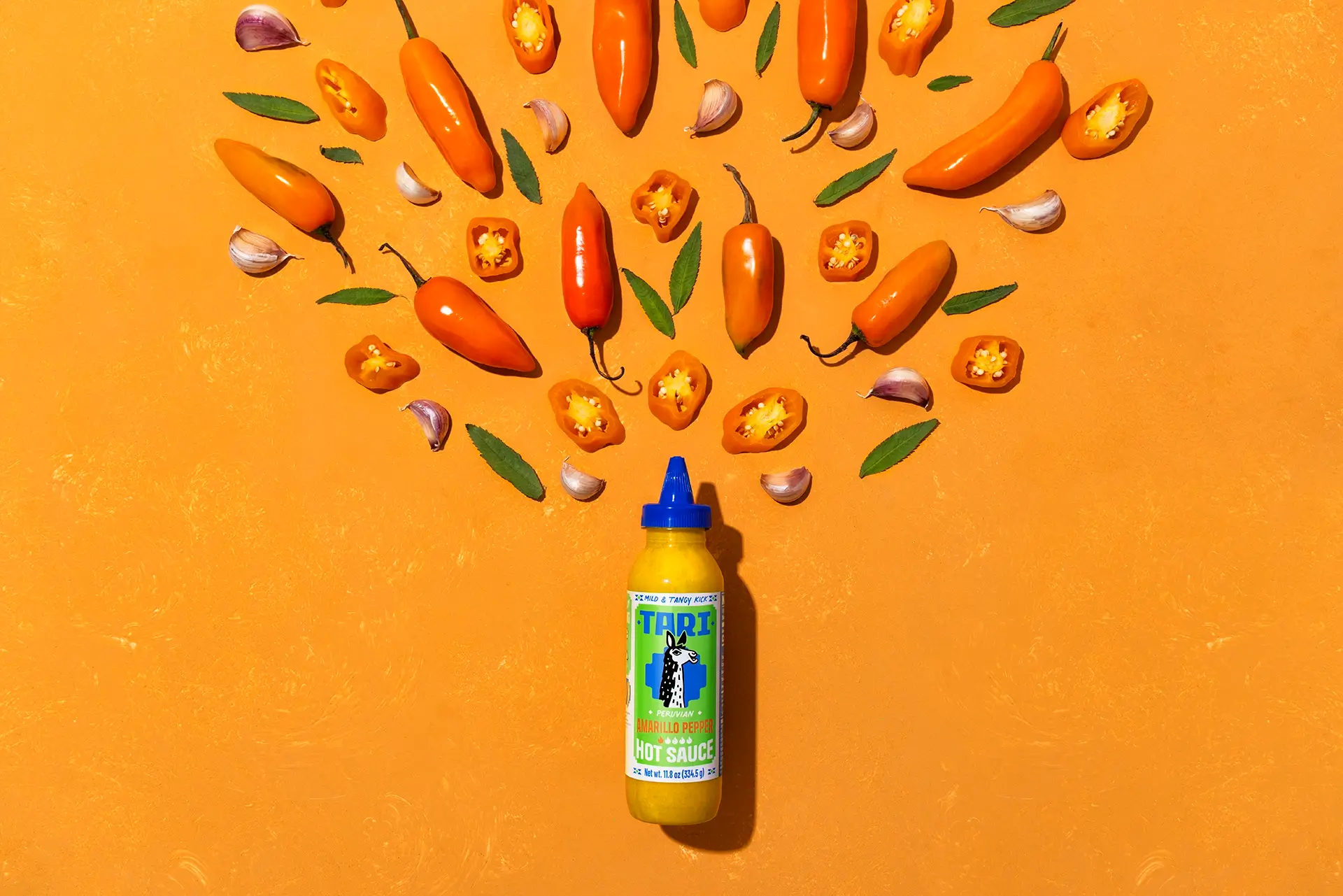
Through a combination of large-scale digital surveys and in-depth, in-person and remote research interviews, IDEO discovered that AlaCena’s Tari and Uchucuta’s hot sauce recipes resonated the most with US consumers. Made from native Aji Amarillo and Rocoto chili peppers ground using a traditional Andean “batán” technique, consumers appreciated their complex flavors and enjoyed how they enhanced, not overpowered, everyday foods like burgers and fries. The sauces’ authentic Peruvian culinary roots were also a key differentiator. In addition to consumers, IDEO consulted with industry experts—including executives from large-scale grocery chains and chief merchants of leading big-box stores—to explore retail and marketing trends and identify potential innovation partners for Alicorp in the US.
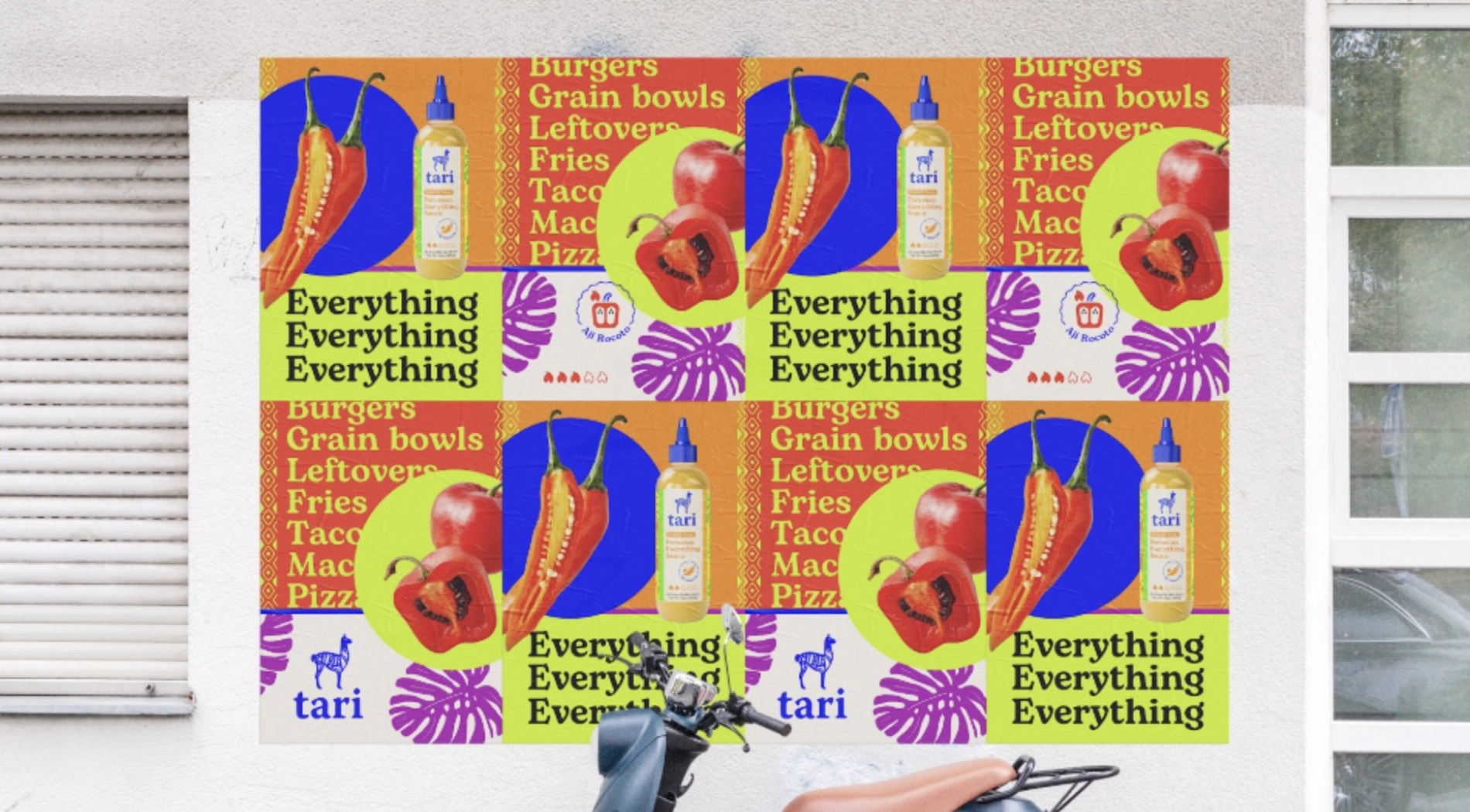
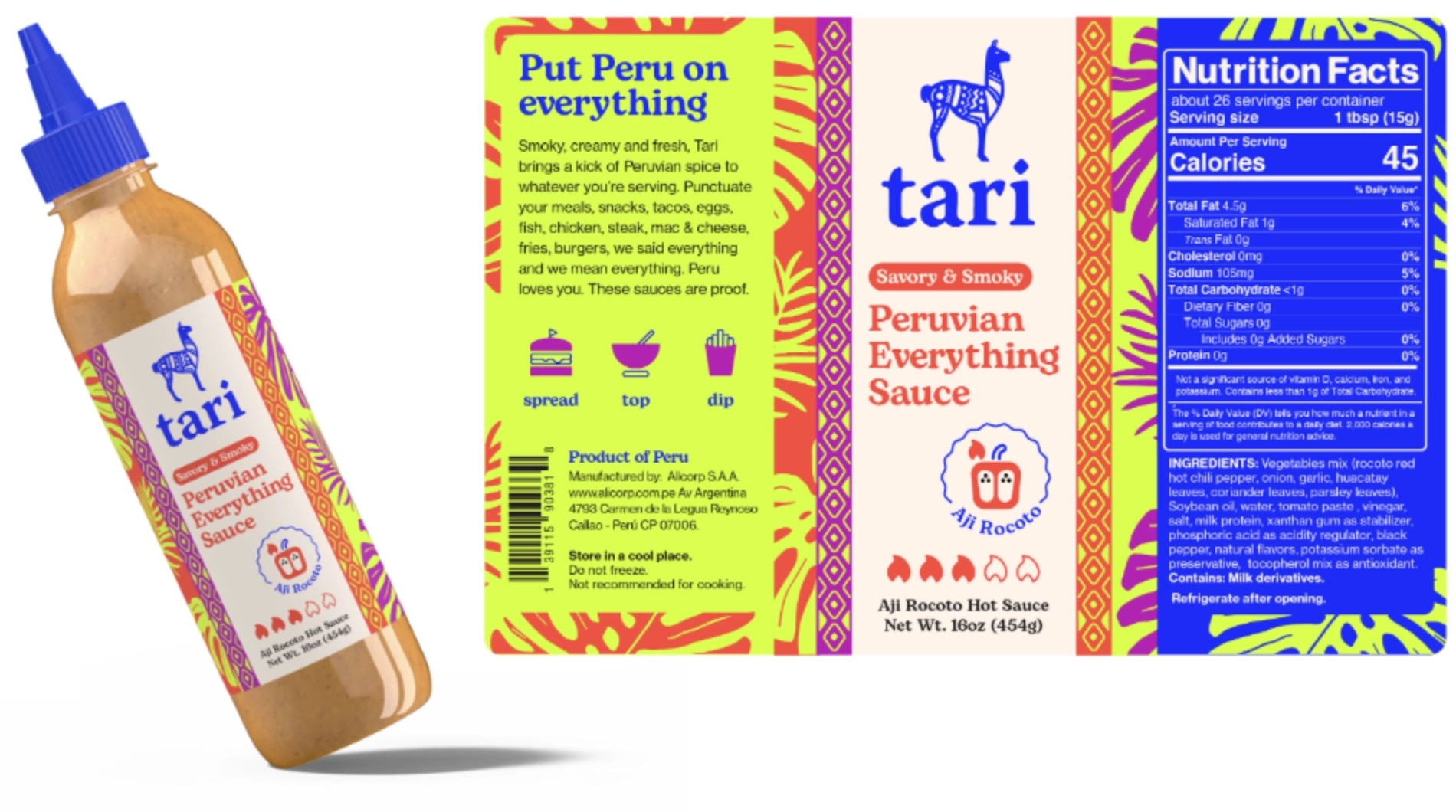
Based on the research, IDEO recommended a few changes to ensure a successful launch: Lead with the Tari brand, which was the most memorable and easiest to pronounce, and position it as an “everything sauce.” Change the packaging from a large plastic pouch to a smaller squeeze bottle to better align with consumers’ expectations and stand out on the inside of refrigerator doors. Adjust the product formulation to appeal to mainstream consumers looking for cleaner labels. And visually celebrate Tari’s Peruvian roots through bright colors, traditional textiles, and a llama, an animal closely associated with the Andes Mountains. In addition to these recommendations, IDEO provided a comprehensive go-to-market retail strategy that included potential US regions for launch, retail brokers, distributors, manufacturers, and R&D and pilot retail lab partners, as well as job descriptions for a new North American-based sales team.
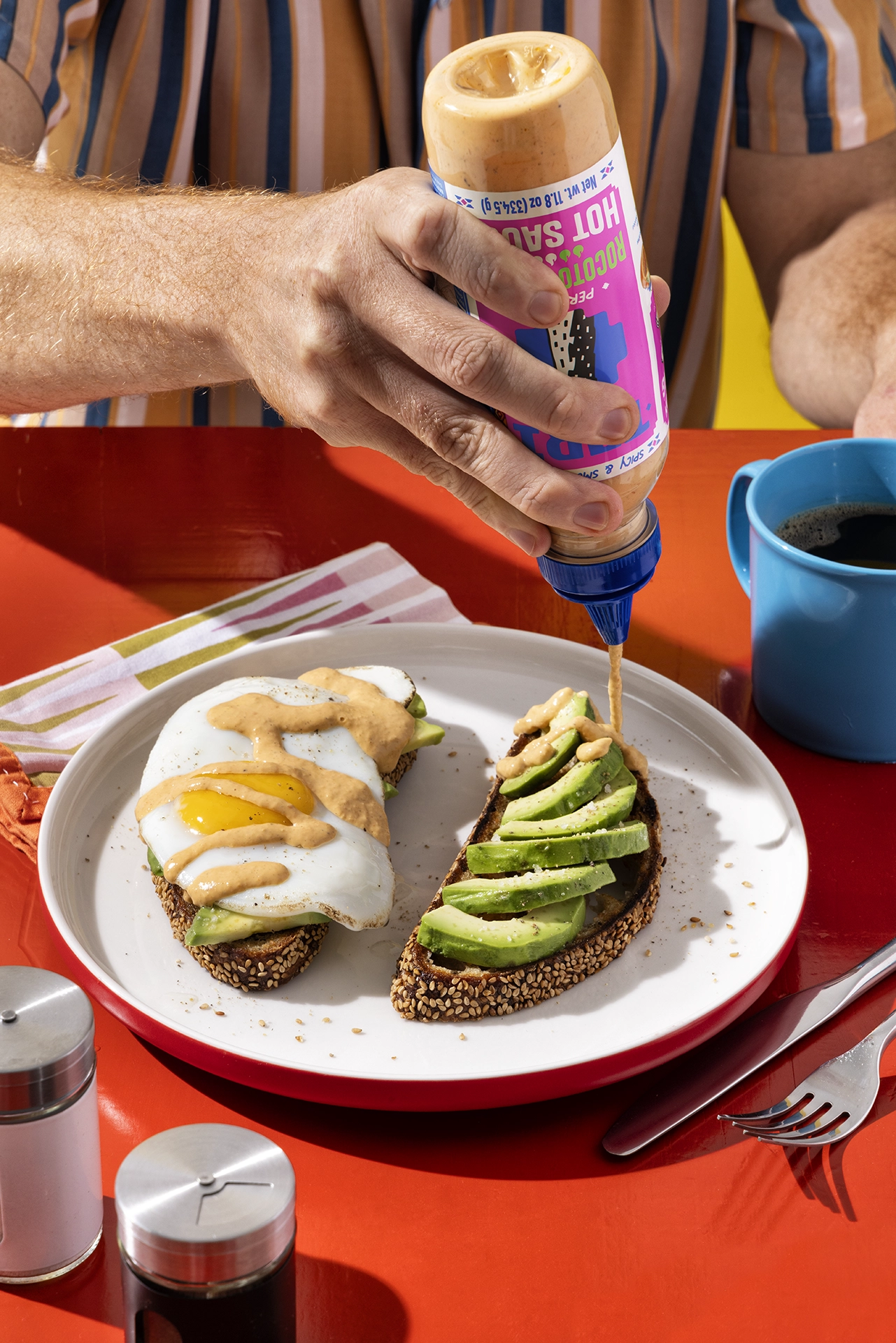
While Alicorp worked on reformulation and packaging strategies, IDEO refined Tari’s initial branding strategy. Steeped in Peruvian aesthetics, the brand’s new look and feel featured a vibrant color palette, geometric patterns, and—of course—a friendly llama icon, which could also be found on all in-store point-of-sale items IDEO designed for Tari's pilot launch in late 2021.
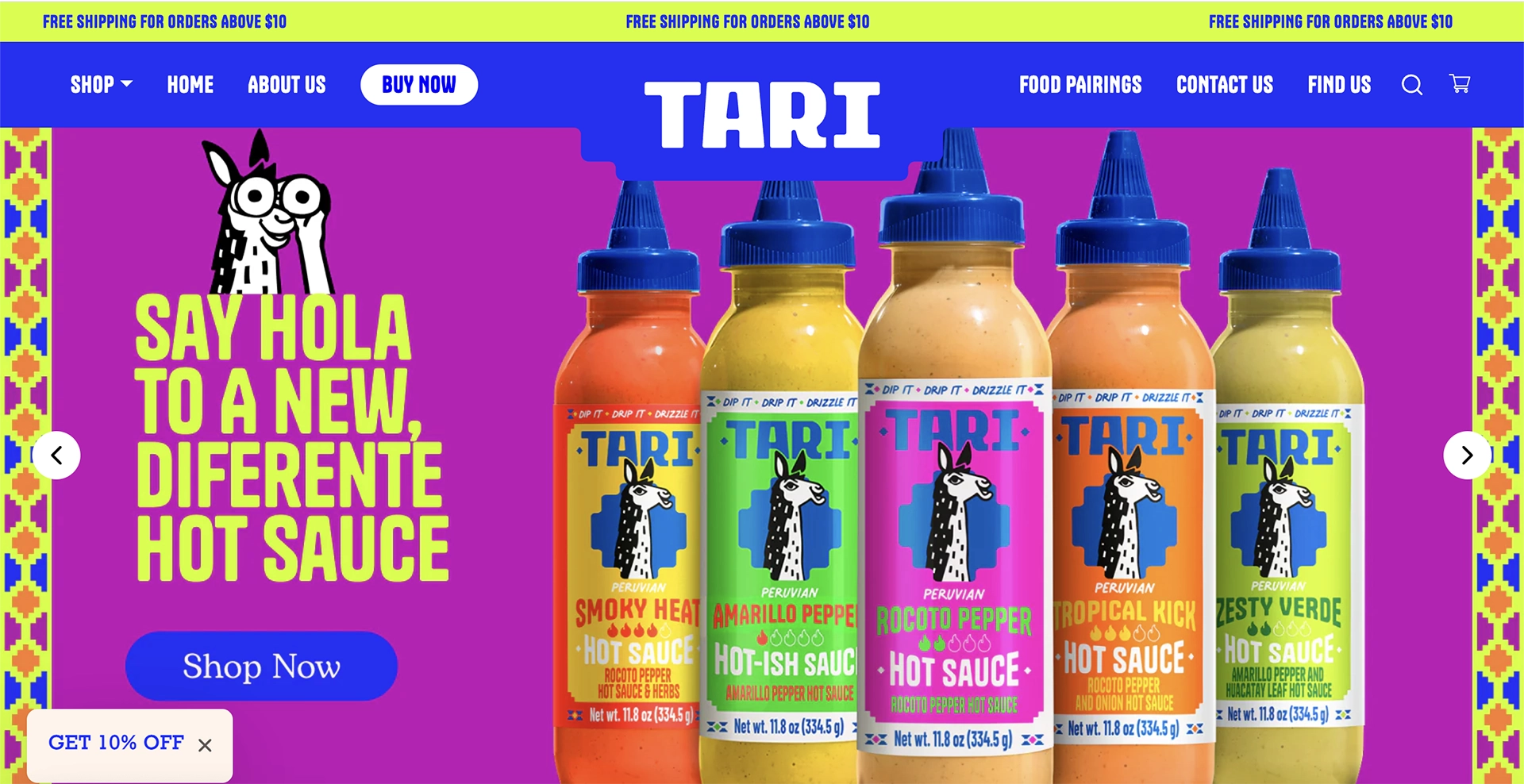
The successful 12-week in-market pilot in Tom Thumb grocery stores gave Alicorp the confidence to have its in-house design team make the brand even bolder and more eye catching, and to launch two flavors, Amarillo Pepper and Rocoto Pepper, on Amazon and in over 50 retail stores in late 2024.
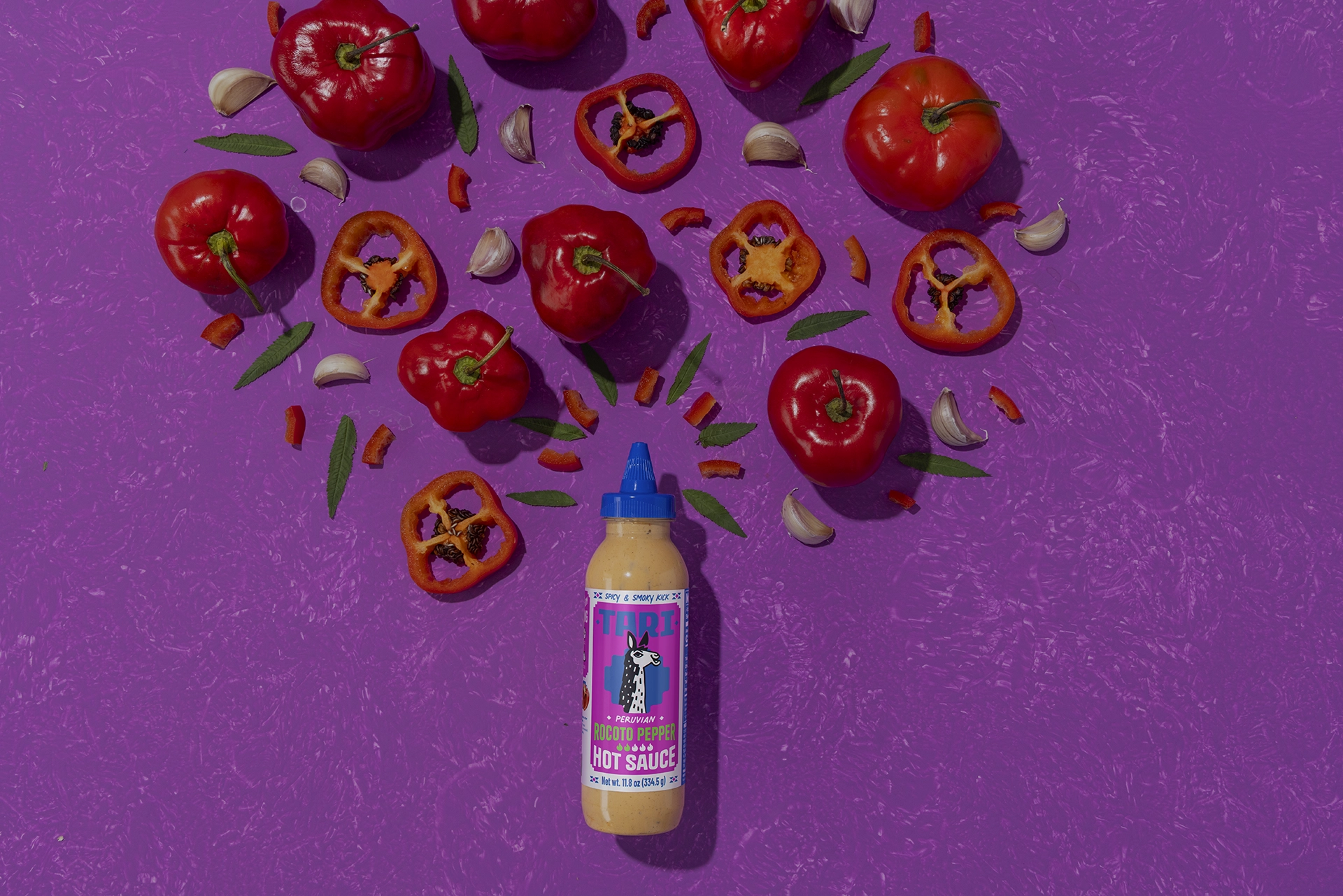
Since then, the popular sauces consistently rank among the top 50 percent of the fastest-selling products on US shelves, with 80 percent of sales revenue representing new business. In 2025, Tari expanded its offerings with three additional flavors: Zesty Verde, Tropical Kick, and Smoky Heat. Today, Tari is in transit to 3,000 major grocery stores, including Wegmans, Meijer, Central Market, and The Fresh Market, as well as available for purchase on Amazon.
Alicorp had a vision to expand its beloved and delicious hot sauces to the US market, but needed help fine-tuning the brand and product for an American audience.
3,000
major US grocers, including Wegmans and Meijer, have signed on to sell Tari hot sauces
80%
of Tari’s sales revenue represents new business, a significant expansion of the overall category
Ranked in the top 50%
of the fastest-selling products on US grocery shelves

What’s in my Moleskine: Felicia Chiao
A peek into industrial designer Felicia Chiao's sketchbook
As a little kid, I always loved drawing, but I didn’t actually get serious about art until high school. At first, I was just doodling on my homework and in my notebooks in my spare time, but by my senior year I thought it would be cool to set a deadline, and complete a sketchbook front to back in one year. It was a good outlet for my stressed and angsty teenage self. The first one took a while—definitely more than a year—but after completing it, I was hooked.
In a way, these notebooks act as a diary for me—I remember where I was mentally and emotionally for each drawing. Over time, my work has become a lot less about how angry I was that day, and more about colors, patterns, and shapes.

I like to draw simple lines and shapes, and for each composition, I typically just wing it. I’m sure there’s a meaning to whatever I’m drawing, but when I’m working on it, I’m actually not thinking too hard about it. It’s all stream of consciousness. I draw to de-stress and because it’s fun.
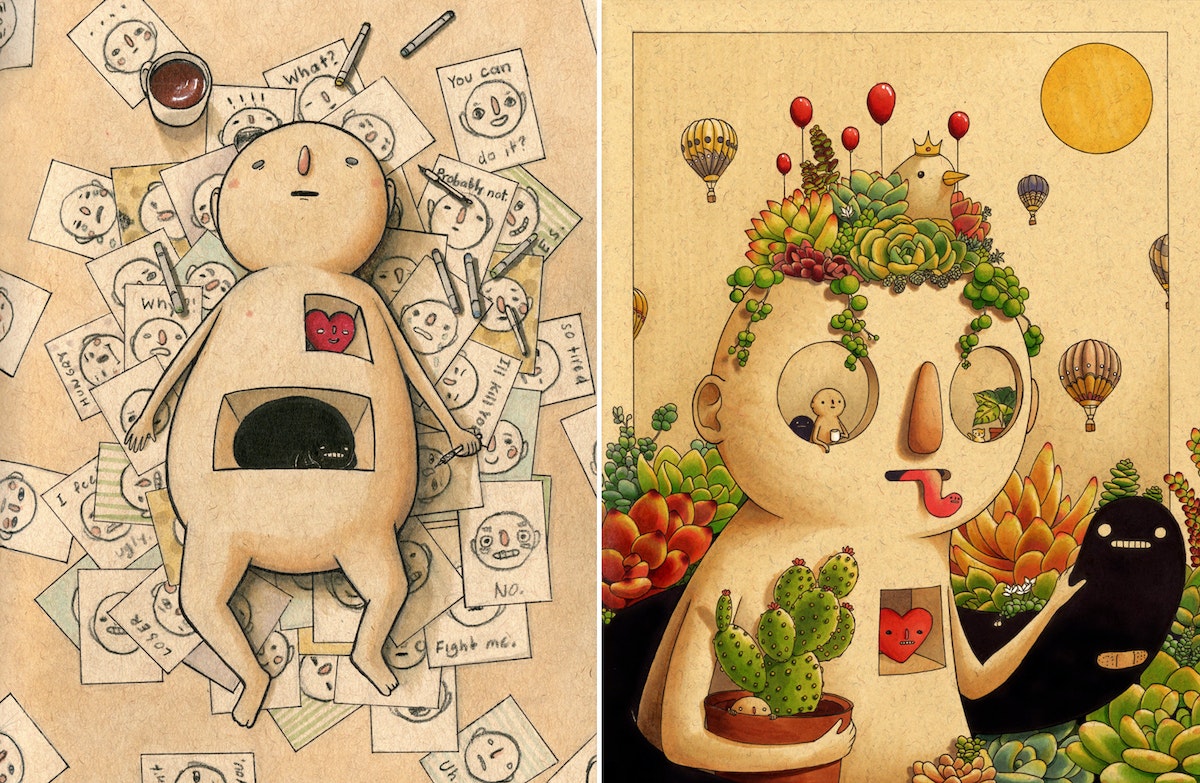
I ended up creating this bald, baby-like thing to represent a person or a feeling I was having. A lot of people have told me they can relate to my work, and I think it’s because of that character. It has no real defining features other than looking vaguely human, so a lot of people can put themselves in its shoes. I often get asked if it’s a boy or a girl or this or that, but it really doesn’t matter what it is.
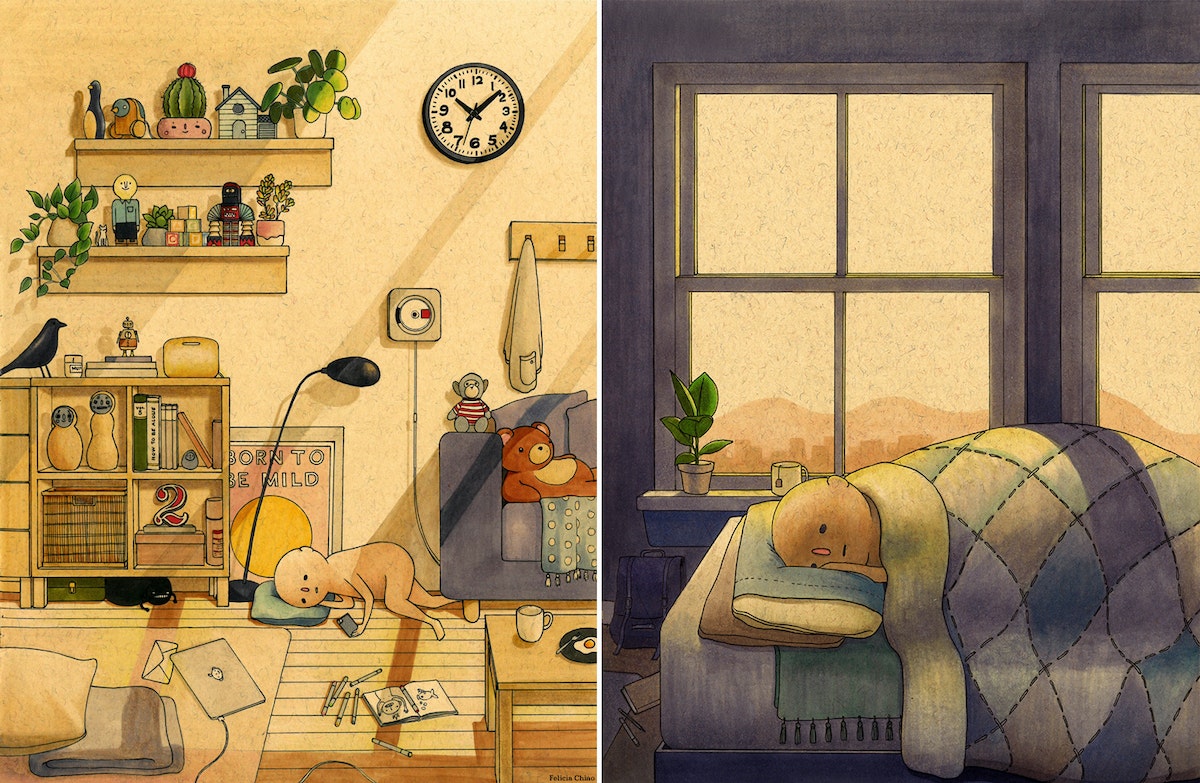
As for the others, the only character that has a specific role is the little angry-looking black blob I draw from time to time. Originally, it showed up inside other character’s bodies as a stomach. I had a lot of stress-related stomach issues, and whenever I was feeling particularly bad, I’d draw it into a piece. I’m not great at telling people I don’t feel well, or that something is wrong, so my sketchbook is a good outlet. Recently I’ve just been hiding it around in parts of drawings for no particular reason.
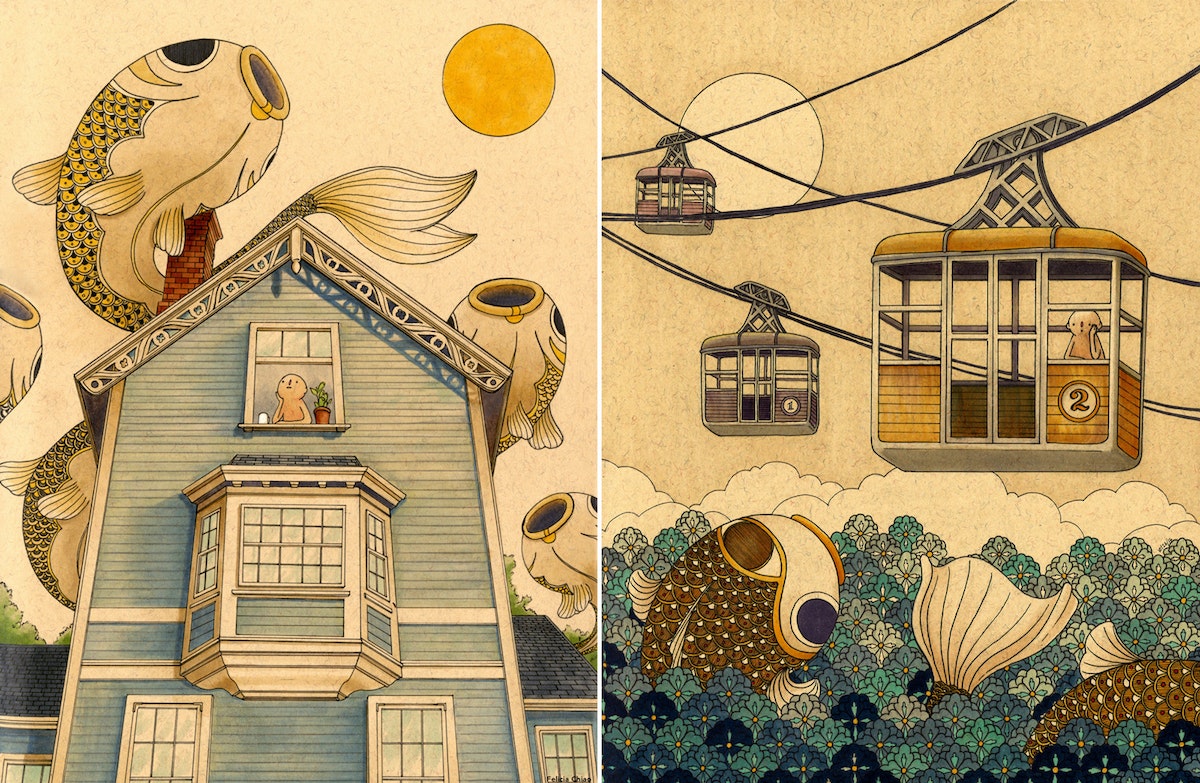
People also ask me about my fish—they seem to be one of my more popular elements. I don’t actually have a particular fondness for fish, I just really love drawing patterns and their scales are the perfect platform.
I started posting each drawing to Tumblr just so I could see the development of my style. Now, it has more than 26,000 followers, which is crazy. Even though it’s super flattering to get such a huge response, I still have no interest pursuing illustration professionally. I draw because it’s fun.
Over the years that I’ve been doing this, I’ve learned that sometimes, you just have to stop talking and start doing. Actually forcing myself to set goals and do the work even when I didn’t feel motivated has been intensely rewarding. Not every drawing I make has to be good, and not every sketchbook is going to be finished within a year—I actually missed my 1/1/17 finish deadline. But my current sketchbook is some of the best work I’ve ever made, and I’m very proud of it—even though I’m only halfway finished.
From the moment we noticed industrial designer Felicia Chiao sketching her latest masterpiece between meetings, we (and our Instagram fans) were hypnotized by her bold colors, intricate patterns, and subtle textures. In this installment of What’s in my Moleskine, we invite you to dive into the dreamlike world Felicia has built in her sketchbooks—we guarantee you'll be hypnotized, too.
Designer Pranks
Designers love a good side project, and April Fool's pranks are no exception
1. How hydrated are you?
I pulled this April Fool's prank on the Palo Alto office a few years back. People remarked that it was surprisingly useful and actually led to behavior change. — Albert Leung, IDEO Palo Alto
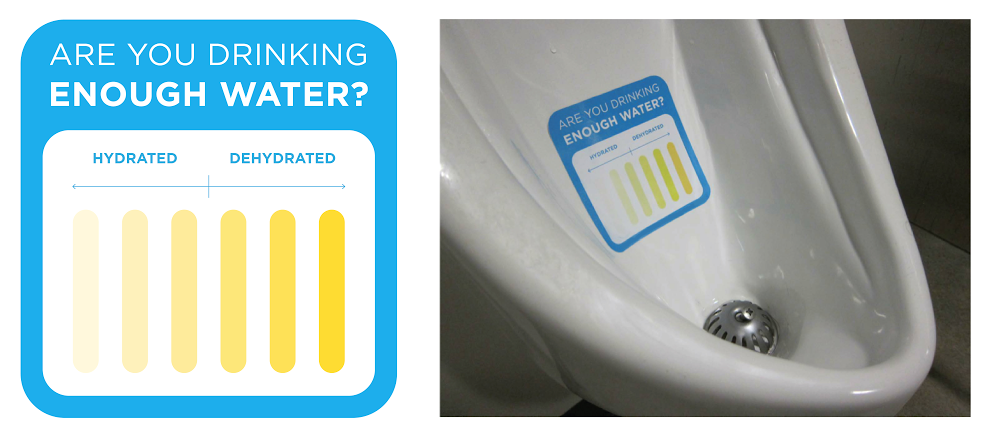
Tech and design firms love pranking and poking fun at themselves—some of our favorites from years past include Google's self-driving bicycle and Mark Zuckerberg's collaboration with H&M, including a "collection pack" of seven gray t-shirts and one pair of jeans.
2. Homecoming surprise
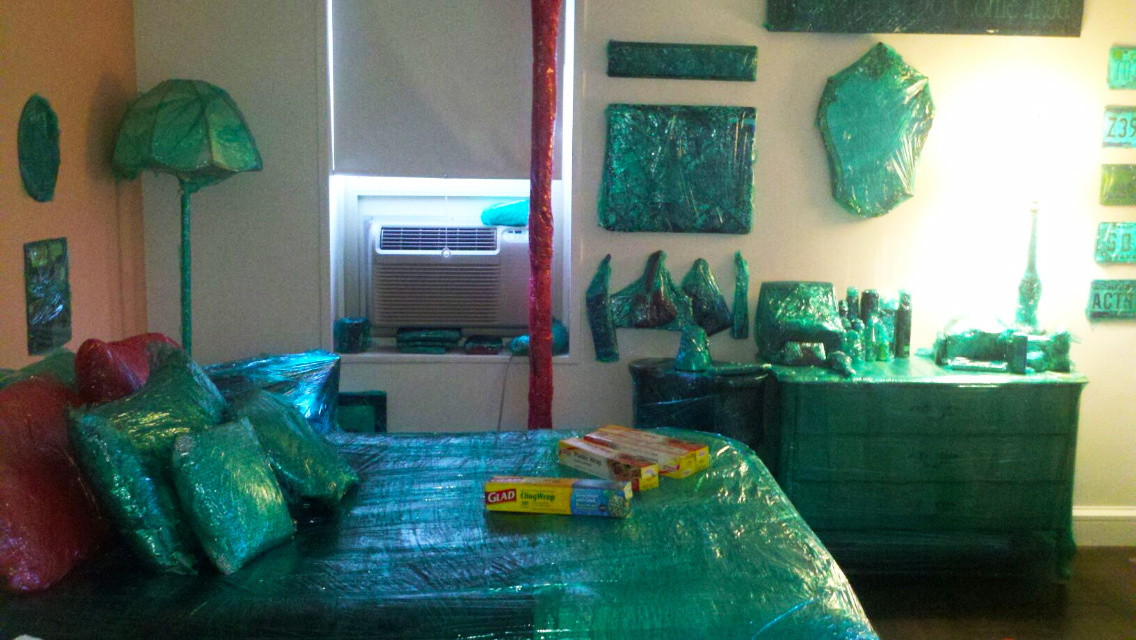
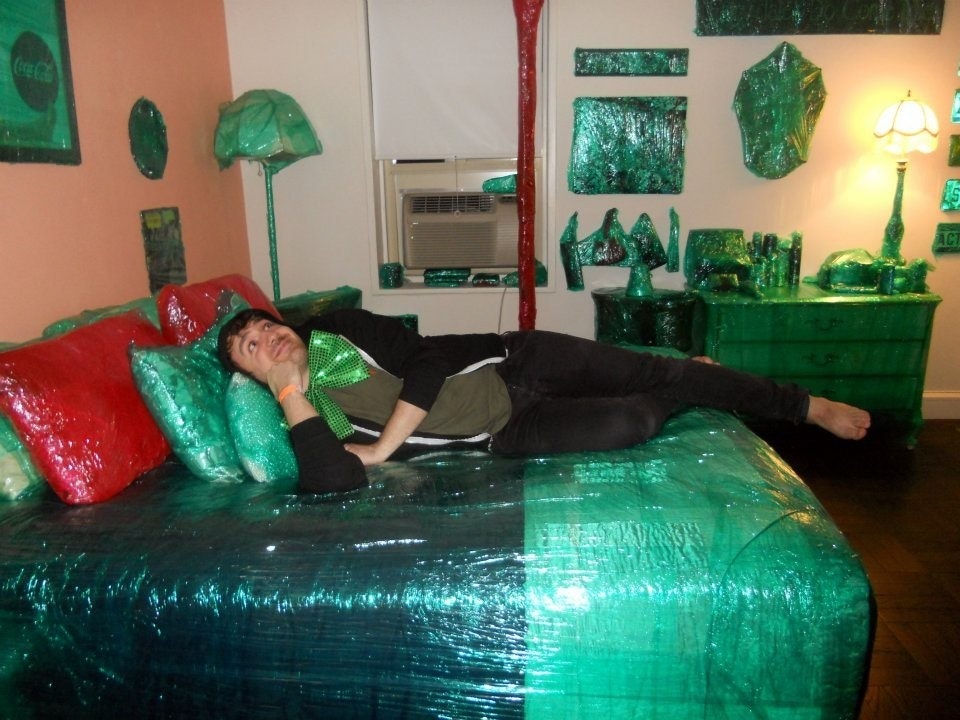
Back in 2012, I decided it would be fun to "redecorate my roommate's bedroom while she was away for work. It took 18 hours and 76 rolls of Saran Wrap to pull off, but every aspect of her life was covered in bright plastic wrap when she returned. I may have gone a bit over board: Each shoe was wrapped individually, then as a pair; I wrapped each piece of makeup, then wrapped them all together in a group; each thing on her wall was wrapped and rehung; every single book and article of clothing in her closet was accounted for. I honestly think—and I say this in a non-sarcastic way—that pulling this off was one of the things I'm most proud of in my life... which may say something about me. —Adam Moulter, IDEO Cambridge
3. Fluffy biscuits
When I was a kid, my parents made homemade buttery biscuits for us on April Fool's Day. The catch was they embedded cotton balls in the center. When we bit in, we got quite a mouthful!
—Sarah Buchanan, IDEO Palo Alto
4. Puppy love
April Fool's Day is a well-observed holiday in my household. Last year, I put this ad up on Craigslist in three different cities with my father's and two brothers' phone numbers. They received upwards of 100 phone calls and texts (each!) within the hour. —Em Havens, IDEO San Francisco

5. Not-so-current events
My mom was a prank legend in our house. April Fool's Day was a standard spectacle. She had a simple guiding principle for her pranks: Prank them early in the morning before they realize what day it is. One year, my dad, who routinely read the morning paper before work, was sitting with his coffee flipping through the day's events. My mom could hardly contain herself, but Dad didn't quite catch on. When he got to the business section, he suddenly said, "That's odd, I thought the markets went down yesterday and this says they went up." Mom burst out laughing—she had saved last year's April 1st paper for an entire year!
—Chris Waugh, IDEO Alum
Designers love a good side project—Halloween costumes, fancy proposals, Rube Goldberg machines—and April Fool's pranks are no exception. Check out some of the over-the-top pranks IDEO designers have pulled on their friends, family, and coworkers—and steal an idea for yourself!
Designer’s Playlist #6
A few things IDEO Palo Alto's Farzad Azimpour can't stop thinking about

Name: Farzad Azimpour, MD
Location: Palo Alto
Role at IDEO: Director of Health (biodesigner and cardiologist). I develop new medical technologies with a specialized team in the Design for Health group. We cover everything from biometrics and robotic surgical devices to future healthcare delivery systems, and anything else that hinges on human interaction and decision-making.
Joined IDEO: 2015
Instagram: @farzad.azimpour
Titillating Fact: I do a lot of “mode-switching,” flipping between totally different roles and mindsets. It's my way of cognitive interval training. One day I’m in the emergency room performing cardiopulmonary resuscitation (CPR) on someone with a drug overdose-induced cardiac arrest, and the next day I’m with an IDEO team interviewing someone struggling with addiction—in their home as the police bang on the door.
1. Hot Thoughts
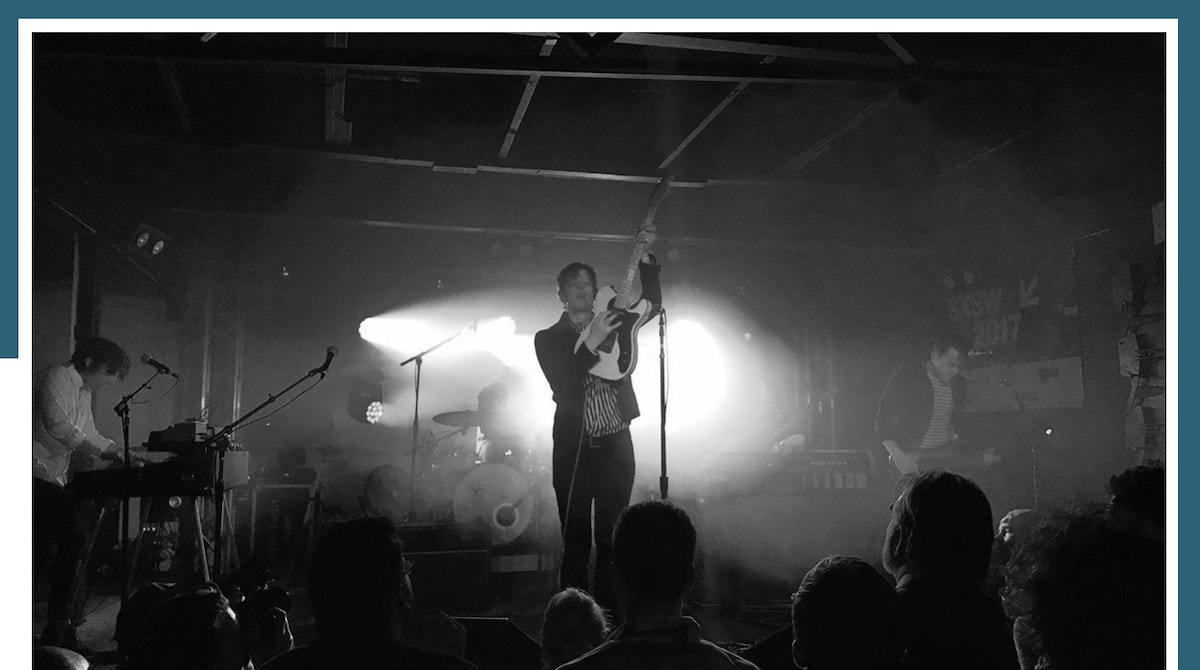
Austin-based indie-rock band Spoon, aka “rock stars for the thinking person,” is releasing a new album called Hot Thoughts, previewed at an intimate set of performances this week at SXSW. I’ve been listening to them since medical school and find some of my best work comes from a late night tapping my pen and feet to their sonic genius.

2. The Current
Listener-supported Minnesota Public Radio (MPR) produces one of the coolest, most progressive radio services you’ll find anywhere, and they stream it live. This is where I discover new music to get me through the coldest winter months on the road.

3. The American Association for the Advancement of Science (AAAS)
This is one of my favorite resources for the wide landscape of scientific research. It’s where you’ll learn of new micro mechanisms to explain macro systems. Their peer-reviewed specialty journals span everything from cell-signaling and translational medicine to robotics, environment, and space. Out-nerd anyone at the next party.
In this series, we ask IDEO designers to share the stuff they're digging right now—tools, books, music, sites, people, places—so you, too, can drink from the fount of inspiration bubbling up here. This week's guest star: Farzad Azimpour, MD.
13 Ways to Make Your Workspace More Creative
How to supercharge your space for creativity
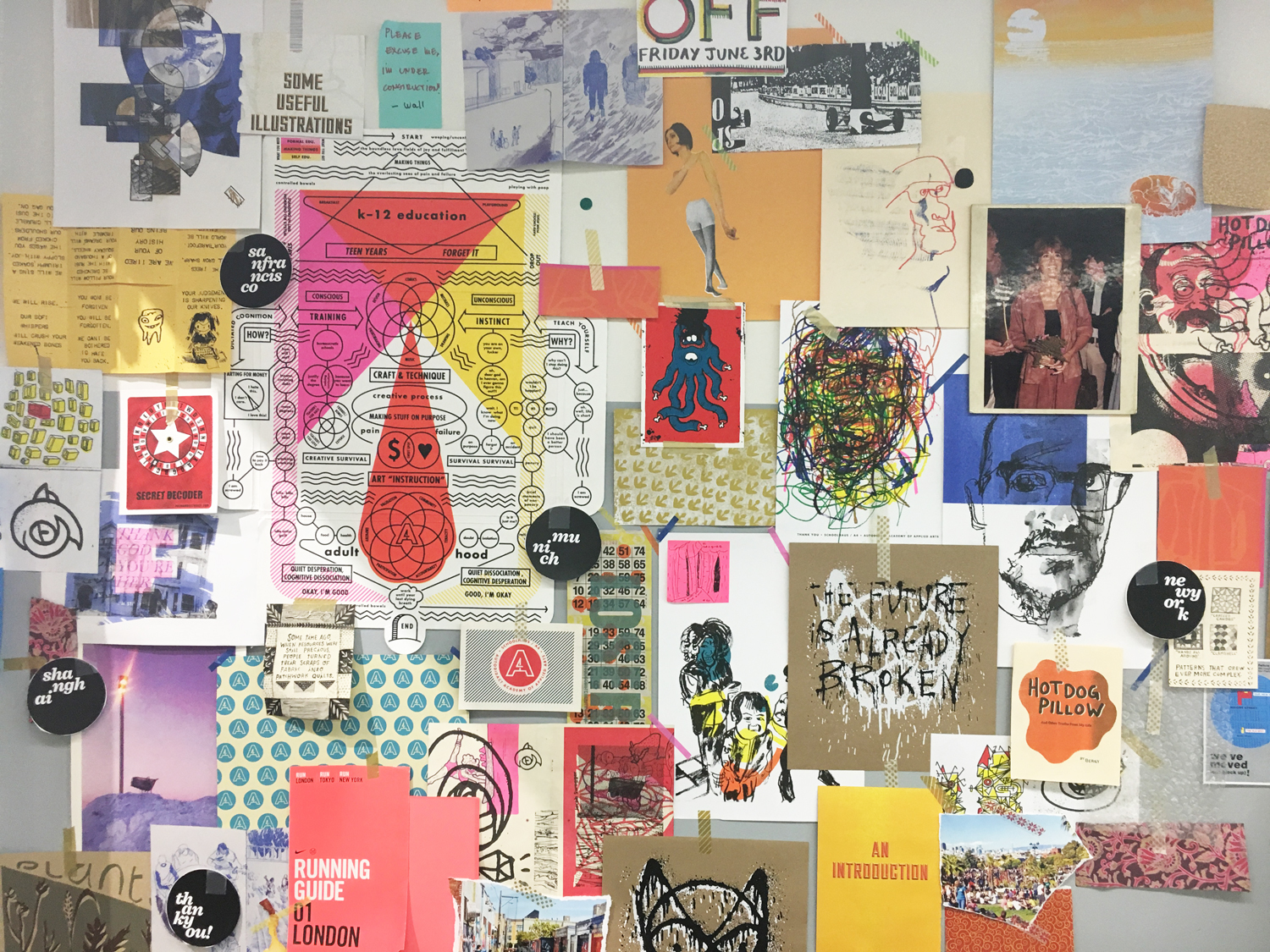
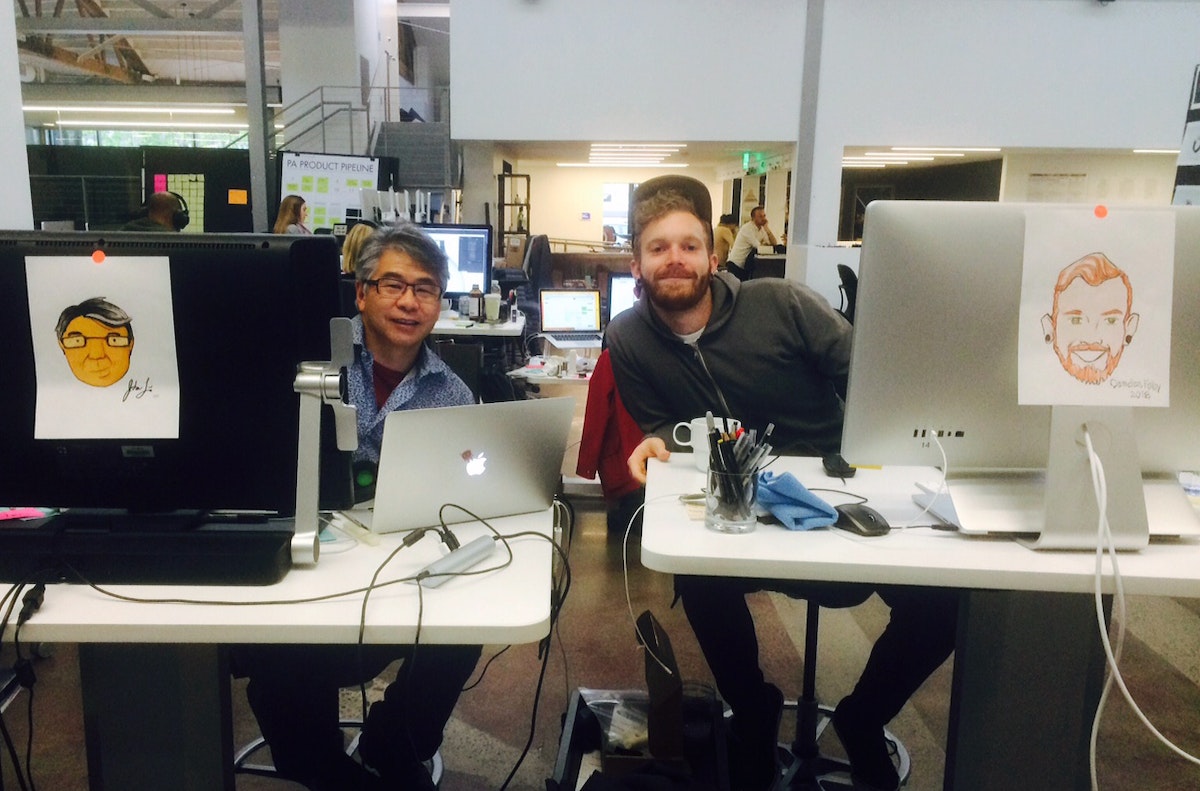
The short answer is not really. Though we agree that every office must be tailored to the specific needs of the people who work there and the kind of work being performed, we polled IDEO designers and found some universally winning environment designs that deliver a jolt of creativity. Here are 13 tips for how to supercharge your space:

1. Install a communal table or other gathering space
At General Assembly, there’s one giant table that can seat 30-plus right in the middle of the main space. Students, instructors, and staff gather round it to share ideas in an unstructured, organic way. Each campus around the world has their table made by community artisans with locally sourced materials, which helps remind people of the importance of place. —Danoosh Kapadia
At Disney Animation Studios, John Lasseter had the conference rooms in the center of the building torn down to make room for a coffee shop. The space served as a large space for folks to come together and collaborate. —Kat Chanover
2. Make things moveable
When people become glued to a particular place, their perspective stays glued, too. Put things on wheels, or having rotating desks allows people to meet new coworkers and invites collaboration. And don’t sit next to someone who does the same thing as you—if you’re an engineer, sit next to a designer. Physical silos are real. —Xin Xin
One of my favorite things about the d.school at Stanford is that the walls in most of the building can be moved and reconfigured. An open space can become a private project space in a matter of minutes (and vice-versa). —Katie Clark
3. Display your values
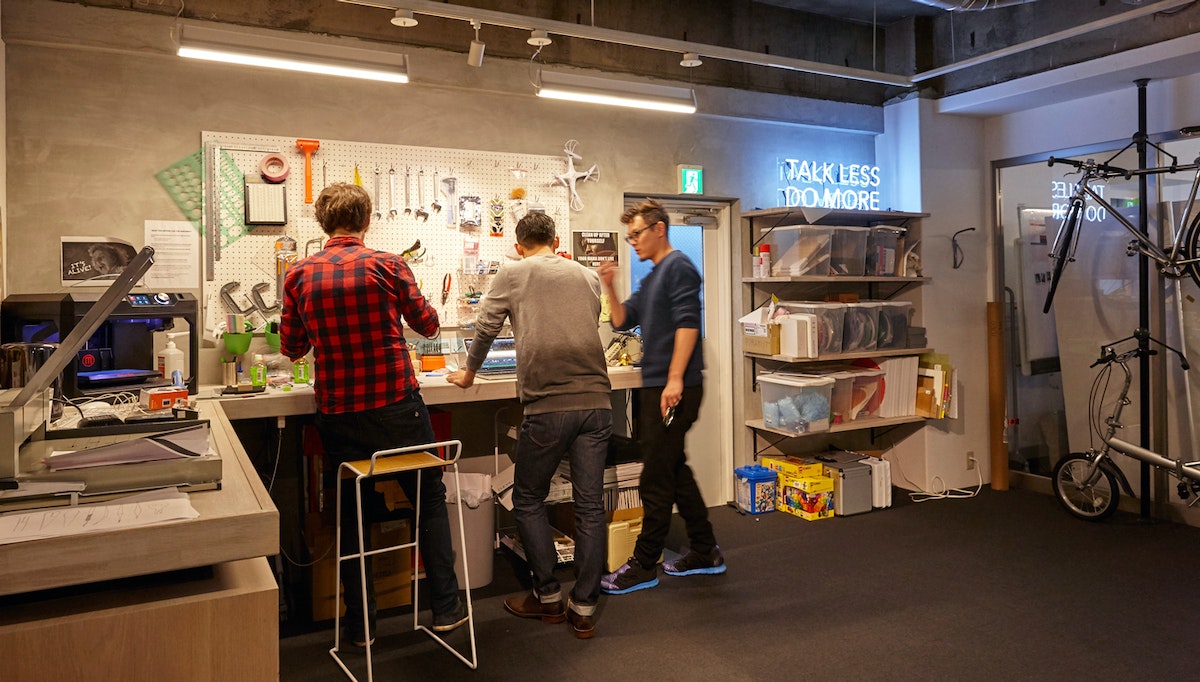
Placed all around the IDEO Tokyo office are key phrases projected in neon lights. Next to our Maker Space it’s "Talk Less, Do More"; in our lounge it’s "Make Others Successful"; next to the door before you exit it’s "Take Responsibility". Although these are just 3 of the 7 key IDEO values, the signs serve as a daily reminder of what we all believe in. —Mike Peng
4. Hide the clocks
OK, maybe not all the clocks. But consider introducing spaces where people can get a break from the cruel Master Time. Sometimes creativity needs constraints to flourish; sometimes it needs the freedom to take as long as it damn well pleases. —Lode Starstrom
5. Situate joy
In our project space, there is a drawer that only contains British chocolate of the most velvety quality. The team knows it's there. When that drawer opens... well, it's very exciting for everyone. Sometimes they even exclaim, "Milky Time!" Design your space to trigger moments of joy, or surprise, or ritual. —Alex Gallafent
6. Put creative tools in the way
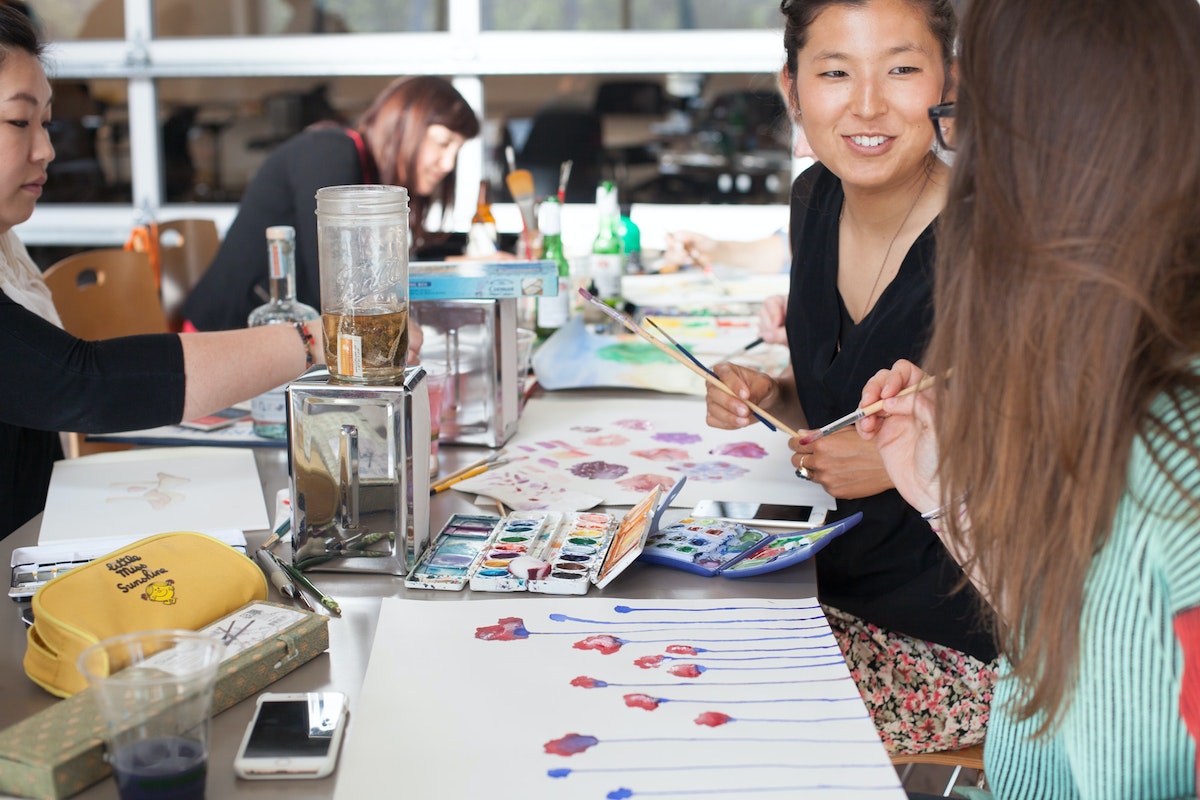
When there are creative tools in the main space, more stuff gets made. Don’t silo the maker space. Out of sight, out of mind. In sight, in practice. —Clark Scheffy
7. Build a home-y kitchen
The kitchen should not feel corporate. It’s the nest where new ideas hatch! Pay attention to details: use real utensils and glasses, not plastic, have employees help wash dishes. And nothing signals a communal, homey feeling more than leaving the butter dish out! —Becky Bermont
8. Activate empathy
At Airbnb, the conference rooms are designed to be replicas of favorite rentals around the world. There’s a picture of the actual space at the entrance. That helps immerse you in the Airbnb customer experience, a great reminder that you’re there to make that experience better. —Kristin Kelly
9. Use nature to support well-being
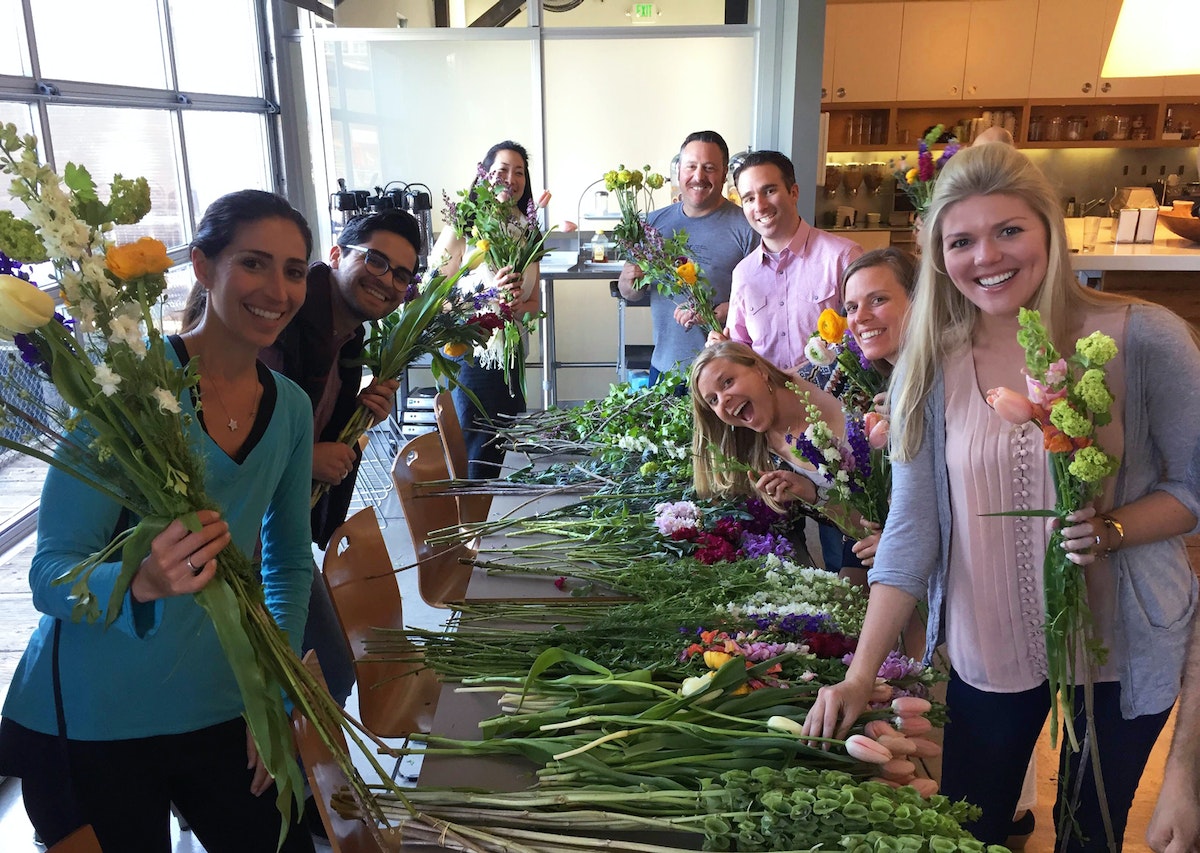
At my former workplace, CookFox Architects, the firm incorporated the principles of biophilia into their office design. All 80 employees had a direct view to the outdoors, and natural light poured in from three sides of the office. Potted plants were placed in every possible place throughout the office, and there was a rooftop garden where they kept bees and plants that attracted butterflies and birds. Carpet, bathroom tiles, and paint were done in ocean-inspired colors, and decorative lighting structures mimicked patterns found in nature. Biophilic design is said to unburden our cognitive system, supporting it in collecting and recognizing information in the quickest and most efficient way, as well as generally supporting wellbeing. —Alisa Ahmadian
10. Cultivate permission
Allow employees to put stuff on the walls. It goes without saying: it's better to have things on the wall that you've created, versus expensive art you've paid someone else for. —Zach Hobbs
11. Provide spaces for projects
Clear space where workers can leave projects-in-progress without worrying about the mess. I wish every home and every workspace had this. In school maker labs (such as the Innovation Lab at Nueva School), I'm always pleased to notice big shelves for students' work-in-progress projects. —Sally Madsen
12. Introduce some play
Make C-level guys take themselves less seriously and more open to brainstorming by taking them slightly out of their comfort zone. I heard that in Jump Associates' meeting rooms, they have pilates balls instead of chairs. On the same theme, my father, who is an urban designer in Istanbul, installed swings in his studio to create an informal and playful space. He works with mayors on a daily basis, and you’ll see very traditional politicians swinging alongside young urban designers. —Nazlican Goksu
13. Think about a landscape of creative spaces
Create different spaces to match the task at hand. Three things are required to make this successful: abundant power sockets, quality wi-fi coverage, and agreements among employees of how to "use" the space. That way, no individual will attempt to claim a space long-term, and will instead facilitate everyone being in the exact right space at the exact right moment. —Lawrence Abrahamson
Many businesses are getting wise and ditching the one-size-fits-all flannel suit approach to the workplace. But do they have any clue what to replace it with? For a while, everyone wanted to make their office look like a children's playground. Today, the trend is to try to look like a coworking space or a coffee shop. But are those ideas future-proof? And do they actually create the conditions that creativity needs to thrive?

Lindsey Turner
I’m passionate about building brands, products, and experiences that help organizations show up with meaning and momentum.
I help organizations cut through complexity by shaping how they show up, through brand strategy, identity, and storytelling.
Working at the intersection of brand and business, I bring an editorial eye and a bias toward making—turning ideas into tangible experiences that people can understand, trust, and believe in.
My work spans government, healthcare, financial services, media, and consumer goods, from launching Gen Z-focused ventures to building innovation labs and reimagining legacy brands. I relish moments of ambiguity and enjoy translating across teams, perspectives, and priorities to move ideas forward.
I started my career in editorial and digital design, shaping cross-platform experiences and identity systems in publishing and agency environments. That foundation still shapes how I work today: I’m detail-oriented, collaborative, and overreliant on the Oxford comma. I hold a BFA in Visual Communication from the School of the Art Institute of Chicago.

Rachel Young
My work helps organizations see who their products aren't working for—and build the will and the tools to do something about it
For 25 years, I've asked the same question: Who does this design exclude—and what are we going to do about it?
My work spans human-centered strategy, inclusive design, and qualitative research, with clients ranging from Microsoft, Google, and Verizon to the National Science Foundation, and San Francisco Unified School District.
Before IDEO, I taught elementary school in East Palo Alto and spent a decade doing design work with social service organizations—where I learned firsthand what it costs people when systems are built without them in mind.
I am currently writing User Error, a nonfiction book about digital access and the design decisions behind it. I live in Oakland, California.

Brian Pelsoh
I lead with craft, ensuring our work is creatively excellent: rooted in deep human insight and imagination, while also grounded in the realities of business and technology.
My expertise spans brand, communication, and product design across tech, education, the arts, and social impact.
I believe great work demands both high-level vision and obsessive attention to detail, and only happens through collaboration.
I bring an inclusive, hands-on approach and a deep understanding of business, which enables me to consistently deliver excellence while always asking why.
Before joining IDEO, I worked at the brand firms Pentagram and VSA Partners. I began my career as a designer, leading teams at the School of the Art Institute of Chicago and the Milwaukee Art Museum. I hold an MFA in graphic design from Maryland Institute College of Art and a BFA in communication design from the Milwaukee Institute of Art & Design, and have taught at some of the best design schools in the US.

Tony Wong
I am responsible for IDEO’s long-term success in China and working with clients to use design as a tool to enable growth.
I am responsible for IDEO’s long-term success in China and working with clients to use design as a tool to enable growth. Specifically, I have helped Chinese companies design holistic brand solutions through the development of their products, communication, services, and innovation teams, and I have helped multinationals expand their presence and influence in China.
I advise global leaders on developing China-led innovation and capabilities.
In over 15 years in IDEO Shanghai, I have worked on projects that use design to elevate the quality of the experience of healthcare products and services, streamline processes that increase productivity, create spaces and programs that promote and enable inclusive communities, and build next generation mobility solutions that are planet-positive.
Before joining IDEO, I worked at Philips Electronics and the Electrolux Group in Italy, the Netherlands, and Singapore on a number of breakthrough commercial products. I am a member of the Young President Organization in Shanghai.

Building a personal AI for the messiness of life: Sida Li
Most AI products today are built for work—a space with clear problems and established systems. One founder noticed a gap: personal life is messier, harder to systematize, and mostly left behind by the AI boom. So she built Cue, a personal AI that lives inside iMessage and group chats, to go where the other tools haven't.
In this episode, Becca Carroll, IDEO's Chief Strategy Officer, talks with Sida Li, co-founder and CEO of Shared Context Lab, about staying anchored to a human need while the technology around her keeps changing shape, why she treats her business model with the same rigor she'd bring to a product, and what it feels like to build a company at this particular, disorienting moment in AI.
The conversation also gets into how Sida makes design decisions: the language Cue uses to describe itself, the tradeoffs behind building inside iMessage instead of a new app, and a real story about a business idea that didn’t pan out.
This is the second in a two-part series profiling founders from IDEO's Startups-in-Residence program. The first conversation is with Johannes Seemann, founder of Sooner, on designing GenAI for the emotional side of money.

Designing GenAI for the emotional side of money: Johannes Seemann
Most personal financial tools are built to run the numbers and optimize towards a budget. While that works for some, most people experience money as a lived relationship that does not neatly fit into a spreadsheet. Johannes Seemann and Becca Carroll discuss why money is emotional before it is mathematical, and what a human-centered approach to building a generative AI financial product looks like in practice.

The curious leader's edge in uncertainty: Scott Shigeoka
Mina Seetharaman talks with Scott Shigeoka, author of Seek and Head of Curiosity Cultivation at the Eames Institute, about what distinguishes genuinely curious leadership from performative curiosity, how power dynamics shape curiosity, and why practicing curiosity can restore energy rather than drain it.

How constraints make us more creative: David Epstein
Mina Seetharaman talks with David Epstein, author of Inside the Box and Range, about why total freedom often produces average work, how leaders can design useful limits on purpose, and what organizations such as General Magic and Pixar reveal about the relationship between boundaries and creativity.
Looks like you might be in search of something very specific?
Or reset the filters above and try another angle.
Here’s some random inspiration

Podcasts about creative leadership

Articles about the power of prototyping
