
.svg)


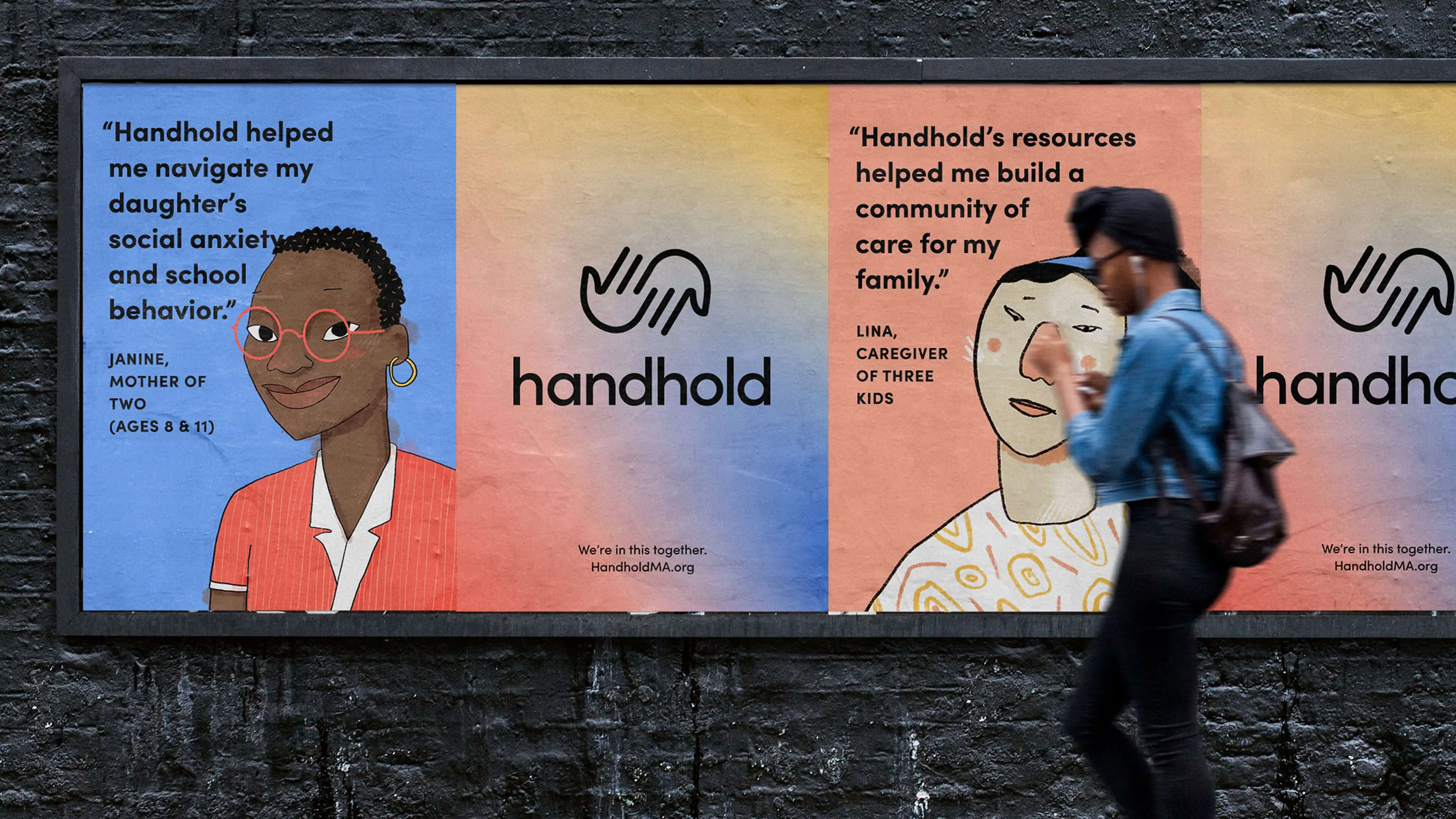

A helping hand
Massachusetts puts families at the heart of mental health.
The urgency of attending to our children’s mental health cannot be overstated.
Concern about their well-being was already on the rise in the decade prior to the pandemic. Alongside social inequity, the COVID era has seen soaring rates of depression, anxiety, trauma, loneliness, and suicidal thoughts. Knowing that mental health is influenced by numerous systemic factors, we met with families of all income levels and heard from practitioners throughout Massachusetts. In some communities, mental health is candidly discussed, in others it remains a taboo subject. Through these conversations, we learned that mental health requires both individuals and their families to be educated, supported, and empowered.
HandholdMA.org helps families find services that work for them and gives them easy access to information on a range of mental health topics. It allows parents to learn from and support one another as they navigate the landscape of mental health together. We took special care to make resources feel approachable for those in communities of color, and curated new resources for everyone from preschoolers to teens—because mental health challenges do not discriminate.
In 2020, a coalition of the nation’s leading experts in pediatric health issued an urgent warning that the mental health crisis among children had become a national emergency.
The percentage of emergency department visits for mental health crises rose by 24% for children between the ages of 5 and 11, and 31% for those 12 to 17, compared with 2019.
87,000
site visits to to HandholdMA.org since launch
223,000
people reached in bilingual social media campaign

Evolving to meet young consumers
Accelerating vivo’s transformation journey to connect with China’s young consumer.
To help shift vivo’s thinking from a focus on products to a focus on brand-building, IDEO set out to help the company understand how young consumers experience fun—a core tenet of the vivo brand. The new concept store needed to convey joy and fun in a meaningful and memorable way. The project was about more than just designing the space; it was also about piloting into vivo’s future brand systems.
To kick off the project, the IDEO team conducted user research in four different cities in China, then shared the stories of young Chinese consumers with the vivo team. Their interviews revealed that young people value experiences that enrich their lives and create a feeling of positive personal transformation. They seek opportunities to discover new experiences, express themselves in different ways, expand and deepen their social connections, and build knowledge and skills. By leaning on this definition of “enjoyment,” IDEO helped vivo identify the value proposition of the concept store, helping consumers express themselves in new and different ways. The store would allow every visitor to see something unique and find a fresh perspective.
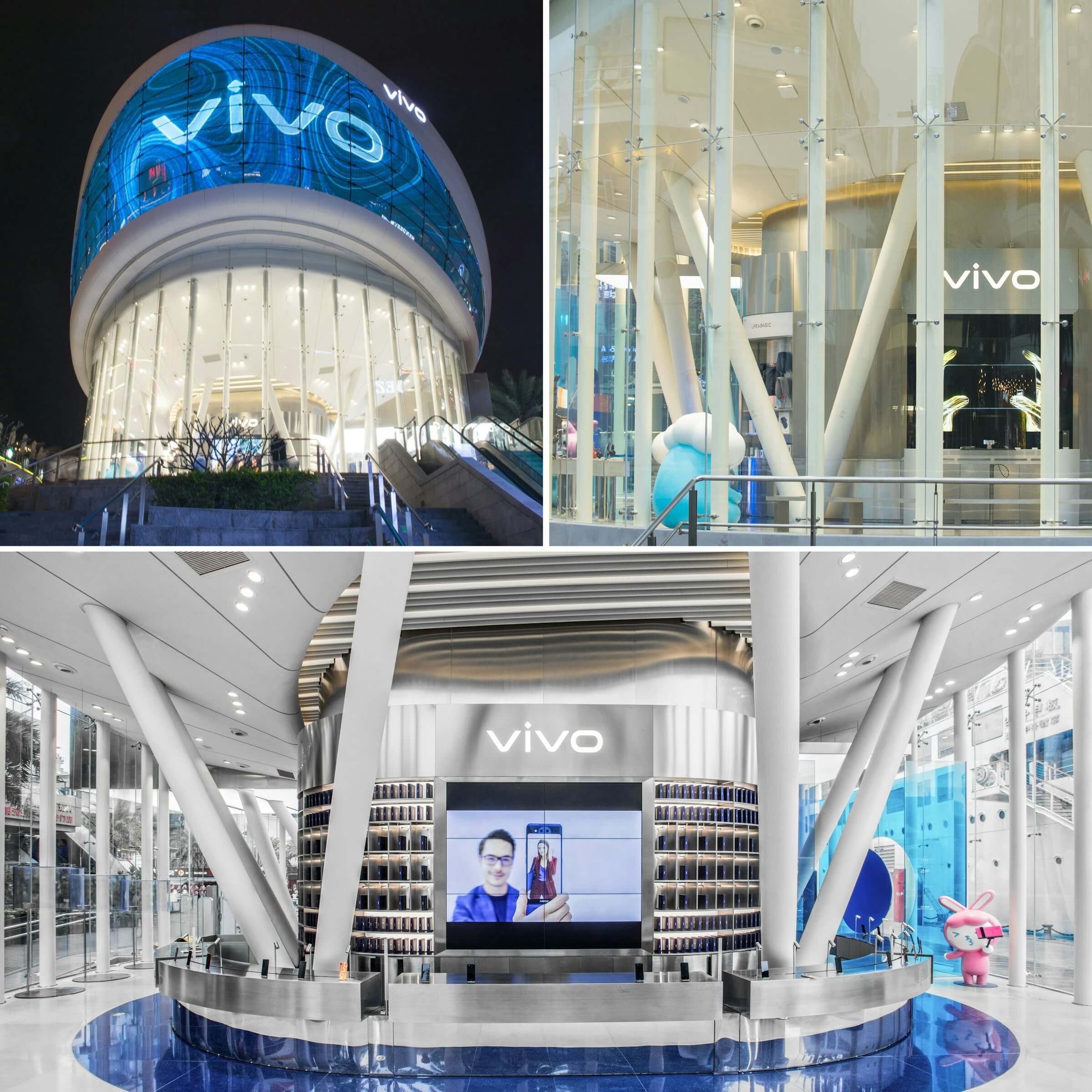
The vivo team took that value proposition into a design brief and later built out the space and interactive experiences. The second floor of the store is dedicated entirely to interactive experiences using photo booths, sound recording, and lighting technology, designed to provide consumers with the kind of enjoyment they seek. vivo launched the concept store in Shenzhen on March 22, 2019, marking an important milestone in vivo’s transformation from a smartphone maker to a consumer brand.
China consumes roughly 30% of the world’s smartphones—which presents a tremendous market opportunity for brands looking to capture young consumers’ loyalty.
Top 1
in China's smartphone market, topping both shipments (sale-in) and retail sales (sale-out), in the first half of 2024
260M active users
within two years of vivo Lab's official opening, with 70% of them young users
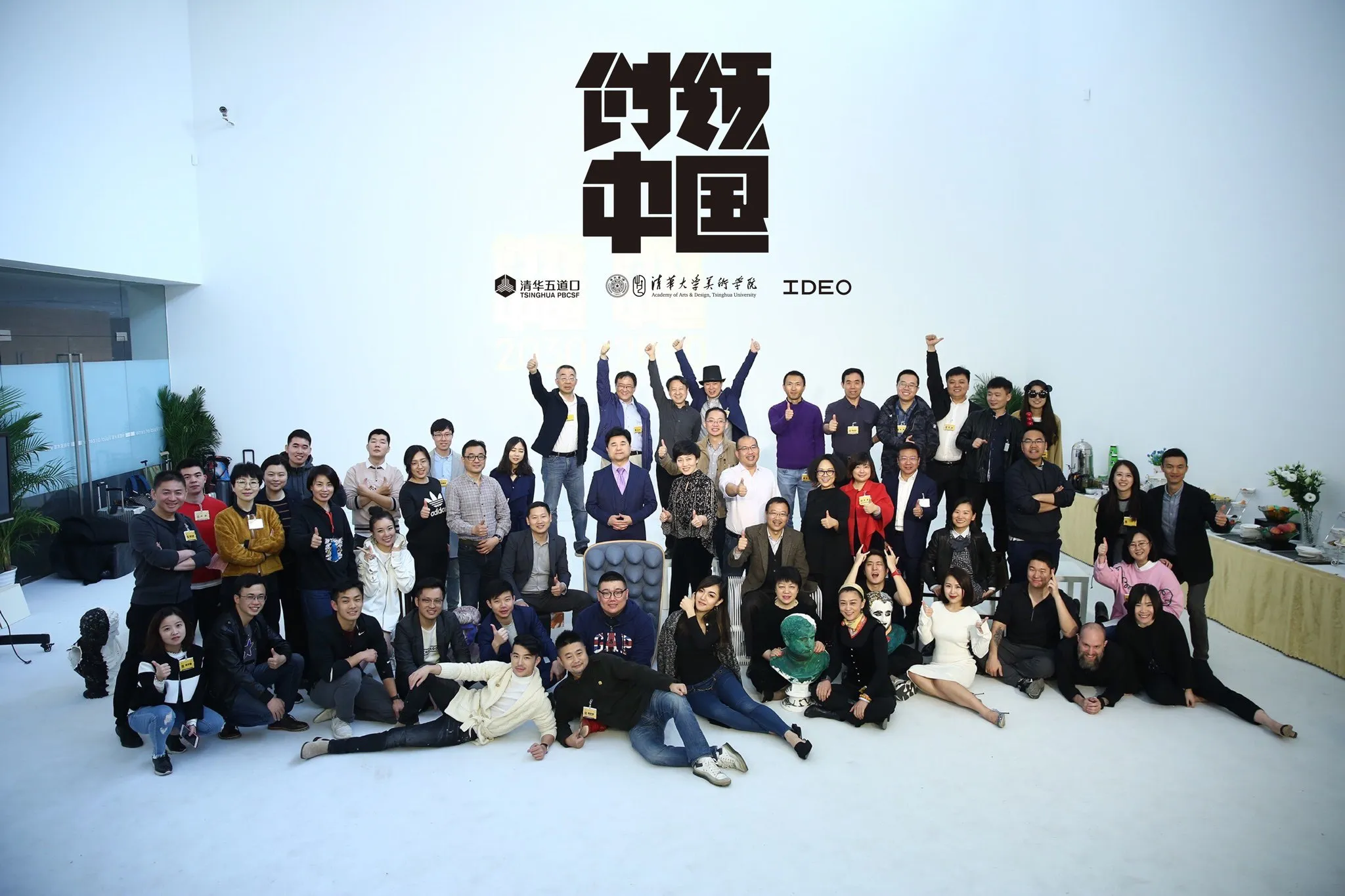
Transformation through creative leadership
Tsinghua University launches China’s first leadership course focused on design thinking.
The program Tsinghua and IDEO created together consisted of six modules focused on creative leadership: Rediscover Design, Build Design as a Core Competency, Creating the Conditions for Creativity, The Financial Levers for Innovation, Designing for the Fourth Industrial Revolution, and Leading for Tomorrow. 73 Chinese and foreign experts helped teach the modules, including former Forbidden City Palace Museum director Shan Jixiang, the father of Japanese industrial design, Masayuki Kurokawa, and Jake Knapp, author of the book Sprint.
The program’s first cohort included more than 30 entrepreneurs from 20 different industries across nine cities. Participants completed the courses throughout the year, taking full advantage of holistic, interactive teaching and the opportunity to share their own practical experiences. Their feedback consistently demonstrated how the course had given them fresh approaches to problems their companies faced, whether improving internal communication or helping them see the clients they serve from a new perspective.
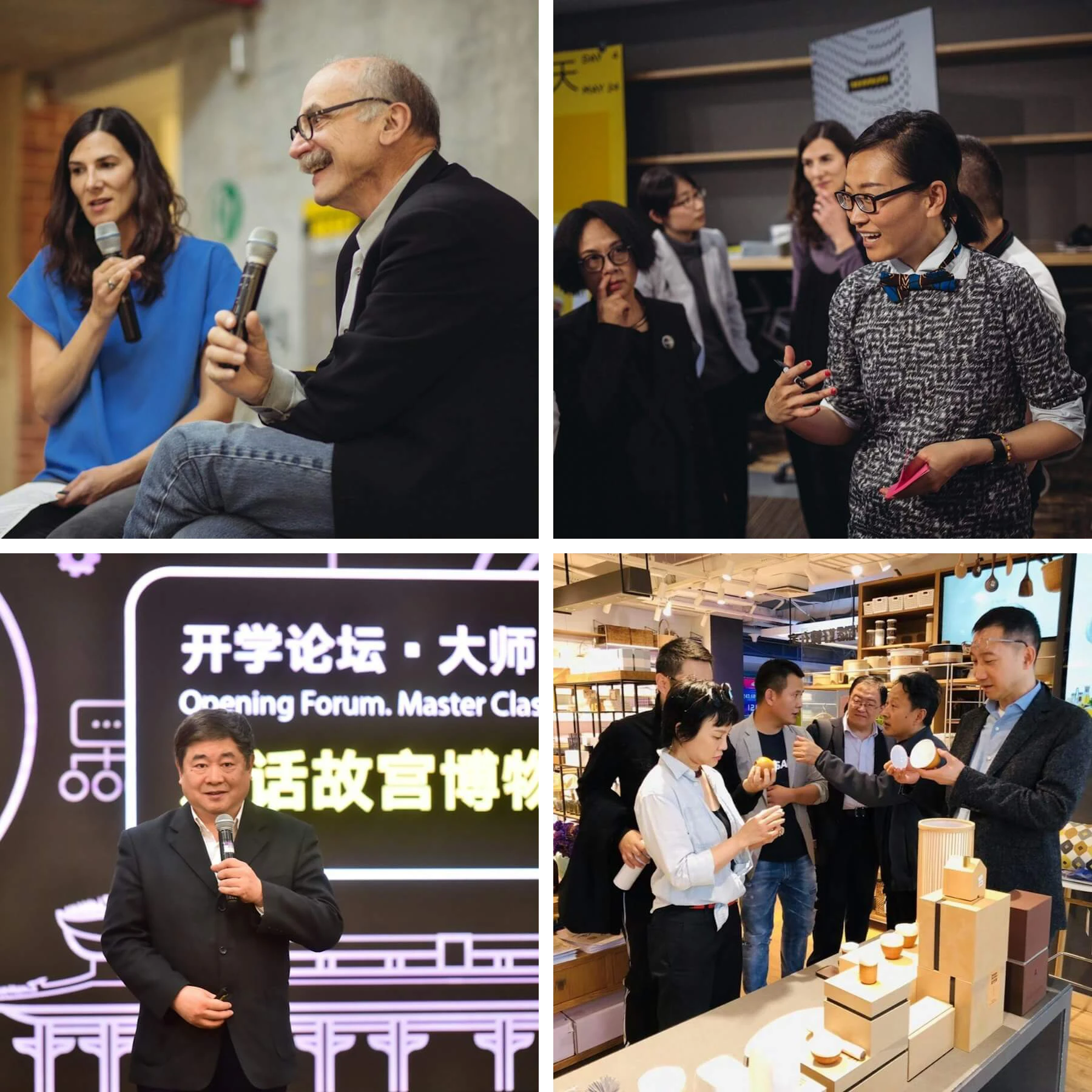
Liu Feng, the founder of a fast growing tourism development company, was particularly inspired by the Creating the Conditions for Creativity module’s six pillars of corporate transformation concept. Using these pillars, he not only refined the mission and value of his company, but also launched a series of measures to improve all aspects of its operations, from customer service to annual company gatherings. With a newly empowered team, he significantly increased the agility of the organization.
Ting Zhihong, the chairwoman of China’s leading logistics technology company, managed to double its profit during the course. She said her biggest takeaway from the course was how important it is to empower the team. Her company has now set up several platforms that give employees more room to experiment, create, and take part in frontline decision-making, bringing them closer to the company’s management.
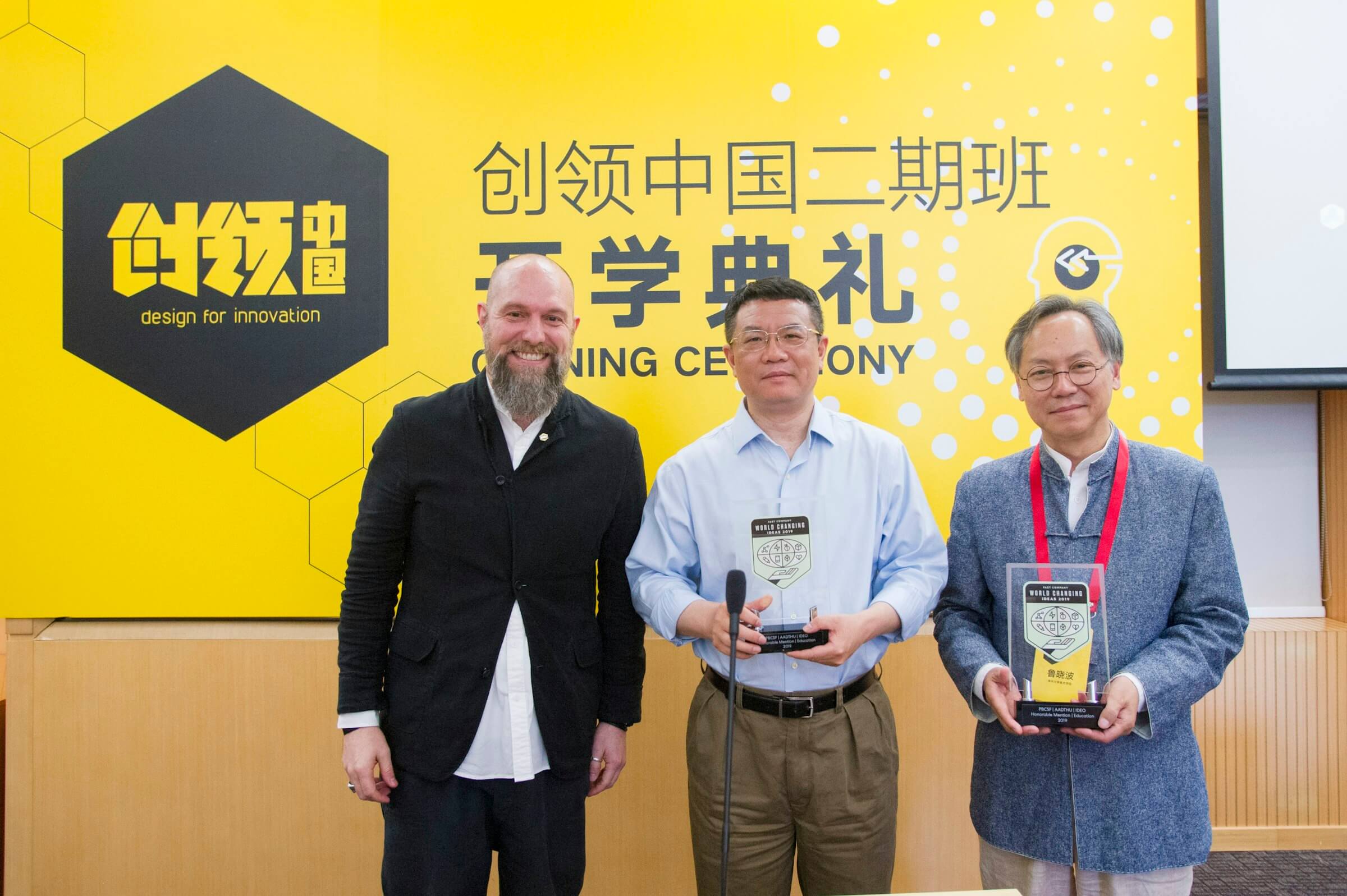
Hu Chao, founder and CEO of China’s largest e-commerce platform for childcare goods, found that while other executive courses simply teach knowledge, Lead a Creative China taught him the importance of placing people at the center of what his company is doing.
The first cohort of the program graduated in December 2018. On April 8th, 2019, the Lead a Creative China program received an honorable mention in the education category as part of Fast Company’s 2019 World Changing Ideas Awards, becoming the only award-winning Chinese project in the category.
After 40 years of rapid change, China has reached a pivotal point in its growth trajectory. Across the globe, traditional drivers of economic growth have slowed down, creating opportunity define the new economy.
The Chinese government has laid out a wide range of ambitious policy plans to ensure that China successfully manages this transition, and that the country continues to grow and lead.
Honorable Mention
education category, Fast Company’s 2019 World Changing Ideas Awards
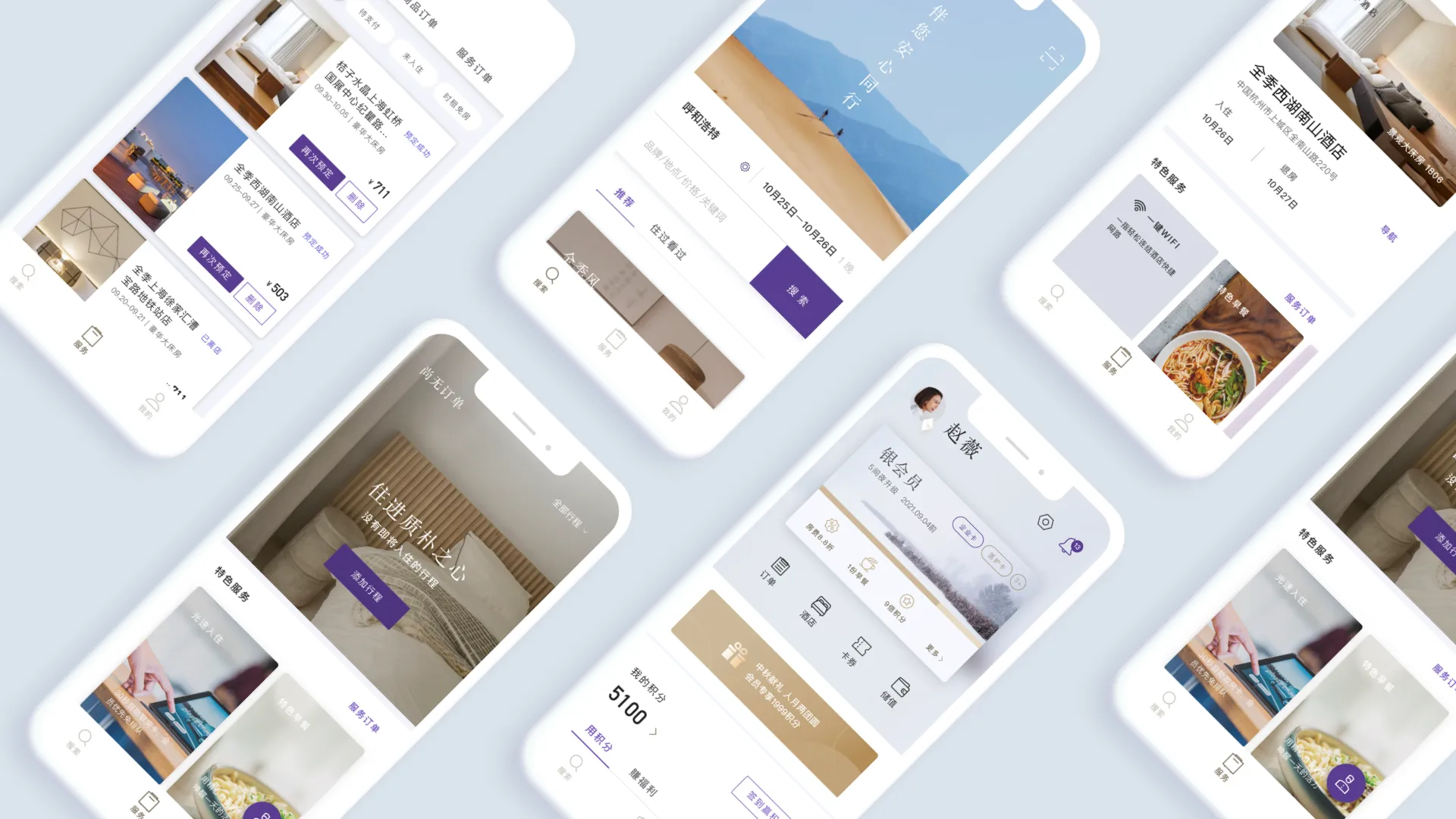
Human-centered hospitality via a tech-forward app
Huazhu Hotels Group translates its renowned hospitality brand into a seamless digital ecosystem for guests.
China’s digital landscape is dominated by highly integrated mobile apps like WeChat and Alipay that seamlessly combine messaging, shopping, bill payment, and finance management. This shift toward digital-first interactions that are hyper-convenient, personalized, and intuitive has significantly shaped consumer expectations for experiences like finding, booking, and staying in a hotel. To stay competitive and meet—or exceed—young guests’ expectations, Huazhu needed to redesign its Membership App 3.0 to prioritize guest needs across all touchpoints of the hotel journey.
Through in-depth research and member feedback, IDEO discovered the true pain point the Huazhu membership app needed to address: seamlessly integrating the hotel brand’s online and offline experiences. The Huazhu Membership App 3.0 adopted “simple, stable, and real” design principles, simplifying user operations, optimizing the interface, fixing lingering experience issues, maximizing page load speed, and reducing crash rates.

The IDEO team discovered users have different functional needs. Sometimes, users want to search for hotel information quickly. Other times, they prefer to explore and browse content slowly. To meet both needs, the app needed to be optimized for efficiency and exploration. So, the IDEO team upgraded the interface of the Huazhu Membership App, adding quick operation modules and information blocks on the main page, as well as a downward scrolling interface that gradually slows the experience, offering channels for detailed exploration.
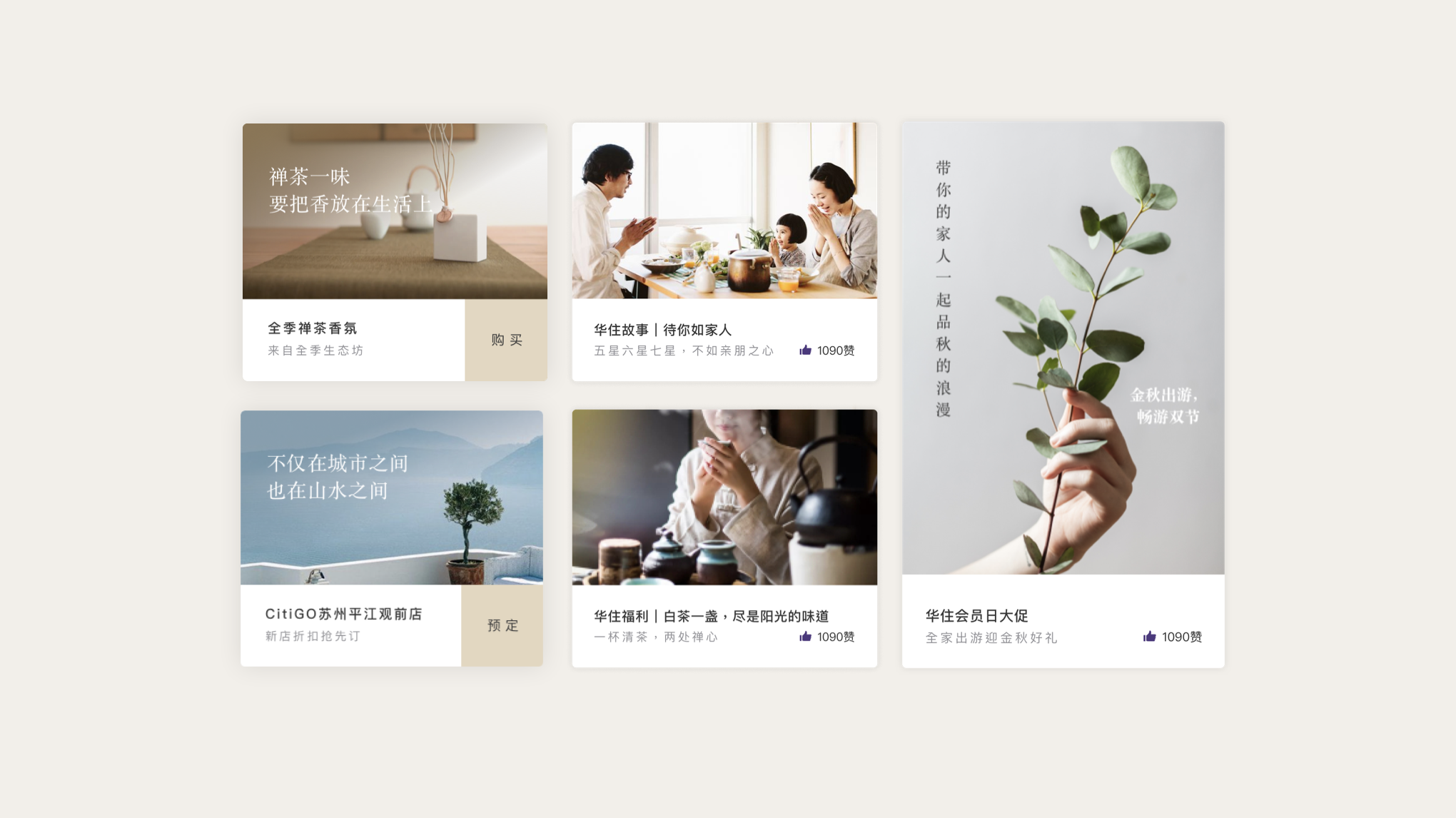
Customers also had different needs at different points in their travel journey: before, during, and after their stays. IDEO designed the language and user interface to provide personalized service information for each stage, from booking to post-stay. The app’s content adapts to the user’s travel phase, showing the most relevant service experiences at each point. The content displayed on the app also changes based on user habits, helping the app flex to meet their needs. The design aligns with the Huazhu Hotels Group’s mission to provide personalized service to a diverse clientele.

The team also worked to inject Huazhu’s brand characteristics by offering an upgraded experience in booking, stay, dining, and member benefits and adding features like a 30-second, automatic check-in experience. These thoughtful, personalized updates integrate Huazhu Hotels Group’s meticulous service philosophy, providing customers with a welcoming, human-centered hospitality experience. The updated Huazhu Membership App 3.0 is now available in major app stores, shaping a new generation of user experiences for Huazhu Hotels Group.
Young travelers in China expect the first touchpoint with a hotel brand to be digital.
5% increase
in monthly active users after the launch of the App's 2.0 version in 2021

Design an organization's purpose statement with this tool
A 4-step process to create alignment on an organization's shared purpose
This can prompt a lot of thorny questions. Where do we want to go together? What do we stand for? Beyond profit, why do we exist?
At IDEO, designers often find themselves working with companies and organizations that are looking to do just that: rally around a sense of purpose. Earlier this year, the two of us were working with the visionary CEO of a parent company who wanted his global organization to be led by purpose. He also wanted all of the business group leaders to be a part of articulating it. So we started by creating a place for everyone to start.
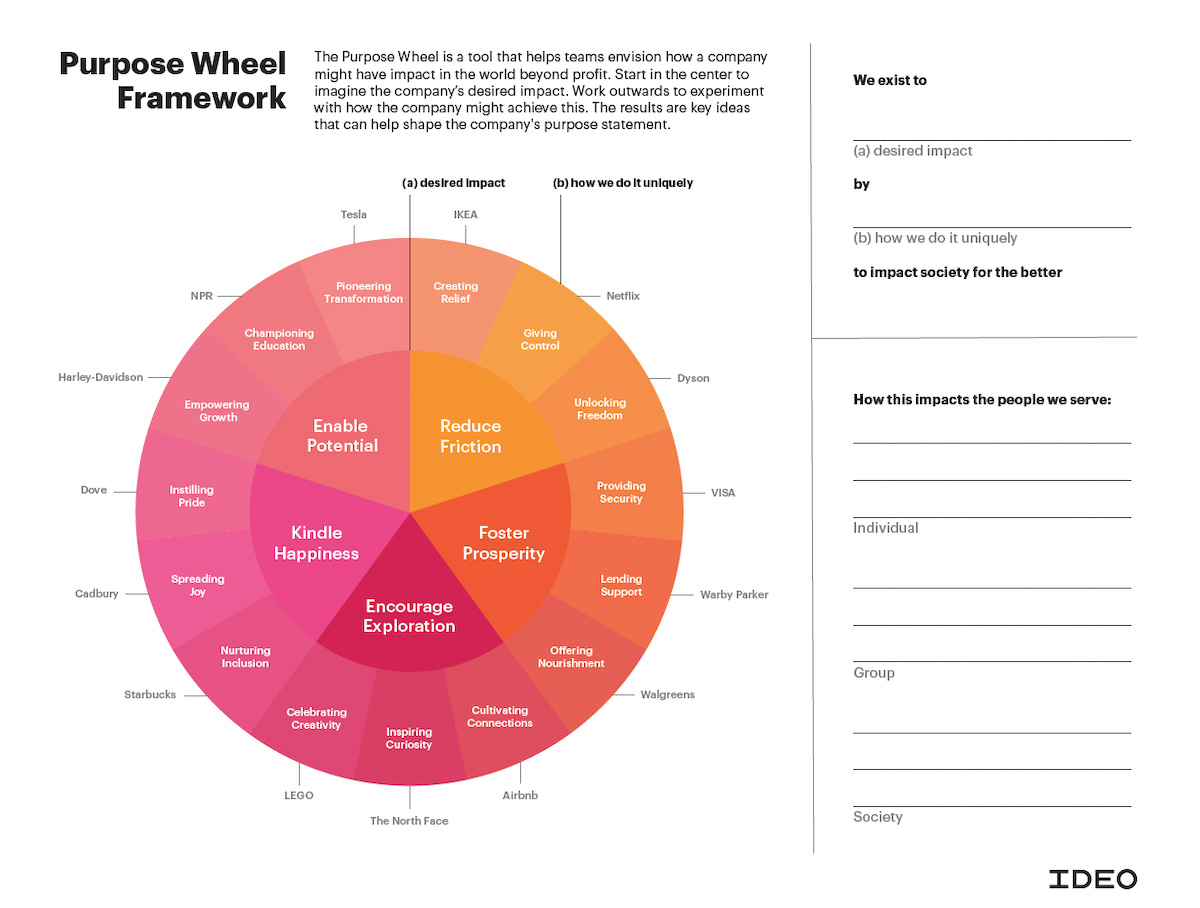
Inspired by Maslow’s hierarchy of needs and what motivates human satisfaction, we created a purpose framework called the Purpose Wheel. (Spoiler alert: We'll have a version of the wheel for you to download at the bottom of this post.) The idea is that groups of people working together—both large and small organizations, as well as teams and individuals—can find a sense of purpose if they’re able to first imagine various ways they might have impact on the world.
The Purpose Wheel helps the designers who are leading the way take the first step. It’s a tool to encourage generative conversations about future goals, and ultimately create a foundation that the organization’s leadership can align on before sitting down to write out the statement that answers “the why.”
Just like building a house starts with the scaffolding, the Purpose Wheel helps you engineer the intent behind the purpose statement before you start crafting the words. Though the original wheel was used in a corporate setting, these four steps will set you up for success in using it no matter how big or small your group is.
1. Start at the center
The center of the wheel suggests five ways a company or organization might have an impact on the world. Each slice answers the “Why do we exist beyond profit?” question in a different way.
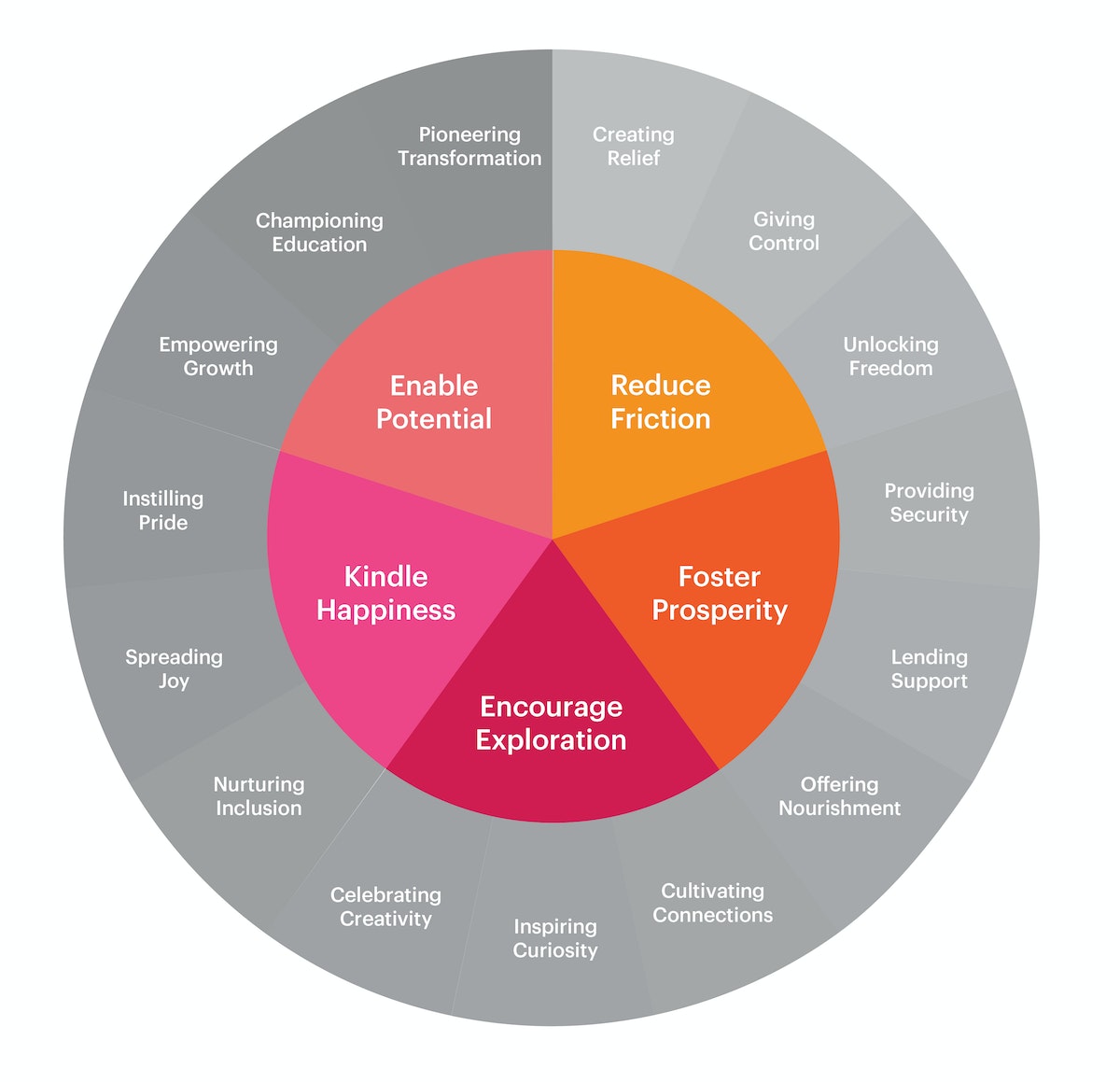
Think about the company you’re working with, and ask yourself: beyond profit, why does it exist? The first step is to consider your hunch and make a prediction. Where do you think your business will land?
- We exist to Enable Potential
Creating impact by inspiring greater possibilities. (Tesla, Nike) - We exist to Reduce Friction
Creating impact by simplifying and eliminating barriers. (Google, Spotify) - We exist to Foster Prosperity
Creating impact by supporting the success of others. (Pampers, Warby Parker) - We exist to Encourage Exploration
Creating impact by championing discovery. (Airbnb, Adobe) - We exist to Kindle Happiness
Creating impact by inciting joy. (Dove, Zappos)
2. Go full circle
The idea is not to select one reason for existence and insist everyone rally around it. Instead, the goal is to imagine the company in question having impact in each of the five ways, then have conversations about what that impact might look like today—and in the future—even if some of them feel like a tight fit or a challenge.
Here are some questions to ask at this stage:
- What actions, behaviors, or experiences would have to happen in order for that statement of impact to be true?
- How might this kind of impact inspire your culture?
- How might this kind of impact change the way you make business decisions?
The wheel works best when you try all five types of impact on for size and eliminate those that may not align with your business strategy or long-term vision.
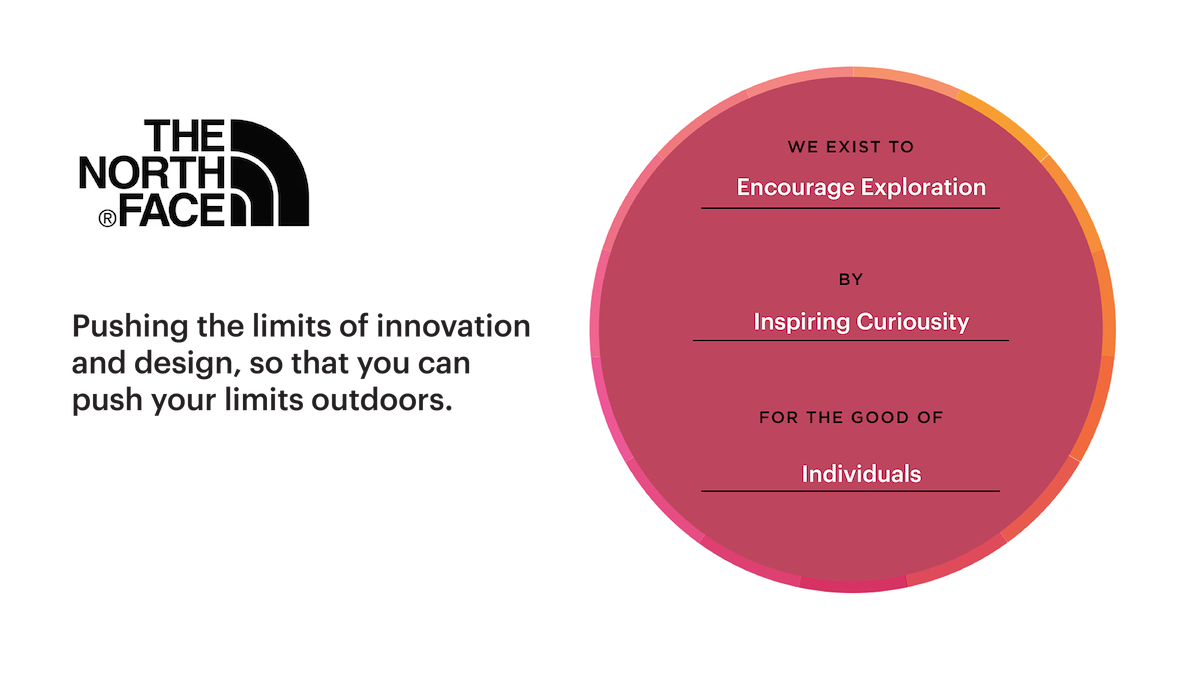
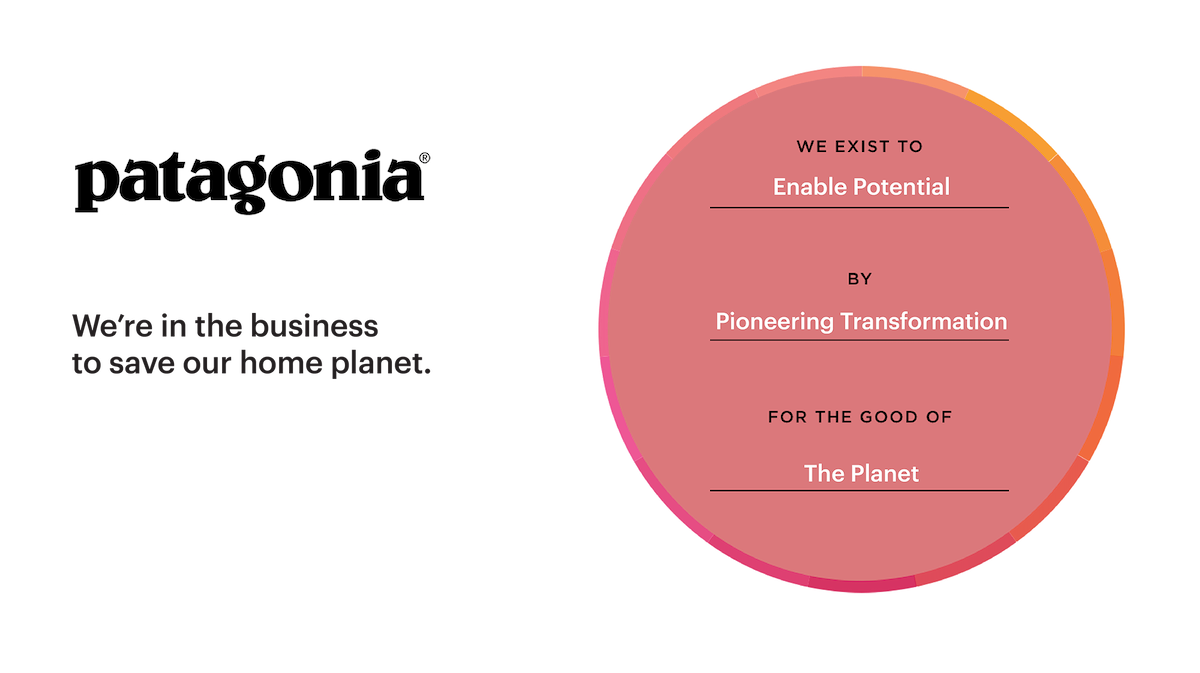
If this feels hard to nail down, we understand—purpose can be a fuzzy thing. For a tangible example, take purpose-led Patagonia and North Face, for instance. Since purpose is inextricably tied to brand, you can see how purpose can show up in the world very differently, even from two companies who might otherwise have a similar product offering.
Patagonia: We’re in the business to save our home planet.
The North Face: Pushing the limits of innovation and design, so that you can push your limits outdoors.
Looking back at the wheel, you can see how the engineering of Patagonia’s purpose statement could be enable potential, while The North Face could be encourage exploration.
3. Answer the "how" questions
Once you have alignment around the center wheel, you can move to the outer wheel. This is where you can move the conversation towards the “how”—how your business makes an impact. The outer wheel doesn’t offer a comprehensive list of hows, and there may not always be one clear answer.
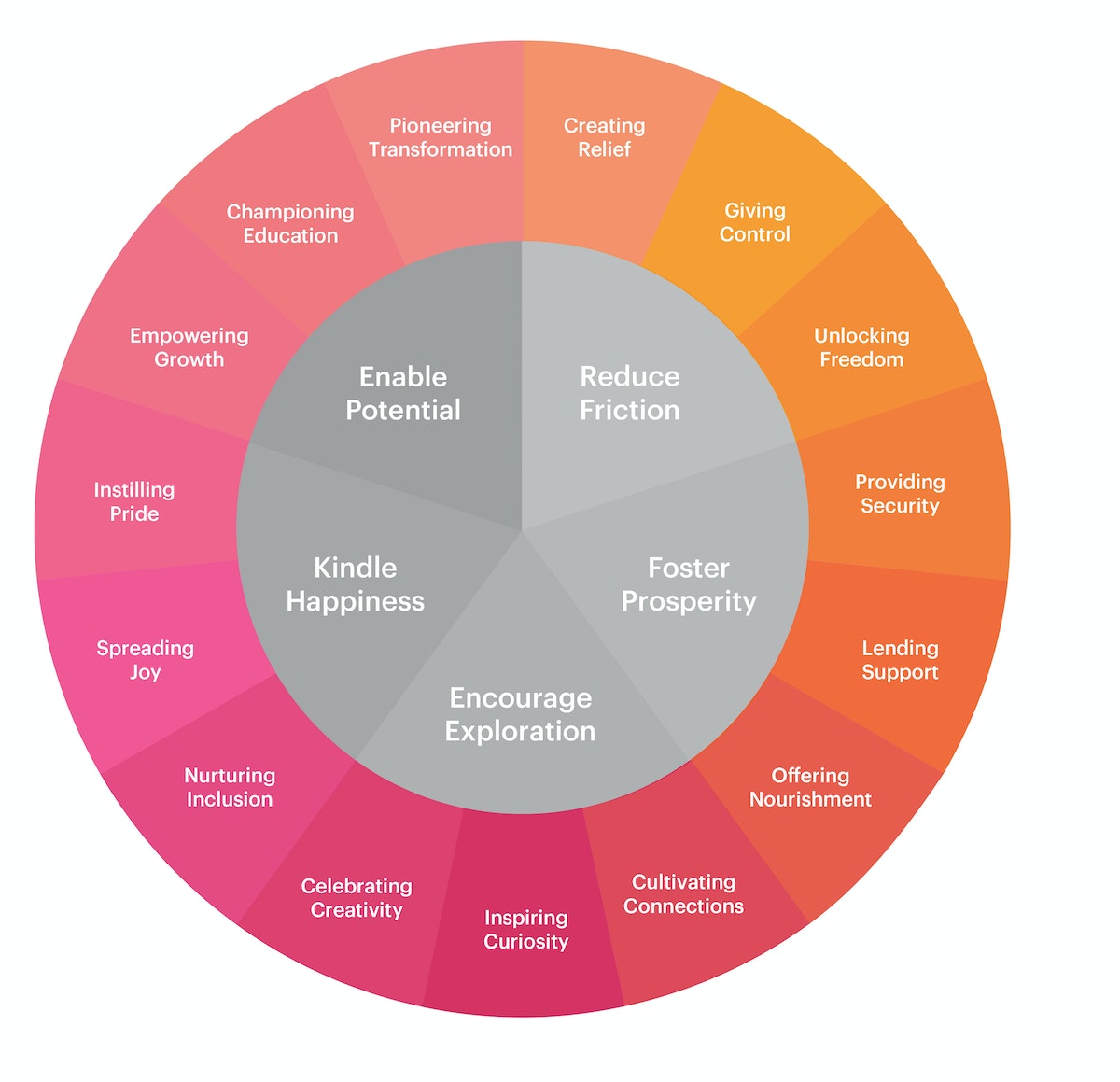
However, the outer wheel is there to push your imagination and force you to consider how your company might make an impact. With it, you continue to engineer your purpose statement: We exist to (inner wheel) through (outer wheel) to impact society for the better.
4. Pressure-test it
Start to apply this to your company by putting yourself in the shoes of employees who range from top to bottom, east to west. Have conversations and ask them: what would happen if you applied this purpose framework to your work today? What would this unlock for you as an employee?
Once you’ve dug into what purpose looks like for your organization from the various angles of the wheel, you’ll be armed with lots of rich conversations and hopefully a newfound agreement on the engineering. The rest of the work happens in the writing.
In other words, you can start playing with the poetry and build on bringing your organization’s purpose to life.
If you’ve ever tried to do anything with your extended family, you know getting a bunch of people to agree on anything is hard—where to go on vacation, what to eat, who to invite to come along. Businesses face the same kind of group challenges.
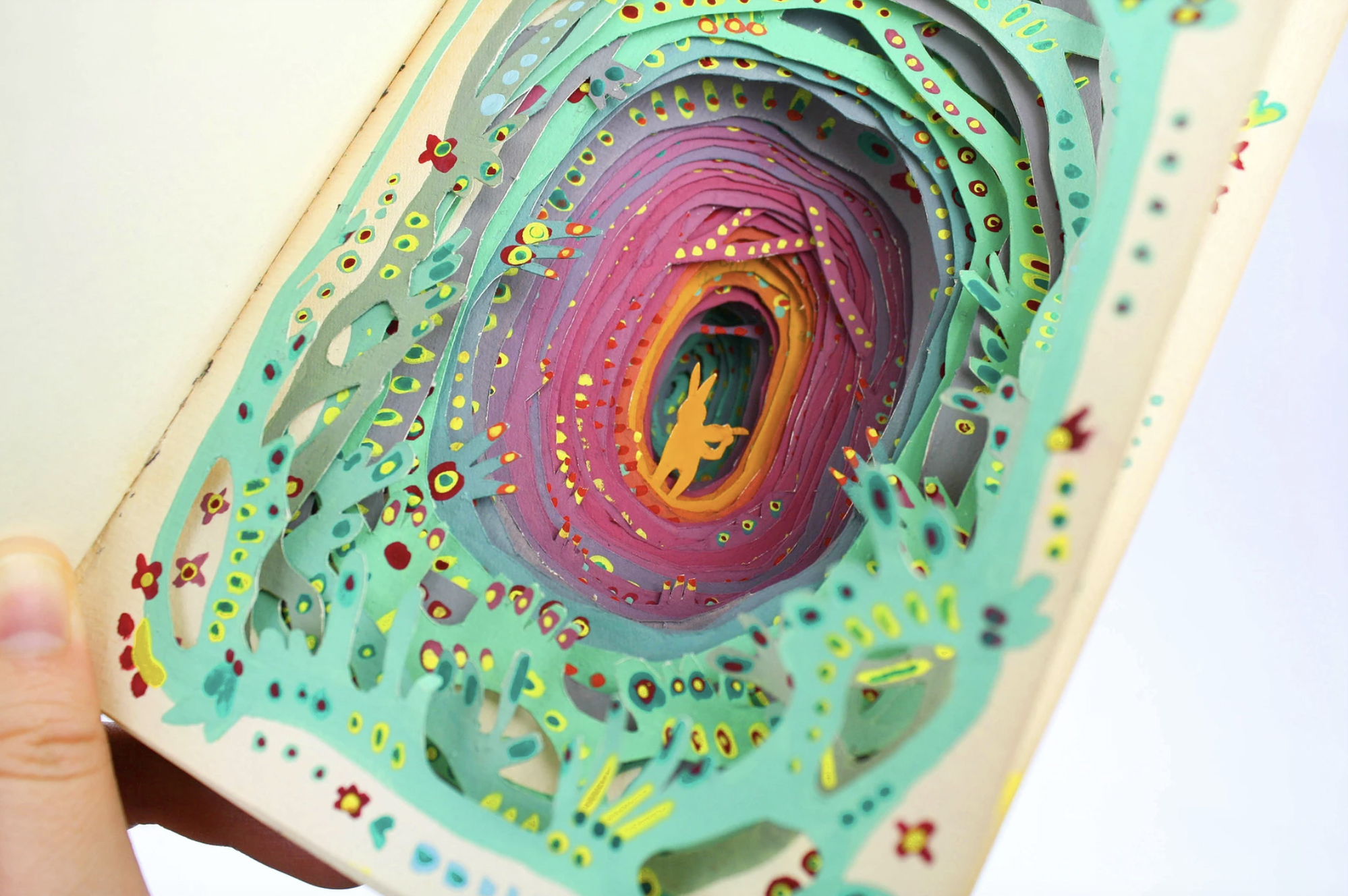
8 designers' tips for better visual storytelling
IDEO designers and OpenIDEO community members share their words to work by
The human brain processes images 60,000 times faster than text, and 90 percent of information transmitted to the brain is visual. As designers, when we explore the craft of storytelling, visual language may be one of the most important languages of them all.
Earlier this year, OpenIDEO, in partnership with the Hewlett Foundation, launched our first Challenge on visual language. We called on visual creators from a multitude of mediums to join us in answering the following question: “How might we reimagine a more compelling and relatable visual language for cybersecurity?” With the close of the Challenge and announcement of five Top Ideas, we’re highlighting several visual design tips to get you inspired for your next project.The thrill—and challenge—of design is forging into uncharted territory to help make the abstract tangible, the overwhelming exciting, and the technical accessible. With the topic of cybersecurity, we navigated the ambiguity of doing just that. After learning from IDEO designers and Challenge participants across disciplines about how they use visual language to translate complex topics, we’ve curated some tips and tricks to share with you. Learn from IDEOers Felicia, May, Allison, and Erika, plus Challenge participants Abraham, Abrahma, Claudio, and John.

Felicia Chiao, industrial designer, IDEO San Francisco
Felicia Chiao is a designer and illustrator based in San Francisco. By day, she works as an industrial designer for IDEO's food practice; at night she has been drawing in sketchbooks for over seven years, mostly for fun.
"When starting a composition, create an anchor first, then build around it. The anchor can be the focus of the piece (like an object/animal/person) or a setting (interior, beach, city, etc.) and the rest of the elements drawn in after should support it.
You don’t need to know what the whole drawing is going to look like when you start it. Start with what you know and build into it as you go. I work mostly with markers, which often limits my choice of colors for the color palette, but you can start with the colors you know you will use (a red apple, blue water, etc) and then looking at your palette, pick which other colors would go well with what you have.”
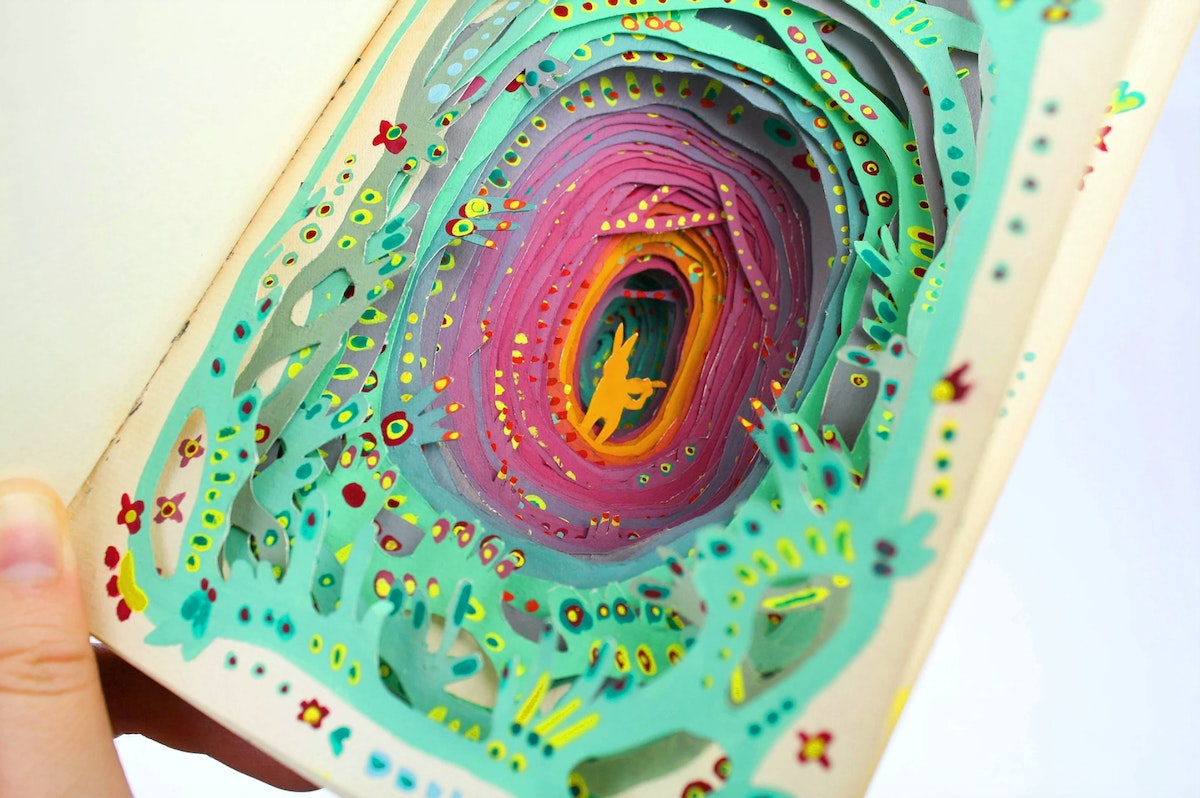
May Kodama, graphic designer, IDEO San Francisco
May is a true-crime-podcast-listening, plant caring, constantly eating, Japanese-American graphic designer at IDEO.
"Try limiting your color palette to 1-5 colors, and even limit the shades of those colors. Explore how simply you can communicate depth and perspective with the layering of the limited palette. You can start with monochrome in pure black and white before layering the additional complexity of color.
The thing that motivates me the most is experimentation and exploration. I find that as long as I'm constantly doing and learning something new, I stay inspired and excited about the work. However, don’t look at too much inspiration. Sometimes, I can get lost on the Pinterest train, clicking into link after link after link. Visual overload can crowd and push out your own ideas, so be careful to balance looking externally and looking internally. Always be hungry for discovery, but save space for your own creativity to flow.”
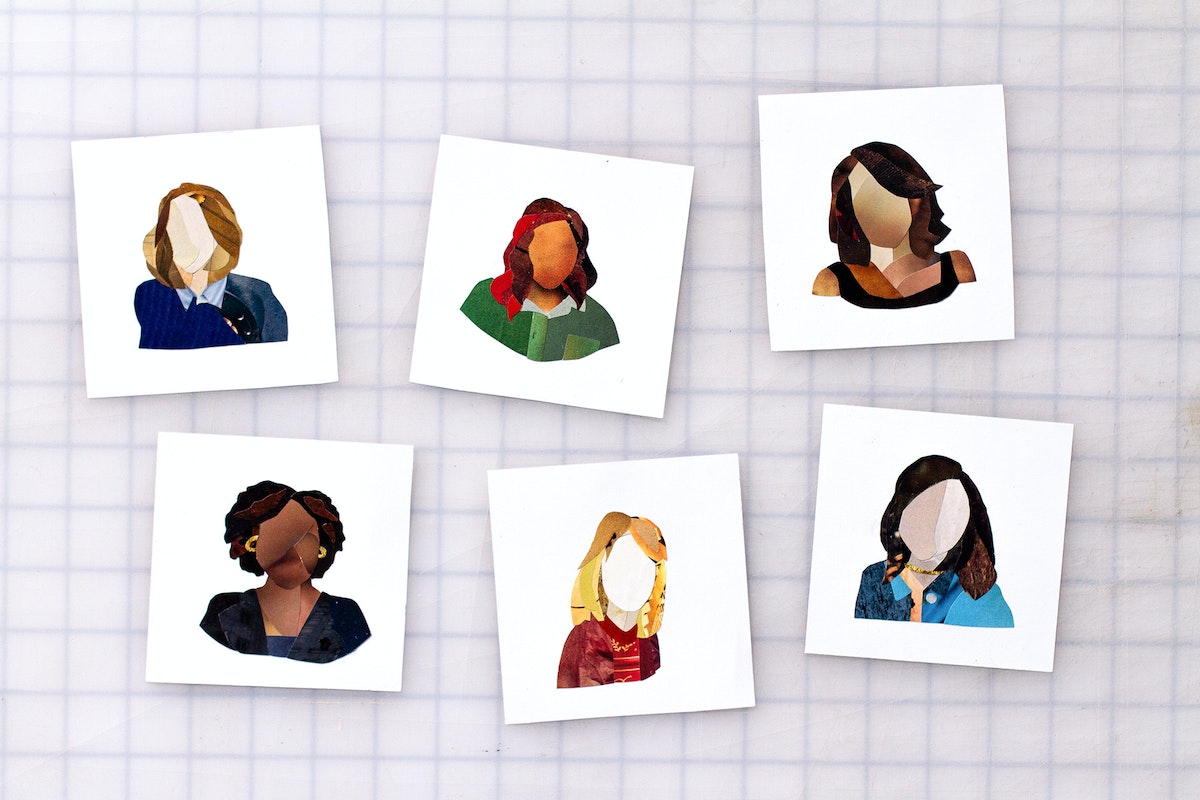
Allison Press, interaction designer, IDEO San Francisco
Allison is an interaction designer and strategist at IDEO on a mission to design for the public good. Whether it’s improving how public institutions serve their citizens, creating digital access to learning, or cultivating civic engagement, she is driven toward systems-level challenges.
"A balanced composition has three things—a large element (like a colored background), a medium element (like the focal point), and a small element (to add visual texture). If you want to take your creation to the next level, adding a little bit of texture in digital illustrations goes a long way.”
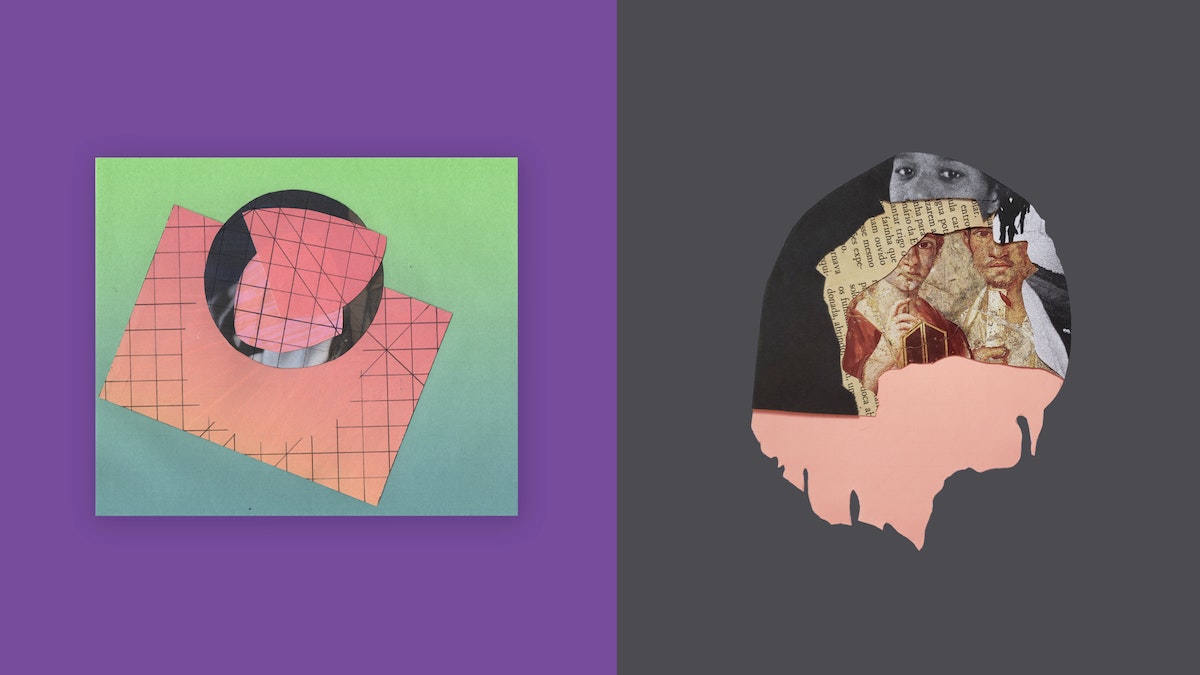
Erika Díaz Gómez, former OpenIDEO design fellow, Bógota, Colombia
Erika was born in Colombia and loves creating stories without words. She thinks that telenovelas are more interesting than science fiction.
"Create your own personal and technical rules; fail, win and be patient. Learn from yourself. Document, revisit and appreciate what you designed in the past. Explore your personal craft and celebrate your creator's identity. Make and repeat. Go analog, explore both your personal and craft's constraints, and don't let your commercial work take over. Art and side projects are the best teachers.”

Abraham Pena, Cybersecurity Visuals Challenge participant, Doral, Florida, USA
Abraham is a web designer and brand strategist dedicated to creating conceptual worlds for his clients through the use of metaphors and visual allegories.
- "Research a lot. The key to this process is to have clear concepts from the start. Then think of the final users: How would they understand what you want to say? Even a complex topic like cybersecurity can be translated into an easy-to-understand visual language, just by making the right connections with the visual references of the final user.
- Iterate like crazy. Your first idea is not always going to be the best.
- Interact with your community. Your peers and mentors can give you priceless feedback and they will let you see the design from an outside perspective."
Abrahma Tansini, Cybersecurity Visuals Challenge participant, Pamplona, Spain
Abrahma is a passionate logo and identity designer with experience developing brands, advising enterprises internationally. Passionate about illustration, he has worked as a freelance illustrator on children’s book illustrator and also loves to make caricatures and cartoons.
“The best way to create images for a technical project is to know the concepts and ideas, plus have a broad knowledge of the subject, which in this case was cybersecurity. The mentorship and guidance from cybersecurity experts that we were paired with for this Challenge was important and necessary. As designers and illustrators, we are not necessarily familiar with the technical concepts of cybersecurity, but we do have the tools to transmit complex concepts through the power of visual images.”

Claudio Rousselon, Cybersecurity Visuals Challenge participant, Cuernavaca, Mexico
Claudio is a freelance artist focused on muralism, illustration and printmaking. He’s a creative that has always explored the themes of technology, sci-fi, aerospace, and energy sciences.
“Draw a lot! Sketching and mindstorming, writing things down, and reading lots. I believe in the power of instinct and how it expands with creativity. Inspiration comes to me mostly during work—the more you dig into it, the more things pop up in your head. It works for me to expand the ideas to the wall or a BIG table: getting a visual perspective of the concept helps a lot. Change your process and it will change your outcome. Also, never forget to embrace accidents and mistakes. Not all of them are useful and some can go beyond repair, but you can learn a lot from them. Plus, the feeling of being amazed by unexpected results is great.”
John Hurley, Cybersecurity Visuals Challenge participant, Boston, MA, USA
John is a product designer and art director with experience in UI/UX and visual design, creating wireframes and visual concepts for a range of platforms. As a designer, he enjoys solving complex problems by using a holistic design process with a focus on multi-disciplinary collaboration and rapid iteration.
“Collaborate. Reach out to as many people as you can. Everything from subject matter experts to co-workers, friends, and anything in between. Our final submission was the result of gathering opinions and exploring our topic in ways that are simply impossible to accomplish on your own.”
If you’re interested in learning more, you can browse the final portfolios of 23 shortlisted visual creators from the Challenge on the OpenIDEO platform.
Every story begins with the foundation of language. Oftentimes, when we think about language, our minds default to written text and spoken conversation. But language is more than words—it’s any way of communicating across mediums that brings an idea, topic, or conversation to life.
5 ways to address climate change from your own kitchen
Try design-thinking the contents of your fridge
There’s still a tremendous amount of change that needs to happen at the corporate level, but we now see some big food companies responding with greater transparency in sourcing, cleaner labels, and more natural ingredients.
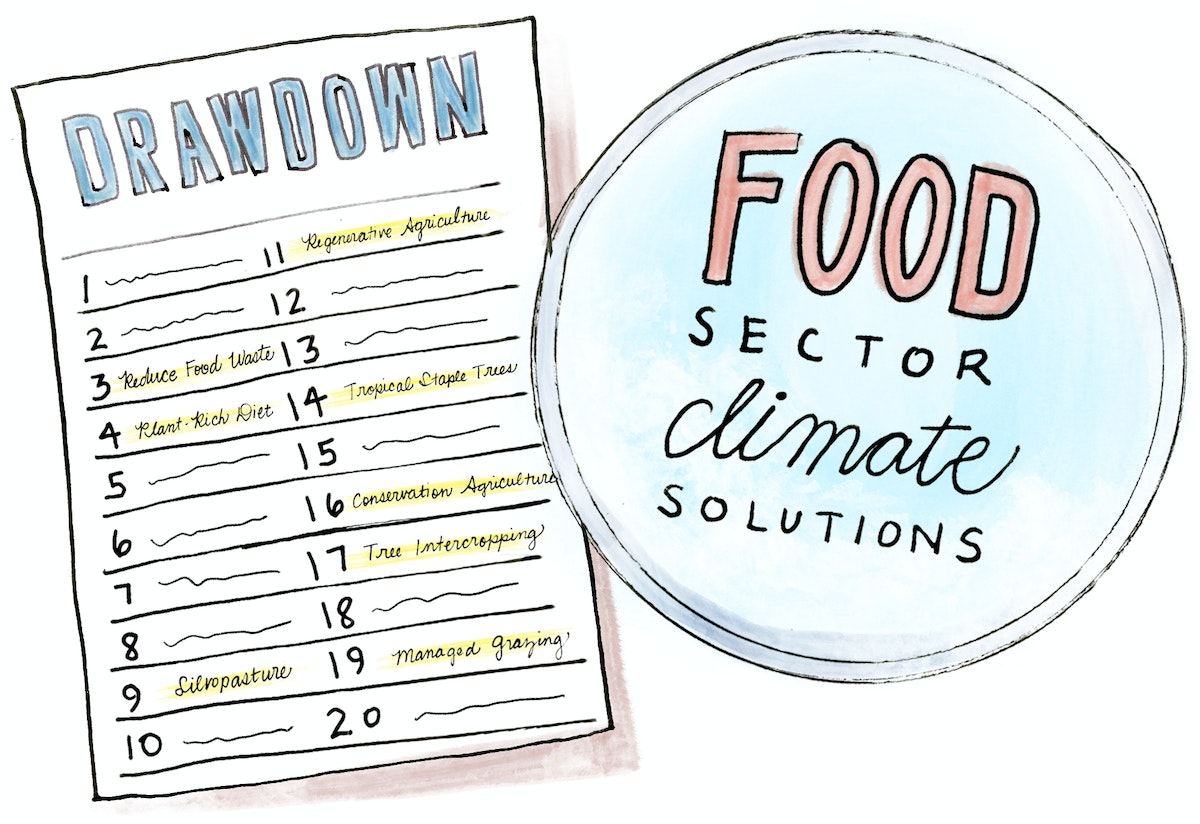
Project Drawdown, one of the most comprehensive and respected plans to reverse climate change, lists the top 100 solutions to reverse global warming. Eight of the top 20 are connected to the food system, including reducing food waste, adopting a plant-rich diet, and supporting regenerative agriculture.
For example, the food we waste is responsible for about eight percent of global emissions. And it turns out your own kitchen is ground zero for potential impact: US households account for 27 million tons of the 63 million tons of wasted food per year.
We use design thinking to help our clients run towards big challenges like food waste, but the same principles can make an impact in your own home. We can each prototype our way towards new practices in our kitchen. Food is, after all, one of the most forgiving materials, and even the most abject kitchen failure is usually edible.
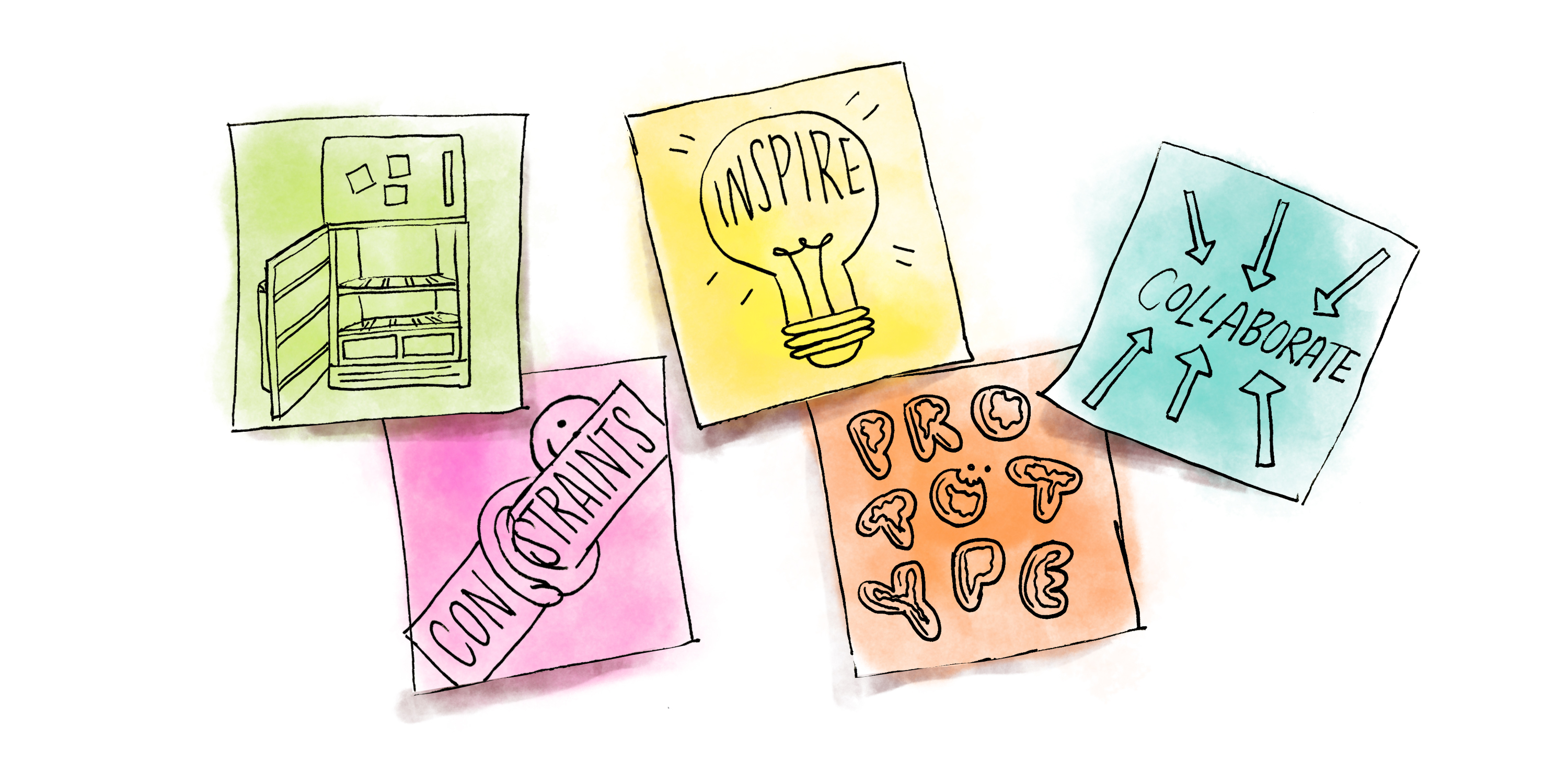
Here are five simple ways to design think your way towards addressing climate change in your own kitchen.

1. Adopt an experimental mindset
I bet you've heard some of this before, but it bears repeating: If each of us replaced a third of the beef we eat with pork, chicken or legumes, the World Resources Institute reports that our food-related emissions would fall by around 13 percent. But adopting a more flexitarian, plant-rich diet is a serious behavior shift, and not an easy one.
What if we reframed “never eating steak again” as “experimenting with eating mostly plants”? Trine Hahnemann, a Danish culinary writer, tells a story about her family’s generational transition to a plant-rich diet. Her grandma’s recipe for a pork dish called for meat as the main ingredient. Later in the 1970s, her mom adjusted the recipe so it used only half the pork. Today, Hahnemann cooks the same family dish but with no pork at all.
The design challenge is crafting plant-based options that are so satisfying and enticing that you don’t miss the meat. Like Hahnemann, we can experiment our way there. Start slowly by removing meat from traditional recipes. My meat-free pozole soup was an experiment, and though it lacked the oily richness of the pork version, it was a satisfyingly rich broth with hearty beans—another edible prototype.
2. Buy less
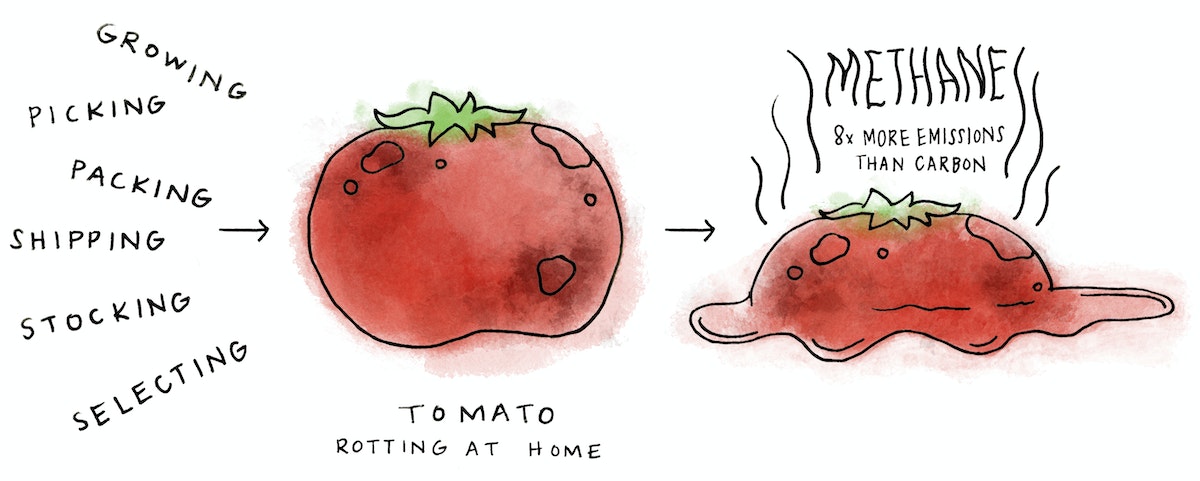
Not all food waste is created equal. That moldy tomato you never got around to eating used up more resources than a tomato left on the vine: Resources were used for it to be picked, packed, shipped to a grocery store, unpacked, stocked, selected, paid for, brought home, and now rotted. It takes two months for that tomato to decompose in the compost, during which time it releases methane into the atmosphere—which produces eight times more emissions than carbon.
When you head to the store or farmers market, simply bringing home less food will do wonders to cut down food waste. Embrace discomfort—a key design principle—by grabbing a smaller shopping basket to constrain your purchases, even though it might feel like you’re not buying enough.
Once you get home, use a Sharpie to date your food to remind yourself to enjoy it within a particular time frame. Place your “cook first” ingredients in the front so you’re more likely to reach for them.

3. Buy better
Design requires inspiration. To bring this to your food choices, make going to your local farmers market every week a habit. With each visit, you’ll get inspired by seasonal produce and begin to unlearn the mentality of having anything, anytime (and having it look perfect). Nature has constraints, and this is one of them.
Shopping at farmers markets also helps farmers and can promote sustainable soil practices, which is one of our only proven ways to sequester carbon. Not only is good farming beneficial for the soil, but it’s a bonus for your taste buds. Healthy soil helps farmers grow flavorful, nutrient-rich produce. Good flavor is often a proxy for good nutrients. If you buy an apple that was grown using regenerative agriculture techniques, you will taste the difference: It will be juicy and delicious, not to mention rich in nutrients. But an apple picked a year ago, shipped across the country or world, and kept in cold storage only offers you sugar and fiber—the nutrients died long ago. As Alice Waters put it, “You want aliveness in your food.”
4. Embrace constraints
Design constraints in the kitchen range from your cooking skills, to your work space, to your available equipment, to your budget, to the ingredients themselves. Whatever those constraints are, embrace them. Most chefs say quality salt, quality olive oil, and heat (whether a hot plate or six burner) are the only critical elements.
Culinary confidence in the kitchen—feeling like you have the skills to make something worth eating—can help you boldly embrace constraints. The good news is that culinary confidence is a muscle that grows stronger as you use it.
To build your culinary confidence, read Tamar Adler’s book, The Everlasting Meal. It’s made me give up on exactitude in the kitchen, and instead take delight in using a recipe as a jumping off point and improvising by cooking with what’s on hand. Her simple approaches to dealing with food that might otherwise go to waste—like smashing leftover garlicky beans on toast for an easy dinner—help us look at our fridges with a new sense of frugality and hope.
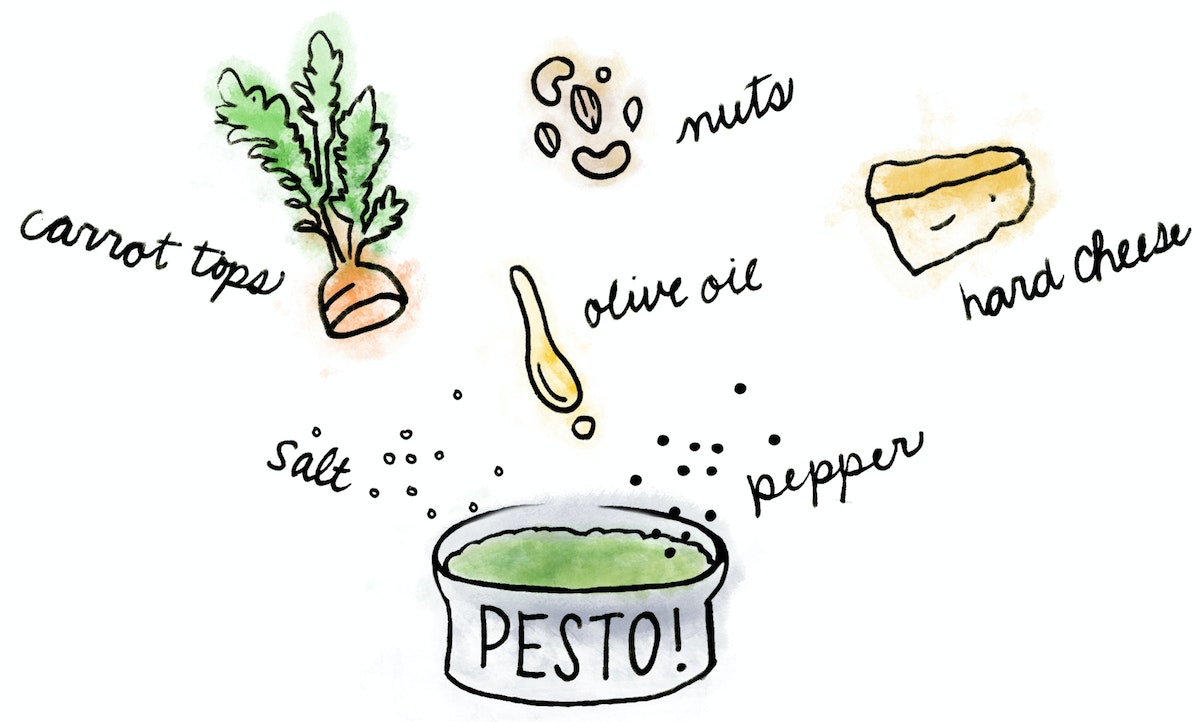
Try making pesto out of leafy greens (even carrot tops), nuts, and hard cheese you have around, rather than feeling like it has to be basil, pine nuts, and parm. There are no rules, just constraints that make you more creative.

5. Collaborate
At the United Nations Climate Summit last month, 16-year-old Greta Thunberg told a group of world leaders, “The world is waking up, and change is coming whether you like it or not.”
We’ve reached a tipping point, and change is coming. With your friends and family, let’s make time to cook and eat together. Let’s share a meal and talk about how to have a better life with less waste and more joy. And if there are leftovers, send your guests home with them, date them in your fridge, or use them to make soup tomorrow.
There have been some exciting changes in the food industry over the last decade. Our purchasing choices collectively forced food brands to rethink their offers and evolve their practices.

3 tips for exploring taboo topics through play
How to design playful moments to break the ice on sex, death, and everything else
Embracing conversations about taboo topics can help deepen understanding and empathy, and empower people to make better decisions about their health, finances, and careers. And since many taboos are related to serious global epidemics, like homelessness and segregation, talking about these issues is the first step toward taking action—and even affecting real change.
Thankfully, surfacing taboo topics doesn’t have to be as awkward or scary as it might seem.
Did you join millions of people to dump an ice bucket on your head to raise awareness for ALS, and suddenly find yourself discussing (and maybe even donating on behalf of) a disease you didn’t have a personal connection to? What if you walked into middle school health class, and your teacher was wearing tampon earrings or giving out anatomical cupcakes that made you laugh and made it easier to talk about periods?
Play has the power to translate fear and awkwardness into curiosity, with humor, storytelling, games, and interactive experiences that can help people feel comfortable (and even enjoy) diving into a tricky topic.
Here are three ways to start a conversation about anything—even the most taboo topics—through playful design.
1. Create an immersive experience
Death is terrifying. “Reimagine End of Life,” a city-wide exploration of life and death with creative workshops, performances, comedy shows, and reflections, makes it easier to wrap your head around. Last year in San Francisco, I joined 10 strangers in an interactive theatre experience inspired by the question, “What if facing our death allowed us to live more fully?”

Through virtual reality simulations, eulogy readings, and a theatrical visit to purgatory (picture white curtains and costumed actors), the event immersed our group in a new world and guided us to face death together, one step at a time. A year later, I still find myself reflecting on this experience and sharing my hopes and fears about dying.
At your next event, try incorporating skits, role play, costumes, and themed decorations to fully immerse your group in the topic you’re discussing. These interactive elements can create a safe environment for people to really open up.
2. Meet people where they play
Sex and contraception can be intimidating and even embarrassing topics to discuss in many cultures, making it difficult for health experts to dispel myths and support youth as they make decisions about their bodies. But dance contests, magazines, nail salons, and fashion shows? Those teens can get behind.

In Zambia and Kenya, IDEO.org has brought playful experiences to life through The Diva Centers as well as through the upbeat Future Fab brand, which give teens and staff a space to connect and talk about anything—from glittery nails to IUDs. The IDEO.org team has also designed aspirational characters known as the Divine Divas to give the girls an opportunity to talk about their goals for the future—and how contraceptives might fit into them.
If you’re looking to tackle a taboo topic with a specific group of people, consider their natural gathering places. Do they go rock-climbing, cook, or hike? By meeting people where they feel most comfortable, you can make difficult conversations easier to navigate.
3. Forgo words altogether
For topics so complex that we don’t know where to begin—how about by translating words into motion? Creative Tensions is a “conversation that moves” developed by IDEO and the Sundance Institute Theatre Program, where participants reveal where they stand on an issue by where they physically stand and move in the room along a spectrum between two options. The exercise can help people explore polarizing topics by asking, for example, “What inhibits our sexual lives more—the government and society, or ourselves?” Participants can either share their perspective aloud in a facilitated conversation or express themselves silently through their movement alone. It’s a non-verbal way to start meaningful explorations of taboo topics that everyone can be a part of, simply by moving their feet.

To do something similar, try asking people to express their thoughts without words—through dance, music, drawing, photography, or building with LEGOs. These creative exercises can lower the barrier to entry and prompt even the most reticent to participate, and eventually, start talking.
With thoughtful design, breaking the ice on complex topics can be more playful than painful. Between comic books and board games about menstruation, superhero-themed summer camps about social issues, and ballot education parties, there are countless ways to help people navigate controversial topics.
What methods do you use to help get people talking? Send your ideas so we can work together to unlock meaningful conversations around the causes we care most about.
Cancer, sex, money, birth control, poverty—just a handful of topics on a list many of us might call Things I Want to Bring Up But Don’t Know How. But shying away from stigma keeps people from talking about the issues that really matter.

Lindsey Turner
I’m passionate about building brands, products, and experiences that help organizations show up with meaning and momentum.
I help organizations cut through complexity by shaping how they show up, through brand strategy, identity, and storytelling.
Working at the intersection of brand and business, I bring an editorial eye and a bias toward making—turning ideas into tangible experiences that people can understand, trust, and believe in.
My work spans government, healthcare, financial services, media, and consumer goods, from launching Gen Z-focused ventures to building innovation labs and reimagining legacy brands. I relish moments of ambiguity and enjoy translating across teams, perspectives, and priorities to move ideas forward.
I started my career in editorial and digital design, shaping cross-platform experiences and identity systems in publishing and agency environments. That foundation still shapes how I work today: I’m detail-oriented, collaborative, and overreliant on the Oxford comma. I hold a BFA in Visual Communication from the School of the Art Institute of Chicago.

Rachel Young
My work helps organizations see who their products aren't working for—and build the will and the tools to do something about it
For 25 years, I've asked the same question: Who does this design exclude—and what are we going to do about it?
My work spans human-centered strategy, inclusive design, and qualitative research, with clients ranging from Microsoft, Google, and Verizon to the National Science Foundation, and San Francisco Unified School District.
Before IDEO, I taught elementary school in East Palo Alto and spent a decade doing design work with social service organizations—where I learned firsthand what it costs people when systems are built without them in mind.
I am currently writing User Error, a nonfiction book about digital access and the design decisions behind it. I live in Oakland, California.

Brian Pelsoh
I lead with craft, ensuring our work is creatively excellent: rooted in deep human insight and imagination, while also grounded in the realities of business and technology.
My expertise spans brand, communication, and product design across tech, education, the arts, and social impact.
I believe great work demands both high-level vision and obsessive attention to detail, and only happens through collaboration.
I bring an inclusive, hands-on approach and a deep understanding of business, which enables me to consistently deliver excellence while always asking why.
Before joining IDEO, I worked at the brand firms Pentagram and VSA Partners. I began my career as a designer, leading teams at the School of the Art Institute of Chicago and the Milwaukee Art Museum. I hold an MFA in graphic design from Maryland Institute College of Art and a BFA in communication design from the Milwaukee Institute of Art & Design, and have taught at some of the best design schools in the US.

Tony Wong
I am responsible for IDEO’s long-term success in China and working with clients to use design as a tool to enable growth.
I am responsible for IDEO’s long-term success in China and working with clients to use design as a tool to enable growth. Specifically, I have helped Chinese companies design holistic brand solutions through the development of their products, communication, services, and innovation teams, and I have helped multinationals expand their presence and influence in China.
I advise global leaders on developing China-led innovation and capabilities.
In over 15 years in IDEO Shanghai, I have worked on projects that use design to elevate the quality of the experience of healthcare products and services, streamline processes that increase productivity, create spaces and programs that promote and enable inclusive communities, and build next generation mobility solutions that are planet-positive.
Before joining IDEO, I worked at Philips Electronics and the Electrolux Group in Italy, the Netherlands, and Singapore on a number of breakthrough commercial products. I am a member of the Young President Organization in Shanghai.

Building a personal AI for the messiness of life: Sida Li
Most AI products today are built for work—a space with clear problems and established systems. One founder noticed a gap: personal life is messier, harder to systematize, and mostly left behind by the AI boom. So she built Cue, a personal AI that lives inside iMessage and group chats, to go where the other tools haven't.
In this episode, Becca Carroll, IDEO's Chief Strategy Officer, talks with Sida Li, co-founder and CEO of Shared Context Lab, about staying anchored to a human need while the technology around her keeps changing shape, why she treats her business model with the same rigor she'd bring to a product, and what it feels like to build a company at this particular, disorienting moment in AI.
The conversation also gets into how Sida makes design decisions: the language Cue uses to describe itself, the tradeoffs behind building inside iMessage instead of a new app, and a real story about a business idea that didn’t pan out.
This is the second in a two-part series profiling founders from IDEO's Startups-in-Residence program. The first conversation is with Johannes Seemann, founder of Sooner, on designing GenAI for the emotional side of money.

Designing GenAI for the emotional side of money: Johannes Seemann
Most personal financial tools are built to run the numbers and optimize towards a budget. While that works for some, most people experience money as a lived relationship that does not neatly fit into a spreadsheet. Johannes Seemann and Becca Carroll discuss why money is emotional before it is mathematical, and what a human-centered approach to building a generative AI financial product looks like in practice.

The curious leader's edge in uncertainty: Scott Shigeoka
Mina Seetharaman talks with Scott Shigeoka, author of Seek and Head of Curiosity Cultivation at the Eames Institute, about what distinguishes genuinely curious leadership from performative curiosity, how power dynamics shape curiosity, and why practicing curiosity can restore energy rather than drain it.

How constraints make us more creative: David Epstein
Mina Seetharaman talks with David Epstein, author of Inside the Box and Range, about why total freedom often produces average work, how leaders can design useful limits on purpose, and what organizations such as General Magic and Pixar reveal about the relationship between boundaries and creativity.
Looks like you might be in search of something very specific?
Or reset the filters above and try another angle.
Here’s some random inspiration

Podcasts about creative leadership

Articles about the power of prototyping
