
.svg)


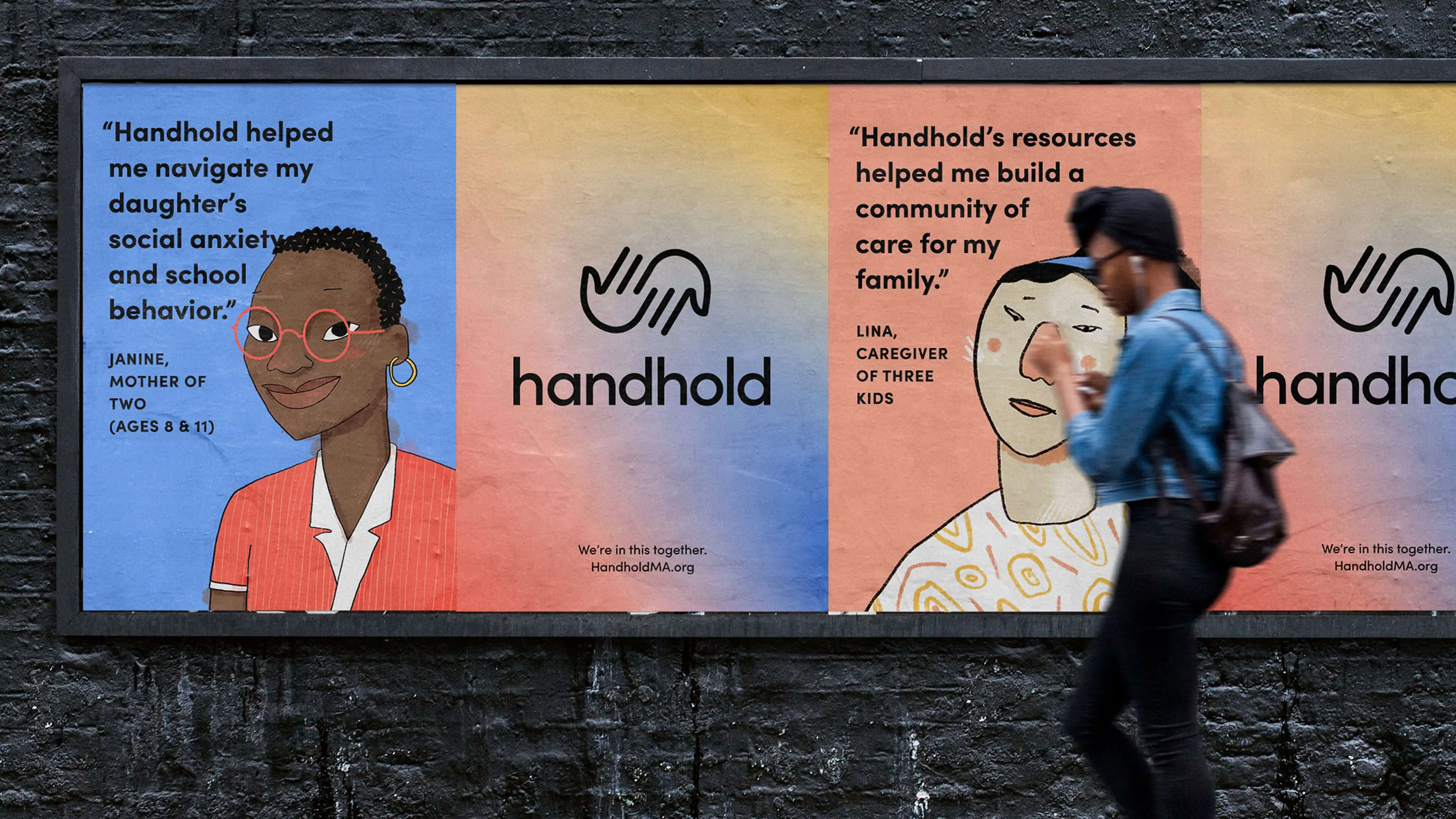

A helping hand
Massachusetts puts families at the heart of mental health.
The urgency of attending to our children’s mental health cannot be overstated.
Concern about their well-being was already on the rise in the decade prior to the pandemic. Alongside social inequity, the COVID era has seen soaring rates of depression, anxiety, trauma, loneliness, and suicidal thoughts. Knowing that mental health is influenced by numerous systemic factors, we met with families of all income levels and heard from practitioners throughout Massachusetts. In some communities, mental health is candidly discussed, in others it remains a taboo subject. Through these conversations, we learned that mental health requires both individuals and their families to be educated, supported, and empowered.
HandholdMA.org helps families find services that work for them and gives them easy access to information on a range of mental health topics. It allows parents to learn from and support one another as they navigate the landscape of mental health together. We took special care to make resources feel approachable for those in communities of color, and curated new resources for everyone from preschoolers to teens—because mental health challenges do not discriminate.
In 2020, a coalition of the nation’s leading experts in pediatric health issued an urgent warning that the mental health crisis among children had become a national emergency.
The percentage of emergency department visits for mental health crises rose by 24% for children between the ages of 5 and 11, and 31% for those 12 to 17, compared with 2019.
87,000
site visits to to HandholdMA.org since launch
223,000
people reached in bilingual social media campaign
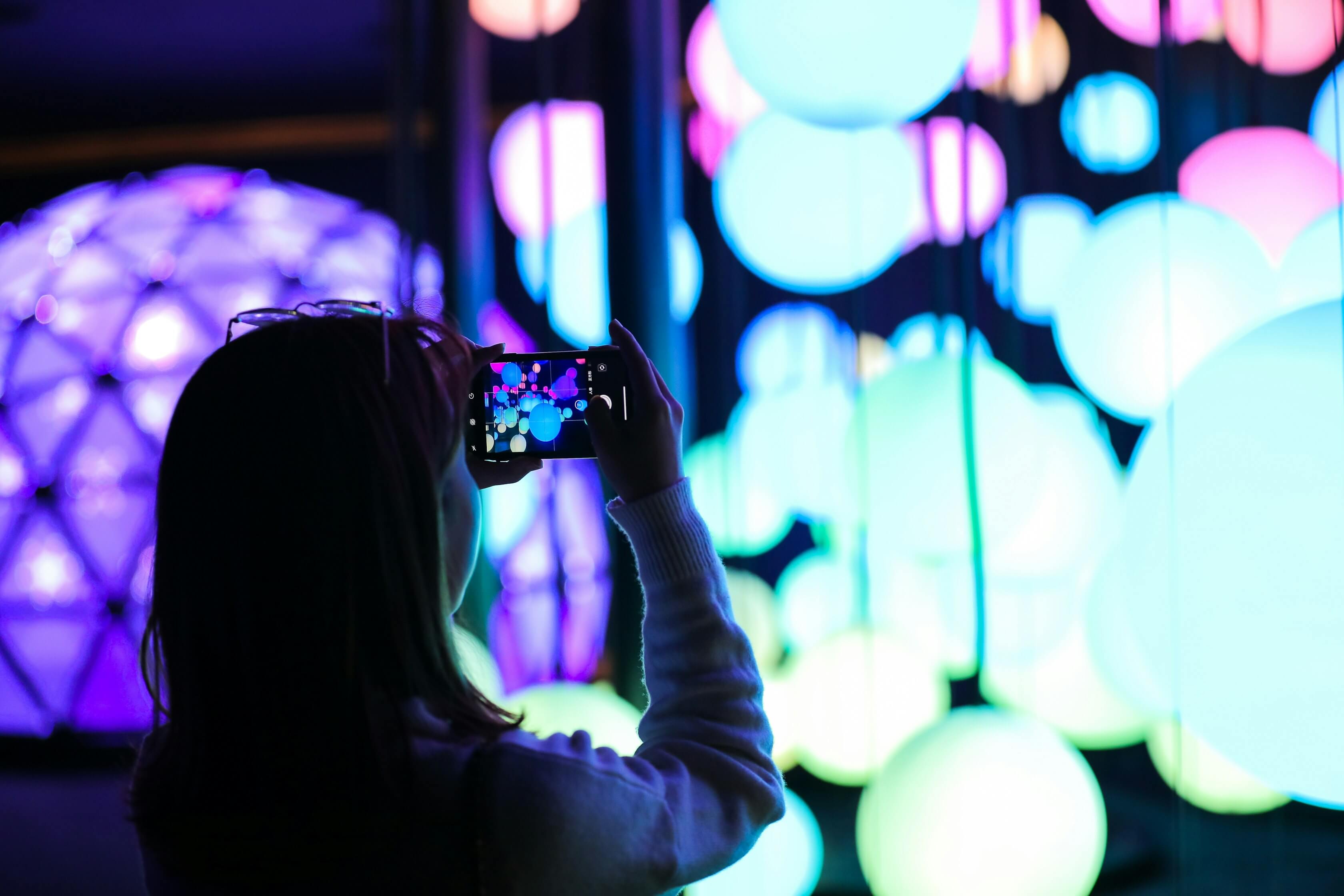
Evolving to meet young consumers
Accelerating vivo’s transformation journey to connect with China’s young consumer.
To help shift vivo’s thinking from a focus on products to a focus on brand-building, IDEO set out to help the company understand how young consumers experience fun—a core tenet of the vivo brand. The new concept store needed to convey joy and fun in a meaningful and memorable way. The project was about more than just designing the space; it was also about piloting into vivo’s future brand systems.
To kick off the project, the IDEO team conducted user research in four different cities in China, then shared the stories of young Chinese consumers with the vivo team. Their interviews revealed that young people value experiences that enrich their lives and create a feeling of positive personal transformation. They seek opportunities to discover new experiences, express themselves in different ways, expand and deepen their social connections, and build knowledge and skills. By leaning on this definition of “enjoyment,” IDEO helped vivo identify the value proposition of the concept store, helping consumers express themselves in new and different ways. The store would allow every visitor to see something unique and find a fresh perspective.
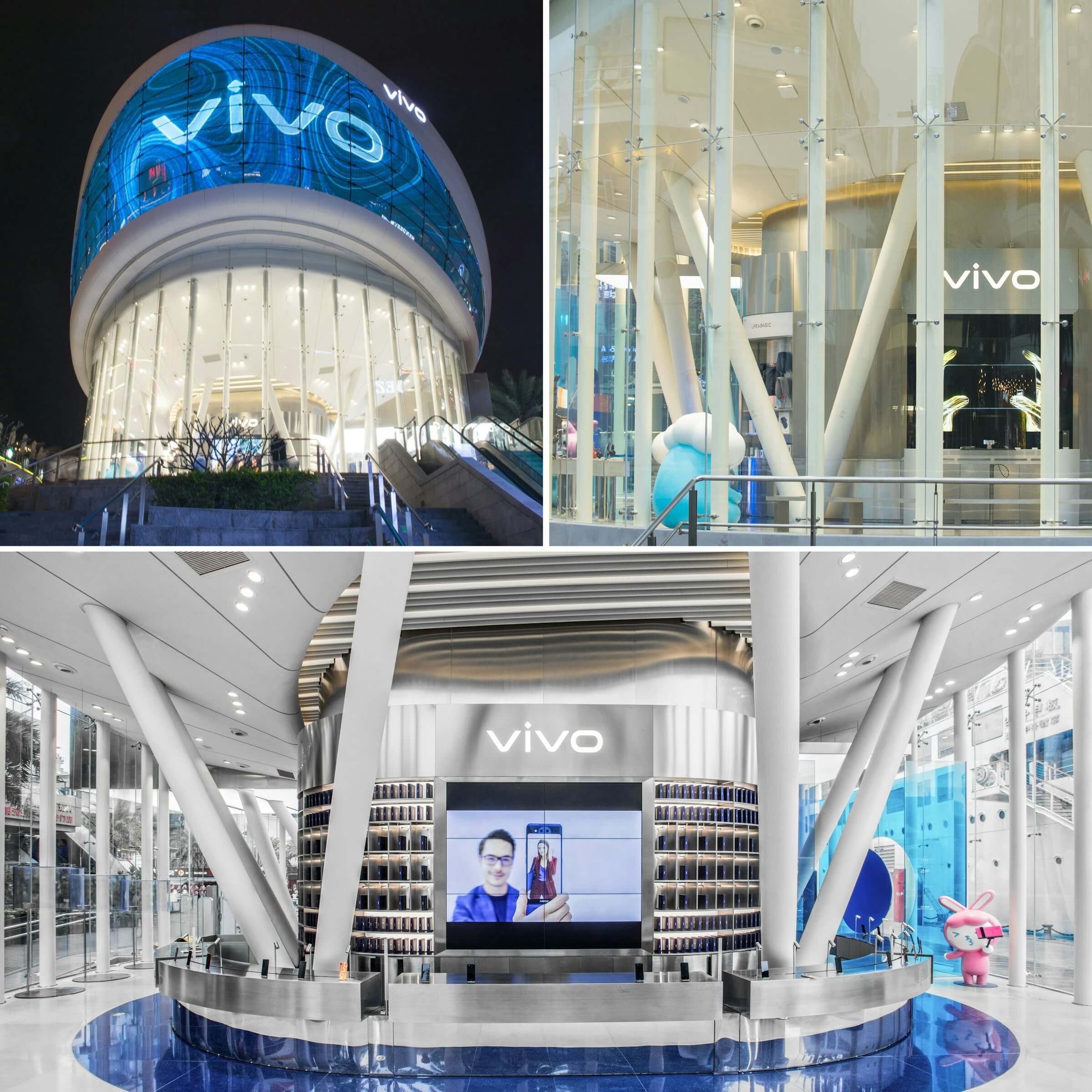
The vivo team took that value proposition into a design brief and later built out the space and interactive experiences. The second floor of the store is dedicated entirely to interactive experiences using photo booths, sound recording, and lighting technology, designed to provide consumers with the kind of enjoyment they seek. vivo launched the concept store in Shenzhen on March 22, 2019, marking an important milestone in vivo’s transformation from a smartphone maker to a consumer brand.
China consumes roughly 30% of the world’s smartphones—which presents a tremendous market opportunity for brands looking to capture young consumers’ loyalty.
Top 1
in China's smartphone market, topping both shipments (sale-in) and retail sales (sale-out), in the first half of 2024
260M active users
within two years of vivo Lab's official opening, with 70% of them young users
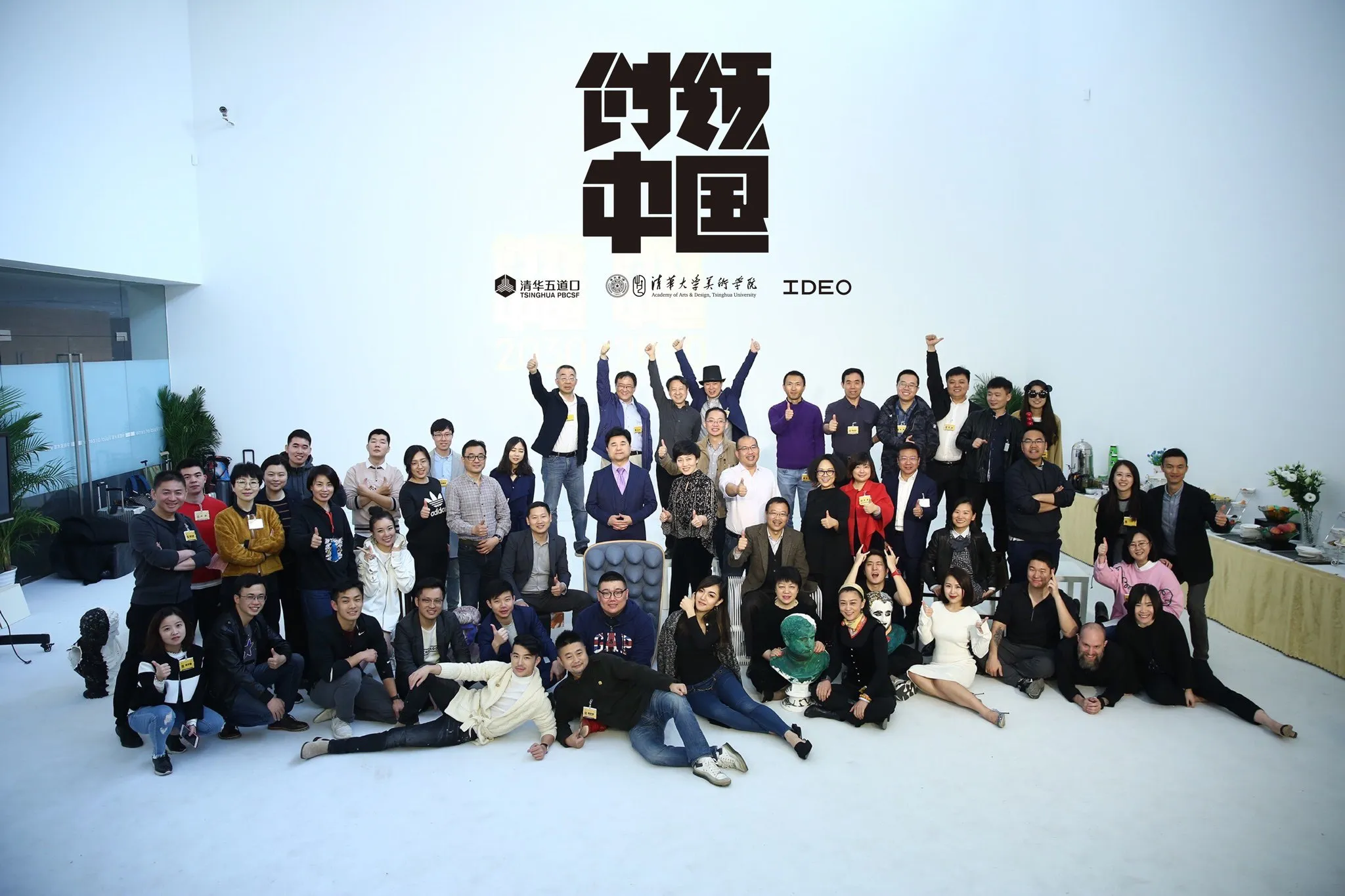
Transformation through creative leadership
Tsinghua University launches China’s first leadership course focused on design thinking.
The program Tsinghua and IDEO created together consisted of six modules focused on creative leadership: Rediscover Design, Build Design as a Core Competency, Creating the Conditions for Creativity, The Financial Levers for Innovation, Designing for the Fourth Industrial Revolution, and Leading for Tomorrow. 73 Chinese and foreign experts helped teach the modules, including former Forbidden City Palace Museum director Shan Jixiang, the father of Japanese industrial design, Masayuki Kurokawa, and Jake Knapp, author of the book Sprint.
The program’s first cohort included more than 30 entrepreneurs from 20 different industries across nine cities. Participants completed the courses throughout the year, taking full advantage of holistic, interactive teaching and the opportunity to share their own practical experiences. Their feedback consistently demonstrated how the course had given them fresh approaches to problems their companies faced, whether improving internal communication or helping them see the clients they serve from a new perspective.
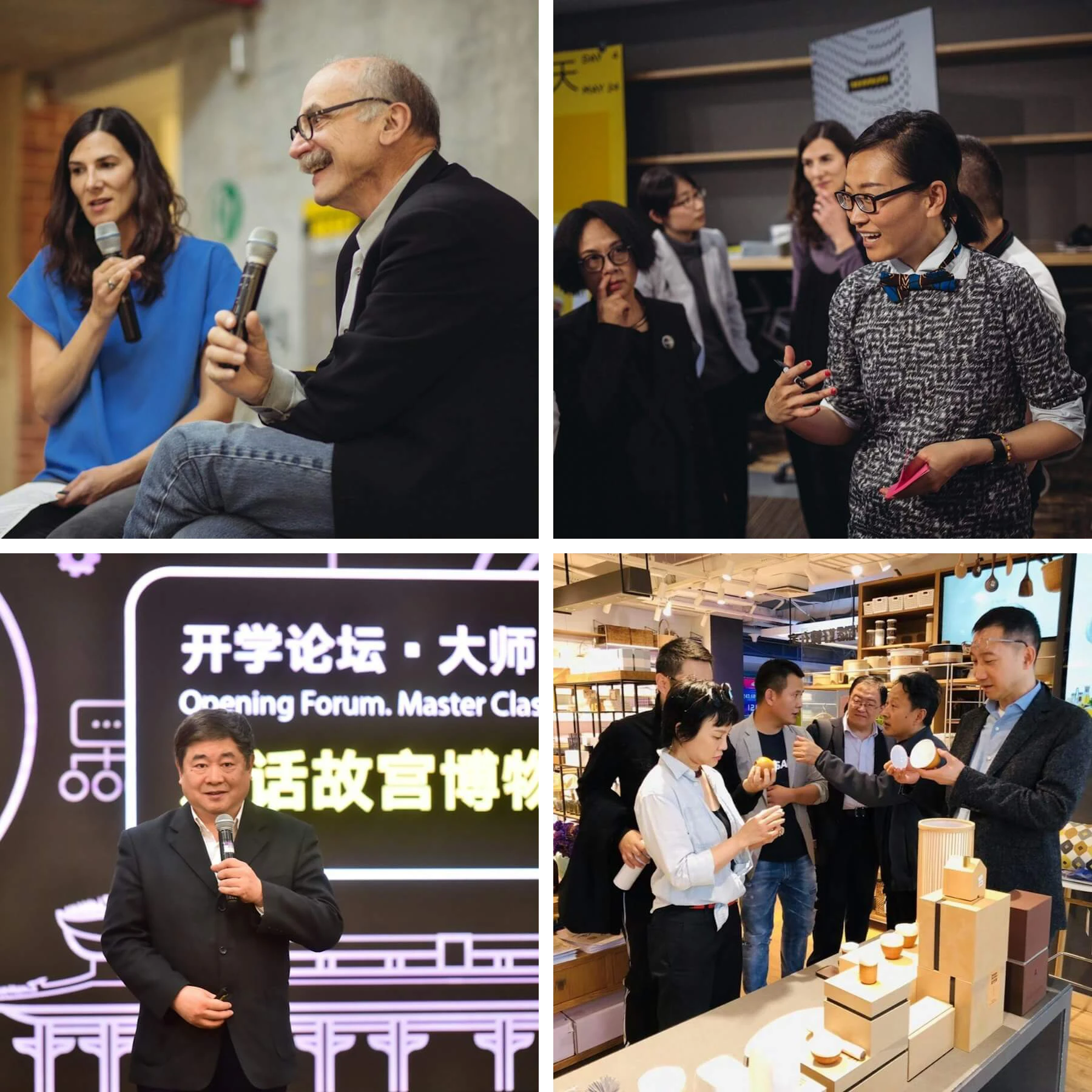
Liu Feng, the founder of a fast growing tourism development company, was particularly inspired by the Creating the Conditions for Creativity module’s six pillars of corporate transformation concept. Using these pillars, he not only refined the mission and value of his company, but also launched a series of measures to improve all aspects of its operations, from customer service to annual company gatherings. With a newly empowered team, he significantly increased the agility of the organization.
Ting Zhihong, the chairwoman of China’s leading logistics technology company, managed to double its profit during the course. She said her biggest takeaway from the course was how important it is to empower the team. Her company has now set up several platforms that give employees more room to experiment, create, and take part in frontline decision-making, bringing them closer to the company’s management.
Hu Chao, founder and CEO of China’s largest e-commerce platform for childcare goods, found that while other executive courses simply teach knowledge, Lead a Creative China taught him the importance of placing people at the center of what his company is doing.
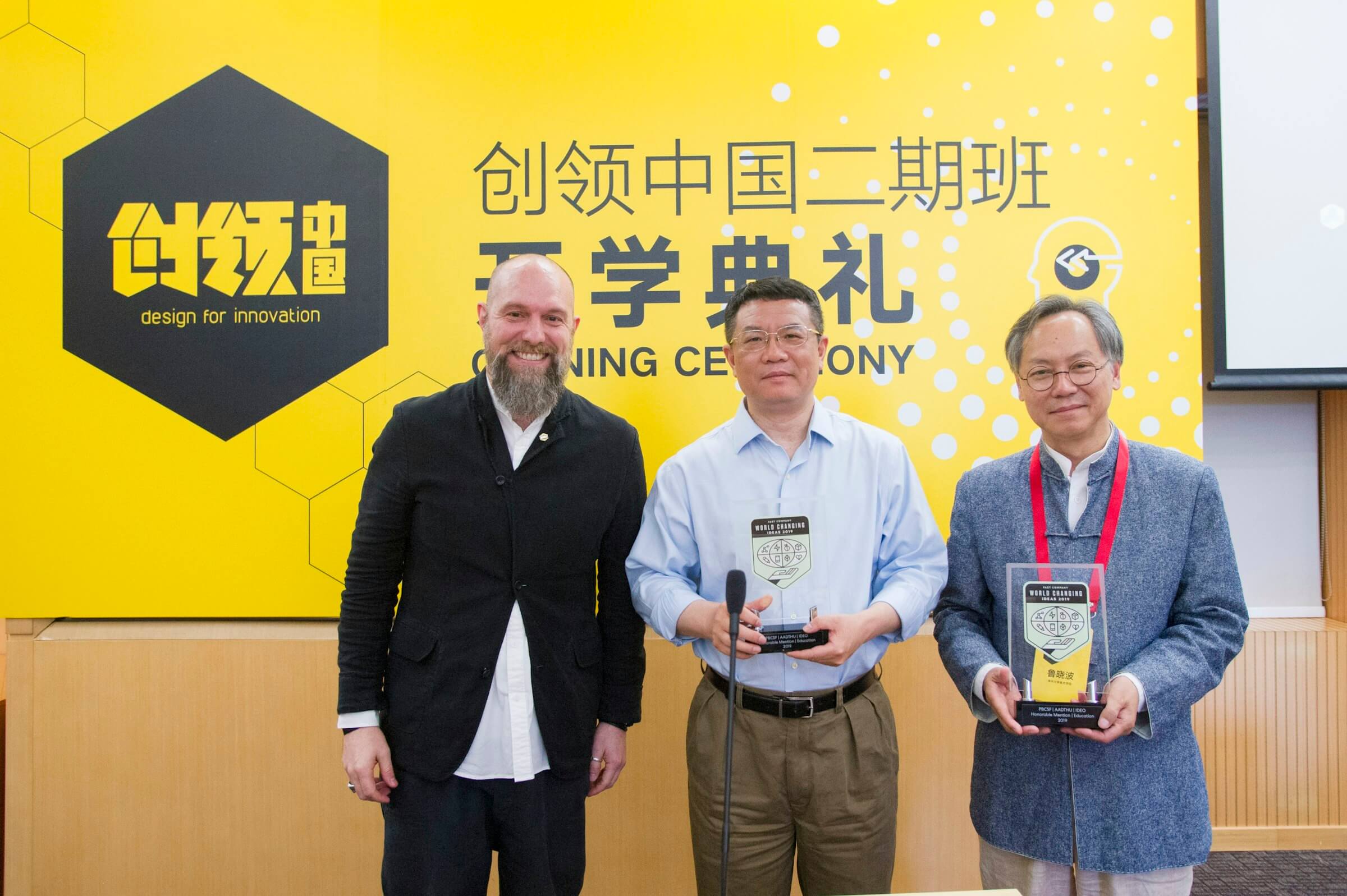
The first cohort of the program graduated in December 2018. On April 8th, 2019, the Lead a Creative China program received an honorable mention in the education category as part of Fast Company’s 2019 World Changing Ideas Awards, becoming the only award-winning Chinese project in the category.
After 40 years of rapid change, China has reached a pivotal point in its growth trajectory. Across the globe, traditional drivers of economic growth have slowed down, creating opportunity define the new economy.
The Chinese government has laid out a wide range of ambitious policy plans to ensure that China successfully manages this transition, and that the country continues to grow and lead.
Honorable Mention
education category, Fast Company’s 2019 World Changing Ideas Awards
Human-centered hospitality via a tech-forward app
Huazhu Hotels Group translates its renowned hospitality brand into a seamless digital ecosystem for guests.
China’s digital landscape is dominated by highly integrated mobile apps like WeChat and Alipay that seamlessly combine messaging, shopping, bill payment, and finance management. This shift toward digital-first interactions that are hyper-convenient, personalized, and intuitive has significantly shaped consumer expectations for experiences like finding, booking, and staying in a hotel. To stay competitive and meet—or exceed—young guests’ expectations, Huazhu needed to redesign its Membership App 3.0 to prioritize guest needs across all touchpoints of the hotel journey.
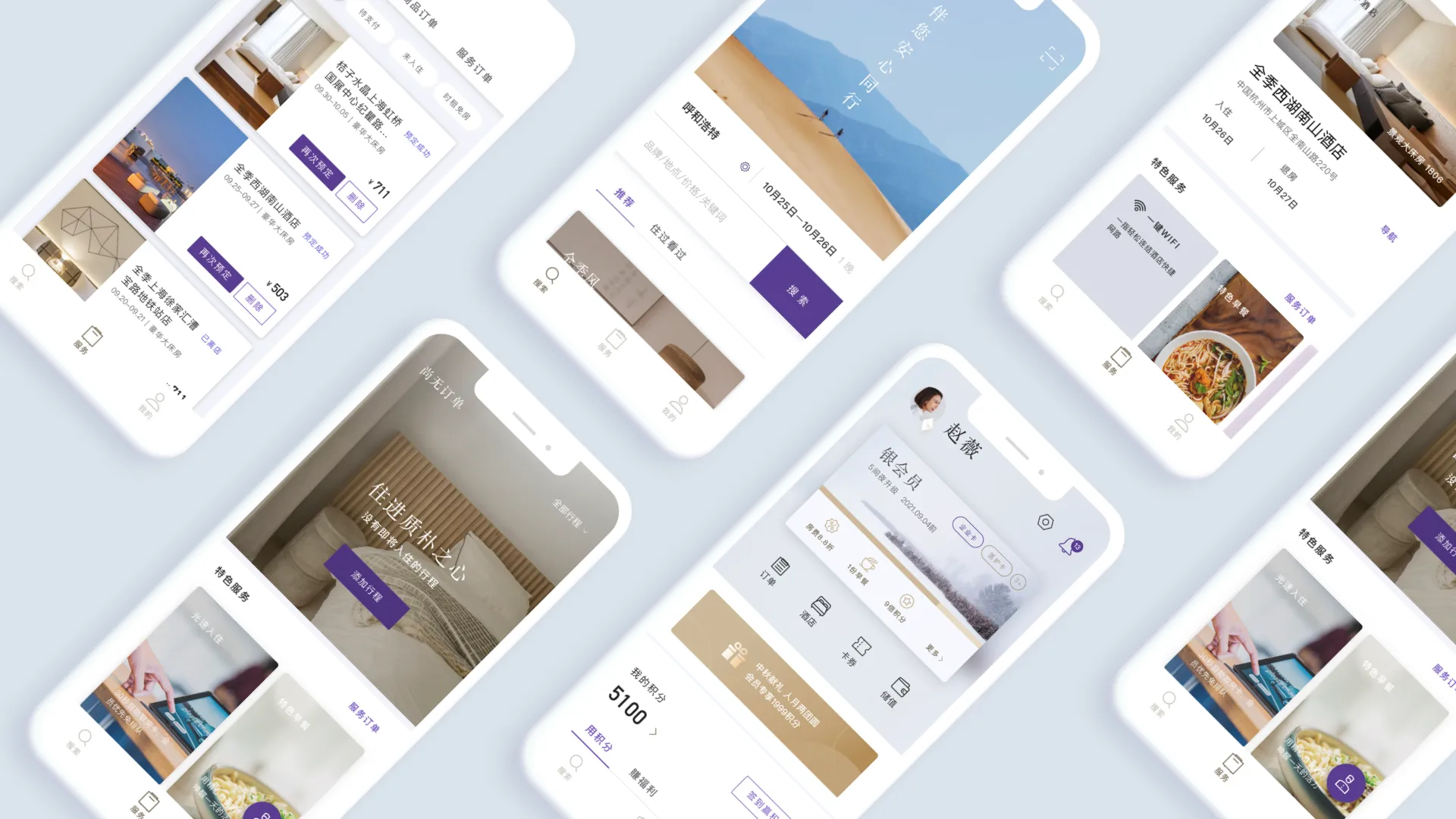
Through in-depth research and member feedback, IDEO discovered the true pain point the Huazhu membership app needed to address: seamlessly integrating the hotel brand’s online and offline experiences. The Huazhu Membership App 3.0 adopted “simple, stable, and real” design principles, simplifying user operations, optimizing the interface, fixing lingering experience issues, maximizing page load speed, and reducing crash rates.

The IDEO team discovered users have different functional needs. Sometimes, users want to search for hotel information quickly. Other times, they prefer to explore and browse content slowly. To meet both needs, the app needed to be optimized for efficiency and exploration. So, the IDEO team upgraded the interface of the Huazhu Membership App, adding quick operation modules and information blocks on the main page, as well as a downward scrolling interface that gradually slows the experience, offering channels for detailed exploration.
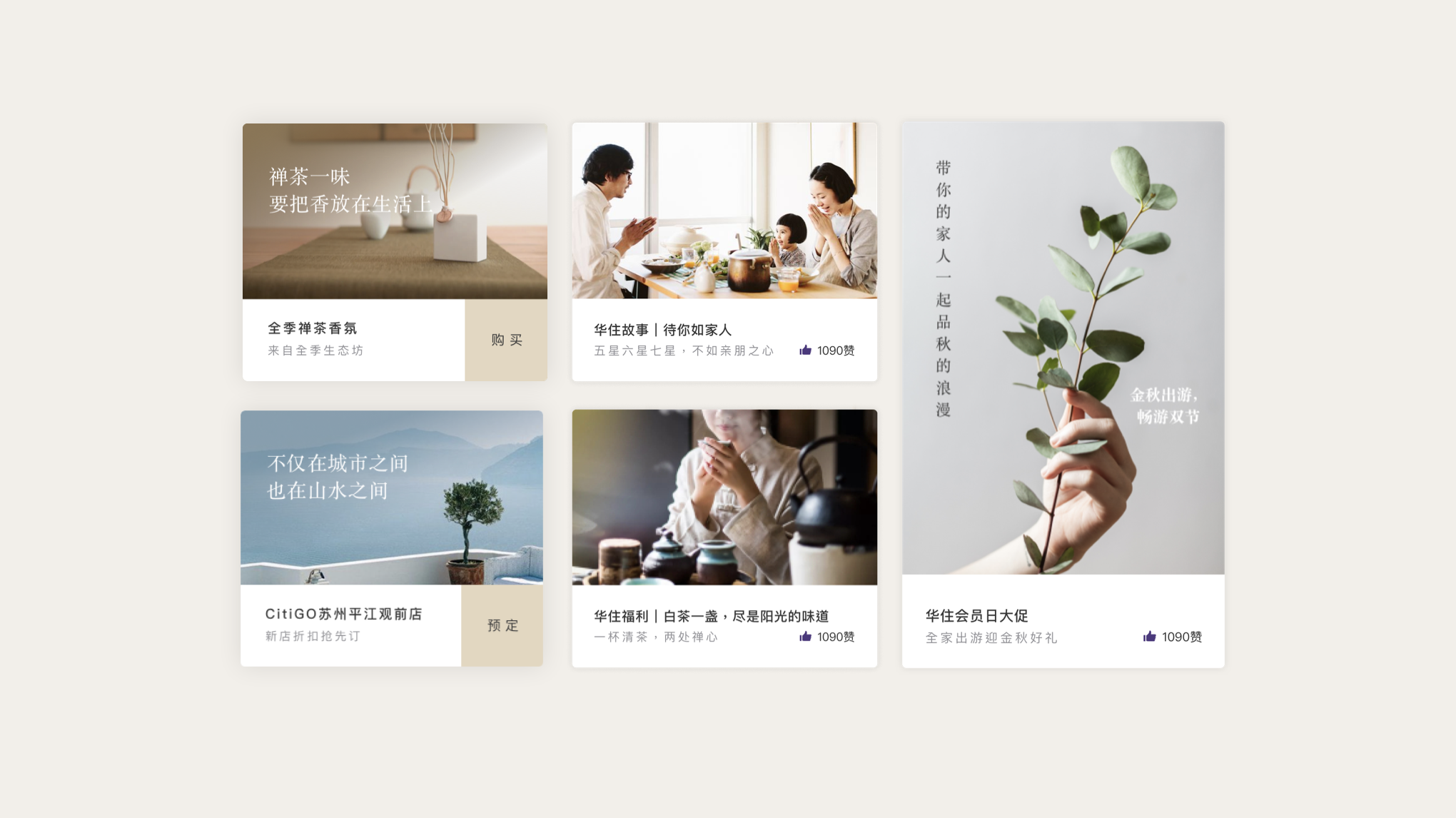
Customers also had different needs at different points in their travel journey: before, during, and after their stays. IDEO designed the language and user interface to provide personalized service information for each stage, from booking to post-stay. The app’s content adapts to the user’s travel phase, showing the most relevant service experiences at each point. The content displayed on the app also changes based on user habits, helping the app flex to meet their needs. The design aligns with the Huazhu Hotels Group’s mission to provide personalized service to a diverse clientele.

The team also worked to inject Huazhu’s brand characteristics by offering an upgraded experience in booking, stay, dining, and member benefits and adding features like a 30-second, automatic check-in experience. These thoughtful, personalized updates integrate Huazhu Hotels Group’s meticulous service philosophy, providing customers with a welcoming, human-centered hospitality experience. The updated Huazhu Membership App 3.0 is now available in major app stores, shaping a new generation of user experiences for Huazhu Hotels Group.
Young travelers in China expect the first touchpoint with a hotel brand to be digital.
5% increase
in monthly active users after the launch of the App's 2.0 version in 2021
The Big Green Button
Real life celebration in a digital world
Fast forward a few years and the big whiteboard has been replaced by a nimble digital tool that allows us to track and collect data about our projects, leads, and teams. Fantastic—except we lost the communal hoopla of physically erasing the board in front of our friends. Somehow clicking to archive didn’t have as much pizzazz.
What could we create that would provide that same, satisfying sequence of tangible action and group celebration in our now purely digital reality? Enter the Big Green Button.
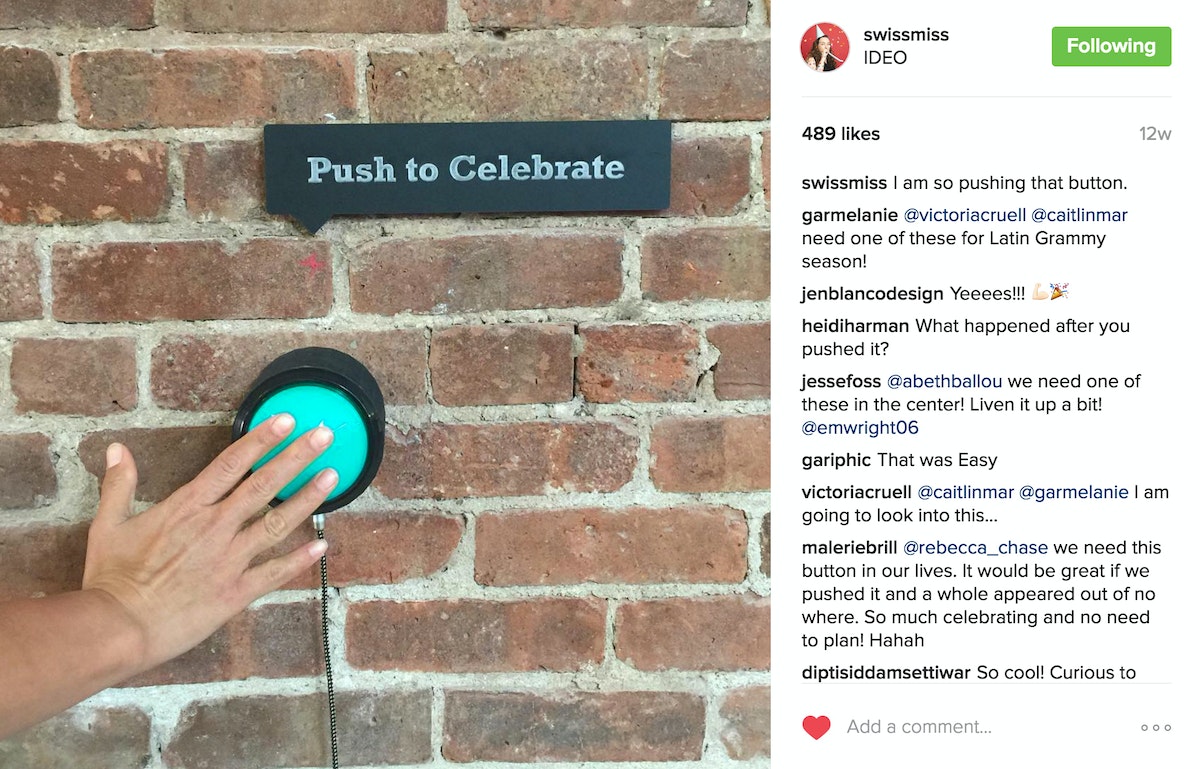
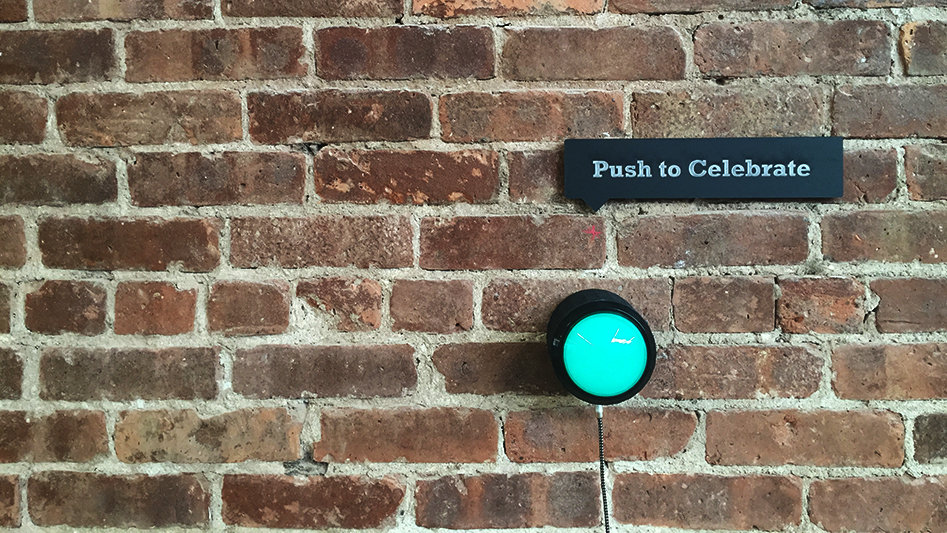
It’s exactly what it sounds like—a massive green button that says “Push to Celebrate,” affixed to the wall next to the large monitors that track our projects. When a project is complete, a team member hits the button and a ridiculous animated gif overtakes the displays while music from "The Price is Right" plays over the speakers. It’s not confetti cannons, but it's fun and triggers the same enthusiastic cheering we enjoyed at the whiteboard.
So how did we do it? Here's the step by step.
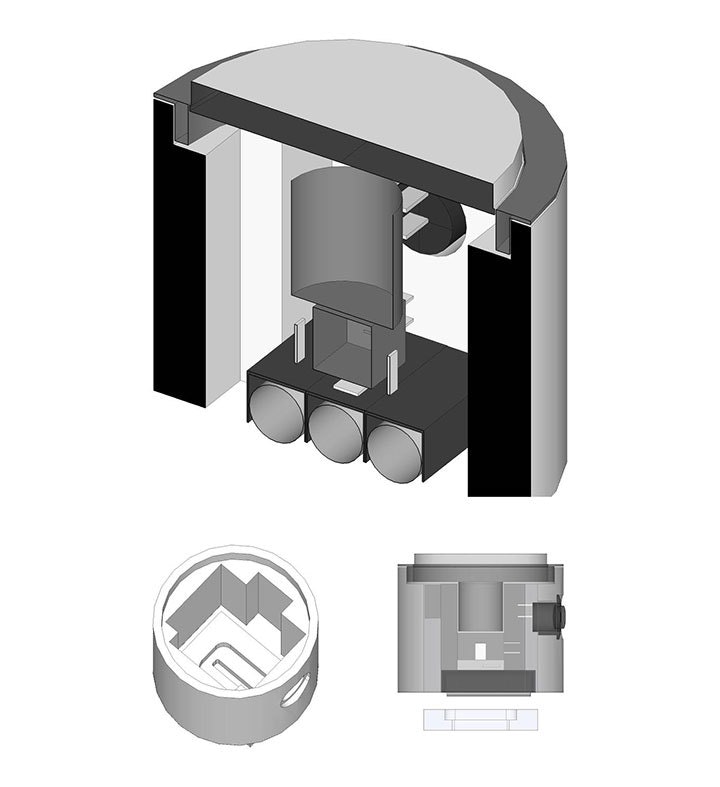
The button itself is from Adafruit, and it’s huge. (Think the size of a grapefruit). The housing for the button is a 3D printed cowling that encases the button and the wiring and connects via an aesthetically pleasing audio cable. The audio cable allows us to unplug the button easily—no complex wiring to worry about.
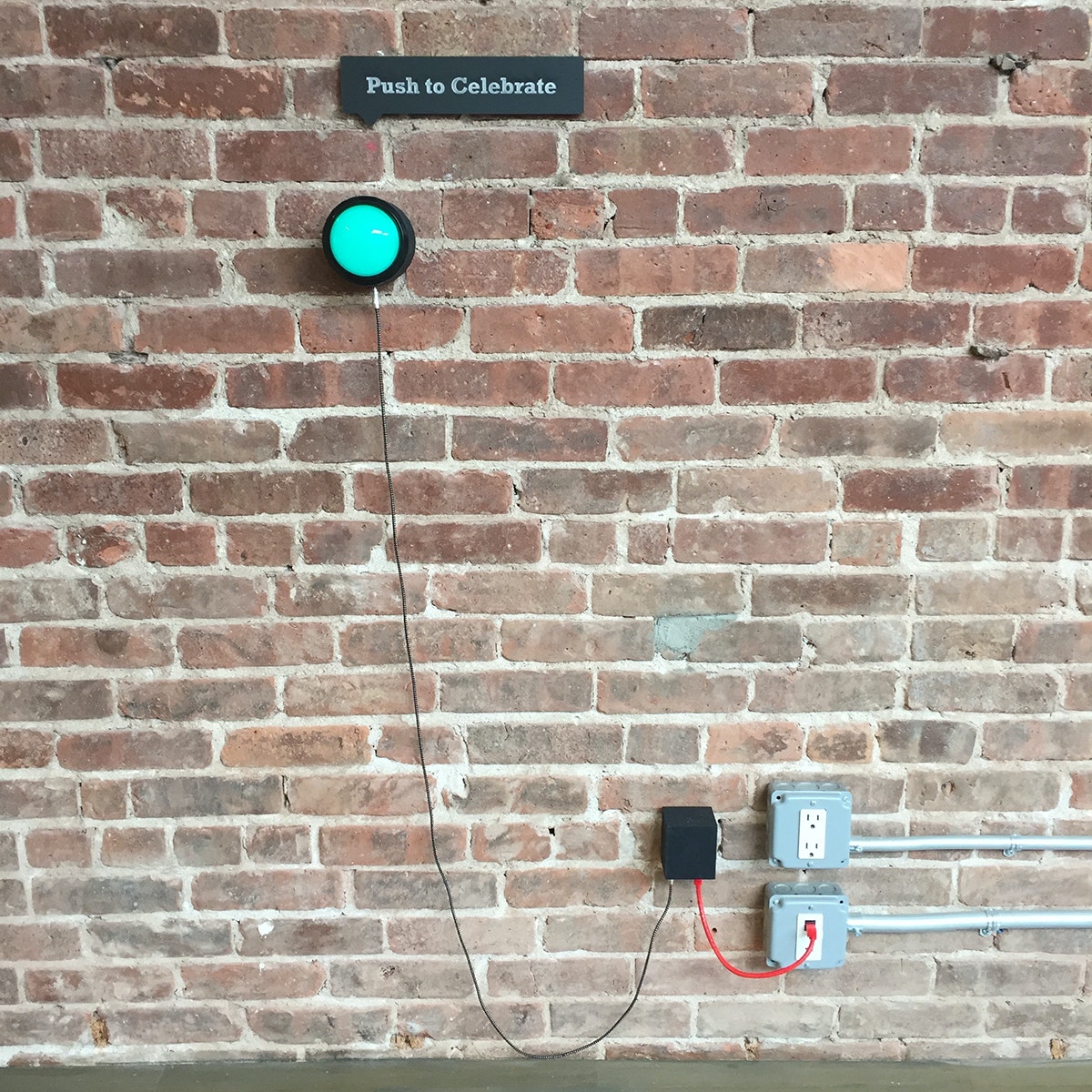
At the other end of the cable is the brains—an Arduino with Adafruit’s ethernet shield. It receives the signal from the button, then sends out a POST request to the website’s server, which runs on IDEO’s network. Because multiple people can view the website at any given time, the user must locally “arm” the button on the AngularJS website with an option box. The option box tells the website that this website will respond to button presses. The go server running the server can then route the incoming request to the large screen’s website only.
This whole setup uses only a few lines of code to add a physical layer and a heightened level of excitement to our project completion ceremony—and everyone loves it.

A button like this is just asking to be pushed, but we added the sign to give people an extra nudge, and a hint as to what it actually does.
Few things are more satisfying than wrapping a months-long project. Back when the New York office tracked its active projects on a whiteboard in our kitchen, we’d celebrate these completed projects at our weekly meetings. Each team would walk up to the front of the room and—as the rest of the studio clapped and cheered—triumphantly erase their project from the board. It was a small thing, but it was ours, and it was pretty satisfying.
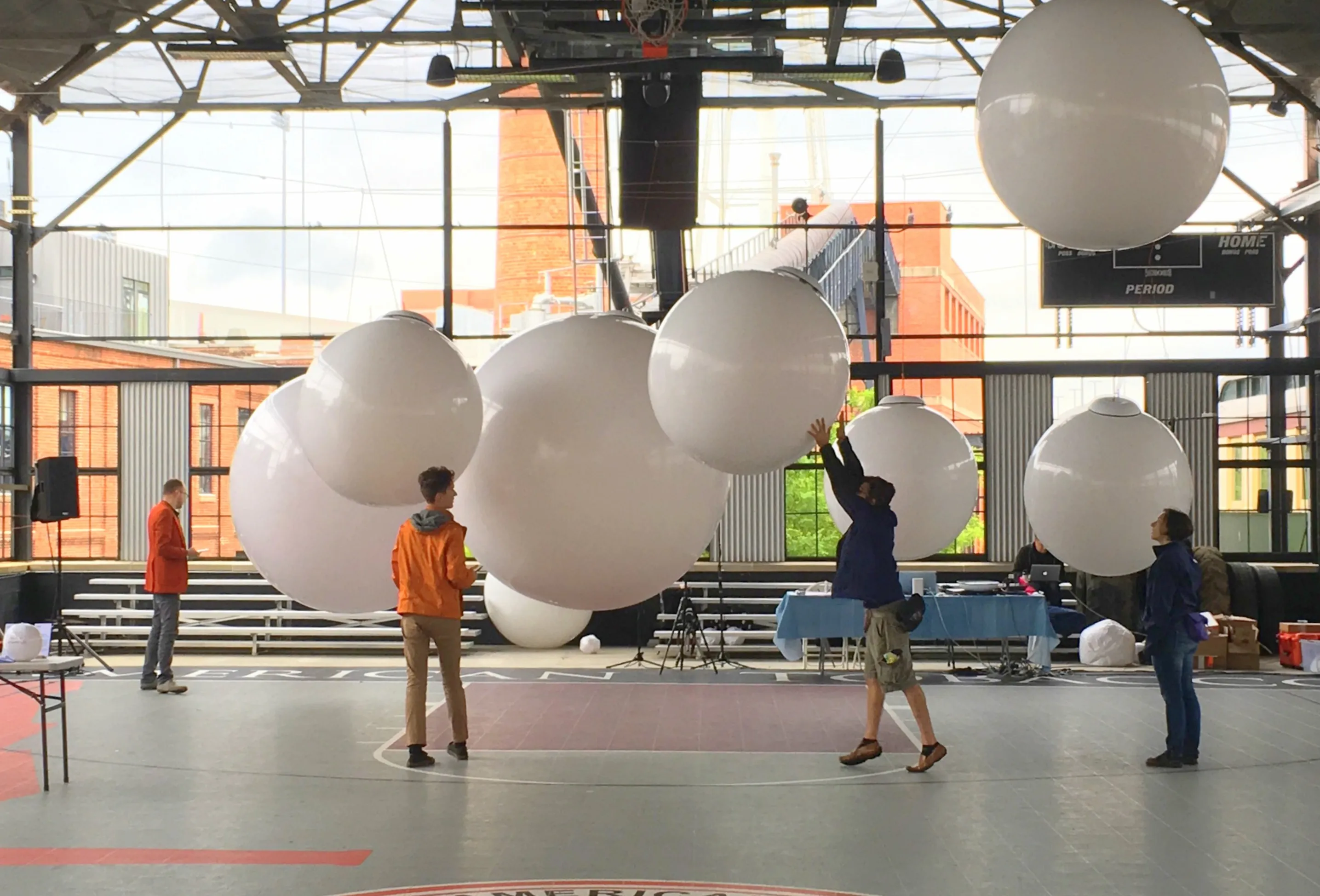
Great Balls of Fun
IDEO's Beach Ball Synth goes to Moogfest
What was IDEO’s contribution? Giant beach balls. But not for the beach. More like magical floating orbs that made music when you touched them.
“We wanted to build an instrument with play as an interface,” said creative director Peter Hyer. “An interactive environment in which anyone can play music without giving it a thought.”
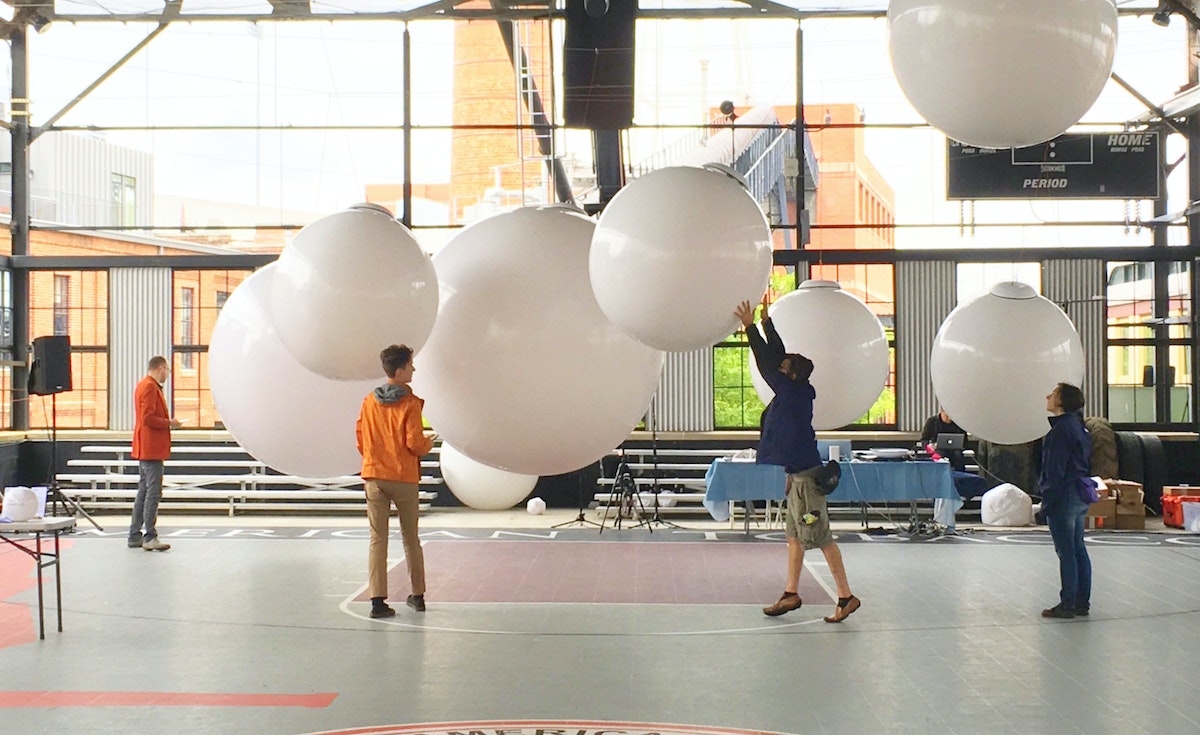
How do they work? Here's the layperson’s version: The team fitted the balls with sensors that mapped the force of the impact to notes. Those notes were then matched to an algorithmically-generated backing track.
For the more technical version, keep on reading.
The process
Ideation
We knew that we wanted to channel the spirit of Bob Moog in our installation, so we began with a brainstorming and prototyping phase where we focused on bridging music and technology with creativity. We really wanted to break the barrier that prevents people from expressing themselves musically, and we also wanted to capture something of the Moogfest zeitgeist. Two ideas emerged—one around music, and one around narrative and synthesis based on the statements of the people at the festival. We loved both and wanted them to coalesce, but we were concerned they might be oil and water.
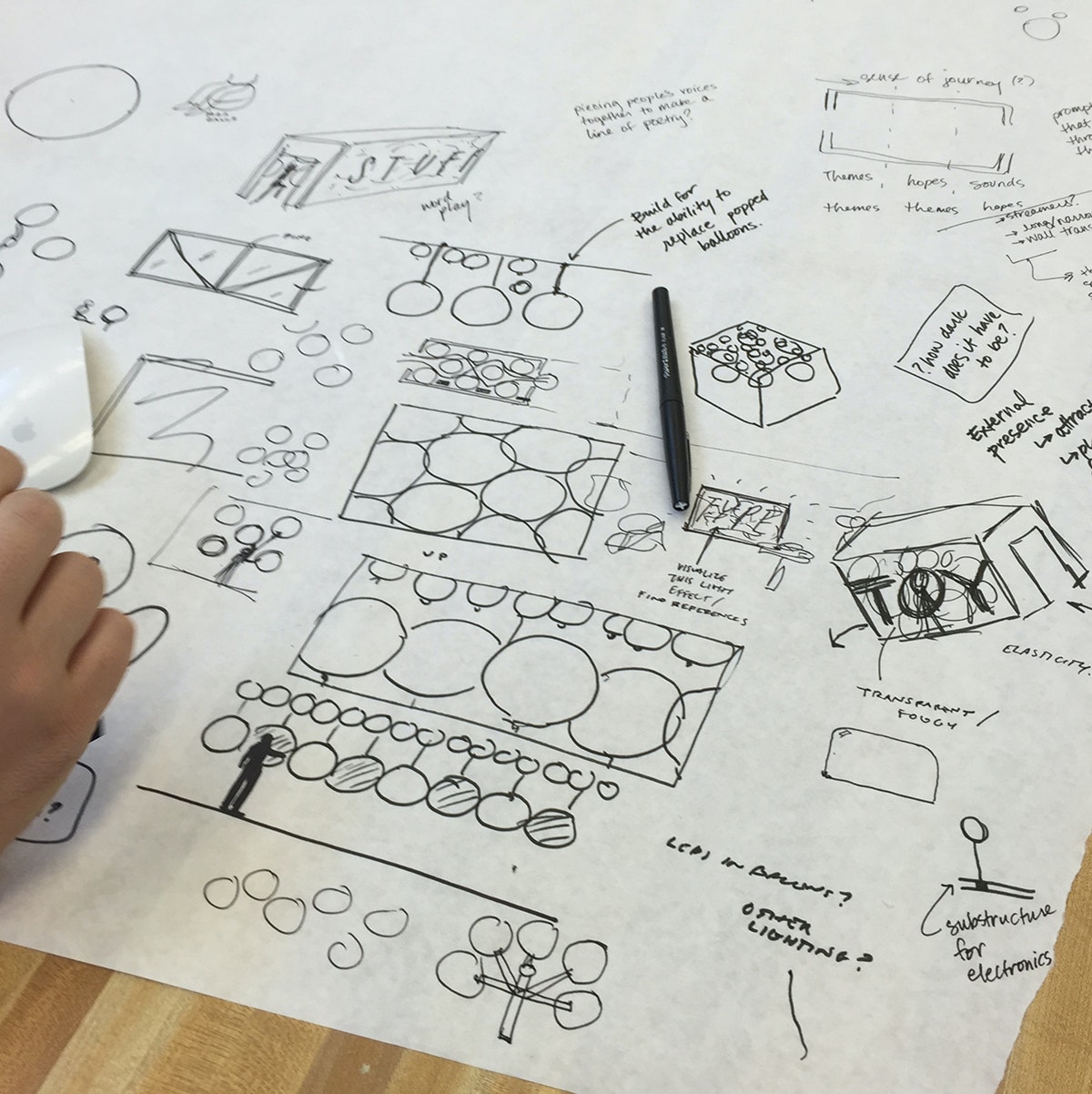
To find out, we began prototyping. We made a quadraphonic phase-music vocoder sampler in hopes of making spoken phrases musical; a computer-vision Post-it® Note step sequencer to bring musical life to an unintimidating object; and generative word games to try to tease out a crowd-sourced narrative arc of the festival. But nothing felt quite right, so we went back to the drawing board and asked ourselves, what is it that we want people to feel?
A Step Back
To get more perspective, we looked for reference points. We found inspiration in large scale installations from artists like Zimoun, where a simple idea like the sound of a cotton ball hitting a cardboard box took on new effect and meaning when scaled. It prompted us to wonder, what if we scaled the acoustic sound of balloons? What are the sounds the balloons should make, where should the sound come from, and how might that capture or express the narrative of the festival?
Iteration
Quickly and tragically, we discovered that combining a bunch of large balloons with an industrial fan was not quite as mind-blowing as we had expected. But, still, their innocuous beauty made balloons seem like a magical invitation to play.
We sought out people who had worked on similar projects, and who were not steeped in our brainstorming assumptions. We talked to Jack Gale from CCA, who had created an interactive balloon project, invited a group from San Francisco's Exploratorium to brainstorm and test out a rough prototype of balloon word games, and worked to find balloons that were big enough and robust enough for us to embed light elements and sensors in them.
Flexibility
Originally, we had based our design around an 8-foot by 16-foot box. Instead, we chose a covered outdoor basketball court. Huge! Central! Beautiful!
But the scale was drastically larger and the lights we had planned to embed couldn’t compete with daylight. To make it work, we scaled the beach ball diameter from 2.5 feet to 8 feet to better fit the space (we had already swapped the balloons for beach balls, since the materials are more robust), eliminated light elements, and put the emphasis on sound derived from beach ball interaction. Since we were at a music festival, it was poetic for sound to be the primary feedback mechanism.
Our friends at the Exploratorium invited us to do a trial install at their museum, which quickly brought the interaction questions to the forefront. You learn a lot quickly when the public kicks the tires. When people walked up to the beach balls, their first instinct was to hit them. But we didn’t want the beach balls to just work like a button—we wanted the installation to be more nuanced, and produce different sounds based on where and how each ball was hit. To do it, we used the nine degree of freedom inertial motion unit to map directional acceleration to pitch, which worked as though there was a keyboard wrapped around each beach ball.
How it works
The Beach Ball Sensor
Each beach ball has a sensor package in a custom made mechanical holder that is held captive by a carabiner. For sensing and communication, we used an Arduino with WiFi, a nine degree of freedom inertial motion sensor that detects acceleration in X, Y, and Z directions, rotation about X, Y, and Z directions, and magnetic field in X, Y, and Z directions. We also opted for an external antenna for added WiFi robustness.
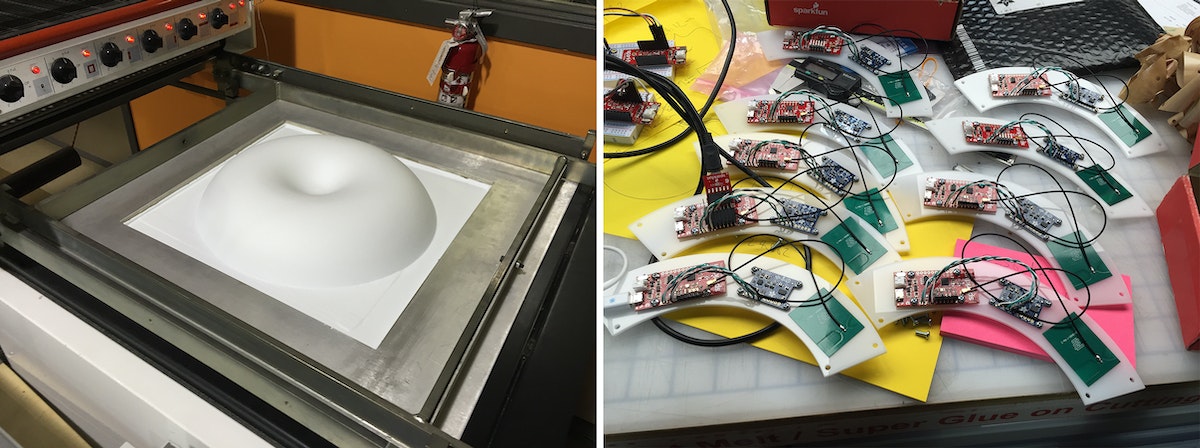
This package communicates raw sensor data via OSC messages over WiFi to a computer that processes the sensor data. A USB battery designed to recharge your smartphone on-the-go powers the hardware and provides enough energy to run each system for about 14 hours—more than enough for an entire day of uninterrupted play.
Signal Processing and Gesture Recognition
On the computer, Max processes the streaming sensor data, recognizes gestures, and outputs a MIDI note with velocity whenever it detects a beach ball impact gesture. Ableton Live takes the MIDI data from all the beach balls, filters the notes to work with the current harmony, and triggers instrument sound.
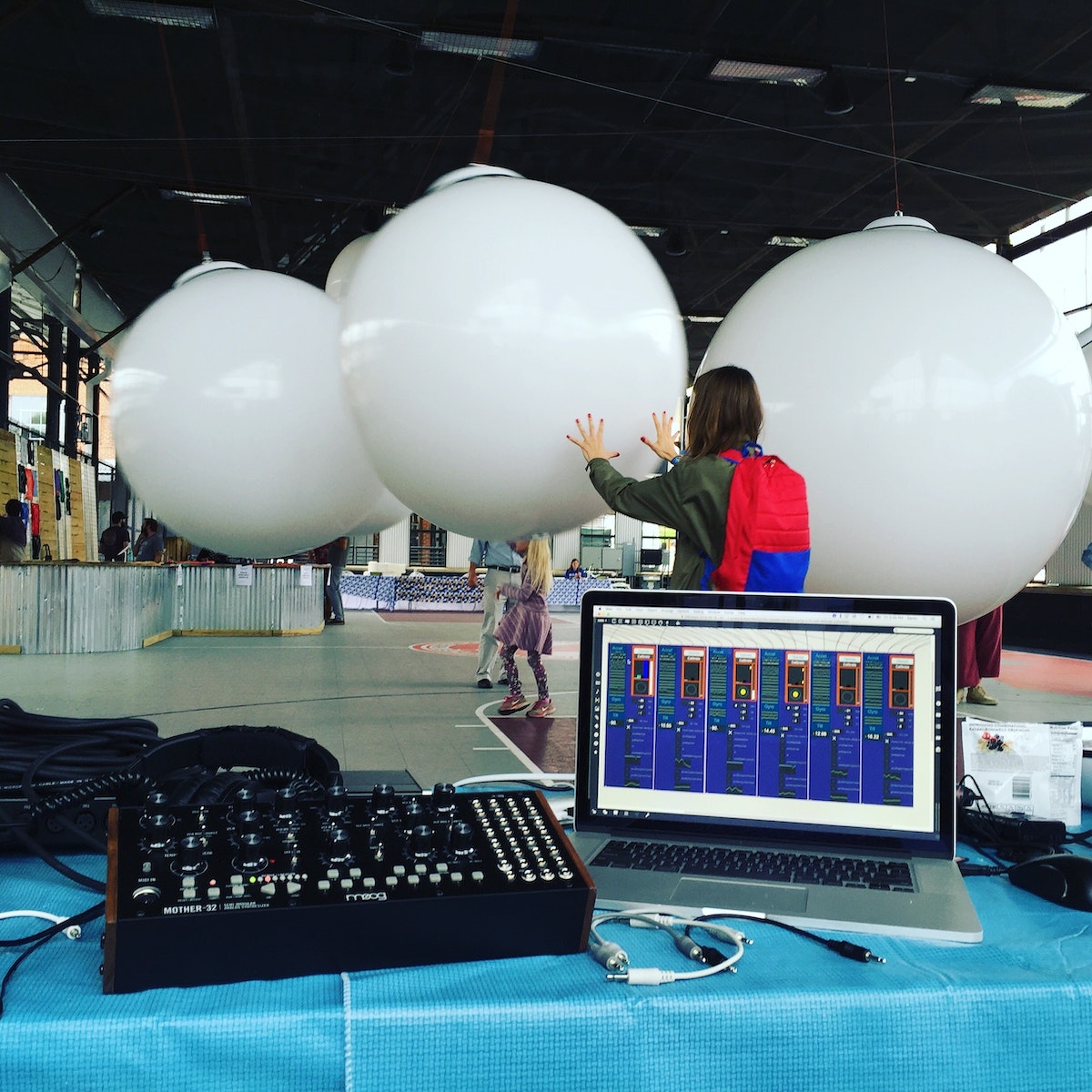
Feedback
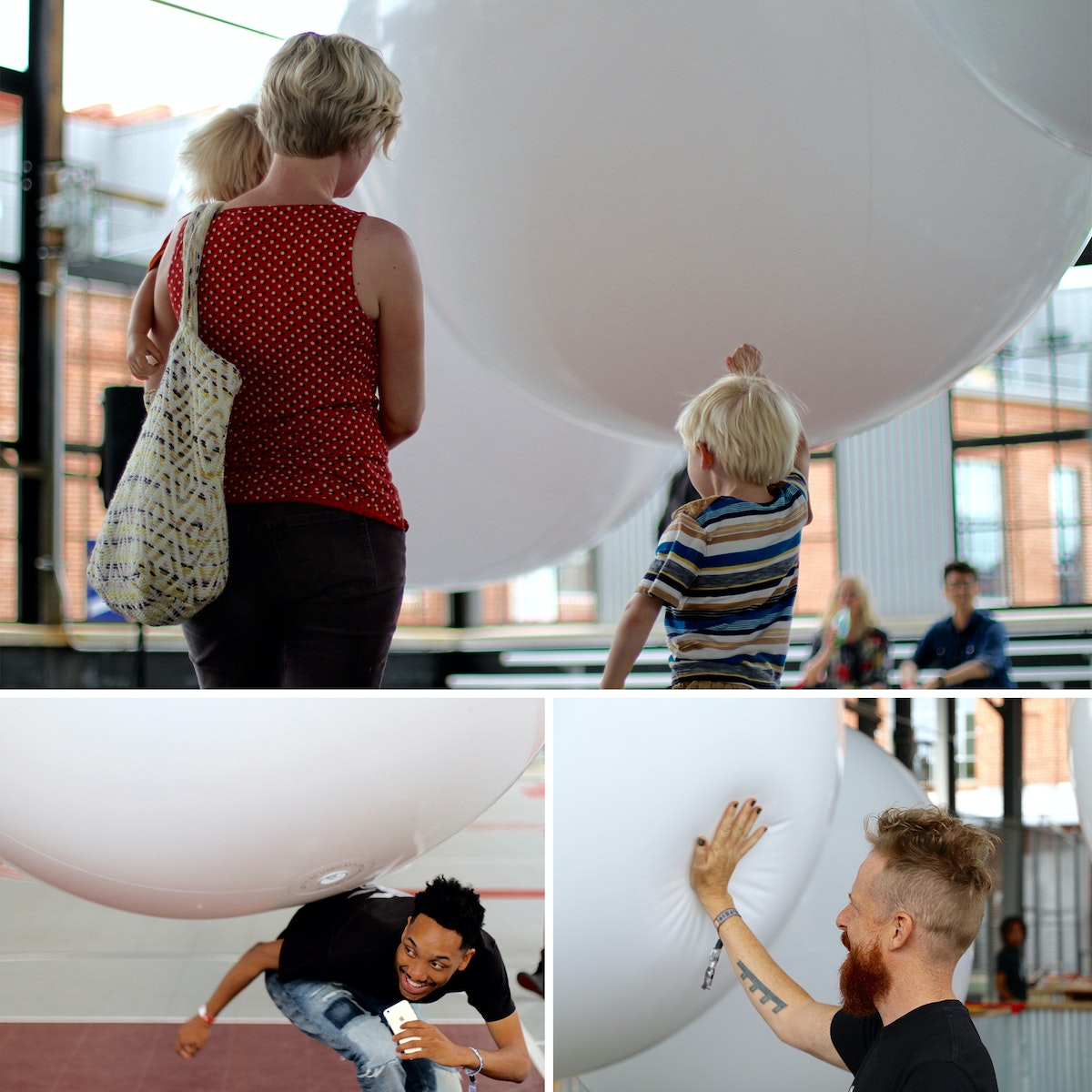
We wanted to be certain that participants could hear how they were changing the music, so while the background music played evenly throughout the installation, each individual beach ball generated a sound in the speaker closest to it—kind of like stage monitors that bands use playing live. That feedback encouraged everyone to play more.
Collaborative Music Design
To set the stage for musical confidence, we wrote algorithmic music that acted as a backing track, so no one felt the pressure to play the first note. Depending on where a beach ball was hit, one of 15 possible chromatic notes was generated. So, we filtered the beach ball notes so that they always fit consonantly with the backing track—you couldn’t play a “wrong” note. Even still, six different instruments playing over background texture can be too dense. So we opted for a section approach—three sets of two instruments. A trio with backing felt like the right balance of individual voice without cacophony.
Rigging
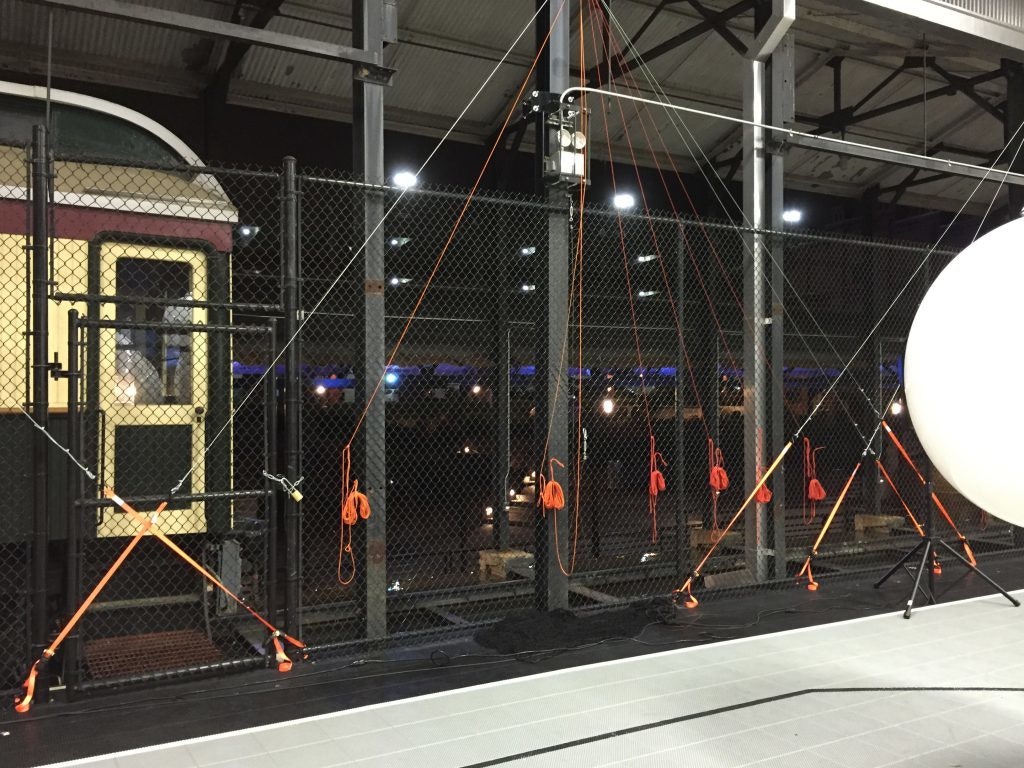
When we got to the venue, we had to invent a rigging system to get the beach balls to hang at the right place and height. In a divine moment of MacGyver-like inspiration, Diem Ho devised a hierarchical beach ball wiring system that could be lowered and raised quickly with precise control. When we were swarmed with little kids, this system allowed us to raise the beach balls just enough so people could see little kids behind a beach ball and avoid hitting them; things became a lot safer.
Improvisation
The most important design practice throughout the entire process was to stay nimble and improvise. We repurposed problems into constraints that catalyzed our evolving platform. In a sea of unknowns, improvisation allows you to find generative ways to translate even the simplest knowns into a compass toward meaning, and have fun doing it.
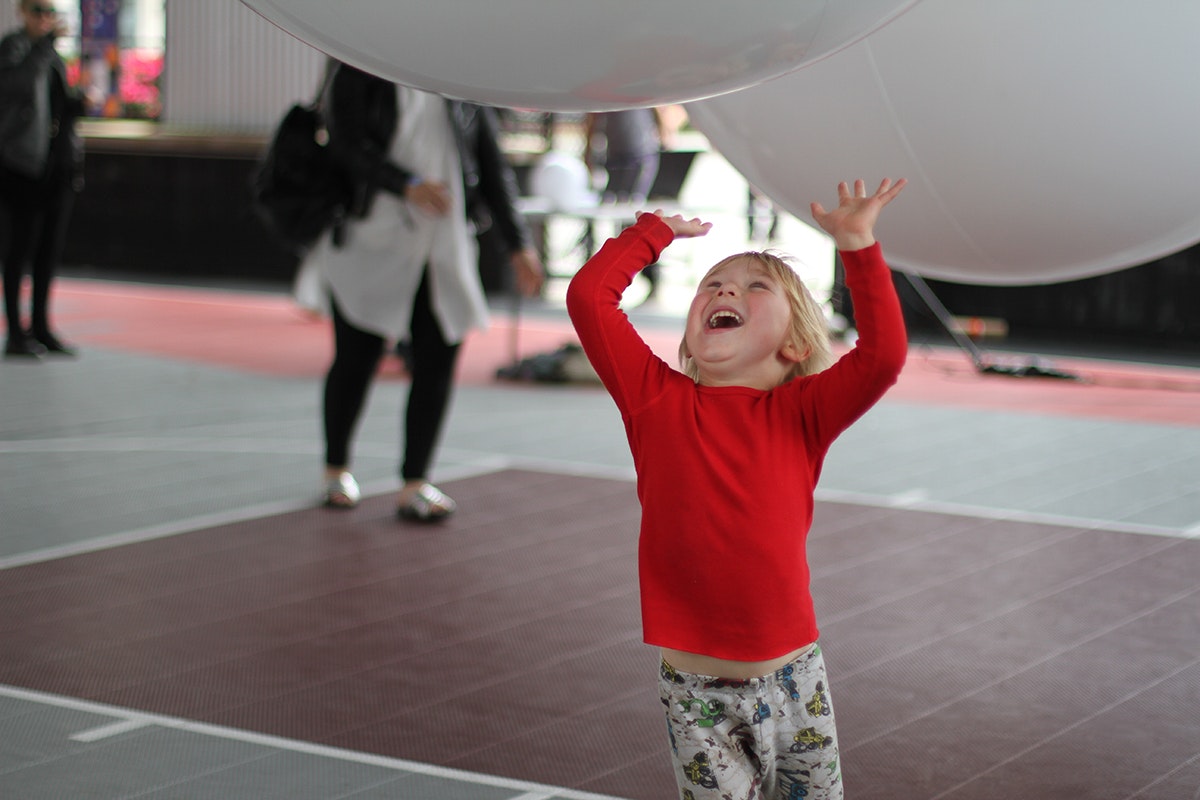
Lead engineer and composer Aaron Soloway couldn’t help but smile as he watched festival attendees interact with the balls. “Whether it was a huge bearded dude into modular synths, or a 5-year-old who just wanted to hit things, everyone was into it.”
For Hyer, that universal spirit of play was key. “It created an opportunity for people to connect with music that was unexpected and in the spirit of the festival,” he said. “Ultimately, it’s about celebrating the convergence of art and engineering. That’s what that Bob Moog was all about.”
Moog hit the big-time when his company started producing portable versions of his giant synthesizers (aka the Minimoog). For now however, the beach ball synth will remain enormous.
The name Moog conjures up images of retro-future machines and space-age sounds. In the mid-60s, Bob Moog created the synthesizers that unleashed an era of electronic experimental music. Today, as a tribute to Bob, we have Moogfest, a gathering of musicians, DJs, performance artists, and technologists. This year’s performers ranged from Gary Numan and Grimes to a classical guitarist having his toenails painted by a cybernetically-augmented accomplice, and an 8-hour DJ set during which the audience slept in provided beds.

Designing Kid-Centered Medicine
Recasting painful, awkward and embarrassing childhood experiences as rights of passage, spirit journeys and superpowers
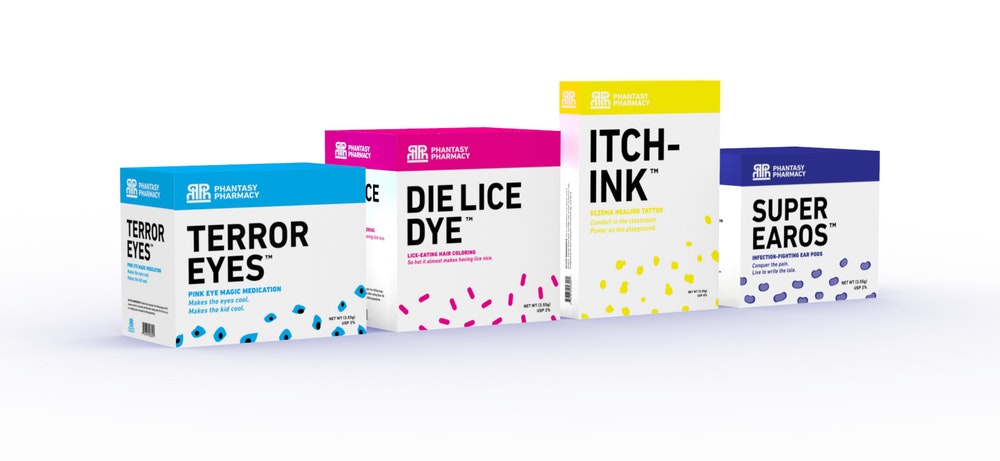
Each mythic tool/medicine could be used to combat common childhood ailments and illnesses in a way that celebrates each malady from beginning to end.
We are big fans of design fiction as a means to push our thinking and to explore what the future could look and feel like. For this design fiction exercise, we challenged ourselves with finding ways of turning kids into the heroes of their own young lives. We set out to create empathetic tools for childhood ailments and illnesses that recast painful, awkward and embarrassing experiences as rites of passage, spirit journeys and superpowers. To that end we asked ourselves a few questions to get started:
How might we turn embarrassing childhood moments into badges of honor?
How might we empower kids to celebrate the sometimes awkward illnesses of childhood?
How might we design for rites of passage, or inspire rituals that spark a contagious creativity?
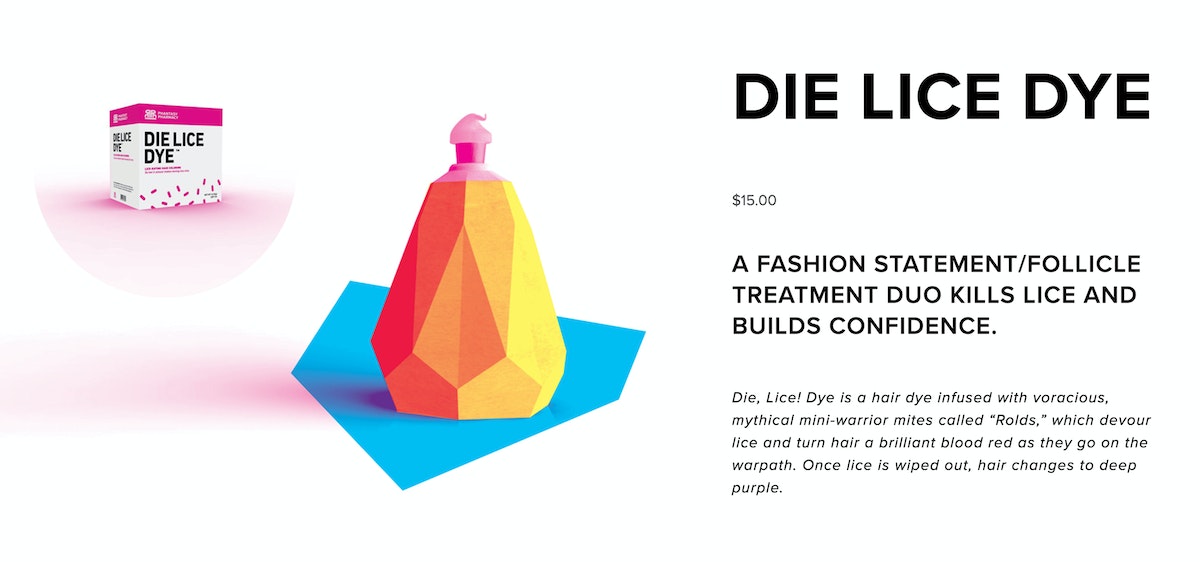
So, we let our imagination go into a world with monsters in the closet, serpents under the bed, and yellow eyes peering out of the darkness. And we asked ourselves how to take the trauma and the terror out of routine childhood experiences. One thing we knew for certain: solving problems technically and explaining them rationally wouldn’t get us very far. First, we had to address them on an emotional, even mystical plane.
Childhood can be full of play and promise, but also pain. What might seem like a temporary annoyance to grownups can be felt as an unending bout of humiliation and suffering for young hearts and minds. Pink eye, lice, ear infections, zits—the barrage of indignities can wreak havoc on even the most self-confident kid.
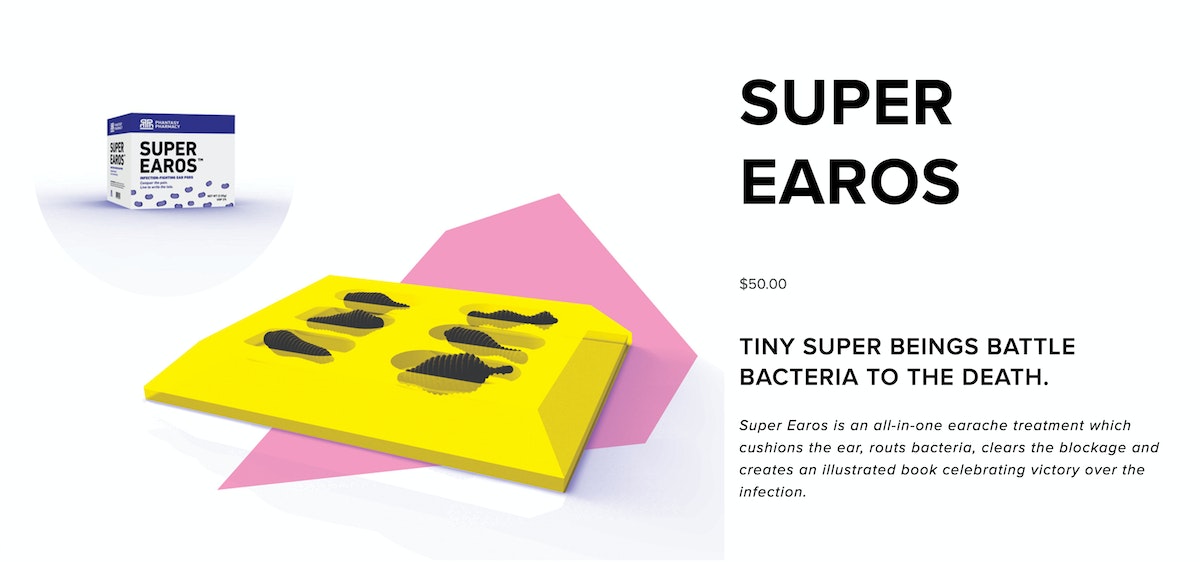
But what if these childhood ailments were recast as rites of passage and superpowers? What if the telltale itchy scalp or bloodshot eyes could be framed as something to embrace, even be proud of? That’s what Phantasy Pharmacy seeks to capture in its design fiction collection of mythic tools that could be used to combat common childhood ailments and illnesses in a way that celebrates each malady from beginning to end.
To get the full, unadulterated experience, check out phph.ideo.com.
Did you ever have lice as a kid? A bunch of us here at IDEO Cambridge did and we haven't forgotten how awful and embarrassing it felt. And when designers are faced with never-ending, wish-I-could-forget-you experiences, they start looking for ways to fix them. Recently, the studio banded together to create Phantasy Pharmacy, a bit of design fiction to help us stretch our imaginative limits and wrestle down unhappy childhood memories.

Creative Caffeine
Stories, people, spaces, startups and stuff getting our creative neurons firing
1. More than meets the eye
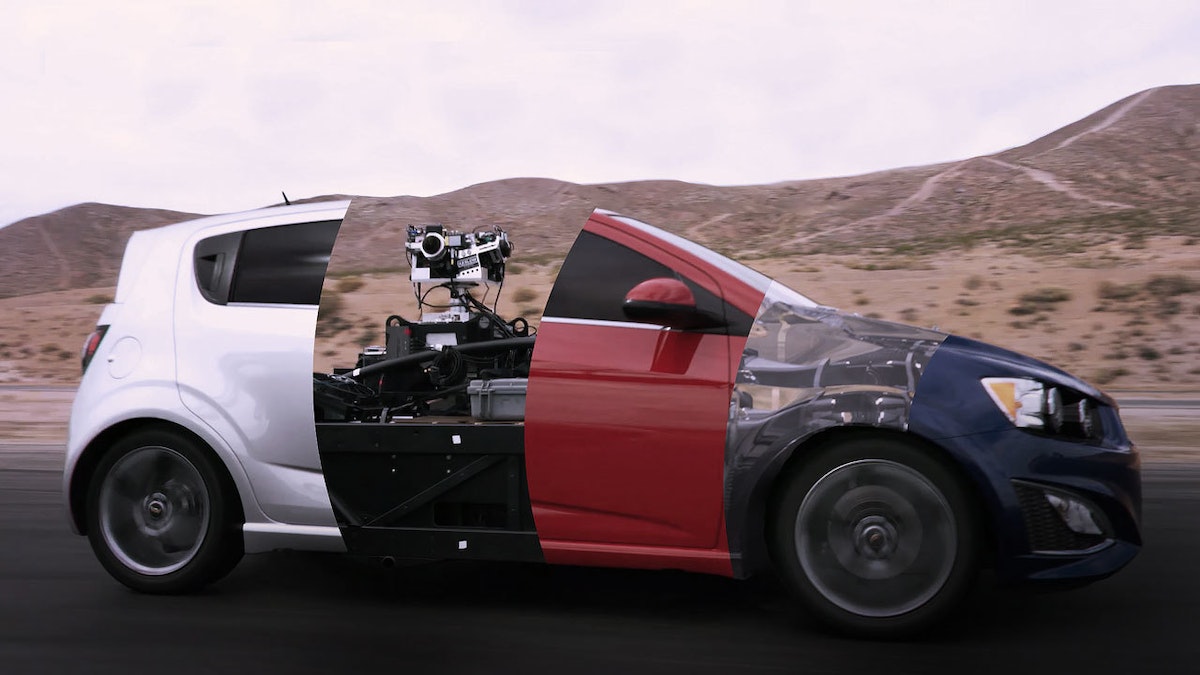
Tracking shots of winding country roads, and lingering peeks of sheet metal: car ads might seem as lifelike as it gets, but they’re often surprisingly realistic CGI, particularly for new cars that might not be public yet. To keep up that realism, post-production house The Mill’s neat solution has been to create a Transformers-like rig, with adjustable wheelbase, height, and driving style, to help its artists mimic pretty much any car, without costly shipping and availability worries. Take a closer look at the rig here.
2. The weird satisfaction of a close shave
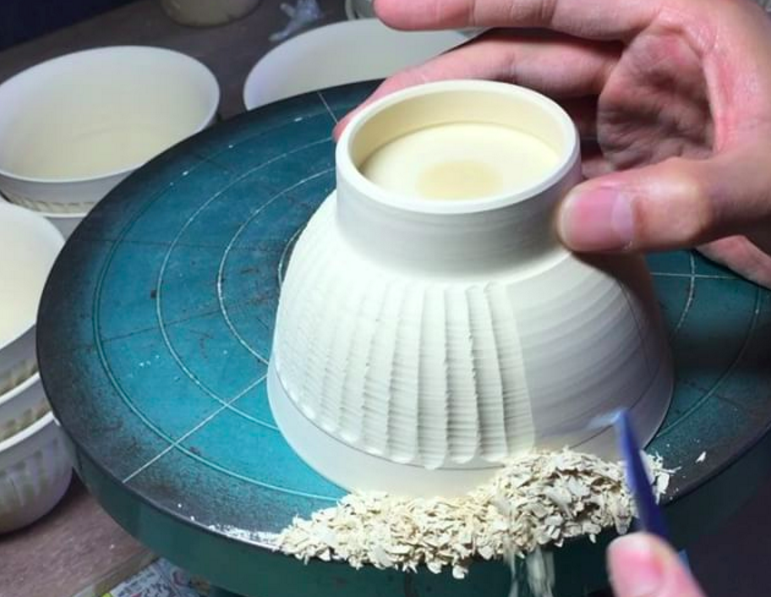
For the crafty and OCD-inclined people—like us—who find pleasure in perfectly cubed fruit, watching cans being crushed, or a Leica body being painstakingly filed, relax and enjoy these slightly hypnotic videos of master Japanese ceramicist Abe Haruya at work.
3. Welcome to our open house
Kitchen of the future exhibitions stretch back half a century, but Arduino founder Massimo Banzi and acclaimed sci-fi writer Bruce Sterling have gone one further: they created Casa Jasmina, an open-source apartment in an old factory in Turin, to test what a connected home might look like in the future. Furniture and fittings are modular and hackable, and artists and companies are invited to submit ideas for connected appliances. Eventually, you’ll be able to rent the space out on Airbnb, says Banzi.

4. Getting conversational with computers
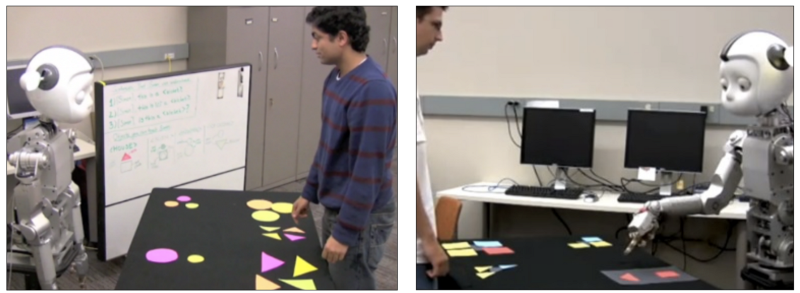
When Google’s AlphaGo deep learning software beat Go champion Lee Sedol, the world saw, via the media, a firsthand view of the power of artificial intelligence. But we’re still a long way from solving real problems, in part because interacting with AI is stuck at the computer science level. But an intrepid gang of interaction designers are building clever new ways for humans to better interact with these systems, argues computer vision and machine learning expert Greg Borenstein on Medium. Read the article here.
5. Go local with Airbnb
Fancy dining with a sumo wrestler, feeling frisky at a burlesque show, or getting your hands dirty with an urban farmer? Airbnb is helping travelers belong anywhere with a new product they’re testing. Called Experiences, it helps adventurous guests book escapades with local hosts. Check out Airbnb Experiences here.
In this week’s Creative Caffeine, IDEO London serves up a quintuple shot of inspiration: post-production house The Mill’s transformer car; the weird soothingness of shaving ceramics; a visit to Arduino’s open-source apartment; designing with artificial intelligence; and drinks with a sumo wrestler, courtesy of Airbnb.

Lindsey Turner
I’m passionate about building brands, products, and experiences that help organizations show up with meaning and momentum.
I help organizations cut through complexity by shaping how they show up, through brand strategy, identity, and storytelling.
Working at the intersection of brand and business, I bring an editorial eye and a bias toward making—turning ideas into tangible experiences that people can understand, trust, and believe in.
My work spans government, healthcare, financial services, media, and consumer goods, from launching Gen Z-focused ventures to building innovation labs and reimagining legacy brands. I relish moments of ambiguity and enjoy translating across teams, perspectives, and priorities to move ideas forward.
I started my career in editorial and digital design, shaping cross-platform experiences and identity systems in publishing and agency environments. That foundation still shapes how I work today: I’m detail-oriented, collaborative, and overreliant on the Oxford comma. I hold a BFA in Visual Communication from the School of the Art Institute of Chicago.

Rachel Young
My work helps organizations see who their products aren't working for—and build the will and the tools to do something about it
For 25 years, I've asked the same question: Who does this design exclude—and what are we going to do about it?
My work spans human-centered strategy, inclusive design, and qualitative research, with clients ranging from Microsoft, Google, and Verizon to the National Science Foundation, and San Francisco Unified School District.
Before IDEO, I taught elementary school in East Palo Alto and spent a decade doing design work with social service organizations—where I learned firsthand what it costs people when systems are built without them in mind.
I am currently writing User Error, a nonfiction book about digital access and the design decisions behind it. I live in Oakland, California.

Brian Pelsoh
I lead with craft, ensuring our work is creatively excellent: rooted in deep human insight and imagination, while also grounded in the realities of business and technology.
My expertise spans brand, communication, and product design across tech, education, the arts, and social impact.
I believe great work demands both high-level vision and obsessive attention to detail, and only happens through collaboration.
I bring an inclusive, hands-on approach and a deep understanding of business, which enables me to consistently deliver excellence while always asking why.
Before joining IDEO, I worked at the brand firms Pentagram and VSA Partners. I began my career as a designer, leading teams at the School of the Art Institute of Chicago and the Milwaukee Art Museum. I hold an MFA in graphic design from Maryland Institute College of Art and a BFA in communication design from the Milwaukee Institute of Art & Design, and have taught at some of the best design schools in the US.

Tony Wong
I am responsible for IDEO’s long-term success in China and working with clients to use design as a tool to enable growth.
I am responsible for IDEO’s long-term success in China and working with clients to use design as a tool to enable growth. Specifically, I have helped Chinese companies design holistic brand solutions through the development of their products, communication, services, and innovation teams, and I have helped multinationals expand their presence and influence in China.
I advise global leaders on developing China-led innovation and capabilities.
In over 15 years in IDEO Shanghai, I have worked on projects that use design to elevate the quality of the experience of healthcare products and services, streamline processes that increase productivity, create spaces and programs that promote and enable inclusive communities, and build next generation mobility solutions that are planet-positive.
Before joining IDEO, I worked at Philips Electronics and the Electrolux Group in Italy, the Netherlands, and Singapore on a number of breakthrough commercial products. I am a member of the Young President Organization in Shanghai.

Building a personal AI for the messiness of life: Sida Li
Most AI products today are built for work—a space with clear problems and established systems. One founder noticed a gap: personal life is messier, harder to systematize, and mostly left behind by the AI boom. So she built Cue, a personal AI that lives inside iMessage and group chats, to go where the other tools haven't.
In this episode, Becca Carroll, IDEO's Chief Strategy Officer, talks with Sida Li, co-founder and CEO of Shared Context Lab, about staying anchored to a human need while the technology around her keeps changing shape, why she treats her business model with the same rigor she'd bring to a product, and what it feels like to build a company at this particular, disorienting moment in AI.
The conversation also gets into how Sida makes design decisions: the language Cue uses to describe itself, the tradeoffs behind building inside iMessage instead of a new app, and a real story about a business idea that didn’t pan out.
This is the second in a two-part series profiling founders from IDEO's Startups-in-Residence program. The first conversation is with Johannes Seemann, founder of Sooner, on designing GenAI for the emotional side of money.

Designing GenAI for the emotional side of money: Johannes Seemann
Most personal financial tools are built to run the numbers and optimize towards a budget. While that works for some, most people experience money as a lived relationship that does not neatly fit into a spreadsheet. Johannes Seemann and Becca Carroll discuss why money is emotional before it is mathematical, and what a human-centered approach to building a generative AI financial product looks like in practice.

The curious leader's edge in uncertainty: Scott Shigeoka
Mina Seetharaman talks with Scott Shigeoka, author of Seek and Head of Curiosity Cultivation at the Eames Institute, about what distinguishes genuinely curious leadership from performative curiosity, how power dynamics shape curiosity, and why practicing curiosity can restore energy rather than drain it.

How constraints make us more creative: David Epstein
Mina Seetharaman talks with David Epstein, author of Inside the Box and Range, about why total freedom often produces average work, how leaders can design useful limits on purpose, and what organizations such as General Magic and Pixar reveal about the relationship between boundaries and creativity.
Looks like you might be in search of something very specific?
Or reset the filters above and try another angle.
Here’s some random inspiration

Podcasts about creative leadership

Articles about the power of prototyping
