
.svg)


Peripheral vision
A consumer electronics giant becomes a climate-era leader.
IDEO’s partnership with Logitech is a case study in bringing together the power of imagination and the rigor of business.
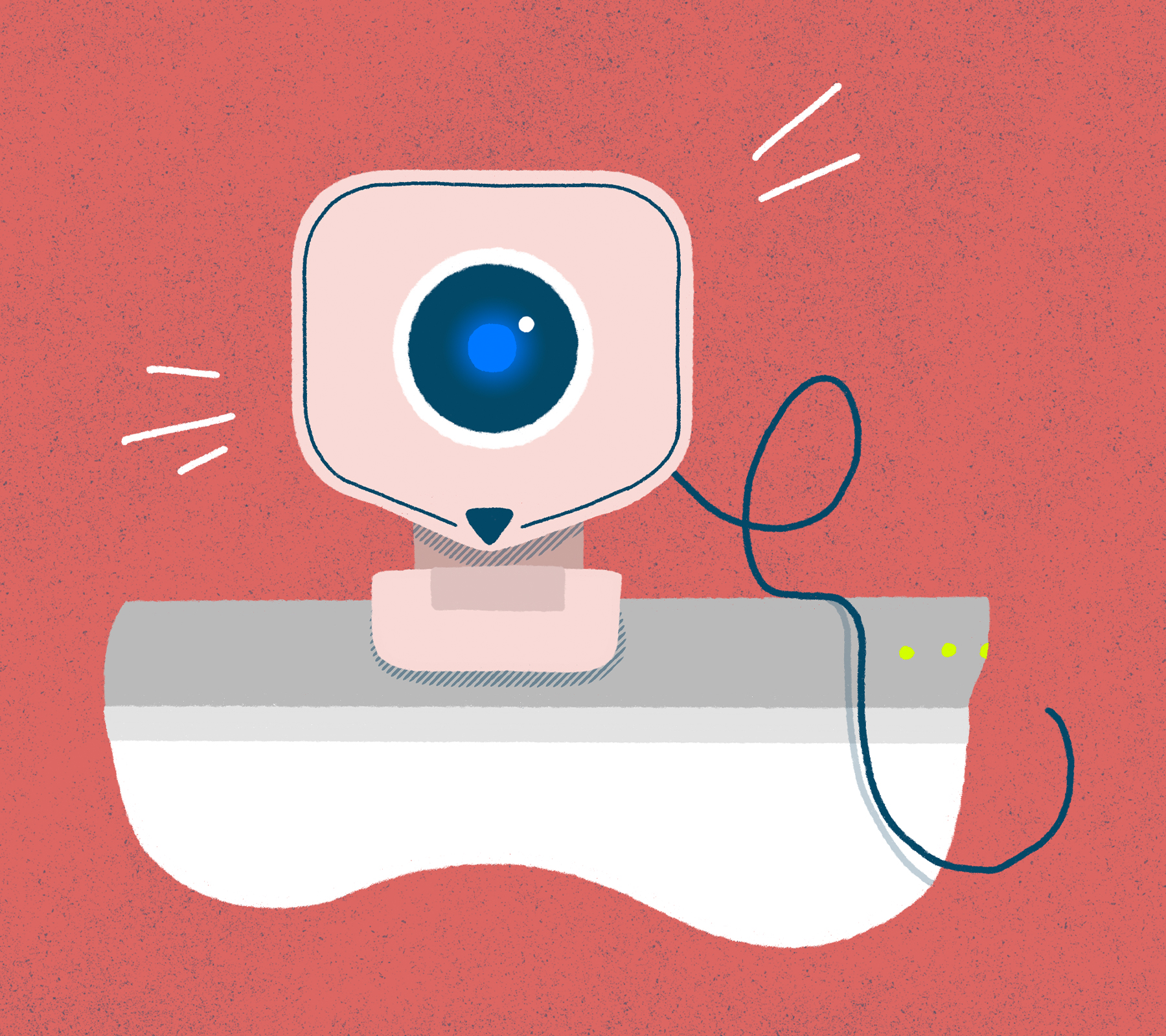
As much as we love to lead with creativity, it’s difficult to develop a business plan off ideas alone. So when Logitech asked the IDEO team to investigate a broad array of possible futures and report back, we brought our findings to life by inventing a board game. Instead of a dry presentation on circular solutions, our designers created a story about a mouse that turned into a webcam.
That imagination mattered. It fueled an exploration into expertise we collected from researching with people already living in futures destined to expand. And our rigor helped us hold more possibilities, and identify intersectionalities. Combined, they redefined what it means for ideas to be viable in business; they focused us on long-term sustainability; and they pushed us past immediate technical feasibility to ask if new ideas would be feasible for entire systems.
Our partnership with Logitech revealed that imaginative dreaming and business rigor aren’t opposing forces, but rather complementary tools in opening up new directions into a future demanding bold decisions.
As of 2019, e-waste was the fastest-growing waste stream globally, and only 20% of the 48.5+ million tonnes is disposed of properly.
Global emissions must be cut in half by 2030 to avert the worst impacts of climate change.
By 2030
Logitech has committed to becoming climate positive and removing more carbon than they create
The whole package
A global fashion brand pairs sustainability and growth.
Fast fashion keeps getting faster. But if the industry is to meet its climate commitments, its use of plastics has to slow down.
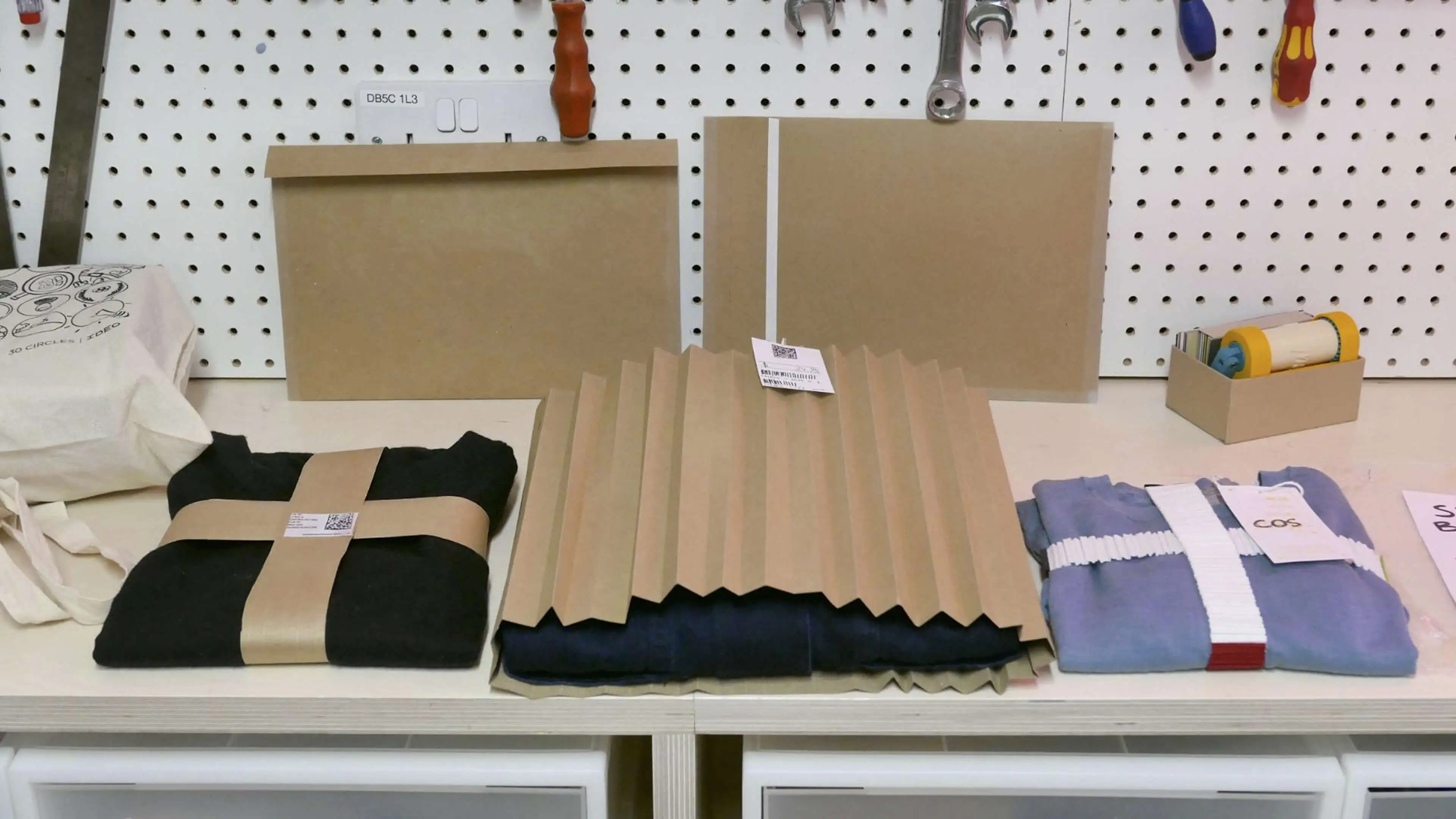
H&M chief executive Helena Helmersson set ambitious sustainability goals when she stepped into her role. She wanted to reduce the fashion giant’s impact on the environment and enable meaningful growth. But change is tough for any company, let alone one with eight brands operating across 74 markets. Together IDEO and the H&M Group created new plastic-free packaging, rallying around a more sustainable packaging solution that’s easily customizable.
By applying a design-led approach that went far beyond hiring a sustainability consultant, the H&M Group managed to reduce its use of plastic. But it didn’t stop there. A small team called Design Studio took what it learned and grew into an established strategic capability that pioneers new ways of working in the organization, tackling complex challenges in circularity, inclusion, supply chain, and customer experience. Sustainability isn’t a passing trend for H&M. It’s moving fashion forward.
Packaging accounts for 26% of plastics produced globally every year.
Fashion e-commerce is estimated to grow by 10% annually through 2024, requiring even more packaging.
100M
plastic-free packages shipped in 2022
2,000 tons
of plastic eliminated from H&M operations
The everywhere chair
In Japan, a mother works to build an inclusive child seat that closes the gap between children with and without disabilities.
For children with physical disabilities and their families, mobility is freedom. But in Japan, there are barriers to that freedom of movement.
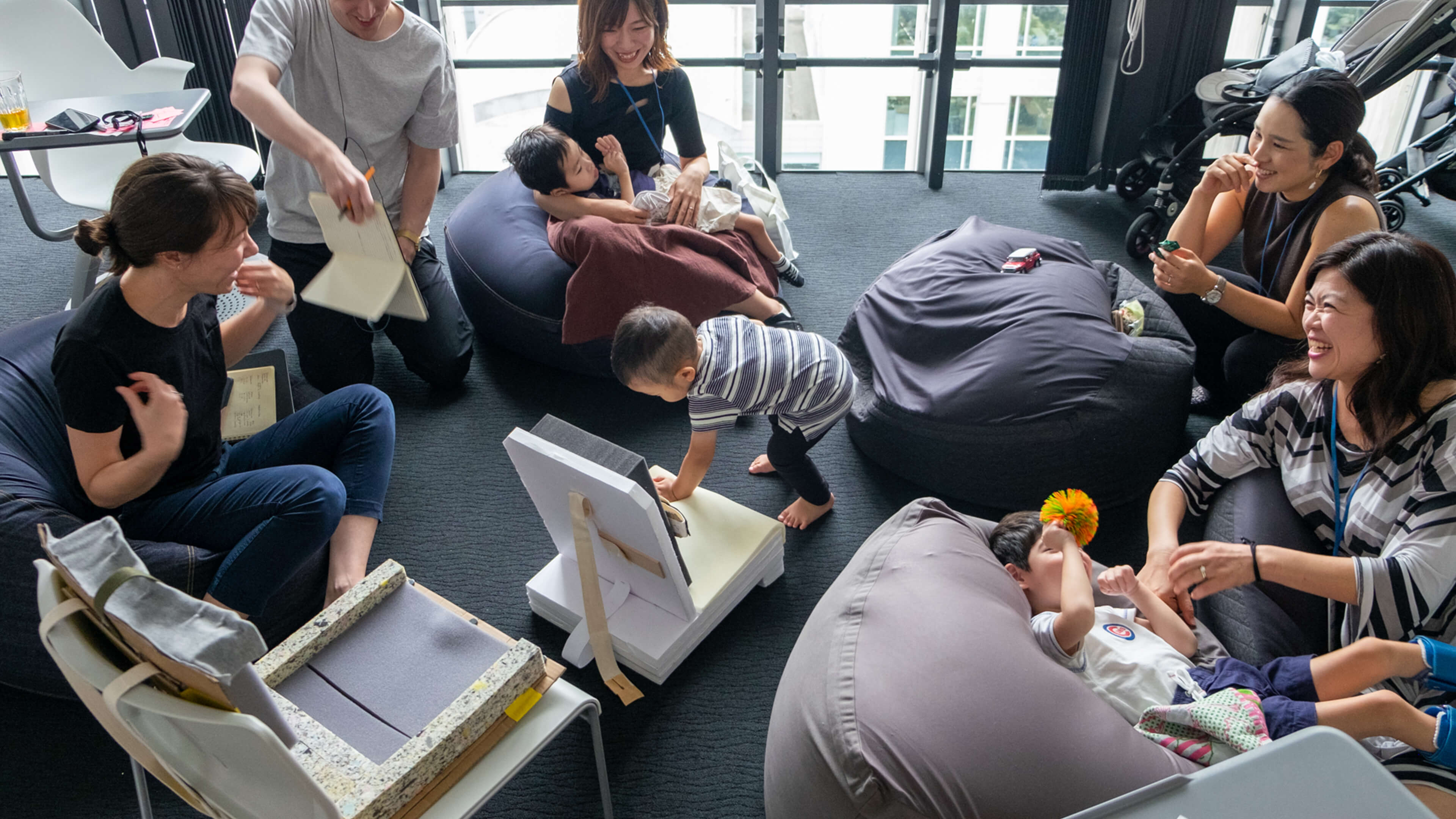
In raising a child with cerebral palsy, Yuri Matsumoto found that her son was separated from other kids during everyday activities. In Japan, children’s products are divided into two categories: those for children with disabilities and those for children without. Matsumoto aspired to close this gap with a product that would allow children of all abilities to use the same chair and be included in the same activities. To realize her idea, Matsumoto needed a strategic design company to refine the chair design, create a compelling visual identity, and arrive at a product road map to help set the business up for long-term success.
The result: a breakthrough product and supporting business that provides access for all kids, both for at-home activities like studying and eating, and also for family outings to restaurants, to the park, and to play with friends. Around the world, there are people like Matsumoto who see the need for better products in a very personal way. IDEO’s role is to help them realize their vision for a more inclusive future.
The Japanese health ministry categorizes 9.6 million people as disabled.
In Japan, children with disabilities are largely excluded from mainstream classrooms. Government subsidized support chairs are designed for posture and stability. Their bulk and rigidity make venturing out with them challenging.
Japanese children have fewer opportunities to learn about what it’s like to live with a disability than in the US.
Launched
officially in April 2022
5
restaurants and cafés in Tokyo are currently piloting the chair
Serving families first
One organization transforms health care, education, finance, retail, and itself to meet the expectations of the people it serves.
There can be no growth for business if peoples’ basic needs aren’t met.
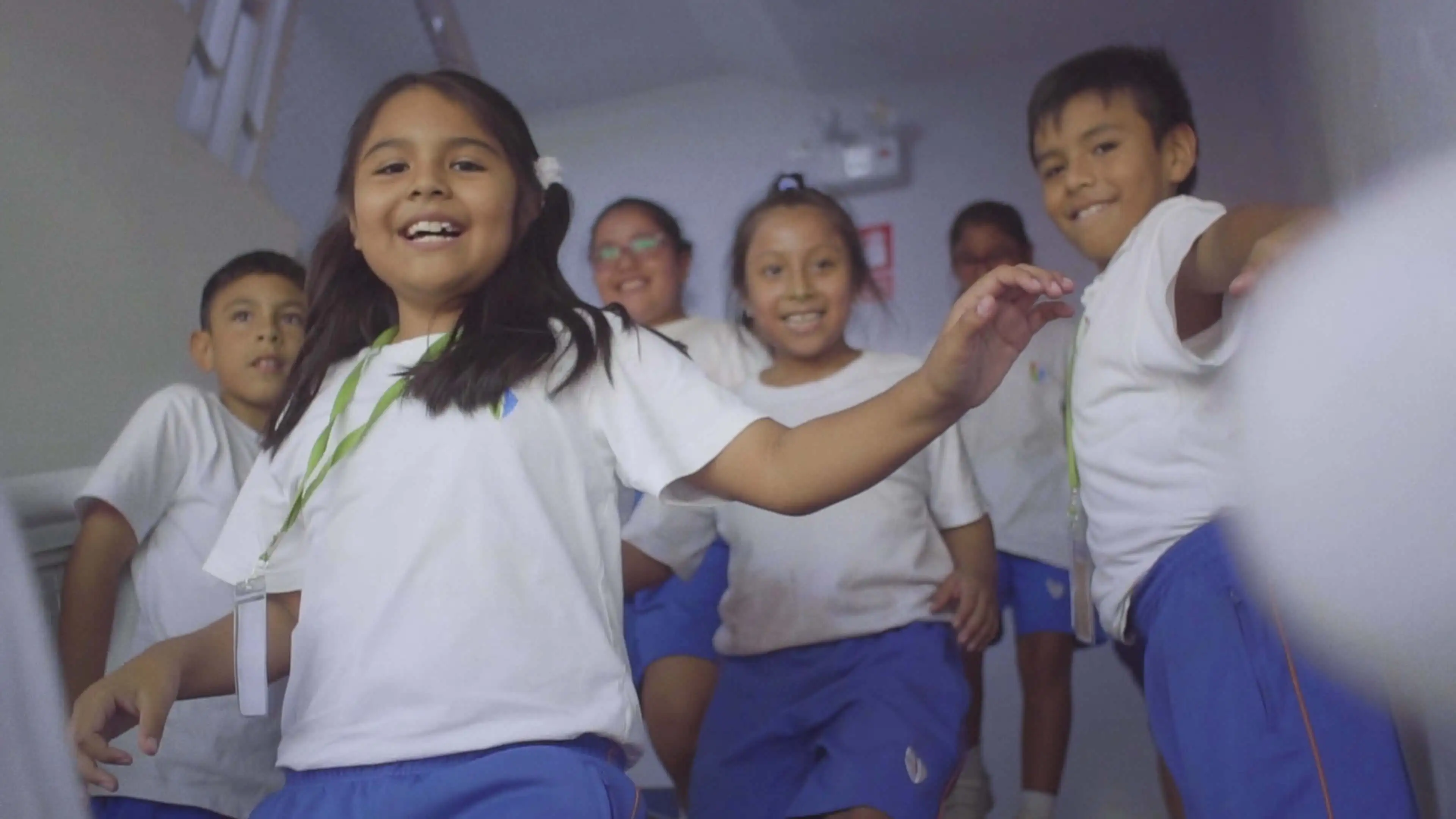
Carlos Rodríguez-Pastor, CEO of Intercorp, came to IDEO with an audacious goal: to address the most fundamental needs of his country’s people and grow his business at the same time. He’d been introduced to IDEO while attending business school in the U.S. and explained that he waited until he had a challenge that felt big enough to knock on our door. Together we built a high-quality school system that would cost just $100 per month—affordable for the middle class. That project convinced Rodríguez-Pastor and his colleagues of the power of human-centered design. Our blended teams launched an innovation hub to introduce new ways of working with the conglomerate’s 90,000 employees. And as we collaborated with Intercorp’s businesses in finance, retail, health care, and education, we learned more about how to serve the everyday needs of Peruvian families. Somewhere along the way, the ultimate design project became the organization itself.
And while Rodríguez-Pastor’s company has grown dramatically, he’s not one to rest on laurels. Instead, the company is becoming more ambitious: upskilling the country’s workforce through an online platform, and fulfilling its climate strategy by investing in Peru’s green economy. (The coastal nation is the world’s third most vulnerable to the effects of climate change.) While the pandemic dealt a blow to Peru’s economy, Intercorp remains steadfast in its commitment to supporting businesses that help the middle class thrive.
Peru’s PISA score of educational quality has grown by 10% in the past decade but still ranks in the bottom 10 worldwide.
In 2020, approximately 68% of the total employed population was in some form of informal employment—jobs that offered no protection and in which workers paid no taxes. Although that percentage decreased over the previous decade, Peru has one of the highest levels of informal employment in Latin America.
55,000
students enrolled across 68 locations in Peru, Mexico, and Colombia
2.5x
increase in revenue from $2.9 billion in 2011 to $8.5 billion in revenue in 2021

How a dessert can radically alter our relationship to data
Climate change you can taste, with DataWagashi.
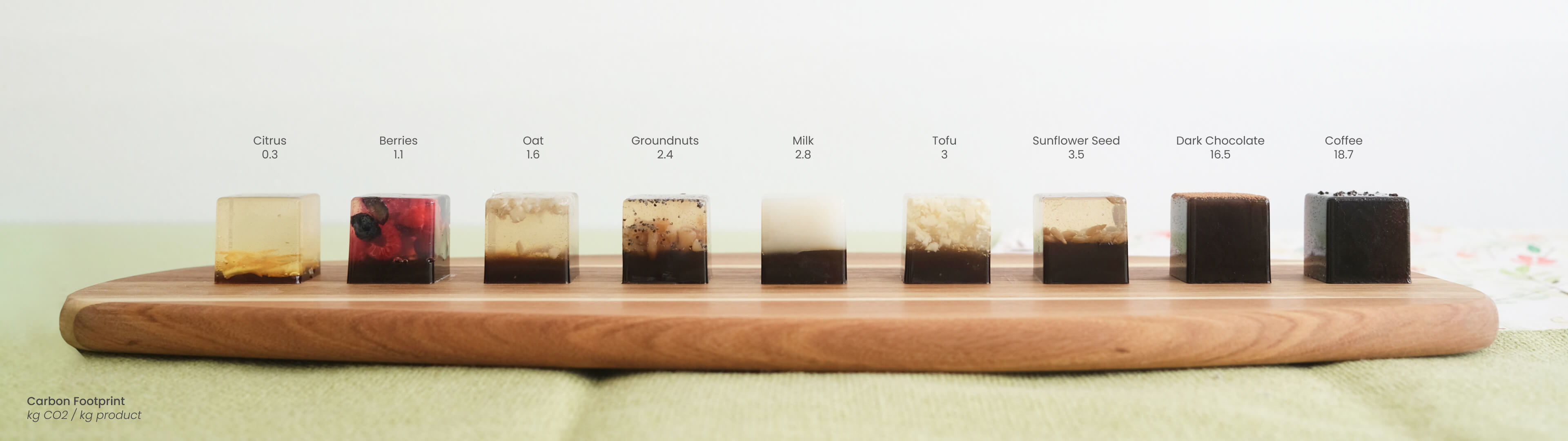
Wagashi is a traditional Japanese dessert considered to embody a microcosm of time, space, and nature, typically made of agar, water, and sugar. In this coffee shop, each dessert features a main ingredient—berries, citrus, chocolate—that determines its primary flavor, with an added twist: the addition of a layer of coffee, which corresponds to the carbon footprint associated with producing this main ingredient. The higher the carbon footprint, the higher the level of coffee in the dessert, and the more bitter it tastes. You can see and taste it.
Making Data Feel Real
This is the concept behind DataWagashi, the design-tech project I collaborated on with Boston-based design technologist Iyang Huang. DataWagashi invites people to experience the future of data communication by bringing climate data to life through all the senses. We go beyond traditional visuals by incorporating taste, smell, texture, and physical interaction, expanding the vocabulary for how we understand and interact with data. With DataWagashi, data transforms from numbers on a screen to a vivd and engaging multisensory journey.

Fighting Data Fatigue
In today's world, the constant doom and gloom surrounding climate change can make it feel overwhelming and disconnected from our daily lives. The complexity of climate data, which is often presented through numbers, charts, and preaching, only adds to this detachment, making the information hard to relate to our senses and emotions. We wanted to find a new, better way to raise awareness about these important issues, and make data communication more intuitive, enjoyable, and fun. So we turned to food, a universally-loved and relatable medium, to make complex environmental data more accessible, foster empathy, and empower people to make better choices. But food is just one of many creative media we can use to overcome data fatigue and craft engaging data stories through design.

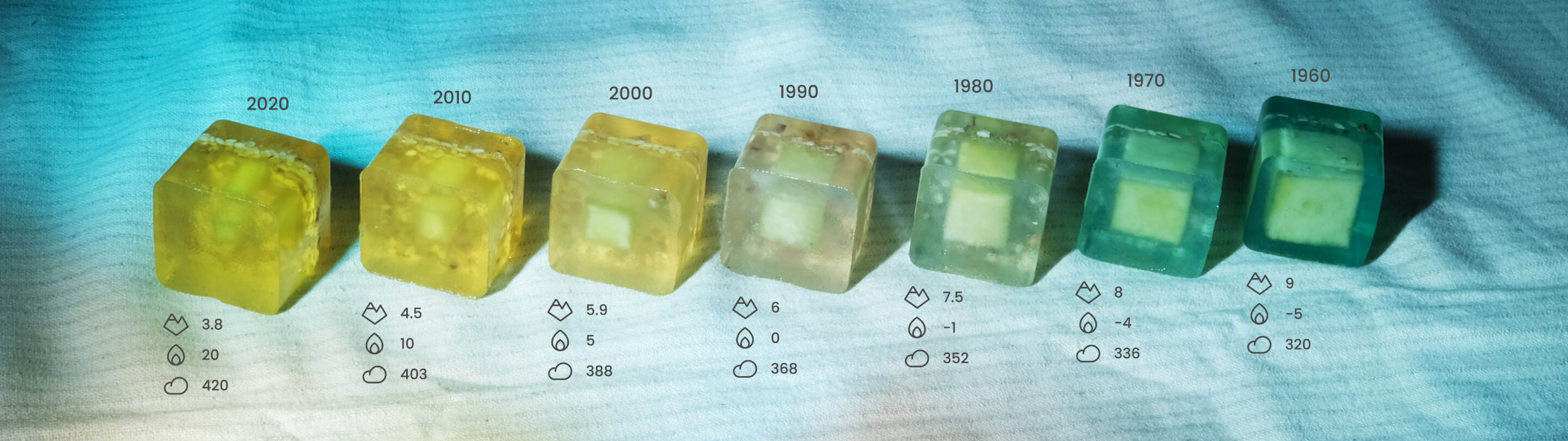
One way we can think about changing how we present information is by transforming text-based information into something capable of carrying multimodal information—like edible objects, but also, sounds, lights, responsive wearables, and much more. Instead of just making a deck that tells people there has been a 20-degree sea water temperature increase, why not design a way for people to directly feel the difference? Imagine experiencing wildfires not through statistics, but by tasting the severity of raging flames through a range of spicy dishes, hearing the before and after of dwindling forest chorus, and touching the roughness of the scorched grass. By physicalizing data, we translate numbers back into experiences that can be seen, touched, and felt, connecting more deeply with the real world.
Introducing the Phygital Experience
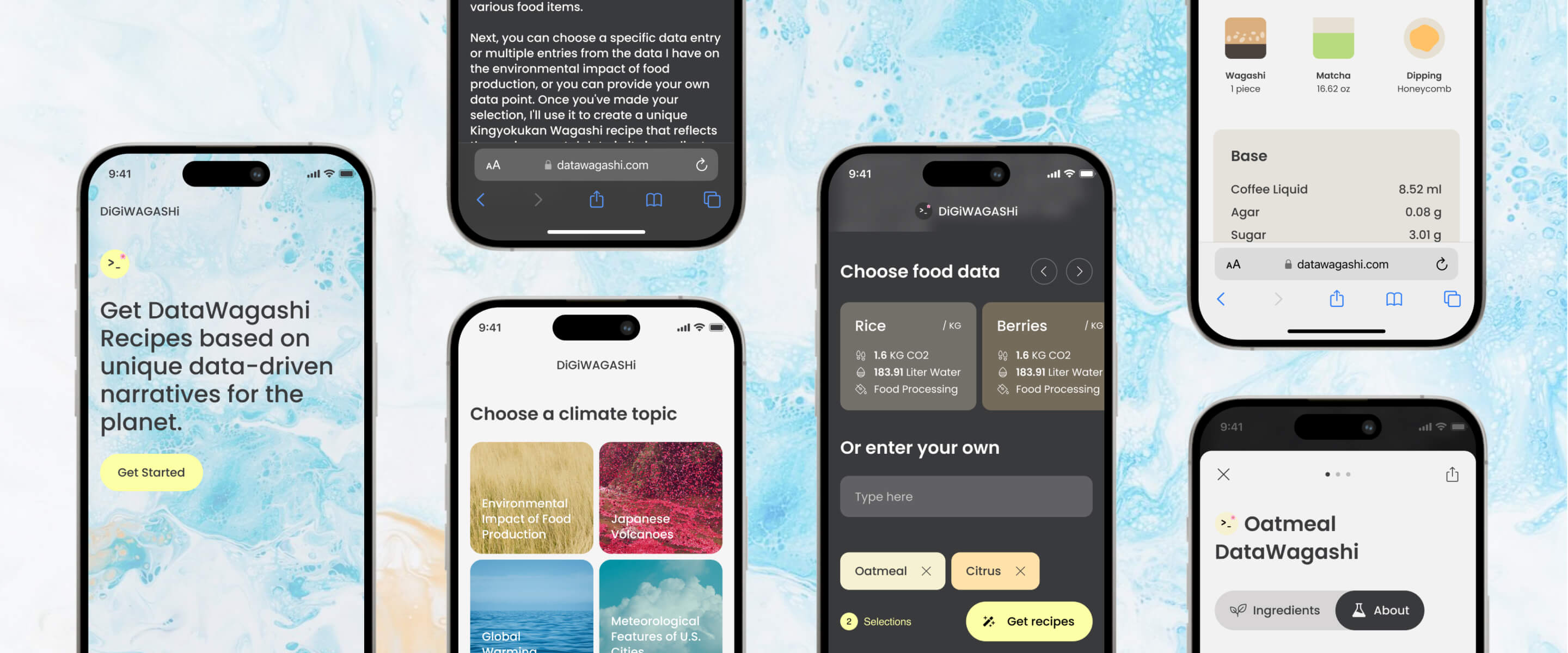
The integration of Generative AI into storytelling introduces a new blend across digital and physical platforms, enabling us to transform large-scale datasets into tangible Wagashi forms. Setting up a few lines of mapping rules allows the data—whether static, real-time, or customized by user input—to dynamically manifest across multiple formats such as graphics, text, sound, and food, bridging the gap between digital information and physical entities. These entities could be data-driven recipes, playlists that shift with real-time data trends, algorithmically-woven textiles, ambience gadgets that adapt to environmental changes, and vending machines that dispense data-inspired poems on bamboo paper, making abstract data interactively tangible.
This approach opens up various real-world use cases and applications in everyday lives, from creating customized dessert recipes and generating climate sonatas to sending personalized gift packages.
The importance of data empathy
DataWagashi is also about democratizing data. By turning data into physical, sensory experiences, we can break down information barriers, ensuring that people with varying data literacy levels can grasp the complex concepts and join in on conversations about climate change and environmental impact. This redesign of data presentation fosters understanding among diverse groups across ages, cultures, and professional training, creating a fair environment for dialogue and learning, and making the intricate world of data an experience open to all.
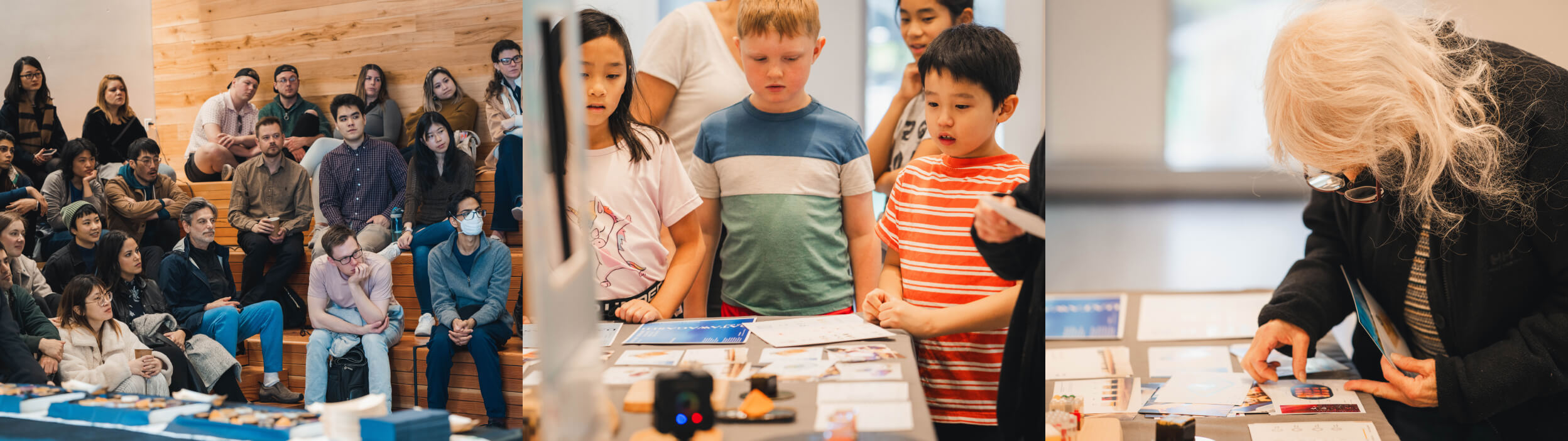
Soon, you might walk into your favorite cafe and order desserts not by ingredients, but by picking up a menu called "Biodiversity Forecast in 60 years," and choosing from "Rainforest," "Desert," or "Ocean." Maybe you’ll have a weekly smoothie subscription that alters its formula based on a synthesis of the average air quality (climate data) and how active you are (personal health tracking data). The next day, a box of unique foods arrives, driven by your data choices, offering delightful surprises. This not only gives you a tasty treat but also connects you to a bigger data story, inspiring awareness and action.
Heading to SXSW 2024? Meet up with us at DataWagashi: Feeling Climate Data through New Design Medium, and learn more about how we can make the data tangible in the most flavorful way for a better climate future.
Picture this: You walk into your favorite coffee shop, check out the desserts, and choose which one to order based on its carbon footprint—just by looking at the confection itself.

The 5 deadly innovation traps—and how to avoid them
A guide to the foibles that kill new ideas.

We interviewed dozens of leaders of innovation, design, and new product teams at multibillion-dollar companies in search of clues as to where the trouble starts: When funding was cut? When teams were reassigned? When groups were dissolved?
Our research uncovered five reasons that innovation portfolios fail—and tips for making sure it doesn’t happen at your company.
#1 The black hole of undefined strategy
In work we did with a Fortune 500 shipping company several years ago, executives decided that the company needed a global innovation team. They committed millions of dollars, hired a startup leader, and assigned 25 people to the team. The startup founder built them a venture based on a new technology that tracks packages. In its first year, that innovation alone made the shipping company tens of millions of dollars.
But when review time came around, executives told the leader they were dissatisfied. Why hadn’t this team done anything to evolve the company’s core offerings? Why had they broken rules inside the company? They fired the leader, even though the higher-ups hadn’t articulated to the team—or to each other—what successful innovation looked like.
Often, this misdirect starts with undefined strategy at the top. Innovation strategy requires a different type of conversation: less focused on big-picture goals; more focused on strategic planning, like how to invest and pursue goals over the next year. It starts with this question: What are the outcomes we want from this work?

#2 The peril of orphaned innovations
All too often, a company creates an innovation team, but doesn’t connect it with the company’s core business. That can create an innovation orphanage: ideas developed in isolation that lack the necessary resources and support to be successful.
We witnessed this on a project with a large automotive company. It had recently acquired a startup that offered private work shuttles. They brought IDEO in to lead an innovation lab around new product possibilities. Together, we built a new venture: a commute benefit that the company could sell to employers to better leverage the startup’s fleet of private work shuttles. But after six months of generating revenue and trying to sell it to the broader startup, it still wasn’t in their pipeline.
The problem was misaligned incentives: The CEO of the automotive company had tasked the innovation to a standalone team, without bringing in the decision makers at the startup. When there’s no ownership or investment from the departments that the innovation is meant to serve, great ideas go nowhere. Instead, leaders need to create a process for identifying and nurturing promising innovations, and define who owns the outcomes and makes implementation decisions before the innovation even begins.

#3 The risk of the wrong talent
By definition, innovation requires new approaches. It often requires new talent, too. Think of the classic example of IBM, often taught by professors Charles O’Reilly and Michael Tushman in their work on ambidextrous organizations. Throughout the 1980s and 1990s, the technology giant would invest in new innovation efforts, like the personal computer, but the company was never able to commercialize or scale the product. IBM’s business leaders didn’t have an entrepreneurial mindset—the company needed talent who had experience taking big swings.
We recently saw this play out at a food manufacturing company. They wanted to try an agile approach to developing new products and tasked a team of operators from the core business to make it happen. The team developed a new breakfast product, which tested well with consumers. But they didn’t feel confident enough to advance to piloting it without further data. Why? The internal team had never launched a new product from scratch, and they were terrified of screwing up.
To avoid the talent trap, it helps to think about three different roles in a workplace: explorers, scalers, and optimizers (with credit to Bud Caddell and Simon Wardley). Optimizers make up about 90 percent of employees; they drive growth and improve operations across the core of an established business. Explorers work in departments like R&D and product development, and are good at spotting new opportunities and developing ideas. Scalers iterate on ideas until they find the right product-market fit. All three roles are essential, but shine at different parts of the innovation process. Explorers work best within innovation teams, until they can pass off an idea to scalers for development; scalers can then institute new processes and tools for optimizers to use within the workplace.

#4 The troubles of a bad handoff
When company leaders get excited about an innovation, it can be tempting to go for an ad hoc implementation, rather than moving through clear internal steps. But the wrong handoff can lead to inconsistencies and inefficiencies. The baton gets dropped. That’s why it’s necessary to design a clear innovation process for how to generate, evaluate, and implement ideas. Here’s a guide to the handoff models we see most often—and when to use them:
The Owner’s Manual: After months (sometimes years!) of work, an innovation team hands extensive documentation over to a new team, which is meant to execute their vision. But be honest: When is the last time you actually read an owner’s manual cover-to-cover? Exactly. This model can work if the innovation doesn’t need to be directly developed by others (insights from a research group, for example), but it doesn’t work well for a new product, where it can turn into a knowledge dropoff.
The Architect: The future owner of the work embeds with the innovation team. That way, they can share the insights from the development process with the new team. This model works well for industries like consumer packaged goods, where a brand manager is responsible for product development from beginning to end.
The Ambassadors: Members from each stage of the innovation embed throughout the project, ensuring that no learning is lost and each phase of work feeds smoothly into the next. This model also builds an awareness of what downstream teams most need.
The Hive: Each project functions as a microcosm of the business, where multidisciplinary teams tackle a challenge from beginning to end. This is common in accelerators and incubators, since they often set up new organizations as microcosms of a parent company, made up of people from every major function.

#5 The danger of short-term metrics
In our experience, innovation teams often have a three-year lifespan. During the first year, everyone is excited, encouraging the innovation team to swing big. By the second year, company leaders are asking, what are your results so far? By the third year, a lot of the top executives have changed seats, and the new leadership doesn’t see a meaningful effect on their core business, so they decide to shut it down.
It’s a short-sighted move: This kind of work often takes years to show impact on metrics like revenue, loyalty, or customer satisfaction. The labs can still show value in the short-term, though, by demonstrating how the work drives efficiency or changes behavior.
This brings us back to the head of innovation at the shipping company, the one who created a startup that netted millions, but got fired because the team hadn’t evolved the company’s core offerings. To avoid this trap, companies need to establish clear metrics to assess progress over time—the number of prototypes a team develops, experiments they run, employee retention or external reputation. Otherwise, you’re cutting down the tree you planted three years ago, before it even had a chance to bear fruit.
Falling into an innovation trap of your own? We’d love to chat with you about it.
(Images created with Midjourney)
A few years ago, we led a project to investigate a question: Where does innovation go wrong?

Rapid prototyping with OpenAI
A leap into the future of product design.
At a time when everyone was concerned about kids using AI to cheat, they wanted to discover how it could enhance learning and teaching for the better.
While we immersed ourselves in the traditional design process—sketching, interacting with students and teachers, and finding inspiration out in the world—it became clear that understanding the AI that underpinned the product was critical to our success. So we dove into using the underlying technology ourselves.
The data scientist on our team started by constructing a simplified Python version of one of Ethiqly's significant features—structured feedback for teachers to share with students—allowing it to interface with a language learning model (LLM). Then, with the help of software designers, we rebuilt and evolved this proof-of-concept prototype to be a real, usable, multi-featured demo of two of the core interaction loops, so that we could test it in research sessions with students and teachers.
The demo became an invaluable tool to uncover student and teacher feedback, to test the look and feel of a new product, and to glean the real capabilities of the underlying technology. In creating the demo, we realized the importance of being able to prototype generative AI products as quickly and as collaboratively as possible.
At IDEO, we believe in augmented intelligence—that it’s possible to bring more delight, ease, creativity, and impact to human work through technology, including AI. To do this responsibly, it’s important to bring a multiplicity of perspectives to the design of these tools. By building a lightweight system that allows designers without technical backgrounds to prototype with LLMs, we could bring more voices, eyes, and hands into the AI-driven product design process. We also shortened our time to first prototype from weeks to days.

ChatGPT: A Tool, Not Just a Trend
Using ChatGPT’s interface can be powerful on its own, but what’s not as well known is that the systems behind it can smooth the process for product development. But for casual users of ChatGPT’s browser or app-based interface, there’s little opportunity to learn about how it works on the back end. It also comes with privacy concerns. It’s clear that more and more of our clients need us to understand firsthand what creating LLM-enabled products feels like, and it’s equally clear that we need to explore how LLMs can push the edges of our own creative process.
So, I designed a simple prototyping interface that shows a little more of the guts behind the chatbox. The goal? To help IDEOers better understand how LLMs, and OpenAI’s APIs in particular, work behind the scenes, building their intuition about what the current spate of AI tools are good at, and what they’re not.
The prototyper interface also adds convenient features like saving a conversation state—allowing designers to download and share their conversation history and rewind to earlier states to try out new content—to encourage the development and sharing of useful and delightful patterns. I named the tool GPT Prototyper.

Teaching Through Prototyping
While using GPT Prototyper’s interface doesn’t involve any coding, it does show its users more about the parts and pieces that can be configured to refine and expand OpenAI’s conversational abilities, from the system note (background information that shapes the LLM’s responses), to the temperature (the sampling scheme that controls the randomness of the responses), and even accessing an external service through function calls (commands the LLM can send that connect it to abilities beyond text prediction).
We’ve created comprehensive video tutorials, interactive Q&A sessions, and embedded usage hints within the Prototyper to make these capabilities more understandable to everyone at IDEO. Every designer, irrespective of their technical proficiency, can now contribute to the evolution of intelligence platforms, thereby ushering in a new era of digital product behavior.
If it sounds theoretical—it’s not. We’ve used customized versions of the Prototyper to demonstrate how LLMs can work within product and service concepts for work in industries ranging from finance to consumer goods.
Since its debut last June, the prototyper has also helped us explore more future-facing ideas, like when we gave a pair of vintage Levi’s jeans a personality and history, letting prospective customers learn about how the jeans were made and where they were worn through conversation. We’ve also used it in service of our ongoing research into Gen Z’s relationship to GenAI.
Having the GPT Prototyper means that teams no longer have to wonder if an interaction is possible–they simply build it and give it a try.
A Glimpse into Tomorrow
Pushing beyond simple productivity gains and into innovation and creativity requires understanding—at least to some degree—of how LLMs work. Tools like the GPT Prototyper are bringing intentionality and speed to our explorations, helping our clients push farther and faster into new possibilities for growth. The tool is also making it possible for us to explore client work without sharing confidential information with unvetted tools—something both we and our clients care deeply about.
Want to learn more about creating a tool for your organization? Get in touch.
Last spring, my team and I partnered with Ethiqly, an education startup looking to explore how AI might help students learn how to be better writers.
How game design can help us reshape life online
Three principles for designing better, more inclusive, people-first digital spaces.
There is a growing desire to address and eradicate the harmful mental health impacts of technology that are increasingly permeating our daily experiences. The surgeon general has issued a warning about the damaging effects of social media on children and adolescents; young adults are telling us that they want more thoughtfully-designed digital worlds that lean into the positive impacts of technology while reducing harm.
But in the Play Lab, we dare to dream. We believe that our digital spaces can be reshaped to help us thrive.
In 2022, the IDEO Play Lab partnered with Riot Games, Joan Ganz Cooney Center, and the Fair Play Alliance to launch the Design for Digital Thriving Challenge with the aim of encouraging changemakers to create healthy, inclusive digital spaces. Our goal was to create a shared foundation for responsible design, so that those creating digital spaces can help people use technology to lead rich, fulfilling lives.
To get there, we brought together experts from the realms of play, kids and families, and design, and connected them with changemakers all over the world. Together, they submitted some 150 concepts for digital features, products, and platforms—like rituals that can help families create healthy relationships to devices and tools for cross-generational storytelling. After reviewing their ideas, hosting co-design sessions with young people, throwing community events, and distributing $200,000 in grants, we realized something: The world of gaming offered great lessons in designing for digital thriving.
We’re excited to share a set of design principles we’ve borrowed from the gaming space, in hopes of helping ourselves and others create better, more inclusive, people-first digital spaces.
1️⃣ Create pauses and thresholds.
Today’s digital spaces aim to hook our attention for as long as possible, with no regard for how it affects our lives. Aza Raskin, the designer of the “infinite scroll” feature that has proliferated across digital spaces, has even noted its negative impact. “One of my lessons from infinite scroll: that optimizing something for ease-of-use does not mean best for the user or humanity.” It is paramount that we design slower online experiences with more built-in boundaries. In the real world, thresholds are key moments in our experiences of place. Think about the entrance to a library, or a coffee shop—they set a tone, whether it is quiet and reflective, or casually social.
Similar thresholds emerged naturally in video games. Early video games loaded so slowly, designers had to create screens that functioned as digital thresholds to the playing experience. Developers soon used these screens to create a refresher for players coming back to a game after weeks, or even months, easing players back into the challenge ahead of them. Modern game designers also leverage pauses and thresholds to hone a player’s story arc, signal unlocking an achievement, or to celebrate progress. Designers of other spaces could borrow this feature to promote a sense of achievement or learning. Imagine an in-app recognition moment that high-fives you for spreading joy to friends by liking their photos, or congratulates you on finishing five new books. What if an app prompted your third grader to share five facts they’ve learned from the videos they’ve watched on manatees with family or friends, or gave them a little quiz on what they’ve learned? Achievement highs are a natural way to help folks step away and build excitement for the next round of engagement.
2️⃣ Level the playing field
In shared digital spaces, users are offered one narrow form of success—think likes, click-throughs, or praise from strangers. Instead of enjoying the ride of new discovery or appreciation for others’ contributions, we find ourselves drawn into besting others, or worse, feeling inept. For healthier engagement, we need to reframe achievement for all skill levels.
Mario Kart does a great job of this: To keep the focus on shared joy, the game gives stronger power-ups to the losing players so that they can catch up and have a chance to win. It’s also a way to offer multiple avenues to define achievement, whether the goal is to try all the alternate routes and stunts, or to see how many other players you can trip up with lightning bolt strikes.
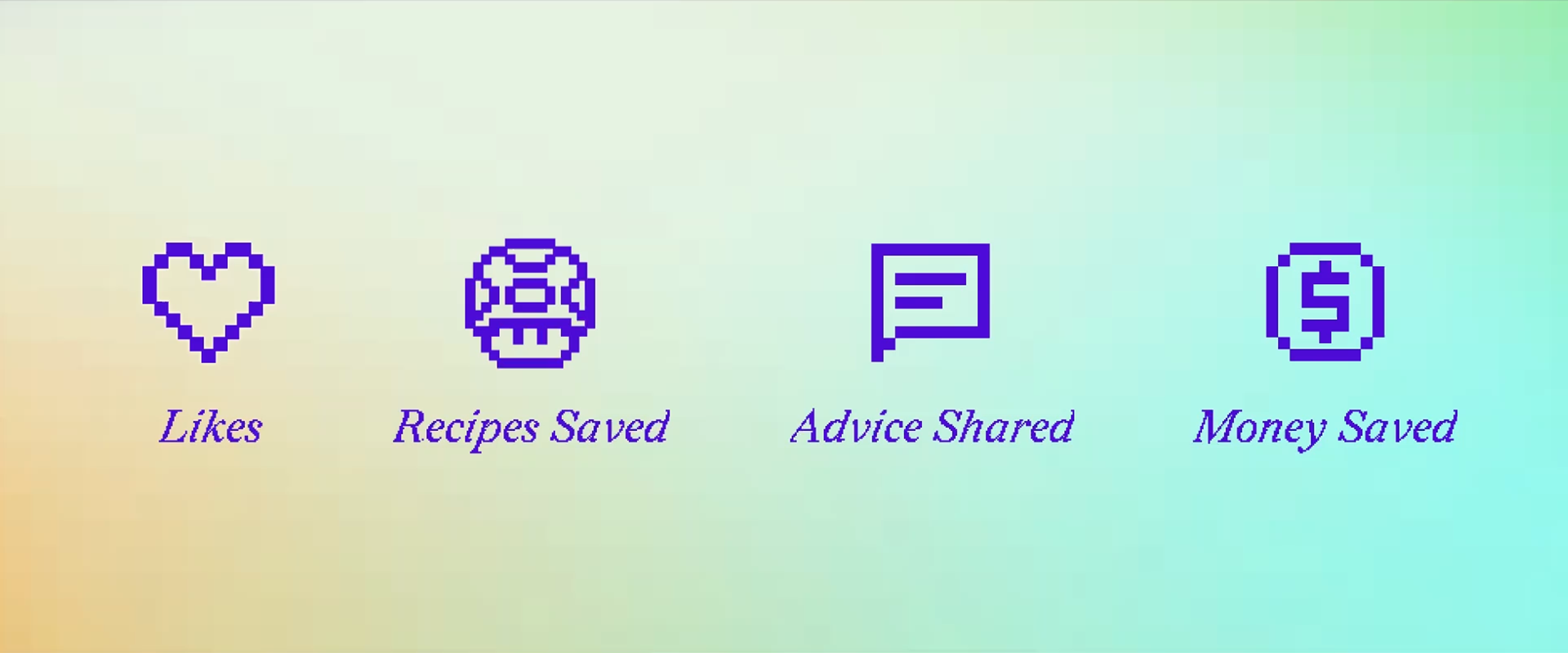
By opening up a broader range of ways to participate, designers can lead users to more sustainable forms of enjoyment. For instance, let’s say that users could set an in-app goal to cook more meals at home. Instead of counting likes for posting Instagram-worthy dinners out, users could be celebrated for the number of recipes they’ve tried, the money they’ve saved, or even the tips they’ve shared with other members. Suddenly, the achievements aren’t about outside praise, but real action, and community-building, too.
3️⃣ Focus on Feelings
Too often, digital designers spend a lot of time creating sophisticated functions, but neglect to create spaces that protect users’ feelings. Instead of feeling heard and understood online, we often feel stressed by the pace of conversation, and lonely because everyone's lives seem so filter-perfect. We feel a validation high when we receive likes, but that feeling plummets and turns into anxiety when the next round of posts go up and our stories are old news.
In our challenge, a group of young people led by Jenny Liu Zhang wanted to address feelings directly, and design a digital game using personal storytelling as play. The game, called Plot Twisters, includes a branching narrative experience that breaks the fourth wall through reflective activities, journaling minigames, and characters that can challenge players to think meaningfully about their lives. It’s meant to serve as a digital destination for regulating emotions, becoming mindful of cognitive patterns, and discovering strategies that align with our values during life’s plot twists. The game is actually a set of tools meant to empower young people to explore and understand their values, land on their personal narratives and be able to communicate those through playful methods.
Imagine if a social media app prompted users to record their feelings before and after they scroll, and asked them to think about what kind of content made them feel positive, and what made them feel less-than? What if it helped them choose what kind of content they follow, and what they block? What if there were optional self-compassion exercises for tough moments? Or if a career networking app nudged you about your own achievements, to combat negative feelings of comparison.
These ideas—and design principles—are just the beginning. We’re continuing to bring them to life, and we’d love to hear your ideas, too.
Want to bring game design-informed principles to your next challenge? Reach out to helloplaylab@ideo.com to chat more.
Our relationship to digital spaces needs repair.

Lindsey Turner
I’m passionate about building brands, products, and experiences that help organizations show up with meaning and momentum.
I help organizations cut through complexity by shaping how they show up, through brand strategy, identity, and storytelling.
Working at the intersection of brand and business, I bring an editorial eye and a bias toward making—turning ideas into tangible experiences that people can understand, trust, and believe in.
My work spans government, healthcare, financial services, media, and consumer goods, from launching Gen Z-focused ventures to building innovation labs and reimagining legacy brands. I relish moments of ambiguity and enjoy translating across teams, perspectives, and priorities to move ideas forward.
I started my career in editorial and digital design, shaping cross-platform experiences and identity systems in publishing and agency environments. That foundation still shapes how I work today: I’m detail-oriented, collaborative, and overreliant on the Oxford comma. I hold a BFA in Visual Communication from the School of the Art Institute of Chicago.

Rachel Young
My work helps organizations see who their products aren't working for—and build the will and the tools to do something about it
For 25 years, I've asked the same question: Who does this design exclude—and what are we going to do about it?
My work spans human-centered strategy, inclusive design, and qualitative research, with clients ranging from Microsoft, Google, and Verizon to the National Science Foundation, and San Francisco Unified School District.
Before IDEO, I taught elementary school in East Palo Alto and spent a decade doing design work with social service organizations—where I learned firsthand what it costs people when systems are built without them in mind.
I am currently writing User Error, a nonfiction book about digital access and the design decisions behind it. I live in Oakland, California.

Brian Pelsoh
I lead with craft, ensuring our work is creatively excellent: rooted in deep human insight and imagination, while also grounded in the realities of business and technology.
My expertise spans brand, communication, and product design across tech, education, the arts, and social impact.
I believe great work demands both high-level vision and obsessive attention to detail, and only happens through collaboration.
I bring an inclusive, hands-on approach and a deep understanding of business, which enables me to consistently deliver excellence while always asking why.
Before joining IDEO, I worked at the brand firms Pentagram and VSA Partners. I began my career as a designer, leading teams at the School of the Art Institute of Chicago and the Milwaukee Art Museum. I hold an MFA in graphic design from Maryland Institute College of Art and a BFA in communication design from the Milwaukee Institute of Art & Design, and have taught at some of the best design schools in the US.

Tony Wong
I am responsible for IDEO’s long-term success in China and working with clients to use design as a tool to enable growth.
I am responsible for IDEO’s long-term success in China and working with clients to use design as a tool to enable growth. Specifically, I have helped Chinese companies design holistic brand solutions through the development of their products, communication, services, and innovation teams, and I have helped multinationals expand their presence and influence in China.
I advise global leaders on developing China-led innovation and capabilities.
In over 15 years in IDEO Shanghai, I have worked on projects that use design to elevate the quality of the experience of healthcare products and services, streamline processes that increase productivity, create spaces and programs that promote and enable inclusive communities, and build next generation mobility solutions that are planet-positive.
Before joining IDEO, I worked at Philips Electronics and the Electrolux Group in Italy, the Netherlands, and Singapore on a number of breakthrough commercial products. I am a member of the Young President Organization in Shanghai.

Building a personal AI for the messiness of life: Sida Li
Most AI products today are built for work—a space with clear problems and established systems. One founder noticed a gap: personal life is messier, harder to systematize, and mostly left behind by the AI boom. So she built Cue, a personal AI that lives inside iMessage and group chats, to go where the other tools haven't.
In this episode, Becca Carroll, IDEO's Chief Strategy Officer, talks with Sida Li, co-founder and CEO of Shared Context Lab, about staying anchored to a human need while the technology around her keeps changing shape, why she treats her business model with the same rigor she'd bring to a product, and what it feels like to build a company at this particular, disorienting moment in AI.
The conversation also gets into how Sida makes design decisions: the language Cue uses to describe itself, the tradeoffs behind building inside iMessage instead of a new app, and a real story about a business idea that didn’t pan out.
This is the second in a two-part series profiling founders from IDEO's Startups-in-Residence program. The first conversation is with Johannes Seemann, founder of Sooner, on designing GenAI for the emotional side of money.

Designing GenAI for the emotional side of money: Johannes Seemann
Most personal financial tools are built to run the numbers and optimize towards a budget. While that works for some, most people experience money as a lived relationship that does not neatly fit into a spreadsheet. Johannes Seemann and Becca Carroll discuss why money is emotional before it is mathematical, and what a human-centered approach to building a generative AI financial product looks like in practice.

The curious leader's edge in uncertainty: Scott Shigeoka
Mina Seetharaman talks with Scott Shigeoka, author of Seek and Head of Curiosity Cultivation at the Eames Institute, about what distinguishes genuinely curious leadership from performative curiosity, how power dynamics shape curiosity, and why practicing curiosity can restore energy rather than drain it.

How constraints make us more creative: David Epstein
Mina Seetharaman talks with David Epstein, author of Inside the Box and Range, about why total freedom often produces average work, how leaders can design useful limits on purpose, and what organizations such as General Magic and Pixar reveal about the relationship between boundaries and creativity.
Looks like you might be in search of something very specific?
Or reset the filters above and try another angle.
Here’s some random inspiration

Podcasts about creative leadership

Articles about the power of prototyping
