
.svg)


Climate action for SMBs
Leveraging data to help SMBs reach net zero.
For more than 40 years, Sage has helped businesses of all sizes navigate complex business environments. While many of its larger customers have the means and the structure to support climate initiatives, many of its smaller customers do not.
Sage wanted to help its SMB customers get ahead of future climate regulations and meet consumer expectations. And building carbon-footprint evaluation and mitigation tools would also dovetail nicely with Sage’s own climate aspirations: cutting its own emissions in half by 2030. Together, Sage and IDEO investigated how the company could leverage the data in its platform to calculate its customers’ emissions, both direct and indirect, and how that information could spur action as they aim to hit net zero.
To get started, the design team went deep with customers running all kinds of businesses—from a taxi company to a champagne bar to a falconry center. Business owners shared that their focus often has to be on the day-to-day, a series of small decisions that, when added together, lead to business success. For many, tackling a problem as complex as climate change felt overwhelming. IDEO and Sage synthesized those insights and began working across verticals and products, bringing together experts from marketing, technology, sustainability, and operations to build out new concepts. With the help of two carbon accountants, the team worked to figure out how existing data could inform customers about both their direct and indirect emissions, which can be harder to track. Given how tight SMBs’ margins are, they focused on how that knowledge could fuel emissions-cutting changes that also save money, giving businesses extra incentive to take action. Together, the team created a roadmap of customer outcomes and experience guidelines to help shape future products.
Sage has taken that work forward, launching Sage Earth, a platform that aims to help businesses measure, manage, and mitigate emissions—even across supply chains. With carbon accounting now built directly into all Sage Accounting and Sage for Accountants products in the UK, Sage has made climate action practical and accessible for millions of SMBs. By automating emissions measurement and reporting, Sage Earth removes barriers of cost and complexity, empowering business owners and their accountants to stay competitive in supply chains where up to 95 percent of emissions occur.
From co-developing the UK Voluntary SME Carbon Reporting Standard to launching a Carbon Accounting API, which gives banks, fintechs, and other platforms access to Sage’s Carbon Engine, Sage is embedding sustainability into the systems people already trust—helping hundreds of thousands (and rapidly increasing) small businesses turn climate ambition into everyday action.
Small- and medium-sized businesses—companies with fewer than 500 employees—make up about 90% of the world’s businesses, according to U.N.-backed SME Climate Hub.
Two thirds of small businesses don’t know how they’re going to reach net zero, and lack the resources to do so, according to a recent survey by SME Climate Hub. Still, the majority reported they want to act on climate, recognizing it can help them become a more resilient business.
Large companies may be the biggest emitters of greenhouse gasses, but an estimated 80% of those emissions come from supply chains—often made up of smaller enterprises.
Scaling rapidly
in the three years since the launch of Sage Earth, which is now being used by hundreds of thousands of businesses
World's 1st
open-source hybrid emissions factors dataset, Carbon Commons, led by Sage, helps SMBs calculate carbon footprints using existing data

Reframing menopause
QVC works to change the narrative, while meeting customer needs.
Menopause is much more than a biological transition—it is a profound shift that often arrives just when people experiencing it start to feel invisible. Because it has long been shrouded in darkness as an unmentionable female affliction, those going through menopause often feel unprepared and alone.
Recognizing that its customer demographic makes QVC uniquely positioned to surface conversations and provide support to those dealing with menopause, the video commerce retailer partnered with IDEO to figure out how it could not only meet customer needs, but also flip the conversation on midlife. To learn more, a team of female design researchers held in-depth interviews with folks experiencing it firsthand. The people they spoke to had limited information about what was going on with their bodies, and in some cases, it took years before they understood that symptoms they were experiencing were related to menopause. Respondents also reported that midlife brought a change in social status and the feeling of being boxed in by stereotypes.
QVC and IDEO worked together to design an integrated suite of offerings that could give customers a safe space to discover and share more about menopause. That included an on-air programming series called “Menopause Your Way,” where QVC could support those going through menopause in the privacy of their own homes, a digital landing page with useful solutions, and social media campaigns to help women share and learn more about each others’ experiences. Because people experience menopause and choose to manage it in many different ways, the team wanted to create an integrated ecosystem of content that women could access according to their unique journeys. The new offering helped QVC reach its core audience with solutions and relevant products, and created a space where menopause is out in the open and part of an ongoing conversation. And in the process, QVC evolved to become a more customer-centric company, putting its audience and their needs at the heart of its offerings.
9/10 of British menopausal women say society and brands overlook them.
1 in 2 women in the UK admitted they didn’t know what was happening to them during perimenopause.
Nearly 40% of menopausal women are being prescribed antidepressants to help manage their symptoms, despite 4 out of 5 describing the treatment as “inappropriate.”
Season 2
a series focused on menopause is now in its second season

Healthy youth
Improving digital tools to help practitioners deliver critical mental health support to children and young people.
Healthcare is a complex web of institutions, interaction, relationships, and services. In England, the National Health Service consists of thousands of separate organizations spread across the country. This fragmented structure means that rolling out digital tools and using them to their full potential can be difficult.
NHSX approached IDEO and Public Digital, IDEO’s sister company, for help designing user-centered resources that would empower Children and Young People’s Mental Health (CYPMH) practitioners to use digital tools more effectively, shifting service design from a reactive to a proactive process, and allowing each regional organization to create the best digital services for their children and young people.

The team took a human-centered approach, tapping into the perspectives, challenges and needs of NHS practitioners and leaders across the system over months of research. They then designed a set of accessible, straightforward online resources, courses, and templates that would enable a practitioner to start their own local service transformations. These included everything from practical advice on improving users’ experiences of CYPMH, to teaching methods for service design, to content focused on achieving digital transformation at scale.
The resources were easy to implement and replicate, allowing mental health practitioners across the country to seamlessly integrate physical and digital, create firebreaks in the system, and better bridge the gap between seeking care and receiving it. They were designed to evolve over time, and the work is replicable across the NHS, with the potential to touch millions of lives.
By empowering practitioners to utilize these digital tools to ease the burden of care, NHSX plans to create a positive ripple effect across the entire NHS, its partner organizations, and the country at large.
In a study undertaken in July 2020, the first summer of the COVID pandemic, the NHS found that clinically significant mental health conditions amongst children had risen by 50% compared to three years earlier.
More options, more access
digital resources are helping children and young people access more options for their mental health care

The future of air travel
Reinventing supersonic flight with Boom.
It’s not easy to shift the paradigm for an entire industry. But when a company comes along that promises to reinvent air travel, it opens up a blue sky of opportunities. That’s the flight path for Boom Supersonic, which is thinking big about how passengers arrive at their destination not only faster, but also with a greater sense of wellbeing.
To really comprehend the experience of flying in the unique contoured profile of this ultrafast jet, and to help Boom make key decisions about the design of the plane, the IDEO team believed that you had to go beyond algorithms and schematics—you needed to actually board it.
Using a “build-first” approach, the team quickly constructed a full-scale mockup of the fuselage from plywood and foam core. That became a prototyping platform to test multiple seating configurations, galley and lavatory size and placement, luggage storage solutions, and other concepts that would differentiate and add value to the passenger experience. For the first time, the Boom team was able to set foot in its own aircraft and truly understand the experience from the perspective of its clientele. The exercise allowed the Boom team to confidently make decisions by comparing multiple cabin configurations and options in full-scale.

Throughout the project, Boom and IDEO invited future travelers aboard to interact with the prototype and offer feedback. That input culminated in a more refined model, with augmented windows, moonroof, in-flight entertainment screens, and sound design—all further augmented by a Virtual Reality component to allow our future travelers to fully immerse in this new experience.
Together, Boom and IDEO brought a sneak peak to the Farnborough International Airshow, a biannual exhibition for the aerospace, aviation, and defense industries. The event was an opportunity to give the industry and potential customers a preview of Boom’s innovative new jet. In collaboration with the client, an exhibition architect, and a digital production agency, the team created an immersive environment designed to make the Overture experience feel tangible, eliciting the wonder of this revolutionary plane.
Boom’s presence at Farnborough not only underscored the Overture’s progress but provided an inspiring glimpse into the future of air travel. During the air show the company announced the production Overture design, a market-expanding alliance with Northrop Grumman, and agreements with tier one suppliers Collins Aerospace, Safran, and Eaton. Not long after, Boom received its largest order to date, this one from American Airlines.
The prospect of getting to London in time for dinner just got a little closer.
Boom plans for Overture to get from New York to Frankfurt in just over four hours instead of the eight hours spent on a commercial jet today.
The Overture supersonic jet has a cruising speed of Mach 1.7, about twice as fast as today’s commercial planes. Overture is built to fly on 100% sustainable aviation fuels (SAF).
20 Overture deposits
made by American Airlines, joining current customers United Airlines and Japan Airlines
How We Designed a Studio Space That Reflects Our Values
At IDEO, our values are the guideposts for everything that we do. And that commitment extends to our office spaces.
As with any design challenge, we started by breaking the big question—what matters to us—into smaller questions. How could we bring the intimacy of our much smaller former office into this new space? How can we use our studio to bring diverse groups together, both within our office and in the broader community? And how do we celebrate our commitment to collaboration and making?
We created a list of priorities, and, together with our architects Feilden Fowles, found ways for our studio to reflect our values and support our work. Here’s a glimpse into what we focused on, and how it affected our design.
1. Focus on storytelling
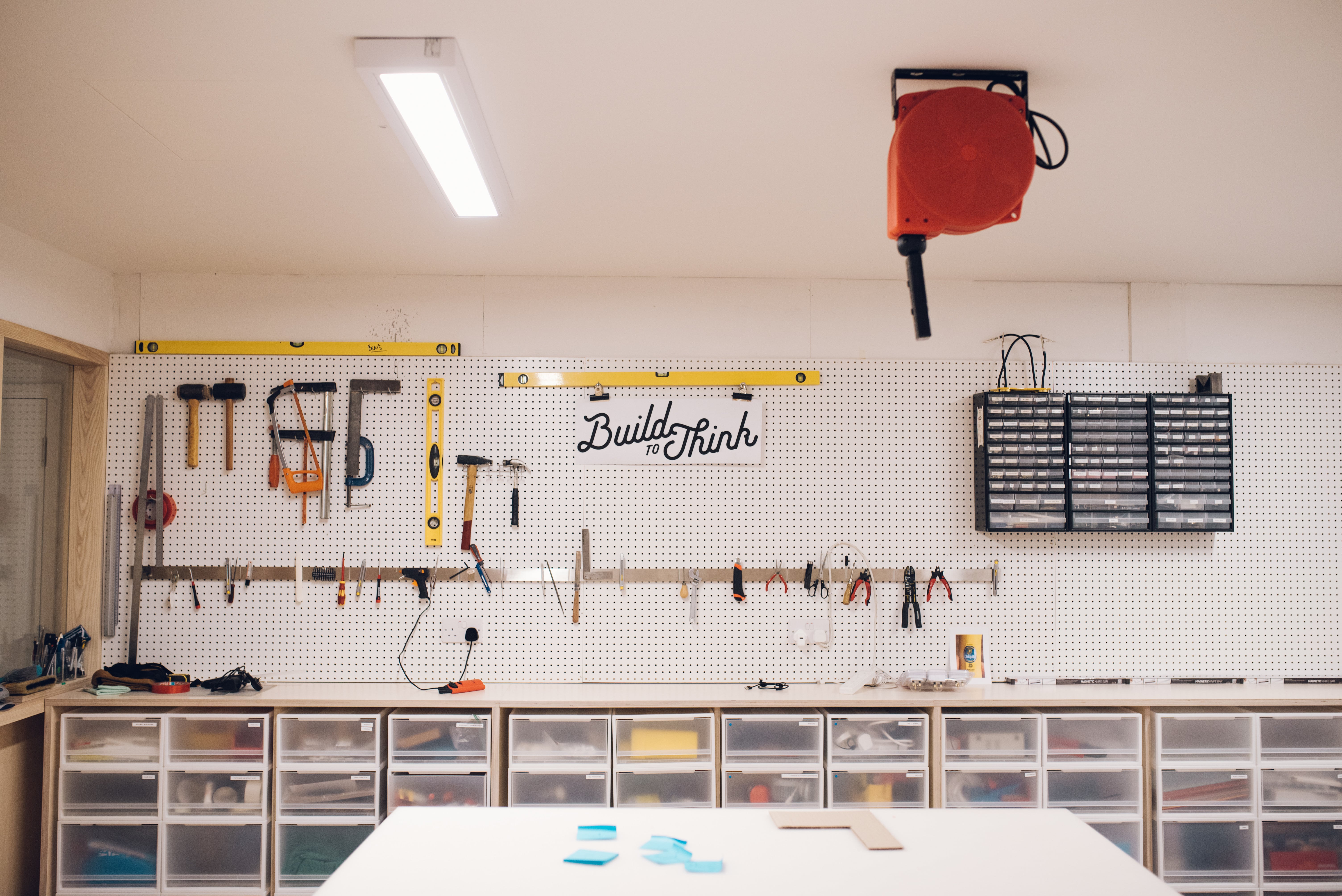
The goal of the overall design was to create a natural flow through the new space that works as a design narrative, explaining how IDEO works and what it cares about—from that first view of the maker space to social gathering areas to projects and meeting rooms. The design is also open enough that it’s easy even for visitors to navigate without signs or a map.
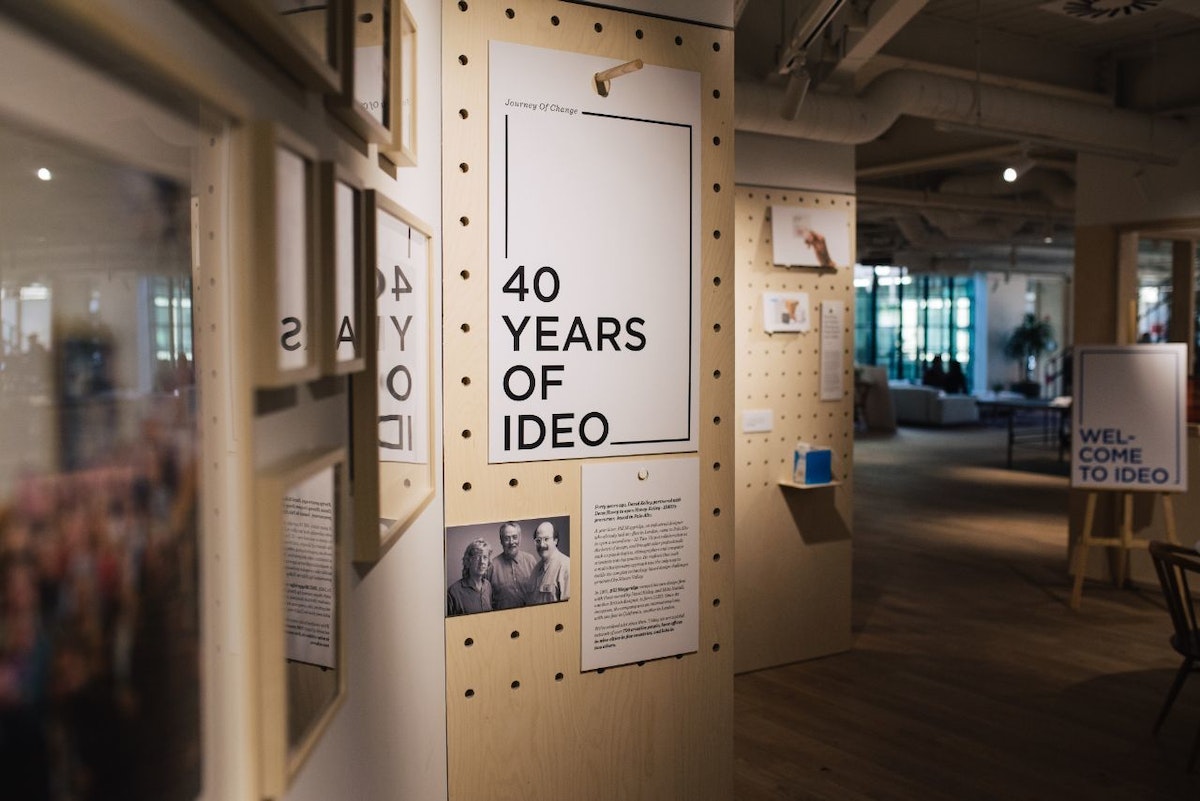
“We wanted to showcase IDEO’s creative innovation on immediate arrival,” architect Fergus Feilden says. To that end, when visitors and employees walk in the door, they see a presentation wall with display niches that showcase the London studio’s work, as well as small meeting booths outfitted with pegboards for additional exhibitions. “We also brought forward the workshop into this area, and designed it to be as open as possible in order to immediately celebrate the making that takes place at the heart of IDEO’s design process,” he says.
2. Prioritize collaboration
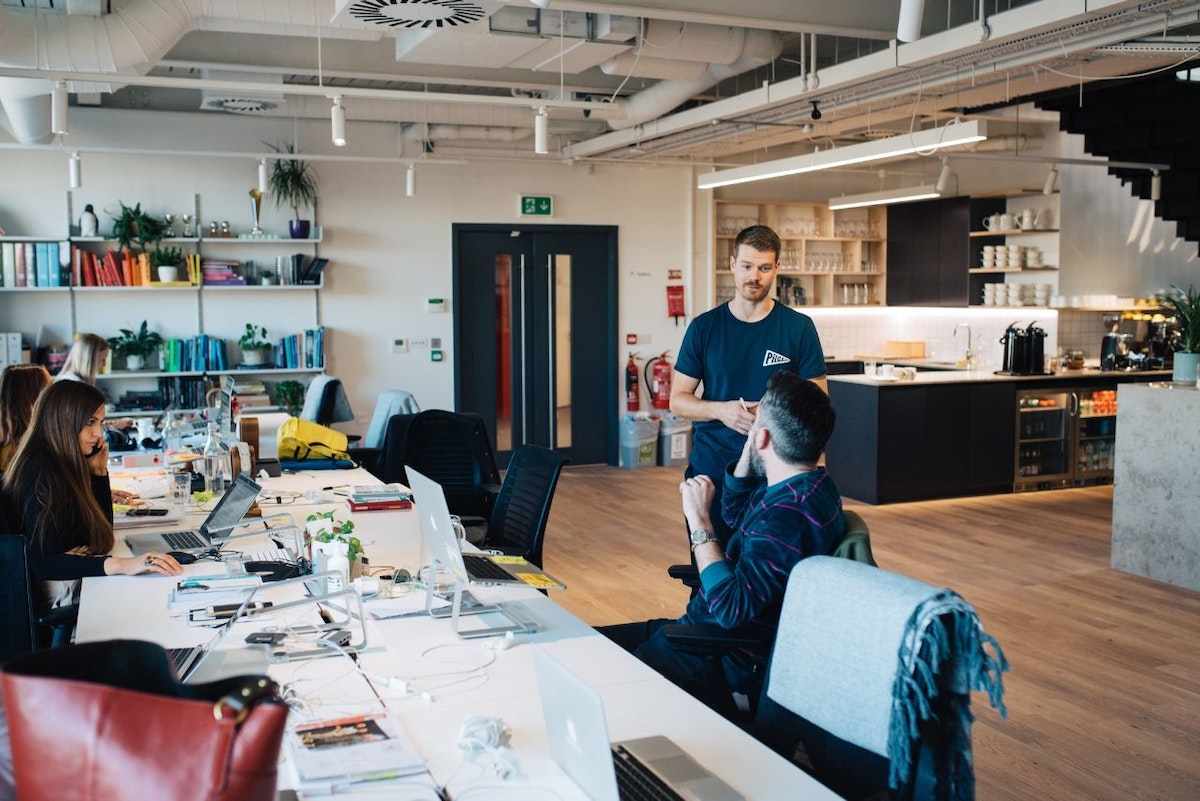
Because our work is built on collaboration, it’s very important to us to provide teams with dedicated spaces they can make their own. We wanted these spaces to be open, flexible and inviting, and we purposely limited enclosed area to only those that are strictly necessary. Our work often entails not only helping to create a new product or venture, but building a team around it, so the spaces are meant to facilitate collaboration. “The layouts are fundamentally social, and even the divided rooms have glazed walls or windows to introduce natural light and maintain the ethos of transparency throughout,” Fergus says.
At the same time, because we often work on confidential client work, it’s important to be able to keep some projects private, so these spaces have been designed so that they can be closed off if necessary. Aside from the designated team spaces, there are also several break-out areas with soft furnishings or working tables for group meetings or individual workspace.
3. Talk less, do more
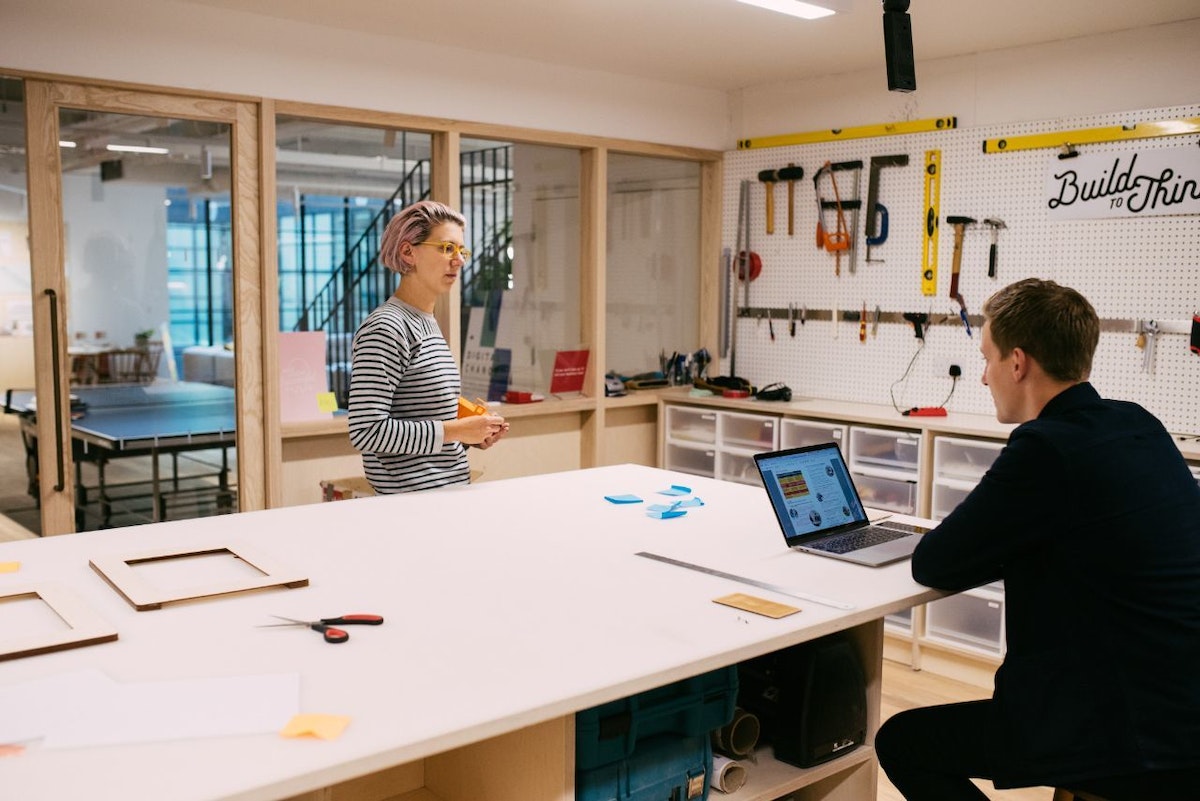
We wanted to make the workshop as accessible as any of the social spaces so that there are no barriers to making ideas tangible early. The idea is that you can walk directly from a meeting into the workshop and start building. It was designed to be neutral and understated—the life and color come over time from the projects and prototypes are teams are working on.
We’ve also limited meeting rooms to only two. When clients and partners come into our office, we don’t want them only to see the inside of a conference room. We want our teams to bring them into their work spaces instead. We also saw that many meeting rooms were actually mostly used for video calls with one or two people, so we put in phone booths that can fit up to four instead.
4. Embrace ambiguity
We know as well as anyone that a design that seems ideal today might not support the work we take on down the road. “A key part of the original brief was to allow a ‘loose-fit’ transition into the new space, and to provide a backdrop to IDEO’s creative process—not an over-designed space, and one that doesn’t shout,” Fergus says.
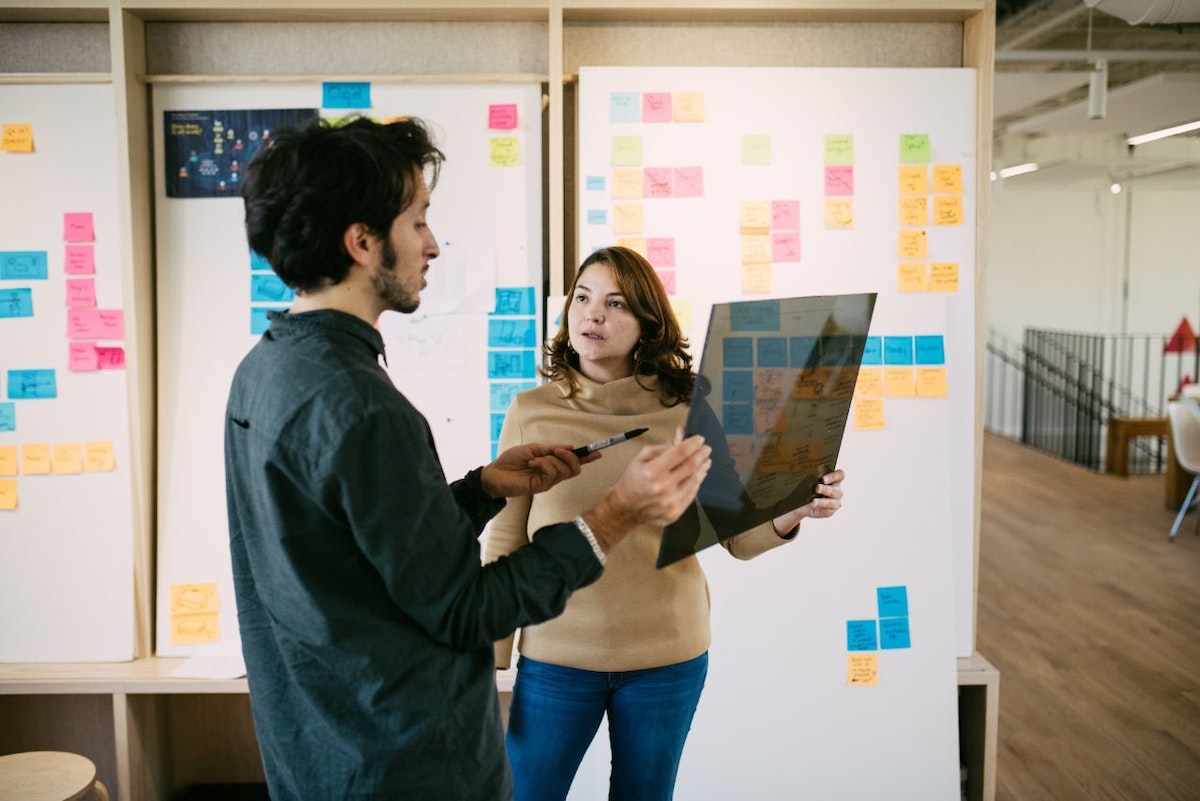
By keeping open space, making designed work areas extremely flexible, and making sure to maintain social spaces for everything from events to client dinners to casual coffee with coworkers, we’re keeping the doors open for all kinds of projects and functions. “In theory the whole studio is flexible to host different sorts of working including the coffee bar, dining and terrace spaces as well,” Fergus says.
Above all, though we wanted to create a space that our community could bring to life—the teams in our studio, the clients we work with, and members of our greater community. We’re a company founded on the idea of working with friends, and this space was built to enable that philosophy.
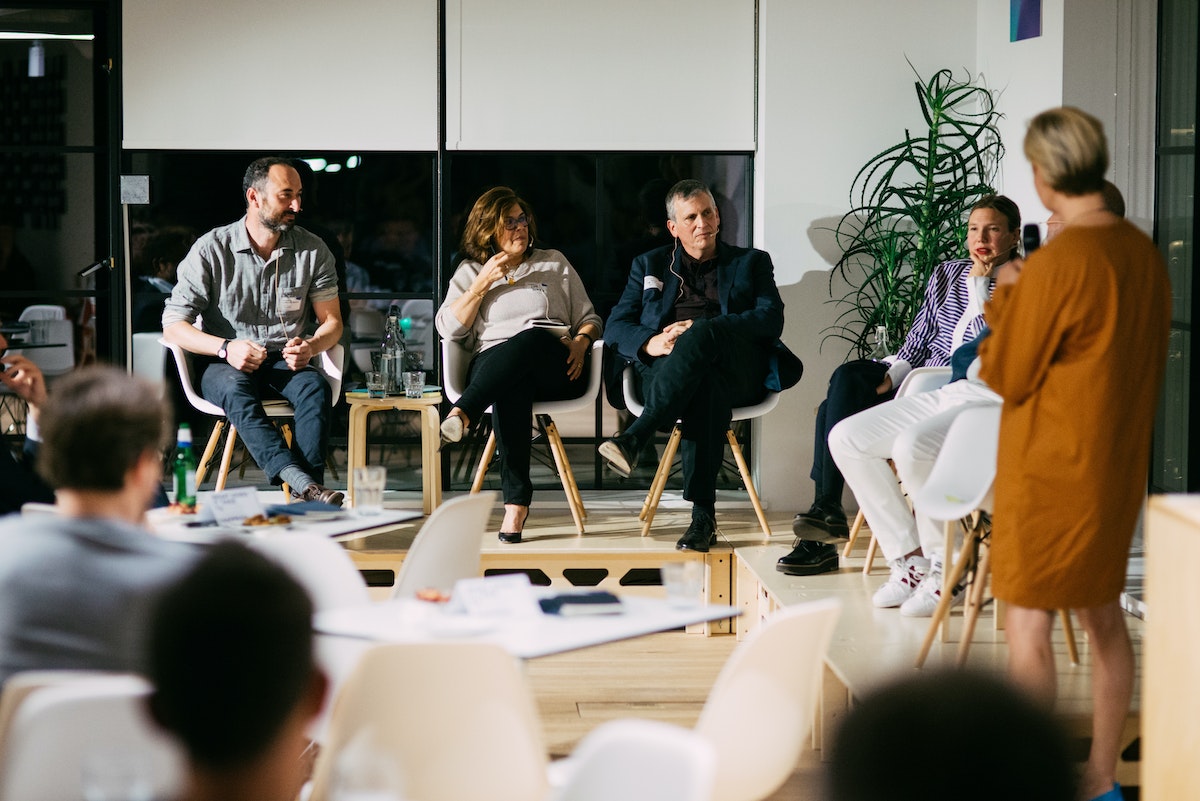
At IDEO, our values are the guideposts for everything that we do. And that commitment extends to our office spaces. As our London studio looked to create its new home, we envisioned an environment that embodies design and innovation, serves as a hub to welcome clients and visitors, and sets a tone for our employees to do their best work. And, as designers who work on projects that help shape the future, we also wanted to be sure that the design would be flexible enough to fit our needs and work for years to come.
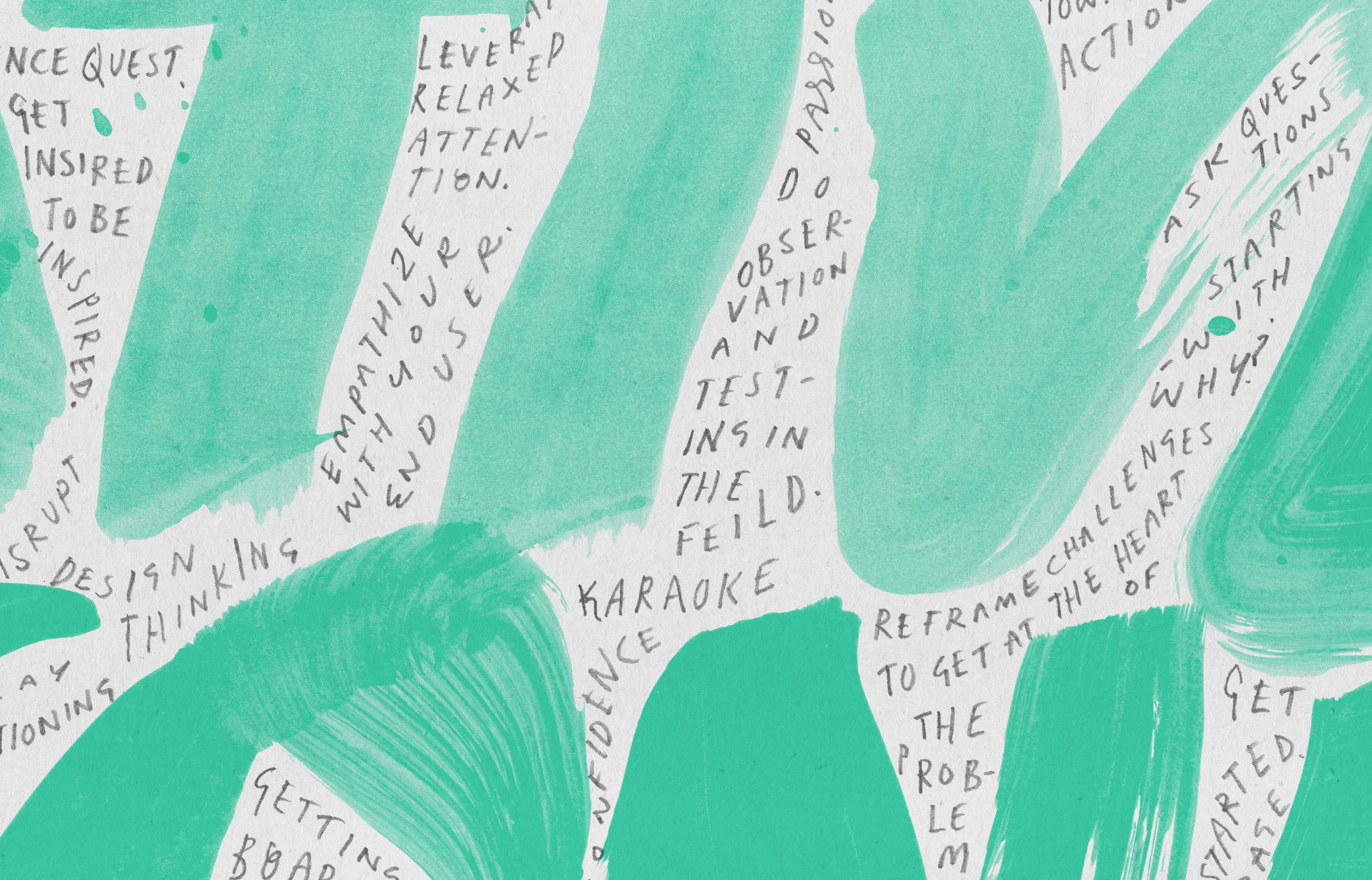
Build Your Creative Confidence: Empathy Maps
A fundamental principle of innovation or creative thinking is to start with empathy. On the path from blank page to insight, sometimes people need a tool to help with what comes next: synthesis.
Creativity Challenge # 4: Lessons from observing human behavior
A fundamental principle of innovation or creative thinking is to start with empathy. On the path from blank page to insight, sometimes people need a tool to help with what comes next: synthesis. You’ve gone into the field in search of knowledge, meeting people on their home turf, watching and listening intently. But synthesizing all that data can be a little daunting.
Take control of your field observations by organizing them with an “empathy map”—a tool inspired by IDEO and further developed at the Stanford d.school.
Tool: Empathy Maps
Participants: Solo or groups of 2-8 people
Time: 30 to 90 minutes
Supplies: Whiteboard or large flipchart, Post-its, and Sharpies
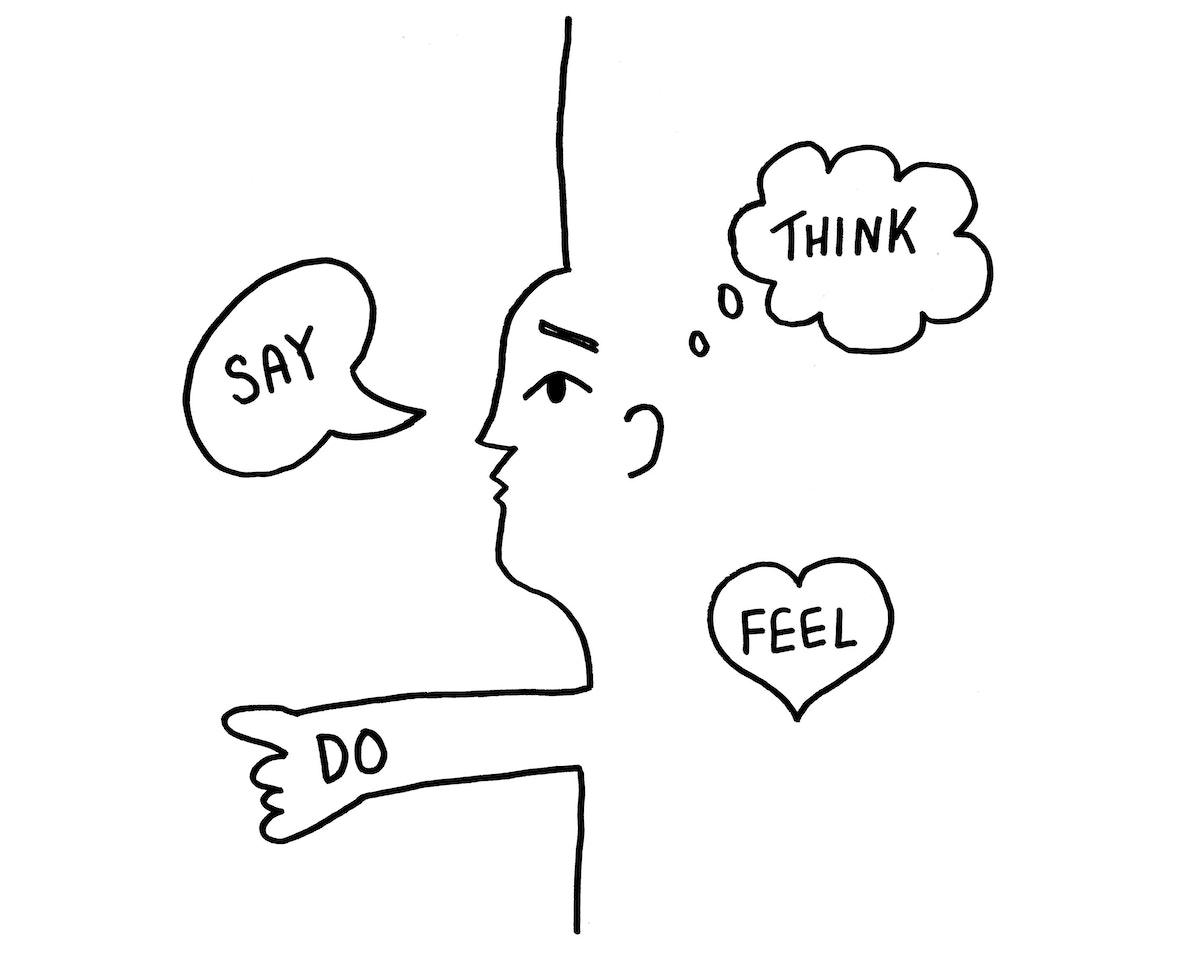
Instructions
Step 1: On a whiteboard or a large flipchart, draw a 4-quadrant map. Label the sections with “say,” “do,” “think,” and “feel,” respectively.
Step 2: Populate the left-hand quadrants with Post-its that capture each of your individual observations—using one Post-it per idea. Place observations of what people do in the lower-left quadrant, and place observations of what people say in the upper-left quadrant. Try color-coding positive things with green Post-its, yellow Post-its for neutral, and pink/red for frustrations, confusion, or pain points. The key is not to record everything, but instead to capture what stands out.
Step 3: When you run out of observations (or room) on the left side, begin to fill the right side with Post-its, inferring what people think in the upper-right quadrant and what they feel in the lower-right quadrant. Pay attention to people’s body language, tone, and choice of words.
Step 4: Take a step back and look at the map as a whole. Try to draw some insights or conclusions from you have just written down, shared, and talked about. These questions serve as a good prompt for a discussion of insights. What seems new or surprising? Are there contradictions or disconnects within or between quadrants? What unexpected patterns appear? What, if any, latent human needs emerge?
Tips from the Field
The key to extracting value from observing human behavior is to come away with real insights. This can be challenging, but the exercise is worth the time and effort. As you build up confidence, ask yourself, “Is this a real insight?” Our advice is to look for takeaways that help you see your topic or subject from a new perspective. Try to come up with several that feel novel. As you spend more time with others exploring your topic or subject, patterns will emerge. Some insights will prove to be more pivotal than others.
This post was taken from Chapter 7 of Creative Confidence. Purchase the book for more on how to use creativity to solve problems.
Everyone is creative. This belief runs through everything we do at IDEO, and in 2013, it led my brother David and me to write a book that would help others—even those who don’t think of themselves as “creative types”—to unleash their creative potential. Creative Confidence has inspired thousands of people to adopt a creative mindset and apply it to the diverse real-world challenges they face. In this series, we’ll share some exercises from the book that can help you approach your challenges from a new perspective.

Thoughtless Acts: Going With Gravity
Thoughtless Acts: Going With Gravity. The intuitive ways we adapt and react to things in our environments

It’s yet another summer at our seaside house, and my nonna is heading to the gardens to pick up some herbs for her pesce al forno. She says that freshly picked lemongrass adds a completely new flavor to her signature dish.
At 12 p.m., she walks down the rocky stairs and heads to the herb bush she carefully planted 33 years ago, the same year she bought the villa and restored it to host our ever growing family tree. As I watch her, I witness something unusual that I have never seen her doing before.
She is literally hanging from the muretto, or wall. Nonna is 94 and not really a geriatric athlete, so I run towards her. “Tutto bene, Luca!” she says as she bends back up. She tells me that this is ‘her new way’ of picking herbs in the garden.
With age, small actions become a big effort, so leaning down or bending started to become an obstacle to her recipes. The dwarf wall serves the purpose of protecting her back from injuries and keeping her from falling. As she nicely puts it, “I use gravity to my advantage. At my age, you have to find ways around things, to keep feeding your family the way they deserve.”
Human-centered design requires us to observe human behavior with beginner's eyes, so that we can spot the innate ways people interact with the world around them. We call these intuitive and unconscious reactions Thoughtless Acts, and IDEO designers collect photos of them to inspire their work.

A Designer’s Daily Diary of Learning to Draw in VR
Practice may not always make perfection, but it definitely builds proficiency, as this new IDEOer discovered.
Drawing in VR is a whole new world—one that feels as challenging and daunting as drawing once felt. Luckily, having progressed through hard work in one artistic field, I now trust that the same steady pursuit can get me to a new level in VR.
I recently joined IDEO’s New York office, and part of my job is to keep current on emerging technologies. So I took advantage of our studio’s newly-mounted VR station and spent a week drawing in Tilt Brush, Google’s 3D painting VR app. Together with IDEO’s creative technologist, known as Fuzzy Wobble, I came up with a goal: to draw a 3D portrait of IDEO’s David Kelley.
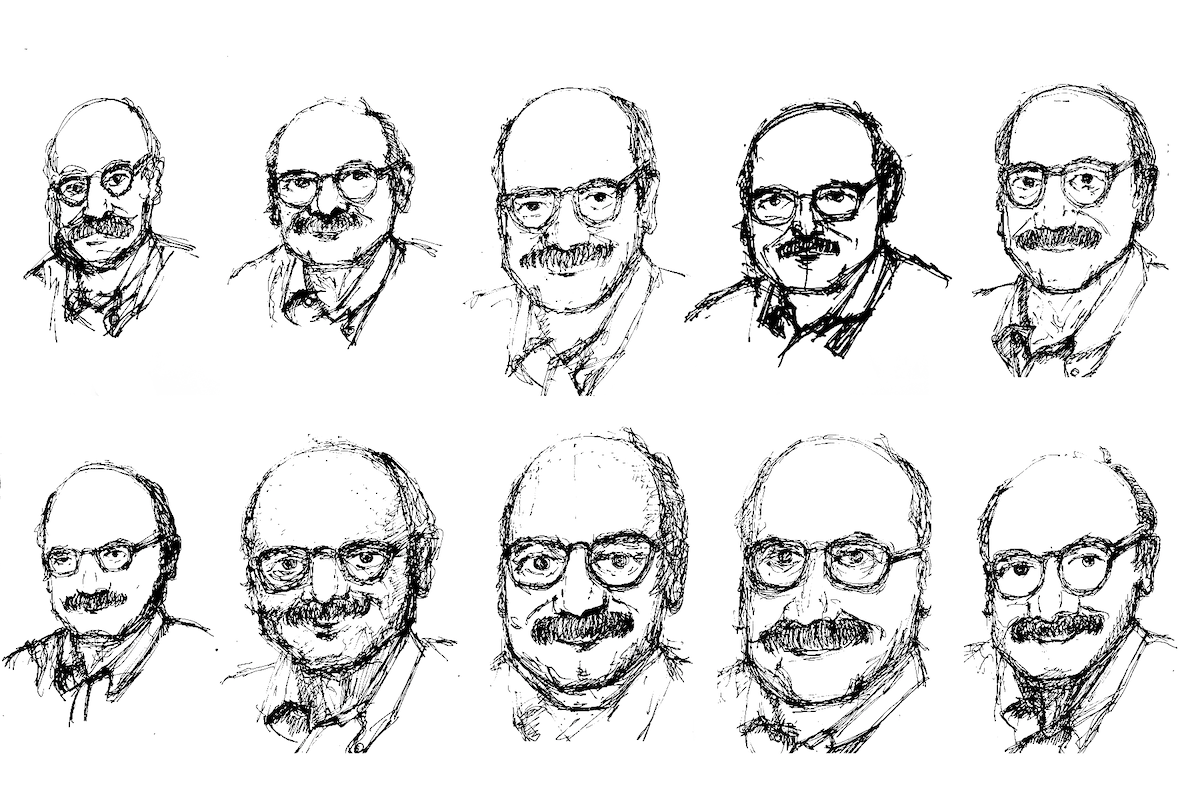
For anyone curious about making things in VR, this post will give you a sense of what to expect, the hurdles you may encounter, and the fun you can have.
Day 1: Getting started
Okay, it’s hard. And it’s almost nothing like drawing with a real brush (no matter what the ad says). The definitive difference is that there’s a whole dimension added to your brush strokes, so you are constantly falling into open space while trying to make what used to be a simple line on a paper. This poses a technical challenge, but as you figure it out, it opens the opportunity to instantly create lots of cool “dimensional” animations using different brushes.
Let’s review some of the fundamentals:
Uploading a reference image
My first step was to figure out how to put a photo of David Kelley into my VR bubble for use as a reference image. This can be done pretty easily within the Settings panel (gear icon) / Labs panel (flask icon) / Reference Images. That would be the first fundamental thing for bringing any graphical reference into your personal VR drawing lab.
Choosing a brush
After trying them all, I settled on a simple wire brush. I recommend it as a first step on the ladder of your immersive experience because in comparison to calligraphic and wide-angle brushes (not to mention special effect and animation brushes), it offers even sides and predictable behavior.
Using three-dimensional guides
As I mentioned before (and as you can see from the portrait progress so far), it’s quite unusual to think within the 3D space while drawing, so the first handy tool I discovered was guides. If you came from a graphic or web design background, as I did, you’ll instantly notice that nasty extra dimension added to them as well. A good way to start here would be to compose your portrait (or whatever you want to draw) as a set of shapes, similar to how you’d be taught in a classical art class, and then adjust them until it feels done.
Day 2: Getting better
The second day started with an attempt to combine multiple shapes (using guides) into what would resemble a human silhouette. I decided to get away from Kelley portraits for a moment and gain general confidence in drawing in VR by fooling around and building “robots.”
Simply put, you stack a couple of 3D guides on top of each other and paint over them, like I explained above. It was easier than I’d thought it would be, so after spending about an hour assembling those statues, I switched back to Kelley and here’s what I’ve got.
Day 3: Drawing without guides
Day 3 started with an attempt to break free from floating yellow bubbles and get a little bit more real. I browsed Google Poly Gallery for some inspiration and came back with the above. It still looked far from good, but I finally felt some progress in terms of confidence and drawing without guides. The next challenge was to learn how to properly fill my surfaces without creating a total mess.
I hope the following sequence of GIFs shows some progress:
Day 4: Finding new applications
Since there was only one day left before the conclusion of my little experiment, I decided to try out more brushes than just the “wired” one, and I must say, renderings of those were executed really well within Tilt Brush. My doodles instantly got more texture, depth, and light reflections without any additional settings on my side.
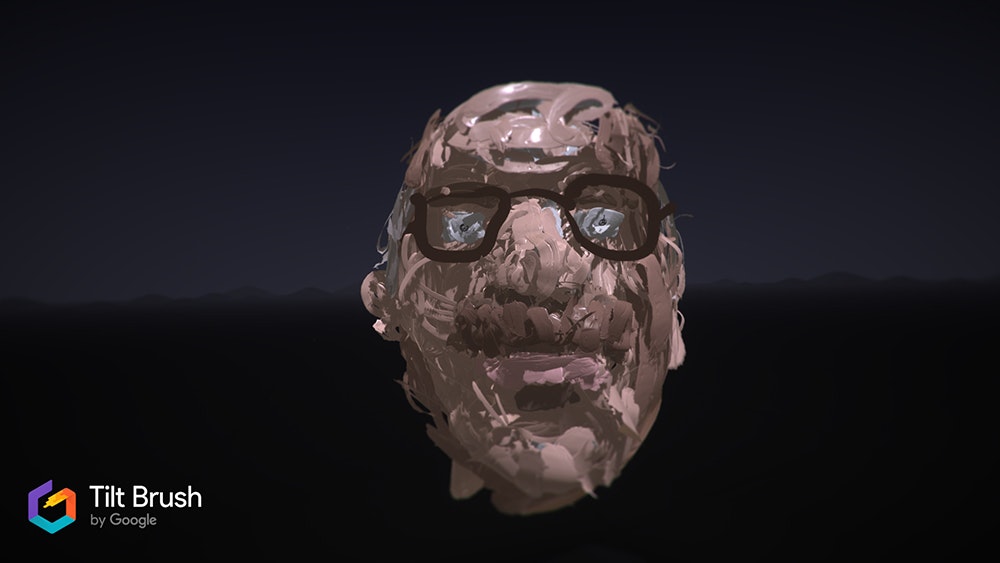
My takeaway
Disregarding the fact that my drawings didn’t get anywhere close to perfect in the first week, I’ve had lots of fun drawing in space—an experience that was practically unavailable to anyone without a spacious drawing studio and a Matisse-like drawing setup prior to VR headsets. To build on top of that, I can’t help but to mention that VR drawing quite effectively stripped the 3D creation experience from its clumsy and complex environment, switching its engineering component into a purely artistic one, and making an entry point that’s surprisingly easy for everyone. That may sound optimistic but that’s exactly the path that graphic design or photography made through the last century—from being an exclusive skill that only few could master to being something that everyone can try and start getting better at.
I used to think drawing was hard. Maybe because I was bad at it. But it’s my personality to court challenge, so at some point I decided to commit to improving my skills. I attended drawing classes and worked with a personal tutor to develop a daily drawing habit, and while I wouldn't say I think drawing is easy now, I'm more comfortable with it than I was. So I've decided to reset my learning curve to zero and try mastering a new medium: drawing in virtual reality.

Lindsey Turner
I’m passionate about building brands, products, and experiences that help organizations show up with meaning and momentum.
I help organizations cut through complexity by shaping how they show up, through brand strategy, identity, and storytelling.
Working at the intersection of brand and business, I bring an editorial eye and a bias toward making—turning ideas into tangible experiences that people can understand, trust, and believe in.
My work spans government, healthcare, financial services, media, and consumer goods, from launching Gen Z-focused ventures to building innovation labs and reimagining legacy brands. I relish moments of ambiguity and enjoy translating across teams, perspectives, and priorities to move ideas forward.
I started my career in editorial and digital design, shaping cross-platform experiences and identity systems in publishing and agency environments. That foundation still shapes how I work today: I’m detail-oriented, collaborative, and overreliant on the Oxford comma. I hold a BFA in Visual Communication from the School of the Art Institute of Chicago.

Rachel Young
My work helps organizations see who their products aren't working for—and build the will and the tools to do something about it
For 25 years, I've asked the same question: Who does this design exclude—and what are we going to do about it?
My work spans human-centered strategy, inclusive design, and qualitative research, with clients ranging from Microsoft, Google, and Verizon to the National Science Foundation, and San Francisco Unified School District.
Before IDEO, I taught elementary school in East Palo Alto and spent a decade doing design work with social service organizations—where I learned firsthand what it costs people when systems are built without them in mind.
I am currently writing User Error, a nonfiction book about digital access and the design decisions behind it. I live in Oakland, California.

Brian Pelsoh
I lead with craft, ensuring our work is creatively excellent: rooted in deep human insight and imagination, while also grounded in the realities of business and technology.
My expertise spans brand, communication, and product design across tech, education, the arts, and social impact.
I believe great work demands both high-level vision and obsessive attention to detail, and only happens through collaboration.
I bring an inclusive, hands-on approach and a deep understanding of business, which enables me to consistently deliver excellence while always asking why.
Before joining IDEO, I worked at the brand firms Pentagram and VSA Partners. I began my career as a designer, leading teams at the School of the Art Institute of Chicago and the Milwaukee Art Museum. I hold an MFA in graphic design from Maryland Institute College of Art and a BFA in communication design from the Milwaukee Institute of Art & Design, and have taught at some of the best design schools in the US.

Tony Wong
I am responsible for IDEO’s long-term success in China and working with clients to use design as a tool to enable growth.
I am responsible for IDEO’s long-term success in China and working with clients to use design as a tool to enable growth. Specifically, I have helped Chinese companies design holistic brand solutions through the development of their products, communication, services, and innovation teams, and I have helped multinationals expand their presence and influence in China.
I advise global leaders on developing China-led innovation and capabilities.
In over 15 years in IDEO Shanghai, I have worked on projects that use design to elevate the quality of the experience of healthcare products and services, streamline processes that increase productivity, create spaces and programs that promote and enable inclusive communities, and build next generation mobility solutions that are planet-positive.
Before joining IDEO, I worked at Philips Electronics and the Electrolux Group in Italy, the Netherlands, and Singapore on a number of breakthrough commercial products. I am a member of the Young President Organization in Shanghai.

Building a personal AI for the messiness of life: Sida Li
Most AI products today are built for work—a space with clear problems and established systems. One founder noticed a gap: personal life is messier, harder to systematize, and mostly left behind by the AI boom. So she built Cue, a personal AI that lives inside iMessage and group chats, to go where the other tools haven't.
In this episode, Becca Carroll, IDEO's Chief Strategy Officer, talks with Sida Li, co-founder and CEO of Shared Context Lab, about staying anchored to a human need while the technology around her keeps changing shape, why she treats her business model with the same rigor she'd bring to a product, and what it feels like to build a company at this particular, disorienting moment in AI.
The conversation also gets into how Sida makes design decisions: the language Cue uses to describe itself, the tradeoffs behind building inside iMessage instead of a new app, and a real story about a business idea that didn’t pan out.
This is the second in a two-part series profiling founders from IDEO's Startups-in-Residence program. The first conversation is with Johannes Seemann, founder of Sooner, on designing GenAI for the emotional side of money.

Designing GenAI for the emotional side of money: Johannes Seemann
Most personal financial tools are built to run the numbers and optimize towards a budget. While that works for some, most people experience money as a lived relationship that does not neatly fit into a spreadsheet. Johannes Seemann and Becca Carroll discuss why money is emotional before it is mathematical, and what a human-centered approach to building a generative AI financial product looks like in practice.

The curious leader's edge in uncertainty: Scott Shigeoka
Mina Seetharaman talks with Scott Shigeoka, author of Seek and Head of Curiosity Cultivation at the Eames Institute, about what distinguishes genuinely curious leadership from performative curiosity, how power dynamics shape curiosity, and why practicing curiosity can restore energy rather than drain it.

How constraints make us more creative: David Epstein
Mina Seetharaman talks with David Epstein, author of Inside the Box and Range, about why total freedom often produces average work, how leaders can design useful limits on purpose, and what organizations such as General Magic and Pixar reveal about the relationship between boundaries and creativity.
Looks like you might be in search of something very specific?
Or reset the filters above and try another angle.
Here’s some random inspiration

Podcasts about creative leadership

Articles about the power of prototyping
