
.svg)




Better sales, less waste
H&M transforms its operations to cut excess inventory.
Globally, the European Commission reports, a truckload of textiles heads to landfills or is incinerated every single second.
The fashion industry accounts for some 10 percent of greenhouse gas emissions worldwide.
Less than 1 percent of the materials used to make clothing is recycled, according to a report by the Ellen MacArthur Foundation.
The best way to keep clothes out of a landfill? Don’t make them.
Picture this: Not long ago, it wasn’t unusual for a customer to walk into an H&M store and not be able to find a basic white t-shirt in their size. Why? Like most long-established retail operations, H&M was operating with a push model—placing seasonal bets on what the demand for a given item of clothing might be, locking orders far in advance, and hoping that they were able to sell out. Make a mistake in that kind of model, though, and you can end up with customers unable to find the basics they rely on, or excess inventory you can’t sell. That’s a problem for the business, but for the environment as well—and one that doesn’t fit H&M’s aggressive sustainability goals.
Though H&M had tried to tackle the problem before, the launch of the H&M Group Design Studio, co-created with IDEO, gave the retailer the confidence to go after it again. The team started out by mapping out the complex network of people that make up its supply chain across the globe, meeting with everyone from designers to garment suppliers, logistics managers, and even folks selling the final product in H&M stores.
They then created an algorithm for more precise ordering, as well as a tool that provides a shared view of information. Instead of placing orders, the new automated flow—dubbed “Cruise Control"—allows staff to work with a demand forecast that gives them more time to focus on customer-centric operations, like providing guidance and inspiration. It also makes it easier for H&M to follow the demands of the market, and place much more accurate bets on what consumers will want, when. Already, H&M has significantly increased sales while cutting excess inventory—a result that improves its bottom line, as well as its environmental impact.
Estimates project that by 2030, global apparel consumption will hit 102 million tons.
22%
reduction in stock during a pilot program
34%
increase in sales during a pilot program
Fueling innovation in Boston
How the Boston Society for Architecture is leveraging member expertise to increase its impact.
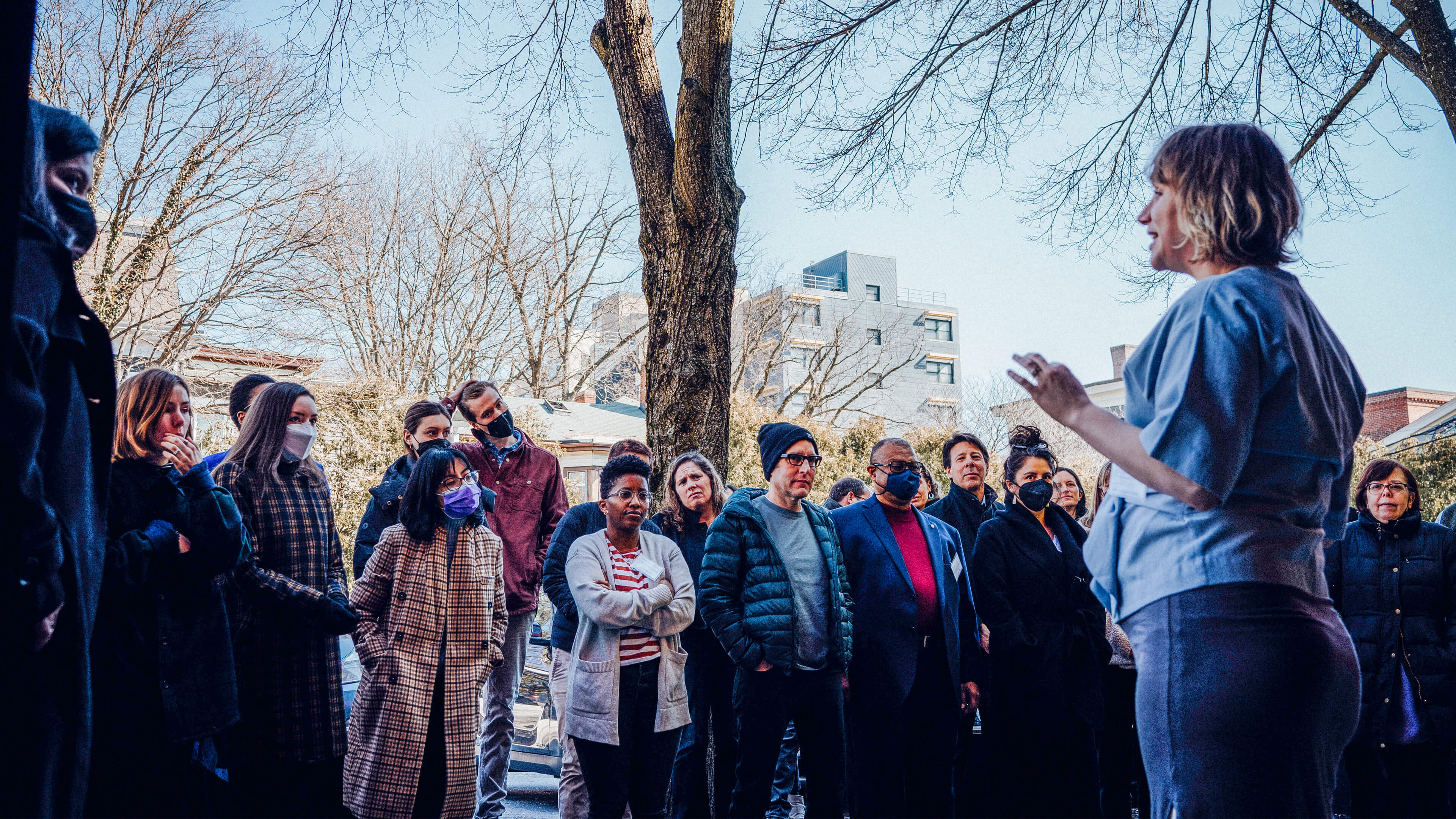
To foster creative projects that spoke to the needs of local communities and environments, the BSA began to engage its members in collaborative, user-led design. The organization launched its first-ever innovation challenge, putting out a call for all members to pitch their ideas for projects in the built environment.
The BSA expected those pitches to have dollar signs attached. To the organizer’s surprise, only one asked for funding. The rest requested less tangible, but equally meaningful support: advice, connections, specific expertise. Those are resources that the BSA has aplenty, but hadn’t learned how to leverage well.
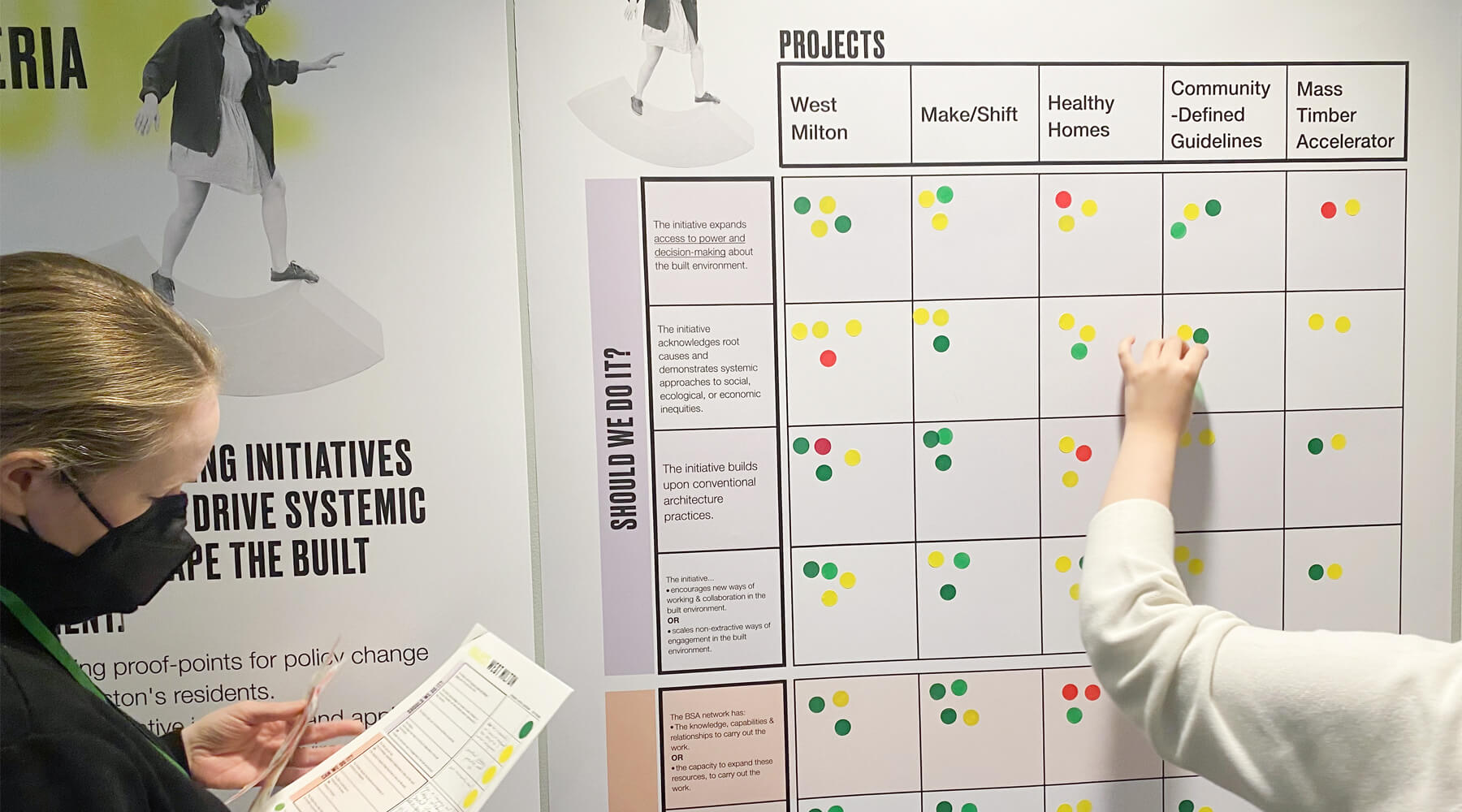
From that first go at an innovation challenge, the BSA learned how to better support its members. It also learned that to lead with purpose and make strategic choices, one must develop the confidence to say no. Instead of spreading itself thin across many projects, the organization decided to take small steps, focusing on one initiative at a time, so that it can deliver focused impact and stay true to its evolving mission.
With 36% of global energy going to buildings and 8% of global emissions caused by cement alone, the architectural community is inextricably intertwined with both the causes and solutions related to climate change.
According to a survey conducted by the AIA, the architecture profession in the US is less diverse than the population as a whole. This lack of diversity can contribute to a disconnect between architects and the communities they serve.
31
submissions received from innovators in the Boston region working on equity and sustainability challenges
5
innovation teams invited to pitch ideas
Student-centered solutions
How an organizational culture change is helping newbies at NYU navigate campus life.
The resources that NYU students needed were organized by administrative department, and buried on disparate websites and calendars. But students don’t think in terms of departments—they just need to know where their classes are.
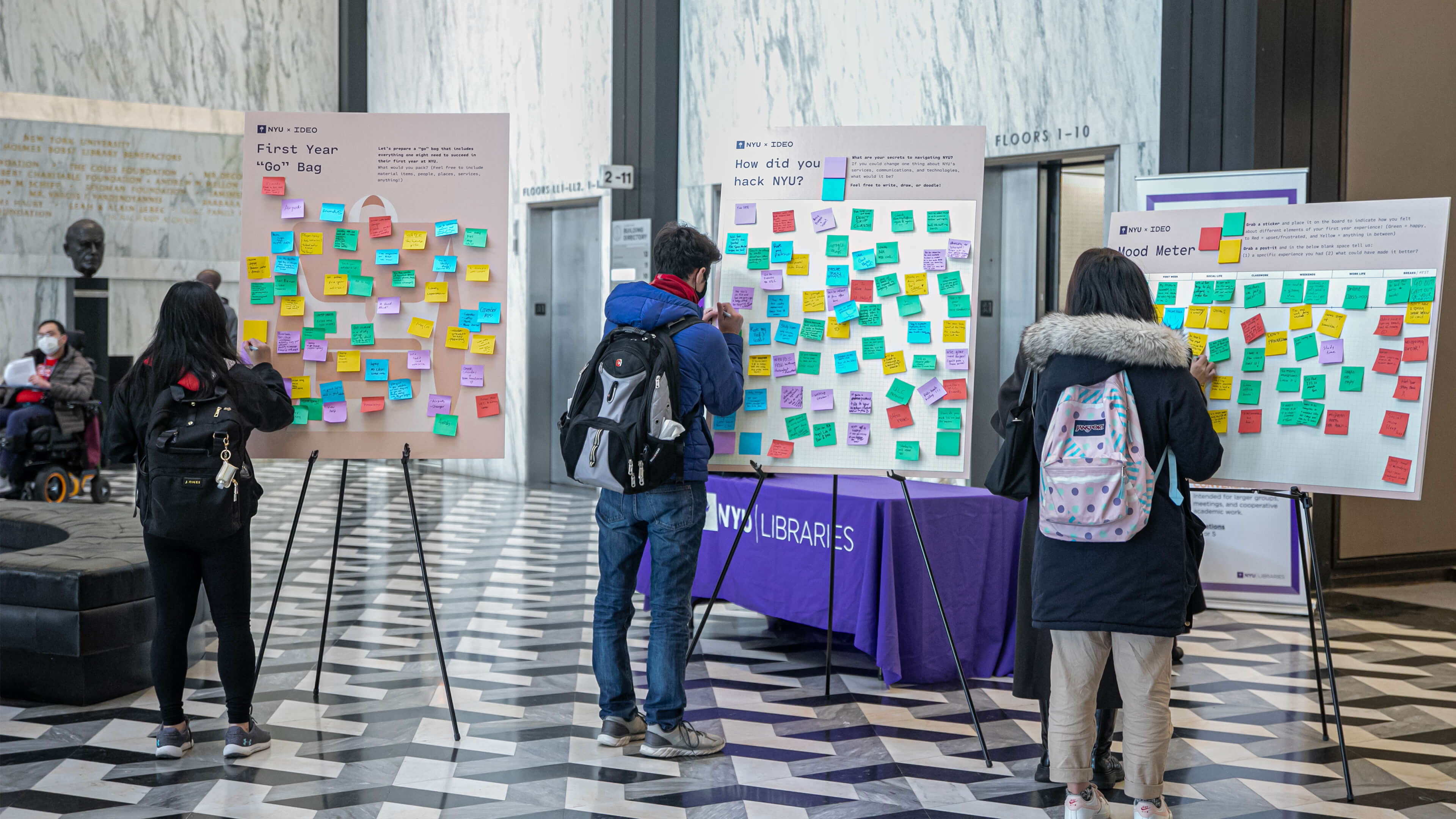
All of this became patently clear as IDEO shadowed students. Team members visited classrooms, walked with them through their days, and hosted pop-ups in highly trafficked areas to get ideas from passersby. That helped the team develop a common understanding of the overall student journey and grounded employees in the key moments that can either make or break a student’s experience. Visualizing their journey helped departments gain a shared understanding of the fractured communications challenge and develop possible solutions.
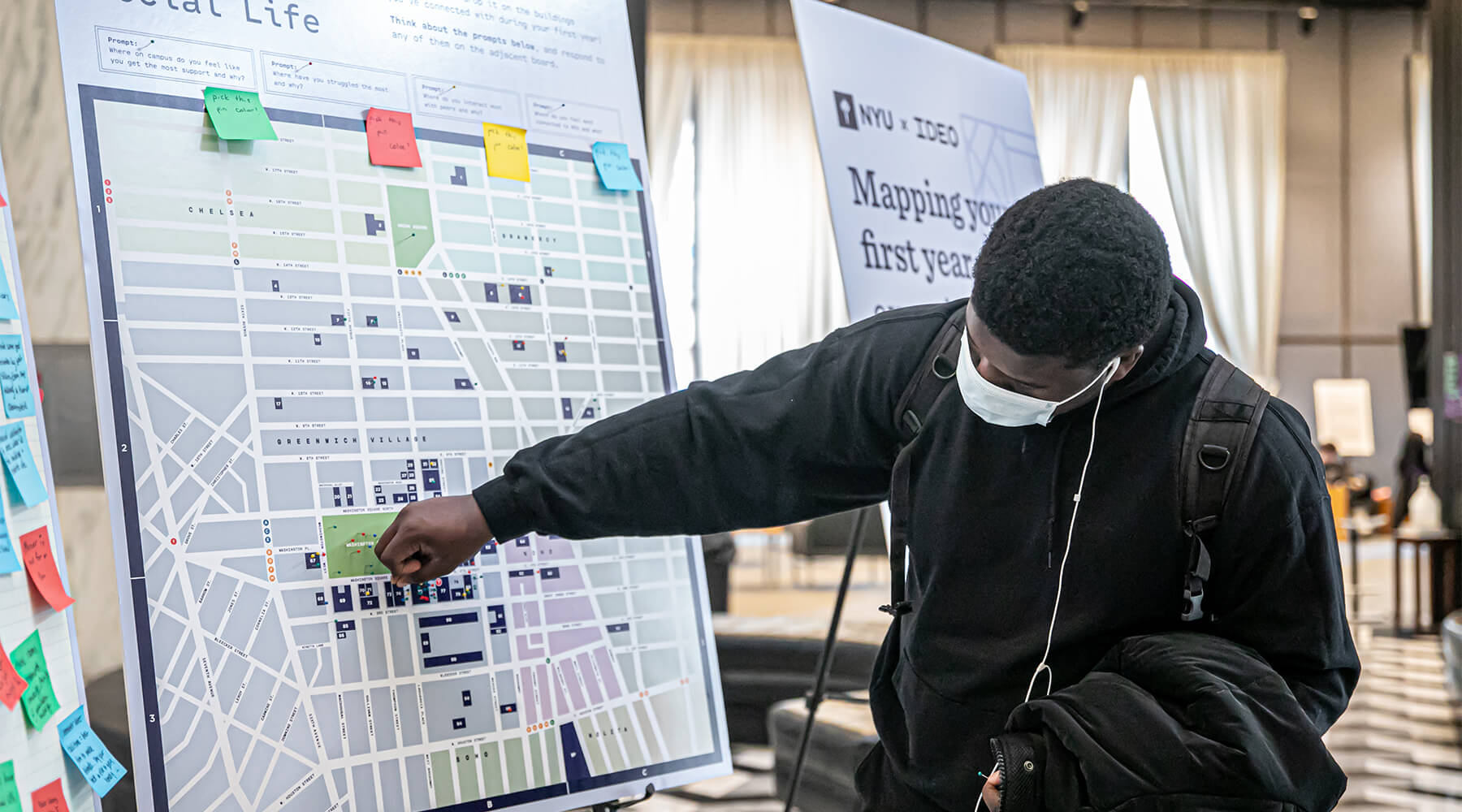
To synthesize those insights, we formed cross-functional action learning groups, challenging existing practices at the university and coming up with new ways of working. Participants came from a diverse set of departments, including enrollment management, student affairs, marketing and communications, IT, global inclusion, student services, the provost’s office, digital communications, and more. The cohorts sketched early hypotheses and got feedback from faculty, administrators, and students from all of NYU's undergraduate schools to refine initial concepts.
Collaborating with students gave staff a first-hand look at what students were struggling with and a way to engage students directly in addressing those challenges. Just as importantly, there was an overall culture shift at NYU: Administrators started with questions instead of agendas, came together around a table, and reached beyond their job descriptions to meet the needs of students.
First-year students reported receiving hundreds of paper forms, and email from more than 70 unique senders.
NYU needed to offer students the right resources at the right time—and collaborate to serve them as a unified administration.
New services
in-production include centralized calendars, dynamic campus mapping, and customized notifications
Design-thinking cohorts
now support the student experience

She knows best
A major athleisure brand passes the mic so women can define community for themselves.
Diversity alone isn’t enough—in marketing or any other facet of business. Today’s brands must authentically engage with and create the conditions for co-design with existing communities.
That sort of deep, meaningful engagement with customers doesn’t happen over Instagram. It requires a playbook, a prototype, and a healthy amount of trust. So, IDEO worked with Athleta and Gap to tap into the wisdom of a council of women who represent intersectional identities and lived experiences. The council surfaced powerful insights for the brand, like the fact that active women don’t need a brand to empower them—they already feel powerful.

After only a few weeks, Athleta experienced the difference between research and a truly reciprocal relationship. The way their brand engages with communities is adding depth, understanding, and authenticity to Athleta’s content, products, and experiences. And women can feel the difference.
76% of US adults say that the media promotes an unattainable body image for women.
Fewer than 1 in 10 businesses review for inclusion as part of product design and marketing campaigns.
>2X
user growth in 2022
13,000+
Athleta WellPro well-being providers active on the platform

The Importance of Public Weirdness
Why we all need some Improv Everywhere in our lives
For a decade and a half, the group has built a global reputation for pulling stunts like the Grand Central Terminal freeze. If design is about the capture and channeling of attention, Improv Everywhere has a lesson for us in how to achieve that. We spoke to founder Charlie Todd to get some backstory on his benevolent guerrilla art troupe.
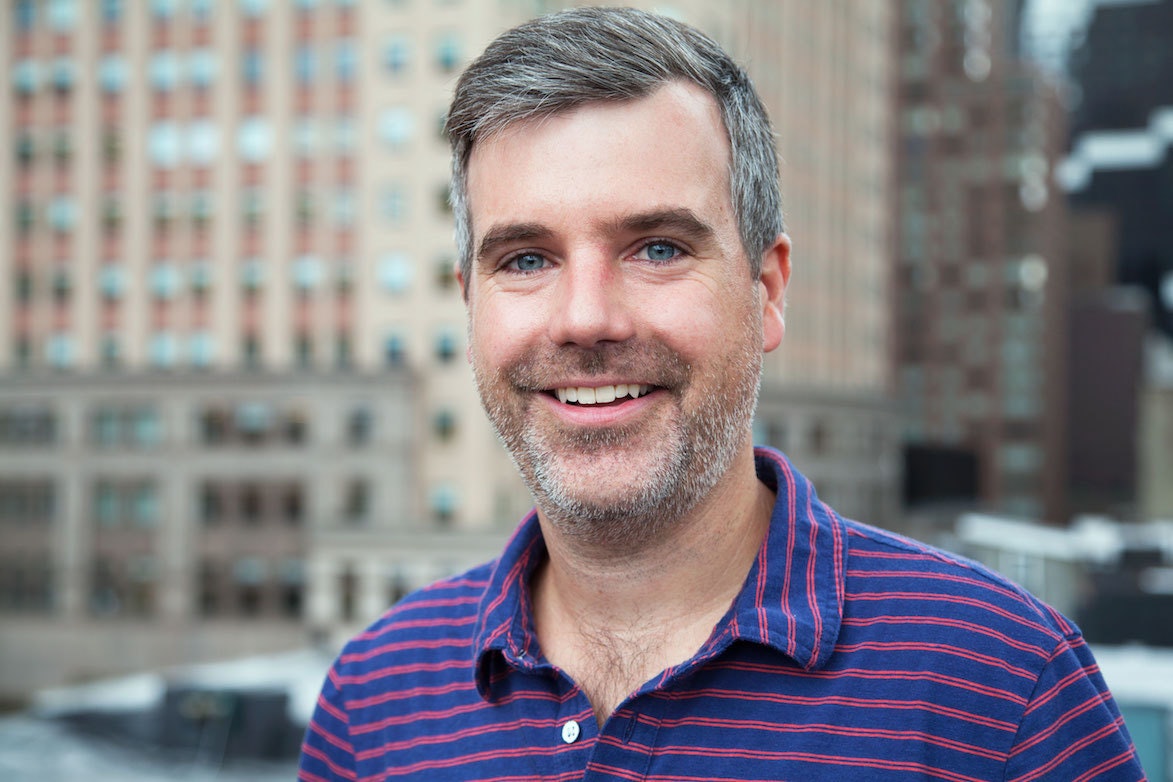
How did Improv Everywhere start?
Charlie Todd: I totally blundered into it. I was 22-years-old, and moved to New York to be an actor in improv comedy. I said to some friends, let’s go play a prank in a bar tonight. We did it for five years, and then when YouTube was created, I already had a library of content. A thing we did in Grand Central Station got 10 million views in the first week alone. I’ve spent the last eight years following that viral breakout.

What’s the audience meant to take away from such stunts?
When a load of people turn up at Coney Island in eveningwear and jump in the ocean, and people ask why, the answer is that there is no why. We’re all conditioned to assess for some extrinsic motivation, like the thing was for charity or a comment on global warming. It’s okay to just do a thing because it’s silly.
So, it’s simple whimsy with no purpose?
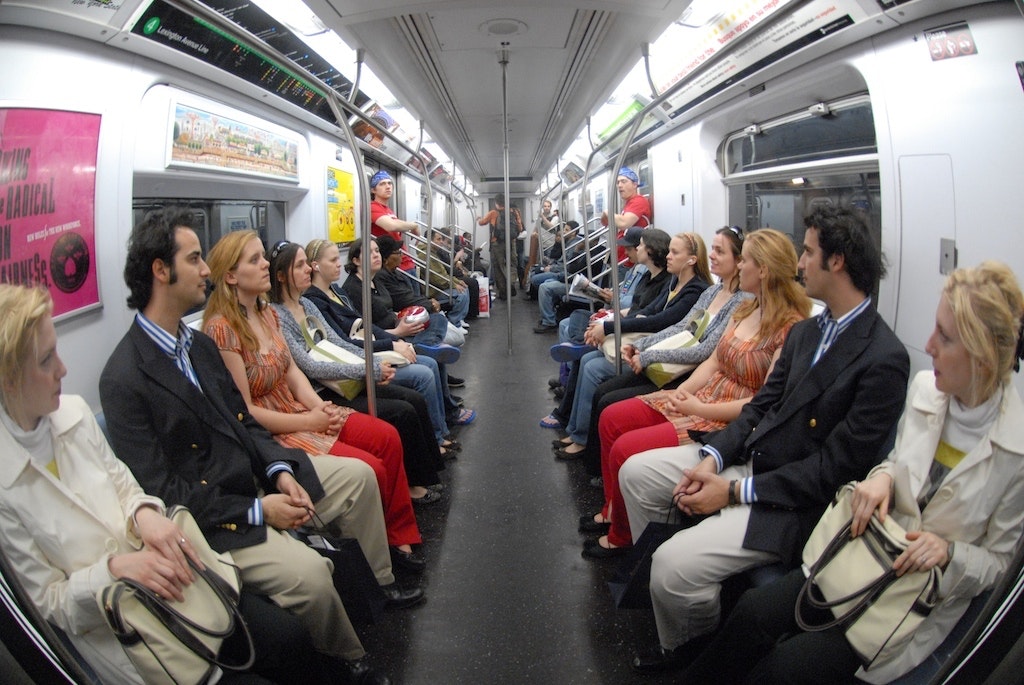
Well, I’d like to think that having that experience maybe alters people’s perception in some small way. We’re encouraging people to express themselves in a public space, in an unauthorized manner. In this post-9/11 security world we live in, we’re trying to make people realize that they don’t have to ask permission to express themselves creatively.
Is it also important to be connecting people?
I grew up in South Carolina, in a small city. I was used to people making eye contact and smiling. Moving to New York, everyone is busy and has a smartphone. It was like the only time you made eye contact was if something bad was going on: a train being delayed, or a crazy person shouting. People would unify around shiftiness. So we thought: can we create something that is positive in nature, something so unusual and joyful that you have a positive connection with someone?
Do you always get a positive reaction?
During one of the No-Pants pranks we had some police trouble. An officer stumbled across the event, and didn’t like it. Our people stayed in character and said they had forgotten their pants. The officer took the train out of service. But everything was eventually dismissed. It turns out that there’s no law against being in your underwear. When we did the event the next year, the police were there, to help escort us and make sure people had a good time.

What do you do when you’re not freaking people out on the streets of New York?
I get hired by brands to create surprise moments or spectacles, or brainstorm ideas for a brand campaign. I get to direct and produce TV. Last year I was the show-runner for a show on MTV. I’ve also been at the Upright Citizens Brigade for 15 years, as a performer and teacher.
Tell us about the teaching. Can you teach someone to be funny?
All you can teach is for people to learn how to be themselves—to be honest, and react in a truthful way. Everyone’s unique personality and viewpoint is funny. It’s counter-intuitive: when trying to be funny, people often try to be something that they’re not, by imitating stuff they’ve seen on television and so on. Instead of trying to be something you’re not, you need to be more authentically connected to what you are. That applies to creativity too: instead of reaching outside and trying too hard, focus in on what truly inspires you.
Photos courtesy of Improv Everywhere.
In the dead of winter, 2001, a woman riding the New York subway looked up from her book and saw a passenger wearing no pants. She was puzzled, but ignored him. At the next stop, another pantsless passenger joined him. And then more. By this time, she had put her book away. A hidden camera captured her reaction as it evolved from confusion to delight. She traded looks of amazement with the other passengers—a group called Improv Everywhere was responsible for breaking their routine.
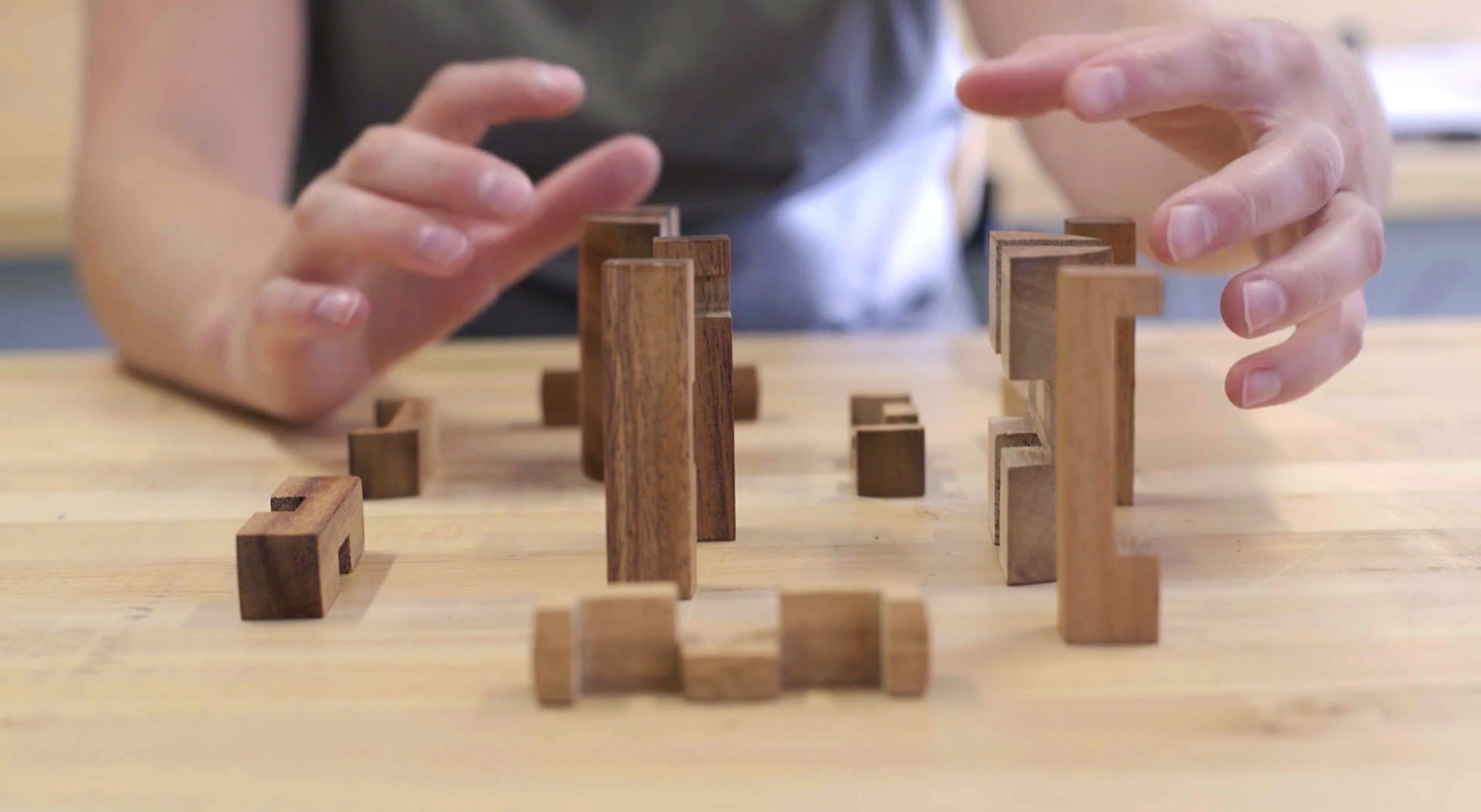
What Designers Can Learn From Wooden Block Puzzles
Lessons in problem solving
1. A deeper understanding of 3D relationships
These puzzles teach how different shapes fit together in three-dimensional space. M. C. Escher would have no advantage: there is no cheating the puzzle, and all the rules of physics and gravity apply. In order to solve the puzzle, you have to understand how the shapes fit together. This is important for designers, especially when so much is being designed on a computer. If a product is being designed for the physical world, it needs to play nice with the rules of physics.
2. Forward and backward problem solving
Once you understand how the pieces are supposed to fit together, you actually have to make it happen. Often this involves both forward and backward problem solving. The internal monologue might go something like this: “So I am going to start with this piece because it is the biggest and is easiest to deal with, if I work around it. This smaller piece is probably the second half of the left side. And this piece has to be the last piece."
Sometimes you know the last step first. Sometimes you know step 1, 2, and 5 but then have to solve for steps 3 and 4. That can be scary in a linear world, but as designers that is sometimes the reality we face. It’s helpful to have the confidence that steps 3 and 4 will become clear, even if initially they are hard to see.
3. Hand-eye/Hand-brain problem solving
There is something very rich about holding a problem in your hand as you work with it. By holding the puzzle, you have a deeper understanding of the spatial relationships that must be solved. While it is possible to understand these things on a computer or on paper, being able to physically handle an object allows you to reach conclusions and iterate solutions in different ways. Fluency across mediums can only help us arrive at these solutions faster.
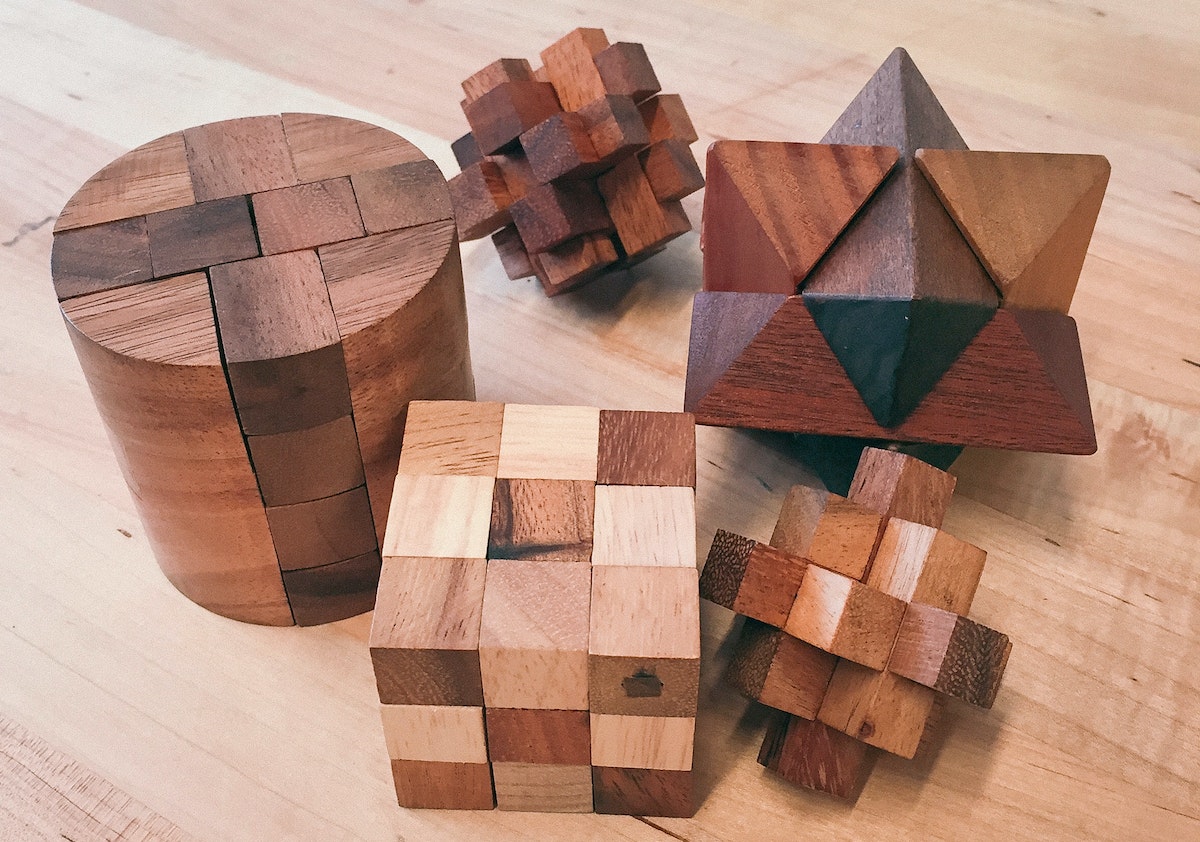
Others lessons might include balancing the details with the big picture, and reading context clues. But I found that I had an even deeper appreciation for these puzzles when I learned how to make some. I would encourage any interested designer with access to materials and tools to try making one for themselves.
For most of the puzzles, the pieces seem very simple. The simplicity is deceptive, however. Take the star puzzle: a configuration of six roughly rectangular identical pieces with two “triangular” notches cut out of each that slide together nicely (when you know how to do it.) But the pieces aren’t exactly rectangular. The notches are not simple triangles. In fact there are 12 faces, and only a handful of right angles. Plus, most commonly these pieces are only a few inches long—not safe to cut on most power tools without jigs—but which jigs? And to add to all that, they have to be precisely made in order to actually work, especially if you want them to look good. Again, there are simple solutions to all of these problems, but it takes some figuring to make it work. But that’s the point of a puzzle, right?
Maybe it’s their old school charm or the fond memories I have of solving them at Cracker Barrel, but I am a fan of wooden block puzzles. And after learning how to make them, from my wizard-like teacher at North Bennet Street School, I have come to appreciate the true elegance of these puzzles, and the lessons they have for designers.
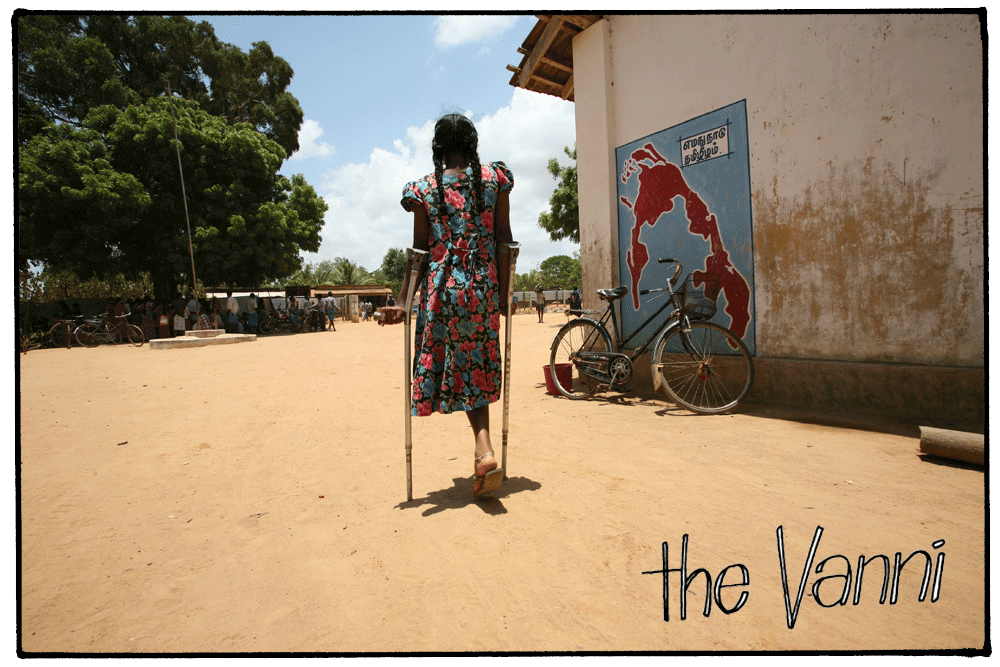
Moving Pictures
Benjamin Dix's comics draw out the plight of refugees, child soldiers, and others on the brink
Dix, a photojournalist, got on a plane for what he thought would be a 10-day trip. He ended up staying for four years, working at the United Nations to help find food and shelter for 300,000 displaced locals. It was during that time that Dix first came across Art Spiegelman’s Maus, the Pulitzer Prize-winning graphic novel charting Spiegelman’s father’s experience in the Holocaust as a Polish Jew.
Before Maus, Dix’s only exposure to comics came from reading Calvin and Hobbes and Asterix. But as he huddled in bunkers during air raids and artillery fire, Dix was struck by how simply and powerfully Spiegelman was able to render the complexities of identity, memory, and trauma in graphic form.
With violence between government and Tamil forces intensifying, the Sri Lankan government ordered the UN to evacuate the region in September 2008. Dix returned to London with post-traumatic stress disorder and a fierce determination to tell the stories of those he’d left behind.
He travelled to meet refugee families and record their experiences, and worked with illustrator Lindsay Pollock to conceptualize them into a graphic storyline. Dix also embarked on a Ph.D. in anthropology to systematically research the production of the comic. The result of all his work? The Vanni, a 200-page graphic novel about the conflict, told through one Sri Lankan family’s eyes, and an accompanying thesis on the methodology and ethics of producing such a complex piece of graphic literature.
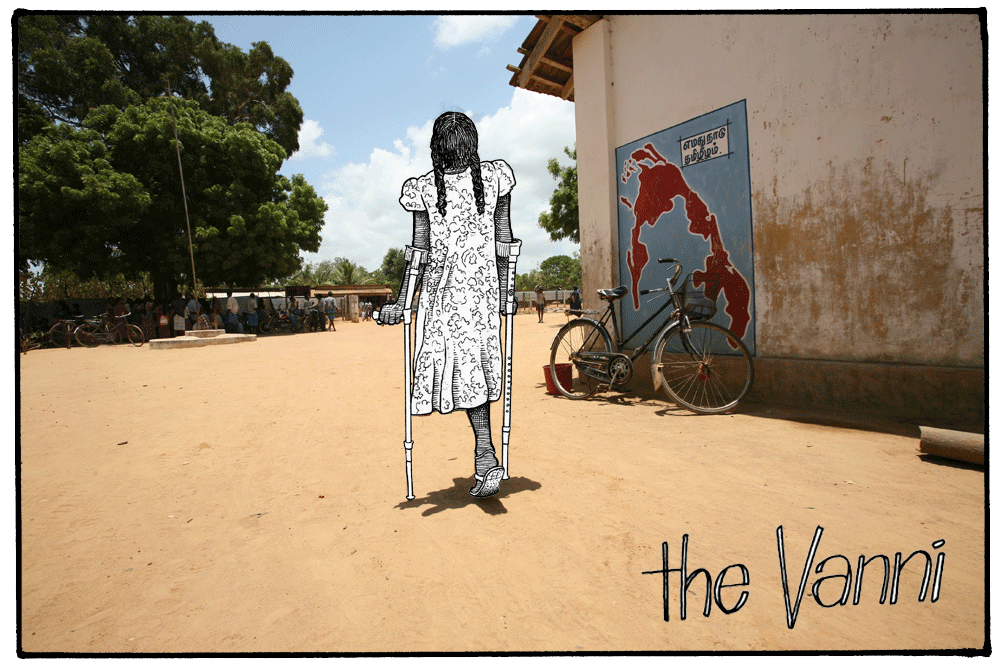
Dix has since brought to life stories about crack-cocaine addicts in Guinea Bissau, a Nigerian woman trafficked to London (Abike's story, below), and the plight of African and Asian migrants in the Persian Gulf. At every stage, Dix works alongside his subjects to ensure he’s best reflecting their experiences, and their stories have become a powerful educational tool, illustrating complex, often abstract issues including migration, human trafficking, and drug addiction at the most human level.
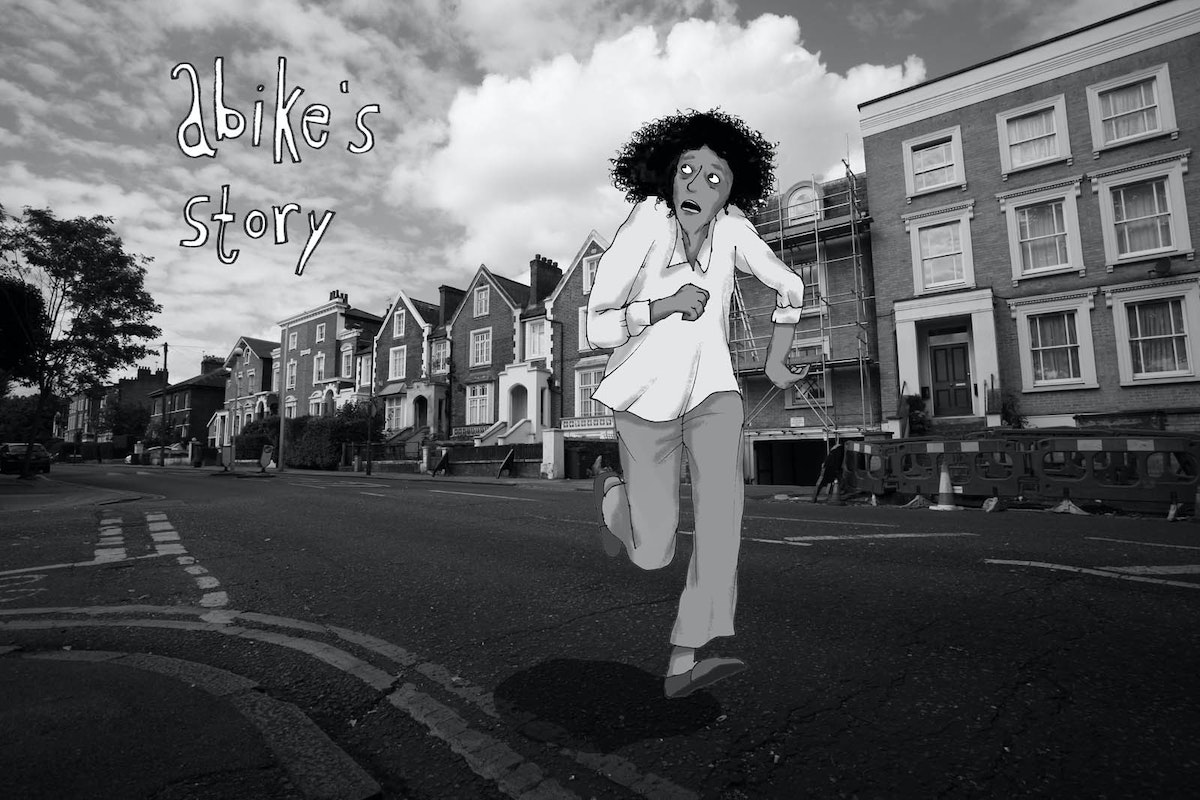
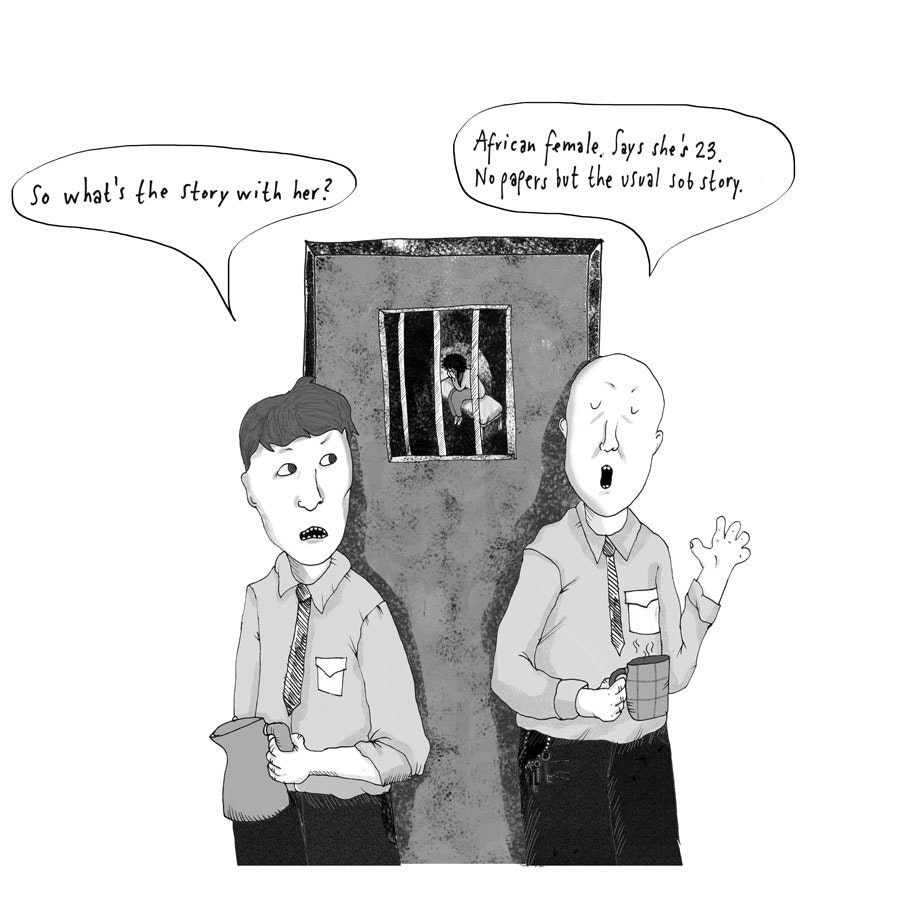
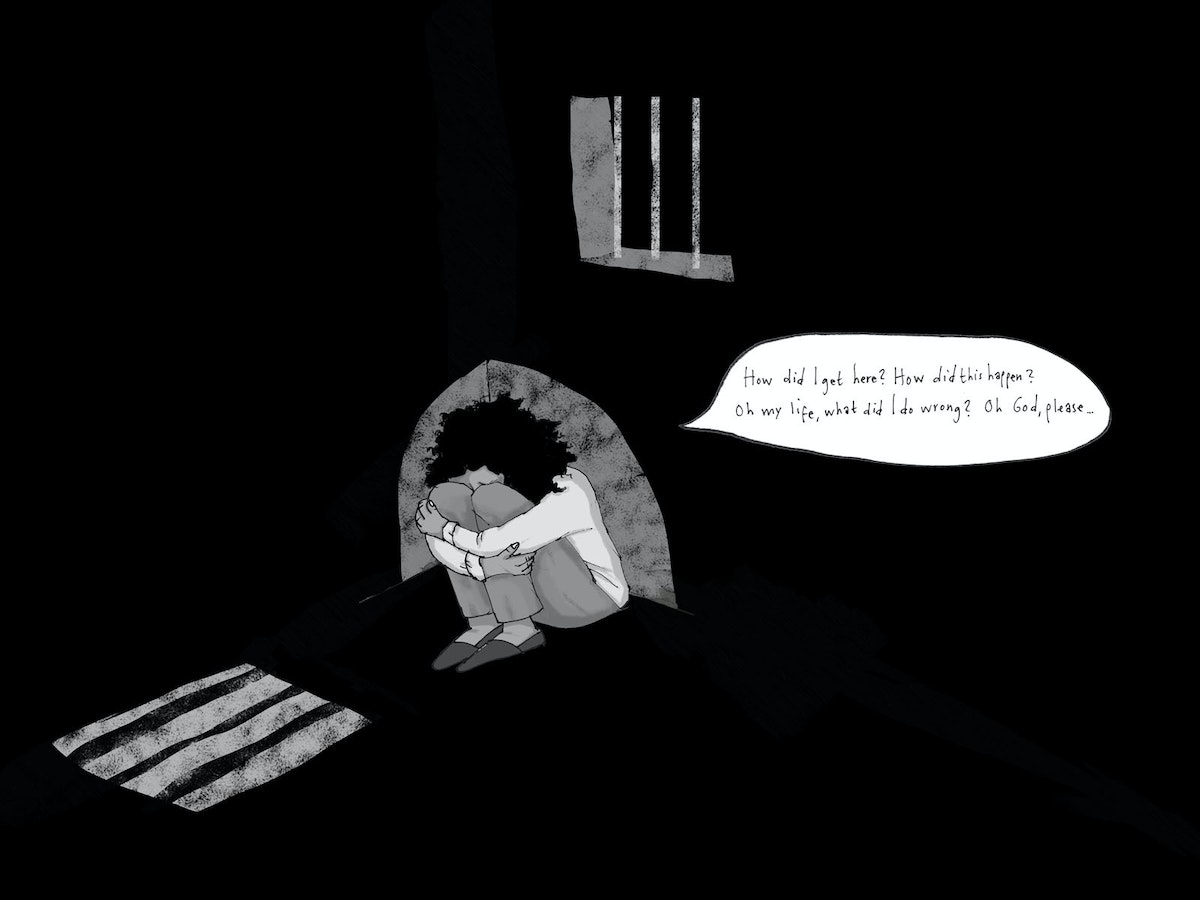
A chance meeting with an IDEO designer led Dix to our London studio, where we collaborated on a three-day long pro bono sprint to develop his stories into scalable, interactive teaching tools for classrooms. We designed and prototyped a WhatsApp-based multimedia story about Merha, an Eritrean refugee fleeing to London to escape persecution, as well as an app-based version of Merha’s story, including buttons and swipes on each frame of the story, so readers could learn more.

Dix’s next step is to secure funding to build out the app and develop lesson plans to roll out across schools internationally. But in the meantime, he’s not standing still. Dix is already testing a lo-fi version of the educational tool—an interactive PDF—in 300 schools across 26 countries including Brazil, Sri Lanka, Democratic Republic Of Congo, the UAE, and many others. His next comic? Capturing the story of the Yazidi community fleeing ISIS in Syria.
It was Boxing Day 2004 when Ben Dix, founder of British literary comic publisher PositiveNegatives, got the call. A university friend, stationed in the Tamil Tiger-held region of Vanni in northern Sri Lanka, was asking if he'd come and help. It was the day of the tsunami that killed 230,000 people, one of the deadliest natural disasters ever recorded.
It’s Only Beautiful When it’s Broken
How I came to love broken type
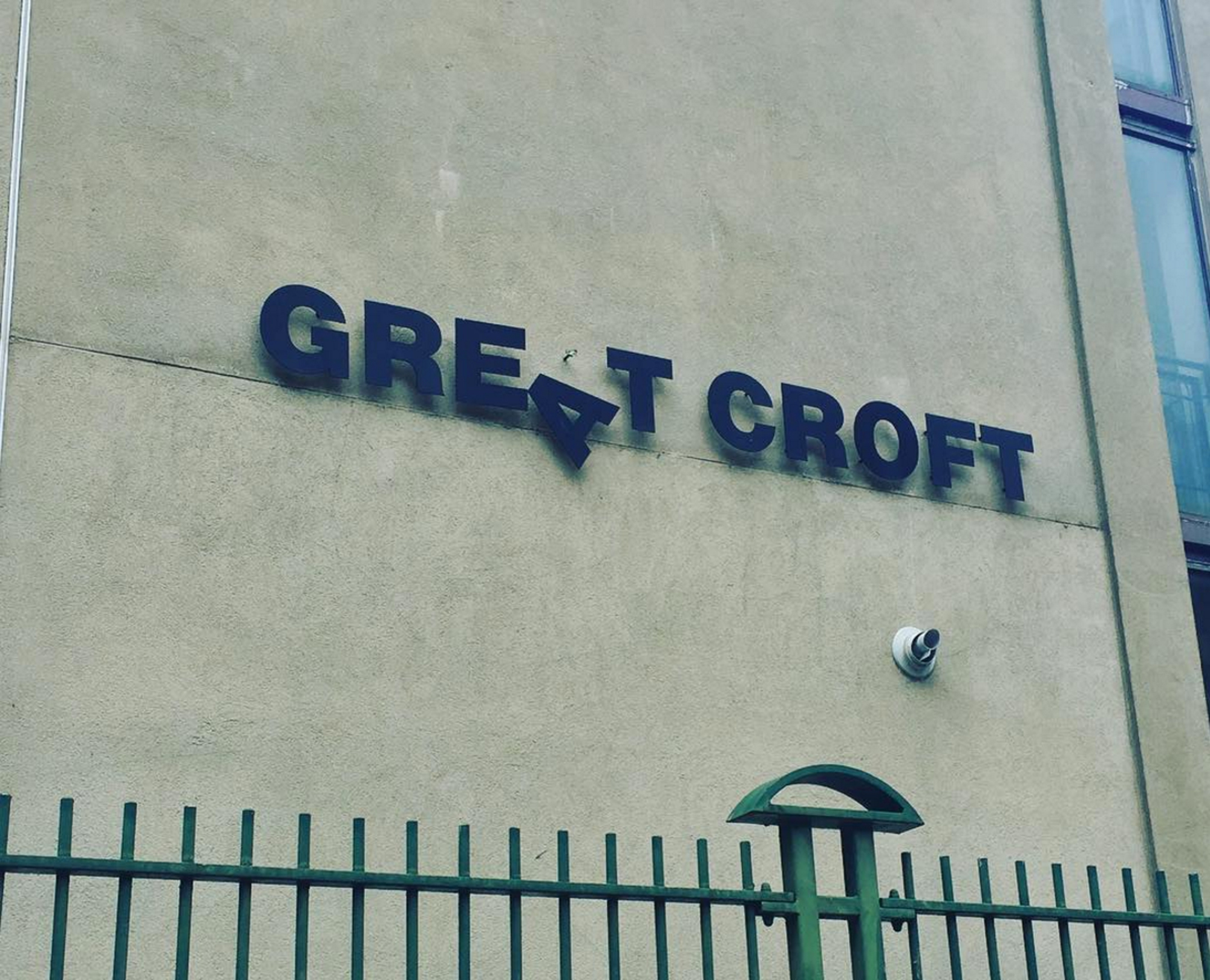
It turned what would be a humdrum brand mark into one that was tongue-in-cheek and playful. Optimistically, I wondered if it helped lift the spirits of the Great Croft residents. I also started looking for more typographical serendipity.
There are plenty of examples of signage that has degraded to the point of being unreadable, but a beautiful accident is where the change looks intentional and, ideally, adds to the meaning and character of the neighborhood.

I saw my second example at Unity Kitchen Cafe in the new Olympic park in East London, where residents and Londoners further afield are drawn by attractions such as the children’s adventure playground, nature park, or velodrome. The cafe contained a diverse mix of nationalities, so it seemed rather fitting that this broken C was reminiscent of a cedilla (ç), a nod to any European visitors. Please don't fix the sign, I love it the way it is.
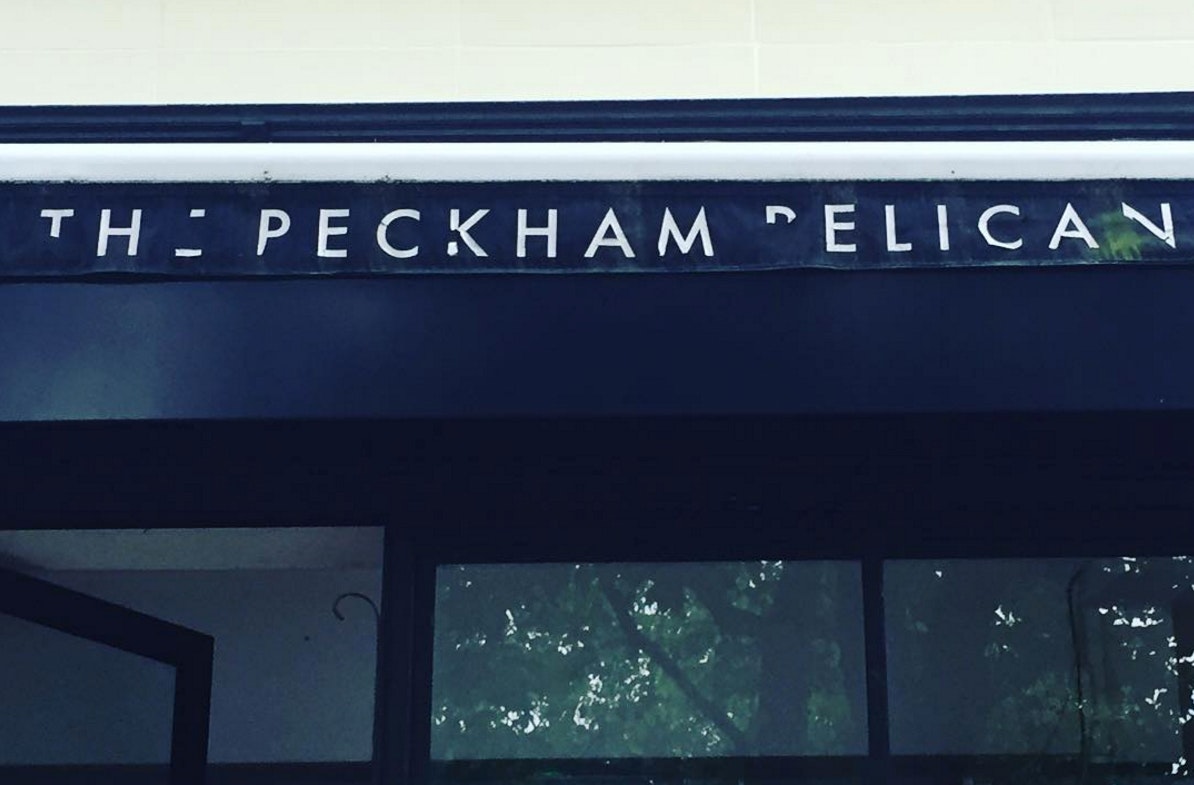
I became obsessed. Searching everywhere for more evidence of meaningful mistakes, even engaging my family in the hunt, and it was on one such hunt that I found the Pelican restaurant in Peckham, south London.
I’ve been wondering about how we might design for beautiful accidents: if wear and tear isn't a thing we can control, how we can make accidents appear elegant? At Wired magazine they call such intentional accidents Wrong Theory. Inspired by Edgar Degas’ painting, Jockeys Before the Race, in which the artist defied the conventional composition of his day by inserting a grey pole that bifurcates the scene, slicing right through one of the horses’ heads. The same could be said of Marcel Duchamp’s act of turning a urinal on its head, signing it R. Mutt, and deeming it art. Wrong Theory celebrates the act of breaking the rules.

But part of the beauty of Beautiful Accidents is that they are rare. If you find one, please share it with me! Check out my Instagram or tag your photos with #beautifulaccident.
I first spotted a beautiful accident when I saw the sign for the Great Croft housing estate in London. The A swinging down against the Akzidenz Grotesque type worked so well, in part aided by the horizontal seam in the concrete, that I had to think was that serendipity or intentional?

Lindsey Turner
I’m passionate about building brands, products, and experiences that help organizations show up with meaning and momentum.
I help organizations cut through complexity by shaping how they show up, through brand strategy, identity, and storytelling.
Working at the intersection of brand and business, I bring an editorial eye and a bias toward making—turning ideas into tangible experiences that people can understand, trust, and believe in.
My work spans government, healthcare, financial services, media, and consumer goods, from launching Gen Z-focused ventures to building innovation labs and reimagining legacy brands. I relish moments of ambiguity and enjoy translating across teams, perspectives, and priorities to move ideas forward.
I started my career in editorial and digital design, shaping cross-platform experiences and identity systems in publishing and agency environments. That foundation still shapes how I work today: I’m detail-oriented, collaborative, and overreliant on the Oxford comma. I hold a BFA in Visual Communication from the School of the Art Institute of Chicago.

Rachel Young
My work helps organizations see who their products aren't working for—and build the will and the tools to do something about it
For 25 years, I've asked the same question: Who does this design exclude—and what are we going to do about it?
My work spans human-centered strategy, inclusive design, and qualitative research, with clients ranging from Microsoft, Google, and Verizon to the National Science Foundation, and San Francisco Unified School District.
Before IDEO, I taught elementary school in East Palo Alto and spent a decade doing design work with social service organizations—where I learned firsthand what it costs people when systems are built without them in mind.
I am currently writing User Error, a nonfiction book about digital access and the design decisions behind it. I live in Oakland, California.

Brian Pelsoh
I lead with craft, ensuring our work is creatively excellent: rooted in deep human insight and imagination, while also grounded in the realities of business and technology.
My expertise spans brand, communication, and product design across tech, education, the arts, and social impact.
I believe great work demands both high-level vision and obsessive attention to detail, and only happens through collaboration.
I bring an inclusive, hands-on approach and a deep understanding of business, which enables me to consistently deliver excellence while always asking why.
Before joining IDEO, I worked at the brand firms Pentagram and VSA Partners. I began my career as a designer, leading teams at the School of the Art Institute of Chicago and the Milwaukee Art Museum. I hold an MFA in graphic design from Maryland Institute College of Art and a BFA in communication design from the Milwaukee Institute of Art & Design, and have taught at some of the best design schools in the US.

Tony Wong
I am responsible for IDEO’s long-term success in China and working with clients to use design as a tool to enable growth.
I am responsible for IDEO’s long-term success in China and working with clients to use design as a tool to enable growth. Specifically, I have helped Chinese companies design holistic brand solutions through the development of their products, communication, services, and innovation teams, and I have helped multinationals expand their presence and influence in China.
I advise global leaders on developing China-led innovation and capabilities.
In over 15 years in IDEO Shanghai, I have worked on projects that use design to elevate the quality of the experience of healthcare products and services, streamline processes that increase productivity, create spaces and programs that promote and enable inclusive communities, and build next generation mobility solutions that are planet-positive.
Before joining IDEO, I worked at Philips Electronics and the Electrolux Group in Italy, the Netherlands, and Singapore on a number of breakthrough commercial products. I am a member of the Young President Organization in Shanghai.

Building a personal AI for the messiness of life: Sida Li
Most AI products today are built for work—a space with clear problems and established systems. One founder noticed a gap: personal life is messier, harder to systematize, and mostly left behind by the AI boom. So she built Cue, a personal AI that lives inside iMessage and group chats, to go where the other tools haven't.
In this episode, Becca Carroll, IDEO's Chief Strategy Officer, talks with Sida Li, co-founder and CEO of Shared Context Lab, about staying anchored to a human need while the technology around her keeps changing shape, why she treats her business model with the same rigor she'd bring to a product, and what it feels like to build a company at this particular, disorienting moment in AI.
The conversation also gets into how Sida makes design decisions: the language Cue uses to describe itself, the tradeoffs behind building inside iMessage instead of a new app, and a real story about a business idea that didn’t pan out.
This is the second in a two-part series profiling founders from IDEO's Startups-in-Residence program. The first conversation is with Johannes Seemann, founder of Sooner, on designing GenAI for the emotional side of money.

Designing GenAI for the emotional side of money: Johannes Seemann
Most personal financial tools are built to run the numbers and optimize towards a budget. While that works for some, most people experience money as a lived relationship that does not neatly fit into a spreadsheet. Johannes Seemann and Becca Carroll discuss why money is emotional before it is mathematical, and what a human-centered approach to building a generative AI financial product looks like in practice.

The curious leader's edge in uncertainty: Scott Shigeoka
Mina Seetharaman talks with Scott Shigeoka, author of Seek and Head of Curiosity Cultivation at the Eames Institute, about what distinguishes genuinely curious leadership from performative curiosity, how power dynamics shape curiosity, and why practicing curiosity can restore energy rather than drain it.

How constraints make us more creative: David Epstein
Mina Seetharaman talks with David Epstein, author of Inside the Box and Range, about why total freedom often produces average work, how leaders can design useful limits on purpose, and what organizations such as General Magic and Pixar reveal about the relationship between boundaries and creativity.
Looks like you might be in search of something very specific?
Or reset the filters above and try another angle.
Here’s some random inspiration

Podcasts about creative leadership

Articles about the power of prototyping
