
.svg)




Teaching robots to dance
What if technology were designed to make our lives more poetic?
As the curtain parted on moooi’s 2022 exhibit, the audience was treated to a multi-sensory performance unlike any other: four synchronized robot scent diffusers telling a story through dance. As the robots—called Piro—swayed and dipped to the beats of a custom-designed soundscape, it was easy to forget the performers were made by a team of industrial designers and engineers in San Francisco.
The work expressed a future vision for what it means to humanize technology. Rather than design technology to make our lives more efficient, what if instead we designed technology to make life more beautiful?
For twenty years, moooi has seduced the world with bold, imaginative design. The firm, named after the Dutch word for beautiful, made its name by designing furniture and home goods that appeal to an interest in pushing the edges of form as much as function. Moooi came to IDEO looking to create an exhibit for the largest furniture fair in the world that might provoke the audience to imagine a world where design’s primary function was to inspire joy.
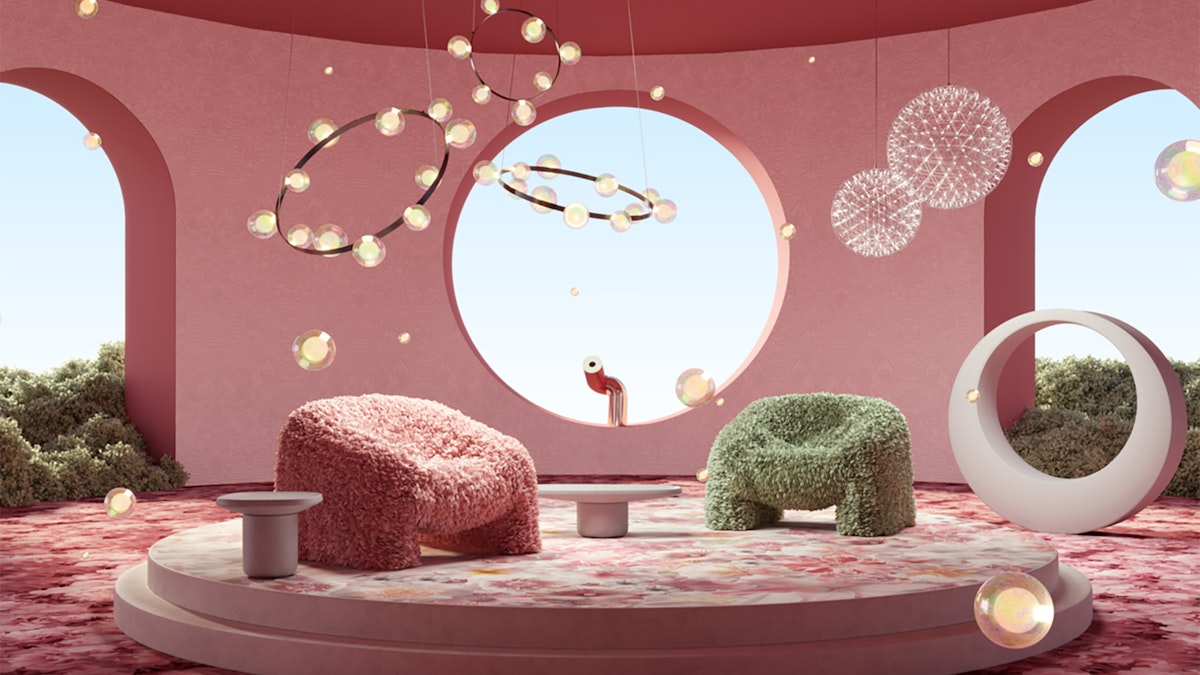
“Defy Gravity”: one of several experiential “worlds” moooi created for the 2022 Salone del Mobile. Each room had its own scent, soundscape, color, and digital experience.
Our process started by going wide. We presented 20 potential conceptual designs to the team, one of which moooi founder Marcel Wanders lovingly referred to as the “farting pet,” a robot scent diffuser that could walk around the home.
A scented smoke ring lingers in the air after Piro’s final crescendo.
From there, a team of IDEO designers enlisted the support of Catie Cuan, a choreographer who specializes in human-robot interaction, and Dutch sound design firm KLOAQ, to refine the concept into a four-minute performance piece.
Piro learned to mimic balletic human gestures.
The final result was technically involved: four robots moved independently, controlled by custom electronics and software designed to mimic the movements and grace of ballerinas. But in the performance itself, the complex mechanics disappeared, allowing the audience to experience not just what technology can do, but how it can make us feel.
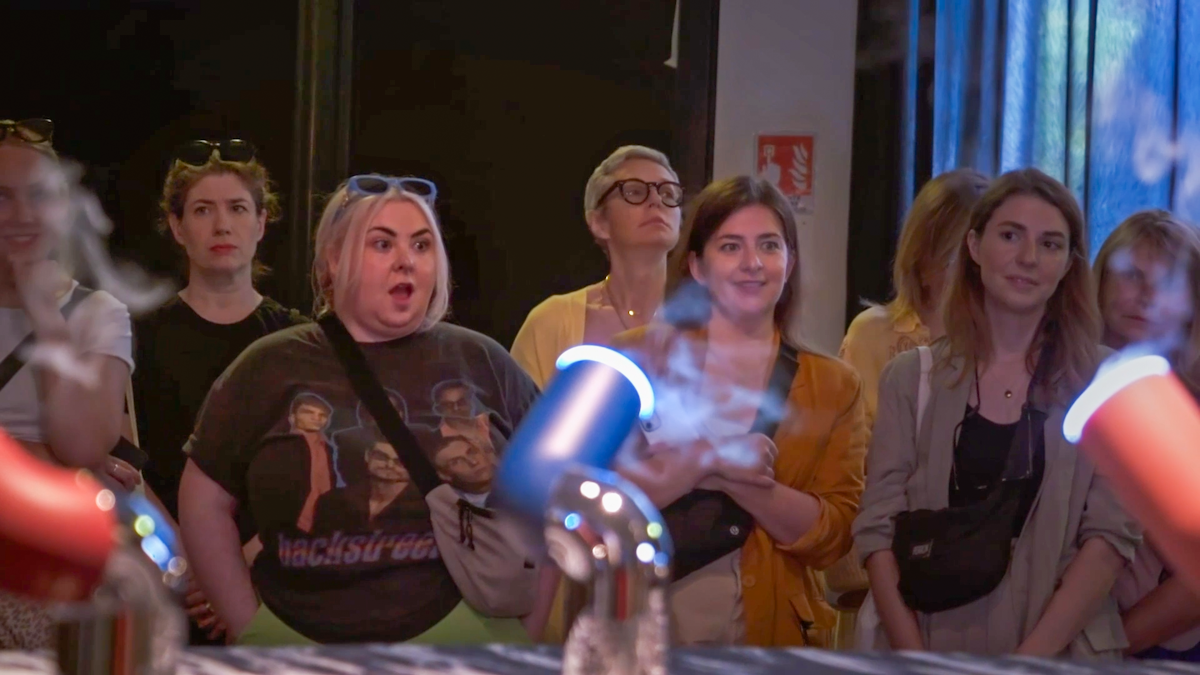
What happens when a designer and a classically-trained choreographer collaborate? Attendees of Salone del Mobile.Milano, the largest furniture fair in the world, got to see for themselves.
Empowering frontline communities
CSAA Insurance Group leads a global call for climate resiliency solutions.
To build a climate-resilient future, we need an all-hands-on-deck approach across industries and organizations, as well as the leadership and collaboration of frontline communities themselves.
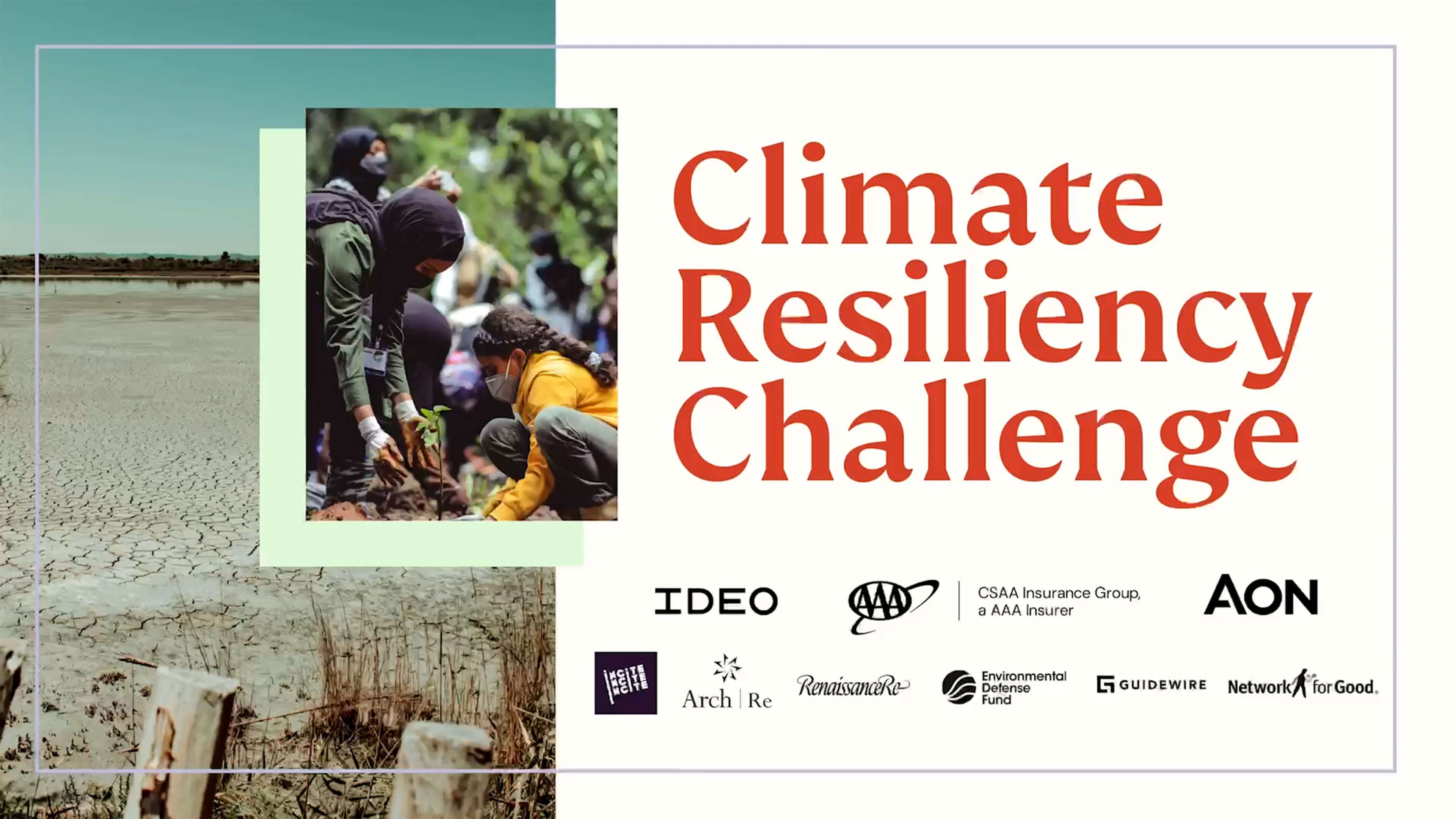
To that end, IDEO and CSAA Insurance Group worked together to unite nine partner organizations, including Aon and the Environmental Defense Fund, to launch an open call for solutions to help communities prevent, prepare for, and recover from climate-related disasters. The goal of the Challenge was to surface actionable and scalable ideas that experiment with new technologies, models, and partnerships, then provide innovators with the support and funding they need to get their ideas off the ground and into the hands of frontline communities.
IDEO set these entrepreneurs up for success throughout the submission process, holding one-on-one conversations with participants, sharing constructive feedback on potential solutions, and developing their ideas and skill sets. The team also hosted workshop and panel sessions to grow community bonds and provide expertise on critical topics, including assessing climate risk and storytelling for impact. Hundreds of ideas came in from around the world, ranging from harnessing the power of AI, to building resilient infrastructures, to democratizing access to climate data, and more.
Once all of the ideas were in, a cohort of judges with a wide diversity of work and lived experience screened for concepts that were relevant, impactful, novel, community-informed, and equitable. At the end of the Challenge, the team chose 13 winning concepts with high potential for impact and partnerships, including Reef Rocket, which seeks to fabricate natural biocement reefs that reduce coastal flooding and erosion, and BurnBot, which is working to prevent wildfires by conducting controlled burns at scale.
For these winning entrepreneurs, the end of the Challenge is just the beginning. Now, they are equipped with critical early funding, as well as a cohort of climate entrepreneurs, along with mentorship from IDEO, CSAA, and the other organizations. It’s a big step forward as they introduce new forms of equitable and transparent data, promote the voices of BIPOC communities, and bring to market new technologies that will protect and support frontline communities through this ongoing crisis.
In the US alone, climate-related disasters cause $120 billion in damages annually. That figure is five times greater than 50 years ago, and projections are $2 trillion by the end of the century.
Nearly 90% of counties in the US declared a natural disaster over the last decade.
418
submissions
13
winners
$1M
in prizes
Faster science
How the NSF leveraged design to unite multidisciplinary teams.
Every year, the NSF provides around 30 teams with up to $750,000 and a year’s worth of coaching, training, and collaboration to develop solutions for research areas like sustainable ocean use or combating fake news. Over the course of nine months, the teams learn how to uncover insights about human needs and design durable solutions for end users. But many of the scientists and experts in the program felt stretched by the idea of putting the needs of end users in the mix with their scientific testing—something few of them have been trained to do in their previous work.
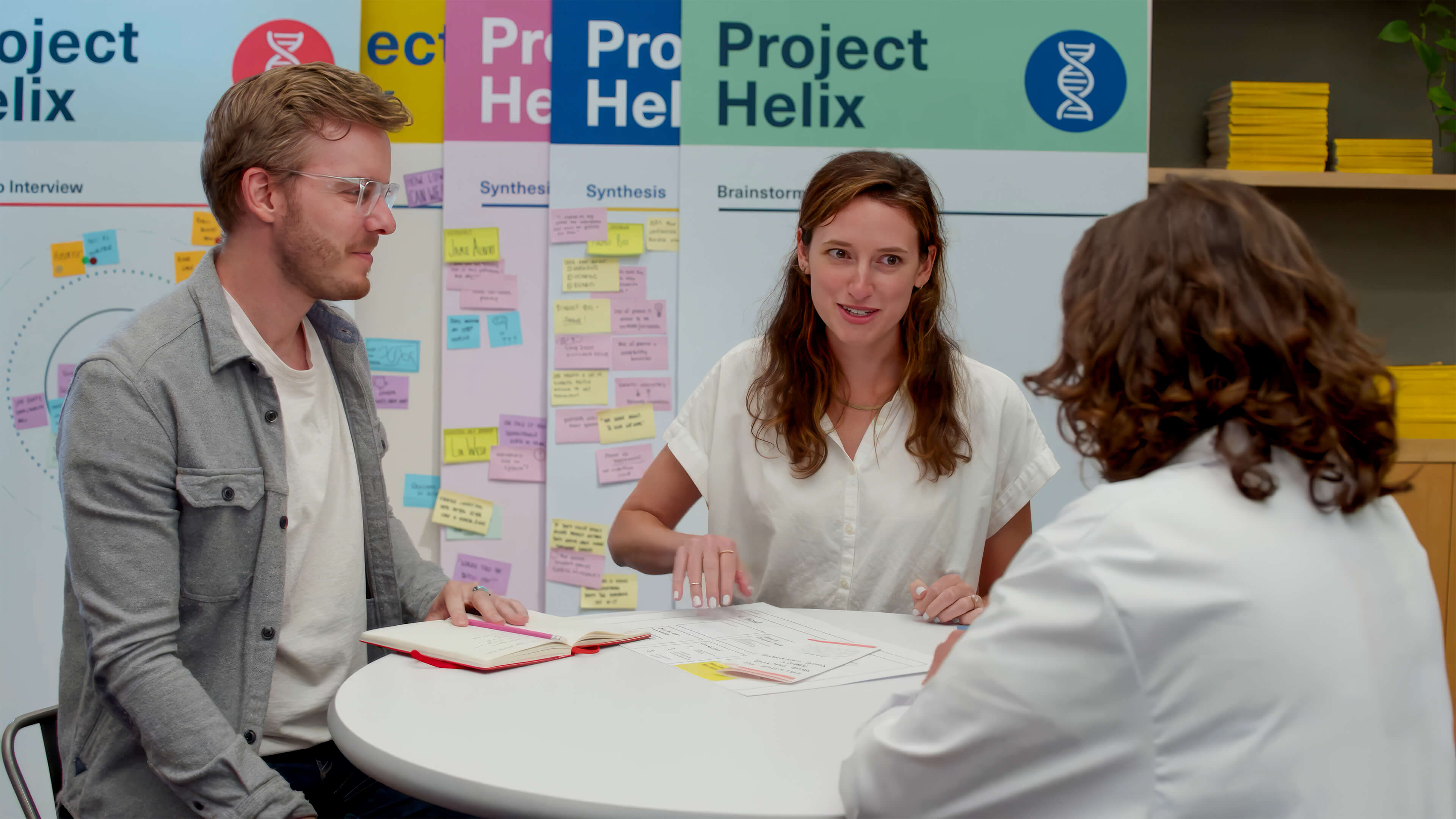
To make that process feel more achievable, the teams built out prototypes and received guidance on refining and pitching their ideas along the way. IDEO joined the project as an innovation partner, facilitating hands-on workshops and creating “Science TV” episodes that could help the program reach a broader audience, deepening its impact now and in the future.

To help grantees get vulnerable, and evolve their ways of working, IDEO sent grantees to improv training so that they could learn to build off each other. The team also took them to magic shows and on ghost tours in downtown San Francisco to learn the value of compelling storytelling in their work. The fun was part of the plan—gelling as a team and building relationships meant participants could make mistakes in front of one another. Being wrong doesn’t come naturally to academics, but it’s a key part of the design process, and a crucial part of solving complex problems .
Each year, a select group of teams move onto the next phase of the “coop-etition,” receiving up to $5 million in additional funding. And all of the participants leave with valuable new skills they can use to break out of their own silos and create human-centered, ground-breaking solutions for the rest of their careers.
When the NSF launched the Convergence Accelerator and made the radical move of bringing together teams from different disciplines, these academics, scientists, and industry partners didn’t have a shared language to move their ideas forward, and needed a structured approach to coming up with new solutions.
164
trained research teams
$200M
in federal support granted to AI-driven innovation, quantum technology, food security, sustainable materials, opportunities for people with disabilities, and more
Climate captains
An innovation accelerator bolsters the impact of climate startups.
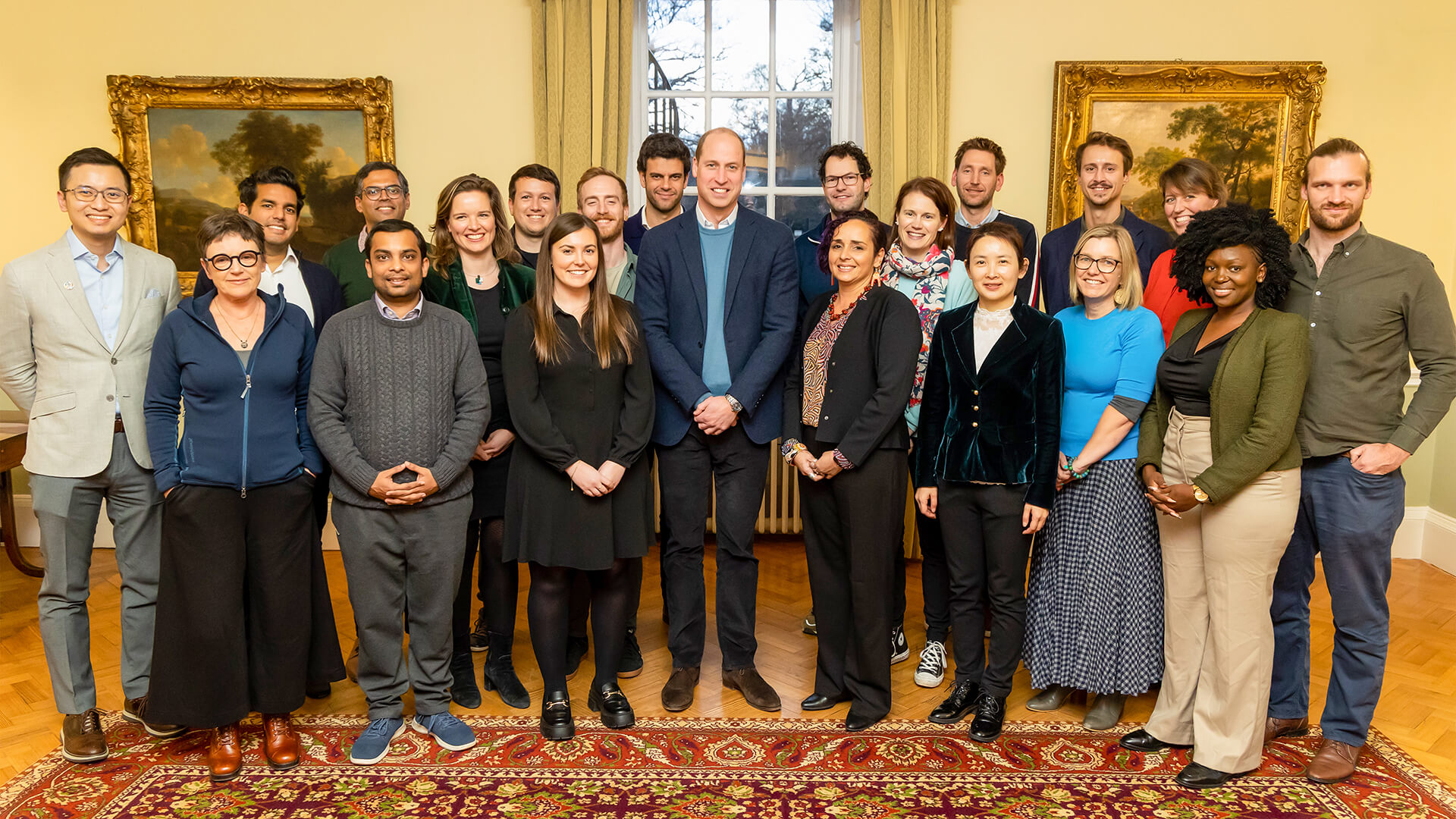
IDEO and The Earthshot Prize built a nine-month Fellowship program and a five-day, in-person retreat to give Finalists the best shot at reaching the Prize’s ultimate goal: to scale the solutions that will repair our planet this decade.
To build out the new Fellowship, IDEO took a deep dive with the previous year’s Finalists to uncover where they needed critical support. This research revealed that the Finalists needed more ways to leverage the Earthshot platform, connect with potential partners to help scale their ideas, and build community with each other. The IDEO team then used those insights to create a set of recommendations The Earthshot Prize team could implement to create a more supportive and structured experience. Ideas they took forward included assigning a designated “Leap Advisor” who could provide guidance and assistance for each Finalist, as well as an advisor from the Prize’s Global Alliance Network who could partner on specific growth initiatives, like scaling product design, or policy change.
Next up: the design of the retreat itself. Together, IDEO and the Earthshot team had three goals for the cohort’s week together in Windsor: focus on new forms of leadership and movement building, spur action through storytelling, and foster community.
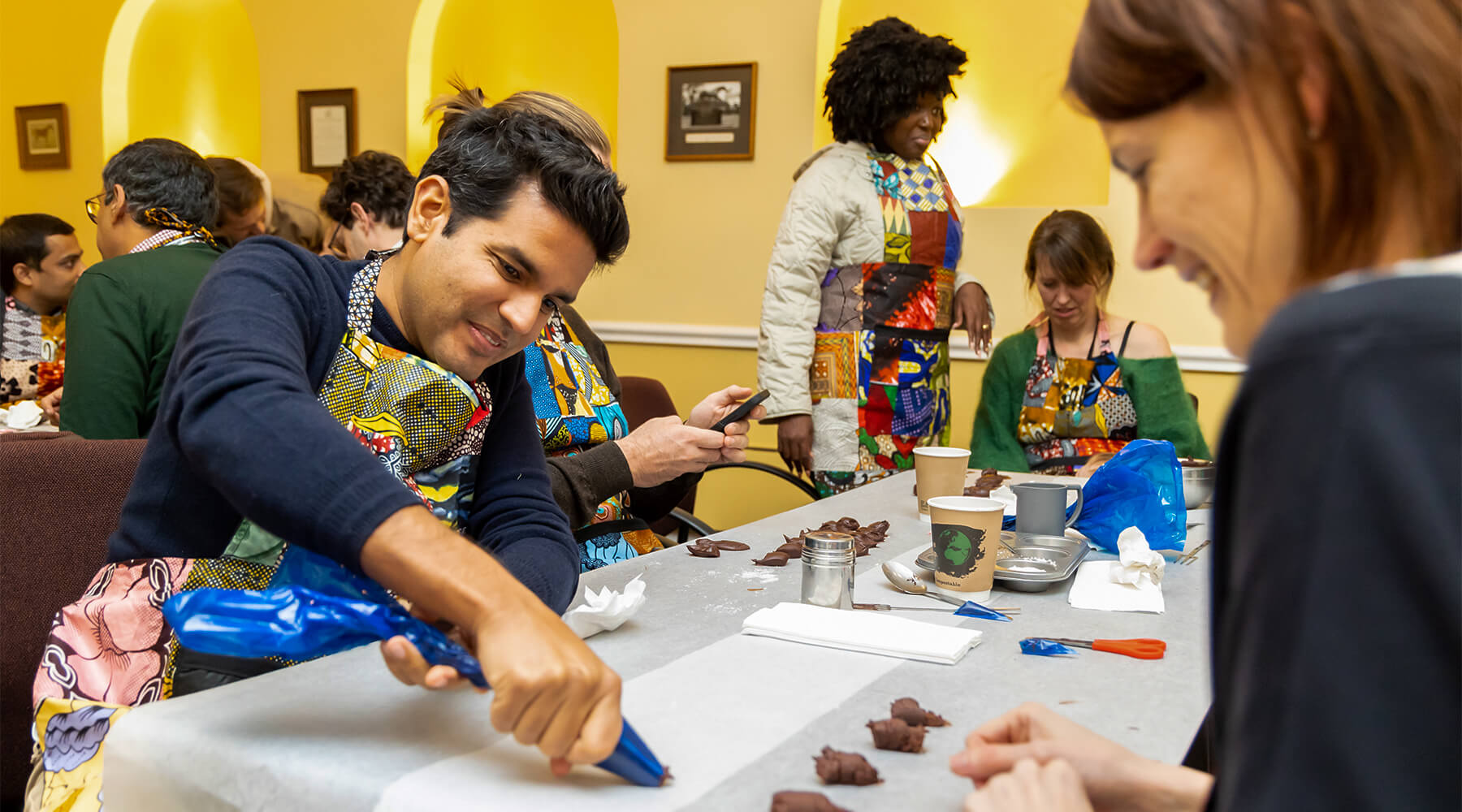
The team developed the curriculum with leaders from Google X and Speed & Scale, alongside startups like UPSIDE Foods. They designed moments to build community, like paired walks and a chocolate-making workshop where Finalists could get to know each other away from the noise of meetings.
Photographers captured the event to create assets for Finalists to use when pitching their ideas, and Finalists honed their storytelling skills. But what most remember is the magical moments of coming together as a cohort of next generation climate leaders who will help each other make an impact on the problems facing our planet, long after The Earthshot Prize has concluded.
The problems facing our planet are enormous, spanning industries, borders, currencies, and regulatory environments. Meaningful solutions will require leaders who can work across those lines.
30
climate solutions accelerated in first two years
.webp)
Preserving the humanity of travel in the agentic AI era
IDEO and Expedia on loyalty, discovery, and how AI can make travel more human.
Travel is fundamentally a human experience, and personalization has always been the ideal: the concierge who remembers your name, the host who anticipates your needs, the perfect room tailored to your preferences.
But true personalization has traditionally been a luxury, reserved for those with wealth and elite status. Even as technology has enabled mass travel and big data and CRM systems have laid the foundation for personalization, brands have struggled to scale hyperpersonalization to everyone. Loyalty programs have become the industry’s best attempt at bridging this gap: Points and tiers quantify who deserves what, with status serving as a proxy for real relationships and customer understanding.
Until now. With the introduction of AI agents, hyperpersonalization can scale from the segment level to the individual traveler. Done right, it has the potential to democratize what was once a luxury good: the experience of being recognized.
Of course, serendipity and delight remain a huge part of the travel experience: unsolicited dinner recommendations from local shopkeepers, wrong turns that lead to hidden gems, and conversations with strangers that become core memories. Our research shows that, especially for Gen Z customers, agency and spontaneity play a big part in shaping their tastes and identities. The opportunity is for AI to know travelers well enough to make their experience feel personal—but also to know when to get out of their way.
Capturing this opportunity means redesigning loyalty so that rewards are legible to agents, personalization scales to the individual, and the system delivers an ecosystem of value matched to what each traveler actually cares about. In doing so, brands can finally deliver the kind of personalization that has always been the industry’s ideal.

The dual audiences challenge
Every travel brand is now designing for two distinct audiences. The first is the person who is comfortably waking up in their hotel bed, enjoying the aroma of morning coffee from the lobby brunch, or grabbing a beer with their new Scottish best friend by Fenway Park. The other is an AI agent that’s handling the searching, comparing, and booking tasks on that person’s behalf.
These two audiences have different priorities, attention spans, and methods for evaluating information. Hyper-optimize a webpage for one audience, and you may inadvertently block traffic coming from the other.
It’s tempting to treat these dual audiences as a marketing problem—a matter of making pages readable to agents without alienating people. And that is part of it. Stripe has already built a wallet for agents, and AI coworkers are beginning to handle multi-step bookings. But the consumer trust gap is wider than the technology gap. The travel industry has not gathered enough data to determine whether travelers will allow an agent to optimize their preferences about brand, travel occasion, or loyalty points.
As brands strive to cater to both audiences, agents in the funnel are revealing three outdated assumptions baked into the way most travel and hospitality loyalty programs operate. First: transactions are the best measure of loyalty. Second: personalization doesn’t scale. Third: points are the primary reward. Once these assumptions are challenged, a different kind of reward emerges: the reward of travel itself. In the age of AI, loyalty programs should be designed with enough emotional intelligence to preserve the romance of travel while harnessing the superpowers of machine intelligence.

False assumption 1: Transactions are the best measure of loyalty
When American Airlines launched its AAdvantage program in 1981, it introduced the first large-scale frequent-flyer program by mining its reservation system for recurring phone numbers. This marked the first time the airline could identify returning customers and begin building direct relationships with them rather than with their travel agents. The airline built the program on the data it had at the time: transactions. Forty-five years later, most loyalty programs still follow a similar structure—offering points for spending, tiers for hotel nights, and miles for distance traveled.
This transactional dynamic is increasingly ineffective. The average American belongs to 17.4 loyalty programs, but actively engages in fewer than half. Many brands claim loyalty membership sizes that rival the entire adult population of the United States. These transactions may look like loyalty, but are they really?
The next generation of travelers will have an agent doing the work that only the most dedicated points gurus do today: discerning what each traveler finds valuable and surfacing the options that match. Imagine a Gold-tier member with a brutal travel schedule who is looking for a hotel close to tourist attractions. In a regular search, they filter by price, reviews, and location. An agent can do that, plus spot the perks that actually matter at six in the morning after a red-eye: early check-in and a quiet room away from the elevators.
Now, the measure of loyalty broadens beyond the transactional into the experiential and emotional utility of being seen and cared for. Agents simultaneously reveal which programs offer real value and match them to what each traveler values for each and every trip.

False assumption 2: Personalization doesn't scale
Top loyalty programs like Amazon Prime offer around 30 distinct benefits. They range from free next-day shipping to cash-back options and streaming media subscriptions. Brands surface long lists of these perks because they can’t possibly know which one will land with a given member. The list is often a coping mechanism for the brand’s inability to fully personalize and the consumer’s inability to remember everything the brand offers.
Marketers often use robust quantitative surveys, such as conjoint analyses, to gain insight into consumer preferences. Run enough permutations with enough travelers, and you can statistically estimate which combination of benefits they value most. Marketing teams still debate granular tactics, like the order of perks to list in an email. But those debates are entirely unnecessary when agents can just choose based on the traveler’s preferences.
Consider the scale this can reach. Expedia Group alone encompasses more than 3.5 million lodging and vacation rental properties. One can imagine that in the near future, by analyzing a traveler’s bookings and reviews across this vast selection, an agent can ensure that a guest’s preferences are prioritized for every booking, regardless of who operates the property.
Personalization scales when agents do the matching. The new design challenge is enabling agents to interpret hundreds of personal preference variations and reward ecosystems, making offerings sufficiently readable for an agent to match and communicate well on the consumer’s behalf.

False assumption 3: The points are the reward
Ask anyone who has been a road warrior what real loyalty feels like, and the answer is rarely the points. It’s often Shirley at the front desk, who remembers you like a higher floor, a firm pillow, and a bigger room rather than a view. The recognition itself was the reward, a relationship rather than a transaction. But for too long, it was too expensive to offer to anyone beyond elite travelers.
Now, the behaviors that used to earn that recognition are fading just as technology is emerging to recognize customers without them. Today’s consumers are less loyal and less inclined to align themselves with a specific loyalty program or brand because they value choice, flexibility, simplicity, and convenience. The number of people who used to go on mileage status runs in December just to hit status is decreasing. Instead, they’re seeking something more, and brands are increasingly able to provide it, thanks to advancements in AI.
Expedia’s recent partnership with CLEAR offers a glimpse into the future of travel loyalty: It is evolving from individual brand perks to an integrated ecosystem of complementary benefits that enhance each step of the journey (think: Apple ecosystem logic, but applied to travel). For example, CLEAR offers Expedia members discounted memberships to CLEAR+ lanes and access to its Concierge services, providing VIP treatment as they head to their next destination. What stitches the ecosystem together is the underlying agent layer. It reads each traveler’s preferences across the partner brands and surfaces the right benefit at the right moment, without the traveler having to coordinate it themselves. No longer just a perk for road warriors, recognition becomes an experience any traveler can enjoy at every stage of their journey.
The opportunity to make travel more human
People often talk about compound interest when it comes to money. You invest a small amount, it grows over time—that’s the magic of compound interest. But we believe the memories, stories, and friendships formed through travel compound even harder. Years later, a distinctive smell, a friend, a menu item—whatever—can magically transport you back to that travel moment.
Loyalty has never really been about earning points. It’s about the memories of being cared for while away from home, discovering something new and unexpected, and feeling seen and recognized. It’s about the desire to return because those memories capture the joy of travel.
Nights, miles, and dollars are the receipts for a trip. They are not what the trip leaves behind, which is more sensorial and more personal than anything a tier structure has ever captured. The next era of travel loyalty will be about making travel more human, powered by the combined strengths of machine intelligence and emotional intelligence.
“In the age of AI, loyalty programs should be designed with enough emotional intelligence to preserve the romance of travel while harnessing the superpowers of machine intelligence."

The lost art of watching people work
What The Pitt can teach us about learning on the job.
I’ve never been a big fan of medical dramas, but I couldn’t stop watching The Pitt, the HBO Max show about a fictional Pittsburgh ER at a public teaching hospital. The high-stakes medical cases, relentless pace, and scrappy, sleep-deprived team you can’t help but root for had millions of viewers counting down to Thursday nights earlier this year. But for me, it was about watching the work itself.
Apparently, I’m not alone. The Washington Post called the Emmy-winning show “perhaps the purest example of ‘competency porn’ on TV”—a term that surged into the cultural vocabulary this year to name the satisfaction of watching people who are really, really good at their jobs.
But what they’re really good at goes beyond the practice of medicine. They excel at teaching and learning on the job. They think out loud, trust learners with calls that matter, and dissect what just happened before moving on to what’s next. I find it inspiring to watch.
Here are three lessons on teaching and learning in the workplace that we can take from The Pitt, and ways to activate them in your own work.
Make mastery observable
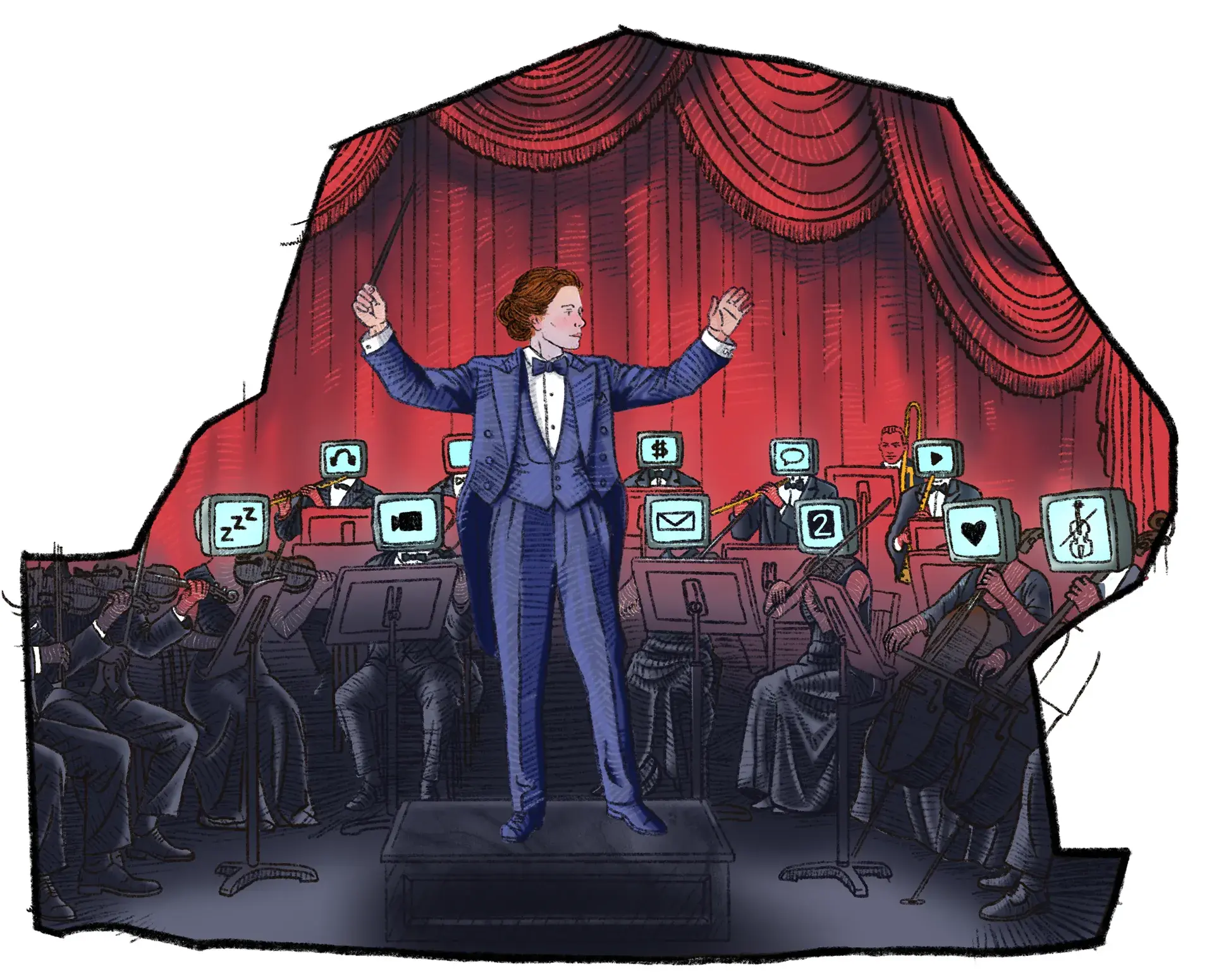
Every scene on The Pitt has two things going on: someone doing the work, and someone learning to do the work. A recent nursing school grad shadows as the charge nurse guides a survivor through a rape kit exam—every choice a lesson in how to move at the patient’s pace. A resident observes as the attending decides out loud whether a procedure is worth trying if it might cost their patient her sight. A specialist performs an emergency procedure the attending has never seen before, teaching the room as she does it. Watching people at the top of their game work out a problem from beginning to end—including the messy middle, not just the outcome—is a sight to behold.
Most of us don’t work in a teaching hospital, but “see one, do one, teach one”—the century-old learning model attributed to Johns Hopkins co-founder and surgeon William Stewart Halsted—is how most of us pick up a craft, medical or otherwise. But that kind of learning is harder to come by these days. For years, most knowledge work has been evolving to a less readily observable state. Increased remote work makes it challenging to know what other people are working on, receive mentorship, get feedback from peers, or signal when you need help. The explosion of single-player AI tools has increased output, but made the thinking that informed it harder to see and, some research suggests, to trust.
When my San Francisco colleague Thomas Overthun worked at Philips early in his career, he would pass by hundreds of drawing boards on his way out of the studio, displaying an amazing range of work in progress. Our workplaces look very different now, but it’s entirely possible to design tools, rituals, and ways of working that can help us see and get inspired by one another’s in-process work.
Here are a few practices that are helping us tilt our work toward each other:
- Use video shares: Kaii Tu in our Shanghai studio records short Loom videos to walk his team through the design choices he made—and why. The format forces him to make his reasoning legible, and makes it possible to share across time zones.
- Host “Screen Share Fridays”: On Fridays at our Cambridge studio, the studio-wide Slack channel explodes with screenshots of work in progress, sketches, project Post-it Notes, photography from the field, and presentation decks. Questions naturally follow, which then leads to dialogue about the work.
- Think in public: My Chicago colleague Leah Marcus builds incredible FigJam boards at the start of each project with relevant research, inspiration, and connections she’s making across our digital product portfolio. She uses plain language, bringing others who don’t share her business design discipline into her thinking.
Let the learner try
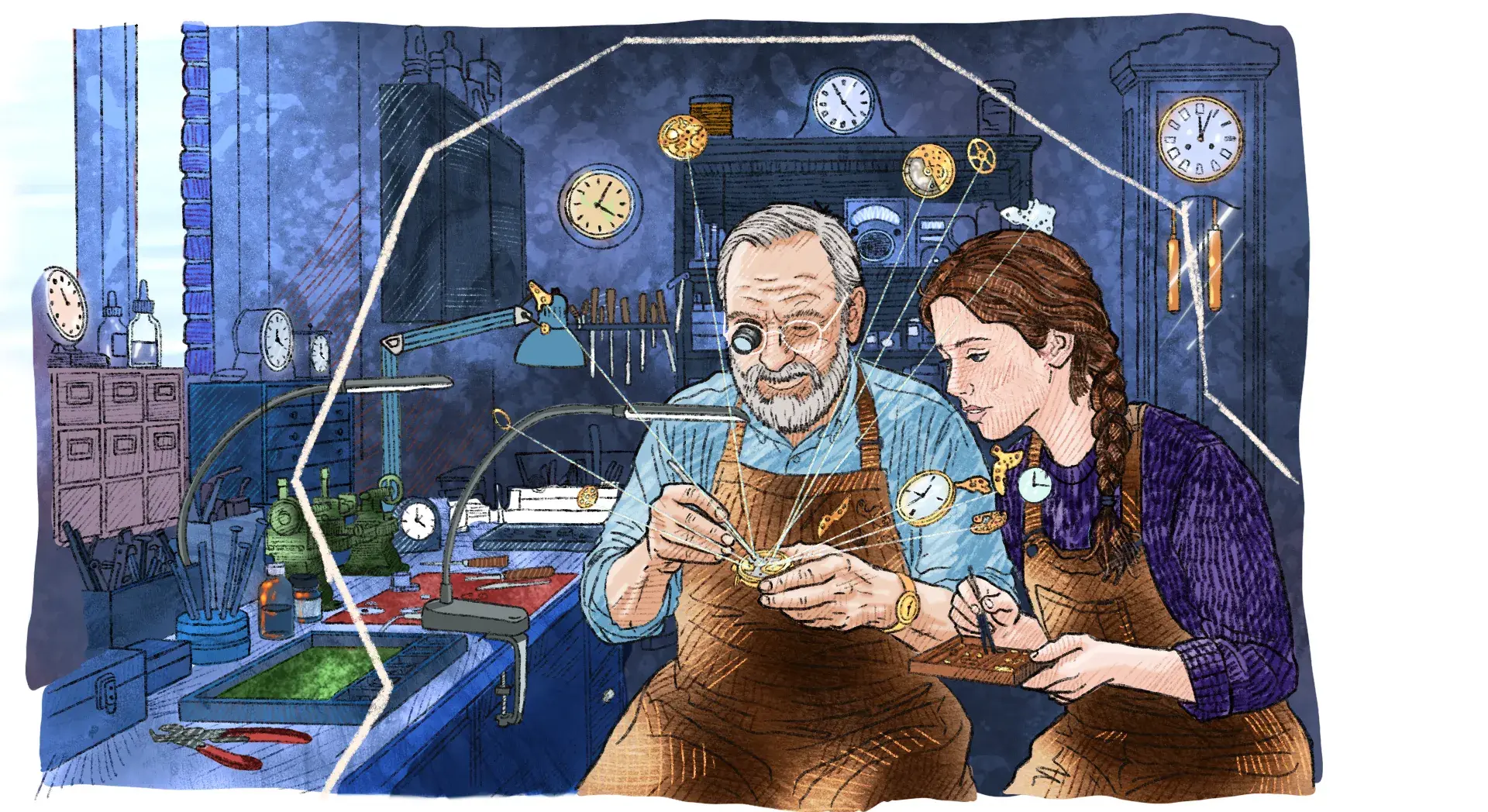
The best teachers I’ve observed share one hard-earned skill: they show restraint, letting learners grapple and find their feet with just the right amount of support. In The Pitt, when a new patient arrives in critical condition, the attending physician, Dr. Robby, turns to a resident and asks, “What’s your plan?” He doesn’t jump in, even when the clock is ticking. As a viewer, you feel the pressure that the resident is under and wonder, “Is he trusting a beginner with too much?” Turns out, this is an important part of the learning process.
This is the “do one” part of Halsted’s model, and it’s harder than it sounds. We know from decades of research that learning happens when we reach the edges of what we know how to do, and it happens even faster with scaffolding: a gradual release of responsibility from teacher to student. Instead of just telling residents to do the procedure on their own, Dr. Robby asks them questions, nudges them to consider alternatives, and fills in information they miss if it will have consequences for the patient. He lets them try first, then steps in when they get stuck. The scaffolding makes the risk survivable but not invisible.
As a firstborn, Virgo, recovering perfectionist, I’ll be the first to admit that it is hard to use suggesting mode when you can just use editing mode. But the shortcut has real implications for my colleagues and the work. While I may get a cleaner draft, we both skip the interesting part that could help someone else grow, and probably get the draft to a better place than I could alone.
How might we demonstrate restraint and let learners try?
- Provide feedback in the margins: Suggest, don’t edit. Offer comments over rewrites. The extra friction is the point—it forces a conversation about the choice you would have made, instead of making it.
- Design it now: My colleague Bri Patawaran in our San Francisco studio is a huge fan of design-it-now moments to get a team out of swirl and uplift viewpoints that haven’t been heard. She asks, “What would you do if you had to deliver this today?” Everyone goes heads-down and then presents.
- Ask, don’t answer: When your team is stuck or a direct report brings you a challenge, resist the urge to solve it. Ask, “What's your first take?” and stay in question-asking mode as long as you can to help them explore their own thinking, giving you a chance to see their problem-solving skills in the process.
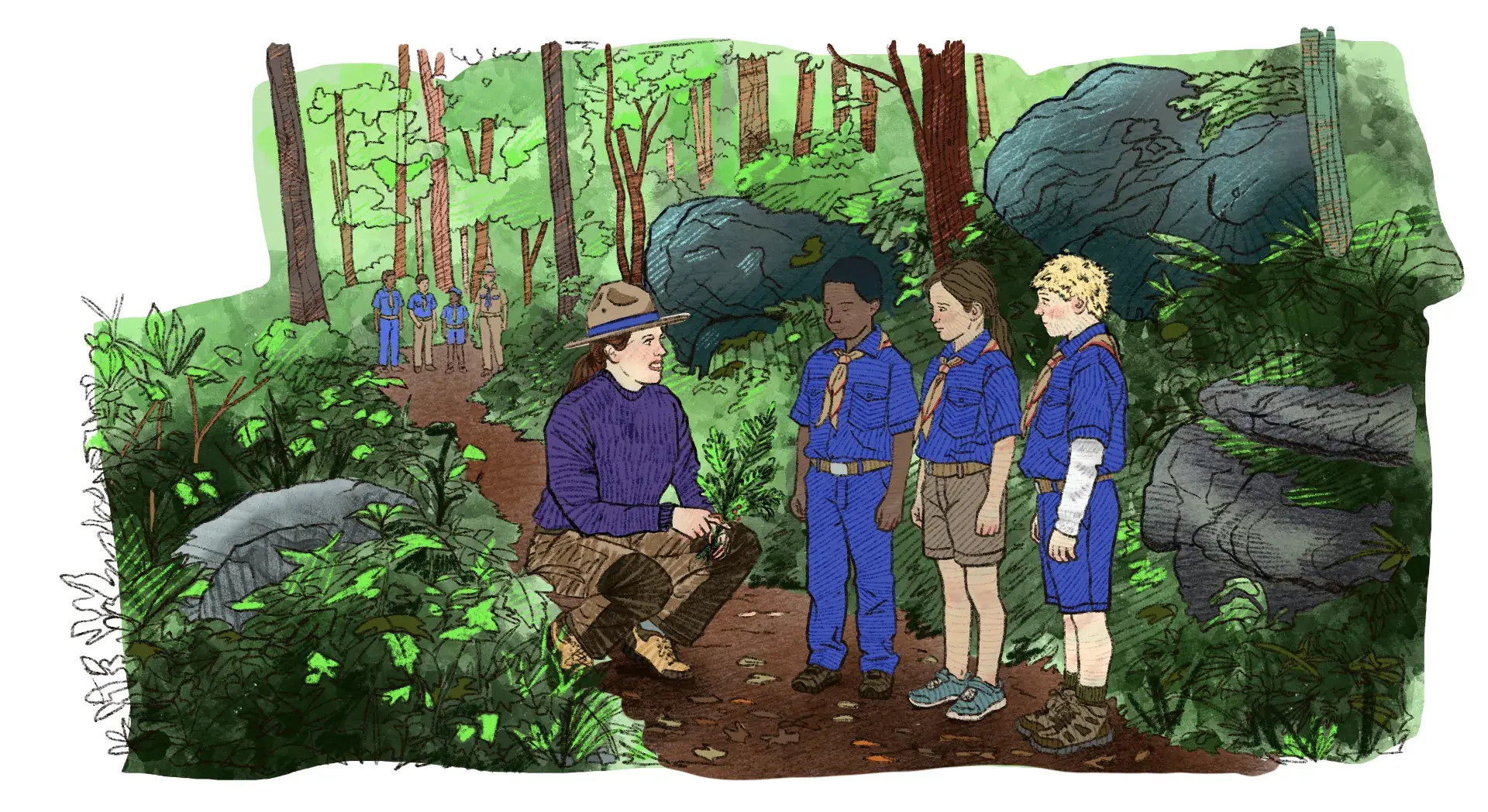
Tell the story
The story we tell about what just happened is how we absorb what we’ve learned. On The Pitt, residents present each case to the attending after their patient is discharged. They walk through what the patient came in with, the diagnoses they considered and ruled out, the call they made, and the result. It’s a small ritual with an outsized effect—the resident consolidates what they learned by teaching it, and everyone within earshot learns alongside them.
Reflection doesn’t have to be formal. Christopher Myers, a researcher at Johns Hopkins, studied medical transport teams—paramedics and nurses who fly in helicopters to accident scenes and rush patients back to the hospital. On any given day, they have no idea what they’ll encounter, and no single person can accumulate enough experience to be ready for all of it. What Myers found is that the crews built shared expertise through vicarious learning: telling each other stories, informally, between calls. These stories—casual, unscheduled, and recounted in whatever time they had—were how the whole team became more prepared together.
There are plenty of ways to build reflection into your work. The harder—and more interesting—work is building it into your culture.
Here are a few practices we use across IDEO to encourage reflective storytelling.
- Ask “What are you working on?” The deceptively simple five-word question is a reflective invitation dressed up as small talk. Ask it in hallways, on Slack, at the start of one-on-ones. Half the time people just answer. The other half, they tell you something they didn’t realize they’d learned.
- Never skip a retro: It’s easy to nix a project post-mortem when you’re running short of time. But “I liked…,” “I learned…,” “I lacked…,” and “I longed for…,” is an easy and effective feedback framework to prompt everyone to share their ah-has and takeaways from the work.
- Host a “Wrap Party”: Once a month, we host a virtual IDEO-wide “Wrap Party” where teams share three behind-the-scenes stories about recently completed work, giving everyone an opportunity to learn and get inspired together.
At one point while watching The Pitt, I said to my husband, “Wow, if I’d seen this when I was younger, I might have wanted to become a doctor.” (He gently reminded me that I have to avert my eyes every time I see blood.) Though what we see on screen may seem aspirational, none of the lessons The Pitt shares about teaching and learning on the job is exclusive to an emergency room. Observability, restraint, and storytelling are choices—small ones, mostly—that we can put into practice every day wherever we work. None of them require a shift change.
Curious about how to improve ways of working at your organization? Get in touch.
“The best teachers I’ve observed share one hard-earned skill: they show restraint, letting learners grapple and find their feet with just the right amount of support.”

Play, experimentation, and the rise of the hybrid creative
How a Google Creative Lab designer uses AI to supercharge her work.
Imagine an engine that generates alternative endings for stories, a 2x2 visual tool for choosing which films to watch, or a digital game of telephone that transforms a poem into something altogether different, like a location on a map. For Khyati Trehan, a Design Lead at Google Creative Lab, these are the weird, improbable, delightful explorations that AI is catalyzing.
Trehan’s lifelong curiosity for making began at Mirambika, a progressive school in New Delhi, the city where she was born and raised. “When you give children complete freedom, they choose to learn,” she says. That love of learning took her from the National Institute of Design to a globetrotting creative career spanning interning at a type foundry, creating AR experiences for Snapchat Spectacles and Instagram, producing 3D editorial illustrations for The New Yorker, The New York Times, and WIRED, working as a communication designer at IDEO’s former Munich studio, and “one crazy Oscars’ project the year of Will Smith and Chris Rock.”
She’s now at Google Creative Lab in New York, working on projects that “humanize complex technology and remind people why they love Google.” She collaborates with a diverse team of designers, writers, and technologists, united by a desire for creative freedom and a novel approach to problem-solving.
I spoke to Trehan recently about how AI enhances her creativity, her evolving mindset as a designer who embraces coding, and the importance of fostering play and experimentation in organizations to promote AI adoption.

Ed White (EW): Do you remember when you first started using AI?
Khyati Trehan (KT): I got early access to DALL-E before it launched in 2021. Ironically, I remember liking the blurry loading states more than the final images. The results never quite stuck because nothing that came from my prompts felt like…me. There wasn’t much control over the output. I was looking for tools that would feed my creative process, and “one-shot AI” didn’t do it for me.
An interest in using LLMs to turn natural language into software code happened more recently. My friend Pedro Sanches, a brilliant creative technologist, designer, and Creative Lab alumnus, came over for tea and shared some sketches he’d made using what he called “coding sans coding.” (This was before “vibe coding” was a term.) I was much more excited by that approach because it felt like something I could incorporate into my practice by building tools to help me explore new places without them feeling completely unfamiliar.
Those early experiments provided initial insights into my personal philosophy on how and when I use AI. My goal has never been to rely on AI to do all the work; instead, it’s about exploring how AI can help me supercharge and advance existing ideas.
EW: How is AI changing your team and Google as an organization?
KT: As the boundaries around our disciplines blur, the number of hybrid creatives is growing. Writers are making films, graphic designers are building writing tools, animators are engaging in creative coding, and developers are designing interfaces. There’s still a distinct difference between the vision and “flavor” of what I might design and develop as a graphic designer and what a creative technologist might create using the new capabilities that AI unlocks for both of us. Our individual experiences, values, core strengths, skills, and knowledge still define what makes us unique, even when we have the same tools at our disposal.

EW: What are the things you and your team are learning, as designers, about using this technology?
KT: I think we’re realizing that regardless of how you look at the creative process, the shape of it remains the same. We still start by playing and experimenting to explore the edges of technology. We engineer every aspect of the applications we create, ensuring that we consider people’s needs. In fact, we now spend even more time and energy focusing on what matters to people and asking ourselves: “When we can make anything, what do we choose to make?”
While engineers are trained to focus on efficiency and optimization—and form the backbone of Google—creatives, when given the opportunity to lead research and gain early insights, instinctively seek out emotion and play. We naturally discover the right metaphors and interfaces that make complex systems clear.
EW: What’s worrying you about AI and design, and why?
KT: With every big shift, it’s wise to be cautiously optimistic. I often reflect on how we studied design in school: manually painting a color wheel and using our judgment to create the right shade of orange that would sit between red and yellow, even when the Blend Tool existed in Illustrator. Putting time and effort into these exercises sharpened our skills and helped us develop a strong foundation, which remains useful regardless of the tools we use. We shouldn’t forget that. You can use AI as a crutch, or you can use it to unlock or supercharge your existing skills, expertise, and ideas. To me, that’s the distinction between an effective use of AI and slop.

EW: What are the really concrete ways AI has changed your craft as a designer at Google?
KT: The tools you use change the way you think. When I was learning 3D modeling and texturing years ago, it quite literally unlocked a new dimension in my graphic design practice. I’d surprise myself with the ideas that came to me and what I was capable of with this new ability.
This holds true for using AI. I’ve added surfaces like Gemini Canvas, AI Studio, and Flow to my toolkit to choreograph Google’s models and APIs. Mindset-wise, it’s made a lot of us hybrids. Now that we can build things, I find that in meetings, designers show more often than they tell.
I still design using traditional tools, except now, once I translate the visual and the flow into a clickable prototype, I can iterate in the same environment, and the work becomes more lived-in.
EW: How has that changed you as a creative, and why?
KT: It’s definitely a leap. It’s like the difference between learning about qualitative interviews versus being in the room yourself. You can understand both objectively, but with the latter, you feel more connected to the learnings. For example, I’ve designed loading states plenty of times, but now that I’m closer to the front end, I’m bringing so much more of my design flavor and delight to them. I feel more comfortable taking risks and taking departures from what’s deemed standard in the space.

EW: What’s an example of that?
KT: I’ve been designing digital experiences for very personal, everyday, specific, and idiosyncratic needs. For example, I got my hands on Ted Chiang’s Exhalation, a collection of short stories, and fell in love with them. I’ve been inventing alternate endings for some of them and extending his beautiful worldbuilding.
This led to the creation of Story Arc Engine, a narrative-building tool that allows users to deconstruct stories using a five-part narrative arc. By tweaking one part of the arc, users can see how a change in the plot affects the rest of the story and generate new narratives based on their own plot ideas.
EW: How else does AI change what you’re designing?
KT: Because I’m now building both the final output and the intermediary tools that help me get there, I share both: the final product and the tool I vibe-coded to create it. This means that others can use the tools I make, often in unexpected ways. For example, someone once used Story Arc Engine to draft their next career move, hiding a sabbatical in the narrative.
EW: What other examples of these types of projects have you been working on?
KT: I’ve recently made several tools for myself. Around the World in Good News is a digital newspaper that explores uplifting historical events and stories of human achievement from across the globe and throughout time. Another project, 2x2 Anything, emerged from my desire to make more informed decisions for movie night. It's a concept-mapping experiment where you define two conceptual axes, set the context, and click anywhere on the coordinate map to generate a fitting concept or summon an existing result. My most recent sketch, Machine Telephone, is a playful game in which you enter an input, pass it sequentially through different media and models, and observe how context shifts, translates, or gets misunderstood over time. For example, you might see a poem translated to a specific location on the map or a song transformed into a spherical material. Now that mediums feel less siloed, and those that remain siloed are easier to learn about, my first instinct is no longer to dismiss an idea just because it initially seems unfeasible.

EW: What advice would you give leaders who want their orgs to use AI effectively?
KT: An urgent tone from execs and leadership, coupled with a top-down mandate and a lack of concrete guidance, isn’t helpful. It only leads to confusion and stress, and, ironically, slows down the actual work
Instead, explicitly give people permission to play. Play is a powerful tool, especially when you’re faced with ambiguity. Give people access to a variety of tools and functions, and offer learning resources. Let people stumble upon new paths, and figure out which tedious parts of their process AI can take off their plates.
EW: How do you think AI will transform your industry over the next five years?
KT: AI is already transforming industries by narrowing the gap between different disciplines. When the mechanics of creation are no longer a bottleneck, and the effort it takes to make things decreases, where does our time and attention go? It comes down to the core of why we create: our taste, the sum total of our experiences, our irrationality, our perspective, and our vision. Maybe we’ll just learn more about what makes us uniquely human along the way.
“Design in the Age of AI” is a series of conversations with designers and makers from across industries and disciplines, building the future with AI, today.
“My goal has never been to rely on AI to do all the work; instead, it’s about exploring how AI can help me supercharge and advance existing ideas."
Rough, rapid, and right in the age of AI
Why the core principles of prototyping still hold true.
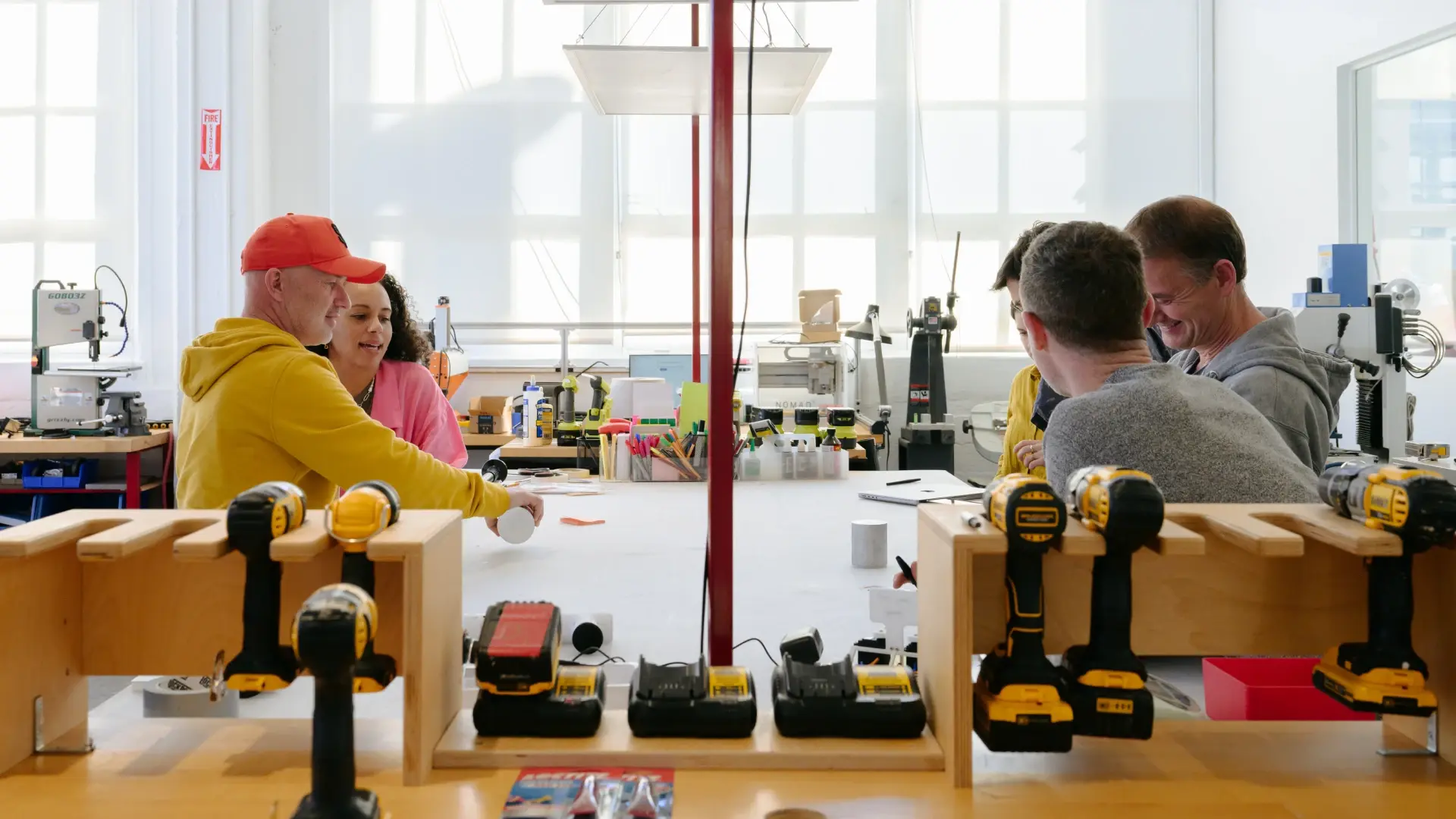
When we prototype, we embrace what we call the three Rs: rough, rapid, and right. We keep prototypes rough, so that the people we design with feel comfortable providing honest feedback. We move rapidly, getting in as many reps as we can to open up creative possibilities, learn from each iteration, and avoid falling in love with the first ideas that pop into our heads. And we work very hard to get it right, creating lo-fi designs that test for just one variable at a time, so that, for example, a beautiful design doesn’t distract from a less-than-ideal experience. As AI makes it easier to generate polished renders with minimal effort, we see more people celebrating the ease and speed of design. But beautiful images aren’t design. In fact, they can seduce us into thinking an idea is fully baked, stopping us from asking the most important questions, the ones that uncover the insights that help us truly meet human needs.
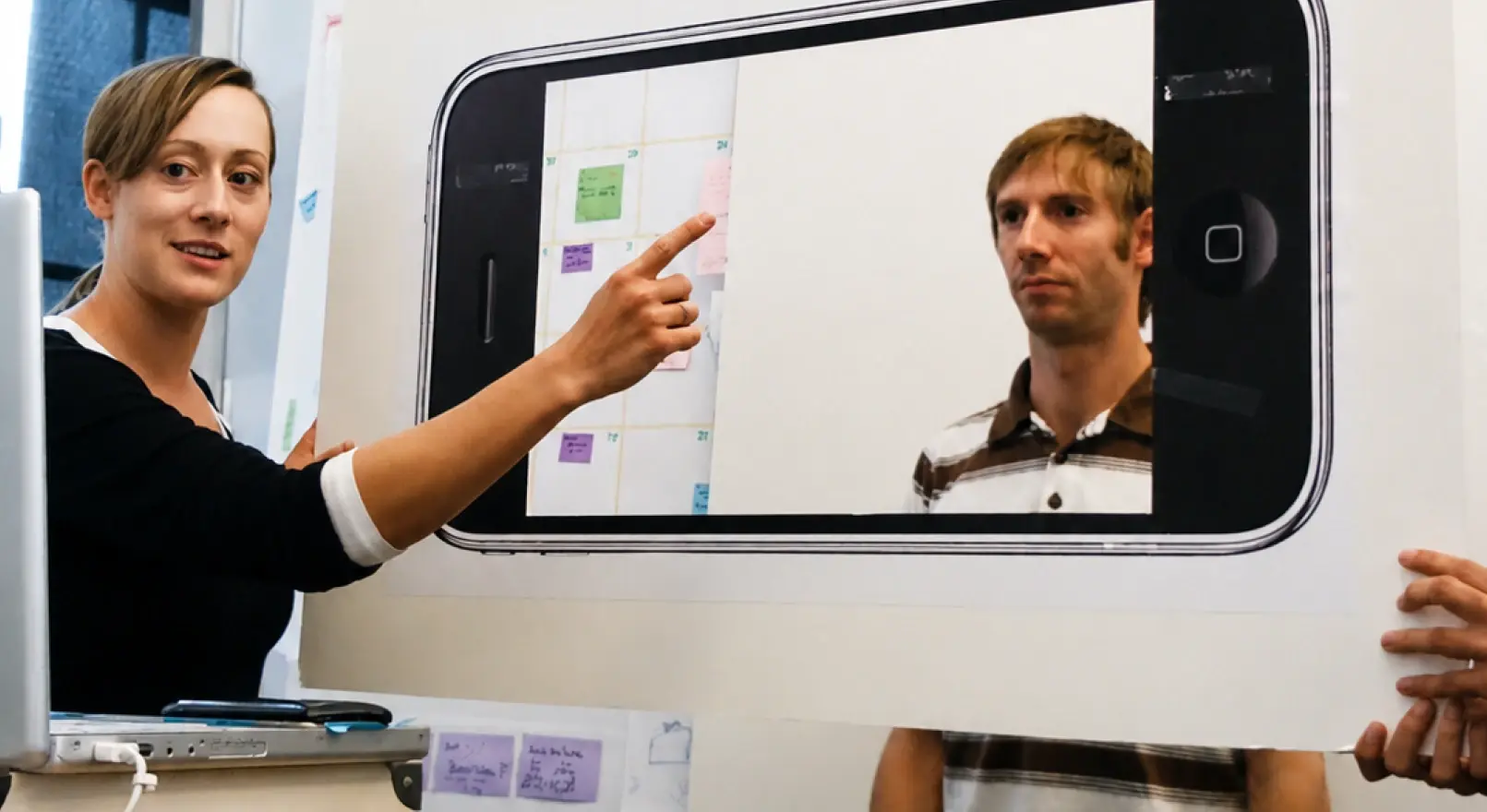
For decades, the three Rs have kept us grounded, reminding us why we prototype and ensuring that we get the most out of the design process. They apply to everything we design—from physical products to AI-enabled systems and digital tools. One of our most memorable prototypes was for a digital product for Sesame Workshop. It involved a simple cardboard cutout of an iPhone and a bit of role-play. One colleague pretended to be a preschooler, standing in front of the board, pointing to elements on the improvised screen. Another stood behind the board, impersonating a furry monster that introduced a new dance move whenever our “preschooler” tapped the invisible screen. It did exactly what a prototype is meant to do: It drew people in, sparked a discussion with our partners at Sesame Workshop, invited valuable feedback, and could be easily adjusted and improved, giving us numerous opportunities to make it into something kids and parents loved. The video we recorded became so popular that professors still show it in design schools today.
As we integrate AI tools into our prototyping process, it’s crucial that we use them thoughtfully and intentionally, so we don’t lose the methods that have enabled us to create category-defining innovations that meet real human needs. We have to maintain the three Rs to expose knowledge gaps, invite real feedback, build belief, and give us confidence that a concept is worth developing and investing in. They help us make space for surprising turns, illuminate opportunities for joy in the design process, and even let us embody and fully engage with our ideas. Here’s a deeper dive into why each R matters, and how to integrate them while embracing AI tools.
Rough: A strategic incompleteness
Early prototypes aren’t finished or even pretty. That’s on purpose—it gives the people we test with permission to dive in and co-create with us. It also keeps us from becoming overly attached to our initial ideas, making it easier to pivot if we see a better way forward.
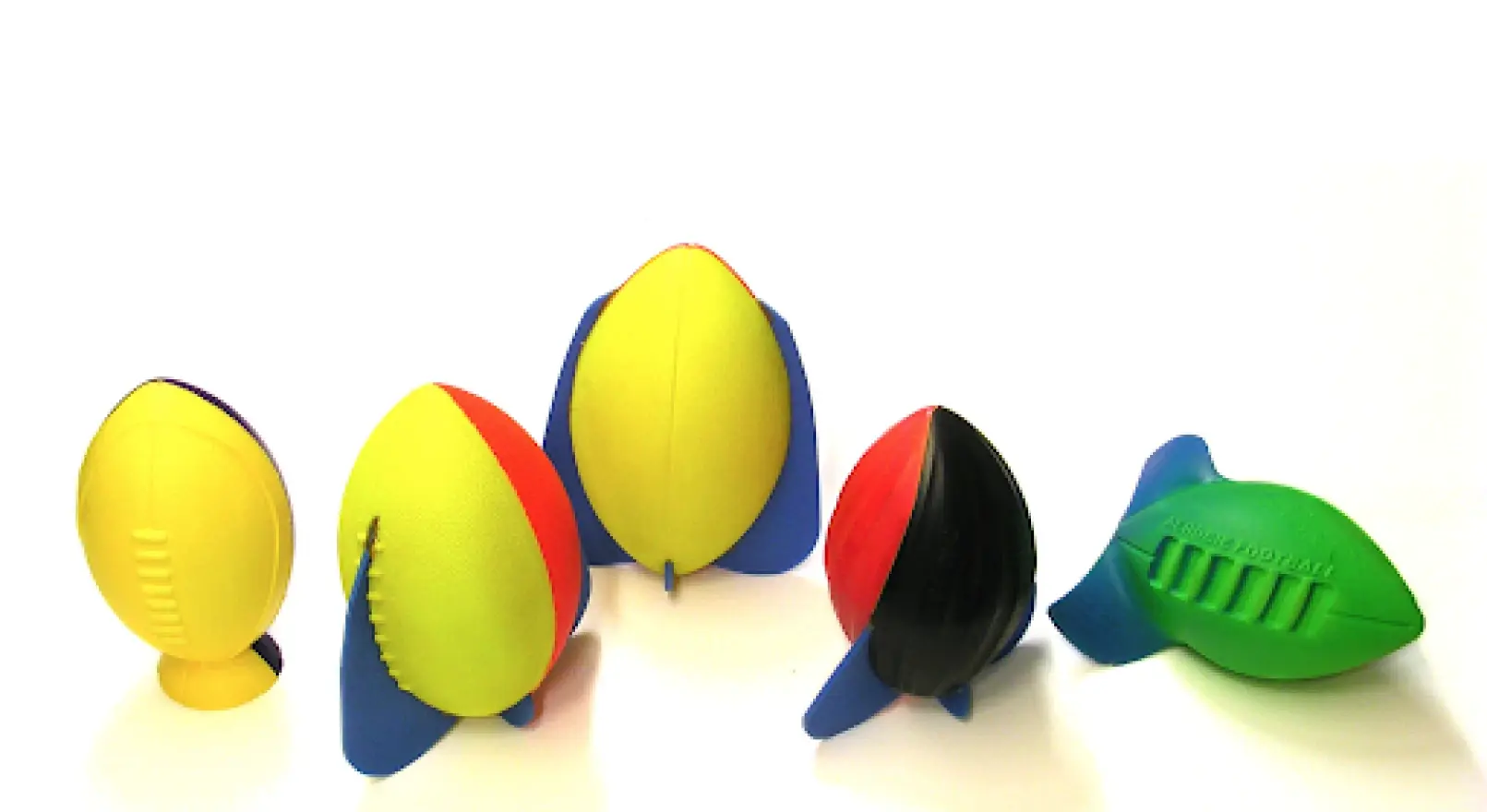
When our toy inventors created the first prototype of the Aerobie Rocket Football, for example, it featured a small pedestal glued to the bottom of a foam football. The goal was to create a football that could stand upright, allowing kids to practice place-kicking without someone holding the ball. The pedestal was clunky and awkward, so we replaced it with fins. Nothing fancy—just four fins cut from a sheet of foam then hot-glued to the ball. It was better, but still incomplete. The next iteration included a ball with two curved parting lines running from the nose to the tail. Taking advantage of this feature, we attached the fins along the ball’s curve, creating a helix. The design compromised stability, and the ball immediately toppled when we tried to stand it up. But when we picked up the ball and threw it, it flew through the air with a perfect spiral. We had accidentally made something better than what we were aiming for—a toy so successful that it’s been selling for decades.
How can you intentionally introduce roughness into your prototypes when your tools automatically default to high fidelity? One approach IDEOers use is to roll them back to earlier versions, such as Midjourney 1.0, where figures are rendered with multiple fingers and other noticeable flaws that indicate a work in progress. You can also ask AI to create sketch-level or monochrome outputs rather than full-color rendered ones, leaving things visibly incomplete, annotate prototypes with open questions, or present multiple competing directions side by side, ensuring that no single option feels like the answer. The goal is to signal to collaborators and users that their input is still welcome and that the design has room to evolve.
Rapid: More cycles, questions, and opportunities to learn
We don’t want to spend too much time on a single round of prototypes. The goal is to iterate as quickly as possible, giving us multiple opportunities to share our ideas with users and to grow and morph our designs into something that resonates functionally and emotionally. By addressing challenges and responding to feedback, we reduce risk and build confidence with each iteration.
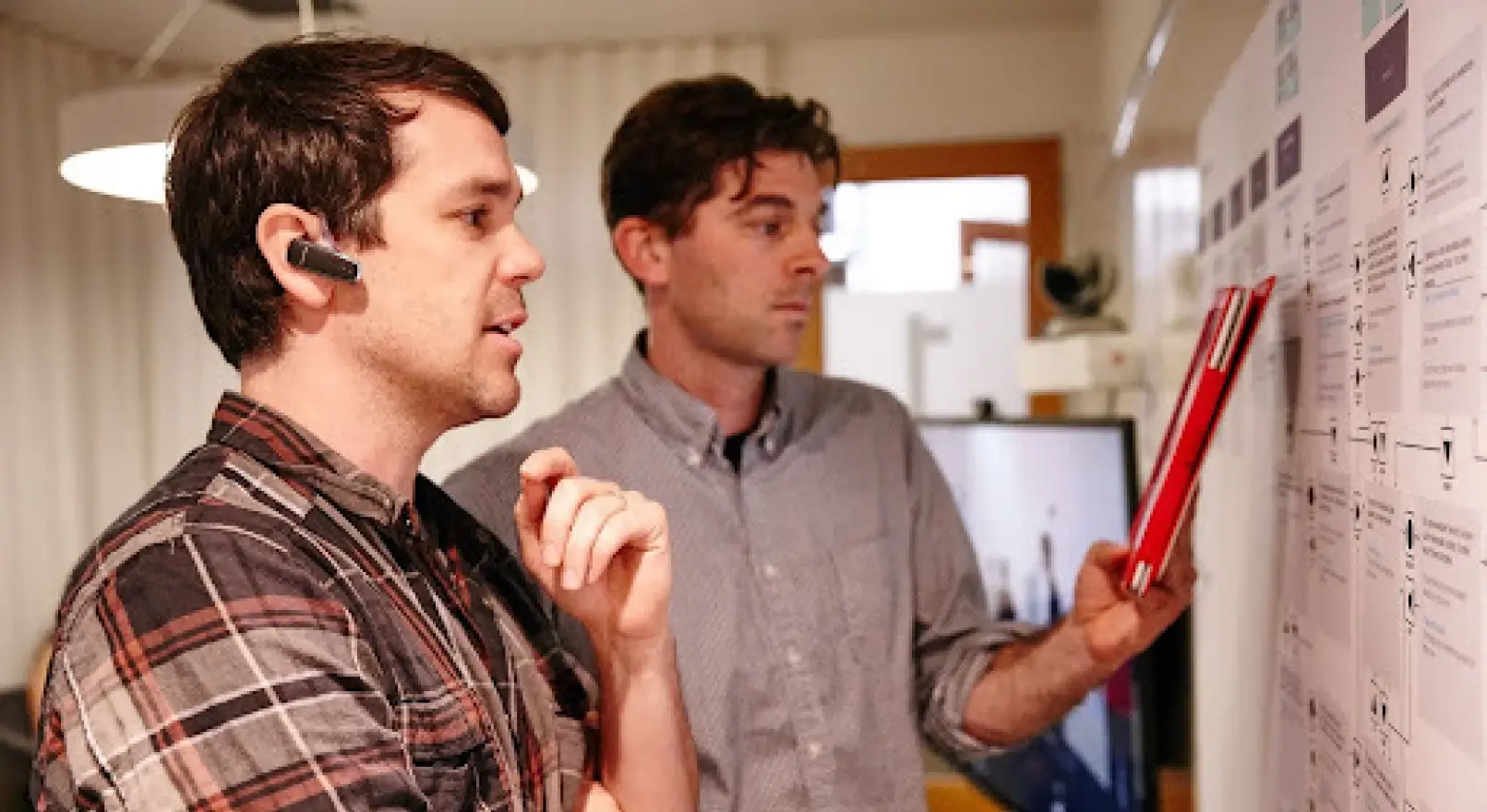
For example, when we prototyped a new voting booth for Los Angeles County, we wanted to incorporate tactile and audio interfaces for individuals with visual impairments. Instead of fully coding the experience and pre-recording audio clips to respond to testers’ actions, we hired a voice actor and improviser. He was hidden in an adjacent room with one of our designers, who had taped a flowchart to the wall. When our “voter” tapped the keypad to navigate the voting process, the designer would point to a phrase on the flowchart, prompting the voice actor/improviser to read it into the microphone. The audio was then relayed to the voter via headphones. Throughout the research session, our designer could make last-minute adjustments and explore different paths on the flowchart, enabling him to quickly test which scenarios provided the best experience for our voters. The flexibility of the prototype—combined with the voice actor’s improvisational skills—allowed us to modify not only the flow of the interaction, but also the wording, pacing, tone of voice, and more, on the fly.
There’s no doubt that AI accelerates output, but that’s only valuable if the time saved goes back into more cycles, more questions, and more variations. How do you make sure AI’s speed translates into more iterations rather than locking in your design too early? Show your prototype to various stakeholders to solicit their feedback. Listen closely and incorporate what you’re hearing. If you’re working on a digital design, for example, and the people you’re testing with don’t like the size or placement of a button, or how an interaction works, consider how you might alter the UI. Does moving the button over a tad solve the problem, or is there something else that isn’t working? With AI, you can make changes and test them almost immediately, even if you don’t have a coding background. However, be sure to keep your updates focused on the feedback you’re hearing rather than on testing a completely new design.
Right: Testing one variable at a time
“Right” means building a prototype early in the process to answer a specific question, rather than showcasing the entire vision. When too many variables are included in one prototype, it can be hard to discern what is working and what is not. Do people love it because the ergonomic shape feels great in their hand or because they like the color or texture you chose? Or do they dislike it because of how it functions mechanically or digitally? Splitting these attributes apart allows you to learn about each element separately before bringing them all together into a cohesive prototype in the later stages of refinement.
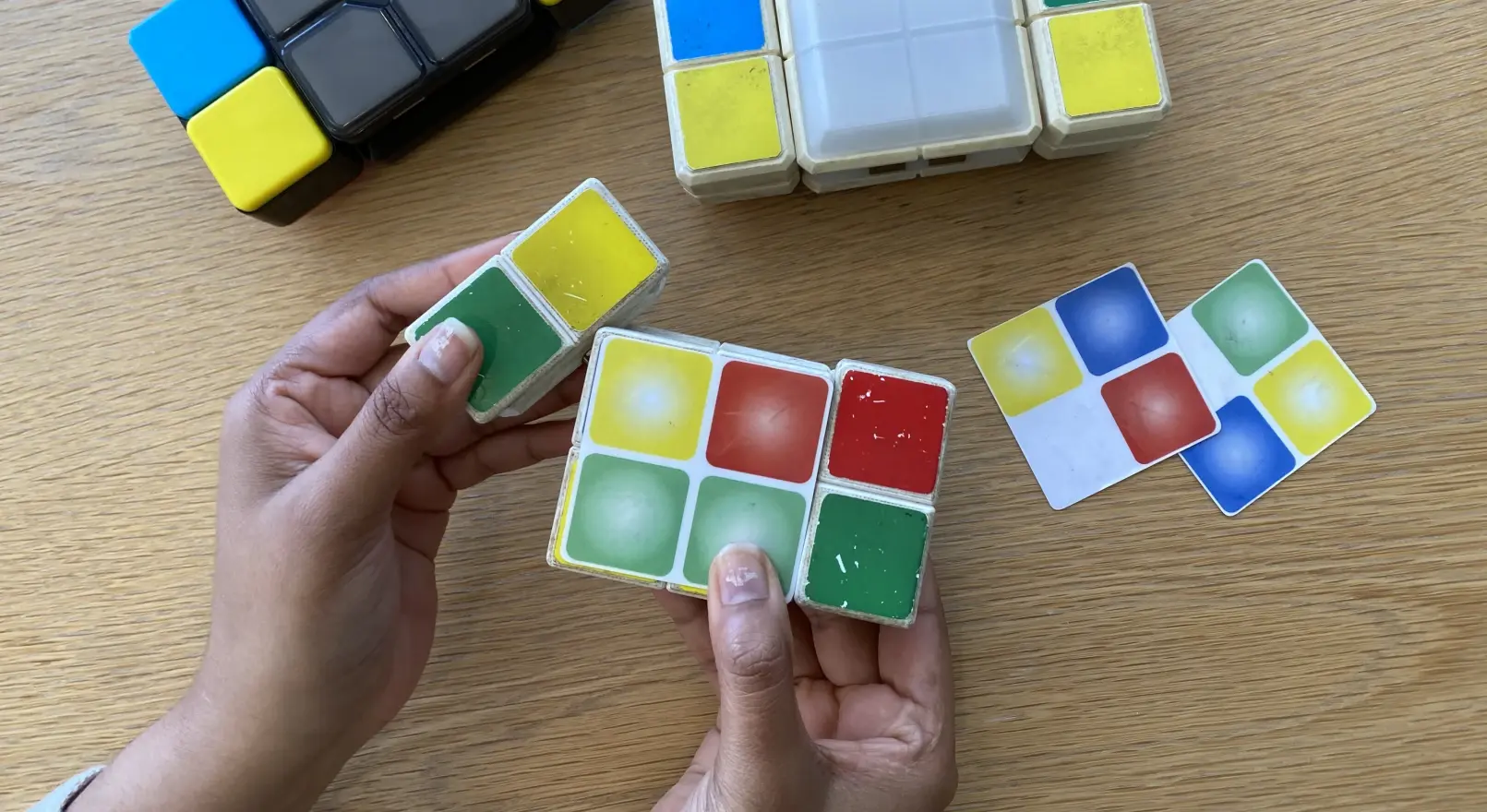
An example of this is Flipslide, an electronic game that we designed and licensed to Moose Games. The toy was inspired by the fidget craze, which includes items like fidget spinners, chew beads, pop-its, and the resurgence of the Rubik’s Cube. Recognizing this trend and wanting to create a challenging gameplay experience without a screen, we came up with a game concept in which pieces flip, slide, and click into place as players manipulate them to match tiles that light up and change color. We built our first prototype to test the movement of our design and understand what it would take to create a mechanical toy with shifting components. The initial model was made of foam core and rubber bands. Next, we wanted to create a fidget toy that felt satisfying to hold and transform, so we made a prototype with more bulk, incorporating machined plastic parts held together with tension springs that provided just the right amount of resistance when moving the pieces around. By refining this model, we created a prototype that felt particularly satisfying to hold and manipulate. It also made a fantastic clicking sound as pieces fell into place.
After we solved the mechanical elements, we moved on to gameplay. We started by taping a stack of 2 x 2-inch laminated color grids onto the front. Each grid had a different color pattern, representing rounds of gameplay. To complete a round, rectangular wings had to be rotated, flipped, and moved into place to match the colors on the grid. Once the colors matched, we’d yell “ding!” and pull off a grid to represent the next round, initiating another flurry of rotating, flipping, and sliding to match the new color scheme. Satisfied that the gameplay felt fulfilling, we added electronics to bring sound effects, music, pacing, and more advanced gameplay into the test. Soon after Flipslide hit the market, we had an award-winning game and fans around the world.
Don’t get caught "boiling the ocean”—using AI to address every question in one prototype. Instead, build discrete prototypes for discrete questions. Before generating anything, ask, “What am I trying to learn? Who needs to weigh in?” AI is exceptional at producing artifacts, but you need to direct it to give you artifacts that teach you something. You want to create prototypes that you can bring into research and put in front of users to understand what resonates with them and why. That’s easier to do when you know what you’re testing for.
Maintaining joy and discovery
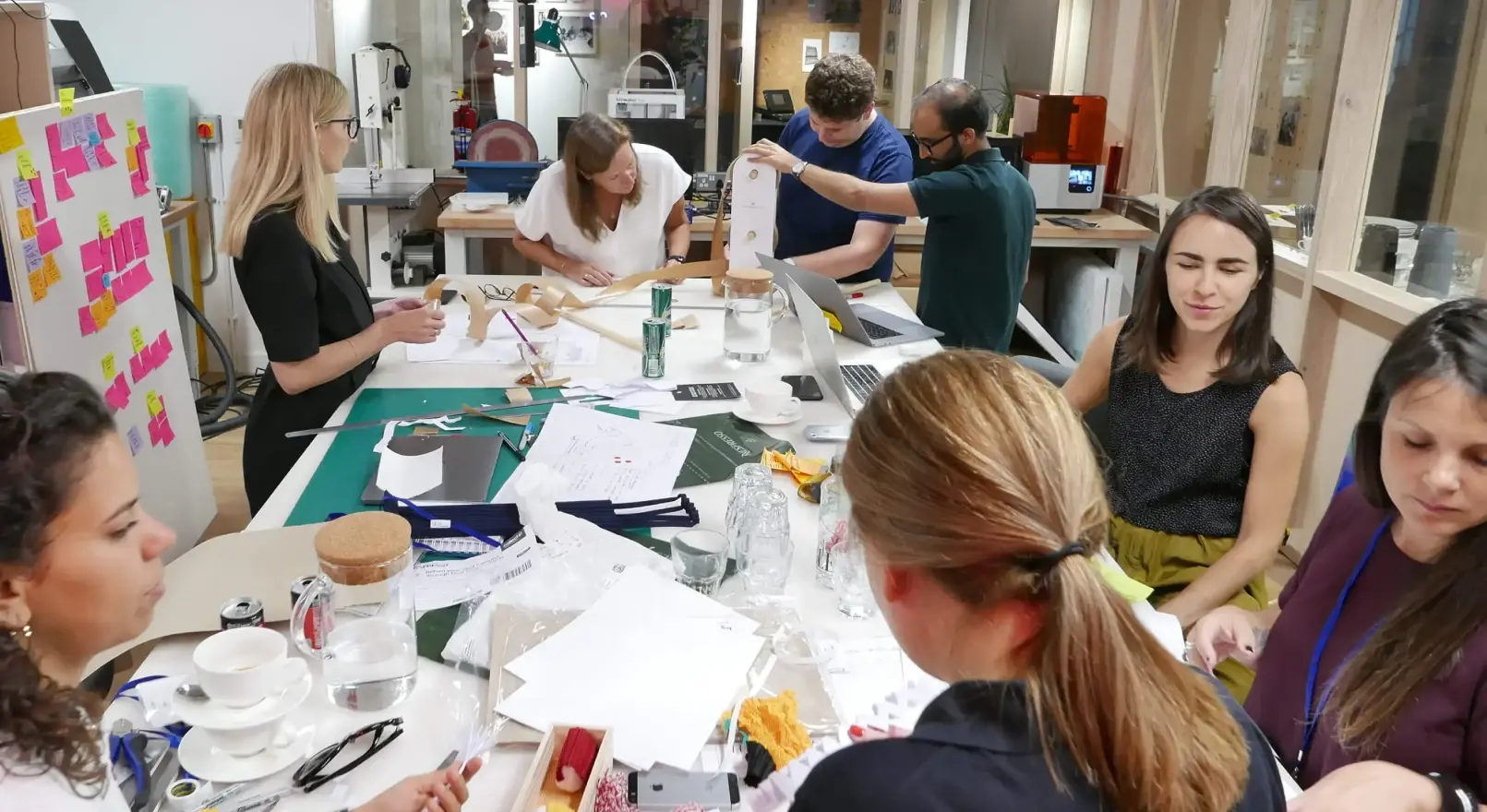
It’s easy to use AI tools to manage a creative process. Some are even designed to do parts of it for us. But as designers, it’s crucial to invest in our own learning by doing. When we get our hands dirty, we learn to recognize what’s right, engage our imaginations and deep thinking, and energize ourselves and our teams. That practice is how we achieve great outcomes, for ourselves and our clients. It’s also how we keep it human—putting ourselves in the shoes of the people who will live with these designs every day and experiencing them ourselves.
There’s no question that AI is a game-changer for designers, and one that we’re happy to embrace. But it’s crucial to use these tools to support the best of design, rather than replacing the methods that have led to some of the world’s most important innovations. Building prototypes that enable you to co-design with users, test assumptions, and iterate with new learning leads to better results. Experiment with different tools, including the latest that AI has to offer. Once you understand each tool’s strengths and limitations, you’ll better understand what combination you need to engage not only others, but also yourself. Because ultimately, prototypes and great design will always need human creativity, imagination, and judgment. And the three Rs are a great way to get there.
“For decades, the three Rs have kept us grounded, reminding us why we prototype and ensuring that we get the most out of the design process.”

Lindsey Turner
I’m passionate about building brands, products, and experiences that help organizations show up with meaning and momentum.
I help organizations cut through complexity by shaping how they show up, through brand strategy, identity, and storytelling.
Working at the intersection of brand and business, I bring an editorial eye and a bias toward making—turning ideas into tangible experiences that people can understand, trust, and believe in.
My work spans government, healthcare, financial services, media, and consumer goods, from launching Gen Z-focused ventures to building innovation labs and reimagining legacy brands. I relish moments of ambiguity and enjoy translating across teams, perspectives, and priorities to move ideas forward.
I started my career in editorial and digital design, shaping cross-platform experiences and identity systems in publishing and agency environments. That foundation still shapes how I work today: I’m detail-oriented, collaborative, and overreliant on the Oxford comma. I hold a BFA in Visual Communication from the School of the Art Institute of Chicago.

Rachel Young
My work helps organizations see who their products aren't working for—and build the will and the tools to do something about it
For 25 years, I've asked the same question: Who does this design exclude—and what are we going to do about it?
My work spans human-centered strategy, inclusive design, and qualitative research, with clients ranging from Microsoft, Google, and Verizon to the National Science Foundation, and San Francisco Unified School District.
Before IDEO, I taught elementary school in East Palo Alto and spent a decade doing design work with social service organizations—where I learned firsthand what it costs people when systems are built without them in mind.
I am currently writing User Error, a nonfiction book about digital access and the design decisions behind it. I live in Oakland, California.

Brian Pelsoh
I lead with craft, ensuring our work is creatively excellent: rooted in deep human insight and imagination, while also grounded in the realities of business and technology.
My expertise spans brand, communication, and product design across tech, education, the arts, and social impact.
I believe great work demands both high-level vision and obsessive attention to detail, and only happens through collaboration.
I bring an inclusive, hands-on approach and a deep understanding of business, which enables me to consistently deliver excellence while always asking why.
Before joining IDEO, I worked at the brand firms Pentagram and VSA Partners. I began my career as a designer, leading teams at the School of the Art Institute of Chicago and the Milwaukee Art Museum. I hold an MFA in graphic design from Maryland Institute College of Art and a BFA in communication design from the Milwaukee Institute of Art & Design, and have taught at some of the best design schools in the US.

Tony Wong
I am responsible for IDEO’s long-term success in China and working with clients to use design as a tool to enable growth.
I am responsible for IDEO’s long-term success in China and working with clients to use design as a tool to enable growth. Specifically, I have helped Chinese companies design holistic brand solutions through the development of their products, communication, services, and innovation teams, and I have helped multinationals expand their presence and influence in China.
I advise global leaders on developing China-led innovation and capabilities.
In over 15 years in IDEO Shanghai, I have worked on projects that use design to elevate the quality of the experience of healthcare products and services, streamline processes that increase productivity, create spaces and programs that promote and enable inclusive communities, and build next generation mobility solutions that are planet-positive.
Before joining IDEO, I worked at Philips Electronics and the Electrolux Group in Italy, the Netherlands, and Singapore on a number of breakthrough commercial products. I am a member of the Young President Organization in Shanghai.

6 Patterns for building organizational agility: Clay Parker Jones
Mina Seetharaman speaks with Clay Parker Jones, Director of Organizational Design at Airbnb and author of Hidden Patterns, about six practical patterns for building a more agile, adaptable, and human-centered organization.

How great teams leverage tension as a source of innovation: Daniel Coyle (Replay)
In this replay, bestselling author Daniel Coyle explains how high-performing teams channel friction into forward motion, why vulnerability builds trust, and how leaders can turn tension into energy, learning, and innovation.
What gets in the way of trust on teams: Q&A with Ben Swire
Mina Seetharaman sits down with Ben Swire, co-founder of Make Believe Works and author of Safe Danger, for a practical Q&A about hidden barriers to trust, why feedback can feel risky, and what leaders can do when trust begins to erode.

Building risk-taking teams: Ben Swire
Mina Seetharaman speaks with Ben Swire, co-founder of Make Believe Works and author of Safe Danger, about building trust, psychological safety, and creative collaboration by helping teams practice productive risk-taking before the stakes are high.
Looks like you might be in search of something very specific?
Or reset the filters above and try another angle.
Here’s some random inspiration

Podcasts about creative leadership

Articles about the power of prototyping
