
.svg)




Singapore’s road to a human-centered government
Connecting public services with citizens’ needs.
As a small, young nation, Singapore has come a long way in a short time. Its cost-conscious education system enables social mobility, its public healthcare system is a model of success, and it has achieved financial independence. What’s more, 80 percent of its citizens reside in Singapore’s desirable and attainable public housing complexes.
But even with these successes, Singapore wanted to improve upon its existing systems. In 2008, government agencies came to IDEO to help connect the intention behind their policies with how their services were delivered to the public. To bridge the gap, IDEO Singapore partnered with five government agencies on more than 12 projects.
A few highlights:
Singapore’s Ministry of Health
The Ministry subsidizes up to 80 percent of healthcare costs. Understanding their financial options may, at times, be difficult for patients, especially in situations where they’re grappling with stressful medical conditions. Although the government has reassured Singaporeans that no one will be denied medical treatment even if they can’t pay, public sentiment that healthcare in Singapore is increasingly unaffordable still pervades.
So the Ministry worked with IDEO to give patients financial peace of mind at a time when their well-being is of utmost importance, and to improve their healthcare experience overall. Inspired by doctors’ ability to talk about patients’ diagnoses across a range of potential outcomes, IDEO designed a more patient-centric care cost discussion guide, and developed a new digital tool designed to help patients better understand and predict healthcare costs. The care cost discussion guide is currently being prototyped in two hospitals.
IDEO’s work with the Ministry of Health (MOH) extends to the communication strategy for a newly introduced government-sponsored insurance policy, MediShield Life. MOH recognized that government communications needed to incorporate important nuances to engage citizens around the new policies and benefits. Together with MOH, IDEO developed ideas for a citizen engagement strategy that brought to life a journey that includes how Singaporeans learn about a policy, sign up, and understand benefits and subsidies.
The Ministry of Manpower
One of the Ministry’s roles is to process work passes for foreigners, who make up 30 percent of the nation’s workforce. The Ministry was known for its speed and efficiency, but not its customer service. IDEO partnered with the Ministry’s Work Pass Division to design all of the touchpoints around acquiring a new work pass—from the letters applicants receive to the website, physical space, and the interactions that occur there.
In addition, IDEO embarked on a series of projects with the Ministry of Manpower (MOM) aimed at streamlining and simplifying its communications. Together, they addressed the question, “How do we create communications that are easily understood and better engage MOM’s customers?” Starting with the most common letters sent out by MOM’s Work Pass Division, they defined a more customer-oriented tone of voice and visual style. To scale up the new approach, IDEO trained many MOM officers to write with the customer’s perspective in mind.
The National Population and Talent Division
The agency asked IDEO to better understand the underlying reasons for Singapore’s all-time-low birthrate and design ways to encourage Singaporeans to have more children.
The Ministry of National Development
More than 80 percent of Singapore’s citizens live in public housing. The Ministry asked IDEO to bring to life Singaporeans’ notion of home and identify ways to keep their aspirations at the center of their work.
Building creative confidence across Singapore’s public sector will be an ongoing journey, but the country is actively building the tools it needs to maintain its citizen-centered approach in an increasingly complex world.

Redesigning death
Helping people live fully right up to the end.
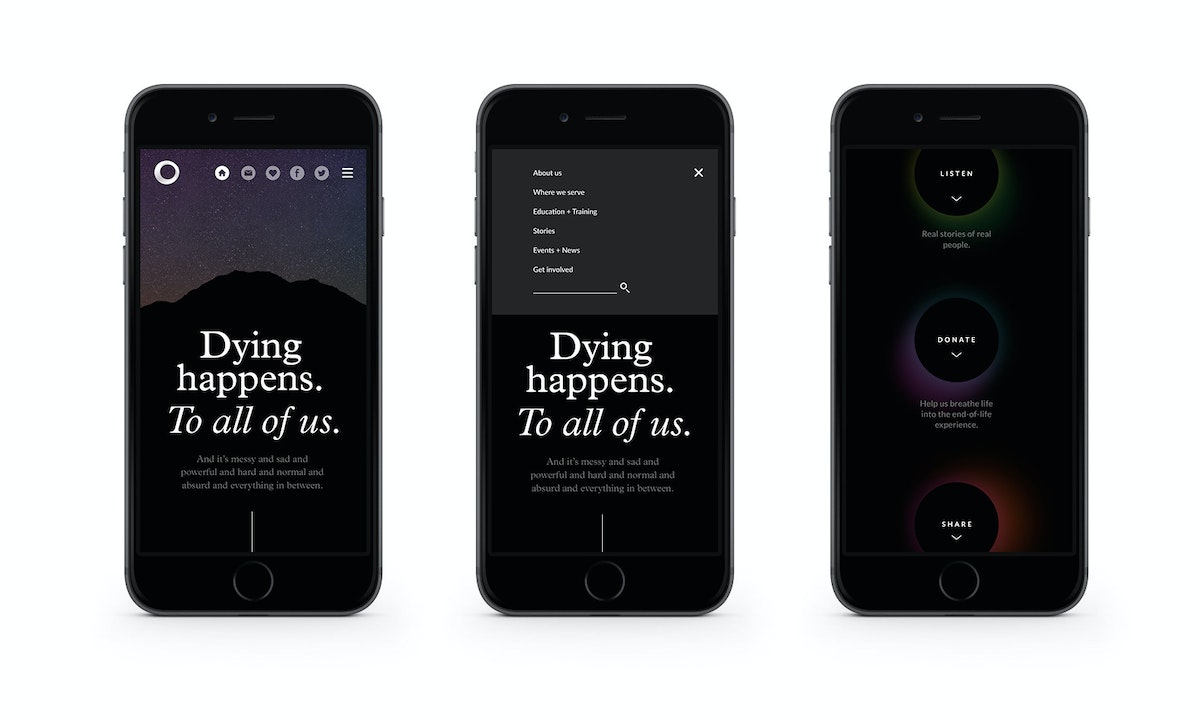
After losing both legs below the knee and half of one arm in an accident, Dr. BJ Miller knows what it feels like to be near death. But after recovering, Miller became a doctor, joined the faculty of UCSF, and is now leading a conversation about patient-centered care and redesigning the experience of how we die. But such systemic change will require pioneering thinking, as our healthcare system, designed to cure, not caretake for the long term, prepares for an exploding elderly and chronically ill population.
Together with IDEO, Dr. Miller and Zen Hospice Project are bringing design to a broken system in hopes of helping people live fully right up until the end. Miller was invited to TED in March, 2015 to deliver the closing talk. In concert, IDEO designed a landing page and call to action to support Zen Hospice Project’s mission, flagging the campaign with the hashtag #designabetterending.
Early renderings for a new palliative care facility that would enliven end-of-life care with rich, engaging experiences are also in the works. Read more about the collaboration in California Sunday Magazine and join the movement to help us design a better ending.

Putting a human face on big data
Giving eBay deep customer insights through a new digital tool.
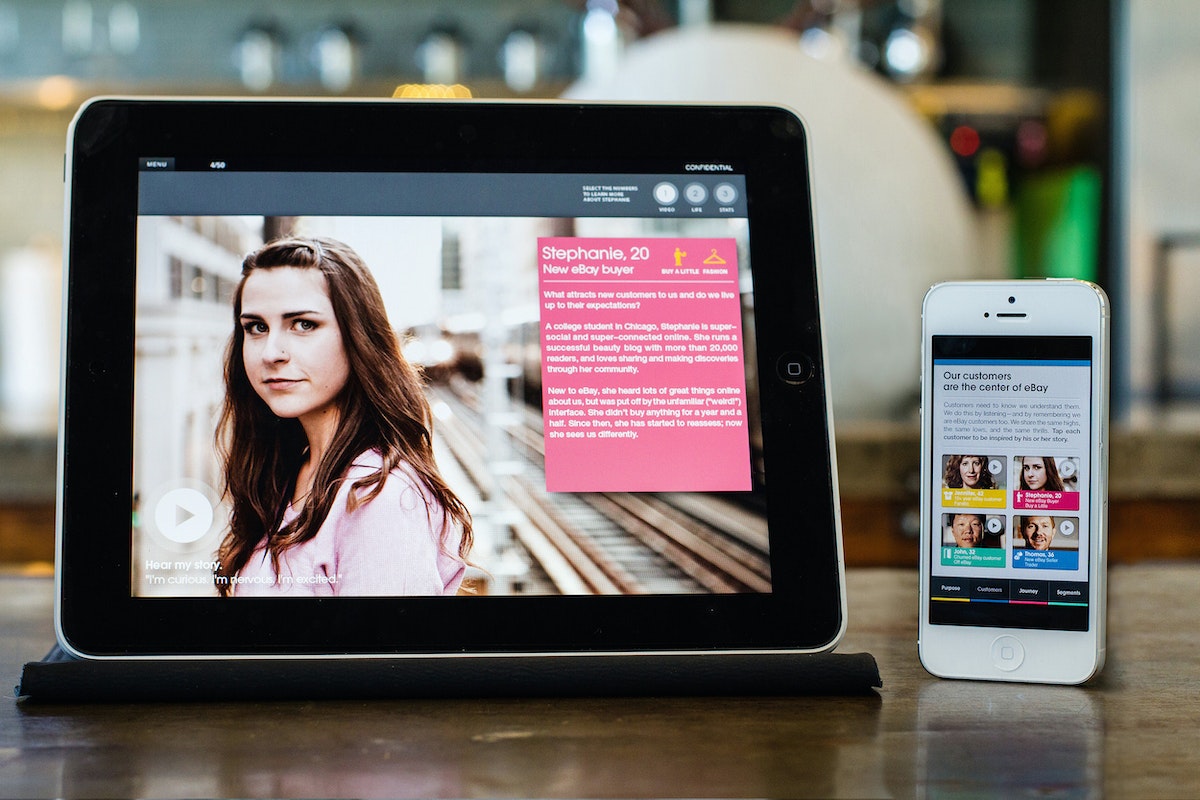
Stephanie is a college student. She runs a successful beauty blog and shares new finds with her 20,000 followers. Jennifer is married and lives in Chicago. She considers fashion to be an expression of her identity. How do we know all of this about Stephanie and Jennifer? They’re both eBay shoppers the IDEO team met while designing a better way for the retail giant to get to know their customers.
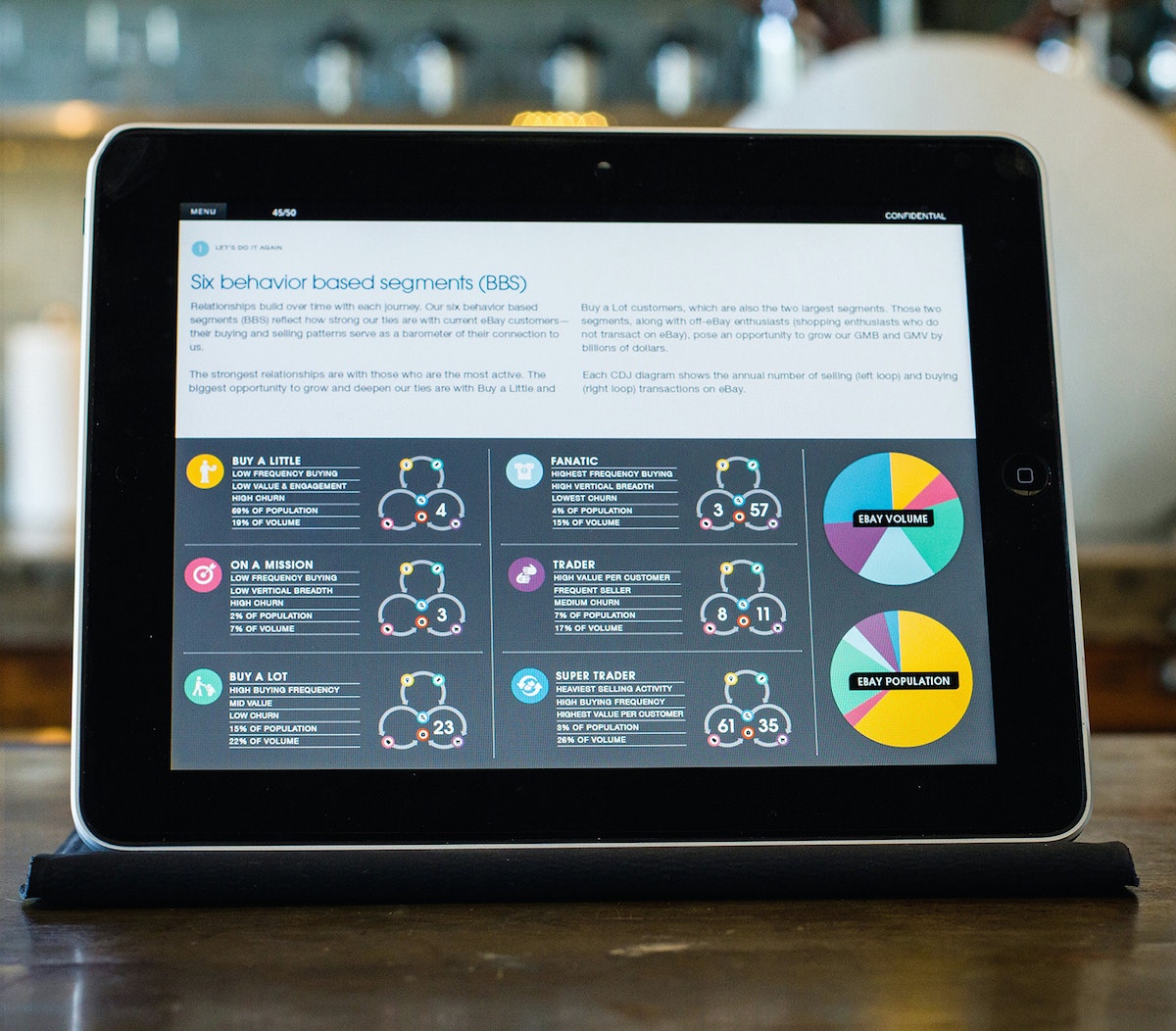
It’s easy to forget that behind data cells exist flesh-and-blood people. eBay has 128 million buyers and sellers, and wanted to find meaningful stories about real people in order to uncover their wants, needs, and behaviors.
The company partnered with IDEO to create a digital ecosystem that integrates Big Data, business opportunities, and customer stories drawn from IDEO interviews to give employees deeper insight into how and why people use the site.
The app, which launched in September 2012, is available on desktop and mobile devices to eBay employees worldwide. It’s an easily accessible resource for eBay employees where they can glean insights about their customers by learning about key customer types. The app brings customer needs to life using words, images, and video interviews from select research participants. The power of that experience prompted eBay to overhaul its website, too, giving it a fresh, human-centered appeal.

Pop-up store as learning lab
A Southern fashion retailer lures millennials with offshoot brand.
Many younger customers described venerable fashion retailer Belk as “their grandmother’s store.” Belk, with 300 stores in 16 Southern states, was looking for ways to stay competitive and woo these style-savvy millennials. The goal was to create a trendy, social, affordable, and distinctly Southern shopping experience.
Belk’s innovation team and IDEO conducted research with twenty-somethings to develop the look, feel, merchandising strategy, and service experience of a new offshoot brand. Fresh and modern, Belk’s new pop-up store Belle & Ty features contemporary fashion along with a real-time Instagram wall, a style lounge, personal stylists, and weekly trunk shows. The pop-up store also serves as a learning lab for Belk, a place to prototype offerings for a new generation. Local fashion bloggers called the store “a must-stop shop during Christmas,” and Sue Curley, VP of Innovation at Belk, said, “Belle & Ty has been a great learning lab for us to connect with an important customer segment, test new ideas, learn, adjust, and test again.”
3 Ways Design Can Help Tackle 2019's Big Challenges
IDEO leaders share forecasts on prospective trends in design and tech
1. Design for human capabilities
We are in an uncomfortable place at the moment. Technology has connected us all more than ever, but we are feeling less substantive connection with one another. Human interaction has been reduced to lowest common denominators. Unhappy people click more. Now technology is starting to displace us. In the next few years, deep learning-based AI will take over human activities, from driving to medical diagnosis. The discomfort is increasing as society faces mass redundancy, increased inequality and a crisis of meaning. We can all feel it coming. Design can help.
The amazing thing about good design is that it looks at ambiguity and disruption and sees fertile ground. There is huge opportunity when we focus on things that humans are uniquely equipped to do—empathy, creativity, care, love.
If we do it right, we can conceive and shape new roles for humans in a layer on top of the efficiencies that machines can achieve. We can use those uniquely human traits to re-find and enhance community and depth in our relationships with each other. We can go from Artificial Intelligence to Augmented Intelligence.
—David Webster, Partner, IDEO Palo Alto

2. Design for emotional wellness
The uncertain state of the world is having clear consequences for individual health. You see it in the headlines everyday: Kids paralyzed by anxiety. Suicides by gun. Addiction to opioids. We live in the most technologically connected times, yet our rates of loneliness are increasing. If you dig deep, the common root is an absence of emotional and mental well-being.
I’m not talking about the well-being that’s branded through luxury experiences, like wellness retreats. I’m talking about what Maslow missed at the very bottom of his hierarchy: that sense of inner well-being that is absolutely necessary for our survival as humans.
What’s exciting about our moment now is that science has surfaced the myriad ways we can cultivate emotional and mental well-being—all of which are new channels for design.
Designing ways to get better sleep is also a way of designing for resilience to stress and better ability to manage our emotions. Tackling loneliness and designing for meaningful social connection is also a way of designing for a stronger immune system and brain protection. (Conversely, enabling chronic loneliness is as bad as smoking 15 cigarettes a day.) Designing ways to help people find their sense of purpose and meaning in life is an incredibly powerful way to design for healthier mind and bodies.
More and more, designers will realize their superpowers. Doctors and nurses are key players in facilitating wellness, but let's not forget that designers can be healers, too.
—Ann Kim, Portfolio Director, IDEO Cambridge
[This portion was also featured in Fast Company.]

3. Design for circularity
While it's easy these days to lament the state of the environment and the need for change, there's some hope to be found in the increased momentum towards a more circular economy. Collaborations between industry and design have yielded smart, feasible ideas for redirecting waste streams and reconnecting key stakeholders.
Businesses are investigating new product and packaging design that enables materials to be used again and again; they're asking how to leverage logistics in more efficient ways; and they're conceiving of new ownership models that could extend the lifecycle of the products they make.
The next questions on the horizon revolve around the economic systems that need to be in place to support these circular innovations. For example, we can design buildings so that they can be deconstructed—a circular engineering idea—but the cost of labor makes that reality prohibitive. In 2019, it's time for more applied circularity, leveraging emerging technology, organizational design, human insights, and social networks to create the conditions for the circular economy to take hold.
—Lauren Yarmuth, Portfolio Director, IDEO New York
With 2018 fading into the distance, we're looking with hopeful eyes toward what the next year may bring. Our ongoing projects and client work help us hold up a mirror to reflect on what’s been happening and make informed predictions about what’s to come. Here are a few forecasts from IDEO leaders on prospective trends in design and tech.
Don’t Wait for a Crisis to Change Your Business
Strange as it sounds, the main challenge for some people today is that their business isn’t in crisis
If you know what we’re talking about, you could well be one of the world’s frustrated changemakers. You can see that change is essential, but you’re struggling to light the spark because your business’s indicators are all annoyingly positive. If this is you, what can you do? Should you hope for—or, even, engineer—a crisis?
This was one of the questions a group of business transformation leaders took on recently, at our Make Change Happen event in Munich, Germany.
“It would be a lie to say that a good crisis or a good disruption doesn’t help,” said Roman Lentz, Chief Digital Transformation Officer at global building materials firm Heidelberg Cement. “Because if you honestly look at organizations that change the fastest, they’re the ones with their backs most strongly against the wall… And frankly, that’s my challenge, because we’re not in crisis. We’re producing healthy margins. We’re not seeing cement being disrupted any time soon.”
Sandra Schiller, Head of Product Management for Valves and Automation at Georg Fischer Piping Systems, agreed. A crisis, Schiller noted, “can force through faster changes.”
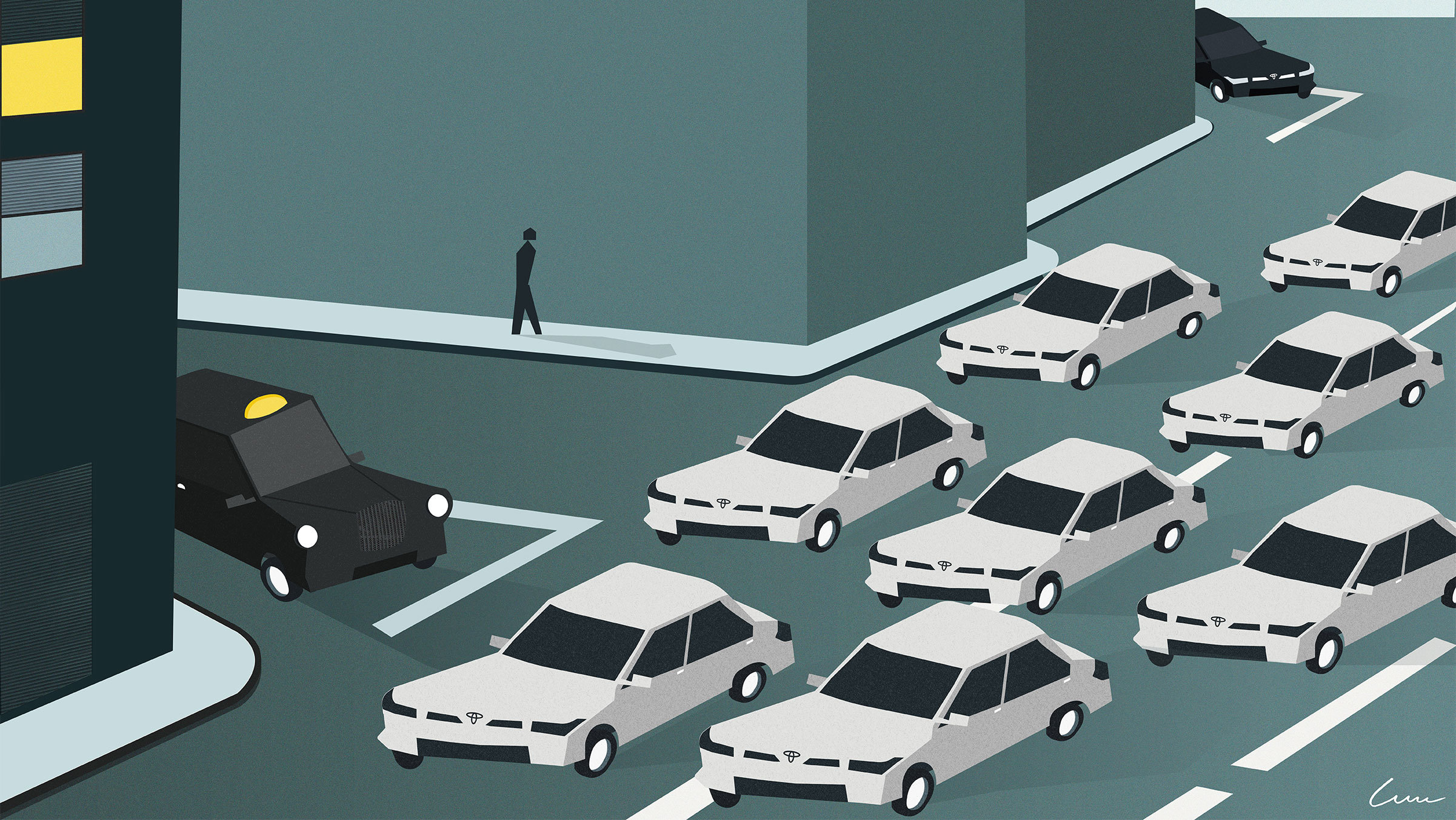
But this doesn’t mean you should wait for a crisis, as London’s black taxis discovered, a few years too late.
“Black taxis were untouchable,” said Ben Terrett, CEO of Public Digital, a firm that partners with IDEO and specializes in digital transformation. “So untouchable that some of their services and ways of operating were protected by regulation. They have special parking spaces in London, special streets only they can go down… certain roads only they can pick up from.”
But then wave after wave of digital disruption flooded in as they sat behind the wheel, watching their dominion ebb away. First, GPS meant that the traditional cab drivers’ knowledge of London’s labyrinthine streets was no longer the golden ticket it had once been.
Then Uber arrived, and its bookable, predictable, low-cost rides started to eat into the black taxi business. So how did London’s cabbies respond?
“Their defense has ended up being reputation,” said Terrett. “That’s basically their only defense: ‘But we’re the black cabs!’”
Turns out customers weren’t as attached to the reputation of London’s cabs as cabbies were—and they couldn’t compete with the convenience and cost-cutting of on-demand services. Now the London Taxi Drivers Association (LTDA) wants to sue Uber for the earnings its 25,000 members lost in the first five years they were operating in the city. The LTDA estimates that cabbies lost £10,000 each per year, and has been taking legal advice to sue for £1.25 billion.

It didn’t have to come to this.
“What’s interesting is that people have been trying to help them—by building services on top of their service,” said James Higgs, Executive Director for Digital Transformation at IDEO London.
In 2011, the year before Uber launched in London—Hailo, now MyTaxi, tried to bring the predictability of a booking app to the black cabs.
“Taxi drivers didn’t even want that,” Higgs said. “They would charge you an outrageous minimum fare… they even resisted companies trying to help them deliver a better service!”
We don’t want to pick on London’s iconic cabs and their drivers. They’re not even employees of a centralized company that one could point a finger at—they’re self-employed. But we think there are lessons here for us all.
“The black cabs are a good analogy for a lot of businesses,” said Terrett. “I can see lots of industrial-era companies who, when digital organizations go after their market, their defense is ‘well, we’re us, we’re the number one brand in this market.’ That’s no longer a good enough defense.”
Here are three key takeaways for businesses looking to inoculate themselves for potential disruption:
1. Don’t wait for a crisis
Just as you shouldn’t wish for a crisis to happen, so you shouldn’t wait for a crisis to happen before you change.
“It’s really nice if you start in a safe environment in order to secure your future business,” says Georg Fischer’s Schiller. “It’s not about securing your business tomorrow, it’s about the business for the next few years. And as we are a 200-year-old company, we really would like to be around for another 200 years: And so we have to start working now.”
2. There’s an Uber for your industry, too
The leaders of large industrial companies like Heidelberg Cement and Georg Fischer are investing in digital transformation programs now—because, while there may be no Uber for cement or pipes or any of their other product lines yet, there’s probably an entrepreneur somewhere pitching an idea that sounds something like that to an investor right now.
And because, however unlikely it might seem to some today, it’s certain that digital transformation—defined by Tom Loosemore, a partner at Public Digital, as “applying the culture, practices, processes, and technologies of the internet era to respond to people’s raised expectations”—is going to disrupt every industry, including the one you work in.
3. Digital is your friend
Instead of thinking of digital disruption as a threat—you’re better off picturing it as a friend.
OK, so it’s a friend who needs a lot of hand holding at first. But as long as you’re prepared to invest the time and approach it from a human-centered point of view, digital transformation will make many things a whole lot better. It will increase your productivity, your pace of innovation, your rate of learning, and your customers’ expectations—and it’ll help you deliver on them.
When Georg Fischer’s design teams, for instance, began creating digital prototypes, so they learned new, more flexible, agile ways of working. And they started producing a new, digitally-enabled ‘smart part’ that alerts machine operators to problems in the system, so their customers now have more control over operations.
So, don’t sit by the curbside, your legacy engine idling, as you wait—hope even—for a crisis to come. Instead of clinging to what is, use digital to prepare for what might be. Welcome change in now, from a position of safety, and maybe you can secure your business’s long-term future—and save a cool £1.25 billion.
Strange as it sounds, the main challenge for some people today is that their business isn’t in crisis. No blockchain or platform or AI startup is threatening to disrupt their market—yet.
3 Creative Exercises to Make Change Stick in 2019
Setting resolutions and actually sticking to them can be very different things
Whether you’re looking to be more productive at work or make a more personal change, it helps to have a roadmap. Here are three low-fi methods to help you stick with your intentions for the New Year.

1. Start at the finish line
“Designing Your Life” (DYL) is a popular Stanford d.school course (and now, best-selling book) that helps you leverage design thinking to creatively envision your future. The curriculum guides you to identify and flesh out several different paths (or “odyssey plans”) that your future might take, in order to discover what’s possible and gain clarity about what matters most.
We can apply this same process to 2019. What are various directions that the next 365 days might take? What decisions or moments might guide the path ahead?
Try this:
- Close your eyes and visualize where you might be at the end of 2019, in as many as three different scenarios.
- Choose the path that excites you most, and write a eulogy, looking back on the passing of 2019. What did you learn, do, and experience? What events or opportunities created meaningful twists and turns along the way?
- Reflect on the eulogy and see if you can identify any surprising patterns or trends in the language. These might hint at a few of your New Year’s resolutions or areas that matter to you for 2019.
- Store the eulogy in a place where you’ll stumble upon it throughout the year, or seal the letter in an envelope to open one year from today.

2. Step into your discomfort zone
Doing things that scare us can be healthy and inspiring. Take Jia Jiang, who overcame his fear of rejection by spending 100 days asking for what he thought he would never receive—everything from a “burger refill” at a restaurant to a live radio interview. Not only did he gain confidence in asking for what he truly wanted, but he even walked away with some critical yeses to his asks, opening the door for him to do things he never thought possible.
What fears do you want to conquer in 2019? Here’s one way to get started:
- Draw three concentric circles on a piece of paper, like a target. The innermost circle is your comfort zone. As you move farther from the bullseye, you get farther outside your comfort zone. Everything outside the circle or by the edges of the paper are activities you need the most courage to do.
- Starting from the center and extending to the outermost ring, write down five to 10 activities in each area that you want to do but might need a little extra nudge to make happen.
- Compare your comfort zone map with a partner. Did you flag skydiving as “level-three scary,” only to find that it’s squarely within your partner’s innermost comfort zone? Maybe they could show you the ropes. See if there are also activities where the opposite is true, and your partner can lean on you in return.

3. Break up with it
Do you have a proclivity for showing up late all the time, or a tendency to scroll mindlessly through your Instagram feed in the morning, rather than starting your day intentionally? Do you have a behavior, activity, or even a physical belonging that you want to say goodbye to in 2019, so that you can make room for what you really want?
Once you know what you want to break up with, try this:
- Write a breakup letter. As you’re writing, consider: Why are you done with this behavior, activity, or thing, and what’s going to replace it? Why is this change so critical to make in 2019? How will you make sure that you don’t end up getting back together again? Sign the letter at the end and date it, as you would with a formal contract or pledge.
- Keep the letter in a place where you’ll be reminded to follow through, like on your nightstand or in your wallet.
Ever since I was little, I’ve been experimenting with different ways to mix up my New Year’s resolution routine—from vision boards and journey maps to classic spreadsheets and lists of lists. But setting resolutions and actually sticking to them can be very different things.
Our Top 10 Stories of 2018
Take a look back at the IDEO blog's greatest hits
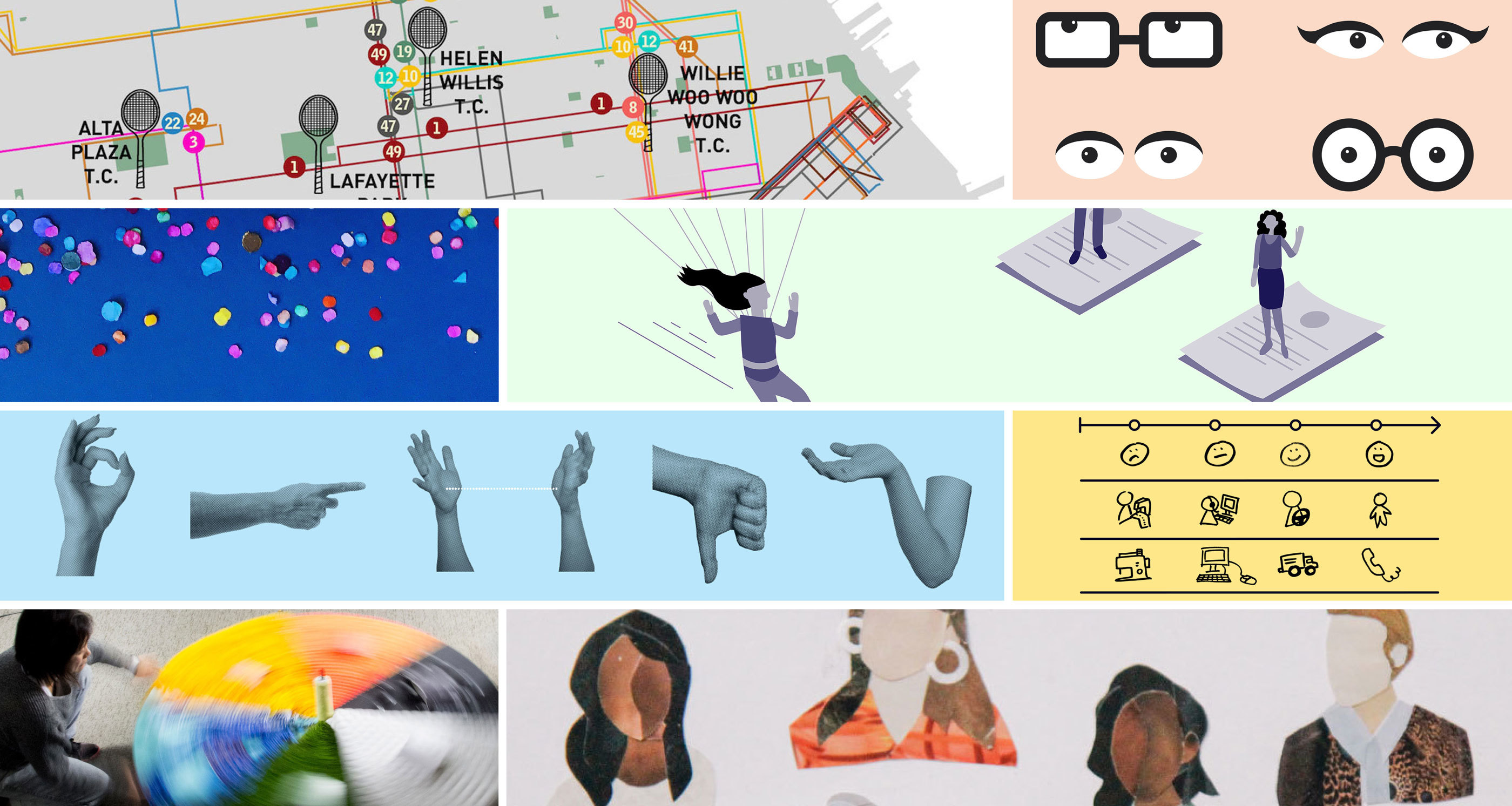
The list is chock full of tips and tools to help you bring a creative mindset to your life and work. We hear you loud and clear: Look out for more how-tos and to-dos in 2019!
PS: Sign up for our weekly email newsletter to stay up to date with The Octopus in the new year.
1. 5 Brainstorming Exercises for Introverts
Shy people of the world, unite! Try these five creative brainstorming exercises to help the introverts among us feel more comfortable contributing their ideas.

2. An IDEO Recruiter’s 5 Tips for Writing a Better Cover Letter
Prepping for a job interview? Use these five tips from a seasoned IDEO recruiter to help you write a compelling, well-crafted cover letter.
3. This Deck of Cards Will Change the Way You Work
It can be a challenge finding the right language for critiquing creative work. That’s why a team of IDEO designers created this deck of cards to establish a shared vocabulary for cross-disciplinary teams.

4. Why Gesture is the Next Big Thing in Design
Soon, communicating with our AI assistants by talking into thin air may no longer be our only—or best—option. Here’s why gesture interfaces could be the future of interaction.

5. Why Workplace Culture Matters (And How to Build a Good One)
You might think workplace culture is about ping pong tables and sparkling water, but really, it’s about creating the conditions for employees to do the best work of their lives. Here’s how to level up your company’s culture.
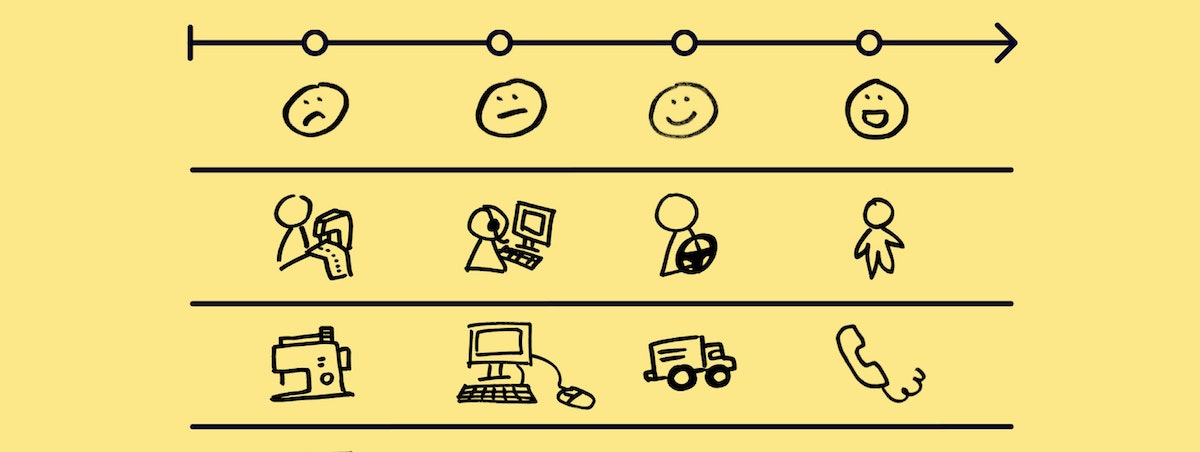
6. 3 Tips to Help You Prototype a Service
Prototyping is a powerful tool in the design process, but not every prototype can be built out of cardboard and foam core. IDEO U shares tips from their newest course to help you prototype intangible service experiences.
7. 15 Podcasts Playing in IDEO Ears Right Now
Looking for some fresh audio inspiration? Feast your ears on these 15 podcasts hand-selected by IDEO designers.
8. 3 Ways to Get Comfortable with Ambiguity
As designers, it’s our job to help build the future we want to see. While that freedom can be liberating, the ambiguity can also be tough to navigate. Try these mindset shifts to help you embrace uncertainty like it’s no big thing.
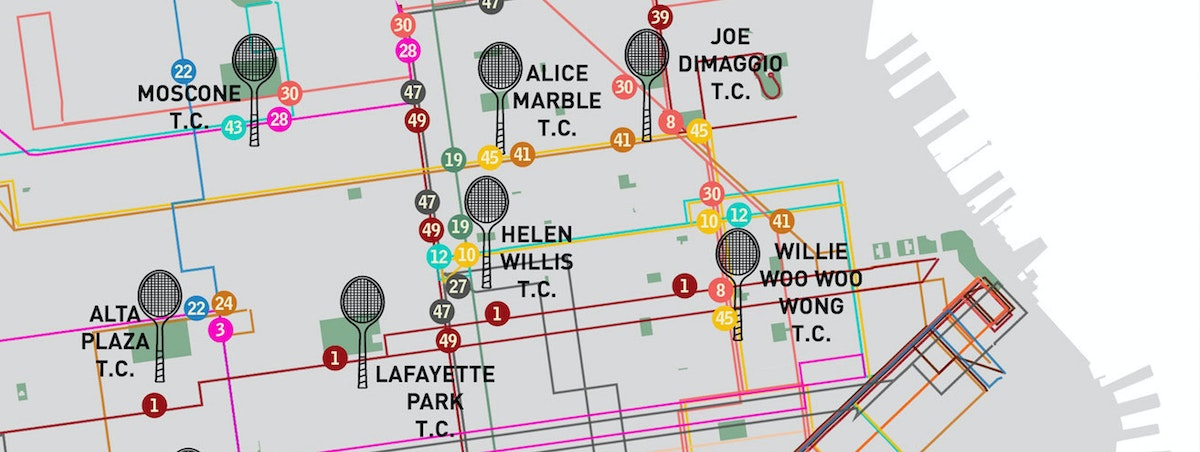
9. A Cartography Nerd’s Guide to Custom Map-Making
IDEO’s resident cartography nerd shares his step-by-step guide to designing a custom interactive map.

10. 6 Ways to Hack Your Workspace and Find More Joy at Work
Research shows that feeling joy at work not only increases our wellbeing, but also our job performance. Get started with these colorful ideas from guest contributor Ingrid Fetell Lee, a designer who studies joy.
From workplace culture to best practices for brainstorming to the future of interaction—2018 has been a year of creative growth for The Octopus. To celebrate, we’ve rounded up our greatest hits—the top ten stories that you, dear readers, have read and shared most this year.

Lindsey Turner
I’m passionate about building brands, products, and experiences that help organizations show up with meaning and momentum.
I help organizations cut through complexity by shaping how they show up, through brand strategy, identity, and storytelling.
Working at the intersection of brand and business, I bring an editorial eye and a bias toward making—turning ideas into tangible experiences that people can understand, trust, and believe in.
My work spans government, healthcare, financial services, media, and consumer goods, from launching Gen Z-focused ventures to building innovation labs and reimagining legacy brands. I relish moments of ambiguity and enjoy translating across teams, perspectives, and priorities to move ideas forward.
I started my career in editorial and digital design, shaping cross-platform experiences and identity systems in publishing and agency environments. That foundation still shapes how I work today: I’m detail-oriented, collaborative, and overreliant on the Oxford comma. I hold a BFA in Visual Communication from the School of the Art Institute of Chicago.

Rachel Young
My work helps organizations see who their products aren't working for—and build the will and the tools to do something about it
For 25 years, I've asked the same question: Who does this design exclude—and what are we going to do about it?
My work spans human-centered strategy, inclusive design, and qualitative research, with clients ranging from Microsoft, Google, and Verizon to the National Science Foundation, and San Francisco Unified School District.
Before IDEO, I taught elementary school in East Palo Alto and spent a decade doing design work with social service organizations—where I learned firsthand what it costs people when systems are built without them in mind.
I am currently writing User Error, a nonfiction book about digital access and the design decisions behind it. I live in Oakland, California.

Brian Pelsoh
I lead with craft, ensuring our work is creatively excellent: rooted in deep human insight and imagination, while also grounded in the realities of business and technology.
My expertise spans brand, communication, and product design across tech, education, the arts, and social impact.
I believe great work demands both high-level vision and obsessive attention to detail, and only happens through collaboration.
I bring an inclusive, hands-on approach and a deep understanding of business, which enables me to consistently deliver excellence while always asking why.
Before joining IDEO, I worked at the brand firms Pentagram and VSA Partners. I began my career as a designer, leading teams at the School of the Art Institute of Chicago and the Milwaukee Art Museum. I hold an MFA in graphic design from Maryland Institute College of Art and a BFA in communication design from the Milwaukee Institute of Art & Design, and have taught at some of the best design schools in the US.

Tony Wong
I am responsible for IDEO’s long-term success in China and working with clients to use design as a tool to enable growth.
I am responsible for IDEO’s long-term success in China and working with clients to use design as a tool to enable growth. Specifically, I have helped Chinese companies design holistic brand solutions through the development of their products, communication, services, and innovation teams, and I have helped multinationals expand their presence and influence in China.
I advise global leaders on developing China-led innovation and capabilities.
In over 15 years in IDEO Shanghai, I have worked on projects that use design to elevate the quality of the experience of healthcare products and services, streamline processes that increase productivity, create spaces and programs that promote and enable inclusive communities, and build next generation mobility solutions that are planet-positive.
Before joining IDEO, I worked at Philips Electronics and the Electrolux Group in Italy, the Netherlands, and Singapore on a number of breakthrough commercial products. I am a member of the Young President Organization in Shanghai.

How to use AI as an editor, not a writer
Ed White shares how he uses AI as an editor—not a writer—to sharpen storytelling, rehearse ideas, and preserve the productive friction that makes creative work better.
Ed White has a rule he's tested on his own writing: hold yourself as the writer, and let AI be your editor. Ed is a Senior Design Director at IDEO's London studio, where he co-leads the firm's AI portfolio across Europe. Before IDEO, he spent 12 years as a writer and editor at the Financial Times, Wired, and Contagious. So when he talks about when to use AI for storytelling and when not to, it comes from two decades of crafting his storytelling skills.
In this episode, Mina Seetharaman talks with Ed about two specific tools he uses to keep AI in an editor's seat: a "roasting agent" prompted to critique his drafts without any sugarcoating, and a simulated audience he rehearses pitches on before the real thing. They also get into what Ed is hearing from design leaders at Anthropic, Lovable, Shopify, and Google Creative Lab about how creative work is changing, and why he thinks the friction of writing something yourself is worth protecting rather than automating away.

Building a personal AI for the messiness of life: Sida Li
Becca Carroll talks with Cue co-founder Sida Li about designing a personal AI for the messiness of everyday life—not just work. They explore how Sida stays anchored to human needs while navigating fast-changing technology, product tradeoffs, business-model experimentation, and the realities of building an AI company today.
Most AI products today are built for work—a space with clear problems and established systems. One founder noticed a gap: personal life is messier, harder to systematize, and mostly left behind by the AI boom. So she built Cue, a personal AI that lives inside iMessage and group chats, to go where the other tools haven't.
In this episode, Becca Carroll, IDEO's Chief Strategy Officer, talks with Sida Li, co-founder and CEO of Shared Context Lab, about staying anchored to a human need while the technology around her keeps changing shape, why she treats her business model with the same rigor she'd bring to a product, and what it feels like to build a company at this particular, disorienting moment in AI.
The conversation also gets into how Sida makes design decisions: the language Cue uses to describe itself, the tradeoffs behind building inside iMessage instead of a new app, and a real story about a business idea that didn’t pan out.
This is the second in a two-part series profiling founders from IDEO's Startups-in-Residence program. The first conversation is with Johannes Seemann, founder of Sooner, on designing GenAI for the emotional side of money.

Designing GenAI for the emotional side of money: Johannes Seemann
Designing financial tools around the feelings that shape money decisions.
Most personal financial tools are built to run the numbers and optimize towards a budget. While that works for some, most people experience money as a lived relationship that does not neatly fit into a spreadsheet. Johannes Seemann and Becca Carroll discuss why money is emotional before it is mathematical, and what a human-centered approach to building a generative AI financial product looks like in practice.

The curious leader's edge in uncertainty: Scott Shigeoka
How genuine curiosity helps leaders navigate uncertainty with greater confidence.
Mina Seetharaman talks with Scott Shigeoka, author of Seek and Head of Curiosity Cultivation at the Eames Institute, about what distinguishes genuinely curious leadership from performative curiosity, how power dynamics shape curiosity, and why practicing curiosity can restore energy rather than drain it.
Looks like you might be in search of something very specific?
Or reset the filters above and try another angle.
Here’s some random inspiration

Podcasts about creative leadership

Articles about the power of prototyping
