
.svg)



Transforming sick days with play
Playhouse MD brings comfort, connection, and a little joy to pediatric care.
Fevers. Boogers. Yucky meds. IDEO Play Lab designers dove deeply into the challenges of sick days and doctors’ appointments through video diaries, online surveys, and in-person interviews with parents, healthcare providers, and small children in homes and pediatric offices across the US. They heard about the struggles of giving medicines, wonky thermometer readings, kids having “stethoscope scaries,” and, worst of all, what happens when kiddos hear the “s-word”—shot.
The research confirmed Sydney and Kaitlin’s initial hunches about playful healthcare products and provided the team with insights on how to move forward. The answer was a formula of sorts. To help reduce kids’ anxiety and keep them calm at the doctor, give them a choice in their care whenever possible. Build familiarity with doctor’s visits and medical devices through playful moments at home. Redirect their attention away from fear. Design for multisensory richness. And provide age-appropriate narratives about healthcare experiences.

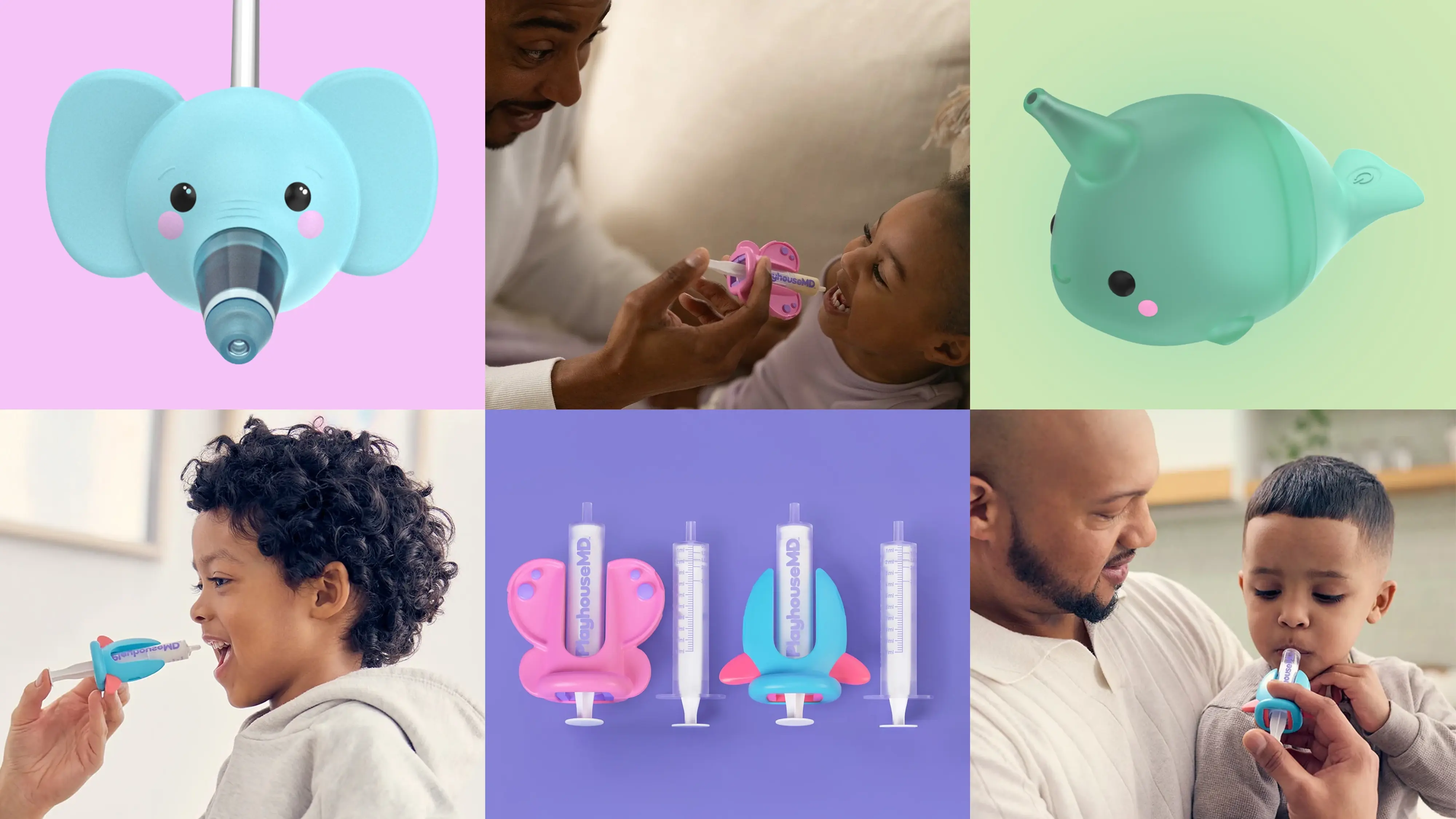
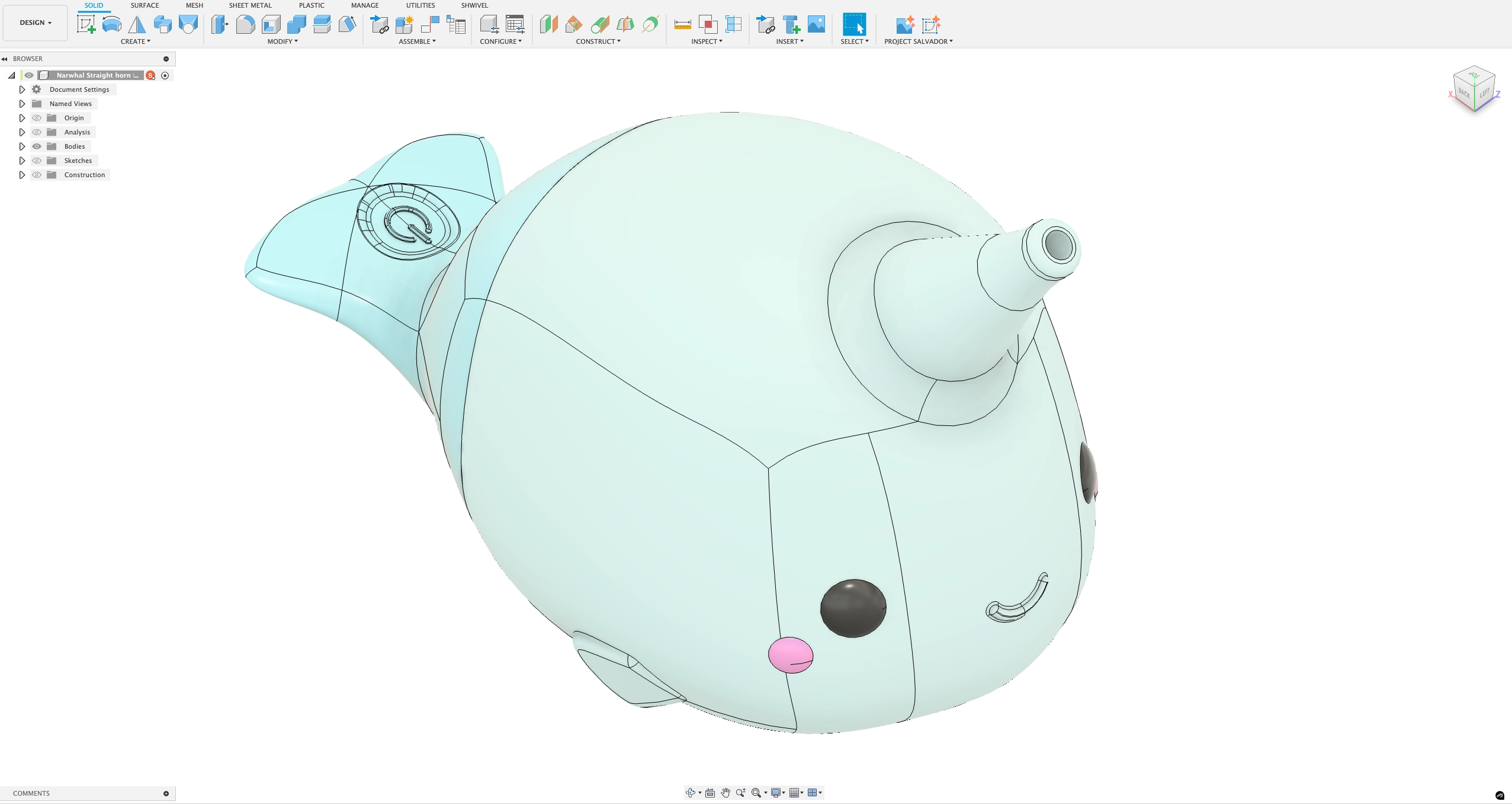
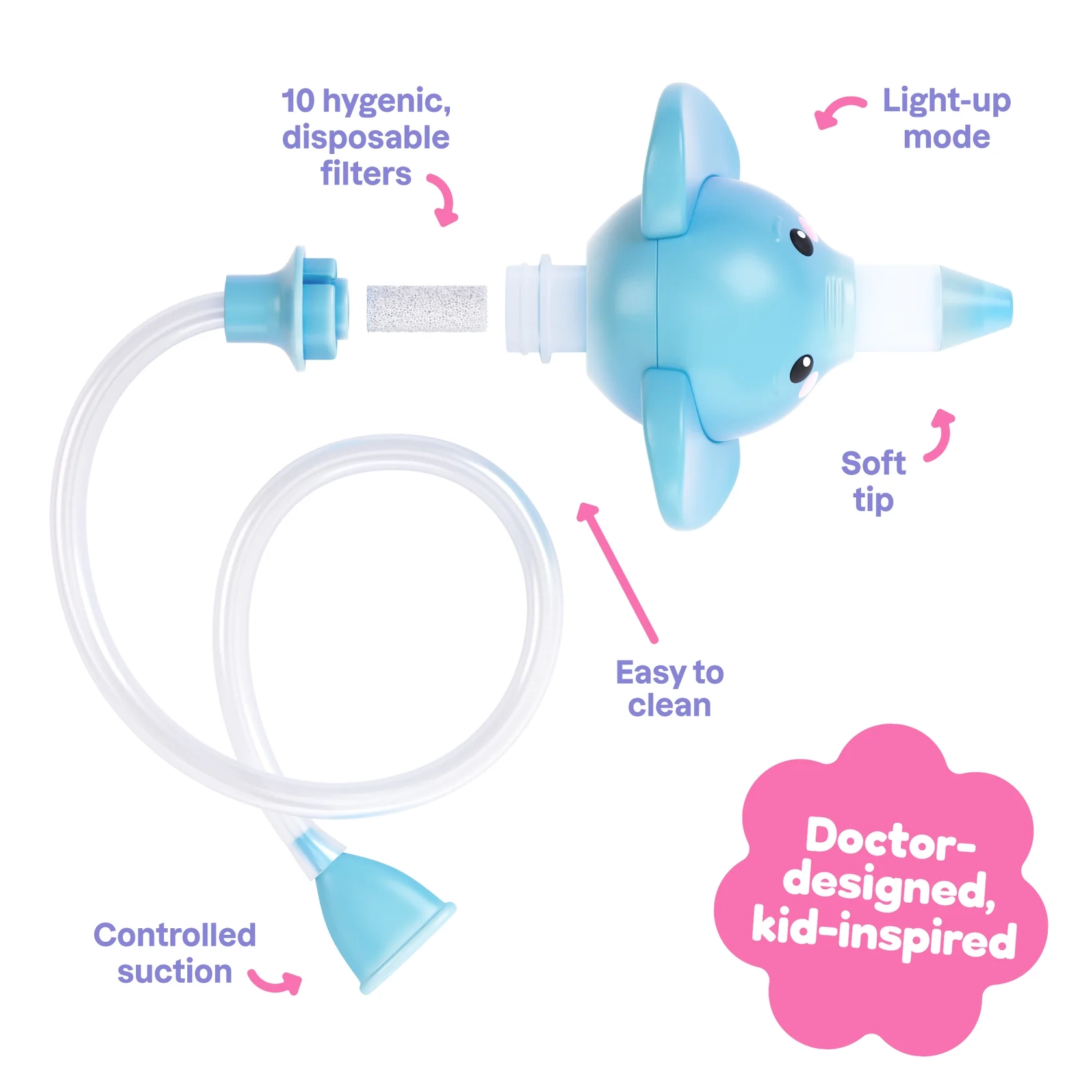
Inspired by this kid-centric formula, the IDEO Play Lab team worked closely with Sydney, Kaitlin, and their co-founder, Michael Kamins, to iterate on several designs, winnowing down more than 150 brainstorm ideas into a dozen tangible prototypes (or tinker models) that were shown to doctors, nurses, parents, and young kids for feedback. The designs—a rocket ship medicine dispenser, an elephant-shaped nose aspirator, and a narwhal nasal bulb, among others—were intended to evoke a sense of playfulness, comfort, and familiarity, with features designed for maximum cuteness. Some even lit up and played sounds, like popular toys.
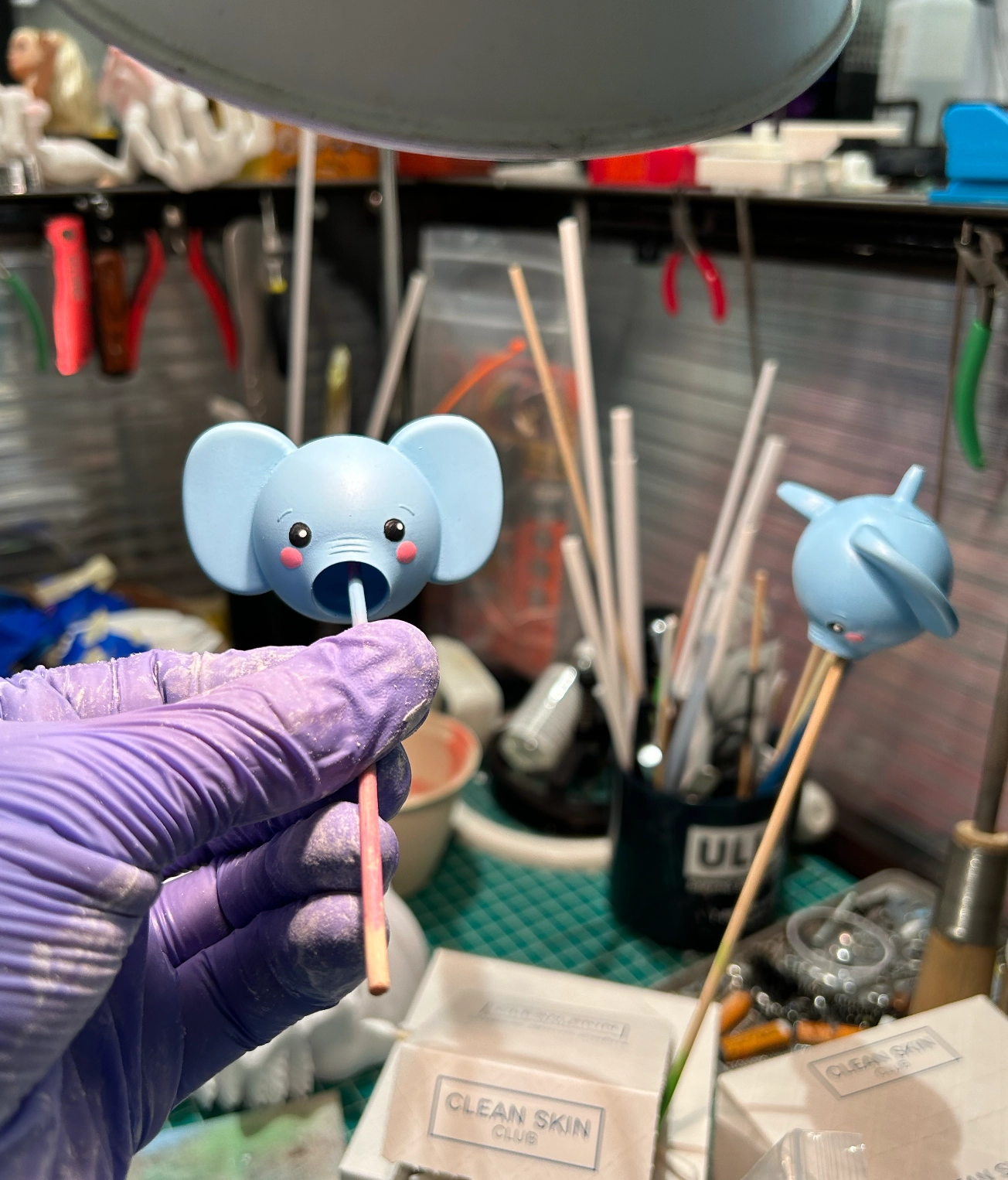
While the designs passed the fun test with kids, they also needed to be functional for parents, trusted by doctors, easily manufactured, and affordable. Eventually, they would need to be approved by the FDA as regulated medical devices. Playhouse MD also requested patentable innovations to help protect their products from imitation.
With these constraints in mind, IDEO Play Lab delivered a collection of nine unique, high-fidelity prototypes that add a dose of fun to caretaking challenges in homes and doctors’ offices. The final designs were durable, medically sanitizable, and safe for testing with real kids, which helped the startup secure multiple rounds of funding and bring its first products to market in 18 months.

Playhouse MD began selling its first four direct-to-consumer products on its website in June 2025: two Medicine Buddies (medicine dispensers shaped like a rocket ship and a butterfly) and two Booger Buddies (a light-up nasal aspirator elephant called Luna and a light-up nasal bulb narwhal named Noa, which was named one of The Best Inventions of 2025 by TIME). The products are available at Target and Babylist stores, and on Amazon through leading medical distributor McKesson Medical-Surgical.

Most companies design child healthcare devices with parents’ or doctors’ tastes in mind; none, however, focus on what will make kids smile, too.
TIME Best Inventions of 2025
in the Parenting Category, Playhouse MD's Light-Up Nasal Bulb
1 ½ years
from initial brainstorms to in-market launch of 4 kid-centric medical products
Designing a next-gen airway visualization system
Improving patient outcomes with the GlideScope ClearFit Video Laryngoscope.
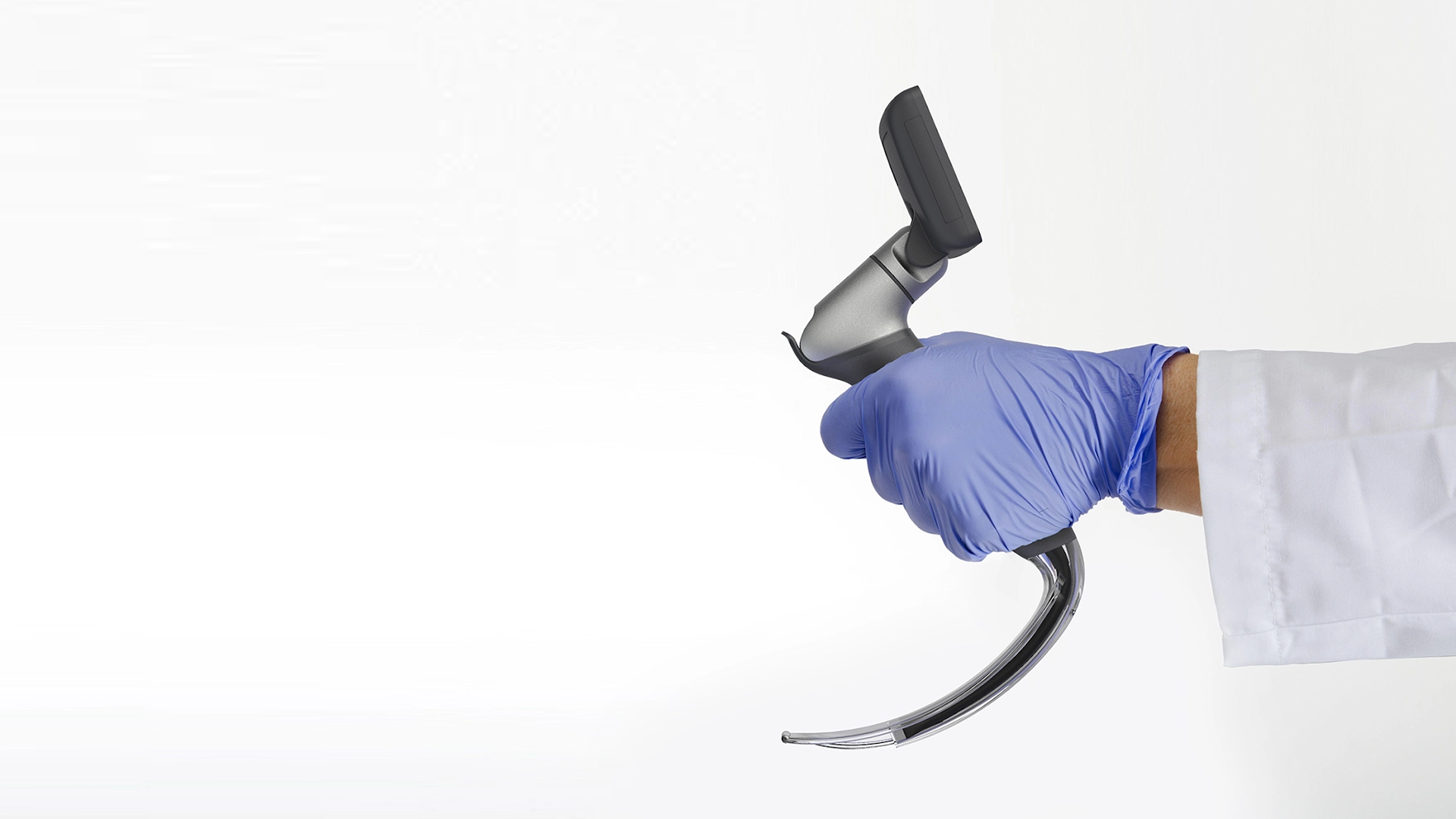
Verathon offers one of the broadest portfolios of video laryngoscopes on the market. While these life-saving devices increase the likelihood of successful first-time intubations, reducing trauma and speeding recovery times, they are more costly and can be more challenging to learn how to use than traditional mechanical ones, which rely on directly looking at the vocal cords. Wanting to make it easier for cost-conscious hospital administrators to transition from traditional laryngoscopes to Verathon’s video systems, the medical device manufacturer asked IDEO to technically and visually unite its next-gen reusable baton and stats, ensuring they worked together seamlessly, flexibly, and intuitively during the most routine and demanding healthcare moments.
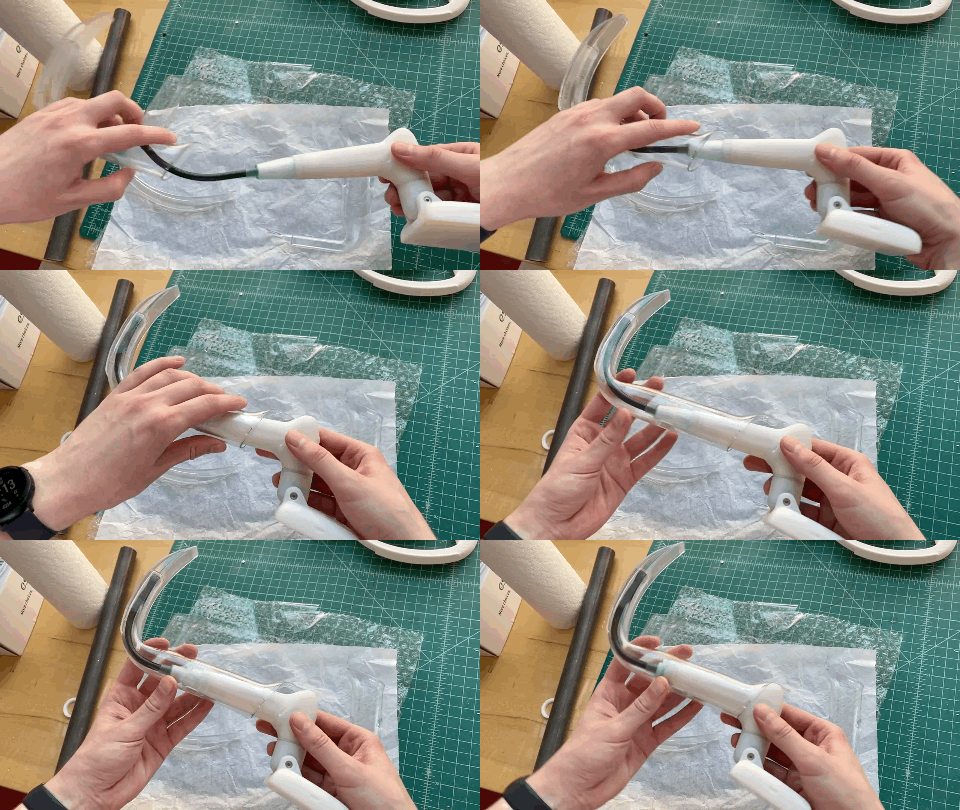
The IDEO and Verathon teams used a prototype-led approach to safely gain feedback from anesthesiologists and emergency physicians. Research participants were given various intubation models to simulate surgical use cases and understand ergonomic trade-offs between different design directions. Insights from the field led to design principles such as prioritizing device balance over weight reduction, providing flexibility to accommodate a variety of gripping positions, making connection points between various parts clear, intuitive, and secure, and ensuring the device was easy to clean.
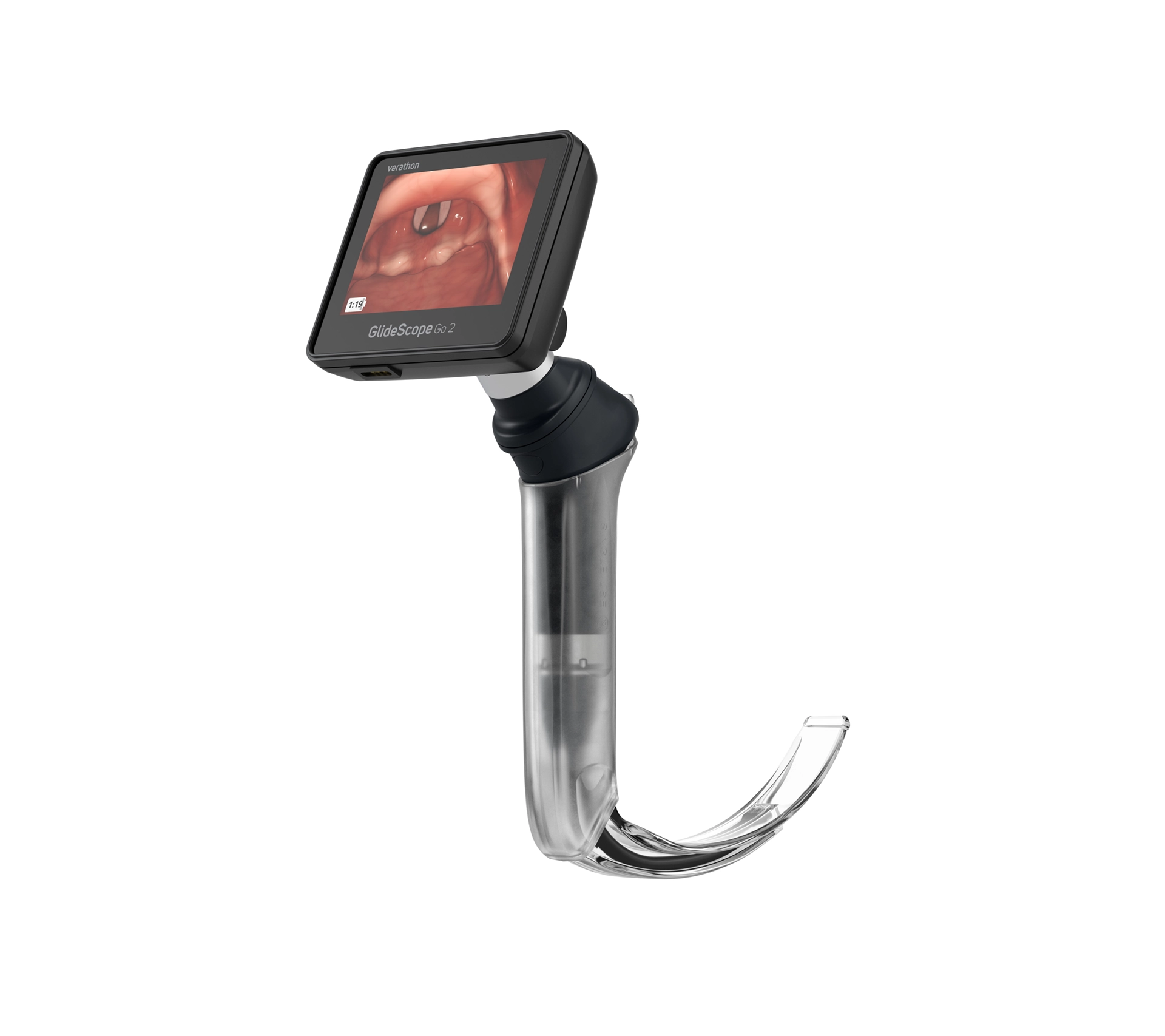
Inspired by physician feedback, the team designed an innovative video baton that felt both familiar and new, supported the ergonomics of diverse holding styles, and fit Verathon’s wide range of stat sizes (one of its competitive advantages). To prevent accidental disconnections, users receive clear tactile, visual, and sound feedback when the monitor and cover are correctly attached to the baton. IDEO chose color, materials, and finishes to help clinicians quickly distinguish between parts of the system and easily identify reusable components from single-use ones.
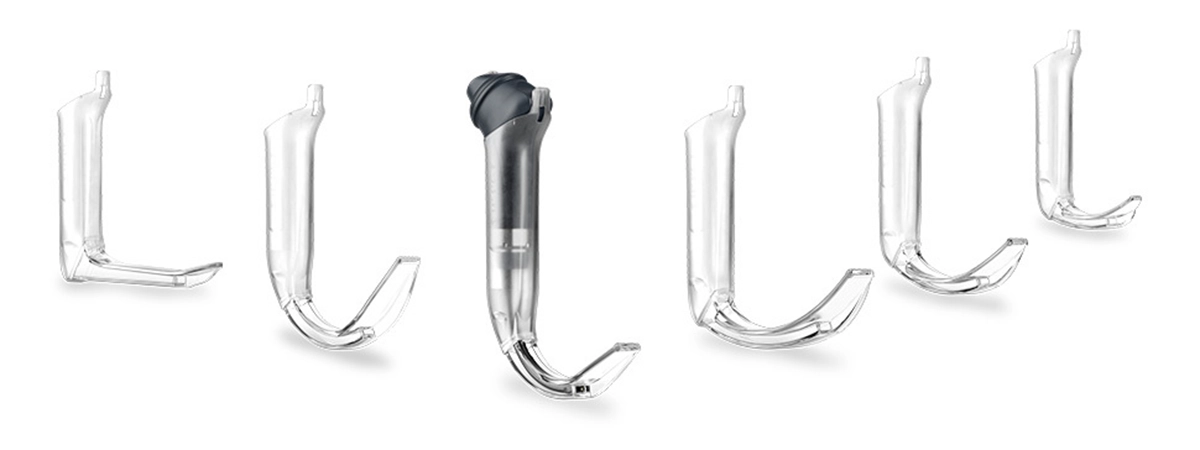
Verathon’s new GlideScope ClearFit stats-based video laryngoscope hit the market in August 2025. Combining one reusable baton with an industry-leading selection of six single-use stats, it’s compatible with both the GlideScope® Go™ 2 handheld and GlideScope® Core™ cart-based systems. Magnetic QuickConnect™ technology allows doctors to seamlessly switch between platforms, giving hospitals a standardized airway management solution that simplifies workflows, streamlines inventory, enhances medical education and training, and promotes cost-effective care.
Verathon invented video laryngoscopy technology. Twenty years later, the COVID-19 pandemic spurred more competitors to enter the market.
Cutting-edge technologies like video laryngoscopes are critical—and costly—devices. Hospital systems want to invest in the most comprehensive, flexible, adaptable, and affordable tools for quality patient care
6 shapes and sizes
of single-use covers fit one video baton, enabling health workers to quickly access different throat anatomies
Improving STEM education in the Philippines
GBF Class Builder supports teachers to advance learning for students.
Since its founding in 1992 by the Gokongwei family, which also operates one of the nation’s largest conglomerates, JG Summit Holdings, GBF has supported Philippine education through student scholarships, teacher training funds, and donations to top universities. Over its 30-plus-year history, GBF has reached more than 200,000 teachers and impacted over 1.5 million learners nationwide. When the foundation approached IDEO in 2021, it wanted to move the needle on STEM education in the country’s struggling public schools.
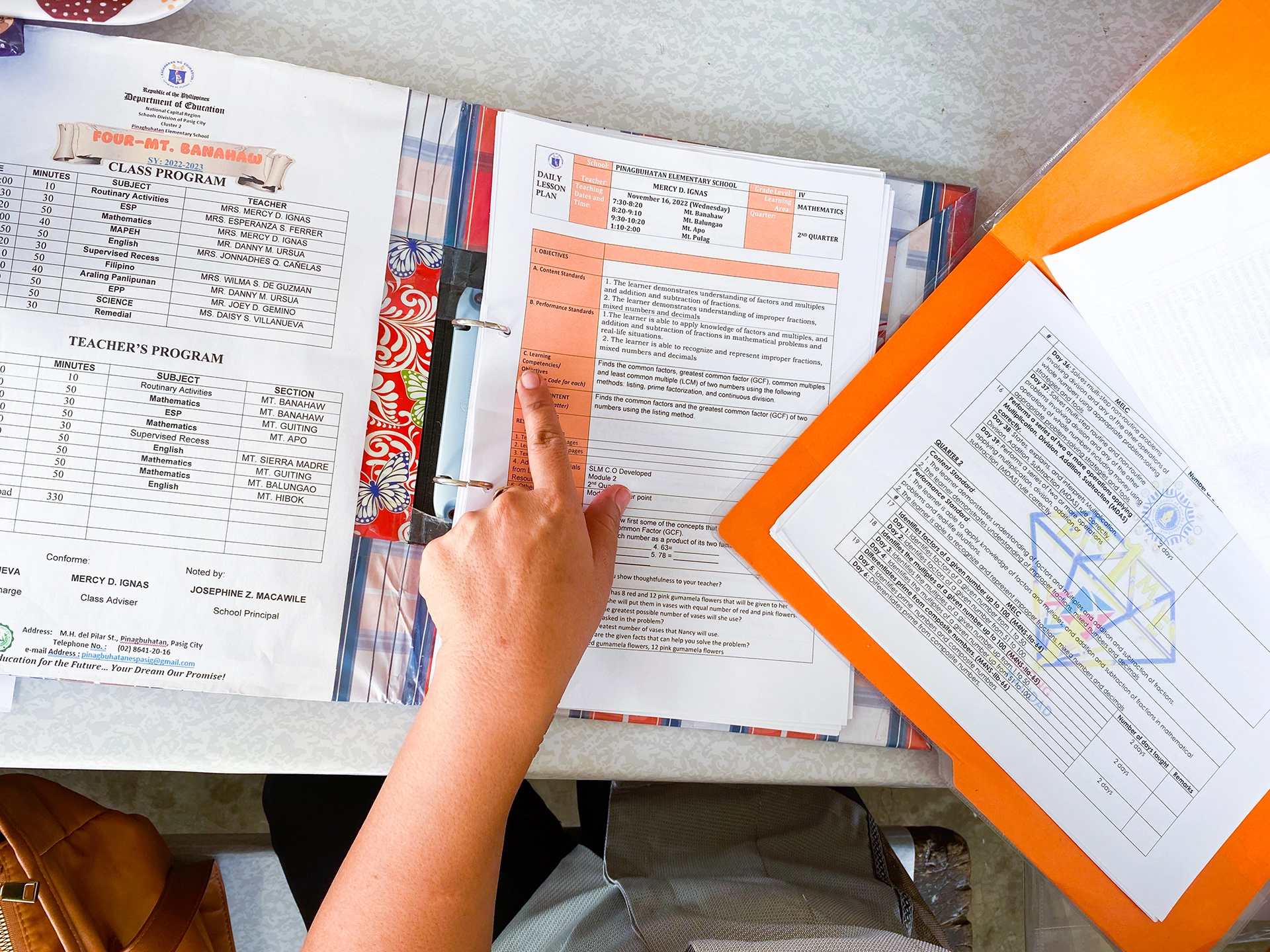
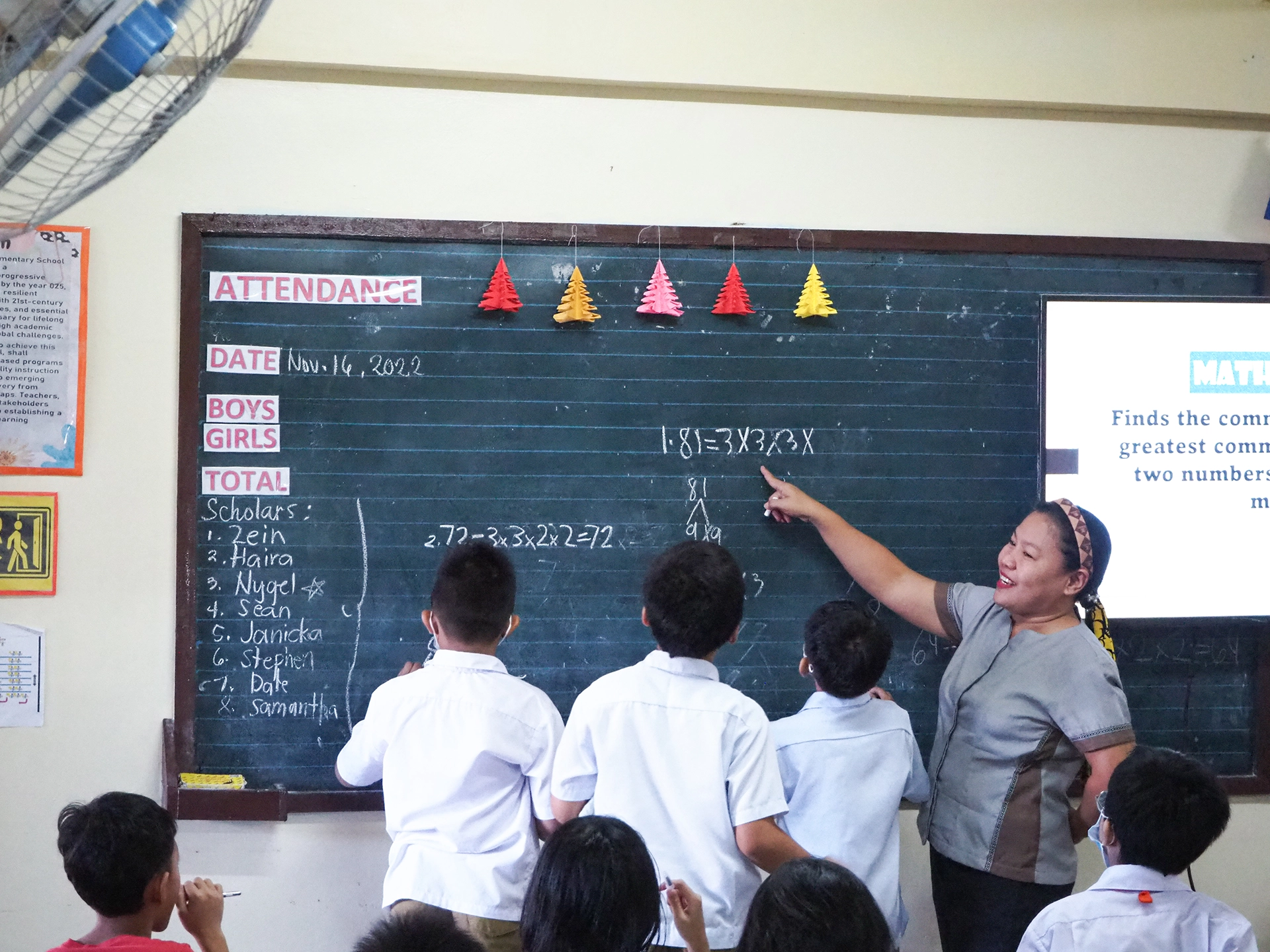
The IDEO and GBF teams interviewed more than 100 subject-matter experts across various government agencies, leading technology companies, and top national universities and educational institutions to build a comprehensive understanding of the current state of STEM in the Philippines. To experience classroom struggles firsthand, the team also shadowed STEM educators and principals. The research revealed that time-strapped teachers needed help mastering overall STEM content, preparing for their classes, and selecting the most suitable activities for their students. They also didn’t always feel supported in their own career development journeys. But the burden of daily responsibilities didn’t leave them any time for outside learning opportunities, either.
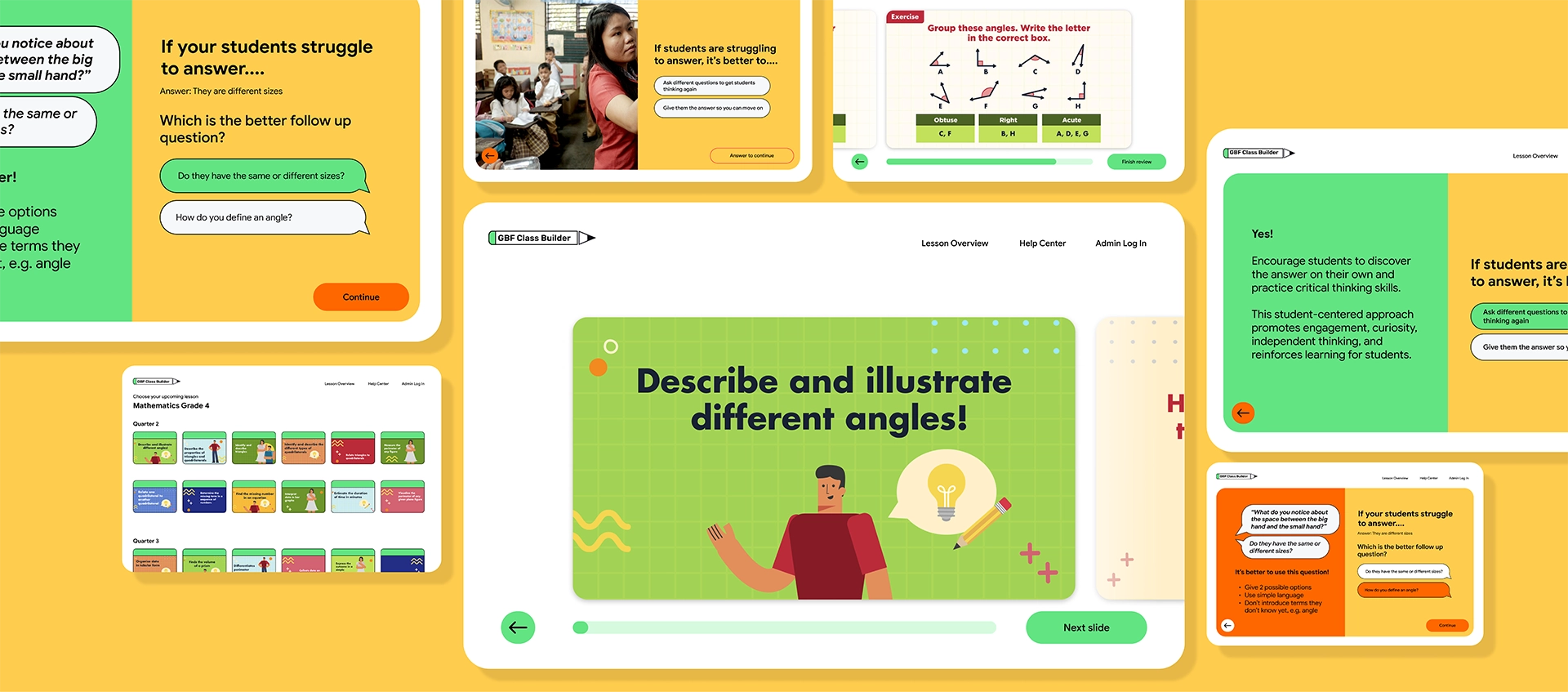
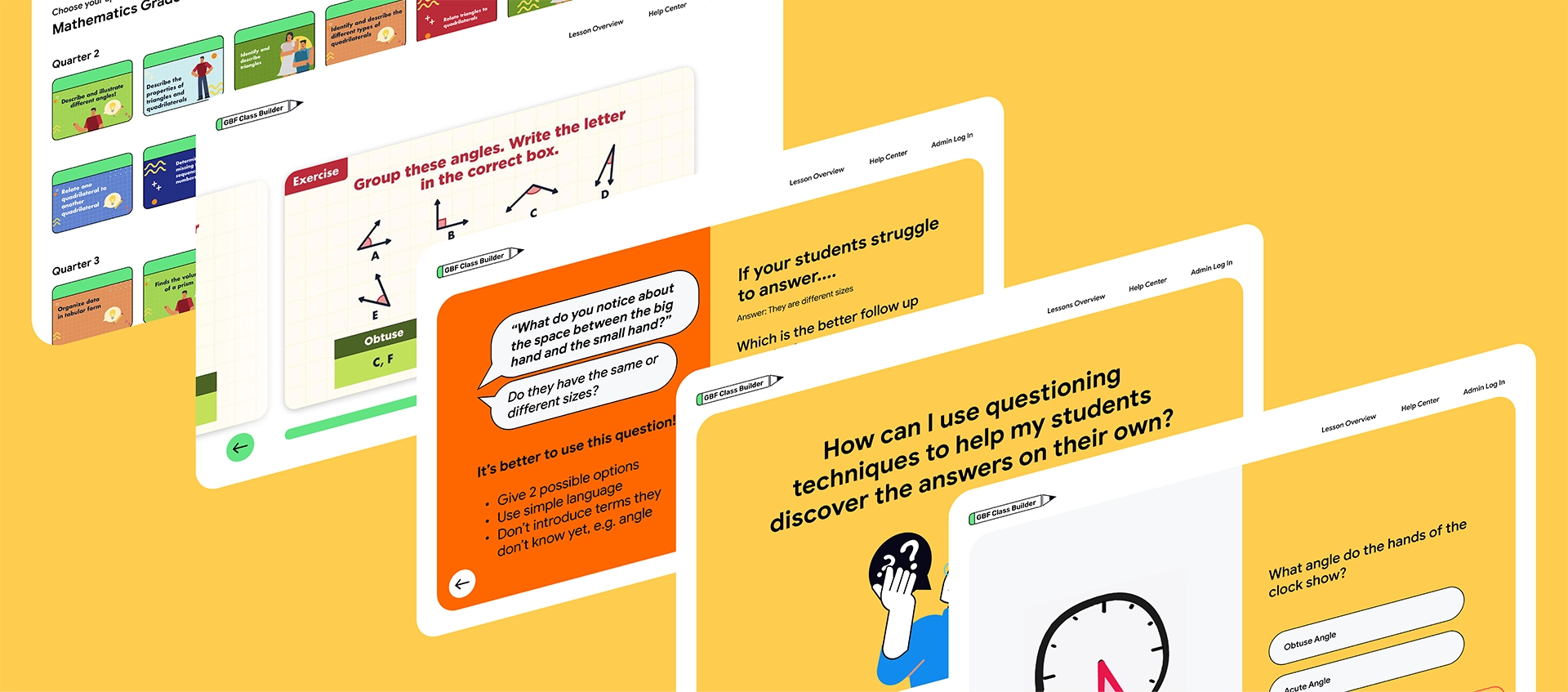
Recognizing that empowering teachers empowers students, the team created an innovative lesson prep tool, the GBF Class Builder, that's based on these insights. Using existing technology and course materials designed to align with school curricula, IDEO developed a working prototype of the Class Builder in under a week, with minimal investment. The team then systematically improved it over several “build-test-iterate” feedback cycles in real classrooms over the course of four months.
The final GBF Class Builder is a targeted program that helps STEM teachers deliver compelling lessons for their students, learn new teaching strategies, and build content mastery along the way. In addition to helping design the Class Builder, IDEO continues to advise GBF on key aspects of the program's piloting and rollout. This includes advising on how to implement the content development, think through the curriculum development process, support in designing feature iterations, define metrics for success, and decide which additional roles GBF will need to support the ambitious program going forward.
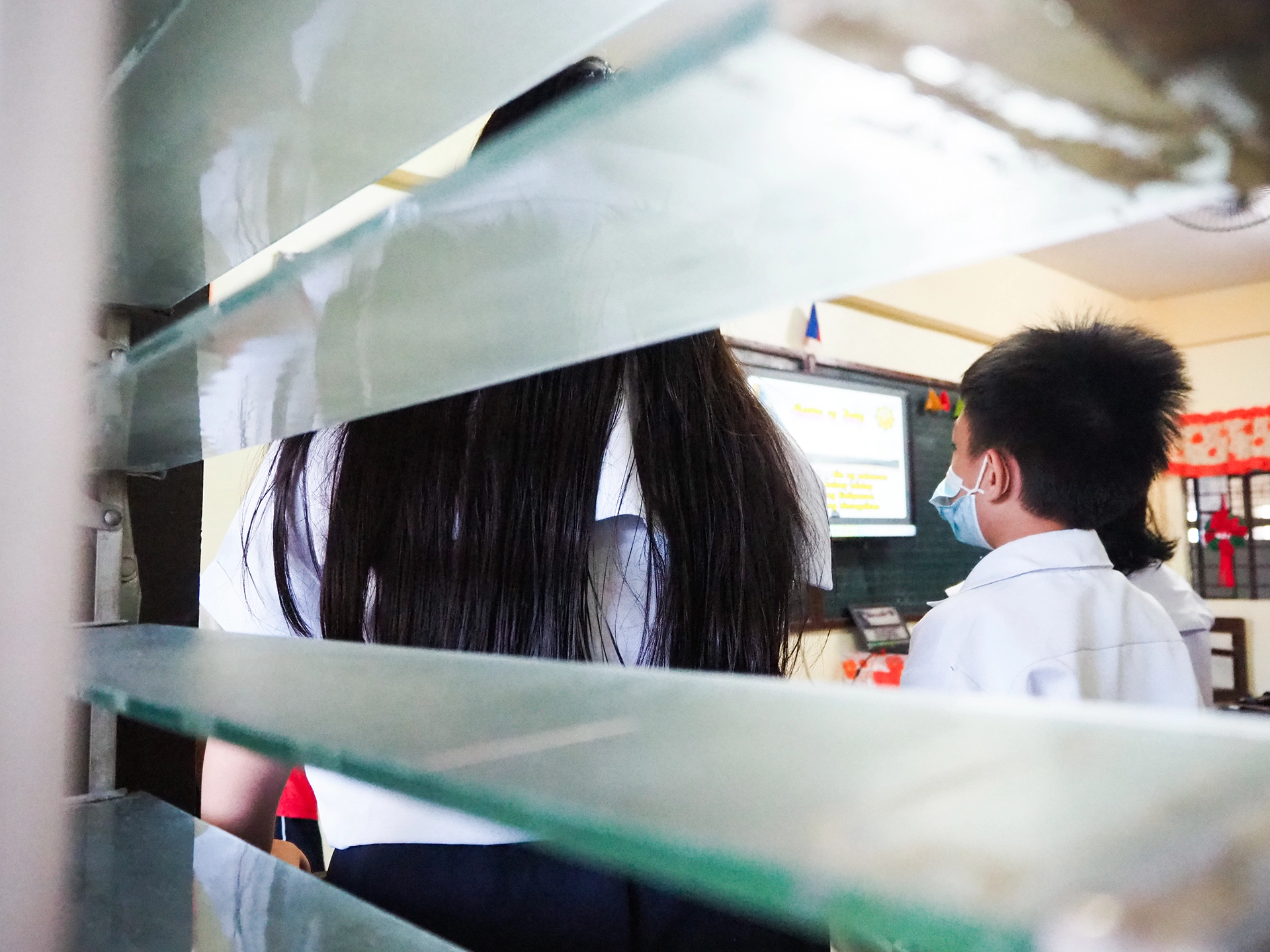
The foundation launched the GBF Class Builder at its 30th-anniversary celebration in 2023. Feedback from pilot 3,500 public schools and 15,000 teachers has been overwhelmingly positive. “Through the GBF Class Builder, we envision our teachers to be more confident and effective in class, more ready to face the challenges of the future, while enjoying every class—feeling proud to be a teacher, " says Grace Colet, Executive Director of GBF.
The ambitious program continues to scale and is on track to be rolled out in public schools nationwide by 2029.
90% of 10-year-olds in the Philippines can’t read a simple text, according to a Southeast Asia Primary Learning Metrics report. Eighty-three percent of Filipino 10-year-olds lack minimum proficiency in math.
More than 15,000 teachers in 3,500 public schools
are now using the innovative GBF Class Builder program
94%
of teachers report the GBF Class Builder has improved student engagement, while 89% say it saves them 1-2 hours in prep time per lesson

Making headroom in a new product category
Renowned cycling brand Fizik expands its offerings with a line of helmets.
Fizik came to IDEO with the aim of entering the helmet market with a range of high-end performance options fit for road racing, mountain biking, time trials/triathlons, and everyday cycling. Fizik planned to use its world-class production and engineering capabilities (the company is part of the Selle Royal Group, which has over 1,400 employees and manages five other cycling brands, including Crankbrothers and Brooks England). IDEO’s task was to develop an on-brand design language that would unify its new helmet line and integrate seamlessly with the sleek, modern aesthetics of the company’s other products.
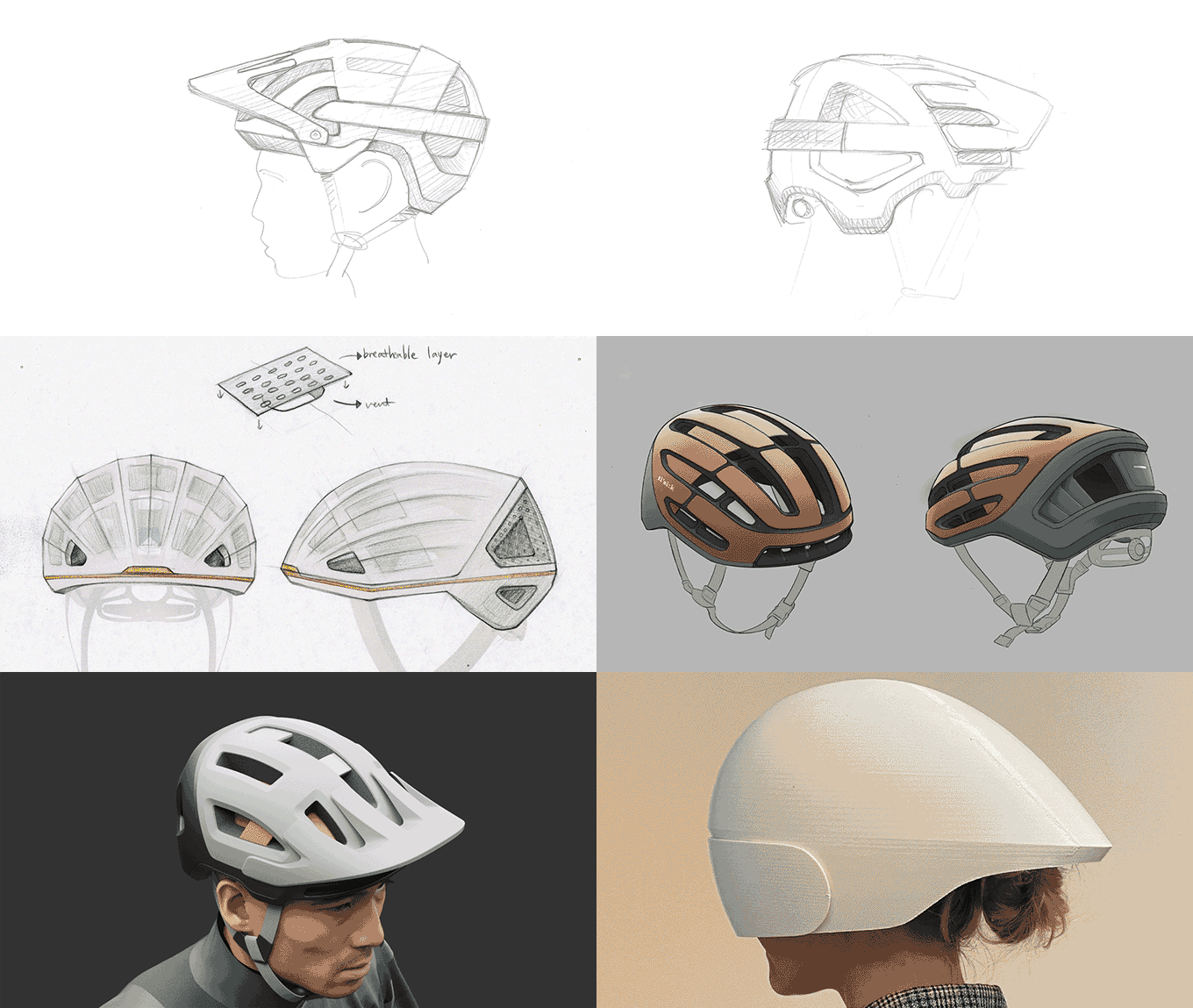
The design sprint began with in-context interviews with avid and professional cyclists to learn what they wanted—and didn’t—in a helmet. Unlike other accessories, such as shoes or shorts, riders viewed helmets as a necessity rather than an exciting or aspirational purchase. They also wanted a helmet that complemented their overall style, rather than standing out, and had a flattering silhouette. Avoiding making a cyclist look like a “mushroom” was key.
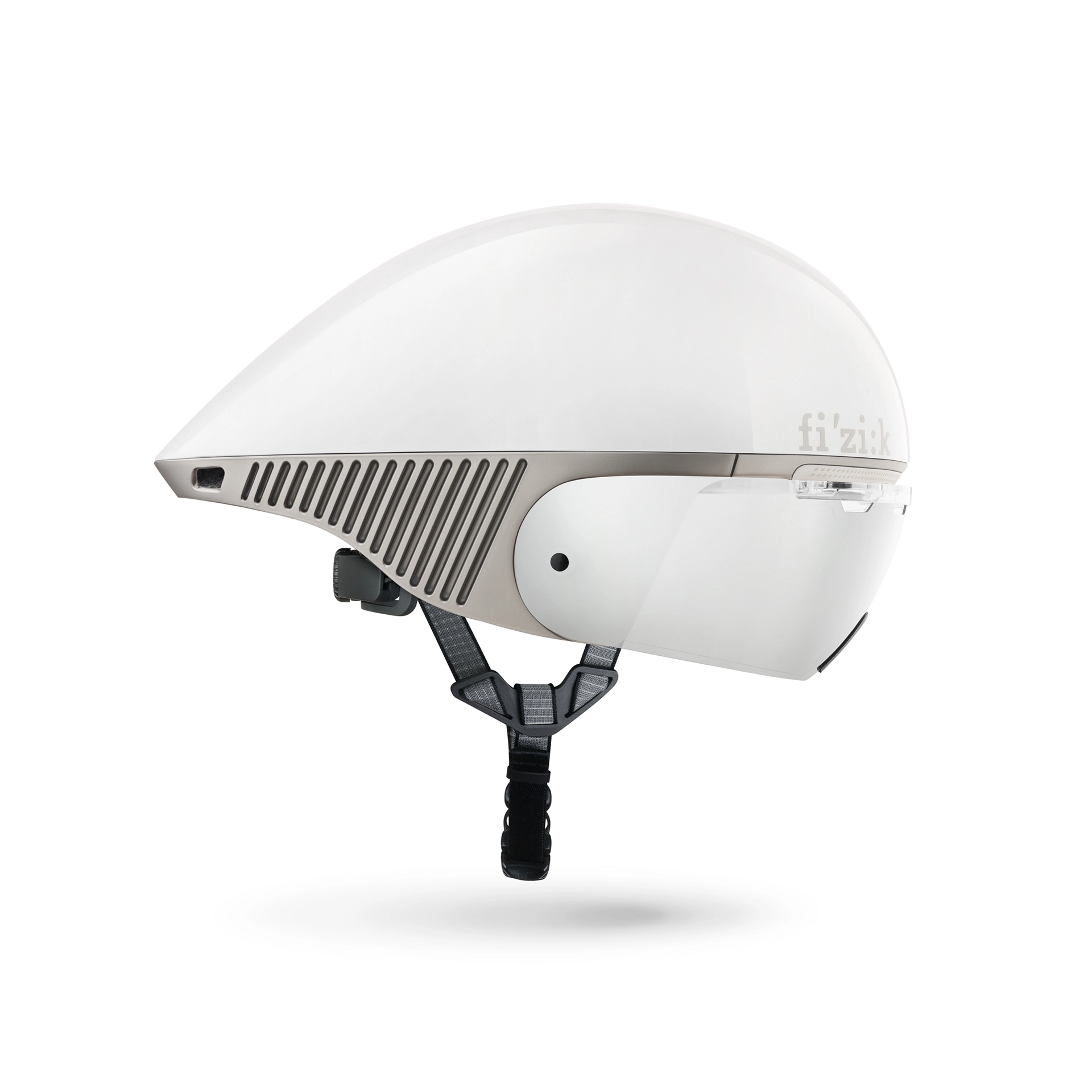
Different cycling styles involve varying riding postures, ranging from a dropped and horizontal position (time trial/triathlete) to an upright and vertical position (mountain biking). IDEO proposed a family of helmet designs that correspond accordingly. On the horizontal extreme, the time trial/triathlete helmet has the most fluid, organic, aerodynamic shape. A statement of refined simplicity and speed, it features minimal venting and a magnetic wrap-around visor to reduce drag that can be exchanged for the rider’s own cycling glasses.
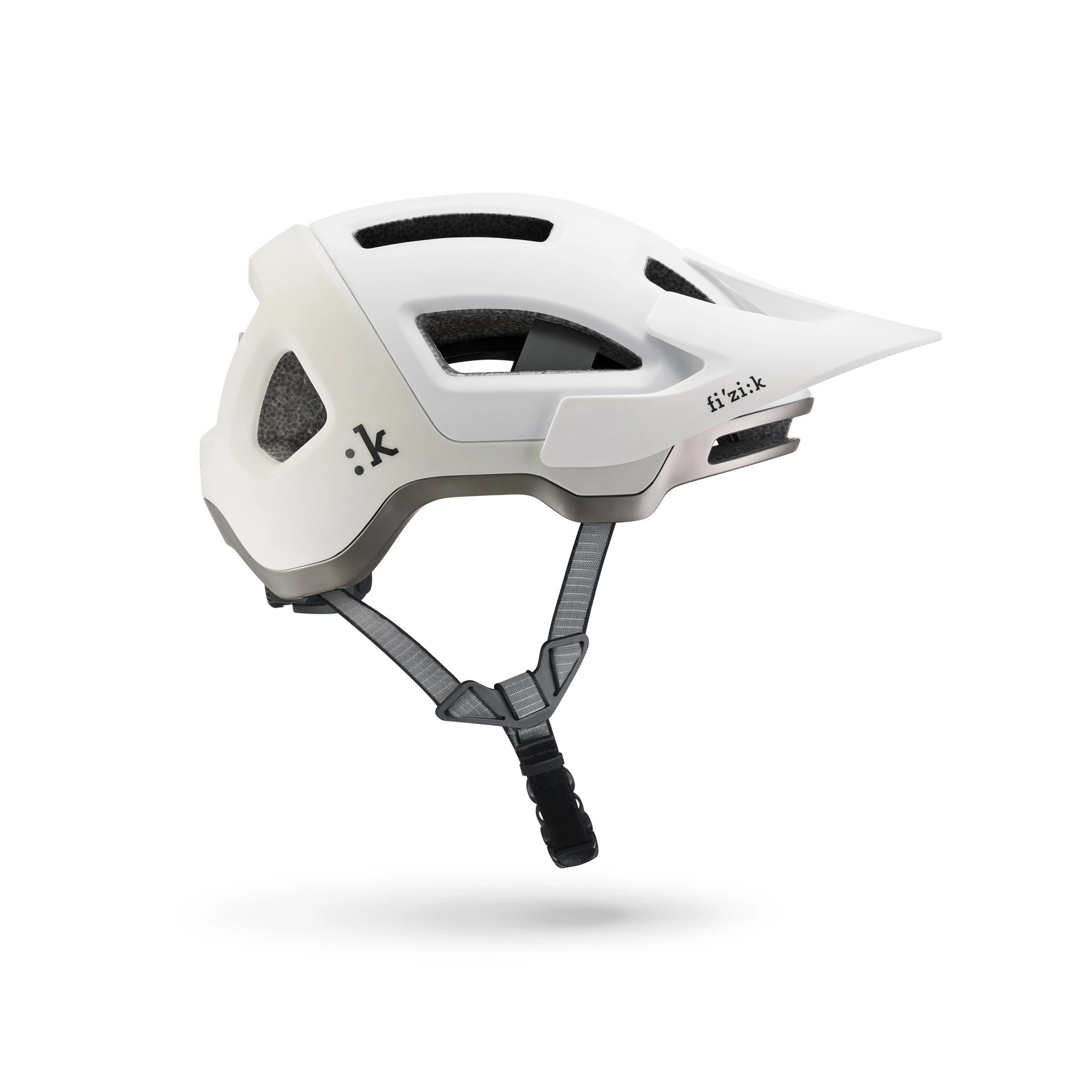
On the vertical extreme, the mountain biking helmet features a more rugged, angular form with an adjustable brim, rectangular venting, and boxier, back-of-the-head protection. It also offers affordances for goggles, sunglass storage, a GoPro mount, and an optional integrated rear light.
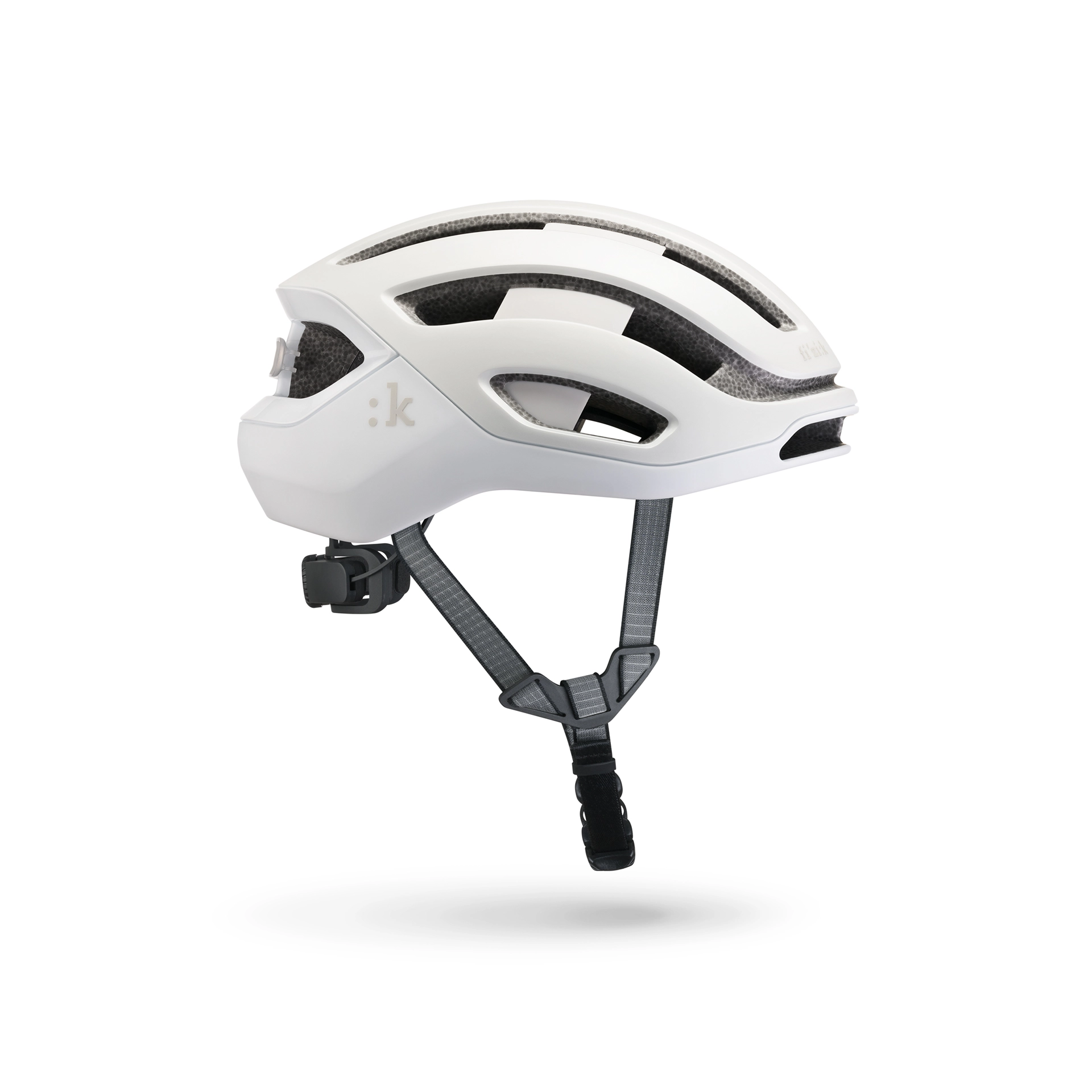
In between, a compact helmet for road racing features evolutionary variations on these design extremes, with more venting as well as a front glasses holder and integrated rear light. All four helmets strike a balance between lightness, comfort, safety, and performance, embodying Fizik’s signature modern style.
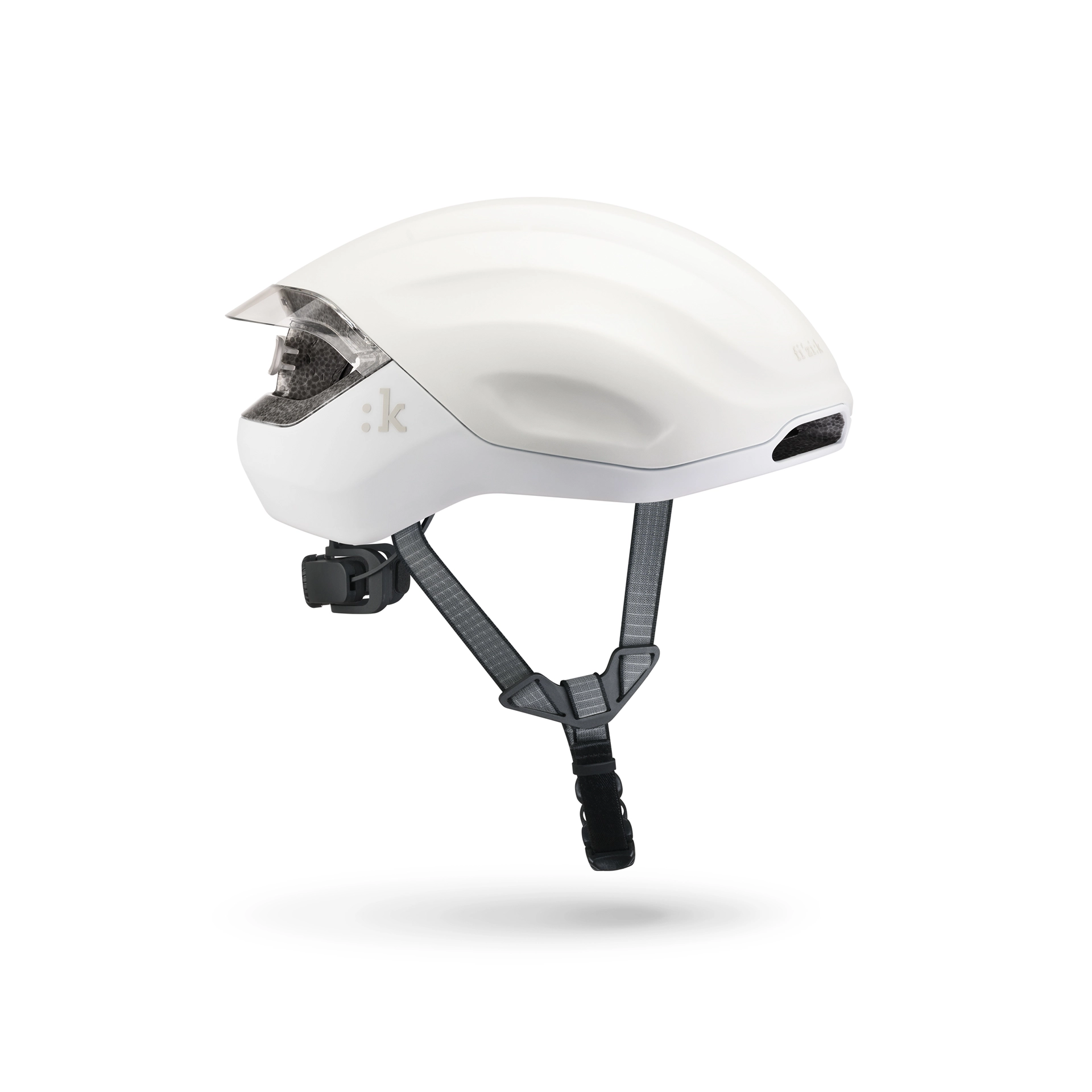
In April 2025, Fizik launched all four helmet models simultaneously: Kassis (mountain biking), Kunee (trial/triathlon), Kudo, and the more aerodynamic Kudo Aero for road and gravel. The helmets were greeted with critical acclaim from the cycling world, while Virginia Tech’s independent helmet-safety research lab gave them five-star performance ratings for their strength and durability.
Legendary cycling company Fizik was known for its high-performance bike seats and shoes, but wanted to be a fierce entrant in a challenging product category—helmets.
4
new helmet designs
1
new product category

Thoughtless Acts: Headphone Helper
Thoughtless Acts: Headphone Helper. The intuitive ways we adapt and react to things in our environments
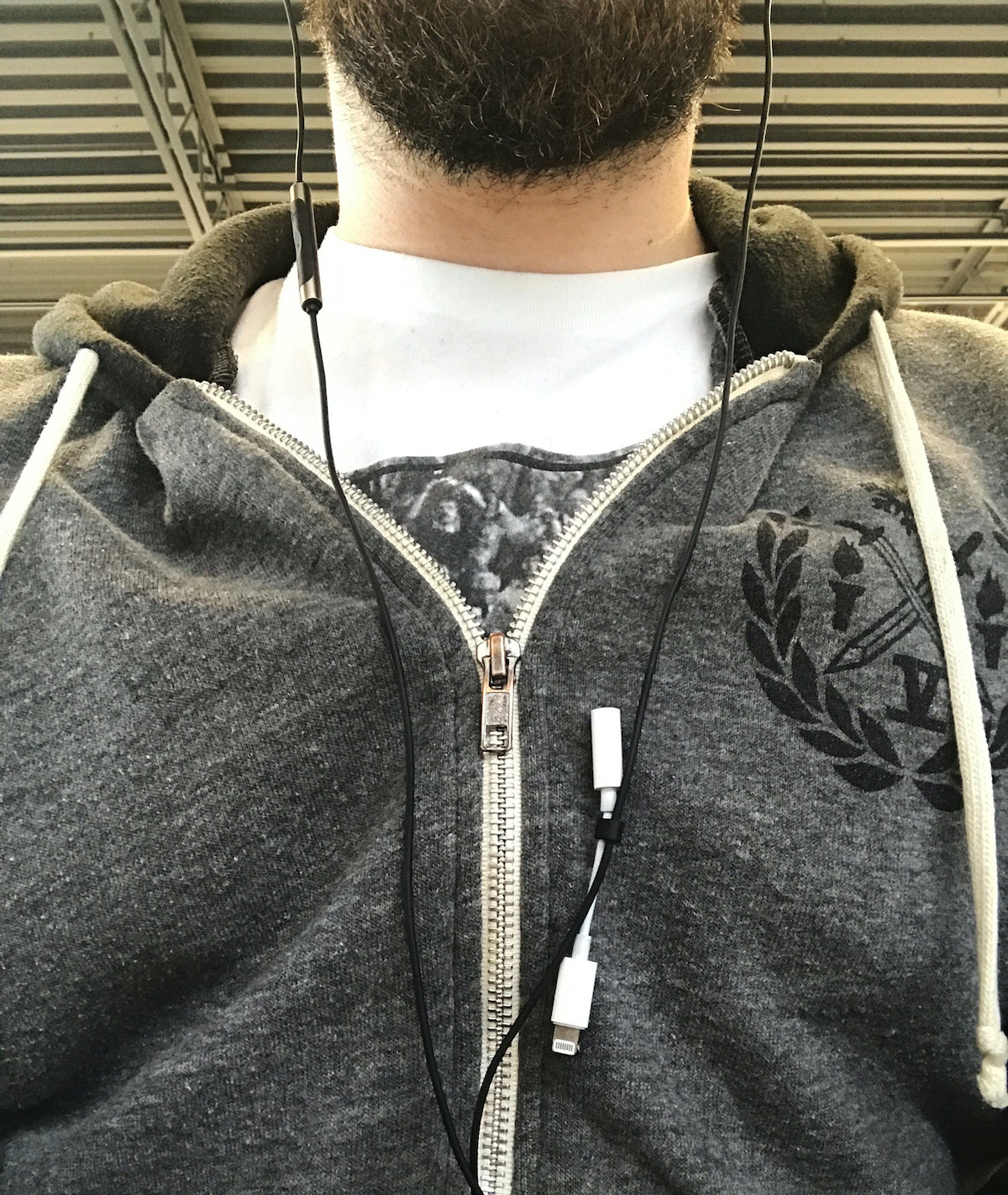
My coworkers recently called me out on a thoughtless act I'd been doing for months without even noticing. Not long ago, I upgraded my phone to a certain unnamed model whose designers decided to remove the headphone jack—meaning you either need Bluetooth headphones or an adapter. As a music nerd who is overly particular about the headphones I use, I wasn't ready to give up my trusty corded earbuds. But I also know that I'll inevitably lose said adapter, because I lose anything that isn't attached to my everyday carry. The catch? Everyday at work, I listen to music from my laptop, which uses a traditional headphone jack. I guess, subconsciously, I found a solution to avoid losing the adapter that was there all along: When I'm not using it, I clip the adapter into the rubber piece that's attached to the the earbuds to keep their cords together. I'm going on six months without needing to buy a new adapter. #Success.
Human-centered design requires us to observe human behavior with beginner's eyes, so that we can spot the innate ways people interact with the world around them. We call these intuitive and unconscious reactions Thoughtless Acts, and IDEO designers collect photos of them to inspire their work.
What Brewing Beer Taught Me About Design
Mapping the future of beer drinking
So I decided to pursue my own absurd hobby that would combine my twin passions for beer brewing and fictional cartography into what I hope is the ultimate beer drinking experience. Or at least the most ridiculous. I call it Bean Brew.

We talk a lot about the user journey at IDEO. It’s a way to break down how a person experiences important moments when interacting with a product or service. While bottling my first few batches several years back, I obsessed over the taste of the beer and the bottle's label design—two key moments in the beer drinker's user journey. But then I realized that there are so many other moments that I was leaving out of the design process.
So I asked myself: Could I contextualize the combined drinking experiences of each person who received a bottle of Bean Brew? Could I turn that into a map? And could I deliver that map back to Bean Brew drinkers months later in the form of a delightful silkscreen poster? That became my design challenge.
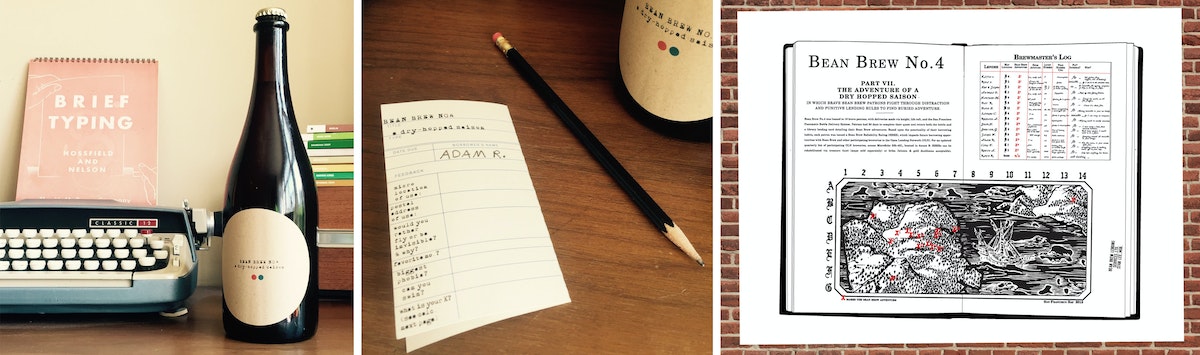
So what have I learned from my side gig?
1. Quantitative data inspires design
Bean Brew has taught me a lot about how to integrate quantitative survey data into a cohesive storytelling experience (something we’re trying to do more and more of at IDEO these days). I start with questions like these, which I include as part of a survey wrapped around the bottle’s neck:
- What are your three favorite board games?
- Complete the following sentence: If I were on a ship for 1 year, my ideal job position would be ________.
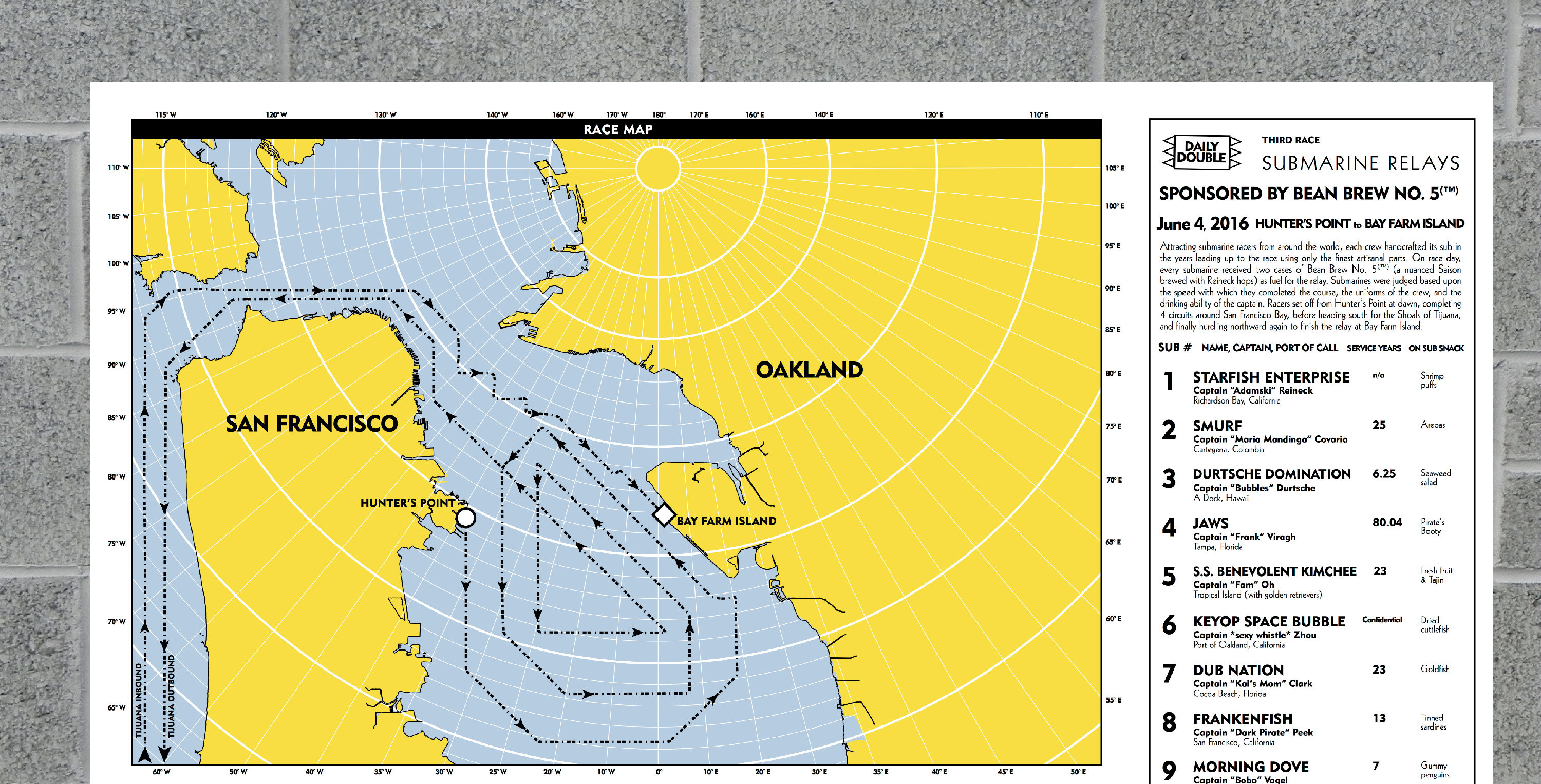
I then transform the responses I get from people who received a particular batch of Bean Brew into a poster that looks something like this.
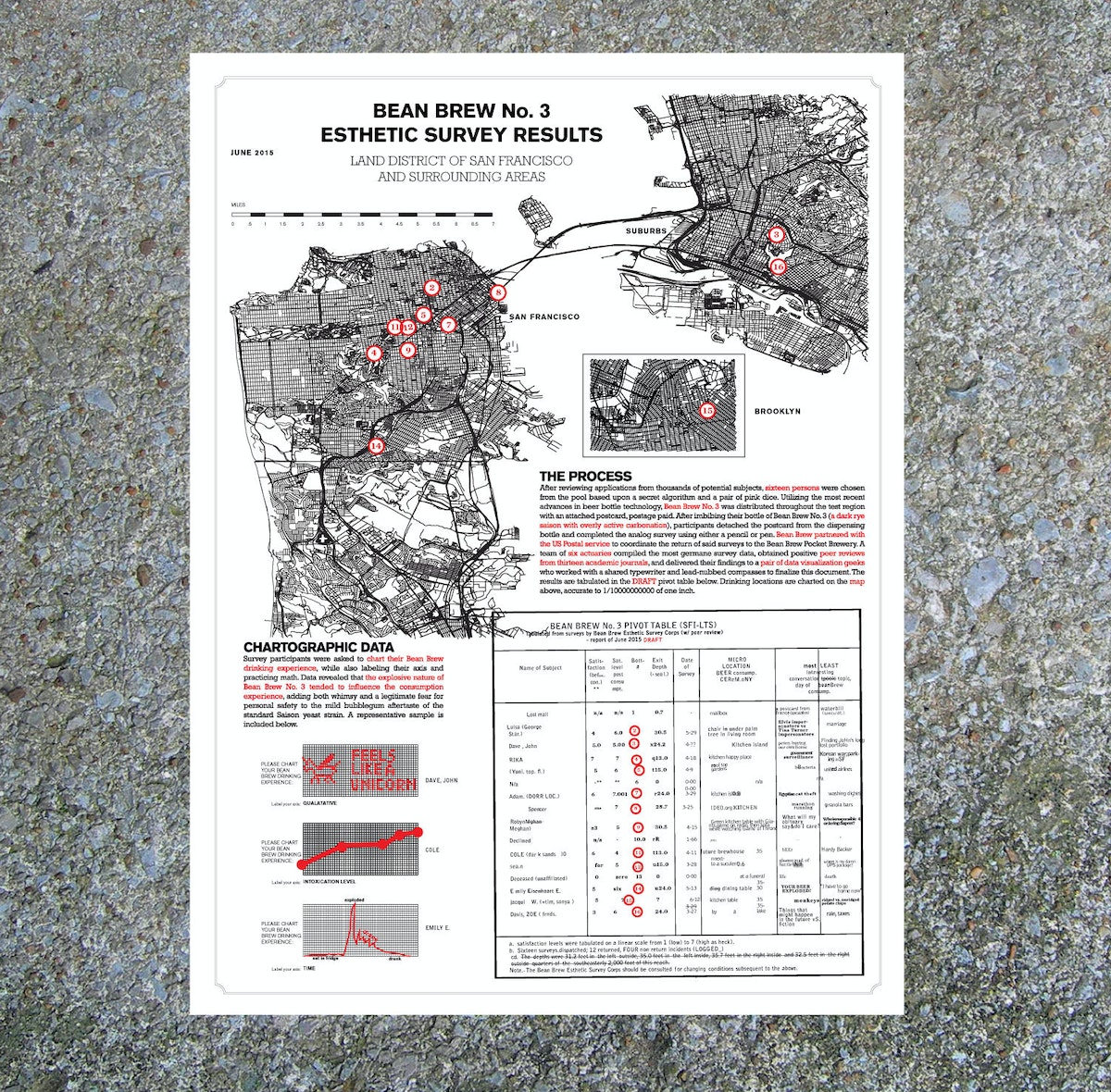
2. There's more to design than what meets the eye
Sometimes, as you go through the design process, you realize the thing you think you're designing (a bottle of beer) isn’t what you're actually designing (a beer drinking experience). This is true for most of the projects I’ve worked on at IDEO, and for Bean Brew, too.
3. Side gigs = side skills
Finally, I’ve learned a bunch of tangible skills throughout the process of making Bean Brew: Arc GIS (cartography software), best practices for glue adhesion (getting elaborate labels to stick to bottles), and how to use the power of analog experience to blow away anything an iPhone can do. I’m confident that I’ll be applying at least some of these skills to an upcoming IDEO project.
Bean Brew is my attempt to bring as much joy and delight to my hobbies as possible, and in doing so, I find that I’m more more creative and productive as part of my day job. And so much happier.
I am not training for any marathons. Just an expedition to Antarctica. In a submarine. With beer.
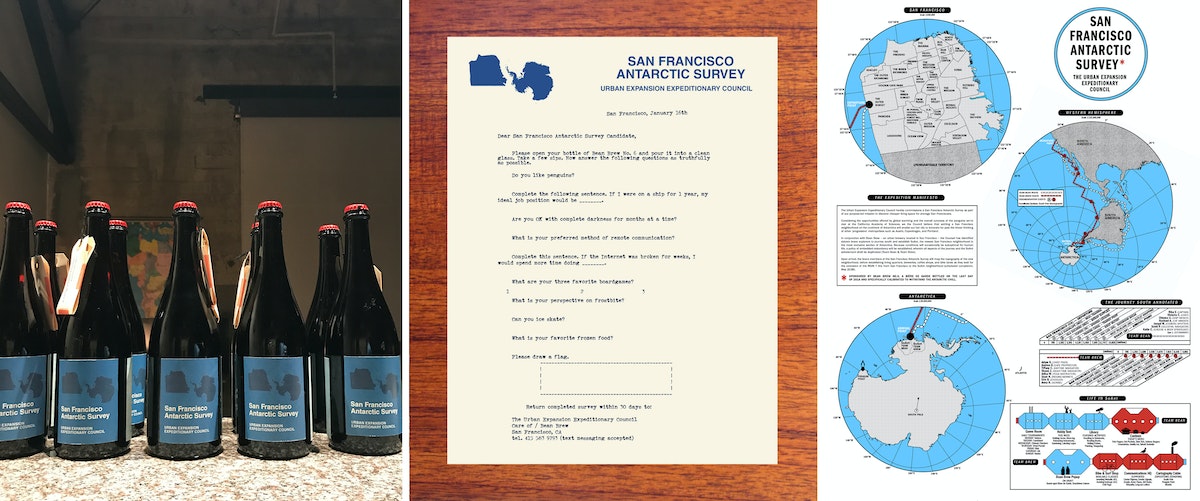
Years ago, I was working at a law firm in Boston. Many of my colleagues had the same hobby—training for the Boston Marathon in the middle of the frigid New England winter. This was what they did for “fun.” I was so amazed that these people with such unhappy day jobs would choose what seemed like such an unhappy hobby to fill their nights and weekends. Many years and two careers later, I moved to San Francisco to take a job as a designer at IDEO. In my first months here, I remember being struck by all of the wonderful and absurd hobbies that my new colleagues had. It was a delightful and inspiring contrast to my dark days in Boston.

Quick + Dirty Design Tips: Animation in After Effects
Animation tips from an After Effects power user
For this method of animation, make sure to use only lines in your Illustrator file. The idea is to animate the lines across their own path, so the way you design them will play a big part on how elaborate your animation will be.
Watch this video for a quick step-by-step guide to animating lines in After Effects:
- When your Illustrator file is ready, import it to After Effects. You can simply drag your Illustrator file to the Project area or go to File > Import > File.
- Drag the imported file to the Timeline. It will automatically create a Composition.
- Now you must turn your Illustrator file into Outlines that After Effects can control. On the timeline, right click on the layer and select "Create Shapes from Vector Layer.
- The next step is to animate your outlines. For that, you will need to add a Trim Paths feature to your new layer.
- On Trim Paths, use keyframes for Start/End to change when and where you want your paths to animate. If your file has multiple lines, you can choose to animate them simultaneously or individually.
This technique is a simple and effective way to create powerful motion graphics for storytelling, user interface behaviors, or even a simple animated gif. Hope you enjoyed it!
Adobe After Effects is one of my favorite tools for prototyping user interfaces, creating video scenarios to communicate a context of use, or simply crafting stories through animation. It's a tool that allows you to explore and visualize ideas, and there's no right or wrong way to use it. Here are a few tips for using After Effects to animate vector lines imported from Adobe Illustrator.
Why You Should Keep Making Stuff By Hand
Don't let technology stop you from getting your hands dirty
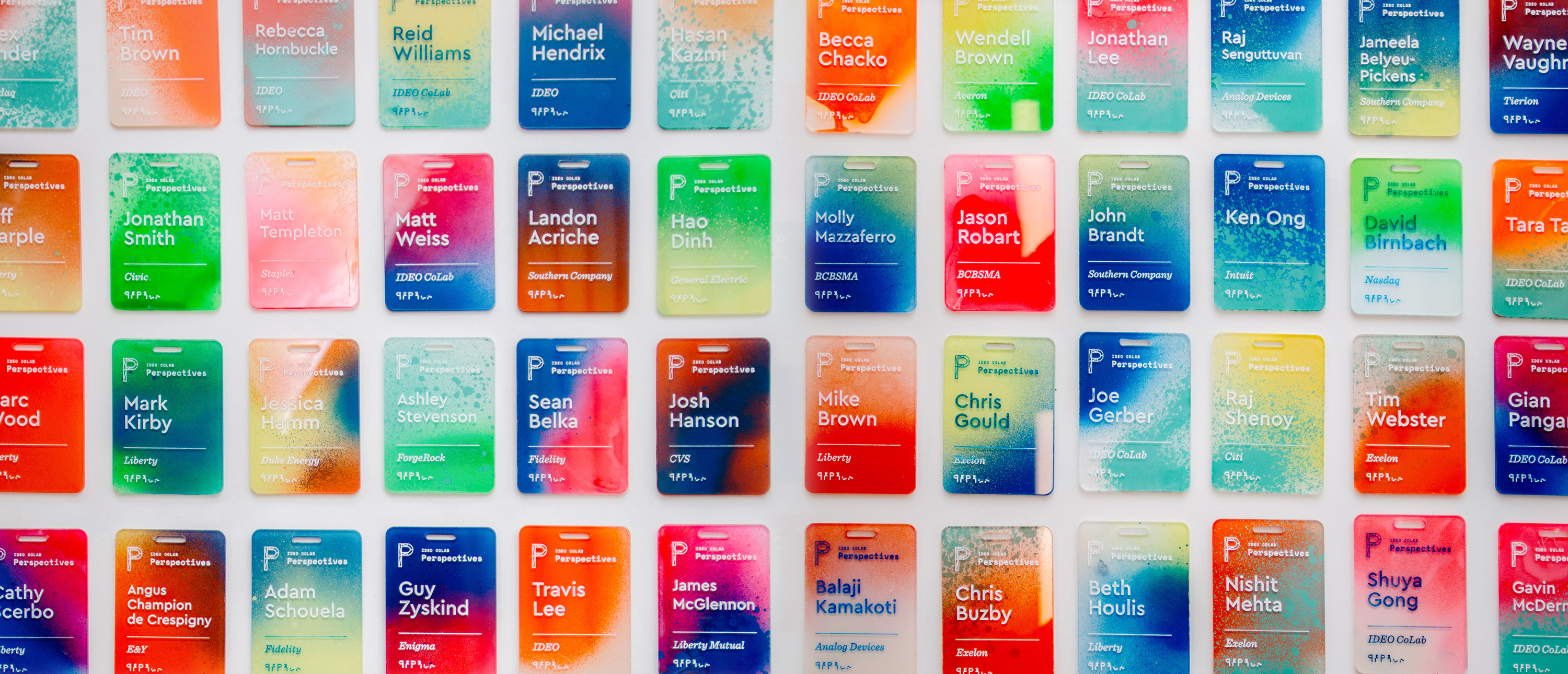
So, when the opportunity comes up, I like to turn off the computer and focus on creating artifacts. While an object is just a thing that serves its purpose until it’s tossed out, an artifact sparks an invisible conversation, a connection between the human who made it and the human experiencing it. Even something that people don’t think twice about, like an event name tag, deserves to be well designed.
That belief drove me to create a collection of one-of-a-kind name tags for a CoLab event. I wanted to make something with my hands that would bring a level of craft to our content. The tags served as the icebreaker for more than a few conversations, and reminded people at the tech-focused event that there's a human element to everything. Many attendees we reached out to a month later said that they still had the tag on their desks.
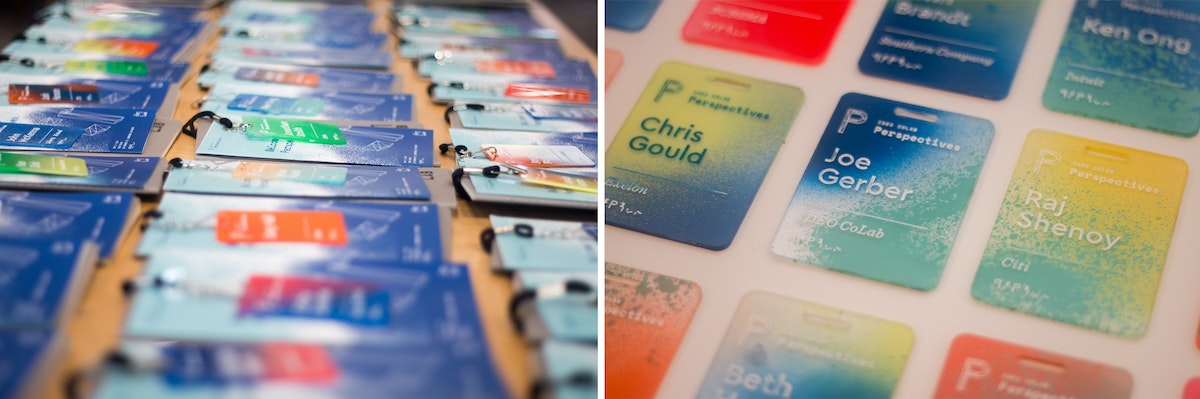
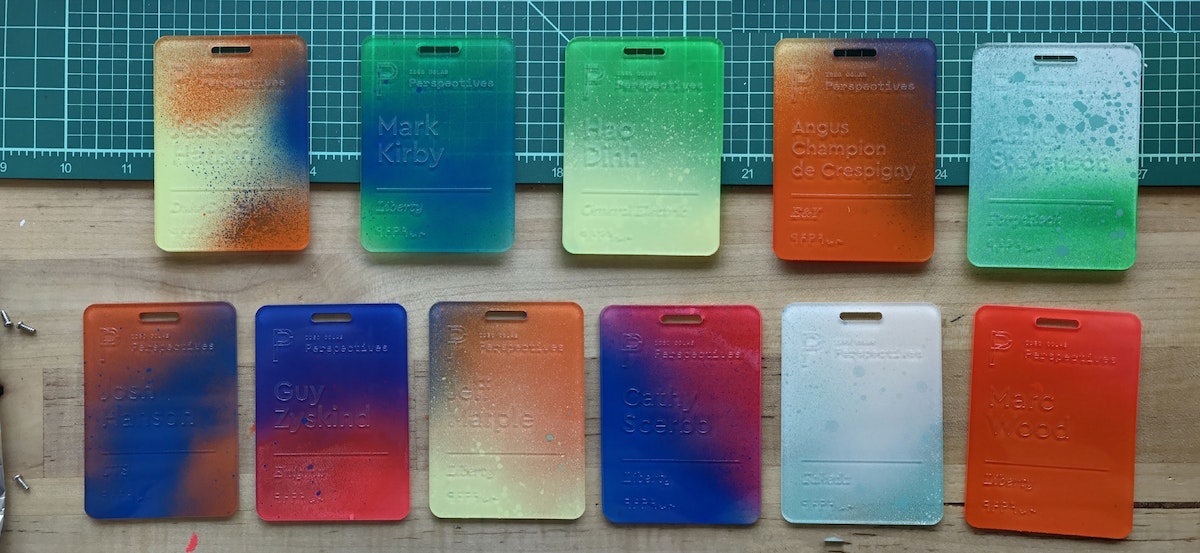
The process was simple, but arduous: I laser cut blanks, etched the names, spray painted each tag using unique colors and angles, and finished it off with acrylic screen printing ink to make the names readable.
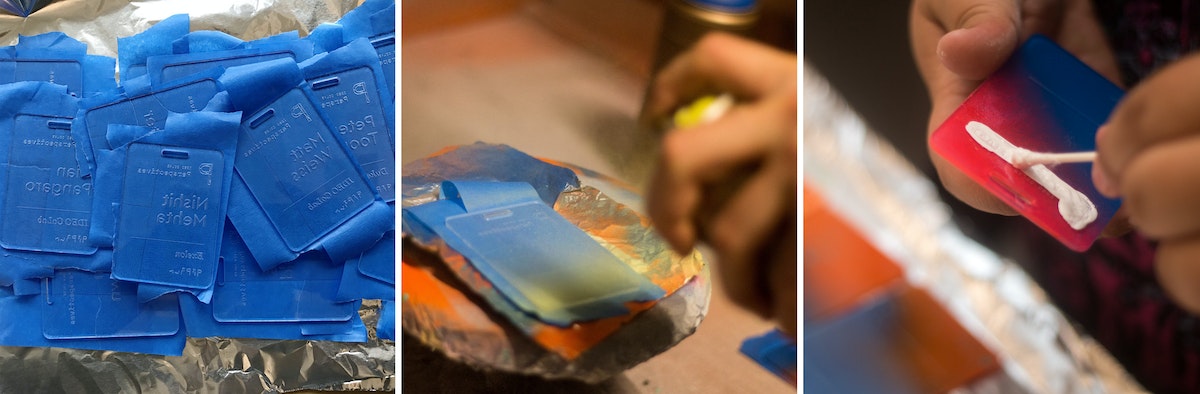
Here's how I did it, step by step:
1. Creating the blanks
I designed the negative of the template so that I could later use it as a jig. I used 18 x 24 inch sheets of 3mm acrylic, so that with the name tags at 2.5 inches x 3.5 inches, I could fit about 32 comfortably in each batch (as opposed to 38 if I used all available space and threw away the negative).
Acrylic sheets tend to melt and then cool quickly in the laser cutter, leading to possible sticking, so I usually add about .2mm to my thickness settings to compensate (i.e. I was using 3mm acrylic, but put 3.2mm in the settings). There are two benefits: One, you guarantee that you actually cut through the sheet. Two, it also gives you a little bit of wiggle room so you don’t end up with hard to pick out joints.
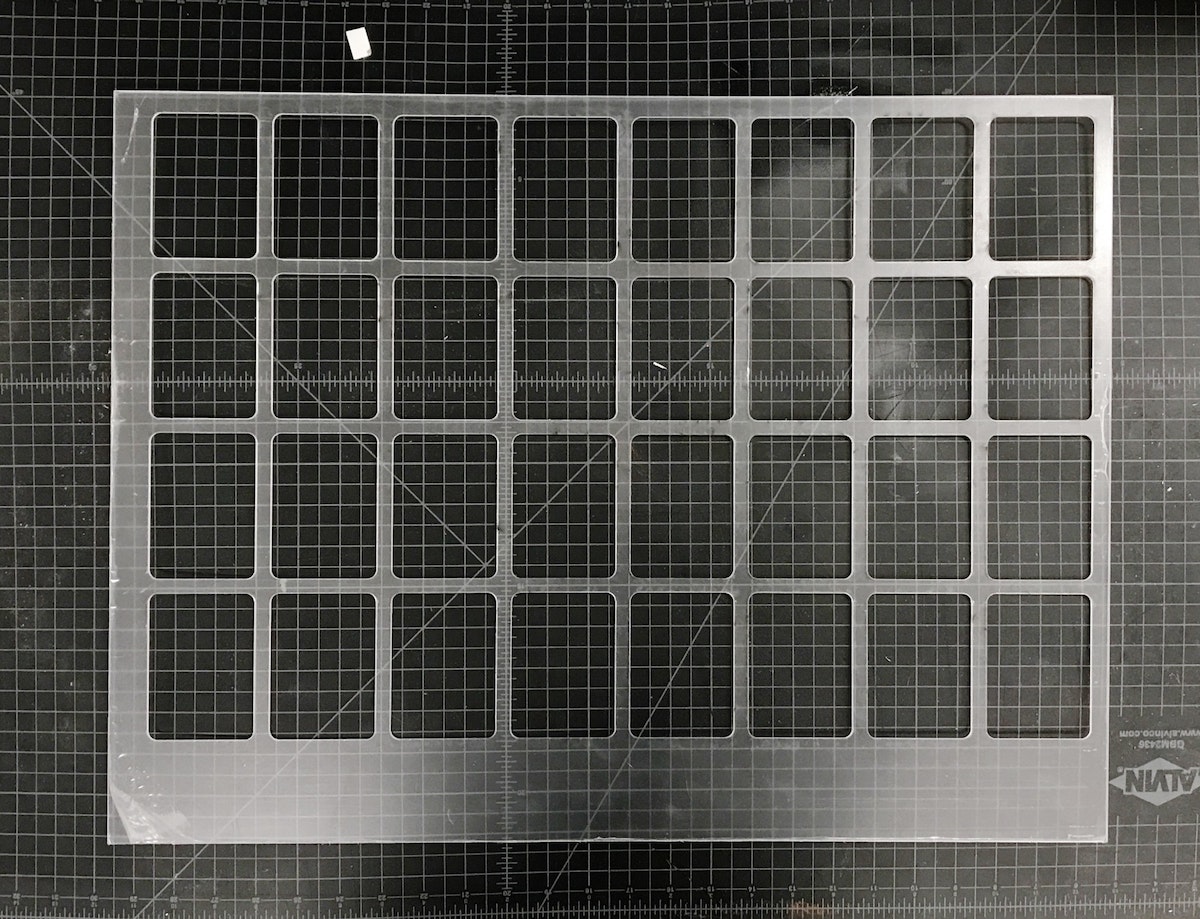
Pro tip: The key to making the most of your acrylic is to leave space for future cuts on the same piece. Instead of designing my reusable jig with all the name tags in the center, I threw them to one side so that I could use the other end again. After I cut the jig, I could get 38 tags out of each subsequent batch because I could simply throw away the negative. Another bonus: When there’s excess acrylic on one end, you can always tell which side goes in which direction.
2. Etching the blanks
Once the blanks were cut, I needed to take the protective plastic off of one side, so that I had a clean surface to etch onto. I peeled the tags, slipped my template jig back into the cutter, and dropped the blanks into place.
The etch file is the same as the template jig, just with a red cut box around the perimeter of the file denoting the edge of the acrylic.
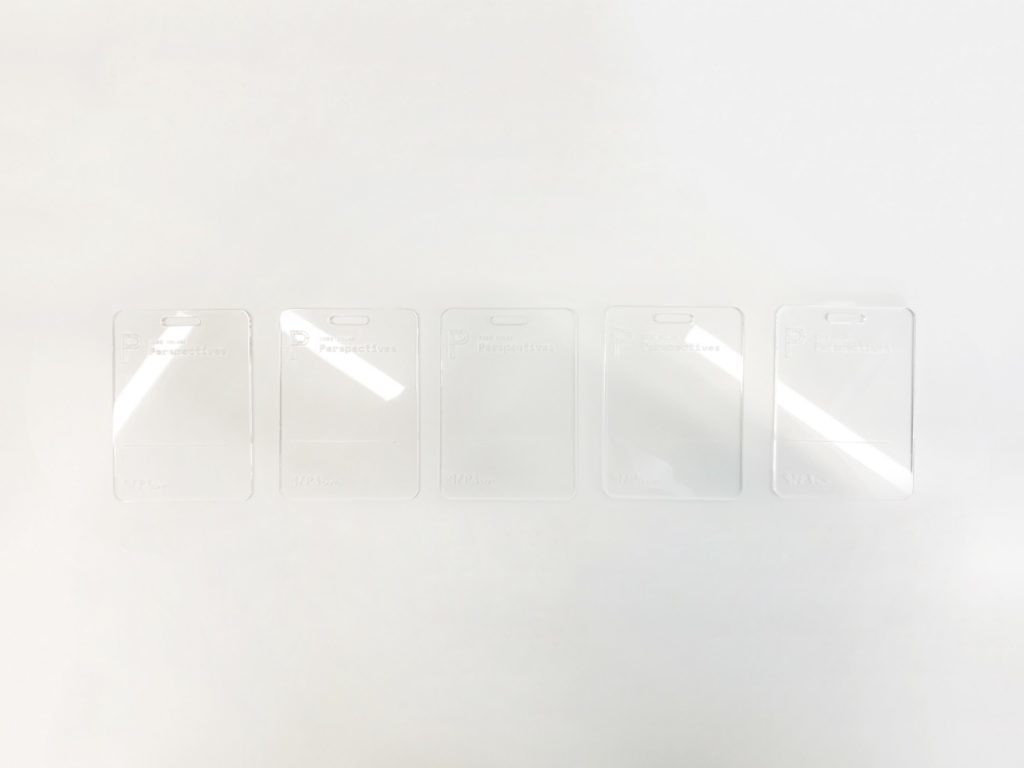
Once I had an etch file ready to go, all I had to do was push the file to the top left of the cutting area and check the focus points of the laser on the first tags on the first and second rows. Since the etch file is in the same grid form as the old cut file, everything is already spaced for me. The etch settings held ink best at around 74 to 76 percent power at 100 percent speed.
One final thing to note: We don’t want to cut anything (we’re just etching), so after setting my etch power, I set the cutting lines to 0 percent power and 100 percent speed, so we just blow right past them.
3. Taping the etched tags*
Once the blanks were etched, I peeled the plastic off of the back of the tags, then covered the etched side of each in painters tape to keep them clean.
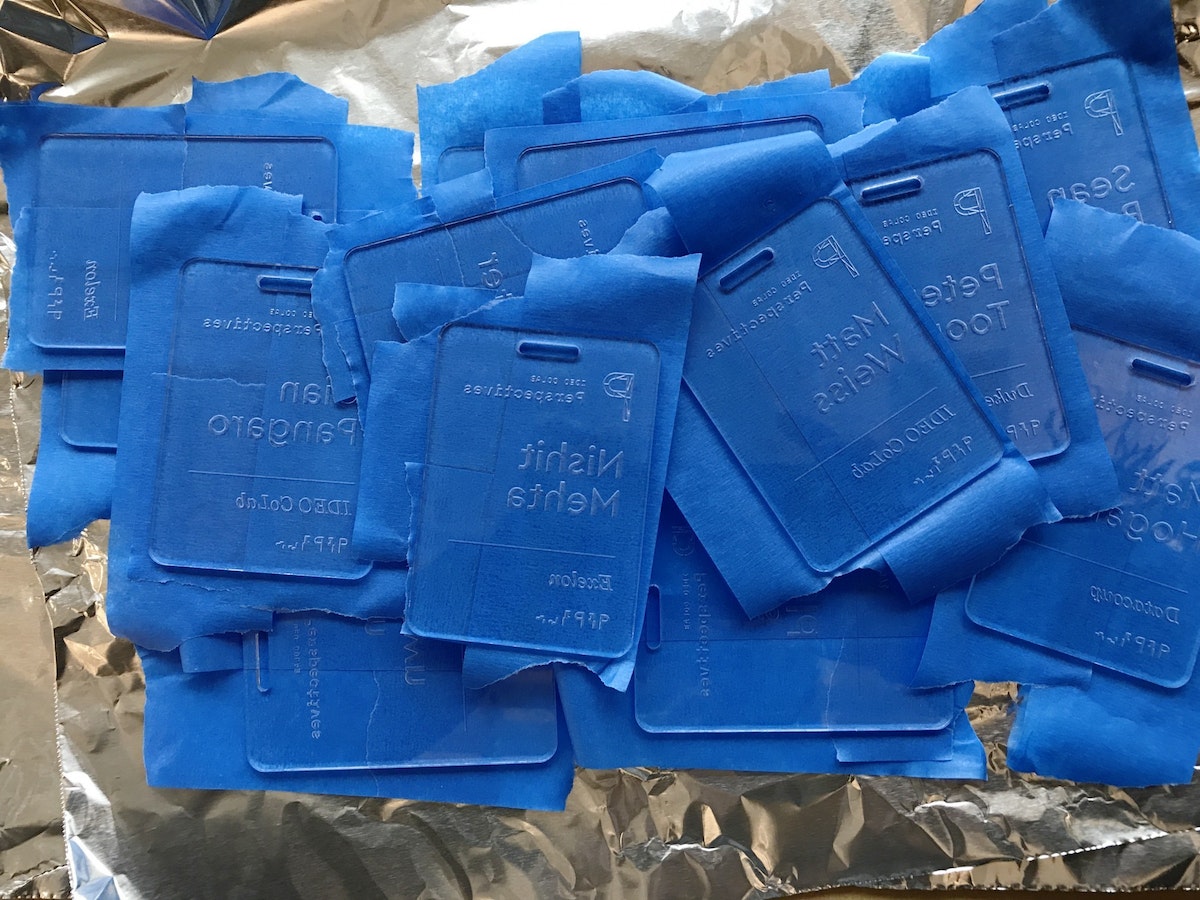
4. Spraying the tags
After everything was taped, I slapped some aluminum foil in the vent hood and got to work spraying each tag. The process allowed me to bring out some of the old airbrush tricks my dad showed me as a kid, like holding a tongue depressor at a 60 degree angle in front of the nozzle to create thicker splatter. I used two to three colors for each tag, at varying angles.
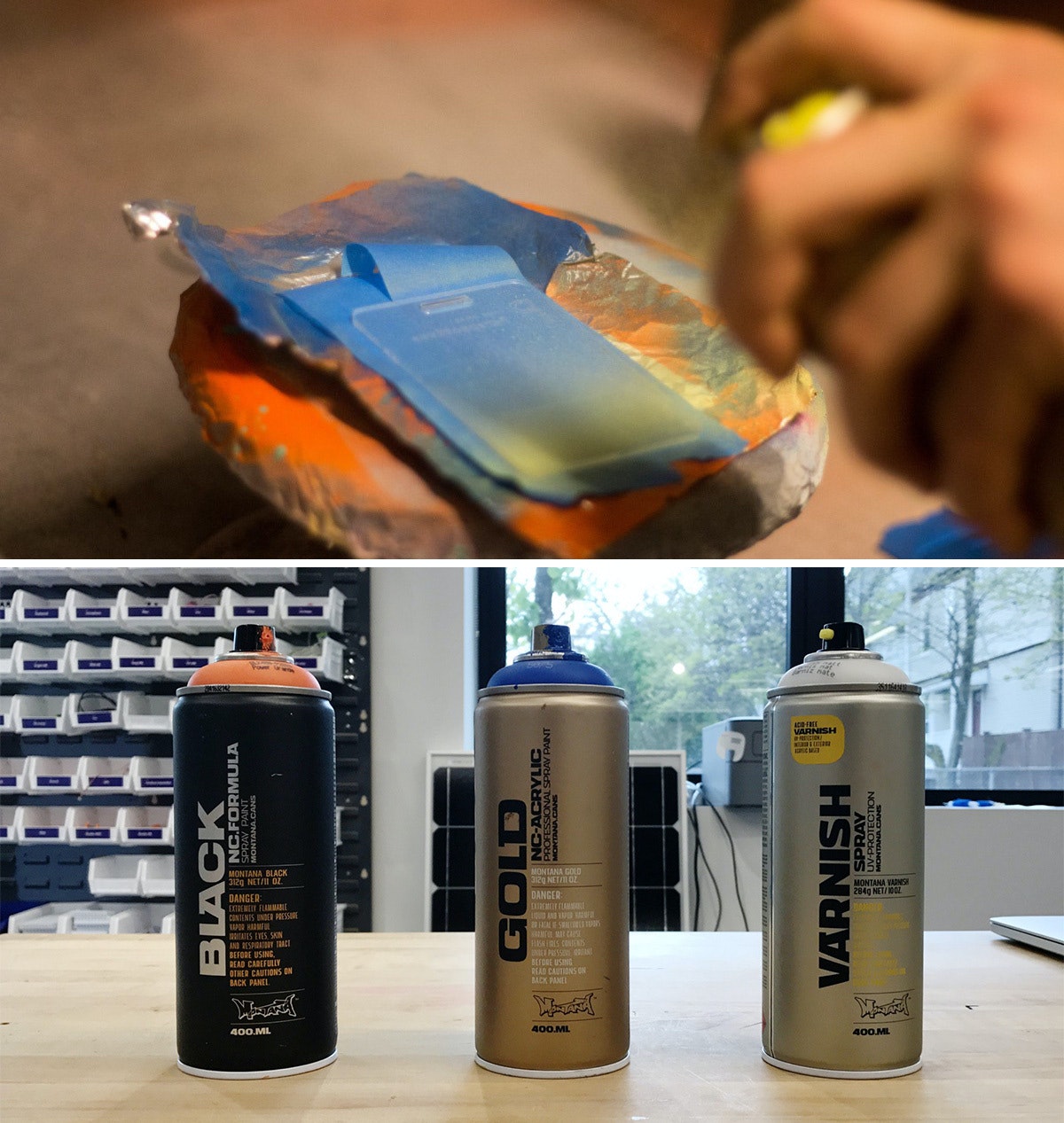
I used Montana brand spray paints, and I definitely recommend using the BLACK formula. Over the course of the project, it dried on the acrylic within four and-a-half minutes, which is pretty insane. The GOLD formula was comparable, but my run of the mill Krylon paints took much longer, so it’s worth the extra bucks to buy Montana.
Pro tip: If you’re spraying a bunch of parts in a hood, aluminum foil is actually a great material for coverage as it tends to not stick to your parts like paper.
5. Sealing the tags and revealing the beauty
After the sprayed tags had dried, I hit the painted side with a couple quick coats of the Montana clear matte varnish so that they wouldn’t stick to each other. When everything had dried, I peeled off the painter’s tape—my favorite part of the project.
6. Applying the ink inlay
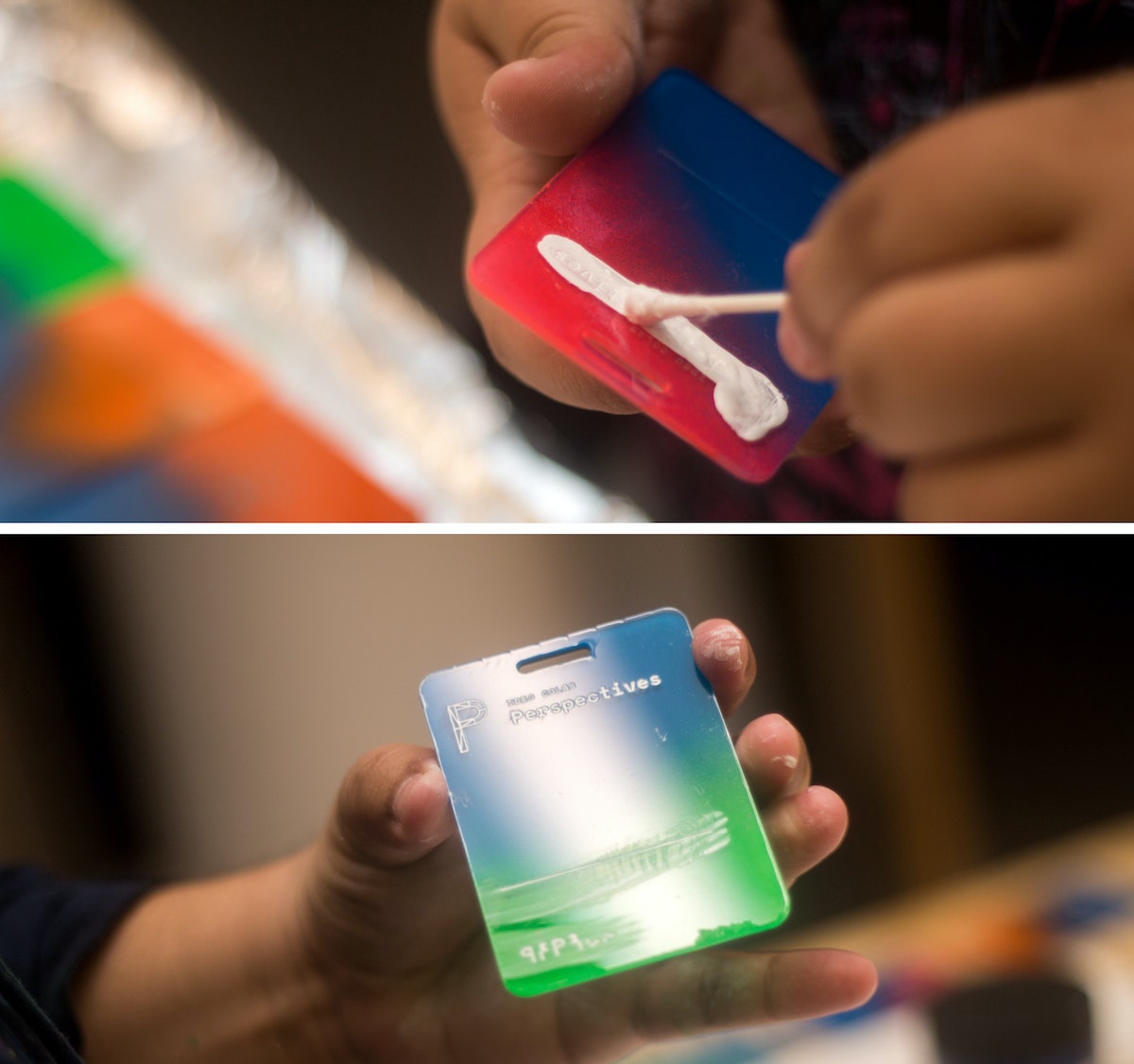
Next came the most time-consuming part: the ink inlay. I used speedball acrylic screen printing ink for its fast drying time, and how easily it wipes off acrylic. I liberally brushed and swabbed the ink into the etch using a Q-tip, then quickly wiped the excess off with a paper towel. Once dry, they were ready to go.
That's it!
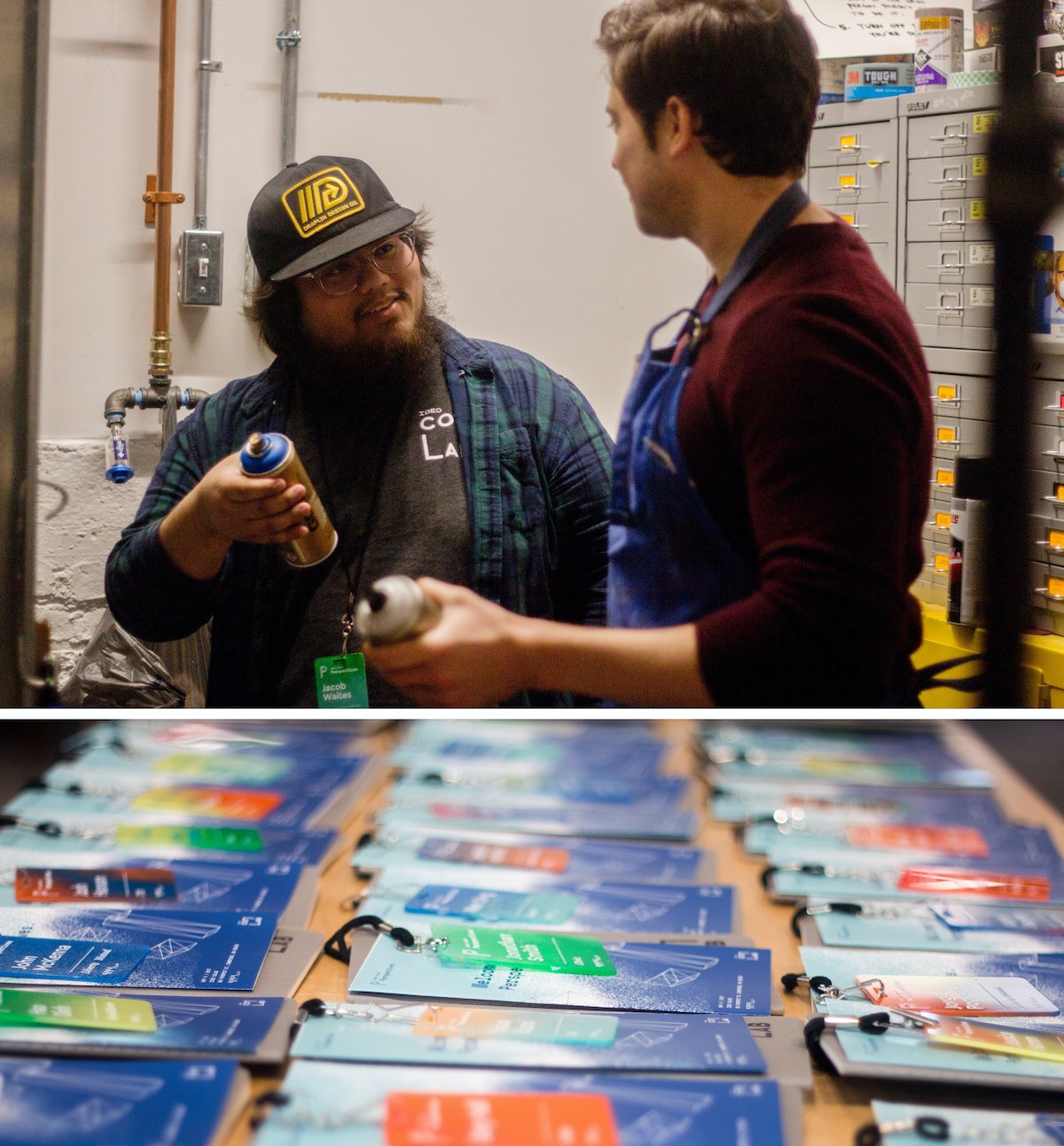
*Imperfect process: I know what you’re thinking—why didn’t you just remove one side of the plastic before etching, spray that side, then remove it from the other side, then etch that? I did! After a few batches, I added the taping step because I noticed the spray paint was eating away the plastic coating that kept the paint off the front of the tags.
I work with CoLab, IDEO’s tech-focused R&D group. I’m also someone who’s committed most of my life to craft. Luckily, my day job allows me to bring the two together. But the minute you start making a living from your craft, problems start to surface. You get burnt out. You compromise your vision to deliver things on time. At that point, you're no longer transforming objects—you’re just pushing matter around.

Lindsey Turner
I’m passionate about building brands, products, and experiences that help organizations show up with meaning and momentum.
I help organizations cut through complexity by shaping how they show up, through brand strategy, identity, and storytelling.
Working at the intersection of brand and business, I bring an editorial eye and a bias toward making—turning ideas into tangible experiences that people can understand, trust, and believe in.
My work spans government, healthcare, financial services, media, and consumer goods, from launching Gen Z-focused ventures to building innovation labs and reimagining legacy brands. I relish moments of ambiguity and enjoy translating across teams, perspectives, and priorities to move ideas forward.
I started my career in editorial and digital design, shaping cross-platform experiences and identity systems in publishing and agency environments. That foundation still shapes how I work today: I’m detail-oriented, collaborative, and overreliant on the Oxford comma. I hold a BFA in Visual Communication from the School of the Art Institute of Chicago.

Rachel Young
My work helps organizations see who their products aren't working for—and build the will and the tools to do something about it
For 25 years, I've asked the same question: Who does this design exclude—and what are we going to do about it?
My work spans human-centered strategy, inclusive design, and qualitative research, with clients ranging from Microsoft, Google, and Verizon to the National Science Foundation, and San Francisco Unified School District.
Before IDEO, I taught elementary school in East Palo Alto and spent a decade doing design work with social service organizations—where I learned firsthand what it costs people when systems are built without them in mind.
I am currently writing User Error, a nonfiction book about digital access and the design decisions behind it. I live in Oakland, California.

Brian Pelsoh
I lead with craft, ensuring our work is creatively excellent: rooted in deep human insight and imagination, while also grounded in the realities of business and technology.
My expertise spans brand, communication, and product design across tech, education, the arts, and social impact.
I believe great work demands both high-level vision and obsessive attention to detail, and only happens through collaboration.
I bring an inclusive, hands-on approach and a deep understanding of business, which enables me to consistently deliver excellence while always asking why.
Before joining IDEO, I worked at the brand firms Pentagram and VSA Partners. I began my career as a designer, leading teams at the School of the Art Institute of Chicago and the Milwaukee Art Museum. I hold an MFA in graphic design from Maryland Institute College of Art and a BFA in communication design from the Milwaukee Institute of Art & Design, and have taught at some of the best design schools in the US.

Tony Wong
I am responsible for IDEO’s long-term success in China and working with clients to use design as a tool to enable growth.
I am responsible for IDEO’s long-term success in China and working with clients to use design as a tool to enable growth. Specifically, I have helped Chinese companies design holistic brand solutions through the development of their products, communication, services, and innovation teams, and I have helped multinationals expand their presence and influence in China.
I advise global leaders on developing China-led innovation and capabilities.
In over 15 years in IDEO Shanghai, I have worked on projects that use design to elevate the quality of the experience of healthcare products and services, streamline processes that increase productivity, create spaces and programs that promote and enable inclusive communities, and build next generation mobility solutions that are planet-positive.
Before joining IDEO, I worked at Philips Electronics and the Electrolux Group in Italy, the Netherlands, and Singapore on a number of breakthrough commercial products. I am a member of the Young President Organization in Shanghai.

How to use AI as an editor, not a writer
Ed White shares how he uses AI as an editor—not a writer—to sharpen storytelling, rehearse ideas, and preserve the productive friction that makes creative work better.
Ed White has a rule he's tested on his own writing: hold yourself as the writer, and let AI be your editor. Ed is a Senior Design Director at IDEO's London studio, where he co-leads the firm's AI portfolio across Europe. Before IDEO, he spent 12 years as a writer and editor at the Financial Times, Wired, and Contagious. So when he talks about when to use AI for storytelling and when not to, it comes from two decades of crafting his storytelling skills.
In this episode, Mina Seetharaman talks with Ed about two specific tools he uses to keep AI in an editor's seat: a "roasting agent" prompted to critique his drafts without any sugarcoating, and a simulated audience he rehearses pitches on before the real thing. They also get into what Ed is hearing from design leaders at Anthropic, Lovable, Shopify, and Google Creative Lab about how creative work is changing, and why he thinks the friction of writing something yourself is worth protecting rather than automating away.

Building a personal AI for the messiness of life: Sida Li
Becca Carroll talks with Cue co-founder Sida Li about designing a personal AI for the messiness of everyday life—not just work. They explore how Sida stays anchored to human needs while navigating fast-changing technology, product tradeoffs, business-model experimentation, and the realities of building an AI company today.
Most AI products today are built for work—a space with clear problems and established systems. One founder noticed a gap: personal life is messier, harder to systematize, and mostly left behind by the AI boom. So she built Cue, a personal AI that lives inside iMessage and group chats, to go where the other tools haven't.
In this episode, Becca Carroll, IDEO's Chief Strategy Officer, talks with Sida Li, co-founder and CEO of Shared Context Lab, about staying anchored to a human need while the technology around her keeps changing shape, why she treats her business model with the same rigor she'd bring to a product, and what it feels like to build a company at this particular, disorienting moment in AI.
The conversation also gets into how Sida makes design decisions: the language Cue uses to describe itself, the tradeoffs behind building inside iMessage instead of a new app, and a real story about a business idea that didn’t pan out.
This is the second in a two-part series profiling founders from IDEO's Startups-in-Residence program. The first conversation is with Johannes Seemann, founder of Sooner, on designing GenAI for the emotional side of money.

Designing GenAI for the emotional side of money: Johannes Seemann
Designing financial tools around the feelings that shape money decisions.
Most personal financial tools are built to run the numbers and optimize towards a budget. While that works for some, most people experience money as a lived relationship that does not neatly fit into a spreadsheet. Johannes Seemann and Becca Carroll discuss why money is emotional before it is mathematical, and what a human-centered approach to building a generative AI financial product looks like in practice.

The curious leader's edge in uncertainty: Scott Shigeoka
How genuine curiosity helps leaders navigate uncertainty with greater confidence.
Mina Seetharaman talks with Scott Shigeoka, author of Seek and Head of Curiosity Cultivation at the Eames Institute, about what distinguishes genuinely curious leadership from performative curiosity, how power dynamics shape curiosity, and why practicing curiosity can restore energy rather than drain it.
Looks like you might be in search of something very specific?
Or reset the filters above and try another angle.
Here’s some random inspiration

Podcasts about creative leadership

Articles about the power of prototyping
