
.svg)




Building a brand for a new, more nutritious rice
RightRice makes one of the world’s favorite foods healthier and easier to prep.
When it comes to food, we often have to choose between health, convenience, and taste. Parents struggle to get their kids to eat veggies. The same daily salad can become boring or bland over time. Produce often withers in the crisper drawer.
Betterer Foods set out to make one of the world's favorite foods healthier. Rice is a beloved food across many cultures, but many people now avoid simple carbohydrates due to diet restrictions or health concerns. Innovations and alternative options have mostly been limited to products in the freezer section, like riced cauliflower.
Betterer Foods created RightRice: a dry, shelf-stable grain made from rice and vegetables, including lentils, chickpeas, and green peas. RightRice has more than double the protein, five times the fiber, and 40 percent fewer net carbs than traditional rice. But the product still tastes and looks like rice, and is faster and easier to cook.

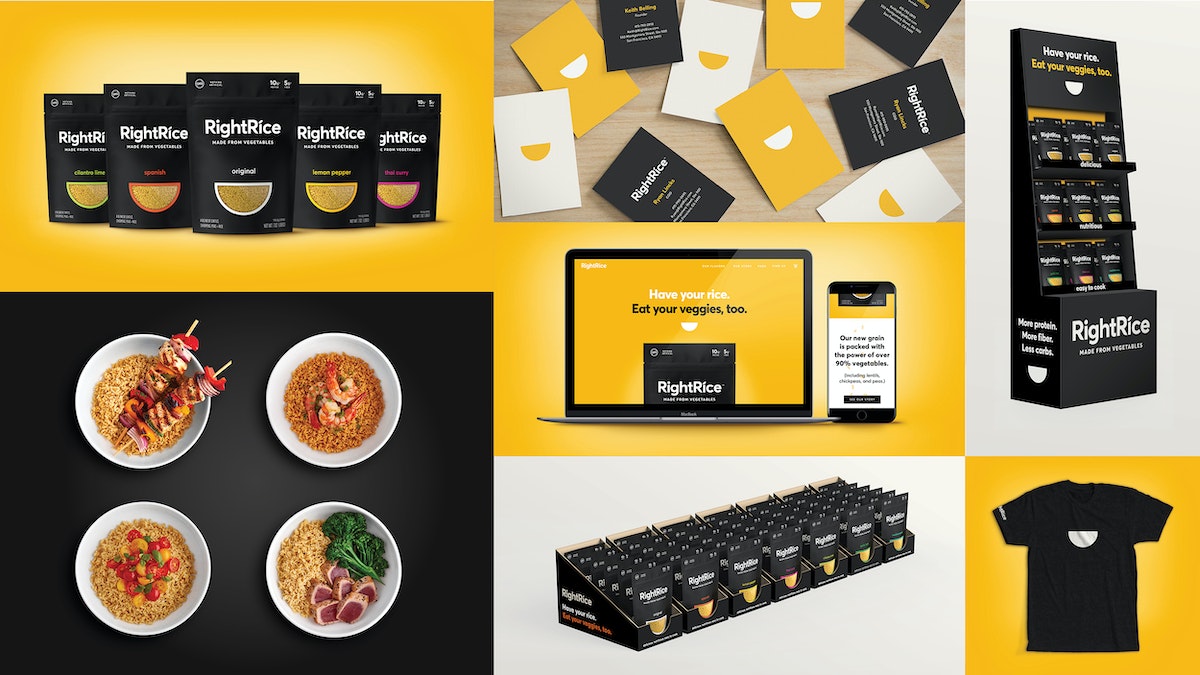
RightRice founder Keith Belling, the founder and former CEO of popchips, asked IDEO to design a brand that would communicate the product’s benefits. The start-up needed everything from a defined target consumer and brand story to a stand-out package design, website, and go-to-market materials.
The team listened to people's challenges with rice and eating healthfully: home cooks find it difficult to store fresh foods without them going bad, busy professionals are strapped for time when preparing balanced meals, and parents sneak vegetables into dishes like casseroles or mac and cheese. Some consumers say they avoid rice because it’s a carbohydrate, which is forbidden in so many of today’s diets. People describe themselves as “carb phobic” or say they consider rice a “guilty pleasure.” Others don’t eat rice because it makes them feel sluggish or bloated, or is too difficult or time-consuming to prepare. Overall, people wished rice could be healthier, simpler to cook, and still taste delicious.
IDEO translated these insights into a brand foundation that helped RightRice come to life on shelves, online, and in the world. The package messaging emphasizes the vegetable ingredients, and the cut-out window lets consumers see that the product looks like rice. The shape of the window simultaneously forms a bowl of rice and a smile.
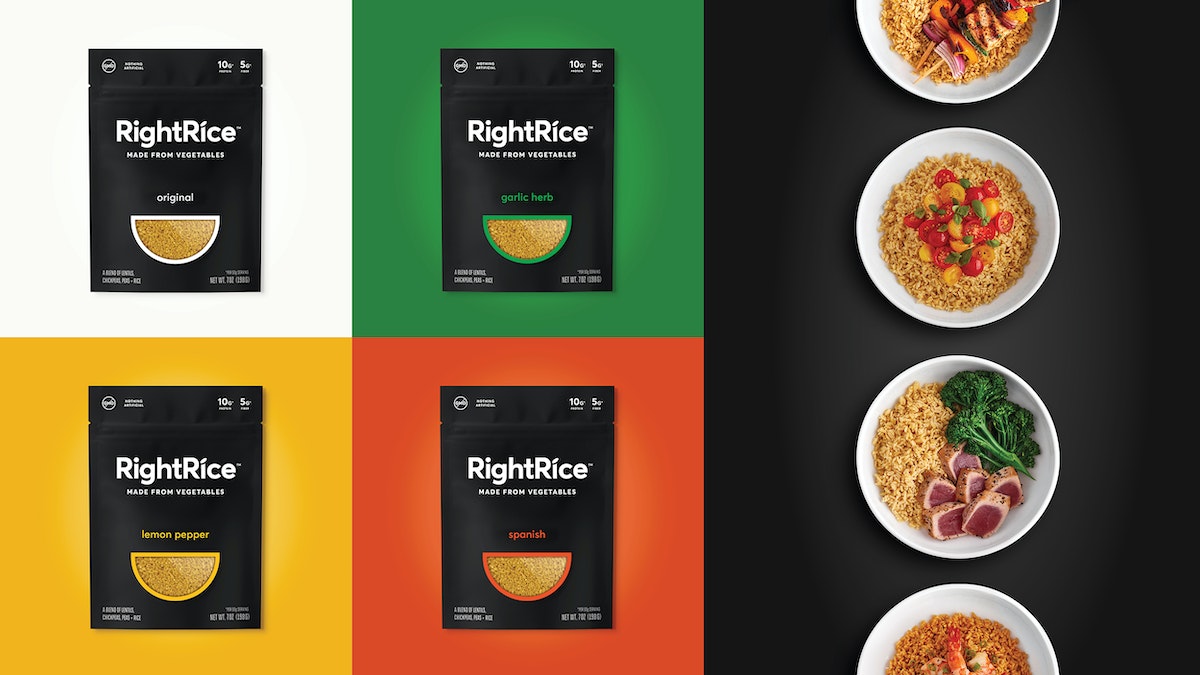
Rice is a household staple around the world. The RightRice brand makes it easier for consumers to have health, convenience, and good taste in one accessible product. RightRice launched nationwide in Whole Foods and Amazon in February 2019.
Since this launch, the company has expanded both its reach and product line. RightRice is now available in nearly 5,000 retailers nationwide in addition to Whole Foods and Amazon, including Sprouts, Wegmans, and approximately 1,800 Kroger stores. Over one million bags have been sold.
The company has received numerous awards and acclaim, including being named “Best Plant-Based” by People’s 2019 Food Awards. Building on the success of RightRice, Belling and his team launched RightRice Medley, a blend of RightRice, ancient grains, and vegetables, in 2020. This new product, which features the same branding the company created with IDEO, has doubled the company’s shelf presence at Whole Foods.
How creative leadership can transform companies and society
Joining hands with PBC School of Finance, Tsinghua University, and Tsinghua Academy of Fine Arts to create the first innovative leadership course with design thinking as the core in China.
After 40 years of rapid development, China's economic growth has reached a critical turning point.
However, looking at the world, today is also the most complex and uncertain era in human history. The traditional engine of economic development is slowing down, while innovation and other emerging ideas are helping the economy burst into dynamism. To ride this trend, China has already put in place comprehensive policies to ensure that the country can achieve this magnificent transformation—not only to maintain economic growth, but also to achieve high-quality development. To this end, what China needs most is a group of new business leaders with a sense of cooperation and innovation to lead and realize this change as a pioneering force.
People of insight can often see the situation clearly with a forward-looking eye. China's society and economy are undergoing transformation and upgrading, and market demands are constantly changing driven by technology. While seeking business development, many mature entrepreneurs with successful experience have realized that they need to explore some of the most essential issues inwardly, including: The original intention and mission of the enterprise and the role that enterprise leaders should play. However, without a systematic approach, transformation and upgrading, strategic decision-making, management mode and cultural construction cannot truly serve the enterprise
As a top institution of higher learning in China, Tsinghua University has always placed an important strategic position on cultivating innovative talents for China. IDEO is the world's leading design and innovation consulting firm. As a pioneer of design thinking, IDEO has always been committed to applying design and innovation capabilities to solve the world's most complex problems. After discovering the need for China's economic and social transformation and the need for innovative leadership by Chinese entrepreneurs, Tsinghua University and IDEO jointly launched the "Leading China" program in 2018. This program is aimed at senior management of Chinese enterprises, and aims to train entrepreneur trainees to use new perspectives and ideas through a one-year innovative leadership course to seek solutions for the systemic changes that need to be achieved in the process of social transformation in China.
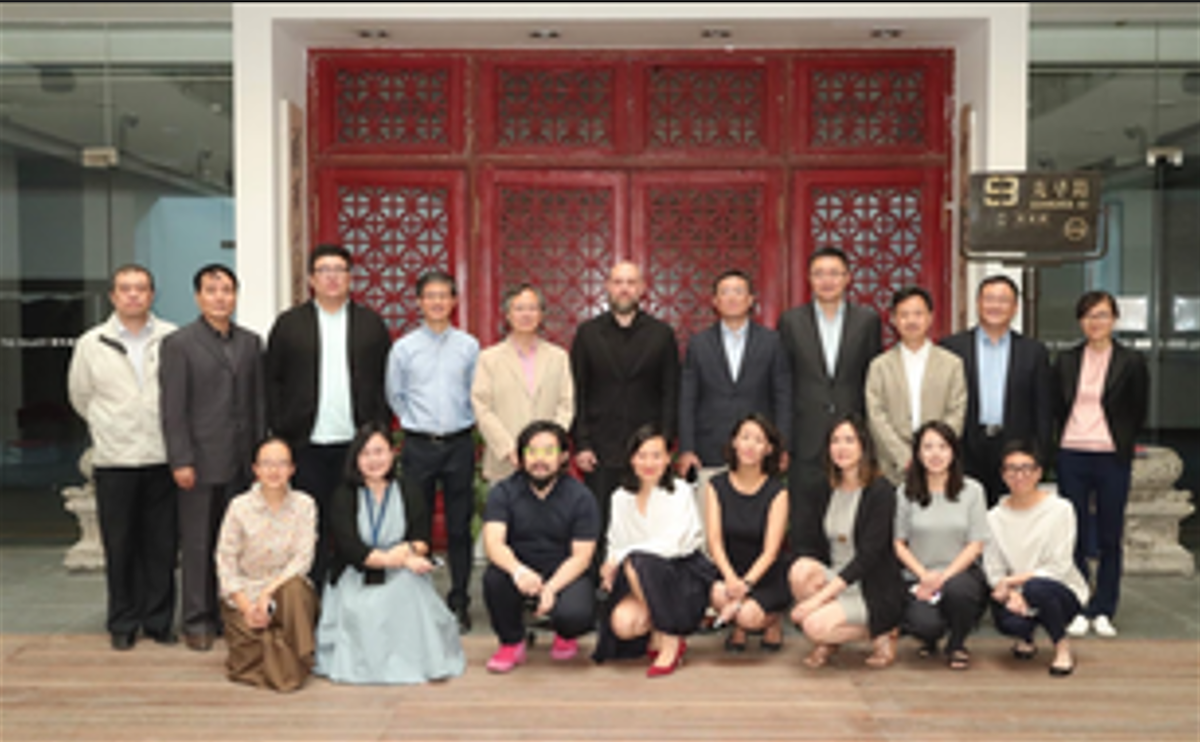
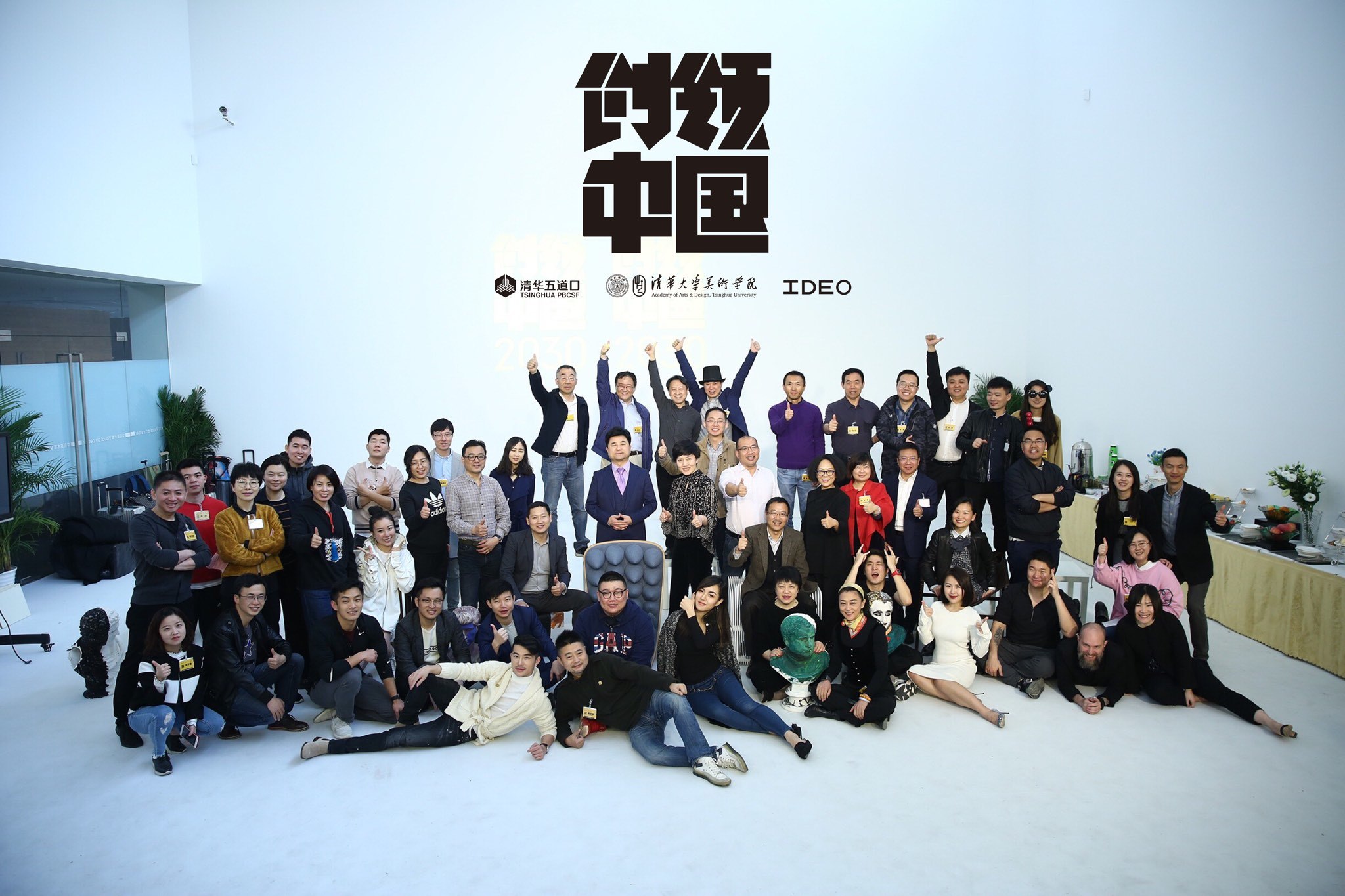
The students of the first "Leading China" program came from more than 30 entrepreneurs from 20 different industries. The teachers who participated in the lecture included 73 Chinese and foreign experts including Shan Jixiang, the former dean of the Forbidden City, Masahiro Kuroyama, the father of Japanese industrial design, and Jake Knapp, the inventor of "Design Sprint". As China's first innovative leadership course with design thinking as the core, the project is equipped with "design to open enterprise creativity", "reshape enterprise competitive advantage", "forge innovative business system", "innovate with the help of finance", "embracing Industrial Revolution 4.0" and "Win-win China Created 2030" six modules. The trainees traveled to nine cities in one year, and completed the courses in the interactive teaching of inspiration and the exchange and sharing of practical experience. Many students said that the course not only helped them find the direction and path of enterprise reform, but also improved their way of thinking, strategic planning and leadership models.
Liu Feng, the founder of Top Intelligence, gave an example of the inspiration brought by the six pillars of "vision-led" enterprise reform. Through "vision leadership", he not only sorted out the original intention and values of the company, but also launched a series of measures based on this starting point, which improved the company's various aspects from the telephone customer service process to the organization of the annual meeting, and mobilized the enthusiasm of employees. This greatly improves the company's efficiency and flexibility. Ting Zhihong, chairman of Hongtu Logistics Co., for example, said that the biggest change brought by the course is her awareness of the importance of empowering the team. The company has now built many platforms to give employees more room to play, to create markets, to put decision-making on the front line, and to let employees play the role of company operators. Her company doubled its profits in 2018. Hu Chao, founder and CEO of Leyou Pregnancy and Baby, introduced that what most executive courses learn is knowledge, and what this course learns is people-oriented values and ways of thinking.
The students of the first class of "Leading China" graduated in December 2018. Regarding the course of this year, Wang Jingwei, former assistant dean of the PBC School of Finance, Tsinghua University, commented: "Since the project was launched, we have not only witnessed the true value of design in a business context, but also experienced first-hand the use of people-oriented The difference between the designed executive courses is that the entrepreneurs who participated in the courses quickly entered a state of immersive learning, and many students quickly began to practice the methods they learned in the enterprise.”
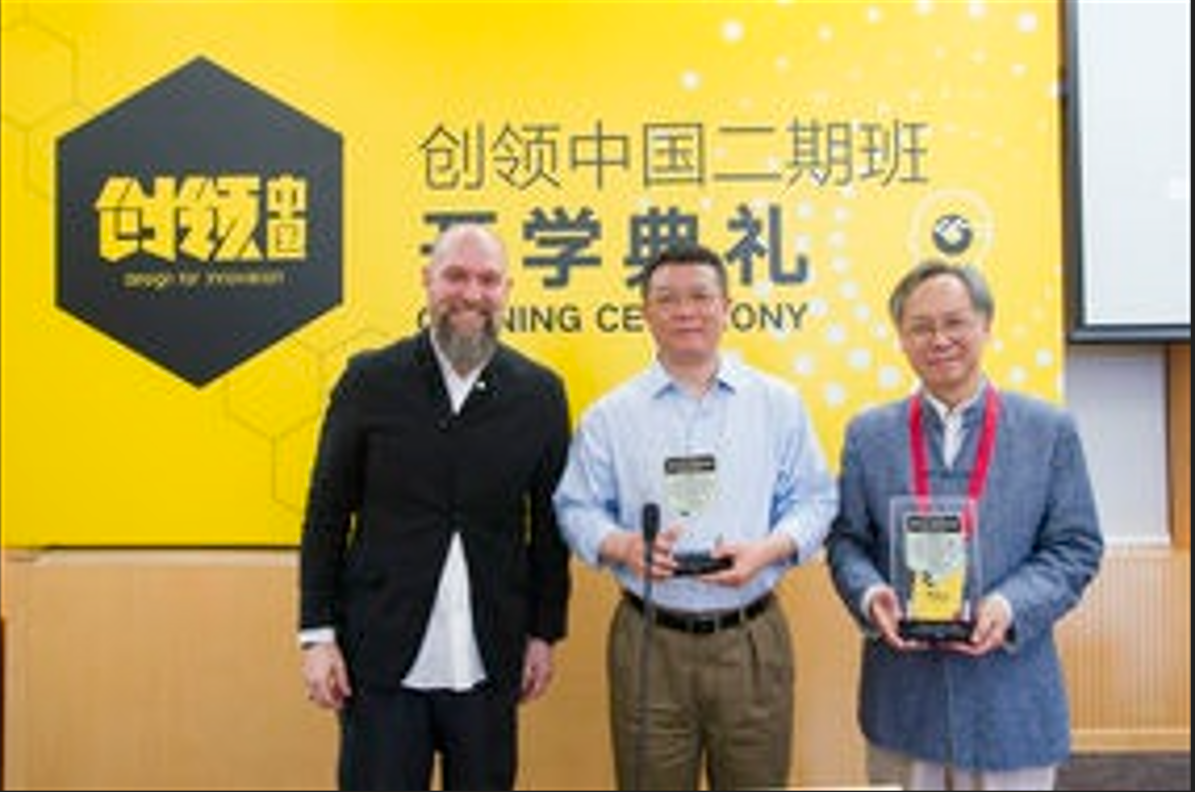
On April 8, 2019, the list of winners of the 3rd "Changing the World Innovation Award" was announced, and the "Leading China" project was shortlisted for case nomination, becoming the only Chinese innovation case in the education category. The "Change the World Innovation Award" was announced by Fast Company, one of the world's three major financial and business media organizations.

Helping a technology brand connect with China’s young consumer
Accelerating vivo's transformation journey from a smartphone manufacturer to a beloved technology brand.
As one of the world’s leading smartphone manufacturers, the Chinese brand vivo is widely known for its exceptional technological innovation and top-of-the-line photography and gaming hardware. But in an increasingly saturated phone market, vivo understood that it wasn’t enough to lead the pack based solely on technological excellence. To win the hearts of young Chinese consumers, they needed to become a beloved brand.
China consumes roughly 30 percent of the world’s smartphones, presenting a tremendous market opportunity to brands who wish to capture young consumers’ loyalty. In order to achieve that, vivo wanted to design a complete brand experience beyond the devices themselves—one that would express the joyful vivo brand spirit through services and retail experiences. One of their first key initiatives was to build its first concept store in an iconic building in Shenzhen, China.
Before building the concept store, vivo approached IDEO to explore what kind of in-store experience would resonate with young Chinese people. The concept store needed to convey joy in a meaningful, tangible way, while also setting the stage for vivo’s future brand systems. With this in mind, IDEO set out to explore how vivo’s young consumers experience fun.
After conducting research in four different cities, IDEO shared the stories of young Chinese consumers back with the vivo team. Their interviews revealed that young people value experiences that enrich their lives and create a feeling of positive personal transformation. They seek opportunities to expose themselves to new experiences, express themselves in different ways, expand and deepen their social connections, and build knowledge and skills.
Through this understanding of how young Chinese define “enjoyment,” IDEO helped vivo identify the value proposition of the concept store as expressing oneself in new and different ways. The store would allow every visitor to see something unique and find a fresh perspective. The vivo team took that value proposition into a design brief and later built out the space and interactive experiences.
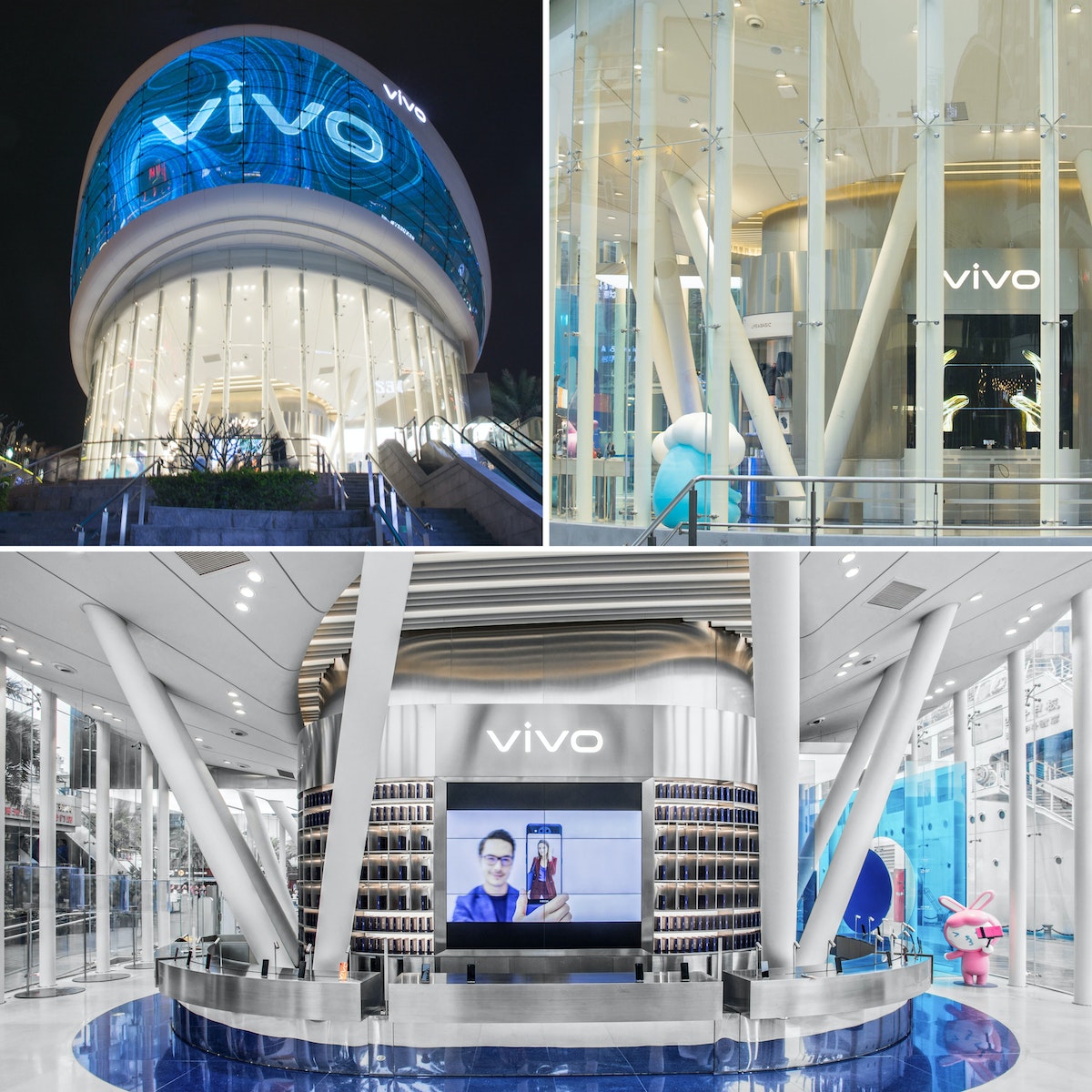
The concept store launched at Shenzhen on March 22, 2019, featuring an upper level dedicated entirely to interactive experiences with photo booths, sound recording, and lighting technology. The engaging, lively and positive atmosphere of the store represents a major milestone in vivo’s transformation from a smartphone maker to a consumer brand.
WATCH: Official launch video provided by vivo.
Equipping agricultural retailers to empower rural farmers in China
How Bayer Crop Science set out to scale its service to Chinese farmers in a highly fragmented market.
As China's agriculture moves towards scale and sustainability, helping farmers grow healthier food with resilience is a matter of national economic security and individual livelihoods.
Bayer Crop Science—with its mission to accelerate China's agricultural modernization and benefit Chinese farmers and consumers—has provided high-quality products for millions of growers in China over 18 years. Yet its service relies heavily on multi-layered distributors and retailers across the country. The last mile of Bayer’s product delivery spreads across tens of thousands of highly fragmented retail stores, making the quality of service difficult to monitor and control.
Together with IDEO, Bayer Crop Science aimed to uncover new ways to engage with local farmers and retailers, and develop design concepts for its diverse set of retailers—establishing local relevance as well as the potential to scale nationwide.
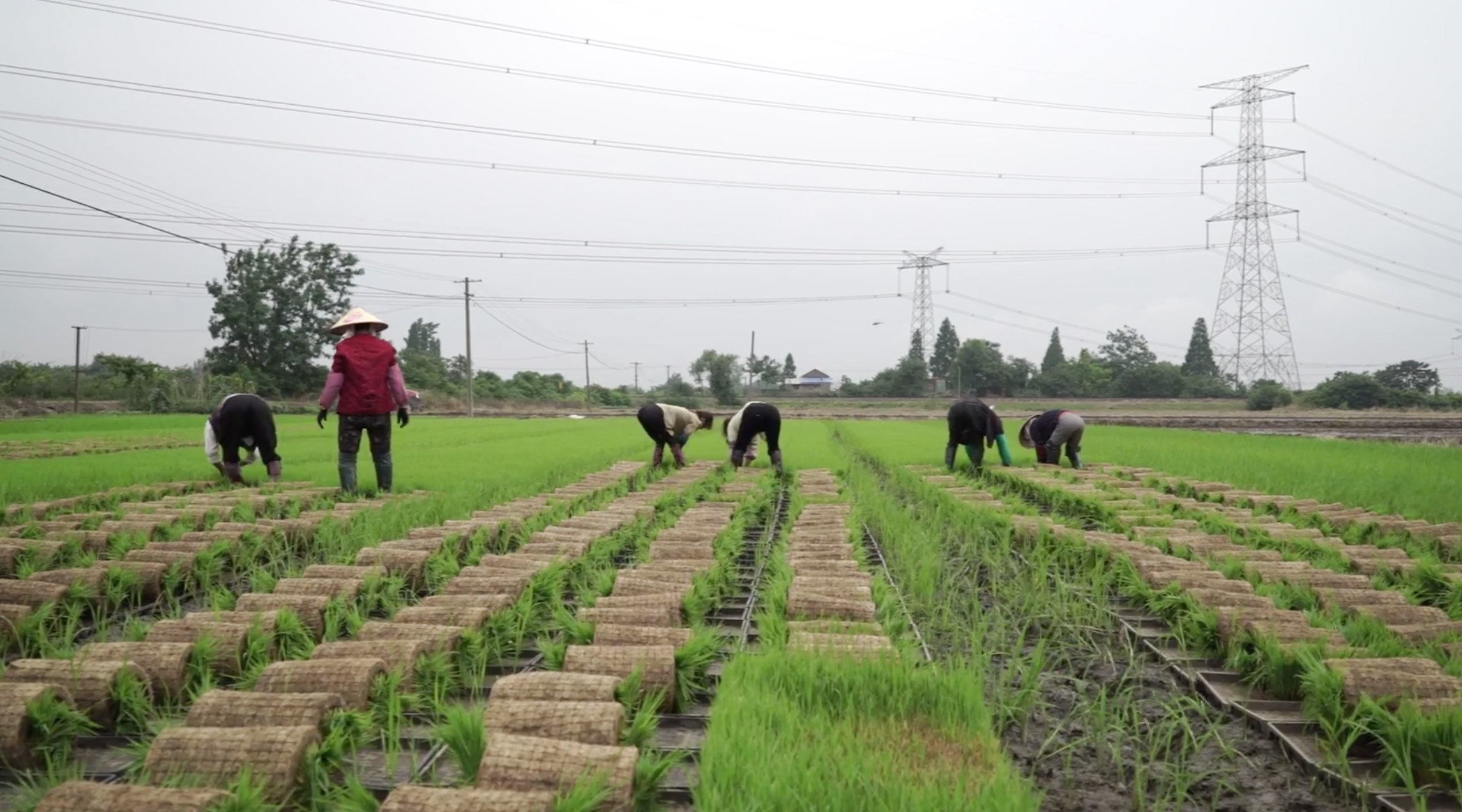
With this ambition in mind, a team formed by Bayer Crop Science and IDEO launched into a design sprint in the rice fields of China’s Anhui province. Field research uncovered multiple challenges facing Bayer Crop Science’s retailers. First, each store needed to serve more than one hundred farmers, many of whom rely solely on the store owner to understand how to use the products. Retailers struggled to meet a high daily demand for direct support in a way that provided a positive customer experience.
In turn, farmers felt they had insufficient access to expert advice. While many farmers shared similar needs, there was no system for aggregating requests or arranging group instruction. Given that many rice farmers are illiterate, pre-printed educational pamphlets had limited impact, and retailers lacked tools for providing targeted support. And because the retail stores were also used for storage, little space remained for educational or community programming.
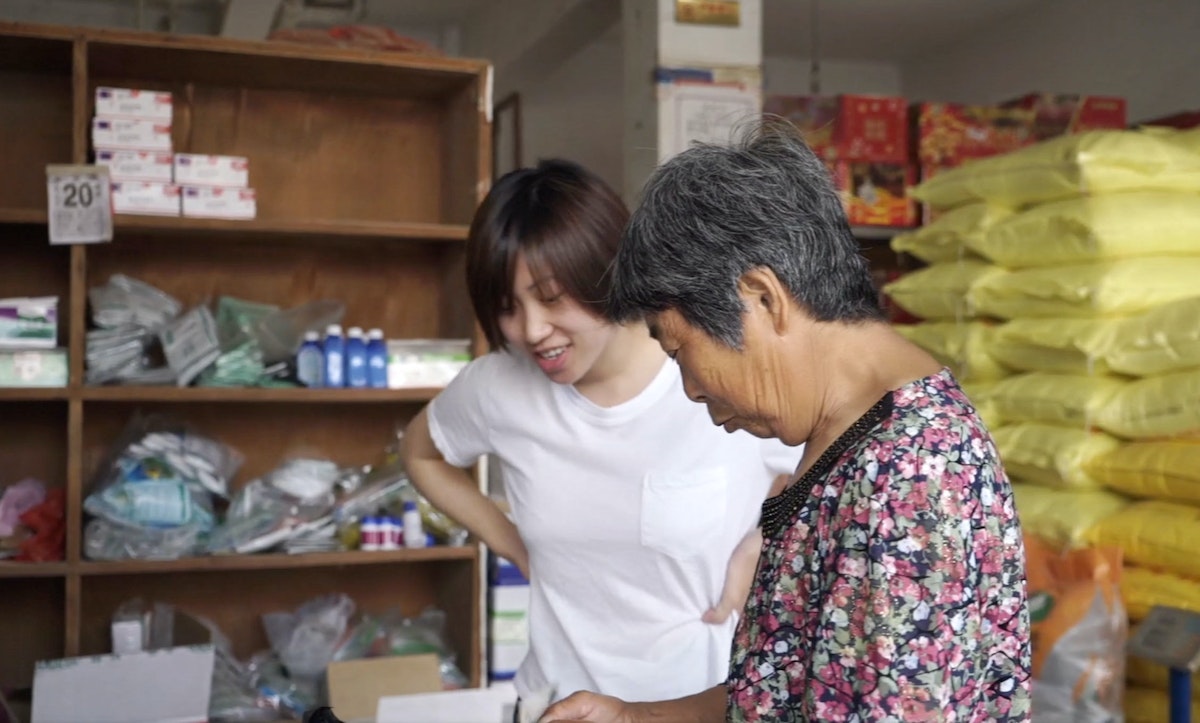
With these constraints in mind, the team needed to come up with ideas and design concepts that could be easily integrated into the daily lives of the retail store owners. The team brainstormed hundreds of concepts and quickly prototyped a select few. One retail store in Dangtu was transformed entirely into a live prototype set. Over three days, more than 50 farmers and retailers came through and provided feedback. From there, the team was able to make daily iterations of the concept, evolving the experience in real-time.
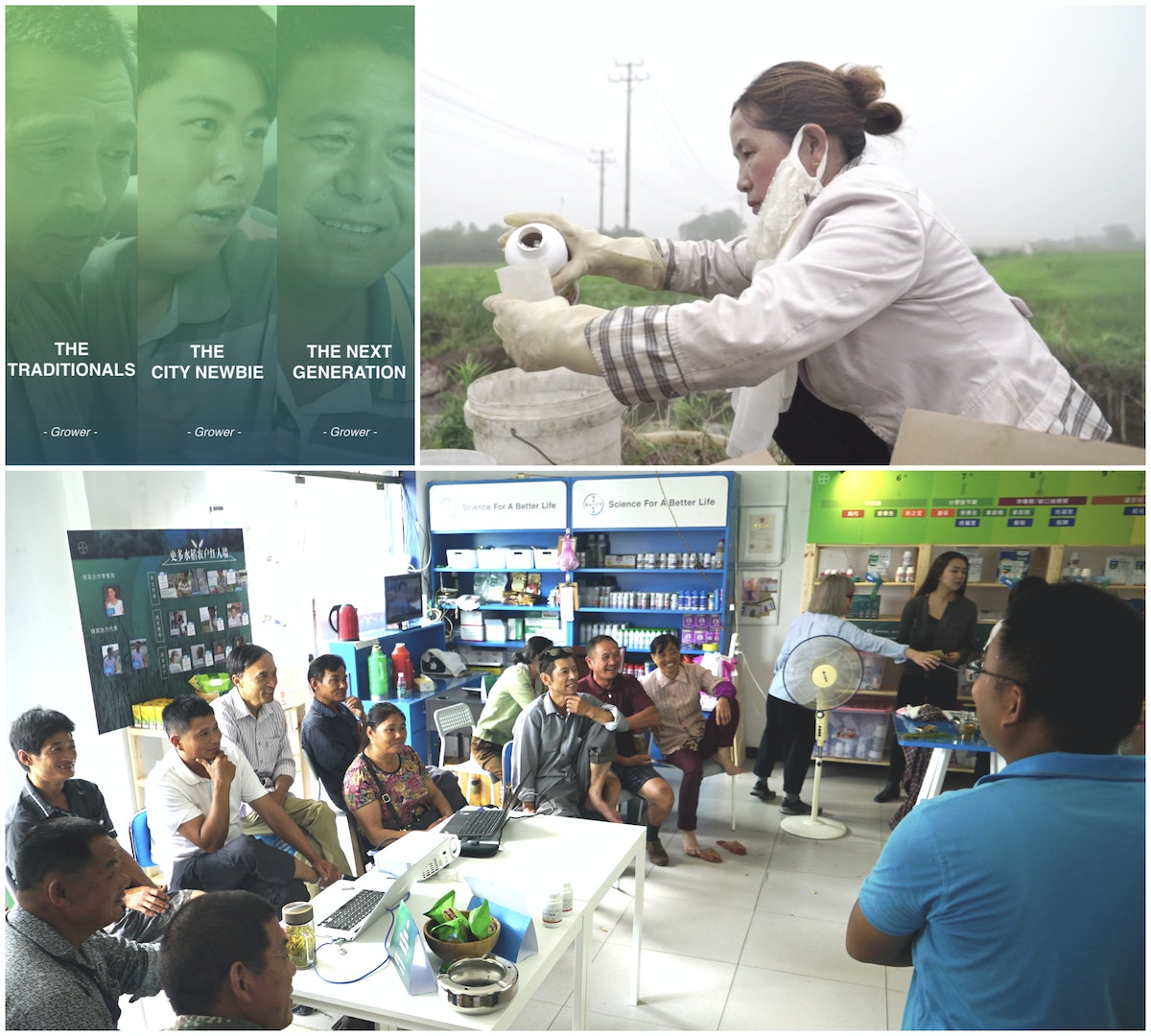
The Bayer team was energized by the potential of these prototypes to enable more customer-centered retail experiences. An exhibition of the concepts was set up during the National Annual Sales Conference of Bayer Crop Science in China, during which a much wider audience from Bayer experienced not only the concepts, but also the immediate feedback from farmers.
One year after the project’s completion, more than half of the design concepts have been included in Bayer's support kit for dealers. In 2019, these concepts will be rolled out in more than 1,000 flagship stores across China.
The work has also accelerated Bayer Crop Science’s efforts to build an ongoing engagement mechanism with its retailers and growers. Its online platform, Bayer Joy Grower, now has more than 10,000 retailers and will be expanded to growers soon.
AI & Ethics: Collaborative Activities for Designers
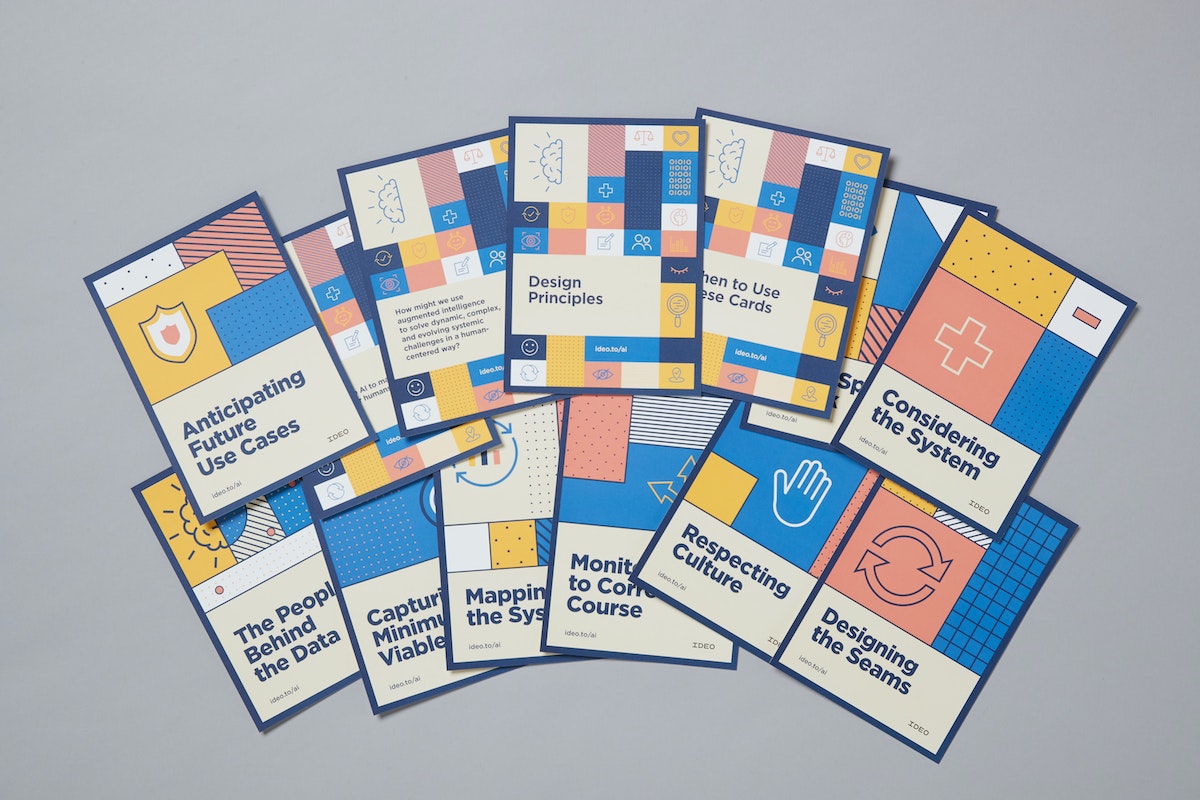
IDEO’s AI Ethics Cards are a tool to help guide an ethically responsible, culturally considerate, and humanistic approach to designing with data.
IDEO’s AI Ethics Cards are a tool to help guide an ethically responsible, culturally considerate, and humanistic approach to designing with data. The deck is made up of four core design principles and ten activities, all meant for use by teams working on the development of new, data-driven, smart products and services.
Today, data systems and algorithms can be deployed at unprecedented scale and speed—and unintended consequences will affect people with that same scale and speed. How can we always make sure we’re putting people first when designing large scale systems? Especially when those systems will change over time, even evolving without direct human supervision?
As you explore these questions and more, we hope these cards serve as a tool to help designers consider these challenges with a human-centered lens.
Download the AI Ethics Cards here, and read more about them here.
The Best Business Breakthroughs Come From Moments of Doubt
When aiming for transformative change, the only way across is through
The team is on week five of their project. They’ve been conducting tons of human-centered interviews and broad design research, and they’re writing and re-writing what inspired and challenged them. The first few weeks were an exciting whirlwind as they generated hundreds of half-thoughts: vignettes, questions, and future possibilities to throw into what they called the “idea parking lot.”
But now, the team has tears in their eyes. They are frustrated and exhausted. Post-It notes cover the walls in disordered clusters, and many lie crumbled on the ground. A stack of flip-chart pages on the floor contain sketched Venn diagrams and pyramids, remnants of attempts to wrangle the insights into a framework. The team is on edge, pointing to the clock, aware of every minute left before the scheduled call with the client. They’re not quite sure what they have learned, and they don’t yet know what ideas they would recommend. And they’re looking to me for answers.
This is the phase of design that gets talked about least: synthesis. It is where designers shift from the openness of “beginner’s mind” to attempting to make sense of it all. Synthesis is when things feel most unclear and unsettled, where the pressure to make new meaning from our learnings feels most oppressive.
The team knows it’s not enough to categorize observations into obvious themes. To innovate, they need to put the pieces together in new and insightful ways. They need to find a fresh mental model. And they have to imagine how this model yields a product, service, experience, or system that reframes the world in a new and better reality.
As a leader, there are few things as challenging as seeing people on your team struggle. It feels easy to offer a fast answer or a framework from your previous experience, hoping to alleviate their anxiety. But, in the end, I knew that my quick conclusions were not going to get the team creating groundbreaking ideas, and it also wouldn’t help them develop their creative muscles.
I remembered what my best teachers have done to help me through this onerous step: acknowledge how hard this particular part of the work really is, ask them great questions, and show them my confidence that they will find their way through.
In other words, I had to lead like a Constructivist.
Constructivism teaches us how we learn
One of the most difficult courses I took in graduate school focused on theories of learning. My classmates and I struggled to understand heavy academic texts, but every week we were asked to create learning experiences for each other based on these theories. Despite complaining throughout the quarter, I now realize how much graduate school taught me.
In particular, I find myself constantly referencing the Constructivist theory of learning. Constructivism, it turns out, has a surprising relationship to the design process.
Back in the 1950s, the psychologist Jean Piaget observed children to understand how people learn. He concluded that, counter to popular belief, knowledge doesn’t exist in the world, and you don’t acquire it: Knowledge exists in our own minds, through our own active construction. No one really teaches you anything, Piaget claimed. Instead, he believed that we are natural learners, constantly processing the world in order to create our own understanding.
It’s easiest to think about this theory by considering how young children learn language. Let’s say you are driving through the countryside and see a cow. You point to it and say “cow.” As the child looks, she forms a picture in her head, something like, “Ok, a ‘cow’ is big animal with four legs, and is black and white.” Later, you point to another cow, this time one that is brown and small. What’s happening in the child’s mind? Her thought process might sound like, “Wait! That doesn’t match what I understand about a cow. I thought a cow was bigger. This has four legs, but it’s not black and white.”
In that moment, the child has a choice. She can ignore you, and her mental model will stay fixed. Or, she can reconsider her understanding of a cow. Maybe cows are also brown. Maybe cows can be big and small. Piaget chose the perfect word to describe this state of misalignment: Disequilibrium.
Disequilibrium happens when you begin to see things in the world that don’t make sense to you. The things you thought you knew—the things that helped you feel stable and clear—are now in question. And, woof. This state is hard. We crave equilibrium.
To understand more, I spoke with Beth Hennessey, professor of psychology at Wellesley College. Beth is a former elementary-school teacher and now studies motivation and creativity across cultures. “Whether someone is sitting down to write a scholarly paper or trying to solve a problem in the workplace, Piaget would tell us that the state of disequilibrium is a really uncomfortable place to be,” she says. “But we don’t give up, because we don’t like being in that stage of confusion. It’s hardwired in us to create new frameworks to accommodate the information we get about the world.”
In order to bring yourself back to a calm state of knowing, you have to generate a new “a-ha” inside your mind that reframes your old information with the new information. A mental model that, through the force of your imagination and intelligence, connects those dissonant dots into new meaning.
Learning isn’t about the consumption of new information. Learning is the process of using our innate abilities to construct—or create—new understandings of the world. Learning, by its very nature, is a creative act.
Our natural process of learning is well aligned with the creative process. Design research methods—finding inspiration from diverse sources, meeting people at the extremes, finding empathy for others’ experiences—provide structured activities to purposefully shake up your understanding of a problem and put you straight into that state of disequilibrium. The approach helps you seek information that surprises you, rather than reaffirming what you already know.
We crave equilibrium. So when all this input shakes up our understanding of the world, the only way through it is to create new meaning. Synthesis is our natural creative process, and once you start to put those pieces back together into new frameworks of understanding, that’s when the new ideas start to flow.
Learning to love disequilibrium
While it is obvious that a child naturally refines and recreates their mental models of the world, we often ignore the fact that we go through this same process as adults. It is even more challenging for us, however, as our mental models have become entrenched and intertwined with our identity. It’s no longer just about understanding the word “cow”: Now it’s about designing whole new offerings, experiences, and organizations that go against the convictions that have solidified in our minds. Putting ourselves into that vulnerable state of disequilibrium becomes riskier over time, especially if we are high-status leaders.
As I’ve dug back into the Constructivist learning research, I’ve been thinking about what I am taking away from this investigation.
To begin, it takes a lot of effort to create new mental models, but we leave little room for the cognitive load of innovation, what with our endless news feeds and unrelenting inboxes. For example, while I constantly think about the time required to tick off my to-do list, I rarely evaluate how much emotional energy is required to take my work to new creative heights. I realized that I am misspending my energy. How might I more clearly recognize the areas where I’m committed to developing new solutions? How might I make space for myself to be in the challenging state of disequilibrium? How might I pace ambitions so that I’m not disrupted by too many things at once?
Hennessey doesn’t offer much comfort here. “Being in that state of disequilibrium is hard work,” she says. “If a lot of different aspects of your life are in a messy place, you’re going to struggle, because so much energy is going to need to be expended. Getting out of this state is not just cognitive demand, it’s also affective: It’s emotional.”
Recently, I found myself sitting in an important meeting, feeling frustrated and wanting to point out what was wrong. I was starting to make fast decisions and putting pressure on my team to do the same.
Then I realized that I was in disequilibrium. I was feeling stretched, insecure, and like my mental models were insufficient. I was pushing for things to make sense. So instead of getting angry, I admitted my feelings of discomfort, and asked my colleagues to help me find my way through the ambiguity. And we did.
Somehow, just knowing that you’re in that state of disequilibrium makes it feel less stressful. We can become conscious of the signals of our mental states, and we can turn them into positive feedback. For me, the signs seem to be frustration and impatience. Now, when I feel those bubbling up, I smile and realize I’m just in that pesky state of disequilibrium, and that I can be patient with myself and realize that a new state of knowing is on the other side.
Permission to struggle
It’s no wonder that my design team was in tears as they worked through the synthesis stage of their project. Their minds, hearts, and emotions were all engaged in the difficult question they were answering, and they were a vulnerable mess. They felt the pressure of time, the pressure of the cause, and the pressure of not knowing the answers yet.
As a leader, I was challenged, too. I wanted to find quick answers, be ready for the client, cut through the confusion, and get on with it. But if I had filled in the blanks for the team or pushed them to get it done fast, we wouldn’t have gotten to the depth of the design solutions that the team found over the following days and weeks. In fact, toward the end of this effort, our client who had been working in the field for 25 years said, “I’ve been working with these guys for my entire career, and I want to thank you for helping me understand them better.”
So how does this Constructivist learning theory help us support creative teams? What if, as creative leaders, we saw ourselves as great Constructivist teachers instead of orienting around our knowledge and expertise? How would Piaget’s theories change our behavior?
As good Constructivist teachers, we need to give people the permission to struggle. As Hennessy says, “Whether you’re a teacher or a manager, you need to make it explicit that you understand that innovation and creativity is hard work, that people will hit that state of disequilibrium, that people will hit dead ends, and that that is valued. The best thing a teacher can do is model their own struggles.”
Just like classroom teachers, leaders face pressure to accomplish a set of outcomes within a particular timeframe and often, unintentionally, send signals to their teams that their time messing about in search of a new mental model isn’t valid. This urgency may trigger teams to cut short those deeper, more difficult stages of creative work, leading to shallow solutions.
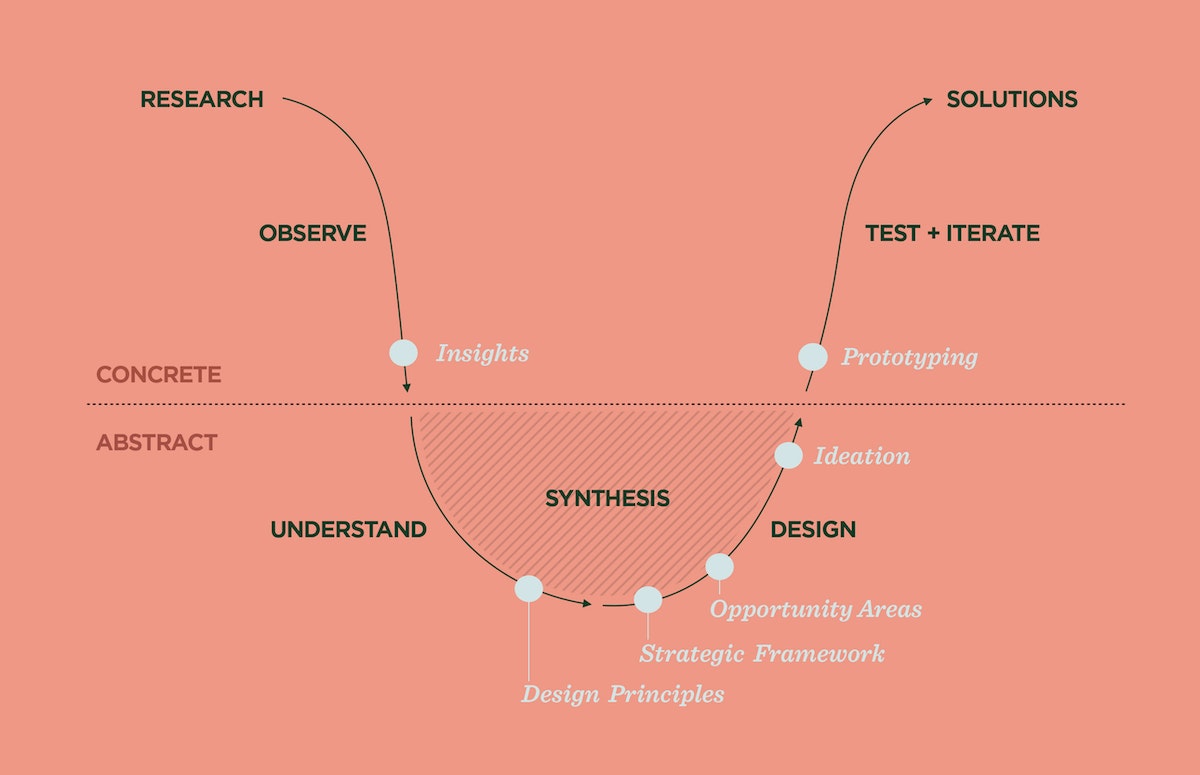
IDEO's “mood meter.”
Years ago, IDEO developed a tool called the “Mood Meter” to help prepare newcomers for design projects. It’s a graphic that shows the journey of the design process with various levels of joy and anxiety charted on it. The idea was to provide reassurance that, although there would be some struggles, the project would end happily.
I was personally not a fan of this tool because I found it unfair to tell people how they would feel before they actually felt it. And yet, it was always right. During the research phase, people were elated, and during prototyping, too. Making stuff was always fun. But during synthesis, the phase devoted to making meaning, that line on the graph would drop to its lowest point. And that’s when you need time to sit in the struggle.
There is a belief out there that designers are constantly optimistic and confident, but that hasn’t been my experience. Creativity isn’t all about fun. Acknowledging that allows us to design better environments and processes that support the profound vulnerability necessary to develop creative solutions.
After more than a decade of leading creative teams, I believe that some of the best work comes from some of these hardest times. Confusion, self-doubt, existential searching, getting lost, and then finding your way out of that state of disequilibrium—these are the essential experiences for the emergence of creativity.
Header illustration by Timo Kuilder. This piece was originally published in Quartz.
It’s a Wednesday morning in the IDEO San Francisco studio. Bright sunshine reflects off the Bay and through the floor-to-ceiling windows. But in the project space, the mood is darker.
Build Your Creative Confidence: The Wallet Exercise
If you attend a class or an executive program at the d.school, the first day will most likely include a fast-paced, hands-on activity we call Design Project Zero, or DP0 for short. Rather than try to explain our process for innovation, a DP0 is intended to give people an overview by experiencing it in a microcosm.
Creativity Challenge # 10: Help your group understand innovation thinking
If you attend a class or an executive program at the d.school, the first day will most likely include a fast-paced, hands-on activity we call Design Project Zero, or DP0 for short. Rather than try to explain our process for innovation, a DP0 is intended to give people an overview by experiencing it in a microcosm. Faced with a simple innovation challenge, you have a chance to start with empathy, create new ideas, and then build some rapid prototypes, all within about 90 minutes. DP0 projects focus on everything from the gift-giving experience to the ramen-eating experience. The original DP0, explained very briefly here, is called The Wallet Exercise.
The exercise uses a simple object that most people carry with them as a prop to discover needs, design and prototype solutions, and get user feedback. It gives everyone a chance to cycle quickly through the human-centered design process.
Tool: The Wallet Exercise
Participants: Pairs in groups of any size
Time: 90 minutes, plus preparation
Supplies: The facilitator’s guide (available on the d.school website) includes a complete list of instructions, worksheets, and prototyping materials. The instructions and worksheets can be printed out for each participant or projected on a screen. Provide prototyping materials (essentially basic craft supplies, which may include markers, colored paper, aluminum foil, tape, pipe cleaners, etc.).
Instructions
Step 1: Participants pair off, with one starting as the interviewer/anthropologist, while the other plays the part of the prospective customer. The interviewer spends a few minutes understanding and empathizing with the other person. The interviewee/customer takes out his or her wallet or billfold, and they have a discussion about the items inside and the meaning attached to them. The interviewer asks questions to see how the wallet fits into the customer’s life, looking especially for problems or friction points associated with the wallet. For example: "Have you ever lost your wallet?" "Do you use it differently when traveling internationally?" "Which items do you take out most often?"
After just a few minutes, the facilitator calls time, and the team members reverse roles, with the interviewer in round one becoming the customer in round two.
Step 2: After the participants have had a chance to understand the customers and their wallets, the next step is to develop a point of view about their latent needs and missed opportunities with regard to their wallets. Those need-based points of view can take the form of a sentence like, “My customer needs a way to ... [user needs] ... in a way that makes them feel...[meaning/emotion] ... because ... [insight].”
For example, “My customer needs a way to keep track of the contents of their wallet in a way that makes them feel secure, because if they lose their wallet, the anxiety of not knowing what has gone missing can be worse than losing the cash inside.”
Step 3: In a form of mini-brainstorming, each participant generates a few concepts for new objects—they may not be physical wallets at all—that satisfy the needs highlighted by their point of view developed in step two.
Step 4: In the most kindergarten-like phase of the wallet exercise, participants create the roughest of prototypes to bring their ideas to life. Using an eclectic mix of materials like construction paper, duct tape, pipe cleaners, and binder clips, each person will build a prototype just good enough to make the idea tangible so that they can get feedback from their future customer.
Step 5: Using their storytelling skills, a selection of participants “pitch” their new-to-the world wallet concept to their customer and/or to the room at large.
Tips from the Field
The wallet exercise is all about the journey, not the destination. Reading about the wallet exercise doesn’t deliver experiential learning. The value is in the doing.
Much of what people take away from this experience happens when debriefing the wallet exercise with the whole group. Ask a few pairs to share their prototypes with the larger group. You might ask, “Has anyone’s partner come up with a solution that is so great that you need it right now?” or “Is there an idea so ingenious that it should be backed on Kickstarter?” or “Has someone designed something that is incredibly personal?” Have each pair come up and describe the need they discovered and the prototype they built. Use these shared stories to drive home lessons about empathy, prototyping, getting feedback early and often, and so forth.
This fast-paced format can work for many kinds of challenges. Once you have mastered The Wallet Exercise, think of other innovation challenges to tackle, like redesigning your daily commute or exercise regimen.
Making New Habits
Some psychologists claim that you have to practice a new behavior for twenty-one days before it begins to become a habit. The operative word is “practice.” The weeks, months, or years spent thinking about new behaviors don’t count. So pick your favorites from this chapter or create some new experiments of your own. Start accelerating down the runway now if you want your new skills to take flight.
This post was taken from Chapter 7 of Creative Confidence. Purchase the book for more on how to use creativity to solve problems, or read more from this series of creative exercises on the IDEO blog.
Everyone is creative. This belief runs through everything we do at IDEO, and in 2013, it led my brother David and me to write a book that would help others—even those who don’t think of themselves as “creative types”—to unleash their creative potential. Creative Confidence has inspired thousands of people to adopt a creative mindset and apply it to the diverse real-world challenges they face. In this series, we’ll share some exercises from the book that can help you approach your challenges from a new perspective.
How to Experiment with 360˚ Video
Learn a new way to tell stories in 360 degrees—without the expensive camera
In this post, I'll be sharing a method that I've developed to help IDEO designers prototype immersive media experiences for our clients. But first, let's think about the emerging medium we're designing for.
Tools enable, storytellers enthrall
Early filmmakers in the 20th century had a new tool in the motion picture camera, but had yet to fully explore how to use it to maximum effect. The closest frame of reference for film was theater, so in the silent era, many directors placed the camera “fifth-row center,” and filmed movie scenes as if they were sitting in a theatrical audience—no cuts, close-ups, zooms, or pans.
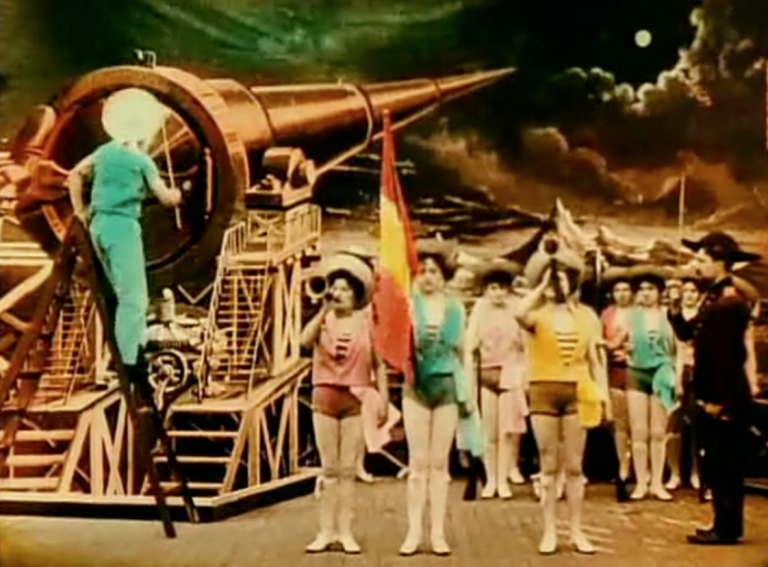
Over time, filmmakers experimented with and ultimately developed an established visual language for the new medium. Think of it as the film equivalent of grammar—sentences, paragraphs, and so on.
Early attempts at 360° videos were effectively in the same place as traditional film was 120 years ago. Since the camera can see in all directions—and the user can look in any direction at any time—the classical visual language of film no longer applies. Creators are having to experiment all over again to develop a new visual language that works in this medium.
360˚ video is great for first-person-like views of extreme sports, but it poses a number of challenges for producing narrative content. If the camera can see in all directions, what do we do with the background? How do we direct the viewer's attention?
In response to these challenges, the creators of some first-wave 360˚ videos have chosen to plunk the camera down and orchestrate a performance around it. In other words, if the camera can look everywhere, let’s put the action everywhere.
It’s one way to deal with the format, but I’ve been exploring other ways we might begin to tackle the storytelling challenges of 360˚ video, and also address some of the production hurdles we encounter when we shoot in 360˚.
One of the first instincts creators might have is to buy a 360˚ camera. But that’s a lot of money you really don’t need to spend, and I’d even argue that in some cases, a 360˚ camera may actually limit creative possibilities. Instead, we can repurpose our existing tools.
A partial view of the world
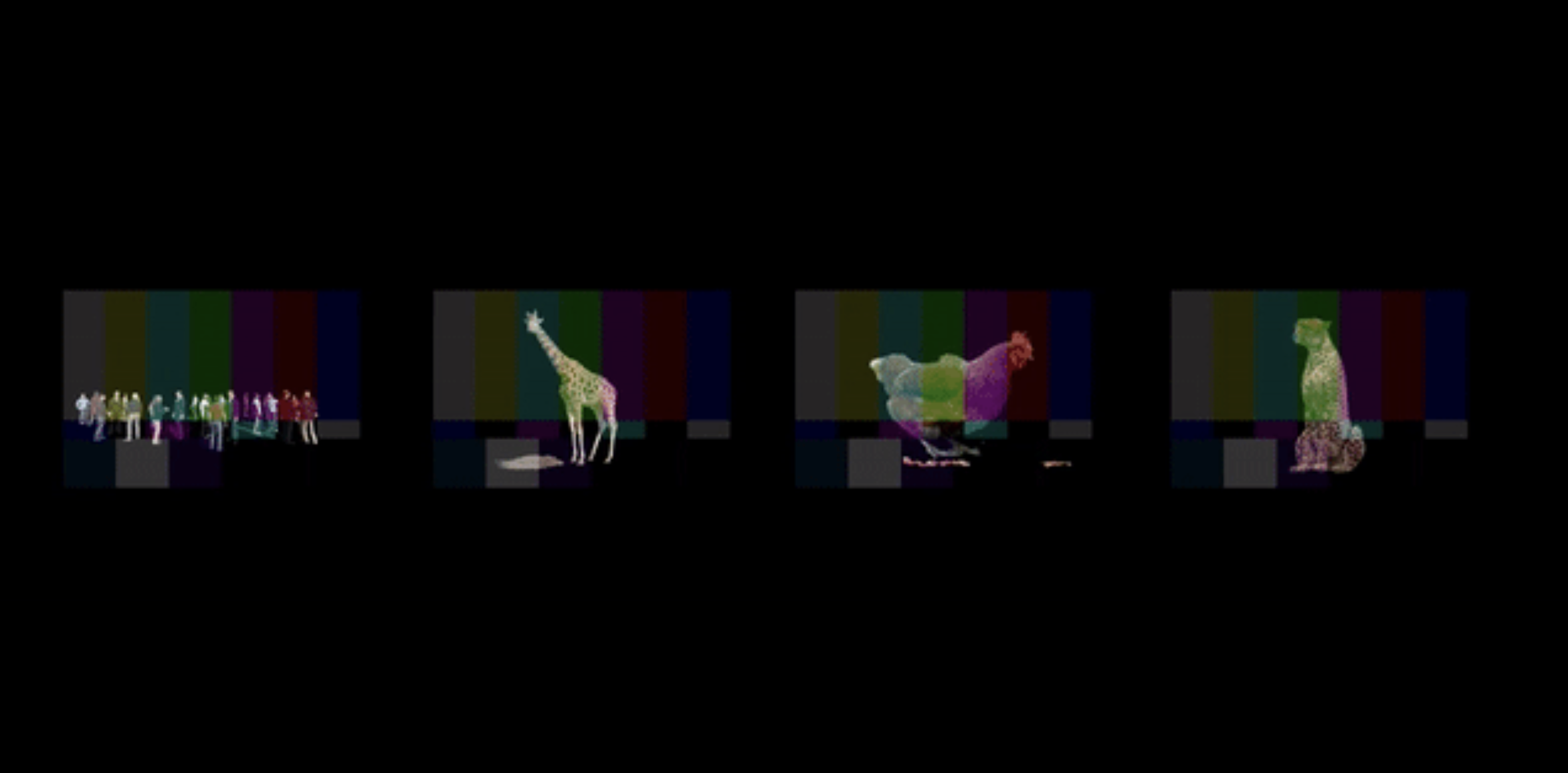
To address this challenge, I’ve created techniques that use traditionally-shot 2D film footage to create composite, immersive 360˚ video worlds. These GIFs showcase a quick overview of the technique, in which four traditional shots are blended into a single 360˚ scene.
So what exactly is happening here?
To start, let’s look at what a spherical 360˚ scene looks like when it’s unwrapped.

This is called an equirectangular grid, and it is one of the standards that Facebook and YouTube have aligned around. As you can see, there is significant distortion at the top and bottom of the image. These are the the poles that, when spherized, represent the top and bottom of the view. The centerline, however, remains relatively distortion-free, and luckily for us, that’s the horizon line in all directions.
When wrapped, this distorted grid becomes a clear shape.
Creating your first 360˚ scene
This workflow uses Adobe Premiere Pro, but if you prefer another video editing suite without native VR export, don’t worry, there’s a workaround at the end.
First, let’s get the tech specs out of the way. You’ll want to set up your project and sequence with these settings:
- For best results, I recommend editing in a 4K workspace (3840x2160px) at either 30p or 60p.
- When compositing 2D shots into the scene, I recommend sticking to the equator of the image as it will have the most predictable results.
Once you have that workspace, import your desired 2D footage. In my example above, I used footage composited on a black background that blends seamlessly into the (also black) background of the 360˚ world, resulting in invisible edges around each of the shots. I was also able to luma-key (effectively a form of green screening) the background so I could overlay several shots to create large scenes composed of multiple individual shots. In my real-world shoots, this technique allowed me to composite multiple individual shots, helping a tiny set to punch well above its weight.
The secret sauce: 360˚ metadata
Now you’ve got your 360˚ scene prepared and are ready to export it for upload. Here’s where the magic happens: To get YouTube or Facebook to see your 360˚ video as such, you must include the proper metadata.
This is much easier than it sounds. If you are using Adobe Premiere Pro CC (2015 or above) this feature is built in. Find it in the export settings at the bottom of the “Video” tab here:

If you do not have native VR export in your video editing software, don’t worry, there is a workaround:
- Export your 4K video to H.264 as you normally would.
- Inject the required metadata using the YouTube Spatial Media Metadata Injector. This is not as scary as it sounds, and it will enable both YouTube and Facebook to detect your video as 360˚ content.
— First, download the YouTube Injector tool for Mac or Windows.
— Unzip the file, then use the application to open up your video export.
— Select “My video is spherical (360)”.
— Process your file.
That’s it. Just a simple press of a button, and your video will be recognized as 360˚ content on all the major platforms.
Happy uploading!
This story was originally published on IDEO Labs.
Thanks to native support on Facebook and YouTube, virtual reality and immersive 360˚ video have reached a tipping point in which production, distribution, and consumption are now available to almost everyone. There’s one problem, though: Many creators are still struggling to find the best way to tell stories with this medium.

Lindsey Turner
I’m passionate about building brands, products, and experiences that help organizations show up with meaning and momentum.
I help organizations cut through complexity by shaping how they show up, through brand strategy, identity, and storytelling.
Working at the intersection of brand and business, I bring an editorial eye and a bias toward making—turning ideas into tangible experiences that people can understand, trust, and believe in.
My work spans government, healthcare, financial services, media, and consumer goods, from launching Gen Z-focused ventures to building innovation labs and reimagining legacy brands. I relish moments of ambiguity and enjoy translating across teams, perspectives, and priorities to move ideas forward.
I started my career in editorial and digital design, shaping cross-platform experiences and identity systems in publishing and agency environments. That foundation still shapes how I work today: I’m detail-oriented, collaborative, and overreliant on the Oxford comma. I hold a BFA in Visual Communication from the School of the Art Institute of Chicago.

Rachel Young
My work helps organizations see who their products aren't working for—and build the will and the tools to do something about it
For 25 years, I've asked the same question: Who does this design exclude—and what are we going to do about it?
My work spans human-centered strategy, inclusive design, and qualitative research, with clients ranging from Microsoft, Google, and Verizon to the National Science Foundation, and San Francisco Unified School District.
Before IDEO, I taught elementary school in East Palo Alto and spent a decade doing design work with social service organizations—where I learned firsthand what it costs people when systems are built without them in mind.
I am currently writing User Error, a nonfiction book about digital access and the design decisions behind it. I live in Oakland, California.

Brian Pelsoh
I lead with craft, ensuring our work is creatively excellent: rooted in deep human insight and imagination, while also grounded in the realities of business and technology.
My expertise spans brand, communication, and product design across tech, education, the arts, and social impact.
I believe great work demands both high-level vision and obsessive attention to detail, and only happens through collaboration.
I bring an inclusive, hands-on approach and a deep understanding of business, which enables me to consistently deliver excellence while always asking why.
Before joining IDEO, I worked at the brand firms Pentagram and VSA Partners. I began my career as a designer, leading teams at the School of the Art Institute of Chicago and the Milwaukee Art Museum. I hold an MFA in graphic design from Maryland Institute College of Art and a BFA in communication design from the Milwaukee Institute of Art & Design, and have taught at some of the best design schools in the US.

Tony Wong
I am responsible for IDEO’s long-term success in China and working with clients to use design as a tool to enable growth.
I am responsible for IDEO’s long-term success in China and working with clients to use design as a tool to enable growth. Specifically, I have helped Chinese companies design holistic brand solutions through the development of their products, communication, services, and innovation teams, and I have helped multinationals expand their presence and influence in China.
I advise global leaders on developing China-led innovation and capabilities.
In over 15 years in IDEO Shanghai, I have worked on projects that use design to elevate the quality of the experience of healthcare products and services, streamline processes that increase productivity, create spaces and programs that promote and enable inclusive communities, and build next generation mobility solutions that are planet-positive.
Before joining IDEO, I worked at Philips Electronics and the Electrolux Group in Italy, the Netherlands, and Singapore on a number of breakthrough commercial products. I am a member of the Young President Organization in Shanghai.

How to use AI as an editor, not a writer
Ed White shares how he uses AI as an editor—not a writer—to sharpen storytelling, rehearse ideas, and preserve the productive friction that makes creative work better.
Ed White has a rule he's tested on his own writing: hold yourself as the writer, and let AI be your editor. Ed is a Senior Design Director at IDEO's London studio, where he co-leads the firm's AI portfolio across Europe. Before IDEO, he spent 12 years as a writer and editor at the Financial Times, Wired, and Contagious. So when he talks about when to use AI for storytelling and when not to, it comes from two decades of crafting his storytelling skills.
In this episode, Mina Seetharaman talks with Ed about two specific tools he uses to keep AI in an editor's seat: a "roasting agent" prompted to critique his drafts without any sugarcoating, and a simulated audience he rehearses pitches on before the real thing. They also get into what Ed is hearing from design leaders at Anthropic, Lovable, Shopify, and Google Creative Lab about how creative work is changing, and why he thinks the friction of writing something yourself is worth protecting rather than automating away.

Building a personal AI for the messiness of life: Sida Li
Becca Carroll talks with Cue co-founder Sida Li about designing a personal AI for the messiness of everyday life—not just work. They explore how Sida stays anchored to human needs while navigating fast-changing technology, product tradeoffs, business-model experimentation, and the realities of building an AI company today.
Most AI products today are built for work—a space with clear problems and established systems. One founder noticed a gap: personal life is messier, harder to systematize, and mostly left behind by the AI boom. So she built Cue, a personal AI that lives inside iMessage and group chats, to go where the other tools haven't.
In this episode, Becca Carroll, IDEO's Chief Strategy Officer, talks with Sida Li, co-founder and CEO of Shared Context Lab, about staying anchored to a human need while the technology around her keeps changing shape, why she treats her business model with the same rigor she'd bring to a product, and what it feels like to build a company at this particular, disorienting moment in AI.
The conversation also gets into how Sida makes design decisions: the language Cue uses to describe itself, the tradeoffs behind building inside iMessage instead of a new app, and a real story about a business idea that didn’t pan out.
This is the second in a two-part series profiling founders from IDEO's Startups-in-Residence program. The first conversation is with Johannes Seemann, founder of Sooner, on designing GenAI for the emotional side of money.

Designing GenAI for the emotional side of money: Johannes Seemann
Designing financial tools around the feelings that shape money decisions.
Most personal financial tools are built to run the numbers and optimize towards a budget. While that works for some, most people experience money as a lived relationship that does not neatly fit into a spreadsheet. Johannes Seemann and Becca Carroll discuss why money is emotional before it is mathematical, and what a human-centered approach to building a generative AI financial product looks like in practice.

The curious leader's edge in uncertainty: Scott Shigeoka
How genuine curiosity helps leaders navigate uncertainty with greater confidence.
Mina Seetharaman talks with Scott Shigeoka, author of Seek and Head of Curiosity Cultivation at the Eames Institute, about what distinguishes genuinely curious leadership from performative curiosity, how power dynamics shape curiosity, and why practicing curiosity can restore energy rather than drain it.
Looks like you might be in search of something very specific?
Or reset the filters above and try another angle.
Here’s some random inspiration

Podcasts about creative leadership

Articles about the power of prototyping
