
.svg)


Peripheral vision
A consumer electronics giant becomes a climate-era leader.
IDEO’s partnership with Logitech is a case study in bringing together the power of imagination and the rigor of business.
As much as we love to lead with creativity, it’s difficult to develop a business plan off ideas alone. So when Logitech asked the IDEO team to investigate a broad array of possible futures and report back, we brought our findings to life by inventing a board game. Instead of a dry presentation on circular solutions, our designers created a story about a mouse that turned into a webcam.
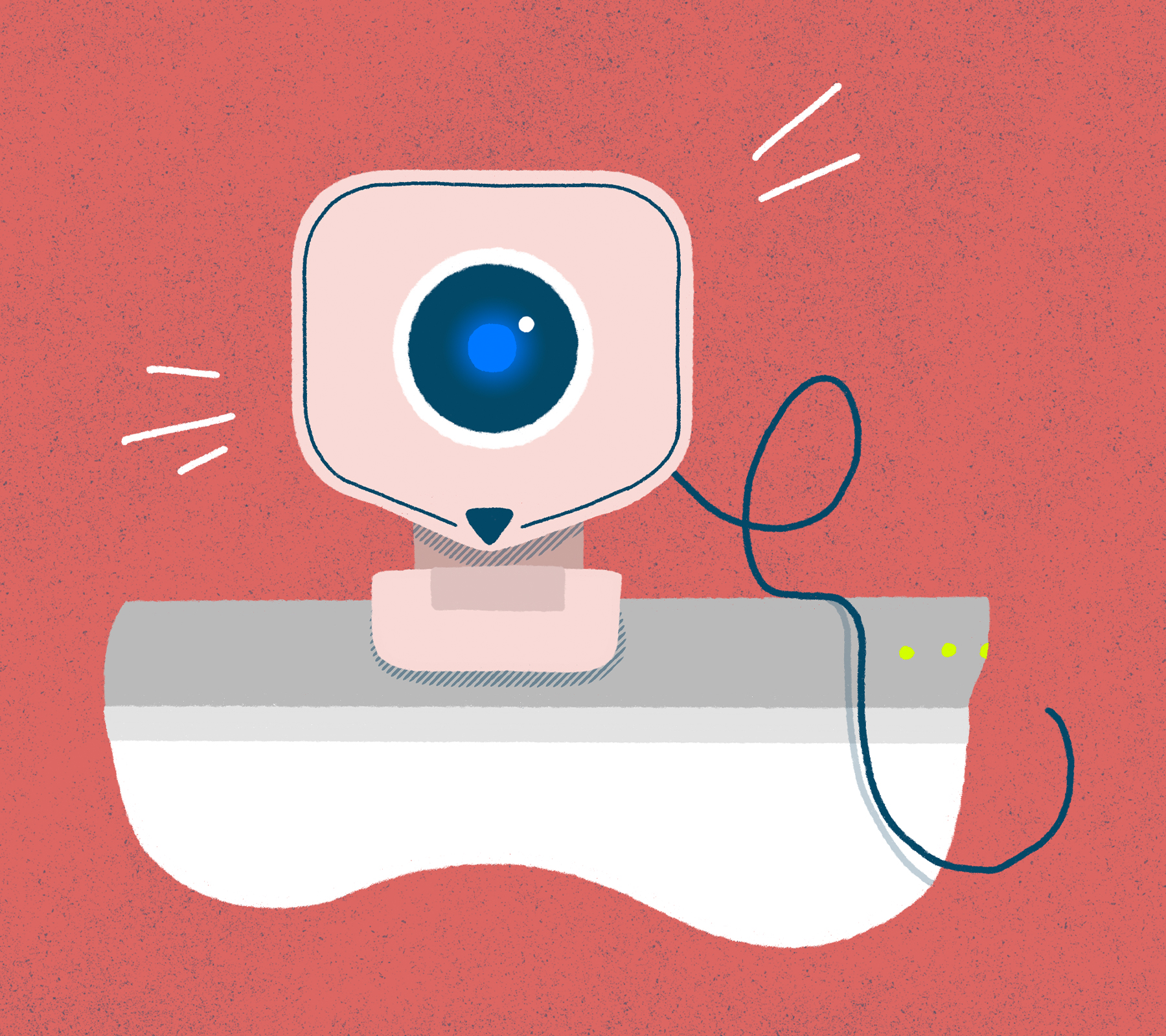
That imagination mattered. It fueled an exploration into expertise we collected from researching with people already living in futures destined to expand. And our rigor helped us hold more possibilities, and identify intersectionalities. Combined, they redefined what it means for ideas to be viable in business; they focused us on long-term sustainability; and they pushed us past immediate technical feasibility to ask if new ideas would be feasible for entire systems.
Our partnership with Logitech revealed that imaginative dreaming and business rigor aren’t opposing forces, but rather complementary tools in opening up new directions into a future demanding bold decisions.
As of 2019, e-waste was the fastest-growing waste stream globally, and only 20% of the 48.5+ million tonnes is disposed of properly.
Global emissions must be cut in half by 2030 to avert the worst impacts of climate change.
By 2030
Logitech has committed to becoming climate positive and removing more carbon than they create
The whole package
A global fashion brand pairs sustainability and growth.
Fast fashion keeps getting faster. But if the industry is to meet its climate commitments, its use of plastics has to slow down.
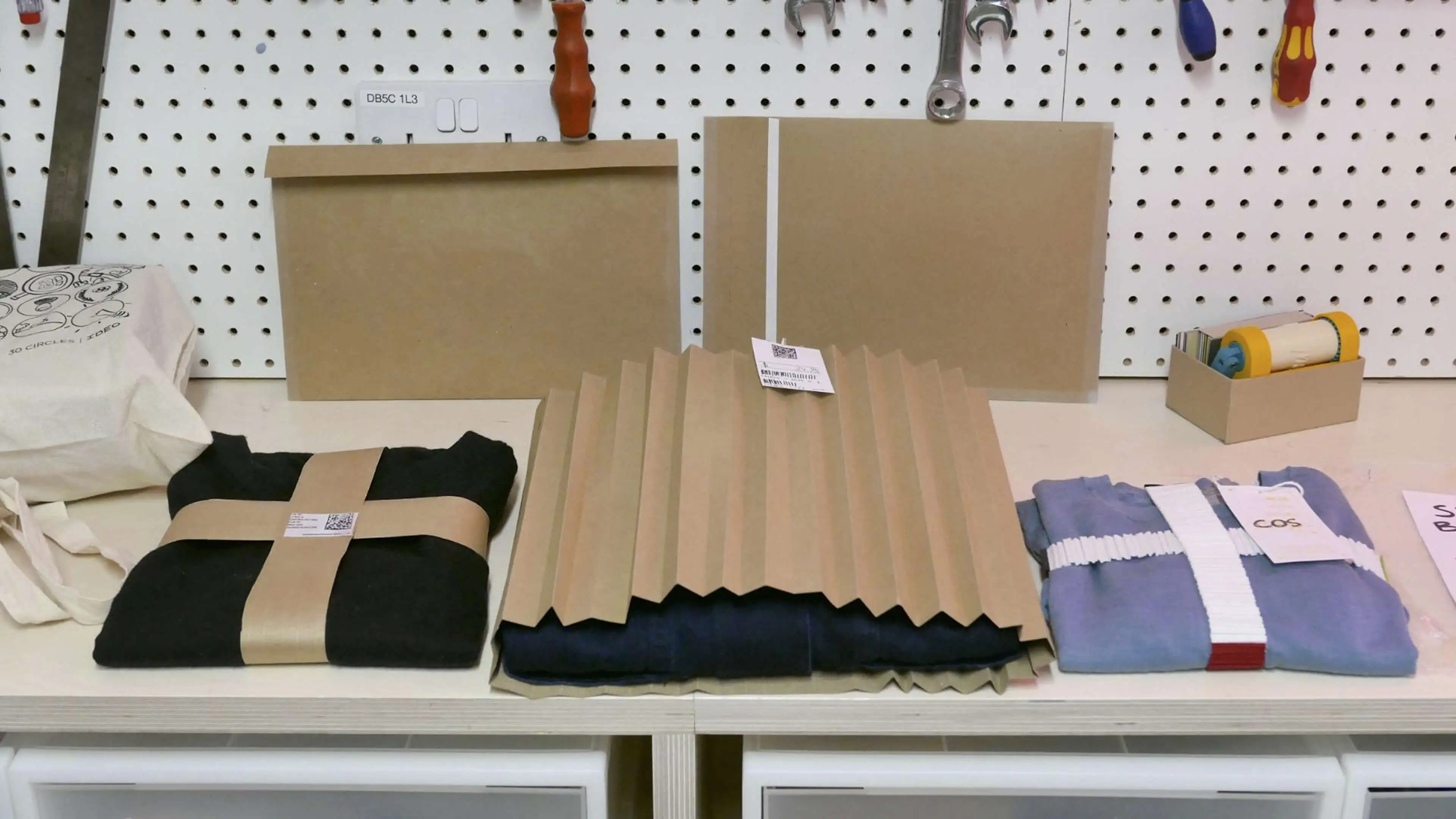
H&M chief executive Helena Helmersson set ambitious sustainability goals when she stepped into her role. She wanted to reduce the fashion giant’s impact on the environment and enable meaningful growth. But change is tough for any company, let alone one with eight brands operating across 74 markets. Together IDEO and the H&M Group created new plastic-free packaging, rallying around a more sustainable packaging solution that’s easily customizable.
By applying a design-led approach that went far beyond hiring a sustainability consultant, the H&M Group managed to reduce its use of plastic. But it didn’t stop there. A small team called Design Studio took what it learned and grew into an established strategic capability that pioneers new ways of working in the organization, tackling complex challenges in circularity, inclusion, supply chain, and customer experience. Sustainability isn’t a passing trend for H&M. It’s moving fashion forward.
Packaging accounts for 26% of plastics produced globally every year.
Fashion e-commerce is estimated to grow by 10% annually through 2024, requiring even more packaging.
100M
plastic-free packages shipped in 2022
2,000 tons
of plastic eliminated from H&M operations

The everywhere chair
In Japan, a mother works to build an inclusive child seat that closes the gap between children with and without disabilities.
For children with physical disabilities and their families, mobility is freedom. But in Japan, there are barriers to that freedom of movement.
In raising a child with cerebral palsy, Yuri Matsumoto found that her son was separated from other kids during everyday activities. In Japan, children’s products are divided into two categories: those for children with disabilities and those for children without. Matsumoto aspired to close this gap with a product that would allow children of all abilities to use the same chair and be included in the same activities. To realize her idea, Matsumoto needed a strategic design company to refine the chair design, create a compelling visual identity, and arrive at a product road map to help set the business up for long-term success.
The result: a breakthrough product and supporting business that provides access for all kids, both for at-home activities like studying and eating, and also for family outings to restaurants, to the park, and to play with friends. Around the world, there are people like Matsumoto who see the need for better products in a very personal way. IDEO’s role is to help them realize their vision for a more inclusive future.
The Japanese health ministry categorizes 9.6 million people as disabled.
In Japan, children with disabilities are largely excluded from mainstream classrooms. Government subsidized support chairs are designed for posture and stability. Their bulk and rigidity make venturing out with them challenging.
Japanese children have fewer opportunities to learn about what it’s like to live with a disability than in the US.
Launched
officially in April 2022
5
restaurants and cafés in Tokyo are currently piloting the chair

Serving families first
One organization transforms health care, education, finance, retail, and itself to meet the expectations of the people it serves.
There can be no growth for business if peoples’ basic needs aren’t met.
Carlos Rodríguez-Pastor, CEO of Intercorp, came to IDEO with an audacious goal: to address the most fundamental needs of his country’s people and grow his business at the same time. He’d been introduced to IDEO while attending business school in the U.S. and explained that he waited until he had a challenge that felt big enough to knock on our door. Together we built a high-quality school system that would cost just $100 per month—affordable for the middle class. That project convinced Rodríguez-Pastor and his colleagues of the power of human-centered design. Our blended teams launched an innovation hub to introduce new ways of working with the conglomerate’s 90,000 employees. And as we collaborated with Intercorp’s businesses in finance, retail, health care, and education, we learned more about how to serve the everyday needs of Peruvian families. Somewhere along the way, the ultimate design project became the organization itself.
And while Rodríguez-Pastor’s company has grown dramatically, he’s not one to rest on laurels. Instead, the company is becoming more ambitious: upskilling the country’s workforce through an online platform, and fulfilling its climate strategy by investing in Peru’s green economy. (The coastal nation is the world’s third most vulnerable to the effects of climate change.) While the pandemic dealt a blow to Peru’s economy, Intercorp remains steadfast in its commitment to supporting businesses that help the middle class thrive.
Peru’s PISA score of educational quality has grown by 10% in the past decade but still ranks in the bottom 10 worldwide.
In 2020, approximately 68% of the total employed population was in some form of informal employment—jobs that offered no protection and in which workers paid no taxes. Although that percentage decreased over the previous decade, Peru has one of the highest levels of informal employment in Latin America.
55,000
students enrolled across 68 locations in Peru, Mexico, and Colombia
2.5x
increase in revenue from $2.9 billion in 2011 to $8.5 billion in revenue in 2021
6 ways to practice design thinking in service of a mind-blowing meal
It's not just for your 9-to-5. Here's how to design think your dinner.
What I can do, however, is teach you how to design your own way to greatness—greatness that, at the end of the night, will have grown adults licking the bowl clean.
I spend my days at IDEO U immersing myself in design thinking. I also spend them eating, cooking, and thinking about good food. What I’ve learned is that design thinking is not something you keep in a tidy, 60-minute-meeting-shaped box. Design thinking is actually a set of tools you can use constantly, and the more you practice it in the unique moments of your life—like whipping something up in the kitchen—the easier it will become to apply it to the hairiest problems at work.
So let’s get cracking. Here are six ways to hone your design thinking skills in service of a mind-blowing dinner.
1. Celebrate constraints
Constraints are a designer’s best friend. They keep you on track and help you make decisions. Without them, everything is a possibility, and you may find yourself paralyzed by how to proceed. Constraints also have the ability to engender brilliant solutions, because they force you to think outside the box. In brainstorms, we purposefully provoke creative thinking by asking questions like, What if we had zero dollars to pull this off? Or what if the laws of physics didn’t apply?
Step one in planning your menu: Figure out your constraints. What’s in your fridge? What cuisine or region are you cooking from? What’s in season? How much time do you have?

2. Keep your audience front and center
Who are we designing for? This is the question we, as designers, must ground ourselves in always. What do they need, what do they love, and what brings out the best in them?
On dinner party duty, I consider my audience to be both the eaters and the ingredients. Is your hot date going to be attending? Ditch the garlic for sauteed shallots so you don’t scare them away. Is it the middle of a beautiful tomato season? Let your fruit shine with a smidge of good olive oil and flaky salt. Are you looking to transform that boring chicken breast you just found in the freezer? You’re going to need something punchy, vibrant, and bold to jazz that puppy up.
When in doubt, bring it back to your audience. What will best serve those that you’re designing for? That’s your north star. Come back to it often.
3. Design for delight
Consider the last product, service, experience, restaurant, or healthcare appointment you couldn’t stop raving about—the one you likely described in too much detail to your best friend, your boss, and your bodega guy. What is the feeling you have when you think about it?
Most likely, it’s delight. Delight is that particular combination of feeling cared for and feeling surprised. Like someone knew you so well that they were able to create something you didn’t even know you needed. We design for delight because it helps us build more meaningful, more emotional relationships with our users, all based on joy. It’s not just, "What are the needs of your user?" It's, "How might you fulfill those needs in a way that truly delights them?"
Sauce is delightful. It feels fancy. It feels extra. It makes your people feel like you went above and beyond for them, because you care. In terms of investing your time, energy, and dirty dish count, sauce delivers exponentially.
4. Test, test, test—and by that, I mean taste, taste, taste
Recipes exist for a reason—they’re great tools for learning. But you can’t follow a recipe blindly, praying for a miracle. After all, who developed that recipe anyway? You don’t know their lives. Maybe they’re one of those people who hates cilantro.
When you’re cooking, put what you’re tasting before what the recipe calls for. Taste your way toward what you like, continuously asking, "What’s missing? What does this need? What’s working here?"
In the design world, one common pitfall of trying to bring new ideas into the world is an over-reliance on recipes. People analyze every detail and possible consequence first, to mitigate risk.
From there, I’ve seen one of two things happen: Either you never get started because you get mired in the complexity of the plan, or you create a rigorous and unyielding plan that is based on a core set of assumptions about the future that hasn’t actually been tested yet. That's when the plan fails spectacularly.
At IDEO U, we’ve learned to de-risk the future not by planning meticulously, but by testing as early as we can, then continuing to prototype throughout the process.
5. Know your levers
Samin Nosrat of Netflix series and cookbook fame taught me the power of the four key levers of cooking: salt, fat, acid, and heat. Playing with these not only helps me course-correct when things go south, but also elevates a dish to master level.
When we design, we can’t just look myopically at the product, service, or experience we are creating. In order to make it sustainable, we have to zoom out and understand the system that it sits in, then pinpoint the levers we can use to create change. What are the critical variables we do (or do not) have control over? Price? Timeframe? Quantity? And how might we ask different, creative questions to uncover other levers?
6. Be okay with failure
It can be easy to get stuck iterating on something that’s not working. Maybe it just needs a bit more salt—or more sweetness? Or more crunch? It’s hard to admit, but at some point, you have to stop tweaking. Sometimes the best thing is to start over. And that’s okay. Throw it out and move on with your life.
If we learn to accept failure, we can take a big step back, get some perspective, and tackle the problem from a new angle. Maybe our grounding assumption—about the user needs, the context, the delivery mechanism—was totally wrong. If we can accept and even rejoice in that knowledge, our next prototypes are going to be miles better.
As an instructional designer, I love building tools. A good tool is based on the belief that you, the person wielding the tool, not I, the creator of the tool, have the magic.
It’s also the reason I don’t give people recipes. I want to help them have the confidence to improvise, to take risks, and to delight in both the successes and failures along the way.
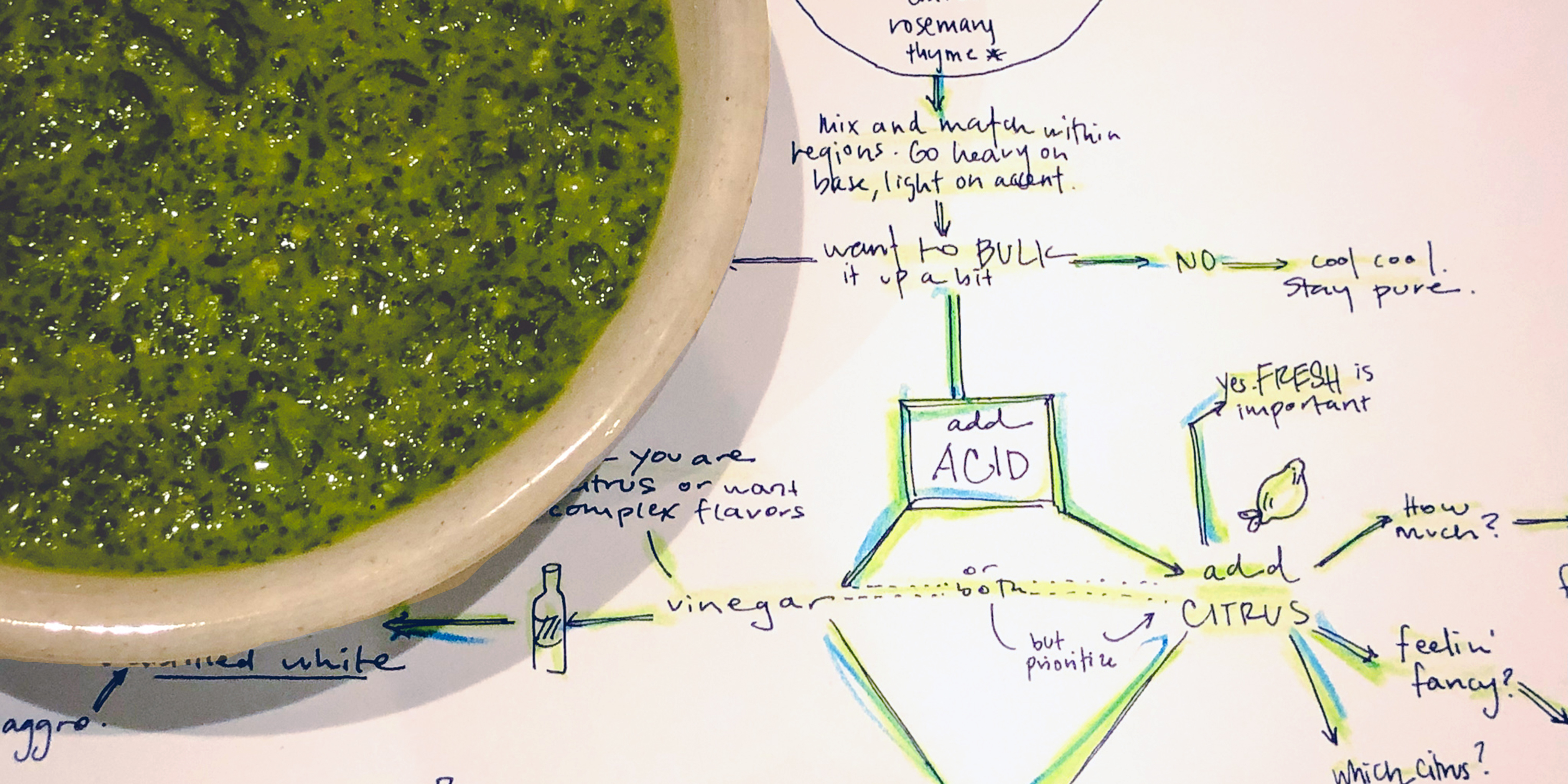
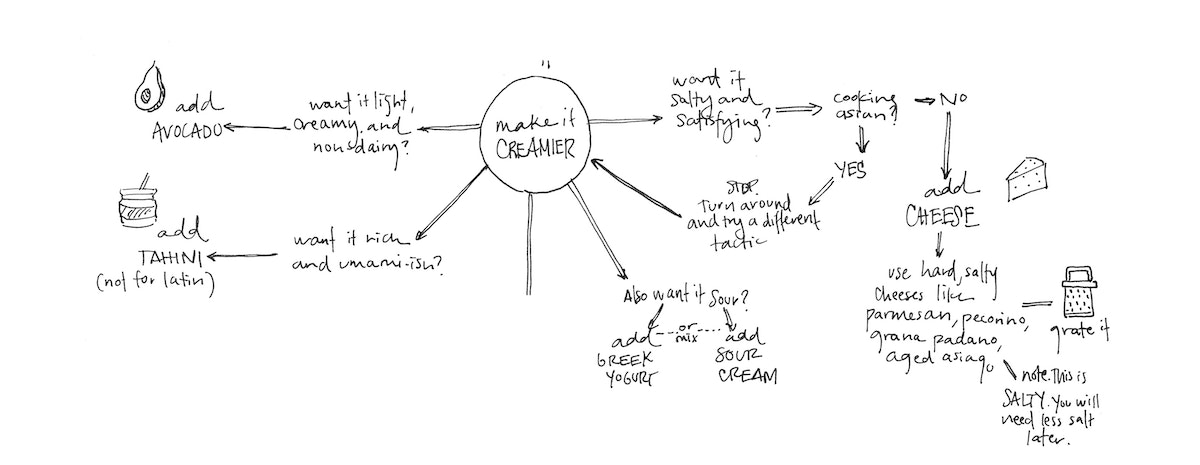
So I built a tool for making sauce—a map to help you navigate those critical decision points along the way to your dream dining extravaganza. No stove, fancy utensils, or measuring cups necessary. Just some design thinking and your very own taste buds.
At least once a week I get a text, email, or phone call asking, “Do you remember that sauce you made? Can you send me the recipe?” My answer, to the person's initial despair, is always no.

A New Tool for Testing Your Design Concepts Ethically
Design research at scale requires ethics at scale
Early concept testing is essential to the design process. Without it, a seemingly great idea could turn out to be a flop, totally misaligned with consumers’ needs. Remember “New Coke”—a new version of the classic soda that replaced the original? Although the company had run tests, they only focused on validating the new taste; they neglected to see the potential impact of changing an iconic brand. It’s one of the most well-known missed opportunities by a company many know and trust.
These days, though, getting feedback is easier than ever. Thanks to social media ads, email campaigns, and digital surveys, we can reach thousands of people—and fast. Our colleagues at IDEO have even built a tool called Shape that allows designers to collect quantitative and qualitative feedback from prospective users in just a couple of days. But with powerful tools like these comes great responsibility. Now that we have the ability to test ideas at scale, we need to adapt our old-school rules of design ethics to account for new methods.
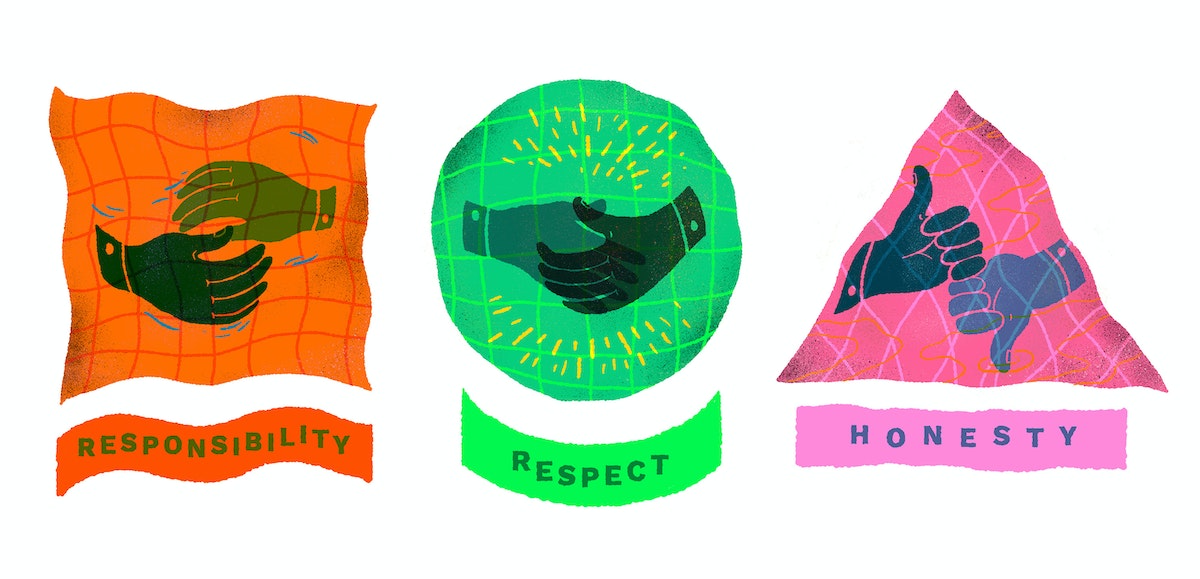
Ethical considerations have always been at the heart of our work. We even provide new IDEOers with a book called The Little Book of Design Research Ethics, which outlines three principles—responsibility, respect, and honesty—that guide us through the design research process with the end-user top of mind. However, as the technology we use continues to evolve, so must the way we apply these principles.
Here's what those three principles mean in practice:
- Responsibility: We act to protect people’s current and future interests. We make participants aware of how we will use the information they share, and we take carefully considered steps to safeguard their information. Our priority is making sure our research is not harmful to people in any way.
- Respect: We honor participants’ limits and value their comfort—because participants are people, not subjects. We strive to be considerate of their cultural expectations and sensitivities at play.
- Honesty: We’re truthful and timely in communication, and we want to help participants make informed choices about what they share, when they share it, and how they share it. Consent is key, and every action taken should be with the user in mind. Our goals and motives must remain as transparent as possible.
Recently, we sat down to interview people with a chronic illness to gauge their interest in a daily caretaking service to take pressure off of families and themselves. In person, we were able to make it clear that the service was still just a prototype—it wasn’t something they could actually access. But what if we went the digital route and ran social media ads for the service? What if we unintentionally misled a large group of people to believe that a service that could improve their quality of life existed when it was just a prototype? The consequence could have been huge.
With that in mind, our group of design researchers have created a guide to ethical concept testing to evaluate design concepts before launching a test, to make sure that they’re fair and beneficial for all involved. Think about it like a list that pushes you to consider the impact of sharing your concept before it goes live.
A few notes before we dive in: If you’re a business, keep in mind that under GDPR—the EU’s General Data Protection Regulation, which went into effect in May 2018—there might be some formal checks you need to do even before you start to use targeted ads. It may be worth checking with your legal team before moving forward. Lastly, while this guide specifically deals with digital concept testing, we encourage you to adapt it for any concept testing at scale.
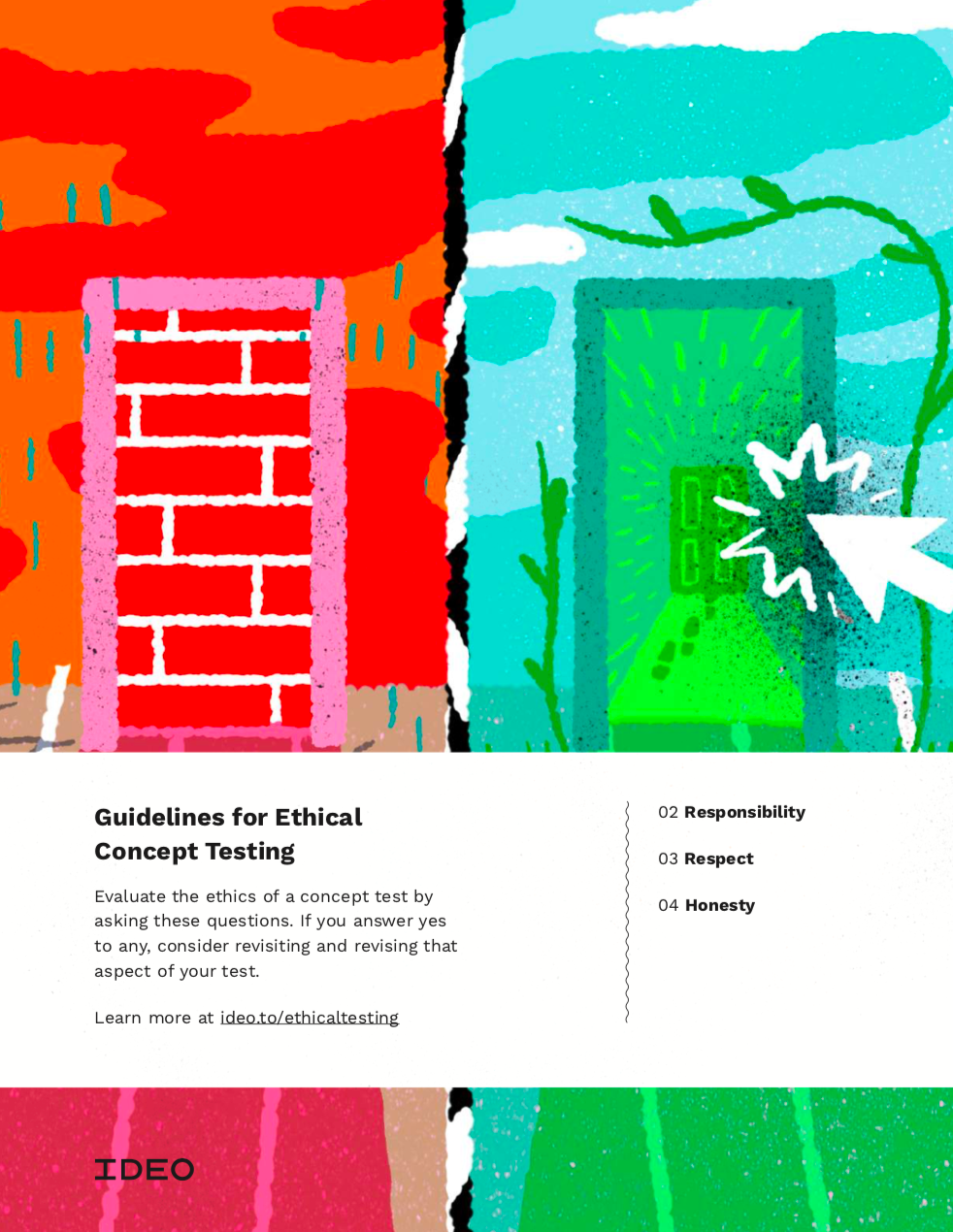
In addition to going through the plan provided above, we always recommend running your concept test with a small number of people prior to going live so you can catch any flaws that you might not have noticed. After all, you're only human.
This tool is a first step in molding our design ethics to new tools, but it’s just the beginning of a long, collective conversation about the ways they will need to adapt over time. While $5 can get you started with concept testing, that scale creates more considerations for responsible designers to make. For now though, we want to leave you with our community’s top resources for learning more about ethical design.
- Website: Humane by Design. "A resource that provides guidance for designing ethically humane digital products through patterns focused on user well-being."
- Website: Smashing Magazing - Ethical Design: The Practical Getting-Started Guide. A crash course to all things about designing ethically.
- Website: Children's Design Guide. “A set of key principles written from the perspective of children as consumers to designers of products for them.” Put together by some big names like UNICEF and Frog.
- Podcast: Your Undivided Attention. A podcast on how we can better respect people through design by Tristan Harris, former design ethicist, and Aza Raskin, the former Head of User Experience Design at Mozilla.
- Book: Future Ethics by Cennydd Bowles. After advising clients like Twitter, Ford, Cisco, and the BBC, Cennydd has published this book on the ethics of emerging technology.
How many people can you reach online with $5, a few hours, and limited advertising expertise? During a recent early-stage concept test, we found an answer: more than 2,000. Our goal was to get our prototype into the world prior to launching it to gain a better understanding of how the concept would be received in the market.
Innovation Thrives Under These 5 Evidence-Backed Conditions
Boosting creativity in your work space leads to better business outcomes
Since 2015, IDEO has measured innovation in more than 100 companies, and discovered that leaders who create effective and sustainable work environments give their teams more capacity to experiment and solve problems in creative ways. These teams tend to outperform teams that stick to the status quo.
So what kinds of changes can you make (and scale) to help your company become more innovative? It starts with simple methods like adopting digital tools, implementing new internal processes, and introducing modular physical spaces that can be flipped around to support modern modes of working. Here are five ways to get started.
1. Create a shared vision
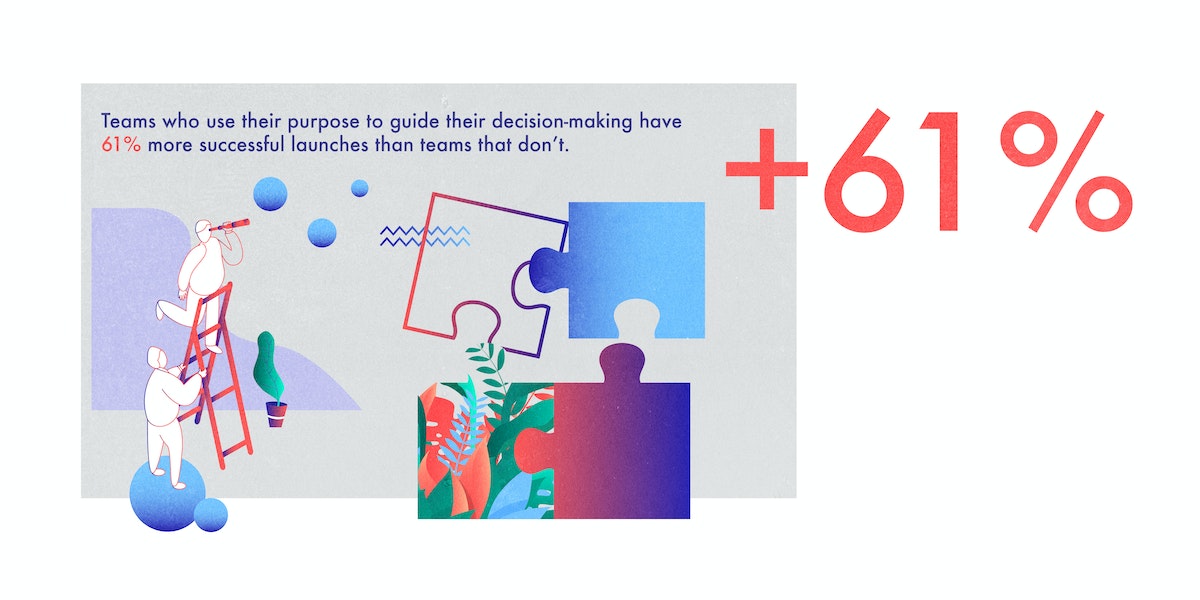
Illustrate the future of your team to show your colleagues what they’re working toward, and what new behaviors they’ll need to adopt to get there. A vision for the future should not only create a shared understanding about what needs to change, but more importantly, explain why. To get started, identify who it is you’re serving, what value your team can provide, and what you need to achieve your goals. Next, create a set of guiding principles to help contain the scope of the initiatives you’ll take on. This list will help you maintain focus, and avoid doing too much at once. Then, compare these guiding principles with the strategic priorities of your organization to make sure that your plan is scalable, will have a positive impact on your business, and can influence the daily work of your teams. According to our research, teams that use their purpose to guide their decision-making have 61 percent more successful launches than teams that don’t.
2. Let your teams influence their space
Often, organizations over-regulate the way teams work, either in an attempt to limit liability, or maintain control. But that extreme oversight suppresses creative judgment and collaboration. It also signals to employees that they are just cogs in a machine; if their work doesn’t seem important, they’ll detach mentally and emotionally. When leaders design work environments with their teams’ needs in mind, they are more likely to be engaged and willing to adopt new, better behaviors.
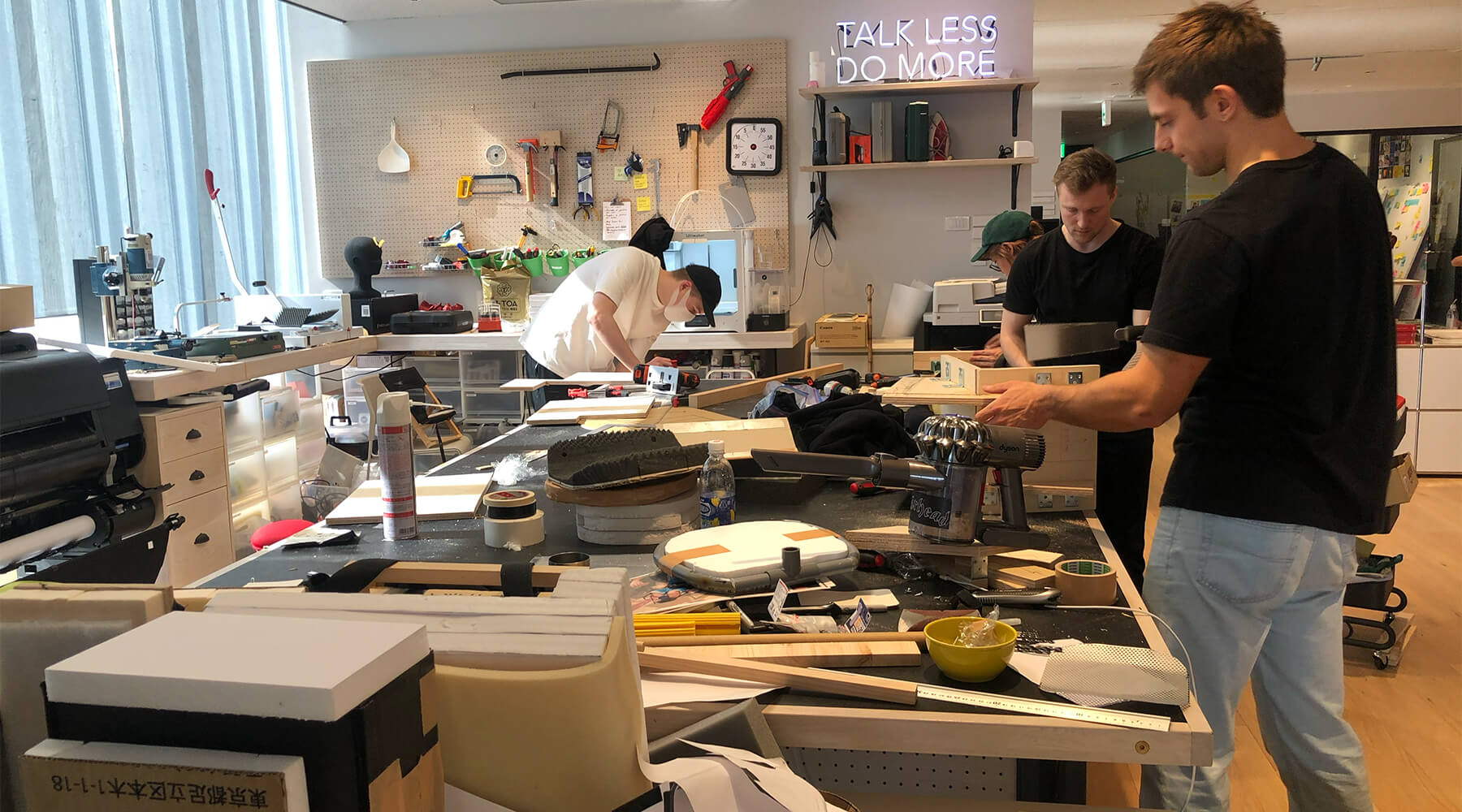
Think about how your values and vision are represented in your team’s space. Do you have early prototypes hanging around represent the value of experimentation? Do your communal work spaces actually encourage collaboration? (Do you have communal work spaces?)
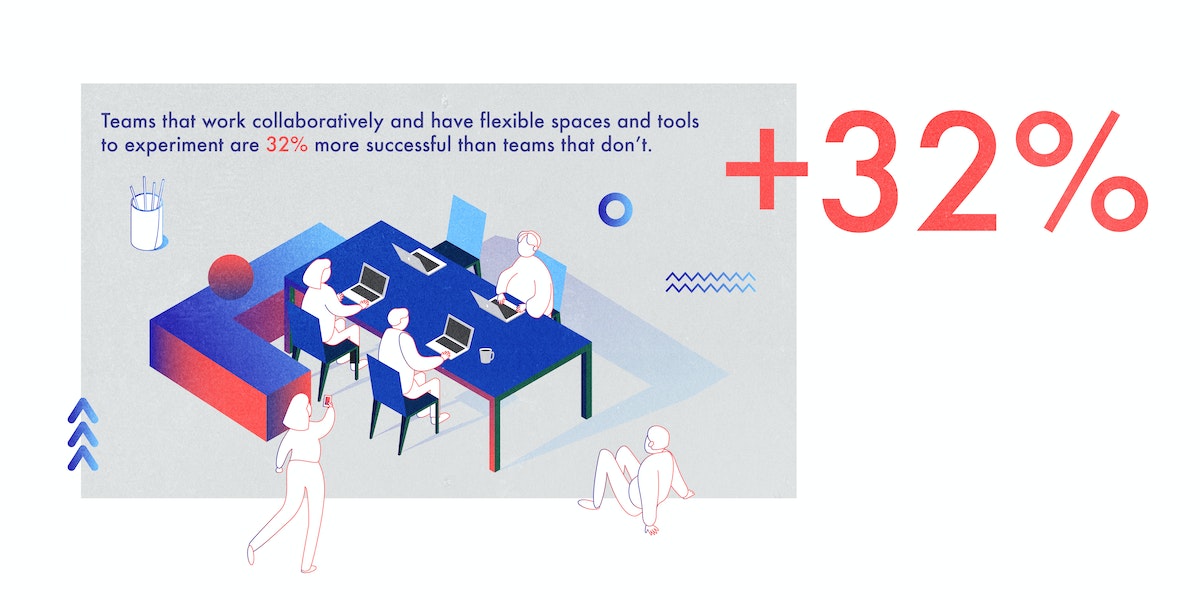
Modern work environments should encourage, but not dictate, the most productive behaviors. The idea is to design an environment that encourages the collaboration and experimentation so crucial to creative work, while also empowering teams to adapt as new challenges arise. Data shows that teams that work collaboratively and have flexible spaces and tools to experiment are 32 percent more successful than teams that don’t.
3. Learn how your teams actually work
It seems basic, but many leaders don’t know the ins and outs of how their teams work, which means they don’t know how to craft the conditions that will set them up for success. Make sure to check in with your teams to get a sense of what they love, loathe, and want to tweak about the way your company works. Keep an eye out for work environment hackers who are using tools and spaces in unconventional ways—manipulating what’s available to support their work as best they can. And make sure that everyone has the tools that they need: For example, people in organizations that restrict access to online collaboration tools are sometimes forced to recreate the same benefits using a combination of project management, file sharing, and messaging software.
4. It all starts with prototypes
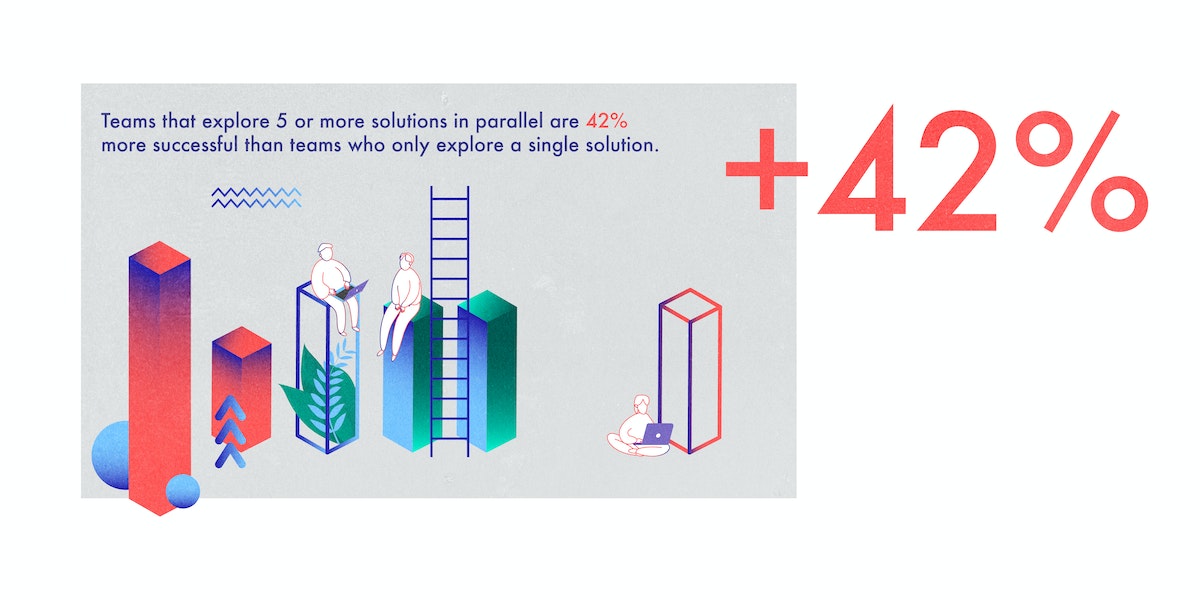
Have an idea for a new method of brainstorming, or a more effective workspace? Test it out by prototyping with high-performing teams. The key isn’t to start with the perfect solution, but to arrive at something that works and continuously improves. Identify teams that are enthusiastic about change, and start there. And don’t forget to look to your employees for suggestions—not all change needs to come from the top, and teams have a better sense of their own needs. Prototyping is an iterative process, so teams should be given the freedom to test a lot of ideas. According to our data, teams that test five or more solutions in parallel are 42 percent more likely to create successful solutions than teams that don’t do rapid prototyping.
5. Codify and share what you learn
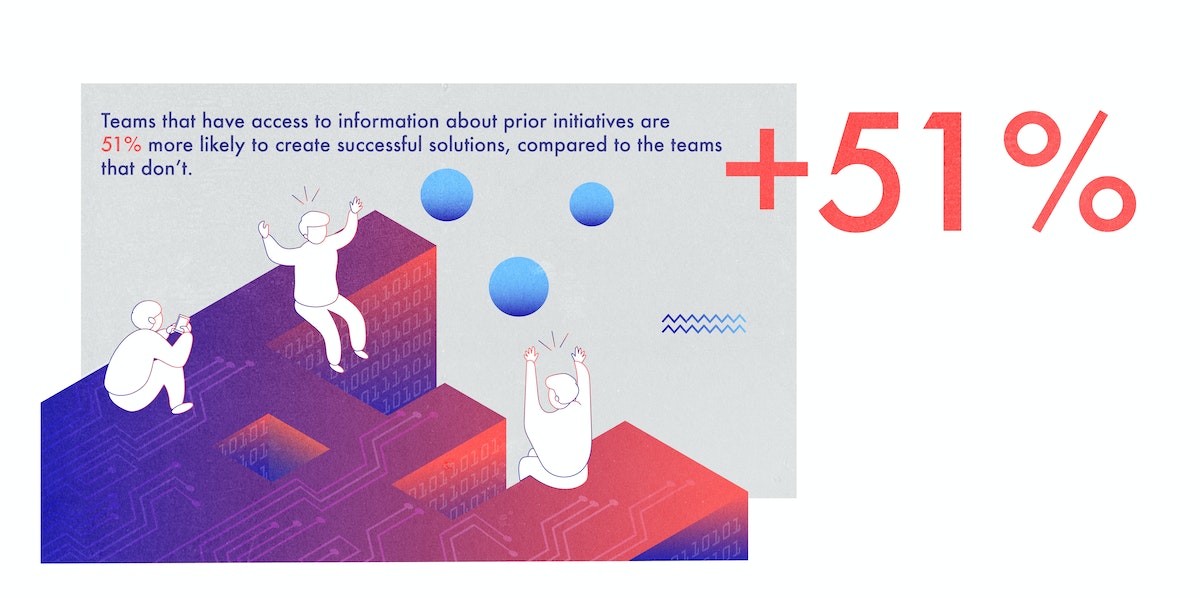
As teams grow and mature, the lessons they gather from experimenting with their work environments should be packaged and shared with the larger organization. Codifying the characteristics of effective work environments can help new employees develop productive behaviors more quickly. Consider creating events or programs that allow teams to share the lessons they’ve learned from prototyping and inspire others to adopt similar changes or begin their own experiments. The data shows that teams that have access to information about prior initiatives are 51 percent more likely to create successful solutions.
Creating change and empowering people to determine their optimal work environments are the most powerful tools leaders can use to set the conditions for innovation. These changes have a material impact on a company’s ability to compete in an uncertain future. But don’t be intimidated by the enormity of the challenge. All it takes is empathy, empowerment, and curiosity to set yourself and your teams on a journey toward self-discovery.
Executing innovative ideas requires creativity. And creativity thrives in a work environment that fits the dynamic needs of modern teams, from hyper-collaboration to heads-down time. As today’s organizations strive to become more innovative and resilient, they must adapt their spaces and modes of working to promote creative problem-solving across teams.

An IDEO Recruiter’s 3 Strategies for Writing a Better Resume
How to avoid rewriting your resume over and over (and over and over and over)
Here are three exercises and strategies that might come in handy next time you’re applying for a new job.
1. The “so what?” test
Sadly, most bullet points on resumes read like a laundry list of job tasks, and many feel redundant if those tasks can be assumed by reading the company name and job title. Instead of telling a resume reader what you did day-to-day, tell them about achievements and things you are proud of. Tell them about the moments when you went above and beyond.
Read each bullet point out loud and ask yourself this question: So what? Why is this bullet point important? Why is it taking up room on your resume? Now imagine someone else—a stranger, someone who has never met you—going through your resume the same way.
If you get defensive or fired up when you run the “so what?” test, that’s good! That means there’s something you’re proud of in that bullet point that you need to communicate. Make that the heart of your bullet point.
When I run resume writing workshops for people starting out in their careers, they can become self-conscious and feel that their limited experience isn’t worth bragging about. To prove that you can take this approach with any job or experience level, I’ll provide you with the wait-server example. (Back in the day, I worked at a restaurant and firmly believe it teaches you great skills.)
If I were to take the laundry list approach, my bullet points would read:
- Greeted patrons
- Took food orders
- Provided friendly service
That's all great, but it's assumed that a server would do those things. It’s the job, after all. With that list, I’m not telling you anything new or unique about myself.
If I communicate my achievements and proudest moments instead, my bullet points read like this:
- Worked part-time while in school
- Trained all new staff
- Organized a volunteer day for employees
- Selected as employee of the month in my first month
This has a different tone to it. In this new phrasing, I communicate that I'm good at time management, I have the ability to teach and mentor others, I was able to project-plan and activate engagement, and I very quickly made an impact.
So what, you ask? That’s what!

2. The tailoring session
Just like tailoring your clothes, tailoring your resume isn’t about creating something from scratch. It’s about snipping, hemming, and stitching things together so that it fits perfectly. Use this strategy to keep yourself from reinventing the wheel over and over again.
Keep a master resume that lists every single experience you’ve ever had. The master resume is where you don’t have to worry about page count—it’s for your eyes only, so there are no limits. Add sections and bullet points to your heart’s content. Let this master version be everything from your security blanket to your resource library.
When you are ready to apply to a role, create a copy of the master resume and give it a name that is specific to the role you’re applying for.
Now read the job description again. What are the requirements? Use those as guidelines for tailoring your resume. Because you’re starting with a master resume, you don’t need to create new language. Simply delete the text that isn’t pertinent to the role, leaving only the relevant experience.
You are almost done. Before you submit this tailored resume, read through it. Start from the bottom, then move your way up, going in chronological order. Does this new tailored resume show career progression when read from the bottom up? Is there a thread that runs through it? Does it need to be stitched together in some places? When you are ready to go, make sure you convert it to a PDF!
3. Give curly parsley the chop
In the culinary world, NFG stands for non-functional garnish. If you’ve ever ordered a breakfast dish at a restaurant that came with a random slice of orange, and the orange has a piece of inedible curly parsley stabbed into it, you have experienced NFG. This unnecessary addition has nothing to do with your dish; in fact, it may spoil some of the flavors, and you might even start off your meal a bit annoyed that you need to eat around it.
On a resume, NFGs include images as fillers, multiple fonts, italics, bold, a spectrum of colors, and charts and infographics with no data source.
Use these things wisely and sparingly. Remember, you want to create a space that is welcoming, clean, and easy to navigate. A resume with curly parsley is hard to read. If the eye doesn’t know where to look first, the mind will get tired trying to figure it out.
Best case scenario: The person reviewing the resume needs to work hard and find extra mental energy to focus amidst all of the distractions. Worst case scenario: Your resume gets passed over because it’s sensory overload.
If you do want to share more but don’t want to overcrowd your resume, here’s a challenge: Think beyond the resume.
Times have evolved. There are other ways to highlight your work. LinkedIn is the obvious one, and GitHub is useful for engineers. More and more, we see candidates creating personal websites to showcase their experiences in interactive, visual ways.
If you are feeling tight on space, provide links to other resources where you can get more creative. And there’s always the cover letter!
Hopefully these tips help save you time, energy, and a bit of anxiety when you're crafting a resume. Remember, there is beauty in simplicity—after all, the only person who can truly pull off a pink, scented resume is Elle Woods.
In my career advising days, I’d tell job seekers that one of the most important spaces they will occupy is only 8.5 inches wide by 11 inches long—or about 21 by 28 centimeters for our friends outside of the US. Trying to capture yourself, your experience, and your potential in one-to-two pages is hard. It’s often the first introduction companies have to you. As with any space, there are ways to make it feel empty and impersonal, or crowded and noisy. Luckily, there are also ways to create a page that is welcoming, clean, and easy to navigate, too.

Lindsey Turner
I’m passionate about building brands, products, and experiences that help organizations show up with meaning and momentum.
I help organizations cut through complexity by shaping how they show up, through brand strategy, identity, and storytelling.
Working at the intersection of brand and business, I bring an editorial eye and a bias toward making—turning ideas into tangible experiences that people can understand, trust, and believe in.
My work spans government, healthcare, financial services, media, and consumer goods, from launching Gen Z-focused ventures to building innovation labs and reimagining legacy brands. I relish moments of ambiguity and enjoy translating across teams, perspectives, and priorities to move ideas forward.
I started my career in editorial and digital design, shaping cross-platform experiences and identity systems in publishing and agency environments. That foundation still shapes how I work today: I’m detail-oriented, collaborative, and overreliant on the Oxford comma. I hold a BFA in Visual Communication from the School of the Art Institute of Chicago.

Rachel Young
My work helps organizations see who their products aren't working for—and build the will and the tools to do something about it
For 25 years, I've asked the same question: Who does this design exclude—and what are we going to do about it?
My work spans human-centered strategy, inclusive design, and qualitative research, with clients ranging from Microsoft, Google, and Verizon to the National Science Foundation, and San Francisco Unified School District.
Before IDEO, I taught elementary school in East Palo Alto and spent a decade doing design work with social service organizations—where I learned firsthand what it costs people when systems are built without them in mind.
I am currently writing User Error, a nonfiction book about digital access and the design decisions behind it. I live in Oakland, California.

Brian Pelsoh
I lead with craft, ensuring our work is creatively excellent: rooted in deep human insight and imagination, while also grounded in the realities of business and technology.
My expertise spans brand, communication, and product design across tech, education, the arts, and social impact.
I believe great work demands both high-level vision and obsessive attention to detail, and only happens through collaboration.
I bring an inclusive, hands-on approach and a deep understanding of business, which enables me to consistently deliver excellence while always asking why.
Before joining IDEO, I worked at the brand firms Pentagram and VSA Partners. I began my career as a designer, leading teams at the School of the Art Institute of Chicago and the Milwaukee Art Museum. I hold an MFA in graphic design from Maryland Institute College of Art and a BFA in communication design from the Milwaukee Institute of Art & Design, and have taught at some of the best design schools in the US.

Tony Wong
I am responsible for IDEO’s long-term success in China and working with clients to use design as a tool to enable growth.
I am responsible for IDEO’s long-term success in China and working with clients to use design as a tool to enable growth. Specifically, I have helped Chinese companies design holistic brand solutions through the development of their products, communication, services, and innovation teams, and I have helped multinationals expand their presence and influence in China.
I advise global leaders on developing China-led innovation and capabilities.
In over 15 years in IDEO Shanghai, I have worked on projects that use design to elevate the quality of the experience of healthcare products and services, streamline processes that increase productivity, create spaces and programs that promote and enable inclusive communities, and build next generation mobility solutions that are planet-positive.
Before joining IDEO, I worked at Philips Electronics and the Electrolux Group in Italy, the Netherlands, and Singapore on a number of breakthrough commercial products. I am a member of the Young President Organization in Shanghai.

How to use AI as an editor, not a writer
Ed White shares how he uses AI as an editor—not a writer—to sharpen storytelling, rehearse ideas, and preserve the productive friction that makes creative work better.
Ed White has a rule he's tested on his own writing: hold yourself as the writer, and let AI be your editor. Ed is a Senior Design Director at IDEO's London studio, where he co-leads the firm's AI portfolio across Europe. Before IDEO, he spent 12 years as a writer and editor at the Financial Times, Wired, and Contagious. So when he talks about when to use AI for storytelling and when not to, it comes from two decades of crafting his storytelling skills.
In this episode, Mina Seetharaman talks with Ed about two specific tools he uses to keep AI in an editor's seat: a "roasting agent" prompted to critique his drafts without any sugarcoating, and a simulated audience he rehearses pitches on before the real thing. They also get into what Ed is hearing from design leaders at Anthropic, Lovable, Shopify, and Google Creative Lab about how creative work is changing, and why he thinks the friction of writing something yourself is worth protecting rather than automating away.

Building a personal AI for the messiness of life: Sida Li
Becca Carroll talks with Cue co-founder Sida Li about designing a personal AI for the messiness of everyday life—not just work. They explore how Sida stays anchored to human needs while navigating fast-changing technology, product tradeoffs, business-model experimentation, and the realities of building an AI company today.
Most AI products today are built for work—a space with clear problems and established systems. One founder noticed a gap: personal life is messier, harder to systematize, and mostly left behind by the AI boom. So she built Cue, a personal AI that lives inside iMessage and group chats, to go where the other tools haven't.
In this episode, Becca Carroll, IDEO's Chief Strategy Officer, talks with Sida Li, co-founder and CEO of Shared Context Lab, about staying anchored to a human need while the technology around her keeps changing shape, why she treats her business model with the same rigor she'd bring to a product, and what it feels like to build a company at this particular, disorienting moment in AI.
The conversation also gets into how Sida makes design decisions: the language Cue uses to describe itself, the tradeoffs behind building inside iMessage instead of a new app, and a real story about a business idea that didn’t pan out.
This is the second in a two-part series profiling founders from IDEO's Startups-in-Residence program. The first conversation is with Johannes Seemann, founder of Sooner, on designing GenAI for the emotional side of money.

Designing GenAI for the emotional side of money: Johannes Seemann
Designing financial tools around the feelings that shape money decisions.
Most personal financial tools are built to run the numbers and optimize towards a budget. While that works for some, most people experience money as a lived relationship that does not neatly fit into a spreadsheet. Johannes Seemann and Becca Carroll discuss why money is emotional before it is mathematical, and what a human-centered approach to building a generative AI financial product looks like in practice.

The curious leader's edge in uncertainty: Scott Shigeoka
How genuine curiosity helps leaders navigate uncertainty with greater confidence.
Mina Seetharaman talks with Scott Shigeoka, author of Seek and Head of Curiosity Cultivation at the Eames Institute, about what distinguishes genuinely curious leadership from performative curiosity, how power dynamics shape curiosity, and why practicing curiosity can restore energy rather than drain it.
Looks like you might be in search of something very specific?
Or reset the filters above and try another angle.
Here’s some random inspiration

Podcasts about creative leadership

Articles about the power of prototyping
