
.svg)


Peripheral vision
A consumer electronics giant becomes a climate-era leader.
IDEO’s partnership with Logitech is a case study in bringing together the power of imagination and the rigor of business.
As much as we love to lead with creativity, it’s difficult to develop a business plan off ideas alone. So when Logitech asked the IDEO team to investigate a broad array of possible futures and report back, we brought our findings to life by inventing a board game. Instead of a dry presentation on circular solutions, our designers created a story about a mouse that turned into a webcam.
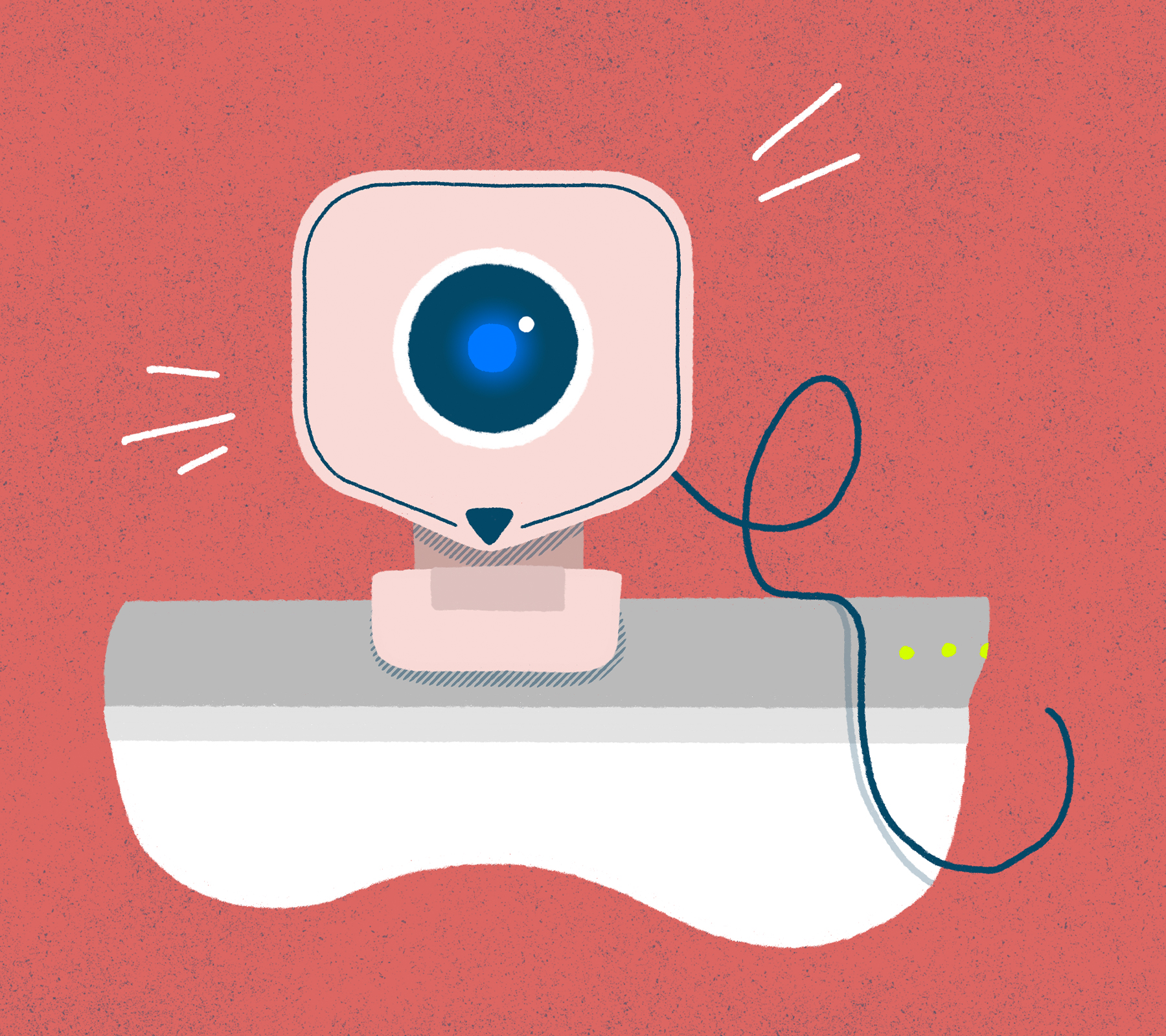
That imagination mattered. It fueled an exploration into expertise we collected from researching with people already living in futures destined to expand. And our rigor helped us hold more possibilities, and identify intersectionalities. Combined, they redefined what it means for ideas to be viable in business; they focused us on long-term sustainability; and they pushed us past immediate technical feasibility to ask if new ideas would be feasible for entire systems.
Our partnership with Logitech revealed that imaginative dreaming and business rigor aren’t opposing forces, but rather complementary tools in opening up new directions into a future demanding bold decisions.
As of 2019, e-waste was the fastest-growing waste stream globally, and only 20% of the 48.5+ million tonnes is disposed of properly.
Global emissions must be cut in half by 2030 to avert the worst impacts of climate change.
By 2030
Logitech has committed to becoming climate positive and removing more carbon than they create
The whole package
A global fashion brand pairs sustainability and growth.
Fast fashion keeps getting faster. But if the industry is to meet its climate commitments, its use of plastics has to slow down.
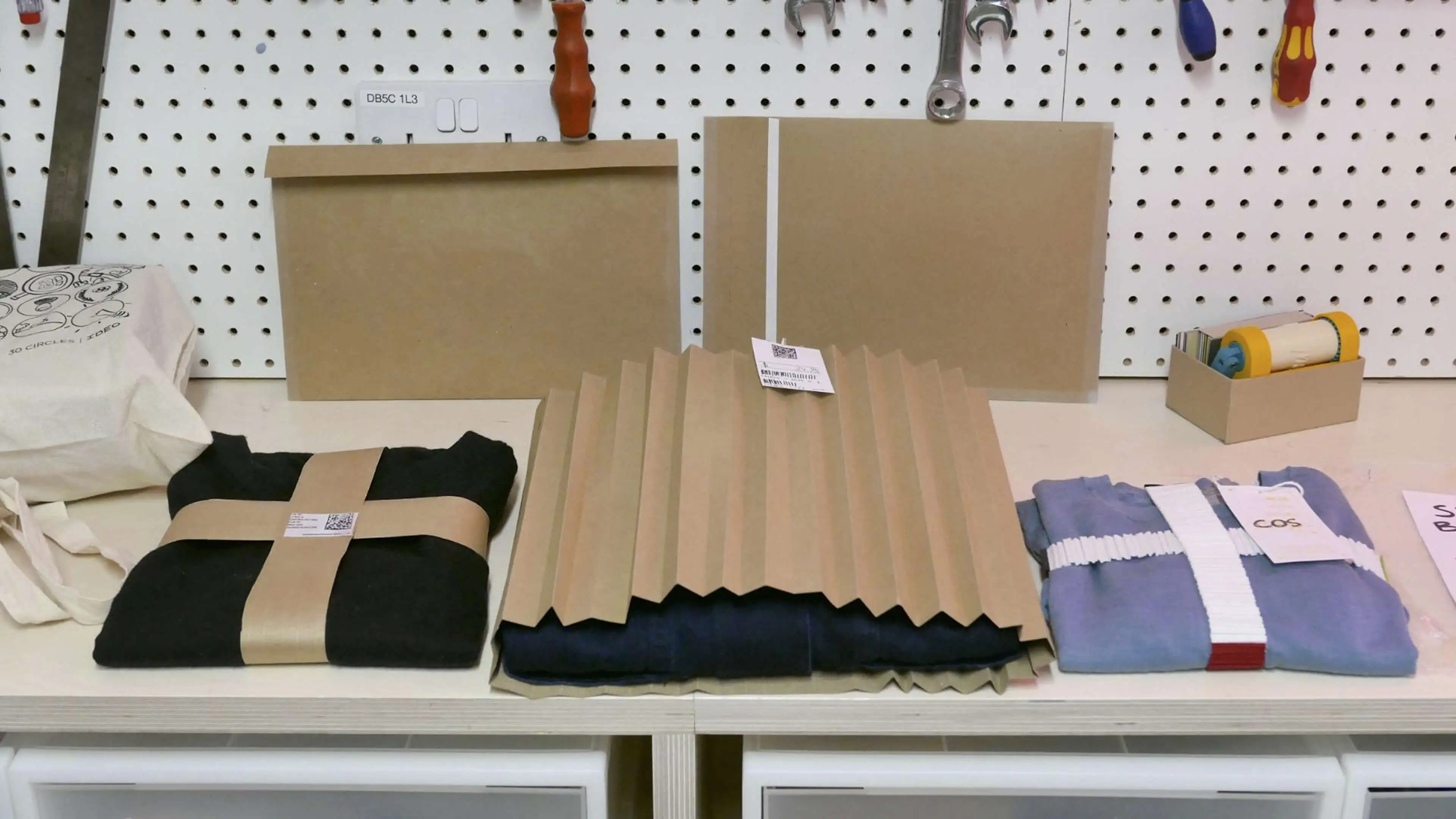
H&M chief executive Helena Helmersson set ambitious sustainability goals when she stepped into her role. She wanted to reduce the fashion giant’s impact on the environment and enable meaningful growth. But change is tough for any company, let alone one with eight brands operating across 74 markets. Together IDEO and the H&M Group created new plastic-free packaging, rallying around a more sustainable packaging solution that’s easily customizable.
By applying a design-led approach that went far beyond hiring a sustainability consultant, the H&M Group managed to reduce its use of plastic. But it didn’t stop there. A small team called Design Studio took what it learned and grew into an established strategic capability that pioneers new ways of working in the organization, tackling complex challenges in circularity, inclusion, supply chain, and customer experience. Sustainability isn’t a passing trend for H&M. It’s moving fashion forward.
Packaging accounts for 26% of plastics produced globally every year.
Fashion e-commerce is estimated to grow by 10% annually through 2024, requiring even more packaging.
100M
plastic-free packages shipped in 2022
2,000 tons
of plastic eliminated from H&M operations
The everywhere chair
In Japan, a mother works to build an inclusive child seat that closes the gap between children with and without disabilities.
For children with physical disabilities and their families, mobility is freedom. But in Japan, there are barriers to that freedom of movement.
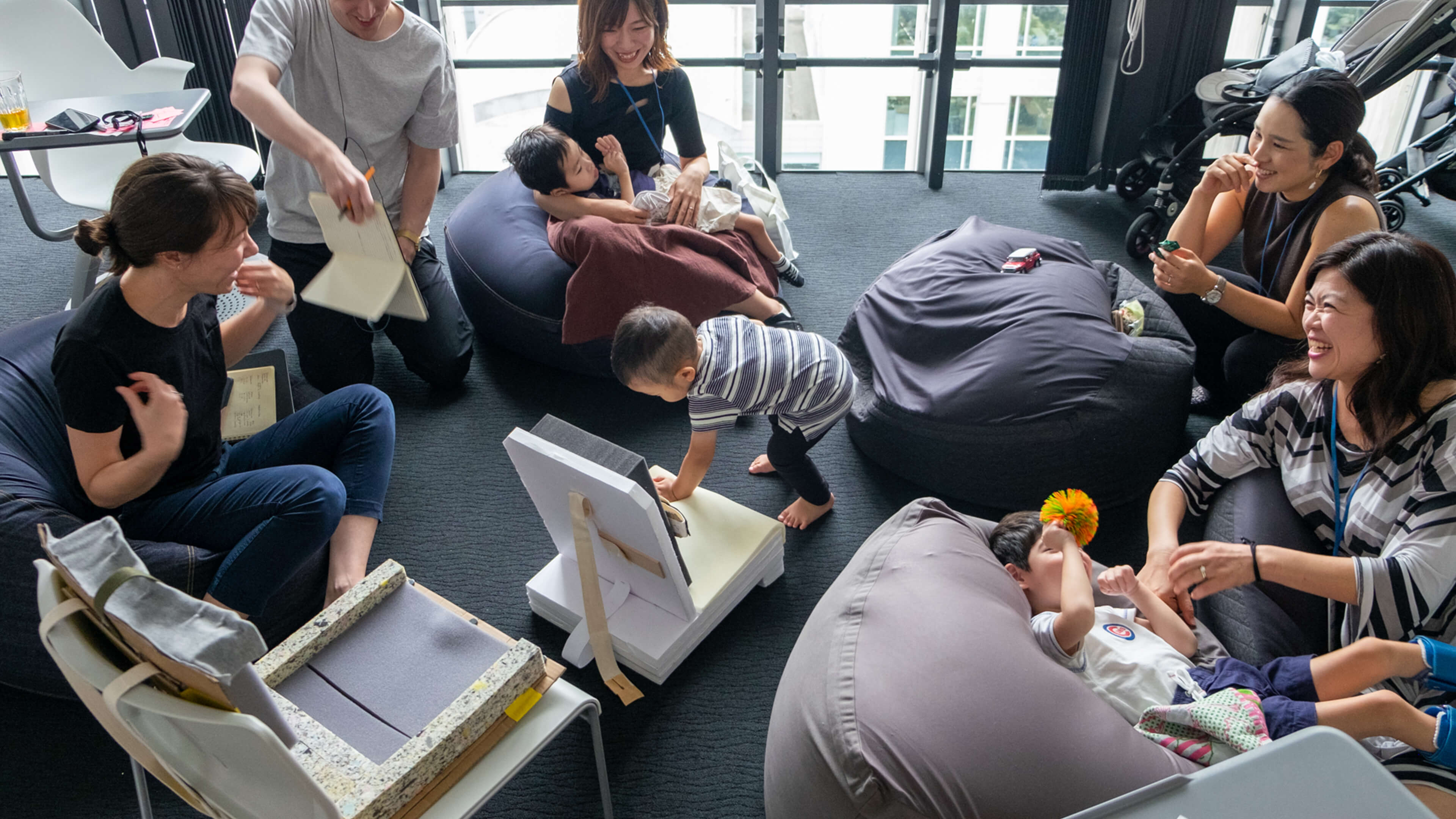
In raising a child with cerebral palsy, Yuri Matsumoto found that her son was separated from other kids during everyday activities. In Japan, children’s products are divided into two categories: those for children with disabilities and those for children without. Matsumoto aspired to close this gap with a product that would allow children of all abilities to use the same chair and be included in the same activities. To realize her idea, Matsumoto needed a strategic design company to refine the chair design, create a compelling visual identity, and arrive at a product road map to help set the business up for long-term success.
The result: a breakthrough product and supporting business that provides access for all kids, both for at-home activities like studying and eating, and also for family outings to restaurants, to the park, and to play with friends. Around the world, there are people like Matsumoto who see the need for better products in a very personal way. IDEO’s role is to help them realize their vision for a more inclusive future.
The Japanese health ministry categorizes 9.6 million people as disabled.
In Japan, children with disabilities are largely excluded from mainstream classrooms. Government subsidized support chairs are designed for posture and stability. Their bulk and rigidity make venturing out with them challenging.
Japanese children have fewer opportunities to learn about what it’s like to live with a disability than in the US.
Launched
officially in April 2022
5
restaurants and cafés in Tokyo are currently piloting the chair
Serving families first
One organization transforms health care, education, finance, retail, and itself to meet the expectations of the people it serves.
There can be no growth for business if peoples’ basic needs aren’t met.
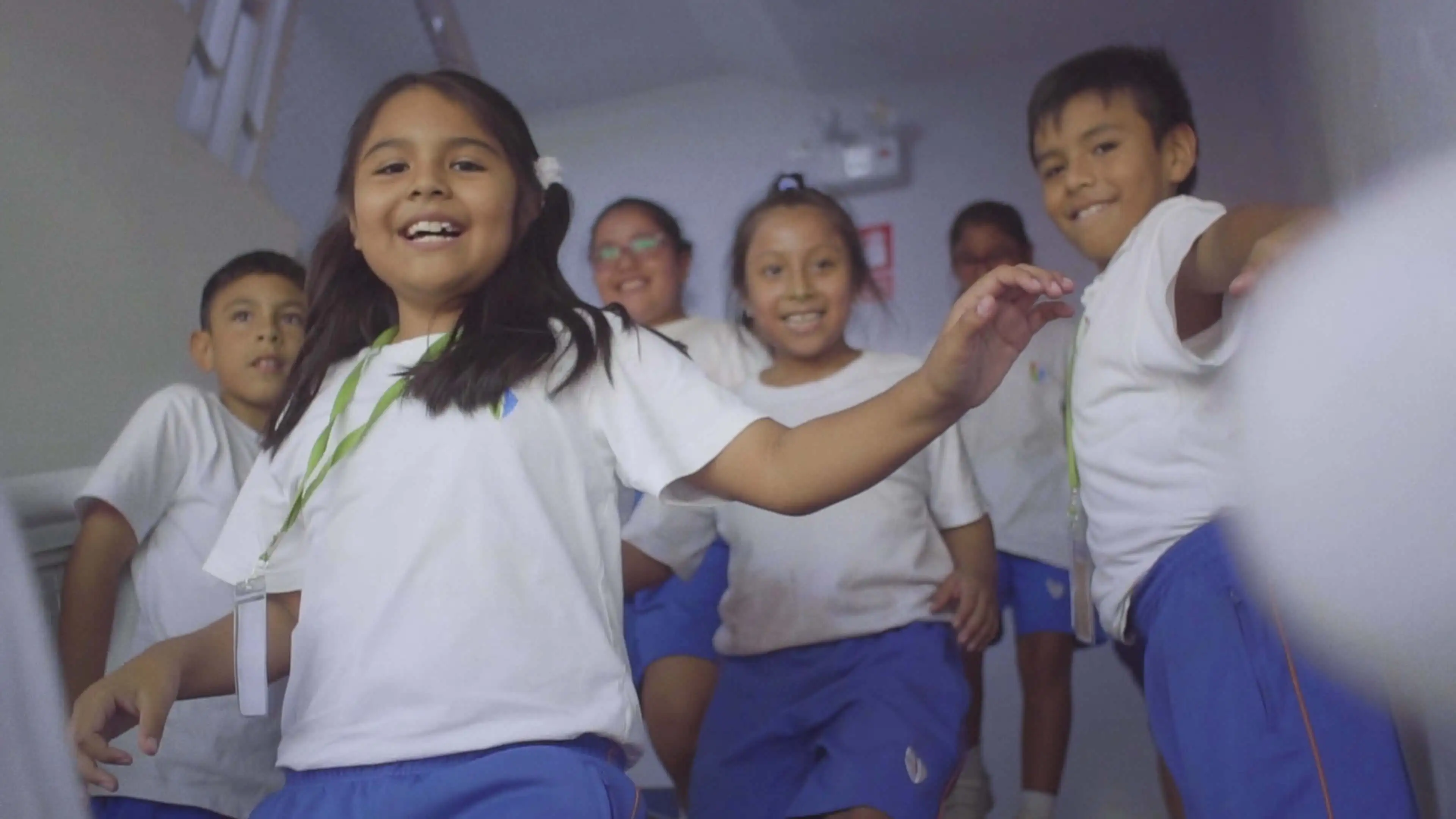
Carlos Rodríguez-Pastor, CEO of Intercorp, came to IDEO with an audacious goal: to address the most fundamental needs of his country’s people and grow his business at the same time. He’d been introduced to IDEO while attending business school in the U.S. and explained that he waited until he had a challenge that felt big enough to knock on our door. Together we built a high-quality school system that would cost just $100 per month—affordable for the middle class. That project convinced Rodríguez-Pastor and his colleagues of the power of human-centered design. Our blended teams launched an innovation hub to introduce new ways of working with the conglomerate’s 90,000 employees. And as we collaborated with Intercorp’s businesses in finance, retail, health care, and education, we learned more about how to serve the everyday needs of Peruvian families. Somewhere along the way, the ultimate design project became the organization itself.
And while Rodríguez-Pastor’s company has grown dramatically, he’s not one to rest on laurels. Instead, the company is becoming more ambitious: upskilling the country’s workforce through an online platform, and fulfilling its climate strategy by investing in Peru’s green economy. (The coastal nation is the world’s third most vulnerable to the effects of climate change.) While the pandemic dealt a blow to Peru’s economy, Intercorp remains steadfast in its commitment to supporting businesses that help the middle class thrive.
Peru’s PISA score of educational quality has grown by 10% in the past decade but still ranks in the bottom 10 worldwide.
In 2020, approximately 68% of the total employed population was in some form of informal employment—jobs that offered no protection and in which workers paid no taxes. Although that percentage decreased over the previous decade, Peru has one of the highest levels of informal employment in Latin America.
55,000
students enrolled across 68 locations in Peru, Mexico, and Colombia
2.5x
increase in revenue from $2.9 billion in 2011 to $8.5 billion in revenue in 2021
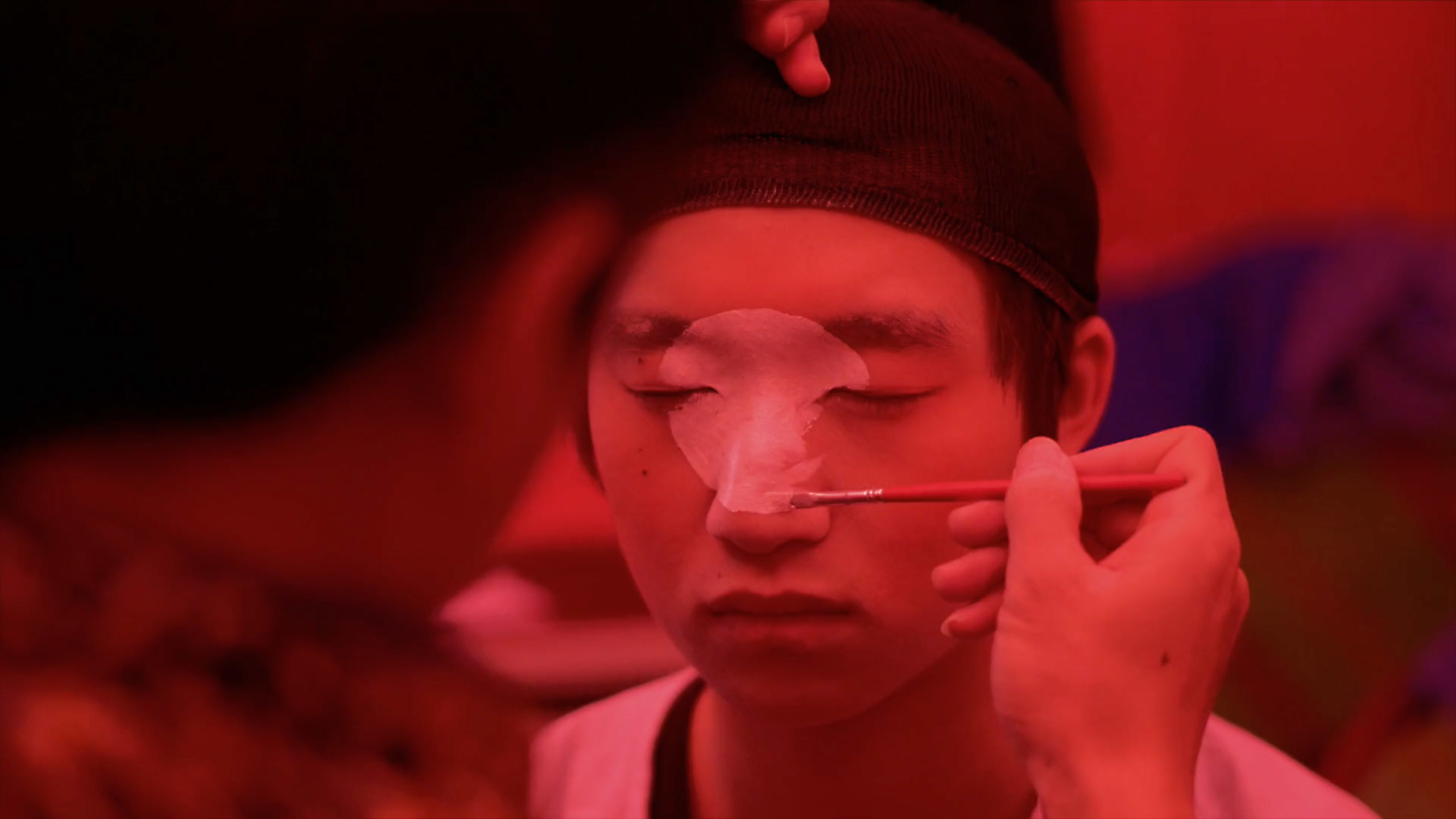
These Eye-Popping Videos Capture the Madness of Cities
An interview with nomadic filmmaker Brandon Li
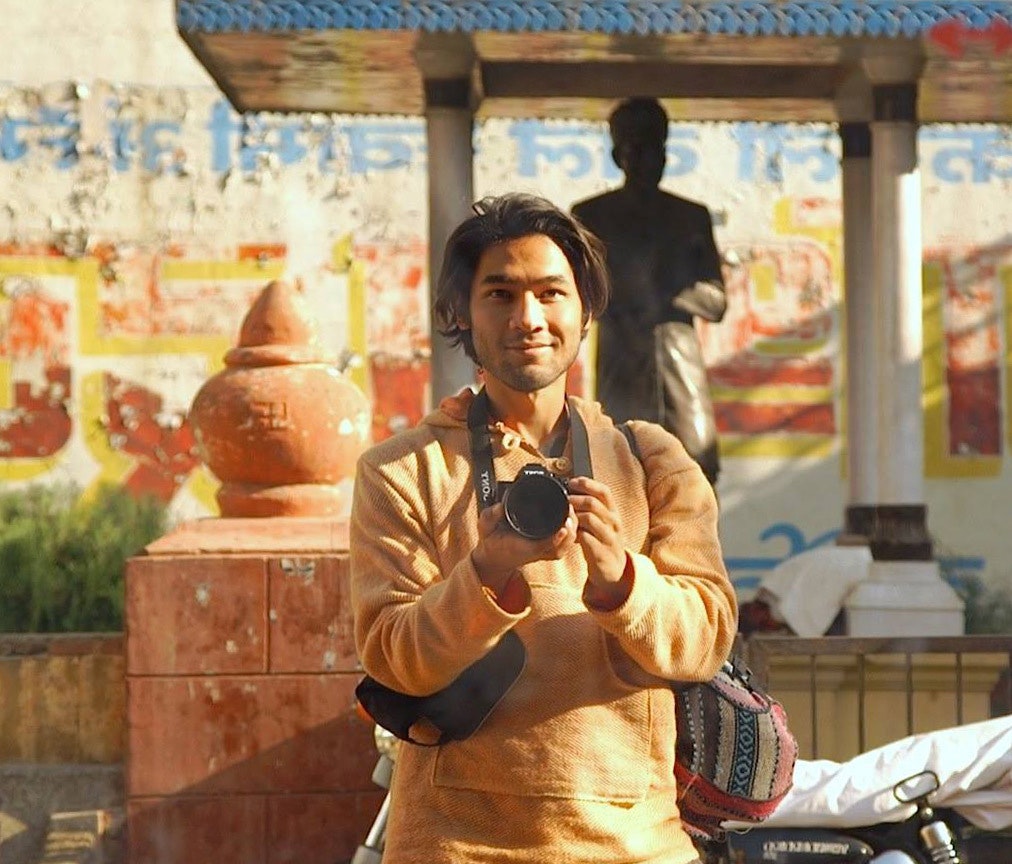
In one sentence, who are you?
I'm a nomadic filmmaker.
How did you learn to do it?
I travel the world and make short films about the places I visit. While I did go to film school, I'd say I learned most of my skills on the road, by trial and error.
WATCH: Hong Kong Strong. A film about the madness and beauty of this seemingly impossible city in the days leading up to Chinese New Year.
What are your three favorite possessions?
1. Good boots
2. My phone with Google Maps
3. My camera gimbal
What does a typical work session look like for you?
Shooting for about 12 hours a day, in the thick of a crazy festival in a foreign country. Then spending another 12 hours editing the footage and hiding from society.
WATCH: Nomads of Mongolia. Training eagles to hunt, herding yaks, and racing camels are just a few of the daily activities of the nomadic Kazakh people.
How do you get over creative block?
Travel to a new place.
WATCH: Tokyo Roar. Tokyo saturates the senses. This is my impression of the city's many personalities.
How do you see the world in 2078?
I see a mix of environmental catastrophe and remarkable human innovation. As the seas rise, we'll meet the challenge with ingenuity and eventually become fully sustainable, because it's the only way to survive.
Who are you (creative) crushing on lately?
Tokyo-born filmmaker Hiro Murai.
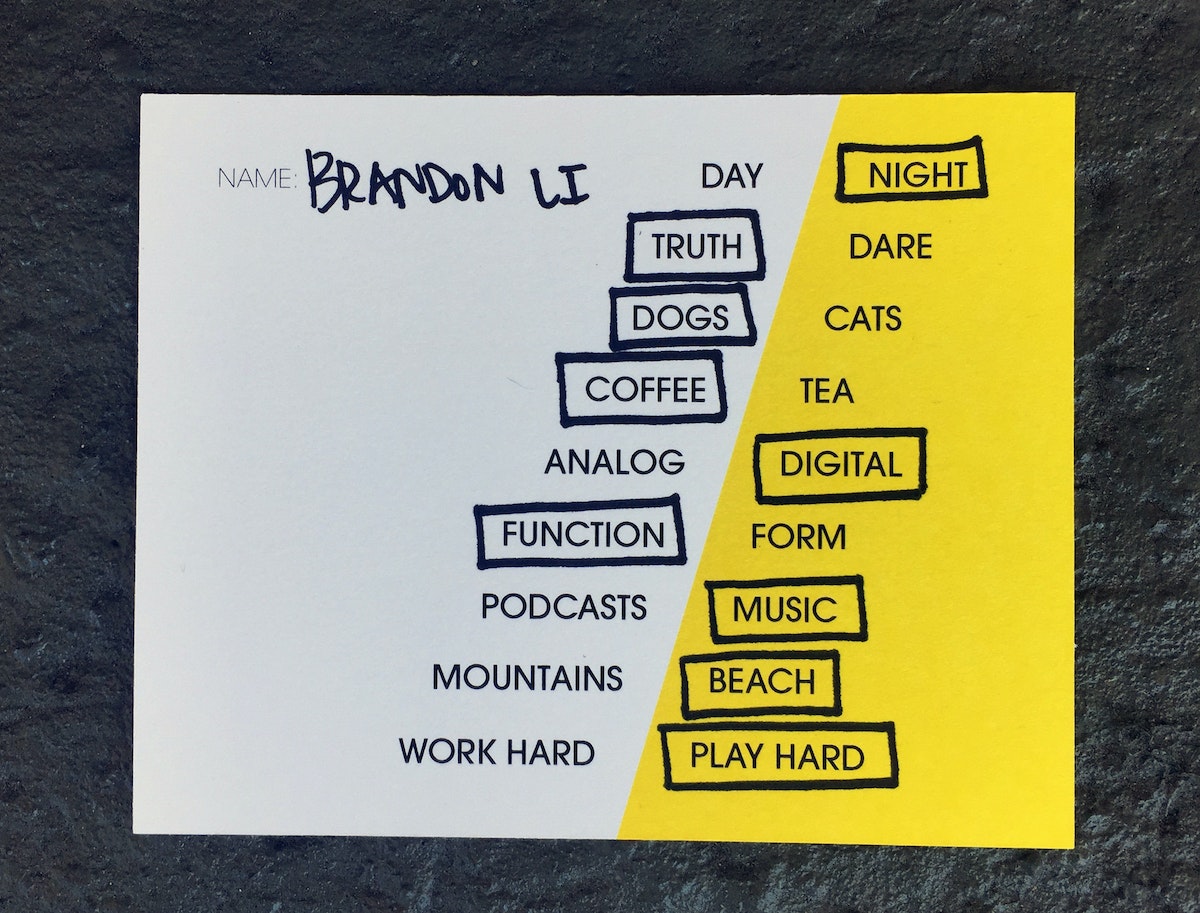
Getting the energy of a place on film is not an easy thing to do. Especially a transient place like Hong Kong. The city is both familiar and foreign to me. I was born there, and though I moved away at age 12, work has brought back many times over the years. On one of these trips, I was introduced to Brandon Li’s short film Hong Kong Strong (chosen by Vimeo as one of the best of staff picks in May 2016). In swooping, panoramic shots, it puts the beautiful madness of urban life and ordinary people on display. As a designer, I was instantly taken by Li's approach, as we, too, set about taking snapshots of daily life for inspiration. In this installment of Creative Crushes, I caught up with Brandon to find out more about his work.
8 Ways to Fail Your Way to Success
One designer's take on how to fail to succeed
At some point, though, we come to accept that screwing up is a key part of the creative process. Think about how kids play: They don’t think, they just do. And if the whole contraption comes crashing to the floor, they laugh at the mess and start over. (Or throw a fit, but hey, they’re learning about emotion, too!) Point is, when you embrace setbacks and don’t let them cripple you, you’re more likely to get across the finish line.
Maybe we should stop talking about failure and call our botched projects “experiments." And let’s take a cue from Edison and crowd as many experiments into 24 hours as we can. Here are eight ways to fail your way forward.
1. Keep it basic
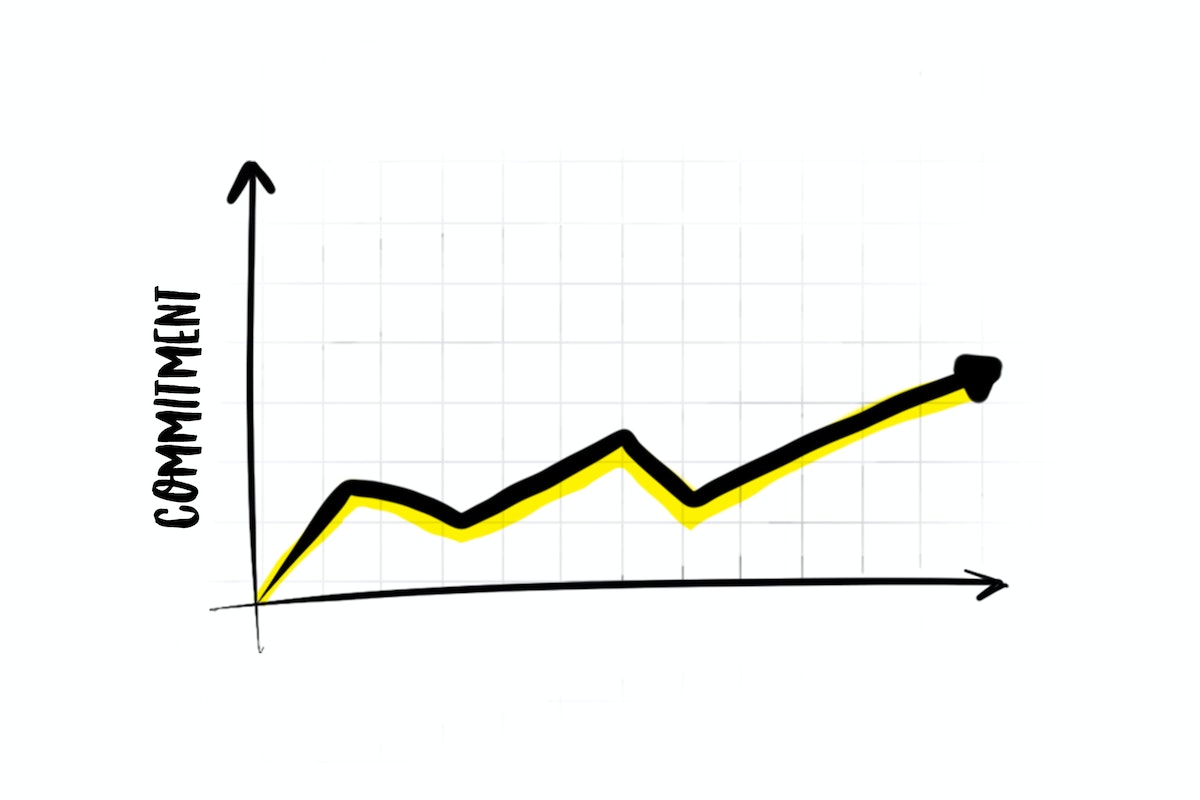
Don’t start by trying to find a fully developed solution to a problem. Keep fidelity low at first to allow others to see the possibility in the idea, not the flaws. The higher the polish, the more likely you’ll get the wrong kind of feedback.
2. Design impossible tasks
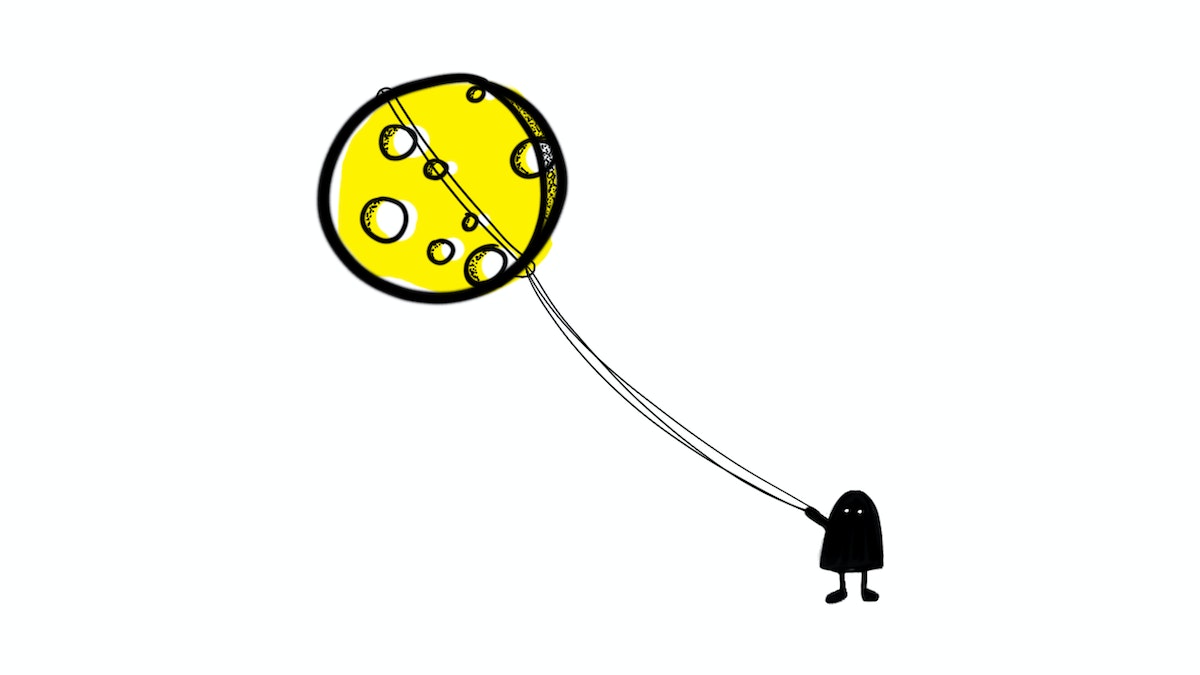
Such as: How might we create a new color? How might we live forever? Moonshoot thinking frees us from limiting ourselves, helping us produce a bunch of wild ideas. None of them will be right, but they’ll rev the engine of our imagination.
3. Don’t assume your final format
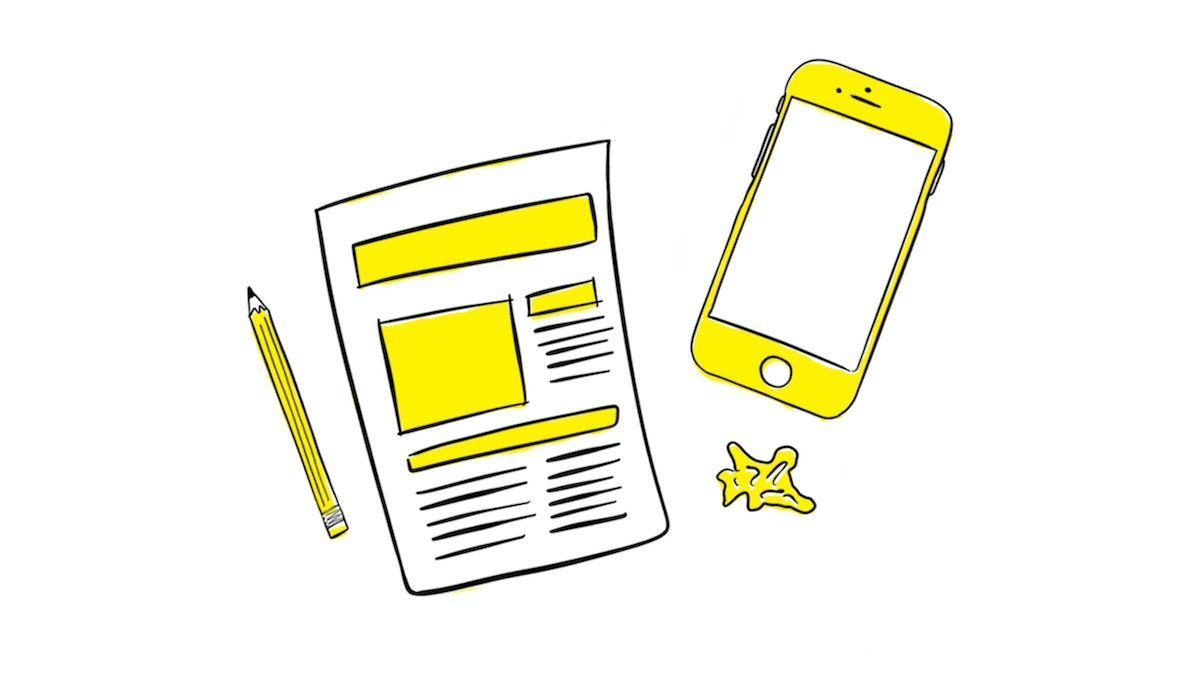
What are you making? Will you be hand sketching? Wireframing? Sculpting out of modeling clay? Drafting a written piece? Even when our end goal is to end up on screen, it is often helpful to start in a different medium—and maybe a tactile one.
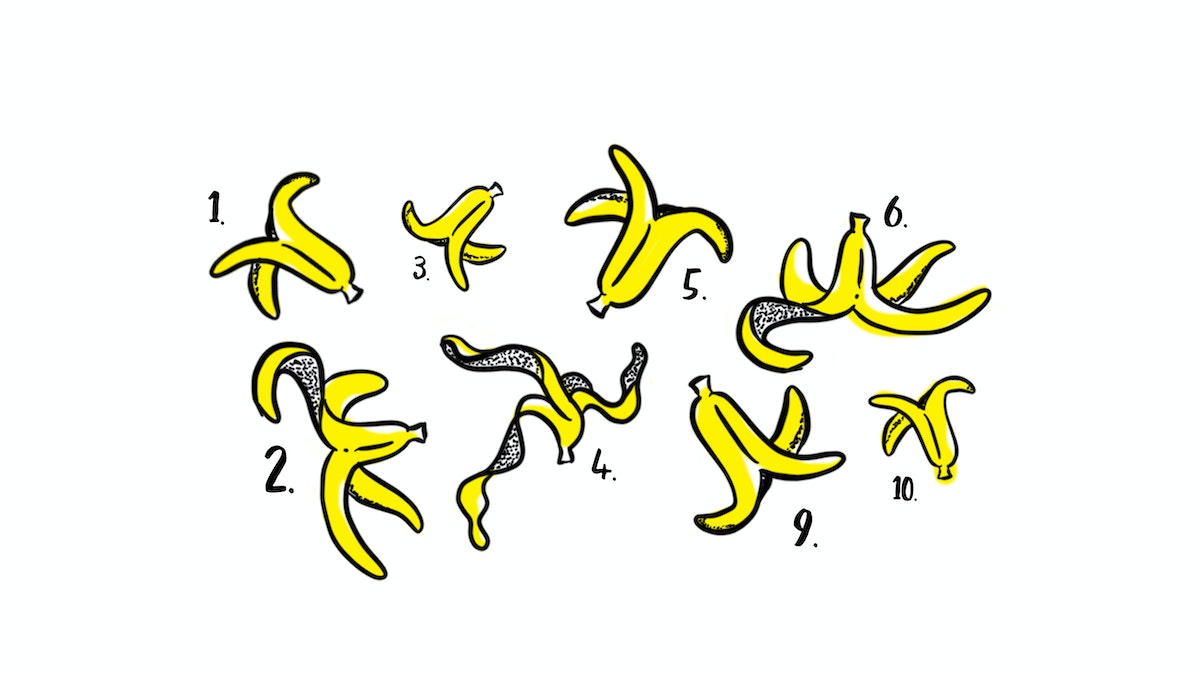
4. Set a goal for failure
Follow this advice from 100 Days of Rejection by Jian Jiang: “We will fail at least 30 times before we figure out the right solution.” Lowering the stakes and making a solution less precious makes it easier to generate a bounty of ideas to build from.
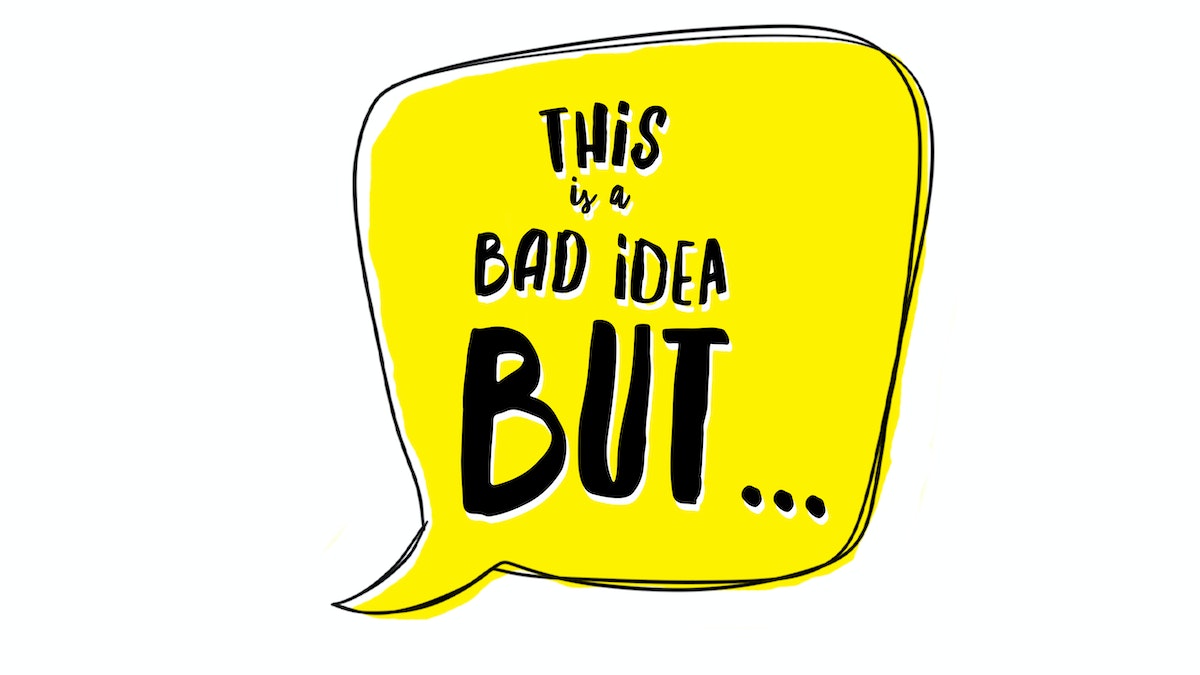
5. "This is a bad idea, but…"
Every time you throw out an idea, start with, “This is a bad idea, but what if…” That helps you practice non-attachment and prepare for the reality that most of your ideas won’t stick.
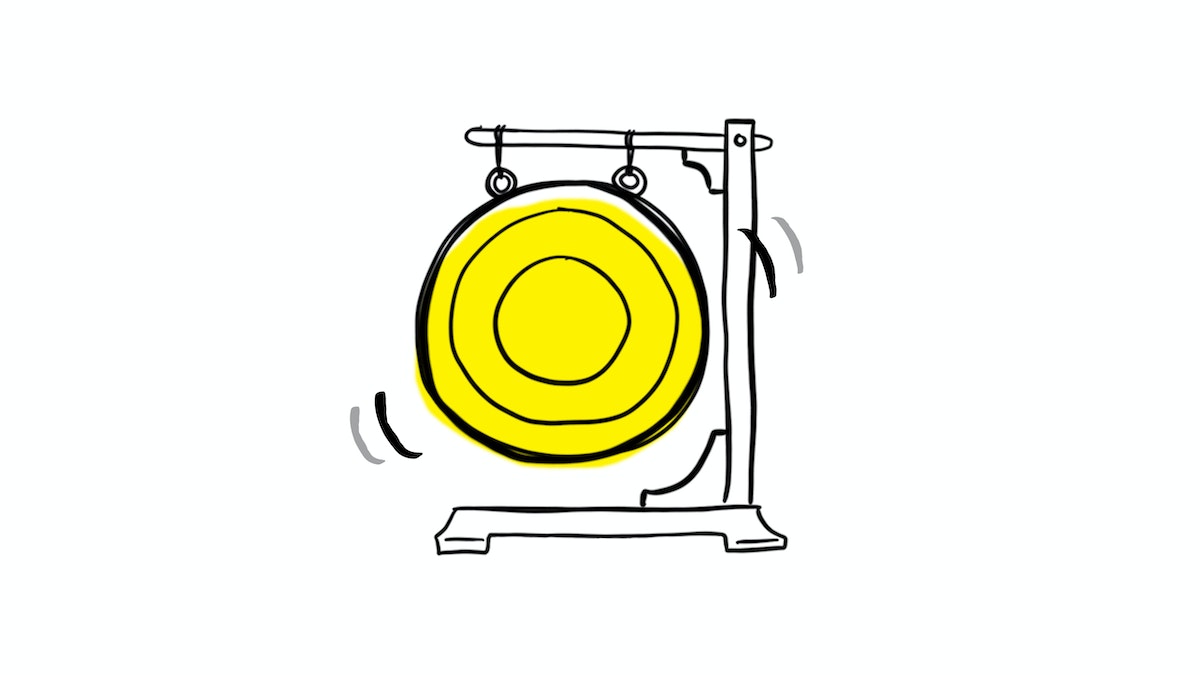
6. The Shame Gong
Every time someone makes a mistake or fails, hit the gong and have the team whisper "shame" in unison. It actually lowers the barrier for admitting to failure and makes for more honest, less bullshitty brainstorms. It also lightens the mood when you’re struggling with a particularly tough challenge or client. Plus: Ringing a gong is just fun. Missed a line item from the plan? Shame. Couldn't guess the grape of the wine at happy hour? Shame!
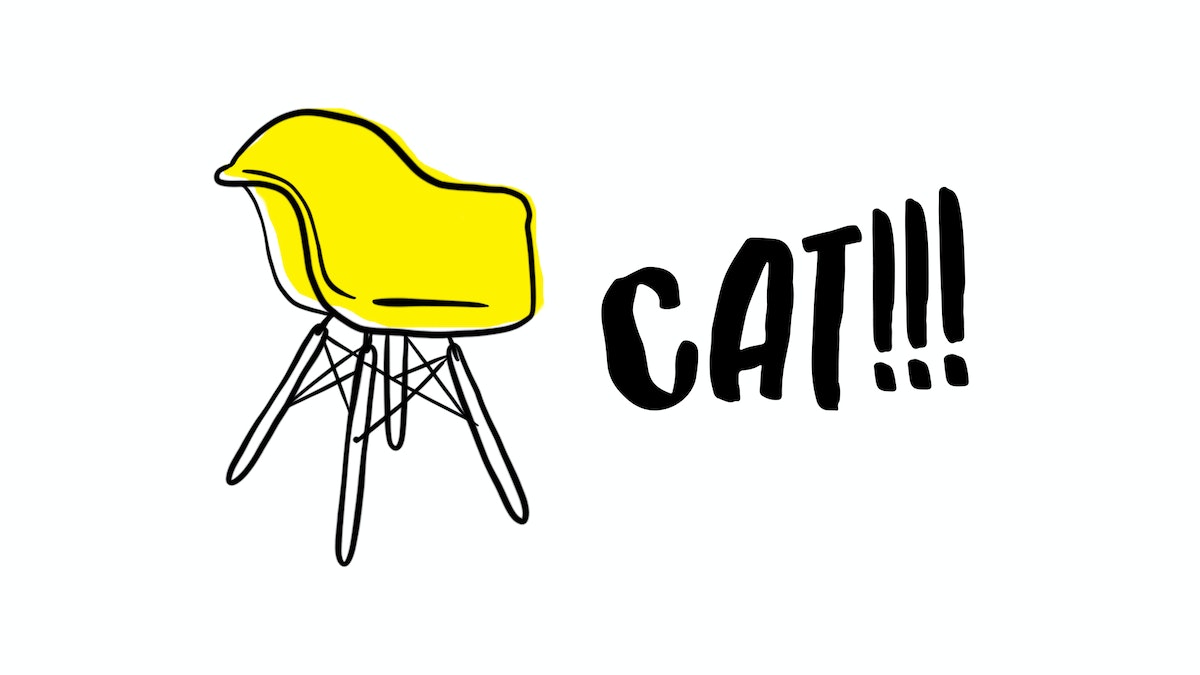
7. The mis-name game
Walk around the room and loudly, courageously, and boldly point at objects and yell out the wrong name for them. Do this for three to four minutes. Then pause and debrief. What was that like? Why was it difficult? There is a stubborn voice in your head telling you what is wrong, infeasible, impractical, too risky. The exercise reminds us that there’s a voice enforcing our fear of failure that can overpower our ability to take creative risks. Our job is to learn how to quiet that voice at the right moments to break out of the expected.
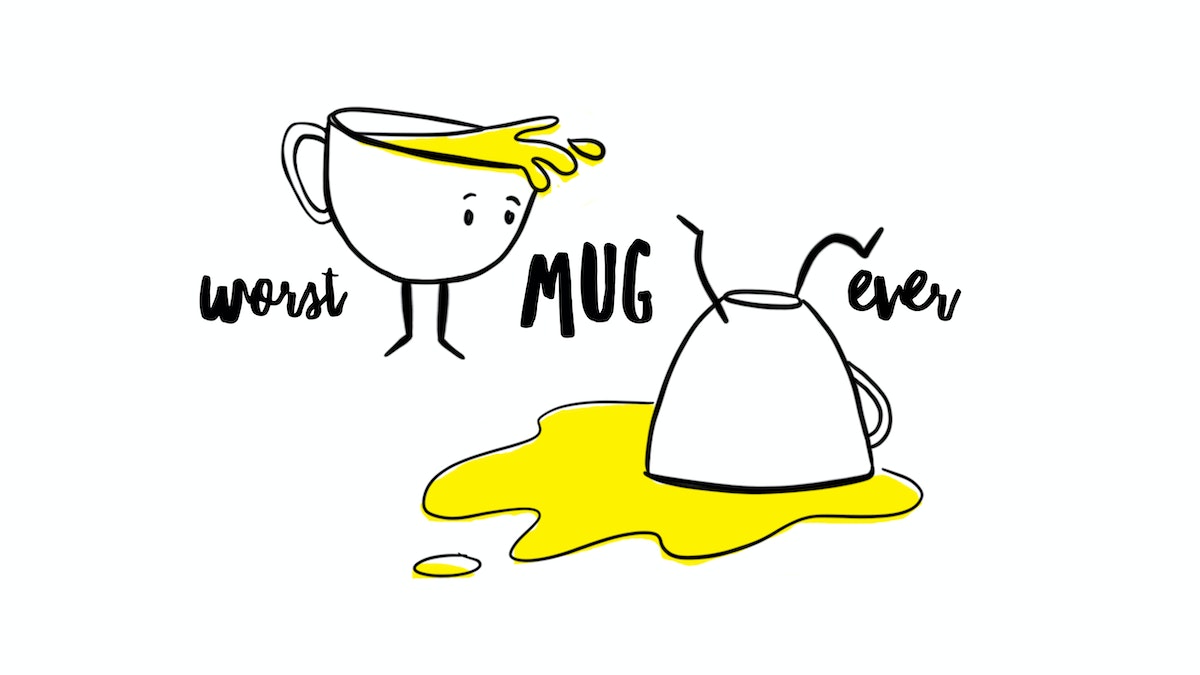
8. Worst experience ever
Design the WORST _blank_ experience ever (airplane/shopping/dining/laundry) and really encourage people to visualize it. Then use that to design the best version using an insight you learned from the worst. So, if the worst dining experience involved a waiter who would not leave you alone on a romantic date, what does that say about the key elements that make or break a date?
One final note for aspiring leaders: Don’t be afraid to talk about past failures and what you learned from them. Admitting failure will help your team gracefully shut down initiatives that aren’t working and move on to the next thing. Now get out there and gong.
Thanks to Tom Kelley, Kenneth Robertsen, Neil Stevenson, Olivia Vagelos, Eri Sugiura, and Sally Madsen for contributing to the piece.
“The real measure of success is the number of experiments that can be crowded into 24 hours.” —Thomas Edison
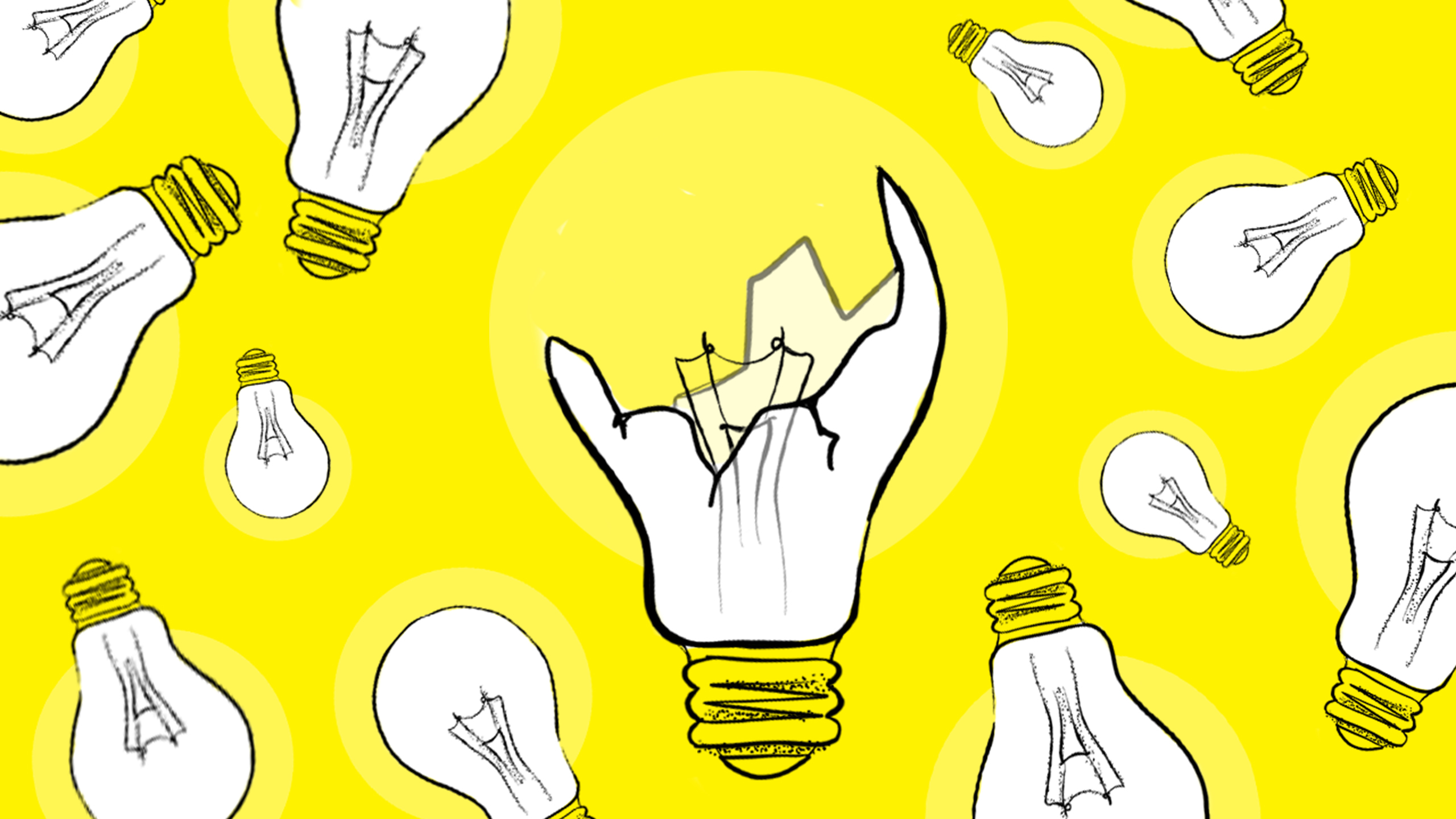
Most projects start with confidence. We’re going to crush this! Then come the mistakes. We squirm. We become riddled with self-doubt. Suddenly the prospect of success seems like a dim light bulb.

Meet the YouTube Pop Star who Teaches at MIT
The designer and artist Sputniko! may sound like she's from outer space, and that's not far from the truth.
The daughter of British and Japanese mathematicians, Sputniko! has become both a fashion icon and feminist spokesperson in Japan for speculative designs like the Menstruation Machine (which imagines a future without menstruation, in which people simulate having periods as a nostalgia exercise) and The Red Silk Of Fate (in which genetically-engineered silkworms produce a thread impregnated with the love hormone oxytocin—the perfect material to weave into a seductive outfit). We wanted to know more about why she chose speculative design as a medium, so we caught up with her to ask a few questions.
COMMUNICATING IDEAS THROUGH POP VIDEOS IS A BOLD MOVE. WHAT LED YOU THERE?
I started as a pop musician. I was writing songs when I was at Imperial College in London, before going on to the Royal College of Art. So I was already making music videos. They seemed like a good way to challenge the "high art" culture. I liked pop art, like Jeff Koons, Takashi Murakami, and Andy Warhol. Plus, at the time I was graduating in 2010, YouTube was becoming more significant. So I wanted to tap into that. Nowadays, the internet is so important for this kind of work. I thought that there needed to be more new speculative design work that was intentionally aligning with internet culture and viral culture.
HOW DO THE SCIENTISTS AT MIT FEEL ABOUT HAVING THEIR WORK PORTRAYED IN THIS WAY?
I work hard to be close to the scientists, and discuss with them how to best show their work. So far their reaction has been very positive. Some of the genetic engineers I've worked with have been getting more interest from investors because of the media interest. I think that a lot of scientists secretly want to be passionate and tell stories about their work. But they can't, because they need to be very precise. With us, and these stories, they can detach from that precision in a good way.
Crowbot Jenny by Sputniko!
WHERE DO YOUR IDEAS COME FROM?
I read a lot of science news blogs—I'm an information addict. I'll go through the news about AI, genetic engineering, and so on. What designers can do is imagine a consequence of these new technologies. If any of these imagined narratives ring a bell for me, then I'll do further research, in order to make the idea more concrete.
WHAT TECHNOLOGY IS CAPTURING YOUR ATTENTION RIGHT NOW?
AI and self-driving cars. And of course genetic engineering. But right now, my hottest interest is blockchain. This new system for handling money and identity is increasingly being adopted. Many people are thinking about it in terms of security. But creatives can think of other consequent narratives that could come from Blockchain. For example, how could it change lifestyles?
YOU'VE BEEN AT THE MEDIA LAB SINCE 2013. HOW DID YOU END UP THERE?
I first came to the Media Lab as a TV reporter when I was 27. I had my own TV show in Japan about design, and I came to interview Nicholas Negroponte. I told him how interesting I found the Media Lab, and he responding by telling me that they were looking for a new assistant professor in the arts category, and that I should apply. I was like, what? Me? I don't have a PhD! But I applied, they liked my work, and they invited me to start a new group.
Red String of Fate by Sputniko!
WHAT'S THE ACADEMIC EXPERIENCE LIKE FOR YOU?
I love being in this environment. The only thing that is a challenge is that academia is very paper-based. I don't publish papers, nor do my students. We are more about exhibitions and storytelling. It's not so much in the academic format.
WHY ARE YOU CALLED SPUTNIKO!?
It was my high school nickname. I attended an American school in Japan. I was tall and pale and I liked science and space. So the other students thought I must be half-Russian rather than half-British, and they started calling me Sputnik. Japanese girls' names often end in "ko", so Sputnik became Sputniko. Then, when I started doing music gigs as a student in London, I added the exclamation mark, because I liked the German band Neu!. It was completely not serious—just a band name. I never expected to be making and showing work, let alone teaching at MIT with this name. In Japan, when I go to symposiums and conferences, government ministers call me Sputniko-san. It's so surreal. My name reminds me of my weird career path.

YOUR WORK IS VERY CROSS-CULTURAL. WAS THAT A PRODUCT OF YOUR UPBRINGING?
Partly it was having a British mother and a Japanese father. And also growing up in Tokyo, where western culture and eastern culture are present at the same time. I grew up in Shinjuku. It's where all the skyscrapers are, but also yakuza bars and the red light district. My parents are both mathematicians, so I was surrounded by math. But I also liked art and music. For example, take the way I read books. I usually read about ten books at once, on a kindle. I usually just read five pages at a time. And then I move to the next book. The way I consume information is very parallel. For me, associations and connections are the seeds of my creativity.
DO YOU OVER WORRY ABOUT BEING OVERLOADED WITH INFORMATION?
Overload is not so much a problem for me. For example, I get my eyelash extensions done every three weeks. While that happens, I have to close my eyes for an hour. Which means that I can't look at my smartphone. I used to hate doing eyelash extensions so much. But then I found an eyelash specialist who was a beauty technology expert. She's like a Google for me. When I close my eyes I always ask her, what's a new technology that you've found? That's an example of how information-addicted I am.
The designer and artist Sputniko! may sound like she's from outer space, and that's not far from the truth. An associate Professor at the MIT Media Lab, her work feels like a Large Hadron collision of design, fashion, technology, and pop music—all filtered through the multiple personas she presents on YouTube.
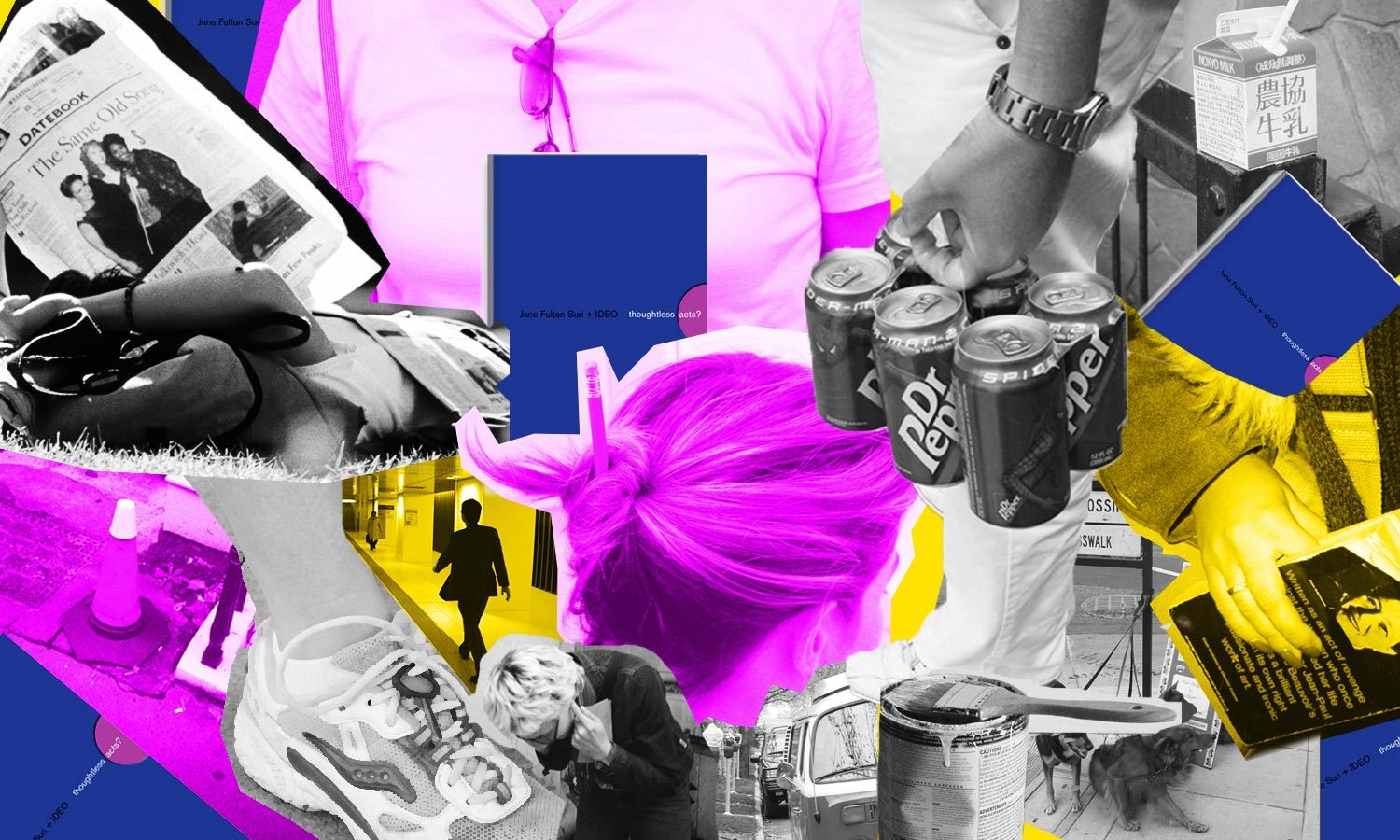
Thoughtless Acts: Skate the Streets
Thoughtless Acts: Skate the Streets. The intuitive ways we adapt and react to things in our environments

A few years ago, I traveled to Amsterdam in the wintertime. Amsterdam is famous for having rivers flow through its streets, but this winter, the rivers were frozen and they became new roads. Simultaneously, people took advantage of the sudden change and switched to an alternative form of transportation (ice skating!). One person’s thoughtless act can attract other people and become a sort of movement when other people start to join.
Human-centered design requires us to observe human behavior with beginner's eyes, so that we can spot the innate ways people interact with the world around them. We call these intuitive and unconscious reactions Thoughtless Acts, and IDEO designers collect photos of them to inspire their work.

Lindsey Turner
I’m passionate about building brands, products, and experiences that help organizations show up with meaning and momentum.
I help organizations cut through complexity by shaping how they show up, through brand strategy, identity, and storytelling.
Working at the intersection of brand and business, I bring an editorial eye and a bias toward making—turning ideas into tangible experiences that people can understand, trust, and believe in.
My work spans government, healthcare, financial services, media, and consumer goods, from launching Gen Z-focused ventures to building innovation labs and reimagining legacy brands. I relish moments of ambiguity and enjoy translating across teams, perspectives, and priorities to move ideas forward.
I started my career in editorial and digital design, shaping cross-platform experiences and identity systems in publishing and agency environments. That foundation still shapes how I work today: I’m detail-oriented, collaborative, and overreliant on the Oxford comma. I hold a BFA in Visual Communication from the School of the Art Institute of Chicago.

Rachel Young
My work helps organizations see who their products aren't working for—and build the will and the tools to do something about it
For 25 years, I've asked the same question: Who does this design exclude—and what are we going to do about it?
My work spans human-centered strategy, inclusive design, and qualitative research, with clients ranging from Microsoft, Google, and Verizon to the National Science Foundation, and San Francisco Unified School District.
Before IDEO, I taught elementary school in East Palo Alto and spent a decade doing design work with social service organizations—where I learned firsthand what it costs people when systems are built without them in mind.
I am currently writing User Error, a nonfiction book about digital access and the design decisions behind it. I live in Oakland, California.

Brian Pelsoh
I lead with craft, ensuring our work is creatively excellent: rooted in deep human insight and imagination, while also grounded in the realities of business and technology.
My expertise spans brand, communication, and product design across tech, education, the arts, and social impact.
I believe great work demands both high-level vision and obsessive attention to detail, and only happens through collaboration.
I bring an inclusive, hands-on approach and a deep understanding of business, which enables me to consistently deliver excellence while always asking why.
Before joining IDEO, I worked at the brand firms Pentagram and VSA Partners. I began my career as a designer, leading teams at the School of the Art Institute of Chicago and the Milwaukee Art Museum. I hold an MFA in graphic design from Maryland Institute College of Art and a BFA in communication design from the Milwaukee Institute of Art & Design, and have taught at some of the best design schools in the US.

Tony Wong
I am responsible for IDEO’s long-term success in China and working with clients to use design as a tool to enable growth.
I am responsible for IDEO’s long-term success in China and working with clients to use design as a tool to enable growth. Specifically, I have helped Chinese companies design holistic brand solutions through the development of their products, communication, services, and innovation teams, and I have helped multinationals expand their presence and influence in China.
I advise global leaders on developing China-led innovation and capabilities.
In over 15 years in IDEO Shanghai, I have worked on projects that use design to elevate the quality of the experience of healthcare products and services, streamline processes that increase productivity, create spaces and programs that promote and enable inclusive communities, and build next generation mobility solutions that are planet-positive.
Before joining IDEO, I worked at Philips Electronics and the Electrolux Group in Italy, the Netherlands, and Singapore on a number of breakthrough commercial products. I am a member of the Young President Organization in Shanghai.

How to use AI as an editor, not a writer
Ed White shares how he uses AI as an editor—not a writer—to sharpen storytelling, rehearse ideas, and preserve the productive friction that makes creative work better.
Ed White has a rule he's tested on his own writing: hold yourself as the writer, and let AI be your editor. Ed is a Senior Design Director at IDEO's London studio, where he co-leads the firm's AI portfolio across Europe. Before IDEO, he spent 12 years as a writer and editor at the Financial Times, Wired, and Contagious. So when he talks about when to use AI for storytelling and when not to, it comes from two decades of crafting his storytelling skills.
In this episode, Mina Seetharaman talks with Ed about two specific tools he uses to keep AI in an editor's seat: a "roasting agent" prompted to critique his drafts without any sugarcoating, and a simulated audience he rehearses pitches on before the real thing. They also get into what Ed is hearing from design leaders at Anthropic, Lovable, Shopify, and Google Creative Lab about how creative work is changing, and why he thinks the friction of writing something yourself is worth protecting rather than automating away.

Building a personal AI for the messiness of life: Sida Li
Becca Carroll talks with Cue co-founder Sida Li about designing a personal AI for the messiness of everyday life—not just work. They explore how Sida stays anchored to human needs while navigating fast-changing technology, product tradeoffs, business-model experimentation, and the realities of building an AI company today.
Most AI products today are built for work—a space with clear problems and established systems. One founder noticed a gap: personal life is messier, harder to systematize, and mostly left behind by the AI boom. So she built Cue, a personal AI that lives inside iMessage and group chats, to go where the other tools haven't.
In this episode, Becca Carroll, IDEO's Chief Strategy Officer, talks with Sida Li, co-founder and CEO of Shared Context Lab, about staying anchored to a human need while the technology around her keeps changing shape, why she treats her business model with the same rigor she'd bring to a product, and what it feels like to build a company at this particular, disorienting moment in AI.
The conversation also gets into how Sida makes design decisions: the language Cue uses to describe itself, the tradeoffs behind building inside iMessage instead of a new app, and a real story about a business idea that didn’t pan out.
This is the second in a two-part series profiling founders from IDEO's Startups-in-Residence program. The first conversation is with Johannes Seemann, founder of Sooner, on designing GenAI for the emotional side of money.

Designing GenAI for the emotional side of money: Johannes Seemann
Designing financial tools around the feelings that shape money decisions.
Most personal financial tools are built to run the numbers and optimize towards a budget. While that works for some, most people experience money as a lived relationship that does not neatly fit into a spreadsheet. Johannes Seemann and Becca Carroll discuss why money is emotional before it is mathematical, and what a human-centered approach to building a generative AI financial product looks like in practice.

The curious leader's edge in uncertainty: Scott Shigeoka
How genuine curiosity helps leaders navigate uncertainty with greater confidence.
Mina Seetharaman talks with Scott Shigeoka, author of Seek and Head of Curiosity Cultivation at the Eames Institute, about what distinguishes genuinely curious leadership from performative curiosity, how power dynamics shape curiosity, and why practicing curiosity can restore energy rather than drain it.
Looks like you might be in search of something very specific?
Or reset the filters above and try another angle.
Here’s some random inspiration

Podcasts about creative leadership

Articles about the power of prototyping
