
.svg)


Climate action for SMBs
Leveraging data to help SMBs reach net zero.
For more than 40 years, Sage has helped businesses of all sizes navigate complex business environments. While many of its larger customers have the means and the structure to support climate initiatives, many of its smaller customers do not.
Sage wanted to help its SMB customers get ahead of future climate regulations and meet consumer expectations. And building carbon-footprint evaluation and mitigation tools would also dovetail nicely with Sage’s own climate aspirations: cutting its own emissions in half by 2030. Together, Sage and IDEO investigated how the company could leverage the data in its platform to calculate its customers’ emissions, both direct and indirect, and how that information could spur action as they aim to hit net zero.
To get started, the design team went deep with customers running all kinds of businesses—from a taxi company to a champagne bar to a falconry center. Business owners shared that their focus often has to be on the day-to-day, a series of small decisions that, when added together, lead to business success. For many, tackling a problem as complex as climate change felt overwhelming. IDEO and Sage synthesized those insights and began working across verticals and products, bringing together experts from marketing, technology, sustainability, and operations to build out new concepts. With the help of two carbon accountants, the team worked to figure out how existing data could inform customers about both their direct and indirect emissions, which can be harder to track. Given how tight SMBs’ margins are, they focused on how that knowledge could fuel emissions-cutting changes that also save money, giving businesses extra incentive to take action. Together, the team created a roadmap of customer outcomes and experience guidelines to help shape future products.
Sage has taken that work forward, launching Sage Earth, a platform that aims to help businesses measure, manage, and mitigate emissions—even across supply chains. With carbon accounting now built directly into all Sage Accounting and Sage for Accountants products in the UK, Sage has made climate action practical and accessible for millions of SMBs. By automating emissions measurement and reporting, Sage Earth removes barriers of cost and complexity, empowering business owners and their accountants to stay competitive in supply chains where up to 95 percent of emissions occur.
From co-developing the UK Voluntary SME Carbon Reporting Standard to launching a Carbon Accounting API, which gives banks, fintechs, and other platforms access to Sage’s Carbon Engine, Sage is embedding sustainability into the systems people already trust—helping hundreds of thousands (and rapidly increasing) small businesses turn climate ambition into everyday action.
Small- and medium-sized businesses—companies with fewer than 500 employees—make up about 90% of the world’s businesses, according to U.N.-backed SME Climate Hub.
Two thirds of small businesses don’t know how they’re going to reach net zero, and lack the resources to do so, according to a recent survey by SME Climate Hub. Still, the majority reported they want to act on climate, recognizing it can help them become a more resilient business.
Large companies may be the biggest emitters of greenhouse gasses, but an estimated 80% of those emissions come from supply chains—often made up of smaller enterprises.
Scaling rapidly
in the three years since the launch of Sage Earth, which is now being used by hundreds of thousands of businesses
World's 1st
open-source hybrid emissions factors dataset, Carbon Commons, led by Sage, helps SMBs calculate carbon footprints using existing data

Reframing menopause
QVC works to change the narrative, while meeting customer needs.
Menopause is much more than a biological transition—it is a profound shift that often arrives just when people experiencing it start to feel invisible. Because it has long been shrouded in darkness as an unmentionable female affliction, those going through menopause often feel unprepared and alone.
Recognizing that its customer demographic makes QVC uniquely positioned to surface conversations and provide support to those dealing with menopause, the video commerce retailer partnered with IDEO to figure out how it could not only meet customer needs, but also flip the conversation on midlife. To learn more, a team of female design researchers held in-depth interviews with folks experiencing it firsthand. The people they spoke to had limited information about what was going on with their bodies, and in some cases, it took years before they understood that symptoms they were experiencing were related to menopause. Respondents also reported that midlife brought a change in social status and the feeling of being boxed in by stereotypes.
QVC and IDEO worked together to design an integrated suite of offerings that could give customers a safe space to discover and share more about menopause. That included an on-air programming series called “Menopause Your Way,” where QVC could support those going through menopause in the privacy of their own homes, a digital landing page with useful solutions, and social media campaigns to help women share and learn more about each others’ experiences. Because people experience menopause and choose to manage it in many different ways, the team wanted to create an integrated ecosystem of content that women could access according to their unique journeys. The new offering helped QVC reach its core audience with solutions and relevant products, and created a space where menopause is out in the open and part of an ongoing conversation. And in the process, QVC evolved to become a more customer-centric company, putting its audience and their needs at the heart of its offerings.
9/10 of British menopausal women say society and brands overlook them.
1 in 2 women in the UK admitted they didn’t know what was happening to them during perimenopause.
Nearly 40% of menopausal women are being prescribed antidepressants to help manage their symptoms, despite 4 out of 5 describing the treatment as “inappropriate.”
Season 2
a series focused on menopause is now in its second season

Healthy youth
Improving digital tools to help practitioners deliver critical mental health support to children and young people.
Healthcare is a complex web of institutions, interaction, relationships, and services. In England, the National Health Service consists of thousands of separate organizations spread across the country. This fragmented structure means that rolling out digital tools and using them to their full potential can be difficult.
NHSX approached IDEO and Public Digital, IDEO’s sister company, for help designing user-centered resources that would empower Children and Young People’s Mental Health (CYPMH) practitioners to use digital tools more effectively, shifting service design from a reactive to a proactive process, and allowing each regional organization to create the best digital services for their children and young people.

The team took a human-centered approach, tapping into the perspectives, challenges and needs of NHS practitioners and leaders across the system over months of research. They then designed a set of accessible, straightforward online resources, courses, and templates that would enable a practitioner to start their own local service transformations. These included everything from practical advice on improving users’ experiences of CYPMH, to teaching methods for service design, to content focused on achieving digital transformation at scale.
The resources were easy to implement and replicate, allowing mental health practitioners across the country to seamlessly integrate physical and digital, create firebreaks in the system, and better bridge the gap between seeking care and receiving it. They were designed to evolve over time, and the work is replicable across the NHS, with the potential to touch millions of lives.
By empowering practitioners to utilize these digital tools to ease the burden of care, NHSX plans to create a positive ripple effect across the entire NHS, its partner organizations, and the country at large.
In a study undertaken in July 2020, the first summer of the COVID pandemic, the NHS found that clinically significant mental health conditions amongst children had risen by 50% compared to three years earlier.
More options, more access
digital resources are helping children and young people access more options for their mental health care

The future of air travel
Reinventing supersonic flight with Boom.
It’s not easy to shift the paradigm for an entire industry. But when a company comes along that promises to reinvent air travel, it opens up a blue sky of opportunities. That’s the flight path for Boom Supersonic, which is thinking big about how passengers arrive at their destination not only faster, but also with a greater sense of wellbeing.
To really comprehend the experience of flying in the unique contoured profile of this ultrafast jet, and to help Boom make key decisions about the design of the plane, the IDEO team believed that you had to go beyond algorithms and schematics—you needed to actually board it.
Using a “build-first” approach, the team quickly constructed a full-scale mockup of the fuselage from plywood and foam core. That became a prototyping platform to test multiple seating configurations, galley and lavatory size and placement, luggage storage solutions, and other concepts that would differentiate and add value to the passenger experience. For the first time, the Boom team was able to set foot in its own aircraft and truly understand the experience from the perspective of its clientele. The exercise allowed the Boom team to confidently make decisions by comparing multiple cabin configurations and options in full-scale.

Throughout the project, Boom and IDEO invited future travelers aboard to interact with the prototype and offer feedback. That input culminated in a more refined model, with augmented windows, moonroof, in-flight entertainment screens, and sound design—all further augmented by a Virtual Reality component to allow our future travelers to fully immerse in this new experience.
Together, Boom and IDEO brought a sneak peak to the Farnborough International Airshow, a biannual exhibition for the aerospace, aviation, and defense industries. The event was an opportunity to give the industry and potential customers a preview of Boom’s innovative new jet. In collaboration with the client, an exhibition architect, and a digital production agency, the team created an immersive environment designed to make the Overture experience feel tangible, eliciting the wonder of this revolutionary plane.
Boom’s presence at Farnborough not only underscored the Overture’s progress but provided an inspiring glimpse into the future of air travel. During the air show the company announced the production Overture design, a market-expanding alliance with Northrop Grumman, and agreements with tier one suppliers Collins Aerospace, Safran, and Eaton. Not long after, Boom received its largest order to date, this one from American Airlines.
The prospect of getting to London in time for dinner just got a little closer.
Boom plans for Overture to get from New York to Frankfurt in just over four hours instead of the eight hours spent on a commercial jet today.
The Overture supersonic jet has a cruising speed of Mach 1.7, about twice as fast as today’s commercial planes. Overture is built to fly on 100% sustainable aviation fuels (SAF).
20 Overture deposits
made by American Airlines, joining current customers United Airlines and Japan Airlines
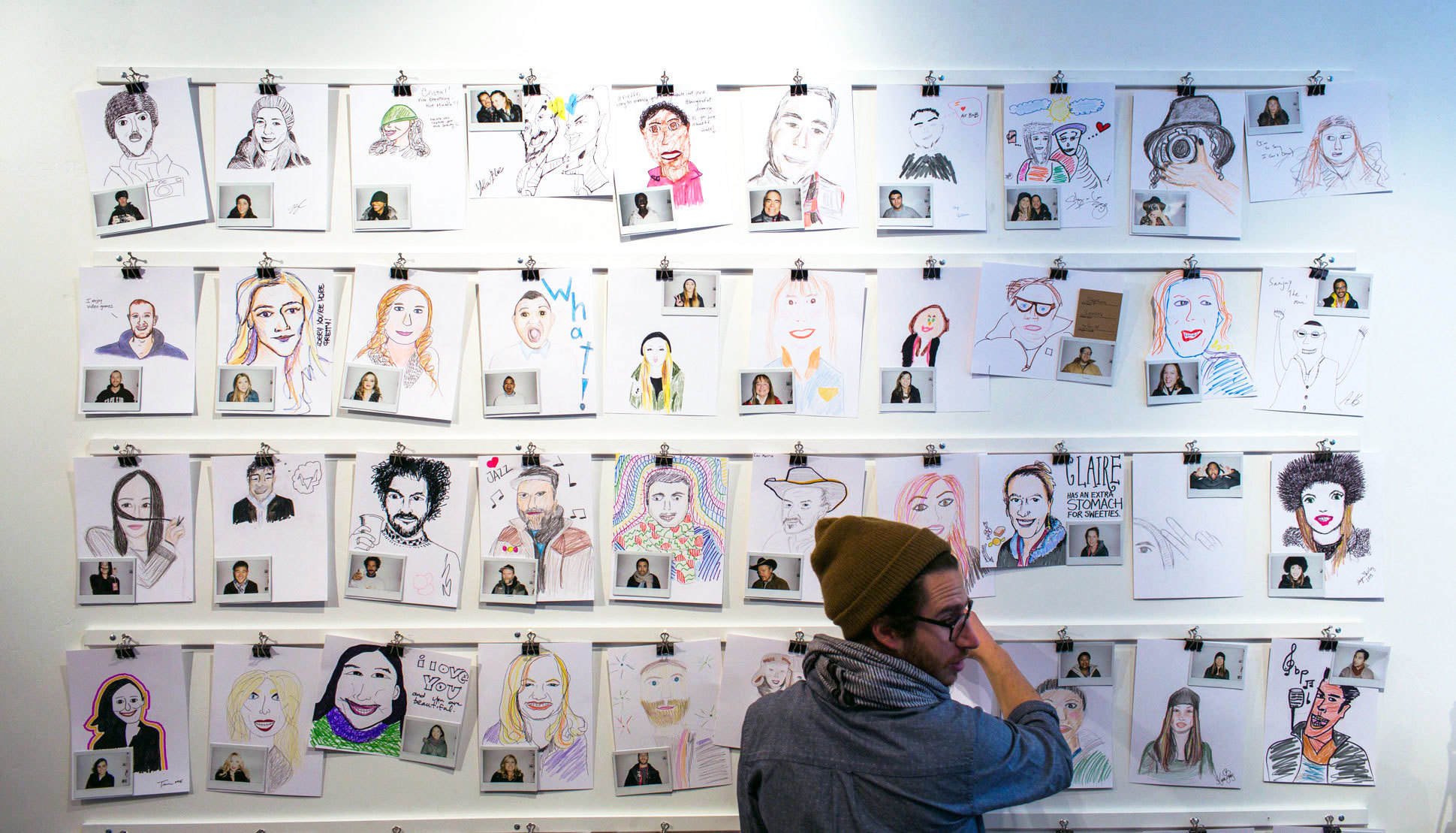
What the Photos You Take Say About You
Ivan Cash got his first job in advertising by getting arrested. No joke.

In one sentence, who are you?
I am a human being who creates art, films, and cultural movements that inspire curiosity and connection.
What do you do? How did you learn it?
I do a lot of things, all of which are self-taught. First, I was an art director at Venables Bell and Wieden+Kennedy Amsterdam. Then I became an interactive artist making large-scale community driven projects, like Selfless Portraits, Last Photo, and Snail Mail My Email, and I published a book. And more recently, I’ve become a film director.
A lot of my work explores human connection and connecting with strangers, which comes from getting bullied as a kid and becoming fascinated with how people interact and treat each other. My biggest piece of advice in learning a creative skill is to stay curious, keep experimenting, and try reaching out to those who inspire you. That’s basically what I’ve done over and over again to get to where I am today.
Snail Mail My Email is a community art project where volunteers transform strangers’ emails into handwritten letters, free of charge.
What are your three favorite possessions?
- My stuffed animal Snuffleupagus, which I’ve had since I was born.
- Handwritten letters from over the years.
- My data.
I had a house fire five years ago and lost nearly everything. It showed me that most possessions are replaceable. It’s my creative ideas and material that are most prized.
What does a typical work session look like for you?
I don’t really have a typical work session; my days are split between working in the studio, traveling to give a talk, going out to make a film, or working on-site with a client. I really like this balance of working with a team and working in solitude. I need this constant mix of circumstances to keep me both energized and recharged.
Signs of the Times explores the personal, human stories behind protest signs, without ever showing the sign holders’ faces.
How do you get over creative block?
I can’t really work if I’m in a messy or loud environment. So my studio needs to be immaculately tidy and quiet. That’s the first thing.
Secondly, I’m very sensitive, and so often a creative block means an unresolved emotional conflict. Taking the time to journal, find closure in a relationship, or talk to my therapist are all good things.
Finally, I get over creative blocks by making new work (that may not be great) and not judging myself for it. Creative block happens when my standards get so high that I become fearful of not meeting some expectation and get paralyzed. The important thing I have to keep reminding myself is to have fun and to not take everything so seriously, because nothing really matters and we’re all going to die!
The ‘Last Photo’ Project is an ongoing video series where Ivan asks strangers in different cities to share the last photo on their phones.
How do you see the world in 2078?
Optimistic version: We’ll live in a post-digital age where we've gone back to appreciate the simpler things like nature and meditation. Our lives will still be digitally integrated, but it'll be much more seamless and we’ll place greater value on taking breaks from tech.
Dystopic version: Life will be lived within a virtual reality headset and/or brands will be more invasive than they are now. On cars. On skin. In our homes. We will make money by consuming ads.
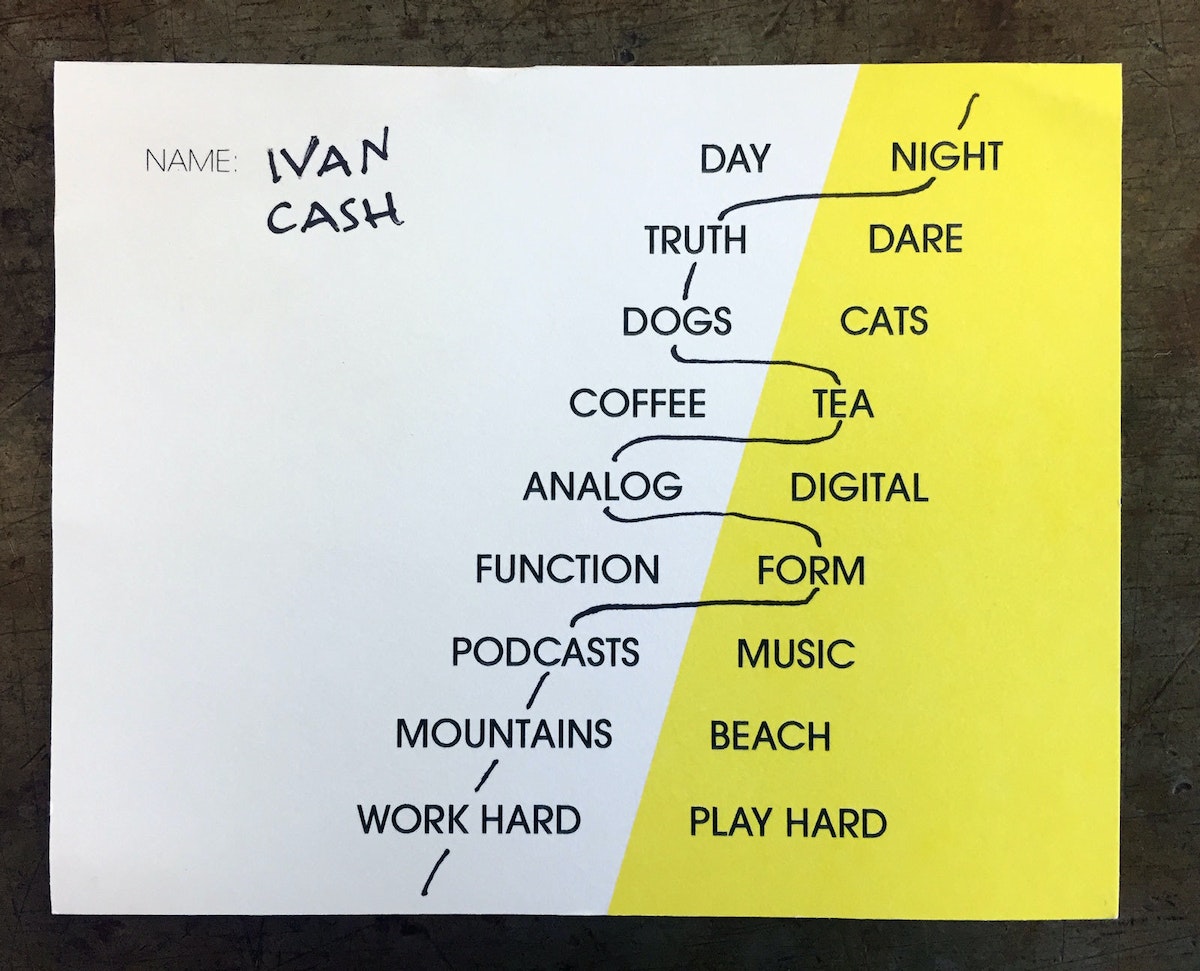
Who are you (creative) crushing on lately?
My dancer/choreographer friend Jacob Jonas who is killing it right now.
Moonlight director Barry Jenkins.
Valerie Luu and Andria Lo’s photography project Chinatown Pretty.
American Honey director Andrea Arnold.
Ivan Cash got his first job in advertising by getting arrested—for selling t-shirts advocating for the firing of Knicks coach Isaiah Thomas. No joke. After a stint in that world working for Venables Bell & Partners and Wieden+Kennedy, he set out on his own to explore a different kind of client—everyday people. His projects, whether about protest signs or the last photo someone took on their phone, are a deep dive into how the images we create help tell our stories. In this first installment of Creative Crushes, I caught up with him over coffee to find out what he's been up to.

Borrow Principles of Theater for Better Design
It starts with suspension of disbelief.
The next time you enter a theater, take special note of the black curtains hanging onstage. I can almost promise they’ll be there. Short ones above the stage (called “trim”) obscure the overhead lights, while long ones on the side (called “legs”) hide the backstage performers. Black curtains are a set designer’s secret weapon.
Theater strives for suspension of disbelief. It’s the reason we cry when Romeo and Juliet kill themselves… even though we know the actors aren’t really dead. (They’re not even Romeo and Juliet, for that matter.) It allows an audience to imagine the world of the play far beyond the elements we see in front of us. In our heads, the vivid and colorful streets of Verona extend well behind the black curtains that frame the stage. And all the set designer had to do to create that illusion was hang some fabric.
Designers need to stop making slide decks and start hanging black curtains. As projects become more complex, it becomes impossible to represent an entire concept through words, images, and prototypes alone. Truly innovative designs can’t exist in our present world—they change it into something new. Taking cues from theater is one way to help people suspend their disbelief and bring them inside these new ideas. Here are three ways in:
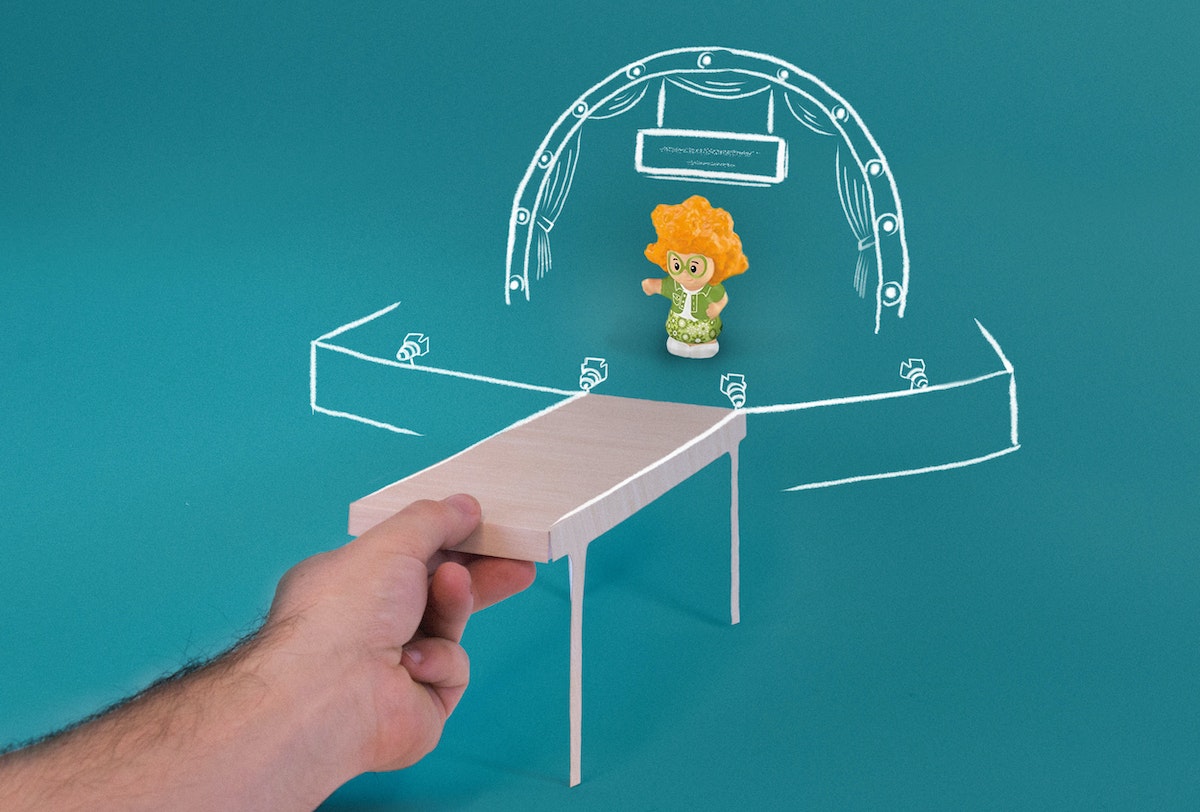
Embrace Set Design
“Space creates behavior” is a mantra used by interior designers. But there’s a step missing in that equation: Space creates new mindsets, and new mindsets create new behaviors.
When we go to the theater, the curtain rises and we get our first glimpse into the world of the play. It’s the moment when an audience is asked to leave the reality of the theater (velvet seats, half-finished wine, smartphones, etc.) and enter an alternative reality crafted by the show.
Boardrooms are not a good place for achieving that effect. If we want people to engage with unprecedented ideas, we need to transport them out of their current reality. It’s absurd to assume that people will think differently when they are sitting in the same chair, at the same table, staring at the same drop-down projection screen they see everyday.
Even simple changes to a physical environment can drastically shift the way an audience (in this case, clients, investors, etc.) will approach a meeting.
Consider:
Lighting—a darkened room creates a sense of possibility and wonder.
The unexpected reveal—bring out a hidden element part-way through the meeting.
Sound—background noise or music helps guide people to an emotional state before, during, and after the show.

Play the Role of Director
Another way to shift a viewer’s mindset is to go at it directly. Direct them, as if they were an actor, and give them a new role to play and a new way to think.
At IDEO, mid-project meetings are often the most crucial point of contact with our clients. In those meetings, they must assess the opportunities we’ve uncovered through research, and decide which ones to pursue. If the audience defaults to their standard decision-making metrics, engineers will choose the most technically-feasible option, while the CFO might choose the most cost-effective path forward. Innovative ideas are difficult to judge in this way, so they can easily be left behind.
But asking these same people to make decisions from a different perspective can open up the room to new possibilities, and create excitement around the more difficult to imagine, yet more innovative ideas.
Here, you accomplish two things. First, by having them embody a new viewpoint, they are forced to drop their default mode of interaction and pick up a new way of thinking. Second, because the exercise feels inherently contrived, it offers participants a mental safety net. It’s not real—it’s make believe. When people let their guard down, that’s often when the real insights emerge.
Think about:
Directed actions—as soon as people are required to do something, they leave the passive audience state.
Physical movement—if people are required to stand up and move around, they automatically engage in a more meaningful way.
Assigning new roles—if people are required to observe and respond as someone other than themselves, they will come at the experience from a position of empathy.
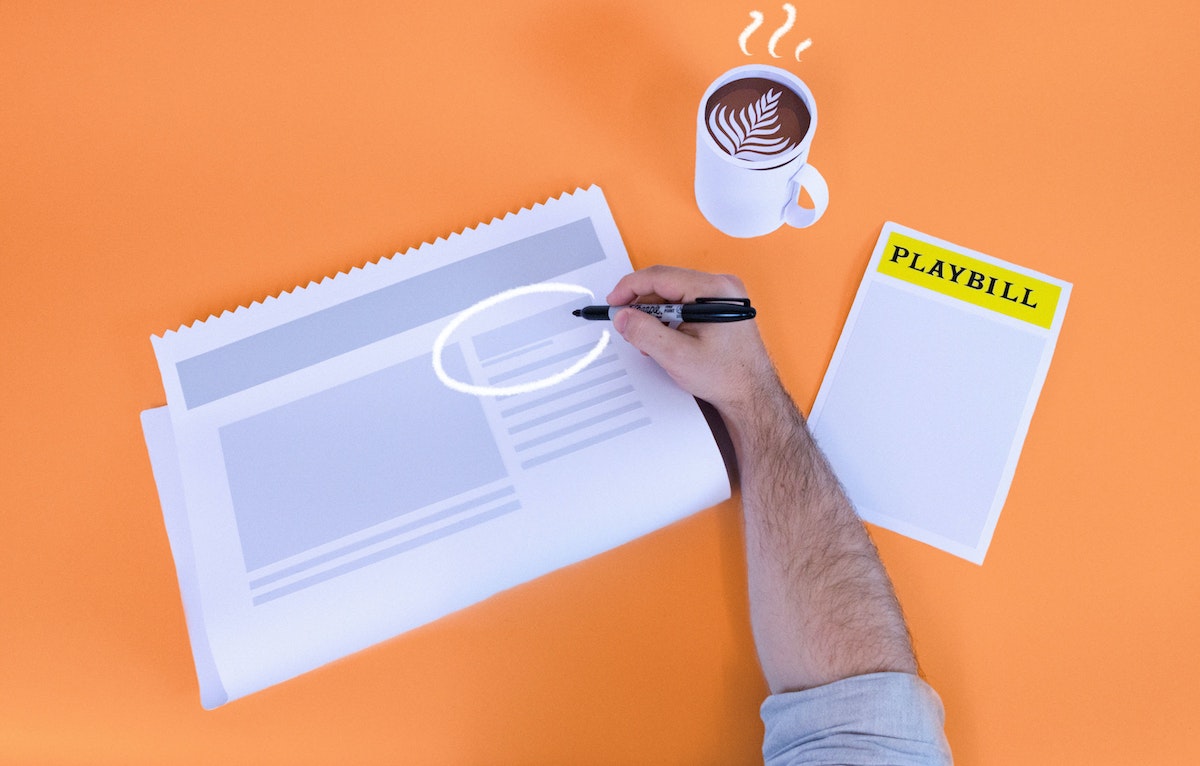
Be a Reviewer
Anytime you engage with an unprecedented experience, the take-aways are not always clear. In the world of theater, new audience members might walk out of a show thinking, “I loved it!” or “I was bored!” or “I was bawling, but I’m not totally sure why.” A good theatrical experience should elicit some type of emotional reaction from the audience, but people may not have the necessary vocabulary to analyze it. Good reviewers can help translate the experience for the rest of the world and direct attention to what is important or meaningful.
In design, crafting the takeaway message becomes a crucial exercise. It’s important to tell people how ideas and concepts can translate back to their real-world experience. If the most brilliant concepts can’t be understood beyond the context of a highly theatricalized presentation, there’s no way it will ever have impact in the world.
Consider:
A summary—what's the essence of what they just experienced?
Analysis—what's the deeper meaning or purpose this connects to?
Drafting a plan—what actions should take place as a result of the experience?
Innovation is a tricky business. As designers, we are tasked with creating unprecedented experiences that help shift the world into the future, yet we are stuck discussing them in the present. Creating innovative work is not enough. We must create innovative ways of sharing that work to help audiences suspend their disbelief and imagine the future that might exist.
Illustrations by Megan Crabtree.
Two things are required for design success: the right idea, and the ability to convince people of its value. In recent years, designers have become more interested in storytelling to make the case for their solutions. I'd like to take that method a step further, by embracing theater.

What’s in my Moleskine: Felicia Chiao
A peek into industrial designer Felicia Chiao's sketchbook
As a little kid, I always loved drawing, but I didn’t actually get serious about art until high school. At first, I was just doodling on my homework and in my notebooks in my spare time, but by my senior year I thought it would be cool to set a deadline, and complete a sketchbook front to back in one year. It was a good outlet for my stressed and angsty teenage self. The first one took a while—definitely more than a year—but after completing it, I was hooked.
In a way, these notebooks act as a diary for me—I remember where I was mentally and emotionally for each drawing. Over time, my work has become a lot less about how angry I was that day, and more about colors, patterns, and shapes.

I like to draw simple lines and shapes, and for each composition, I typically just wing it. I’m sure there’s a meaning to whatever I’m drawing, but when I’m working on it, I’m actually not thinking too hard about it. It’s all stream of consciousness. I draw to de-stress and because it’s fun.
I ended up creating this bald, baby-like thing to represent a person or a feeling I was having. A lot of people have told me they can relate to my work, and I think it’s because of that character. It has no real defining features other than looking vaguely human, so a lot of people can put themselves in its shoes. I often get asked if it’s a boy or a girl or this or that, but it really doesn’t matter what it is.
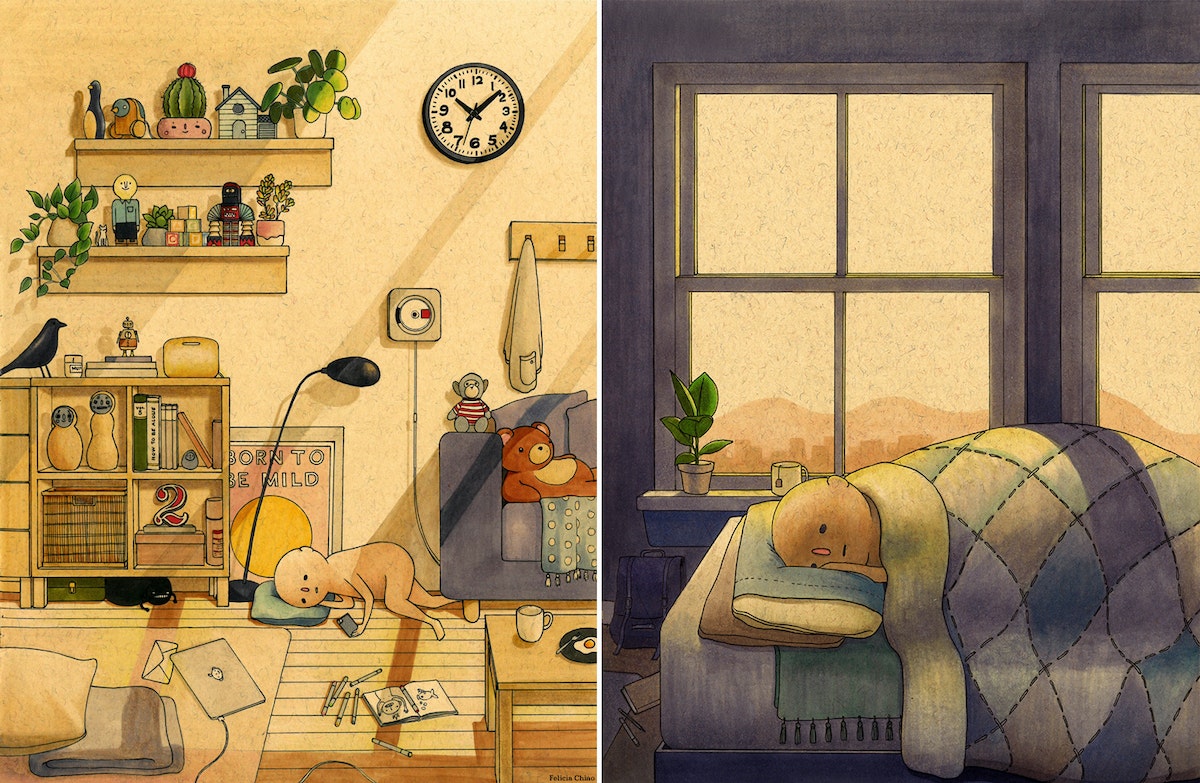
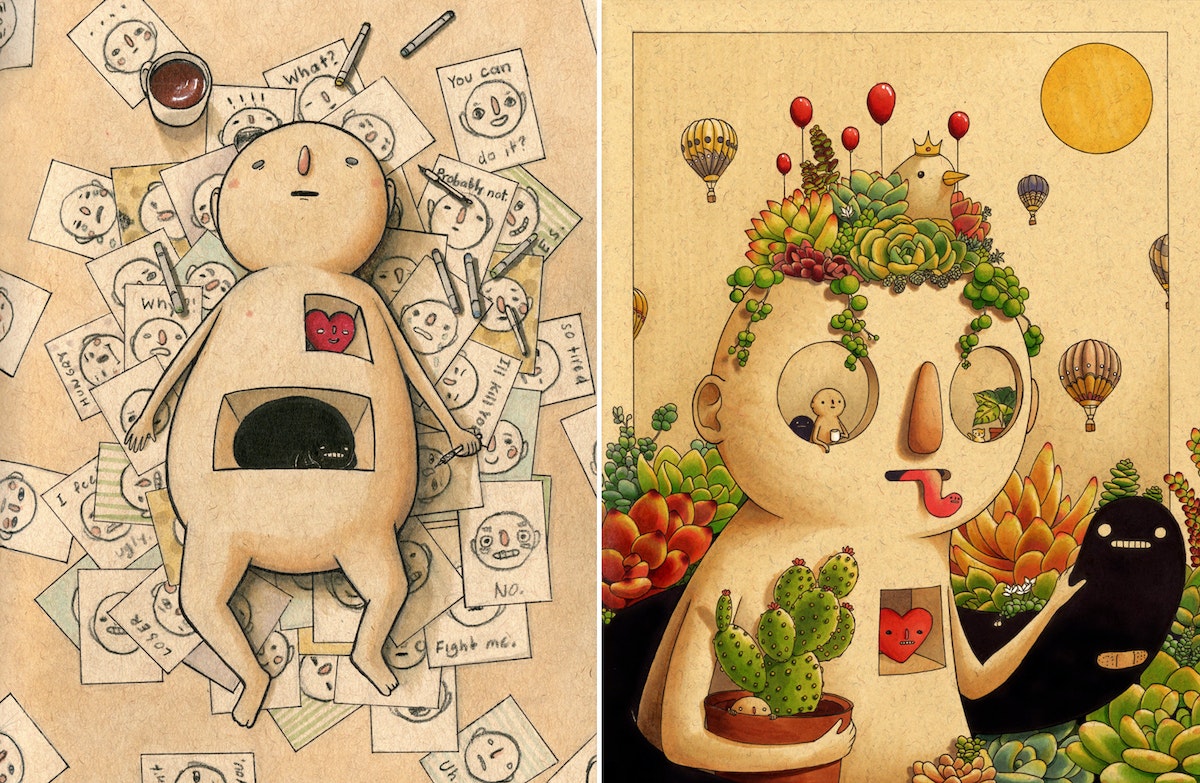
As for the others, the only character that has a specific role is the little angry-looking black blob I draw from time to time. Originally, it showed up inside other character’s bodies as a stomach. I had a lot of stress-related stomach issues, and whenever I was feeling particularly bad, I’d draw it into a piece. I’m not great at telling people I don’t feel well, or that something is wrong, so my sketchbook is a good outlet. Recently I’ve just been hiding it around in parts of drawings for no particular reason.
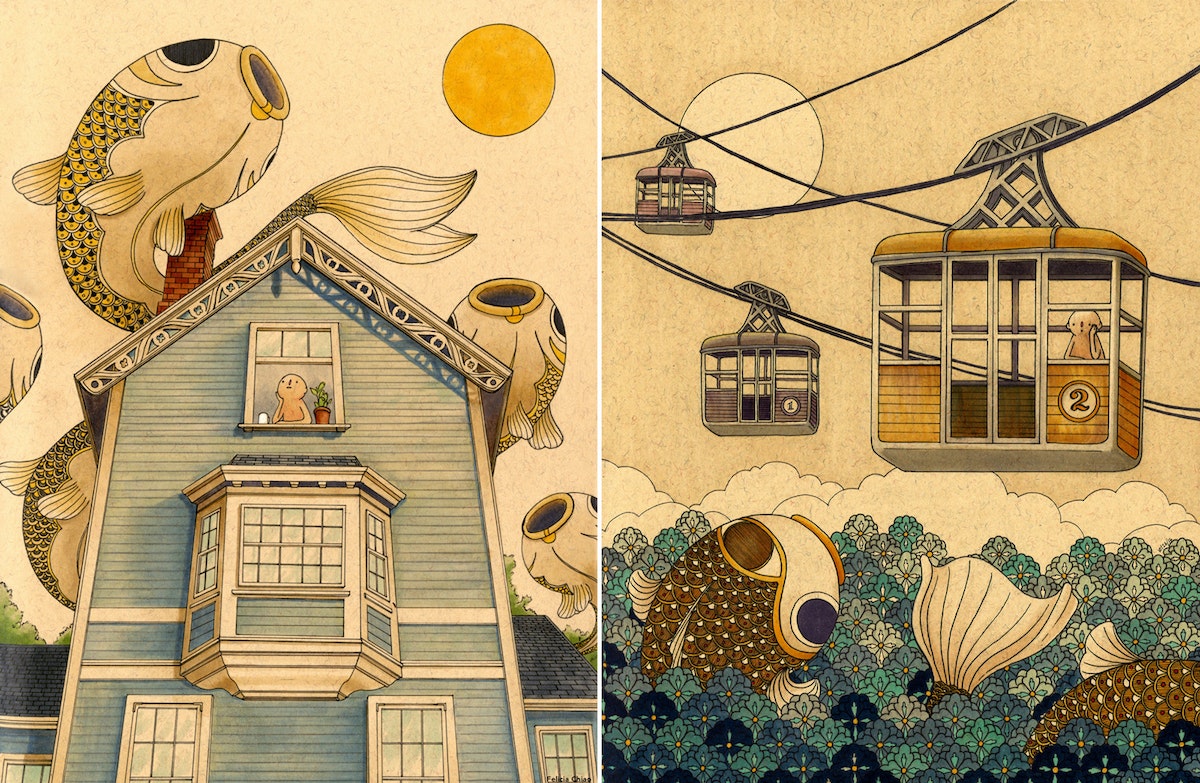
People also ask me about my fish—they seem to be one of my more popular elements. I don’t actually have a particular fondness for fish, I just really love drawing patterns and their scales are the perfect platform.
I started posting each drawing to Tumblr just so I could see the development of my style. Now, it has more than 26,000 followers, which is crazy. Even though it’s super flattering to get such a huge response, I still have no interest pursuing illustration professionally. I draw because it’s fun.
Over the years that I’ve been doing this, I’ve learned that sometimes, you just have to stop talking and start doing. Actually forcing myself to set goals and do the work even when I didn’t feel motivated has been intensely rewarding. Not every drawing I make has to be good, and not every sketchbook is going to be finished within a year—I actually missed my 1/1/17 finish deadline. But my current sketchbook is some of the best work I’ve ever made, and I’m very proud of it—even though I’m only halfway finished.
From the moment we noticed industrial designer Felicia Chiao sketching her latest masterpiece between meetings, we (and our Instagram fans) were hypnotized by her bold colors, intricate patterns, and subtle textures. In this installment of What’s in my Moleskine, we invite you to dive into the dreamlike world Felicia has built in her sketchbooks—we guarantee you'll be hypnotized, too.
Designer Pranks
Designers love a good side project, and April Fool's pranks are no exception
1. How hydrated are you?
I pulled this April Fool's prank on the Palo Alto office a few years back. People remarked that it was surprisingly useful and actually led to behavior change. — Albert Leung, IDEO Palo Alto
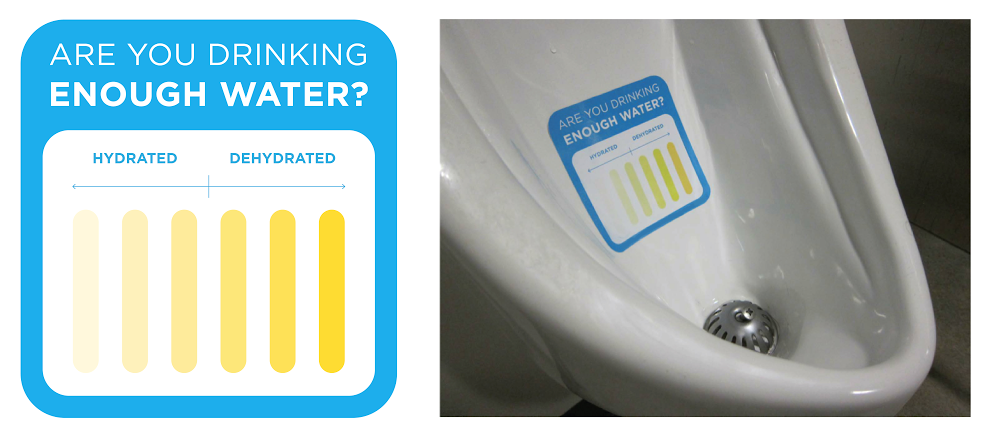
Tech and design firms love pranking and poking fun at themselves—some of our favorites from years past include Google's self-driving bicycle and Mark Zuckerberg's collaboration with H&M, including a "collection pack" of seven gray t-shirts and one pair of jeans.
2. Homecoming surprise
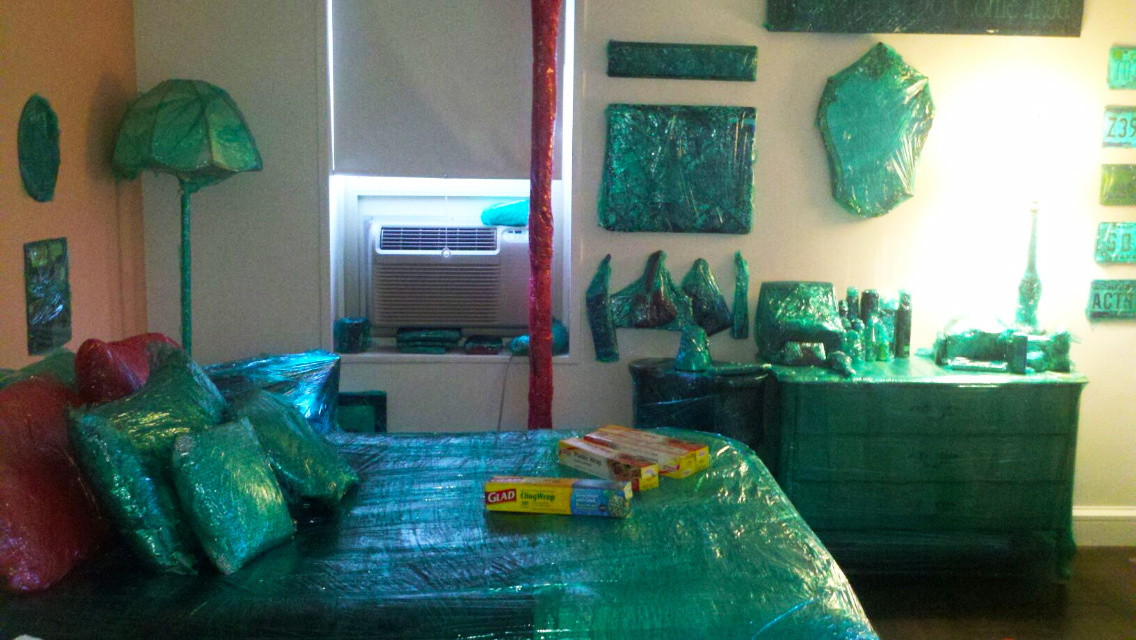
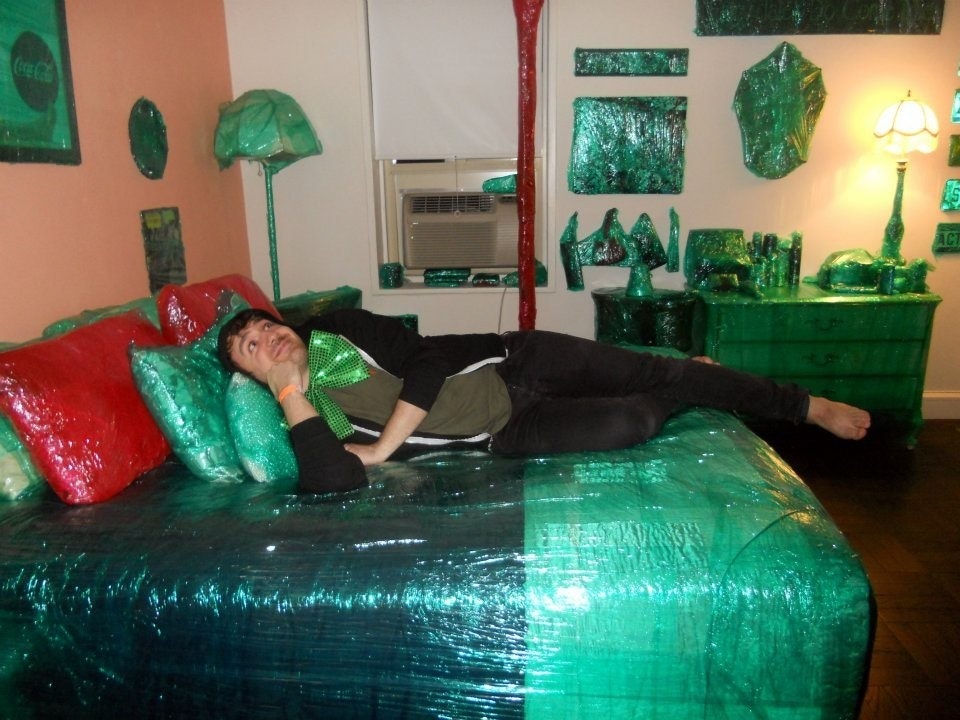
Back in 2012, I decided it would be fun to "redecorate my roommate's bedroom while she was away for work. It took 18 hours and 76 rolls of Saran Wrap to pull off, but every aspect of her life was covered in bright plastic wrap when she returned. I may have gone a bit over board: Each shoe was wrapped individually, then as a pair; I wrapped each piece of makeup, then wrapped them all together in a group; each thing on her wall was wrapped and rehung; every single book and article of clothing in her closet was accounted for. I honestly think—and I say this in a non-sarcastic way—that pulling this off was one of the things I'm most proud of in my life... which may say something about me. —Adam Moulter, IDEO Cambridge
3. Fluffy biscuits
When I was a kid, my parents made homemade buttery biscuits for us on April Fool's Day. The catch was they embedded cotton balls in the center. When we bit in, we got quite a mouthful!
—Sarah Buchanan, IDEO Palo Alto
4. Puppy love
April Fool's Day is a well-observed holiday in my household. Last year, I put this ad up on Craigslist in three different cities with my father's and two brothers' phone numbers. They received upwards of 100 phone calls and texts (each!) within the hour. —Em Havens, IDEO San Francisco

5. Not-so-current events
My mom was a prank legend in our house. April Fool's Day was a standard spectacle. She had a simple guiding principle for her pranks: Prank them early in the morning before they realize what day it is. One year, my dad, who routinely read the morning paper before work, was sitting with his coffee flipping through the day's events. My mom could hardly contain herself, but Dad didn't quite catch on. When he got to the business section, he suddenly said, "That's odd, I thought the markets went down yesterday and this says they went up." Mom burst out laughing—she had saved last year's April 1st paper for an entire year!
—Chris Waugh, IDEO Alum
Designers love a good side project—Halloween costumes, fancy proposals, Rube Goldberg machines—and April Fool's pranks are no exception. Check out some of the over-the-top pranks IDEO designers have pulled on their friends, family, and coworkers—and steal an idea for yourself!

Lindsey Turner
I’m passionate about building brands, products, and experiences that help organizations show up with meaning and momentum.
I help organizations cut through complexity by shaping how they show up, through brand strategy, identity, and storytelling.
Working at the intersection of brand and business, I bring an editorial eye and a bias toward making—turning ideas into tangible experiences that people can understand, trust, and believe in.
My work spans government, healthcare, financial services, media, and consumer goods, from launching Gen Z-focused ventures to building innovation labs and reimagining legacy brands. I relish moments of ambiguity and enjoy translating across teams, perspectives, and priorities to move ideas forward.
I started my career in editorial and digital design, shaping cross-platform experiences and identity systems in publishing and agency environments. That foundation still shapes how I work today: I’m detail-oriented, collaborative, and overreliant on the Oxford comma. I hold a BFA in Visual Communication from the School of the Art Institute of Chicago.

Rachel Young
My work helps organizations see who their products aren't working for—and build the will and the tools to do something about it
For 25 years, I've asked the same question: Who does this design exclude—and what are we going to do about it?
My work spans human-centered strategy, inclusive design, and qualitative research, with clients ranging from Microsoft, Google, and Verizon to the National Science Foundation, and San Francisco Unified School District.
Before IDEO, I taught elementary school in East Palo Alto and spent a decade doing design work with social service organizations—where I learned firsthand what it costs people when systems are built without them in mind.
I am currently writing User Error, a nonfiction book about digital access and the design decisions behind it. I live in Oakland, California.

Brian Pelsoh
I lead with craft, ensuring our work is creatively excellent: rooted in deep human insight and imagination, while also grounded in the realities of business and technology.
My expertise spans brand, communication, and product design across tech, education, the arts, and social impact.
I believe great work demands both high-level vision and obsessive attention to detail, and only happens through collaboration.
I bring an inclusive, hands-on approach and a deep understanding of business, which enables me to consistently deliver excellence while always asking why.
Before joining IDEO, I worked at the brand firms Pentagram and VSA Partners. I began my career as a designer, leading teams at the School of the Art Institute of Chicago and the Milwaukee Art Museum. I hold an MFA in graphic design from Maryland Institute College of Art and a BFA in communication design from the Milwaukee Institute of Art & Design, and have taught at some of the best design schools in the US.

Tony Wong
I am responsible for IDEO’s long-term success in China and working with clients to use design as a tool to enable growth.
I am responsible for IDEO’s long-term success in China and working with clients to use design as a tool to enable growth. Specifically, I have helped Chinese companies design holistic brand solutions through the development of their products, communication, services, and innovation teams, and I have helped multinationals expand their presence and influence in China.
I advise global leaders on developing China-led innovation and capabilities.
In over 15 years in IDEO Shanghai, I have worked on projects that use design to elevate the quality of the experience of healthcare products and services, streamline processes that increase productivity, create spaces and programs that promote and enable inclusive communities, and build next generation mobility solutions that are planet-positive.
Before joining IDEO, I worked at Philips Electronics and the Electrolux Group in Italy, the Netherlands, and Singapore on a number of breakthrough commercial products. I am a member of the Young President Organization in Shanghai.

How to use AI as an editor, not a writer
Ed White shares how he uses AI as an editor—not a writer—to sharpen storytelling, rehearse ideas, and preserve the productive friction that makes creative work better.
Ed White has a rule he's tested on his own writing: hold yourself as the writer, and let AI be your editor. Ed is a Senior Design Director at IDEO's London studio, where he co-leads the firm's AI portfolio across Europe. Before IDEO, he spent 12 years as a writer and editor at the Financial Times, Wired, and Contagious. So when he talks about when to use AI for storytelling and when not to, it comes from two decades of crafting his storytelling skills.
In this episode, Mina Seetharaman talks with Ed about two specific tools he uses to keep AI in an editor's seat: a "roasting agent" prompted to critique his drafts without any sugarcoating, and a simulated audience he rehearses pitches on before the real thing. They also get into what Ed is hearing from design leaders at Anthropic, Lovable, Shopify, and Google Creative Lab about how creative work is changing, and why he thinks the friction of writing something yourself is worth protecting rather than automating away.

Building a personal AI for the messiness of life: Sida Li
Becca Carroll talks with Cue co-founder Sida Li about designing a personal AI for the messiness of everyday life—not just work. They explore how Sida stays anchored to human needs while navigating fast-changing technology, product tradeoffs, business-model experimentation, and the realities of building an AI company today.
Most AI products today are built for work—a space with clear problems and established systems. One founder noticed a gap: personal life is messier, harder to systematize, and mostly left behind by the AI boom. So she built Cue, a personal AI that lives inside iMessage and group chats, to go where the other tools haven't.
In this episode, Becca Carroll, IDEO's Chief Strategy Officer, talks with Sida Li, co-founder and CEO of Shared Context Lab, about staying anchored to a human need while the technology around her keeps changing shape, why she treats her business model with the same rigor she'd bring to a product, and what it feels like to build a company at this particular, disorienting moment in AI.
The conversation also gets into how Sida makes design decisions: the language Cue uses to describe itself, the tradeoffs behind building inside iMessage instead of a new app, and a real story about a business idea that didn’t pan out.
This is the second in a two-part series profiling founders from IDEO's Startups-in-Residence program. The first conversation is with Johannes Seemann, founder of Sooner, on designing GenAI for the emotional side of money.

Designing GenAI for the emotional side of money: Johannes Seemann
Designing financial tools around the feelings that shape money decisions.
Most personal financial tools are built to run the numbers and optimize towards a budget. While that works for some, most people experience money as a lived relationship that does not neatly fit into a spreadsheet. Johannes Seemann and Becca Carroll discuss why money is emotional before it is mathematical, and what a human-centered approach to building a generative AI financial product looks like in practice.

The curious leader's edge in uncertainty: Scott Shigeoka
How genuine curiosity helps leaders navigate uncertainty with greater confidence.
Mina Seetharaman talks with Scott Shigeoka, author of Seek and Head of Curiosity Cultivation at the Eames Institute, about what distinguishes genuinely curious leadership from performative curiosity, how power dynamics shape curiosity, and why practicing curiosity can restore energy rather than drain it.
Looks like you might be in search of something very specific?
Or reset the filters above and try another angle.
Here’s some random inspiration

Podcasts about creative leadership

Articles about the power of prototyping
