
.svg)



From incremental change to breakthrough innovation
How Master Kong reinvented the instant noodle, from the inside out.
Looking to understand the role of instant noodles in middle-class Chinese life, the IDEO team conducted in-home research with consumers across a range of life stages and levels of attachment to noodle culture and convenience foods. The first finding was reassuring: Everyone kept instant noodles at home. The category still had a place in middle-class kitchens. But beneath that was a more complicated, emotional story—and an unmet need for convenience and quality to coexist in a single product.
The team discovered that instant noodles are more than just a quick, on-the-go meal; they are a nostalgic comfort food that evokes fond memories. But since their heyday, their role in daily life has evolved. Once a complete meal in itself, instant noodles now often function as a versatile flavor base or culinary accent in other dishes. Because they don’t align with the healthier, higher-quality, and more novel food choices that middle-class consumers aspire to, noodle shops, delivery noodles, or fresh-cooked instant options often win out. Yet, even these alternatives come with trade-offs. Delivered noodles lose texture during transport. Sit-down noodle shops preserve quality but offer limited flavors. Cooking from scratch meets the bar for both texture and flavor, but requires a significant time investment. As one young mother said, “If I could get the texture of fresh-cooked noodles without turning on the stove, I’d buy that instant noodle for sure.”
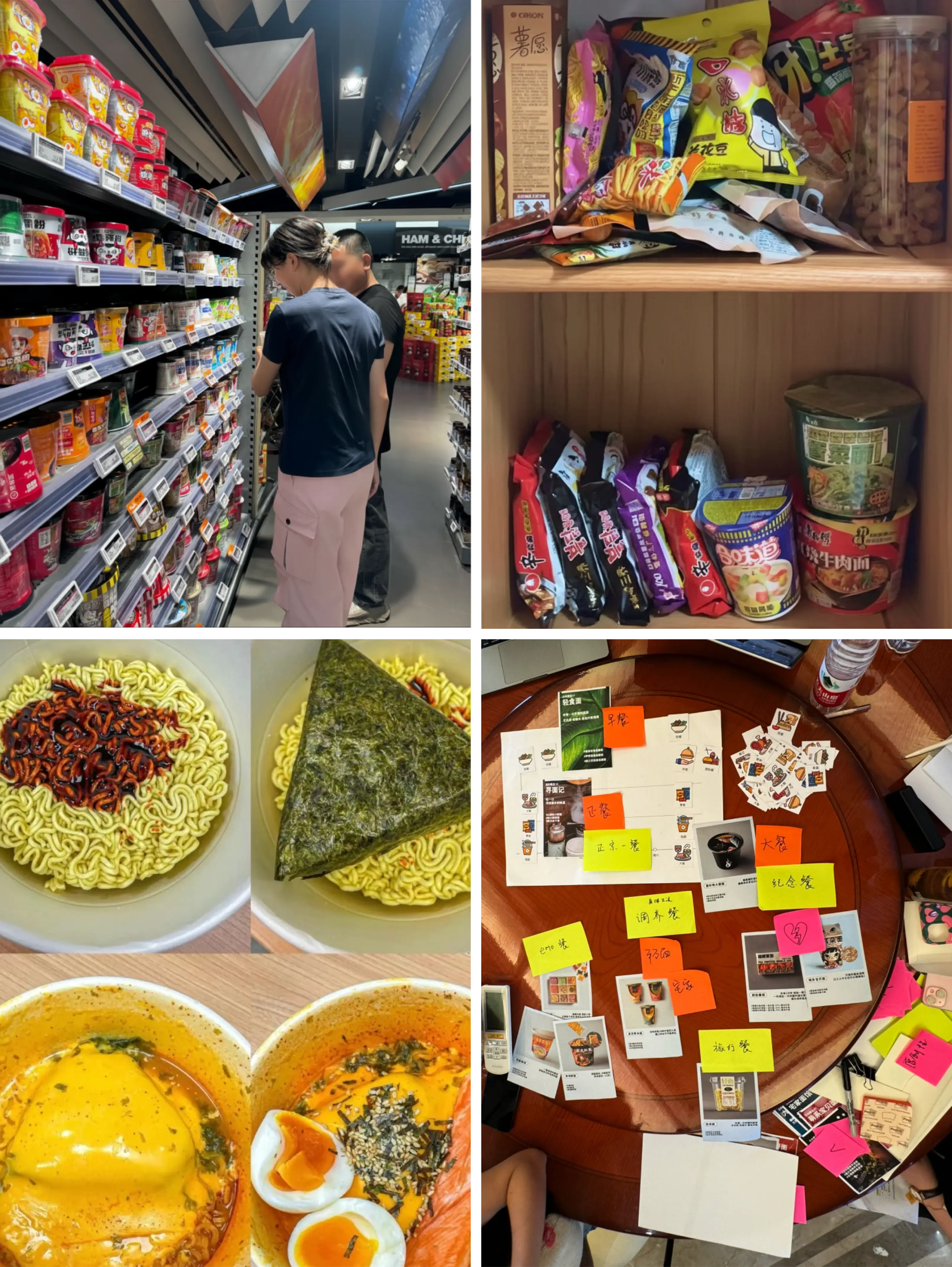
The research inspired the creation of a new category, which the team termed “fresh-brewed noodles.” More than just a noodle or broth upgrade, Master Kong’s fresh-brewed noodles would offer the speed of instant noodles with the quality of freshly cooked options, plus flavors not found in traditional noodle shops. The strategic positioning was clear. Executing it by making fresh-brewed noodles mass-producible, affordable, and eventually profitable presented a category-innovation challenge. To get there, IDEO designed a series of dual-track co-creation workshops with the Master Kong team and consumers.
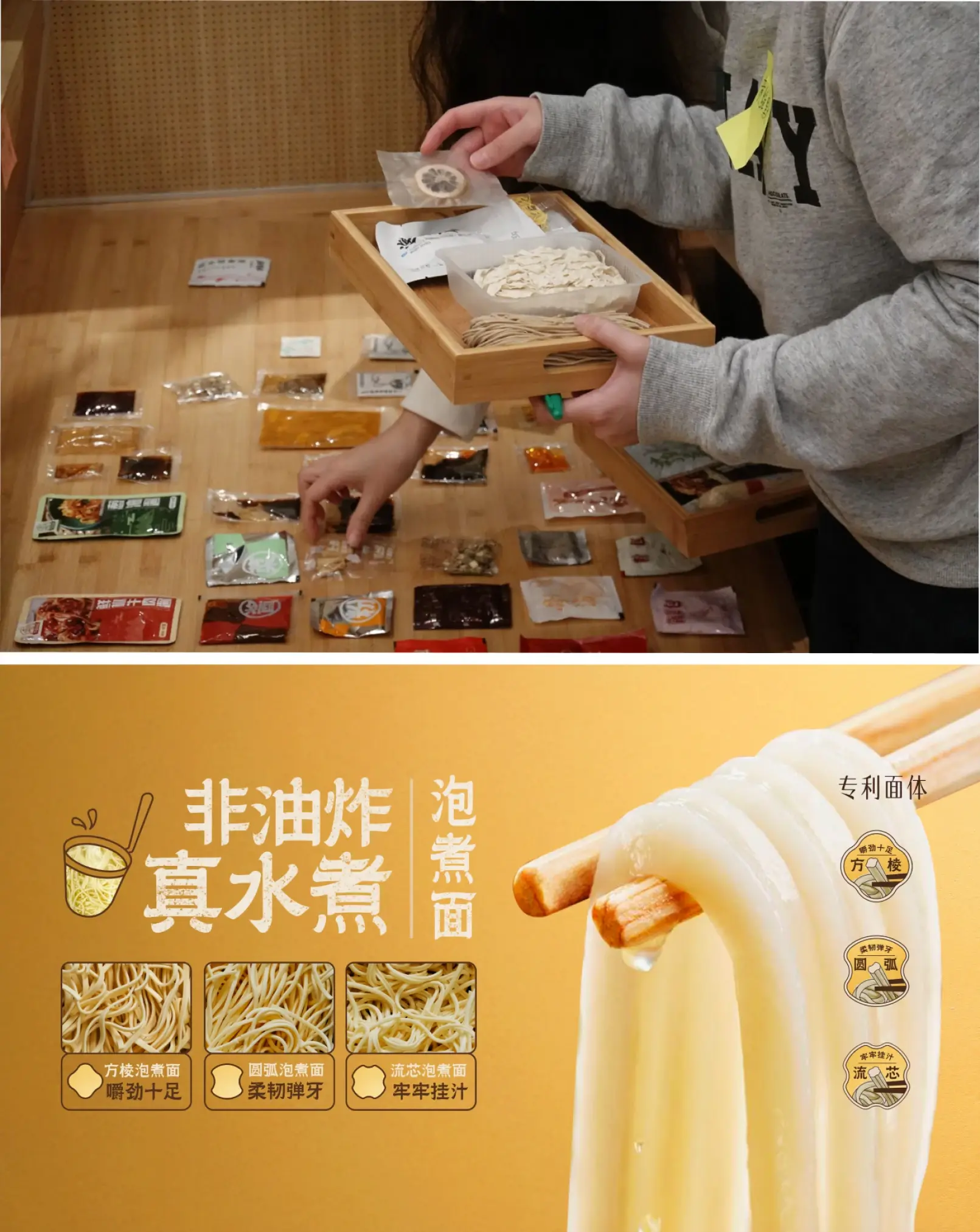
One track focused on prototyping the core product experience: noodles, broth, and toppings. IDEO and Master Kong’s R&D team began by studying the traditional craft of Chinese noodle-making, starting in Shanxi, a region renowned for its noodles. Through successive rounds of prototyping and consumer tasting, the team identified a critical insight: for “fresh-brewed noodles” to be convincing, the innovation had to be centered on the noodles themselves.
Texture alone was not enough. Consumers needed to see a meaningful difference before they tasted the product. IDEO translated this insight into a distinctive noodle profile: irregular, dimensional shapes designed to remain springy, hold sauce and broth, and mimic the resilience of freshly cooked noodles using only hot water. Because this visible shape represented the product’s core value proposition, it became a hero feature on the packaging. The graphic design made a bold visual statement about the noodle form, turning a technical R&D breakthrough into an immediately legible consumer promise: these are not ordinary instant noodles.
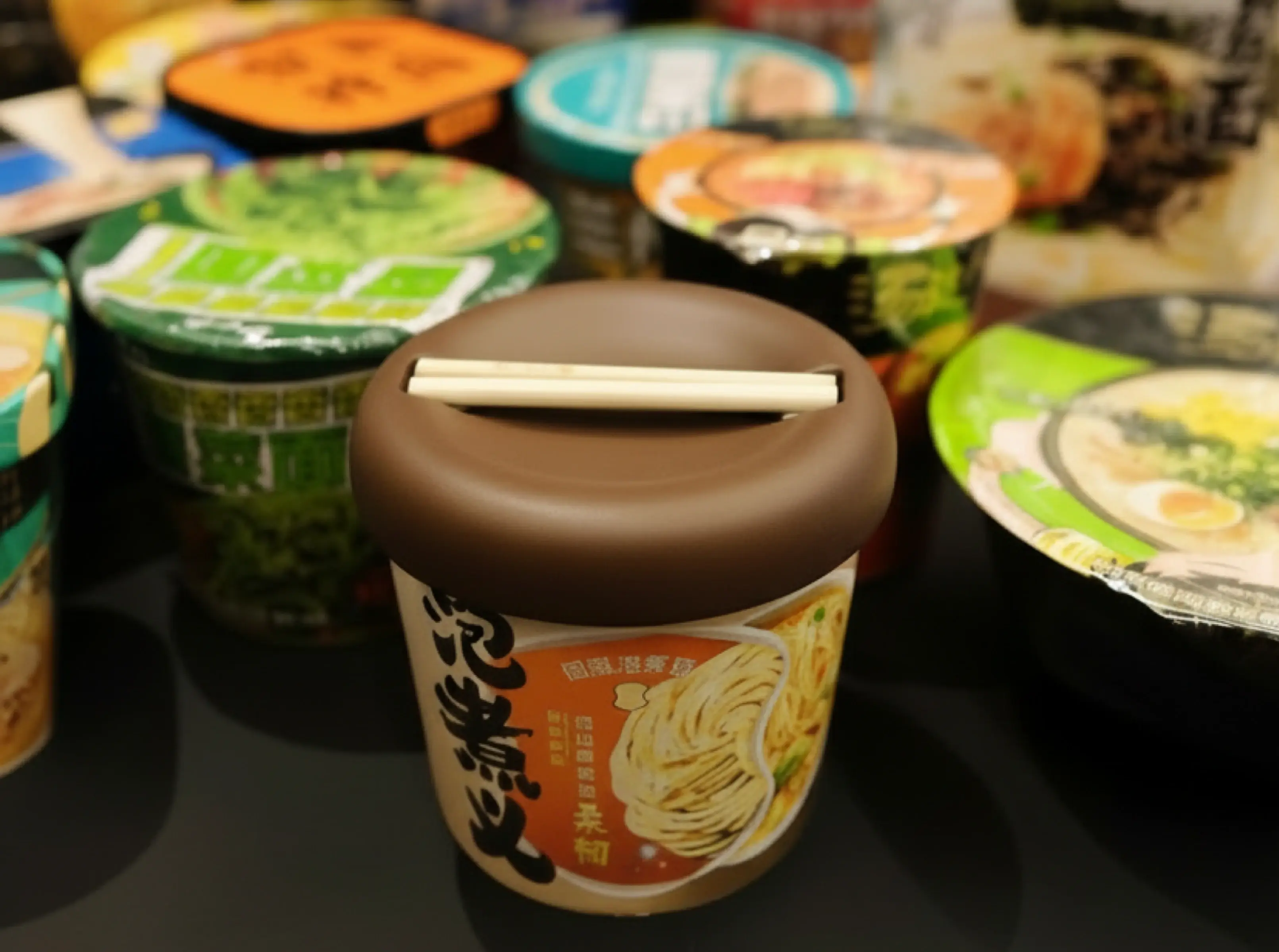
A parallel track explored the broader commercial experience: trend-forward and reimagined classic flavor profiles, light yet deeply satisfying broths, carefully selected toppings, and packaging that signals a new level of quality on store shelves. One key insight was that utensils carry meaning. Conventional instant noodles are often associated with disposable plastic forks, while higher-quality noodles are eaten with chopsticks. IDEO translated this cultural cue into the design of the bowl’s lid.
Instead of treating utensils as an afterthought, the team designed a solid, rounded, heat-retaining lid that embeds a pair of small wooden chopsticks. The gesture creates a small ritual of anticipation and reframes the product—not just a convenient instant meal, but a more considered noodle experience. Once opened, the product fulfills that promise with satisfyingly bouncy noodles, a rich liquid broth pouch that replaces the traditional oil-and-powder packet, and a vegetable packet reformulated with more premium whole ingredients.
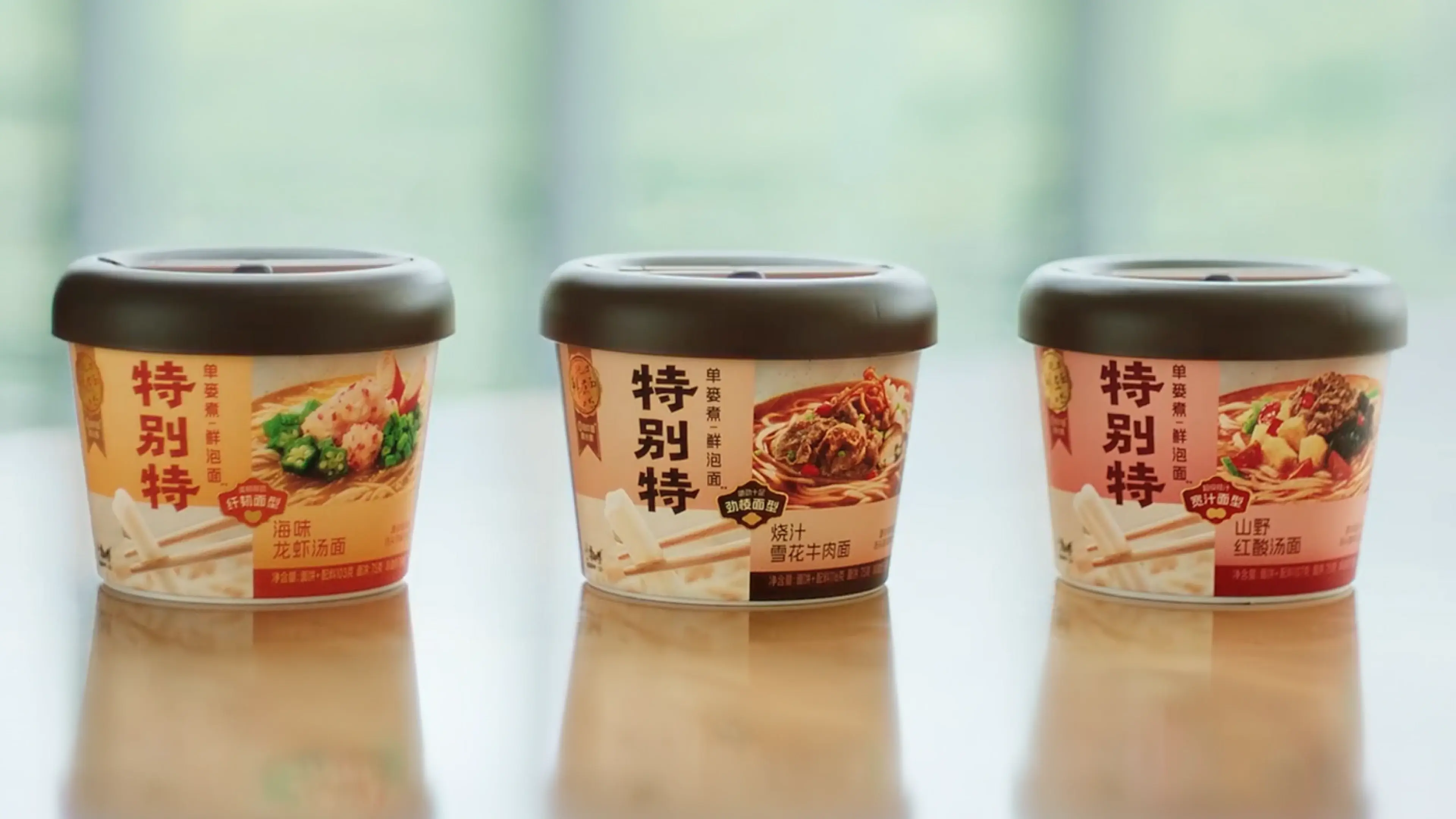
The first batch of “Te Bie Te” Fresh-Brewed Noodles—Chinese wordplay that emphasizes “special”—launched in August 2025 with three trendy and tried-and-true flavors. Within just three days, sales exceeded 100,000 bowls. Within a week, “Te Bie Te” topped the instant noodle category sales ranking on Douyin, China’s domestic counterpart to TikTok. The outcome was bigger than a product launch—it served as proof that a mature, declining category could be fundamentally reinvented to meet consumers’ real needs. For Master Kong, the project became a North Star and a model for internal category innovation in beverages, ready-to-eat foods, and beyond.

Once a popular, affordable staple, the instant noodle category in China has been declining rapidly due to shifting demographics, rising food delivery options, and increasing customer demand for healthier, more nutritious meals.
According to the World Instant Noodles Association, between 2020 and 2023, China’s instant noodle consumption fell by 4 billion packs.
100,000+
“Te Bie Te” bowls sold in the first 3 days on the market
#1
on Douyin’s instant noodle category ranking within one week of launch
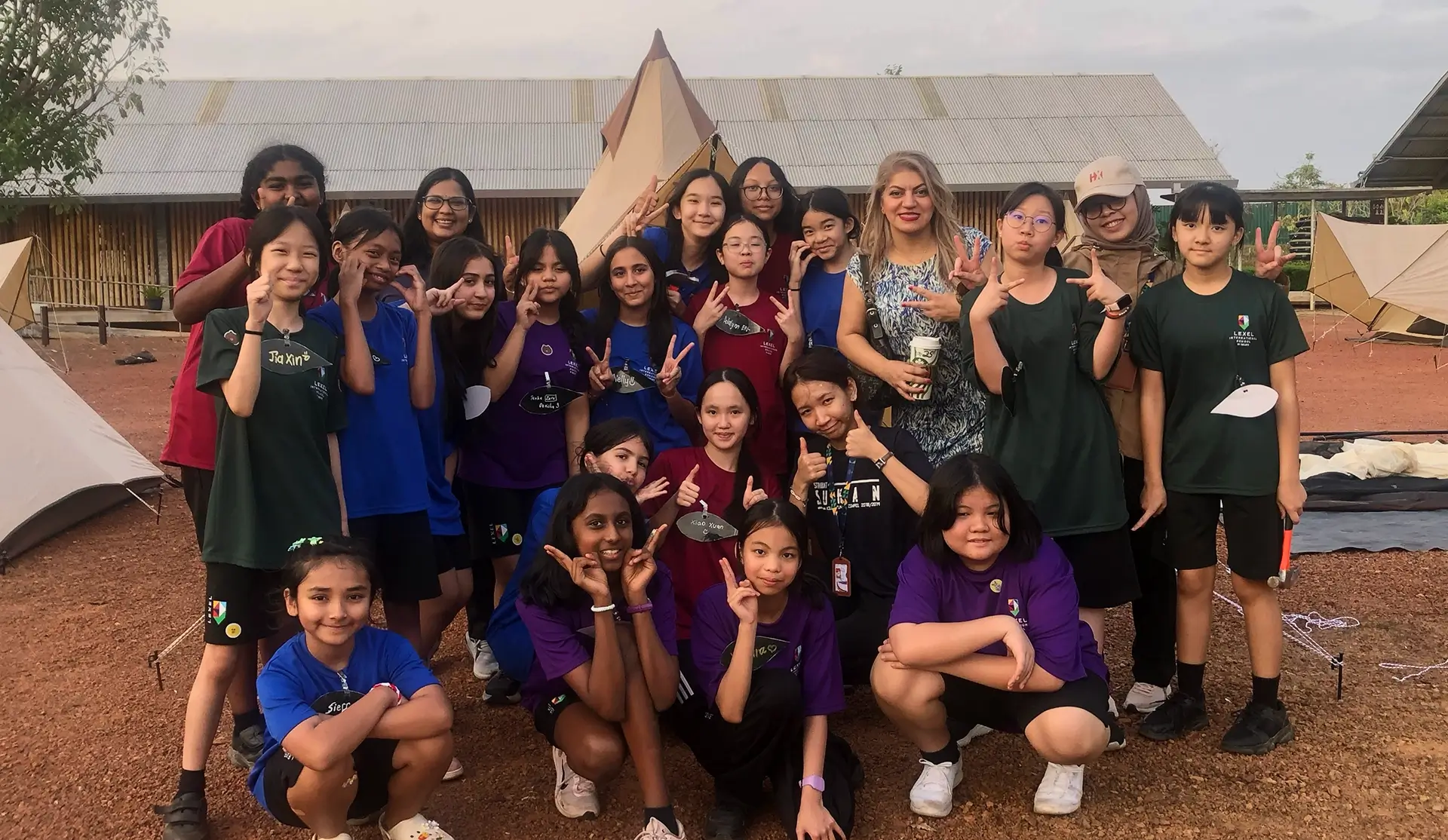
Making international education future-fit & affordable
Lexel brings world-class learning to Malaysia’s middle class.
Taylor’s legacy began in 1969 with the founding of Taylor’s College and soon expanded to include Taylor’s University, one of Southeast Asia’s top private universities, as well as many other institutions that serve 35,000 students per year. The family-owned group also operates Taylor’s International Schools, Garden International School, and Nexus International School for students ages 4 to 18. In Kuala Lumpur, Malaysia’s capital city, annual tuition at premium private schools like these ranges from about $10,000 to $25,000 USD. Taylor’s wanted to do something different: provide the same level of academic rigor and immersive learning experiences at one-third the cost.
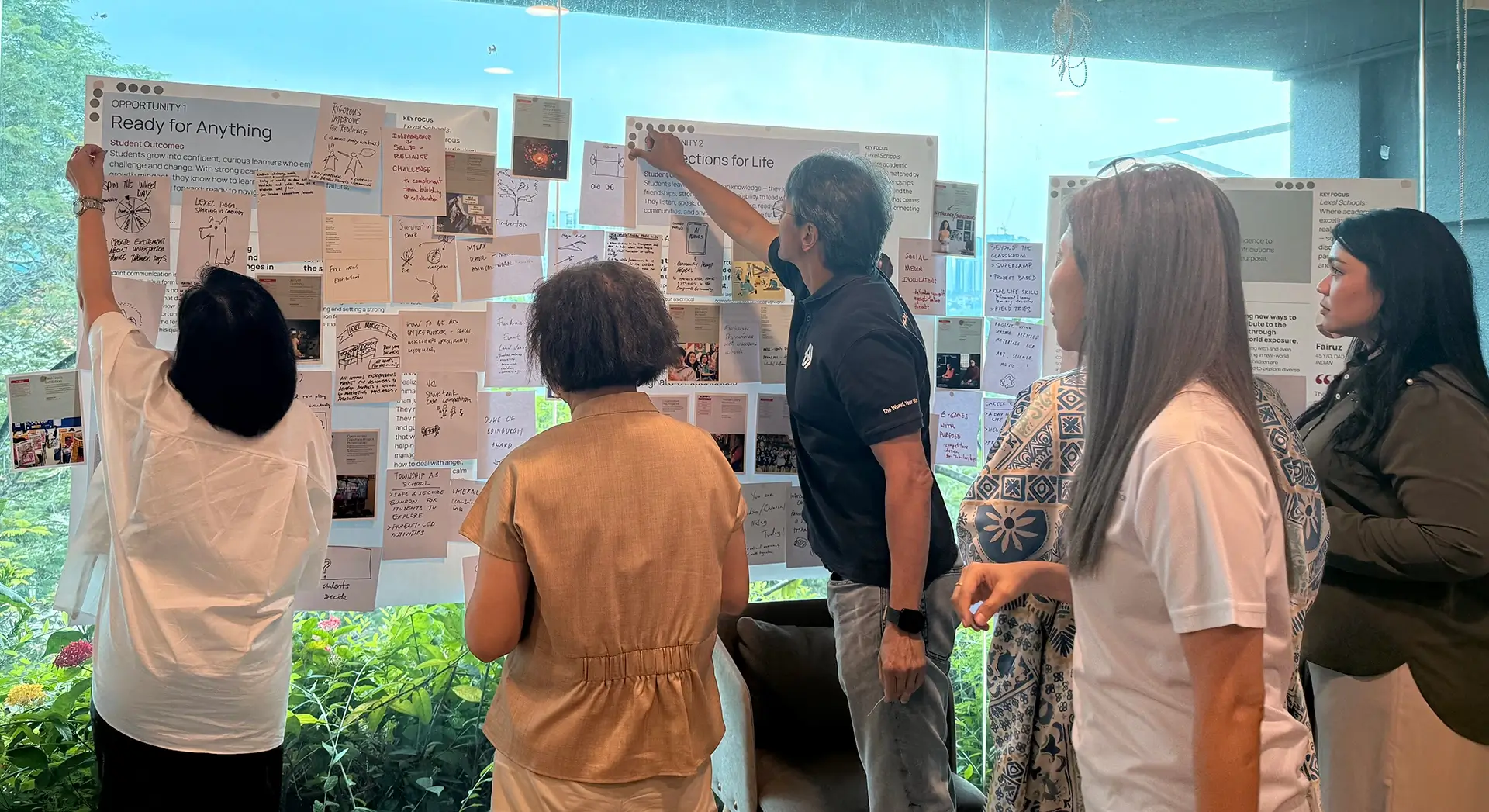
IDEO began by speaking with over three dozen students, parents, teachers, and experts across the capital to understand what was working, what wasn’t, and what was missing from such moderately priced international schools.
A few themes quickly emerged. Families, students, and teachers were worried about the stability of these new private schools, which tended to have higher-than-normal teacher turnover rates and were plagued by financial instability, negatively impacting talent attraction and retention, as well as student learning. Parents appreciated that the schools offered holistic learning experiences, such as field trips to rural areas, including jungles, but wished they were more consistently part of the curriculum. And now, the looming challenge of AI—how to use it, how to teach it, and how to teach with it—was in the background, a persistent cause for concern. The big unmet need? Reassurance that Taylor’s was thinking long-term and systematically about developing the skills, knowledge, and mindsets that would prepare students for an ever-changing world. Parents wanted a school that measured growth in academic, social, and character terms over generations, not just school semesters.
With these insights in hand, IDEO began developing a design Playbook for Taylor’s new brand—Lexel International Schools. A combination of “lexicon” and “excellence,” Lexel’s mission is “building what lasts, learning for life.”

The schools are centered around three key differentiators:
- Always Ahead: Lexel schools commit to staying current with the topics and subject matter they teach, as well as the tools they provide to students, parents, and teachers.s.
- Learning That Builds for Life: The schools ensure programmatic, systemic, and consistent learning experiences from Pre-K to Year 11. Interested students can even continue their post-secondary journey in partnership with Taylor’s University and other higher education institutions within the Taylor’s ecosystem.
- Educators for the Long Run: These schools commit to ongoing investments in professional growth opportunities for teachers and stable learning environments for students.
Four Lexel Literacies—AI, Digital, Financial, and Nutrition—integrated into the Cambridge Curriculum bring the school’s vision and mission to life.
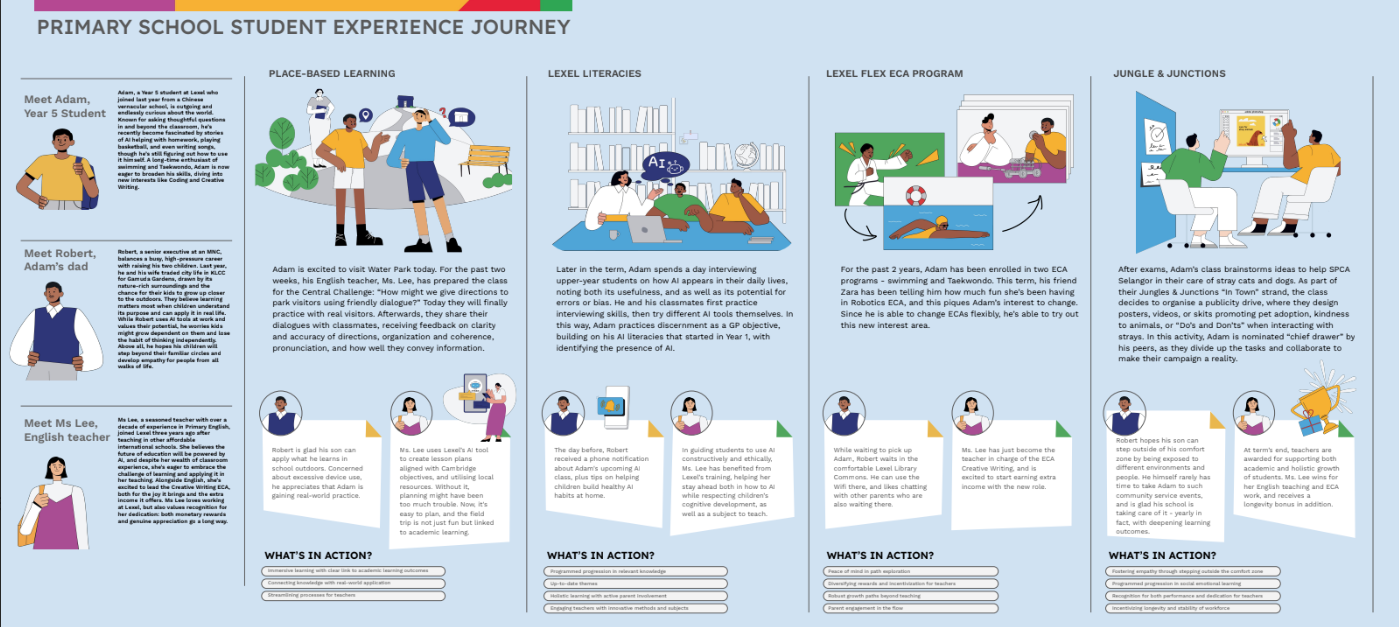
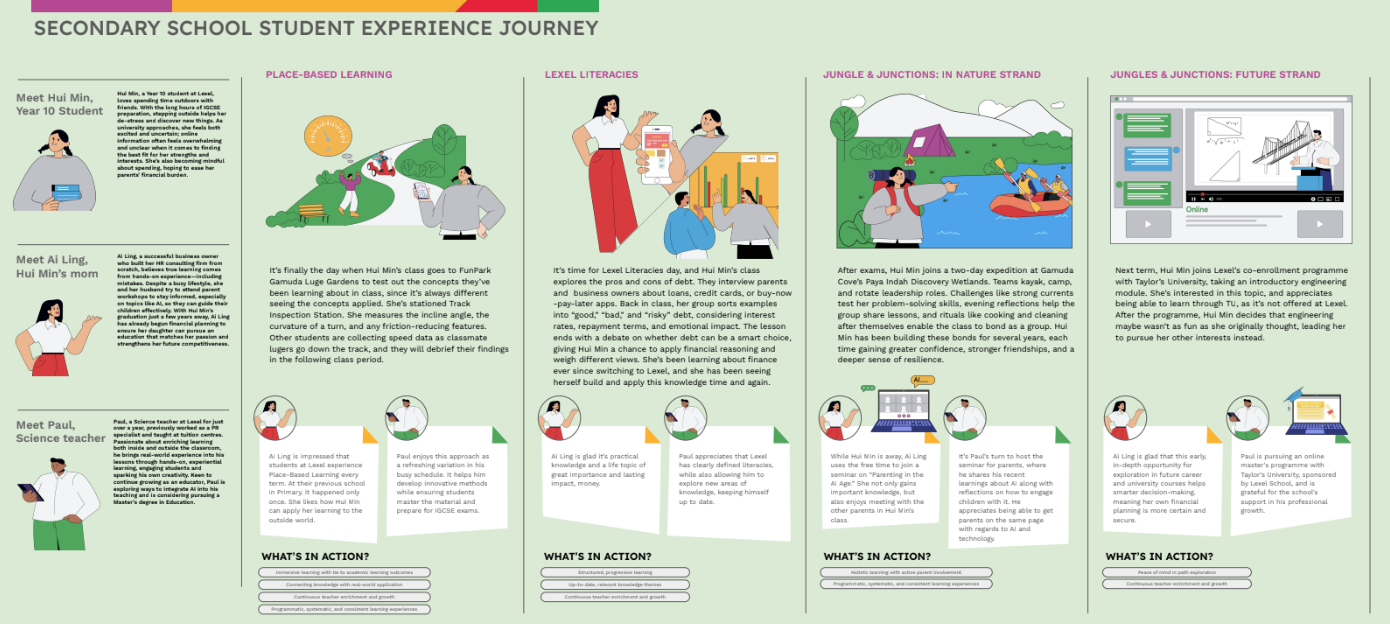
By systematically integrating AI literacy into its spiral education framework, in particular, an approach where major topics are revisited multiple times through a curriculum to build fluency over time, Lexel ensures parents that the school is thinking a decade ahead from Day One, setting the school apart. In addition to enhancing AI fluency, Lexel offers unique end-of-term experiences called Jungles & Junctions.
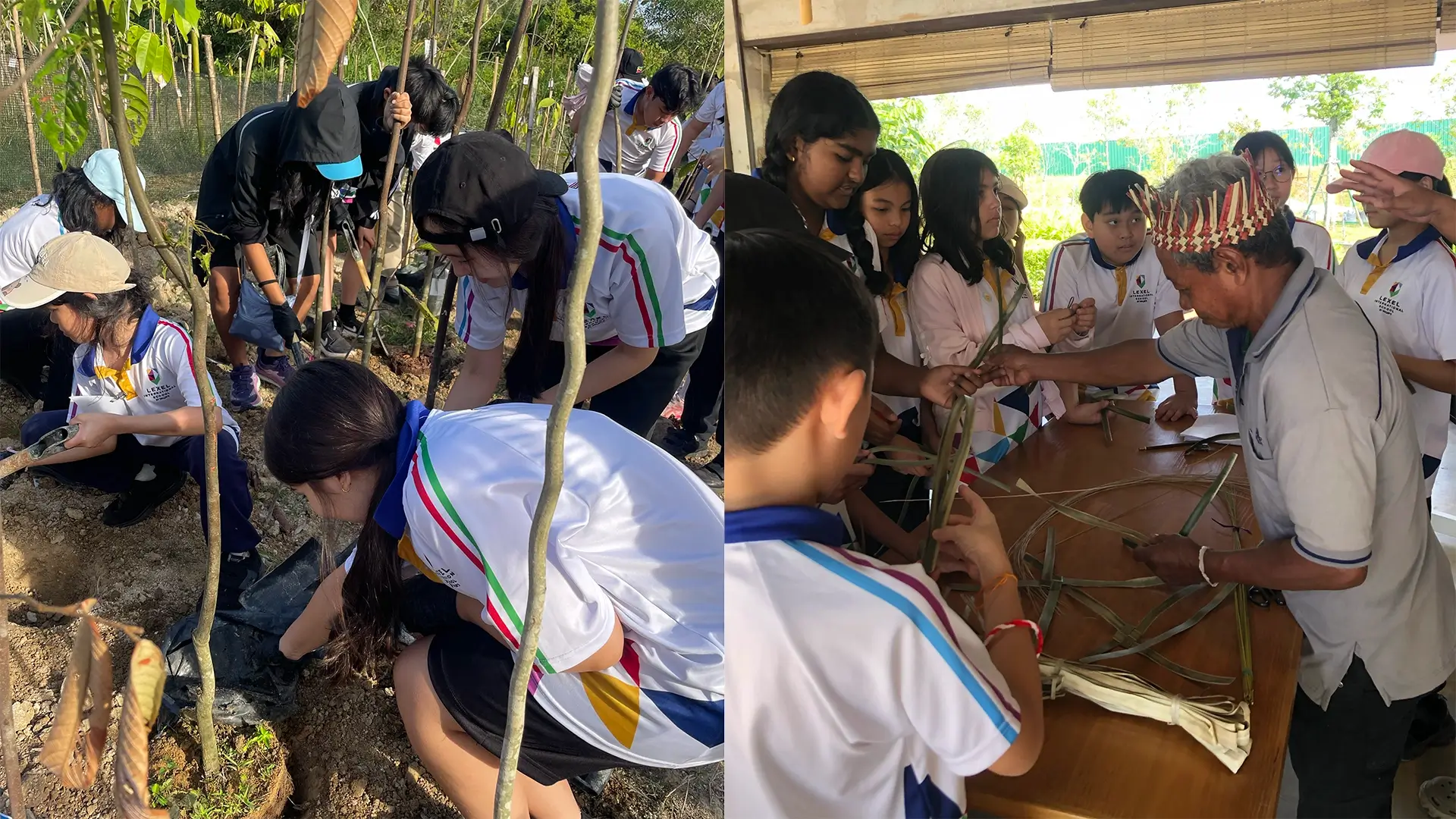
Combining three important strands of learning—community engagement, nature-based personal and interpersonal development, and career and university exploration—Jungles & Junctions leverages Taylor’s extended educational network and Lexel’s strategic founding campus within the Gamuda Gardens development in Selangor. Surrounded by tropical rainforests, the township’s residential neighborhoods, theme park, and various sports facilities, including an Olympic-length swimming pool, are transformed into an extended Lexel campus, with a GenAI-driven planner to help teachers streamline the organization of class outings. “The Township is Your Campus” became the tagline for this approach.
In September 2025, just months after IDEO’s collaboration ended, Taylor’s began classes at its first Lexel International School. By mid-year, the new school had achieved 115% of its year-one student enrollment target, with significant inbound demand for Year 2 already demonstrating the school’s market resonance.
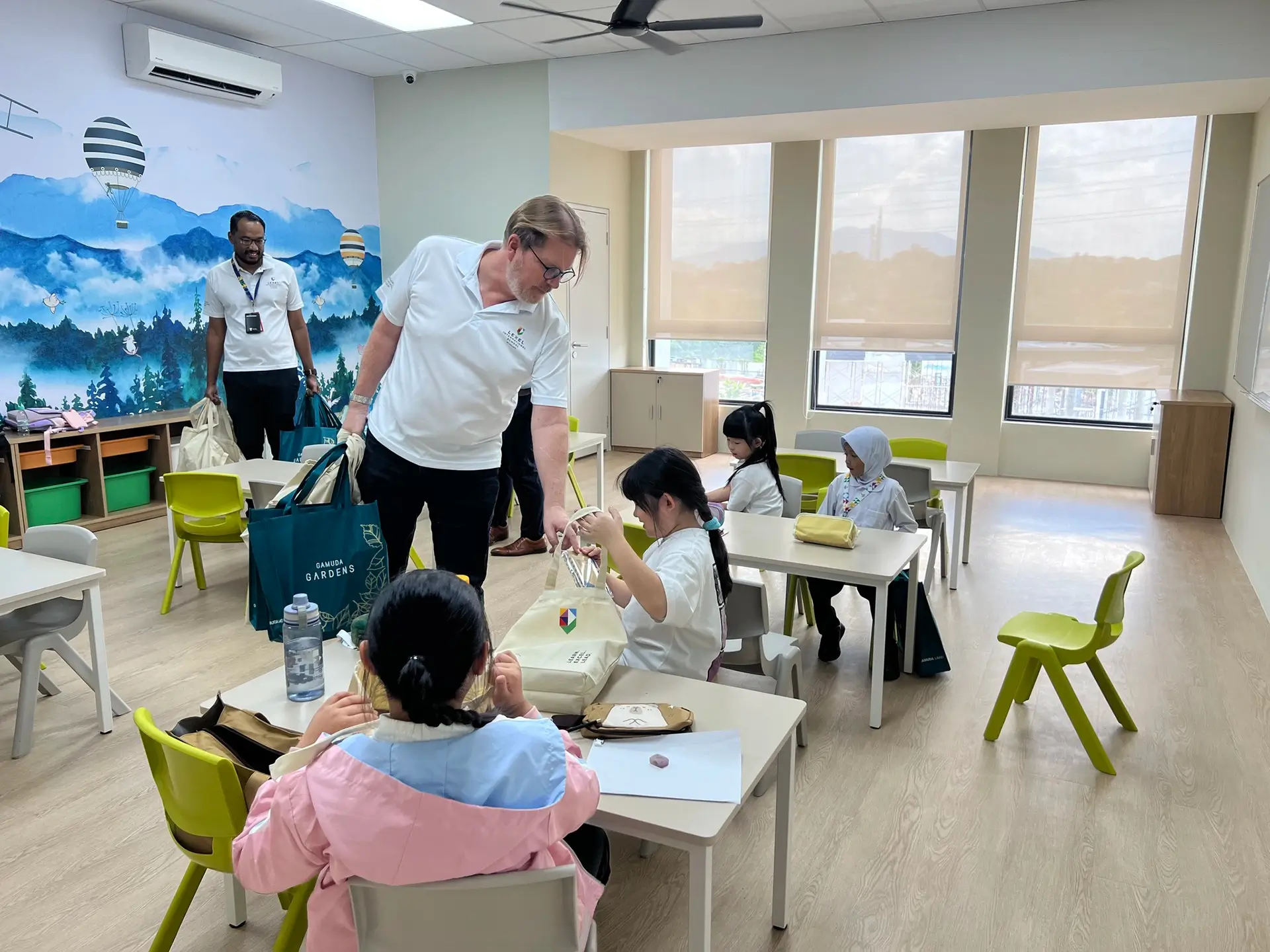
The modern campus features spacious classrooms, science and technology labs, a library, a multipurpose hall, and a canteen. Annual tuition ranges from about $2,800 USD for pre-K students to about $6,100 USD for secondary students.

Most importantly, by combining Taylor’s deep academic expertise, Gamuda Land’s development prowess, and IDEO’s innovative design Playbook, Lexel brings quality, affordable international education closer to home for Malaysian families. According to one parent, “My daughter looks forward to going to school every day … and has a lot of opportunities to express herself. On a scale of 1 to 10, I give [Lexel] an 11.” Based on the IDEO Playbook, a second flagship campus in the Southern Klang Valley, which is scheduled to open in September 2026, has already exceeded its year-one target enrollment expectations, with plans to continue extending the Lexel network to other parts of Malaysia and the wider Southeast Asian region in the near future.
Malaysia’s private international school sector has grown significantly as parents seek quality English-language education. However, high tuition fees and limited access to reputable schools are continual challenges for those in the emerging middle class.
115%
of Lexel’s student enrollment target reached during the launch year of its first campus
Year 1 enrollment target exceeded
at Lexel's second campus several months ahead of classes commencing
Delivering an unbiased news experience
Straight Arrow News transforms fact-based news consumption.
The American news industry has long been a competitive and saturated market. This has only intensified with the emergence of social media outlets and AI-generated news. Even so, SAN’s rigorously unbiased, fact-based reporting style and rich video storytelling had enabled the ambitious startup to rise above the media fray in just three short years.
With a strong foundation to build on, IDEO sought to further differentiate SAN’s cutting-edge news product and build deeper engagement with a wider audience through a new user experience.
.webp)
Collaborating closely, IDEO and SAN began by delving deeply into media consumption habits. They met with early SAN superfans, news consumers who spent hours a day absorbing content from traditional outlets like Fox and USA Today, and those who looked to their Ring doorbell app or Reddit for news. The takeaways? People were tired of clickbait and clunky interfaces. They sought clear, factual news that was easily accessible, with additional context to help them interpret events and understand their significance. They craved more than one perspective on important topics, so stories felt balanced rather than polarized. They also valued having control over how they consumed news, so making it easy to switch between text, video, and audio formats was crucial.
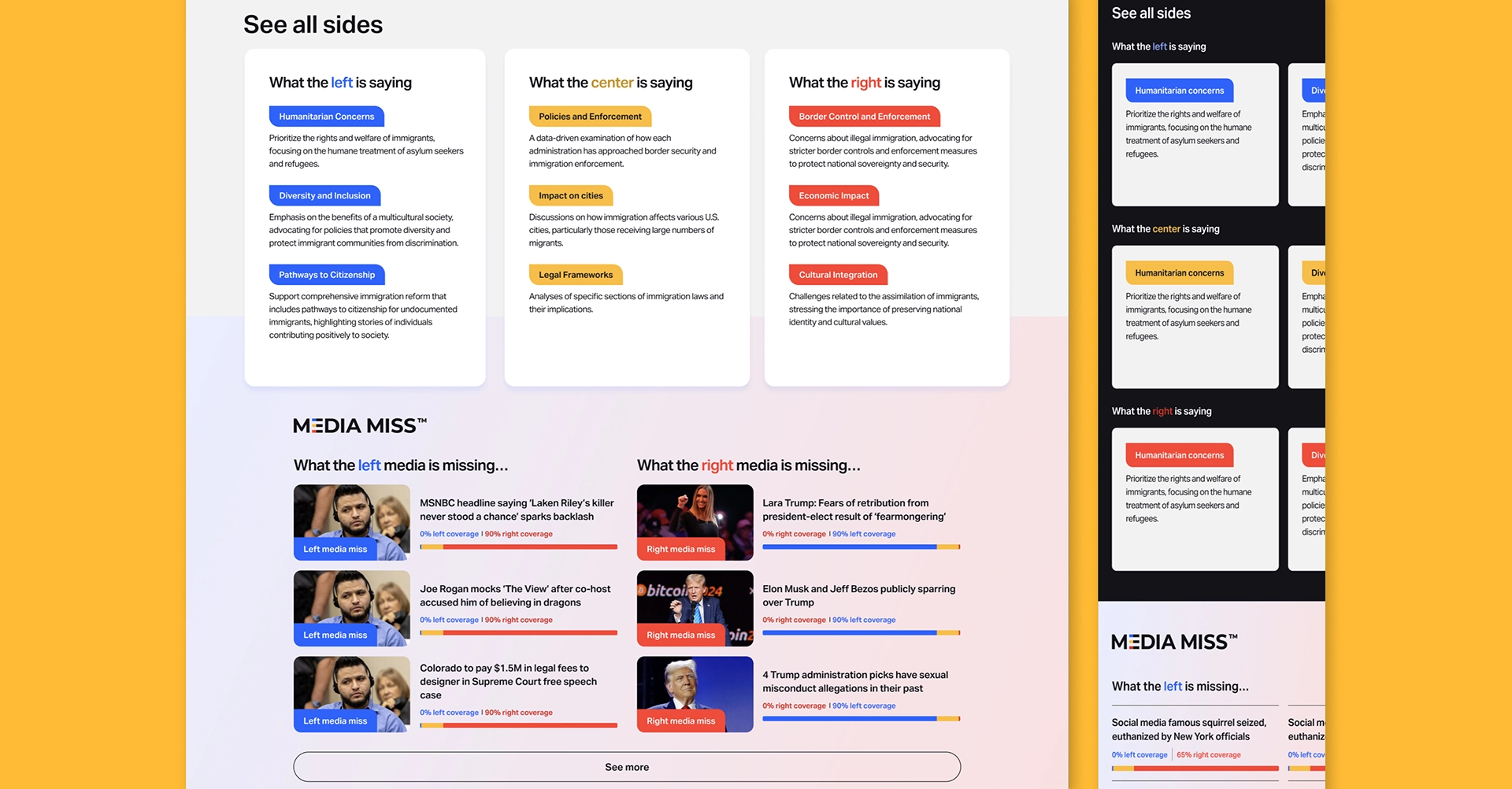
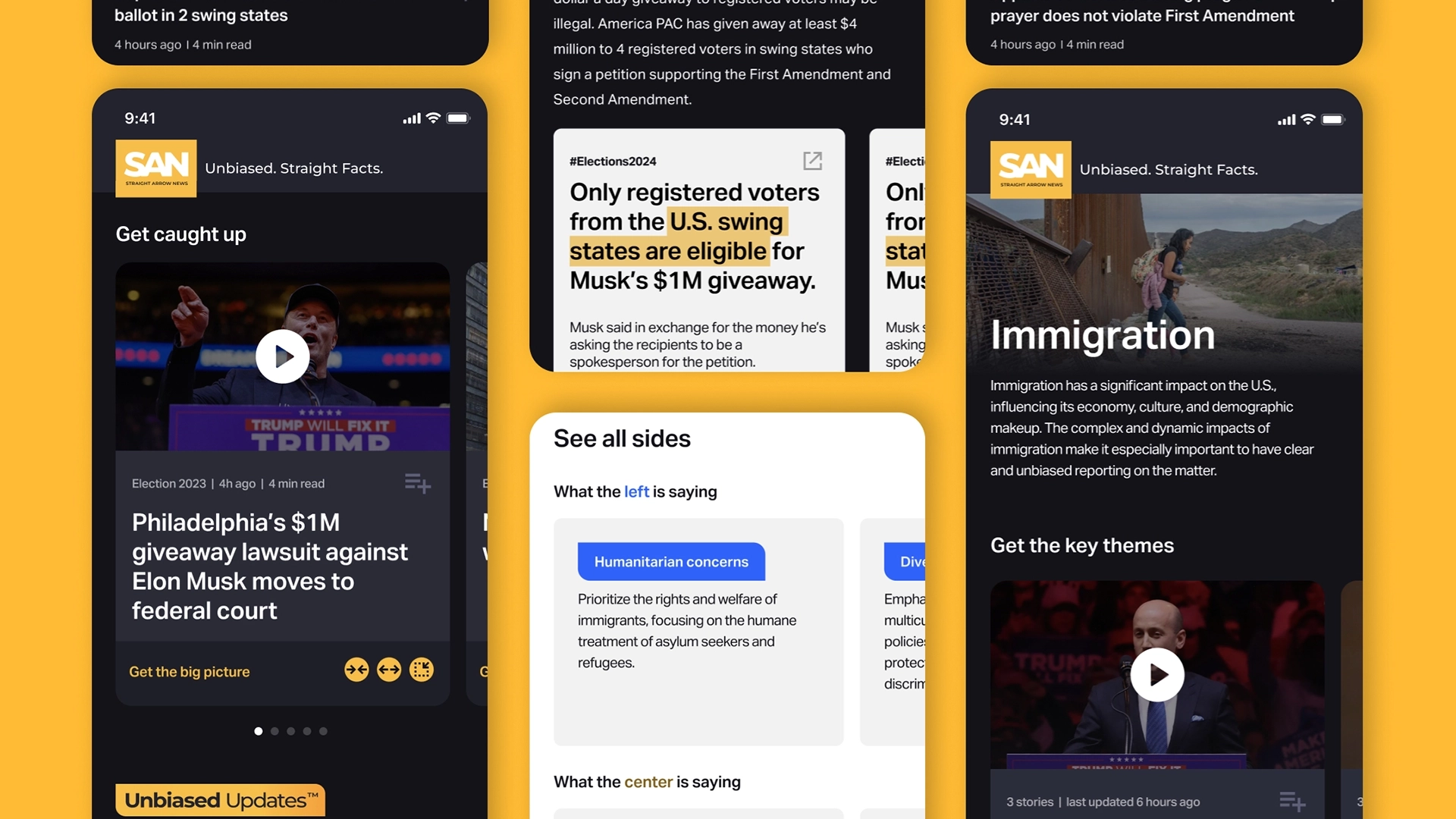
Together, IDEO and SAN created features across SAN’s website and app that put facts, trust, and transparency at the core of the product experience. Fact Cards distill key data points into clear, shareable units, while the Sources feature allows readers to trace information directly back to its original source. To make complex stories easier to grasp, Big Picture insights drill down into why events matter, surfacing underlying themes, historical parallels, differences in reporting, and common ground. The Why This Story Matters section provides readers with clear framing and sets the story within a broader context, while the Timeline illustrates how events unfold over days, months, or even years. An antidote to news polarization, See All Sides presents left, right, and center narratives for key topics side-by-side, and Media Landscape visualizations reveal how coverage varies across outlets. Finally, to ensure SAN fits seamlessly into readers’ daily lives, the redesigned Today Page is organized into three highly scannable sections: Latest News, Top Stories, and SAN Originals. The combined features create a balanced, clear, and non-polarizing news experience, making it easy for readers to delve deeper into the sources of their news.
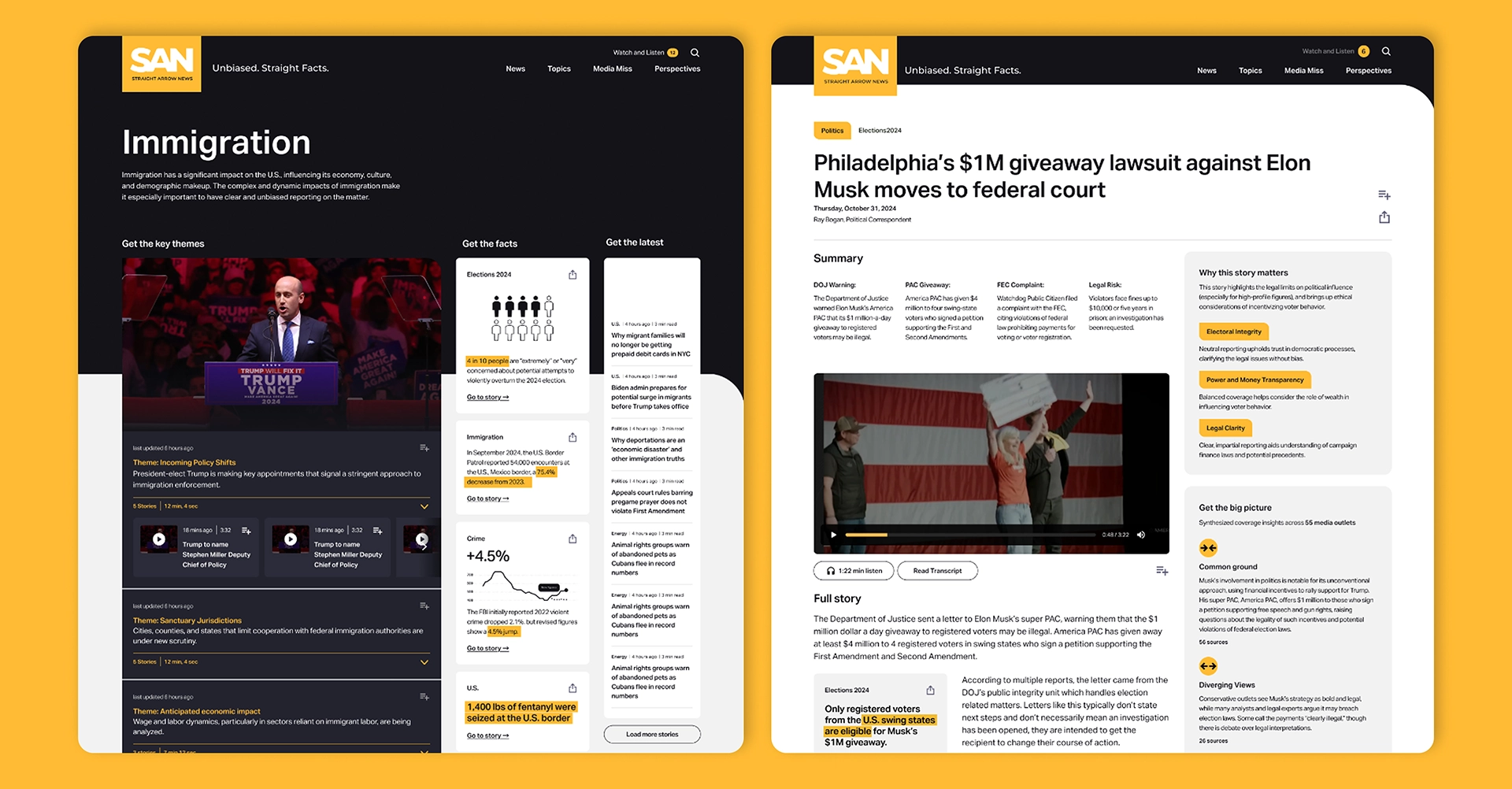
SAN now delivers a news experience as modern, dynamic, and trustworthy as its journalism. A month after its debut, the SAN app’s page views increased 1,170 percent year over year compared to June 2024, while active users rose 700 percent. Readers also give the updated mobile experience a 4.8 rating on the Apple App Store. “Our team is delivering reporting that’s both deeply factual and accessible,” said Derek Mead, SAN’s Chief Content Officer. “This redesign is pivotal to the direction journalism needs to take and the leadership role Straight Arrow News is taking on as we help guide the news industry into a brighter future.”
SAN built a loyal readership and gained recognition for its unbiased reporting. To expand and stand out from legacy media, SAN wanted a redesigned user experience that reflected its commitment to fact-based journalism.
1,170%
increase in app page views YoY
700%
increase in active users
4.8 rating
on the Apple App Store
Preventing newborn RSV
A toolkit to increase global adoption of Beyfortus, the world’s first RSV immunization for babies.
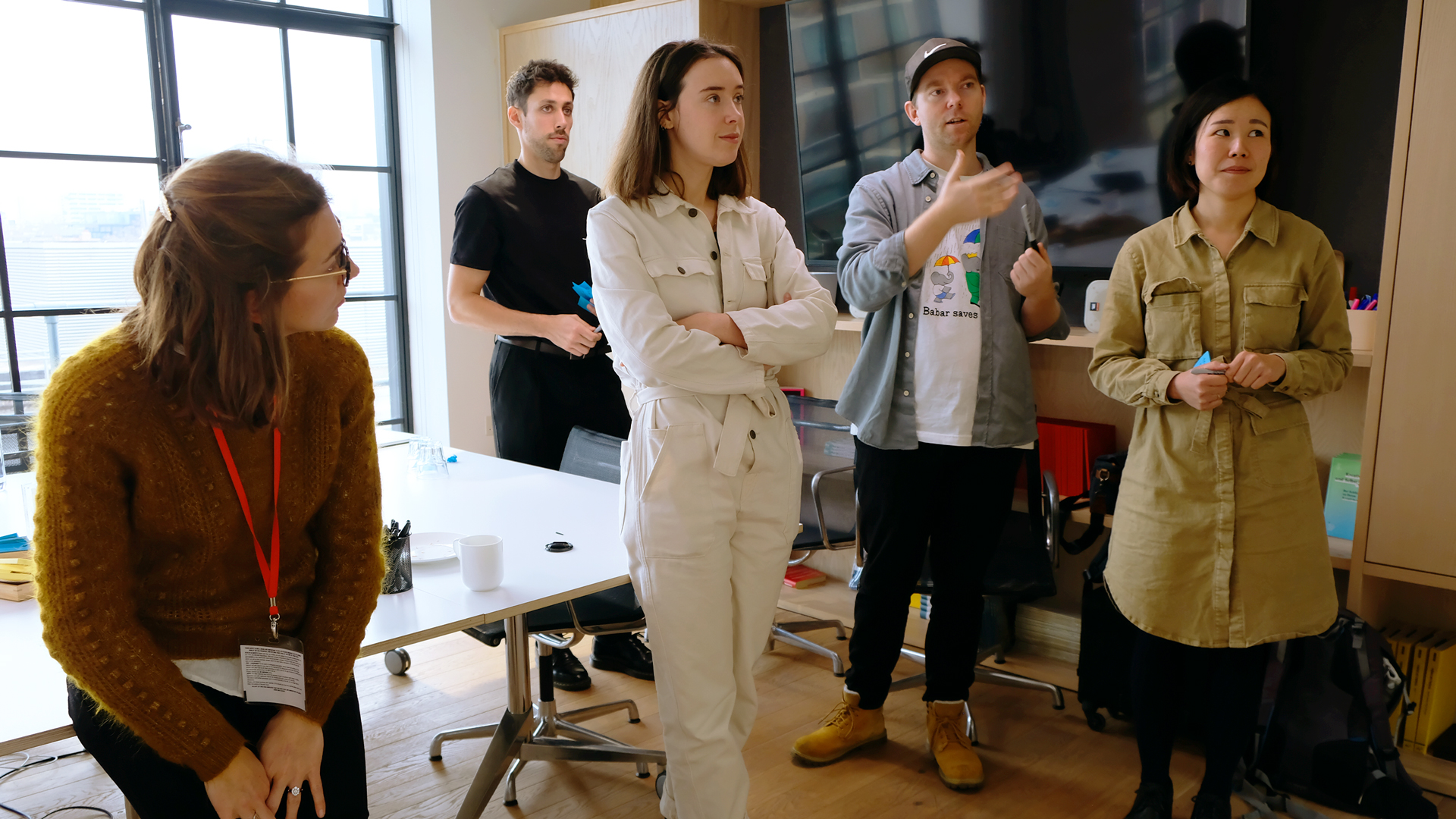
Sanofi was the first company to supply the polio vaccine worldwide. Because of the global fight against the disease, endemic wild poliovirus transmission is now limited to just two countries. However, attitudes toward vaccines and immunizations have shifted significantly. To ensure a smooth launch of Beyfortus in a time of increased vaccine hesitancy, Sanofi asked IDEO to conduct research across four important and very different healthcare markets: Germany, Spain, China, and the US.
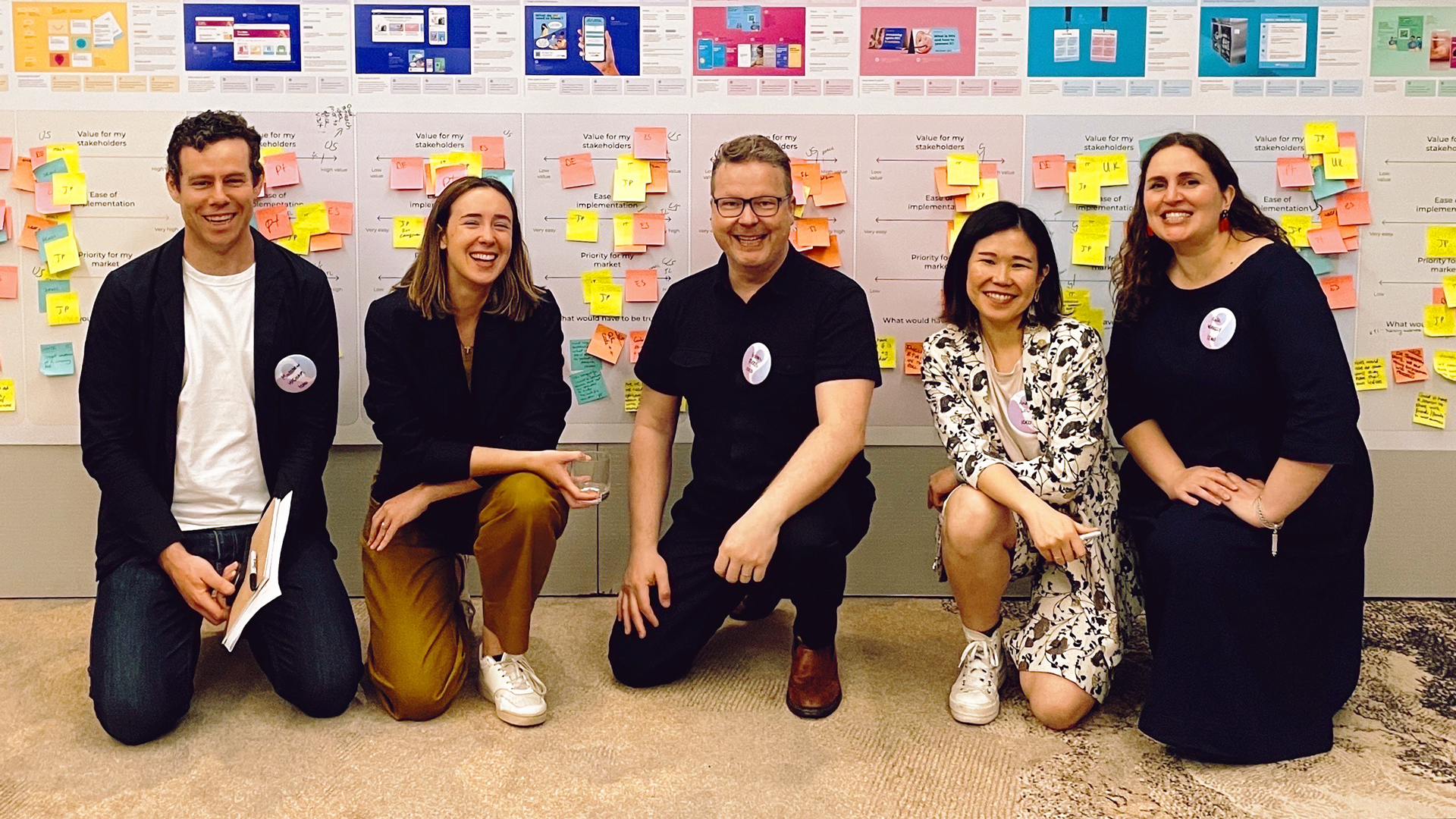
IDEO worked with parents, caregivers, healthcare professionals, and healthcare administrators to identify potential barriers to vaccine adoption and understand the emotional needs of all stakeholders involved in the immunization process. Navigating cultural differences and diverse healthcare environments, the team uncovered a set of insights.
For healthcare professionals, the team discovered there was no one-size-fits-all approach to immunization training across Sanofi’s 20-plus global markets. While consistency of key information was important, trainings needed to be flexible and customizable. This way, regardless of whether the vaccine was administered by midwives, OB-GYNs, nurses, or doctors, they could confidently discuss the pros and cons across cultural contexts and administer the drug correctly.
For new parents, receiving information about a new immunization immediately after giving birth could be too stressful. But simply leaving pamphlets about Beyfortus in waiting rooms didn't address their real concerns, either. Caregivers needed to engage in conversations earlier in their pregnancies and continue them after leaving the hospital, when they might have additional questions.

IDEO translated these research insights into a highly accessible global communication toolkit that uses simple, straightforward language, metaphors, and illustrations to support informed conversations between healthcare providers and parents before, during, and after a child is born. IDEO then conducted a series of market-fit co-design workshops with representatives of Sanofi’s global immunization business to iterate on the print and digital tools, make them more resonant with regional customers, and ensure compliance with local regulations. IDEO handed the toolkits over for development to support the launch of Beyfortus in January 2024, just in time for RSV season.
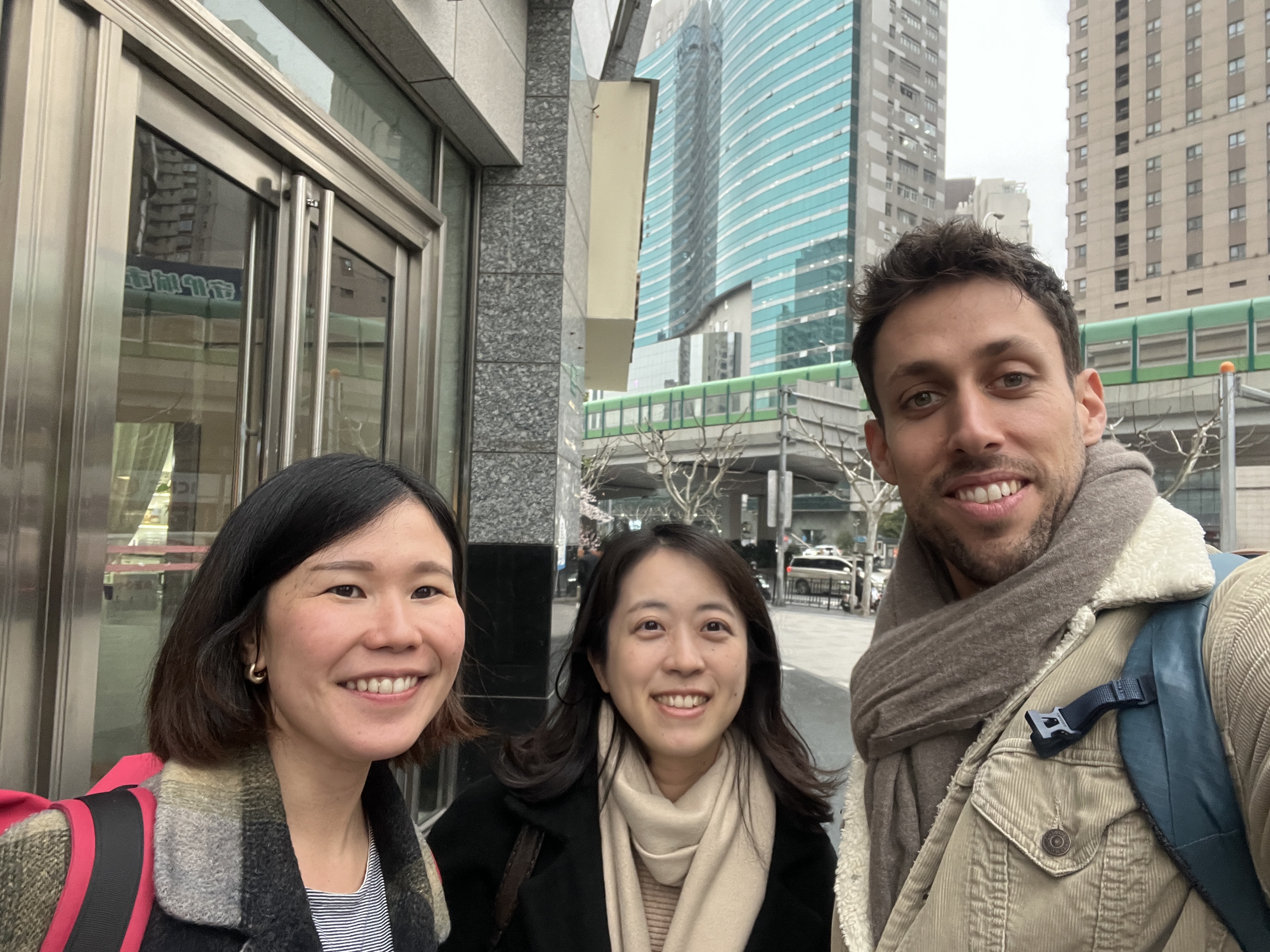
Beyfortus saw enormous demand in its first year, demonstrating strong efficacy in real-world applications and achieving blockbuster status as a $1.8 billion therapy. Sanofi’s global launch team credits the patient-centric toolkit with increased requests for communication materials from its regional markets as well as from healthcare and government organizations that have typically been hard to reach, key goals of its global-local launch strategy.
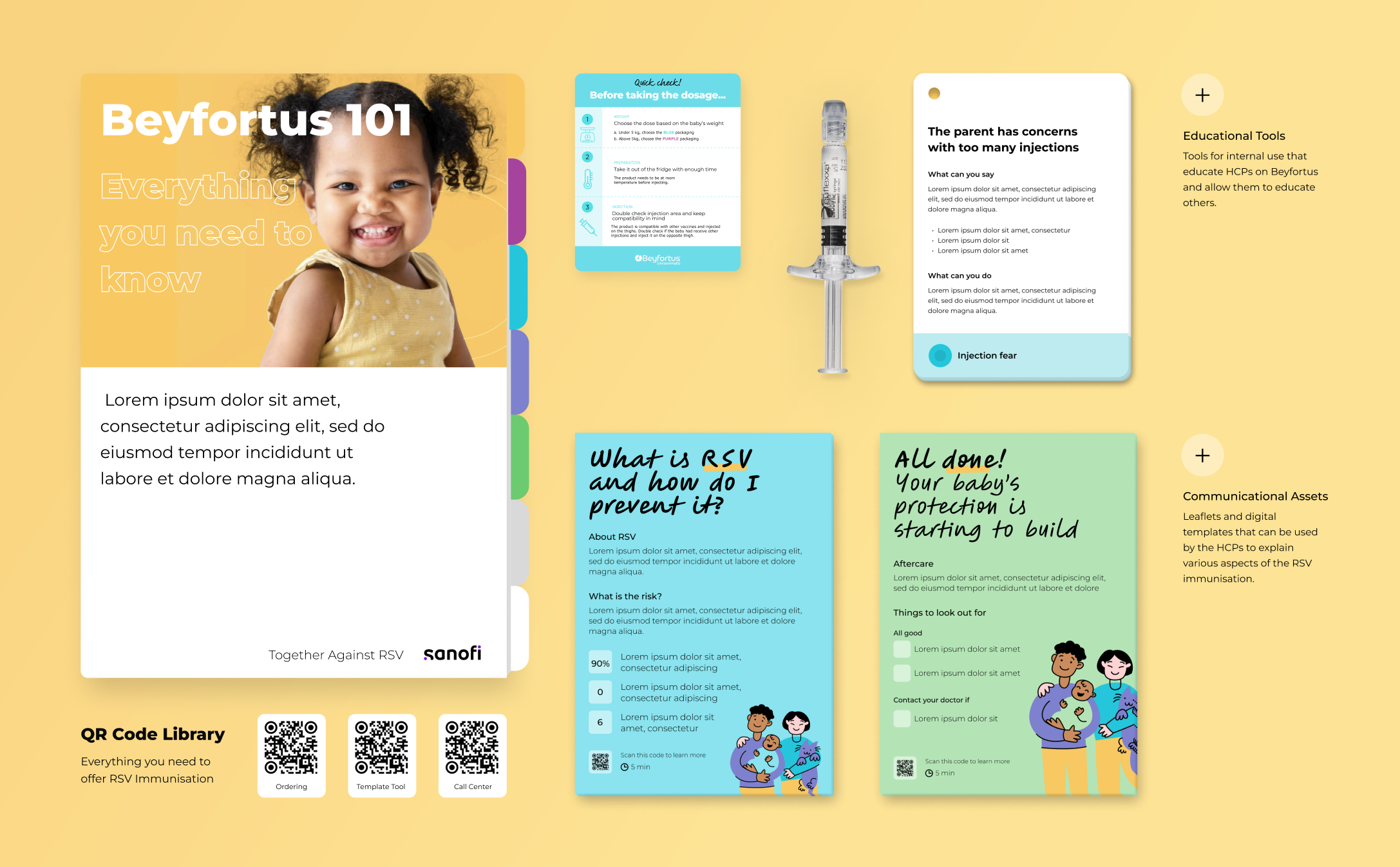
Since its development, Beyfortus has received swift regulatory approval from the US, EU, China, and Japan, with patient demand causing Sanofi to triple its worldwide manufacturing capacity to meet the needs of the 2024-25 RSV season. Ahead of the larger global distribution of Beyfortus, IDEO and Sanofi partnered with equity expert consultants, Fearless Futures, to conduct a DEI review and worked with doctors and nurses who participated in the initial drug launch to make the materials even more accessible, relevant, and successful for 2025 and beyond. To date, six million babies—and counting—have been immunized with Beyfortus.
Worldwide, childhood vaccination hesitancy among parents fluctuates between 25-45%, according to the World Health Organization (WHO), a trend it considers one of the biggest global threats to public health.
85.9%
reduction in hospitalizations for infants who received Beyfortus compared to those who did not (2023–24 RSV season)
$1.8B
in first-year sales of Beyfortus
Meet the Fine Artist Who Works With T-Shirts and Chain-Link Fence
San Francisco's Brian Singer lives and breathes provocation
His winding path evolved from leading teams at Facebook, Pinterest, and serving on the American Institute of Graphic Arts (AIGA)'s board to interrogating the systems that shape our reality through fine art and design. I first connected with Brian while creating a public art installation inspired by his work. Sitting down for a chat with him reminded me why art at the edges is key to activating social change and reimagining our future.
In one sentence, who are you?
I’m the guy you root for in the movie who doesn’t actually win in the end, but also doesn’t get eaten by zombies. I’m also an artist and designer who gravitates towards thought-provoking work.
What do you do? How did you learn it?
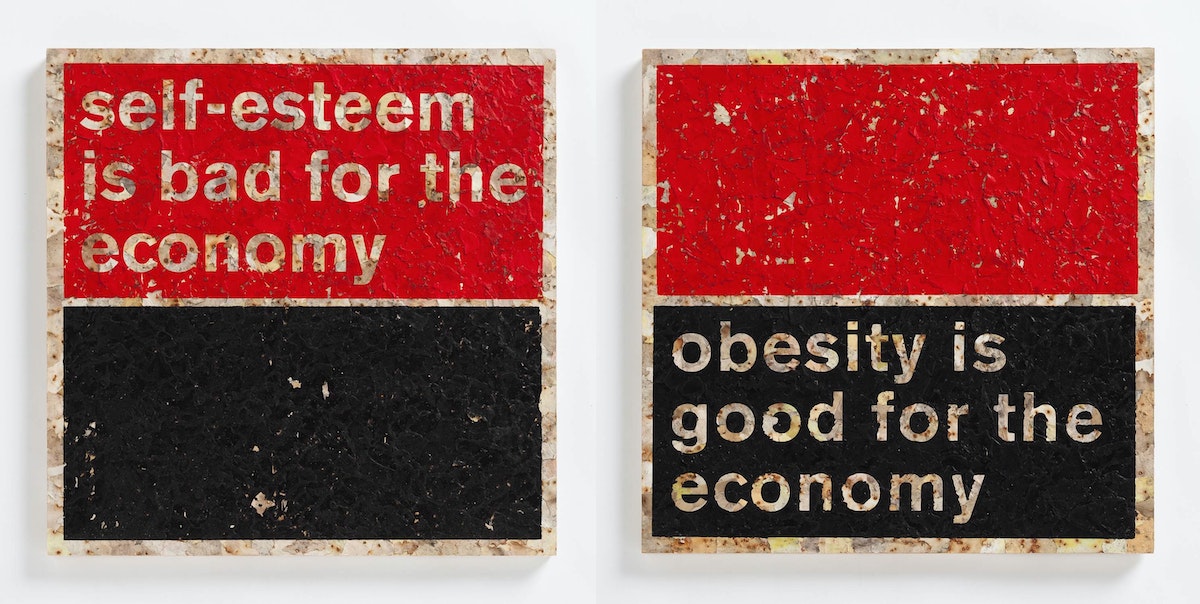
At the core of my work is deconstructing and reconstructing words, symbols, and objects in order to shift their meaning. I wish I could say how I learned it. I can trace some of it to my roots in the design and communications profession. And by being curious. Well, that and just trying and failing and trying again.
What are your three favorite possessions?
My guillotine cutter, not just because of how useful it is, but also because I got it off Craigslist for a great deal. My studio (technically not a possession because I rent it), but it allows me not just the physical space, but also the mental space to create. And a giant crocheted crab pillow that my mom made when I was a kid, because it’s a crab pillow.

What does a typical work session look like?
It truly depends on what I’m making (or if I’m still in ideation phase). For many of my projects, there’s a significant planning phase where I’m just figuring out what approach to take. Once that’s ready, I start production which can consist of tying thousands of knots, or counting and sorting paper. Sometimes I wish I just did one thing, so my routines were more regular, but the truth is each session is entirely dependent on the project (and lately, the projects have been pretty diverse).
How do you get over creative block?
I shift gears. If I’m struggling with a concept, it doesn’t help to keep focusing on it. Instead, I dig into a different project, take a walk, read a book, get high, anything to get my mind off of the initial project. Once that’s done, the ideas seem to come more easily (though sometimes they come at 4am).

What was the last item on your to do list?
This? My to-do list is never ending in that there’s always too many things to do and never enough time, so items get moved to the next day, and the next. Today, I’ve prepped for and conducted a recording session for one of my projects and followed up on a proposal. After this, I’m sending a list of available pieces to a gallery, setting up tax payments, planning my week, getting groceries, and going to my nephew’s birthday dinner. My life is pretty exciting.
How do you see the world in 2078?
I’m not very optimistic about the future of humanity. Not because I don’t think we’ll survive, we probably will. Us, and cockroaches. I just think that humans have a tendency towards power and wealth at the expense of other humans and the planet. Maybe we’ll have flying cars and nanobots and we’ll live to be 200 years old, but society will still be a pyramid, with the masses supporting the very rich at the top. Sorry, that’s so dismal.
What’s your number one bucket list item?
Right now, number one is to leverage the very tactics that the advertising industry uses, but to help parents raise their children. This isn’t packaging carrots like junk food, but more like Brave New World for good. Yeah, wrap your mind around that.
Who are you creative crushin’ on lately?
So many crushes. Miranda July? Rigo 23? Matt Bonner (creator of the baby Trump balloon)? There are so many, but one who continually inspires me is Ivan Cash. He’s a brilliant creative with the right twist to his ideas around the effects of technology on society. One of his recent projects was to create sunglasses that block out digital displays.
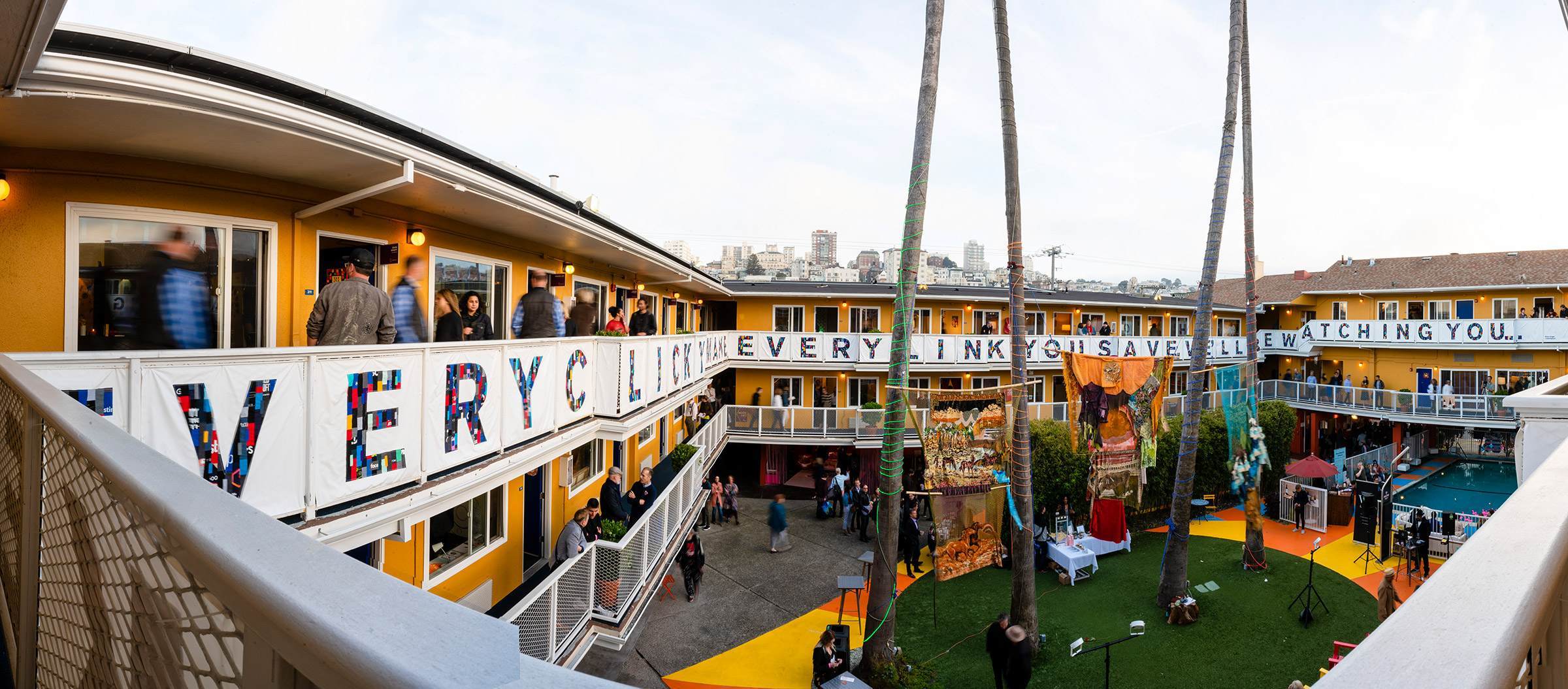
From putting photos of texting drivers on billboards to calling out mass surveillance with tech company t-shirts to sending 1000 journals around the world to connect strangers, Brian Singer (also known as Someguy) lives and breathes provocation.

How Quitting Plastic Got One Designer Thrown in Mall Jail
There a lot of pros to quitting plastic—less waste, a fatter bank account—and some cons
As a designer at IDEO’s CoLab, I’m always working on the kinds of systemic challenges that no single company—or even industry—can solve alone. And every time we start exploring a new problem, I get really excited. So excited that I’ve challenged myself to do things like go 100 days without sugar, 100 days without meat, and 100 days in heels (to varying degrees of success). So when we decided to explore and prototype goods for the circular economy—which focuses on manufacturing goods with a use beyond their lifecycle—I decided to dive straight in, and cut plastic out of my life for 100 days.
I kicked off my new journey with a shopping spree at T.J. Maxx, picking up all of the cute little glass jars that I could find to replace Tupperware, drug store cosmetic packaging, and other hygiene-related items. But when I hit the checkout counter, I realized that I was snaring myself in an expensive catch-22. The second all of my existing plastics hit the trash, I would be creating more waste. Instead, I enacted a grandfather clause: I used everything in my life that I already had—plastic or not—and barred myself from consuming or buying anything that brought additional plastic into my life.
The first of January 2019 was day one. Everyone was super accommodating about New Year’s resolutions. But the rest of the 99 days put me in some situations that were downright weird. Around March, I started to run out of toiletries and hit a low point where I used a Sharpie as eyeliner for a good week (do NOT recommend). I once had to drink bubble tea out of a bowl, and ransacked my bag until I found a random piece of pipe to use as a straw. It wasn’t all bad, though. Here are six surprising advantages to going without plastic.
1. I went on an accidental diet
Cutting out plastic meant no more junk food, snacks, sugar, to-go drinks, or sodas. I ended up eating more things that come in their own packaging, like avocados, yams, and eggs, and buying whole fish instead of pre-prepped fillets that came in shrink-wrapped plastic.
About five weeks after I started this challenge, I noticed that my skin was clearer, my joints were less inflamed, and the number on the scale had dropped—I felt great. But more importantly, it made me realize how much of the real estate in the modern American supermarket is dedicated to things packaged in plastic, from bagged snacks to most of the cold refrigeration aisles.

2. I needed way fewer products than I thought
After rinsing out my shampoo and soap bottles for their final suds, I turned to the beauty gurus and slapped some coconut oil and baking soda together and called it shampoo. It was totally... just okay. But after a rough couple of weeks, my body adapted and my hair and skin were doing great because all the chemicals had worked their way out of my system. It was surprisingly effective.
3. I saved money
My life was a lot more inconvenient, but also much improved. You know when you justify retail therapy as self care, and you go into Target just to grab some toilet paper only to come out with everything you need to redecorate your living room? Most retail was off limits for me, either because of packaging or material choice. Instead, that money and time went toward things I could experience. Shopping used to be entertainment; buying brought the rush of reward. Even now, post-challenge, it feels strange walking into stores.
4. My trash was compostable
With my new rules, I didn’t make that much garbage—mostly just compost that I stored in the freezer, and my experiment brought me closer to the way that I lived when I was at home. My parents grew up in rural China, growing all their own vegetables, so when Mama and Papa Gong bought a house in the middle of urban Chicago, they put a farm in the backyard. When I go home, I’m reminded just how differently they think about waste. Any organic trash goes right back to the chickens and the soil, and they don’t have any food- or shipping-related packaging to deal with. After a season, all their waste has decayed back into the soil, while plastic in our landfills will sit around for 1,000 years.

5. My social life improved
Small talk makes me uncomfortable, but I had to start talking to strangers to ask them to, say, leave the straw out of my drink (flashback to day two of this challenge when I asked for no straw, and somehow ended up with two). These small interactions always turned into real conversations about plastic and climate change. As a bonus, people also started giving me free stuff, like the brewer who was handing out samples of Bohemian Raspberry in plastic cups, but gave me a half-pint of beer in a commemorative pint glass instead. Conversations get a lot more interesting when your opener is, “Have you considered that you consume a credit card’s worth of microplastics a week?”
6. Every day was a challenge
This experiment threw constant small design challenges my way. Getting groceries and forgetting a tote bag meant cradling too many vegetables while chasing a bell pepper that rolled away in the parking lot, until I stopped and made a quick a sack out of a hoodie. It was a fun daily design exercise, finding little hacks to my plastic puzzle.
Though there were a lot of upsides to this challenge, over the course of the 100 days one thing began to frustrate me. A lot of sustainability design aims to shift consumer behavior. But cutting down on plastic isn’t just an individual responsibility. We may have the choice to buy a glass bottle over a plastic one, but by the time we exercise our buying power, it’s too late. We need smart options for what to do with the products we buy after we’re done with them. That starts with design. And until the corporations that provide us with our purchasing choices and set the tone for how we live our lives get onboard with the circular economy, it’s tough to take it on ourselves. Still, I recommend you try. Unsubscribing from plastic is a pretty big wake up call, and it’s changed the way I live.
If you've already blown your original 2020 New Year's resolution, maybe give this challenge a shot? At the very least it might help you lose weight, clear up your skin, and strengthen your social relationships. Let me know what adventures it takes you on and where creativity strikes because of it. Let your favorite brands know, too, so at the very best, they’re motivated to start making changes upstream and join the circular economy. We’ve definitely left our mark with this material—it’s time to figure out what to do about it.
Illustrations by Jenice Kim
When you go plastic-free for 100 days, you can expect small life improvements, like more aesthetically-pleasing toiletries, and minor inconveniences, like remembering to carry reusable water bottles everywhere. But there were other things that went way beyond my expectations. For example, an incident in Panama in February where I almost landed in “mall jail” after I tried to refuse a plastic bag with my purchase. (The store used bags to determine who had paid for their goods, and they thought I was trying to steal a pair of shoes.) The challenge took me on weird and wonderful tangents like this one, and really made me consider how ingrained plastic is in our purchasing decisions and daily systems.
A Learning Program to Make U.S. Cities Economically Resilient
It’s Time for Social Innovation to Evolve
To address this disconnect, IDEO worked with the Drucker Institute to design a system that would instill a culture of lifelong learning in cities across America. It’s being piloted in South Bend, Indiana and will launch in June.
Part digital and part place-based, Bendable connects people with opportunities to learn for free from a range of leading online content providers, as well as local educational and training institutions. It serves up “Community Collections”—learning playlists curated by residents on topics of wide interest. And it offers sets of courses that help people build skills that match employers’ needs. Local businesses vet these “Career Collections” and even put their name and brand on them. Learners who complete the courses in a Career Collection can earn digital badges, which they can then share with an employer during the application or hiring process.
In South Bend, months of on-the-ground research and rapid prototyping helped to get the experience right. The public library in South Bend played a pivotal role in supporting the system’s development, and it will be in charge of Bendable locally going forward. Meanwhile, participation from local businesses signaled awareness of the mutual benefit of a new approach to learning: it’s in every leader’s best interest to help their community build the skills needed to be resilient in the face of change.
To learn more about how this lifelong learning platform came to be, The IDEO Journal spoke with two people very close to Bendable’s origin story: Sarah Zaner, a Senior Director who led the IDEO project team; and Rick Wartzman, Head of the KH Moon Center for a Functioning Society at the Drucker Institute.
First, what exactly does ‘lifelong learning’ mean?
Sarah Zaner: The model of going to school in your youth and then being sustainably employable for the rest of your life is outdated. It hasn’t worked for a lot of people for a long time and we’ve entered an era where it’s not going to work for anyone soon. In order to be resilient in the face of today’s rapid change, you’ve got to be able to turn to learning again and again throughout your life. And it’s not enough to simply want to learn, you also need access to valuable opportunities to learn. You’ve got to have the belief in yourself, and the support you need. Lifelong learning requires an understanding of how to make learning a lever for personal change that ultimately forges resilience.
SZ: Whereas our formal education system has clear structures, roles and responsibilities, it’s not as clear who the responsible parties are for making lifelong learning accessible to those who need it the most. We’re hoping that Bendable can shine a light on what it looks like to start filling that gap.
Rick Wartzman: To build on what Sarah said, one reason that we’re excited about the prospects for Bendable is that people in South Bend—and, we suspect, across the country—have told us over and over again that they’re hungry to learn new things. Many people recoil from the word “education” because they may have had a bad experience in public schools. But most people see themselves as learners. That’s partly because they recognize the need to keep refreshing their skills for work. But in many cases, it’s simply because they’re curious. Learning new things is fundamental to being human.
In fact, there’s a theory baked into the Bendable platform: Nobody is one-dimensional, and different types of learning will reinforce each other—learning for work, learning things to help you and your family thrive (like personal finance or cooking healthy meals), or just learning something because you’re passionate about it. By making sure we cover all of these areas, we hope to instill in people the habit of lifelong learning.
It seems there’s a struggle to shift the current educational system from within, and it might be necessary to build entirely new ecosystems. What’s it like to create and activate a new model that emphasizes lifelong learning?
SZ: We’re seeing a new sector emerging at the intersection of education and the future of work. Some call it lifelong learning or “Pre-K to grey,” but just like with any education reform, disruptor, or intervention that’s aiming to improve the current system, we’ve got to approach change with a “both/and” and not an “either/or” mindset. City services, industries, libraries, existing educational organizations, and others need to come together to innovate. Whole new ecosystems need to be designed, which is what we tried to accomplish with Bendable.
RW: For sure. You won’t make a community more resilient through a lifelong learning system alone. It’s not a silver bullet. There are many other necessary ingredients that must work in parallel—from a city generating enough good-quality jobs, affordable and accessible childcare and transportation options, safe neighborhoods, and much more. Lifelong learning is essential. But it’s just one piece of the puzzle.
In terms of fitting into the educational ecosystem in South Bend, Bendable was never intended to challenge or replace the city’s existing institutions. Rather, it was designed to complement and serve them. To that end, we’ve heard from public high school teachers who plan to use courses on Bendable to augment what’s happening in their classrooms. The local community college, Ivy Tech; and Indiana University South Bend have worked with us to feature some of their courses on the Bendable platform. They see Bendable not as competition but as an avenue to expose more people to what’s happening on their campuses. We likewise have collaborated with local job-training organizations, like Goodwill. They all see Bendable as a tool they can leverage to help them meet their own objectives.
How did South Bend leaders and employers realize Bendable represented a strong investment opportunity? What economic returns will come to stakeholders as a result of their investment?
RW: The world is changing because of automation, artificial intelligence, and so on. People need to keep upskilling and reskilling. And so learning for work is the center of the bullseye for Bendable.
For their part, employers want a well-trained workforce, and Bendable is a way to ensure that they’ll have one. In South Bend, many of the biggest employers in town are putting a lot of effort into helping us create career-oriented collections of courses—learning pathways that show someone exactly what they should study if they want to become the operator of a computer numerically controlled machine at a factory, say, or a medical coder at the hospital. Bendable then gives them the opportunity to take those classes, either online or at a local college or training facility.
RW: Bendable can serve as a mini learning and development platform for employers. The manager of a big distribution plant in South Bend, for example, is planning to rejigger the schedule for his 300 workers so they can go on Bendable for an hour per week and obtain new skills. He’s already told us that it would be beneficial for some of his workers to take courses on logistics. And he has his eye on one employee who might be a strong candidate for a managerial position if he gets some computer training on Bendable. We think that over time, a good number of employers will hack the system this way.
SZ: In terms of the city’s investment, former mayor Pete Buttigieg, Mayor James Mueller and his office of innovation are looking for multiple levers to ensure that they have a healthy, economically vibrant community. Bendable’s funders, like Walmart.org and Google.org, are very interested in the connection between learning and work. They’re asking themselves, “How do we ensure that we have diverse, well-equipped pipelines,“ “How do we make promising career paths accessible? “How do we help people forge their own resilience?” Bendable is helping to reveal answers.
How can cities set the right conditions to leverage lifelong learning as a strategy for weathering automation’s impact?
RW: Having a mid-sized city like South Bend is a great place to start. A population of 100,000 means it’s big enough to have a decent amount of social and economic infrastructure, but small enough to get things done, to really engage a huge part of the community in a deep way. In South Bend, for example, there are 15 to 20 employers who do a significant chunk of the hiring across the city. That’s a small enough number that we’ve been able to involve many of them in building out Bendable. Community is both the unit and agent of change for a platform like Bendable. It’s our secret sauce.
How do you customize a platform for a local community while allowing it to be applicable in other contexts?
RW: We built Bendable to be a system that runs on trust and belonging—and that means that we need to listen closely and carefully to every city that adopts the system. The content curation and customization must happen all over again in each location. If a local learner wants to move from earning $8/hour to $18/hour, they need to know what skills are most meaningful and valuable to local businesses. And that means we have to be present on the ground, digging in and figuring that out.
Another important thing to keep in mind, in terms of localizing Bendable, is that a lot of the classes and other activities provided by the system happen in the physical world in a specific city—not online. As magical as the digital platform may seem to some, Bendable users have made clear that they don’t just want to learn through a phone, tablet or computer. Learning is highly social; people want to learn with each other, and from each other. And so designated brick-and-mortar spaces—in the form of Bendable learning centers—offer face-to-face onboarding to the system, study sessions, learning meetups and other in-person educational opportunities.
SZ: Bendable intentionally leverages technology to foster real-life connection. Of course a digital app provides convenience, access, flexibility, and scale. But the place-based component of Bendable supports the person-to-person connection that learners crave. The app also provides a way of organizing and connecting people to the resources that already exist in South Bend. It’s a community-powered system that’s co-designed with the people we’re trying to serve. This is why it can both scale and be relevant to a local community.
Every prototype and pilot has a moment when its creators know they've proved feasibility. What was that moment in South Bend? What indicators signaled it might scale?
RW: We've actually thought about scale from the beginning. We've always viewed South Bend as our pilot city—the place from which, if things worked out well enough, we'd take the model and then replicate it elsewhere. The question we didn't know, of course, was whether things would "work out well enough." And, in many respects, we still don't. We won't have real results, in terms of whether we're bettering people's lives, until we launch the system and it's up and running for a while. But we are very confident that we're on the right track. By co-creating Bendable with a wide variety of stakeholders from across South Bend, we know that the community is excited about what we're building and ready for it to be unveiled in June.
SZ: In addition to thinking about scale from the beginning of the initiative, we’ve also been aware that Bendable will only be effective in a community if we are able to scale in a hyper-local way. We’ll learn a ton from South Bend, not just about the ways it will (hopefully) help build resilience in the community, but also about the ways that South Bend—the learners, the library, the employers, the city—make it their own. We’re developing a proof of concept platform to pilot in South Bend, and we’re also working on creating a scalable model through building tools, processes, and relationships that will allow every instantiation of Bendable to be truly community bred, led, and fed.

This initiative got a lot of institutional support, mainly from organizations based on the coasts. What types of sensitivities must outsiders develop before they attempt to tackle problems in communities of which they’re not necessarily a part
SZ: No learning product of any kind works if it’s airdropped in. Ultimately, local adoption and implementation are key to success. In Bendable’s case, each new city will need to take ownership and evolve it for their communities. One of our core strategies is to support the creation of a local Bendable team in each location. Like Rick said, Bendable runs on trust. During the design phase of the project, we turned to and empowered South Bend residents to conduct user research with their community. They would show our early prototypes to their friends and family and provided us with valuable feedback. They improved our designs and in the process became advocates for the product within the community.
RW: This also speaks to why having the library steward the system—in South Bend and hopefully in future cities—is so incredibly valuable. These are very trusted and welcoming places. Librarians increasingly see their role as not just shushing people and checking out books, but also providing social services and employment resources. It’s natural for the library to be the backbone of Bendable. Its mission is lifelong learning.
What have you learned about serving under-resourced communities from this project?
SZ: I love this question because communities like South Bend are not actually under-resourced; they’re under-organized and under-connected. This was one of the biggest insights for us. There are tons of opportunities and resources in places like South Bend to support and help people in the greatest need or furthest from opportunity. Through Bendable, we’ve learned how technology can play a role not just in scaling lifelong learning systems, but actually connecting people to the resources that already exist in their community, to the people in their community, and to their own agency.
RW: To echo that, there’s no shortage of great learning content out there. It’s not a supply problem, it’s an organizational and distribution problem. A regular person doesn’t know where to start. This project has taught us how to be good curators.
What’s the process like for selecting the cities you’ll expand to next?
SZ: A certain level of social capital needs to be leveraged within the community. There needs to be an interested group of employers and buy-in from informal community leaders. But honestly, a huge one is patience. We will not come into the next city and say, “Here’s the software, here are your guidebooks, and here are some posters. Good luck.”
RW: Yes, they have to be patient. Bendable isn't an off-the-shelf, plug-and-play product. It may well take a full year of research and preparation—perhaps even longer—before Bendable is up and going in a new city. We need to be on the ground and really listening. We have to replicate the process of building trust and belonging each and every time. I can’t foresee any shortcut around this, ever. This is what makes it all work.
What will nationwide expansion and rollout look like in the coming years?
RW: Our plan is to expand Bendable to 15 or so cities over the next five years. We’ll aim for places that are of a similar size to South Bend (with 100,000 to 250,000 residents) and that stand alone geographically. We know that we can wrap our heads and arms around a place of this size, truly understand the local labor market and bring together key stakeholders to help us grasp, at a deep level, what residents want to learn and need to learn.
RW: With the Drucker Institute serving as the hub of a network of cities of lifelong learning, we can then make technical improvements to the digital platform that we'll share widely, convene leaders from all Bendable cities to exchange best practices, and assess from a broad standpoint what's working well and where we need to improve.
The amazing thing is that, even though we haven't launched yet in South Bend, we've been contacted by more than a dozen other places eager to be "Bendable City No. 2." Word is out.
Illustrations by Thanawat Sakdawisarak
The ever-changing nature of work has redefined what it means to be hireable and to build a career. The need to acquire new knowledge and skills is constant. Yet in many communities, opportunities for continuous learning are scarce.
How a Kid's Perspective Improves Design Research
Lessons from IDEO New York's Quinntern
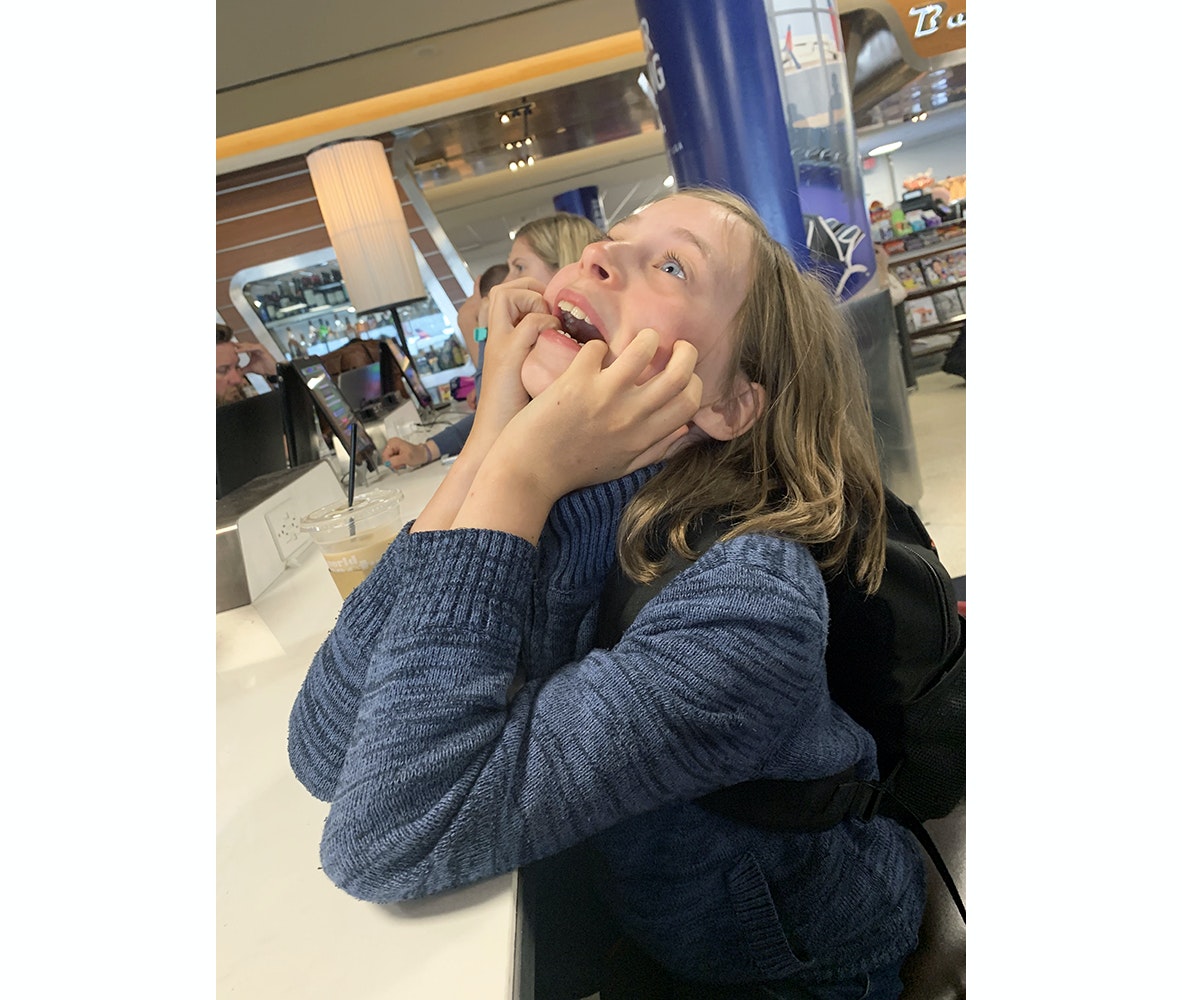
In this case, the kid is my daughter, Quinn. As face-squeezingly awesome as this was for her, it was an adventure driven by design. My team’s design researcher didn’t want us merely to observe; she wanted us to feel this place—its buildup, its storytelling, its magic—as a kid feels it. And for that, we needed a Quinn.
But aren’t there already plenty of kids at the Wizarding World of Harry Potter? Well, yes, one or two. But it's a different experience when it’s your sleeve being tugged. As a designer, you can observe what others are feeling—but you get a richer kind of fuel for design when you feel it for yourself.
IDEO New York has been inviting Quinn to share her opinion, inspiration, and feedback since she was 5 years old. The first time, she helped a team designing an alarm clock to make Mondays less dreadful and more delightful. Initially, the team planned to record her laughter, but they enjoyed her input so much that she was asked back to test materials, prototype concepts, and model for their website. Since then, Quinn has helped lead workshops, taught a class of grad students about gender bias when she was in the second grade, and built a fort of umbrellas in our café.
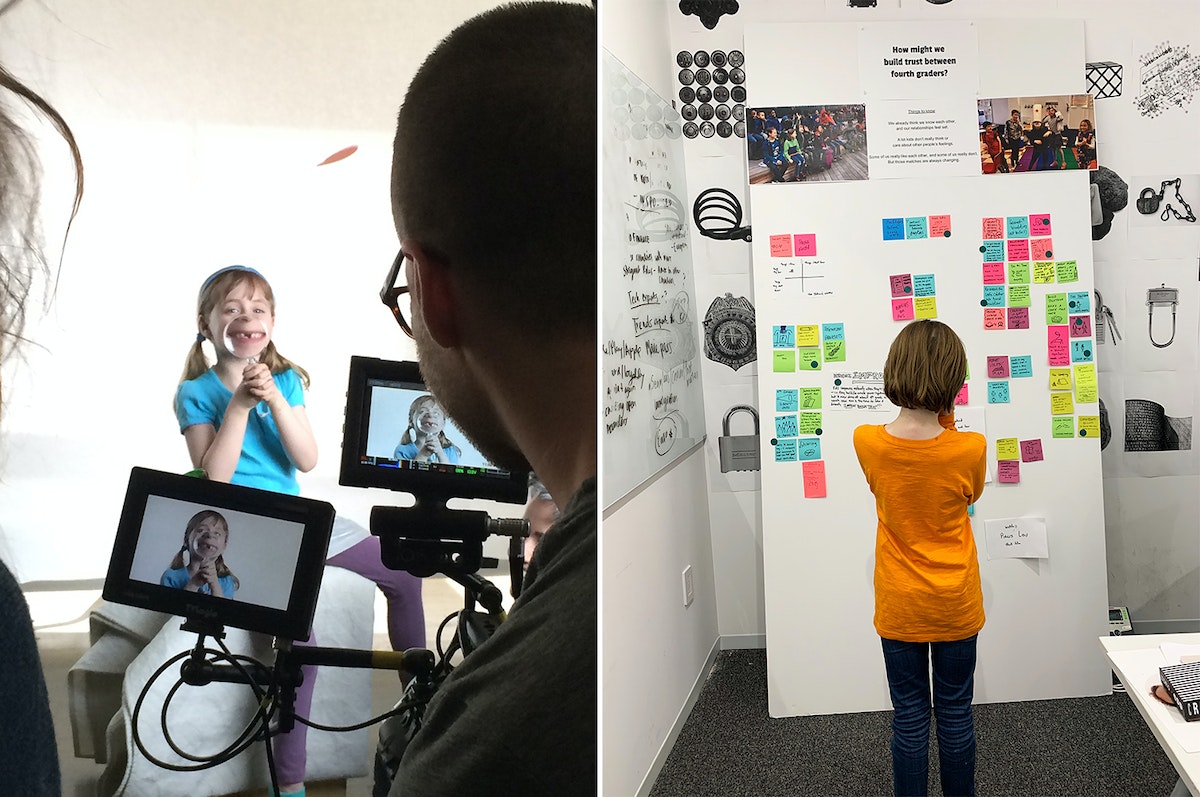
Quinn has earned such favor in our community that it was suggested (not by me) she be offered an official internship. And so, last autumn, when her school let out for half-day Thursdays, Quinn came to the studio and took up the mantle of IDEO’s Kid-in-Residence: The Quinntern.
Again, it wasn't all fun and games. Designers were asking her for help left and right. Here are four reasons why.
1. Kids don’t know the rules
Our project teams grab Quinn for their brainstorms because she listens to the problem and tries to solve it. She doesn’t think about financial viability or the laws of physics—she just thinks. Eventually, it's our job to add those things back in, but in the divergent phase of a project, she's a superstar.
Although she's prone to insert dinosaurs and robots into her concepts, she cuts to the core of an issue and simplifies the needs behind it in a way that can inspire us to develop a dinosaur-free solution.
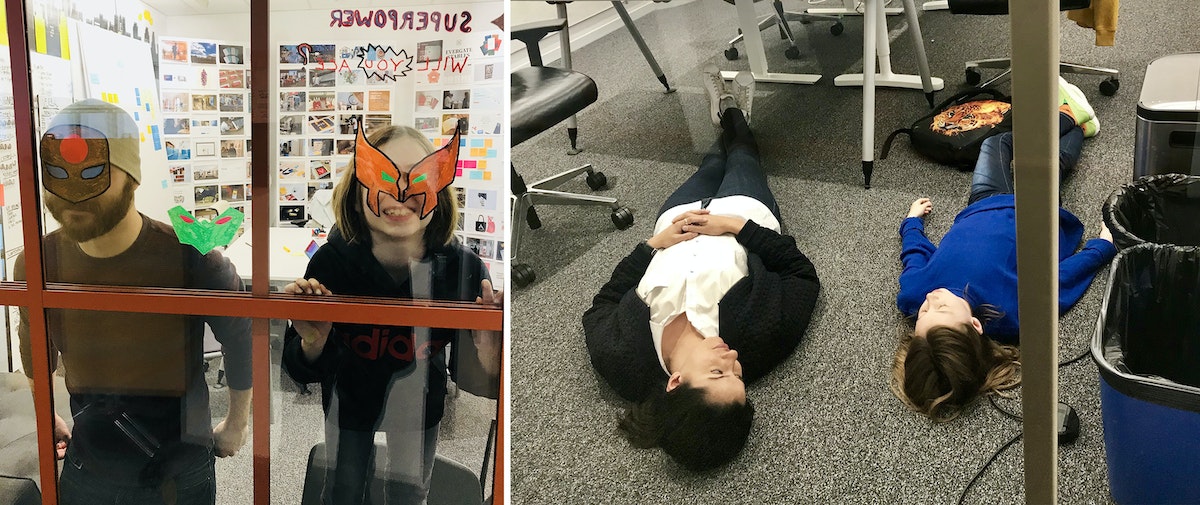
2. Kids are buzzword bloodhounds
Einstein long ago reminded us that if you can’t explain something simply, you don’t understand it. Tapping a kid is the ultimate way to prove this out: If they’re confused by a concept or question, it usually means we have a lot more work to do.
Quinn will call us out on our assumptions—happily and loudly—and she won’t fall for any design jargon or doublespeak. Getting critiqued by a kid keeps you honest.
3. Kids are full of surprises
Kids see the world from a different perspective and value it with different priorities. Having first-hand access to that unique point of view helps jumpstart creativity.
At one 30-person client meeting, we wanted to establish a sense of play from the start, so Quinn ran a silly-face photobooth for us. As lawyers and Wall Street professionals walked in, she had them pose and make the silliest face possible. Many were hesitant to relinquish their dignity, but couldn’t say no to a kid in a sparkly hat. Then they posed for a second picture. And a third. Others were caught off guard when Quinn asked them to stop wagging their tails or to tilt their heads so the light would flatter their antlers. It took them a minute before it clicked: Oh! Kid imagination!
When an adult asks another adult to do something goofy, it can be hard to summon the vulnerability on the spot. But when a kid swoops in, the game changes. Vulnerability and playfulness beget vulnerability and playfulness.
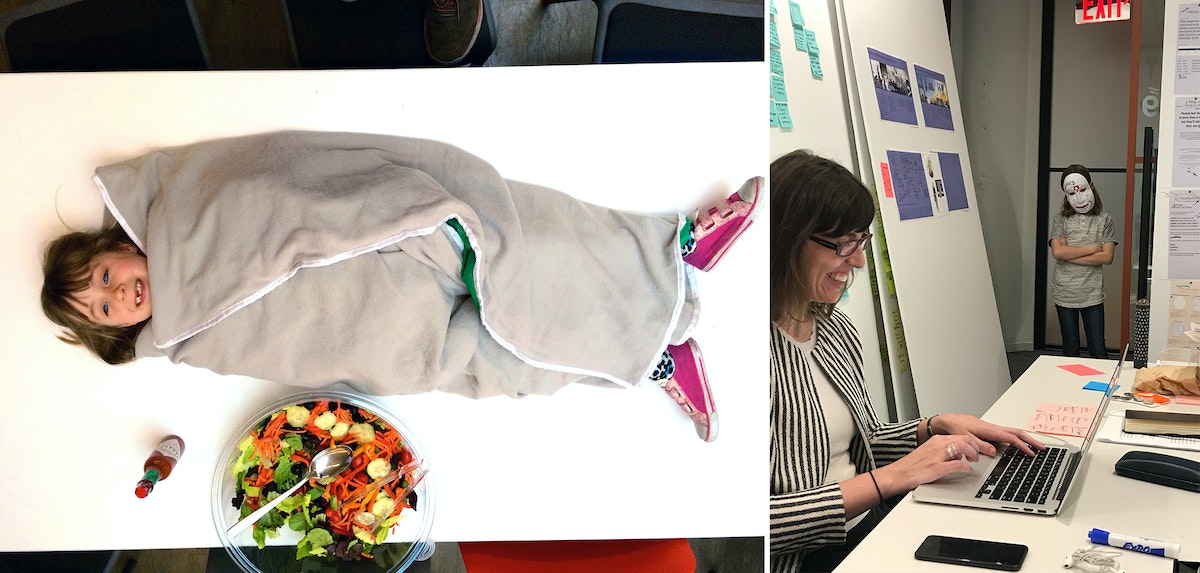
One more, very important reason:
4. Kids are the future of great design
As part of her internship, Quinn created a project to prototype ways to “stop kids from squashing other kids’ creativity.” She interviewed members of our community about their experiences, hosted a lunchtime brainstorm for the entire studio, and designed exercises with her teacher to help kids be who they are instead of changing who they are to fit in.
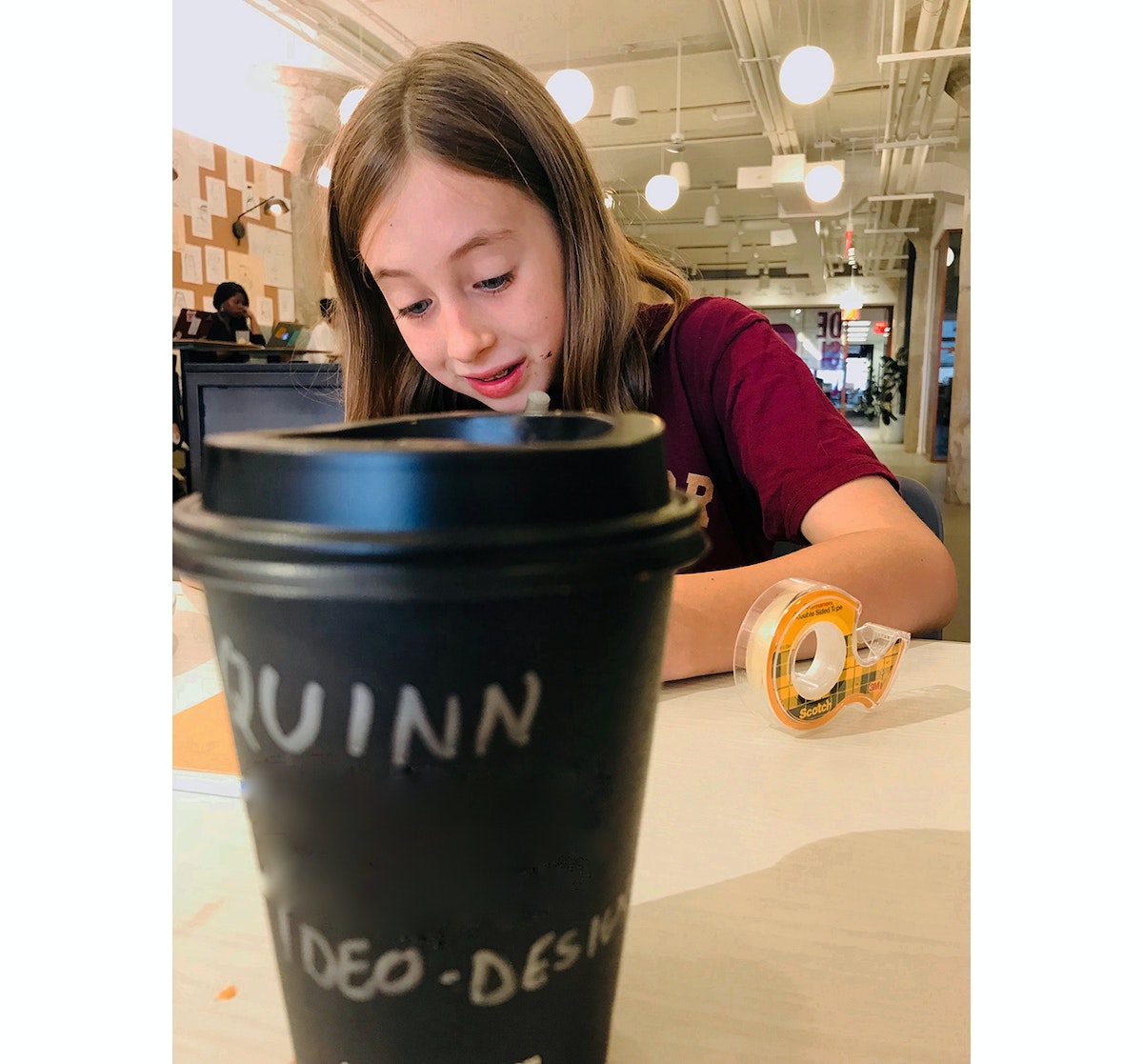
Showing a kid that you value their insight arms them with the tools to value themselves. Quinn is at an age where the sphere of creative confidence begins to collapse under the pressures to conform. When you ask a class of second graders, “Who’s an artist? Who’s a dancer?” you get a sea of waving hands. Ask a fourth-grade class and you get a field of crickets.
For Quinn, IDEO has functioned as a force field against flagging creative confidence. Being our Quinntern has empowered her to push back against conformity and make room to be herself. She gets feedback from adults who aren’t her parents or teachers, but who value her creativity, appreciate her point of view, and model what a creative life can look like. I don’t know how long it will last (the teen years are around the corner, after all), but for now, it’s lovely to see her creative bravery continue to flourish.
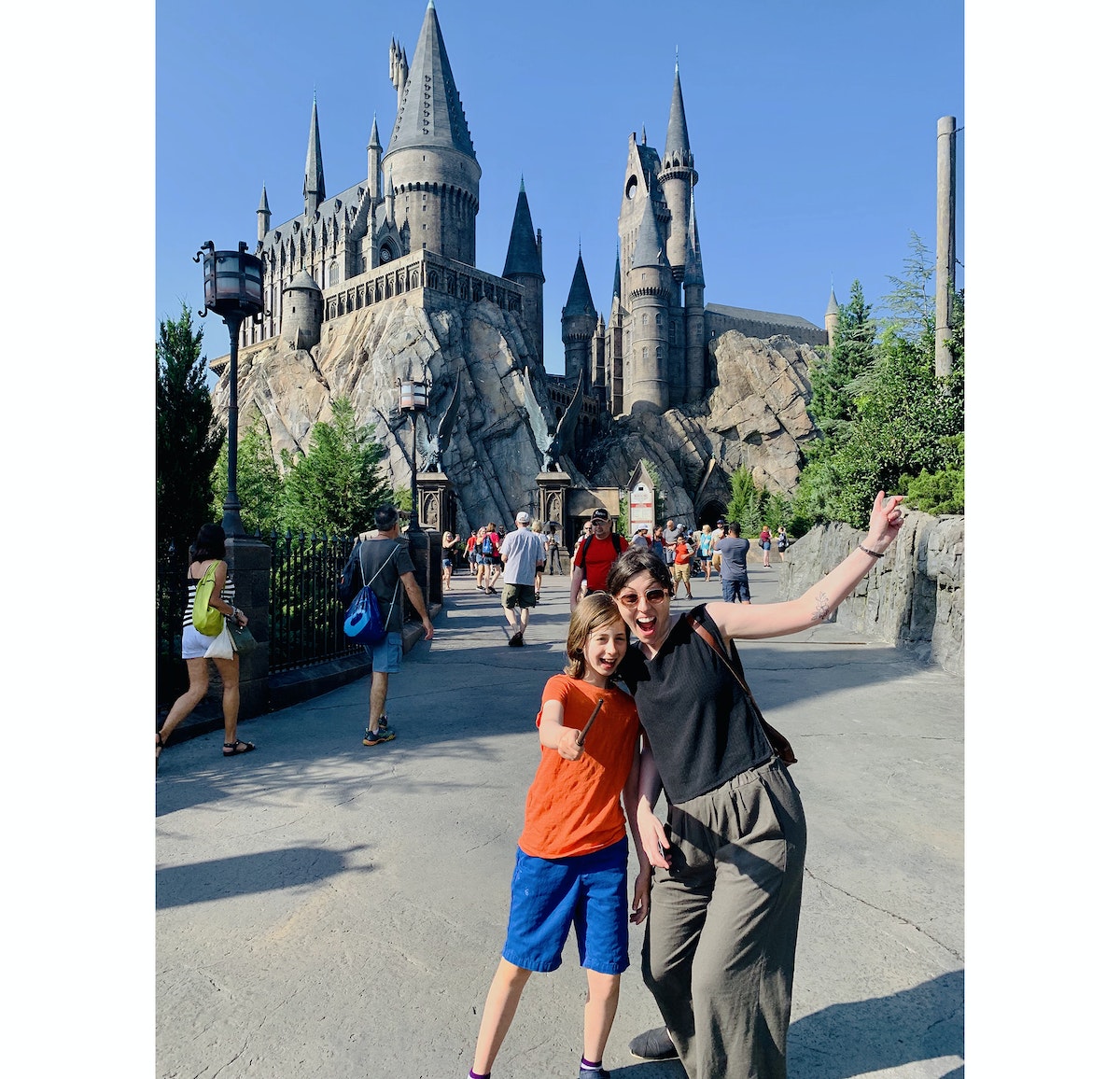
And, like usual, it was a huge help at Harry Potter World. Quinn and I arrived on the second day of research. On the first day, my teammates had explored the park, enjoyed the rides, watched the crowds, and eaten way too much ice cream. We all expected day two with Quinn to be an encore presentation, with the added benefit of a nine-year-old’s real-time annotation. But after the first ride—after seeing the place through Quinn’s excitement, impatience, and joy, after experiencing the distance of the walk and the length of the wait from her perspective—the team felt how time and space warp when you’re in the orbit of a child.
Our design researcher leaned over to me and whispered, “This is a completely different place with her here.” I had to agree.
If you’ve never seen a nine-year-old kid grab her own cheeks in overwhelming excitement, here’s how to rectify that: First, have a nine-year-old. Then pull that kid out of school in the middle of the day for a surprise double whammy: not only the chance to do research for a project with the Children’s Museum of Manhattan, but the opportunity to conduct that research at Harry Potter World. Hand the kid her suitcase, get in the taxi, and pray those cheeks survive the trip.
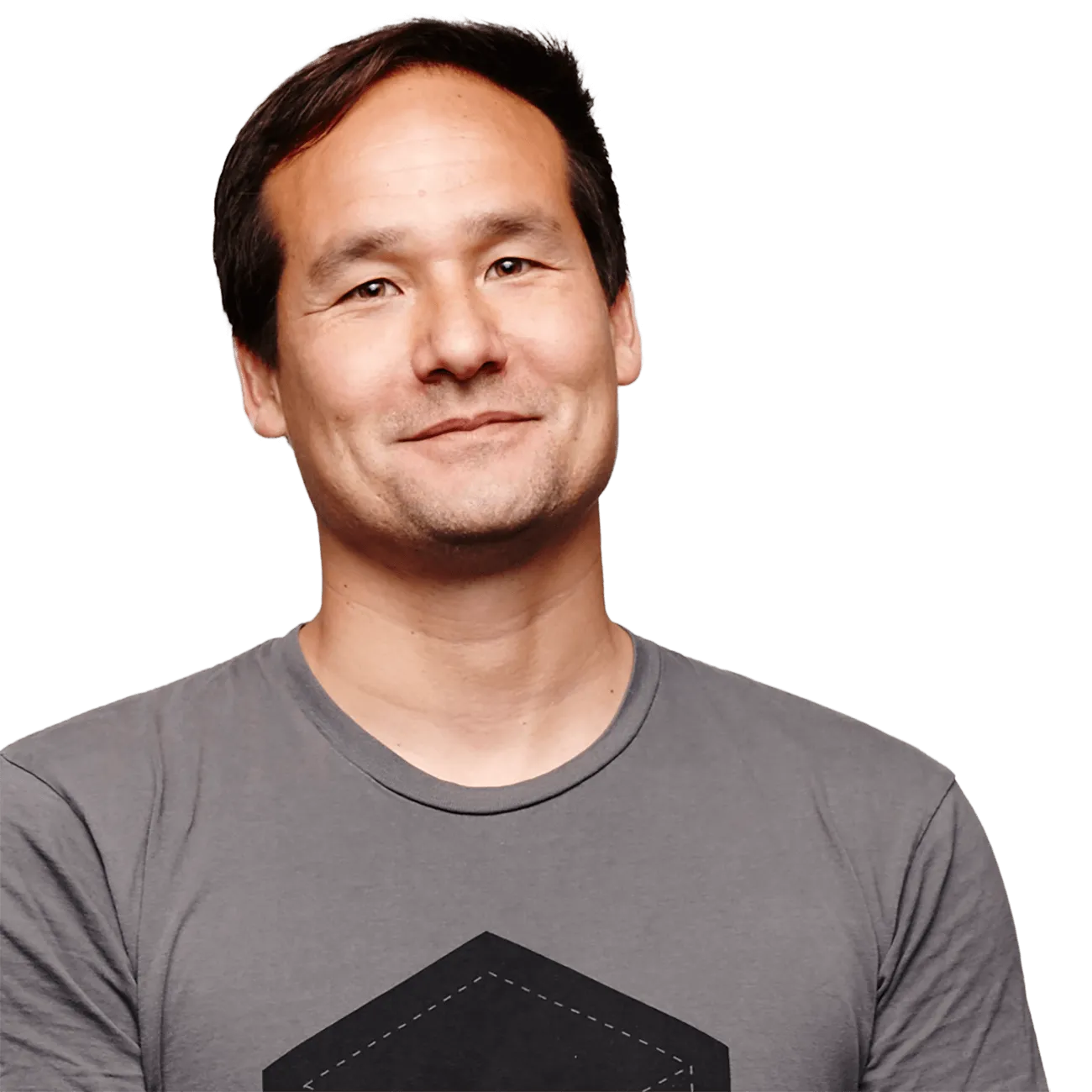
Bryan Yuji Walker
I have a proven track record of seeing and building the next big thing for IDEO and our clients.
As an experienced business and design leader, I have a proven track record of seeing and building the next big thing for IDEO and our clients.
When I work with executive teams, I use the tools of design, strategy, and change to help answer two questions: What’s our desired future? And how must we evolve to realize it?
I am driven by my belief in the potential for business to do well by doing good.
In addition to my work at IDEO, I am the Design Fellow of Conservation International and a core design team member for the Aspen Institute First Movers Fellowship Program. My work has been featured in The Wall Street Journal, Harvard Business Review, and The New York Times.

Building a personal AI for the messiness of life: Sida Li
Most AI products today are built for work—a space with clear problems and established systems. One founder noticed a gap: personal life is messier, harder to systematize, and mostly left behind by the AI boom. So she built Cue, a personal AI that lives inside iMessage and group chats, to go where the other tools haven't.
In this episode, Becca Carroll, IDEO's Chief Strategy Officer, talks with Sida Li, co-founder and CEO of Shared Context Lab, about staying anchored to a human need while the technology around her keeps changing shape, why she treats her business model with the same rigor she'd bring to a product, and what it feels like to build a company at this particular, disorienting moment in AI.
The conversation also gets into how Sida makes design decisions: the language Cue uses to describe itself, the tradeoffs behind building inside iMessage instead of a new app, and a real story about a business idea that didn’t pan out.
This is the second in a two-part series profiling founders from IDEO's Startups-in-Residence program. The first conversation is with Johannes Seemann, founder of Sooner, on designing GenAI for the emotional side of money.

Designing GenAI for the emotional side of money: Johannes Seemann
Most personal financial tools are built to run the numbers and optimize towards a budget. While that works for some, most people experience money as a lived relationship that does not neatly fit into a spreadsheet. Johannes Seemann and Becca Carroll discuss why money is emotional before it is mathematical, and what a human-centered approach to building a generative AI financial product looks like in practice.

The curious leader's edge in uncertainty: Scott Shigeoka
Mina Seetharaman talks with Scott Shigeoka, author of Seek and Head of Curiosity Cultivation at the Eames Institute, about what distinguishes genuinely curious leadership from performative curiosity, how power dynamics shape curiosity, and why practicing curiosity can restore energy rather than drain it.

How constraints make us more creative: David Epstein
Mina Seetharaman talks with David Epstein, author of Inside the Box and Range, about why total freedom often produces average work, how leaders can design useful limits on purpose, and what organizations such as General Magic and Pixar reveal about the relationship between boundaries and creativity.
Looks like you might be in search of something very specific?
Or reset the filters above and try another angle.
Here’s some random inspiration

Podcasts about creative leadership

Articles about the power of prototyping
