
.svg)



From incremental change to breakthrough innovation
How Master Kong reinvented the instant noodle, from the inside out.
Looking to understand the role of instant noodles in middle-class Chinese life, the IDEO team conducted in-home research with consumers across a range of life stages and levels of attachment to noodle culture and convenience foods. The first finding was reassuring: Everyone kept instant noodles at home. The category still had a place in middle-class kitchens. But beneath that was a more complicated, emotional story—and an unmet need for convenience and quality to coexist in a single product.
The team discovered that instant noodles are more than just a quick, on-the-go meal; they are a nostalgic comfort food that evokes fond memories. But since their heyday, their role in daily life has evolved. Once a complete meal in itself, instant noodles now often function as a versatile flavor base or culinary accent in other dishes. Because they don’t align with the healthier, higher-quality, and more novel food choices that middle-class consumers aspire to, noodle shops, delivery noodles, or fresh-cooked instant options often win out. Yet, even these alternatives come with trade-offs. Delivered noodles lose texture during transport. Sit-down noodle shops preserve quality but offer limited flavors. Cooking from scratch meets the bar for both texture and flavor, but requires a significant time investment. As one young mother said, “If I could get the texture of fresh-cooked noodles without turning on the stove, I’d buy that instant noodle for sure.”
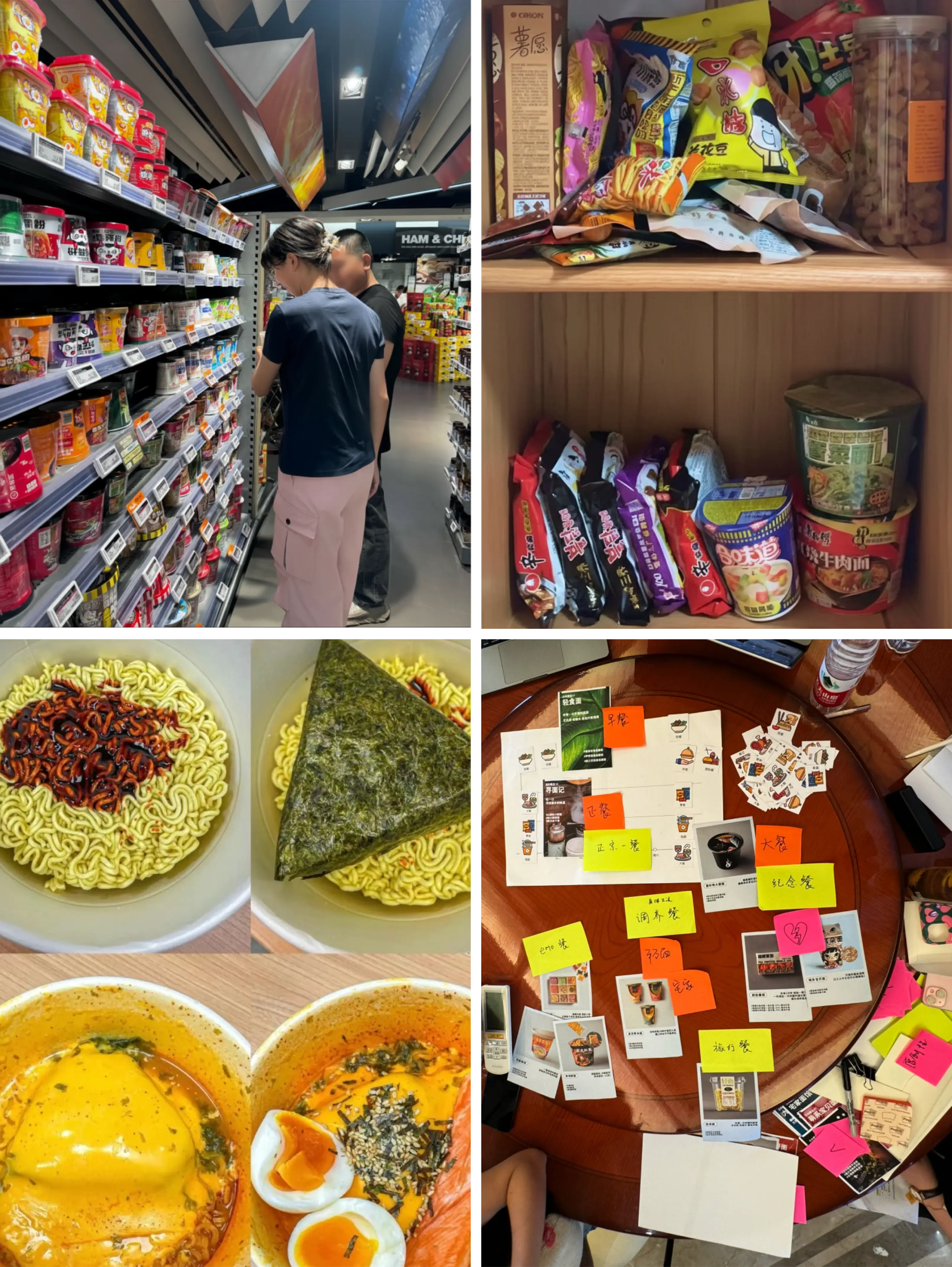
The research inspired the creation of a new category, which the team termed “fresh-brewed noodles.” More than just a noodle or broth upgrade, Master Kong’s fresh-brewed noodles would offer the speed of instant noodles with the quality of freshly cooked options, plus flavors not found in traditional noodle shops. The strategic positioning was clear. Executing it by making fresh-brewed noodles mass-producible, affordable, and eventually profitable presented a category-innovation challenge. To get there, IDEO designed a series of dual-track co-creation workshops with the Master Kong team and consumers.
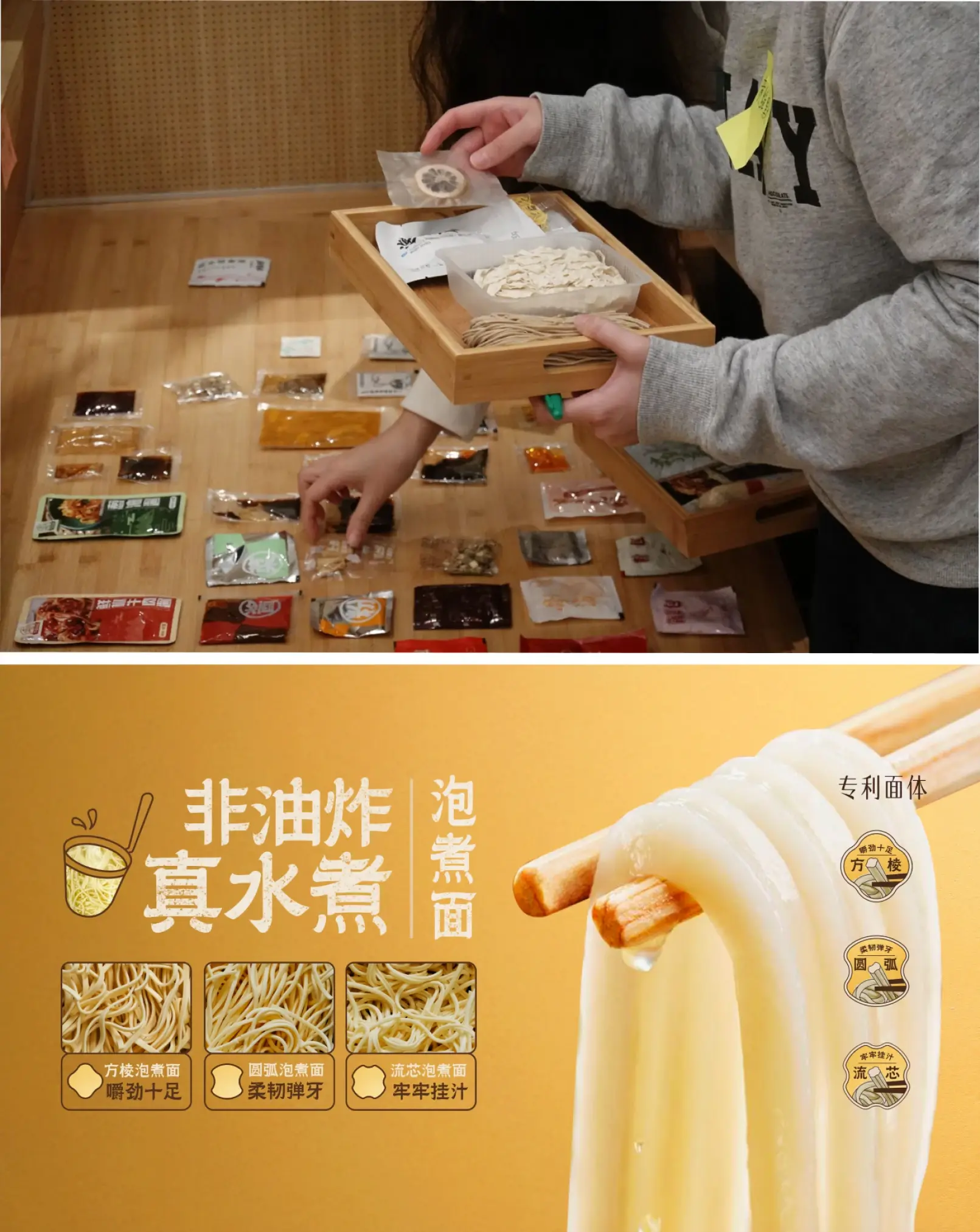
One track focused on prototyping the core product experience: noodles, broth, and toppings. IDEO and Master Kong’s R&D team began by studying the traditional craft of Chinese noodle-making, starting in Shanxi, a region renowned for its noodles. Through successive rounds of prototyping and consumer tasting, the team identified a critical insight: for “fresh-brewed noodles” to be convincing, the innovation had to be centered on the noodles themselves.
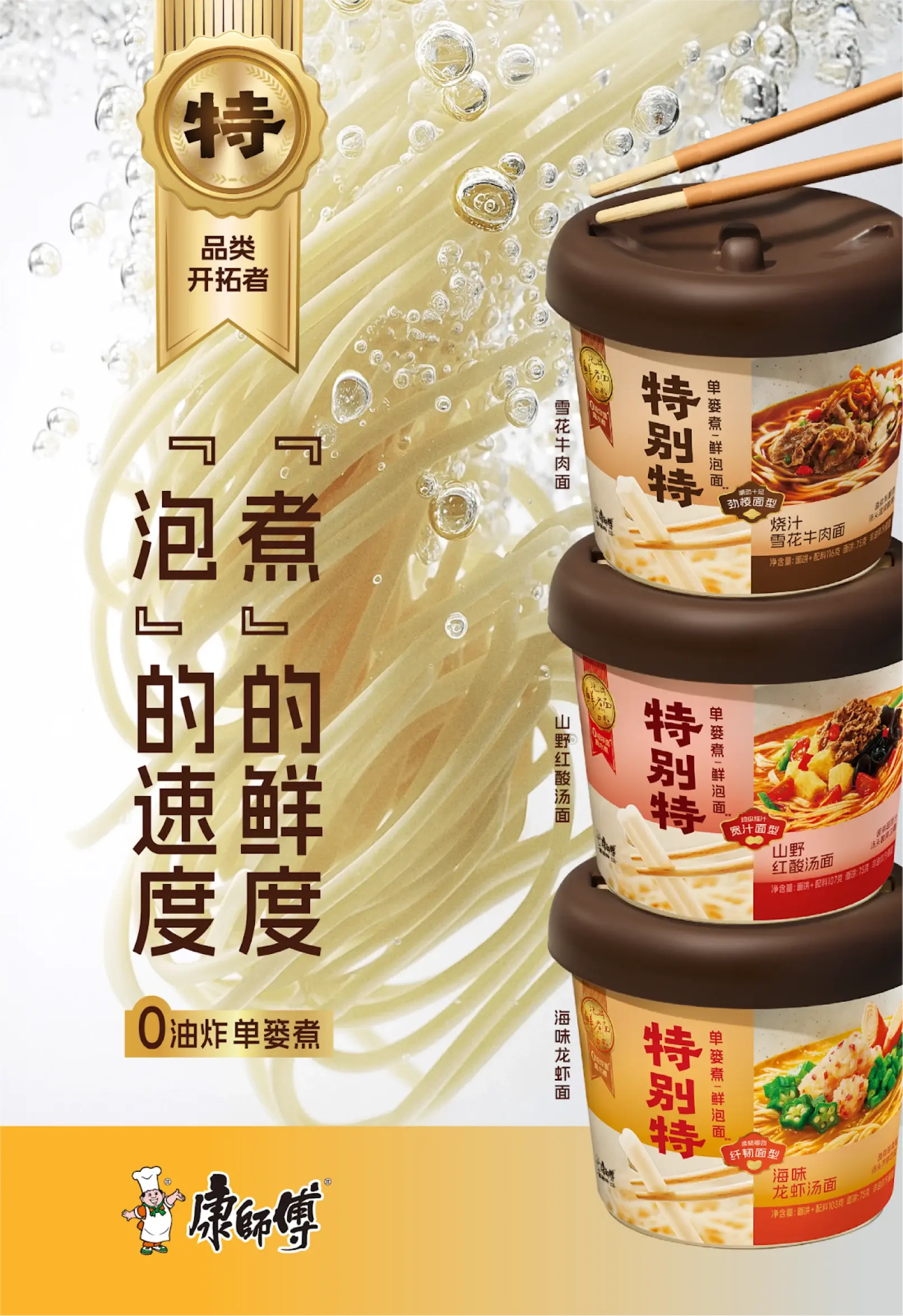
Texture alone was not enough. Consumers needed to see a meaningful difference before they tasted the product. IDEO translated this insight into a distinctive noodle profile: irregular, dimensional shapes designed to remain springy, hold sauce and broth, and mimic the resilience of freshly cooked noodles using only hot water. Because this visible shape represented the product’s core value proposition, it became a hero feature on the packaging. The graphic design made a bold visual statement about the noodle form, turning a technical R&D breakthrough into an immediately legible consumer promise: these are not ordinary instant noodles.
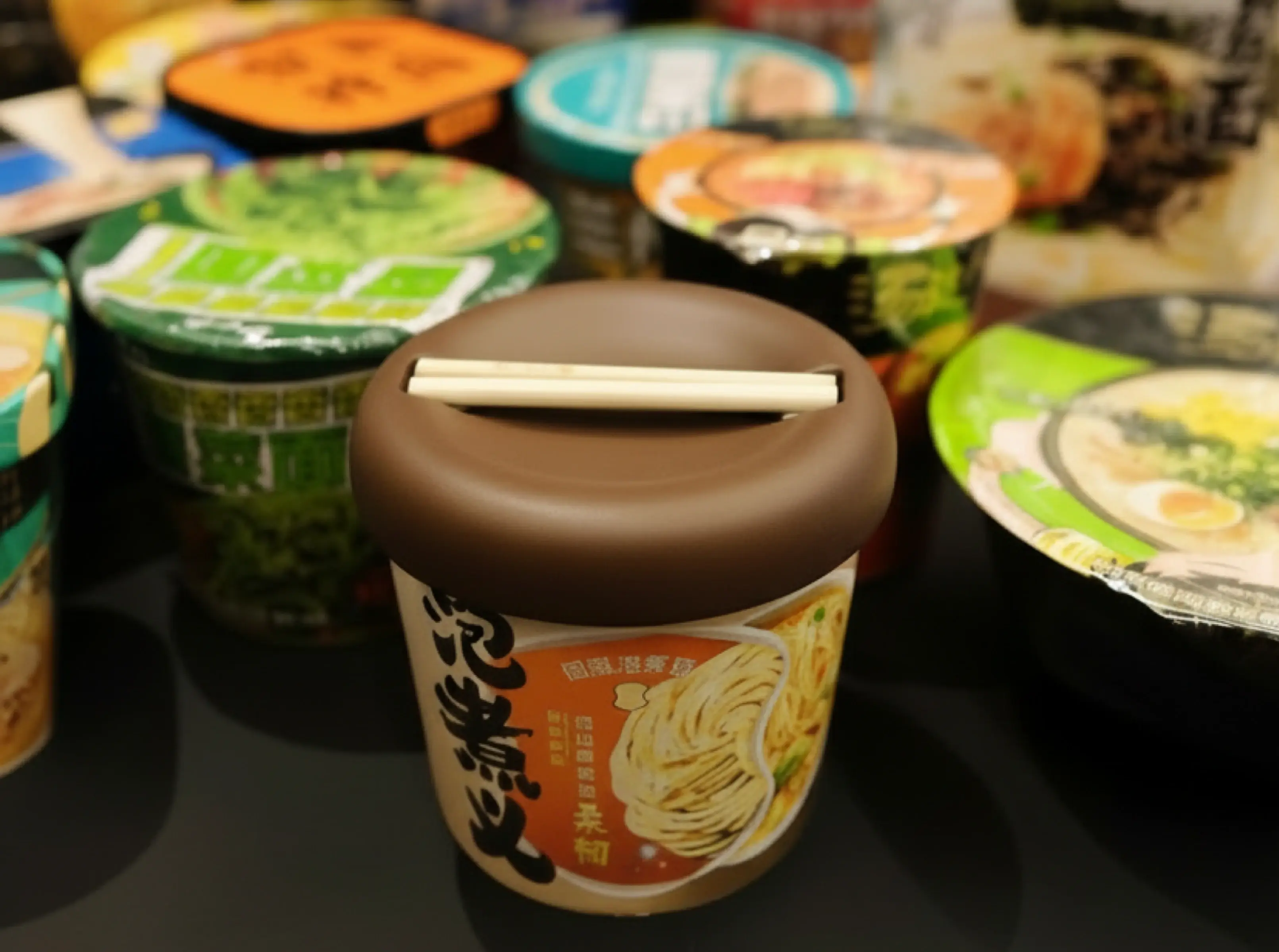
A parallel track explored the broader commercial experience: trend-forward and reimagined classic flavor profiles, light yet deeply satisfying broths, carefully selected toppings, and packaging that signals a new level of quality on store shelves. One key insight was that utensils carry meaning. Conventional instant noodles are often associated with disposable plastic forks, while higher-quality noodles are eaten with chopsticks. IDEO translated this cultural cue into the design of the bowl’s lid.
Instead of treating utensils as an afterthought, the team designed a solid, rounded, heat-retaining lid that embeds a pair of small wooden chopsticks. The gesture creates a small ritual of anticipation and reframes the product—not just a convenient instant meal, but a more considered noodle experience. Once opened, the product fulfills that promise with satisfyingly bouncy noodles, a rich liquid broth pouch that replaces the traditional oil-and-powder packet, and a vegetable packet reformulated with more premium whole ingredients.
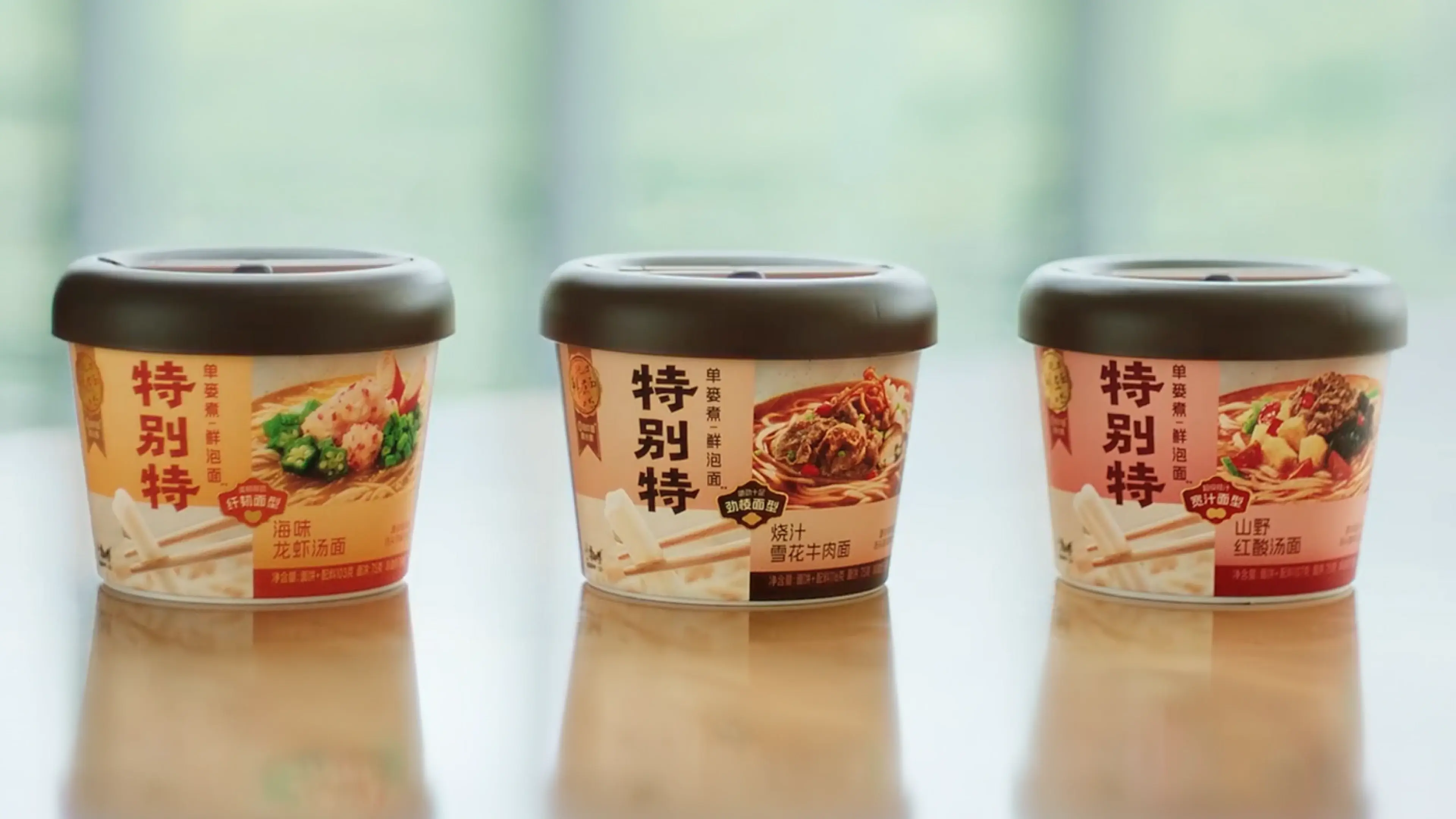
The first batch of “Te Bie Te” Fresh-Brewed Noodles—Chinese wordplay that emphasizes “special”—launched in August 2025 with three trendy and tried-and-true flavors. Within just three days, sales exceeded 100,000 bowls. Within a week, “Te Bie Te” topped the instant noodle category sales ranking on Douyin, China’s domestic counterpart to TikTok. The outcome was bigger than a product launch—it served as proof that a mature, declining category could be fundamentally reinvented to meet consumers’ real needs. For Master Kong, the project became a North Star and a model for internal category innovation in beverages, ready-to-eat foods, and beyond.
Once a popular, affordable staple, the instant noodle category in China has been declining rapidly due to shifting demographics, rising food delivery options, and increasing customer demand for healthier, more nutritious meals.
According to the World Instant Noodles Association, between 2020 and 2023, China’s instant noodle consumption fell by 4 billion packs.
100,000+
“Te Bie Te” bowls sold in the first 3 days on the market
#1
on Douyin’s instant noodle category ranking within one week of launch

Making international education future-fit & affordable
Lexel brings world-class learning to Malaysia’s middle class.
Taylor’s legacy began in 1969 with the founding of Taylor’s College and soon expanded to include Taylor’s University, one of Southeast Asia’s top private universities, as well as many other institutions that serve 35,000 students per year. The family-owned group also operates Taylor’s International Schools, Garden International School, and Nexus International School for students ages 4 to 18. In Kuala Lumpur, Malaysia’s capital city, annual tuition at premium private schools like these ranges from about $10,000 to $25,000 USD. Taylor’s wanted to do something different: provide the same level of academic rigor and immersive learning experiences at one-third the cost.
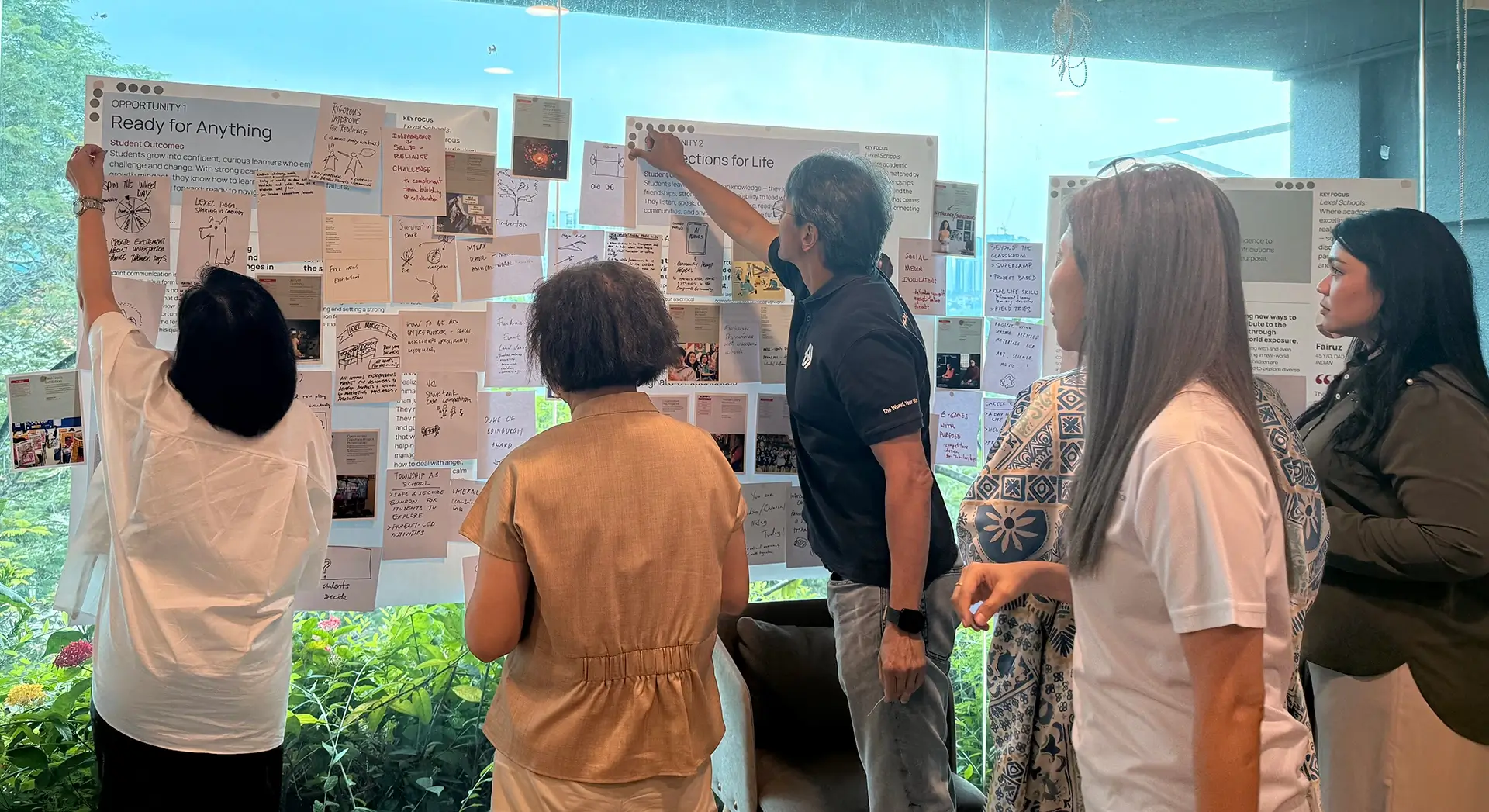
IDEO began by speaking with over three dozen students, parents, teachers, and experts across the capital to understand what was working, what wasn’t, and what was missing from such moderately priced international schools.
A few themes quickly emerged. Families, students, and teachers were worried about the stability of these new private schools, which tended to have higher-than-normal teacher turnover rates and were plagued by financial instability, negatively impacting talent attraction and retention, as well as student learning. Parents appreciated that the schools offered holistic learning experiences, such as field trips to rural areas, including jungles, but wished they were more consistently part of the curriculum. And now, the looming challenge of AI—how to use it, how to teach it, and how to teach with it—was in the background, a persistent cause for concern. The big unmet need? Reassurance that Taylor’s was thinking long-term and systematically about developing the skills, knowledge, and mindsets that would prepare students for an ever-changing world. Parents wanted a school that measured growth in academic, social, and character terms over generations, not just school semesters.
With these insights in hand, IDEO began developing a design Playbook for Taylor’s new brand—Lexel International Schools. A combination of “lexicon” and “excellence,” Lexel’s mission is “building what lasts, learning for life.”

The schools are centered around three key differentiators:
- Always Ahead: Lexel schools commit to staying current with the topics and subject matter they teach, as well as the tools they provide to students, parents, and teachers.s.
- Learning That Builds for Life: The schools ensure programmatic, systemic, and consistent learning experiences from Pre-K to Year 11. Interested students can even continue their post-secondary journey in partnership with Taylor’s University and other higher education institutions within the Taylor’s ecosystem.
- Educators for the Long Run: These schools commit to ongoing investments in professional growth opportunities for teachers and stable learning environments for students.
Four Lexel Literacies—AI, Digital, Financial, and Nutrition—integrated into the Cambridge Curriculum bring the school’s vision and mission to life.
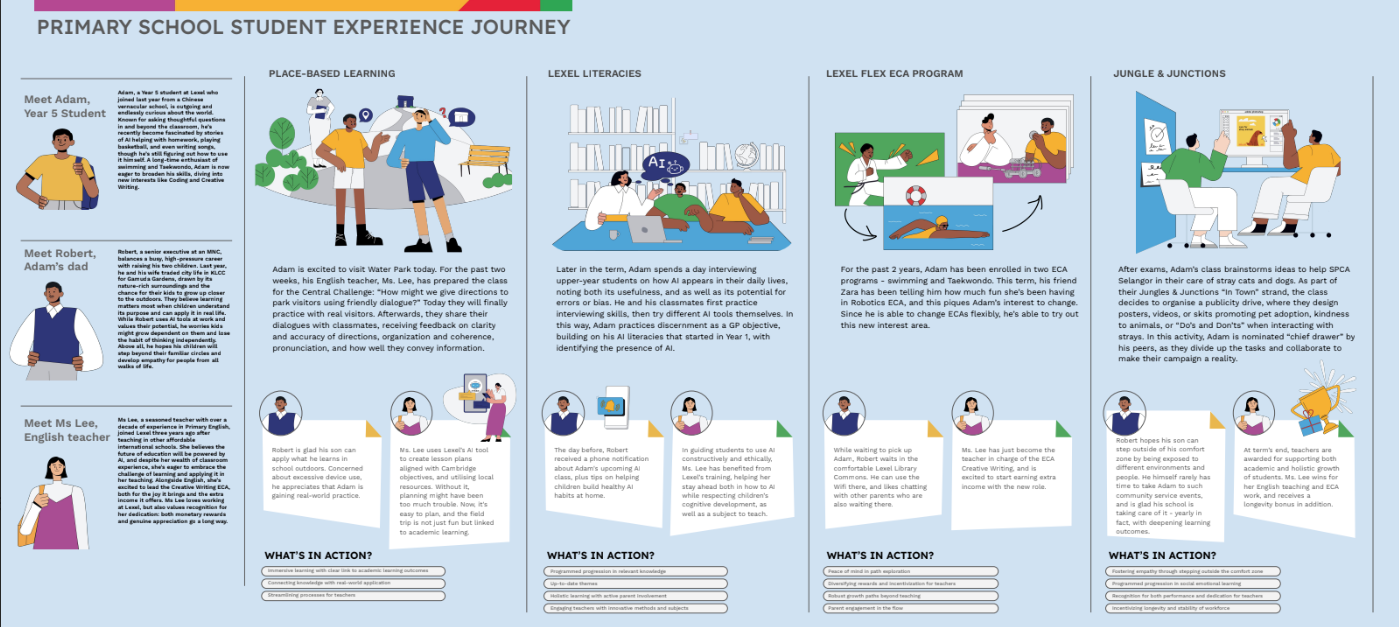
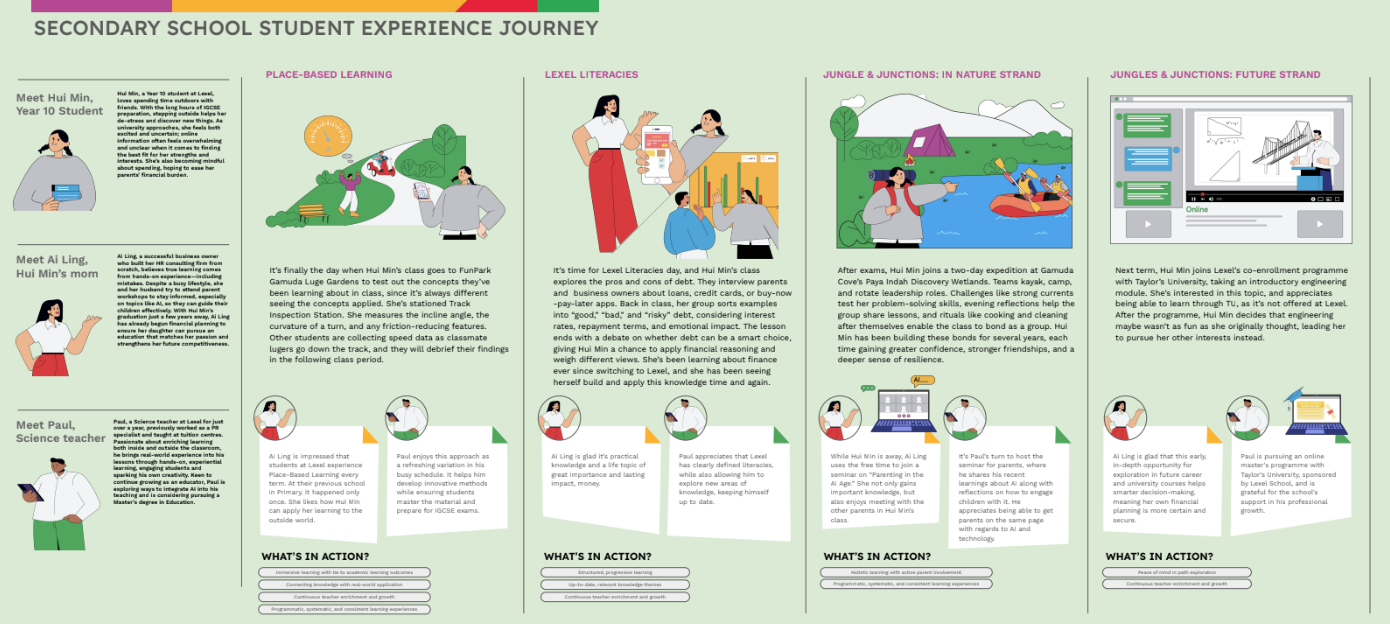
By systematically integrating AI literacy into its spiral education framework, in particular, an approach where major topics are revisited multiple times through a curriculum to build fluency over time, Lexel ensures parents that the school is thinking a decade ahead from Day One, setting the school apart. In addition to enhancing AI fluency, Lexel offers unique end-of-term experiences called Jungles & Junctions.
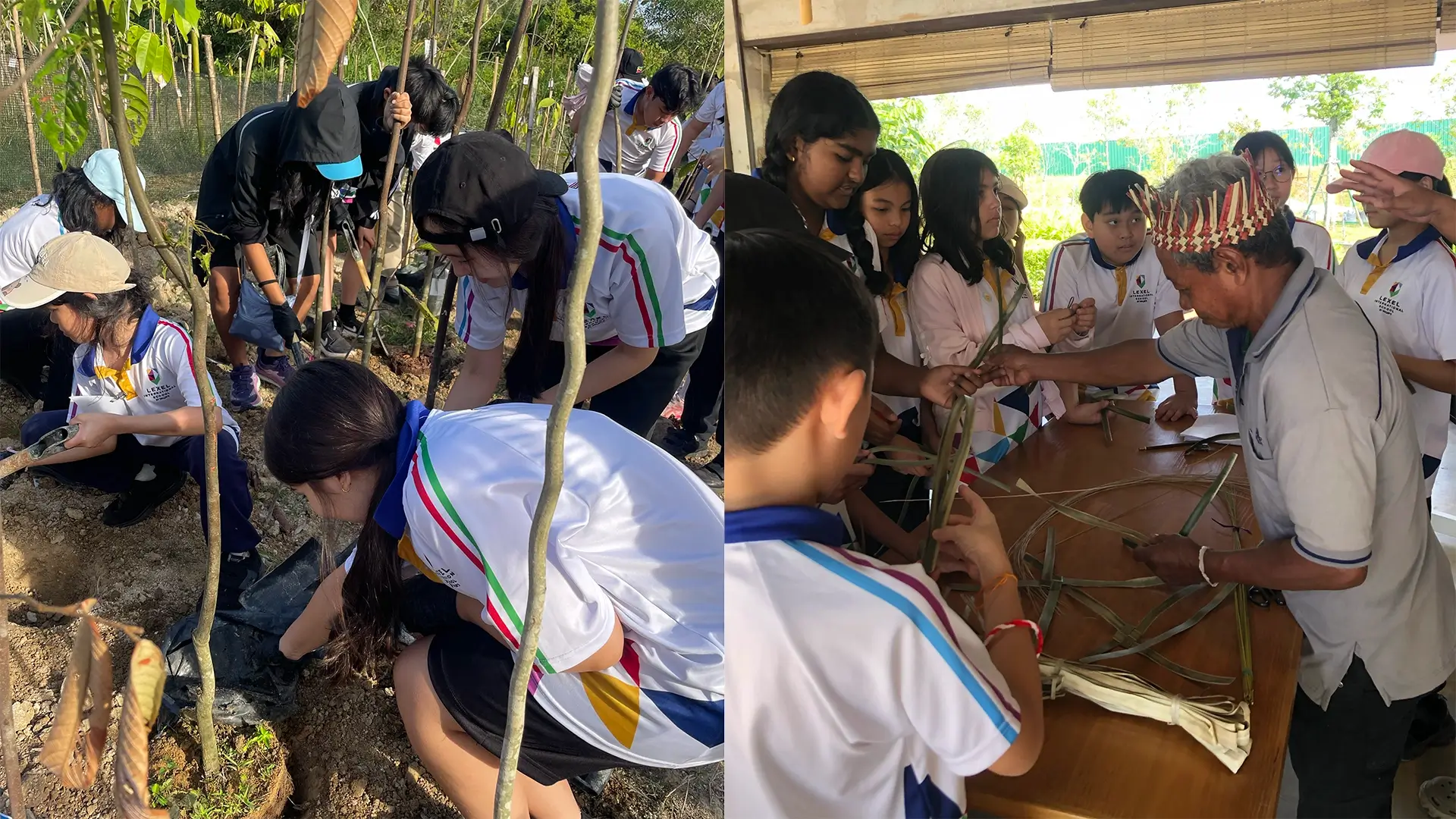
Combining three important strands of learning—community engagement, nature-based personal and interpersonal development, and career and university exploration—Jungles & Junctions leverages Taylor’s extended educational network and Lexel’s strategic founding campus within the Gamuda Gardens development in Selangor. Surrounded by tropical rainforests, the township’s residential neighborhoods, theme park, and various sports facilities, including an Olympic-length swimming pool, are transformed into an extended Lexel campus, with a GenAI-driven planner to help teachers streamline the organization of class outings. “The Township is Your Campus” became the tagline for this approach.
In September 2025, just months after IDEO’s collaboration ended, Taylor’s began classes at its first Lexel International School. By mid-year, the new school had achieved 115% of its year-one student enrollment target, with significant inbound demand for Year 2 already demonstrating the school’s market resonance.
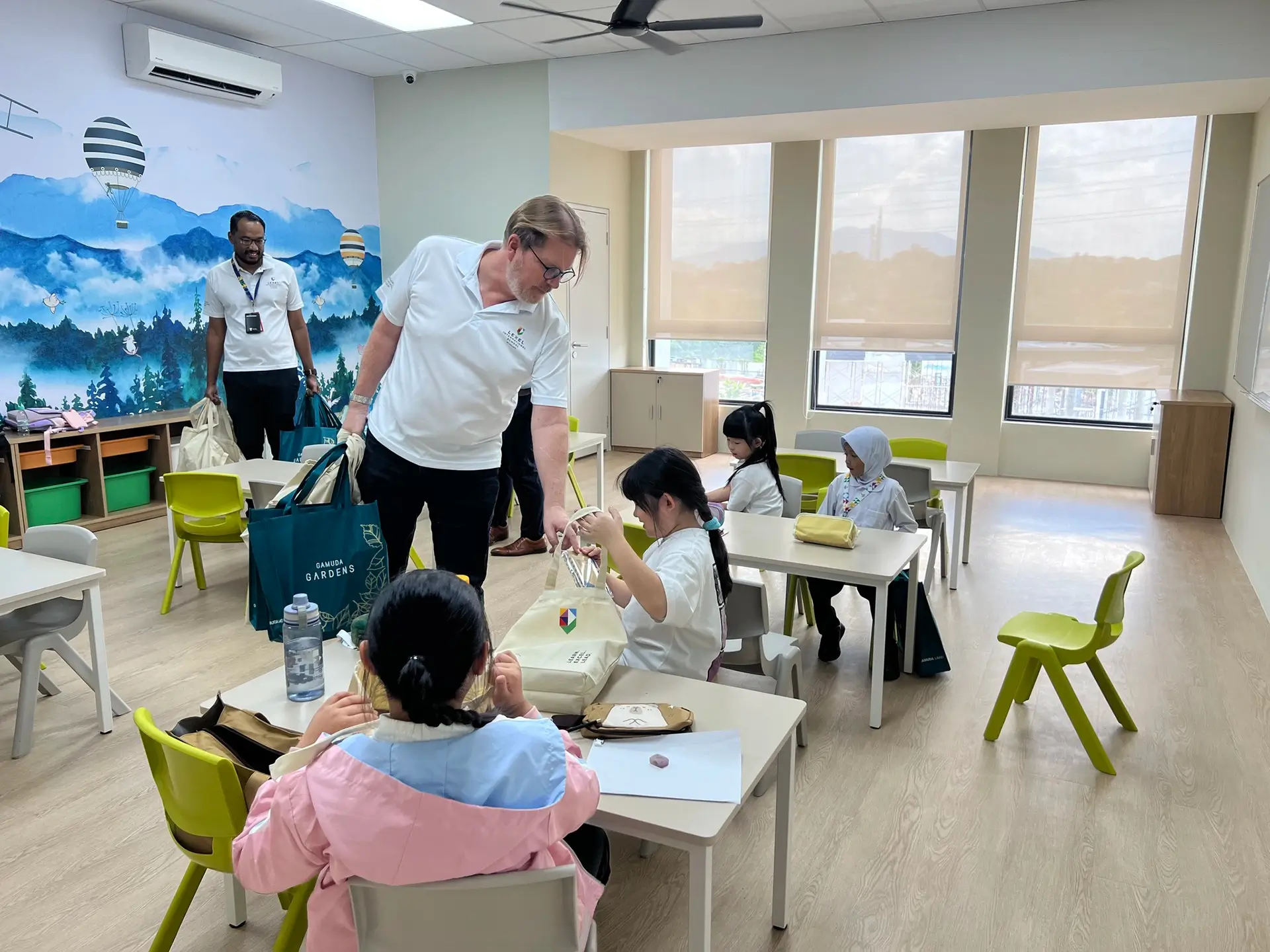
The modern campus features spacious classrooms, science and technology labs, a library, a multipurpose hall, and a canteen. Annual tuition ranges from about $2,800 USD for pre-K students to about $6,100 USD for secondary students.

Most importantly, by combining Taylor’s deep academic expertise, Gamuda Land’s development prowess, and IDEO’s innovative design Playbook, Lexel brings quality, affordable international education closer to home for Malaysian families. According to one parent, “My daughter looks forward to going to school every day … and has a lot of opportunities to express herself. On a scale of 1 to 10, I give [Lexel] an 11.” Based on the IDEO Playbook, a second flagship campus in the Southern Klang Valley, which is scheduled to open in September 2026, has already exceeded its year-one target enrollment expectations, with plans to continue extending the Lexel network to other parts of Malaysia and the wider Southeast Asian region in the near future.
Malaysia’s private international school sector has grown significantly as parents seek quality English-language education. However, high tuition fees and limited access to reputable schools are continual challenges for those in the emerging middle class.
115%
of Lexel’s student enrollment target reached during the launch year of its first campus
Year 1 enrollment target exceeded
at Lexel's second campus several months ahead of classes commencing
Delivering an unbiased news experience
Straight Arrow News transforms fact-based news consumption.
The American news industry has long been a competitive and saturated market. This has only intensified with the emergence of social media outlets and AI-generated news. Even so, SAN’s rigorously unbiased, fact-based reporting style and rich video storytelling had enabled the ambitious startup to rise above the media fray in just three short years.
With a strong foundation to build on, IDEO sought to further differentiate SAN’s cutting-edge news product and build deeper engagement with a wider audience through a new user experience.
.webp)
Collaborating closely, IDEO and SAN began by delving deeply into media consumption habits. They met with early SAN superfans, news consumers who spent hours a day absorbing content from traditional outlets like Fox and USA Today, and those who looked to their Ring doorbell app or Reddit for news. The takeaways? People were tired of clickbait and clunky interfaces. They sought clear, factual news that was easily accessible, with additional context to help them interpret events and understand their significance. They craved more than one perspective on important topics, so stories felt balanced rather than polarized. They also valued having control over how they consumed news, so making it easy to switch between text, video, and audio formats was crucial.
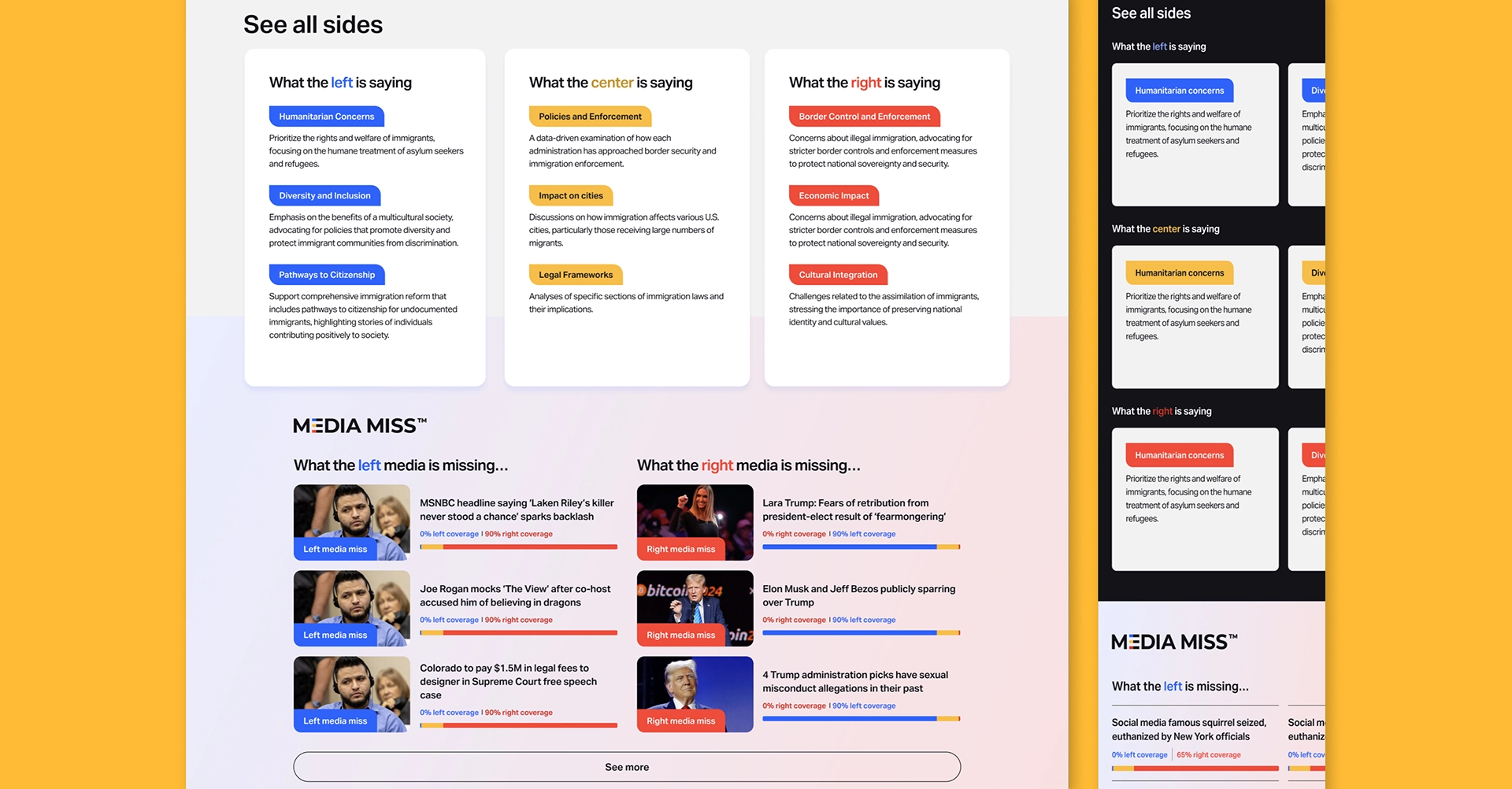
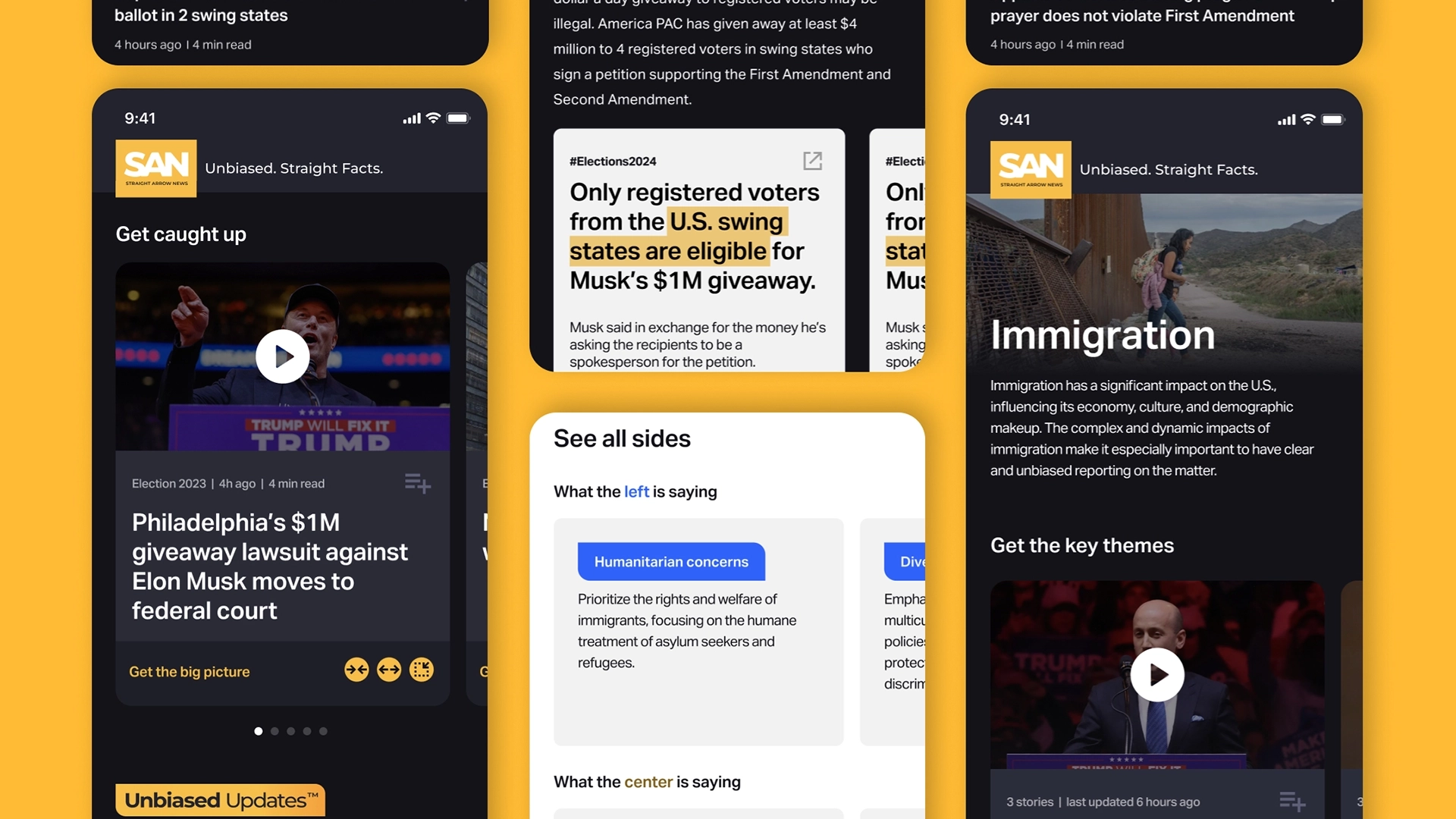
Together, IDEO and SAN created features across SAN’s website and app that put facts, trust, and transparency at the core of the product experience. Fact Cards distill key data points into clear, shareable units, while the Sources feature allows readers to trace information directly back to its original source. To make complex stories easier to grasp, Big Picture insights drill down into why events matter, surfacing underlying themes, historical parallels, differences in reporting, and common ground. The Why This Story Matters section provides readers with clear framing and sets the story within a broader context, while the Timeline illustrates how events unfold over days, months, or even years. An antidote to news polarization, See All Sides presents left, right, and center narratives for key topics side-by-side, and Media Landscape visualizations reveal how coverage varies across outlets. Finally, to ensure SAN fits seamlessly into readers’ daily lives, the redesigned Today Page is organized into three highly scannable sections: Latest News, Top Stories, and SAN Originals. The combined features create a balanced, clear, and non-polarizing news experience, making it easy for readers to delve deeper into the sources of their news.
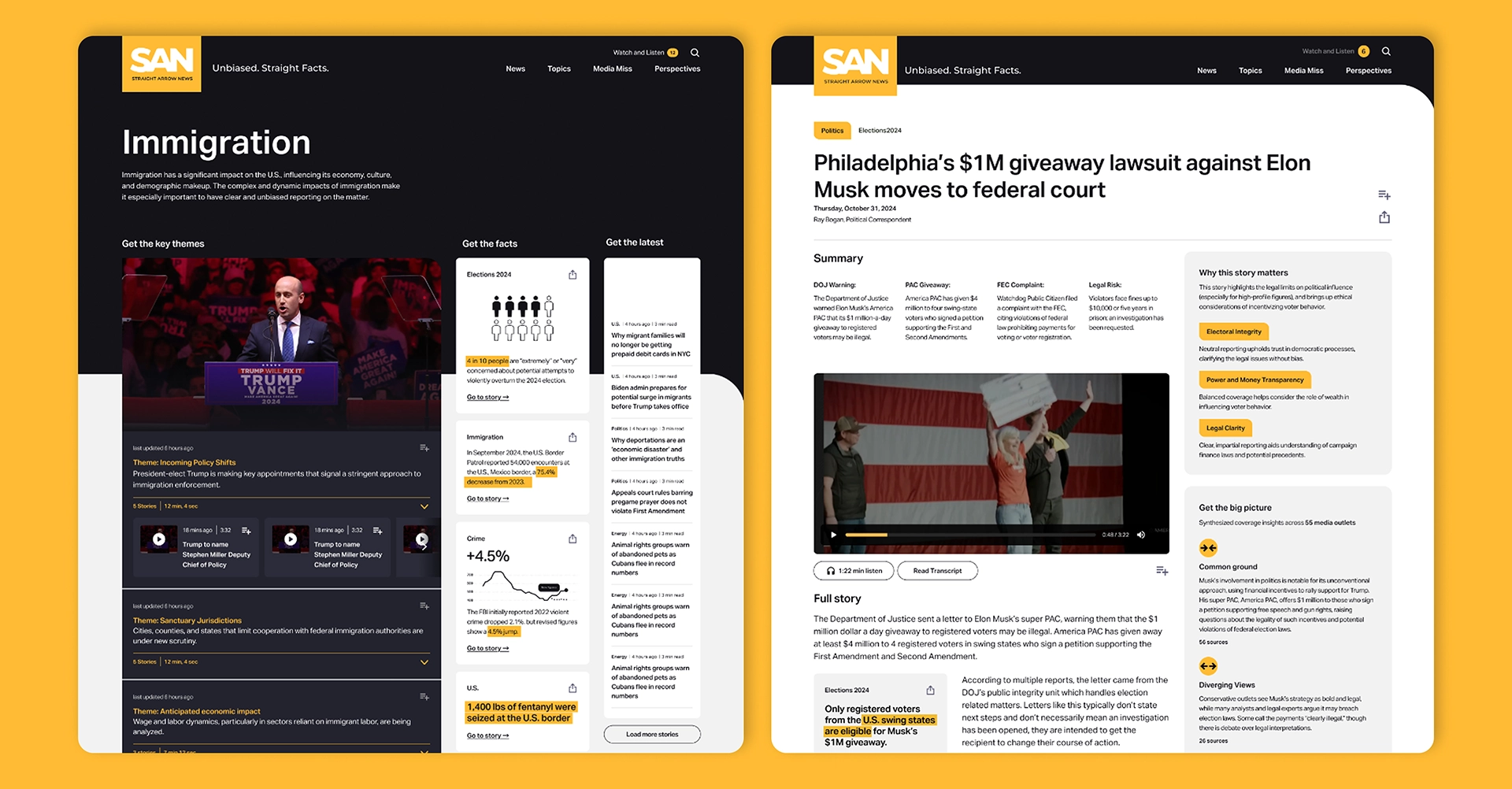
SAN now delivers a news experience as modern, dynamic, and trustworthy as its journalism. A month after its debut, the SAN app’s page views increased 1,170 percent year over year compared to June 2024, while active users rose 700 percent. Readers also give the updated mobile experience a 4.8 rating on the Apple App Store. “Our team is delivering reporting that’s both deeply factual and accessible,” said Derek Mead, SAN’s Chief Content Officer. “This redesign is pivotal to the direction journalism needs to take and the leadership role Straight Arrow News is taking on as we help guide the news industry into a brighter future.”
SAN built a loyal readership and gained recognition for its unbiased reporting. To expand and stand out from legacy media, SAN wanted a redesigned user experience that reflected its commitment to fact-based journalism.
1,170%
increase in app page views YoY
700%
increase in active users
4.8 rating
on the Apple App Store
Preventing newborn RSV
A toolkit to increase global adoption of Beyfortus, the world’s first RSV immunization for babies.
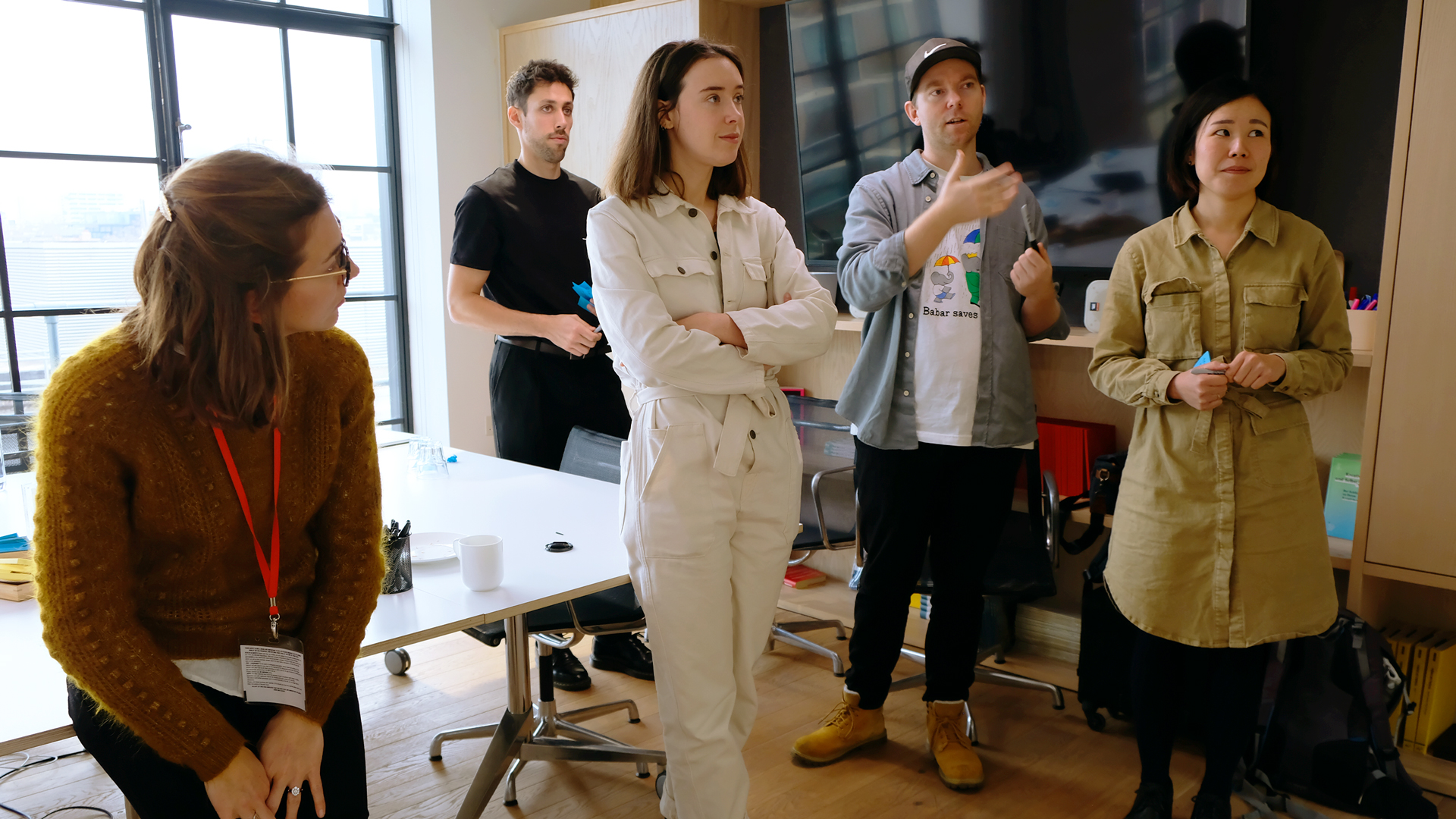
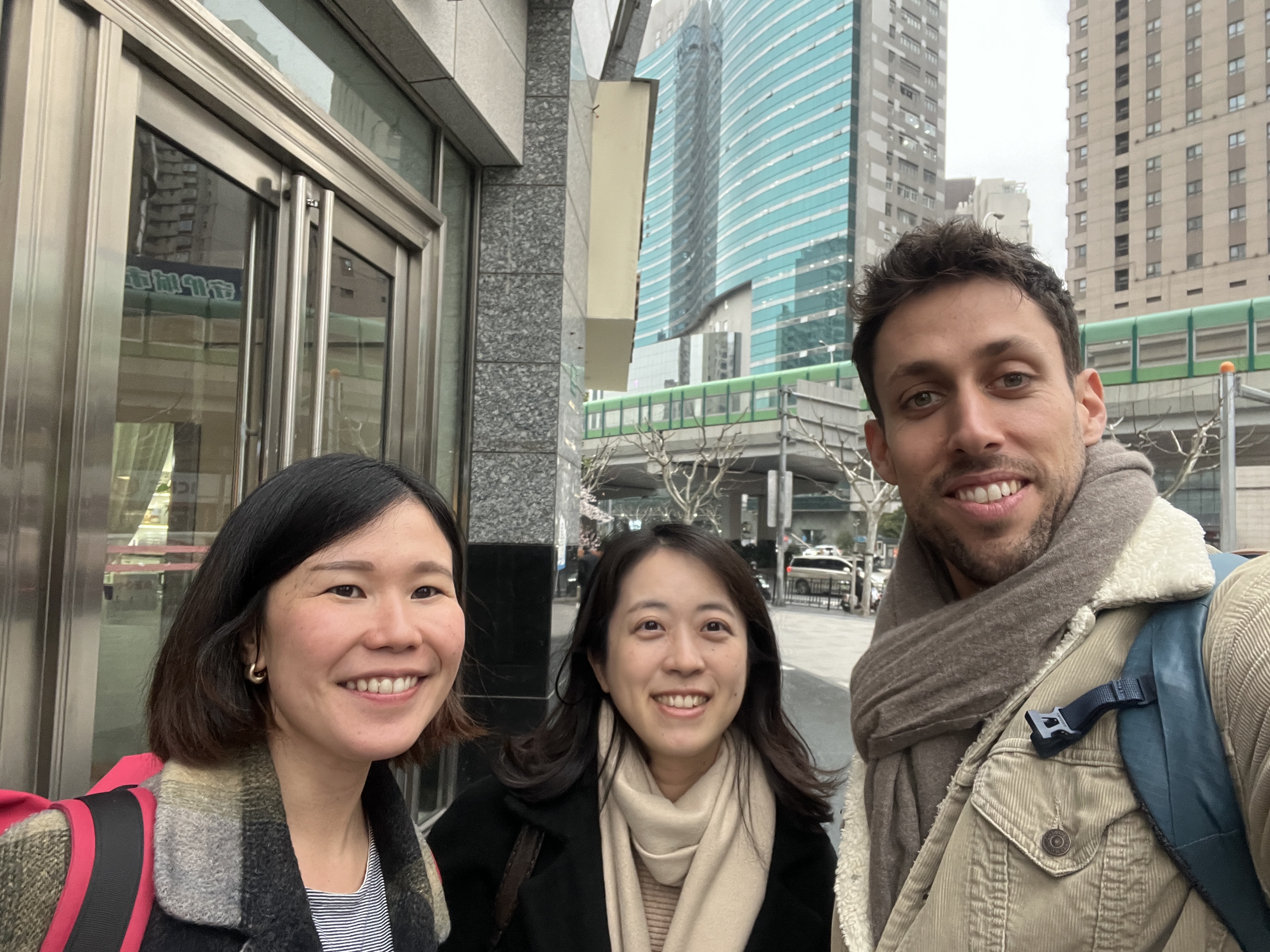
Sanofi was the first company to supply the polio vaccine worldwide. Because of the global fight against the disease, endemic wild poliovirus transmission is now limited to just two countries. However, attitudes toward vaccines and immunizations have shifted significantly. To ensure a smooth launch of Beyfortus in a time of increased vaccine hesitancy, Sanofi asked IDEO to conduct research across four important and very different healthcare markets: Germany, Spain, China, and the US.
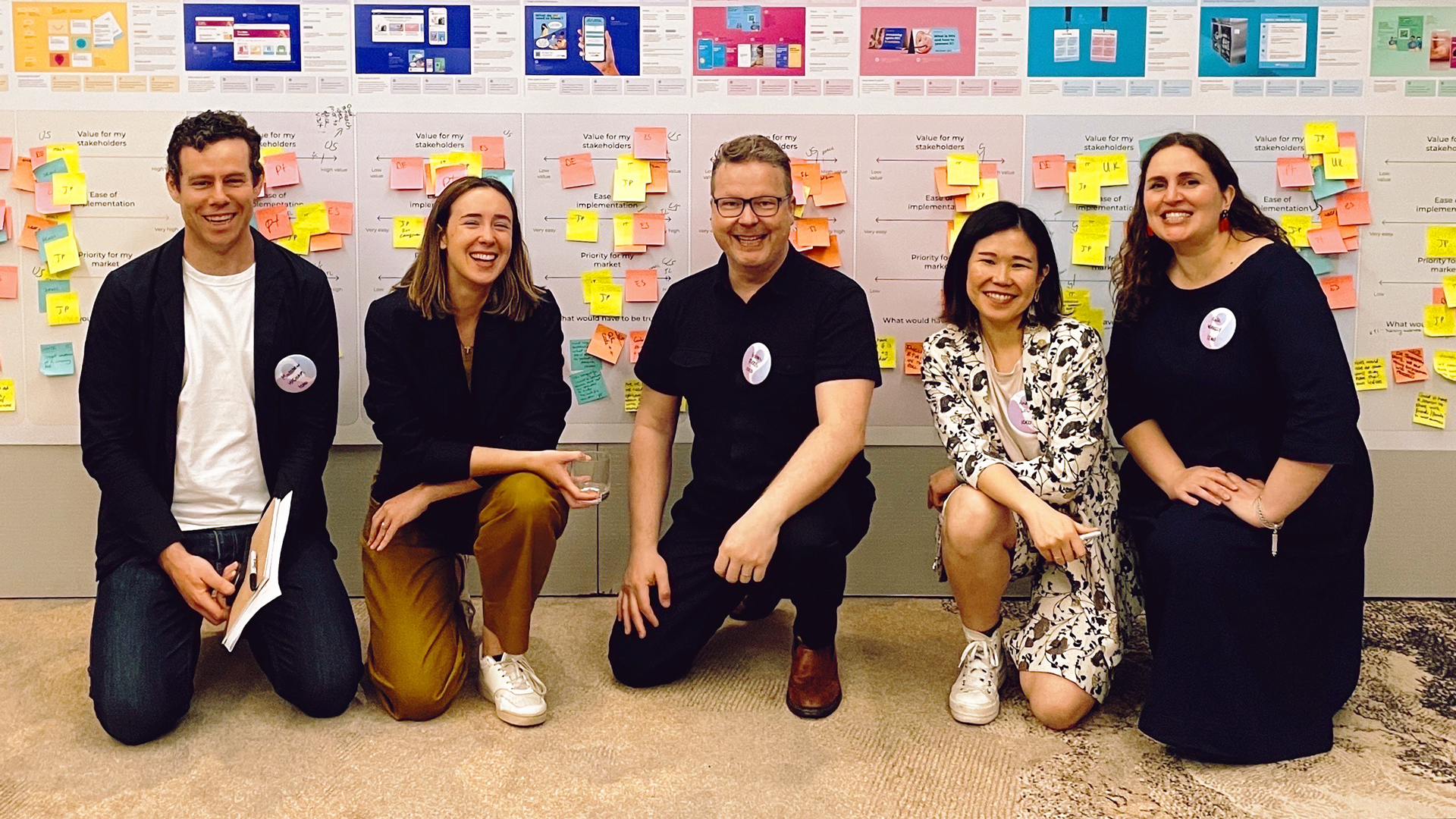
IDEO worked with parents, caregivers, healthcare professionals, and healthcare administrators to identify potential barriers to vaccine adoption and understand the emotional needs of all stakeholders involved in the immunization process. Navigating cultural differences and diverse healthcare environments, the team uncovered a set of insights.
For healthcare professionals, the team discovered there was no one-size-fits-all approach to immunization training across Sanofi’s 20-plus global markets. While consistency of key information was important, trainings needed to be flexible and customizable. This way, regardless of whether the vaccine was administered by midwives, OB-GYNs, nurses, or doctors, they could confidently discuss the pros and cons across cultural contexts and administer the drug correctly.
For new parents, receiving information about a new immunization immediately after giving birth could be too stressful. But simply leaving pamphlets about Beyfortus in waiting rooms didn't address their real concerns, either. Caregivers needed to engage in conversations earlier in their pregnancies and continue them after leaving the hospital, when they might have additional questions.

IDEO translated these research insights into a highly accessible global communication toolkit that uses simple, straightforward language, metaphors, and illustrations to support informed conversations between healthcare providers and parents before, during, and after a child is born. IDEO then conducted a series of market-fit co-design workshops with representatives of Sanofi’s global immunization business to iterate on the print and digital tools, make them more resonant with regional customers, and ensure compliance with local regulations. IDEO handed the toolkits over for development to support the launch of Beyfortus in January 2024, just in time for RSV season.
Beyfortus saw enormous demand in its first year, demonstrating strong efficacy in real-world applications and achieving blockbuster status as a $1.8 billion therapy. Sanofi’s global launch team credits the patient-centric toolkit with increased requests for communication materials from its regional markets as well as from healthcare and government organizations that have typically been hard to reach, key goals of its global-local launch strategy.
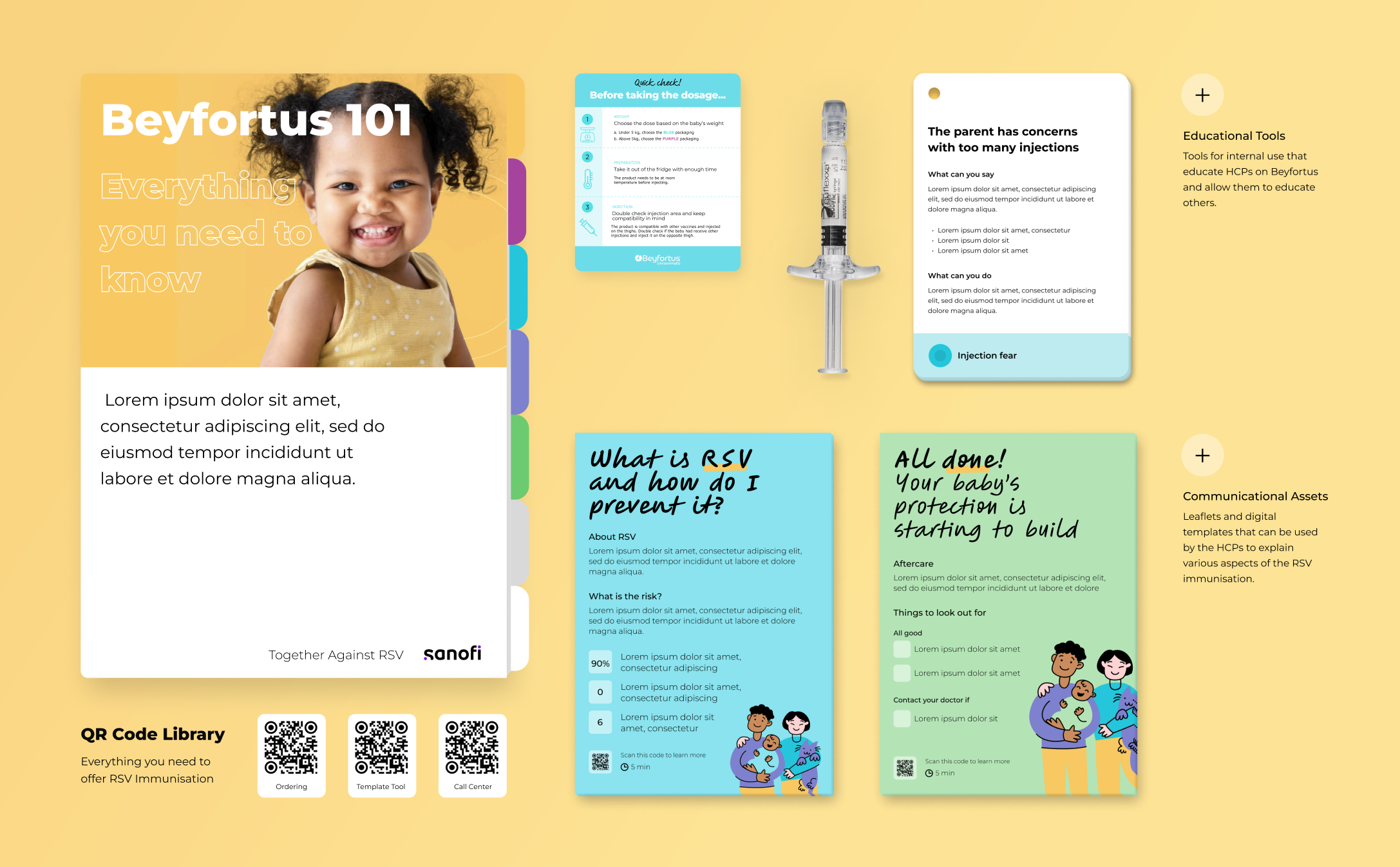
Since its development, Beyfortus has received swift regulatory approval from the US, EU, China, and Japan, with patient demand causing Sanofi to triple its worldwide manufacturing capacity to meet the needs of the 2024-25 RSV season. Ahead of the larger global distribution of Beyfortus, IDEO and Sanofi partnered with equity expert consultants, Fearless Futures, to conduct a DEI review and worked with doctors and nurses who participated in the initial drug launch to make the materials even more accessible, relevant, and successful for 2025 and beyond. To date, six million babies—and counting—have been immunized with Beyfortus.
Worldwide, childhood vaccination hesitancy among parents fluctuates between 25-45%, according to the World Health Organization (WHO), a trend it considers one of the biggest global threats to public health.
85.9%
reduction in hospitalizations for infants who received Beyfortus compared to those who did not (2023–24 RSV season)
$1.8B
in first-year sales of Beyfortus

Meet the YouTube Pop Star who Teaches at MIT
The designer and artist Sputniko! may sound like she's from outer space, and that's not far from the truth.
The daughter of British and Japanese mathematicians, Sputniko! has become both a fashion icon and feminist spokesperson in Japan for speculative designs like the Menstruation Machine (which imagines a future without menstruation, in which people simulate having periods as a nostalgia exercise) and The Red Silk Of Fate (in which genetically-engineered silkworms produce a thread impregnated with the love hormone oxytocin—the perfect material to weave into a seductive outfit). We wanted to know more about why she chose speculative design as a medium, so we caught up with her to ask a few questions.
COMMUNICATING IDEAS THROUGH POP VIDEOS IS A BOLD MOVE. WHAT LED YOU THERE?
I started as a pop musician. I was writing songs when I was at Imperial College in London, before going on to the Royal College of Art. So I was already making music videos. They seemed like a good way to challenge the "high art" culture. I liked pop art, like Jeff Koons, Takashi Murakami, and Andy Warhol. Plus, at the time I was graduating in 2010, YouTube was becoming more significant. So I wanted to tap into that. Nowadays, the internet is so important for this kind of work. I thought that there needed to be more new speculative design work that was intentionally aligning with internet culture and viral culture.
HOW DO THE SCIENTISTS AT MIT FEEL ABOUT HAVING THEIR WORK PORTRAYED IN THIS WAY?
I work hard to be close to the scientists, and discuss with them how to best show their work. So far their reaction has been very positive. Some of the genetic engineers I've worked with have been getting more interest from investors because of the media interest. I think that a lot of scientists secretly want to be passionate and tell stories about their work. But they can't, because they need to be very precise. With us, and these stories, they can detach from that precision in a good way.
Crowbot Jenny by Sputniko!
WHERE DO YOUR IDEAS COME FROM?
I read a lot of science news blogs—I'm an information addict. I'll go through the news about AI, genetic engineering, and so on. What designers can do is imagine a consequence of these new technologies. If any of these imagined narratives ring a bell for me, then I'll do further research, in order to make the idea more concrete.
WHAT TECHNOLOGY IS CAPTURING YOUR ATTENTION RIGHT NOW?
AI and self-driving cars. And of course genetic engineering. But right now, my hottest interest is blockchain. This new system for handling money and identity is increasingly being adopted. Many people are thinking about it in terms of security. But creatives can think of other consequent narratives that could come from Blockchain. For example, how could it change lifestyles?
YOU'VE BEEN AT THE MEDIA LAB SINCE 2013. HOW DID YOU END UP THERE?
I first came to the Media Lab as a TV reporter when I was 27. I had my own TV show in Japan about design, and I came to interview Nicholas Negroponte. I told him how interesting I found the Media Lab, and he responding by telling me that they were looking for a new assistant professor in the arts category, and that I should apply. I was like, what? Me? I don't have a PhD! But I applied, they liked my work, and they invited me to start a new group.
Red String of Fate by Sputniko!
WHAT'S THE ACADEMIC EXPERIENCE LIKE FOR YOU?
I love being in this environment. The only thing that is a challenge is that academia is very paper-based. I don't publish papers, nor do my students. We are more about exhibitions and storytelling. It's not so much in the academic format.
WHY ARE YOU CALLED SPUTNIKO!?
It was my high school nickname. I attended an American school in Japan. I was tall and pale and I liked science and space. So the other students thought I must be half-Russian rather than half-British, and they started calling me Sputnik. Japanese girls' names often end in "ko", so Sputnik became Sputniko. Then, when I started doing music gigs as a student in London, I added the exclamation mark, because I liked the German band Neu!. It was completely not serious—just a band name. I never expected to be making and showing work, let alone teaching at MIT with this name. In Japan, when I go to symposiums and conferences, government ministers call me Sputniko-san. It's so surreal. My name reminds me of my weird career path.

YOUR WORK IS VERY CROSS-CULTURAL. WAS THAT A PRODUCT OF YOUR UPBRINGING?
Partly it was having a British mother and a Japanese father. And also growing up in Tokyo, where western culture and eastern culture are present at the same time. I grew up in Shinjuku. It's where all the skyscrapers are, but also yakuza bars and the red light district. My parents are both mathematicians, so I was surrounded by math. But I also liked art and music. For example, take the way I read books. I usually read about ten books at once, on a kindle. I usually just read five pages at a time. And then I move to the next book. The way I consume information is very parallel. For me, associations and connections are the seeds of my creativity.
DO YOU OVER WORRY ABOUT BEING OVERLOADED WITH INFORMATION?
Overload is not so much a problem for me. For example, I get my eyelash extensions done every three weeks. While that happens, I have to close my eyes for an hour. Which means that I can't look at my smartphone. I used to hate doing eyelash extensions so much. But then I found an eyelash specialist who was a beauty technology expert. She's like a Google for me. When I close my eyes I always ask her, what's a new technology that you've found? That's an example of how information-addicted I am.
The designer and artist Sputniko! may sound like she's from outer space, and that's not far from the truth. An associate Professor at the MIT Media Lab, her work feels like a Large Hadron collision of design, fashion, technology, and pop music—all filtered through the multiple personas she presents on YouTube.
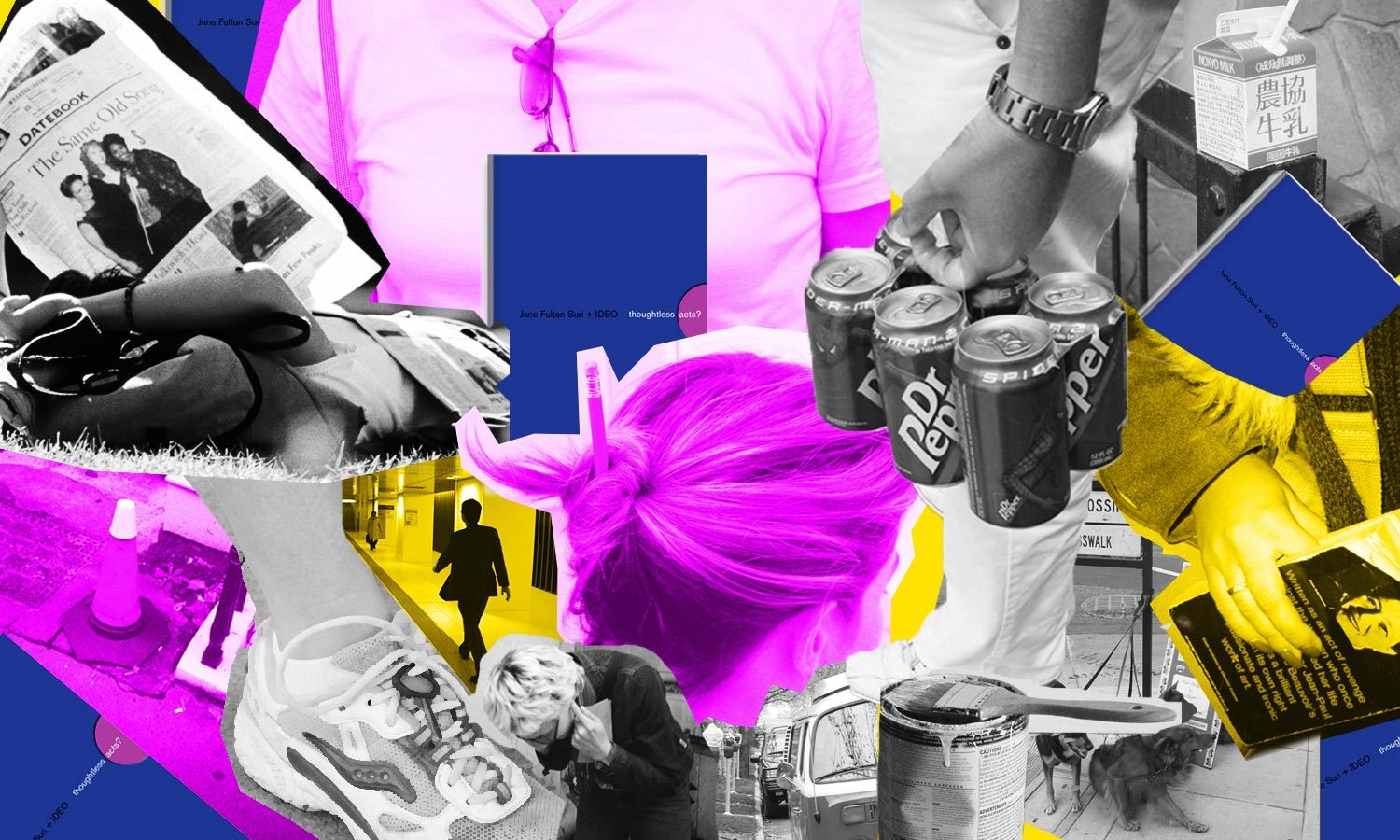
Thoughtless Acts: Skate the Streets
Thoughtless Acts: Skate the Streets. The intuitive ways we adapt and react to things in our environments

A few years ago, I traveled to Amsterdam in the wintertime. Amsterdam is famous for having rivers flow through its streets, but this winter, the rivers were frozen and they became new roads. Simultaneously, people took advantage of the sudden change and switched to an alternative form of transportation (ice skating!). One person’s thoughtless act can attract other people and become a sort of movement when other people start to join.
Human-centered design requires us to observe human behavior with beginner's eyes, so that we can spot the innate ways people interact with the world around them. We call these intuitive and unconscious reactions Thoughtless Acts, and IDEO designers collect photos of them to inspire their work.
-min.jpeg)
6 Reasons to Play More
A playful look into what makes city life so charming.
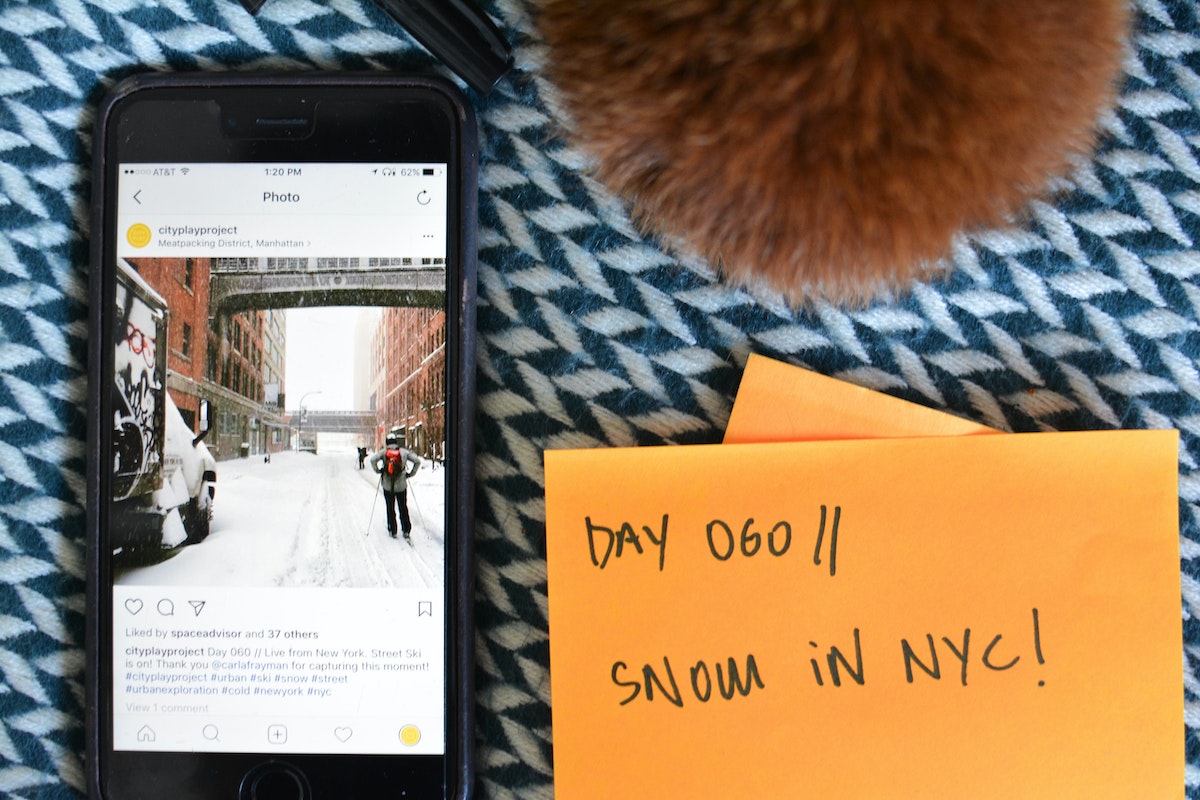
Snow in NYC!
I decided to frame my questions into City Play Project—100 days to observe, create, and capture playful moments in the city. Sometimes I found playfulness in the street cats of Istanbul, or a serendipitous moment of two strangers dancing in the West Village, or even a painted mural in East London.
Once I started my 100-day project, lots of friends—even friends of friends—started making and sending me images of playful interventions from all over the world—Florence, Istanbul, Paris, London, New York, Tokyo, and San Francisco. The most wonderful part about it was seeing how each person defined playfulness. Comparing all the differences helped me find some universal truths. Here are six things I learned from the project.
1. Playing in the city makes you notice things in a completely different way
Once you start looking for playfulness, you see things differently. It’s almost like adopting a traveler’s mindset. A type of pavement or a trash can suddenly look more interesting. You realize that you can be more playful with everything—even your own shadow.
2. It’s contagious
When you play in streets, others play with you. One moment can inspire a movement—just like the sticky notes in the New York subway. Sometimes, you just need to find a way to give others permission to join you in changing the city around you.
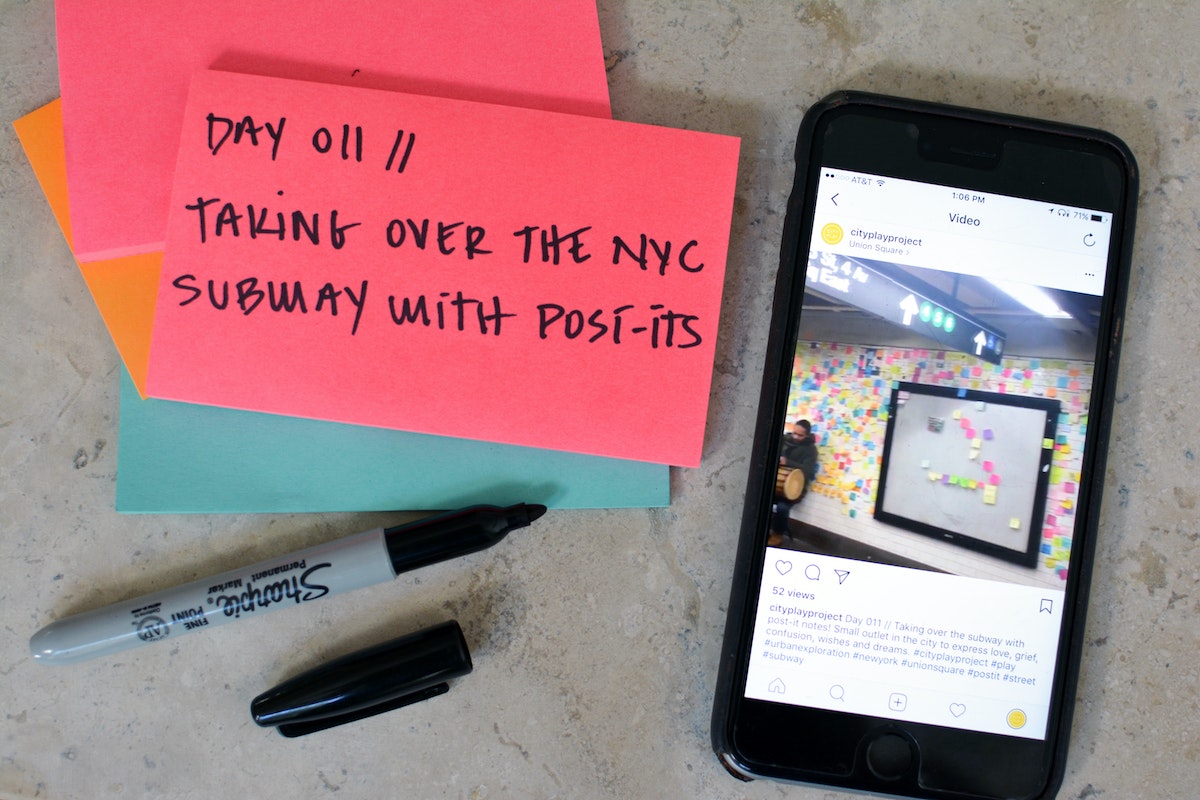
Taking over the subway with post-it notes!
3. Playing alone is harder than playing with others
People are terrified by empty spaces, public humiliation, and interacting with strangers in the street. Being silly alone is hard, and being silly with strangers is even harder. Often, we need encouragement from friends to start playing. The person who goes first makes it easier for the rest to be more playful.
4. It brings intimacy, trust, and love
Playfulness brings people closer. If you are brave enough to play with strangers, you can build trust in an instant, unspoken way. People who have never met before can play together. It helps you see the child in others and initiate creative collisions. It creates intimacy, and all that magic leads—or might lead—to love.
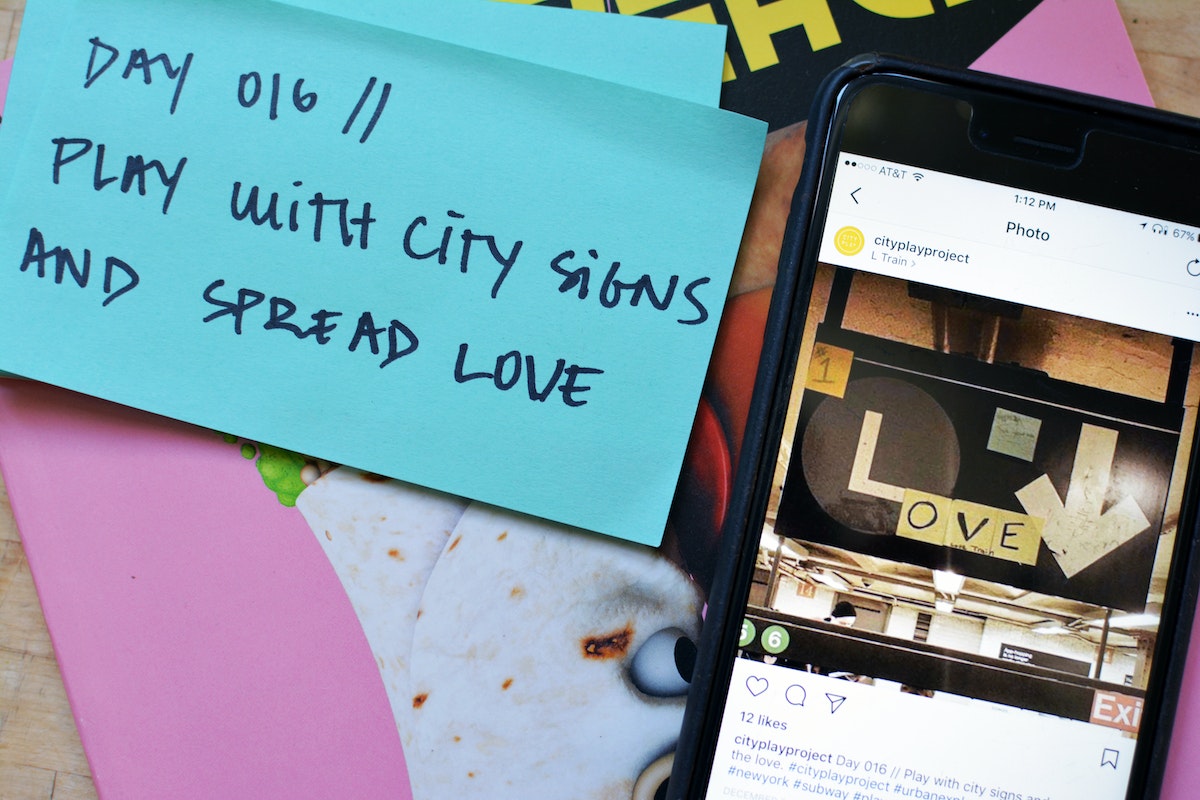
Play with city signs and spread the love.
5. Playfulness builds confidence
Allowing yourself to be more playful when you are walking down the street brings more confidence. You become more comfortable with your surroundings, and in how you interact with people, even—strangers. You stop asking for permission to do things, you just do them. A playful mindset allows you to try things, step up, express your thoughts in a physical way without being shy about it.
6. A framework can help encourage it
Constraints may seem like the last thing we should think about when we play, but they can actually spark playfulness. Constraints aren’t always restrictive—especially at an urban scale. The limitations of a cul-de-sac or the weather can push people to unique ways of playing. Sometimes it’s the boundaries that makes us embrace playfulness.
Want to join me in observing playfulness in cities? I challenge you to do the same! Tag your photos with @cityplayproject.
I’ve always been intrigued by what makes city life so charming. Having spent most of my life as an urbanite, I’ve come to realize that what captivates me most is the playfulness I see around me. Just as we can find inspiration by writing or reading about what interests us, I decided to find inspiration through observation. I wondered “How does play affect how we behave in cities? What are the social and physical effects of play in urban design? If we played more in cities, would we be happier? Fall in love more often?”

Could AI Replace Design Researchers?
Our look at the future of communication with London’s Design Museum
Spirit is a simulated AI, a provocation created by IDEO’s London Studio in response to a commission from the Design Museum. It asked designers and their teams—including Yves Behar of fuseproject and furniture designer Konstantin Grcic—to contribute to a project on the future of aging as a sequel to an exhibit of the same topic that they hosted 30 years earlier. The museum asked IDEO to explore what community might look like in the year 2047.
For our project, we aimed to start a dialogue about the role emerging technologies might play in the way people connect as a community. In the future, we may no longer need to drive our children to school, speak with anybody to go grocery shopping, or visit a human doctor. Technology often makes us more independent, and less reliant on human contact and support. To counter the social isolation that may arise, we developed the concept of a free and open-source social AI, a system built to foster strong and healthy communities by strengthening social bonds and keeping people active and mentally stimulated.
Creating the Exhibit
We designed the interactive part of the exhibition for three reasons: We wanted to give visitors a glimpse of what it would be like to interact with an artificial entity; we wanted to see how people would feel about the interaction; and, obviously, we like playful experimentation and prototyping.
Current AI technology is in its infancy when it comes to having a real dialogue with a human being. But just as autonomous cars learn with every mile they drive, these technologies will learn the more they interact with people. Current popular AI products (Siri, Alexa, etc.) listen to user commands and respond. We found it interesting to reverse that by having our Spirit actively ask visitors questions, and rather intimate ones, including: What makes you happiest? What would you be scared of forgetting? Would you trust an artificial intelligence to choose your friends? If you lived to 120, how many partners would you want to have?
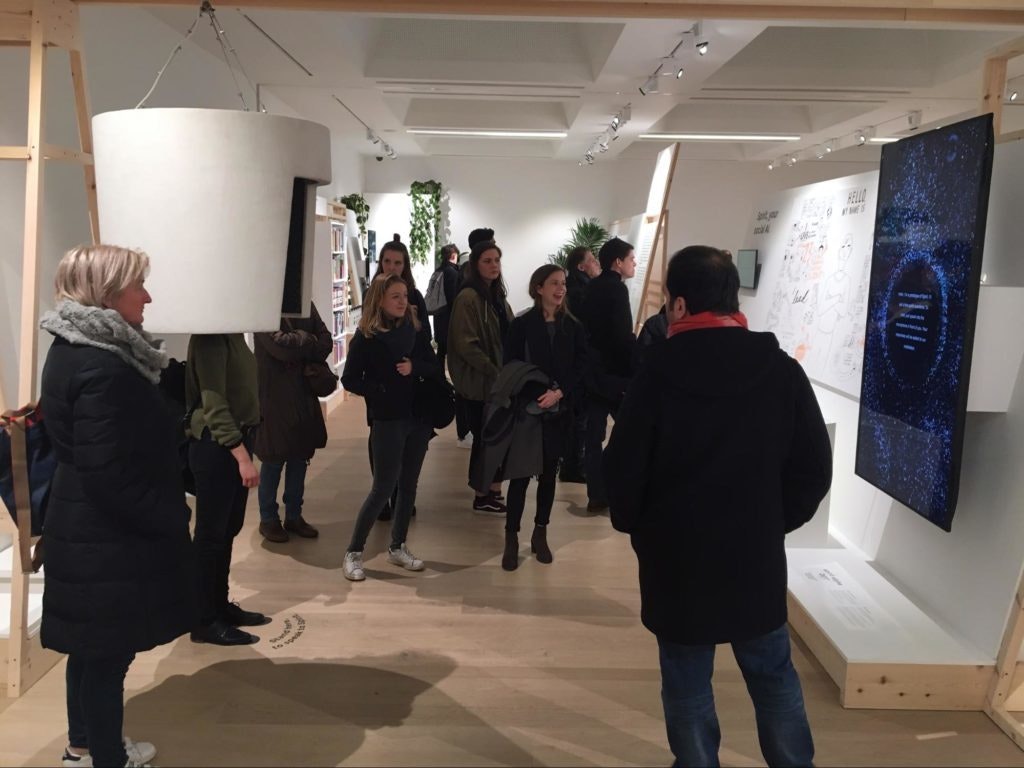
The exhibit had two states: An idle state where visitors were encouraged to talk to Spirit and it displayed selected quotes from previous visitors and visualized the data it gathered through a generative visual design, and an interactive state.
The interactive dialogue state took place inside an audio booth. The system greeted visitors with an audiovisual message and a stylized speech-bubble that mediated the conversation. The system then asked different questions, engaging in deeper conversation over time. For example, Spirit might ask, "What makes you happiest," and the answers could vary from "rich relationships" to "when it stops raining," "playing football," or "creating new things and solving problems." Each answer created a new pebble in the visualization, the color, size, and shape of which were determined by an analysis of the length and the emotion of the response. When the visitor finished answering, the pebble merged into a sea of pebbles representing all of the interactions collected so far.
Visual interface design and data visualization by Studio Waltz Binaire
Building Spirit
The technical challenge of the exhibit was to have the system running for five weeks, seven days a week, eight hours per day. There were a lot of pieces talking to each other, and we needed to be able to track the feedback from thousands of visitors.
Spirit used a bespoke script to follow the conversations, and when the answers veered too far from what it had anticipated, it would send the answer to a chatbot API to find an appropriate answer. Unfortunately, the voice to text turned out to be not very reliable in the museum environment, so we focused on the scripted questions.
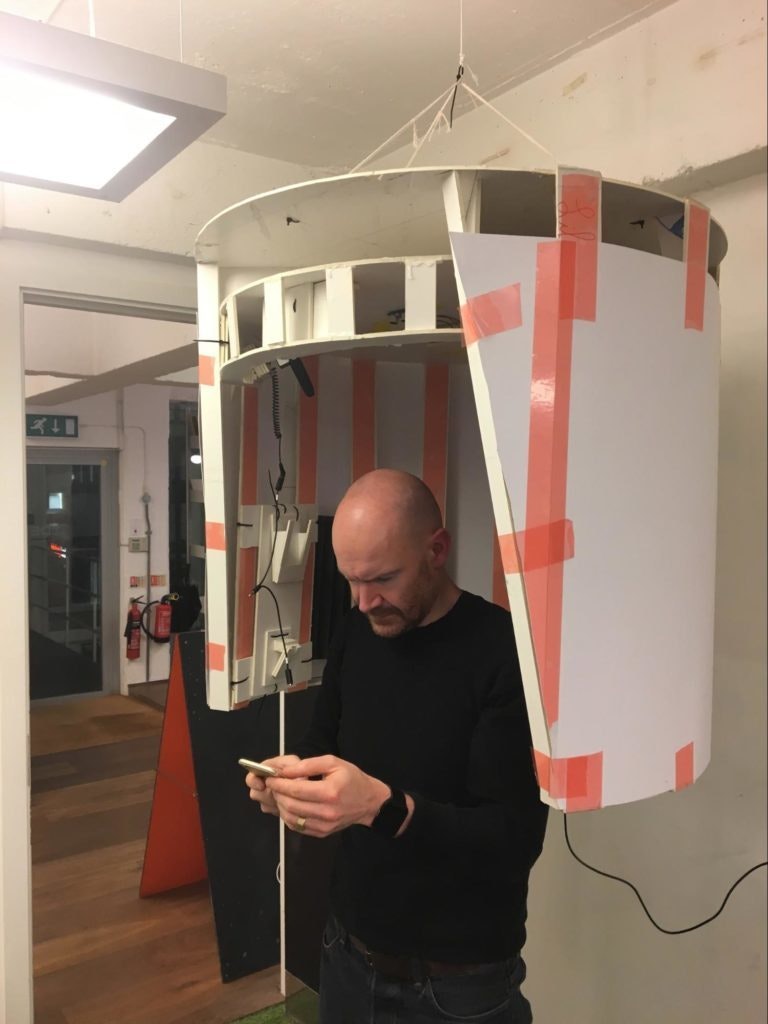
The technical setup consisted of two components: the audio booth and the large display facing it. To let Spirit know when somebody was present in the booth, we installed an Arduino with an ultrasonic sensor that communicated with an iPhone 6 via Bluetooth. The iPhone was connected to a directional microphone and a speaker.
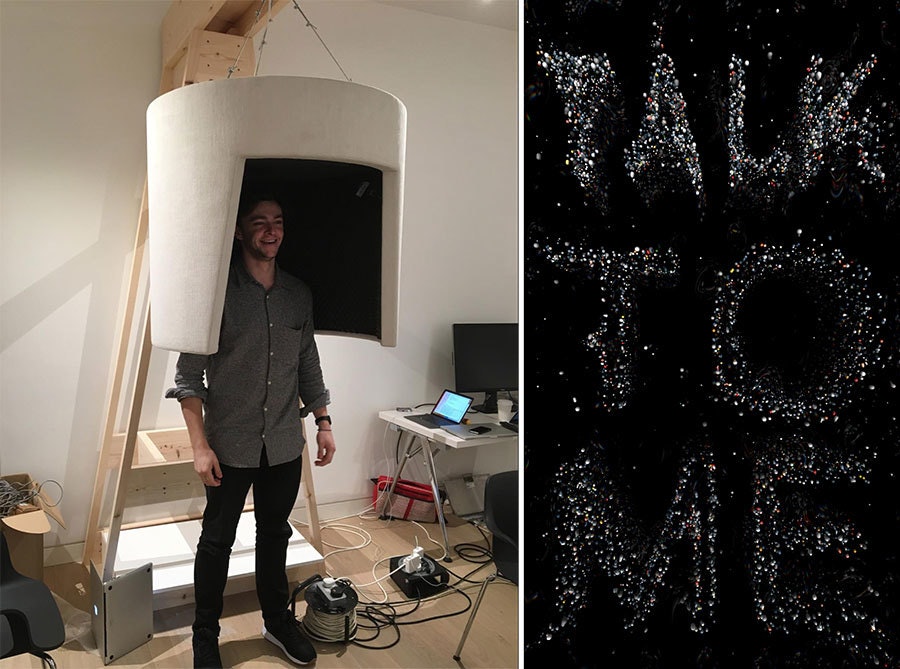
Here is where the magic happened. On the phone, we ran a custom app. The app turned the voice into text using the Apple Speech Framework, and then analyzed the emotions in the answer using IBM Watson, an iconic AI developed by IBM, while also checking if the answer is in the pre-written script. If it wasn’t, it used another API to get an answer from the chatbot. The information about the answer and emotions was stored and sent to a custom program written in vvvv that communicated with the iPhone app via OSC.
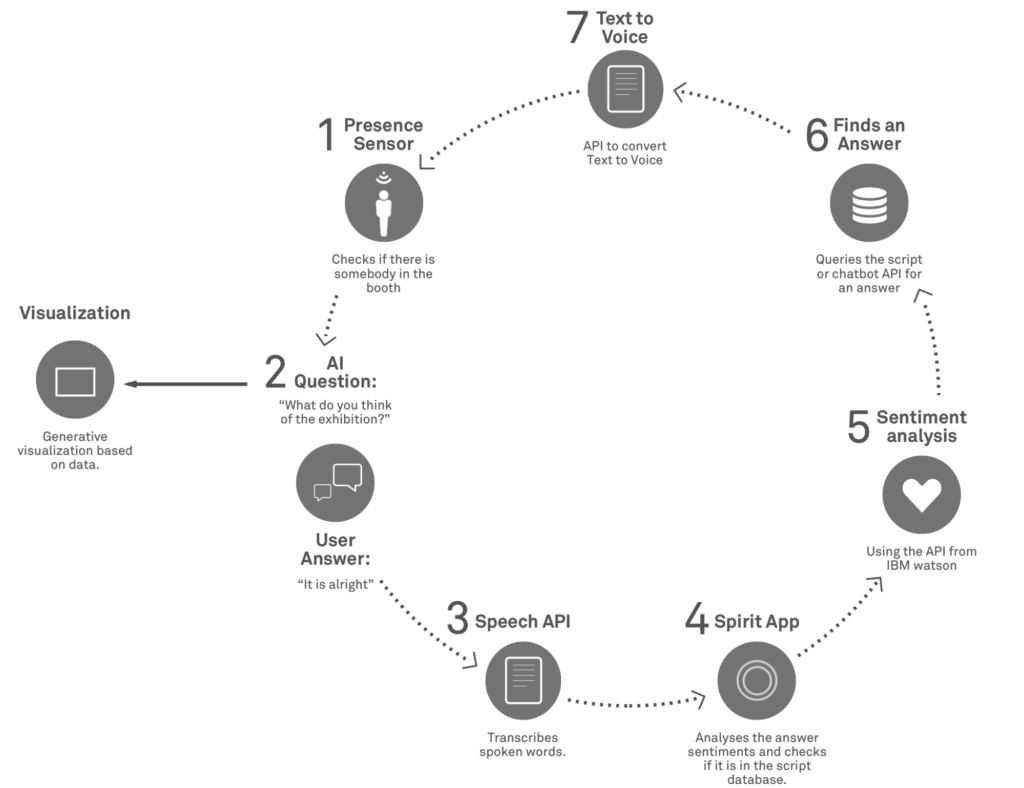
Ambient noise was our biggest worry. It could have prevented the system from understanding visitors’ answers. Also, the position of the microphone was fixed, so reaching different visitor heights and voice volumes was a challenge. This actually proved to be a problem, as there were several interactions in which the voice was unintelligible.
The Data
One good perk of the interactive system is that we had real-time access to the data, so we could follow how well the installation and exhibition were performing, and what the audience was saying. After the exhibition ended, we found a bit more time to use Python and Pandas in the analysis, and Excel to plot the results.
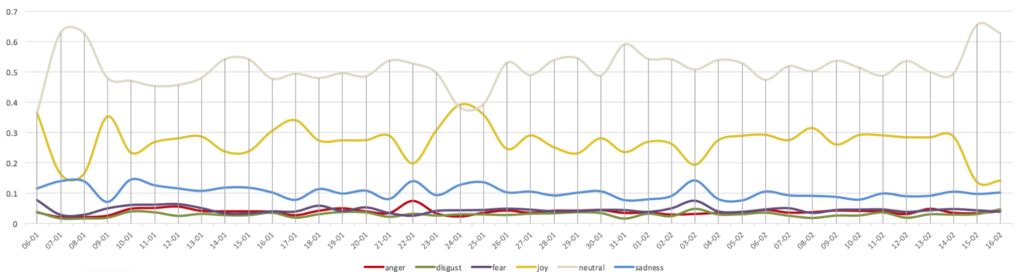
We had a total of 8996 individual sessions with Spirit during the exhibition, about 10 percent of the visitors to the Design Museum.
The emotion recognition system that we used, IBM Watson, is not yet totally reliable (as an example, “yes” was considered a 100% J=joyful answer). But with the amount of data we gathered, the system was still able to give some hints about visitor moods. And the variations in mood could be correlated to external events. For example, we saw a peak in feelings of joy on the 24th, when London hit its highest temperature after a cold January.
When we looked at the answers, we discovered that they seemed more spontaneous and playful than others given via written questionnaires. They were also more honest, suggesting that for some people, sharing intimately with an AI might be less intimidating than talking to a human interviewer. Others, though, were critical and disconcerted. It became clear that it is important to start a dialogue about how we want to interact with AI in our daily lives.
Though the experiment obviously didn’t culminate in a fully-formed product to help the elderly, the interaction model helped us create the kind of AI we would need to build community and increase social interaction, and allowed us to test people’s reactions to emotional and intimate questions from an AI. The experiment also directly related to the work we do with design research. We frequently send design researchers out into the field to talk to people to learn more about their needs and habits, and how we can design solutions to fit their lives. Our work with Spirit begs the question—could even a design researcher be replaced by an artificial researcher at some point? For now, we don’t have a lot of answers, but this experiment helped us push our understanding forward, and we’re excited about the AI-driven insights that will come in the future.
In the top floor of London’s Design Museum, as dozens of visitors walk by and the rain hits the windows, a woman speaks with an AI bot called Spirit. It asks her how many partners she would like to have if she can live until she is 150. She giggles and answers. “Just one—and that is because my husband is next to me.” According to Spirit’s analytics, her answer is 33% sad and 12% joyful.

Becca Carroll
I guide IDEO’s strategy and next generation bets, with a focus on how creativity and design can reshape what’s possible for organizations and the people they serve.
I lead IDEO’s long-term strategy and emerging growth initiatives.
My career spans entrepreneurship, financial services, and technology, anchored in designing sustainable businesses that make systems and products work better for people. I have led multi-partner innovation portfolios with organizations including Citibank, Fidelity, Nasdaq, and the Gates Foundation, focused on building more human-centered futures.
I began my career as an entrepreneur, creating new ventures in healthcare and real estate. I hold an MBA from Harvard Business School and a BA with distinction from Bates College.

Mike Peng
I lead IDEO’s business globally, championing the power of design and creativity to solve the world's most complex challenges.
I lead IDEO’s business globally.
A longtime IDEOer and a champion of creative collaboration, I bring a strong belief in the power of design and creativity to solve the world's most complex challenges.
Before taking on the role of CEO, I helped grow IDEO’s global presence, co-founded the Tokyo studio, and launched D4V, Japan’s first early-stage design-focused venture fund. I became a Partner in 2017 and was appointed to the board of IDEO.org in 2020, a role I continue to hold.
While I was away from IDEO, I served as Chief Creative Officer at Moon Creative Lab, a venture studio that powers the creation of new businesses for Mitsui & Co. There, I guided the development of new ventures and led Moon Media, a storytelling initiative exploring creativity and entrepreneurship through film.
As a committed educator, I have taught at esteemed institutions including Copenhagen Institute of Interaction Design (CIID), New York University’s Robert F. Wagner Graduate School of Public Service, and The University of Tokyo. I hold a degree in cognitive neuroscience from the University of California, Berkeley.

Dennis Boyle
Over the course of my nearly 45-year IDEO career, I have worked as a design engineer, a project leader, a business relationship leader, a studio leader, and a practice leader.
Over the course of my 45-year IDEO career, which originally started by meeting David Kelley at Stanford in the mid-1970s,I have worked as a design engineer, a project leader, a business relationship leader, a studio leader, and a practice leader. I have helped us build and nurture many key long-term client relationships, including Silicon Valley tech firms, Fortune 100 consumer businesses, and health-care companies of all sizes. I have been leading or guiding the “Design for Health” side of IDEO’s business for more than 20 years. I have also been named on 55 granted patents.
I am an Adjunct Assistant Professor at Stanford University’s Hasso Plattner Institute of Design, known as the d.school, where I have taught at least one course each year for the past 45 years. I have led courses on product design, engineering design, and human factors design, as well as design for sustainability, and creativity and innovation. I currently teach the “Design for Healthy Behaviors” course with Dr. Nancy Cuan, M.D. and IDEOer YC Sun
I have a BS in Mechanical Engineering with an emphasis on Industrial Design from the University of Notre Dame and an MS in Product Design from Stanford.

David Kelley
I founded IDEO because I wanted to work in a creative environment surrounded by people I admire.
I founded IDEO because I wanted to work in a creative environment surrounded by people I admire. These days, that’s still the case. I get to work with inspired people who have a commitment to making great things happen in the world.
I also founded Stanford University’s Hasso Plattner Institute of Design, informally known as the d.school. As Stanford’s Donald W. Whittier Professor in Mechanical Engineering, I am the Academic Director of both of the degree-granting undergraduate and graduate programs in Design within the School of Engineering, where I have been a student or a teacher for nearly 50 years.
I am most passionate about using design to help unlock creative confidence in everyone from students to business executives.
Together, my brother and I co-authored the New York Times best-selling book Creative Confidence: Unleashing the Creative Potential Within Us All.

Building a personal AI for the messiness of life: Sida Li
Most AI products today are built for work—a space with clear problems and established systems. One founder noticed a gap: personal life is messier, harder to systematize, and mostly left behind by the AI boom. So she built Cue, a personal AI that lives inside iMessage and group chats, to go where the other tools haven't.
In this episode, Becca Carroll, IDEO's Chief Strategy Officer, talks with Sida Li, co-founder and CEO of Shared Context Lab, about staying anchored to a human need while the technology around her keeps changing shape, why she treats her business model with the same rigor she'd bring to a product, and what it feels like to build a company at this particular, disorienting moment in AI.
The conversation also gets into how Sida makes design decisions: the language Cue uses to describe itself, the tradeoffs behind building inside iMessage instead of a new app, and a real story about a business idea that didn’t pan out.
This is the second in a two-part series profiling founders from IDEO's Startups-in-Residence program. The first conversation is with Johannes Seemann, founder of Sooner, on designing GenAI for the emotional side of money.

Designing GenAI for the emotional side of money: Johannes Seemann
Most personal financial tools are built to run the numbers and optimize towards a budget. While that works for some, most people experience money as a lived relationship that does not neatly fit into a spreadsheet. Johannes Seemann and Becca Carroll discuss why money is emotional before it is mathematical, and what a human-centered approach to building a generative AI financial product looks like in practice.

The curious leader's edge in uncertainty: Scott Shigeoka
Mina Seetharaman talks with Scott Shigeoka, author of Seek and Head of Curiosity Cultivation at the Eames Institute, about what distinguishes genuinely curious leadership from performative curiosity, how power dynamics shape curiosity, and why practicing curiosity can restore energy rather than drain it.

How constraints make us more creative: David Epstein
Mina Seetharaman talks with David Epstein, author of Inside the Box and Range, about why total freedom often produces average work, how leaders can design useful limits on purpose, and what organizations such as General Magic and Pixar reveal about the relationship between boundaries and creativity.
Looks like you might be in search of something very specific?
Or reset the filters above and try another angle.
Here’s some random inspiration

Podcasts about creative leadership

Articles about the power of prototyping
