
.svg)


Boston's new citizen-centered site
Designing a welcoming, intuitive platform for Bostonians.
More than 7 million people each year came to the Boston.gov site to tap into all sorts of city services: reporting a pothole, learning the assessed value of their property, paying a parking ticket, checking recycling schedules.
Boston wanted to create a beautiful platform that would make the process of finding and navigating information easy and intuitive, one that prioritized the needs of its people.
The Boston.gov site had outgrown its existing structure and needed an overhaul. The user experience was mired by the fact that Boston City Hall has nearly 50 different departments, each with its own microsite, navigation and content standards that feed into a centralized site.
So the City of Boston hired IDEO to design its new digital home, Boston.gov. IDEO designers worked with the major stakeholders—department heads, employees, and Boston residents, with a focus on those in underserved communities and those with varying levels of technical proficiency—to gather insights into what users needed.
The objective was to design something that would simplify how people navigate the site, to make it easier for residents to find answers to common questions, and, in the process, serve as a community facilitator—an up-to-date, reliable resource that makes life in the city more manageable.
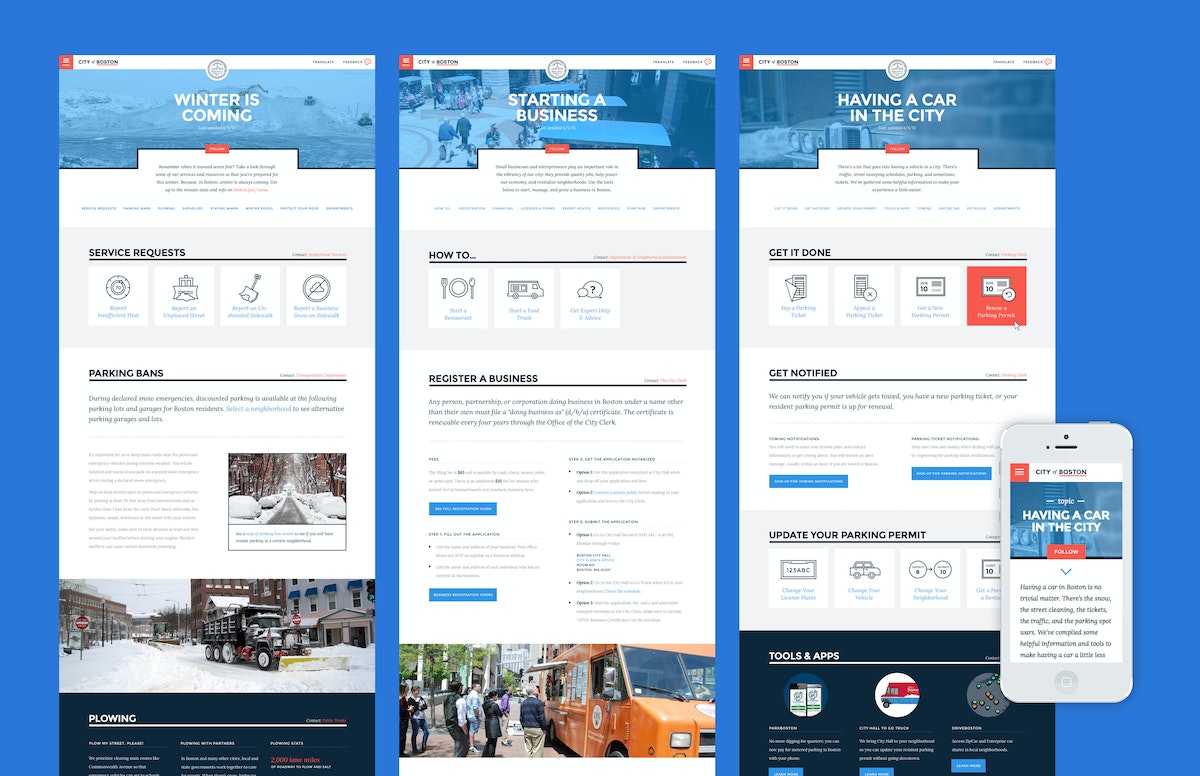
Rather than organize the site by the city’s departments, the design solution was rooted in illuminating relevant content by topics—people’s life moments—many of which overlapped through different branches of government. Owning a car in the city, for example, is closely related to preparing for winter, so bridging those common threads allowed for a more intuitive organizing principle.
In the process of the site redesign, IDEO also helped to create a visual identity system that underscores Boston’s strengths: the city’s confidence, humility, personality, and optimism.
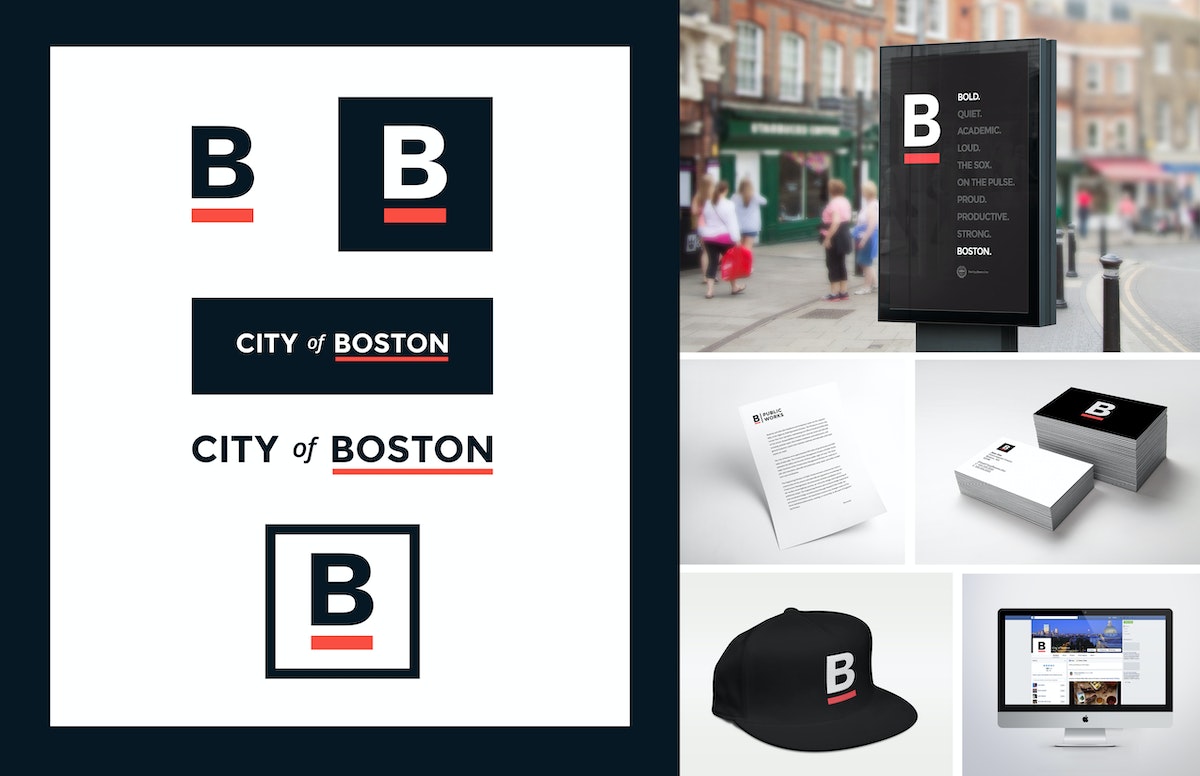
In addition to the web architecture and redesign, IDEO also produced a comprehensive style guide to help maintain design consistency, so departments can add content without compromising the overall integrity of the site, as well as a brand look that the city has decided to adopt across nearly all of its consumer-facing media. Now you’ll see the famous underlined B on T-shirts, banners, and even snow shovels.
Holding true to its mission to include Boston residents and all site users in its design process, the new Boston.gov site was piloted for six months, and the process document on the city’s blog (including the IDEO designed brand guide), before a full launch was rolled out in July 2016.
“The website should act like a helpful human. This is one of the big differences between the old site and the new site,” said Jascha Franklin-Hodge, the city’s chief of information technology in a Boston Globe article. “Oftentimes, when you looked at something on the old site, it would feel like you were interacting with some sort of lawyer-robot that was speaking to you in government-speak, using very formal language. We are trying to move away from that so your experience is akin to a person.”
The City of Boston was in need of a new digital home—one that emphasized a shift to a more welcoming tone and commitment to its citizens.

Growing an American brand in China
How an outdoor retail company found a new audience through digital and physical shops.
In the Western Hemisphere, The North Face brand has long represented an active, sporty lifestyle that’s filled with challenges and adventures. But appreciating “the great outdoors” in China is less about extreme sports and more about connecting with nature in a communal, spiritual way. This research-based insight led the team to identify new opportunities for The North Face to better target its messaging.

Designers found a key opportunity: Encourage Chinese consumers to escape the pressures of hectic city life by enjoying the freedom and renewal that comes with spending time outdoors.
Today, as people find less time to enjoy the benefits that lie just beyond China’s large cities, there’s a tangible desire to return to the outdoors to refresh, reassess, and renew oneself. The North Face aims to help consumers do exactly that.
To create a compelling new brand vision for The North Face in China, the team’s design research tapped into Chinese ways of spending time outdoors. IDEO’s insights and creative brief provided the essential brand story for The North Face in China and informed the tagline of the company’s current marketing campaign, “Go Wild” (去野). The North Face brand’s new messaging links “old nature” and “new outdoors” through a combination of digital, retail, and interactive community channels.
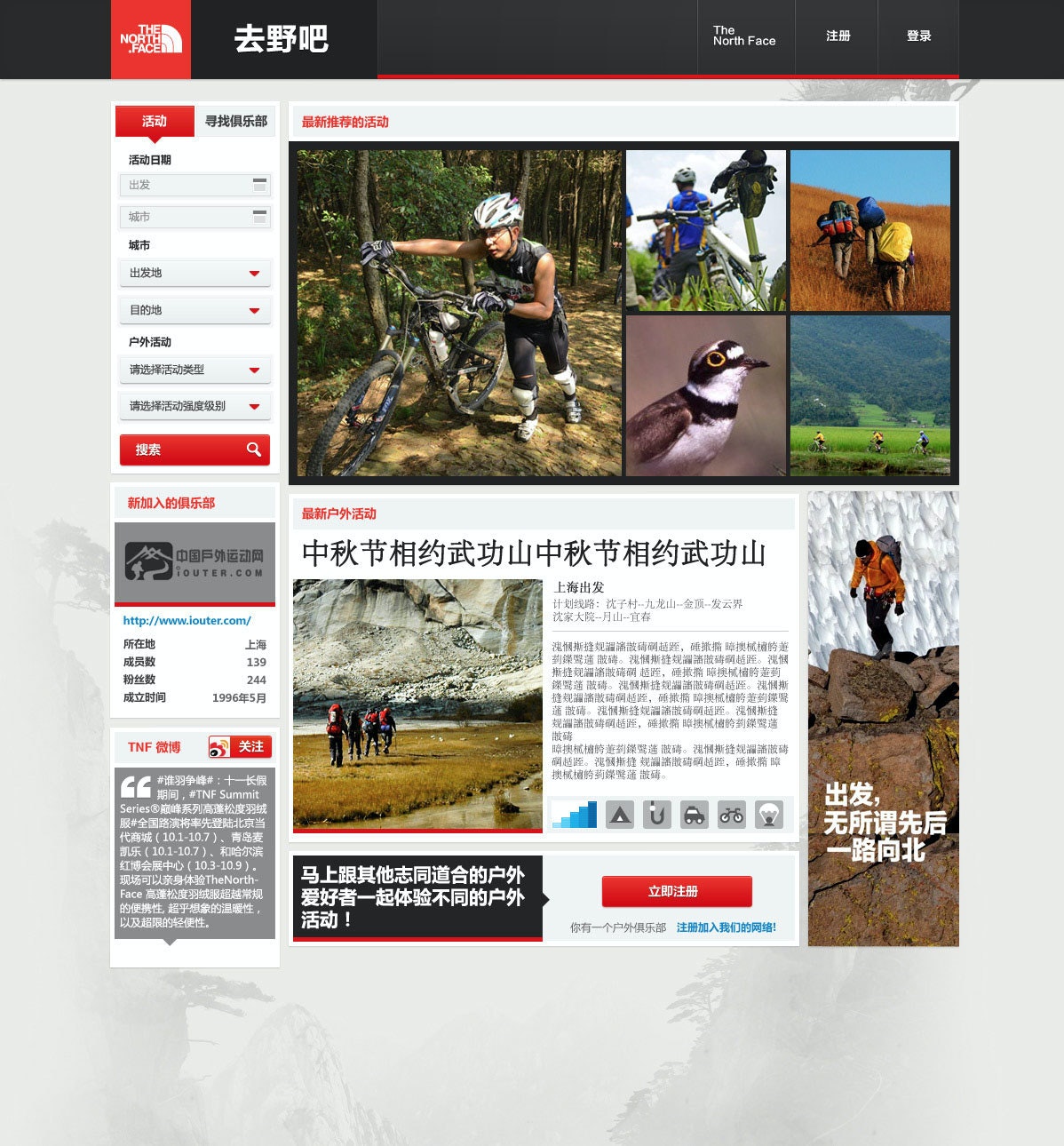
IDEO also collaborated with the company on designs and prototypes for a new digital platform and an updated store-within-a-store merchandising display. The digital community aims to attract newcomers and connect them with more experienced outdoors enthusiasts and clubs. As the platform evolves, it will help aspiring adventurers plan trips, learn skills, and share their experiences through photos.
The retail community space aims to integrate this digital community with in-store shoppers and an effort to turn the “buy-a-product moment” into a “join-the-outdoors moment.” Both will be integrated to provide a holistic brand experience in China centered on nature and community.
In the West, The North Face, with its decades-long history, has long symbolized an adventurous, active lifestyle. In China, however, the outdoor market only began accelerating in the early 21st century.
Success in this growing market depends on building strong and deep connections with Chinese consumers.
20% sales growth in China
from 2012 to 2013—the year the project was completed—propelling the brand from sixth place to a market-leading position

Nearly 40 years of designing pharmaceutical excellence
How a decades-long collaboration with Eli Lilly has transformed patients' lives and health outcomes.
Over the last 36 years, IDEO and Lilly, along with the pharmaceutical giant’s other design, development, and manufacturing partners, have collaborated on more than 250 projects. During this time, Lilly has not only honed its engineering-focused internal device-development team but also transformed into a human-centered organization with extensive, robust in-house innovation capabilities.
Early in the relationship, a team of IDEO designers and Eli Lilly leaders traveled the world to understand how people with diabetes live with the disease. Their findings led to the design of a series of award-winning insulin injection pens like SAVVIO. Portable, aesthetically pleasing, and discreet, the pens are suitable for use in both medical and personal settings. Combined with Lilly’s technical design prowess, this human-centered focus allows the devices to seamlessly integrate into patients’ lives and routines, making a challenging disease like diabetes feel more manageable.
Fast forward to today, Lilly’s innovative, easy-to-use auto-injectors are not only continuing to provide life-saving treatments to people with diabetes but also enabling the adoption of the popular GLP-1 weight-loss drugs Mounjaro and Zepbound, which together accounted for the majority of the company’s annual revenue in 2025. Perhaps most importantly, patients consistently rate the experience of using Lilly’s auto-injectors as relatively pain-free, easy to use, and preferable to competitors’ brands, improving adherence, satisfaction, and health outcomes.
This unwavering focus on driving innovation through a patient-first mindset is evident in some of the most impactful projects Lilly and IDEO collaborated on over the years:
GLP Auto-injectors
Convenient and cutting-edge, the first Trulicity injection device was originally designed to deliver the GLP-1 drug to treat type 2 diabetes. Today, it has been adapted for use with other GLP-1s, Mounjaro and Zepbound, which are increasingly popular weight-loss drugs and are also administered once weekly via fixed-dose injections. A wide base enables the pen to be held securely against the injection site, and the device automatically regulates the dose and needle depth.
Taltz Injectors
For most patients, living with severe plaque psoriasis means being your own medical technician—metering your drug dosage each time, and attaching and removing needles by hand. Taltz provides patients with clear visual and auditory feedback throughout the injection process through simple icons, bright colors, a translucent material, and clicking sounds. The devices are available in both autoinjector and prefilled-syringe formats and are adapted for Emgality, a preventive monthly migraine treatment, and Ebglyss, which helps treat eczema or atopic dermatitis.
HumaPen SAVVIO Injection Pen
Key insights informed the design of SAVVIO, including patients’ preference for insulin pens that look less like medical devices and more like everyday objects you’d find in a backpack or purse. The sleek, colorful device was created to help patients feel comfortable and confident about fitting mealtime injections into their everyday lives.
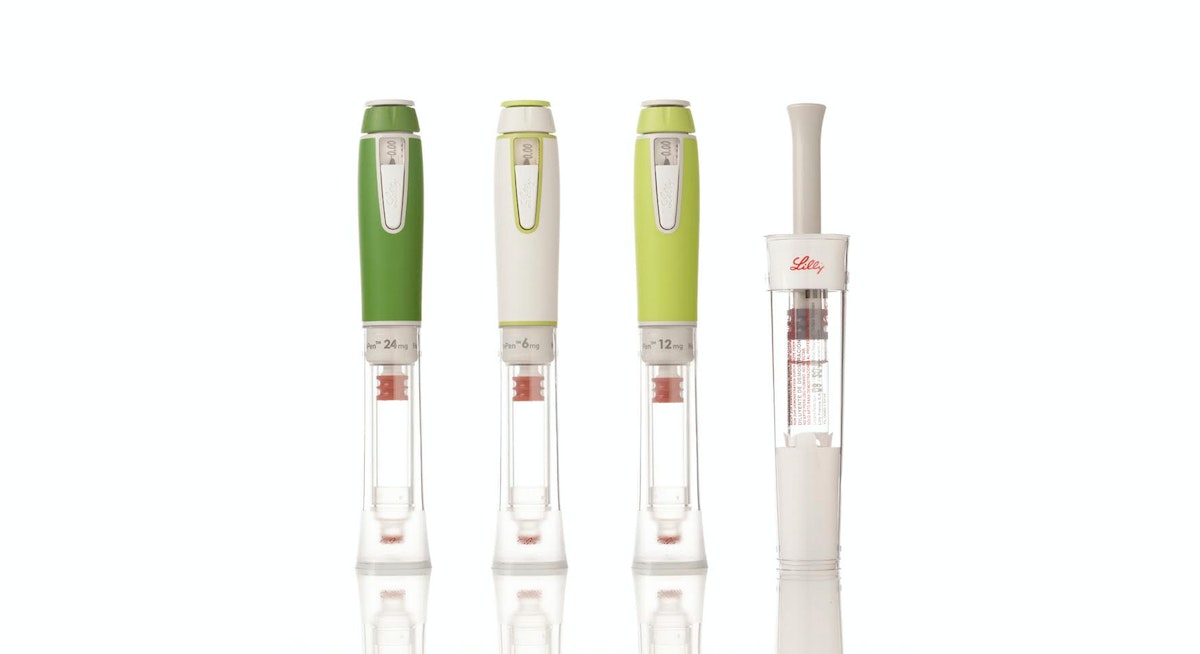
Refillable Human Growth Hormone (HGH) Injector and Reconstitution Device
Designed to be kid-friendly, the Refillable HGH Injector leverages insights into pediatric treatment adherence to create a more integrated, systematic approach to treatment, while the Reconstitution Device makes mixing Lilly’s powder-and-liquid drug easier and less intimidating for parents and healthcare professionals alike.
KwikPen Insulin Pen
KwikPen is a next-generation, prefilled insulin injection pen that builds on the success of two previous designs, reducing its size to 5.7 inches and enhancing ease of use for patients.
HumaPen(R) Luxura™ Insulin Pen
HumaPen Luxura combines several innovations into a robust yet elegant pen that can be carried and used anywhere—an insulin pen solution that improves dosing accuracy, dose setting, and injection force.
In addition to designing products to meet the needs of people with diabetes, IDEO and Lilly have developed innovations in areas of oncology, autoimmunity, and men’s health. The results of this collaboration and expansion have won numerous design awards and produced one of the longest and most fruitful innovation relationships in IDEO’s history.
In the 1990s and early 2000s, Eli Lilly had a number of new, life-changing medications and two big challenges: Most of its drugs were self-injectables, not pills, so patients were hesitant to take them. And its drug-delivery device platform lagged behind its drug pipeline.
99%
of Trulicity users reported the auto-injector was “easy” to “very easy” to use in a JDST study
$36.5B
of Lilly’s $65.2B 2025 revenue came from sales of its auto-injectable GLP-1s, Mounjaro and Zepbound, a 45% increase from 2024

Reimagining San Quentin
Bringing together many voices for a report for the Governor of California.
“…the Advisory Council will recommend transformational programmatic, cultural, and physical change to San Quentin that can serve as a practical model that can be replicated and scaled to other institutions.”
Source: Office of Governor Gavin Newsom: Governor Newsom Names Leading Criminal Justice and Public Safety Experts to San Quentin Transformation Advisory Council, May 05, 2023 https://www.gov.ca.gov/2023/05/05/san-quentin-transformation-advisory-council/
The Advisory Council included the expertise of established criminal justice, public safety, healthcare, academic, reentry, and rehabilitation professionals, along with system-impacted/formerly incarcerated community leaders, and representatives of crime victims/survivors. The premise of IDEO’s involvement is to augment the Advisory Council Co-Chairs’ and members’ expertise in evidence-based best practices and lived experience living and working in prisons, with expertise in collaborative design, synthesis, visualization, storytelling and bringing visions to life.
Specifically, IDEO was brought in to facilitate input-gathering, and assist with incorporating the many viewpoints into a single, cohesive report of recommendations to the Governor. This included meeting the challenge of bringing together the viewpoints of 21 people on the Council (17 members, three Co-Chairs and an advisor to the Governor); incorporating the views of people who are most impacted (those incarcerated at San Quentin, San Quentin staff, community-based organizations, victim/survivor groups, among others); and formatting and designing the final report.

IDEO’s facilitation included workshops with the full Advisory Council, individual interviews and check-ins with Council members to gather their input to inform the recommendations. Each Advisory Council member was asked to speak with, and record feedback from, no fewer than five people at San Quentin or in affected communities and to share this feedback with IDEO. IDEO integrated this information and feedback into this report.
Research activities included visits to San Quentin to speak with and facilitate conversations with:
- San Quentin residents (100+) including the Citizens/Inmate Advisory Council, focus groups with Spanish-speaking residents, former gang members, ACT (LGBTQIA+), Voices Heal, People in Blue, San Quentin Citizens Advisory Council.
- San Quentin staff (100+) including interviews with numerous officers.
- San Quentin staff and residents together.
- Current participants and staff at Amistad (MCRP) and Beacon (former lifer) campuses (many who were previously incarcerated at San Quentin).
IDEO also organized listening, information sharing and feedback sessions, both at San Quentin and in the community, between Co-Chair representatives and various stakeholder groups, including victim/survivor groups, labor unions, and advocacy organizations. These perspectives were also brought into the report.
Opportunities in the hidden costs of caregiving
Hard-won lessons from a designer supporting her father.
He had taken a disability leave from work to prepare for the removal of a tumor on his spine. The drives to his appointments had become routine, each trip a reminder of how much his body was changing—and how much he now relied on me. He said, “I’m going back to work after my surgery.” Despite my uncertainty, I didn’t argue. The surgery gave him a 50 percent chance of walking again, and for him, that was enough. But the probability alone was not enough to prepare me for what came next.
At 22, I came face-to-face with the hidden costs of healthcare when my father became paraplegic. Since then, I’ve become his sole full-time caregiver. This role has profoundly shaped my perception of the healthcare system—not only exposing the many gaps in healthcare but also the massive opportunities to improve how care is designed and delivered.
Today, alongside my role as a caregiver, I am an interaction design fellow at IDEO, where I spend my days collaborating with other designers to shape and refine human-centered experiences. Part of our job is to listen with empathy to user pain points to craft useful solutions that foster trust and understanding. As both a caregiver and a designer, I deeply understand these pain points and how we can design solutions that ease the burden on the 24 million caregivers in the US alone—whether it’s creating clear, comprehensible medical bills or developing devices that help prevent further health complications. Here are four massive opportunity areas I believe we need to solve for.

Mitigating enormous burnout
The first few years were by far the most difficult. My peers were embracing the newfound freedom of adulthood, while I was responsible for everything from dealing with insurance companies to daily cleaning and bandaging his stage-four wounds. I was in and out of the hospital, drowning in paperwork and trying to make sense of my father’s condition, his medications, new routines, and medical bills. I spent countless hours battling with insurance reps, demanding appeals, chasing down unreliable case managers, and pushing charge nurses to advocate on my father’s behalf. The burnout was debilitating. But there are so many opportunities to lessen that load.
Technological tools that patients and their families can trust can help close the gap in an inequitable healthcare system. Already, AI tools like Hyro AI and SICURA by Nohold are taking on some of these pain points by reducing the complexities of dealing with insurance, treatment options, and medical jargon. Hyro AI is even integrated into many electronic health record systems, allowing patients easy access to their personal health information to understand and manage treatment.
But what if AI patient advocates could take things a step further, flagging biases, challenging questionable denials, and assisting with appeals? As insurance companies increasingly use AI to deny claims, such a tool could help level the playing field, ensuring that vulnerable patients aren’t silenced by the very systems meant to support them.
Navigating the system
My father was hospitalized for over a year following his surgery, moving between the ICU, skilled nursing facilities, and acute rehab centers. Each stay brought hefty bills, frequently arriving months later with little clarity about their origins. They were outrageously expensive, and I struggled to understand what we actually owed—or why we owed it in the first place. Between the maze of Medicare, state programs, and private insurance, determining financial responsibility was completely overwhelming, and cost transparency was non-existent.
What if medical bills were as clear as itemized receipts, with straightforward descriptions alongside hospital codes? Originally designed to prevent fraud, medical billing systems rely on cryptic codes like “ICD-10” and “CPT”—effectively standardizing claims but making them nearly impossible for patients to decipher. While these systems serve the industry, they often do so at the expense of patient transparency and accessibility. An app that translates these complex codes into a simple, easy-to-read breakdown would be invaluable.
Beyond that, there’s an opportunity to design a visual progress tracker or dynamic dashboard, helping caregivers and patients manage payments, track processing status, and reduce the financial guesswork that adds unnecessary stress to an already difficult journey.
As a young adult learning to manage my own financial responsibilities while taking on my father’s, I found myself in need of a financial “buddy”—someone who understood my situation and had the expertise to guide me. While some companies, like the AI app Cedar, are tackling this issue, there’s still significant potential for innovation in this space.
Providing physical care
Whenever my father developed a stage-four bedsore, I had to administer IV antibiotics every six hours for eight to 12 weeks. During these times, I was stuck at home, bound by the six-hour window, having to reposition him every two hours to help the wound heal and prevent new sores from forming.
When you care for someone with limited mobility, bed sores are one of the most challenging issues. In the US alone, nearly 60,000 people die from bed sore complications annually. They emerge shockingly quickly and can go from the size of a nickel to so deep you can see bone. For caregivers, the physical toll of lifting and repositioning their loved ones can be overwhelming; it often left me physically drained and emotionally exhausted.
After dozens of hospital trips and many sleepless nights, I decided to invest in a specialized bed that could handle repositioning. But insurance doesn’t cover them. And they range from $2,000 to $15,000. A pressure-relieving mattress adds another $500 to $3,000, and professional assembly—often required—can cost an additional $200 to $500.
Imagine if there was a smart, modular bed for paraplegics that automatically adjusted using an AI-powered scanning app to track movement and prevent pressure sores. It could offer personalized configuration by allowing users to add or remove features as needed, enabling customization at home. Additionally, an affordable smart mattress that monitors sores and relieves pressure could greatly benefit both the caregiver and the patient. Accompanied by an AI-powered scanning app, the bed could track movement and prompt timely repositioning. Companies like Tidewave and Arjo already use technology to help mitigate bedsores, and the ForeSite Intelligent Surface (IS) by XSENSOR uses AI to monitor the real-time emergence of sores. However, these solutions are largely limited to hospital settings. If a company could create an affordable version for home use, it could significantly improve the lives of millions of patients and their caregivers.

Accessing home modifications
When my father was discharged from the hospital, it was up to me to find a wheelchair-accessible home in the Bay Area. Whether it was too-narrow doorways, steps, or tight corners, none of the homes I toured had the necessary modifications for him to navigate in his power wheelchair. The home we finally found had enough space to meet his mobility needs, but we still had to pay out of pocket for ramps, touchless light switches, and other accessible features. Even now, he can’t leave the house on his own. He can’t reach the door handle from his wheelchair, and the ramps are too narrow for him to safely navigate alone, leaving him at risk of getting stuck—something that has happened more times than I’d like to count.
Instead of having to tour each house with a tape measure in hand and the wheelchair measurements stored in my phone, it would have been incredibly helpful to have an app that could instantly tell me if a wheelchair would fit through the doorframe or if adding a ramp was feasible.
Imagine if that app connected to stores like Home Depot or Amazon, curating a list of items I could purchase directly, without the hassle of checking measurements myself. Or, what if real estate or rental apps had a special section for homes that had already been modified or were built with accessibility in mind? With the right tools in place, I could have avoided much of the uncertainty and frustration, making the journey to find an accessible home much smoother for both my father and me.
What began with inexperience and uncertainty has evolved into a journey of growth and adaptation, both as a caregiver and a designer. Together, my father and I have learned a lot about how to live our new life—and each other. It has not been easy. And there is so much opportunity for insurance companies, healthcare providers, and startups to alleviate the unnecessary stress for caregivers and their loved ones. As the caregiver population continues to rise, the need for innovation is clear—without it, millions will continue navigating these challenges alone. As designers, we’ve only scratched the surface—there is so much more that we can do.
As my father and I prepared to head to Stanford for yet another doctor’s appointment, I remember asking him, “Are you prepared to never walk again?”
Meaningful resistance
The transformative power of designing for friction.
As you play, your job is to move a circle from one side of a line to the other. At each level, you have to wait one more second before you can cross the line. It’s both easy and increasingly boring—until you up the level of friction. The harder you make it, the more obstacles fill your path, and the more points you score. The higher the friction, the greater the fun, sense of accomplishment, and meaning.
This is a principle that’s true across play. Think about it: You could walk to the kitchen to grab a glass of water, or you could pretend your kitchen floor has turned to gooey molten lava, and hop from chairs to rugs to the sink to get what you need. You could sit around at home mindlessly watching TV on a Friday night, or you could pay money to be locked in a room with your friends, forced to solve puzzles to earn your collective freedom.
As the Executive Managing Director of IDEO’s Play Lab, I lead a team of toy inventors and designers who use play to create effective and joyful products and experiences. Rarely does our work involve making things seamless. It’s usually about inserting obstacles, adding layers, and crafting challenges to help motivate and delight players, employees, and customers alike.
And yet, as technology accelerates at an unprecedented pace and becomes intertwined in all aspects of our lives, from dating to healthcare to managing our time, we’re constantly trying to remove as much friction as possible. Digital tools promise to streamline our calendars, show us the shortest routes to destinations, enable us to make purchases with a single click, and even facilitate our relationships with each other.
But at a moment when technology promises frictionless living, we have to ask: What are we losing when everything becomes too easy?
Lessons from Gen Z
Gen Z is our first generation of digital natives, people roughly between the ages of 14–28, who have known digital technology and the internet for their entire lives. They have also seen the downsides: cyberbullying, superficial relationships, and broken attention spans. In many ways, they understand the costs of tech better than the rest of us.
Last year, we tested early prototypes of creative and relationship AI tools with a group of young people to gain a deeper understanding of what they truly want from technology. They were universally clear: They’re happy to use AI tools that can make them more efficient, but they don’t want to get rid of the messy parts of life. As one of them told us, “I want to go on a date for myself. I want to go on a bad vacation. You know what I mean? I want to experience things and be like, ‘Oh, I hated that.’”
There are numerous videos on YouTube featuring young people questioning the value of tech making their lives more convenient. Some are going so far as to turn back the clock, embracing flip phones, embarking on digital detox journeys, and becoming digital minimalists. On YouTube, Jess Farnham shares how intentional tech breaks help her feel more grounded. Sakura Opal explains her switch to a flip phone as a return to intentional living. JV Scholz paints a picture of the creative rebirth that comes with limiting your screen time.
The comments on their videos reveal a growing groundswell: Consuming mountains of content is becoming overwhelming. These young people want to return to creating content through activities they loved as children, like writing stories and drawing. They’re also recognizing that our brains have lost the ability to sit with our thoughts or commit our full attention, factors that can be contributing to our growing loneliness epidemic, because intimacy requires time, focus, and effort.
Young people aren’t the only ones—brands are responding, too. Bottega Veneta shut down its social media channels to focus on in-depth, slow storytelling. Heineken and Bodega created the “Boring Phone,” a tongue-in-cheek device that encourages users to step away from digital distraction. Merriam-Webster’s 2023 Word of the Year? “Authentic.”
Designing for meaningful friction
Instead of assuming that we should always design for efficiency, we should look for opportunities to design for deliberate friction, perhaps making our lives a little bit slower and maybe even more challenging.
As human-centered designers, friction has long been a part of our toolkit. And not just recently with the proliferation of AI. In 2011, we partnered with the beloved nonprofit Sesame Workshop to develop Elmo Calls, an app that allows preschool-age children to call Elmo to hear advice, educational stories, songs, and jokes. Going to the doctor for a shot? Need help going potty? Call Elmo for support and a positive message about the challenge ahead! The app’s purpose was never to have kids glued to a screen, though. Together with Sesame Workshop, we made a decision: Elmo will show up for a few minutes when kids need him most, and when the call is over, he will hang up.
We did something similar when we designed a VR version of the classic ViewMaster with Mattel. The toymaker asked that we purposely design it without a headstrap, so that kids could interact with incredible scenes enabled by the new technology for a reasonable amount of time, but would put the device down when their arms grew tired. This purposeful friction moderates usage and ensures that kids can experience the fun while encouraging most of their playtime to be in the real world, with real people.
Can you imagine if our phones weighed as much as bricks? Our lives would be very different.
Maintaining the rewarding parts of work
Recently, we’ve been involved in several AI projects where the initial impulse is to outsource work to tools that can automate tasks, generate content, or make decisions on behalf of users. But, there is a danger in outsourcing all our work to AI, because not all work is created equal. True, there’s burdensome work that you don’t want to do, but there’s also rewarding work that you wouldn’t want AI to take away from you.
When an early-stage startup approached us for help designing an AI-powered writing hub for high school students and their teachers, our research quickly made it clear that both students and teachers value the process as much as the result. As one student said, “I feel like writing kind of helps you learn more about yourself, and I feel like just having a computer do that for you...you don’t really get to tell your own story.” Their teacher told us, “It isn't just about the strict grade that I’m giving them, but also making sure that their writing connects to them as a human being. It gives me a peek into who they are as a person.”
Writing isn’t just about writing. It’s testing ideas and practicing critical thinking. The effort that goes into it is well worth it if it lets us share our thoughts with others, gives us a sense of accomplishment, and enables us to learn more about ourselves and each other.
So, rather than create a tool that makes writing easier, Ethiqly was born out of the question: What if teachers could give individualized writing instruction to every student? The product we designed with our clients guides students through the steps of developing their own creative thoughts—surfacing topics they are excited about, providing the right prompts to draw out ideas, and helping them craft a story that feels authentic to who they are. It also helps teachers provide individualized feedback at scale. It’s not about having AI replicate our work; what we want is for technology to help us do our work better so that we can continue to learn and feel the exhilaration that comes with that accomplishment.
Designing a more rewarding future
If, at this point, you're rolling your eyes at my proposal to purposely add friction, don't worry. I’m not suggesting we slow everything down. AI is poised to bring incredible enhancements to our lives. There are many things we want to do as quickly as possible, from curing diseases to predicting natural disasters. Even mundane everyday moments, like finding directions quickly when we’re running late, benefit from AI’s frictionless speed. There’s plenty of drudgery we can get rid of, too. But we need to be thoughtful about where we apply efficiency versus just creating efficiency wherever we can.
Imagine if instead of watching videos at 2x speed, they automatically paused and invited us to explore the content in more depth, allowing us to click on elements that catch our eye so that we can learn more about an object, person, location, or event. It could even compel us to reflect and comment on what we're seeing. What if our map apps didn’t automatically take us on the shortest route between points A and B, but instead offered a discovery mode option when he have the time for a more inspirational route? What if we abandoned endless scroll for a feed interrupted by challenges that prompt us to put our phones down and go interact with nature? What if it offered us rewards for time away from our screens, like a coupon for a cup of coffee at the cafe down the street?
Technology will keep evolving. AI will keep getting smarter. And there will always be new temptations to make life easier. But human-centered design has never been about making everything effortless. It’s about knowing when to embrace the effort—to design for friction, for complexity, for depth. Because it’s in those deliberate moments of challenge that life becomes more meaningful, more social, more joyful. Imagine what the world could look like if we design for meaning, not just for speed.
Looking to design for friction in your own products and services? Get in touch. We're here to help.
(This article was adapted from Michelle Lee's main stage talk at Config '25. You can watch the full talk here.)
Recently, my colleague Takashi Wickes designed a deceptively simple game called wait. wait.. wait…

Why futurists start with a backward glance
Forget predictions; we’re using lessons from history to design our preferred futures.
“What might be” was suddenly overshadowed by “what must happen now.” The pandemic disrupted every aspect of our healthcare ecosystem and forced us to adopt an entirely virtual primary medicine model, something most health systems had previously only experimented with. It felt like everything was urgent, and getting anyone to focus on the future seemed impossible. Surrounded by all that chaos, I decided to look back to see what history could tell me about major shifts in this industry during other periods of great uncertainty.
The past is filled with patterns of human triumphs, mistakes, and missed opportunities. These moments can give us a strong sense of how humans, governments, markets, and organizations might react to profound change. A century before COVID-19, the 1918 influenza pandemic similarly upended global healthcare, exposing the limitations of existing care delivery systems. Looking back at this period offered significant insights into how a crisis catalyzes transformation. In that era, patients received healthcare in their homes, by general practice doctors who were also members of their community. Just as COVID-19 forced a rapid transition to virtual care, the devastation of the 1918 pandemic led to the expansion of healthcare systems, the professionalization of medicine, and public health reforms. Despite the realities of the moment, the feelings of fear and uncertainty people felt in public settings in 2020 were eerily reminiscent of the fears that marked the 1918 influenza crisis.
Each decade of our past tells stories about how change develops. The Industrial Revolution demonstrated how rapid technological advancements could reshape economies; the Space Race of the 1960s highlighted how global competition could fuel scientific breakthroughs; and September 11 proved how tragedy could bring a country’s diverse communities together in a shared purpose. Adding the context of examples from human history brings rigor and believability to the futuring process, upping the likelihood that people can understand potential opportunities and consequences in tangible ways.
But how do futurists do this? How do we pick which pieces of the past apply to what we’re trying to solve for, and how do we arrive at tangible takeaways? Here are three ways history can help you understand what could be.
1. A frame for ideation
History doesn’t always offer clear predictions for how change might unfold, but it can provide a scaffolding or starting point for the imagination. A historical lens anchors storytelling, making speculative futures more relatable and actionable by drawing on connections to known human experiences.
In 2023, IDEO partnered with LeadingAge California to explore a fundamental question: What does it mean to age well in a world of rapid change? Through a series of workshops, we examined how traditional older adult care, long centered on institutionalized models, could be reshaped by shifting demographics, emerging technologies, and evolving cultural expectations. We started by grounding our work in historical precedent to add credibility. Then, we crafted six bold, forward-looking narratives that reimagined aging as a deeply human-centered experience, one defined by purpose, autonomy, and connection rather than decline. These stories introduced new possibilities for older adulthood, where updated mindsets on aging, advances in AI, regenerative medicine, and assistive technology redefine what it means to grow old, allowing people to maintain their physical and cognitive health in previously unimaginable ways. Using the past as a framework clarified how services for this population could be reimagined to evolve in response to social and technological change. Within these constraints, we designed futures that felt not just visionary but entirely within reach, creating a roadmap that could help bring these ideas to life.
2. A way to stress-test plausibility
History helps make future scenarios more credible by grounding them in familiar patterns and contexts. This thought experiment requires thinking critically about the past. What factors spurred a particular phenomenon? What kinds of decisions shaped action, and by whom? What decisions did people decide not to make? By examining these dynamics, we gain insights into how similar forces might unfold under new conditions and use them to inform our stories. A backward glance at the mental health impact of isolation during 2020 could provide insights into the potential effects of remote work and virtual schooling on future communities. When we think this way, the past becomes a launchpad rather than a limitation.
These methods were extremely useful in 2023, when we partnered with the DC Federal City Council to reimagine the future of downtown Washington, DC, a city with both a storied past and a future that can change radically every election cycle. To generate bold, forward-thinking ideas for revitalizing downtown neighborhoods, we convened over 100 stakeholders. We asked them to identify the past and present to surface patterns of transformation and areas of opportunity in the city. With that foundation in place, the teams developed plausible future narratives, layering ideas such as new pedestrian zones, green spaces, and artist live/work zones onto physical maps of each neighborhood. These activities helped them create stories of the future that didn’t just feel aspirational but were deeply rooted in the city’s identity, its people, and the existing infrastructure. By looking to history, the workshop unlocked new pathways for action, moving closer to the goal of a thriving, community-driven urban future.
3. A method for predicting outcomes
The future is about identifying strategic choices that will shape the future we want to build. History reveals how communities, industries, and organizations responded to change, offering a glimpse into potential outcomes that could have a significant impact.
IDEO’s 2024 collaboration with San Francisco public television and radio station KQED explored how public media will have to evolve to remain relevant and essential in a rapidly shifting landscape. In a day-long workshop, the IDEO team guided the KQED board through a method developed by futurist Sohail Inayatullah called “The Futures Triangle,” which examines the weight of the past, the push of the present, and the pull of the future. By discussing these different forces, we surfaced a key tension: In an era of hyper-personalized content and decentralized media consumption, KQED’s legacy of trusted journalism and civic storytelling can be both a powerful foundation and a potential constraint. So, how will these existing forces shape the future? With this insight in mind, participants crafted stories and created artifacts from the future that drew a picture of a public media ecosystem more deeply embedded in community life, one that reaches audiences through interactive, on-demand, and participatory experiences. They explored how KQED could expand even further as a multimedia organization and community convener to become an agile, responsive, and dynamic force for engagement across generations and platforms. By analyzing the historical forces pushing and pulling the public news source, the group identified key strategic choices KQED could make today to shape the desired outcome of a more inclusive, innovative, and community-driven future for public media.
To build bold, forward-looking futures, we must look backward—not to recreate the past, but to navigate the future with intention. History provides more than context; it offers structure for creativity, a stress test for credibility, and a mirror through which we anticipate consequences. When we weave these insights into our foresight practice and design efforts, we can imagine futures that are rigorous, plausible, and transformational, drawing on the past to shape scenarios that inspire action and meaningful change. Years from now, when futurists look back on today, they will be reading the signals we left behind.
At the end of 2019, I embarked on a project exploring the future of primary care medicine, looking ahead a decade to imagine stories about innovative home diagnostics, expanded virtual care, and transformative shifts in delivery models. Then came COVID-19.

Busting the myths of gamification
And methods for tapping into the deeper power of game design.
But somewhere between unlocking a new badge and being reminded that your streak is on the line, you wonder, “Am I actually getting healthier—or just getting better at this game?”
Gamification, the technique of borrowing principles from game design to nudge behavior, promises motivation wrapped in fun. It has taken hold for a reason—it works. At least in the short run. Our products now nudge us at every turn. Fitness apps keep us running (literally) after digital rewards; loyalty programs make us strategize our coffee orders like it’s the Olympics; and even financial markets have started to feel more like Vegas, where winning means flipping assets before the music stops. But the important question isn’t whether gamification works. It’s who is it working for?
When game mechanics are used for product strategy without understanding consumers’ deeper motivations, it breeds fatigue, churn, and mistrust. It’s not just bad design, but rather a larger risk to customer loyalty and long-term growth. Gamification strategies that emphasize winning can also unintentionally encourage overconsumption, while attempts to gamify health, community engagement, or sustainability risk reducing meaningful behavior change to shallow, performative tasks.
In a well-designed game, the relationship is symbiotic—you play because you love the experience, and in return, the game designer thrives as more players buy in. But gamification can sometimes feel like a system imposed upon you, where participation is required to unlock basic functionality, avoid penalties, or simply keep up. When this happens, gamification starts feeling more like an obligation—or worse, a trap. The game stops being something we choose to play—it plays us instead.
So how do we harness gamification’s immense promise in a more productive way?
At the IDEO Play Lab, we leverage game design to help businesses drive deep, sustainable engagement. Because most successful products don’t just lean on gamification’s surface sparkle—they dig into the sturdy mechanics of game design itself.
Here are some of the myths of gamification and real ways thoughtful game design can lead to better products.

Myth 1: To make an experience sticky, just add points or badges!
Reality: The deeper opportunity lies in leveraging game thinking to make transformative experiences.
Reducing game design to points and leaderboards sells it far too short. True game-thinking involves designing systems that embody the foundational mechanics of games—like challenge, choice, feedback, and progression—to create deeply engaging, motivating, and transformative experiences.
One example: We were partnering with an organization to develop a digital platform to support the mental health of people aged 14-25. We could have simply added a point or reward system to make the app engaging for this young audience—after all, social media and other apps do just that. But we knew that the benefits of working on one’s mental health aren’t tied to those types of metrics; in fact, employing them can have the opposite effect. Instead, we ran game design workshops to explore specific mechanics and principles that would tap into users’ intrinsic motivations, then used those as a springboard to explore compelling—and beneficial—new features. One of the simplest—and most popular in testing—was a fidget drawing board, where users could make little finger drawings on a starry background that would fade after a few seconds. This playful interaction was a compelling feature that drew our testers back again and again. No leaderboard needed.

Myth 2: Make an experience feel like a game with competition!
Reality: Games do not have to be zero-sum.
Games often have a winner and a loser—one person’s success comes at the expense of another’s. But not always. Over the last two decades, we’ve seen a big rise in new kinds of gaming experiences—cooperative games, cozy games, storytelling games, and more. Games like these leverage game mechanics to build community, encourage expression, or even intentionally lower the stakes to design for new kinds of emergent experiences
On a recent project, IDEO worked with a client that was looking to introduce generative AI workflows into employees’ day-to-day work. They told us that the team responded well to competition and recommended leaning into that to motivate and incentivize participation. So, we split the group into two teams and started tracking achievements to see which team could achieve the highest overall score each week. At first, the teams enjoyed tracking points and competing. But when we introduced a challenge where harder tasks earned more points, participation collapsed. Some tried, but after high scores hit the leaderboard, they felt embarrassed to share lower ones. Others skipped it entirely, assuming they couldn’t measure up.
So, we changed course. Instead of rewarding skill, we gave points for effort and encouraged mentorship over competition. Participation rebounded immediately.
Dialing in the right mechanics for a leaderboard is trickier than you might think. Done poorly, you might discourage the very behavior you’re hoping for. Ultimately, gamification should encourage progress, not perfection.

Myth 3: Gamification works because it’s fun.
Reality: Motivations are much more complex than just fun, and game elements work best when they are tied to more meaningful values.
Fun is suuuuuper subjective. It’s not even helpful to say it’s a motivation. It is an outcome. Some games create fun through storytelling and narrative explorations (think Dungeons & Dragons); other games offer fun through the satisfaction of strategic or tactical problem-solving (think chess). Game designers look at these deeper, more nuanced motivators when they shape an experience.
When we designed the initial prototype for Ethiqly, an AI-powered writing platform for teachers and students, we began with a fundamental belief: motivation goes deeper than fun. Ethiqly is built to support the writing process, not replace it. We applied a play-centered design methodology to uncover intrinsic motivators at every stage. Students don’t just complete tasks—they explore writing voice, style, and critical thinking. Meanwhile, teachers take on the role of game designers, shaping the learning environment through challenges, feedback, and progression systems. Instead of automating away the parts of the writing process that bring users satisfaction and purpose, like students building confidence and skill in developing their point of view, we built experiences that work with their intrinsic motivation. Just like in a great game, the platform gradually increases difficulty, offers meaningful choices, and delivers helpful feedback that sparks growth. Gamification, in this case, works because it isn’t just icing on the cake—it’s a deliberate system for sustained engagement, where technology augments human creativity rather than bypassing it.
Many of the industries that are leaning into gamification—exercise, eating habits, medicine, education—tap into motivations that are similarly complicated. Organizations need to take care to align the ingredients for fun with the criteria for other meaningful outcomes.

Myth 4: Gamification has universal best practices.
Reality: You can’t slap any old game mechanic onto any experience and expect to improve it.
Picture what would happen if you added dice rolls to chess—a game that is deliberately devoid of randomness. You’d change the very essence of it. Similarly, you can’t just add badges to a workout routine and assume it will make the workout better. You might even ruin the original, desired experience.
IDEO once helped design an FDA-approved program to help people quit smoking. The team made early games that were fun to play, but something didn’t feel right. So, we took a cue from roguelike games, a genre that uses repeated failure to make players’ eventual success more meaningful. (After all, the journey to quit smoking can often include repeated failures.) Some roguelike games even require you to fail in order to level up. Inspired, we applied this kind of game psychology to design a core loop, providing feedback that users could reflect on, understand, and apply on their next attempt. The setup gave users a reason to continue and ultimately succeed.
Layering game elements onto existing activities requires intention and design to dial in the right experience.
When done well, leveraging game mechanics isn’t about points, competition, or chasing fun; it’s about designing experiences that tap into deeper human motivations. The best games can shape how people engage, learn, and grow. But getting it right takes more than a leaderboard—it takes thoughtful design.
At IDEO, we apply play and game mechanics to complex challenges, designing experiences that empower rather than manipulate, motivate rather than pressure, and create lasting impact beyond the next dopamine hit. If you’re looking to build experiences that go beyond the surface and truly engage, let’s talk.
Imagine this: You’re halfway through your fitness challenge, hitting milestones with satisfying progress bar updates and an occasional trip up the leaderboard.

Lindsey Turner
I’m passionate about building brands, products, and experiences that help organizations show up with meaning and momentum.
I help organizations cut through complexity by shaping how they show up, through brand strategy, identity, and storytelling.
Working at the intersection of brand and business, I bring an editorial eye and a bias toward making—turning ideas into tangible experiences that people can understand, trust, and believe in.
My work spans government, healthcare, financial services, media, and consumer goods, from launching Gen Z-focused ventures to building innovation labs and reimagining legacy brands. I relish moments of ambiguity and enjoy translating across teams, perspectives, and priorities to move ideas forward.
I started my career in editorial and digital design, shaping cross-platform experiences and identity systems in publishing and agency environments. That foundation still shapes how I work today: I’m detail-oriented, collaborative, and overreliant on the Oxford comma. I hold a BFA in Visual Communication from the School of the Art Institute of Chicago.

Rachel Young
My work helps organizations see who their products aren't working for—and build the will and the tools to do something about it
For 25 years, I've asked the same question: Who does this design exclude—and what are we going to do about it?
My work spans human-centered strategy, inclusive design, and qualitative research, with clients ranging from Microsoft, Google, and Verizon to the National Science Foundation, and San Francisco Unified School District.
Before IDEO, I taught elementary school in East Palo Alto and spent a decade doing design work with social service organizations—where I learned firsthand what it costs people when systems are built without them in mind.
I am currently writing User Error, a nonfiction book about digital access and the design decisions behind it. I live in Oakland, California.

Brian Pelsoh
I lead with craft, ensuring our work is creatively excellent: rooted in deep human insight and imagination, while also grounded in the realities of business and technology.
My expertise spans brand, communication, and product design across tech, education, the arts, and social impact.
I believe great work demands both high-level vision and obsessive attention to detail, and only happens through collaboration.
I bring an inclusive, hands-on approach and a deep understanding of business, which enables me to consistently deliver excellence while always asking why.
Before joining IDEO, I worked at the brand firms Pentagram and VSA Partners. I began my career as a designer, leading teams at the School of the Art Institute of Chicago and the Milwaukee Art Museum. I hold an MFA in graphic design from Maryland Institute College of Art and a BFA in communication design from the Milwaukee Institute of Art & Design, and have taught at some of the best design schools in the US.

Tony Wong
I am responsible for IDEO’s long-term success in China and working with clients to use design as a tool to enable growth.
I am responsible for IDEO’s long-term success in China and working with clients to use design as a tool to enable growth. Specifically, I have helped Chinese companies design holistic brand solutions through the development of their products, communication, services, and innovation teams, and I have helped multinationals expand their presence and influence in China.
I advise global leaders on developing China-led innovation and capabilities.
In over 15 years in IDEO Shanghai, I have worked on projects that use design to elevate the quality of the experience of healthcare products and services, streamline processes that increase productivity, create spaces and programs that promote and enable inclusive communities, and build next generation mobility solutions that are planet-positive.
Before joining IDEO, I worked at Philips Electronics and the Electrolux Group in Italy, the Netherlands, and Singapore on a number of breakthrough commercial products. I am a member of the Young President Organization in Shanghai.

Building a personal AI for the messiness of life: Sida Li
Most AI products today are built for work—a space with clear problems and established systems. One founder noticed a gap: personal life is messier, harder to systematize, and mostly left behind by the AI boom. So she built Cue, a personal AI that lives inside iMessage and group chats, to go where the other tools haven't.
In this episode, Becca Carroll, IDEO's Chief Strategy Officer, talks with Sida Li, co-founder and CEO of Shared Context Lab, about staying anchored to a human need while the technology around her keeps changing shape, why she treats her business model with the same rigor she'd bring to a product, and what it feels like to build a company at this particular, disorienting moment in AI.
The conversation also gets into how Sida makes design decisions: the language Cue uses to describe itself, the tradeoffs behind building inside iMessage instead of a new app, and a real story about a business idea that didn’t pan out.
This is the second in a two-part series profiling founders from IDEO's Startups-in-Residence program. The first conversation is with Johannes Seemann, founder of Sooner, on designing GenAI for the emotional side of money.

Designing GenAI for the emotional side of money: Johannes Seemann
Most personal financial tools are built to run the numbers and optimize towards a budget. While that works for some, most people experience money as a lived relationship that does not neatly fit into a spreadsheet. Johannes Seemann and Becca Carroll discuss why money is emotional before it is mathematical, and what a human-centered approach to building a generative AI financial product looks like in practice.

The curious leader's edge in uncertainty: Scott Shigeoka
Mina Seetharaman talks with Scott Shigeoka, author of Seek and Head of Curiosity Cultivation at the Eames Institute, about what distinguishes genuinely curious leadership from performative curiosity, how power dynamics shape curiosity, and why practicing curiosity can restore energy rather than drain it.

How constraints make us more creative: David Epstein
Mina Seetharaman talks with David Epstein, author of Inside the Box and Range, about why total freedom often produces average work, how leaders can design useful limits on purpose, and what organizations such as General Magic and Pixar reveal about the relationship between boundaries and creativity.
Looks like you might be in search of something very specific?
Or reset the filters above and try another angle.
Here’s some random inspiration

Podcasts about creative leadership

Articles about the power of prototyping
