
.svg)



A design partnership that changed electronics
An influential and award-winning long-term collaboration between Samsung and IDEO.
Since the early 1990s, Samsung and IDEO have shared a history of influential and award-winning collaboration. Together, the two companies have worked on more than 50 projects, the offerings created by this partnership spanning a broad spectrum, from a series of conceptual multimedia devices to industry-changing monitors, TVs, laptops, mobile phones and interfaces, computer peripherals, and mobile platform strategies. But beyond the design of products brought to their global market, the Samsung/IDEO partnership used the human-centered design approach to produce the innovation that ended up transforming the electronics giant’s entire business.
After years of being an industry fast-follower, Samsung approached IDEO with the idea of an immersive cultural exchange. Samsung designers, marketers, and strategists came to Palo Alto and set up a studio near IDEO to learn everything they could from the US consumer market and IDEO’s design approach. Together, the teams began to design groundbreaking electronics products, while using design thinking to look at the entire business through a new lens. By putting users at the center of the process, and beginning to understand their needs and emerging behaviors, Samsung found it could not only satisfy existing customers, but also begin to anticipate market shifts. This tipping point led Samsung to evolve into a market leader.
Samsung and IDEO created a design powerhouse, following a journey from designing products to services to experiences, interactions, and innovation that moved Samsung away from consumer electronics toward an even bigger market of back-end services and interactive and systems-based services.
Culturally, the partnership with IDEO has helped Samsung adopt new ways to integrate internal teams, a human-centered design approach and iterative prototyping, and the methodologies to merge technology and design to create a leading-edge consumer line and brand. As evidence of Samsung’s rise to being one of the world’s largest design-driven companies, the company has more than doubled its internal design teams since 2000, according to the article “Samsung Design” in BusinessWeek Online.
Some of the projects include:
LCD Computer monitors
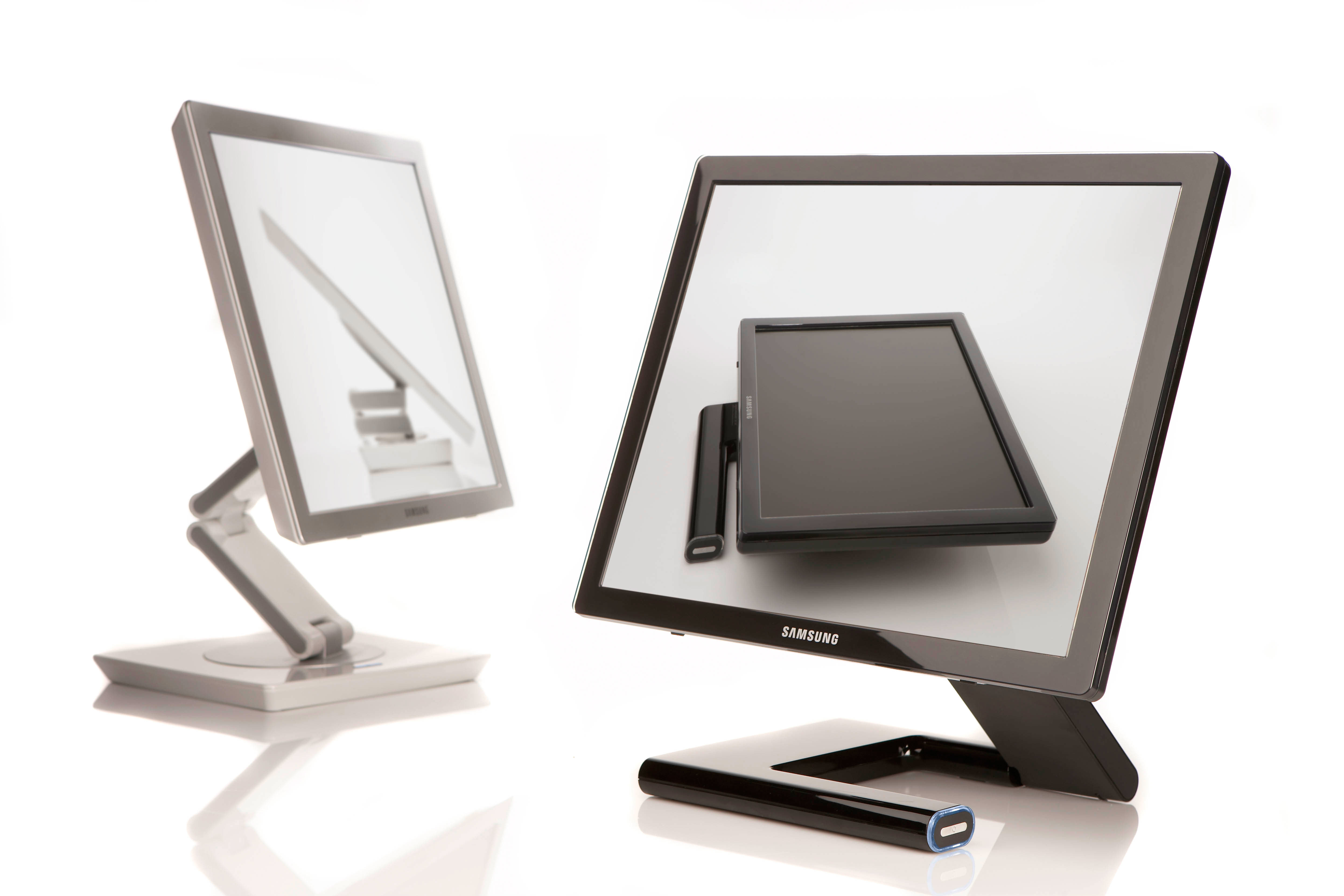
Samsung and IDEO created the industry-standard 970P and 971P monitors, featuring clean surfaces, contrasting textures, and a simple design for a premium look and feel. Designed with IDEO founder Mike Nuttall, they won both the 2009 iF Award and a 2007 IDEA Gold award.
Brand awareness for Samsung Memory
Wanting to raise awareness about Samsung Memory’s products that enhance the performance of electronic devices, IDEO and Samsung designed a humorous campaign that highlighted consumers’ need for Samsung Memory.
SimpleMedia and TotalMedia home entertainment concepts
IDEO and Samsung designed two concepts: SimpleMedia combined a computer, television, DVD, fax, and telephone; TotalMedia featured an adjustable screen and LCD projector combination. Although neither was ever produced, they were honored with design awards from ID Magazine and BusinessWeek, respectively.
SyncMaster 400TFT Flat Panel Display
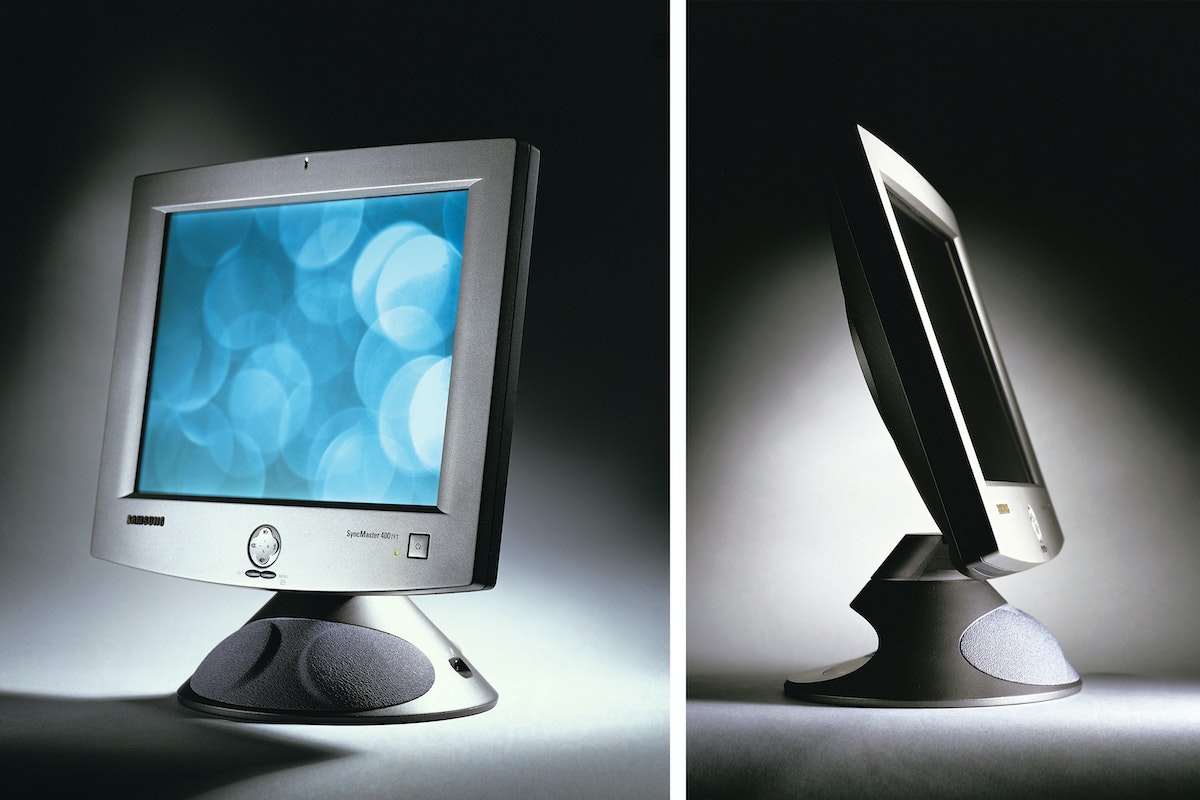
Samsung and IDEO designed the SyncMaster LCD flatscreen multimedia monitor to be thin and elegant, and it garnered several design awards in Korea, Germany, and the U.S. The British magazine T3 called it “the sexiest monitor we’ve ever seen.”

Designing a brand to scale big
A small, handmade line of granola lands on tables across the country.
Nana Joes, a beloved San Francisco granola company, was born from an avid surfer’s desire to bring healthy breakfast back to the kitchen table. Embracing the philosophy that good food is about wholesome ingredients prepared with care, the startup took pride in carefully scraping each vanilla bean by hand and soon gained a devoted following at farmers markets around the Bay Area.
As Nana Joes’ reputation grew beyond the hills of San Francisco, the company asked IDEO to explore how to take a small company and scale the brand for national distribution, while keeping its heart and handcrafted ethos at its core.

A team of IDEO designers set out to position Nana Joes for growth by developing a brand identity and packaging system that would resonate with customers and reduce operational complexity. The entire team went on factory tours and met with packaging suppliers to identify solutions that would be easily manufactured en masse, but still retain the familiar handcrafted feel. With mock-up packaging in hand, they hit local farmers markets to conduct live in-market prototyping with both loyal and new customers and met with retail buyers to get their real-time reactions to how the brand and packaging stood out on shelves.
The final deliverables included new branding and packaging for the entire line of granola, granola bars, and cookie products, as well as a guide for Nana Joes to operationalize the rollout by 2016.


How a legacy phone book company reinvented itself
An Australian directories company transitioned from makers of the first phone book to digital services and beyond.
The legacy company that produced the first phone book in Australia more than 130 years ago—and the disruptive change it represented—became directories company Sensis. As Sensis made the transition from a print directory to a digital service in recent years, the company came to IDEO to foster a startup mindset.
Together, Sensis and IDEO identified four ways for Sensis to become more agile: Focus on the company’s core skills, revitalize the product development process, develop insights about Sensis’ global competitors, and strengthen connections to current and potential customers.
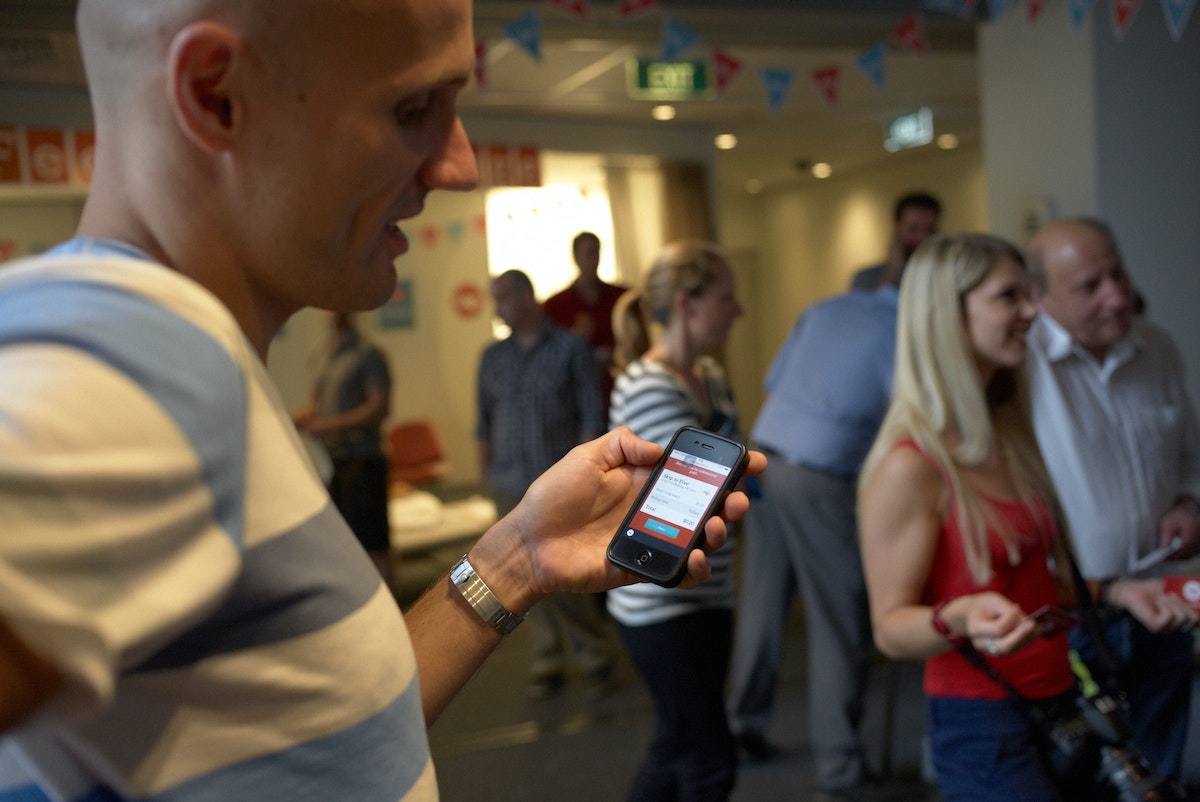
After prototyping more than 65 ideas, the team decided on an app, Skip, with which a customer connects remotely to her favorite café right from her phone, sends her order, and schedules a time to pick it up. Then she breezes past the line when she arrives at the café.
To understand how this app might work in the real world, the team fanned out across Melbourne, talked directly with café owners and their customers, gathering data, and watching behavior, then launched the live app just 10 weeks after developing the first prototype.
Watch: Team members from Sensis and IDEO share their experiences.
A real-time data service for food industry workers
Using design thinking to pivot from food-discovery app to food-data provider.
Fueled by a mission to “help everyone love what they eat,” the Chicago-based food-tech startup Food Genius created a consumer-facing mobile app that used a complex algorithm to track more than 16 million restaurant menu items and classify consumers’ dining-out behaviors.
After the year-old startup became part of IDEO’s Startup in Residence program in Chicago, the company changed its focus from consumers to the food industry.
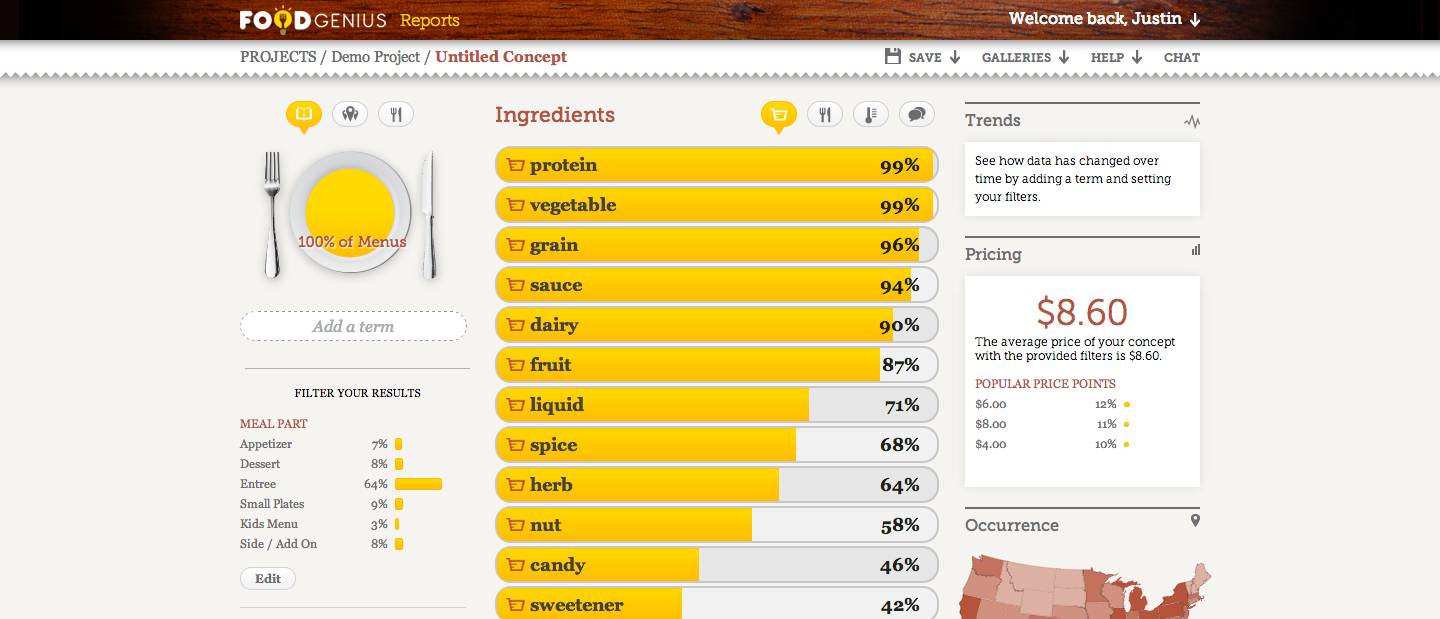
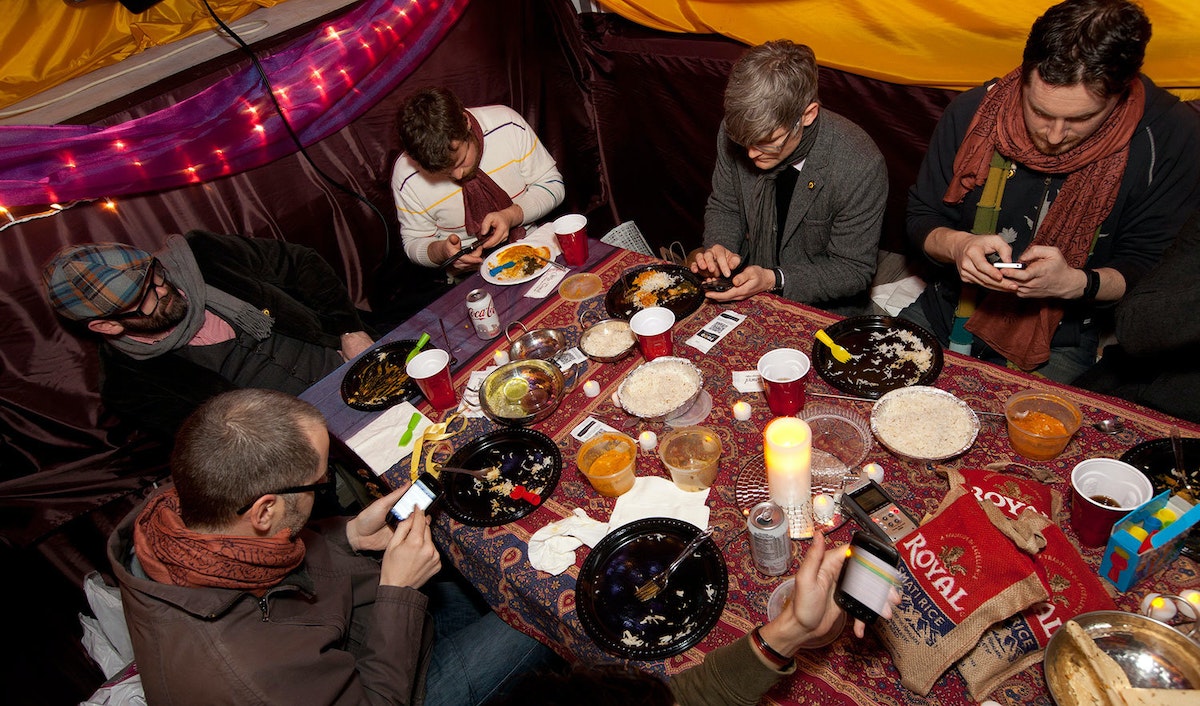
To build their food industry-focused platform, the designers collaborated on a number of business and technological development strategies, product road-mapping, and a prototype viral marketing experience called Curry Crawl to test the usability of the new API.
In April 2016, Food Genius was acquired by US Foods. "What was really striking about US Foods is that they take a very analytics-driven approach to their business," said Justin Massa, founder and former CEO of Food Genius. "They bought the technology knowing it's going to be able to do great stuff."
Design like you can hear the page
Tools of visual storytelling: Music and Calligraphy
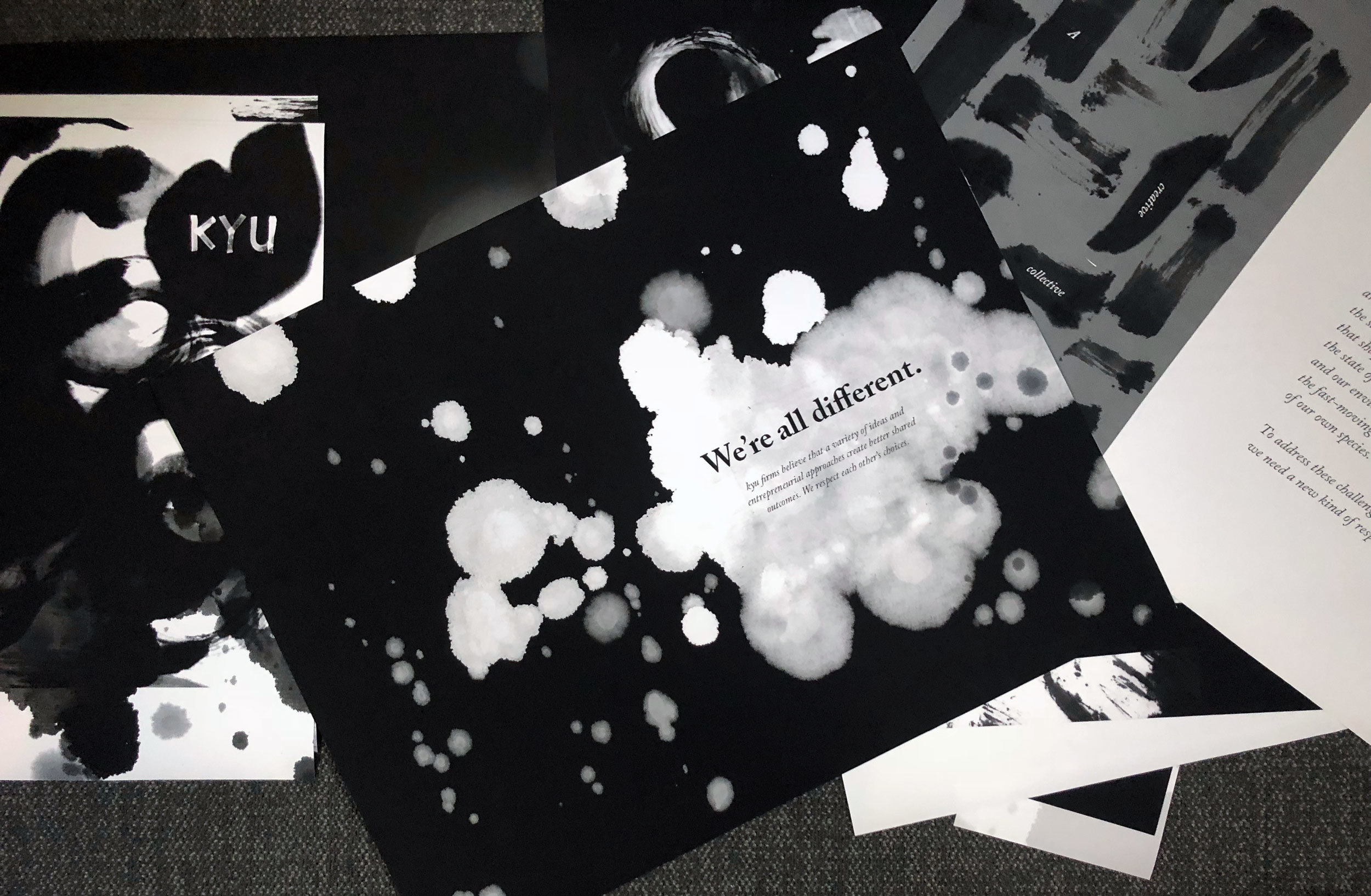
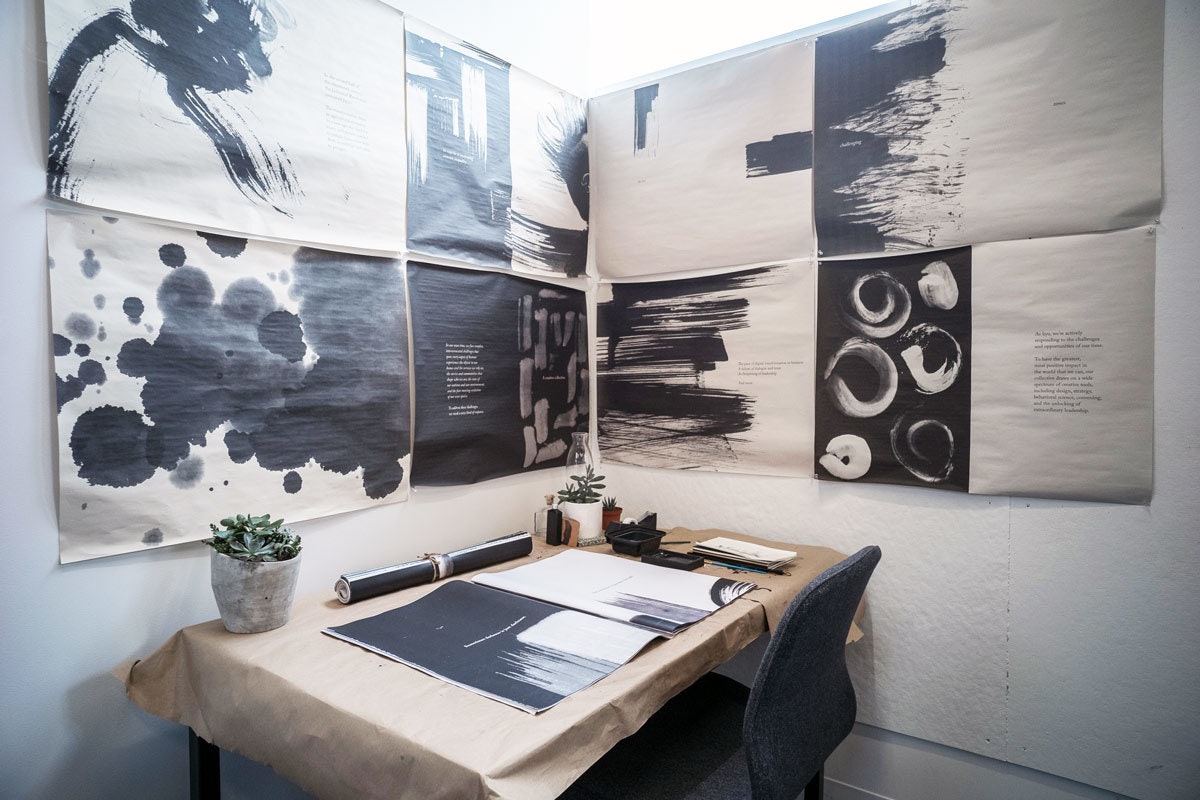
I had been asked to create a newspaper for kyu, the design collective of which IDEO is a member, and I was ready to perform.
My desire to explore the world using rhythm and sound on one hand and ink and paper on the other started when I was young. I was very quiet as a child. Instead of playing with friends, I created my own playground in a sketchbook. I listened to stories on a cassette player as I drew.
My mom, a violinist who played in an orchestra, taught me how each sound communicates a different feeling. Together, the instruments create a pleasing harmony.
I chose to play the cello, as its sounds comforted me. When I felt sad, I could play and the sadness was transformed into something beautiful. When I felt alone, the cello's mid-tones communicating with and supporting the other instruments made me feel less isolated.
I went to high school in New Zealand and focused on photography, art, and music. Playing in orchestra, string quartet, chamber orchestra, and musical show orchestra required rigorous practice, and I discovered that it was only with disciplined repetition that the ear could learn to hear the subtle distinctions between an almost perfect note and an imperfect one, between good enough harmonizing and exquisite music. Constant practice not only created perfect harmony, it also trained the soul.
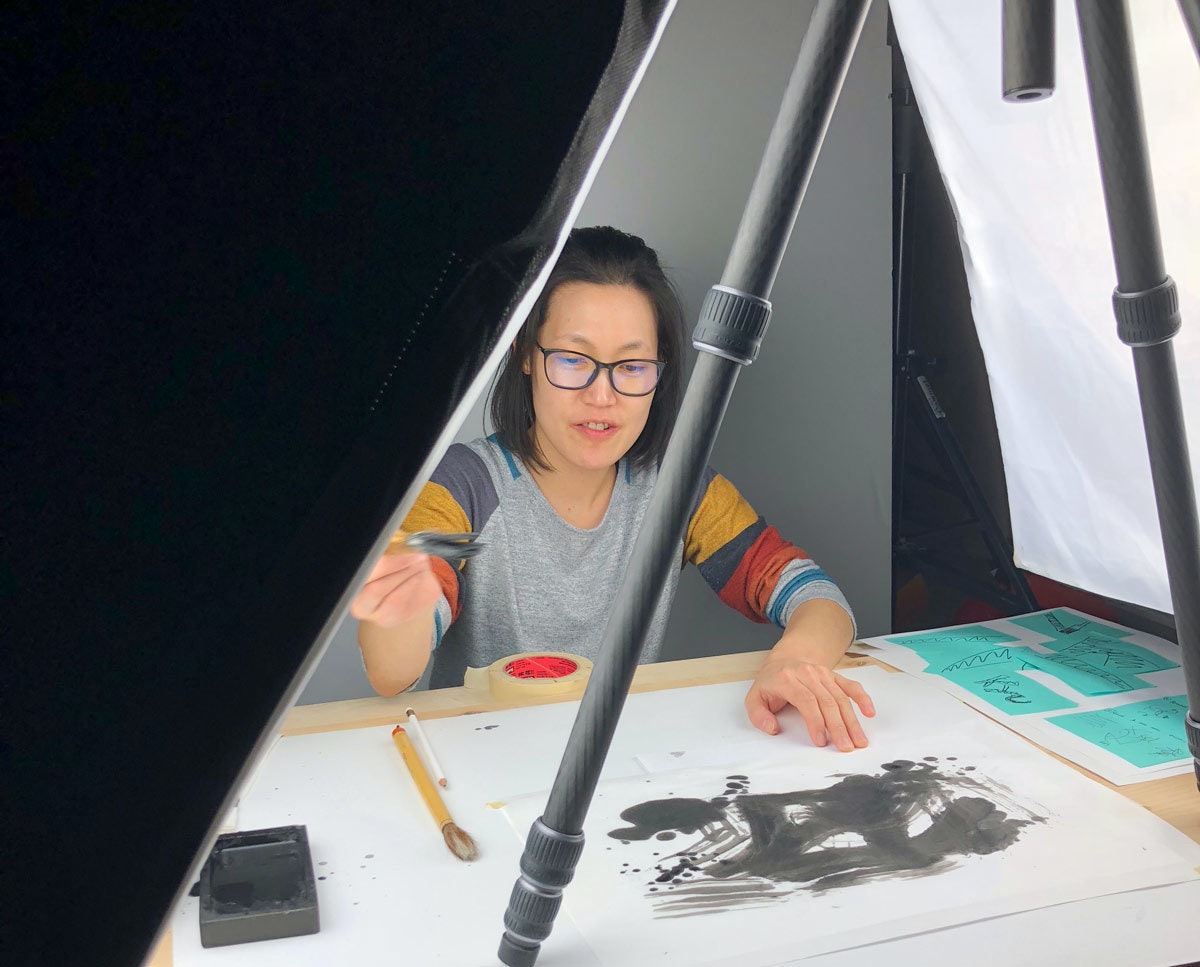
Like music, calligraphy embodies many feelings. That was my father’s gift to me. He guided my hand, drawing with me. At first, I stood in his shadow, but I gained confidence over time. The calligraphic technique I now use involves moving very fast, every stroke following right after the one before, never taking time to look back.
The companies that make up kyu share a belief that creative collaboration will yield new solutions. To visualize the collective, I drew the first dot directly with the brush and then started to draw circles. Dots and lines, the basis of musical notation, helped me orchestrate the story visually. Rough strokes conveyed complexity and sometimes chaos, while the diffusion of ink into paper illustrated the calm conclusion of a journey. When the magazine reached a crescendo, the dots began to jump around wildly. The combination of ink and water unified sense and sense, and the story of the newspaper came to its happy end.
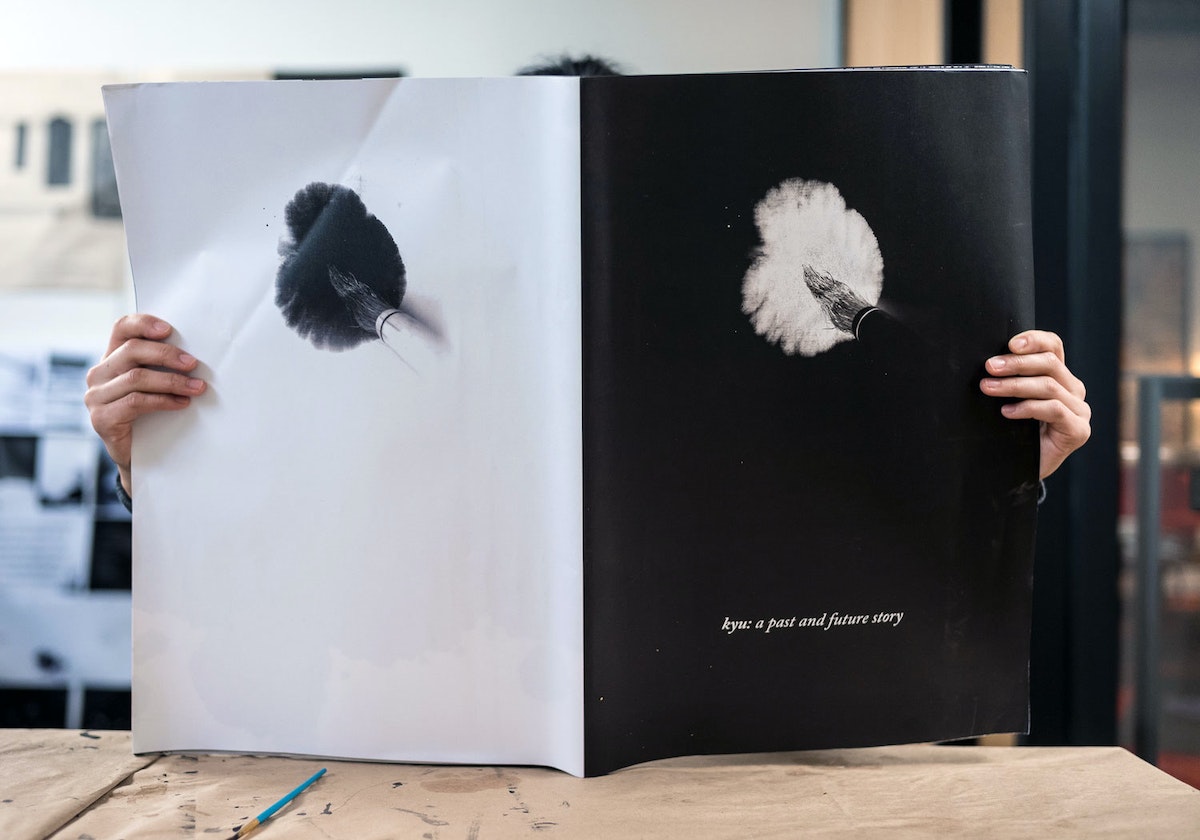
Just as each calligraphic mark and each musical instrument is unique, so too is each company in the kyu collective. Independent, but also located within the same “circle.” Sometimes the music of a page is the message.
“Music is the ultimate teacher.” ― Wassily Kandinsky
The day I got the assignment, I ran to the art store and bought brushes, ink, and a grindstone. I set the tools on my desk, which became the stage. I was the conductor, interpreting the text like a musical score.

How to make cinemagraphs with your iPhone
How to master the art of the moving image
The secret is in iOS 11 Live Photo Effects. To make your own, access this feature, take a live photo, then, in the photos app, swipe up to reveal the Live Photo Effects.
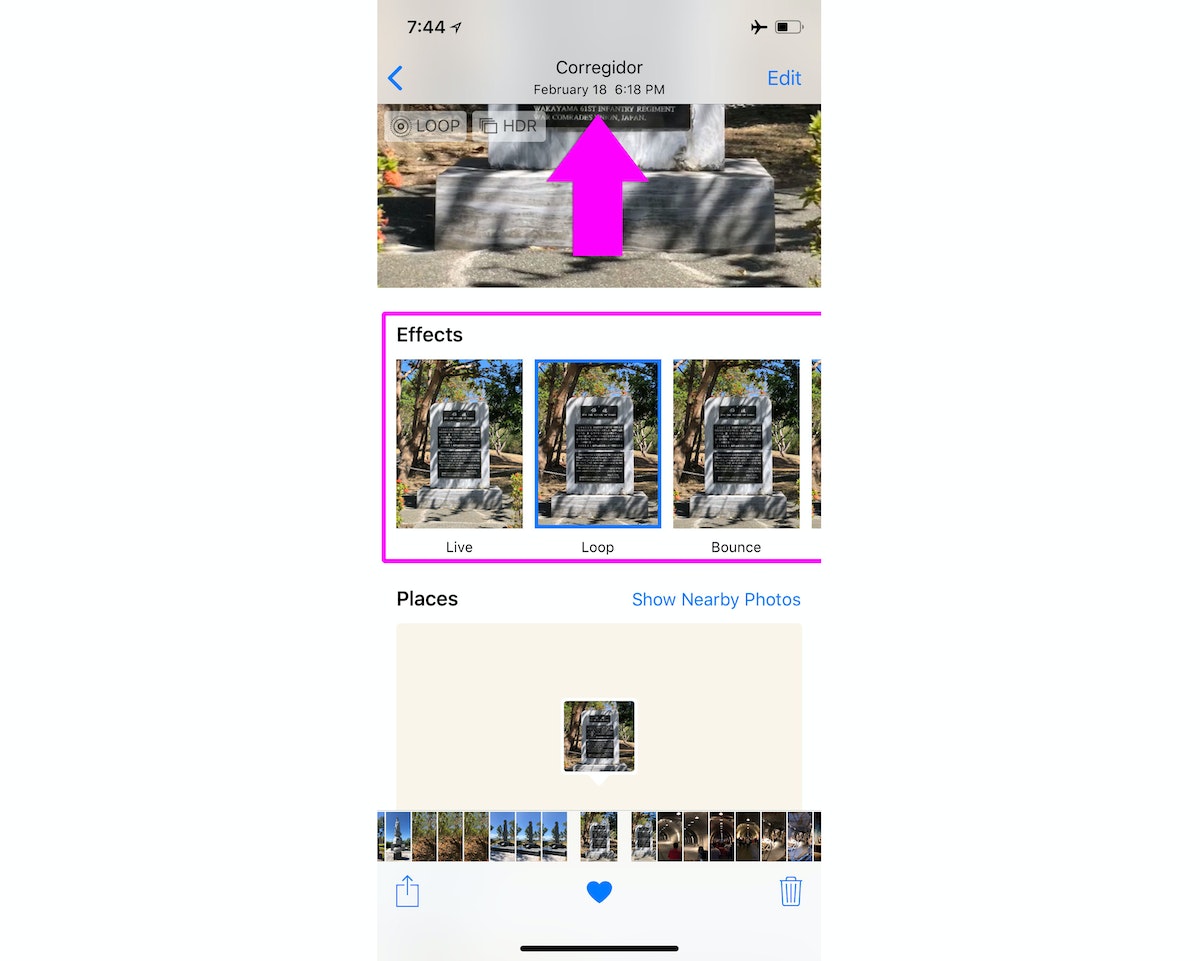
Easy, right? Yes and no.
Creating a live loop is easy, but creating a cinemagraph requires a bit more planning. The difference is in the framing—too much movement, and you’ll just get a live loop. Here are a few tips to ensure you nail the combination of still photo and limited motion:
- Find the shot: To create a beautiful cinemagraph, find a shot where most of the image will be still, and only a piece is in motion—perhaps a tree blowing in the wind, or raindrops on a puddle. If there’s too much movement in the frame, the shot will feel chaotic.
- Plan it out: While it’s possible to pull off a clean loop without a tripod, don’t just point and shoot. I like to turn on the grid in my photo settings—these lines help me see if I’m holding still or wobbling slightly (I always use the grid to help create a level horizon or position subjects, anyway). Try to lock your body by leaning on something, or even by putting the camera on a table to keep it as still as possible.
- Stage it: Don’t leave it to chance! When you can, control the shot. The pool shot below took a few tries, and it really helps that there were no other people wandering through.
Sharing the live loop
So you’ve perfected your technique and have a gorgeous loop to share! The problem is, iOS doesn’t exactly make it easy.
If you try to share natively to Instagram, it’ll tell you the loop needs to be three seconds or longer. And iOS doesn’t offer a lot of options to help—there’s no easy way to export your Live Loop into a format that’s shareable for Instagram. I found this out the hard way while I was traveling in the Philippines, and since I didn’t have my computer with me, I had to figure out a way to solve for this using only my phone.
One of my goals was to use only free apps—buying a bunch of apps I wasn’t sure were going to work didn’t sound very fun. After much Googling, trial, and error I created the workflow below. The first time through might take you a few minutes, but now that I’ve done it a few times, I can go from live loop to Instagram in less than two minutes.
Get the apps
First, download these three free apps:
- Lively: Exports your Live Loop as a video
- Splice: A free video editor that lets you extend the length of the loop to meet Instagram’s minimum requirements
- Video Crop: Removes any letterboxing (black bars) in the video export
1. Lively
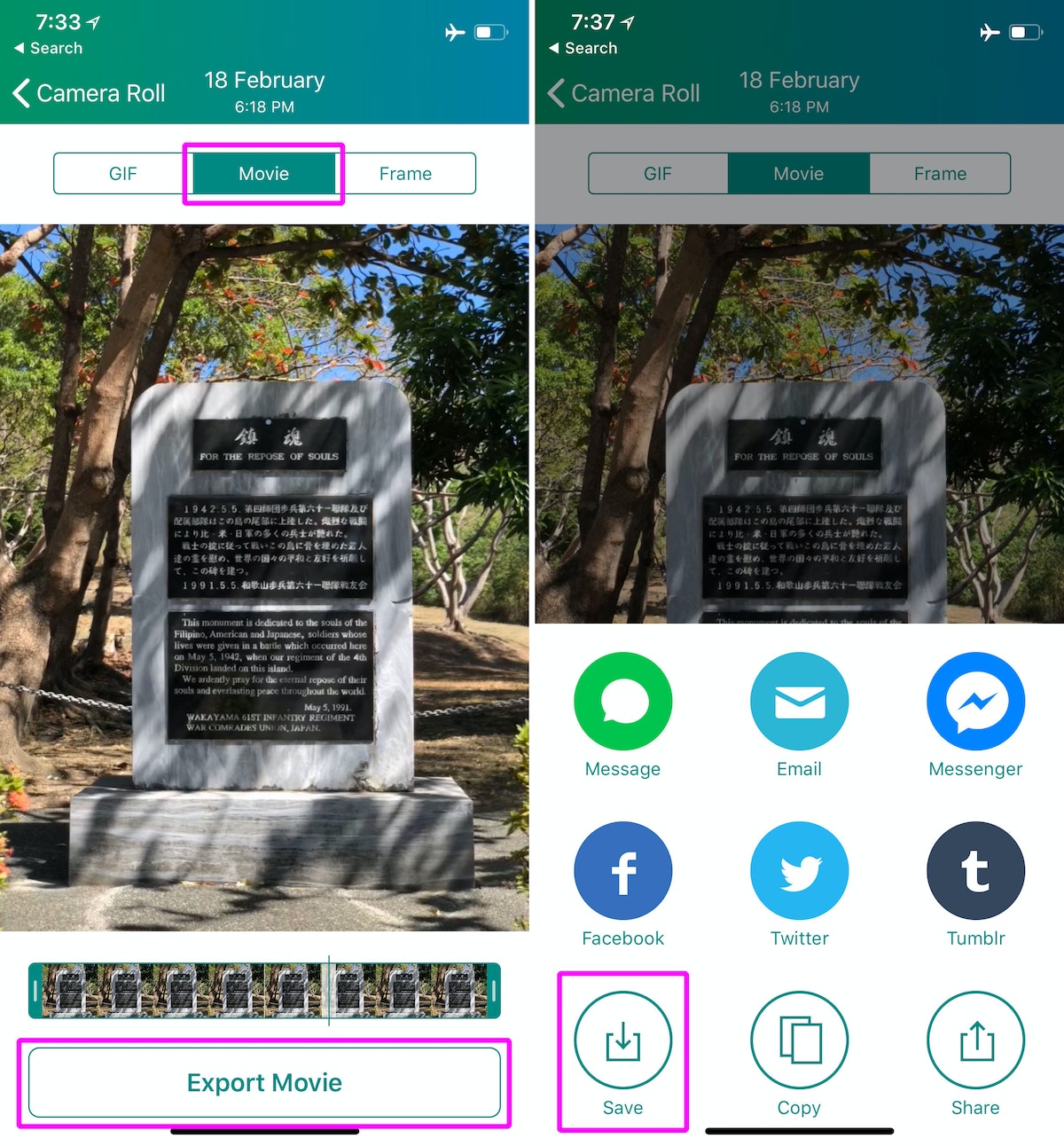
Start by using Lively to open the loop you want to export. In the top of the export panel select “Movie” and then tap “Export”, then save the movie.
2. Splice
In Splice, tap the + icon on the top right to create a new project and select the video you exported from Lively. Click “Add (1)” on the top right to add it to your project.
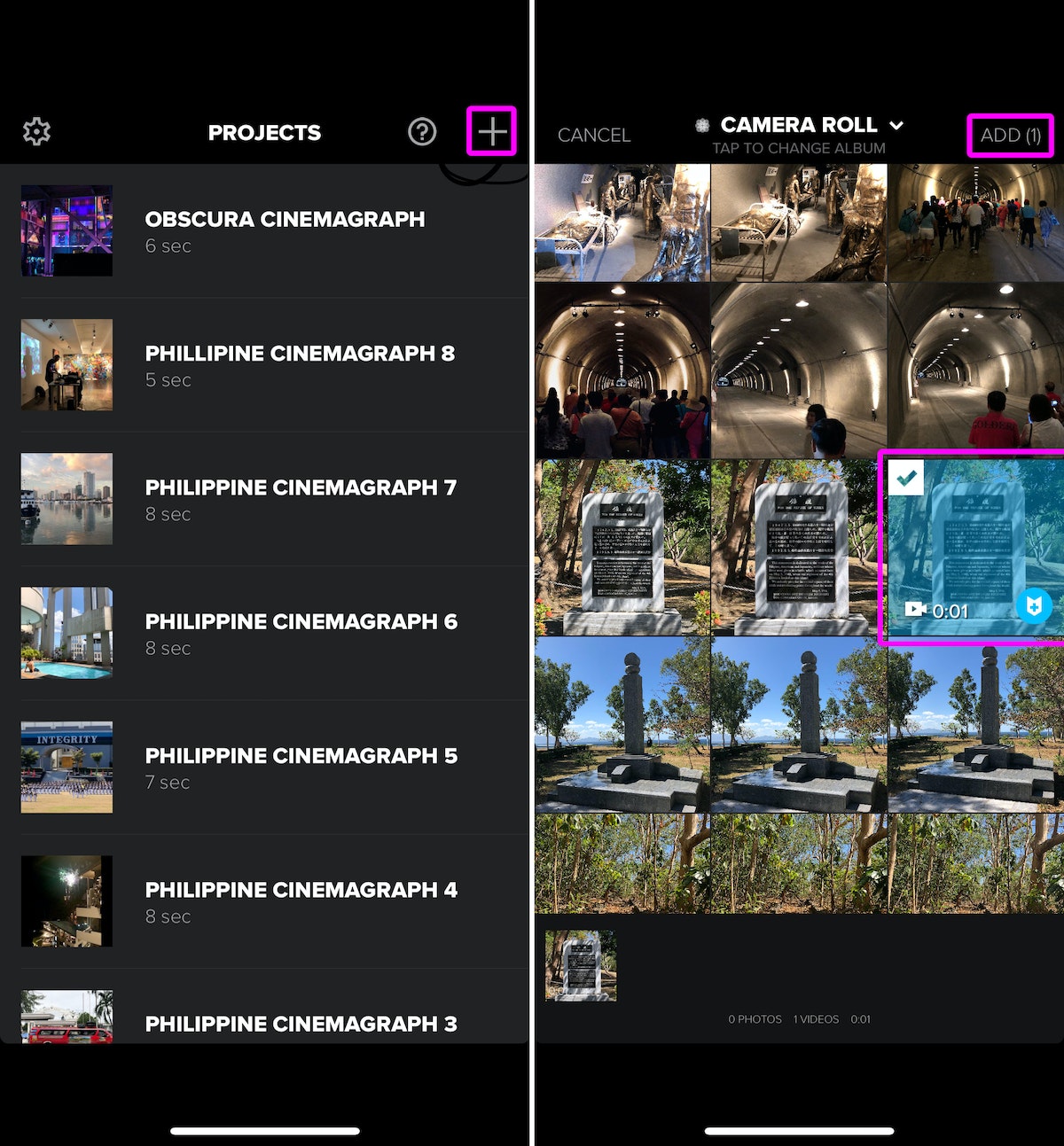
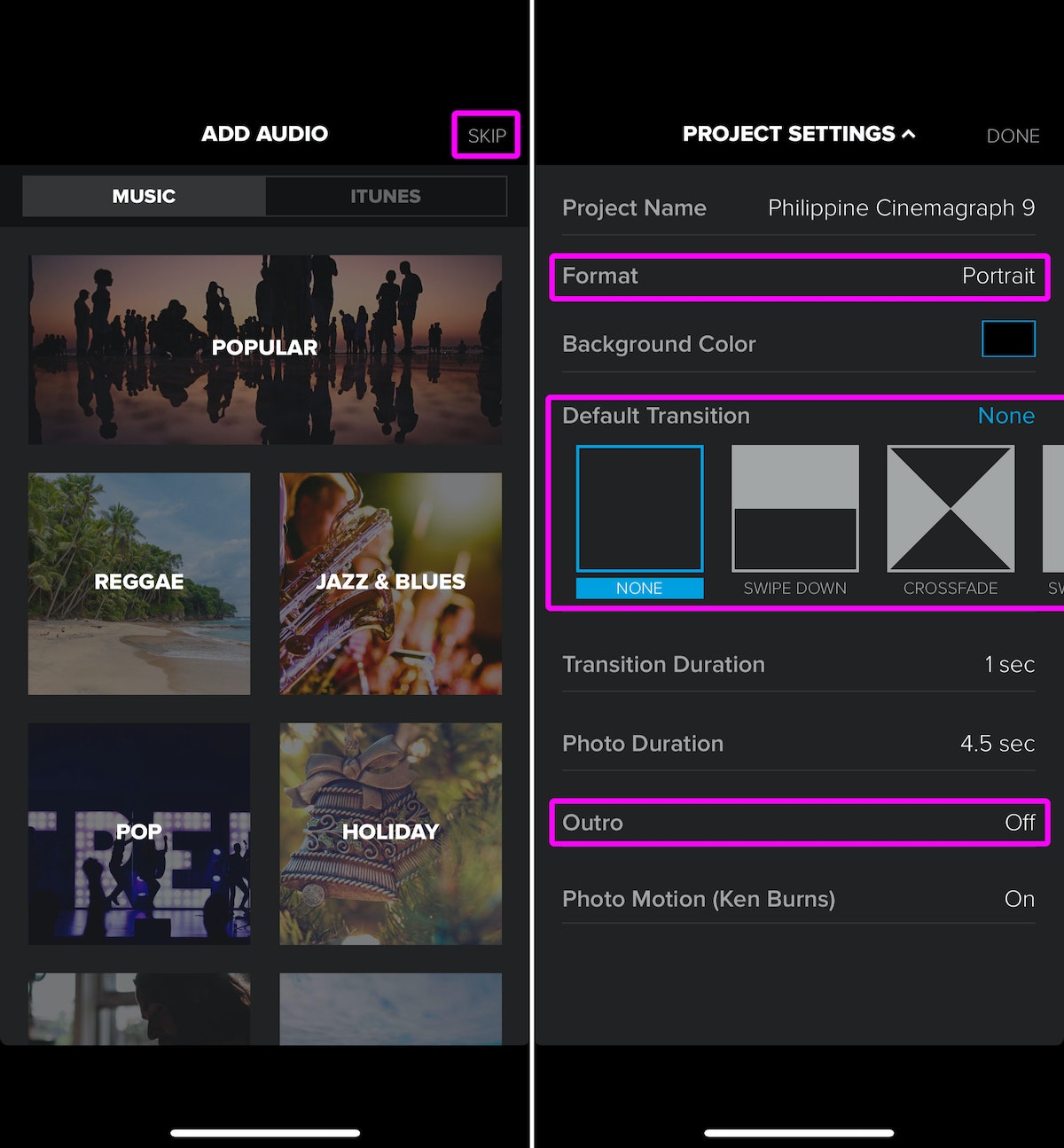
On the Add Audio screen, tap “Skip” on the top right.
Name it however you like, and use these settings:
- Format: Select Landscape for wide photos or Portrait for tall ones
- Default transition: set to “None”
- Outro: set to “Off”
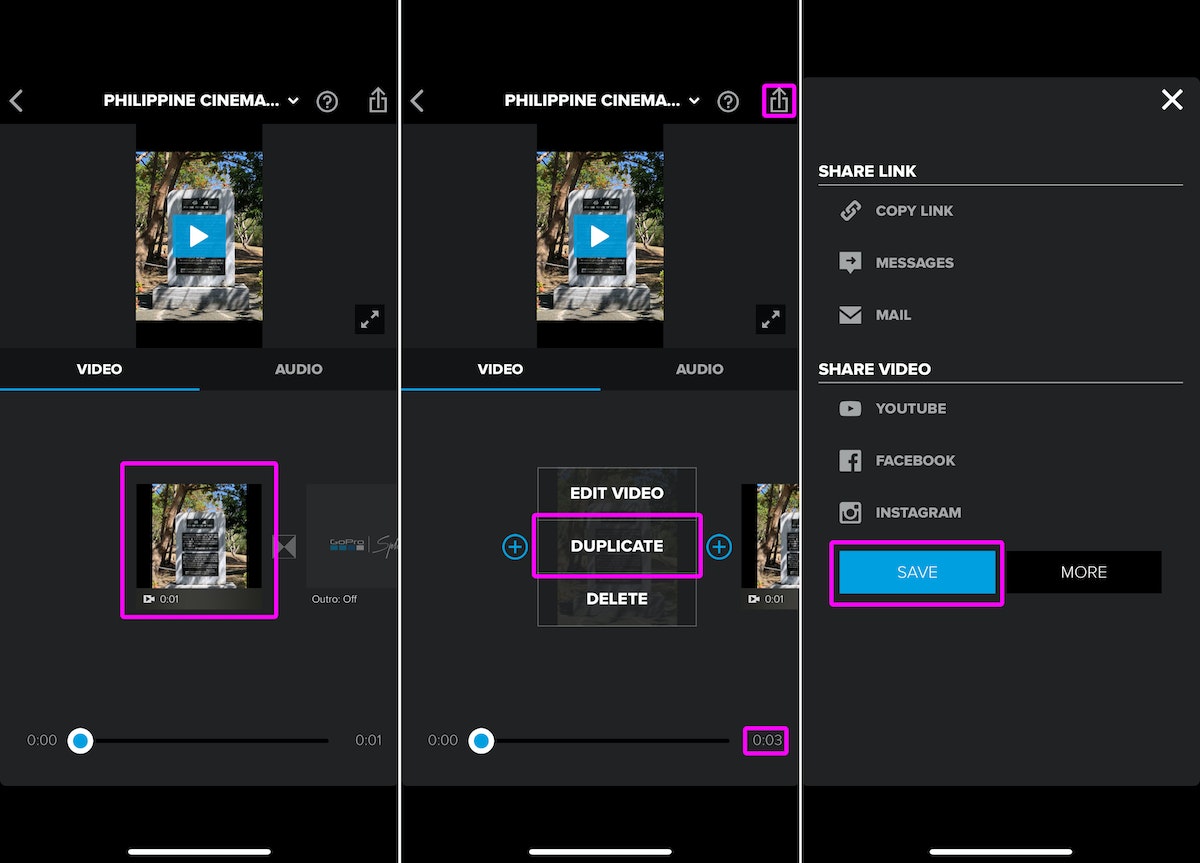
Now you should be in the editing screen; all you have to do is tap your video and select “Duplicate.” Do this three or four times until your video duration is at least 0:05 or longer.
Lastly, tap the “Export” button on the top right and select “Save.” I always pick 1080p HD for the best quality.
3. Video Crop
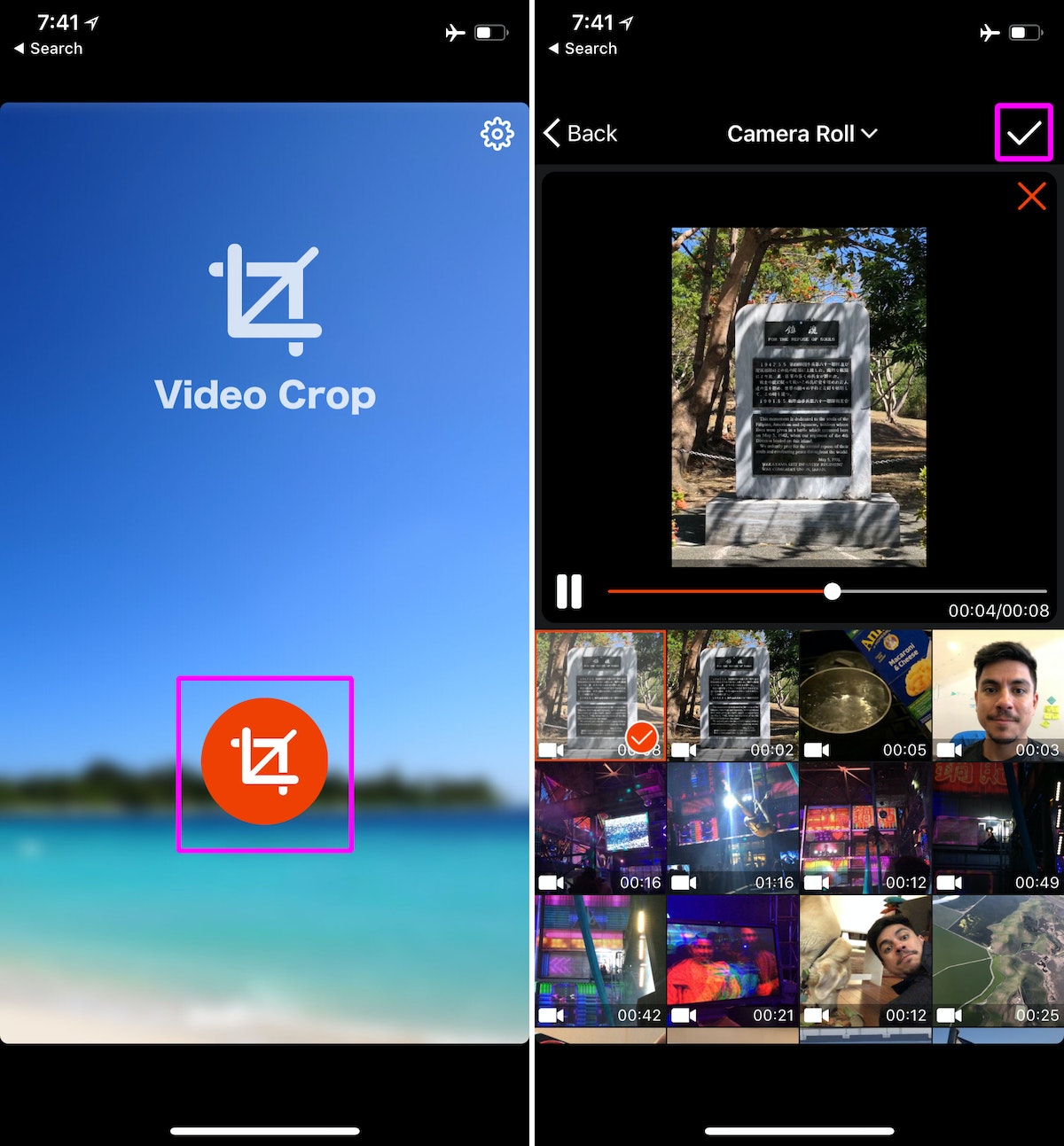
One last step: Remove the letterbox (those pesky black bars) on the side of the exported video. Open “Video Crop,” tap the big red button, select your video, and tap the check mark on the top right.
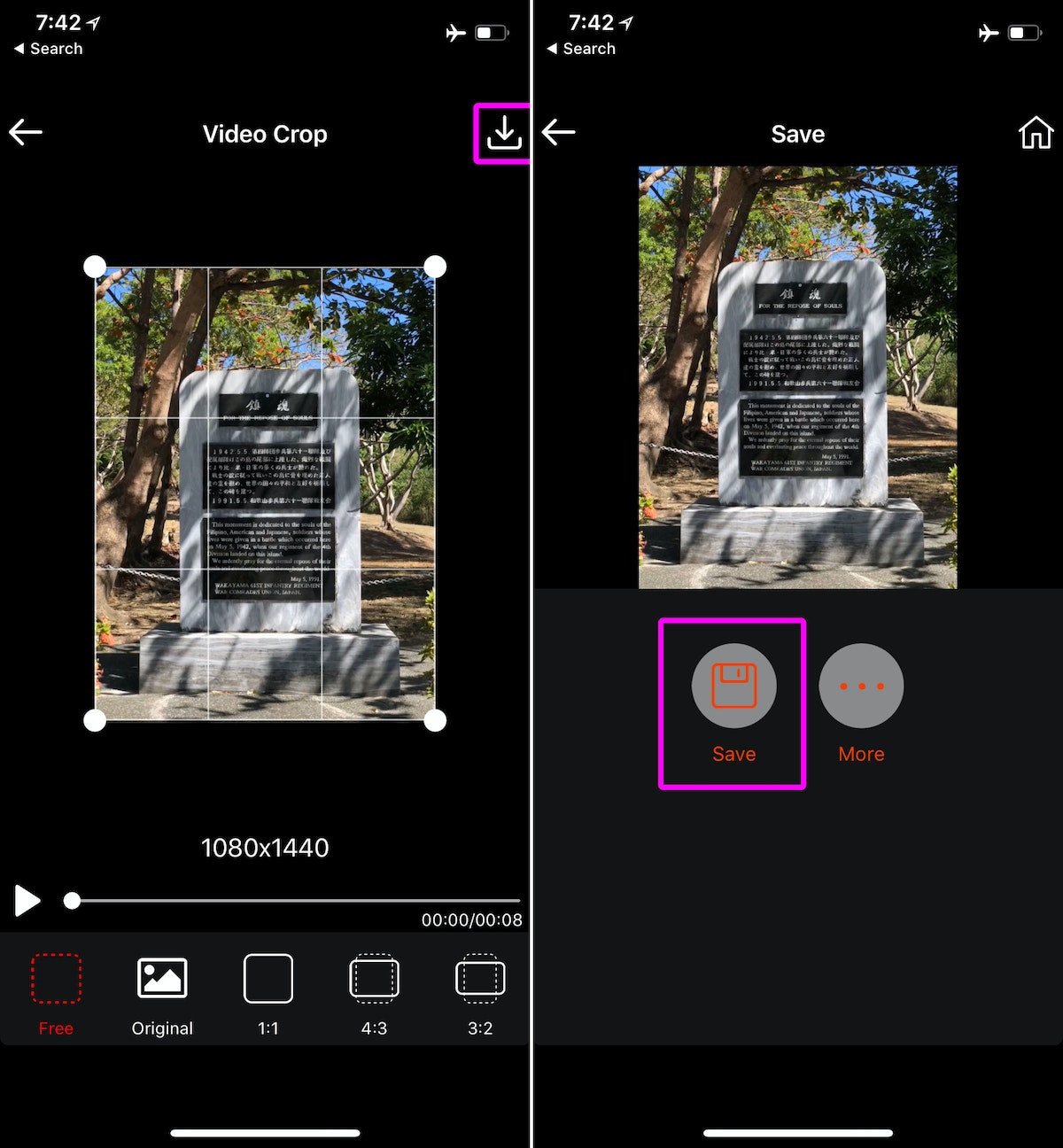
Now use the crop tool to trim off the black bars, then tap the export button on the top right. When it’s done processing, tap “Save.”
Very Instagrammable
Cinemagraph loops look amazing on Instagram or Facebook, and they give you a unique way to share your experiences (Let’s be real—we’ve all seen enough Boomerangs.)
It takes a few steps, but once you get the hang of it, the process is quick and easy. And when your friends ask how you did it, you can point them this way.
I’ve always loved cinemagraphs—those endless, hypnotizing loops where part of the frame is still while some areas are gently in motion. When I discovered that I could create these loops natively with iOS 11 (iPhone 6S or newer), I couldn’t wait to try it out.
How Sweden is sparking a mobility movement
3 design lessons from Sweden's sustainable mobility initiative
Through the Swedish Energy Agency and its partners, the nation is focusing on reducing pollution from the transportation sector. It plans to reduce (but not entirely eliminate) the need for private car ownership by improving alternative travel options for people in everyday life.
In more wonky language, the focus is on sustainable mobility as a service, an approach that brings all means of travel together. It combines options from different transport providers into a single mobile service, removing the hassle of planning and one-off payments. It’s an environmentally sound alternative to owning a car, and an approach to mobility now being propelled by urbanization, economic shifts, artificial intelligence—and the social and economic impacts of climate change.
Through its initiative, A Challenge from Sweden, the Swedish Energy Agency invited IDEO to join the effort. Here are three lessons we learned along the way through working alongside our Swedish counterparts.
1. Get outside
Swedes live for fresh air and natural landscapes. Even the most committed Swedish city slickers retreat to a cabin at the weekend, or dream of an escape to the countryside. The natural world is imagined and felt as replenishment—as a valuable resource to be respected and enjoyed.

For our design team, it was a reminder to take our research far beyond Stockholm or Gothenburg, especially as we considered designing for a nation of travelers. We took long train rides to meet people in smaller towns, and walked as much as we could. It felt good, and it was necessary.
Going outside also means seeking out inspiration from beyond your own context. We were inspired by examples of civic and societal change from around the world, and brought them into the project, almost as if we’d discovered precious acorns on the forest floor.
2. Engage tradition
Cultural traditions and norms might seem strange or twee to outside eyes. But they almost always hint at a deep societal agreement. We discovered that in Sweden, for sure. Fika is not merely a coffee break during the day: it’s an invitation to pause, to reflect, to reconnect with one’s thoughts or emotions, and to restart.
We introduced fika in our project space, and observed it when we were with the team from Sweden. It added a note of calm and confidence to our work and to our individual energies, even as the work accelerated in intensity towards the end.
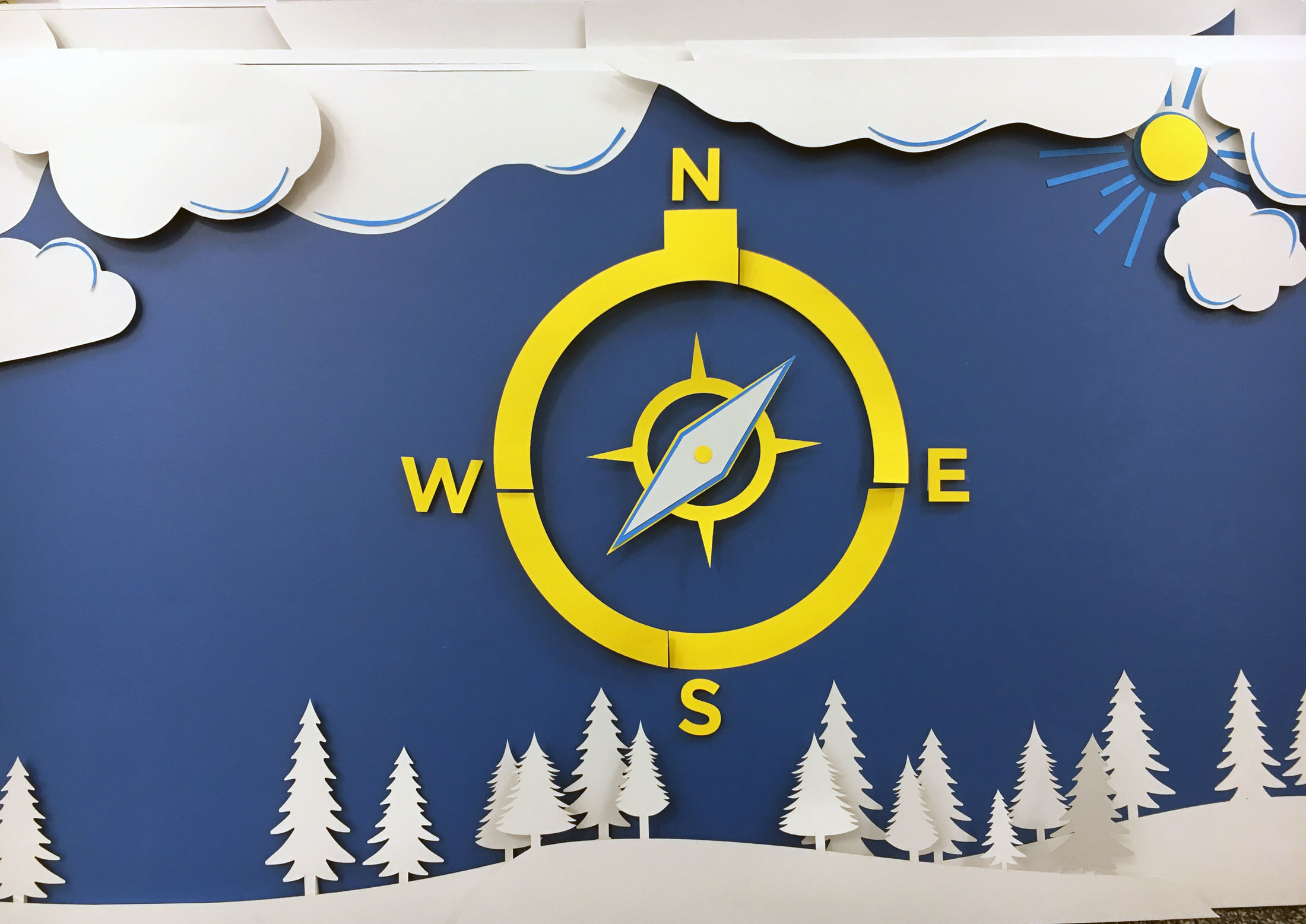
Similarly, we drew on Nordic storytelling tradition to share the story of our research in Sweden. Instead of using dry descriptions to describe the different ways Swedes might be triggered to make new transportation choices, we told a three-dimensional fable that told the story of a mythic waterfall, and the different paths that four people took to find it and use it.
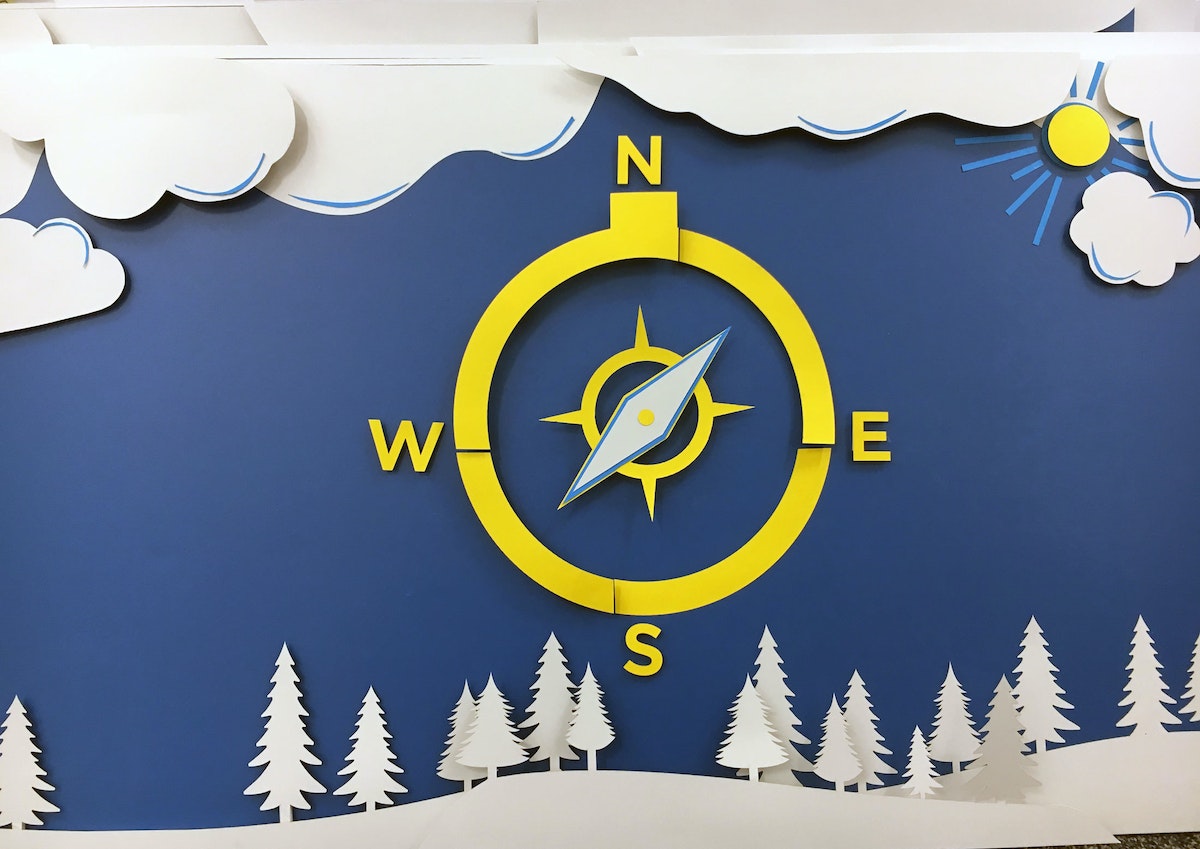
The fable allowed us to invite our collaborators into a instinctive understanding of what we’d all learned together, as well as a logical one. The story resonated, it brought joy into an otherwise serious, complex topic, and it was easy to repeat.
3. Be brave
The scale of Sweden’s ambition is remarkable, but—in Sweden itself—commonplace.
Swedes recognize that their country is small, their population tiny, and their contributions to global climate change negligible. But they also understand that, by leading with bravery, they have earned outsized influence in the world. Other countries look to them as an example of how to set goals and make change in service of healthy, sustainable growth.
Sweden has set a goal of achieving a fossil neutral transportation sector before 2030. That’s a big ambition, and an exciting one.
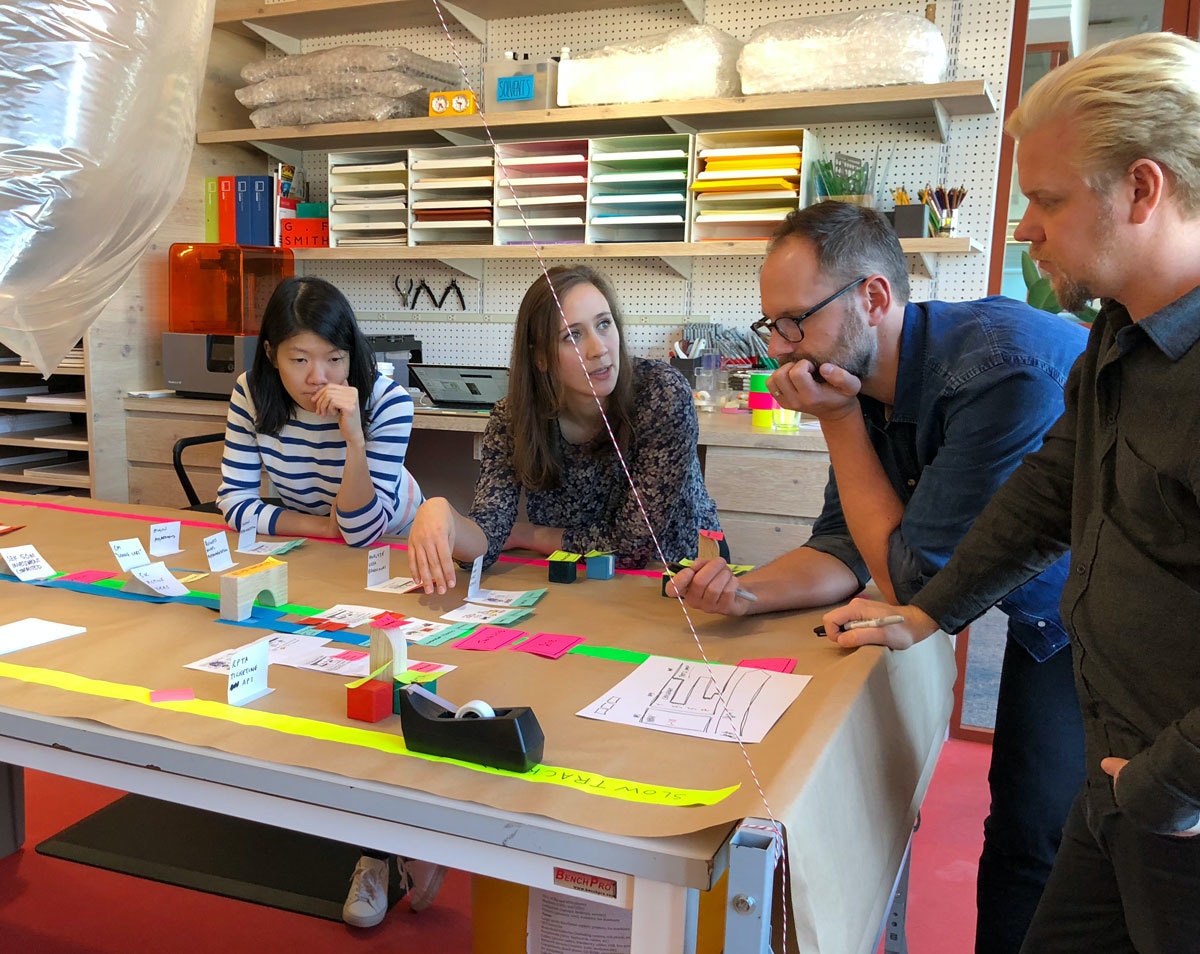
Through a global innovation challenge, Sweden is now inviting engaged political leaders and some of the world’s most capable companies to help make sustainable mobility as a service a reality.
In other words, Sweden is going places fast.
Find out more about Mission Innovation 3 and A Challenge from Sweden.
Through IKEA, Sweden has already transformed the world of contemporary furniture and home furnishing. Now Sweden is taking on an arguably even more ambitious goal: leading the world in tackling some of the thorniest causes of global climate change.
Designing for blockchain: Three ways to get started
3 design challenges to explore the future of blockchain
Here are three juicy ones to get started thinking more deeply about blockchain, the unique experiences the technology enables, and how it could be integrated into our everyday lives.
1. Designing for ownership
The beauty of cryptocurrency is that it’s possible for you, and only you, to have access to your crypto wallet and assets. That means you get to have true ownership; your “account” information isn’t stored by a bank or central authority that can use or take away your assets at will (think of governments seizing funds, for example). Instead, the data is stored in a universal ledger across a distributed network that can independently verify who owns what—so it’s much more transparent than most of today’s banking systems.
Of course, that power also comes with great responsibility. There is no password or account recovery if you lose or reveal your private key (sometimes expressed in the form of a 24-word phrase), which is used to “unlock” your wallet. Giving that away is like dropping cash on the street—you likely won’t get it back.
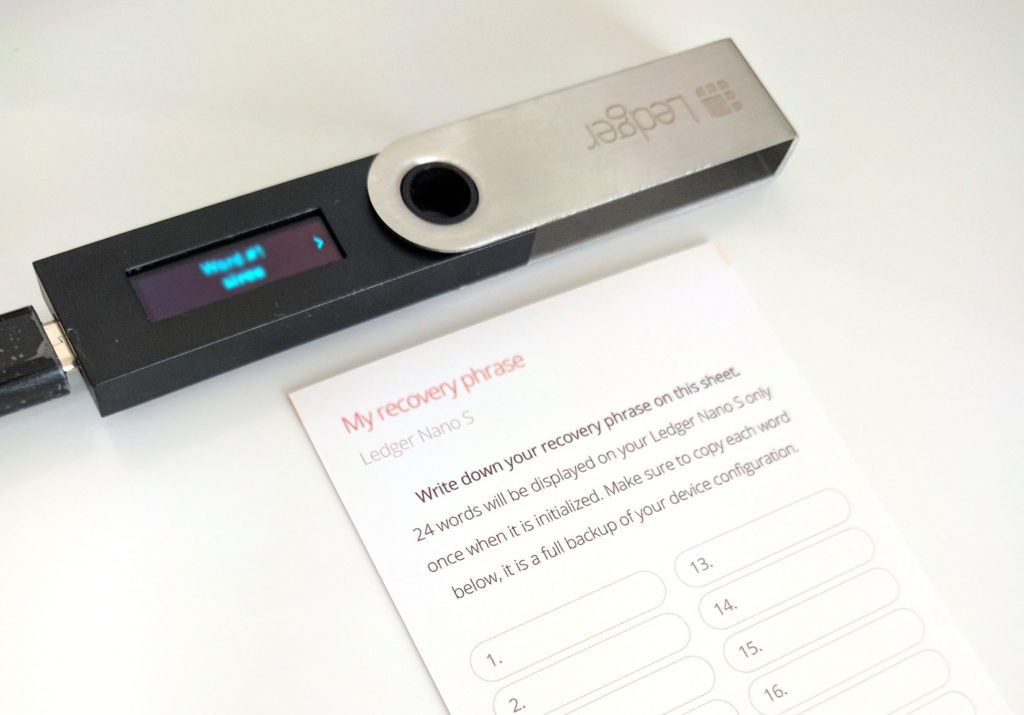
Challenge: Design secure and user-friendly ways to store private keys.
A few questions to get you started:
- How might we design better ways to securely store private keys that balance security (keys cannot be easily copied or stolen) and ease of use?
- What are some digital and physical features for secure storage that we could utilize?
- How might we design ways to securely transfer ownership of private keys in case of loss or death?
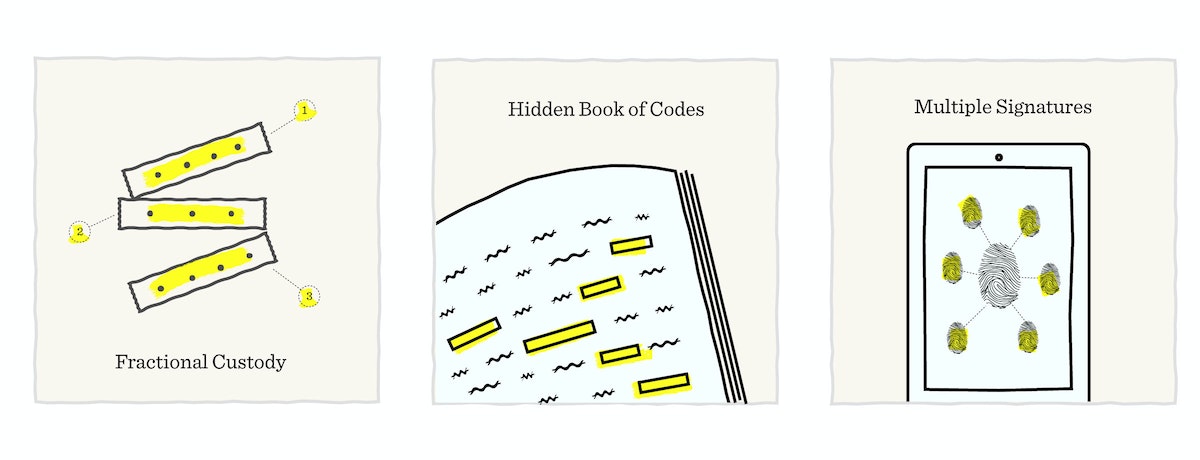
Some inspiration:
- Fractional Custody: What are some ways you could divide up and distribute private keys among five of your most trusted friends and family members?
- Book of Codes: Inspired by Jonathan Safran Foer’s Tree of Codes, what if custom die-cut cards could reveal your passphrase when placed over the right book?
- Multiple Points of Verification: Could you have a mobile app that verifies your identity through multiple social networks before revealing the passphrase?
2. Designing transparency in network transactions
Every time you transact in Ethereum, a platform for blockchain applications, you have to set your gas price—the amount you are willing to pay for the computation needed for your transaction be confirmed. An easy analog is paying more for expedited shipping to get your package mailed there sooner.
Those prices and speeds are not determined by any one party (like FedEx, for instance), but by how busy the network is, how many other transactions are waiting to be confirmed, and what gas price those other transactions are using. But information about current network state is rarely communicated to the user—adding frustration and confusion when setting your best guess at gas price. Too low? Your transaction might not go through for a long time (or ever). Set it too high, and you risk paying more than you need to.
Remember the early days of eBay, before they included shipping rates in transactions? You had to wait for a day or so until the seller got back to you with the actual shipping costs. Sometimes it was what you’d expected, sometimes it bit you in the butt.
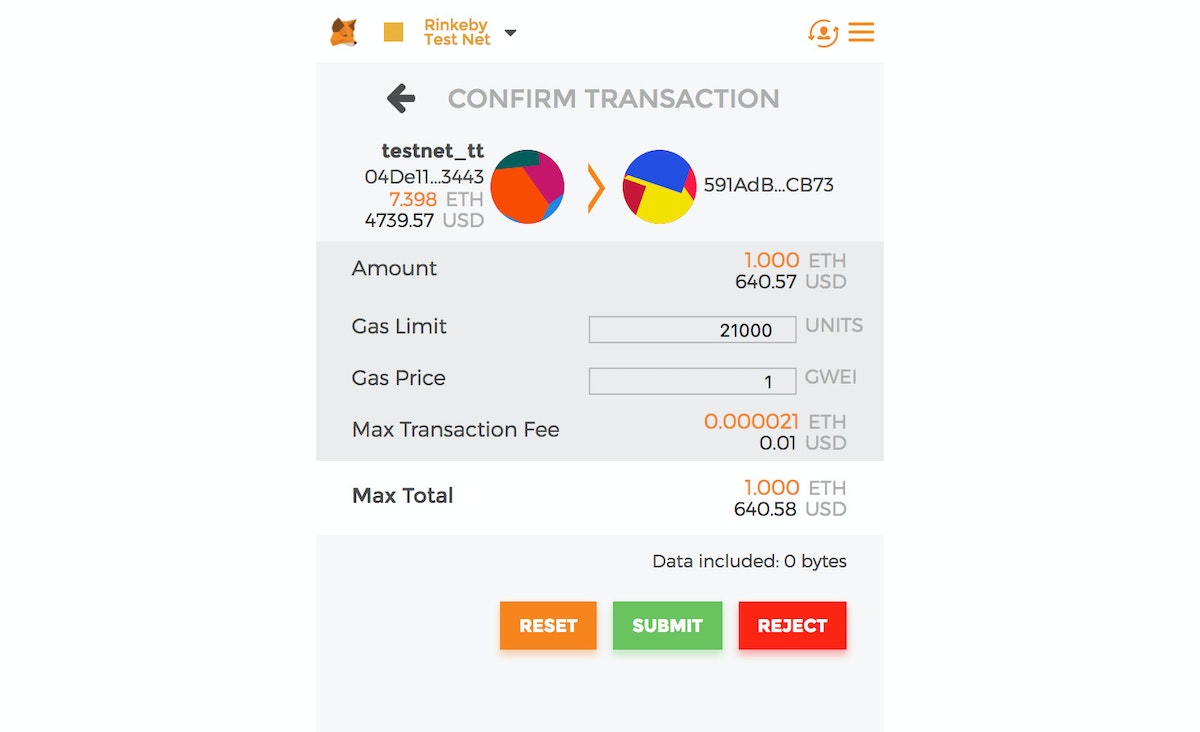
Challenge: Design better ways to help users make a decision about transaction costs, or find ways to abstract it away all together.
A few questions to get you started:
- How might we make transaction costs and prices more transparent to the user?
- How might we reveal high-level and useful data on network status?
- How might we better automate gas estimates to remove friction from decision-making?
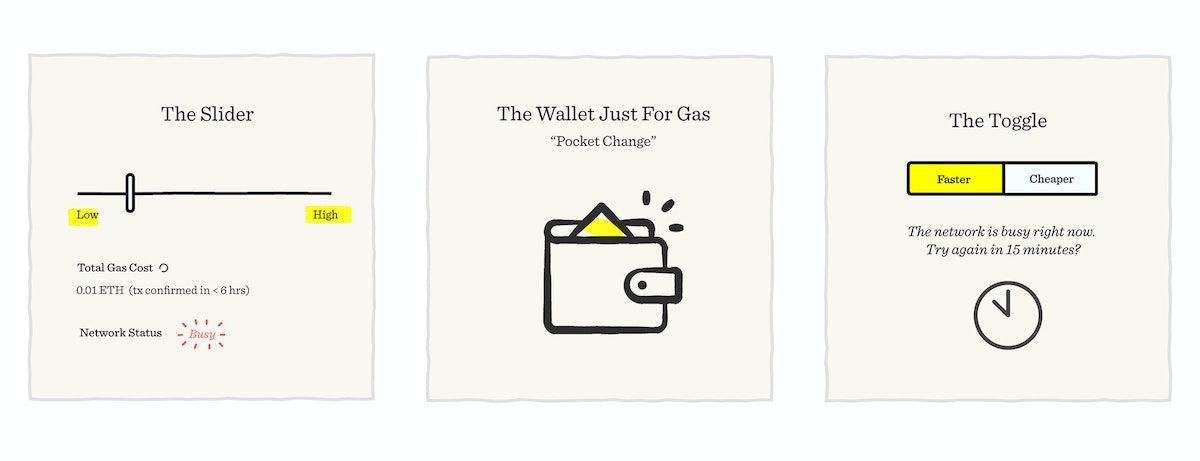
Some inspiration:
- The Slider: Could the user first select their desired transaction speed to reveal its implied cost?
- The Wallet Just for Gas: Could there be a separate wallet just for transaction costs, which gets topped off at regular intervals?
- The Toggle: Could you offer the user be a simple choice—speed vs. value?
3. Designing for readability
Crypto wallet addresses currently look something like this: 0x04De111196aCE9764b6eCAcC4f849b6b59193443—a string of 40 characters, which serve the function of being cryptographically unique (i.e. impossible to guess). While there are experiments like ENS, a human-readable domain system for blockchain addresses, they aren’t widely adopted yet. Sending a crypto transaction today means checking and double-checking 40 characters that look like gobble-de-gook. And you need to get it right the first time, since there are no refunds or rollbacks for crypto transactions.
That’s like having to type in the bank account number of every merchant or person you’d like to transact with, every single time. If it’s off by one digit—cue instant regret.
The challenge: Design ways to display blockchain addresses in a more readable or recognizable format.
A few questions to get you started:
- How might we use algorithmically-generated images or symbols to create visual recognizability?
- Are there industry standards (like checksums) that could help reduce errors in address entry?
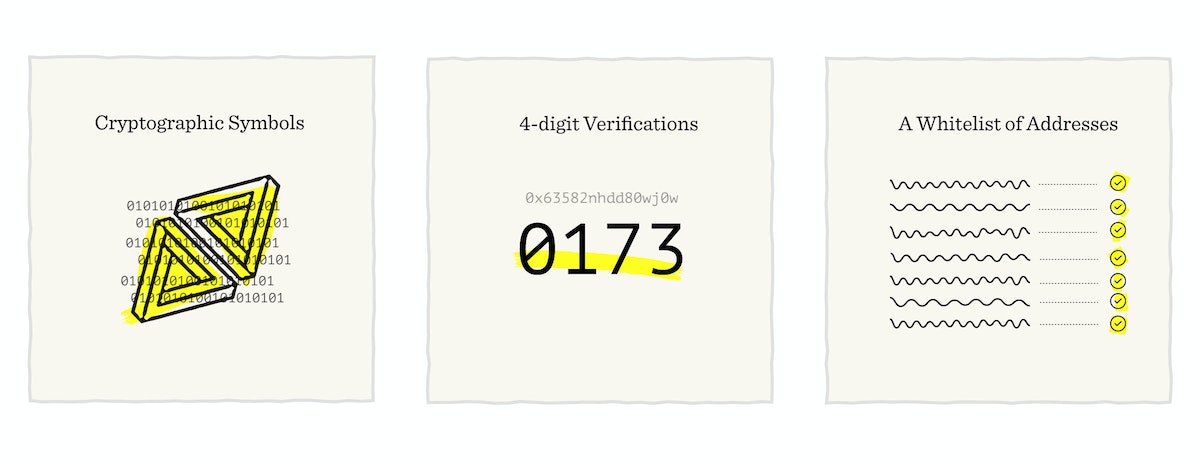
Some inspiration:
- Cryptographic Visual Tags: How might we use unique color codes or symbols to tag address typologies or to verify addresses?
- 4-Digit Verifications: What are some industry standards that financial institutions use that could be relevant for these addresses? One such example is typing in the last 4 digits of a credit card number to verify ownership.
- Whitelist of Verified Addresses: Are there ways to maintain a registry of trusted addresses without relying on a central authority?
These are just three challenges (ahem, opportunities) that blockchain offers designers—there are (and will continue to be) many more. Have an idea? We’d love to hear it! Tweet your thoughts to @ideocolab.
Interested in collaborating with us on a future project, or got another blockchain-based design challenge you want to talk about? Reach out to IDEO CoLab, IDEO’s collaborative platform for emerging technologies, here or on Twitter!
Despite all the media hype about the rise and fall of cryptocurrencies, blockchain technology is still in its infancy, meaning it’s an ideal time for designers to step in and help build new systems. There’s no shortage of challenges to address.

Lindsey Turner
I’m passionate about building brands, products, and experiences that help organizations show up with meaning and momentum.
I help organizations cut through complexity by shaping how they show up, through brand strategy, identity, and storytelling.
Working at the intersection of brand and business, I bring an editorial eye and a bias toward making—turning ideas into tangible experiences that people can understand, trust, and believe in.
My work spans government, healthcare, financial services, media, and consumer goods, from launching Gen Z-focused ventures to building innovation labs and reimagining legacy brands. I relish moments of ambiguity and enjoy translating across teams, perspectives, and priorities to move ideas forward.
I started my career in editorial and digital design, shaping cross-platform experiences and identity systems in publishing and agency environments. That foundation still shapes how I work today: I’m detail-oriented, collaborative, and overreliant on the Oxford comma. I hold a BFA in Visual Communication from the School of the Art Institute of Chicago.

Rachel Young
My work helps organizations see who their products aren't working for—and build the will and the tools to do something about it
For 25 years, I've asked the same question: Who does this design exclude—and what are we going to do about it?
My work spans human-centered strategy, inclusive design, and qualitative research, with clients ranging from Microsoft, Google, and Verizon to the National Science Foundation, and San Francisco Unified School District.
Before IDEO, I taught elementary school in East Palo Alto and spent a decade doing design work with social service organizations—where I learned firsthand what it costs people when systems are built without them in mind.
I am currently writing User Error, a nonfiction book about digital access and the design decisions behind it. I live in Oakland, California.

Brian Pelsoh
I lead with craft, ensuring our work is creatively excellent: rooted in deep human insight and imagination, while also grounded in the realities of business and technology.
My expertise spans brand, communication, and product design across tech, education, the arts, and social impact.
I believe great work demands both high-level vision and obsessive attention to detail, and only happens through collaboration.
I bring an inclusive, hands-on approach and a deep understanding of business, which enables me to consistently deliver excellence while always asking why.
Before joining IDEO, I worked at the brand firms Pentagram and VSA Partners. I began my career as a designer, leading teams at the School of the Art Institute of Chicago and the Milwaukee Art Museum. I hold an MFA in graphic design from Maryland Institute College of Art and a BFA in communication design from the Milwaukee Institute of Art & Design, and have taught at some of the best design schools in the US.

Tony Wong
I am responsible for IDEO’s long-term success in China and working with clients to use design as a tool to enable growth.
I am responsible for IDEO’s long-term success in China and working with clients to use design as a tool to enable growth. Specifically, I have helped Chinese companies design holistic brand solutions through the development of their products, communication, services, and innovation teams, and I have helped multinationals expand their presence and influence in China.
I advise global leaders on developing China-led innovation and capabilities.
In over 15 years in IDEO Shanghai, I have worked on projects that use design to elevate the quality of the experience of healthcare products and services, streamline processes that increase productivity, create spaces and programs that promote and enable inclusive communities, and build next generation mobility solutions that are planet-positive.
Before joining IDEO, I worked at Philips Electronics and the Electrolux Group in Italy, the Netherlands, and Singapore on a number of breakthrough commercial products. I am a member of the Young President Organization in Shanghai.

Building a personal AI for the messiness of life: Sida Li
Most AI products today are built for work—a space with clear problems and established systems. One founder noticed a gap: personal life is messier, harder to systematize, and mostly left behind by the AI boom. So she built Cue, a personal AI that lives inside iMessage and group chats, to go where the other tools haven't.
In this episode, Becca Carroll, IDEO's Chief Strategy Officer, talks with Sida Li, co-founder and CEO of Shared Context Lab, about staying anchored to a human need while the technology around her keeps changing shape, why she treats her business model with the same rigor she'd bring to a product, and what it feels like to build a company at this particular, disorienting moment in AI.
The conversation also gets into how Sida makes design decisions: the language Cue uses to describe itself, the tradeoffs behind building inside iMessage instead of a new app, and a real story about a business idea that didn’t pan out.
This is the second in a two-part series profiling founders from IDEO's Startups-in-Residence program. The first conversation is with Johannes Seemann, founder of Sooner, on designing GenAI for the emotional side of money.

Designing GenAI for the emotional side of money: Johannes Seemann
Most personal financial tools are built to run the numbers and optimize towards a budget. While that works for some, most people experience money as a lived relationship that does not neatly fit into a spreadsheet. Johannes Seemann and Becca Carroll discuss why money is emotional before it is mathematical, and what a human-centered approach to building a generative AI financial product looks like in practice.

The curious leader's edge in uncertainty: Scott Shigeoka
Mina Seetharaman talks with Scott Shigeoka, author of Seek and Head of Curiosity Cultivation at the Eames Institute, about what distinguishes genuinely curious leadership from performative curiosity, how power dynamics shape curiosity, and why practicing curiosity can restore energy rather than drain it.

How constraints make us more creative: David Epstein
Mina Seetharaman talks with David Epstein, author of Inside the Box and Range, about why total freedom often produces average work, how leaders can design useful limits on purpose, and what organizations such as General Magic and Pixar reveal about the relationship between boundaries and creativity.
Looks like you might be in search of something very specific?
Or reset the filters above and try another angle.
Here’s some random inspiration

Podcasts about creative leadership

Articles about the power of prototyping
