
.svg)



Mattress designs that led to a cultural transformation
How the world’s largest mattress manufacturers transitioned from operations-centered to customer-centered.
Sealy and IDEO first collaborated in 2008, to rethink the design of its Stearns & Foster line. For years, Sealy, the largest mattress manufacturer in the world, had taken the standard industry approach to selling mattresses and watched market share and sales flatten; it knew something had to change. Stearns & Foster evolved from a single product design into a keystone for transforming the organization.
IDEO helped Sealy use actionable consumer insights to develop a scalable design methodology and new brand principles, which it applied to product design, operational and manufacturing decision-making processes, and sales and marketing strategy. This “brand-to-product” framework was subsequently used for three separate and consecutive product launches—Stearns & Foster, Embody, and Posturepedic—resulting in an overhaul of 85 percent of Sealy’s mattress portfolio.

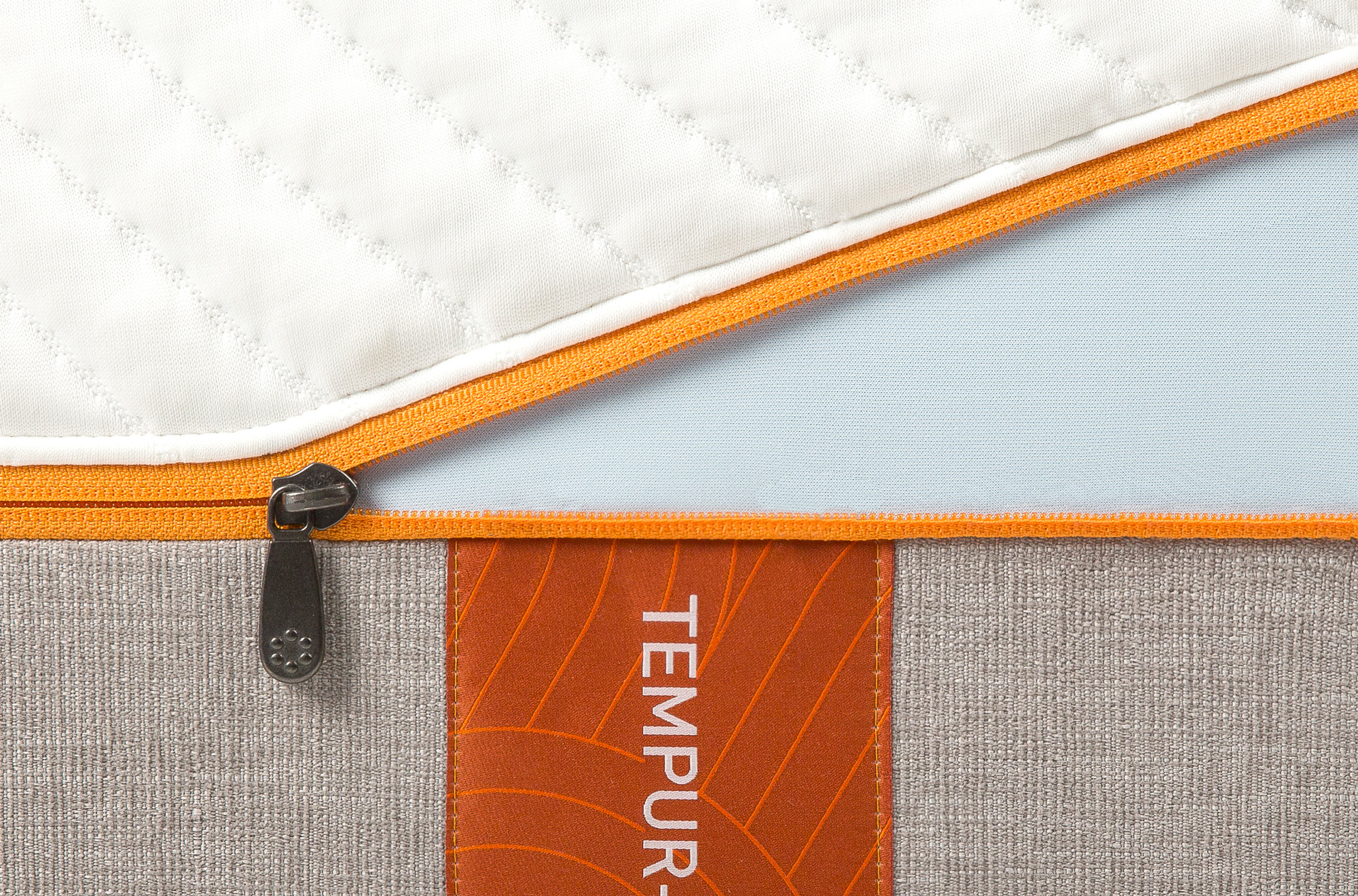
Tempur-Pedic was already working with IDEO on a new mattress design when it acquired Sealy in 2013. It was also interested in how design thinking and human-centered design could improve its business. Once solely focused on the technological elements of designing a mattress, together with IDEO, Tempur-Pedic redesigned the outer shells of its mattresses to reflect the quality on the inside. This design change led to the company to look at new ways to infuse design into their products.
“The initial project was to design the mattress,” said Thomas Overthun, associate partner and design director at IDEO. “But the second project was to create a whole design language from the mattress out to what it meant for any other product, from pillows to blankets and other accessories. It eventually became bigger than just the mattress.”
Working on the Tempur-Pedic/Sealy relationship has been gratifying, said IDEO partner and design director Michael Hendrix, because although home goods can be thought of as simply products, nothing could be further from the truth. IDEO and Tempur-Pedic/Sealy changed the course of the mattress company's business through the transformative power of designing where, and ultimately how, people sleep. And in the process, the organization itself changed as well, moving siloed departments to cross-functional teams, with the brand division central to their cooperation, which led to consistent and aligned decisions across the board.

Some of the projects include:
Stearns & Foster Luxury Mattress
Sealy teamed up with IDEO to develop a design language for Stearns & Foster mattresses that would reestablish what the brand stood for. Through redefining brand principles and rounds of prototypes that focused on evocative details, the new Stearns and Foster mattress was the highest rated in Sealy’s portfolio since it started keeping records, and initial retailer orders were three times what management projected.
Next-Generation Posturepedic
An icon in the mattress industry was brought into the 21st century by developing a new product that delivered on the long-running promise of the brand. Together, IDEO and Sealy designed a product that focused on holistic back health. In its earnings report, the company said US bedding sales for the quarter were up 10.6 percent, to $253.4 million, a figure driven by the new product line’s introduction. According to Sealy’s Q3 earnings report, the Posturepedic launch represented the largest and fastest rollout in the company’s history.
Embody by Sealy
The project began by defining the market opportunities for all-foam beds, and ended with the modern, streamlined Embody mattress as well as a simplified design language, free of industry jargon, to help retailers talk about the mattress to customers. “Sealy collaborated with IDEO to create an approachable and attractive mattress that delivers the simple, healthy rest consumers want with a selling story they can easily understand,” said Jodi Allen, Sealy’s Chief Marketing Officer.
Tempur-Pedic Sleep System
Best known for the revolutionary, NASA-proven Tempur material inside its mattresses, Tempur wanted to transform the exterior of its mattresses to match the caliber of innovation inside. Together with IDEO, Tempur created a new sleep system, including an easily removable and washable fabric mattress cover. “Tempur-Pedic was born of innovation, but we were never a design-driven company until we worked with IDEO,” said Patrice Varni, senior vice president of brand marketing, Tempur Sealy North America, LLC. “Seeing consumer need in a new way through IDEO’s eyes has transformed us. Our product design, our creative psyche, our brand are all fundamentally changed by this sharper focus. This collaboration has given us all a renewed sense of pride.”

Designing the future of urban farming
Helping a Berlin startup strengthen its offer of vertical farming products and services.
The challenge of how we’ll feed the exploding world population in the future—in a sustainable, cost-effective, and environmentally friendly way—is seeding an agricultural revolution in Europe.
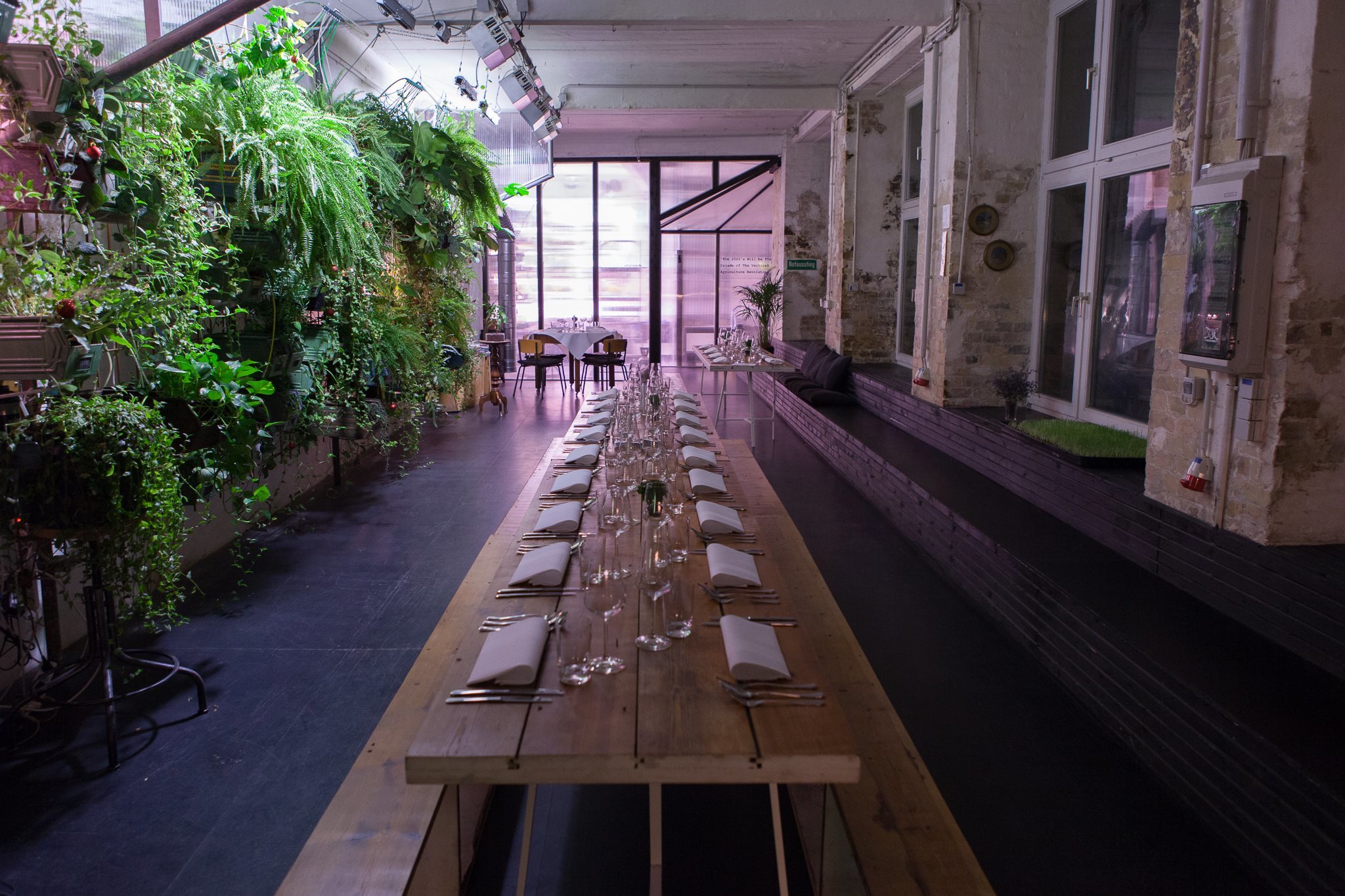
In 2012, INFARM founders Erez, Guy Galonska, and Osnat Michaeli found that vertical farms could be a solution to urban self-sufficiency. These farms could allow people to grow vegetables and herbs in small spaces, with no soil and far less water.
An approach that’s captured the imagination of futurists for decades, vertical farming involves growing vegetables and herbs in stacked units or inclined surfaces, within which moisture, light, temperature, and nutrients are monitored, and controlled.
After creating their first vertical farming experiment in their apartment in Berlin, the founders brought together plant scientists and industrial designers to explore and develop vertical farming’s potential.
Since then, the startup has created custom growing systems for clients including Airbnb, Mercedes-Benz, and Weber. Most recently, INFARM installed a vertical farm growing herbs and vegetables at the Berlin branch of German supermarket chain Metro, the fourth-largest retail chain in the world, to sell to the public. It’s been profiled in Wired Germany, Süddeutsche Zeitung, The Guardian, and Zeit.

INFARM collaborated with IDEO to further explore their B2B offer, including concepts for the industrial design of the stackable, modular, climate-controlled units; the interaction design of an accompanying app to monitor and control the units, and its business model.
Urban farmers will sign up for “farming as a service,” comprising the units themselves, as well as a monthly subscription for seeds, cartridges filled with nutrients, and a pH regulator. Because they’re stackable, the modules can be scaled to suit anyone from a home grower to a restaurant chef or supermarket owner. And Erez claims a 1 square meter growing tray can yield four to six mature plants every day, 365 days a year, doubling that of state-of-the-art hydroponic greenhouses.
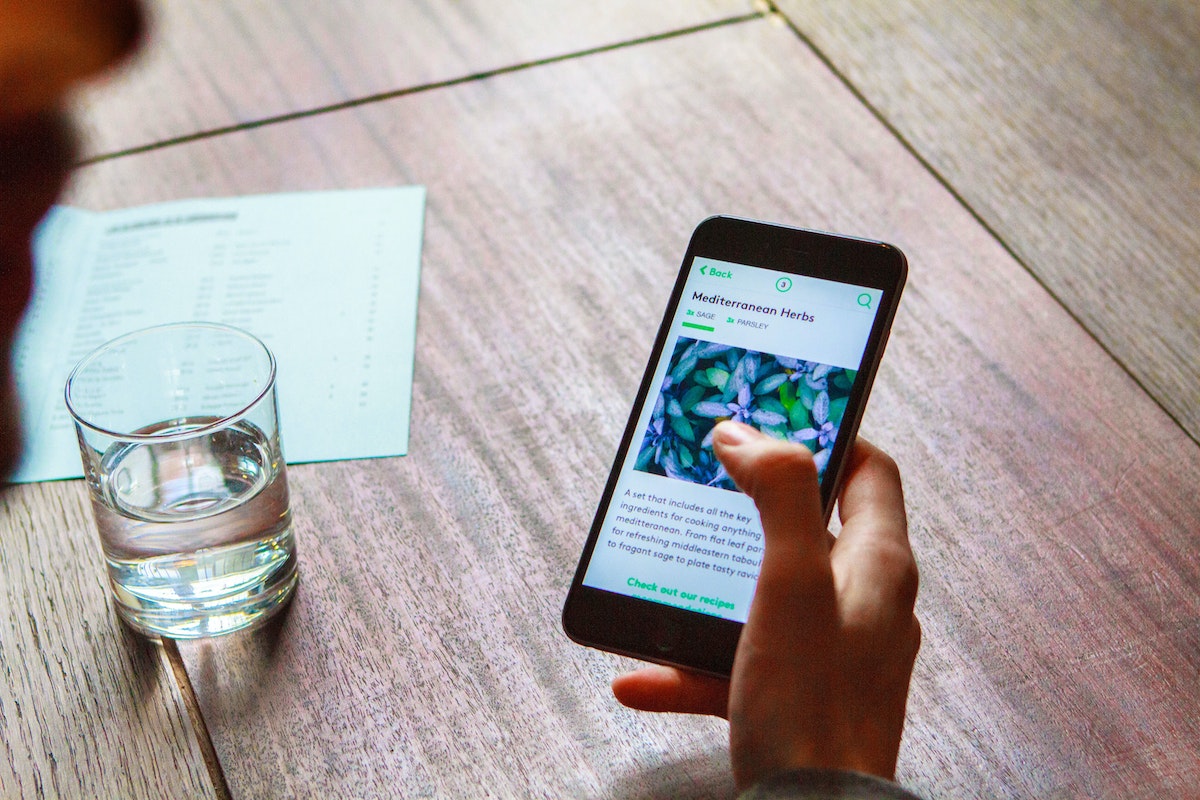
As well as remotely regulating each unit’s climate, the app will educate growers about new vegetables and herbs, selling packs of complementary seeds, with suggested recipes for them, and cooking instructions. Aiming to promote biodiversity, the firm will sell rare-breed and heirloom seeds too.
The startup has funding from the EU’s European Pioneers fund, and is now looking to secure investment to accelerate software development and ramp up their hardware production capabilities. Quite literally, it's growing its business.
Bringing beloved children's characters to a new platform
Sesame Street iPhone apps for Sesame Workshop.
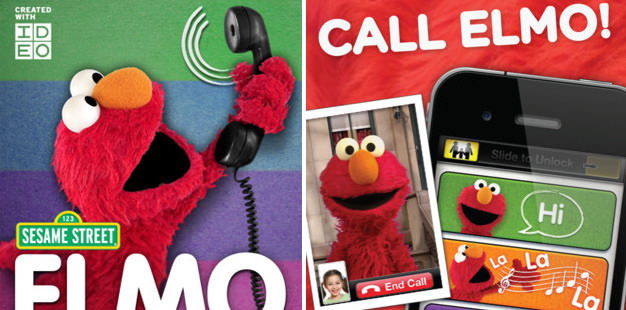
Sesame Workshop is the nonprofit educational group that revolutionized children’s television with the launch of the landmark Sesame Street program in 1969. The show, which has since become a household name, is now watched in more than 150 countries worldwide. The Workshop also creates educational content for new media platforms, and partnered with IDEO to design a line of Sesame Street–themed apps for Apple’s iPhone. The Elmo Calls app, which functions as a utility app for parents and as an entertaining behavioral-development app for kids, is now one of the Top 100 paid iPhone apps in the iTunes store.
The collaboration began with a mutual desire to bring the show’s beloved characters to the iPhone platform—and to do so using a human-centered design approach. Child-development experts, educators, toy and interaction designers, and even the Sesame Street puppeteers weighed in on the design decisions. The team also worked closely with families throughout the project—from initial concepts to early prototyping to the final development—in order to stay focused on how children actually use the iPhone for play. The games were designed accordingly. For example, the team omitted menus from the Sesame Street apps to keep the experiences simple, playful, and fun for a young child. And each game features exclusive new Sesame Street videos, allowing players to enjoy “lean back” moments along with interactive ones.
The resulting iPhone applications let children engage with the favorite Sesame Street characters in a whole new way. Kids touch, shake, swipe, and tilt their way through original games featuring Elmo, Grover, Bert, Rosita, and the Count.

The titles, all of which are available from iTunes, include:
- Elmo Calls: Engages 2- to 5-year-olds in listening-skills practice and active participation during everyday situations.
- Elmo’s Monster Maker: Allows kids to create unique monster friends that dance and play with Elmo.
- Sesame Street Video Maker: Lets kids star in their own music videos, mashing recordings of themselves with popular Sesame music videos and adding their own stamps and special effects.
- Sesame Street Makes Music: Helps kids explore an array of instruments as they contribute to new renditions of classic preschool tunes with their Sesame friends.
Nurturing a creative culture
How writing a book about our shared values helped articulate what it means to be successful at IDEO.
How do you know when you’re successful in your work? You can check off a list of technical skills and expertise you bring to the table. You can use a career development rubric to make sure you’re hitting the right goals. But often, it’s your behaviors—the intangibles that are the most difficult to articulate—that make the most impact. Things like your ability to stay optimistic or your willingness to adapt when there’s no roadmap.
Because of the nature of our work at IDEO, these intangibles are a big part of what defines the experience of working at the company. So in 2012, a global team of designers from our U.S., Europe, and Asia offices came together to codify these values and behaviors as part of a larger effort to evolve IDEO’s career development platform. More often than not, when IDEOers hit road bumps in their career, it was not about what they were doing, but how they were doing it.
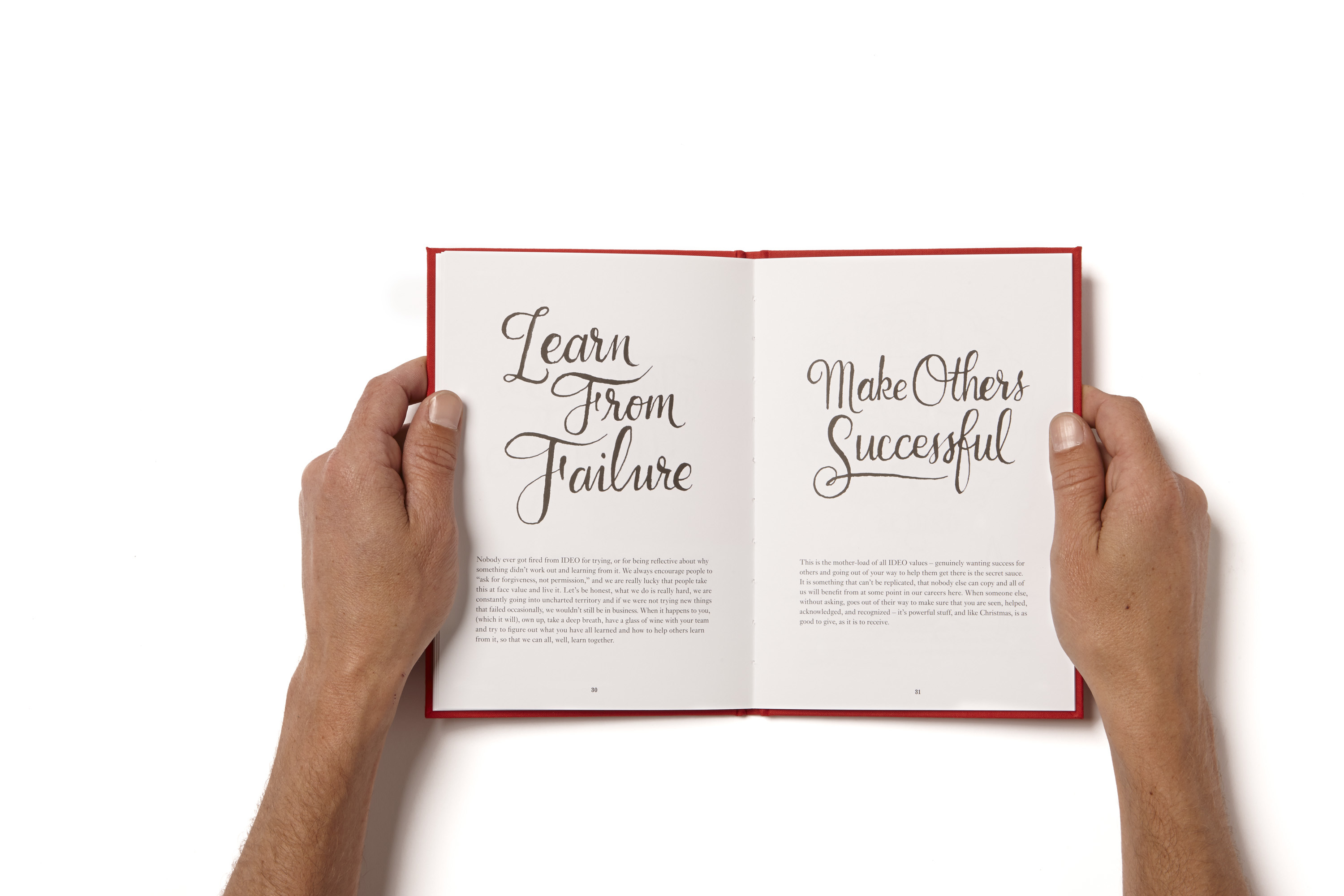
The team agreed that, in addition to identifying the technical requirements needed to progress through one’s career, it was just as crucial to give IDEOers the tools they need to navigate the complex culture. So they captured the values they believed were foundational to the culture and most strongly shared across the IDEO community, and put them to paper in The Little Book of IDEO. The title is meant to reflect its purpose for readers—a handbook that’s compact, useful, and free of any corporate jargon.

For IDEO-ers, this red cloth-bound guide provides a shared lexicon around both the hard and soft skills we need to succeed. It describes things like why IDEO is so loosely structured, where it comes from, and where it’s headed.
Most importantly, the book identifies the organization’s seven core values. These are by design specific, actionable, and integral to the kind of work we do and the environment in which we do it, going beyond common sense and general ethical practice. The intention: to foster meaningful conversations within the community about life at IDEO, and how to achieve success along the way. With each succinct expression comes a deeper explanation of why it matters, and how it shapes our experience at IDEO.
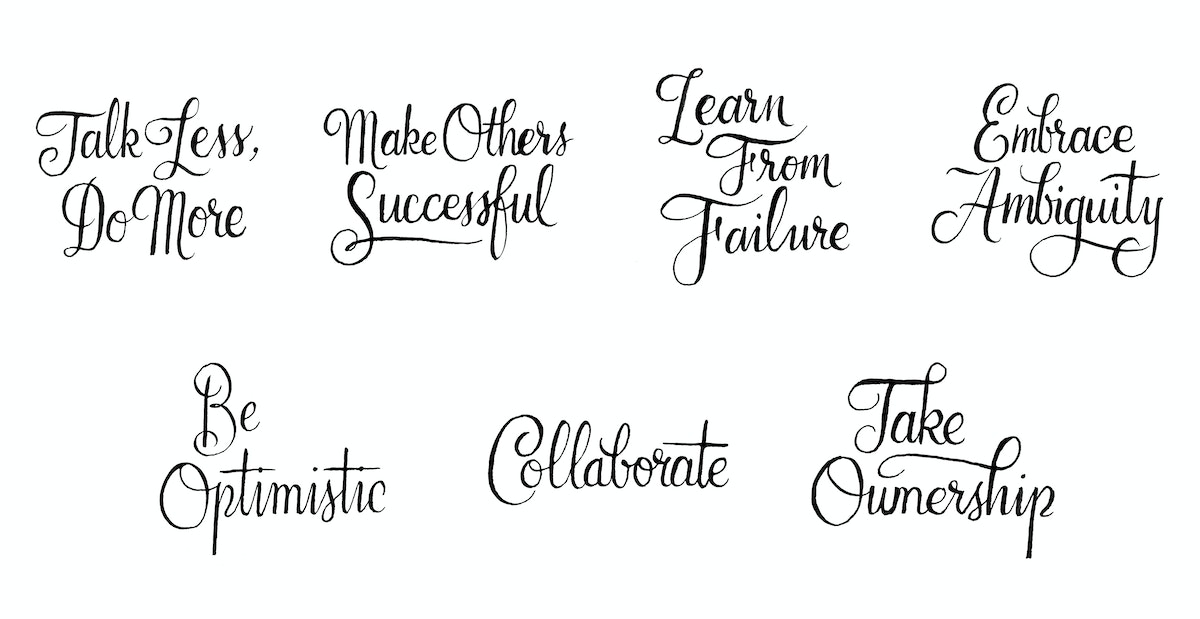
Over the years, the book has been roundly embraced by the IDEO community as an honest articulation of who we are, as opposed to what we aspire to be, and what we appreciate most about working together. When IDEOers first got their hands on it, a movement took shape to create videos that bring each of the core values to life. To depict the value of "Embracing Ambiguity," for example, New York-based designers built a makeshift cardboard rowboat, and while simulating a storm, navigated their way through uncharted territory with teamwork and optimism. San Francisco produced a Jacques Cousteau inspired look at the lifestyle and behaviors of designers in their natural collaborative habitat.
Through the process of making the videos, IDEOers came together to reflect on each of the values, talking through what resonated and what didn’t. It gave them a sense of ownership, and a platform through which to share their interpretations.
A Global Conversation
IDEO has a global presence—offices in two countries in Europe, two countries in Asia, and multiple locations across the U.S. As an organization that embraces a human-centered culture, it felt important to learn if the values resonated with the IDEO community in all of these locations, especially in a country like China, whose working culture is so different from the west. We saw the authenticity and resonance of the values as essential for attracting, motivating, and retaining local talent.
So how did The Little Book of IDEO land in Shanghai? Exploring this question would illuminate insights into how our own clients are often challenged to keep their company culture resonant within the global landscape.
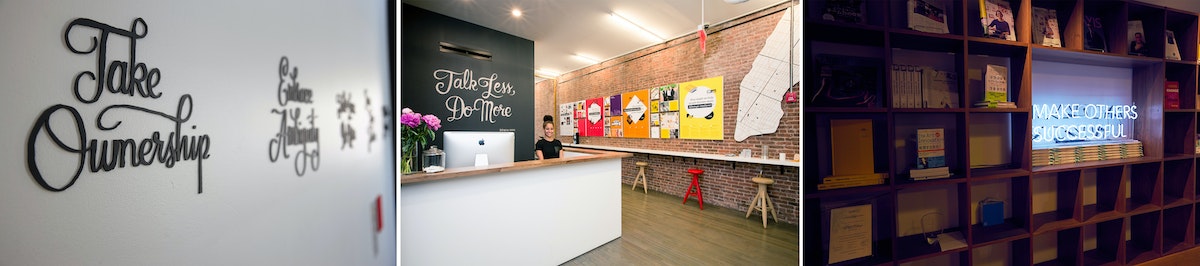
A team of IDEOers in our Shanghai office took on the challenge of exploring the meaning behind each of the values. They were surprised with what they discovered—that despite the firm’s Western origins, locals felt largely connected to the values. It even helped to further solidify their identity as a community, even if it may have been in tension with local working culture, because it was rooted in a set of shared beliefs.
In some instances, the Shanghai team built on the existing values in order to refine the meaning for the local context. For example, the core value "Be Optimistic" rings true, but could sound naive when translated directly to Chinese, implying "rose-tinted glasses.” So in the Mandarin edition, an extra phrase was added to convey the measuredness we mean when we talk about optimism at IDEO. The lesson here: The treatment of something as fundamental and nuanced as our values requires authenticity and emotional connection, and therefore more of a transcreation process than straight translation.
Lasting Power
As an organization, we are designed to be flexible. This means we’re always changing—even when it comes to how we are structured—so that we can respond to the kinds of challenges that clients come to us for. In the midst of our constant evolution, The Little Book of IDEO is as resonant today as it was when it was published.

10 More Documentaries That Will Spark Your Creativity
Stay inspired while you're inside
I kind of wish this really happened, but at the same time, I’m definitely glad it didn’t. The towering jellyfish was part of my imagination—sort of. It was in the 1994 IMAX film Into The Deep. This moment kicked off my life-long obsession with documentary films, and IMAX holds a nostalgic place in my heart. As a designer, I find immense curiosity peering into other experiences and worlds. Whether it’s spending an hour and a half shopping with a ninety-year-old fashion icon or exploring the complex, magical world of mushrooms, documentaries have the incredible power to make you see the world differently.
With the reality of COVID-19 and shelter-in-place orders across the globe, now more than ever, we need to stay inspired by people, places, and things—even if they are on screens. In 2016, we shared 12 documentaries that sparked our creativity, and now feels like an appropriate time to update that list.
Similar to our original post, this is a curated list of recommendations from IDEO designers. It’s a collection of classics and newbies. Some will make you laugh, others will make you cry—and we hope all will reignite that creative spark.
1. Between the Folds
“I grew up in Asia and origami was something I loved to do but I had no idea that this humble paper art form had both such artistic and scientific depths. This documentary blew me away with its beauty and passion, the scope and depth of its inquiry and its empathic glimpse into what for many people is a lifelong obsession. As my colleague Devin said: ‘Holy shit, I can't believe that is all paper.’” —Paul Bennett
2. Bellingcat: Truth in a Post-Truth World
“This documentary highlights the work of Bellingcat, a group of citizen-journalists that use social media to fact-check events and actually uncover the real parties involved. Their claim to fame: They identified the party that shot down Malaysian Airlines Flight 17, which killed 298 people back in July 2014.
“It’s a film that highlights our new reality, where the truth isn't always simple and straightforward. This particular documentary also serves as inspiration for those of us that do design research. It hints at the research that can be done using social signals, buzz analytics, diary studies, data science, etc., where we get insight directly from people. It highlights how researchers often solve puzzles by exploring the extremes and see things through the eyes of the people who experience them.” —Marcelle van Beusekom
3. Learning to Skateboard in a Warzone (If You're a Girl)
"This film follows a group of young girls as they build confidence in the classroom and within the walls of a skatepark in Kabul, Afghanistan. Part of their education on their skateboards is building resilience—to get back up and try again after you fall. During the uncertainty that surrounds them, the school and the skatepark become a place of refuge. You can see them transform throughout the film, finding their voices and their courage.
"In the work that we do with IDEO.org, we aim to create gender-transformative solutions—those which push the boundaries that are in place within the environment and systems to increase equity and opportunity for everyone. This film reminded me that transformation has to happen personally, for each individual, in order for change to be possible on a larger scale. During a recent project focusing on women's economic empowerment in rural Bangladesh, I kept asking myself, what's the skateboard for these women? How might we unlock the courage to imagine a prosperous future?" —Anna Zylicz
4. Jodorowsky's Dune
“We always say 'design loves constraints,' but Jodorowsky's Dune is a reminder that imagination (and ego) could care less about the restrictions of budgets, timelines, or even reality. It's a film about a movie that never got made, but the creators' dreams were so big they managed to change cinema forever without shooting a single frame. Some ambitious dreams fly too close to the creative sun. The cast of characters in this movie wanted to drill to the center of the sun and blow the whole thing up. How can you not love that?” —Brian Janosch
5. Still Bill
“The world recently lost Bill Withers, one of the greatest songwriters and musicians of the 20th century (“Ain’t No Sunshine,” “Lean on Me,” “Lovely Day,” “Grandma’s Hands”). This biopic is incredibly touching for many reasons, but I find inspiration in how Withers approached his own creative process. He was 34 when his first record came out (late bloomers are also a personal inspiration) and his career ended by the mid-1980s. He wrote these timeless, tender songs about life and connection and then when he wasn’t able to work the way he wanted, he walked away from the industry completely. He talks about being honest with himself and true to his own principles rather than being focused on impressing other people. Sometimes I feel that snag in my own creative process—I start thinking about an imagined audience, which distracts and dissuades me. This was a reminder to create just for myself.” —Meredith Adams
6. Advanced Style
“Advanced Style, the documentary based on photographer Ari Seth Cohen's blog of the same name, highlights the signature fashion styles of New York women ranging from 62 to 95 years old. As someone who fully embraces the notion that clothes are an outward expression of the creative inner self, my own fashion sense has been deeply influenced by these ladies. The hats, the sunglasses, the furs, the florals, the feathers are just...all next level. But more than their impeccable fashion sense, they are living examples that women can be stylish and fabulous at any age.” —Tracee Worley
7. Shirkers
“I love the movie Shirkers. It's an exploration of memory, following filmmaker Sandi Tan as she tracks down a film she made with her friends in Singapore in the early 90s, learning that their mentor wasn't really the person she thought he was. Everything about the film, from the vintage footage to the slow revealing of the story, is enigmatic and dreamy, reminding me that we don't have to escape reality to find ourselves in a fairytale. As the director starts to understand her past, the present becomes even less clear—and there's just something really beautiful about how this film shows that process.” —Ali Cottong
8. Fantastic Fungi
“The movie and its subject matter—the healing and potentially planet-saving abilities of the fungus beneath our feet—walks the line between science and spirituality. It's a refreshing, joyful, and thought-provoking take on what we might learn by better listening to the unseen world around us.
“I'm also reading Michael Pollan's How to Change Your Mind: What the New Science of Psychedelics Teaches Us About Consciousness, Dying, Addiction, Depression, and Transcendence, so it was fun to see one of the key players in that book (Paul Stamets) come to life on the screen.” —Sally Sosa
9. MATANGI / MAYA / MIA
“An unapologetic, energetic, and wonderfully unpolished look at the life and career of musician Mathangi “Maya” Arulpragasam, also known as M.I.A. I was lucky to see the premiere of this film at Sundance. I walked into the theater expecting to see a profile of a ‘controversial’ pop star, but instead witnessed a portrait of an immigrant, an activist, a mother, and a groundbreaking artist with human vulnerabilities and flaws that makes M.I.A. even more compelling to me.” —Devin Peek
10. Beauty is Embarrassing
“What drew me into Beauty Is Embarrassing is, well, puppets. Specifically, the bizarre, crude, and comedic puppets of Pee Wee's Playhouse. That show was more formative than I ever realized as a kid, but I recognize now that that my creative happy place is right there in the hazy, hilarious middle ground between being "too adult for kids" and "too childish for adults." This documentary revealed that Wayne White, the artist at the center of it, has built his entire career on that middle ground. His creative spirit, to me, is exactly what he says in the film: "so beautiful it hurts my feelings.” —Brian Janosch
I vividly remember the first time I met a 50-foot, translucent jellyfish. The free-floating creature fell toward me as I gazed, locked in a state of paralysis. Its tentacles were hypnotizing.

Busting the Myth That Regulations Impede Innovation
How to bring creativity, experimentation, and risk into high-stakes industries
Tight regulations have often stymied innovation, but one of the bright spots of this moment is realizing that regulations aren’t the real problem—they are more often a perceived roadblock that shuts down innovative thinking before it grows into real-world solutions. The fact is, regulations should set the baseline for what must be considered, rather than restrict the height of what can be achieved.
Right now, regulations in healthcare are seeing rapid, radical shifts. Processes that have historically taken years—like launching telemedicine platforms and adapting insurance coverage—are now taking weeks or days. Scientists are working to develop vaccines in record time. Companies outside of healthcare are jumping in, too: Manufacturers whose only products included car parts are now making ventilators. 3-D printers are being thrown into service to create PPE. As one client told me, “Every rule that can be broken is being broken. Every regulation that can be waived is being waived.” The world doesn’t have time to wait.
In this moment of crisis, failing systems are confirming what we already knew: The healthcare system is brittle, and it wasn’t built to handle a global pandemic. How leaders move now will dictate the kind of progress we can make, in the short- and long-term.
Here is a guide to innovating within regulations—no matter the industry—at a time when we need it most.
Take a wider view
Healthcare professionals spend so much time putting out the fires immediately in front of them that they have little time or mental space to widen their lens and focus on long-term priorities. Leaders need that time to create a vision of their future—even in times of crisis.
When Dr. Michael R. Jaff, former president of Newton-Wellesley Hospital, a community hospital in the Boston area, started his tenure, he spent the first six months listening to staff all across the organization. “There's a lot of time that has to be spent to really dig through where you are, what challenges you face as an organization, where you want to get to,” he says. “That's got to be clear.” His listening tour informed what would become the vision for his term as president: to compete and win against competitors by delivering the best patient experience. To get there, he had to usher in a new era of innovation at the hospital, and empower those around him to go after radical solutions to entrenched problems.
Related video: How listening to patient voices inspired Newton-Wellesley Hospital to redesign their culture.
Offer pathways & permission to do things differently
In a typical day at a hospital, healthcare workers don’t have the time or mental space to think creatively about new approaches to care delivery. If hospitals want their workforce to embrace and embody the spirit of innovation, employees need not only the permission to think differently, but also the structures and roadmaps that make action possible.
Dr. Jaff understood clearly that for employees who’ve been acculturated to a certain way of working, it’s not sufficient to simply say they can approach things differently, or that the organization wants to move in a new direction. “You have to design what it is that you're trying to do,” says Jaff, “You have to empower people to believe that in fact, it's a key goal of the organization. You have to permit them to try and fail and try again all within boundaries.”
Jaff and his leadership team worked with IDEO to set up multiple nodes for learning and prototyping. The program they created focused on delivering a better patient experience. It began with a pilot project in the Women’s Imaging Center and then a deeper engagement with the Outpatient Surgery Center. As part of an executive education program, another set of internal teams learned to identify user needs, like an improved discharge experience; and to develop prototypes to help address those needs. Ultimately, staff were empowered by taking their ideas from concept to real-world testing and implementation.
Jaff also made his commitment to innovation clear with a designated lab space in the hospital’s old coffee shop, a much-coveted location along the main hallway. Dubbed the Department of Tomorrow, it offered a standing invitation to all employees to stop by and learn more about all the work happening across the hospital. The stories from this work became a kind of currency: Leadership shared big and small examples of change in meetings, at events, and in conversation, as evidence of Newton-Wellesley’s evolution.
No one’s clinical or administrative workloads were decreased to make this work possible. Managers scheduled shifts and breaks differently to allow teams time for focused collaboration. Everyone taking part knew that failure—something that usually has dire consequences in healthcare—was a form of learning in this context. They were driven by the chance to make change.

Seek new perspectives
In healthcare, where expertise is celebrated, seeing the medical experience through a patient’s eyes can be hard.
Long before teaming up with IDEO, the imaging department at Newton-Wellesley had a reputation for being patient-centered and achieving consistently-high industry survey scores. It would have been easy to assume that everyone on the team really understood what patients go through when they get mammograms—the fear, the discomfort, the worry over getting a life-altering cancer diagnosis. But it wasn’t always clear. To deepen empathy for the patient experience, the IDEO team designed an exercise for the care providers that evoked anxiety and uncertainty. They brought in a tarot card reader and, like patients awaiting news in a waiting room, members of the imaging team had their fortunes read, many for the first time. They felt the discomfort, uncertainty and vulnerability of receiving a verdict on their lives from a person they didn’t know well. Though it was a staged experience that doesn’t directly compare to the patient experience, it generated a deeper understanding of the dynamics at play and how they could be improved.
To help the Newton-Wellesley Hospital day surgery team see their work from a new angle, the IDEO team led them on an expedition to the JetBlue terminal of Boston Logan Airport. Similar to a surgical team, where diverse team members all connect with patients asynchronously, the staff of an airline provide continuous customer service for passengers, from ticket purchase to check-in to security to boarding to flight. This sequence of interactions comprises the overall experience of the traveler. In both circumstances, a human is at the center. By viewing the analogous process in a different industry, it was possible to return to thinking about healthcare delivery with fresh eyes.
Allow discomfort to be part of the process
No matter the industry, it can be highly uncomfortable to do things differently, even when everyone is aligned on the ultimate goal of innovating and creating change. So much of healthcare is about following protocol. Billing. Process improvement. Hierarchy in healthcare adds to that discomfort. Often, there are big divides between roles and status, and people are more often judged on their mistakes, rather than their successes. Can department chiefs and front desk receptionists work as peers on a team? Can we prototype a new service experience with real patients going in for surgery?
Leaders who want to affect change need to explicitly acknowledge and address that discomfort. An example from another industry: Three years ago, Bowdoin College teamed up with IDEO to rethink its admissions process. Much like healthcare, college admissions abide by certain regulations as well as administrative policies. How colleges read and assess applications may be unique to each institution, but they are driven by stringent protocols and standards. Bowdoin admissions officers conducted very thorough and thoughtful readings of each application. But that thoroughness led to redundancy and sometimes delayed final decisions. At the same time, the idea of changing the process made the admissions officers fear they would compromise what they valued most: giving each hopeful applicant full consideration they deserve. To interrogate different methods, the team implemented highly-structured A/B testing of different ways of reading applications. The result? The team discovered that they could make decisions earlier in the process and still come up with the same results. The testing gave the team confidence, and ultimately changed their long-held beliefs of how applications “should” be read.
Given that A/B testing proved that some variables had little effect on the team’s final admissions decisions, IDEO redesigned the reading process and included a system called “magic sort,” which helps parse groups of applications based on a new set of counselor assessments to route each to its next round of reviews more efficiently.
In healthcare, as in many tightly regulated industries, expertise is held sacred, which means nobody wants to feel like—or appear as if—they don’t know how to arrive at a solution. But the purpose of using design to solve problems is to allow uncertainty and open questions to drive new thinking. The point is to explore possibilities through prototyping and learning.

Use regulations as a springboard for innovation
Working in highly-regulated environments can put a damper on creative thinking. However, regulatory change, especially in healthcare, is providing new opportunities for innovation. Revised reimbursement policies are enabling telemedicine to grow. The reduction of certain HIPAA guidelines temporarily offers some flexibility in care delivery. And permitting doctors to practice medicine beyond the state where they are licensed enables more care in disease hotspots.
Still, these regulatory shifts alone don’t create innovation. They are a starting point, often enforced through compliance or penalty. Innovation is about delivering beyond this baseline and aiming for what is aspirational. Changes in healthcare delivery, for instance, enable us to ask the question of how best to deliver patient-centered care through video chat.
Even in the business of regulation itself, there is room for innovation. When the US Congress set up the Consumer Financial Protection Bureau (CFPB) in the wake of the 2008 financial crisis, they established a system for taking complaints from consumers who had been scammed and were seeking resolution. The CFPB also took on a financial education mission: to make people smarter about their finances. But rather than structure the agency in a traditional way, by siloing complaints, financial education, and industry regulation, the CFPB’s collaboration with IDEO pointed in another direction: that these three domains can work together in useful harmony. By thinking of them holistically, the agency could be more effective than its predecessors in serving the public. For instance, by pairing financial education and regulation, the agency was able to create new loan disclosure requirements that make the terms more clear and understandable. The CFPB’s complaint data helped the agency prioritize areas to investigate; a spike in the number of people complaining about improperly-opened accounts at Wells Fargo Bank led to a discovery of widespread fraudulent practices. The agency eventually ended up blowing the whistle on the bank, leading to the largest fine in the history of financial services.
When it comes to innovation, having the right mindset is more important than the process: the mindset is what leads to new ideas, resilient responses, and openness to trying things differently, even at the risk of failure. People drive change. For Newton-Wellesley Hospital, according to their Chief Quality & Experience Officer, Dr. Jodi Larson, it was this change that helped employees go “from being idea generators to being change-makers. That was a big deal for us.”
And this has translated in their response to COVID: Within 24 hours, testing tents were procured and set up; workflows were designed and integrated into their electronic medical record system; PPE protocols were established. “Everyone jumped in with great ideas," says Larson. "The valets, nurses, docs, food services. It’s created a new bond and trust among colleagues. People are working in areas they’ve never worked in, and working in parts of the hospital they never had before. Different minds are coming together.” COVID has accelerated the change that was already underway. “We are making decisions and making things work that we never had the courage to attempt before. This is who we are now.”
Illustrations by Lisk Feng
While COVID-19 has caused worldwide devastation, it has also revealed broken aspects of many critical systems, and raised the urgency of fixing them. In healthcare in particular, we are seeing that entrenched ways of delivering care have left us ill-prepared to respond to a crisis of this magnitude.

4 Strategies to Chart a Path Forward When There is No Map
When there is no precedent, ambiguity can be the mother of innovation
The biggest challenge to businesses right now isn't uncertainty, but ambiguity—a condition in which the future is unclear, the past is no help, and we don't even know what we don't know. There's no predicting when the pandemic will end, nor what “business as usual” will look like when it does.
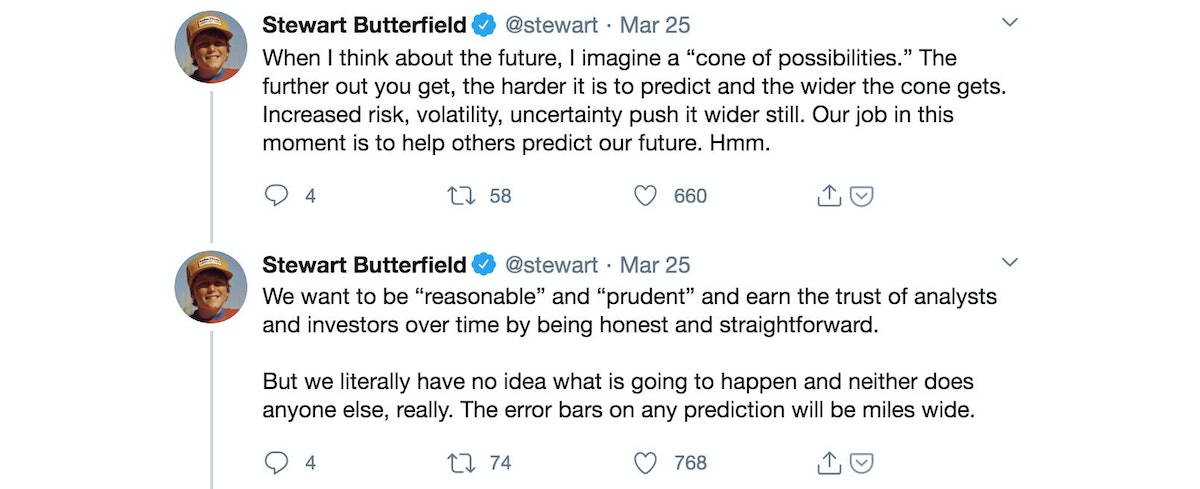
Late last month, Stewart Butterfield, the CEO of Slack, acknowledged the unparalleled challenge leaders face trying to buoy their organizations in the absence of any familiar strategies. Though Slack is one of a handful of companies experiencing massive growth right now, Butterfield and his team are still struggling to predict the future. Other companies are not this fortunate, and have had to halt operations, let go of employees, and make other painful decisions.
Understanding that organizations are facing a broad range of challenges and have varying capacities, the question becomes, how might businesses create new ways to push ahead intelligently? Human-centered design can offer leaders an alternate set of mindsets and methods for navigating ambiguity. Here are four ways forward, along with inspiring examples and questions to drive action.
Lead with people and the business will follow
Perhaps the most well-known design thinking model suggests that innovation occurs at the intersection of consumer desirability, business viability, and technical feasibility. Many leaders are currently mired in thinking about what’s possible in this new world (technical feasibility) and what the economic impact of COVID-19 might be (business viability). While a business model pivot or reapplication of technology may be critical for some businesses to stay afloat, it’s important not to forget to lead with people (consumer desirability).
Focusing on customers’ needs is a way to rally a company and employees around a purposeful cause. It also offers focus and clarity operationally and strategically, and points to a clear path forward that can deliver value.
Restaurants were one of the industries immediately and dramatically affected by the pandemic. Many dining establishments have had to lay off employees or shut down entirely. Canlis, a fine-dining restaurant in Seattle, chose early on to shift their business in a way that leads with customers. Throwing out the rule book, Canlis turned their restaurant into three distinct offers: large family meals, CSA boxes, and to-go cocktails and wine. These options make it easy and efficient for customers to get what they need, while keeping many of their employees working. Restaurants around the world are now taking similar actions, driven by real attention to people’s current needs.
Questions to inspire action:
- How are our core customers’ needs changing right now? How can we deliver on those needs during the pandemic?
- Who can we learn from in our organization that is closest to the needs of our people, partners, and consumers? Better yet, how might we engage with our people, partners, and consumers directly to learn from them?
Forge unexpected partnerships to meaningfully pivot
Part of what makes the current changes so complex is their scale. In travel and hospitality, for example, metrics like trips and bookings are unmoored: What will travel mean in the wake of a pandemic that doesn’t have a known endpoint? CPG companies have been hit with destabilizing shocks to demand that not only put pressure on supply chains, but raise existential questions about what people will value after the crisis. The meaning of “essential” across products, services, jobs, and needs is evolving in real time. We must simultaneously grapple with the abstract and tactical, and the immediate and the indefinite.
It’s inspiring to see examples of companies redirecting their capabilities toward urgent needs—distilleries using their alcohol to produce hand sanitizer, automakers shifting to produce ventilators and respirators. But this kind of quick adaptation isn’t simple and the opportunity isn’t always clear. Stepping outside of our own domains and even our companies to connect can help.
Coronavirus has sparked rare collaboration between some of the world’s biggest business rivals. Apple and Google recently joined forces to enable the use of Bluetooth technology to help governments and health agencies reduce the spread of the virus, and pharmaceutical giants GlaxoSmithKline and Sanofi are teaming up to develop a COVID-19 vaccine.
Pivoting in this moment calls for collective processing aided by viewpoints from different departments and types of thinkers. Some companies are relying on open innovation, which can be used internally to break down silos, or externally to find new partners to bring ideas to life. IDEO’s open innovation portfolio recently launched the COVID-19 Business Pivot Challenge to help organizations wrangle the present complexity and adapt at various scales through collaboration. The Challenge is open to anyone involved in business adaptation, from C-level executives to business students, and startups to global corporations. Participants are working together to find partners, develop new offerings, and secure funding.
Questions to inspire action:
- What points of view are we missing on our team and how might they help us uncover opportunities and identify blind spots?
- Who can we partner with right now to deliver something unique or previously impossible to our teams, business, or society?
Experiment today to strengthen the business for tomorrow
The time has never been better to experiment. This means considering fundamental changes in business and operating models out of necessity, while also prototyping new channels, offerings, pricing structures, and value propositions.
The pandemic has caused some organizations to challenge the status quo of legacy industries, questioning fundamental beliefs and paradigms that have long been held sacred. Film studios, for example, have historically resisted releasing movies straight to online platforms, in the interest of preserving their relationships with movie theaters and maximizing everyone's financial gain in the film ecosystem. But with theaters shut down, many studios have been forced to either delay blockbusters or experiment with online releases, putting pressure on the previously sacred release window. Paramount’s The Lovebirds was set to release in theatres on April 3, but will now debut on Netflix. And Disney released Frozen II on Disney+ three months ahead of schedule, giving many parents a much-needed break.
Experimenting doesn’t have to result in a full-scale business model transformation or a polished new offering. This is a moment of extreme leniency: Customers will forgive scrappiness and even mistakes, and they’ll appreciate effort and vulnerability from organizations who try. Moreover, experimenting in low-fidelity ways allows teams to quickly iterate, minimize costs, and preserve optionality. In other words, there’s little investment required for potentially high return.
Airbnb, like all travel and hospitality businesses, has been hit hard by COVID-19. But they have worked to respond quickly: First, they mobilized their rental marketplace to offer units free of charge or at subsidized rates to healthcare providers in need, waiving their own fees in the process. In the meantime, Airbnb has launched online experiences that provide new things for customers to do while stuck at home and an alternative source of income for hosts. Their email announcing the offer read, “Let’s try something new together.” Airbnb transparently recognizes that this won’t replace the travel experiences that customers wish they could be doing, but we can try to make the situation a bit better, together.
Whether through major shifts or small trials, experimentation not only serves as a response to the current times, but can also pave the way for future strategy. While some companies are testing by necessity, organizations with the means to do so can consider how prototyping today might strengthen their value propositions and capabilities tomorrow.
Questions to inspire action:
- If we’re in an all-hands-on-deck moment, is there a group of employees that can start to think about how we might operate differently during COVID-19? What are simple experiments we could run in the next few days?
- If we’re able to dedicate time and resources, how might we use this moment to challenge the fundamental assumptions of our business and industry? What are simple experiments we could run in the next few weeks?
Leverage scarcity and constraints
It’s understandable to feel an overall sense of scarcity right now. Organizations are inundated with legal, health, social, and operating constraints. It may seem counterintuitive, but these perceived limitations often create generative circumstances for growth and innovation. A recent study on innovation in crisis found that during the Great Depression, while the total number of patents decreased, the average level of quality increased, mitigating the quantitative decline with more innovative impact overall. In many ways, today, we are witnessing this same jump-start in business innovation in light of COVID-19.
OpenTable, a company that allows diners to make restaurant reservations, is using today’s constraints to find new opportunities. Since many restaurants are no longer allowing customers to dine in, OpenTable’s core offering is no longer relevant. But rather than become obsolete, they used this constraint to make a quick shift and repurpose their platform. The team developed a new tool that leverages their core offering by partnering with grocery stores, allowing customers to select shopping times at supermarkets and to avoid overcrowding.
History has shown us that scarcity can be the mother of invention. Take the beloved hazelnut spread Nutella. The product was created due to a cocoa shortage during World War II. Italian confectioner Pietro Ferrero decided to make a new paste using hazelnuts, sugar, and a smaller amount of cocoa. The rest is sweet-tooth history.
Questions to inspire action:
- How might we turn these new constraints into the cornerstones of our business?
- What is the core promise or value we provide to customers? How might we repurpose the assets that we still have to keep delivering on this promise or value?
We are in challenging times. Leaders are being called to make difficult decisions around their business’ strategy, operations, and people. As we continue to navigate these uncharted waters, we can find ways for ambiguity to be an aid, rather than an impediment, to progress. Design-led mindsets like empathy, collaboration, experimentation, and even scarcity can be guiding lights along the way.
Illustration by Kateryna Romanova
The coronavirus pandemic has generated tremendous uncertainty for businesses. But while the scale of the crisis is new, uncertainty itself is not—it's a natural condition of doing business, and numerous tools exist to quantify and mitigate it. Most strategies rely on accumulated knowledge from the past—there's a precedent on which to make sense of unknowns. COVID-19 breaks all that. There is no precedent for how to respond to this moment, much less steer ahead.

How to Think About Long-Term Strategy When You Can Barely See Past Tomorrow
This is the moment for businesses to redefine what it means to win
The primary question in this moment should be: How might we each play our part in bringing this pandemic to an end? But it's a moment, too, for reflection on the future. Who do we want to be when we emerge from the worst of this? What do we want our organizations to stand for? These are questions of strategy—of what it means to win.
How does your organization define winning? What is that challenging shared goal that gets your people out of bed each day, excited to play their part? If your organization is like most I’ve worked with, you may struggle to answer that question. Despite all the time and resources poured into strategy work each year, few organizations have a widely understood definition of winning that goes beyond making money for shareholders.
Fifty years ago, in The Social Responsibility of Business is to Increase its Profits, economist Milton Friedman argued that the purpose of a business is to serve its owners. The leader’s role, he wrote, is “to conduct the business in accordance with their [owners’] desires, which generally will be to make as much money as possible while conforming to their basic rules of the society.” This notion, which is the foundation of the doctrine of shareholder value maximization, is now pervasive. But it’s showing considerable signs of wear and tear as we become more aware of the negative consequences of putting profits ahead of people.
Solely prioritizing short-run outcomes for shareholders does little to bring meaning to our work; it stymies innovation; it reduces our business fitness; and it makes much, much harder the real work of strategy. Meaning comes from creating real value in the world, which means we need to think broadly in terms of who we’re winning with (and for). Innovation requires a long-term perspective, so we need to think about winning beyond this quarter or even this year. Business fitness (the financial and strategic resilience of a company over time) depends on being attuned to things that shareholders may not see. To ensure our viability, we need to seek out signals as to what customers, employees, and societies care about. Strategy is about building a firm that can win both now and in the future, so we need to be more holistic in our approach to making choices.
If it is time to move past shareholder value, how might we define winning in a more useful way, that spurs rather than stops innovation? How might we set aspirations that don’t suggest a win-lose frame? How might we seek instead to create value for customers, for employees, and for investors?
Find the right language
In the process of developing a strategy for kyu, the collective of organizations that includes IDEO and SYPartners, some leaders rejected the notion of “winning” entirely, recoiling at a word that felt tied to a scarcity mindset. If we’re winning, they asked, who is losing?
Tim Brown and Susan Schuman, the kyu vice chairs who co-led the strategy discussions, thought hard about how to navigate that challenge. As Brown notes, they came to see that “we’re really creating a community at kyu—a collective that aims to unleash creativity and to help people flourish.” He goes on: “What we realized is that communities don’t win or lose, they thrive or falter.” The kyu strategy focuses on what it would mean to create a community that can truly thrive over time. Thriving may not be the term that resonates with your organization, but language matters. To redefine winning to be more inclusive, work with your team to find a mental model for winning that works for you, then build shared definitions of the models you choose.
Shift the timeline
Another way to push on current, unsustainable definitions of winning is to publicly shift the time horizon so that sustainability, both economical and ecological, can be integrated into our aspirations. Unless we look further out, we will continue to plunder the future to fund the present and to degrade the planet to drive profit. For inspiration on what is possible, look to Paul Polman, former CEO of Unilever.
In an interview for my book Creating Great Choices, Polman explained how he set out to change the time horizon at Unilever: “One of the things I had to do was to move the business to a longer-term plan,” he said. “We had become victims of chasing our own tail, cutting our internal spending in capital, R&D, or IT to reach the market expectations. We were developing our brand spends on a quarterly basis and not doing the right things...We were catering to the shorter-term shareholders.”
Polman decreed that the company would stop quarterly reporting and stop giving guidance. He embarked on a far-reaching environmental sustainability effort, and he reinvested in R&D, talent development, and brand building.
Polman believed that shareholders whose interests were aligned with Unilever (i.e. long-run profitability and environmental sustainability) would eventually buy into his plan. Taking a long-term perspective on winning not only let Unilever invest in innovation for customers and in development for its people, it let leadership focus on the fundamentals of the business rather than managing short-run expectations. As a result, it created lots of shareholder value too. In the decade Polman headed Unilever, its stock price increased 170 percent, creating more value for shareholders than most companies in the FTSE 100. This is a win-win-win solution, and it was powered by a willingness to show up differently in the world.
Define your purpose
A third way to redefine winning productively is to connect our aspirations to a larger purpose. Think of purpose as the human “why” that explains the reason a company exists. The best purpose statements are very human: they connect the work of the organization to real people, to real needs, and to real problems to be solved. By defining a meaningful purpose, companies can demonstrate to employees and customers what they stand for and why. The purpose can then set the context for the strategy; we can define what winning means in service of our overall purpose.
One company that demonstrates the power of connecting purpose to strategy is Orbia. Until 2019, Orbia was called Mexichem and it was mainly known as a chemical company. Last year, along with a new brand, Orbia unveiled a new purpose: To “advance life around the world,” tackling some of humanity’s biggest shared challenges, like food security, water scarcity, and livable cities.
Had it continued to define itself as a chemical company, Mexichem could have followed a path to near-inevitable commoditization. Instead, CEO Daniel Martinez-Valle and Orbia’s leadership team worked with IDEO to define a higher bar with a bold new purpose. Now the team is working to connect its strategic choices, its resource allocations and its employee incentives to that larger purpose. Doing that means reorganizing the structure of the company into five business groups, each aimed at addressing a unique global challenge, defining meaningful sustainability targets for each business, and investing in innovation in significant new ways. That’s really the power of purpose: it can align the organization, motivate employees, and promise customers something they can believe in. No wonder purpose-led companies tend to have higher employee engagement, happier customers, and better overall performance. They win on multiple dimensions.
Winning isn’t easy. It’s tempting to define winning narrowly, to make the task seem easier: winning means increasing the stock price this quarter. But as the last few months have demonstrated, a shareholder-led definition of winning is not only hollow, it can leave organizations with nothing to fall back on in a time of crisis. We need a far richer, more aspirational understanding of what it can really mean to win. To get there, ask how we could define a winning aspiration, using language that fits our organization, push out on the time horizon, connect strategic goals to a larger sense of purpose and give ourselves room to dream big.
In a moment of crisis, it can be difficult to think beyond the next hour, the next day, the next week. The global COVID-19 pandemic has been difficult for each of us, as we grapple with our duty of care to our employees, to our communities, to each other, to ourselves. The unprecedented disruption created by this crisis should be seen first and foremost in humanitarian terms, connecting to the very real personal toll of this disease—serious illness and lives lost, isolation and fear, worsening unemployment and economic precarity.

Lindsey Turner
I’m passionate about building brands, products, and experiences that help organizations show up with meaning and momentum.
I help organizations cut through complexity by shaping how they show up, through brand strategy, identity, and storytelling.
Working at the intersection of brand and business, I bring an editorial eye and a bias toward making—turning ideas into tangible experiences that people can understand, trust, and believe in.
My work spans government, healthcare, financial services, media, and consumer goods, from launching Gen Z-focused ventures to building innovation labs and reimagining legacy brands. I relish moments of ambiguity and enjoy translating across teams, perspectives, and priorities to move ideas forward.
I started my career in editorial and digital design, shaping cross-platform experiences and identity systems in publishing and agency environments. That foundation still shapes how I work today: I’m detail-oriented, collaborative, and overreliant on the Oxford comma. I hold a BFA in Visual Communication from the School of the Art Institute of Chicago.

Rachel Young
My work helps organizations see who their products aren't working for—and build the will and the tools to do something about it
For 25 years, I've asked the same question: Who does this design exclude—and what are we going to do about it?
My work spans human-centered strategy, inclusive design, and qualitative research, with clients ranging from Microsoft, Google, and Verizon to the National Science Foundation, and San Francisco Unified School District.
Before IDEO, I taught elementary school in East Palo Alto and spent a decade doing design work with social service organizations—where I learned firsthand what it costs people when systems are built without them in mind.
I am currently writing User Error, a nonfiction book about digital access and the design decisions behind it. I live in Oakland, California.

Brian Pelsoh
I lead with craft, ensuring our work is creatively excellent: rooted in deep human insight and imagination, while also grounded in the realities of business and technology.
My expertise spans brand, communication, and product design across tech, education, the arts, and social impact.
I believe great work demands both high-level vision and obsessive attention to detail, and only happens through collaboration.
I bring an inclusive, hands-on approach and a deep understanding of business, which enables me to consistently deliver excellence while always asking why.
Before joining IDEO, I worked at the brand firms Pentagram and VSA Partners. I began my career as a designer, leading teams at the School of the Art Institute of Chicago and the Milwaukee Art Museum. I hold an MFA in graphic design from Maryland Institute College of Art and a BFA in communication design from the Milwaukee Institute of Art & Design, and have taught at some of the best design schools in the US.

Tony Wong
I am responsible for IDEO’s long-term success in China and working with clients to use design as a tool to enable growth.
I am responsible for IDEO’s long-term success in China and working with clients to use design as a tool to enable growth. Specifically, I have helped Chinese companies design holistic brand solutions through the development of their products, communication, services, and innovation teams, and I have helped multinationals expand their presence and influence in China.
I advise global leaders on developing China-led innovation and capabilities.
In over 15 years in IDEO Shanghai, I have worked on projects that use design to elevate the quality of the experience of healthcare products and services, streamline processes that increase productivity, create spaces and programs that promote and enable inclusive communities, and build next generation mobility solutions that are planet-positive.
Before joining IDEO, I worked at Philips Electronics and the Electrolux Group in Italy, the Netherlands, and Singapore on a number of breakthrough commercial products. I am a member of the Young President Organization in Shanghai.

Building a personal AI for the messiness of life: Sida Li
Most AI products today are built for work—a space with clear problems and established systems. One founder noticed a gap: personal life is messier, harder to systematize, and mostly left behind by the AI boom. So she built Cue, a personal AI that lives inside iMessage and group chats, to go where the other tools haven't.
In this episode, Becca Carroll, IDEO's Chief Strategy Officer, talks with Sida Li, co-founder and CEO of Shared Context Lab, about staying anchored to a human need while the technology around her keeps changing shape, why she treats her business model with the same rigor she'd bring to a product, and what it feels like to build a company at this particular, disorienting moment in AI.
The conversation also gets into how Sida makes design decisions: the language Cue uses to describe itself, the tradeoffs behind building inside iMessage instead of a new app, and a real story about a business idea that didn’t pan out.
This is the second in a two-part series profiling founders from IDEO's Startups-in-Residence program. The first conversation is with Johannes Seemann, founder of Sooner, on designing GenAI for the emotional side of money.

Designing GenAI for the emotional side of money: Johannes Seemann
Most personal financial tools are built to run the numbers and optimize towards a budget. While that works for some, most people experience money as a lived relationship that does not neatly fit into a spreadsheet. Johannes Seemann and Becca Carroll discuss why money is emotional before it is mathematical, and what a human-centered approach to building a generative AI financial product looks like in practice.

The curious leader's edge in uncertainty: Scott Shigeoka
Mina Seetharaman talks with Scott Shigeoka, author of Seek and Head of Curiosity Cultivation at the Eames Institute, about what distinguishes genuinely curious leadership from performative curiosity, how power dynamics shape curiosity, and why practicing curiosity can restore energy rather than drain it.

How constraints make us more creative: David Epstein
Mina Seetharaman talks with David Epstein, author of Inside the Box and Range, about why total freedom often produces average work, how leaders can design useful limits on purpose, and what organizations such as General Magic and Pixar reveal about the relationship between boundaries and creativity.
Looks like you might be in search of something very specific?
Or reset the filters above and try another angle.
Here’s some random inspiration

Podcasts about creative leadership

Articles about the power of prototyping
