
.svg)



Sparking a conversation around policing in NYC
Helping the New York Civil Liberties Union activate a city-wide, nontraditional campaign centered on listening.
New Yorkers experience policing differently depending on who they are and where they live. Some communities are patrolled; others are profiled. When your neighbors’ experiences are starkly different from your own, it can be almost impossible to understand their perspective.
The New York Civil Liberties Union (NYCLU), a state branch of the ACLU, hoped to spark a dialogue around race and police tactics in over-policed communities, and to engage voters on this divisive issue before New York City’s mayoral election. But the NYCLU also understood that traditional slogans and billboards weren’t enough to foster deep personal conversations and effective political action—the city needed real talk.
The organization engaged IDEO to help create a city-wide, nontraditional campaign. In talking with New Yorkers, the NYCLU advocates and IDEO designers honed in on two simple truths: Transformative conversations happen only when people feel safe enough to listen—and to speak. And people become more compassionate listeners once they themselves feel heard. In a time of entrenched interests and growing social conflict, listening can be a radical act.
Together, IDEO and the NYCLU designed Listening NYC, a grassroots campaign to promote interpersonal listening, meaningful discussion, and collective action around policing.
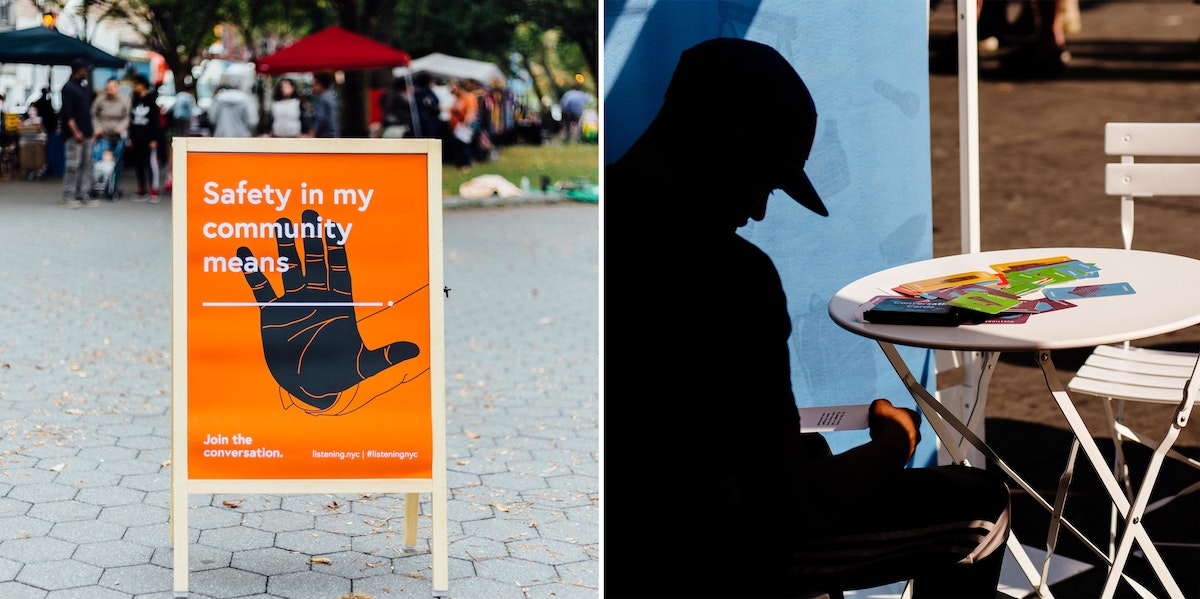
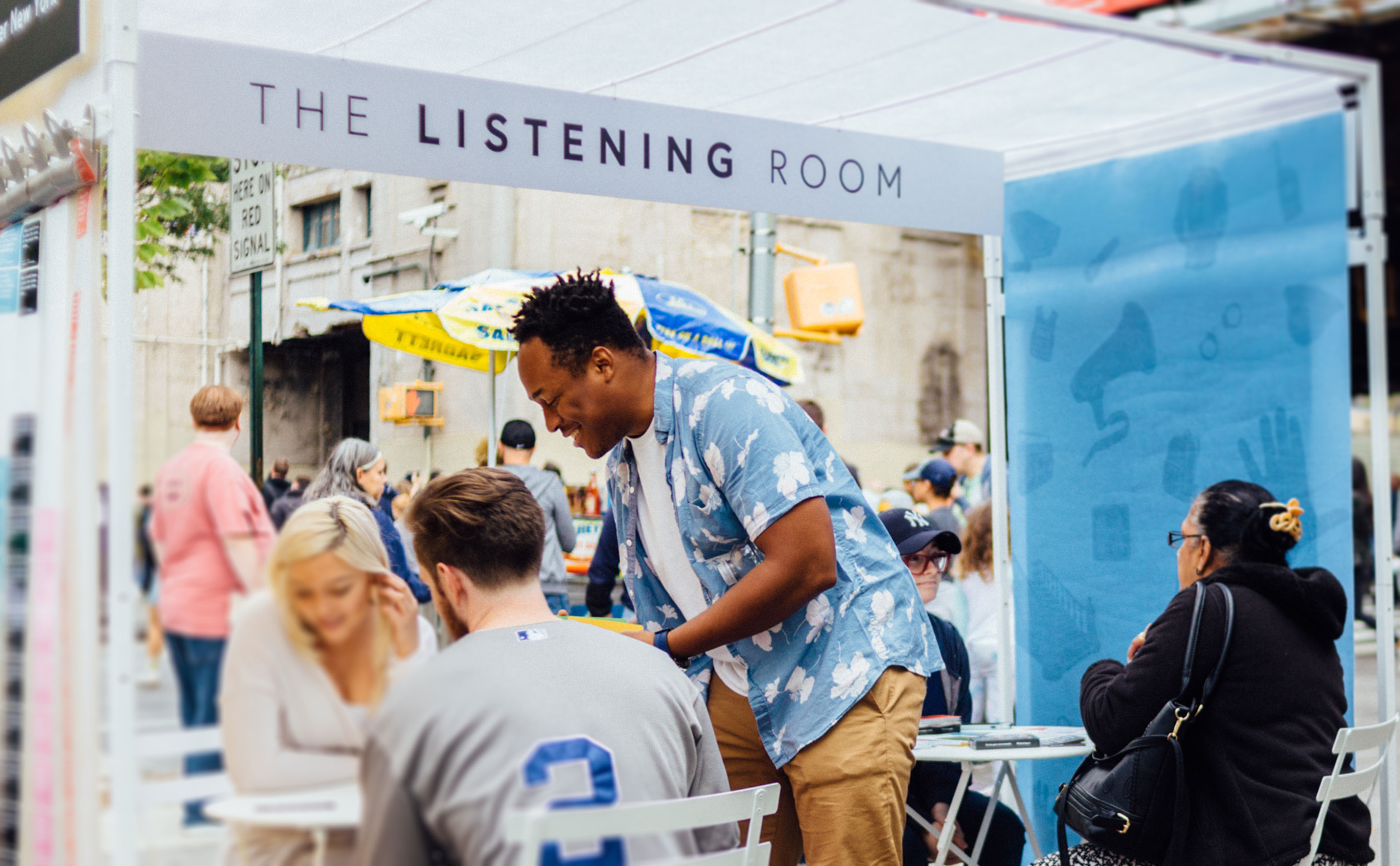
To get New Yorkers—famously brash and always bustling—to stop and listen to their neighbors, they created a pop-up installation called the Listening Room that travels through the city to catalyze one-on-one conversations. It’s a portable safe space, with tables, chairs, two walls that provide a degree of intimacy, and two sides left open for a feeling of psychological safety.
At the center of the experience is a deck of Conversation Cards that encourage New Yorkers to share their stories and hear those of others. Simple prompts like “I believe the role of police is to _____,” and questions like “A cop stops you in your neighborhood. What do you do?” empower people to find common ground. Through straightforward but structured activities like these, many New Yorkers who enter the Listening Room expecting to disagree instead find themselves sharing stories and opinions in ways they never imagined.
Beyond face-to-face dialogue, the Listening Room also features a radio loaded with stories from different neighborhoods across the city’s five boroughs. By turning the dial, visitors can learn about encounters with policing culture from fellow New Yorkers, including two NYPD officers.
To turn talk into action, visitors are invited to send a postcard to the mayor. People choose the policy proposals most important to them—from, “Police shouldn’t be disciplining kids in school” to, “If police want to read our emails, they should have to get a warrant”—and add them to a pre-stamped postcard dropped into a special “ballot box.” The NYCLU delivered more than 2,000 of these cards to Mayor Bill de Blasio upon his reelection in late 2017.
IDEO and the NYCLU also led an interactive campaign event at the Brooklyn Academy of Music. Residents, students, philanthropists, and police were led through an exercise called Creative Tensions, positioning themselves around the room according to their views on everything from surveillance technology to school safety. Experts helped guide the conversation including Sheriff Jerry Clayton, director Liesl Tommy, and NYCLU organizer Brandon Holmes. The process allowed participants to see how fluid people’s positions can be.
Listening NYC has now reached thousands of New Yorkers at more than 35 locations. Schools, from a public middle school to the John Jay College of Criminal Justice, have requested visits from the Listening Room, and the installation’s modular design has inspired new incarnations on topics including student safety and discipline.
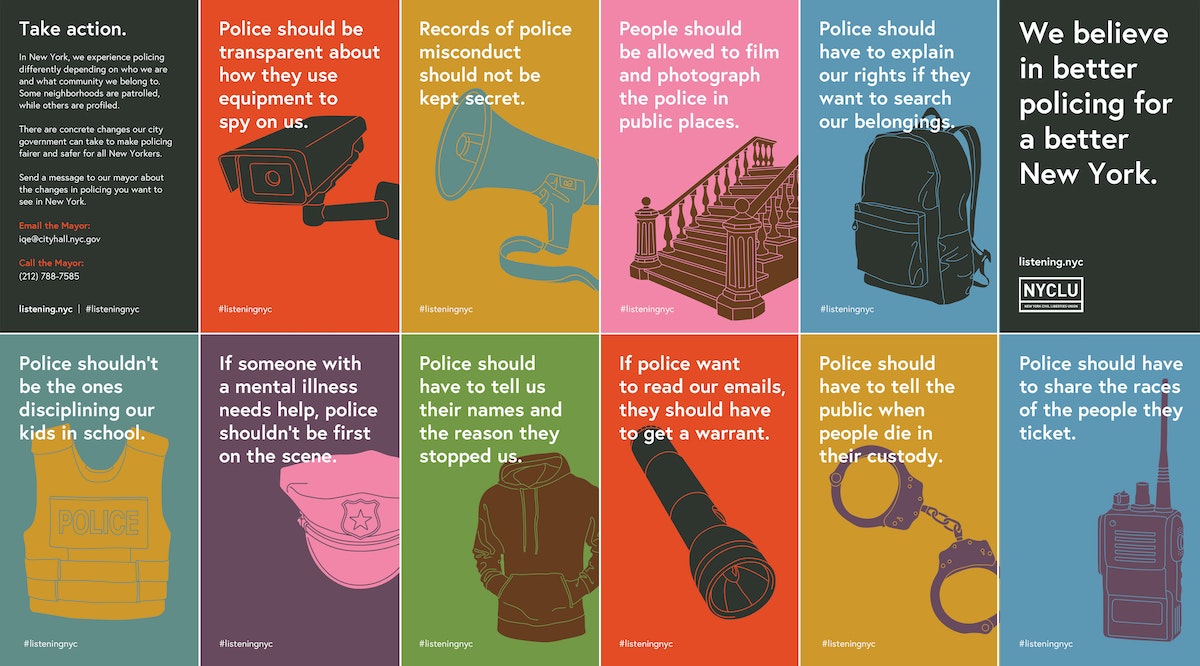
The NYCLU has sent Conversation Cards to celebrities, influencers, and every member of the New York City Council. Sending postcards to Mayor de Blasio and Conversation Cards to the city council led directly to passage of the Right to Know Act—legislation that incorporates some of the NYCLU’s proposals for police reform.
Today, the impact of Listening NYC has moved beyond city limits. The NYCLU’s Syracuse chapter is introducing the pop-up installation there, while in Boston, mayoral candidate Tito Jackson even promised a visit from the Listening Room if elected. To keep dialogue flowing, the ACLU plans to distribute Conversation Cards nationwide.
Driving growth at Europe’s largest online fashion retailer
How Zalando redesigned the way it works and saw profits soar.
Fashion thrives on reinvention. Now, digital platforms and tools are reinventing fashion. E-commerce has reshaped the shopping experience and social media has democratized the once-exclusive industry.
Amidst this furious whirl of change, the fashion platform Zalando, founded in 2008, has become one of Europe’s fastest-growing tech companies. Headcount has ballooned to 15,000 and revenues grew 23 percent year over year. More than €1 out of every €100 spent on clothing in Europe is spent at Zalando.
In 2014, Zalando’s co-founder and CEO Robert Gentz approached IDEO to help think about the organization’s future in the face of increasing competition. Gentz realized that building design thinking capabilities across the company would allow Zalando to make systemic business shifts, like building better experiences for customers, and balancing operational excellence and execution with innovation.
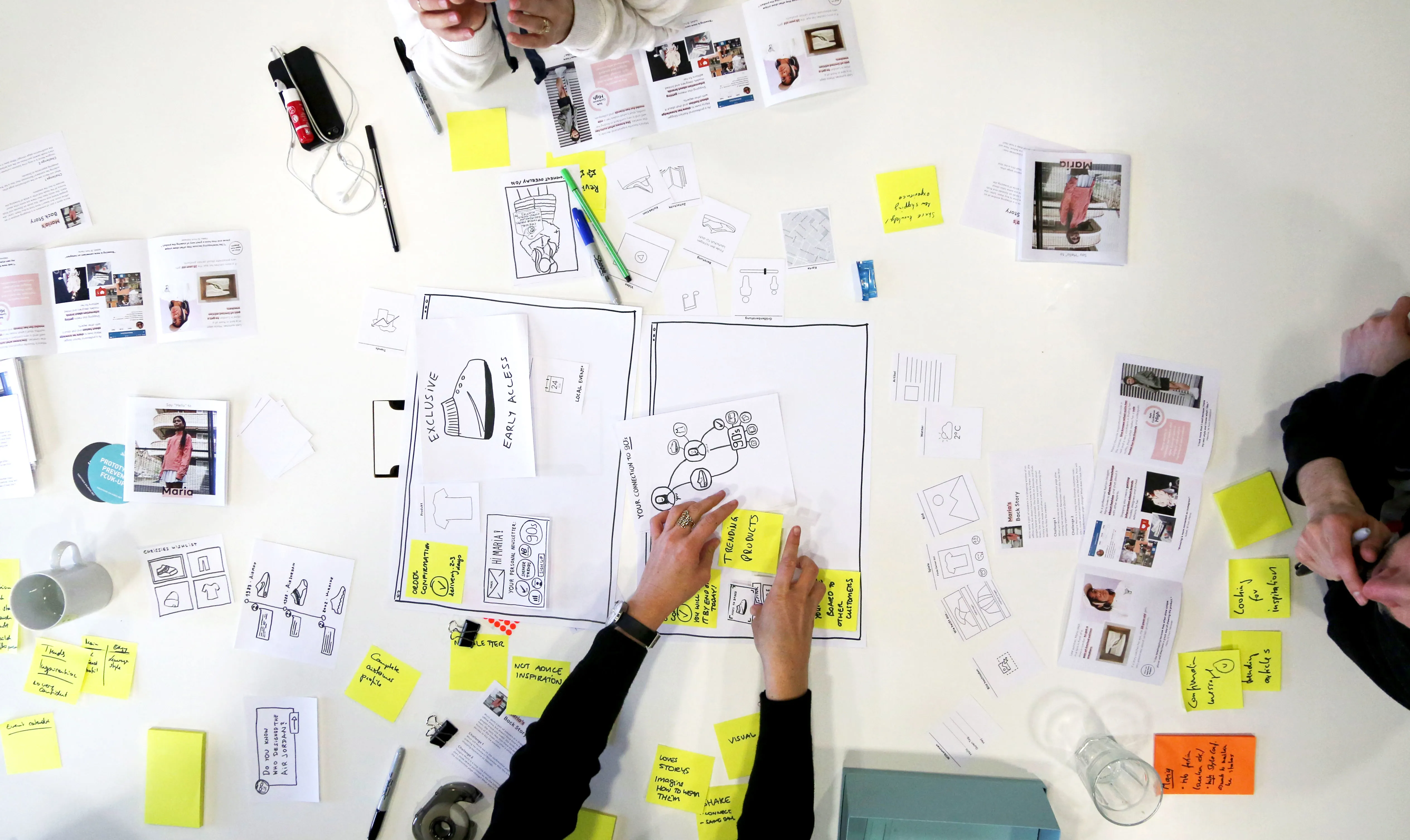
So, he invited a team of IDEO designers and Zalando employees to create an innovation lab in its Berlin headquarters. They called it The Studio, and in the three years since its launch, it has helped the company build new products, experiences, and modes of working that are powering a digital transformation across Zalando and in the broader fashion world.
Finding purpose
Gentz came to IDEO with a simple request: “I want my daughter to be proud of the company I created.” With that directive, the first order of business was to home in on the organization’s new strategy—to shift from an e-tailer to a full-blown fashion platform—and resurface purpose. After a series of interviews and workshops across the company, a unifying intent emerged:
Zalando exists to reimagine fashion, for the good of all.
To share that message, the team designed a five-day Festival of Purpose at the company’s Berlin headquarters and satellite locations, coupled with a long-term plan to help leaders and their teams weave that sense of purpose into everything they do.
WATCH: Learn how Zalando used purpose to mobilize its community
Building Innovation Capacity
With a shared purpose to rally around, Zalando started to design and build at a clip. The Studio experimented and prototyped, launching products like Seen At, a mobile app that allows members to upload street style photos, and a digital tool called Collabary that connects online fashion influencers with brands. Projects are enabling cross-disciplinary teams to get into the practice of aligning around joint goals, making fast decisions, and building with agility.
But just as important as identifying growth opportunities for the company has been The Studio’s role as a hub. Zalando employees from across business units cycled into the Studio, teaching IDEOers about their business and the company’s culture, while IDEOers helped them master the design thinking process so they could lead future projects.
Studio graduates ensure that anything prototyped there is implemented, and integrate what they’ve learned into their day jobs. Their experience makes them design ambassadors who spread the practice of experimentation, prototyping, and storytelling across the organization.
WATCH: Learn how Zalando pioneered a new innovation studio
Teaching Leaders How to Scale Change
It’s one thing to start working differently in a small innovation lab, but how do you scale change across an organization and determine how it will affect each major business unit—product, technology, commercial, and logistics? IDEO interviewed Zalando employees to better understand how to embed what we called new Ways of Working (WoW), a method that combines design thinking with lean and agile approaches. WoW was then deployed by a centralized team that ran workshops and coaching sessions to help leaders adopt it, measure its impact through OKRs, KPIs, and NPSs, and help their teams understand the new processes.
Today, the Ways of Working method is being rolled out across the entire organization, reaching all 15,000 employees.
Together, the relationship between IDEO and Zalando and their multi-year project of change is spurring double-digit growth, and making good on the company’s vision of reimagining fashion, for the good of all.
WATCH: Learn how Zalando scaled new ways of working across their organization
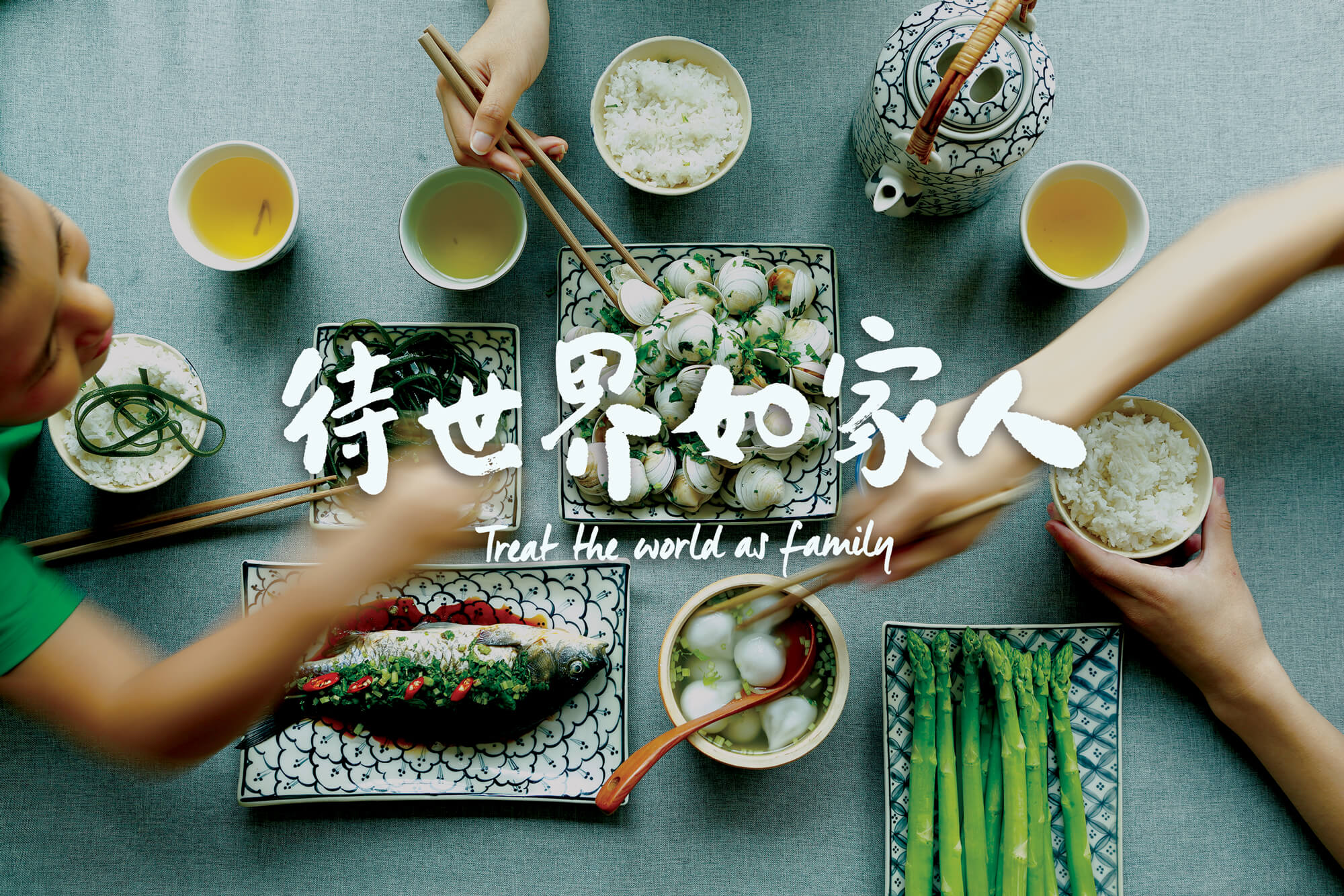
Elevating the craft of Chinese cuisine
Helping a packaged foods company in China define its purpose and take its place on the international stage.
IDEO helped position Shinho’s ingrained respect for food, family, and good health as a guiding principle for how the organization interacts with its employees and the wider world. The IDEO team integrated a new motto—“treat the world as family”—into every part of Shinho’s work, from sourcing and hiring to new ventures to the care employees take in handling each bottle of sauce destined for someone’s table.
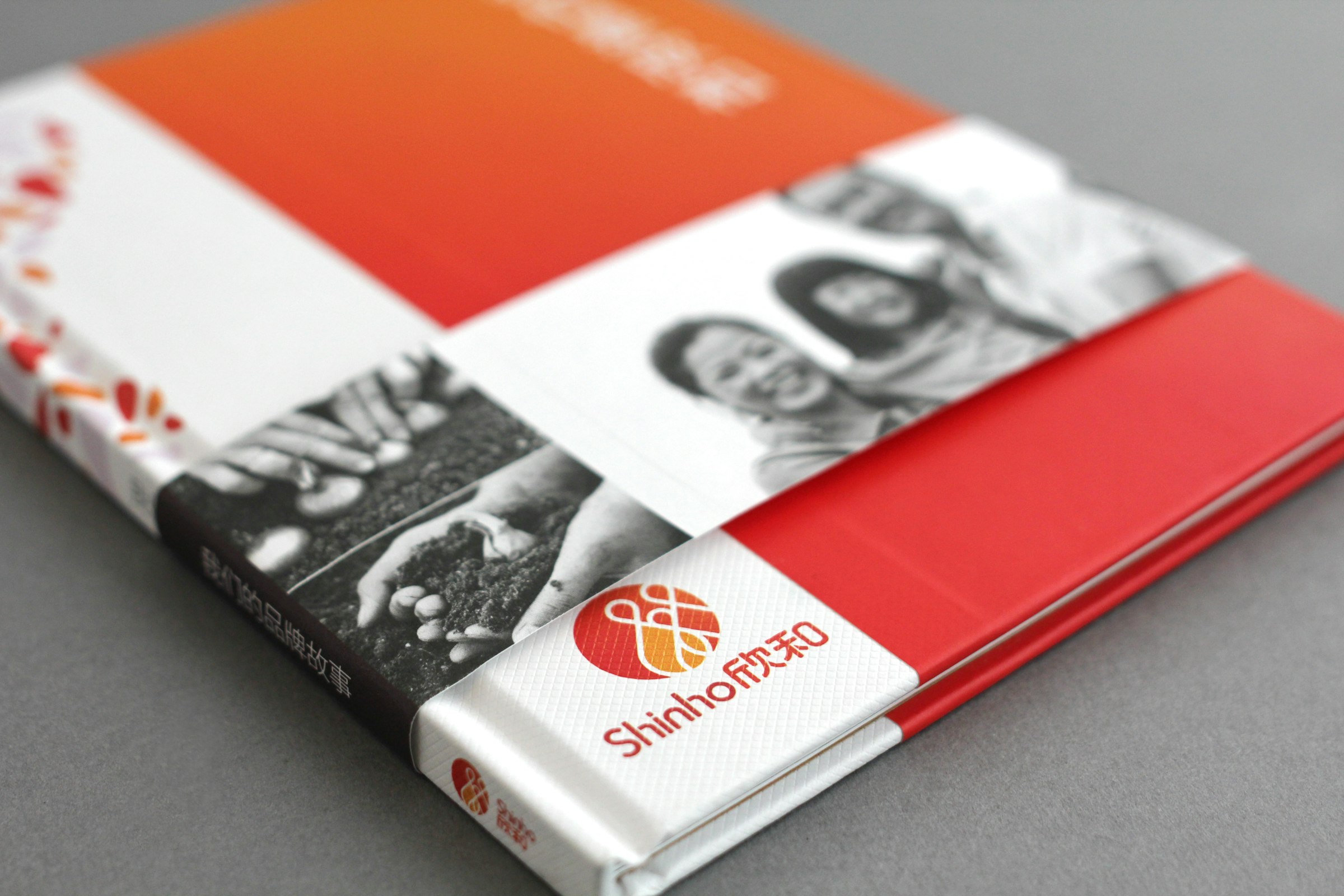
To help transform Shinho’s internal culture, the IDEO team also crafted a narrative to communicate the company’s beliefs to new staff and outside partners. The team expressed Shinho’s foundational story through a published brand book and film, reimagined logo, and codified employee values.
“My proudest moment was when we brought the brand identity IDEO developed to life, and interpreted Shinho’s mission and vision through that lens in front of 2,000 employees at our annual meeting,” said Hanzhong Dong, Shinho's Head of Product, “It made me feel that even though we’re a group of ordinary people, we’re working on a great and meaningful thing."
Shinho’s heightened confidence and focus on supporting families has empowered the company to expand beyond soy sauce and snacks and explore new offers, from culinary training to sustainable farming to food experiences.
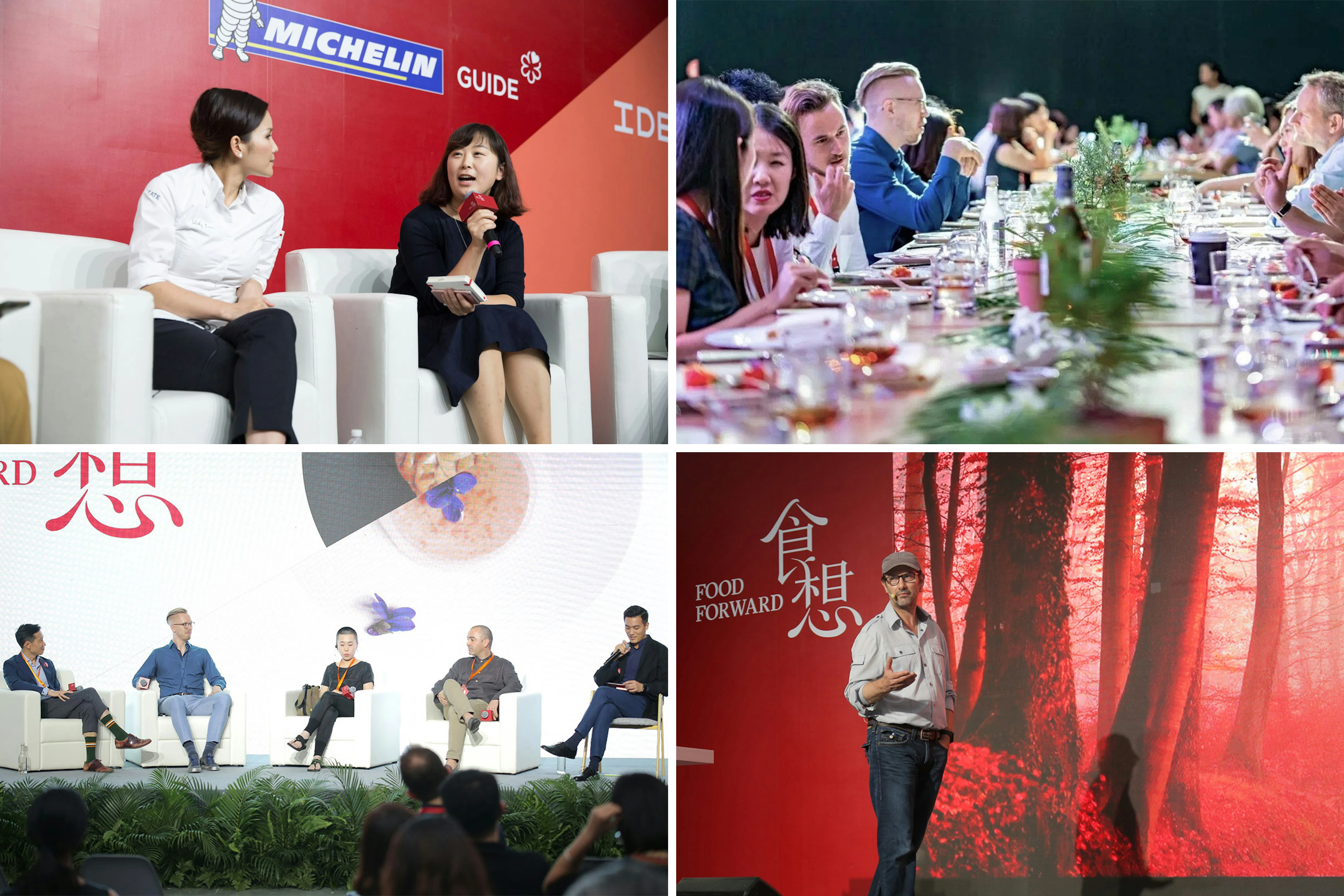
In July 2017, Shinho stepped onto the international stage as a tastemaker by participating in an event called Food Forward, hosted by the Michelin Guide and IDEO. Michelin-starred restaurants are synonymous with superb ingredients and service. Shinho crafts safe, organic, high-quality products that are staples for Chinese chefs, and the company shares the Michelin Guide’s aim to celebrate and expand the role of fine dining in China. IDEO brought all parties together with the shared goals of elevating China's culinary craft and culture, inspiring people around the future of food in China, and encouraging fruitful connections and partnerships.
IDEO and the Michelin Guide organized the day-long event, which included guest speakers, panel discussions, and tastings with four international, Michelin-starred restaurant chefs. Speakers and panelists discussed culinary education, inclusion, and the interplay between tradition and innovation in food. More than 200 people attended from across the food ecosystem: chefs, restaurateurs, journalists, investors, and educators. The event’s livestream garnered 30 million global views and 800,000 engagements.
Shinho’s products now reach 30 million families in 232 cities around the globe, driven by a cohesive mission and brand message. This kind of values-driven growth and hunger for new partnerships is setting the course for the future of food in China and throughout the region.
Despite the rapid growth of China's economy and increased access to a wider variety of food since the opening up, the market is saturated with unhealthy, processed snack foods. Consumers are increasingly seeking better-quality options, highlighting a significant gap in the food system.
30M families
purchase Shinho’s products
60 countries
around the globe offer Shinho products
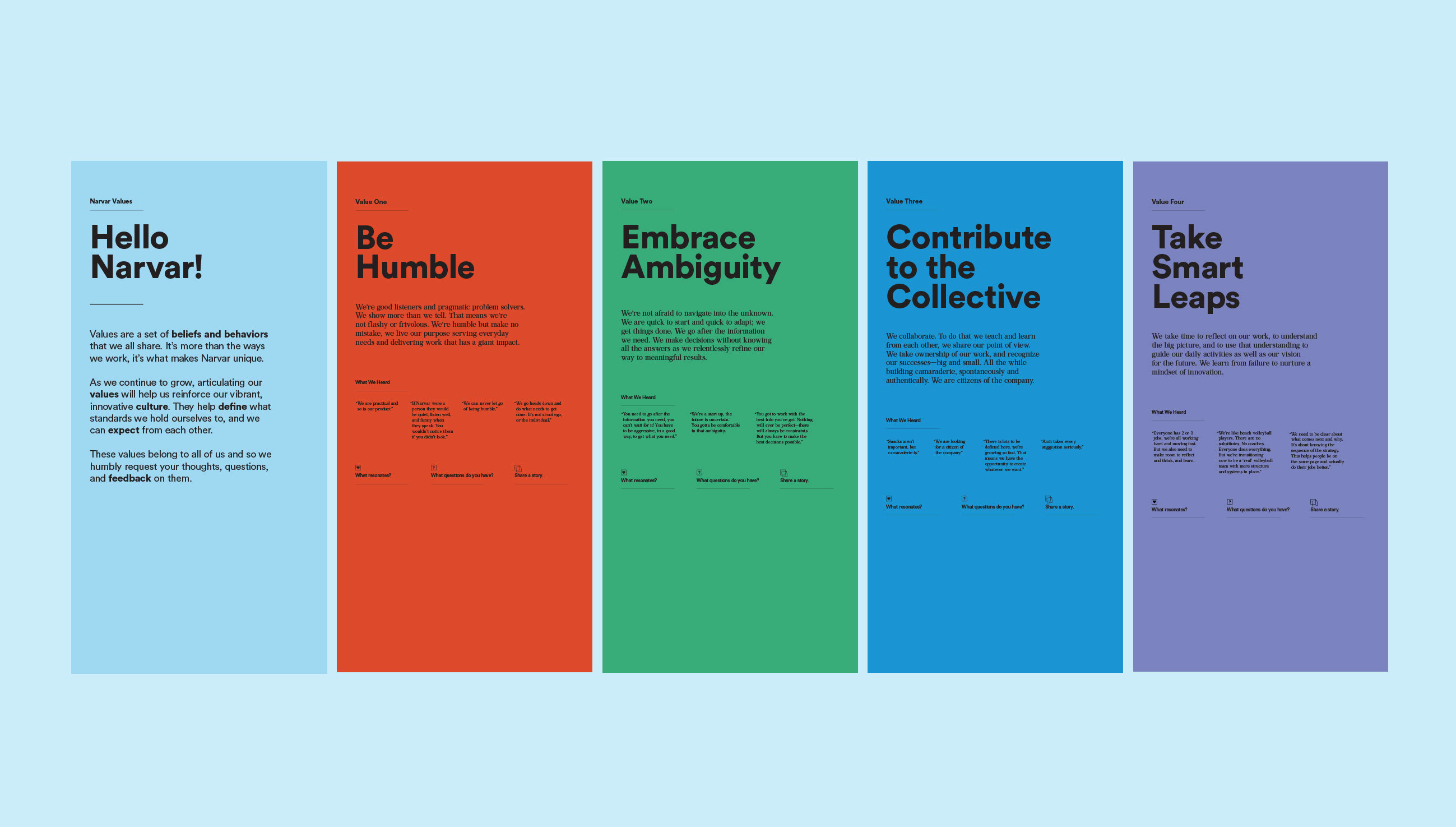
Defining values to set the stage for future growth
In helping a startup codify its values, IDEO prepared its team to scale—fast.
Narvar, a software-as-a-service startup that provides a post-purchase engagement platform for retail clients, was scaling fast. The company had grown from 20 to 90 employees, and was well on its way to reaching 300 over the next two years. As the company grew, its leaders wanted to make sure it could sustain its vibrant, innovative culture. Narvar came to IDEO for help identifying and defining its values in a way that would would scale with the organization.
For the IDEO team, that meant articulating a system of values that supported existing behavior, reflected the company’s aspirations, and aided in evaluating new talent and development. The team started by interviewing key “culture carriers,” from the CEO to new hires, to learn what makes Narvar special. Based on this research, the team crafted a working set of values, then invited the entire company to share their feedback. In doing this work, IDEO was also able to surface organizational issues and tensions within the company for Narvar leaders to address.
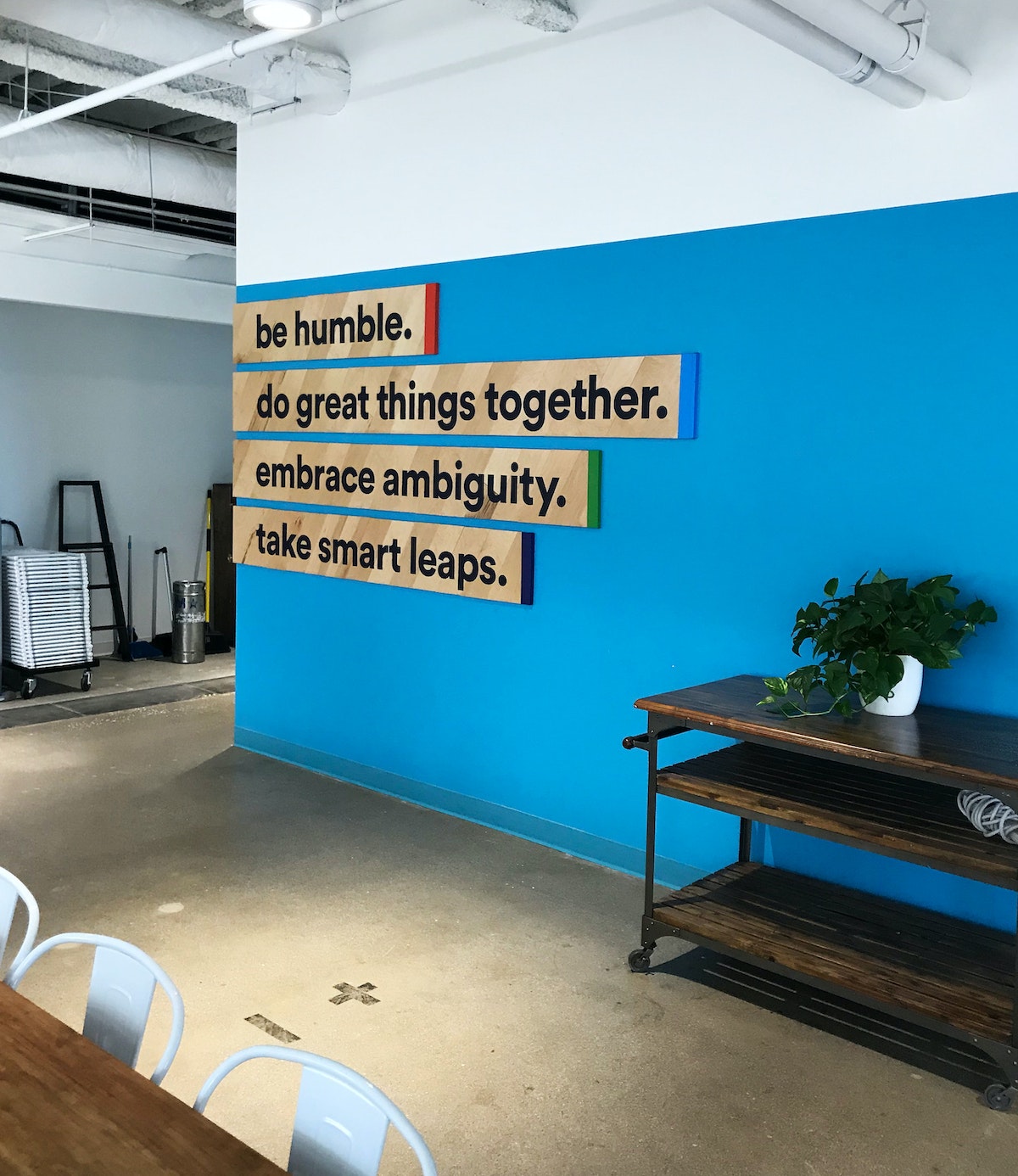
Now, Narvar lives its values every day. Team members use them during candidate interviews, employees see them daily on company walls, and managers reinforce them during performance reviews. Every quarter, leadership gives out a Narvar values award to reinforce their importance. Through this project, Narvar was able to not only capture its core values, but also use them as an active ingredient in the company’s growth.
“We engaged IDEO to really understand the challenges we faced as an organization, and IDEO helped us define and articulate our culture and values. I can honestly say that all the growth and success we’ve achieved in the past two years—we couldn’t have done that without the foundation from IDEO,” said Narvar CEO and founder Amit Sharma.

Designer’s Playlist #4
A few things IDEO Chicago's Ben Syverson can't stop thinking about

Name: Ben Syverson
Location: Chicago
Role at IDEO: As a senior software designer, I apply an interaction design lens to software development (or vice versa?) to take our prototypes further faster. Our development needs are as diverse as our projects. Lately, I've been helping our team prototype concepts for the operating room using VR.
Joined IDEO: 2014
Instagram: @bensyverson
Titillating Fact: I've always been into typography, and after I joined IDEO, I started drawing letters after work. It's very meditative! Before I knew it, I had designed two large type families. Unbeknownst to my fellow IDEOers, I've been able to sneak those typefaces into every one of my IDEO projects, in some form or another—from wireframes and prototypes to client presentations.

1. Unison
Unison is a textile design company that I really admire. They often collaborate with local artists and designers, and I just love their taste and sense of style. Unison has a great little store here in Chicago, and a beautifully shot catalog that my wife and I absolutely pore over.

2. Rotring Rapid Pro
My Rotring Rapid Pro lead holder is my security blanket. I take it everywhere. It's mostly brass and steel, giving it the satisfying weight and premium feel of a classic Leica. The 2mm lead can give you fine marks or subtle shading, and can stand up to more pressure than thin leads. I bought two Rapid Pros, in chrome and matte black, because YOLO.
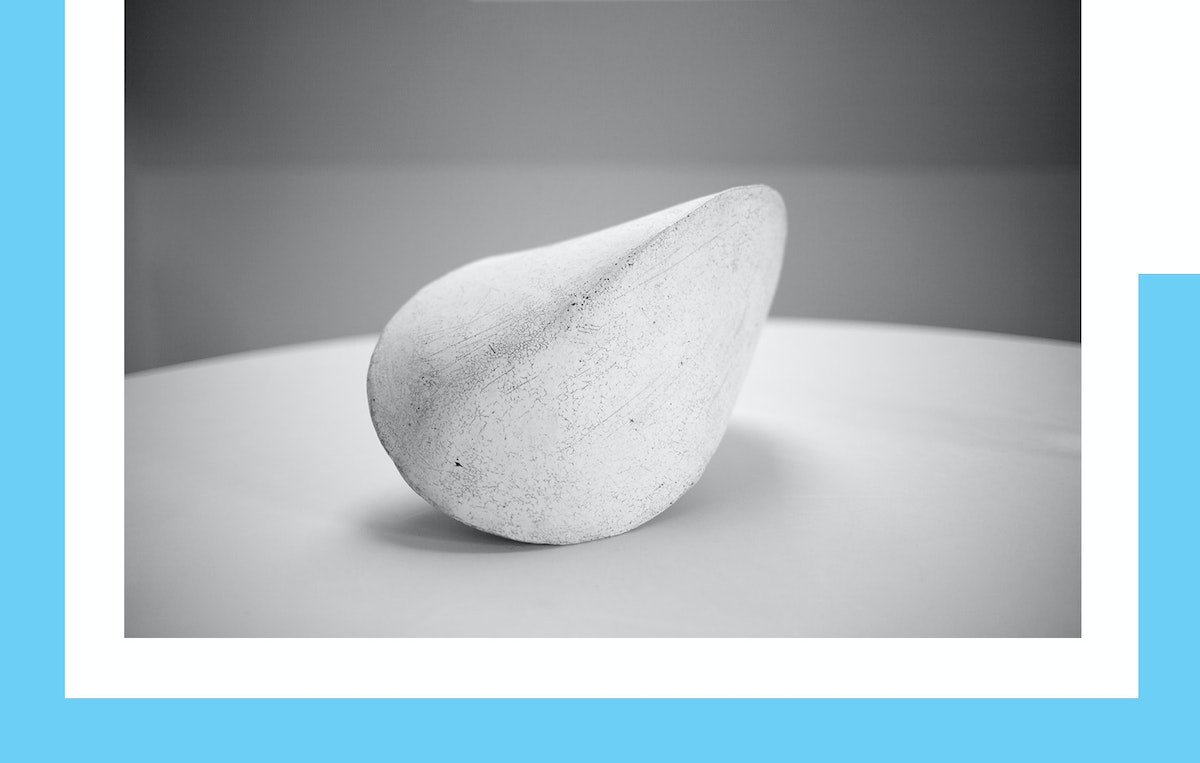
3. John Sheppard
I recently learned that my friend John Sheppard quit his job as an art director at the Wall Street Journal to fully focus on his gorgeous ceramic work, and I couldn't be happier for him. He has this amazing way of subverting the clean minimalism of his geometry with organic cutouts, intricate textures, and unexpected surfaces.
In this series, we ask IDEO designers to share the stuff they're digging right now—tools, books, music, sites, people, places—so you, too, can drink from the fount of inspiration bubbling up here. This week's guest star: Ben Syverson.

I Chop Up Faces Every Morning, and So Should You
Collaging is the new meditation
I’ve been a fan of my friend and colleague Nick Dupey, a member of Young Monster, for years. He and I once collaborated on a poster for Moogfest, and the first night we got together, he pulled out a stack of multi-colored construction paper and began cutting out shapes. That moment stuck with me—it brought back memories of elementary school art class, a time without computers and inhibitions.
So as my holiday break began, I committed to return to that headspace. For over a decade I had kept file drawers of old clip art, temporary parking passes, owners manuals, security envelopes, and other ephemera that caught my eye. I guess it’s a kind of graphic designer kleptomania, pocketing found type and imagery to display or repurpose. I fumbled through the stacks, tore apart some junk mail and magazines, and began reassembling.
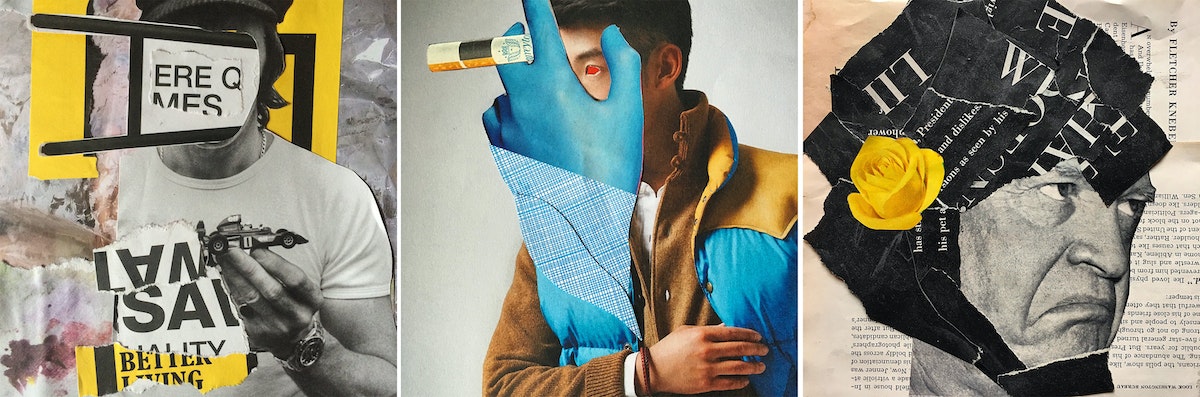
There was nothing precious about it. In fact, it was so quick that it felt like whiplash. My intent was simply to reassemble the mass of trash on my tabletop. It was an intuitive, thoughtless act that allowed my fingers to be free to make new movements. My sense of touch was back. I could hear the pink noise of tearing paper. I could smell the tape and glue. I had escaped the box.
Every day during the holiday I made a collage in an empty notebook I had long forgotten. I would slip away into my home studio during a lull and assemble another combination of type, images, and textures. I got lost in it. My creative freedom awakened. The feeling of creative wonder from my childhood was rediscovered.
I’ve kept it up since then. Early in the morning before I fill my mind with calendar to-dos, email, and other grown-up activities, I make something. It’s 10-20 minutes that sit somewhere between meditation and puzzle solving. My visual skills are sharper. My fingers are smarter. My ability to find resolution from chaos is faster. And even though I still don’t love my laptop any more than when this obsession began, I no longer feel trapped by it.
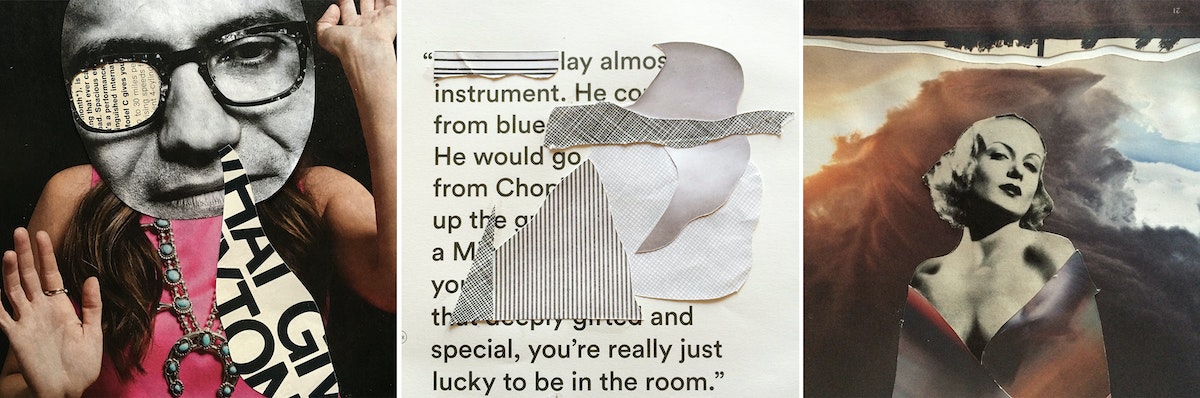
So how can you escape the box? Here are a few suggestions to help you rediscover your 8-year old self:
- Reframe junk mail as an endless stream of new mediums. Security envelopes from credit card bills, retail catalogs, and poorly designed postcards get me excited about checking the postbox when I get home.
- Begin with only a few elements—faces are the easiest starting point. Put three items together to get yourself going. The more you do, the easier it is to build complex creations.
- Don’t start with intention or a desire for meaning. Meaning will reveal itself as you create. The majority of what I’ve collaged is meaningless. It’s an exercise in associating form, color, and lines. But there’s the occasional moment when a story comes through.
- Always be willing to call your session a failure. I do these quickly and sometimes I just throw them away because they don’t resolve well. This isn’t an exercise in making something precious—it is a process that happens to have an occasionally stunning result.
- Save your scraps. I have drawers of them now and they often are the starter for my next image.
- Travel with a glue stick. Every hotel room has a stack of lifestyle magazines with luxury perfume ads. Tear them up in your downtime, then reassemble. Impress your friends on Instagram with your artwork instead of what you ate for dinner.
Two years ago, I began to fall out of love with the computer. It had become a claustrophobic box that dictated how I communicated and how I created. I felt like I was losing my design sensibilities, and treading a well-worn trail through the same digital menus, with my fingers commanding the same virtual assets.
Sharpen Your Writing: a Designer's Guide
A designer's guide to communicating in written form
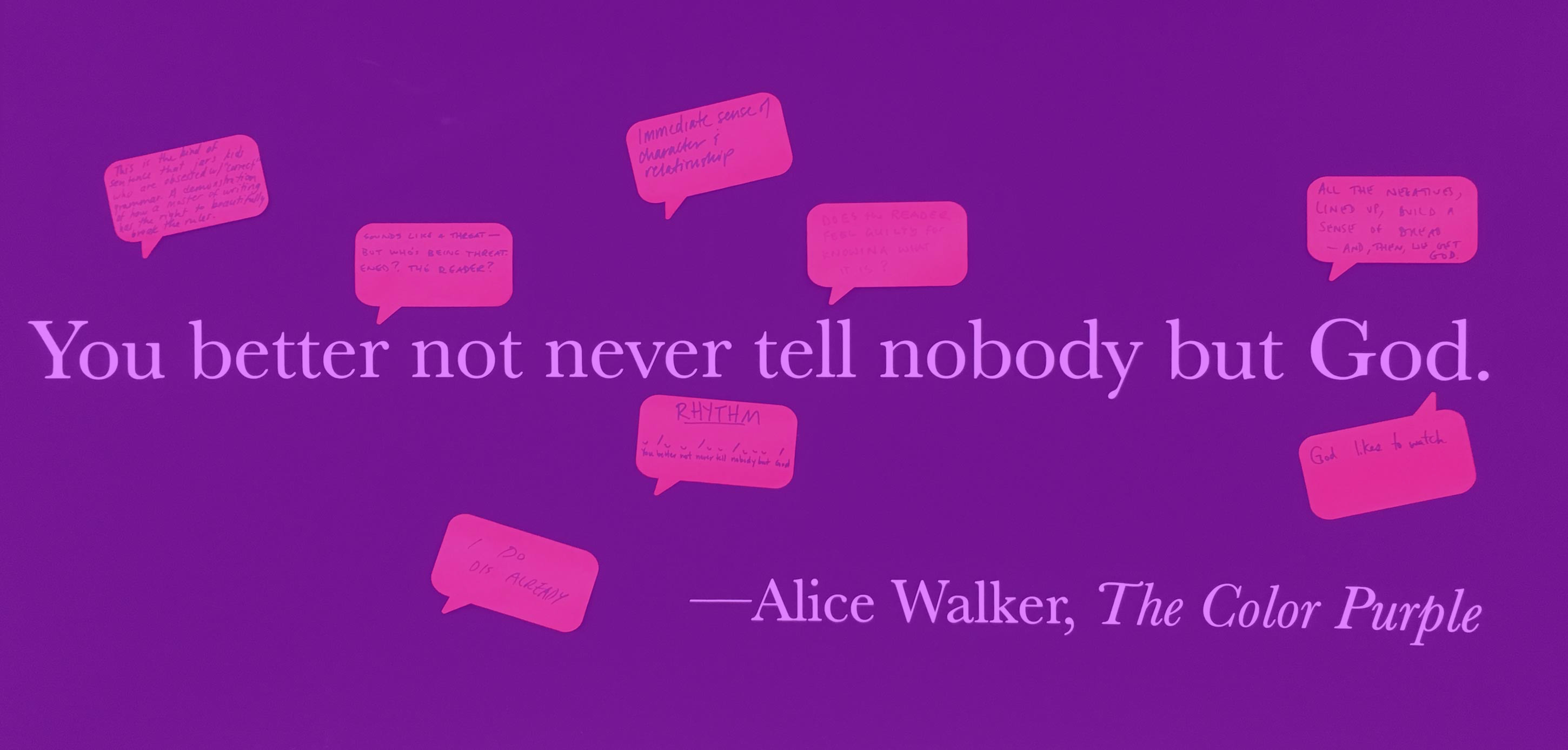
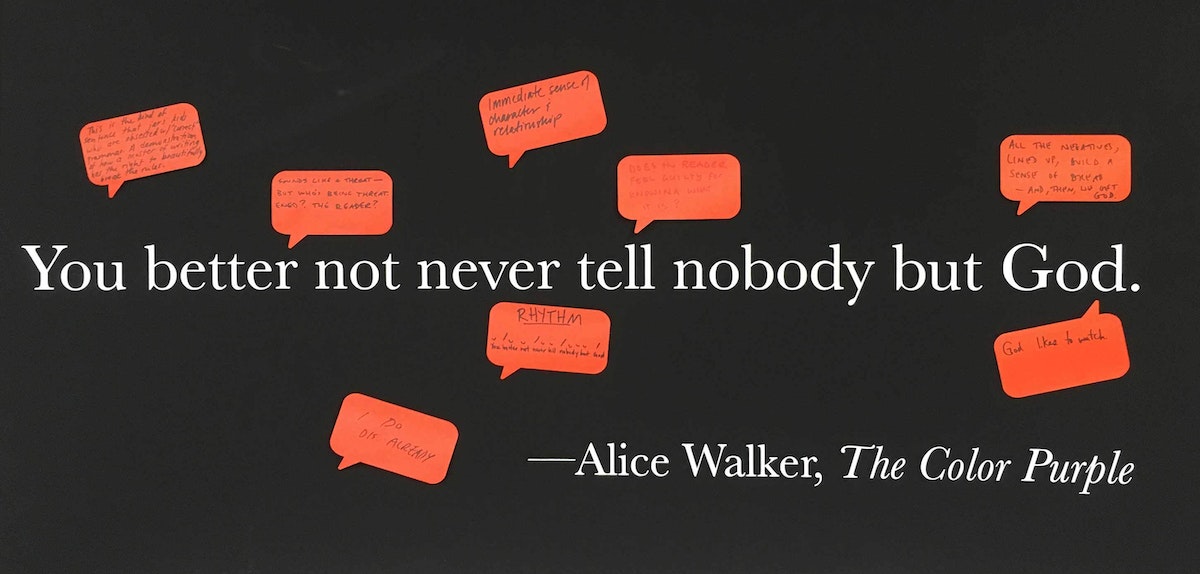
We wanted to change that, and in the process, to help our community learn how to do it better by paying close attention to how great writers wield language. So we invited our colleagues to take a close look at powerful opening sentences, all drawn from novels.
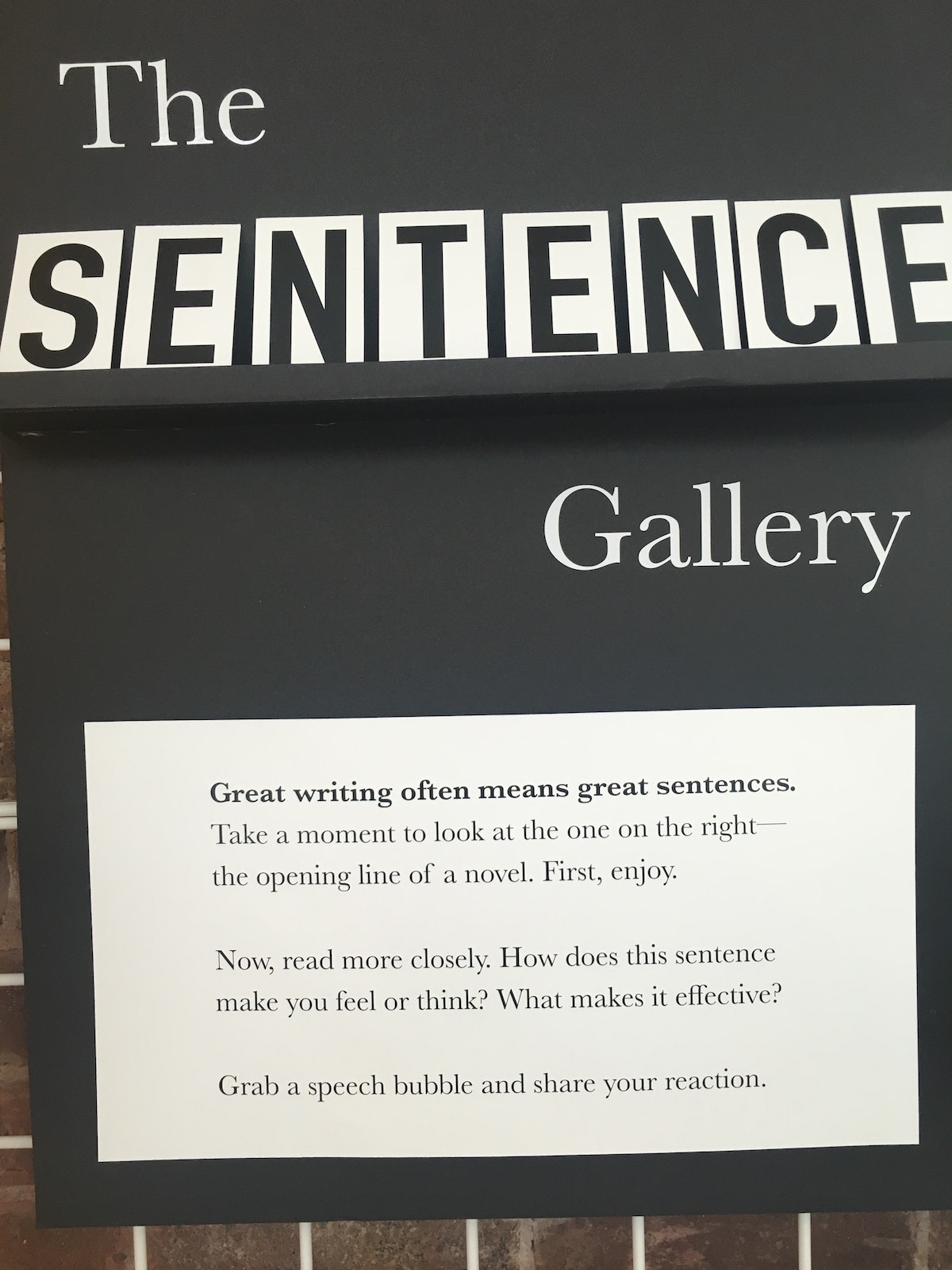
We called it The Sentence Gallery. Inspired by writer, editor, and friend-of-IDEO, Allan Reeder, the project takes to heart a quote by journalist William Zinsser that Reeder shared on his blog: "Writing is learned by imitation. I learned to write mainly by reading writers who were doing the kind of writing I wanted to do and by trying to figure out how they did it."
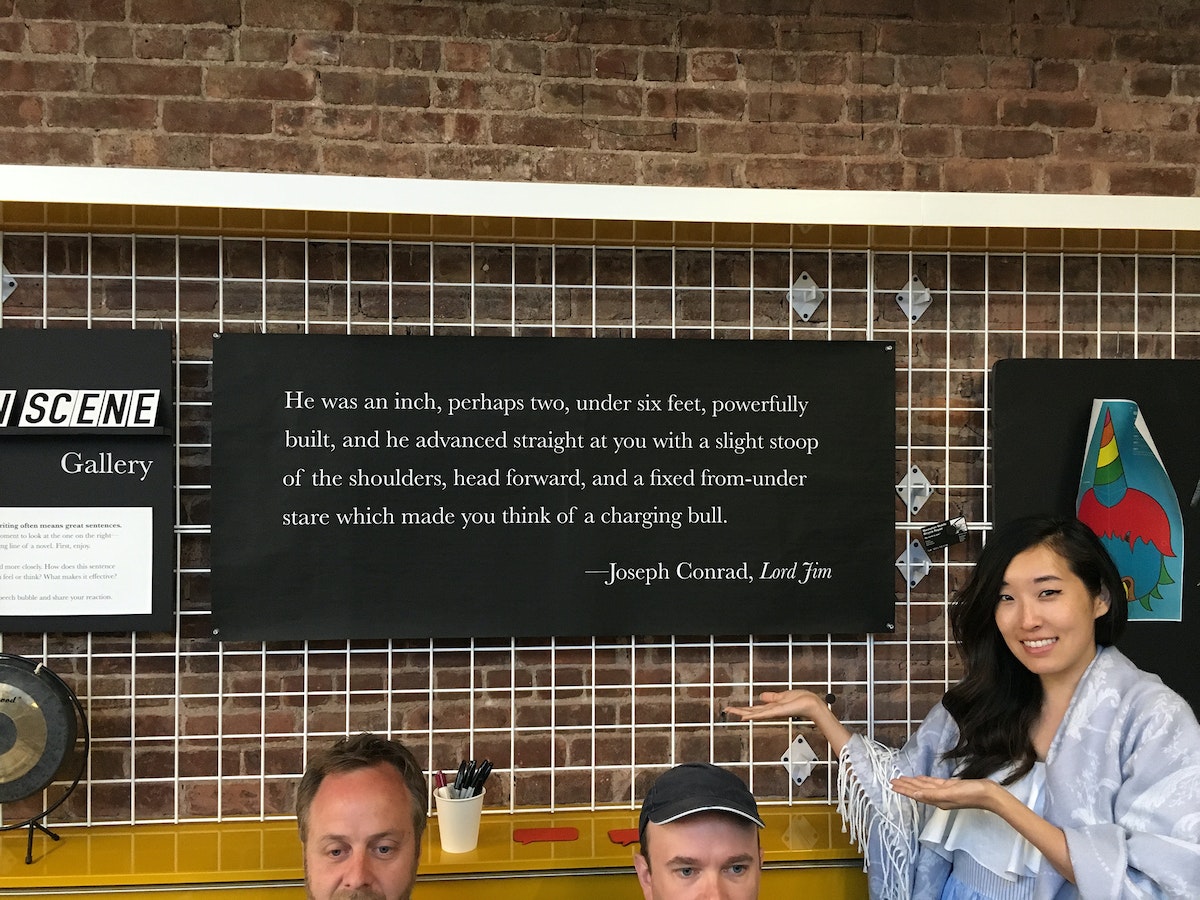
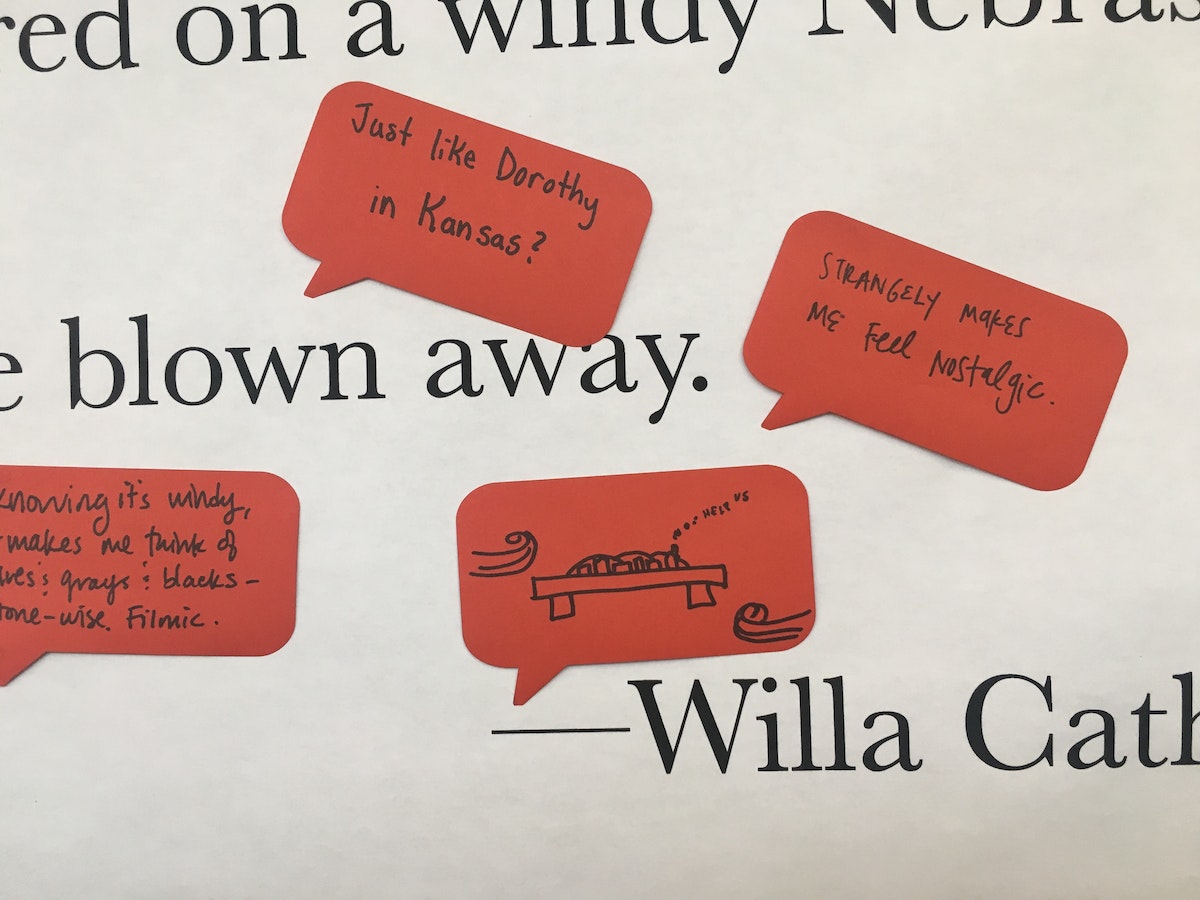
To bring The Sentence Gallery to life, communications designers Jason Baker and Sera Koo built a wall out of foamcore and mounted it in our main community space. Over a few weeks, they showcased a series of sentences, writ large. They also laser-cut thought bubbles from Post-it pads and invited people to reflect on what made each sentence effective. The sharp point of the bubble operated as a marker that allowed passers-by to draw attention to whatever effect they’d noticed, placing their comment at a specific moment in the sentence.
What’s the effect of this word followed by that one? How does the rhythm and pacing of a sentence make the reader feel? Those were the kinds of question we wanted the Gallery to provoke.
At IDEO, great writing emerges from an admixture of instinct, craft, inspiration, learning, and unlearning. That’s likely true for most any design artifact worth our attention.
As designers, we treat sentences like any other prototype. We get them out quickly, and then we get to work on them, refining our writing until it takes us where we need to go.
Writing sharpens our thinking. And as human-centered designers, we rely on it to communicate unspoken human needs. But the craft of writing is itself somewhat hidden; it can seem like a secret art, all furtive fingertapping behind the screen of an open laptop.
How Chatbots are Changing Design
Chatbots can help us learn what people need when prototyping products and services
Conversational UI is getting a lot of buzz out in the world, and for good reason. SMS is going through a renaissance, and its immediacy and accessibility make it an ideal channel for building services at a time when apps are no longer the medium for digital experiences.
Beyond the buzz, conversational UI shows us that everything in design should be considered a conversation. All elements in an experience are exchanges between people, brands, businesses, services, and, increasingly, machine-powered intelligence. Conversation is the primary design material for designers — and its general purpose is to impact people’s behaviors and emotions.
Designing Conversations

The ambiguous design process.
These days there’s a strong focus on chatbots and conversations as end products, but in our IDEO New York studio, we’ve been using conversations as a prototyping tool to test assumptions, learn, and inspire design. Chatbots are exciting, but we’re also excited about what they unlock for us as a learning medium, not just because they’re the next big thing.
Here's one of our experiences using chatbots as a design tool.
Walkbot: Prototyping Content and Engagement

In 2014, together with a Japanese electronics manufacturer, IDEO designed a device and smartphone app that captures a woman’s activities in order to generate thoughtful, actionable insights about her fitness choices.
At the time, wearable devices were heavily marketed towards men. The women we were addressing wanted meaningful content, and were far more focused on competing with themselves than with others. It also turned out that our product was too data-heavy.
"I like that it’s there if I need it. It’s kind of like a little friend." [anonymous user]

Walking alongside our participants during field research.
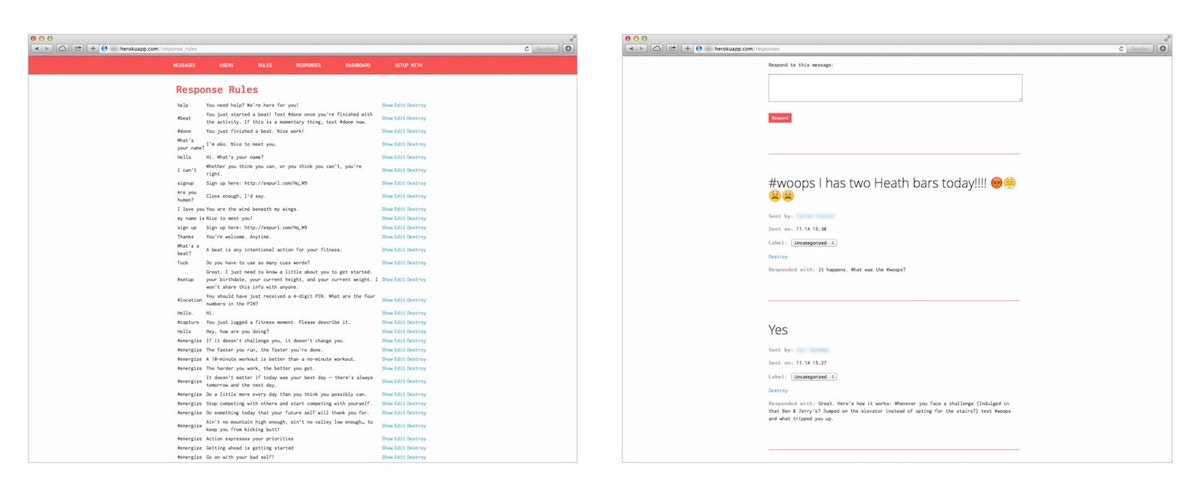
The dashboard created to communicate with users and track responses.
To uncover what meaningful content looks like for these women, we went to the women themselves.
A software designer on our team built a custom tool leveraging Twilio’s SMS API, and created an SMS platform that a team of people could use to manage and direct messages. We recruited a panel of women, and during their workouts, a team member would send messages like “great workout, keep going” or “you’ve walked ___ steps today, add a 5 minute walk to reach 10,000.”
Lisa: “Ugh, he wants me to pick up my intensity and burn more calories.”
IDEO: “How do you know it’s a man?”
Lisa: “Because I’m mad at it right now."
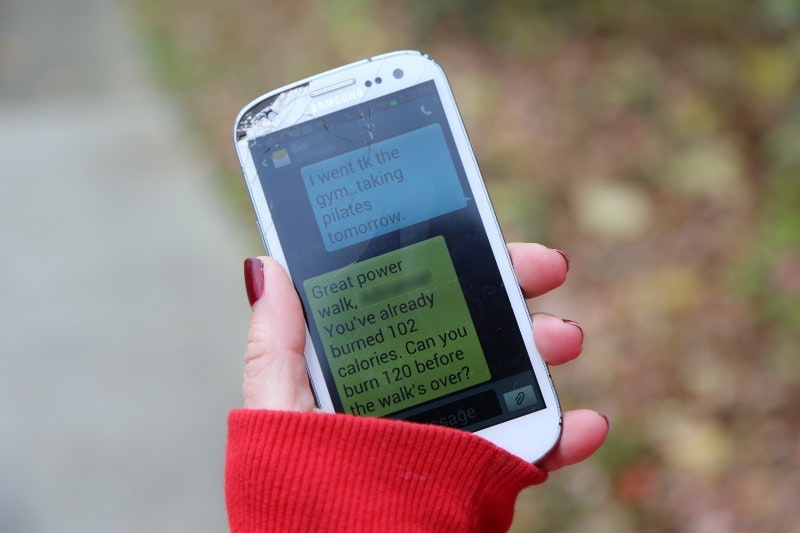
An example of our real-time SMS prototyping — a team member would secretly text messages to our participant during her workout.
The responses were surprising. For one thing, women who participated in the design research would project gender and personality on to our bot. In moments of frustration, the bot was referred to as a “he,” when, in fact, the messages were coming from our female colleague. For another, not only did the women want to share their activities, they also wanted to share their failures. For them, fitness wasn’t purely about achieving a goal, but also the process it took to get there.
What we learned:
- The best way to understand what a conversation needs to be is by starting it. Figure out tone of voice, pacing, and interactions as it unfolds.
- It’s possible to make conversations feel more personal with only a few data points. Be intentional and creative.
- Every participant will project an identity onto the bot — regardless of whether the design team gave it one.
- Bots allow for a nuanced interaction that might bring surprising elements to your product. Be willing to pivot in response to happy accidents.
Our Chatbots Protocol
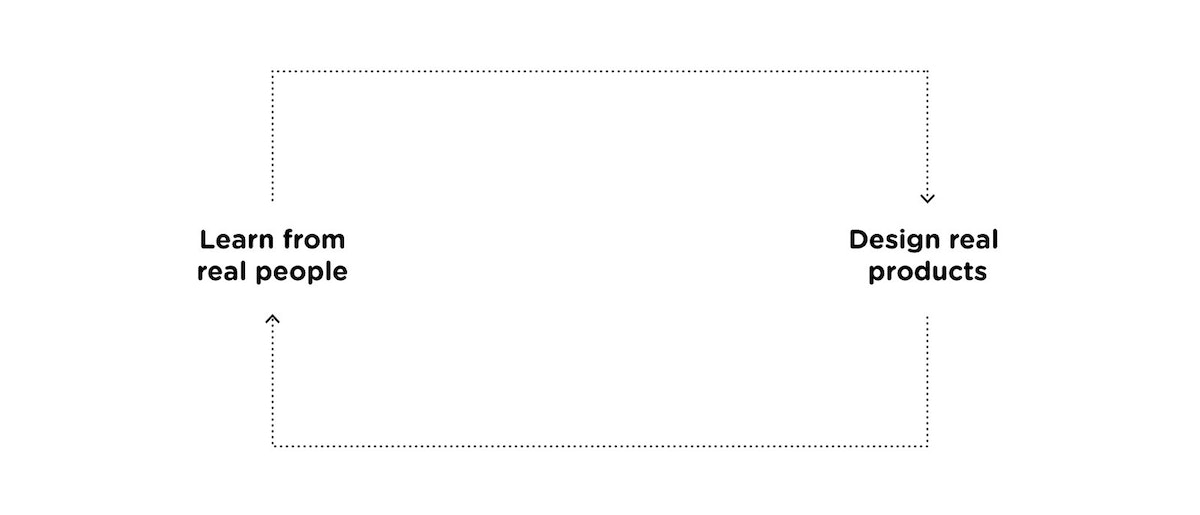
During the past few years, the interaction design and design research teams at IDEO New York have worked closely with real people to test value propositions and the desirability of digital products and services. Together, we built ad-hoc tools that helped us design conversations with users, and engage with them in real-life contexts.
As we planned and ran these prototypes, we developed a set of principles we now rely on in our research.
- A prototype is a question, embodied. What are you trying to learn? Who are you learning from?
- Hack existing tools. There’s no need to build from scratch.
- Iterate in real-time. The beauty of SMS is that you can adapt quickly.
- Be explicit about the intentions of your work, and make sure that your actions are in line with the ethics of field research
- Consider all the stories, anecdotes, and insights you gathered through your chatbot to inspire the design.
Meet Stanley

There are several services that can help you set up an SMS-based platform. Alternatively, you can create your own conversation bot following the instructions we shared for Stanley, the SMS-based platform that we use.
You can find the source code, and the instructions to setup Stanley here.
For some more on using bots for design research, read this article on IDEO Labs.
The above is an abridged version of a longer Medium article that details three case studies where we’ve used chatbots to prototype services and products. Read the full article here.
Illustrations by Amy Wang.
The below is an abridged version of a longer Medium article that details three case studies where we’ve used chatbots to prototype services and products. Here, we'll focus on the hows and whys of using chatbots to prototype content.

Lindsey Turner
I’m passionate about building brands, products, and experiences that help organizations show up with meaning and momentum.
I help organizations cut through complexity by shaping how they show up, through brand strategy, identity, and storytelling.
Working at the intersection of brand and business, I bring an editorial eye and a bias toward making—turning ideas into tangible experiences that people can understand, trust, and believe in.
My work spans government, healthcare, financial services, media, and consumer goods, from launching Gen Z-focused ventures to building innovation labs and reimagining legacy brands. I relish moments of ambiguity and enjoy translating across teams, perspectives, and priorities to move ideas forward.
I started my career in editorial and digital design, shaping cross-platform experiences and identity systems in publishing and agency environments. That foundation still shapes how I work today: I’m detail-oriented, collaborative, and overreliant on the Oxford comma. I hold a BFA in Visual Communication from the School of the Art Institute of Chicago.

Rachel Young
My work helps organizations see who their products aren't working for—and build the will and the tools to do something about it
For 25 years, I've asked the same question: Who does this design exclude—and what are we going to do about it?
My work spans human-centered strategy, inclusive design, and qualitative research, with clients ranging from Microsoft, Google, and Verizon to the National Science Foundation, and San Francisco Unified School District.
Before IDEO, I taught elementary school in East Palo Alto and spent a decade doing design work with social service organizations—where I learned firsthand what it costs people when systems are built without them in mind.
I am currently writing User Error, a nonfiction book about digital access and the design decisions behind it. I live in Oakland, California.

Brian Pelsoh
I lead with craft, ensuring our work is creatively excellent: rooted in deep human insight and imagination, while also grounded in the realities of business and technology.
My expertise spans brand, communication, and product design across tech, education, the arts, and social impact.
I believe great work demands both high-level vision and obsessive attention to detail, and only happens through collaboration.
I bring an inclusive, hands-on approach and a deep understanding of business, which enables me to consistently deliver excellence while always asking why.
Before joining IDEO, I worked at the brand firms Pentagram and VSA Partners. I began my career as a designer, leading teams at the School of the Art Institute of Chicago and the Milwaukee Art Museum. I hold an MFA in graphic design from Maryland Institute College of Art and a BFA in communication design from the Milwaukee Institute of Art & Design, and have taught at some of the best design schools in the US.

Tony Wong
I am responsible for IDEO’s long-term success in China and working with clients to use design as a tool to enable growth.
I am responsible for IDEO’s long-term success in China and working with clients to use design as a tool to enable growth. Specifically, I have helped Chinese companies design holistic brand solutions through the development of their products, communication, services, and innovation teams, and I have helped multinationals expand their presence and influence in China.
I advise global leaders on developing China-led innovation and capabilities.
In over 15 years in IDEO Shanghai, I have worked on projects that use design to elevate the quality of the experience of healthcare products and services, streamline processes that increase productivity, create spaces and programs that promote and enable inclusive communities, and build next generation mobility solutions that are planet-positive.
Before joining IDEO, I worked at Philips Electronics and the Electrolux Group in Italy, the Netherlands, and Singapore on a number of breakthrough commercial products. I am a member of the Young President Organization in Shanghai.

Building a personal AI for the messiness of life: Sida Li
Most AI products today are built for work—a space with clear problems and established systems. One founder noticed a gap: personal life is messier, harder to systematize, and mostly left behind by the AI boom. So she built Cue, a personal AI that lives inside iMessage and group chats, to go where the other tools haven't.
In this episode, Becca Carroll, IDEO's Chief Strategy Officer, talks with Sida Li, co-founder and CEO of Shared Context Lab, about staying anchored to a human need while the technology around her keeps changing shape, why she treats her business model with the same rigor she'd bring to a product, and what it feels like to build a company at this particular, disorienting moment in AI.
The conversation also gets into how Sida makes design decisions: the language Cue uses to describe itself, the tradeoffs behind building inside iMessage instead of a new app, and a real story about a business idea that didn’t pan out.
This is the second in a two-part series profiling founders from IDEO's Startups-in-Residence program. The first conversation is with Johannes Seemann, founder of Sooner, on designing GenAI for the emotional side of money.

Designing GenAI for the emotional side of money: Johannes Seemann
Most personal financial tools are built to run the numbers and optimize towards a budget. While that works for some, most people experience money as a lived relationship that does not neatly fit into a spreadsheet. Johannes Seemann and Becca Carroll discuss why money is emotional before it is mathematical, and what a human-centered approach to building a generative AI financial product looks like in practice.

The curious leader's edge in uncertainty: Scott Shigeoka
Mina Seetharaman talks with Scott Shigeoka, author of Seek and Head of Curiosity Cultivation at the Eames Institute, about what distinguishes genuinely curious leadership from performative curiosity, how power dynamics shape curiosity, and why practicing curiosity can restore energy rather than drain it.

How constraints make us more creative: David Epstein
Mina Seetharaman talks with David Epstein, author of Inside the Box and Range, about why total freedom often produces average work, how leaders can design useful limits on purpose, and what organizations such as General Magic and Pixar reveal about the relationship between boundaries and creativity.
Looks like you might be in search of something very specific?
Or reset the filters above and try another angle.
Here’s some random inspiration

Podcasts about creative leadership

Articles about the power of prototyping
