
.svg)



Building a brand for a new, more nutritious rice
RightRice makes one of the world’s favorite foods healthier and easier to prep.
When it comes to food, we often have to choose between health, convenience, and taste. Parents struggle to get their kids to eat veggies. The same daily salad can become boring or bland over time. Produce often withers in the crisper drawer.
Betterer Foods set out to make one of the world's favorite foods healthier. Rice is a beloved food across many cultures, but many people now avoid simple carbohydrates due to diet restrictions or health concerns. Innovations and alternative options have mostly been limited to products in the freezer section, like riced cauliflower.
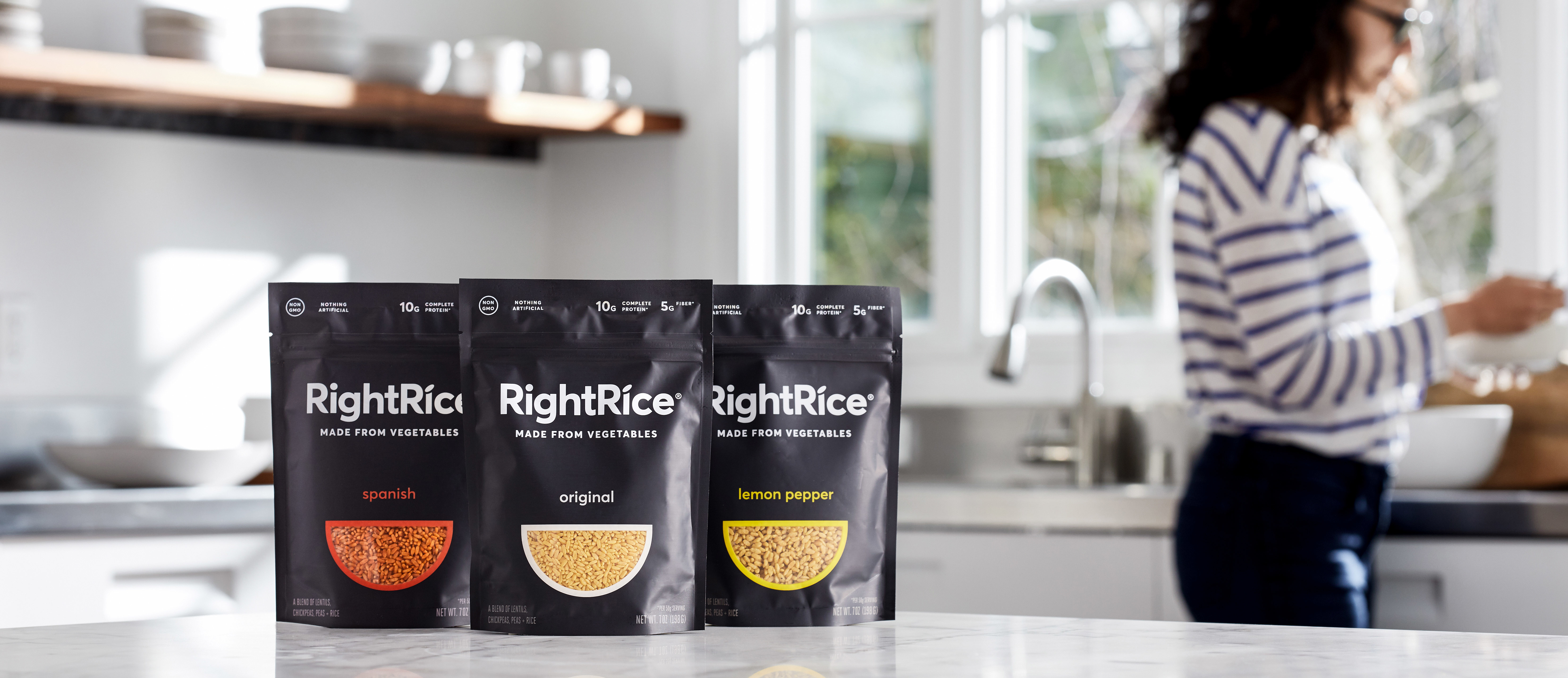
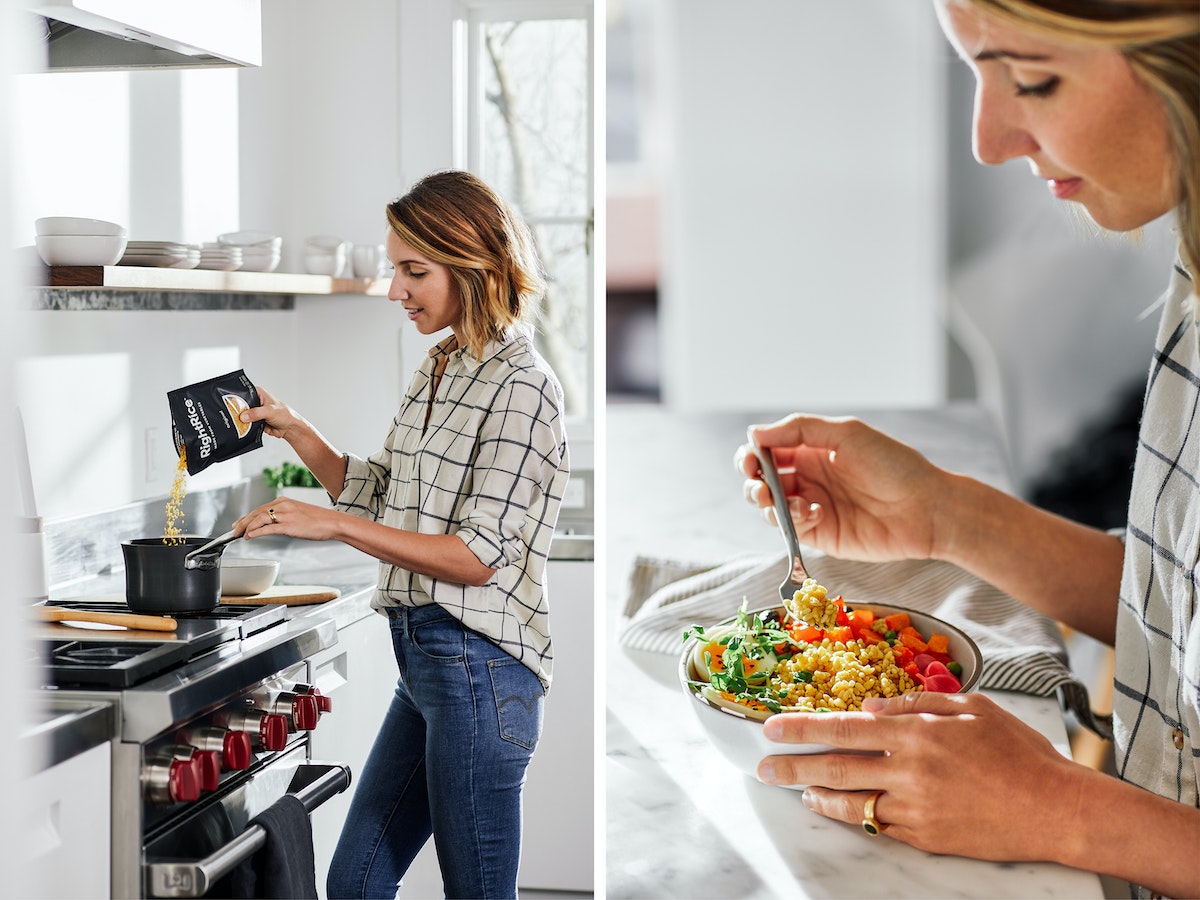
Betterer Foods created RightRice: a dry, shelf-stable grain made from rice and vegetables, including lentils, chickpeas, and green peas. RightRice has more than double the protein, five times the fiber, and 40 percent fewer net carbs than traditional rice. But the product still tastes and looks like rice, and is faster and easier to cook.
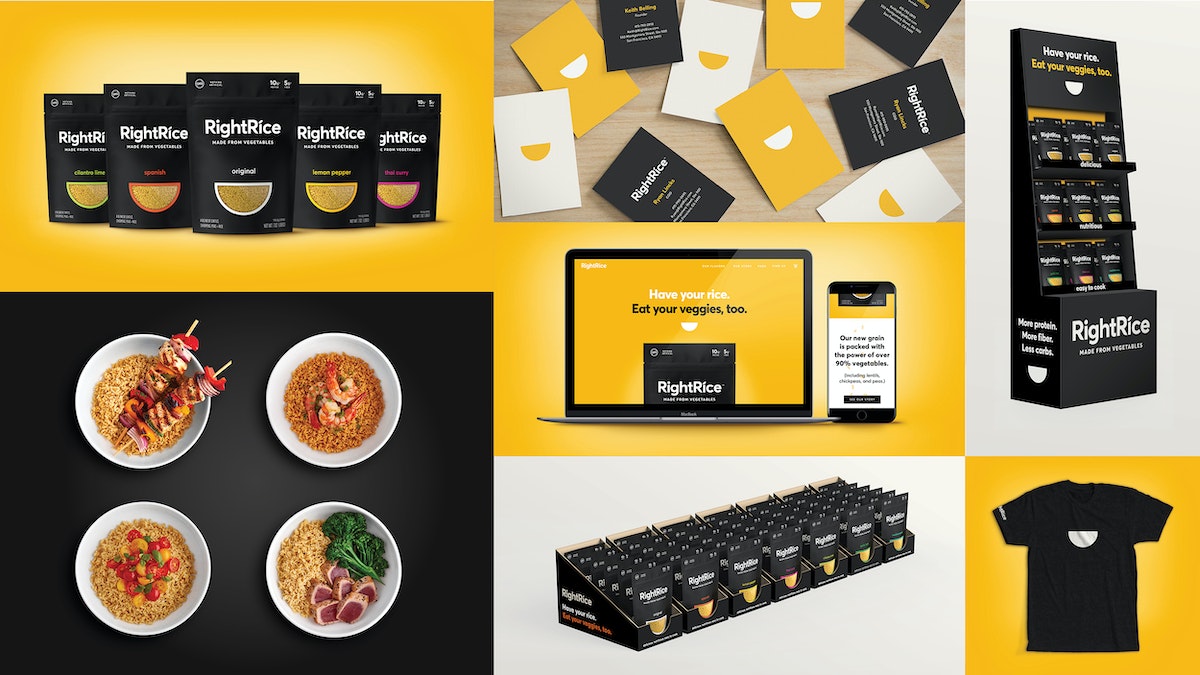
RightRice founder Keith Belling, the founder and former CEO of popchips, asked IDEO to design a brand that would communicate the product’s benefits. The start-up needed everything from a defined target consumer and brand story to a stand-out package design, website, and go-to-market materials.
The team listened to people's challenges with rice and eating healthfully: home cooks find it difficult to store fresh foods without them going bad, busy professionals are strapped for time when preparing balanced meals, and parents sneak vegetables into dishes like casseroles or mac and cheese. Some consumers say they avoid rice because it’s a carbohydrate, which is forbidden in so many of today’s diets. People describe themselves as “carb phobic” or say they consider rice a “guilty pleasure.” Others don’t eat rice because it makes them feel sluggish or bloated, or is too difficult or time-consuming to prepare. Overall, people wished rice could be healthier, simpler to cook, and still taste delicious.
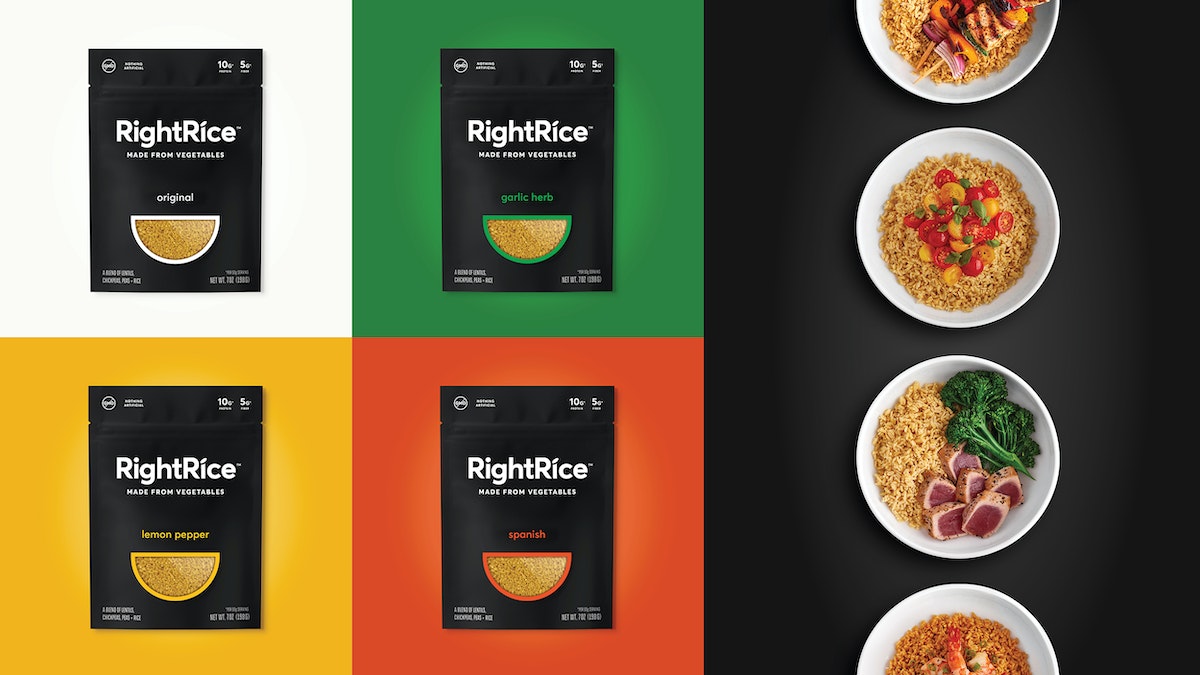
IDEO translated these insights into a brand foundation that helped RightRice come to life on shelves, online, and in the world. The package messaging emphasizes the vegetable ingredients, and the cut-out window lets consumers see that the product looks like rice. The shape of the window simultaneously forms a bowl of rice and a smile.
Rice is a household staple around the world. The RightRice brand makes it easier for consumers to have health, convenience, and good taste in one accessible product. RightRice launched nationwide in Whole Foods and Amazon in February 2019.
Since this launch, the company has expanded both its reach and product line. RightRice is now available in nearly 5,000 retailers nationwide in addition to Whole Foods and Amazon, including Sprouts, Wegmans, and approximately 1,800 Kroger stores. Over one million bags have been sold.
The company has received numerous awards and acclaim, including being named “Best Plant-Based” by People’s 2019 Food Awards. Building on the success of RightRice, Belling and his team launched RightRice Medley, a blend of RightRice, ancient grains, and vegetables, in 2020. This new product, which features the same branding the company created with IDEO, has doubled the company’s shelf presence at Whole Foods.
How creative leadership can transform companies and society
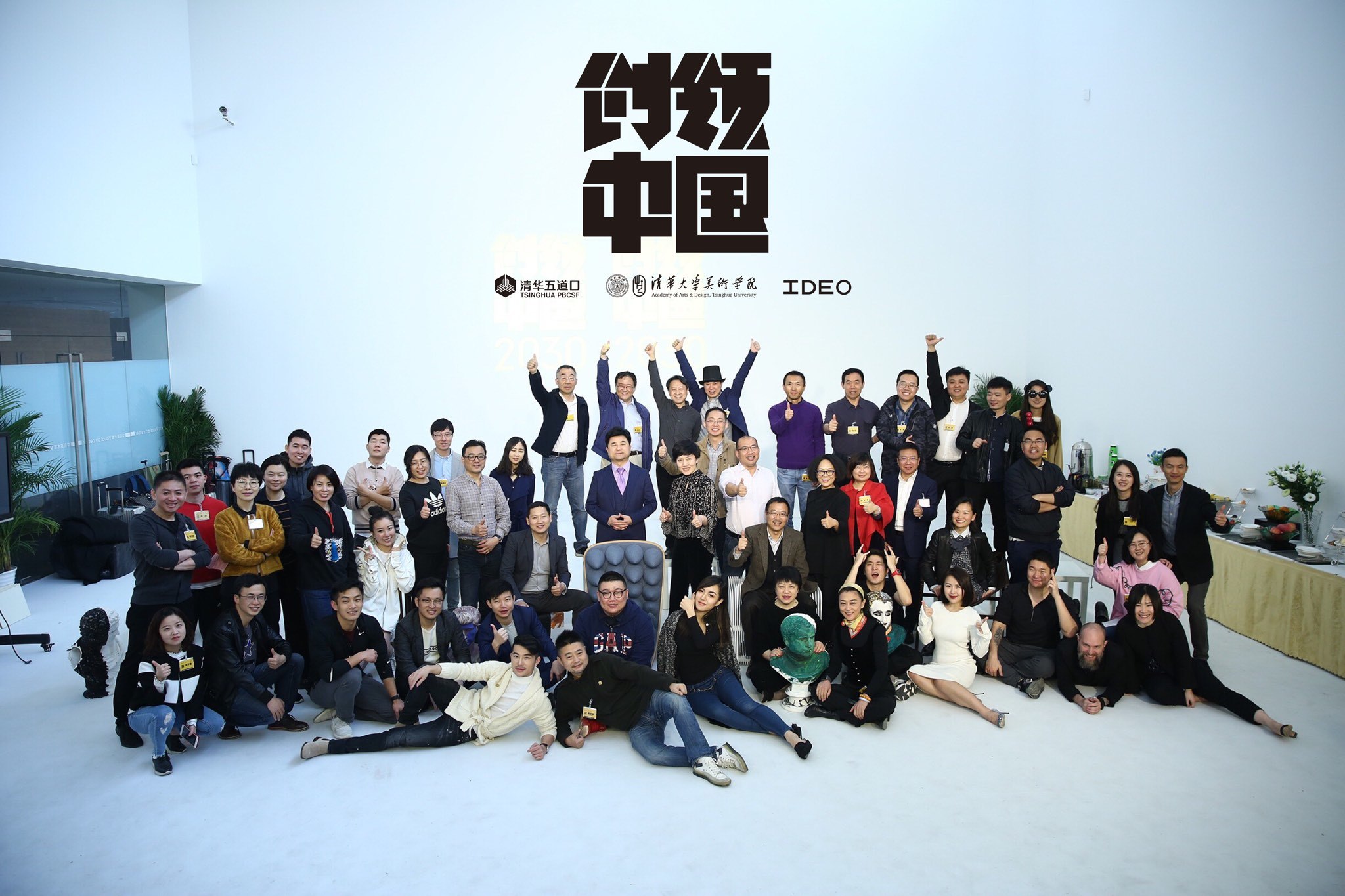
Joining hands with PBC School of Finance, Tsinghua University, and Tsinghua Academy of Fine Arts to create the first innovative leadership course with design thinking as the core in China.
After 40 years of rapid development, China's economic growth has reached a critical turning point.
However, looking at the world, today is also the most complex and uncertain era in human history. The traditional engine of economic development is slowing down, while innovation and other emerging ideas are helping the economy burst into dynamism. To ride this trend, China has already put in place comprehensive policies to ensure that the country can achieve this magnificent transformation—not only to maintain economic growth, but also to achieve high-quality development. To this end, what China needs most is a group of new business leaders with a sense of cooperation and innovation to lead and realize this change as a pioneering force.
People of insight can often see the situation clearly with a forward-looking eye. China's society and economy are undergoing transformation and upgrading, and market demands are constantly changing driven by technology. While seeking business development, many mature entrepreneurs with successful experience have realized that they need to explore some of the most essential issues inwardly, including: The original intention and mission of the enterprise and the role that enterprise leaders should play. However, without a systematic approach, transformation and upgrading, strategic decision-making, management mode and cultural construction cannot truly serve the enterprise
As a top institution of higher learning in China, Tsinghua University has always placed an important strategic position on cultivating innovative talents for China. IDEO is the world's leading design and innovation consulting firm. As a pioneer of design thinking, IDEO has always been committed to applying design and innovation capabilities to solve the world's most complex problems. After discovering the need for China's economic and social transformation and the need for innovative leadership by Chinese entrepreneurs, Tsinghua University and IDEO jointly launched the "Leading China" program in 2018. This program is aimed at senior management of Chinese enterprises, and aims to train entrepreneur trainees to use new perspectives and ideas through a one-year innovative leadership course to seek solutions for the systemic changes that need to be achieved in the process of social transformation in China.
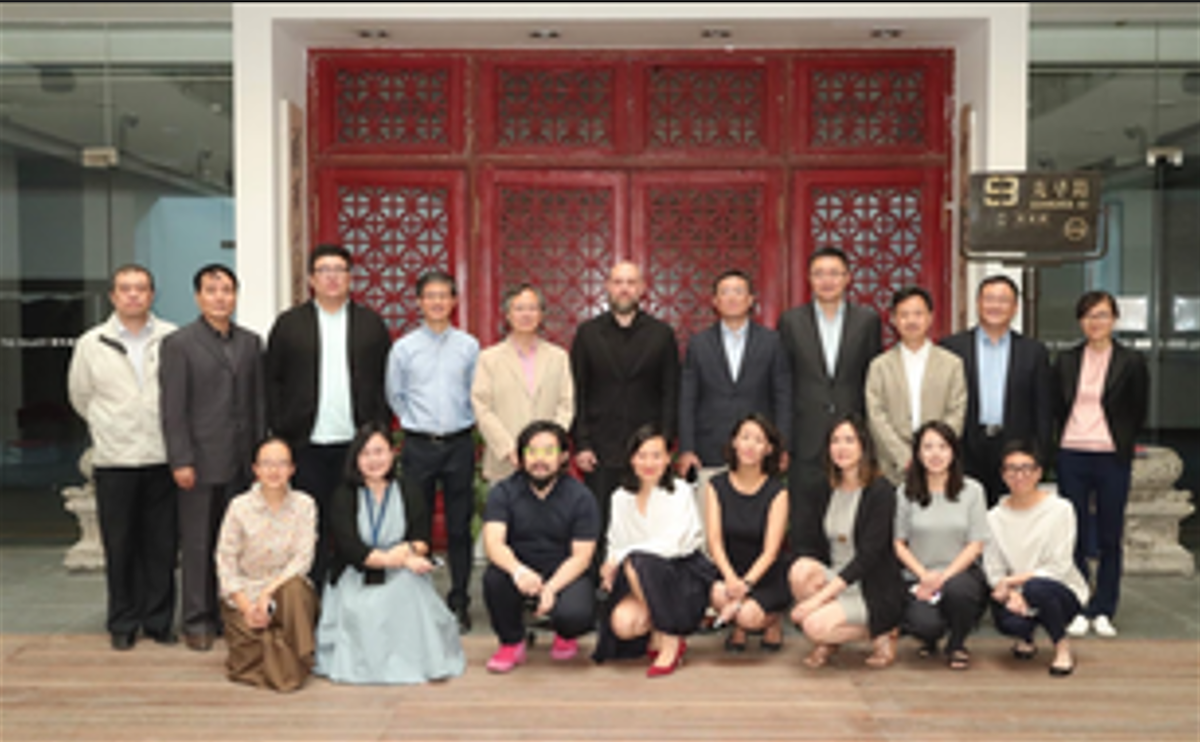
The students of the first "Leading China" program came from more than 30 entrepreneurs from 20 different industries. The teachers who participated in the lecture included 73 Chinese and foreign experts including Shan Jixiang, the former dean of the Forbidden City, Masahiro Kuroyama, the father of Japanese industrial design, and Jake Knapp, the inventor of "Design Sprint". As China's first innovative leadership course with design thinking as the core, the project is equipped with "design to open enterprise creativity", "reshape enterprise competitive advantage", "forge innovative business system", "innovate with the help of finance", "embracing Industrial Revolution 4.0" and "Win-win China Created 2030" six modules. The trainees traveled to nine cities in one year, and completed the courses in the interactive teaching of inspiration and the exchange and sharing of practical experience. Many students said that the course not only helped them find the direction and path of enterprise reform, but also improved their way of thinking, strategic planning and leadership models.
Liu Feng, the founder of Top Intelligence, gave an example of the inspiration brought by the six pillars of "vision-led" enterprise reform. Through "vision leadership", he not only sorted out the original intention and values of the company, but also launched a series of measures based on this starting point, which improved the company's various aspects from the telephone customer service process to the organization of the annual meeting, and mobilized the enthusiasm of employees. This greatly improves the company's efficiency and flexibility. Ting Zhihong, chairman of Hongtu Logistics Co., for example, said that the biggest change brought by the course is her awareness of the importance of empowering the team. The company has now built many platforms to give employees more room to play, to create markets, to put decision-making on the front line, and to let employees play the role of company operators. Her company doubled its profits in 2018. Hu Chao, founder and CEO of Leyou Pregnancy and Baby, introduced that what most executive courses learn is knowledge, and what this course learns is people-oriented values and ways of thinking.
The students of the first class of "Leading China" graduated in December 2018. Regarding the course of this year, Wang Jingwei, former assistant dean of the PBC School of Finance, Tsinghua University, commented: "Since the project was launched, we have not only witnessed the true value of design in a business context, but also experienced first-hand the use of people-oriented The difference between the designed executive courses is that the entrepreneurs who participated in the courses quickly entered a state of immersive learning, and many students quickly began to practice the methods they learned in the enterprise.”
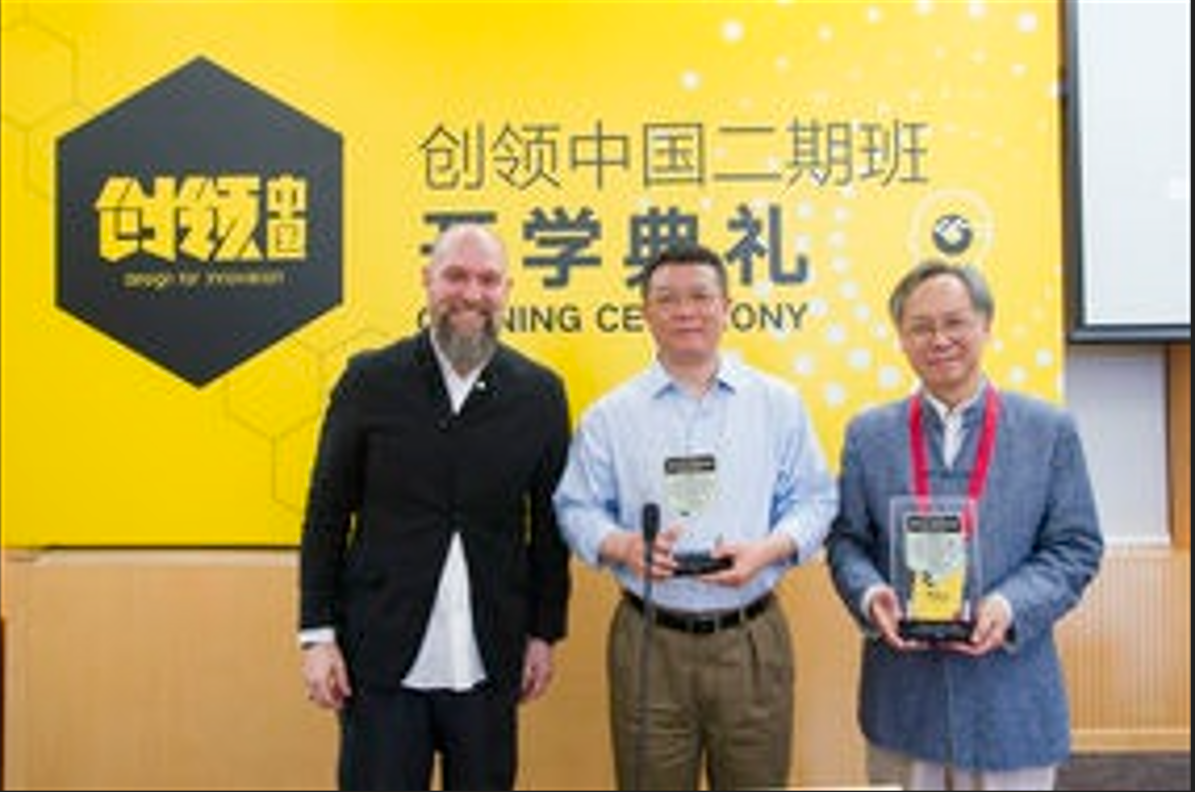
On April 8, 2019, the list of winners of the 3rd "Changing the World Innovation Award" was announced, and the "Leading China" project was shortlisted for case nomination, becoming the only Chinese innovation case in the education category. The "Change the World Innovation Award" was announced by Fast Company, one of the world's three major financial and business media organizations.

Helping a technology brand connect with China’s young consumer
Accelerating vivo's transformation journey from a smartphone manufacturer to a beloved technology brand.
As one of the world’s leading smartphone manufacturers, the Chinese brand vivo is widely known for its exceptional technological innovation and top-of-the-line photography and gaming hardware. But in an increasingly saturated phone market, vivo understood that it wasn’t enough to lead the pack based solely on technological excellence. To win the hearts of young Chinese consumers, they needed to become a beloved brand.
China consumes roughly 30 percent of the world’s smartphones, presenting a tremendous market opportunity to brands who wish to capture young consumers’ loyalty. In order to achieve that, vivo wanted to design a complete brand experience beyond the devices themselves—one that would express the joyful vivo brand spirit through services and retail experiences. One of their first key initiatives was to build its first concept store in an iconic building in Shenzhen, China.
Before building the concept store, vivo approached IDEO to explore what kind of in-store experience would resonate with young Chinese people. The concept store needed to convey joy in a meaningful, tangible way, while also setting the stage for vivo’s future brand systems. With this in mind, IDEO set out to explore how vivo’s young consumers experience fun.
After conducting research in four different cities, IDEO shared the stories of young Chinese consumers back with the vivo team. Their interviews revealed that young people value experiences that enrich their lives and create a feeling of positive personal transformation. They seek opportunities to expose themselves to new experiences, express themselves in different ways, expand and deepen their social connections, and build knowledge and skills.
Through this understanding of how young Chinese define “enjoyment,” IDEO helped vivo identify the value proposition of the concept store as expressing oneself in new and different ways. The store would allow every visitor to see something unique and find a fresh perspective. The vivo team took that value proposition into a design brief and later built out the space and interactive experiences.
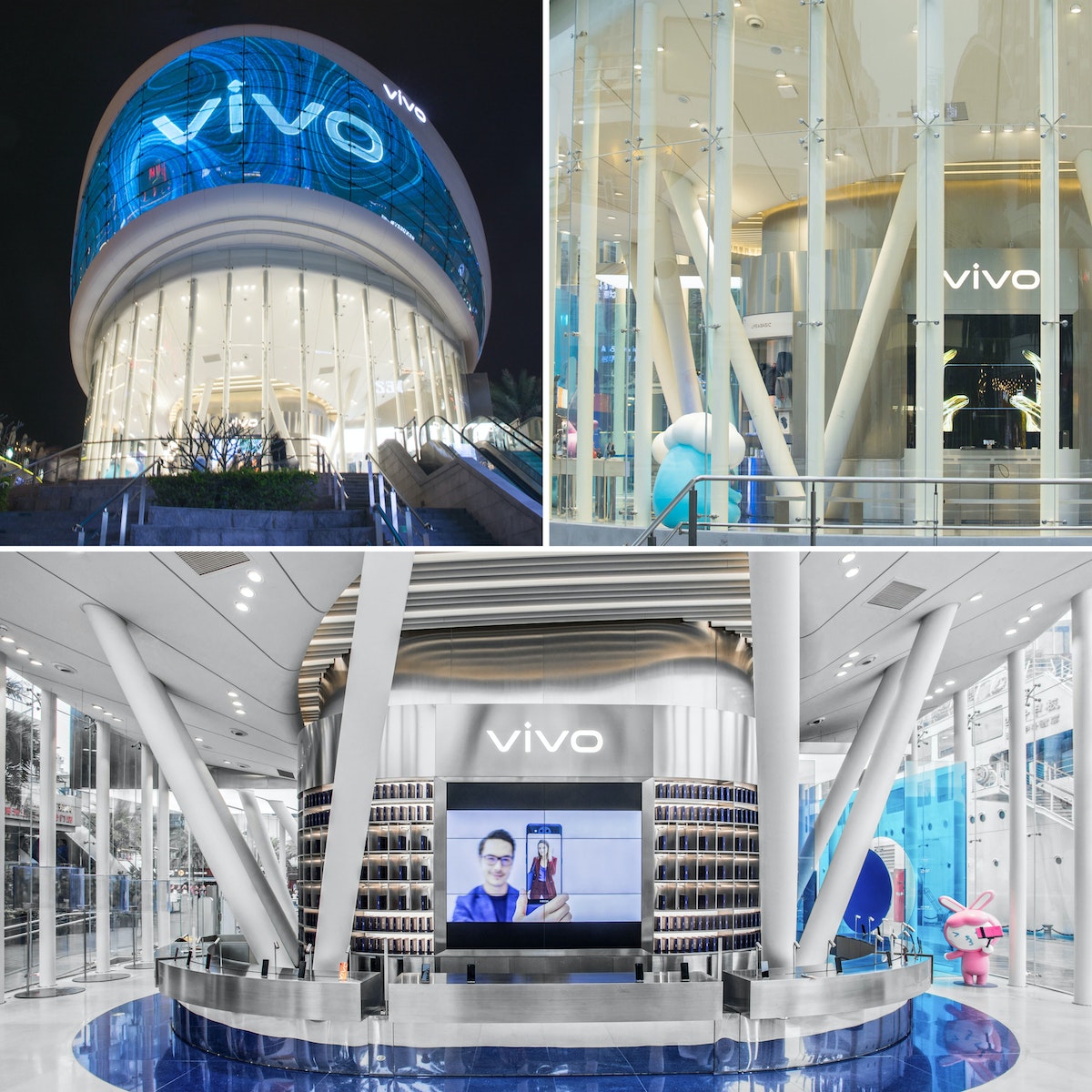
The concept store launched at Shenzhen on March 22, 2019, featuring an upper level dedicated entirely to interactive experiences with photo booths, sound recording, and lighting technology. The engaging, lively and positive atmosphere of the store represents a major milestone in vivo’s transformation from a smartphone maker to a consumer brand.
WATCH: Official launch video provided by vivo.
Equipping agricultural retailers to empower rural farmers in China
How Bayer Crop Science set out to scale its service to Chinese farmers in a highly fragmented market.
As China's agriculture moves towards scale and sustainability, helping farmers grow healthier food with resilience is a matter of national economic security and individual livelihoods.
Bayer Crop Science—with its mission to accelerate China's agricultural modernization and benefit Chinese farmers and consumers—has provided high-quality products for millions of growers in China over 18 years. Yet its service relies heavily on multi-layered distributors and retailers across the country. The last mile of Bayer’s product delivery spreads across tens of thousands of highly fragmented retail stores, making the quality of service difficult to monitor and control.
Together with IDEO, Bayer Crop Science aimed to uncover new ways to engage with local farmers and retailers, and develop design concepts for its diverse set of retailers—establishing local relevance as well as the potential to scale nationwide.
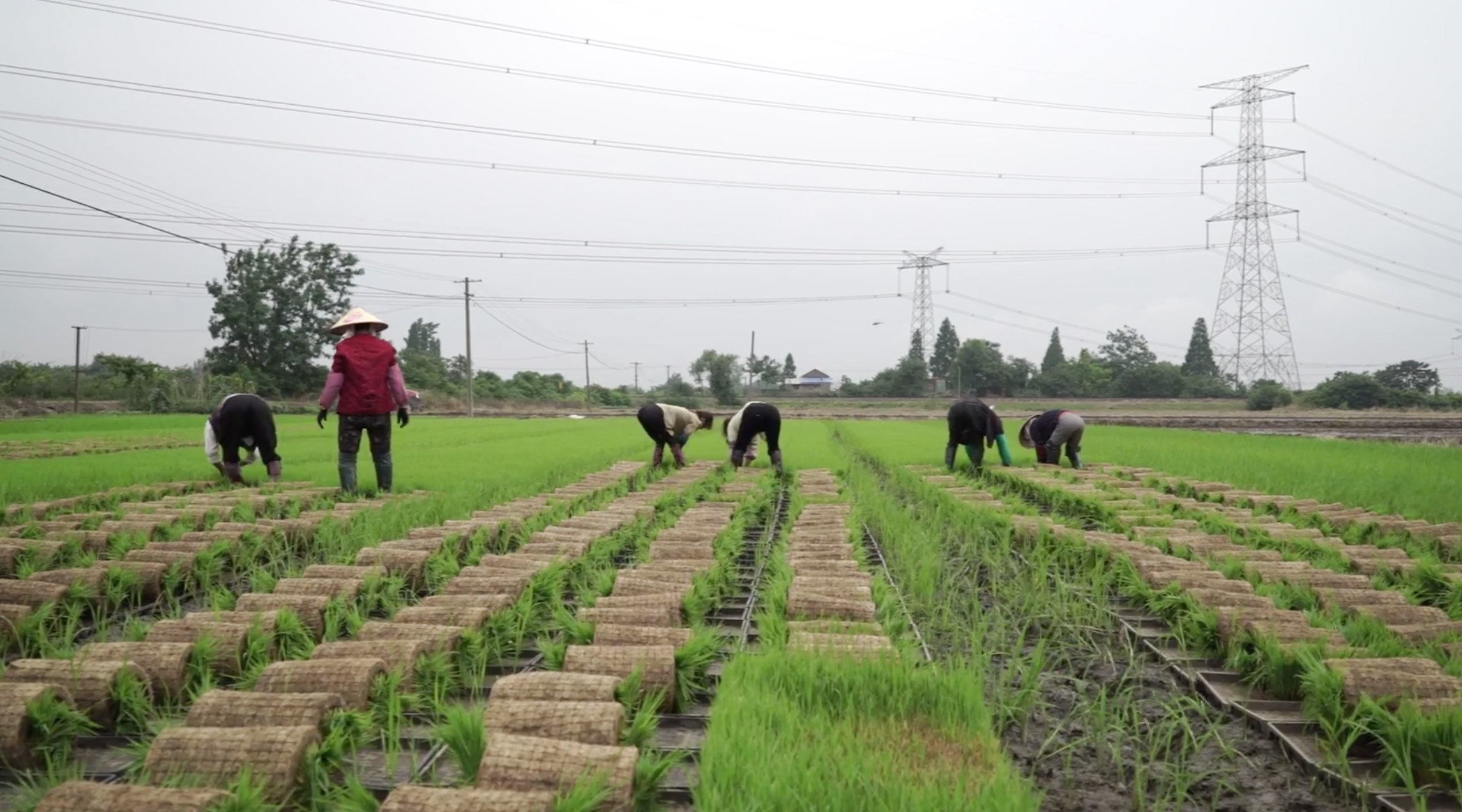
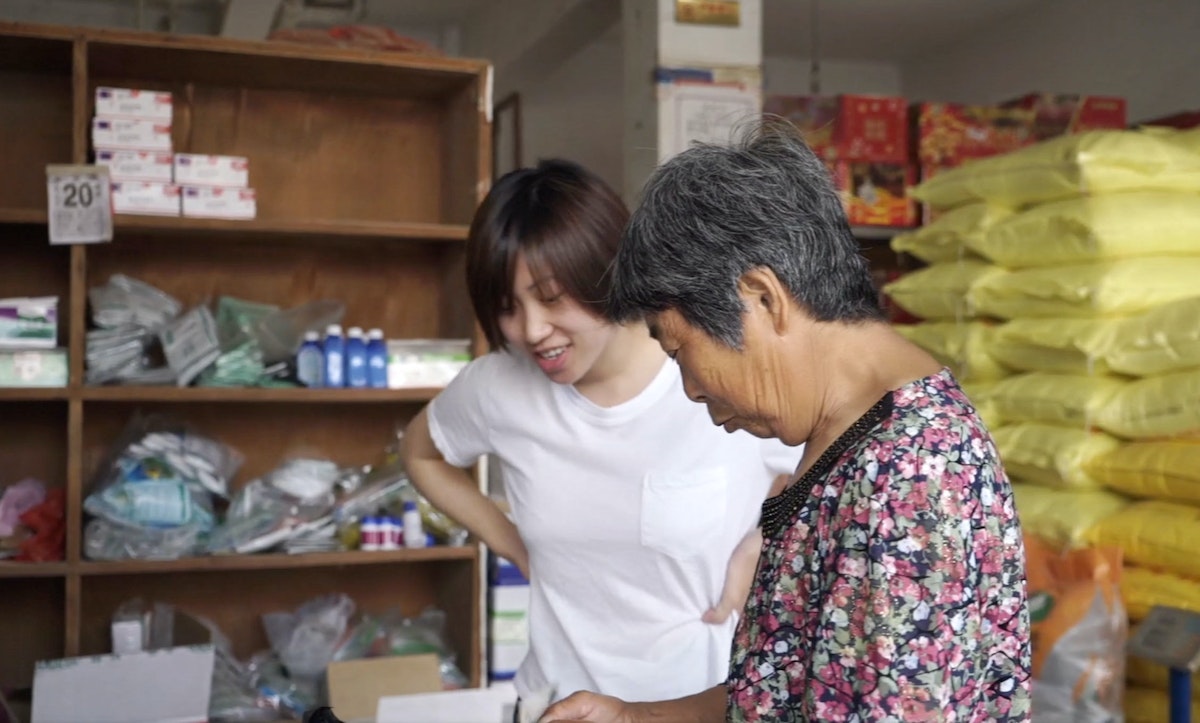
With this ambition in mind, a team formed by Bayer Crop Science and IDEO launched into a design sprint in the rice fields of China’s Anhui province. Field research uncovered multiple challenges facing Bayer Crop Science’s retailers. First, each store needed to serve more than one hundred farmers, many of whom rely solely on the store owner to understand how to use the products. Retailers struggled to meet a high daily demand for direct support in a way that provided a positive customer experience.
In turn, farmers felt they had insufficient access to expert advice. While many farmers shared similar needs, there was no system for aggregating requests or arranging group instruction. Given that many rice farmers are illiterate, pre-printed educational pamphlets had limited impact, and retailers lacked tools for providing targeted support. And because the retail stores were also used for storage, little space remained for educational or community programming.
With these constraints in mind, the team needed to come up with ideas and design concepts that could be easily integrated into the daily lives of the retail store owners. The team brainstormed hundreds of concepts and quickly prototyped a select few. One retail store in Dangtu was transformed entirely into a live prototype set. Over three days, more than 50 farmers and retailers came through and provided feedback. From there, the team was able to make daily iterations of the concept, evolving the experience in real-time.
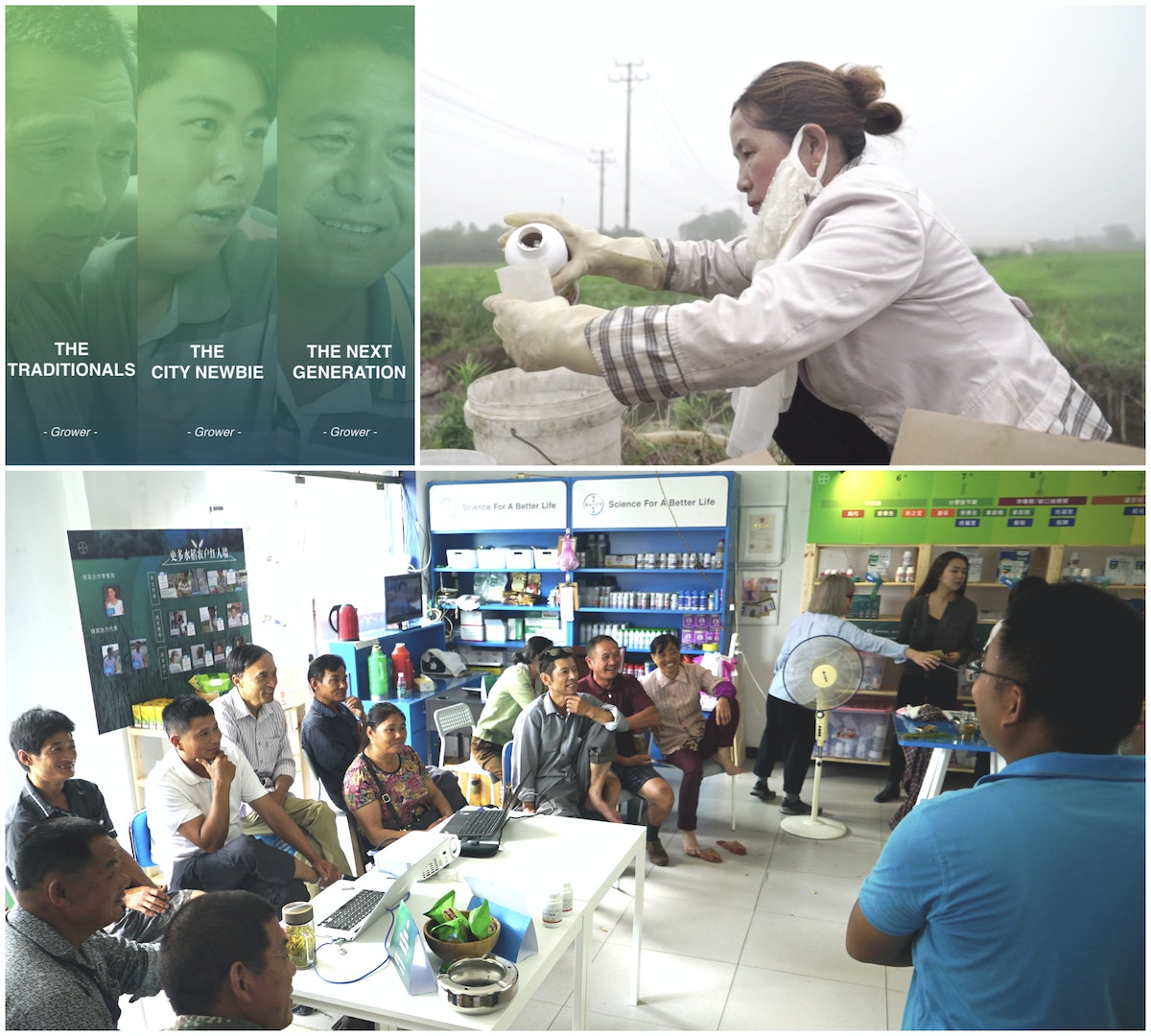
The Bayer team was energized by the potential of these prototypes to enable more customer-centered retail experiences. An exhibition of the concepts was set up during the National Annual Sales Conference of Bayer Crop Science in China, during which a much wider audience from Bayer experienced not only the concepts, but also the immediate feedback from farmers.
One year after the project’s completion, more than half of the design concepts have been included in Bayer's support kit for dealers. In 2019, these concepts will be rolled out in more than 1,000 flagship stores across China.
The work has also accelerated Bayer Crop Science’s efforts to build an ongoing engagement mechanism with its retailers and growers. Its online platform, Bayer Joy Grower, now has more than 10,000 retailers and will be expanded to growers soon.
2020 Didn’t Go as Planned, but 2021 Is Coming Anyway
Here’s a tool to bring imagination to your annual planning process
In 2020, everything has been turned upside-down, and all budgets are starting from scratch. Planning for the coming year will be more ambiguous and uncertain than ever. It’s time to ditch the carry-over mindset, which can’t solve the complex and often competing challenges faced by business leaders today. What we need now is to broaden our perspectives and use imagination to project into the future.
Back in the spring, when it became clear that coronavirus would reshape the entire world in short order, we began tracking principles to help us focus on understanding context as it evolves, having a clear vision for successful recovery, rebuilding for resilience, and designing through collaboration.
As we spoke to clients and business leaders within and outside of IDEO, we saw the opportunity to develop a tool that would help leaders plan with imagination for the tumultuous road ahead. We were inspired by the Early Recovery principles used by the United Nations to respond to crises or natural disasters. Early Recovery helps people and societies "build resilience and establish a sustainable process of recovery from crisis."
We’ve adapted this concept into a framework for organizations to use in planning the coming 12 months. The Build Back Bolder canvas offers a simple template for reflection, and a series of short exercises designed to help set strategic priorities and initiatives, and to uncover opportunities for growth and impact in the midst of fluctuating conditions. Build Back Bolder is a straightforward, two-page tool that business leaders can run alongside their own planning processes. It can help leaders and teams make sense of the present, get out of analysis-paralysis, and move towards action. Simply put, the Build Back Bolder canvas helps you think, and that helps you plan.
Circumstances don’t get much more ambiguous and uncertain than the ones we’re living through now. In moments of crisis, when markets are redefined, imagination rarely leads the day. But this instability calls for a more varied and experimental suite of tools. Change is inevitable, but using imagination is not. By choosing an imaginative approach, we can plan for a more resilient, bold, and sustainable 2021.
Download the Building Back a Bolder 2021 tool here.
Illustration by Charlota Blunarova
In typical years, there’s a continuity to the annual planning process. Changes are incremental. Many budgets that were approved the previous year are simply carried over. Not so this year.

Capitalism Needs a Redesign, but Where Do We Start?
Leaders share what they're doing to address systemic challenges
To fix big, systemic problems like inequality and climate change, many called for rethinking how companies generate value and who they generate it for—from shareholders, employees, and customers to partners and the planet itself. This wasn’t just a moral argument that business ought to “do the right thing.” The movement was anchored in an existential understanding that radical forces are changing not just the rules of the game for business, but the game itself.
The multilayered crises we face today offer a powerful moment of reckoning for purpose-led businesses and leaders: will we make good on this rallying cry for a reimagined capitalism or not? The pandemic put stakeholder capitalism to the test: a report funded by the Ford Foundation found that companies that had signed on to the “Statement on the Purpose of a Corporation” fared no better than other top companies in prioritizing worker rights. Though there is clearly the opportunity and will to rethink the purpose of business to address systemic problems, the way forward is often less apparent. Understanding where to begin can help us realize the more equitable promise of stakeholder capitalism.
I’ve long been curious about how forward-looking companies have jumped over this hurdle, so I’ve spent this year learning from dozens of movers and shakers already in the thick of tackling systemic changes, from professors and CEOs to founders and non-profit presidents working across sectors and industries. They’ve shared with me the first steps that helped them break the initial inertia of business-as-usual—and, importantly, the mindsets they’ve adopted to sustain new kinds of activity. I hope their wisdom will be as inspiring for you as it has been for me.

First steps
Set bold targets and innovate your way to reaching them
Even if they don’t know where to start, the changemakers I’ve talked with have put a stake in the ground and set bold targets. But they don’t rely on a big PR splash and then move on: alongside these bold goals is a commitment to a process of brave experimentation and innovation.
The Swedish furniture retailer IKEA, for example, has committed to becoming a fully circular company—one that is restorative and regenerative by design—by 2030. To make good on this future, they’ve invested in a range of experiments, prototyping smaller-format shops in city centers that rely on fewer resources, electric vehicles for home delivery, new products like home solar systems, and buyback and rental programs to reduce waste, among others. Taken together, these many activities are moving IKEA closer to their ambitious goal. But they’ve also enabled fast learning and iteration, so that when the company chooses to scale any of these solutions they have the greatest impact for their investment.
From this example and others, a common method is emerging for how companies can use their scale to unlock change at a systems level: commit boldly to an outcome, design a number of experiments, learn and iterate quickly, and scale what works. Spoiler alert: It’s not going to be one thing.

Create a coalition of partners around a tipping-point problem
From homelessness to climate injustice, our challenges demand unprecedented collaboration across sectors. The UN Sustainable Development Goals provide a powerful framework to rally around, but there are other emerging partnership models that leverage the capital investment, innovation muscle, and ability to scale that corporate partners often uniquely bring to the table.
Take the NextGen Consortium, for example. Managed by Closed Loop Partners and powered by OpenIDEO, some of the most powerful food and beverage companies (including Starbucks, McDonald’s, Wendy’s, the Coca-Cola Company, Yum! Brands, Nestlé, and WWF) are collaborating to create a new cup that will curb the 250 billion fiber cups piling up in landfills each year. The approach of this coalition has been to enable many breakthrough solutions, working directly with founders and stakeholders in the system, to take root in the market.
There are many other examples of convenings—whether official or unofficial—and the power of rallying partners around a shared challenge. Founded by Sam Polk, Everytable is on a mission to bring healthy, affordable food to communities that do not have readily available options. Polk grew Everytable to eight locations and delivered 160,000 meals just a few weeks after launching. Through a philanthropic initiative led by the California government, Everytable partnered with a hotel offering shelter and protection to the homeless during COVID to provide food, eventually facilitating additional partnerships with elder care homes. Everytable is now on track to deliver a million and a half meals, and they’ve added jobs along the way. As Jacqueline Novogratz, CEO of Acumen, shared with me, this is an example of business, government, philanthropy, and individual volunteers, leaders, and donors uniting and busting siloes to address hunger.

Define key performance indicators (KPIs) for stakeholder groups
Despite its recent buzziness, the stakeholder perspective—a fundamental commitment to all stakeholders, including customers, employees, suppliers, communities, and shareholders—is not a new idea. Many companies already consider multiple stakeholder interests in their decision-making. But the problem with stakeholder capitalism as it exists today is that it doesn’t offer a clear compass for how to make decisions in complex scenarios where win-win outcomes for all parties are rarely possible. This brings us to the elephant in the room: not all stakeholders are created equal. Leaders are often forced to pick favorites, and at the end of the day, we know who will always win.
To address this, companies like Airbnb are beginning to hold themselves accountable to new stakeholder-centric metrics. Airbnb sees their stakeholder community as made up of guests, hosts, communities, shareholders, and employees. Their design challenge—Rob Chestnut, Airbnb’s Chief Ethics Officer, told me—was to create a company that measures itself against the value it creates for each. Airbnb began by listening to these groups, establishing principles and metrics reflecting the needs of each. For example, they have committed to treating hosts like partners, and measure their delivery of this through survey data evaluating hosts’ satisfaction and earnings over time, among other things. Airbnb reports their progress and continues to update their corporate governance and compensation to reflect delivery against these KPIs.
This approach isn’t perfect. But doing the work of measuring the value you create with and for stakeholders and institutionalizing accountabilities for delivering that value is certainly a step in the right direction.

New mindsets
Allies over heroes
When it comes to business’ role in the big problems society faces, they are often cast as either heroes or villains. Some see capitalism as society’s savior, especially when governments have seemingly abdicated their responsibility to serve citizens’ best interests. Others see capitalism as society’s villain, the cause of many of its major problems like climate change and inequality.
The leaders I’ve interviewed reframe the discourse entirely. They know that systems change requires bringing together key actors—local communities, nonprofits, governments, businesses, donors, and others—to address unjust systems and solve social problems at scale. So, they see their organizations as meaningful allies in the work of change-making, adopting a partnership-as-leadership approach to their engagement in these issues.
“Greyston’s founder Bernie literally started pulling people off the streets to work for a small cake-baking business he had started to address the problems he saw in Southwest Yonkers...Just as the bakery started growing, [Greyston’s founder] Bernie met two guys named Ben and Jerry. Our relationship with Ben & Jerry’s started out as a serendipitous one, but it’s held steadfast as a strong partnership over the years and has enabled us to employ more folks who would normally be deemed excludable, non-employable.”
—Joseph Kenner, President and CEO, Greyston Bakery
“Cooperation among investors is a key to this progress. More than a third of the world’s invested capital—about $19 trillion—is controlled by the world’s hundred largest asset owners…In principle these investors have enormous power to move the entire economy in more sustainable directions. All they have to do is find a way to cooperate...The rumor is that they look at each other and say, “You go first.”
—Rebecca Henderson, Professor, Harvard Business School and author of Reimagining Capitalism in a World on Fire

Gardeners over architects
As the pandemic unevenly distributes pain and suffering across our society, it’s ever more clear: true systemic change requires a shift in power. That means that a top-down approach to change just won’t work to produce the equitable outcomes we need. We need new voices with new ideas to reimagine our economic system. Personally, I’m inspired by the small business owners who have reimagined the role businesses might play in neighborhoods through creative pivoting—like restaurants now offering CSA boxes and large family meals while their dining rooms are closed. Or Black communities that were forced to develop regenerative economic strategies decades ago, long before these concepts penetrated white-dominated corporate worlds.
These are the imagineers of a more resilient, inclusive, and sustainable society for everyone, and the leaders I’ve learned from believe this, too. Their job, as they see it, is to find the seeds of ideas and nurture them. They play the role of gardener, but instead of a green thumb they have a green ear, tuned to listen and learn.
“We were open to new ideas from anywhere and created new mechanisms to source them. Part of our mantra was the conviction that all the good thinking doesn't come only from people sitting on Fifth Avenue in New York City. We ran competitions, we did global innovation challenges, and we learned a lot from what was going on on the ground.”
—Judith Rodin, Former President, The Rockefeller Foundation
“Purpose is obviously about how a company acts, but it’s also about how they listen.”
—Maryam Banikarim, Chief Marketing Officer, Nextdoor
“And so it's going to be up to the rest of us in the conversation to hold those people’s feet to the fire—to make sure that as we are reimagining capitalism we are reimagining it to actually work for all. And part of that is by creating systems that are actually inclusive and equitable and regenerative because only those things will dismantle a version of capitalism that is just for the elite.”
—Andrew Kassoy, Co-founder and Global CEO, B Lab

An audacious question over an assumption about the answer
Rather than start with an assumption about the right solution, these leaders begin with an audacious question. What, for example, would it look like to be a fully carbon neutral company by 2030, asks IKEA? Melinda Gates’ Pivotal Ventures asks what would a future look like if women’s power and influence was equal to that of men?
By starting with a question instead of an answer, these individuals are searching for far more imaginative solutions. This is how radical breakthroughs happen.
“Business has a huge role to play in designing our future. They can do this by first, stepping back and asking, what are the problems that need to be solved? And how can we make that the purpose of our business? Start with that problem. Then, look at the different stakeholders you engage with and rethink how we might come together around that problem...This is moral imagination—the humility to see the world as it is and the audacity to imagine what it could be.”
—Jacqueline Novogratz, Acumen’s CEO
“For the big briefs we face, we need questions that open up new possibility. We don't need the obvious questions — we’ve got plenty of those. We need questions that reframe how we think about some of these systems, ones that change our perspective.”
—Tim Brown, Chair and former CEO, IDEO

The work of changing systems is hard. Taking any of these first steps might require you to flex new muscles, fit yourself into a mold that isn’t quite perfect, or develop new collaborations that might not go seamlessly. Likewise, adopting any of these mindsets might clash with your business-as-usual culture and process. It’s not for the faint of heart. And yet, we can’t move forward—on equity, on the environment, on social cohesion—unless we roll up our sleeves, start redesigning our organizations, and make room for the voices most affected by these systems. So let’s take some first steps, and prototype them together to help push this work forward.
Before the coronavirus pandemic, the promise of a reimagined purpose for business—one that serves a diverse set of stakeholders and society more broadly—had bubbled into mainstream industry discourse. From boardrooms to business schools, a growing chorus argued that our economic system is not only unable to respond to the world’s most urgent challenges, but has excluded many people from the prosperity capitalism promises.
The 3 Unexpected Secrets for Finding Common Ground Between Strangers
Looking to make a new friend? Try not telling them your name.
Well, not complete strangers. They had shared an unusual experience, designed by IDEO, over the previous five weeks: The Department of Super Secrets.
When COVID-19 shut down elementary school buildings, it shut down opportunities for young students to build soft skills like empathy. It also severed personal contact between seniors and other human beings, leaving many confined and lonely.
Alongside teachers and students at Mineola Union Free School District in Mineola, New York, IDEO took on a project to design a program that would help 4th graders build empathy by connecting idle students with isolated seniors. We thought it would be a simple, playful opportunity, but in the end, we found a powerful tool for connection that might be scaled to bridge any number of social divides.
What’s the key? Well, that’s a secret.
Connections grown in isolation
The IDEO team decided that instead of trying to compensate for the limitations of quarantine, we would embrace those constraints and make them the centerpiece of the experience.
People can’t meet face-to-face? Perfect. We’ll beat quarantine at its own game. Neither partner will know anything about the other. No names, no ages. They’d have no clue about the other’s most basic biographical information, like age, race, gender; instead, this would simply be two human beings building a connection by sharing stories of their hopes and fears. A relationship built on meaning rather than appearance.

Thus, the Department of Super Secrets was born—an IDEO twist on the pen-pal relationship. Our heroes picked secret super aliases and we paired them up: one student with one senior citizen. Over five weeks, the partners were prompted to share five specific secrets designed to be low stakes, but highly personal, carefully crafted to spotlight character, values, and feelings. This was a delicate tightrope walk, asking them to offer up something meaningful without being invasive or uncomfortable. We designed the prompts to build on each other, gently establishing a bond through vulnerability and reflection.
Every secret was shared in two ways, with words and images. We wanted the partners to spend energy reflecting on their own lives so they could benefit as much from the telling as the receiving.
You know what was so wonderful about it—I had been cheated all these years not remembering that image of my brother and I playing under the table. I wouldn’t have [remembered it] if we didn’t do this.
MARVELOUS MUSEUM MAVEN, SUPER SECRET SENIOR
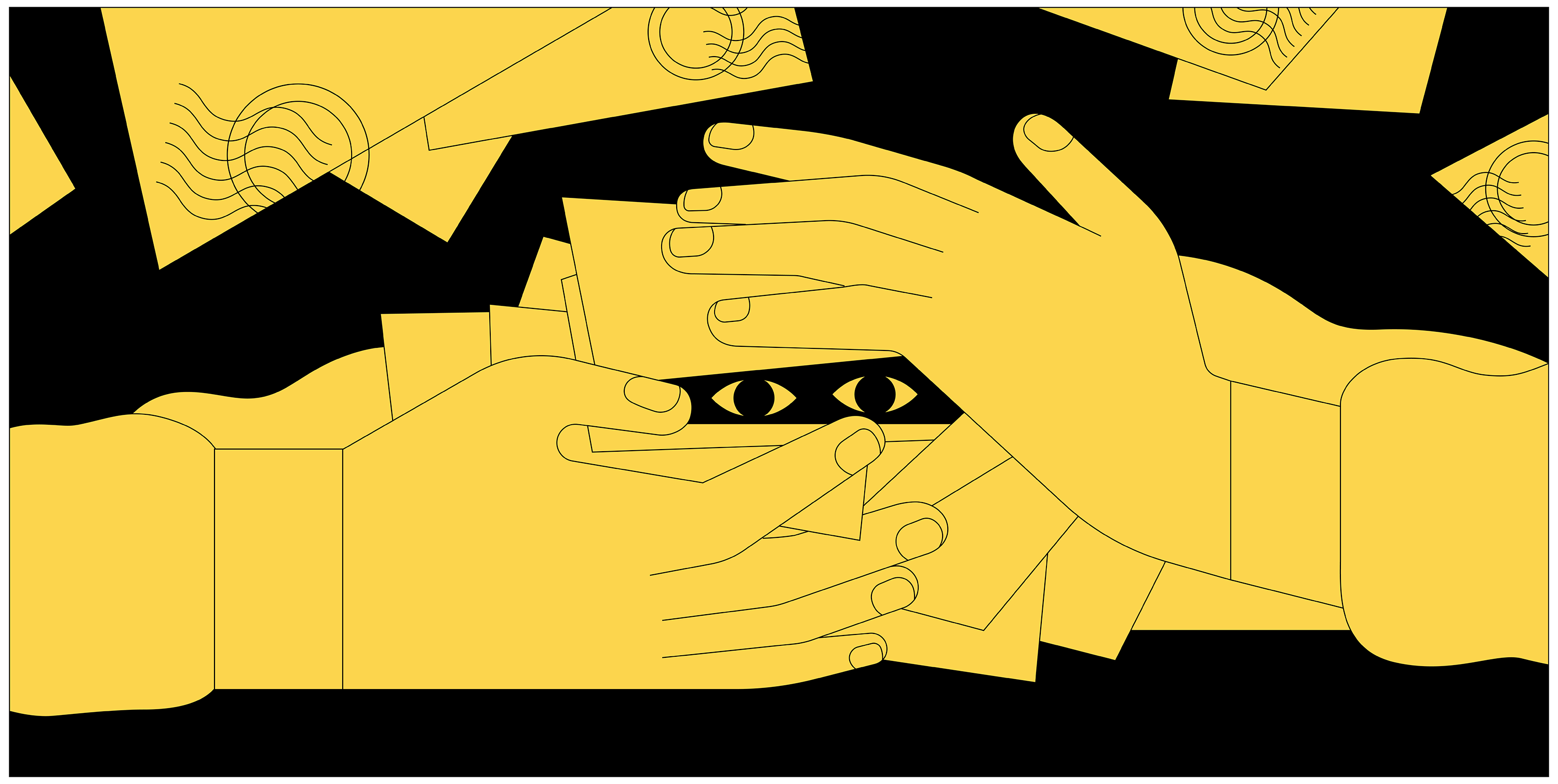
The secrets were exchanged through actual mail, not email. This slower method gave the partners time to explore their memories, express themselves deliberately, and—in a situation where days begin to blend—gave them something to look forward to. The tactility of cards filled with handwritten words and pictures turned them into a gift; it made the receiver a caretaker, safeguarding moments of someone else’s life.
Friendship across distance and decades
We wanted our participants to build a connection, not just exchange information. This was not about grown-ups humoring kids, or kids humoring grown-ups—this was about two experiences at either end of a spectrum, sharing a window into their point of view.

As part of the final exchange, each partner used what they’d learned about the other to create and send a gift to their anonymous pal: a superhero mask based on the shared secrets. And then the Department of Super Secrets hosted a reveal party. Partners came together on a video call, each wearing their newly gifted masks. Although they had been exchanging stories for weeks, this was the first time they saw the face behind the feelings. This was the first time Super Potato met Fantastic Fixer, and it was lovely.
Visit the Department of Super Secrets to meet the 4th graders and senior citizens behind the masks
Before and after their experience, we asked the partners to answer a few questions meant to gauge their empathy. Turns out the numbers support the anecdotes: Their time with the Department of Super Secrets seems to have genuinely increased their empathy scores, especially their ability to put themselves in someone else’s shoes.
So what went right? We built the Department of Super Secrets by combining three key elements:
1. Anonymity: character vs. characteristics
No one in the world is more perfect for you than the mysterious stranger sitting alone in the coffee shop. The less we know about someone, the easier it is to dress them up and see them exactly as we wish. That’s why we sidestepped the introductions, the descriptions of hair color, and the family history. We wanted each side to begin by speaking across the mysterious absence created by anonymity to someone they assumed was a kindred spirit, ready and excited to connect.
We’ve all seen enough awkward hugs and pinched cheeks between kids and elderly relatives to know these two groups don’t always dance to the same beat. If the relationship began with the mental shorthand of “old” and “young,” there would be silent assumptions on both sides. Confirmation bias would run wild.
We used the freedom of anonymity to create rapport so partners would speak their truth honestly without tailoring it to their audience.
2. Story: introductions from the inside out
My name Is Ben. I once had my heart broken.
Which of those two offerings is more likely to create a bond between us? Ironically, the things that shape us most distinctly—our stories—are also the things most of us have in common. At the very core, we all share the same stories, but told in our own unique ways. Your parents may not have named you Ben, but you probably know what it is to cry into your pillow.
We used story as a sneaky back door to help Super Secret partners appreciate each other's identities once we dropped the anonymity. By the reveal party, they had connected enough through the shared stories that when they discovered each other’s identity, it enriched their idea of who a young or old person could be.
3. Play: lighten the mood, deepen the conversation
As I’ve written elsewhere, play is powerful. It lowers the bar for self-judgment; it can function like oven mitts for handling sensitive subjects; it can encourage us to stretch our everyday thinking and see possibilities we might have otherwise missed. Fun is a fuel.
We could have said, Hey, this is a school project to build empathy. Bo-ring. Instead, we led with the language of secrets, superheroes, and surprise to elevate it to something memorable, meaningful, magical.

Play allowed the partners to share vulnerable stories in a safe way. One prompt—"Share the secret of your most embarrassing moment"—became a funny way of sharing values, fears, and anxieties. Because underneath the slipped bathing suits or milk-spewing nose is the nature of what you find embarrassing, and that tells a lot about a person. Is it failure? Public or individual? Loss of control? Misunderstanding? Fear itself?
Sharing a moment you wish had never happened is an act of trust and bravery. Receiving someone else’s story is a way to remember you are not alone in the world as a flawed human being.
Play allows you to do both with a smile.
The next adventure…?
While this began as a way to enrich the lives of kids and seniors, it turned out to be a powerful way of sneaking behind the unrecognized biases, the mental shortcuts that are the unacknowledged guardrails of our day-to-day thinking. What if we expanded the experience to bridge other divergent points of view related to politics, race, economics, gender, geography, or religion?
We’d love to find situations to use the Department of Super Secrets to help people hear each other in a new way. Our hope is that this combination of anonymity, story, and play can help any two strangers find common ground whether they be superdelegates or super potatoes.
*Names and details have been changed to protect secret identities
When Super Potato* met Fantastic Fixer* for the first time, she asked if Fantastic Fixer’s puppy was feeling better. Fantastic Fixer wanted to know about Super Potato’s recent birthday. There were no awkward silences, despite the fact that Super Potato was nine and Fantastic Fixer was closer to 79 and they were, until this very moment, strangers.
A Rabbi and a Designer Walk Into a Zoom…
We teamed up with the Union for Reform Judaism to design holiday activities you can do at home
This year, in light of our collective Zoom fatigue, services have been shortened to just a few hours, which is already pushing the shredded edge of our online attention span. After seven months of pandemic, mass unemployment, racial justice reckonings, and school closures, it’s hard to abstain and reflect on your own transgressions when all you want is comfort food and a hug. Knowing that, the Union for Reform Judaism, leading the largest, most diverse Jewish movement with nearly 850 congregations across the U.S. and Canada, asked IDEO to help design a few offscreen moments as supplements to the synagogues' videotaped services.
To think beyond the Zoom and understand what people are craving this year, we joined Mobius for a workshop with community builders like the founder of The Dinner Party, interviewed rabbis who have responded to modern yens with yoga and dance parties, talked to a “ritualist” about how to design a memorial, and met with the creator of This Human Moment, an immersive online experience. Our collaborators at the URJ, Amy Asin, Rabbi Leora Kaye, and Rabbi Esther Lederman, along with staff from the Righteous Person’s Foundation, which provided funding for the project, helped us ground modern exercises in a 3,000 year-old tradition—pouring old wine into new bottles.

We learned that what people need right now is to feel supported and comforted by some semblance of normalcy—a holiday that feels more like getting into a warm bath (or a mikvah, where you immerse yourself in water, as we learned from the URJ’s Rabbi Leora Kaye) than like a wake-up call. We learned from speaking to congregants that they don’t just come to temple for services, but for the casual synagogue interactions. It's a chance to see Mr. and Mrs. Riley, that lovely old couple who are somehow still alive, or family friends you haven’t had the chance to call, or that old school crush who still causes your stomach to flutter once a year.
The ideas that emerged can be found at reflect.reformjudaism.org, and they don’t look much like your aunt Sheila’s seder table. They include ways to do a check-in on your spiritual health (as you might at an annual physical); ways to memorialize a person who died or an event the pandemic shut down or how to let go of a burdensome feeling; and a collage exercise that has you scrapbook the community you’re missing by congregating in digital space. And for those looking to know more about how the activities relate to Jewish wisdom and custom, the bottom of each page invites visitors to “Explore more and go deeper” with links to essays on ReformJudaism.org.

Each activity was designed to be radically inclusive—as welcoming to those who don’t know a single Hebrew word and don’t believe in God as it is to believers with scholarly knowledge. The experience is a la carte, customizable, and while housed on a screen, designed to be non-screen-based. As identity changes in America—where one-in-five Jews describe themselves as having no religion—it’s become increasingly important for Jewish organizations to offer those still seeking community and spiritual life a radically new way to engage. That’s what this is.
It’s been said that religion was the answer to a cry for help. Right now, everyone could use a little help. And awe. And beauty. And routine. Religious rituals were built to keep us in line, to keep us connected, and to keep time. Much of that has been broken by COVID. So the question for designers becomes, how might we, within the constraints of the day, mine a bit of gold that can fill in the cracks?
Each fall, the Jewish High Holidays draw communities together for some of the year's most important rituals. Even Jews who don't attend their temple's regularly scheduled programming tend to make a point of spending a few days celebrating the new year and reflecting on the one that's passed. Now that we're socially distanced, how do we make sure the rituals are still observed? The experience of gathering and connecting still felt?

Lindsey Turner
I’m passionate about building brands, products, and experiences that help organizations show up with meaning and momentum.
I help organizations cut through complexity by shaping how they show up, through brand strategy, identity, and storytelling.
Working at the intersection of brand and business, I bring an editorial eye and a bias toward making—turning ideas into tangible experiences that people can understand, trust, and believe in.
My work spans government, healthcare, financial services, media, and consumer goods, from launching Gen Z-focused ventures to building innovation labs and reimagining legacy brands. I relish moments of ambiguity and enjoy translating across teams, perspectives, and priorities to move ideas forward.
I started my career in editorial and digital design, shaping cross-platform experiences and identity systems in publishing and agency environments. That foundation still shapes how I work today: I’m detail-oriented, collaborative, and overreliant on the Oxford comma. I hold a BFA in Visual Communication from the School of the Art Institute of Chicago.

Rachel Young
My work helps organizations see who their products aren't working for—and build the will and the tools to do something about it
For 25 years, I've asked the same question: Who does this design exclude—and what are we going to do about it?
My work spans human-centered strategy, inclusive design, and qualitative research, with clients ranging from Microsoft, Google, and Verizon to the National Science Foundation, and San Francisco Unified School District.
Before IDEO, I taught elementary school in East Palo Alto and spent a decade doing design work with social service organizations—where I learned firsthand what it costs people when systems are built without them in mind.
I am currently writing User Error, a nonfiction book about digital access and the design decisions behind it. I live in Oakland, California.

Brian Pelsoh
I lead with craft, ensuring our work is creatively excellent: rooted in deep human insight and imagination, while also grounded in the realities of business and technology.
My expertise spans brand, communication, and product design across tech, education, the arts, and social impact.
I believe great work demands both high-level vision and obsessive attention to detail, and only happens through collaboration.
I bring an inclusive, hands-on approach and a deep understanding of business, which enables me to consistently deliver excellence while always asking why.
Before joining IDEO, I worked at the brand firms Pentagram and VSA Partners. I began my career as a designer, leading teams at the School of the Art Institute of Chicago and the Milwaukee Art Museum. I hold an MFA in graphic design from Maryland Institute College of Art and a BFA in communication design from the Milwaukee Institute of Art & Design, and have taught at some of the best design schools in the US.

Tony Wong
I am responsible for IDEO’s long-term success in China and working with clients to use design as a tool to enable growth.
I am responsible for IDEO’s long-term success in China and working with clients to use design as a tool to enable growth. Specifically, I have helped Chinese companies design holistic brand solutions through the development of their products, communication, services, and innovation teams, and I have helped multinationals expand their presence and influence in China.
I advise global leaders on developing China-led innovation and capabilities.
In over 15 years in IDEO Shanghai, I have worked on projects that use design to elevate the quality of the experience of healthcare products and services, streamline processes that increase productivity, create spaces and programs that promote and enable inclusive communities, and build next generation mobility solutions that are planet-positive.
Before joining IDEO, I worked at Philips Electronics and the Electrolux Group in Italy, the Netherlands, and Singapore on a number of breakthrough commercial products. I am a member of the Young President Organization in Shanghai.

Building a personal AI for the messiness of life: Sida Li
Most AI products today are built for work—a space with clear problems and established systems. One founder noticed a gap: personal life is messier, harder to systematize, and mostly left behind by the AI boom. So she built Cue, a personal AI that lives inside iMessage and group chats, to go where the other tools haven't.
In this episode, Becca Carroll, IDEO's Chief Strategy Officer, talks with Sida Li, co-founder and CEO of Shared Context Lab, about staying anchored to a human need while the technology around her keeps changing shape, why she treats her business model with the same rigor she'd bring to a product, and what it feels like to build a company at this particular, disorienting moment in AI.
The conversation also gets into how Sida makes design decisions: the language Cue uses to describe itself, the tradeoffs behind building inside iMessage instead of a new app, and a real story about a business idea that didn’t pan out.
This is the second in a two-part series profiling founders from IDEO's Startups-in-Residence program. The first conversation is with Johannes Seemann, founder of Sooner, on designing GenAI for the emotional side of money.

Designing GenAI for the emotional side of money: Johannes Seemann
Most personal financial tools are built to run the numbers and optimize towards a budget. While that works for some, most people experience money as a lived relationship that does not neatly fit into a spreadsheet. Johannes Seemann and Becca Carroll discuss why money is emotional before it is mathematical, and what a human-centered approach to building a generative AI financial product looks like in practice.

The curious leader's edge in uncertainty: Scott Shigeoka
Mina Seetharaman talks with Scott Shigeoka, author of Seek and Head of Curiosity Cultivation at the Eames Institute, about what distinguishes genuinely curious leadership from performative curiosity, how power dynamics shape curiosity, and why practicing curiosity can restore energy rather than drain it.

How constraints make us more creative: David Epstein
Mina Seetharaman talks with David Epstein, author of Inside the Box and Range, about why total freedom often produces average work, how leaders can design useful limits on purpose, and what organizations such as General Magic and Pixar reveal about the relationship between boundaries and creativity.
Looks like you might be in search of something very specific?
Or reset the filters above and try another angle.
Here’s some random inspiration

Podcasts about creative leadership

Articles about the power of prototyping
