
.svg)


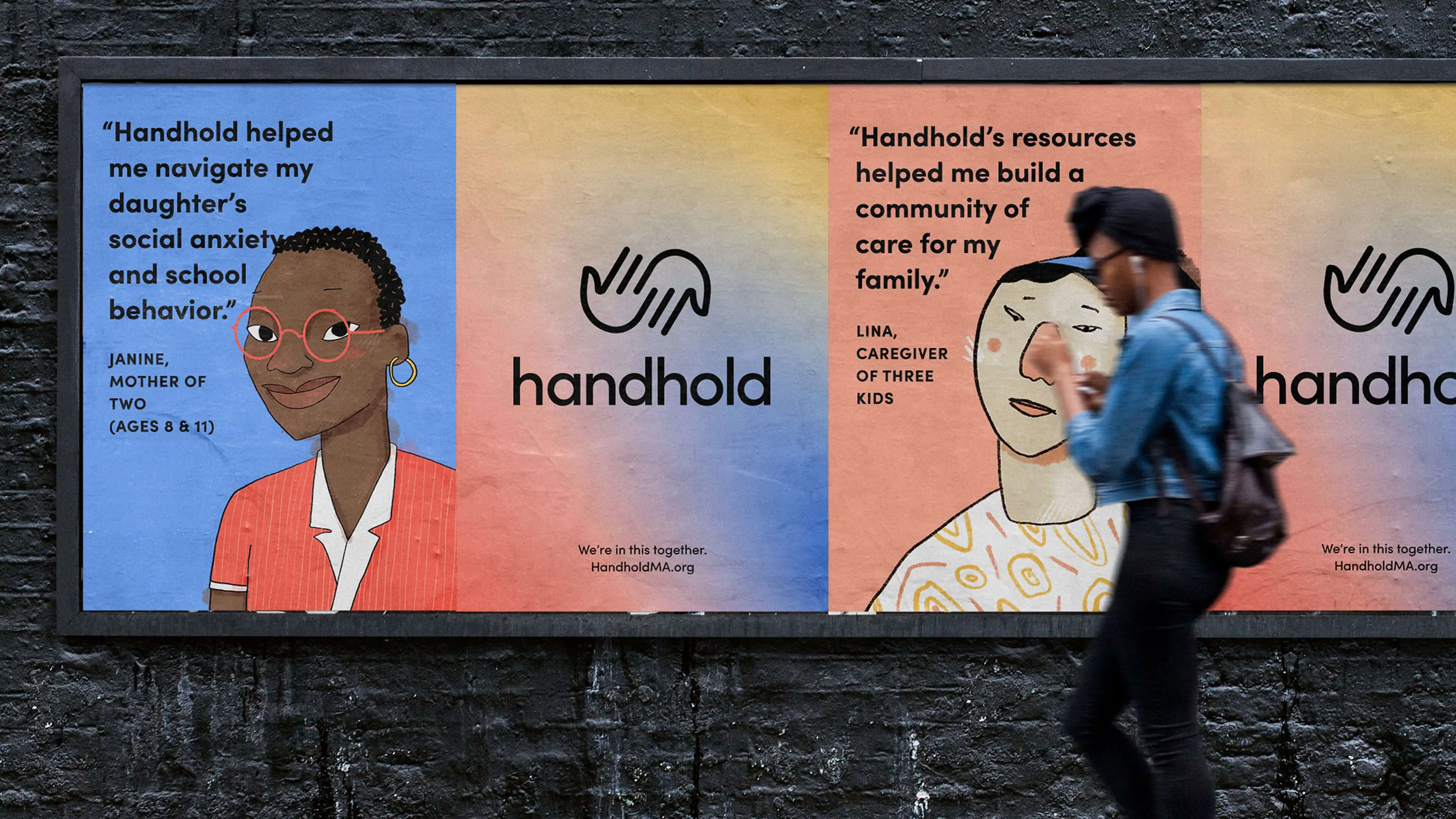

A helping hand
Massachusetts puts families at the heart of mental health.
The urgency of attending to our children’s mental health cannot be overstated.
Concern about their well-being was already on the rise in the decade prior to the pandemic. Alongside social inequity, the COVID era has seen soaring rates of depression, anxiety, trauma, loneliness, and suicidal thoughts. Knowing that mental health is influenced by numerous systemic factors, we met with families of all income levels and heard from practitioners throughout Massachusetts. In some communities, mental health is candidly discussed, in others it remains a taboo subject. Through these conversations, we learned that mental health requires both individuals and their families to be educated, supported, and empowered.
HandholdMA.org helps families find services that work for them and gives them easy access to information on a range of mental health topics. It allows parents to learn from and support one another as they navigate the landscape of mental health together. We took special care to make resources feel approachable for those in communities of color, and curated new resources for everyone from preschoolers to teens—because mental health challenges do not discriminate.
In 2020, a coalition of the nation’s leading experts in pediatric health issued an urgent warning that the mental health crisis among children had become a national emergency.
The percentage of emergency department visits for mental health crises rose by 24% for children between the ages of 5 and 11, and 31% for those 12 to 17, compared with 2019.
87,000
site visits to to HandholdMA.org since launch
223,000
people reached in bilingual social media campaign

Evolving to meet young consumers
Accelerating vivo’s transformation journey to connect with China’s young consumer.
To help shift vivo’s thinking from a focus on products to a focus on brand-building, IDEO set out to help the company understand how young consumers experience fun—a core tenet of the vivo brand. The new concept store needed to convey joy and fun in a meaningful and memorable way. The project was about more than just designing the space; it was also about piloting into vivo’s future brand systems.
To kick off the project, the IDEO team conducted user research in four different cities in China, then shared the stories of young Chinese consumers with the vivo team. Their interviews revealed that young people value experiences that enrich their lives and create a feeling of positive personal transformation. They seek opportunities to discover new experiences, express themselves in different ways, expand and deepen their social connections, and build knowledge and skills. By leaning on this definition of “enjoyment,” IDEO helped vivo identify the value proposition of the concept store, helping consumers express themselves in new and different ways. The store would allow every visitor to see something unique and find a fresh perspective.
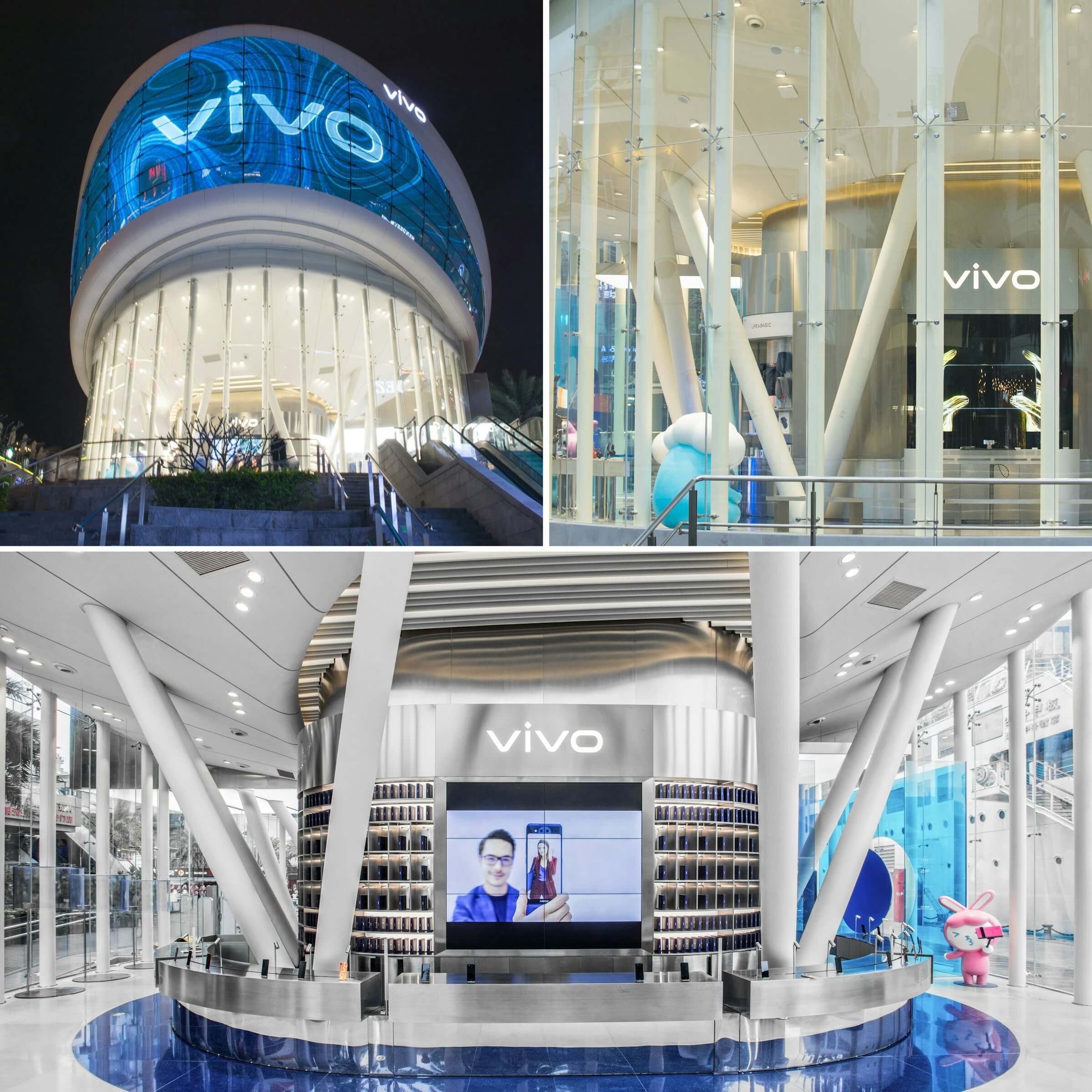
The vivo team took that value proposition into a design brief and later built out the space and interactive experiences. The second floor of the store is dedicated entirely to interactive experiences using photo booths, sound recording, and lighting technology, designed to provide consumers with the kind of enjoyment they seek. vivo launched the concept store in Shenzhen on March 22, 2019, marking an important milestone in vivo’s transformation from a smartphone maker to a consumer brand.
China consumes roughly 30% of the world’s smartphones—which presents a tremendous market opportunity for brands looking to capture young consumers’ loyalty.
Top 1
in China's smartphone market, topping both shipments (sale-in) and retail sales (sale-out), in the first half of 2024
260M active users
within two years of vivo Lab's official opening, with 70% of them young users
Transformation through creative leadership
Tsinghua University launches China’s first leadership course focused on design thinking.
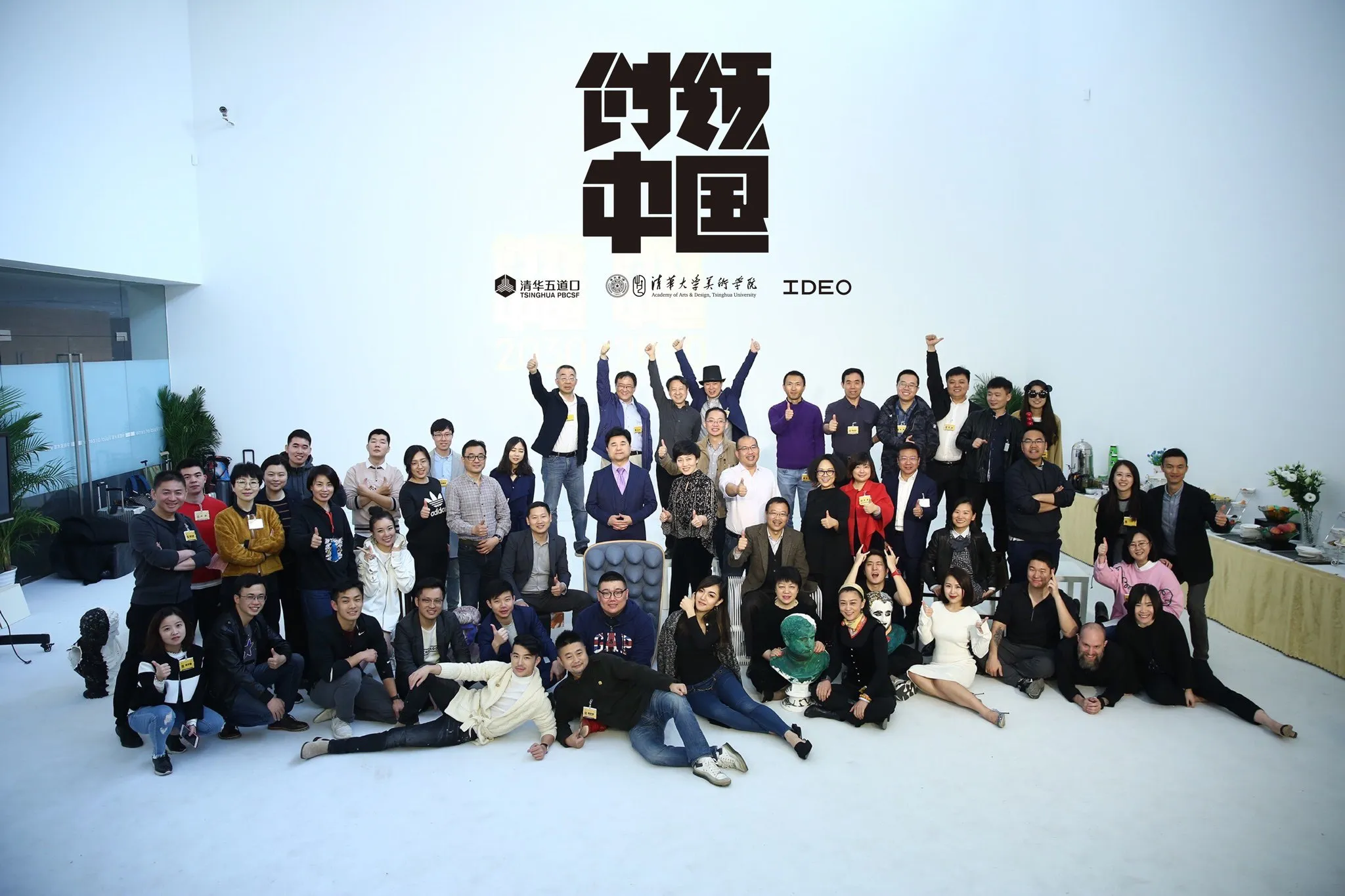
The program Tsinghua and IDEO created together consisted of six modules focused on creative leadership: Rediscover Design, Build Design as a Core Competency, Creating the Conditions for Creativity, The Financial Levers for Innovation, Designing for the Fourth Industrial Revolution, and Leading for Tomorrow. 73 Chinese and foreign experts helped teach the modules, including former Forbidden City Palace Museum director Shan Jixiang, the father of Japanese industrial design, Masayuki Kurokawa, and Jake Knapp, author of the book Sprint.
The program’s first cohort included more than 30 entrepreneurs from 20 different industries across nine cities. Participants completed the courses throughout the year, taking full advantage of holistic, interactive teaching and the opportunity to share their own practical experiences. Their feedback consistently demonstrated how the course had given them fresh approaches to problems their companies faced, whether improving internal communication or helping them see the clients they serve from a new perspective.
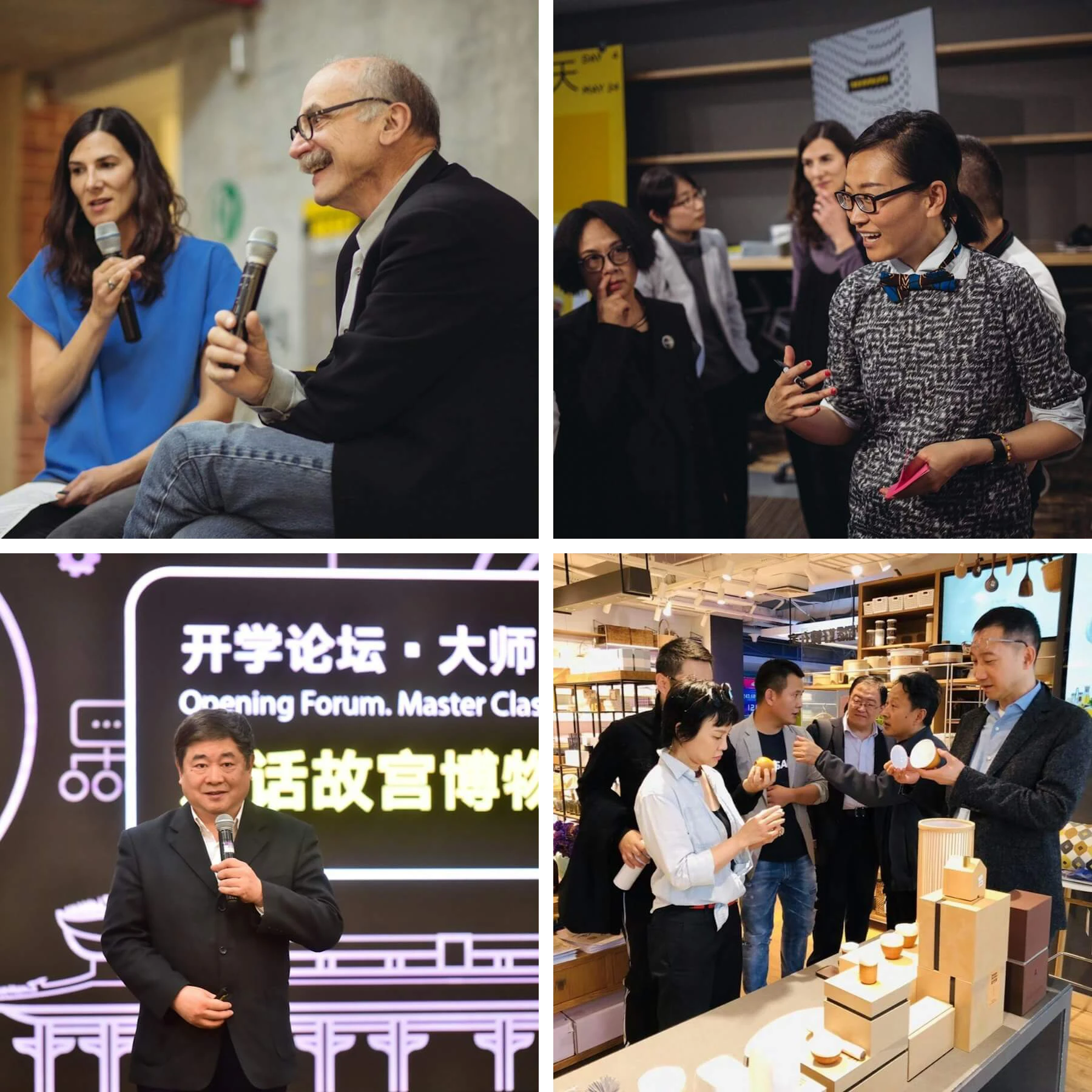
Liu Feng, the founder of a fast growing tourism development company, was particularly inspired by the Creating the Conditions for Creativity module’s six pillars of corporate transformation concept. Using these pillars, he not only refined the mission and value of his company, but also launched a series of measures to improve all aspects of its operations, from customer service to annual company gatherings. With a newly empowered team, he significantly increased the agility of the organization.
Ting Zhihong, the chairwoman of China’s leading logistics technology company, managed to double its profit during the course. She said her biggest takeaway from the course was how important it is to empower the team. Her company has now set up several platforms that give employees more room to experiment, create, and take part in frontline decision-making, bringing them closer to the company’s management.
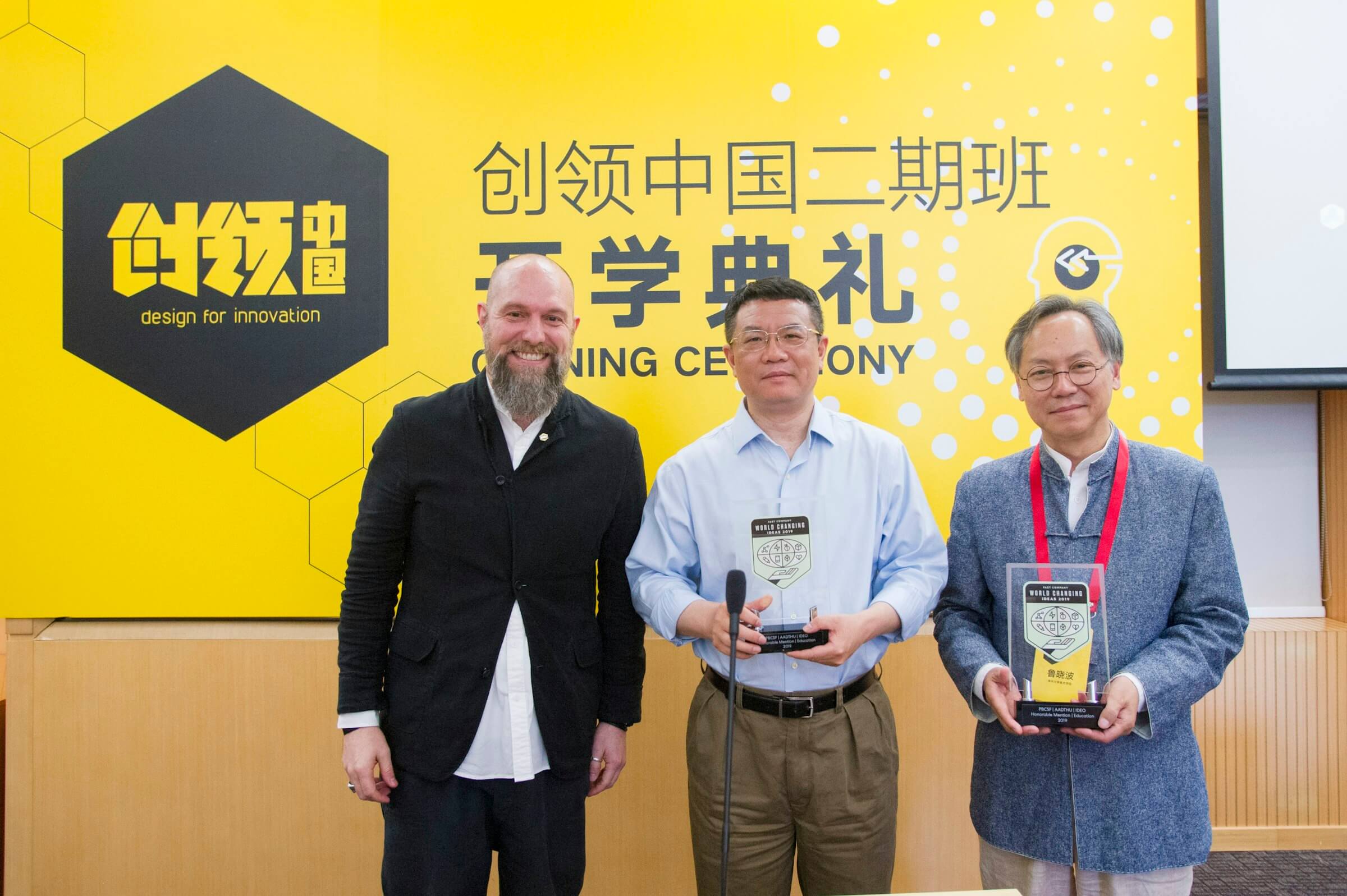
Hu Chao, founder and CEO of China’s largest e-commerce platform for childcare goods, found that while other executive courses simply teach knowledge, Lead a Creative China taught him the importance of placing people at the center of what his company is doing.
The first cohort of the program graduated in December 2018. On April 8th, 2019, the Lead a Creative China program received an honorable mention in the education category as part of Fast Company’s 2019 World Changing Ideas Awards, becoming the only award-winning Chinese project in the category.
After 40 years of rapid change, China has reached a pivotal point in its growth trajectory. Across the globe, traditional drivers of economic growth have slowed down, creating opportunity define the new economy.
The Chinese government has laid out a wide range of ambitious policy plans to ensure that China successfully manages this transition, and that the country continues to grow and lead.
Honorable Mention
education category, Fast Company’s 2019 World Changing Ideas Awards
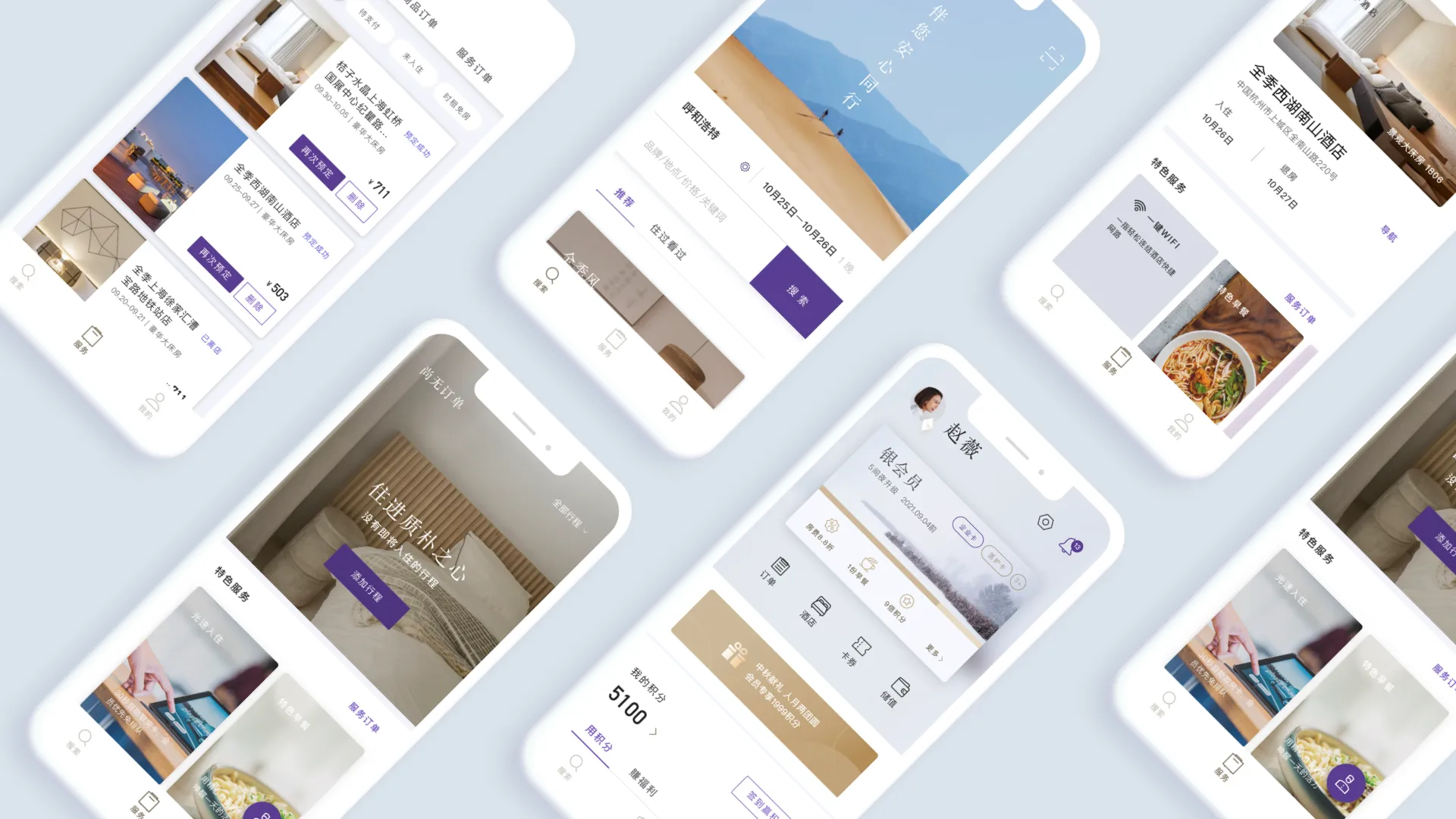
Human-centered hospitality via a tech-forward app
Huazhu Hotels Group translates its renowned hospitality brand into a seamless digital ecosystem for guests.
China’s digital landscape is dominated by highly integrated mobile apps like WeChat and Alipay that seamlessly combine messaging, shopping, bill payment, and finance management. This shift toward digital-first interactions that are hyper-convenient, personalized, and intuitive has significantly shaped consumer expectations for experiences like finding, booking, and staying in a hotel. To stay competitive and meet—or exceed—young guests’ expectations, Huazhu needed to redesign its Membership App 3.0 to prioritize guest needs across all touchpoints of the hotel journey.
Through in-depth research and member feedback, IDEO discovered the true pain point the Huazhu membership app needed to address: seamlessly integrating the hotel brand’s online and offline experiences. The Huazhu Membership App 3.0 adopted “simple, stable, and real” design principles, simplifying user operations, optimizing the interface, fixing lingering experience issues, maximizing page load speed, and reducing crash rates.

The IDEO team discovered users have different functional needs. Sometimes, users want to search for hotel information quickly. Other times, they prefer to explore and browse content slowly. To meet both needs, the app needed to be optimized for efficiency and exploration. So, the IDEO team upgraded the interface of the Huazhu Membership App, adding quick operation modules and information blocks on the main page, as well as a downward scrolling interface that gradually slows the experience, offering channels for detailed exploration.
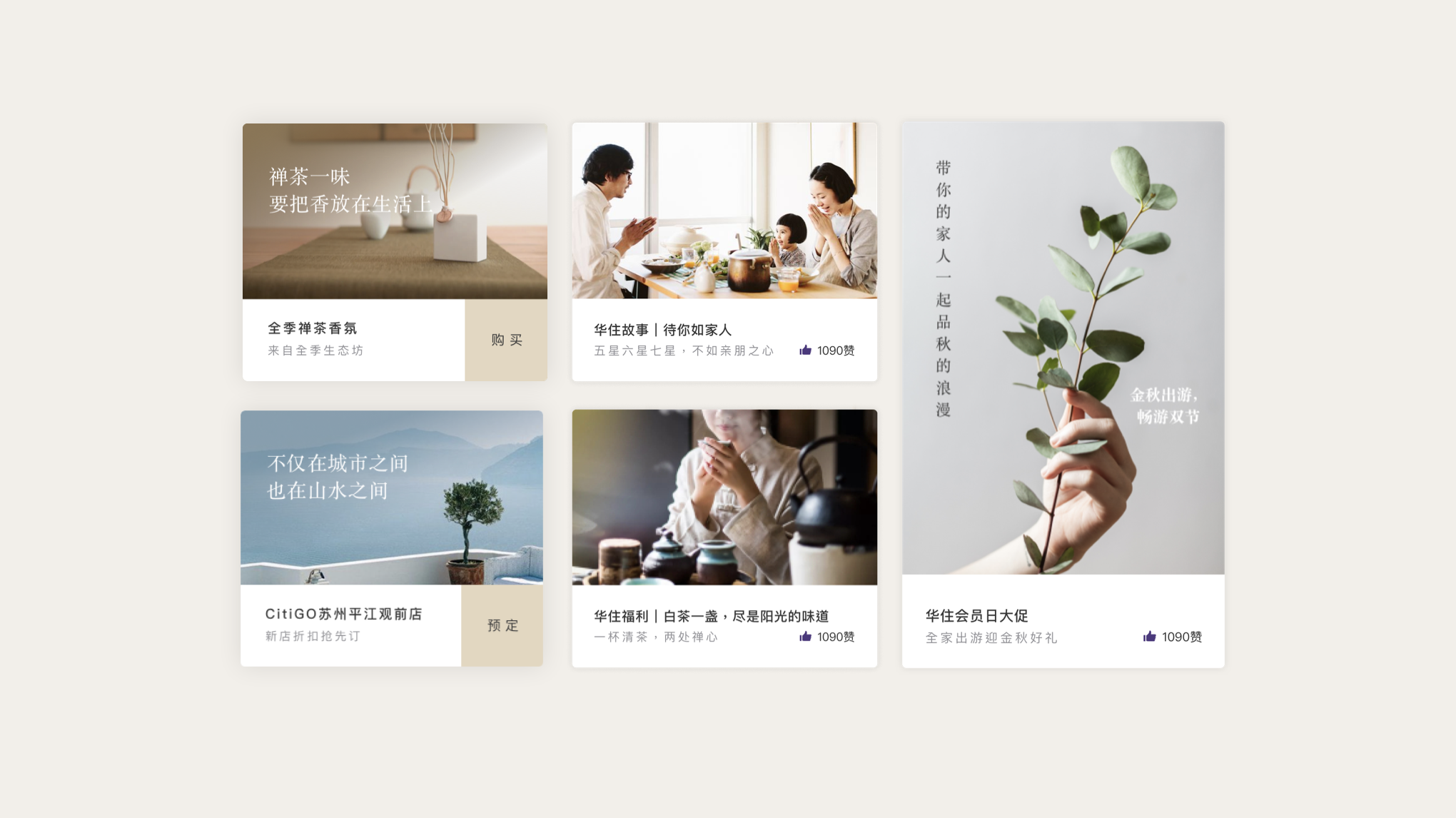
Customers also had different needs at different points in their travel journey: before, during, and after their stays. IDEO designed the language and user interface to provide personalized service information for each stage, from booking to post-stay. The app’s content adapts to the user’s travel phase, showing the most relevant service experiences at each point. The content displayed on the app also changes based on user habits, helping the app flex to meet their needs. The design aligns with the Huazhu Hotels Group’s mission to provide personalized service to a diverse clientele.

The team also worked to inject Huazhu’s brand characteristics by offering an upgraded experience in booking, stay, dining, and member benefits and adding features like a 30-second, automatic check-in experience. These thoughtful, personalized updates integrate Huazhu Hotels Group’s meticulous service philosophy, providing customers with a welcoming, human-centered hospitality experience. The updated Huazhu Membership App 3.0 is now available in major app stores, shaping a new generation of user experiences for Huazhu Hotels Group.
Young travelers in China expect the first touchpoint with a hotel brand to be digital.
5% increase
in monthly active users after the launch of the App's 2.0 version in 2021
Meet the artist who went from New York graffiti legend to hip-hop graphic designer
From brand partnerships to collage, Cey Adams has done it all
In the 70s and 80s, Cey’s earliest work was exhibited next to Jean-Michel Basquiat and Keith Haring; later, as the founding creative director of Def Jam Recordings, he developed the visual identities for the Beastie Boys, LL Cool J, and more. Recently, you may have also seen his collaboration with Pabst Blue Ribbon and Levi’s. He may not admit it—he's too humble—but Cey has definitively shaped hip-hop culture, design, and beyond.
When I met Cey through a mutual friend, I was immediately taken by his uniquely bold style and refreshingly humble spirit. I asked him if he’d work on a creative project at the IDEO New York office. After the completion of Revolution Solution, we sat down to talk about his creative journey, why he left and then returned to New York, and what it means to be, as he says, “an artist without a blueprint.”
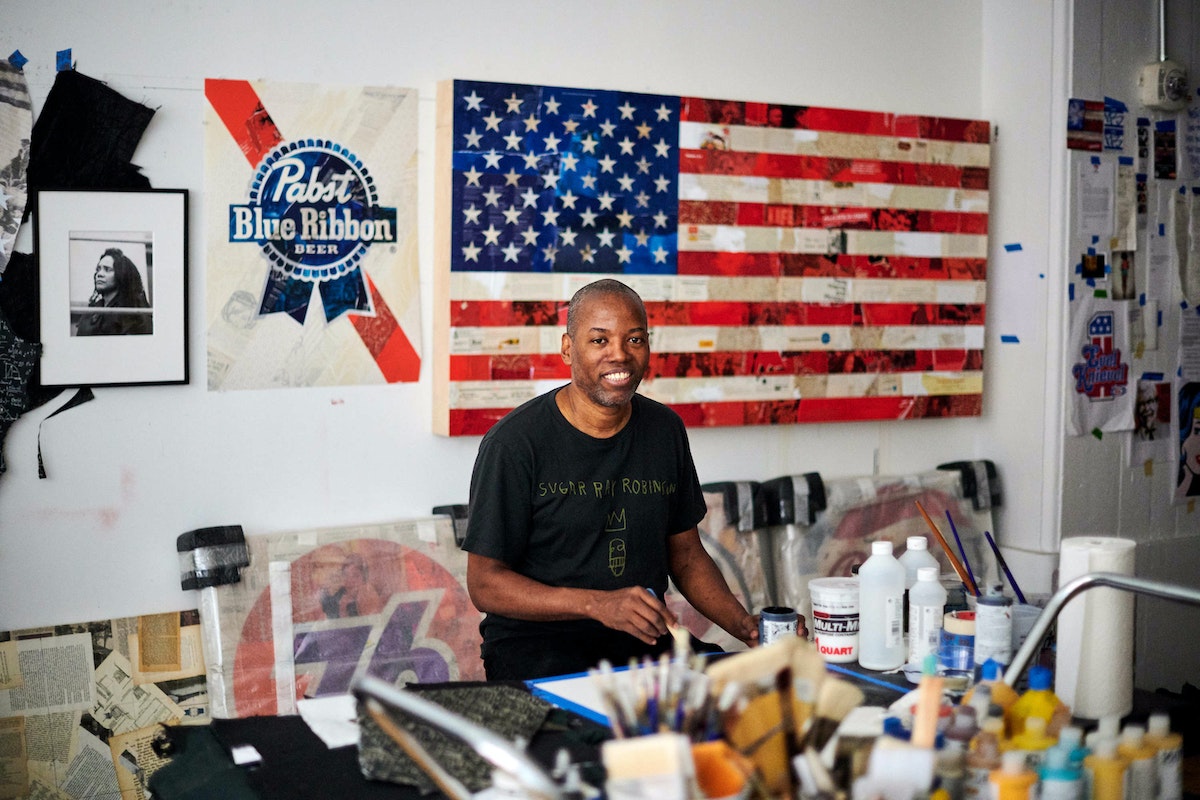
Diana: Let’s start with how you got into hip-hop, working with Russell Simmons and Def Jam.
Cey: When I met Russell in the early 80s, the term hip-hop wasn’t even coined yet—it was just rap music. A photographer had given me Russell’s business card, and I went down to his office to show him my portfolio. All I had were photos of car washes and commercial walls I had painted. But he said, “Okay, we can find something for you to do.” There wasn’t a long-term contract, but to me it might as well have been one. I’m laughing now, but the best thing about being young is that you don’t know enough to feel empowered. You just know they’re not saying “no.”
Did your graffiti art influence your hip-hop design?
To me the responsibility was always how to transform a language everyone was familiar with into something else. You see graffiti on the subway, scrawled on the walls, but I knew it was bigger than that. My question was how to elevate graffiti and keep its integrity.
Was there a breakthrough moment when someone said, “Now I see the power of what you’re creating”?
You know what? I never really heard that. At the time, nobody had formal training so it wasn’t like they understood the power of graphic design. It wasn’t until LL Cool J’s record Mama Said Knock You Out hit number one that I felt that recognition. The album cover was a beautiful black and white photograph of LL shot by famed photographer Michel Comte, and that was when everyone finally saw it as art.
What are you most proud of from that chapter in your creative life?
I think about the artists more than the creative pieces. It’s a little embarrassing to say, but sometimes I’ll dream that it’s 1987 again and we’re on the Together Forever Tour with Run-D.M.C and the Beastie Boys. We’re reliving everything as adults, and we’re all so much more appreciative. Then I wake up and realize it’s just a dream, and Adam Yauch is gone and Jam Master Jay is gone, but I realize I was actually there. During that time I learned about the power I had that I didn’t even know I had.
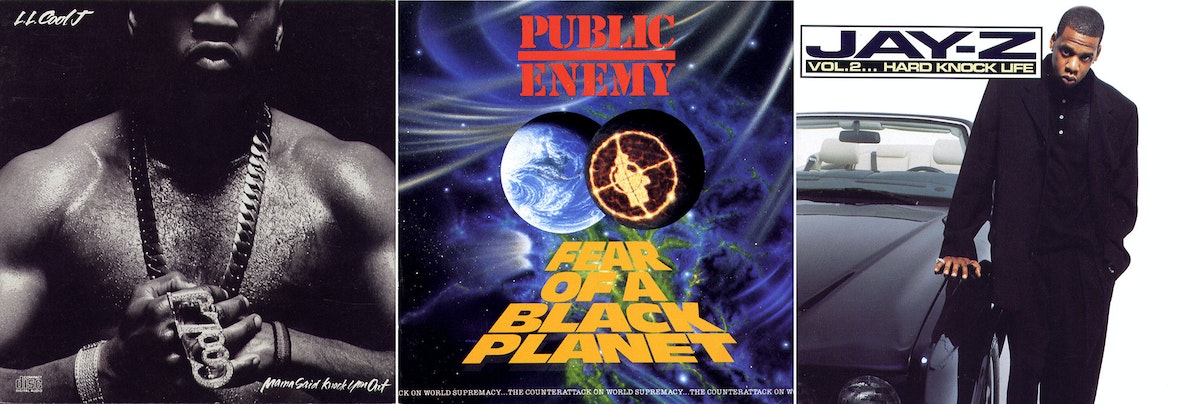
You went on to art direct the book Hip-Hop: A Cultural Odyssey, which captures the essence of the hip-hop era. What came next?
That book is synonymous with hip-hop itself. The fact that the publishers were convinced to make a book so huge is wonderful! The design of that book was completely my vision, I got to experience every creative idea I’ve ever wanted in that book.
Around 9/11, I realized none of this stuff mattered in the same way anymore. I got disillusioned with the business and the misogyny. I knew I couldn’t change how everyone thought, but I could take myself out of the equation. By that time, I’d designed as many albums as I needed to and wanted to try something else.
After spending a few years in Hollywood doing film titles, I moved back to New York to get my hands dirty. I missed making things so I began painting again and learned silk screening. After I made a few pieces, Adidas commissioned me, Shepard Fairey, and a handful of others to make original works for a clothing collection celebrating the life of Muhammad Ali. Working with Adidas was my first major corporate partnership. That got me thinking, maybe partnering with major brands isn’t the worst thing in the world.
At the time, I was also teaching art to high school students at Brooklyn Academy of Music. Over a ten-week course, I had to create dozens of lesson plans. I came up with every possible creative scenario to challenge their notion of what art could and should be. I stumbled into working with collage then.
That was a small start of something big. Tell us more about your work with collage.
For one of my lessons, I cut out a giant letter and had each student pick a color and fill in a small area of collage. The letter was broken up so nobody knew what it spelled. At the end of the project, we’d have a family sharing moment and present the final piece. The students would line up holding letters that spelled “FREEDOM” or “JUSTICE.” It was such a powerful way to communicate. I realized that collage combined what I learned as a graffiti artist with my love for letterforms.
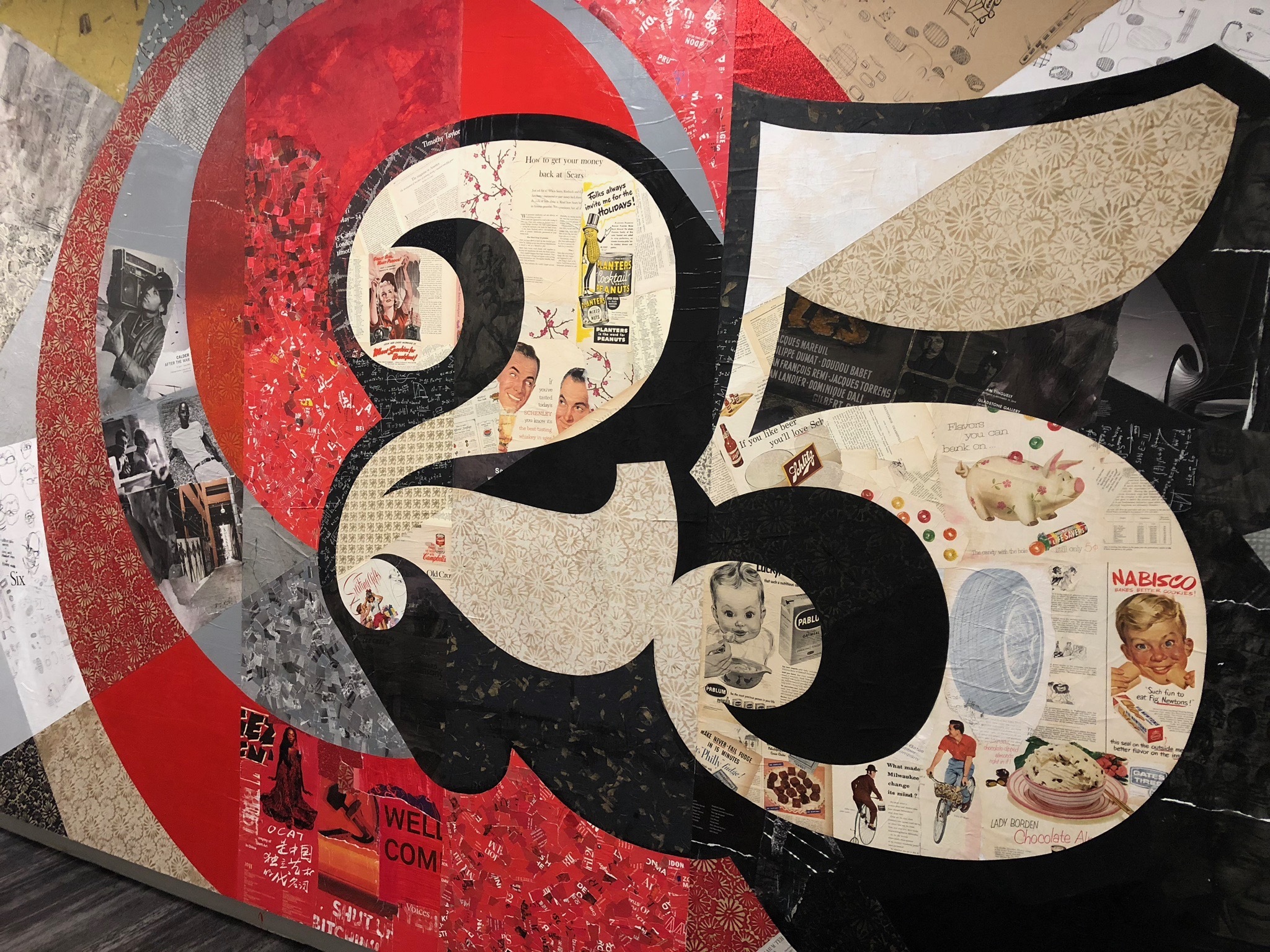
This makes me reflect on a conversation we had at the beginning of our collaboration when you decided to create the number “25” for the IDEO NY mural. We had lots of discussions around bravery and creativity. At one point, you quietly offered that “maybe it’s not about a word.” Tell us why letters and numbers are so important to you.
There’s a simplicity working with letters and numbers. They break down barriers. The process of making collage is so involved that I don’t want the design to get too busy. Letters and numbers let the design be bold and simple, but the execution is always complex.
Speaking of murals, can you tell us about the One Nation mural you created for the new National Museum of African American History and Culture?
When I was invited to make a piece for the ribbon-cutting ceremony with President Obama, I said yes immediately. The whole thing was surreal. Just the existence of the museum was something I’d been waiting a lifetime for. The only guidance they gave me was to make a piece of art that the community could contribute to. A collage was the perfect vehicle to do that. People could contribute to creating a piece that was bigger than themselves. That’s the beauty of collage.
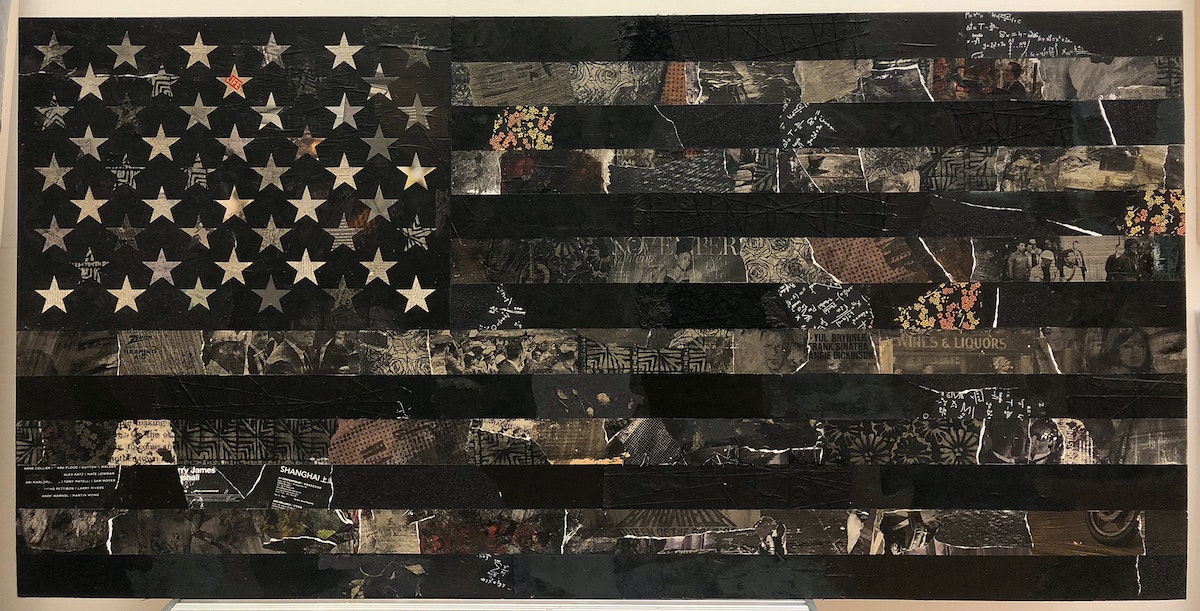
Trusted Brands came next, which brought together your graffiti work and your graphic design work. What inspired the series?
As a kid in the 60s and 70s, I loved seeing huge graphics like the 76 logo whizzing by on the highway—Trusted Brands was an homage to the symbols of that period in my life. As I was working with collage, I started wondering what the next thing was going to be. After doing letters and numbers, I wanted to do a project that nodded to my favorite brands.
Just recently, I partnered with Pabst Blue Ribbon to reimagine their signature 12oz can and launch National Mural Day. Like Trusted Brands, I wanted to pay tribute to the brand’s history and iconography.
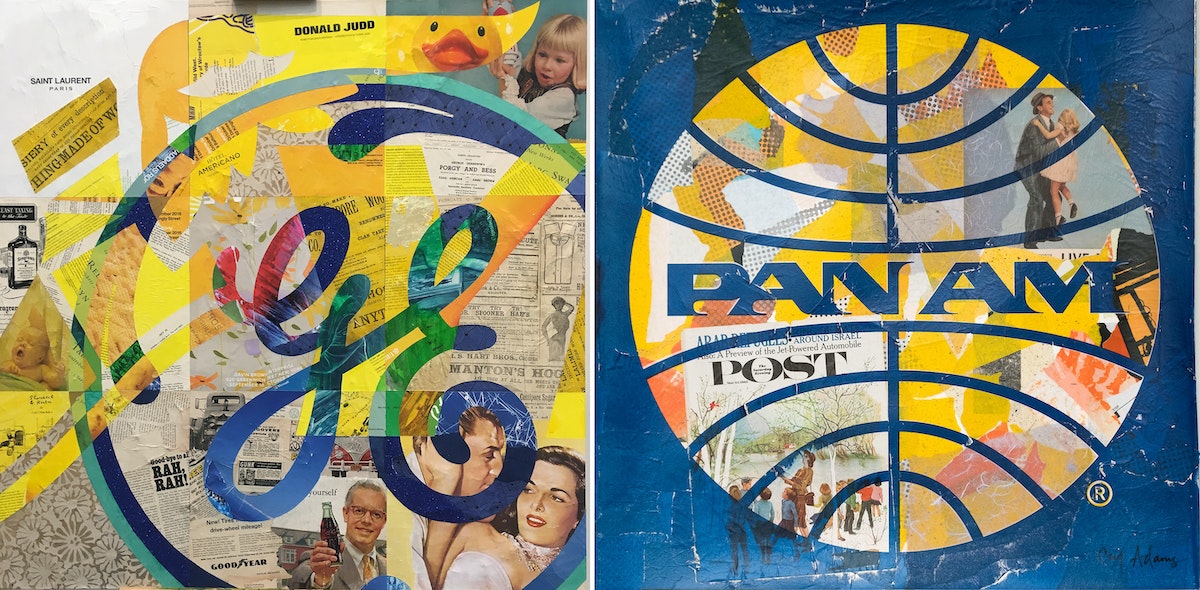
Looking back on all of these chapters, is there a specific approach or ritual in your creative process that is the “Cey Adams secret”?
I always try to make work that is positive and uplifting. Even if it’s all black, I’m thinking about how to make something that will make someone feel good.
While you were creating the IDEO NY mural, we had three and a half months of your lovely presence in our studio. What was it like to be with us at IDEO?
One of the coolest things was creating in the lobby. I thought I’d be in a project space, but being in a community space that you can’t control was the best thing I could've done. Had I done it another way, I might've reached the same results visually, but I wouldn’t have had the same experience interacting with people in the moment.
I have such an appreciation that an organization like IDEO exists because it’s so nurturing to creative talent. Even at the age that I am now, I crave it so much! Not that I need to be patted on the back everyday, but it’s refreshing, that feeling of love and support is foreign to me.
A peek into Cey Adams' creative process. Video produced by Ian Gittler.
You might not have realized it in the moment, but you’ve seen Cey Adams’s art—on album covers, gallery walls, and the streets of New York City.
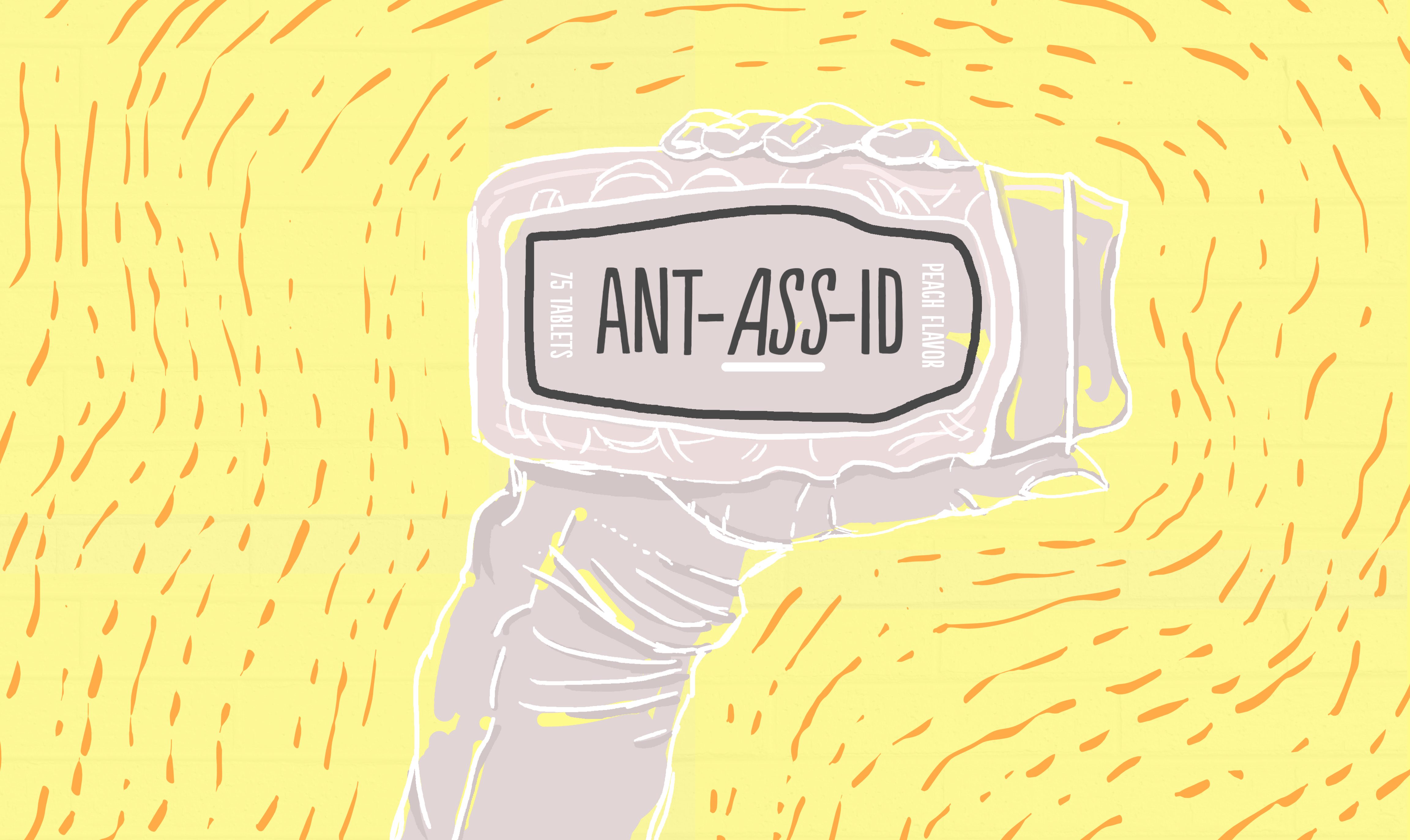
Are you dealing with assholes at work?
A few tips to help you survive
In the ensuing years, I heard countless personal stories about the damage that bullies and backstabbers inflict, and how to deal with them. I’ve also been tracking the growing pile of academic research on all things asshole.
Until now, I resisted the polite but persistent pressure from readers, friends, and publishers to do another book on what I'd learned as “the asshole guy.” But it’s clear that now, more than ever, there is a need for just such a book.
Here are 3 surprising lessons for how to escape, endure, outwit, and ultimately understand assholes:
- Own it. When somebody feels as if others are treating them with disdain and disrespect, human biases are such that they are often unlikely to see and accept their role in provoking their tormentor—or are so thin-skinned that they don’t really have a tormentor. If you are in a situation where you believe that someone is treating you like dirt, because of these biases, you should be slow to label others as assholes—and quick to label yourself as one.
- Be realistic. If you are in a situation where the alleged asshole treats everyone like dirt, well, then, it probably isn’t your fault. But if they are nasty to just you, the chances you are doing something to piss them off are high.
- Be empathetic. Finally, the more empathy you can develop for the person who is leaving you feeling demeaned and disrespected, the better you will understand your role in provoking the bad behavior (and what to do about it).
This brings me to a lovely and instructive story by Barry Katz, the first IDEO Fellow appointed back in the 1990s. (I was the second.) Barry is a marvelous writer, with a deep understanding of the history of technology and design. As part of the launch for The Asshole Survival Guide, Barry told me one of the most compelling stories I’ve heard about how to engage in asshole survival when you just might be part of the problem. The story, along with Barry’s commentary, illustrates the lessons above perfectly, and more. It's beautifully told, so I've reproduced it as he wrote it to me:
“Many years ago, I connived to spend several months in Paris. Every morning, I walked down the three flights of stairs from my apartment, crossed the street to the neighborhood boulangerie, and waited patiently in line to buy a croissant for breakfast. The lady behind the counter chirped and gossiped and flirted with all the locals in the queue, but when I got to the counter her face transmogrified into a scowl. I didn’t like it, but I wrote it off as proof of the fabled Parisian disdain for tourists.
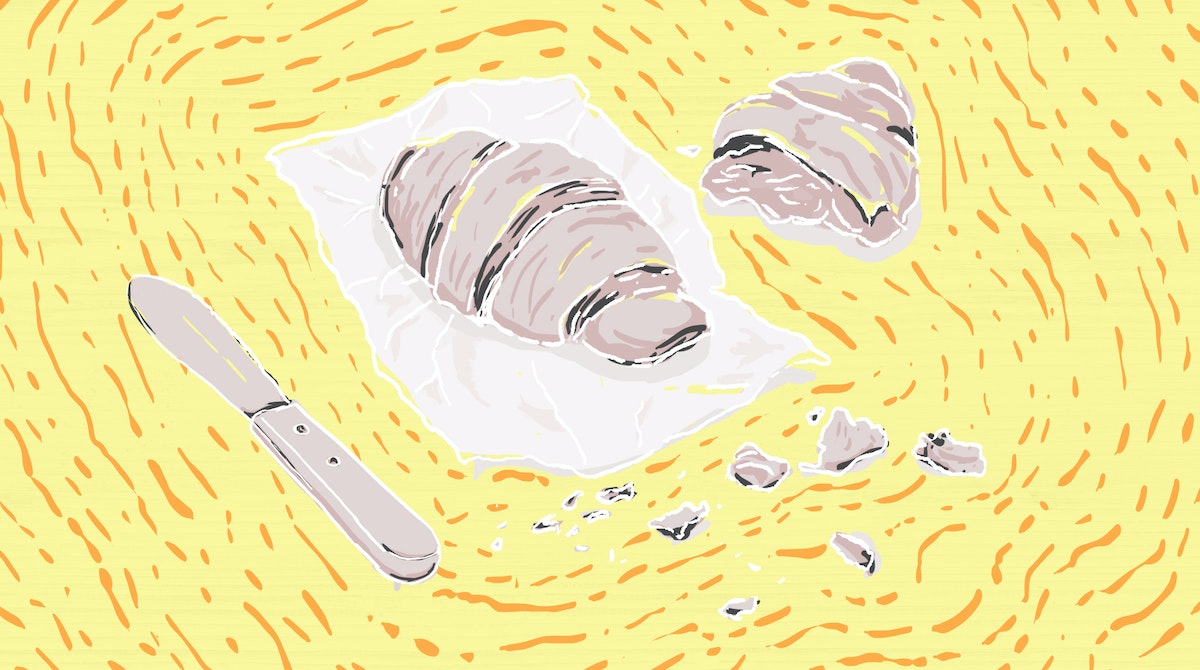
“Until one day, in a fit of ethnographic curiosity, I decided to conduct an experiment. Inspired by my reading of Clifford Geertz, I registered a thick description of every detail of the behaviors of the French people in line and resolved to mimic them perfectly. The guy in front of me picked his nose, so I picked my nose. The lady in front of him absently folded and unfolded her newspaper, so I dutifully folded and unfolded mine. As I neared the counter, I noticed that when it came time to pay, each of the citoyens placed a banknote in a little plastic tray and pushed it forward; then the baker placed the change in the tray and pushed it back to the customer. By contrast, day after day, week after week, I had innocently thrust a dirty ten-franc note into her face.
“On D-Day, I approached the counter and her face tightened into its usual scowl. She braced herself as I took out my money, but instead of handing it to her, I placed it delicately in the plastic tray and pushed it forward. She burst out laughing and we lived happily ever after.”
Isn’t that a beautiful thing? Barry nailed the upshot in the postscript he wrote me:
“Moral of the story: Unfairly, perhaps, Madame took my failure to observe local protocol as a sign not of ignorance, but of deliberate defiance. I insulted her, and dammit if she wasn’t going to insult me right back. Who is the asshole here?”
My answer is that both Barry and Madame were locked in a vicious circle of asshole poisoning, because each lacked the other’s perspective. But Barry, being the wise person he is, tackled the problem by thinking and acting like an anthropologist. In doing so, he demonstrated the three lessons offered above.
1. He realized that his biases might blind him to his contribution to the “asshole problem.” Then he reflected that he could be part of the problem—that he could unwittingly be provoking the lady behind the counter.
2. Madame was nasty to only Barry, which strengthened his suspicion that he was doing something to upset her, and it wasn’t just because he was an ugly American.
3. Once Barry developed empathy for Madame's perspective, he discovered what he was doing to upset her, changed his behavior, and their relationship was repaired.
It’s lovely example of human-centered design. And it’s a great reminder that sometimes, we are the assholes.
I’ve spent the past few years working on The Asshole Survival Guide, a sequel to another book about assholes I wrote a decade ago, which focused on how to build a civilized workplace.
6 ways to practice design thinking in service of a mind-blowing meal
It's not just for your 9-to-5. Here's how to design think your dinner.
What I can do, however, is teach you how to design your own way to greatness—greatness that, at the end of the night, will have grown adults licking the bowl clean.
I spend my days at IDEO U immersing myself in design thinking. I also spend them eating, cooking, and thinking about good food. What I’ve learned is that design thinking is not something you keep in a tidy, 60-minute-meeting-shaped box. Design thinking is actually a set of tools you can use constantly, and the more you practice it in the unique moments of your life—like whipping something up in the kitchen—the easier it will become to apply it to the hairiest problems at work.
So let’s get cracking. Here are six ways to hone your design thinking skills in service of a mind-blowing dinner.
1. Celebrate constraints
Constraints are a designer’s best friend. They keep you on track and help you make decisions. Without them, everything is a possibility, and you may find yourself paralyzed by how to proceed. Constraints also have the ability to engender brilliant solutions, because they force you to think outside the box. In brainstorms, we purposefully provoke creative thinking by asking questions like, What if we had zero dollars to pull this off? Or what if the laws of physics didn’t apply?
Step one in planning your menu: Figure out your constraints. What’s in your fridge? What cuisine or region are you cooking from? What’s in season? How much time do you have?
2. Keep your audience front and center
Who are we designing for? This is the question we, as designers, must ground ourselves in always. What do they need, what do they love, and what brings out the best in them?
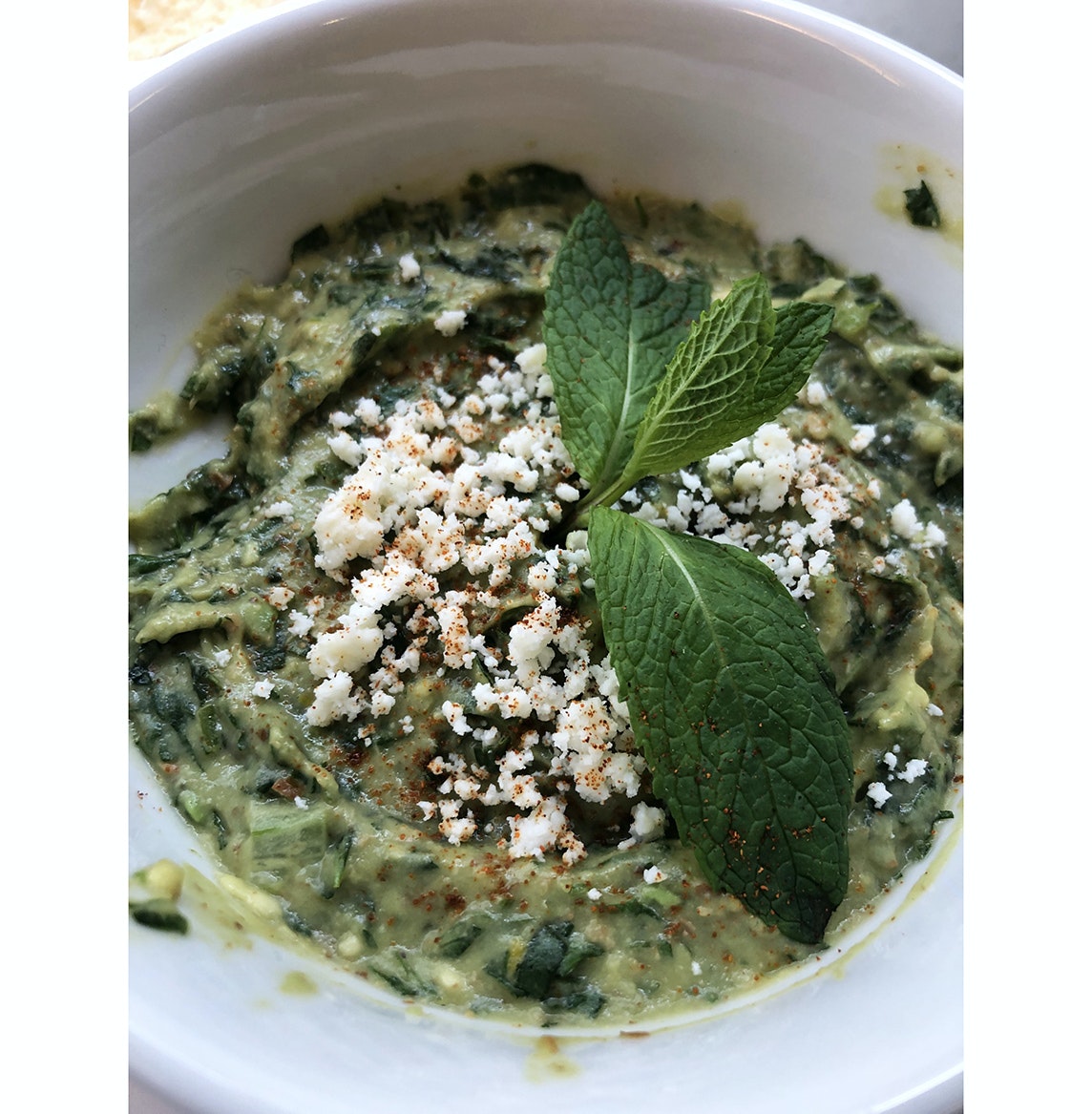
On dinner party duty, I consider my audience to be both the eaters and the ingredients. Is your hot date going to be attending? Ditch the garlic for sauteed shallots so you don’t scare them away. Is it the middle of a beautiful tomato season? Let your fruit shine with a smidge of good olive oil and flaky salt. Are you looking to transform that boring chicken breast you just found in the freezer? You’re going to need something punchy, vibrant, and bold to jazz that puppy up.
When in doubt, bring it back to your audience. What will best serve those that you’re designing for? That’s your north star. Come back to it often.
3. Design for delight
Consider the last product, service, experience, restaurant, or healthcare appointment you couldn’t stop raving about—the one you likely described in too much detail to your best friend, your boss, and your bodega guy. What is the feeling you have when you think about it?
Most likely, it’s delight. Delight is that particular combination of feeling cared for and feeling surprised. Like someone knew you so well that they were able to create something you didn’t even know you needed. We design for delight because it helps us build more meaningful, more emotional relationships with our users, all based on joy. It’s not just, "What are the needs of your user?" It's, "How might you fulfill those needs in a way that truly delights them?"
Sauce is delightful. It feels fancy. It feels extra. It makes your people feel like you went above and beyond for them, because you care. In terms of investing your time, energy, and dirty dish count, sauce delivers exponentially.
4. Test, test, test—and by that, I mean taste, taste, taste
Recipes exist for a reason—they’re great tools for learning. But you can’t follow a recipe blindly, praying for a miracle. After all, who developed that recipe anyway? You don’t know their lives. Maybe they’re one of those people who hates cilantro.
When you’re cooking, put what you’re tasting before what the recipe calls for. Taste your way toward what you like, continuously asking, "What’s missing? What does this need? What’s working here?"
In the design world, one common pitfall of trying to bring new ideas into the world is an over-reliance on recipes. People analyze every detail and possible consequence first, to mitigate risk.
From there, I’ve seen one of two things happen: Either you never get started because you get mired in the complexity of the plan, or you create a rigorous and unyielding plan that is based on a core set of assumptions about the future that hasn’t actually been tested yet. That's when the plan fails spectacularly.
At IDEO U, we’ve learned to de-risk the future not by planning meticulously, but by testing as early as we can, then continuing to prototype throughout the process.
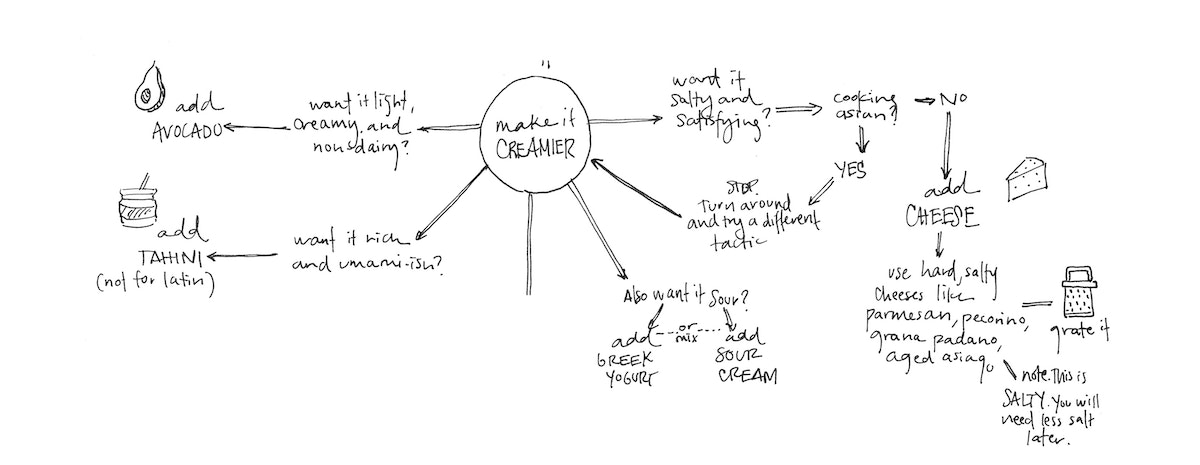
5. Know your levers
Samin Nosrat of Netflix series and cookbook fame taught me the power of the four key levers of cooking: salt, fat, acid, and heat. Playing with these not only helps me course-correct when things go south, but also elevates a dish to master level.
When we design, we can’t just look myopically at the product, service, or experience we are creating. In order to make it sustainable, we have to zoom out and understand the system that it sits in, then pinpoint the levers we can use to create change. What are the critical variables we do (or do not) have control over? Price? Timeframe? Quantity? And how might we ask different, creative questions to uncover other levers?
6. Be okay with failure
It can be easy to get stuck iterating on something that’s not working. Maybe it just needs a bit more salt—or more sweetness? Or more crunch? It’s hard to admit, but at some point, you have to stop tweaking. Sometimes the best thing is to start over. And that’s okay. Throw it out and move on with your life.
If we learn to accept failure, we can take a big step back, get some perspective, and tackle the problem from a new angle. Maybe our grounding assumption—about the user needs, the context, the delivery mechanism—was totally wrong. If we can accept and even rejoice in that knowledge, our next prototypes are going to be miles better.
As an instructional designer, I love building tools. A good tool is based on the belief that you, the person wielding the tool, not I, the creator of the tool, have the magic.
It’s also the reason I don’t give people recipes. I want to help them have the confidence to improvise, to take risks, and to delight in both the successes and failures along the way.
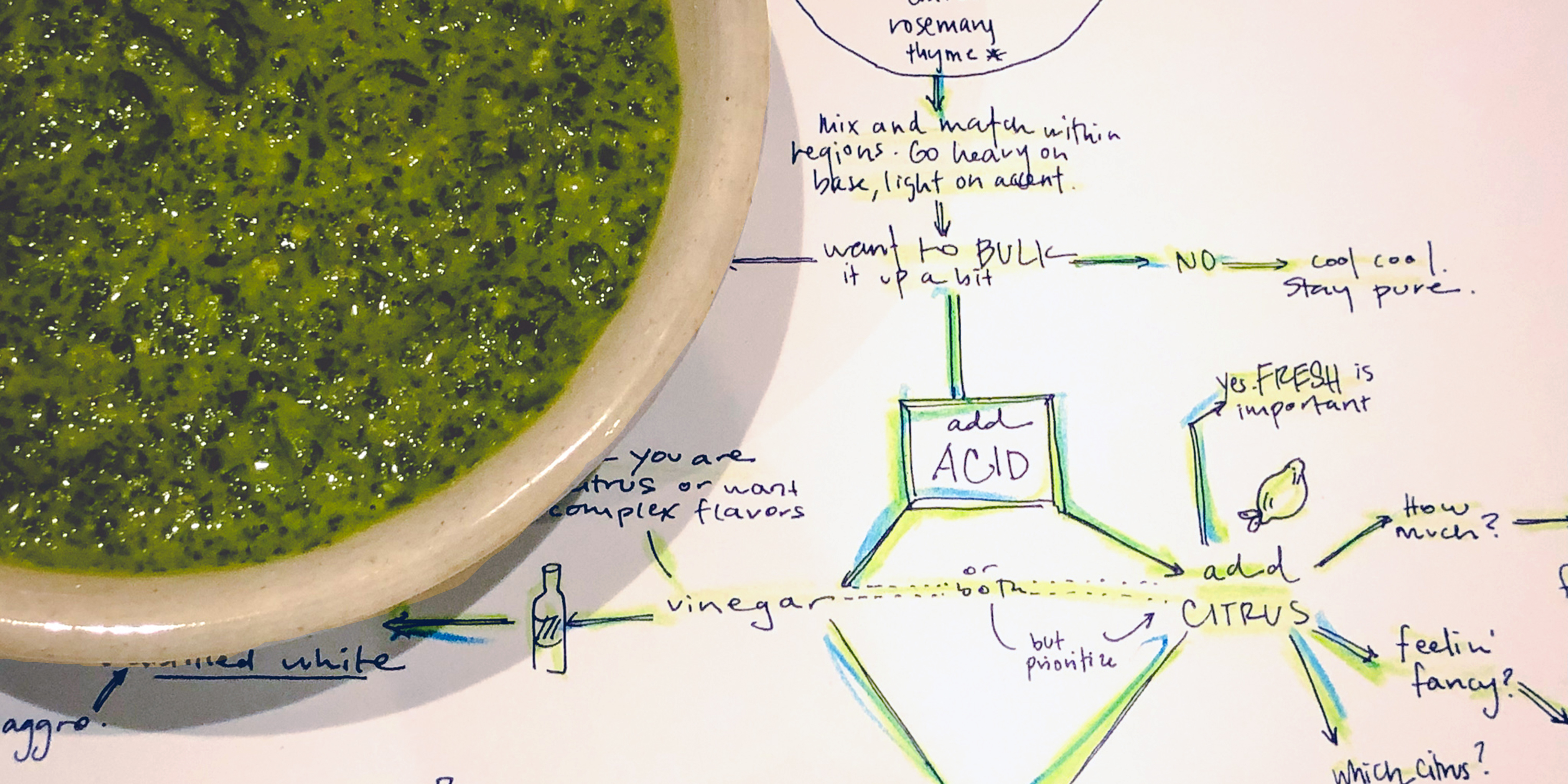
So I built a tool for making sauce—a map to help you navigate those critical decision points along the way to your dream dining extravaganza. No stove, fancy utensils, or measuring cups necessary. Just some design thinking and your very own taste buds.
At least once a week I get a text, email, or phone call asking, “Do you remember that sauce you made? Can you send me the recipe?” My answer, to the person's initial despair, is always no.

A New Tool for Testing Your Design Concepts Ethically
Design research at scale requires ethics at scale
Early concept testing is essential to the design process. Without it, a seemingly great idea could turn out to be a flop, totally misaligned with consumers’ needs. Remember “New Coke”—a new version of the classic soda that replaced the original? Although the company had run tests, they only focused on validating the new taste; they neglected to see the potential impact of changing an iconic brand. It’s one of the most well-known missed opportunities by a company many know and trust.
These days, though, getting feedback is easier than ever. Thanks to social media ads, email campaigns, and digital surveys, we can reach thousands of people—and fast. Our colleagues at IDEO have even built a tool called Shape that allows designers to collect quantitative and qualitative feedback from prospective users in just a couple of days. But with powerful tools like these comes great responsibility. Now that we have the ability to test ideas at scale, we need to adapt our old-school rules of design ethics to account for new methods.
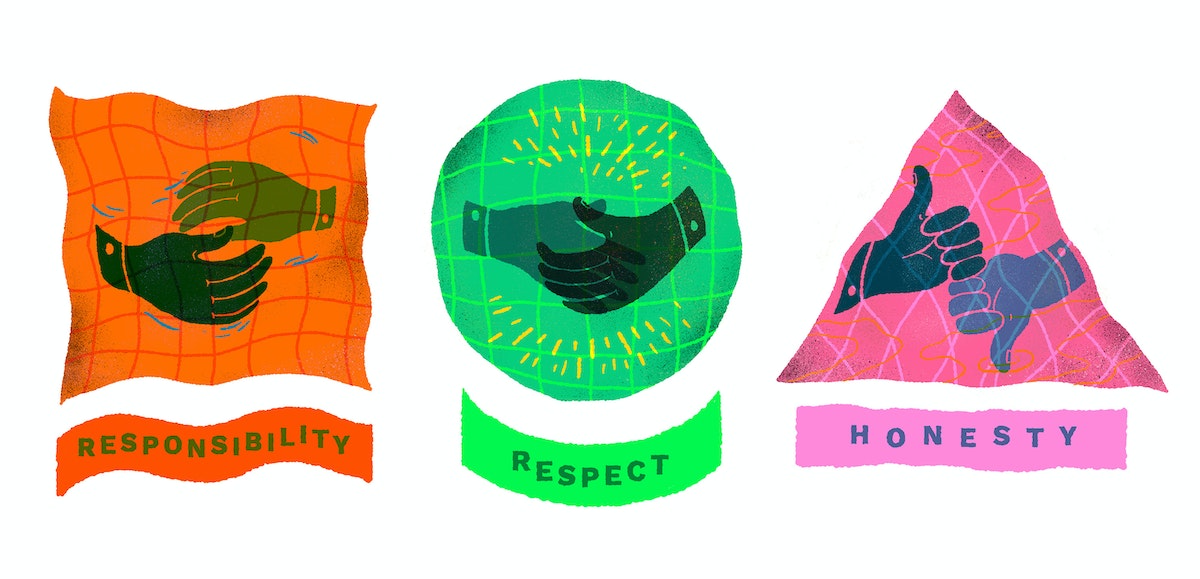
Ethical considerations have always been at the heart of our work. We even provide new IDEOers with a book called The Little Book of Design Research Ethics, which outlines three principles—responsibility, respect, and honesty—that guide us through the design research process with the end-user top of mind. However, as the technology we use continues to evolve, so must the way we apply these principles.
Here's what those three principles mean in practice:
- Responsibility: We act to protect people’s current and future interests. We make participants aware of how we will use the information they share, and we take carefully considered steps to safeguard their information. Our priority is making sure our research is not harmful to people in any way.
- Respect: We honor participants’ limits and value their comfort—because participants are people, not subjects. We strive to be considerate of their cultural expectations and sensitivities at play.
- Honesty: We’re truthful and timely in communication, and we want to help participants make informed choices about what they share, when they share it, and how they share it. Consent is key, and every action taken should be with the user in mind. Our goals and motives must remain as transparent as possible.
Recently, we sat down to interview people with a chronic illness to gauge their interest in a daily caretaking service to take pressure off of families and themselves. In person, we were able to make it clear that the service was still just a prototype—it wasn’t something they could actually access. But what if we went the digital route and ran social media ads for the service? What if we unintentionally misled a large group of people to believe that a service that could improve their quality of life existed when it was just a prototype? The consequence could have been huge.
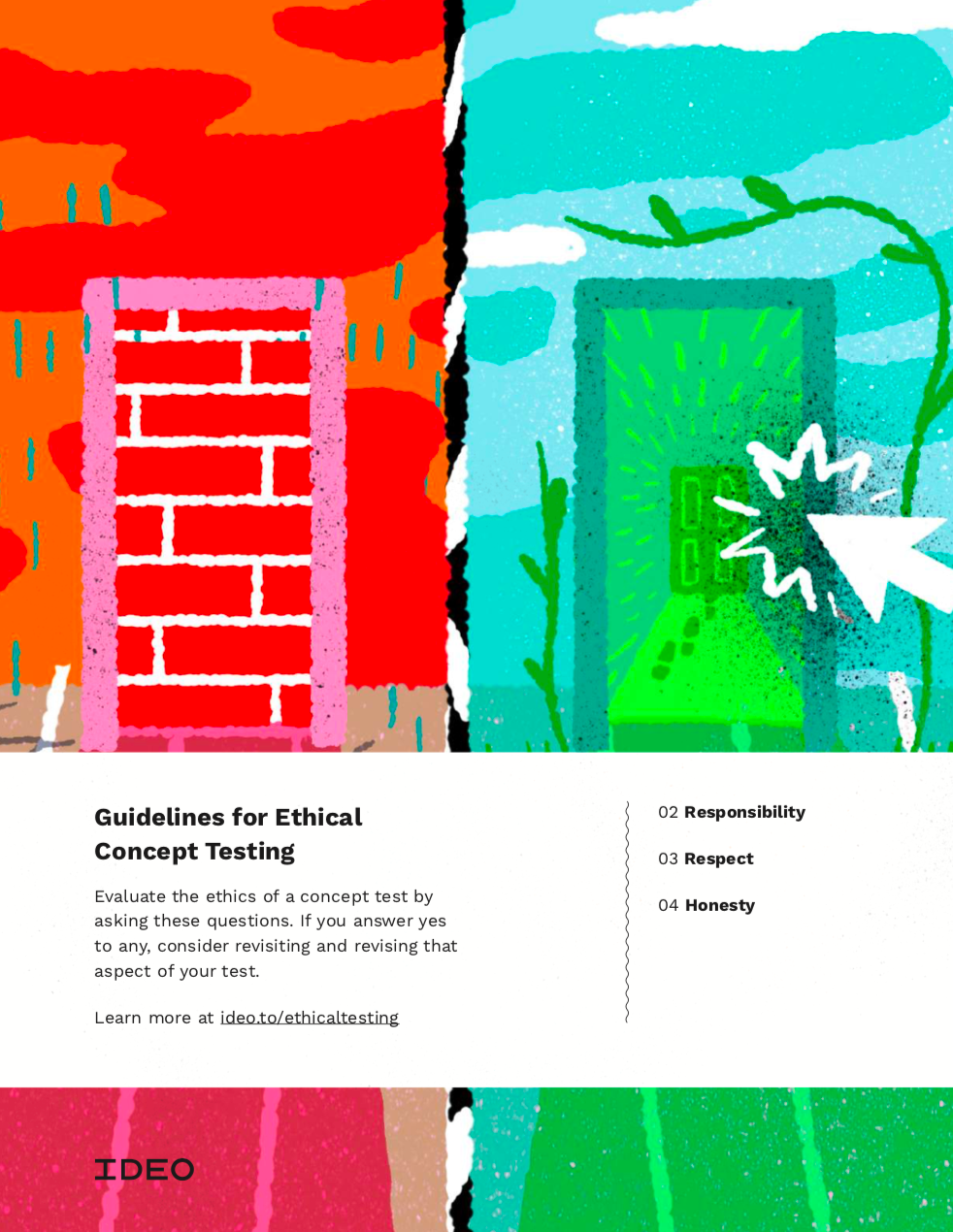
With that in mind, our group of design researchers have created a guide to ethical concept testing to evaluate design concepts before launching a test, to make sure that they’re fair and beneficial for all involved. Think about it like a list that pushes you to consider the impact of sharing your concept before it goes live.
A few notes before we dive in: If you’re a business, keep in mind that under GDPR—the EU’s General Data Protection Regulation, which went into effect in May 2018—there might be some formal checks you need to do even before you start to use targeted ads. It may be worth checking with your legal team before moving forward. Lastly, while this guide specifically deals with digital concept testing, we encourage you to adapt it for any concept testing at scale.
In addition to going through the plan provided above, we always recommend running your concept test with a small number of people prior to going live so you can catch any flaws that you might not have noticed. After all, you're only human.
This tool is a first step in molding our design ethics to new tools, but it’s just the beginning of a long, collective conversation about the ways they will need to adapt over time. While $5 can get you started with concept testing, that scale creates more considerations for responsible designers to make. For now though, we want to leave you with our community’s top resources for learning more about ethical design.
- Website: Humane by Design. "A resource that provides guidance for designing ethically humane digital products through patterns focused on user well-being."
- Website: Smashing Magazing - Ethical Design: The Practical Getting-Started Guide. A crash course to all things about designing ethically.
- Website: Children's Design Guide. “A set of key principles written from the perspective of children as consumers to designers of products for them.” Put together by some big names like UNICEF and Frog.
- Podcast: Your Undivided Attention. A podcast on how we can better respect people through design by Tristan Harris, former design ethicist, and Aza Raskin, the former Head of User Experience Design at Mozilla.
- Book: Future Ethics by Cennydd Bowles. After advising clients like Twitter, Ford, Cisco, and the BBC, Cennydd has published this book on the ethics of emerging technology.
How many people can you reach online with $5, a few hours, and limited advertising expertise? During a recent early-stage concept test, we found an answer: more than 2,000. Our goal was to get our prototype into the world prior to launching it to gain a better understanding of how the concept would be received in the market.

Lindsey Turner
I’m passionate about building brands, products, and experiences that help organizations show up with meaning and momentum.
I help organizations cut through complexity by shaping how they show up, through brand strategy, identity, and storytelling.
Working at the intersection of brand and business, I bring an editorial eye and a bias toward making—turning ideas into tangible experiences that people can understand, trust, and believe in.
My work spans government, healthcare, financial services, media, and consumer goods, from launching Gen Z-focused ventures to building innovation labs and reimagining legacy brands. I relish moments of ambiguity and enjoy translating across teams, perspectives, and priorities to move ideas forward.
I started my career in editorial and digital design, shaping cross-platform experiences and identity systems in publishing and agency environments. That foundation still shapes how I work today: I’m detail-oriented, collaborative, and overreliant on the Oxford comma. I hold a BFA in Visual Communication from the School of the Art Institute of Chicago.

Rachel Young
My work helps organizations see who their products aren't working for—and build the will and the tools to do something about it
For 25 years, I've asked the same question: Who does this design exclude—and what are we going to do about it?
My work spans human-centered strategy, inclusive design, and qualitative research, with clients ranging from Microsoft, Google, and Verizon to the National Science Foundation, and San Francisco Unified School District.
Before IDEO, I taught elementary school in East Palo Alto and spent a decade doing design work with social service organizations—where I learned firsthand what it costs people when systems are built without them in mind.
I am currently writing User Error, a nonfiction book about digital access and the design decisions behind it. I live in Oakland, California.

Brian Pelsoh
I lead with craft, ensuring our work is creatively excellent: rooted in deep human insight and imagination, while also grounded in the realities of business and technology.
My expertise spans brand, communication, and product design across tech, education, the arts, and social impact.
I believe great work demands both high-level vision and obsessive attention to detail, and only happens through collaboration.
I bring an inclusive, hands-on approach and a deep understanding of business, which enables me to consistently deliver excellence while always asking why.
Before joining IDEO, I worked at the brand firms Pentagram and VSA Partners. I began my career as a designer, leading teams at the School of the Art Institute of Chicago and the Milwaukee Art Museum. I hold an MFA in graphic design from Maryland Institute College of Art and a BFA in communication design from the Milwaukee Institute of Art & Design, and have taught at some of the best design schools in the US.

Tony Wong
I am responsible for IDEO’s long-term success in China and working with clients to use design as a tool to enable growth.
I am responsible for IDEO’s long-term success in China and working with clients to use design as a tool to enable growth. Specifically, I have helped Chinese companies design holistic brand solutions through the development of their products, communication, services, and innovation teams, and I have helped multinationals expand their presence and influence in China.
I advise global leaders on developing China-led innovation and capabilities.
In over 15 years in IDEO Shanghai, I have worked on projects that use design to elevate the quality of the experience of healthcare products and services, streamline processes that increase productivity, create spaces and programs that promote and enable inclusive communities, and build next generation mobility solutions that are planet-positive.
Before joining IDEO, I worked at Philips Electronics and the Electrolux Group in Italy, the Netherlands, and Singapore on a number of breakthrough commercial products. I am a member of the Young President Organization in Shanghai.

Building a personal AI for the messiness of life: Sida Li
Most AI products today are built for work—a space with clear problems and established systems. One founder noticed a gap: personal life is messier, harder to systematize, and mostly left behind by the AI boom. So she built Cue, a personal AI that lives inside iMessage and group chats, to go where the other tools haven't.
In this episode, Becca Carroll, IDEO's Chief Strategy Officer, talks with Sida Li, co-founder and CEO of Shared Context Lab, about staying anchored to a human need while the technology around her keeps changing shape, why she treats her business model with the same rigor she'd bring to a product, and what it feels like to build a company at this particular, disorienting moment in AI.
The conversation also gets into how Sida makes design decisions: the language Cue uses to describe itself, the tradeoffs behind building inside iMessage instead of a new app, and a real story about a business idea that didn’t pan out.
This is the second in a two-part series profiling founders from IDEO's Startups-in-Residence program. The first conversation is with Johannes Seemann, founder of Sooner, on designing GenAI for the emotional side of money.

Designing GenAI for the emotional side of money: Johannes Seemann
Most personal financial tools are built to run the numbers and optimize towards a budget. While that works for some, most people experience money as a lived relationship that does not neatly fit into a spreadsheet. Johannes Seemann and Becca Carroll discuss why money is emotional before it is mathematical, and what a human-centered approach to building a generative AI financial product looks like in practice.

The curious leader's edge in uncertainty: Scott Shigeoka
Mina Seetharaman talks with Scott Shigeoka, author of Seek and Head of Curiosity Cultivation at the Eames Institute, about what distinguishes genuinely curious leadership from performative curiosity, how power dynamics shape curiosity, and why practicing curiosity can restore energy rather than drain it.

How constraints make us more creative: David Epstein
Mina Seetharaman talks with David Epstein, author of Inside the Box and Range, about why total freedom often produces average work, how leaders can design useful limits on purpose, and what organizations such as General Magic and Pixar reveal about the relationship between boundaries and creativity.
Looks like you might be in search of something very specific?
Or reset the filters above and try another angle.
Here’s some random inspiration

Podcasts about creative leadership

Articles about the power of prototyping
