
.svg)


Peripheral vision
A consumer electronics giant becomes a climate-era leader.
IDEO’s partnership with Logitech is a case study in bringing together the power of imagination and the rigor of business.
As much as we love to lead with creativity, it’s difficult to develop a business plan off ideas alone. So when Logitech asked the IDEO team to investigate a broad array of possible futures and report back, we brought our findings to life by inventing a board game. Instead of a dry presentation on circular solutions, our designers created a story about a mouse that turned into a webcam.
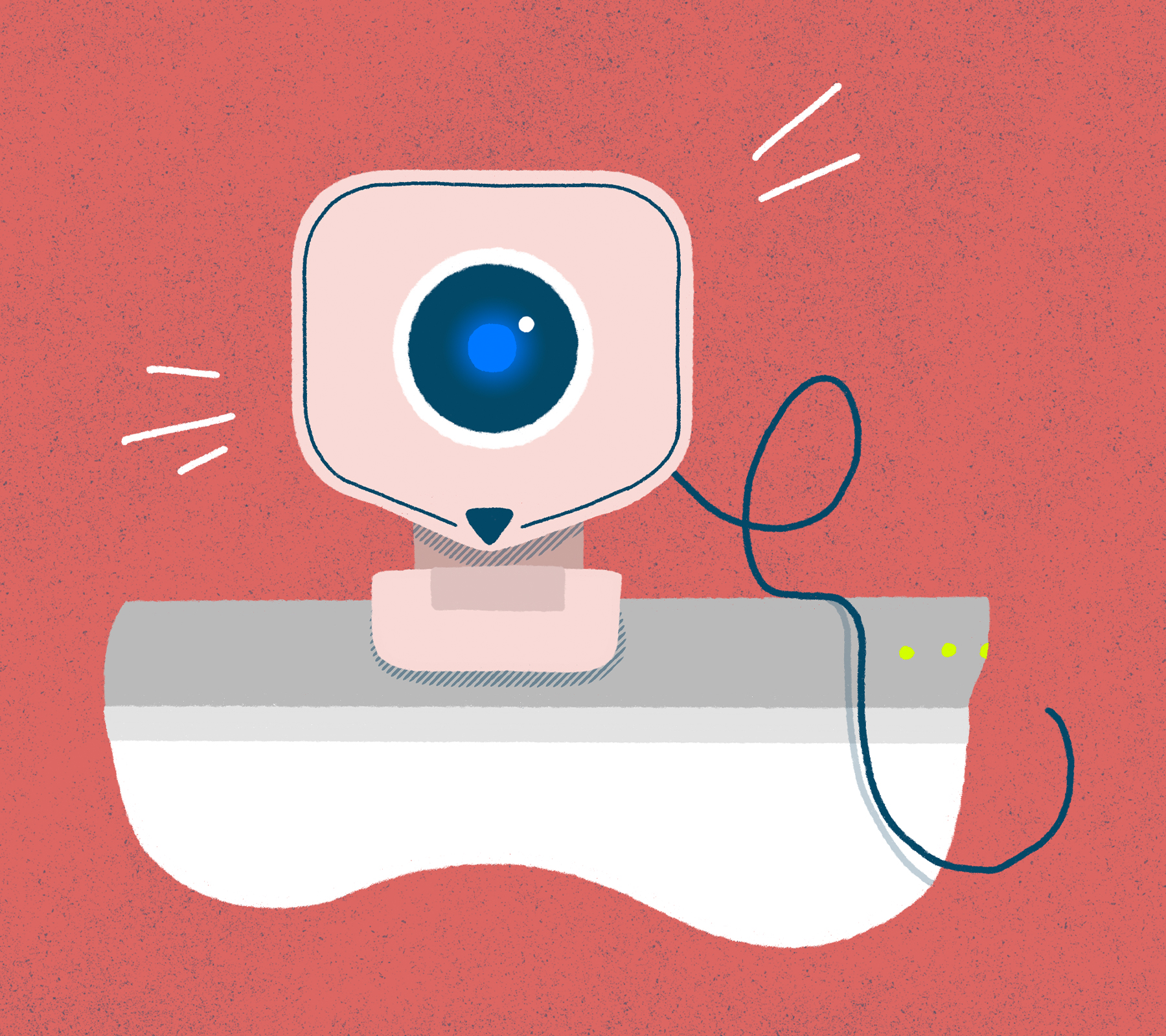
That imagination mattered. It fueled an exploration into expertise we collected from researching with people already living in futures destined to expand. And our rigor helped us hold more possibilities, and identify intersectionalities. Combined, they redefined what it means for ideas to be viable in business; they focused us on long-term sustainability; and they pushed us past immediate technical feasibility to ask if new ideas would be feasible for entire systems.
Our partnership with Logitech revealed that imaginative dreaming and business rigor aren’t opposing forces, but rather complementary tools in opening up new directions into a future demanding bold decisions.
As of 2019, e-waste was the fastest-growing waste stream globally, and only 20% of the 48.5+ million tonnes is disposed of properly.
Global emissions must be cut in half by 2030 to avert the worst impacts of climate change.
By 2030
Logitech has committed to becoming climate positive and removing more carbon than they create
The whole package
A global fashion brand pairs sustainability and growth.
Fast fashion keeps getting faster. But if the industry is to meet its climate commitments, its use of plastics has to slow down.
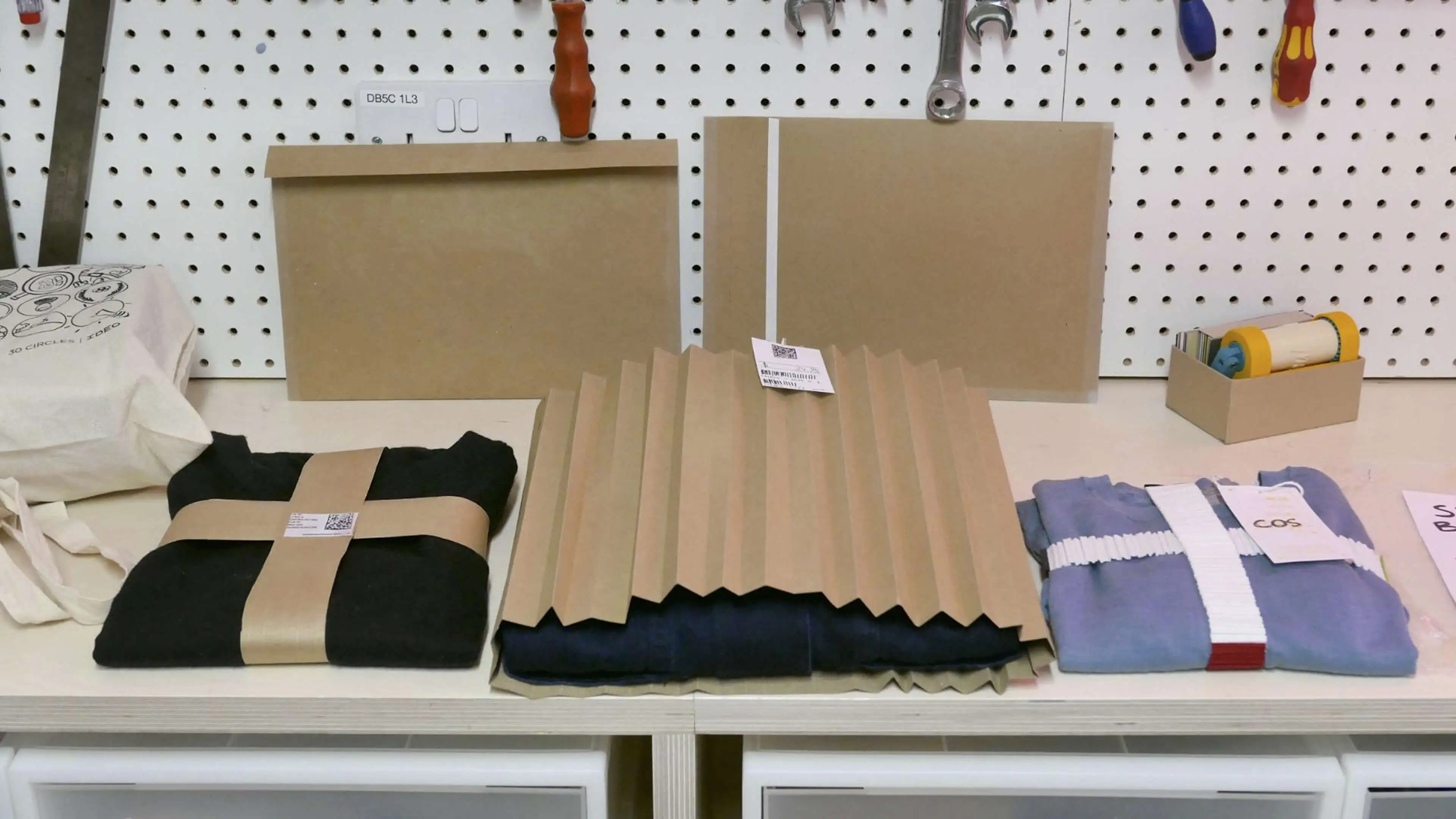
H&M chief executive Helena Helmersson set ambitious sustainability goals when she stepped into her role. She wanted to reduce the fashion giant’s impact on the environment and enable meaningful growth. But change is tough for any company, let alone one with eight brands operating across 74 markets. Together IDEO and the H&M Group created new plastic-free packaging, rallying around a more sustainable packaging solution that’s easily customizable.
By applying a design-led approach that went far beyond hiring a sustainability consultant, the H&M Group managed to reduce its use of plastic. But it didn’t stop there. A small team called Design Studio took what it learned and grew into an established strategic capability that pioneers new ways of working in the organization, tackling complex challenges in circularity, inclusion, supply chain, and customer experience. Sustainability isn’t a passing trend for H&M. It’s moving fashion forward.
Packaging accounts for 26% of plastics produced globally every year.
Fashion e-commerce is estimated to grow by 10% annually through 2024, requiring even more packaging.
100M
plastic-free packages shipped in 2022
2,000 tons
of plastic eliminated from H&M operations
The everywhere chair
In Japan, a mother works to build an inclusive child seat that closes the gap between children with and without disabilities.
For children with physical disabilities and their families, mobility is freedom. But in Japan, there are barriers to that freedom of movement.
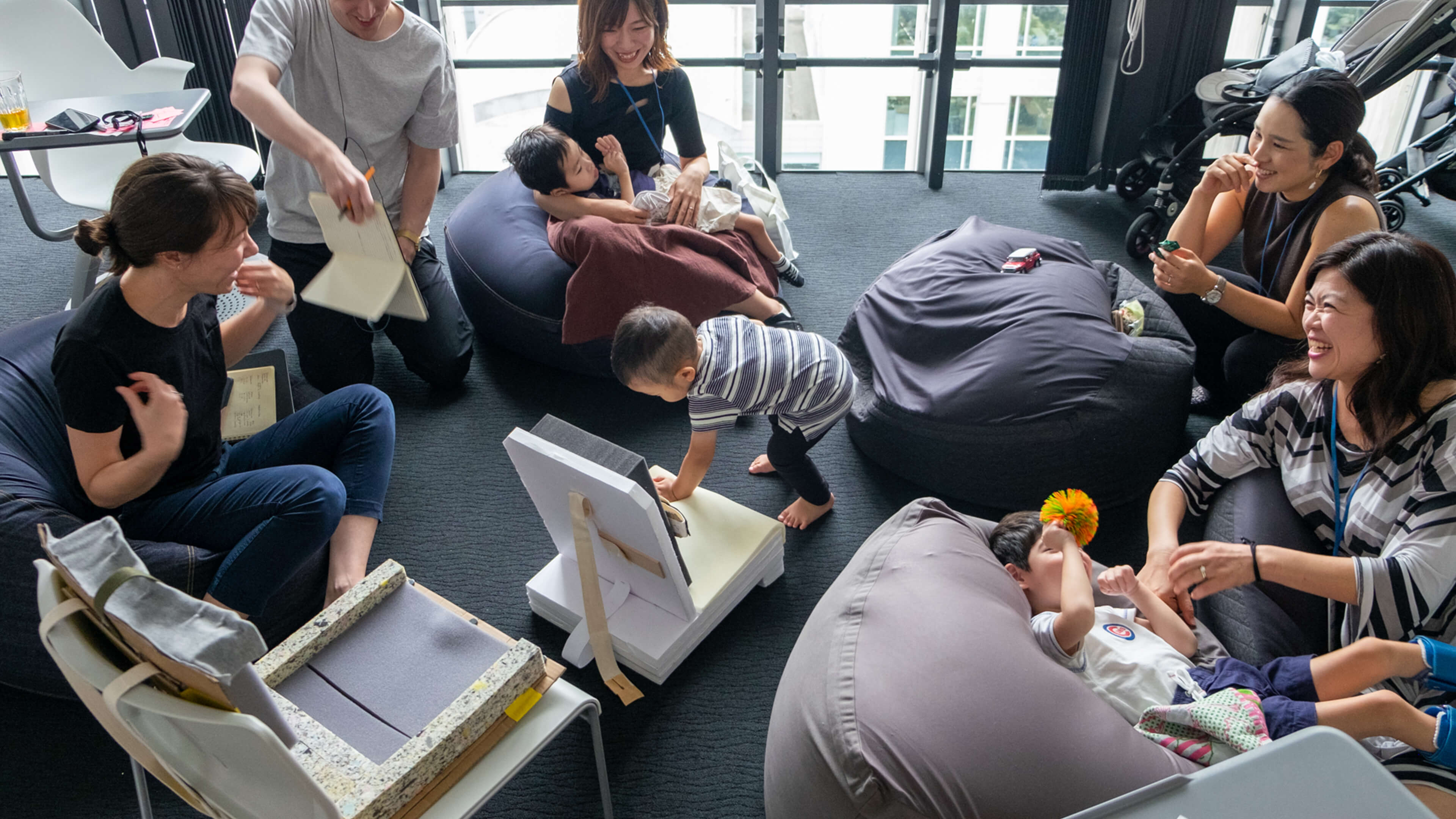
In raising a child with cerebral palsy, Yuri Matsumoto found that her son was separated from other kids during everyday activities. In Japan, children’s products are divided into two categories: those for children with disabilities and those for children without. Matsumoto aspired to close this gap with a product that would allow children of all abilities to use the same chair and be included in the same activities. To realize her idea, Matsumoto needed a strategic design company to refine the chair design, create a compelling visual identity, and arrive at a product road map to help set the business up for long-term success.
The result: a breakthrough product and supporting business that provides access for all kids, both for at-home activities like studying and eating, and also for family outings to restaurants, to the park, and to play with friends. Around the world, there are people like Matsumoto who see the need for better products in a very personal way. IDEO’s role is to help them realize their vision for a more inclusive future.
The Japanese health ministry categorizes 9.6 million people as disabled.
In Japan, children with disabilities are largely excluded from mainstream classrooms. Government subsidized support chairs are designed for posture and stability. Their bulk and rigidity make venturing out with them challenging.
Japanese children have fewer opportunities to learn about what it’s like to live with a disability than in the US.
Launched
officially in April 2022
5
restaurants and cafés in Tokyo are currently piloting the chair
Serving families first
One organization transforms health care, education, finance, retail, and itself to meet the expectations of the people it serves.
There can be no growth for business if peoples’ basic needs aren’t met.
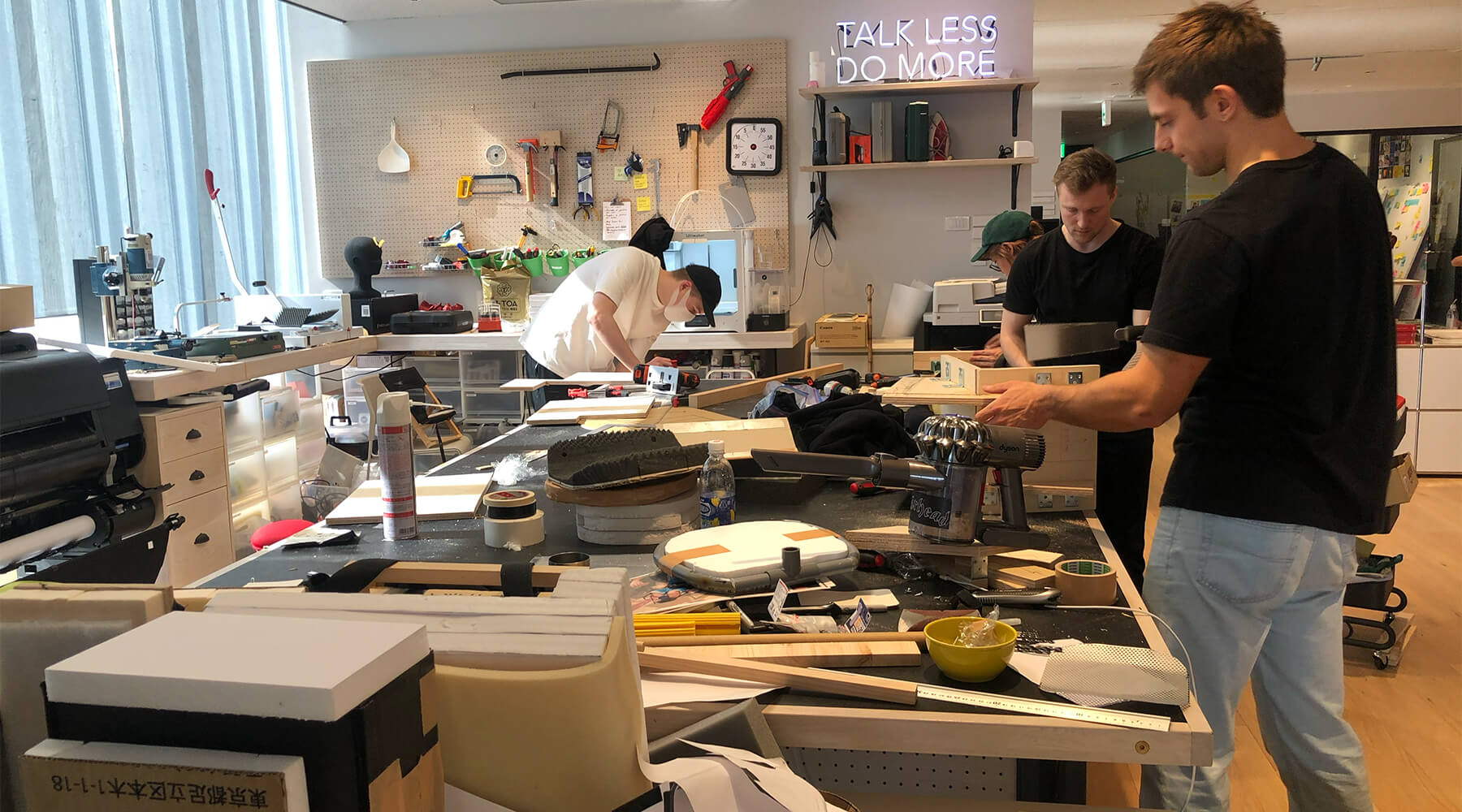
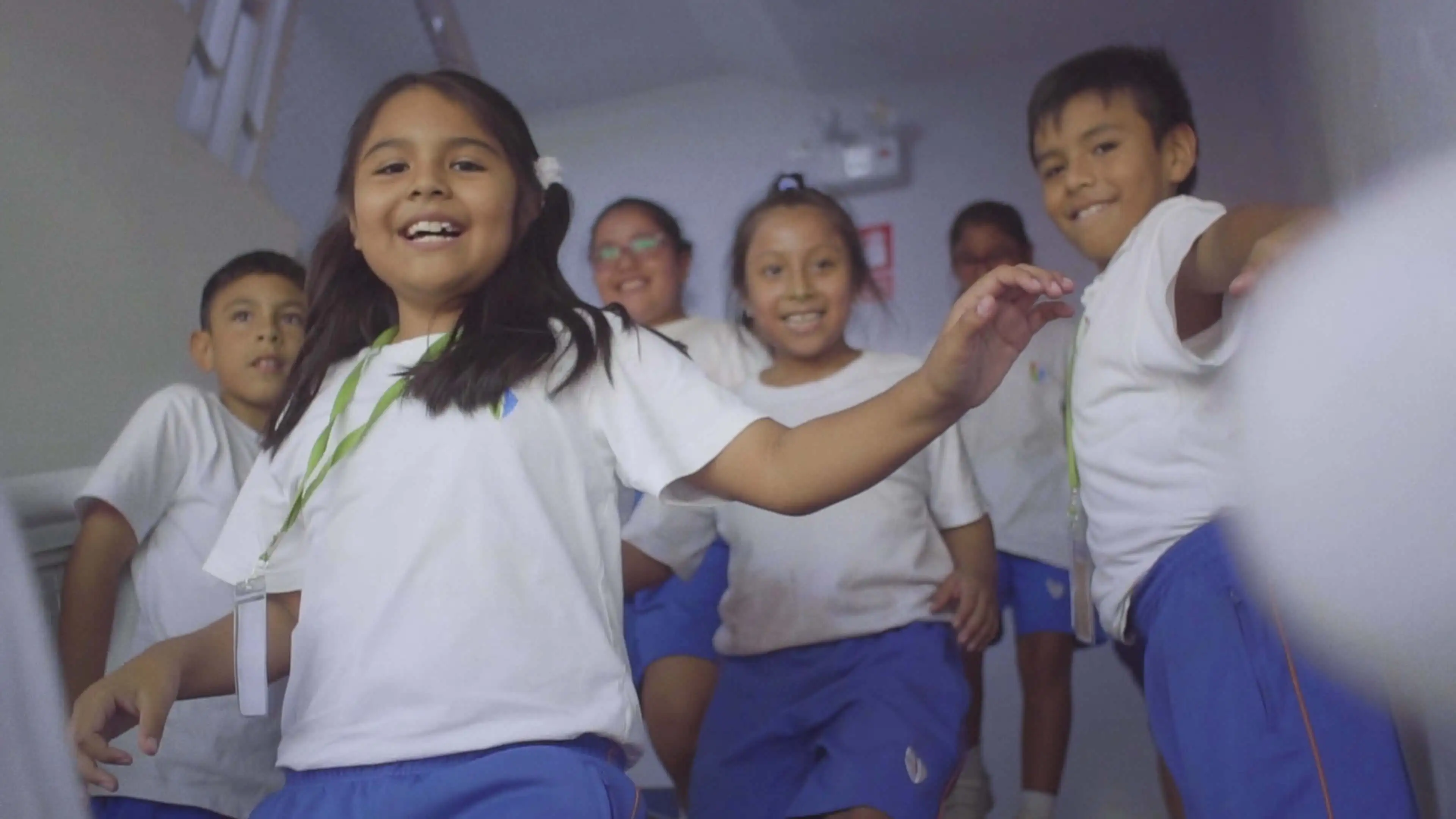
Carlos Rodríguez-Pastor, CEO of Intercorp, came to IDEO with an audacious goal: to address the most fundamental needs of his country’s people and grow his business at the same time. He’d been introduced to IDEO while attending business school in the U.S. and explained that he waited until he had a challenge that felt big enough to knock on our door. Together we built a high-quality school system that would cost just $100 per month—affordable for the middle class. That project convinced Rodríguez-Pastor and his colleagues of the power of human-centered design. Our blended teams launched an innovation hub to introduce new ways of working with the conglomerate’s 90,000 employees. And as we collaborated with Intercorp’s businesses in finance, retail, health care, and education, we learned more about how to serve the everyday needs of Peruvian families. Somewhere along the way, the ultimate design project became the organization itself.
And while Rodríguez-Pastor’s company has grown dramatically, he’s not one to rest on laurels. Instead, the company is becoming more ambitious: upskilling the country’s workforce through an online platform, and fulfilling its climate strategy by investing in Peru’s green economy. (The coastal nation is the world’s third most vulnerable to the effects of climate change.) While the pandemic dealt a blow to Peru’s economy, Intercorp remains steadfast in its commitment to supporting businesses that help the middle class thrive.
Peru’s PISA score of educational quality has grown by 10% in the past decade but still ranks in the bottom 10 worldwide.
In 2020, approximately 68% of the total employed population was in some form of informal employment—jobs that offered no protection and in which workers paid no taxes. Although that percentage decreased over the previous decade, Peru has one of the highest levels of informal employment in Latin America.
55,000
students enrolled across 68 locations in Peru, Mexico, and Colombia
2.5x
increase in revenue from $2.9 billion in 2011 to $8.5 billion in revenue in 2021

Innovation isn’t about having all the answers
But it always starts with asking the right questions.

He outlined his thesis, built over many years of creative problem solving: Almost any creative endeavor can produce an output–a digital experience, a new brand, a physical product, a reimagined service–but the quality of that output is wholly dependent on how we frame and examine the problem it’s meant to solve. For years, his thinking has stuck with me: Obsess over the question. Questions are a tool to guide our thinking, and, to address the biggest, gnarliest challenges facing society today, we need to think in radically new ways.
Questions can serve two purposes: They can open our apertures, allowing us to uncover new approaches to familiar problems, or they can focus our efforts by providing clarifying constraints on formidable challenges. In both cases, a well-crafted question allows you to examine a problem in new ways, stress-testing potential solutions to ensure innovation is successful and doesn’t fall into a trap.
Across our interactions at IDEO–in our health portfolio and beyond–we encounter organizations looking for answers to the most critical challenges that they are facing, and, in response, many groups purporting to have the answers. AI products that will “unleash the power of your workforce,” digital solutions that will “fix your patient experience,” or elixirs that will magically cure every conceivable ailment hindering your organization today. But, when you are holding a hammer, everything looks like a nail. And when organizations start with solutions, the impact of their innovation efforts will be at best limited, and at worst, will completely miss the mark, squandering opportunities and investments.
So, when faced with a daunting challenge, jumping to solutions with “guaranteed” results can look attractive, but doing so may very well limit you to what is possible right now. The questions we ask are a starting point to allow us to envision beyond today, unlocking new solutions to the toughest problems.
Recent history in digital health serves as an excellent example of solutions looking for problems. While “digital health” is now an established term, we are yet to realize the value of a decade’s worth of the progress it promised. To date, even the most future-facing digital health initiatives have been focused on gathering data to drive efficiency or improving costs by outsourcing to digitized solutions. But the true value of digitized health will come when we find the meaning in the data that we gather. It will fuel more integrated health services that fit it into the ways we experience our own health and improve both quality of life and outcomes. Technology for technology's sake will not advance this cause, but digging into genuine problems and asking how our emerging technologies can enable us to innovate in genuine, human-centric ways will.

By reframing the problem in the first place, we may land on better solutions. How might we enable people to live healthier lives before they find themselves requiring clinical care? How might we enable better collaboration across sectors to transform into the health systems we need for the next generation? How do we leverage human expertise alongside AI? Individual technologies will not be the answer; they will be enablers within a system redesigned with these considerations in mind.
The opportunity in healthcare is keenly illustrated by developments in the financial sector. Startups and challenger brands have used human-centered innovation to disrupt incumbents in a highly-regulated space by transforming the customer experience. The resulting reset of market share has forced the established financial institutions to elevate their own customer experience to keep pace with these new entrants, accelerating innovation and investment. With the global healthcare industry attracting spending comparable to the annual GDP of a small country, it is only a matter of time before disruptors come along and rip up the existing healthcare rule book. Because if large incumbent brands don’t innovate, someone else will.
In healthcare and beyond, many organizations acknowledge that AI will be a significant part of their future success, but—to change the question again: What do humans in the experience deem desirable? How should the experience be elevated? What value might new, emerging technologies unlock?
The answers may lie outside of traditional healthcare itself. The industry doesn't exist in isolation. It’s heavily influenced by politics, policy, geography, and climate, and it is deeply integrated with other parts of our daily lives. Today, the health of people, communities, and our planet are inextricably linked. To understand just how interconnected they are, consider the following facts: 80 percent of health outcomes globally are driven by non-clinical factors–the environmental conditions in which people are born, grow, work, live and age. And at the same time, healthcare is responsible for 10 percent of global material extractions and 4.4 percent of emissions, contributing significantly to the very environmental issues that are increasingly impacting human health.

With both the healthcare system and the planet under such extreme pressure, small changes are not the basis of a winning strategy. If we are able to frame the right questions, we might be able to shift the preconceived constraints that exist today and create better systems, experiences, and solutions that address real human needs for the future.
If you take a hard look around healthcare, you’ll see many solutions, but few that address those big, gnarly challenges. And yet, the need has never been greater. Organizations of every size should carefully examine the questions guiding their efforts: Is this solution solving a genuine problem? Are we placing people at the heart of our solutions? Is the innovation effort set up for success?
If the answer is no, then the first step is to go back to the problem and ask: Do you have a great question that your innovation efforts are trying to answer? Does it represent the humans in the experience? Is it oriented around an outcome? Does it acknowledge the wider context? And is it broad enough to represent a number of possible futures, while being constrained enough to make meaningful progress?
With ever-increasing societal and commercial pressures, now is the moment to radically rethink our broken health systems. It’s a huge job, but there’s an easy place to start: Ask the right questions.
Exploring how to innovate in new ways? We would love to chat.
One of the most impactful lectures I had in my early years of design training was from a professor who sought to reframe the purpose of design.

The future Is financially inclusive
A preview of 3 global financial shifts we’ll see over the next decade.
It will shift from something physical in our pockets to a seamless layer embedded in every service. Financial tools will be hyper-personalized and smarter thanks to AI. This will benefit everyone, but it will have the most positive impact on those in the last mile: low-income people in emerging markets, women, and rural communities. Businesses will benefit, too. Tapping into billions of underserved customers will unlock growth. All these factors make a more inclusive future of money not just long overdue, but also inevitable.
For the past five years, IDEO has been exploring what’s possible for the future of finance with Last Mile Money, an innovation program that accelerates new financial products for those who traditionally have been excluded from financial systems. We’ve worked with partners to launch more than 100 pilots, prototypes, and products to connect them e with better financial options. Now, we’re sharing the lessons we’ve learned in advancing inclusion, gender equity, and the digital economy. And we’re inviting the global finance community to learn, replicate, and scale our innovations—or to come up with even better ones.
A big part of this work has been looking closely at the signals that tell us what the future of finance will look like. And over the next 10 years, we predict three seismic changes in the world of money:
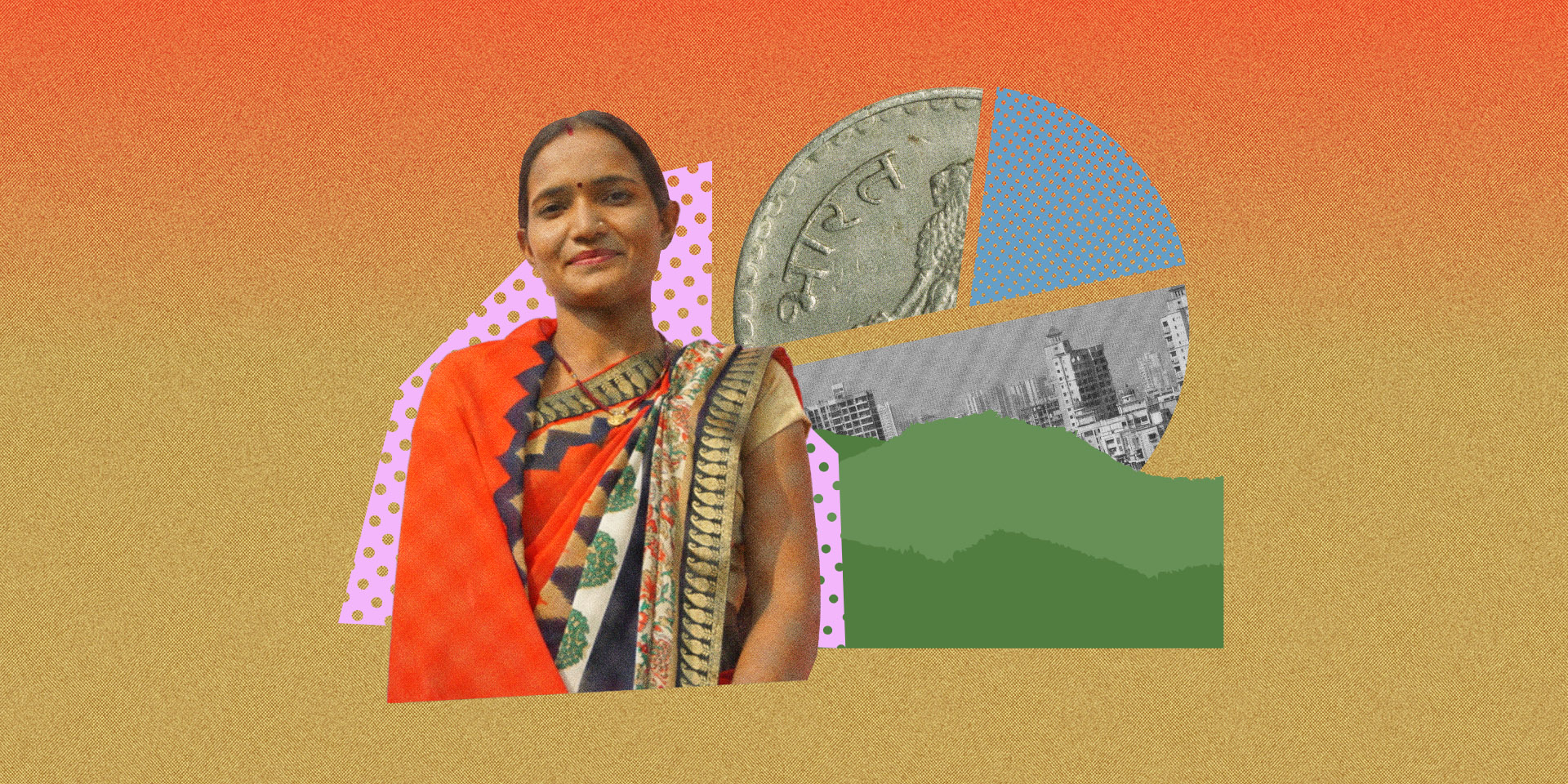
#1. Women will be at the center of finance.
Digital products will be built for women, not adapted to include them.
Women are underserved by the world of money. One-third of women in emerging markets do not have a formal bank account, excluding them from high-quality options to save, grow a business, or plan for their family’s future. Meanwhile, businesses are missing out on billions of customers, and many are realizing they must change: They need to center women’s financial needs, not only to be more inclusive, but for their own growth.
In Pakistan, the global consumer-goods company Unilever launched Guddi Bajis, a program for rural women to earn a living by delivering household goods to other women’s homes. IDEO worked with Unilever and the startup Finja to design a digital experience for these women that was culturally-sensitive and optimized for first-time internet users. These digital Guddi Bajis were able to grow their businesses by leveraging smartphones, digital payments, and credit—often for the first time. And to great sucess: They reported up to a five-fold increase in income after accessing digital credit. Not only were these female agents able to earn and increase their own livelihood, the program also benefitted their customers—women in their communities.
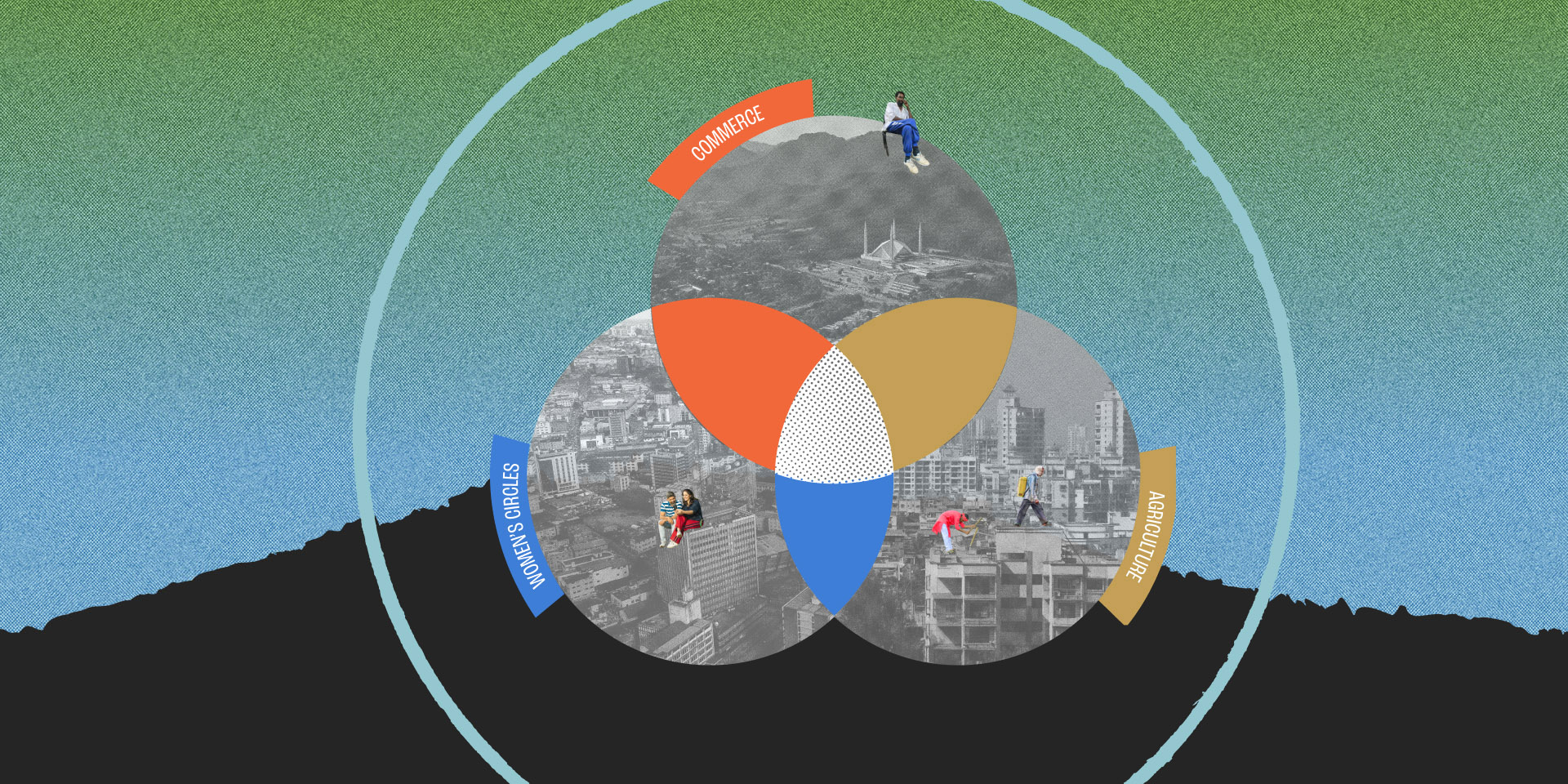
Future #2. The last mile will be no mile at all.
The last mile will not be defined by location, but by network access.
Historically, geography has been a big determinant of who can participate in financial systems. People living in very rural areas in less developed countries were simply left out. But as internet connectivity spreads into more corners of the globe and the digital economy enables work from anywhere, the line between urban and rural will no longer decide prosperity. Instead, it will be determined by how active and connected we are in digital networks. And what may seem like unexpected partnerships today will set the norm for how businesses reach the new last mile of people tomorrow.
Our team saw this in action in Indonesia where global food company Cargill had a problem sending payments to cocoa farmers in rural areas. So, we brought in Grab, a major tech company behind an e-commerce app where farmers could sign up as agents to facilitate payments on its platform. Now, payments that used to take seven months get to farmers in only 10 days, boosting satisfaction with Cargill. And rural agents actually performed 111 percent better than agents in small cities, exceeding a target for gross merchandise value, according to Grab data. Better yet, the “star agents” turned out to be women who had strong ties in their rural communities and were active in social-commerce networks. This effort was so promising that Grab is scaling the model among women merchants and drivers elsewhere in Indonesia, bringing digital livelihoods to more underserved people regardless of geography.
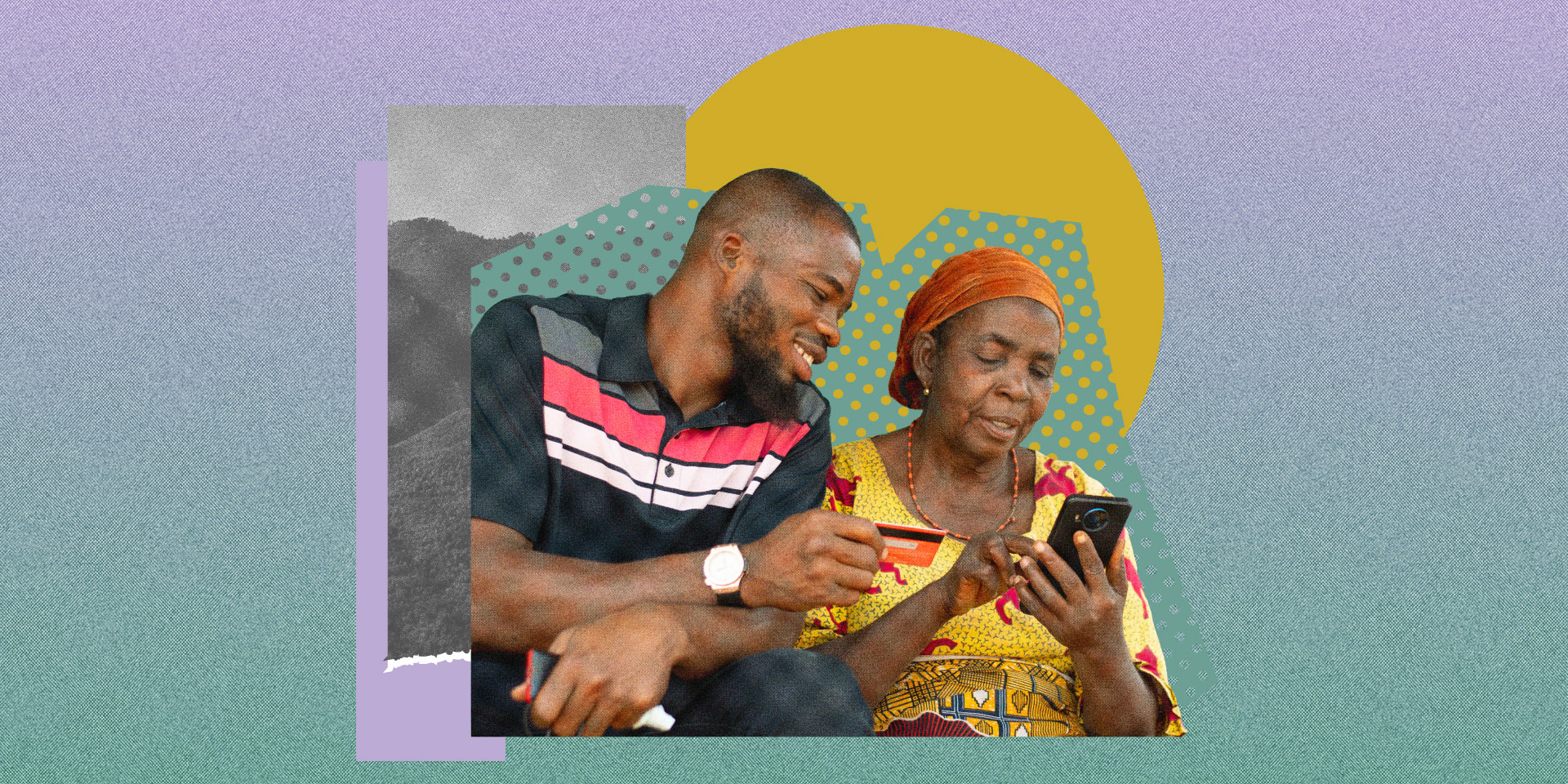
Future #3. Financial services will be invisible.
Our everyday lives will be enabled by a seamless layer of AI-driven, embedded finance.
As our lives become ever more digital, finance is becoming just another layer of daily life, seamless and embedded. We’ve seen this with apps offering personalized financial guidance, automated investing, and credit when we’re online shopping. Now it’s happening for the rest of the world.
In Tanzania, when merchants run short of funds, they can get instant credit so their sales aren’t interrupted. This is thanks to Kuunda Digital’s automatic service that pre-qualifies merchants and makes accepting credit as easy as responding to a text message. Even small amounts of capital delivered just-in-time have helped merchants earn more revenue and lifted transaction volumes for banks and telcos. With support from IDEO, Kuunda brought this embedded-finance solution to new markets. Globally, Kuunda has scaled to 6.1 million active users and has distributed $1 billion in loans.
Already, we’re seeing signs that these shifts are beginning to take place. But more importantly, folks at the last mile are really beginning to feel them in their own lives and communities. A decade from now, these seismic changes won’t even feel new. And we invite everyone in this space, from startups to behemoths of finance, to help build the tools and pathways to make that happen.
Learn more at Financial Futures, where we explore what’s possible for the future of the last mile.
In the year 2034, money will work dramatically differently than it does today.
.jpeg)
Put your phone down and sit in a circle
Lessons on fellowship design, from a fellow themself.
As I swam, in a meditative cycle of inhale and exhale, I was deep in my brain, totally engaged, thinking about the project I’m working on as part of my fellowship with the Aspen Institute. That’s when I realized just how well-designed this fellowship is. And I should know. I design fellowships for a living.
The First Movers Fellowship is part of the Business and Society Program at the Aspen Institute, a non-profit organization committed to realizing a free, just, and equitable society. Since its founding, the Institute has worked to drive change through dialogue, leadership, and action in communities at home and around the world.
Back in 2009, Nancy McGaw, author of Making Work Matter, designed the fellowship with her team and some help from IDEO. The idea behind the program is to advance “social intrapreneurship” within organizations; aka to drive social impact goals alongside business goals. Because, as McGaw put it in her book, “There is increased urgency in companies to adapt and innovate … with attention to the footprint they are leaving on communities and the planet.”
Now, a decade after I first heard about it, and four years since I first designed a fellowship, I’m a First Movers Fellow. My project is about centering and amplifying the practice of inclusive/responsible design at IDEO. I am so lucky to get the chance to be a part of this amazing cohort, and also part of IDEO’s history with the program. (In 2009, Jocelyn Wyatt, former CEO of IDEO.org, was a fellow working on a project that soon became IDEO.org itself. A few years ago, Michelle Lee partnered with toymakers and external organizations to help drive digital experiences that can help people thrive. Pretty big shoes to fill.)
Already, I am learning so much from the other fellows and the curriculum. But as a fellowship designer, I am also relishing the details and intentional design that creates truly transformative experiences. Here are some core principles that can make a fellowship genuinely great.

Seeing eye to eye (literally)
It’s important to design fellowships to ease folks into new spaces—and meeting new people—with care. Groups bond more quickly when facilitators break up mass conversation into smaller groups and randomize them, to get everyone to talk to everyone. When I met with the Aspen Fellows for the first time, we sat around a circular table, where everyone could look at each other. (There is even a circular building on the Aspen Institute campus specifically for this purpose.) It made a surprisingly big impact. And there were no fancy titles on our nametags—just our first and last names. (And pronouns. Which may have been on my behalf, and I really appreciated it.)
At a retreat I helped design for the Earthshot Prize, Prince William’s environmental award, my team focused a lot of our time together on helping our fellows bond. We created peer groups, paired fellows up to go on walks with discussion prompts—we even had them make chocolate together. At dinner in Aspen, they scrambled our name tags every night, and gave us new conversation prompts to facilitate table-wide sharing. One night, they asked, “What’s one thing that your younger self would be proud of?” Which, at my table, had us talking about everything from chicken nuggets to the origins of our names—and yes, some of us cried.

No tech at the table. Ever.
In the business world, we’re so used to using technology to be in multiple places at once. But how well do we show up in either place when we do that? On the first day in Aspen, they told us, “When you’re here, you’re here, and if you have to take a call or text someone, leave the room. The table is a sacred place for presence and connection.”
Draconian, maybe, but I can’t tell you how productive I felt while we had our phones turned off, how-in-the-moment and engaged I remained. It works. And everyone should enforce it more: at fellowships, at conferences, even on daily standup meetings. Presence is powerful.

Nature AND nurture
Many fellowships are held at naturally beautiful places, and there is really something to it. Being in nature helps people breathe more deeply, and allows nervous systems to calm down, especially for city dwellers so used to the sounds of buses and 4 a.m. trash hauling. It’s actually something people have asked for in every fellowship I’ve ever worked on, and for climate activists, scientists, and organizers, it’s also a deeper connection to their work to save the planet.
At The Rockefeller Big Bets Climate Fellowship, fellows meet at Bellagio, the foundation’s property tucked on the lush mountainous hillsides of Italy. It should be a part of every fellowship—because boy do fellows need it. (Don’t we all?)

Roses are red. Tears are blue. Reflection makes people vulnerable, too.
The First Movers Fellowship is designed around four pillars: community, innovation, leadership, and reflection. As I read that last point, I was skeptical. When I was running fellowships and we were short on time, reflection was the first thing to go.
But the Aspen Institute holds it sacred. Every morning, we’d read a poem together as a group, and then reflect on it together. No matter how packed the schedule, or how busy the day ahead, we’d read a poem, journal, go slow, and stay quiet. It was an on-ramp to the day. And a beautifully deliberate design choice.
On the third day, they shared this poem, (which someone in my cohort aptly called a sermon). After three days of becoming more vulnerable and authentic together, half the room was sobbing, openly, loudly. This openness led to more sharing, more intimate conversations, and funnily enough— better advice for my project. Yes, we instantly felt closer, which had an impact on how we worked together.

Read the room
As much as I valued poetry and reflection at Aspen, it is really important that fellowship designers keep their agendas dynamic, and adjust to the needs of the people in the room. At the Earthshot Prize retreat, we tried to make space for reflection—but we learned, it wasn’t what fellows needed most. While our sound bath activity was highly-attended, we swapped out our daily morning meditation moment to give fellows more transition time in the after-breakfast time slot. I loved writing and leading these nature-based visualizations, but loved giving the fellows that space to do what they wanted, even more.

Free time frees the mind
When I looked at our schedule for the Aspen seminar, I was astonished to see big breaks every day. There were organized activities that folks could go do together, like hikes, gondola rides, and ice cream in downtown Aspen, but fellows could own their schedules. I swam each day, and really took reflection to heart. And every afternoon, I found myself coming back ravenous for the content and conversation, more engaged and more present. It seems counterintuitive, really, but those breaks made me work more.
After the first year of the Earthshot Fellows retreat, we asked for feedback about the experience. One of the resounding themes was a call for “more time to just relax,” and “space to get to know each other outside of the content.” And we listened, adding it in the next year.

It’s hard to solve big problems alone
When I was being interviewed by a former Aspen fellow as part of the application process, they stressed over and over how important community and connection is for the success of the program. After only five days with the Aspen fellows, I felt so close to all of them—a crucial source of support in the fight to tackle big problems, like inclusive AI and research, menopause tech, indigenous farming support, equitable financial systems, to name a few.
And creating intentional space for people to be vulnerable and honest about what they're going after —It's the only way to set them up to make true progress. And it’s the future vision that I’ll never stop designing for.
A few weeks ago, in the middle of a Monday, I was slowly swimming laps in a beautiful saline pool just below the peaks of Aspen, away from my laptop and dings of Slack.

Innovating in health? Here are 6 places to start
Innovation for patients, providers, and the industry at large.
For years, our system has been grappling with ever-constricting constraints—low supply, high demand; increasing life expectancy; and escalating treatment costs. There’s no question that the healthcare landscape is at a critical juncture. As Ian Abbs, Managing Director of Guy's and St Thomas' hospitals in the UK, so eloquently articulated in Amsterdam last month, “Health care as we know it will end; change has to come."
But as we know well, big constraints and difficult conditions can be an incredible impetus for innovation. We now have remarkable new tools, therapies, and emerging technologies at our disposal. The potential to accelerate drug development has never been greater, and we amass more and more data every day. The organizations that take advantage of these opportunities and develop innovative solutions will be at the forefront of enormous value creation.
From the transformative potential of AI to the urgent need to rethink emergency medicine, here are the six key opportunity areas we took away from HLTH EU 2024 in Amsterdam. These areas have the potential to produce significant improvements in health outcomes and substantial advantages for organizations that bring them to life with a human-centered lens.

1. The promise of digital health is still waiting to be fulfilled
Ten years ago, digital health was poised to revolutionize healthcare. It was the promised future, the answer to the worst of our problems, and the route to better, healthier lives. Yet, despite such a clear need, its full potential remains untapped, focused instead on data collection, controlling costs, and optimizing for outdated systems
Digital health needs to shift its focus to the meaning behind the data, and how to better support patient and provider health. Remote care channels could extend the reach of doctors. Sensing technologies could enable whole-body care. Digital therapeutics could complement more traditional care. But realizing the potential of this space requires a deep understanding of the core needs and a mastery of digital channels.
Designers and digitally-fluent innovators will play a critical role in creating patient- and provider-centered, secure digital health solutions that improve patient outcomes and deliver on this decade-long promise.
2. AI will be transformative–if we are able to learn from the past
Artificial intelligence (AI) stands to revolutionize global healthcare systems; its potential spans from expediting drug development to increasing the efficacy of patient care. But only if we learn from the errors of digital health.
Products that harness AI to interact with patients, collect more accurate data, and summarize medical histories and symptoms without time constraints could provide healthcare workers more time to focus on patient care, complex cases, and advancing their fields. Hospital administrators could use AI to create digital twins, aiding in patient assessment, disease mitigation, and treatment plans. And with an expected 20 percent increase in demand for care, but only a projected eight percent growth in workforce, AI could reduce the administrative burden by over 40 percent, making it a vital tool for the long-term sustainability of healthcare systems
But these myriad applications need to be so much more than the latest cool tech, or a tool for operational efficiency. If we are able to demonstrate the genuine potential of the technology by placing the human experience at the center, we will enhance the healthcare experience and improve patient outcomes. But only if we avoid the missteps of the past.

3. Addressing burnout is crucial to the sustainability of health systems
The healthcare sector is facing workforce shortages and severe provider burnout, which was only worsened during the pressures of the COVID-19 pandemic. The shifting expectations of the next generations of healthcare workers—Millennials, Gen Z, and soon, Gen Alpha—make attracting and retaining healthcare professionals even more challenging, further straining availability of talent.
It is hard to be compassionate at work when your workplace doesn't have compassion for you. We need to center the experience of healthcare workers to address this crisis head-on. Healthcare organizations can create holistic approaches to staffing, leverage technology to support administrative tasks, become more purpose-driven to align with the values of a new generation of caregivers, and create authentic work environments that support the reasons younger generations get into healthcare. Designers have a unique role to play in envisioning and implementing solutions that not only alleviate burnout, but also reimagine the future of work in healthcare.
4. How is women’s health not a more urgent priority?
Women make up more than 50 percent of the patient base and influence a significant share of healthcare spending and decisions, and yet women's health continues to be marginalized. Centuries of historical biases in medical research and clinical trials, along with more recent policy shifts, have resulted in a chronic a lack of understanding and funding, and an inability to effectively treat women.
This is fundamentally an issue of equity. Elevating women's health requires focused efforts to address these historical gaps, including increasing representation in clinical trials and prioritizing gender-specific research. The rise of health startups focused entirely on women is beginning to fill this void, but much more needs to be done.
By championing women's health initiatives, prioritizing better understanding the needs of women, and supporting female-led ventures in health, we can significantly improve care and counter these long-held biases. This not only enhances health outcomes, but also designs for the influence women have in healthcare decisions.

5. Data could change the whole game
The explosion of personalized data presents both an incredible opportunity and one of the most significant challenges in healthcare today. The question of who controls data—individuals, organizations, or government—remains unresolved.
Healthcare urgently needs to find the appropriate balance of data use, and to do so at a human level. Personalized data should be owned by the patient. Carefully anonymized data needs to be shared for learning and improvement. And empowering people to understand and use health data remains an outsized opportunity for healthier living.
Designing systems that balance these valid concerns requires a collaborative effort across sectors to establish patient-centered solutions that treat and respect each patient today and tomorrow. Doing so will be the key to unlocking growth and scale.

6. Emergency rooms cannot be the first mile of care
Emergency medicine has become the de-facto single point of entry into healthcare for many, rather than a safety-net, which is neither sustainable nor efficient. To improve outcomes and reduce costs, we need to radically rethink how and where patients best access care.
Innovative solutions, such as telehealth, community-based care, and better deployment of in-home services could radically improve care for chronic conditions. Meanwhile, strengthening public education to help people discern true emergencies can alleviate strain, and reimagining triage systems by integrating data when patients are en route to emergency rooms can improve speed and efficacy, creating a human connection between patients and healthcare practitioners in a way that meets patients in the context of their lives.
To do that, we’ll need to design for flexibility and resilience, and always place humans at the center of the experience, ensuring that emergency services can adapt to varying levels of demand while maintaining high standards of care.
The challenges we face are significant, but they also present unprecedented opportunities for transformation. By thinking radically about the role of technology, centering onthe human experience, and designing widely and inclusively, we can create healthcare systems that are more equitable, resilient, and sustainable.
At IDEO, there’s nothing we love more than diving into the biggest, gnarliest challenges of an industry alongside leading experts. If you are interested in exploring these opportunities further or partnering with us to drive change in healthcare, get in touch.
Together, we can create a healthier future for all.
Globally, healthcare systems are under massive strain—and not just because of the lingering effects of Covid.

Lindsey Turner
I’m passionate about building brands, products, and experiences that help organizations show up with meaning and momentum.
I help organizations cut through complexity by shaping how they show up, through brand strategy, identity, and storytelling.
Working at the intersection of brand and business, I bring an editorial eye and a bias toward making—turning ideas into tangible experiences that people can understand, trust, and believe in.
My work spans government, healthcare, financial services, media, and consumer goods, from launching Gen Z-focused ventures to building innovation labs and reimagining legacy brands. I relish moments of ambiguity and enjoy translating across teams, perspectives, and priorities to move ideas forward.
I started my career in editorial and digital design, shaping cross-platform experiences and identity systems in publishing and agency environments. That foundation still shapes how I work today: I’m detail-oriented, collaborative, and overreliant on the Oxford comma. I hold a BFA in Visual Communication from the School of the Art Institute of Chicago.

Rachel Young
My work helps organizations see who their products aren't working for—and build the will and the tools to do something about it
For 25 years, I've asked the same question: Who does this design exclude—and what are we going to do about it?
My work spans human-centered strategy, inclusive design, and qualitative research, with clients ranging from Microsoft, Google, and Verizon to the National Science Foundation, and San Francisco Unified School District.
Before IDEO, I taught elementary school in East Palo Alto and spent a decade doing design work with social service organizations—where I learned firsthand what it costs people when systems are built without them in mind.
I am currently writing User Error, a nonfiction book about digital access and the design decisions behind it. I live in Oakland, California.

Brian Pelsoh
I lead with craft, ensuring our work is creatively excellent: rooted in deep human insight and imagination, while also grounded in the realities of business and technology.
My expertise spans brand, communication, and product design across tech, education, the arts, and social impact.
I believe great work demands both high-level vision and obsessive attention to detail, and only happens through collaboration.
I bring an inclusive, hands-on approach and a deep understanding of business, which enables me to consistently deliver excellence while always asking why.
Before joining IDEO, I worked at the brand firms Pentagram and VSA Partners. I began my career as a designer, leading teams at the School of the Art Institute of Chicago and the Milwaukee Art Museum. I hold an MFA in graphic design from Maryland Institute College of Art and a BFA in communication design from the Milwaukee Institute of Art & Design, and have taught at some of the best design schools in the US.

Tony Wong
I am responsible for IDEO’s long-term success in China and working with clients to use design as a tool to enable growth.
I am responsible for IDEO’s long-term success in China and working with clients to use design as a tool to enable growth. Specifically, I have helped Chinese companies design holistic brand solutions through the development of their products, communication, services, and innovation teams, and I have helped multinationals expand their presence and influence in China.
I advise global leaders on developing China-led innovation and capabilities.
In over 15 years in IDEO Shanghai, I have worked on projects that use design to elevate the quality of the experience of healthcare products and services, streamline processes that increase productivity, create spaces and programs that promote and enable inclusive communities, and build next generation mobility solutions that are planet-positive.
Before joining IDEO, I worked at Philips Electronics and the Electrolux Group in Italy, the Netherlands, and Singapore on a number of breakthrough commercial products. I am a member of the Young President Organization in Shanghai.

Building a personal AI for the messiness of life: Sida Li
Most AI products today are built for work—a space with clear problems and established systems. One founder noticed a gap: personal life is messier, harder to systematize, and mostly left behind by the AI boom. So she built Cue, a personal AI that lives inside iMessage and group chats, to go where the other tools haven't.
In this episode, Becca Carroll, IDEO's Chief Strategy Officer, talks with Sida Li, co-founder and CEO of Shared Context Lab, about staying anchored to a human need while the technology around her keeps changing shape, why she treats her business model with the same rigor she'd bring to a product, and what it feels like to build a company at this particular, disorienting moment in AI.
The conversation also gets into how Sida makes design decisions: the language Cue uses to describe itself, the tradeoffs behind building inside iMessage instead of a new app, and a real story about a business idea that didn’t pan out.
This is the second in a two-part series profiling founders from IDEO's Startups-in-Residence program. The first conversation is with Johannes Seemann, founder of Sooner, on designing GenAI for the emotional side of money.

Designing GenAI for the emotional side of money: Johannes Seemann
Most personal financial tools are built to run the numbers and optimize towards a budget. While that works for some, most people experience money as a lived relationship that does not neatly fit into a spreadsheet. Johannes Seemann and Becca Carroll discuss why money is emotional before it is mathematical, and what a human-centered approach to building a generative AI financial product looks like in practice.

The curious leader's edge in uncertainty: Scott Shigeoka
Mina Seetharaman talks with Scott Shigeoka, author of Seek and Head of Curiosity Cultivation at the Eames Institute, about what distinguishes genuinely curious leadership from performative curiosity, how power dynamics shape curiosity, and why practicing curiosity can restore energy rather than drain it.

How constraints make us more creative: David Epstein
Mina Seetharaman talks with David Epstein, author of Inside the Box and Range, about why total freedom often produces average work, how leaders can design useful limits on purpose, and what organizations such as General Magic and Pixar reveal about the relationship between boundaries and creativity.
Looks like you might be in search of something very specific?
Or reset the filters above and try another angle.
Here’s some random inspiration

Podcasts about creative leadership

Articles about the power of prototyping
