
.svg)


Climate action for SMBs
Leveraging data to help SMBs reach net zero.
For more than 40 years, Sage has helped businesses of all sizes navigate complex business environments. While many of its larger customers have the means and the structure to support climate initiatives, many of its smaller customers do not.
Sage wanted to help its SMB customers get ahead of future climate regulations and meet consumer expectations. And building carbon-footprint evaluation and mitigation tools would also dovetail nicely with Sage’s own climate aspirations: cutting its own emissions in half by 2030. Together, Sage and IDEO investigated how the company could leverage the data in its platform to calculate its customers’ emissions, both direct and indirect, and how that information could spur action as they aim to hit net zero.
To get started, the design team went deep with customers running all kinds of businesses—from a taxi company to a champagne bar to a falconry center. Business owners shared that their focus often has to be on the day-to-day, a series of small decisions that, when added together, lead to business success. For many, tackling a problem as complex as climate change felt overwhelming. IDEO and Sage synthesized those insights and began working across verticals and products, bringing together experts from marketing, technology, sustainability, and operations to build out new concepts. With the help of two carbon accountants, the team worked to figure out how existing data could inform customers about both their direct and indirect emissions, which can be harder to track. Given how tight SMBs’ margins are, they focused on how that knowledge could fuel emissions-cutting changes that also save money, giving businesses extra incentive to take action. Together, the team created a roadmap of customer outcomes and experience guidelines to help shape future products.
Sage has taken that work forward, launching Sage Earth, a platform that aims to help businesses measure, manage, and mitigate emissions—even across supply chains. With carbon accounting now built directly into all Sage Accounting and Sage for Accountants products in the UK, Sage has made climate action practical and accessible for millions of SMBs. By automating emissions measurement and reporting, Sage Earth removes barriers of cost and complexity, empowering business owners and their accountants to stay competitive in supply chains where up to 95 percent of emissions occur.
From co-developing the UK Voluntary SME Carbon Reporting Standard to launching a Carbon Accounting API, which gives banks, fintechs, and other platforms access to Sage’s Carbon Engine, Sage is embedding sustainability into the systems people already trust—helping hundreds of thousands (and rapidly increasing) small businesses turn climate ambition into everyday action.
Small- and medium-sized businesses—companies with fewer than 500 employees—make up about 90% of the world’s businesses, according to U.N.-backed SME Climate Hub.
Two thirds of small businesses don’t know how they’re going to reach net zero, and lack the resources to do so, according to a recent survey by SME Climate Hub. Still, the majority reported they want to act on climate, recognizing it can help them become a more resilient business.
Large companies may be the biggest emitters of greenhouse gasses, but an estimated 80% of those emissions come from supply chains—often made up of smaller enterprises.
Scaling rapidly
in the three years since the launch of Sage Earth, which is now being used by hundreds of thousands of businesses
World's 1st
open-source hybrid emissions factors dataset, Carbon Commons, led by Sage, helps SMBs calculate carbon footprints using existing data

Reframing menopause
QVC works to change the narrative, while meeting customer needs.
Menopause is much more than a biological transition—it is a profound shift that often arrives just when people experiencing it start to feel invisible. Because it has long been shrouded in darkness as an unmentionable female affliction, those going through menopause often feel unprepared and alone.
Recognizing that its customer demographic makes QVC uniquely positioned to surface conversations and provide support to those dealing with menopause, the video commerce retailer partnered with IDEO to figure out how it could not only meet customer needs, but also flip the conversation on midlife. To learn more, a team of female design researchers held in-depth interviews with folks experiencing it firsthand. The people they spoke to had limited information about what was going on with their bodies, and in some cases, it took years before they understood that symptoms they were experiencing were related to menopause. Respondents also reported that midlife brought a change in social status and the feeling of being boxed in by stereotypes.
QVC and IDEO worked together to design an integrated suite of offerings that could give customers a safe space to discover and share more about menopause. That included an on-air programming series called “Menopause Your Way,” where QVC could support those going through menopause in the privacy of their own homes, a digital landing page with useful solutions, and social media campaigns to help women share and learn more about each others’ experiences. Because people experience menopause and choose to manage it in many different ways, the team wanted to create an integrated ecosystem of content that women could access according to their unique journeys. The new offering helped QVC reach its core audience with solutions and relevant products, and created a space where menopause is out in the open and part of an ongoing conversation. And in the process, QVC evolved to become a more customer-centric company, putting its audience and their needs at the heart of its offerings.
9/10 of British menopausal women say society and brands overlook them.
1 in 2 women in the UK admitted they didn’t know what was happening to them during perimenopause.
Nearly 40% of menopausal women are being prescribed antidepressants to help manage their symptoms, despite 4 out of 5 describing the treatment as “inappropriate.”
Season 2
a series focused on menopause is now in its second season

Healthy youth
Improving digital tools to help practitioners deliver critical mental health support to children and young people.
Healthcare is a complex web of institutions, interaction, relationships, and services. In England, the National Health Service consists of thousands of separate organizations spread across the country. This fragmented structure means that rolling out digital tools and using them to their full potential can be difficult.
NHSX approached IDEO and Public Digital, IDEO’s sister company, for help designing user-centered resources that would empower Children and Young People’s Mental Health (CYPMH) practitioners to use digital tools more effectively, shifting service design from a reactive to a proactive process, and allowing each regional organization to create the best digital services for their children and young people.

The team took a human-centered approach, tapping into the perspectives, challenges and needs of NHS practitioners and leaders across the system over months of research. They then designed a set of accessible, straightforward online resources, courses, and templates that would enable a practitioner to start their own local service transformations. These included everything from practical advice on improving users’ experiences of CYPMH, to teaching methods for service design, to content focused on achieving digital transformation at scale.
The resources were easy to implement and replicate, allowing mental health practitioners across the country to seamlessly integrate physical and digital, create firebreaks in the system, and better bridge the gap between seeking care and receiving it. They were designed to evolve over time, and the work is replicable across the NHS, with the potential to touch millions of lives.
By empowering practitioners to utilize these digital tools to ease the burden of care, NHSX plans to create a positive ripple effect across the entire NHS, its partner organizations, and the country at large.
In a study undertaken in July 2020, the first summer of the COVID pandemic, the NHS found that clinically significant mental health conditions amongst children had risen by 50% compared to three years earlier.
More options, more access
digital resources are helping children and young people access more options for their mental health care

The future of air travel
Reinventing supersonic flight with Boom.
It’s not easy to shift the paradigm for an entire industry. But when a company comes along that promises to reinvent air travel, it opens up a blue sky of opportunities. That’s the flight path for Boom Supersonic, which is thinking big about how passengers arrive at their destination not only faster, but also with a greater sense of wellbeing.
To really comprehend the experience of flying in the unique contoured profile of this ultrafast jet, and to help Boom make key decisions about the design of the plane, the IDEO team believed that you had to go beyond algorithms and schematics—you needed to actually board it.
Using a “build-first” approach, the team quickly constructed a full-scale mockup of the fuselage from plywood and foam core. That became a prototyping platform to test multiple seating configurations, galley and lavatory size and placement, luggage storage solutions, and other concepts that would differentiate and add value to the passenger experience. For the first time, the Boom team was able to set foot in its own aircraft and truly understand the experience from the perspective of its clientele. The exercise allowed the Boom team to confidently make decisions by comparing multiple cabin configurations and options in full-scale.

Throughout the project, Boom and IDEO invited future travelers aboard to interact with the prototype and offer feedback. That input culminated in a more refined model, with augmented windows, moonroof, in-flight entertainment screens, and sound design—all further augmented by a Virtual Reality component to allow our future travelers to fully immerse in this new experience.
Together, Boom and IDEO brought a sneak peak to the Farnborough International Airshow, a biannual exhibition for the aerospace, aviation, and defense industries. The event was an opportunity to give the industry and potential customers a preview of Boom’s innovative new jet. In collaboration with the client, an exhibition architect, and a digital production agency, the team created an immersive environment designed to make the Overture experience feel tangible, eliciting the wonder of this revolutionary plane.
Boom’s presence at Farnborough not only underscored the Overture’s progress but provided an inspiring glimpse into the future of air travel. During the air show the company announced the production Overture design, a market-expanding alliance with Northrop Grumman, and agreements with tier one suppliers Collins Aerospace, Safran, and Eaton. Not long after, Boom received its largest order to date, this one from American Airlines.
The prospect of getting to London in time for dinner just got a little closer.
Boom plans for Overture to get from New York to Frankfurt in just over four hours instead of the eight hours spent on a commercial jet today.
The Overture supersonic jet has a cruising speed of Mach 1.7, about twice as fast as today’s commercial planes. Overture is built to fly on 100% sustainable aviation fuels (SAF).
20 Overture deposits
made by American Airlines, joining current customers United Airlines and Japan Airlines

Only in Chicago
3 of our favorite local spots
1. The Plant, 1400 W 46th St, 773-847-5523, plantchicago.com
It’s urban agriculture and food business incubation at its finest. This net-zero-energy Southwest side building defies all Midwestern norms with vertical farming, aquaponics, and small-batch kombucha brewing.
Weekends offer farmers markets featuring the building’s tenants (think: kombucha, cheese, pasties, and produce) as well as behind-the-scenes tours.
- Hood: Back of the Yards
- Will set you back: $10 for a tour
- Don't leave without: buying Pleasant House Bakery mushroom or chicken pasties and checking out the aquaponics setup
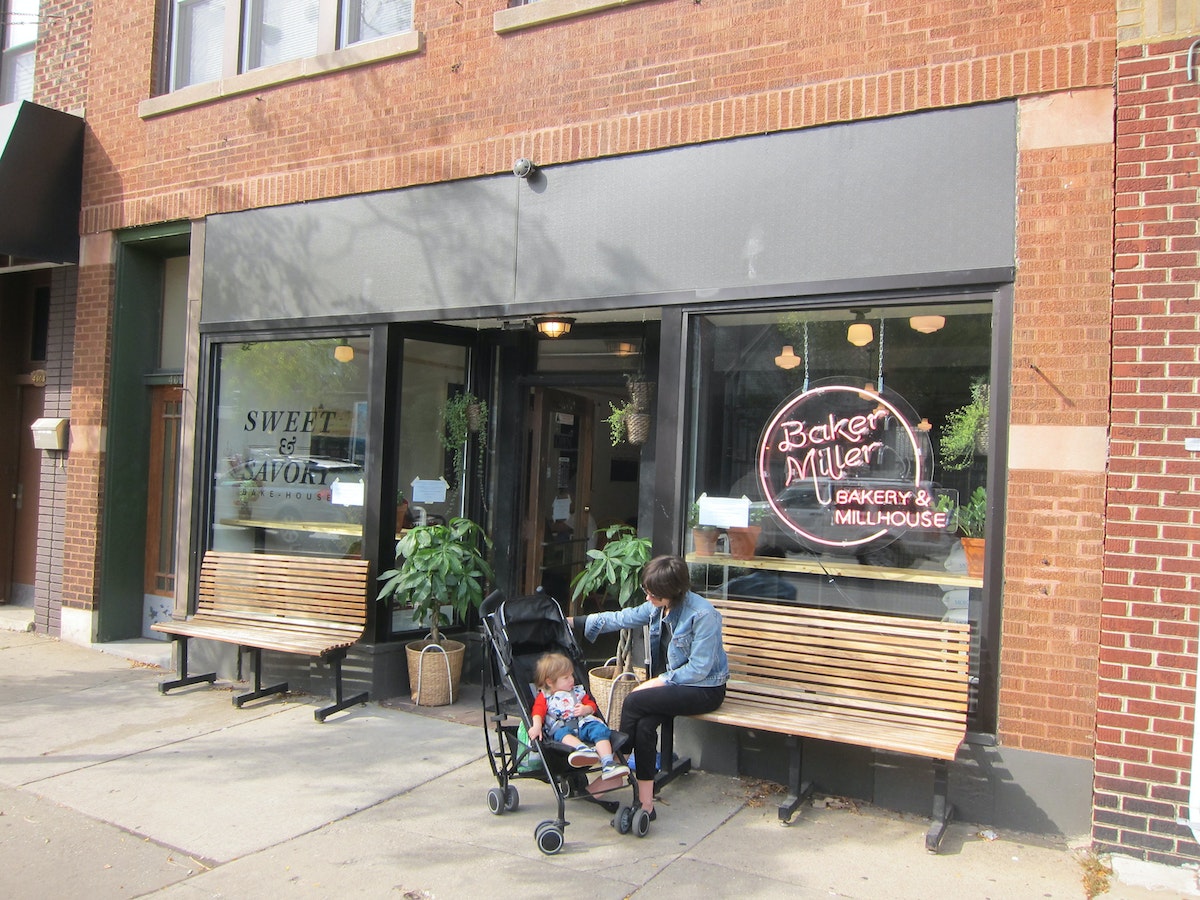
2. Baker Miller Bakery & Millhouse, 4610 N Western Ave, 773-654-3610, bakermillerchicago.com
An outstanding slice of pie is hard, though not impossible, to find. A self-taught miller who uses only the best organic grains he can source from his network of farmers and prefers building a local community to garnering national attention? Not so common. Owners Dave and Megan Miller (yep, it was meant to be) just might be at the forefront of a new food movement. And with a Beard nomination under their belt, we're not the only ones who think so.
- Hood: Lincoln Square
- Will set you back: $5 for a slice of pie or less than $10 for an entrée
- Don't leave without: trying at least two types of pie
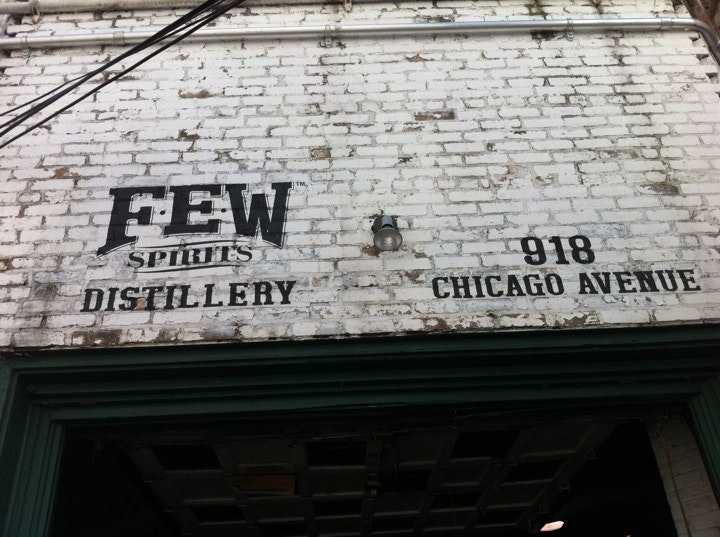
3. Few Spirits, 918 W Chicago Ave, Evanston, 847-920-8628, fewspirits.com
Chances are Chicago isn’t the first city that comes to mind when you think "craft spirits," but it's actually a hotbed of Midwestern distilling. Located in a nearby suburb, Evanston’s Few Spirits makes and sells bourbon and rye whiskey, American and barrel gin, and, occasionally, the infamous wormwood-based liquor, Malört. Wind your way through a back alley to this modest spot on Saturdays for tours and tastings; just make sure to sign up in advance.
- Hood: Evanston
- Will set you back: $10 for a tour, more for a bottle
- Don’t leave without: spending some quality time in the tasting room
We spend so much time scavenging other cities for inspiration, we sometimes forget that our own backyard is chock-full of places that reflect Chicago's true grit, gusto, and occasional grace. Follow our lead to experience some of the best spots in town.
Inside the Brain Machine
How neuroscience changed how I think about creativity
In reality, I was nervous. The machine was sealed behind an air-tight door with thick safety glass and emergency warning lights. And some of Dr. Newberg’s preparatory questions had been a little unnerving:
“Have you ever had a pot explode while you’re cooking?” he’d asked. He was concerned I might have some residual fragments of metal in my eye. “In the magnetic field, it would tear through your eyeball.”
I lay back and stared at the ceiling. The fluorescent light panels had been fitted with transparencies showing a blue sky framed by cherry blossoms. I appreciated the attempt to cheer the patient up, but the image looked so radiantly perfect that it made me think about the afterlife.
There's nothing wrong with you, I told myself, this is just a psychology experiment.
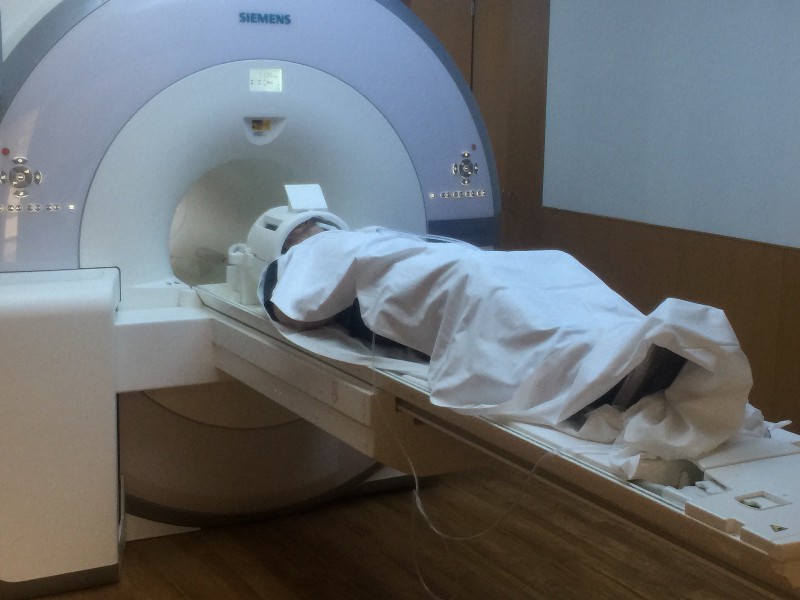
I shivered. The machine’s giant doughnut was filled with liquid helium, supercooled to 450 degrees below zero. Dr. Newberg draped a white sheet over me, which added warmth, but made me look like a corpse. Then he retreated to the control room. I heard his voice in my headphones.
“Ready to go?”
Read the rest of Neil's post on Medium.
I climbed onto the narrow bed that jutted out in front of the MRI machine. “How do you feel?” asked Dr. Andrew Newberg, the neuroscientist in charge of the experiment. “Great!” I said over-brightly, like I was about to receive a spa treatment rather than a brain scan.
If We Could Turn Back Time
Advice for our younger selves
1. Ditch the Plan
Don't try to build a 20-year plan—or even a two-year plan. The world is changing too fast. Figure out what you’re interested in right now and what the most interesting opportunities are in front of you and pursue those. —Aaron Ferber, Mechanical Engineer & Portfolio Director, @ IDEO since 2007
2. Just Do It
Don’t be paralyzed by making the “right choice.” Just make some decisions. While you’re working on one thing, don’t stop looking for your next thing. Don’t wait for others to offer you opportunities. Create your own stepping stones. —Erin Henkel, Service Design Portfolio Director, @ IDEO since 2006
3. I.D. Your Obi-Wan
Find someone you admire and follow his or her advice. —Andrew Burroughs, Mechanical Engineer & Partner, @ IDEO since 1992
4. Make Like Magellan
Make time to travel. It might be a cliché, but getting out of your own culture makes you more mindful and observant. You question everything you once took for granted. When my own children are trying to figure out what direction to take their lives next, I tell them, "Take out your passports. It’s time to book a trip." —Tim Brown, CEO, @ IDEO since 1987 (before it was IDEO)
So, young designer, you have your degree and now you have our advice. Time to bravely leap into your career with both feet and an open mind. Or, in the words of the ever-wise Yoda: "Do. Or do not. There is no try."
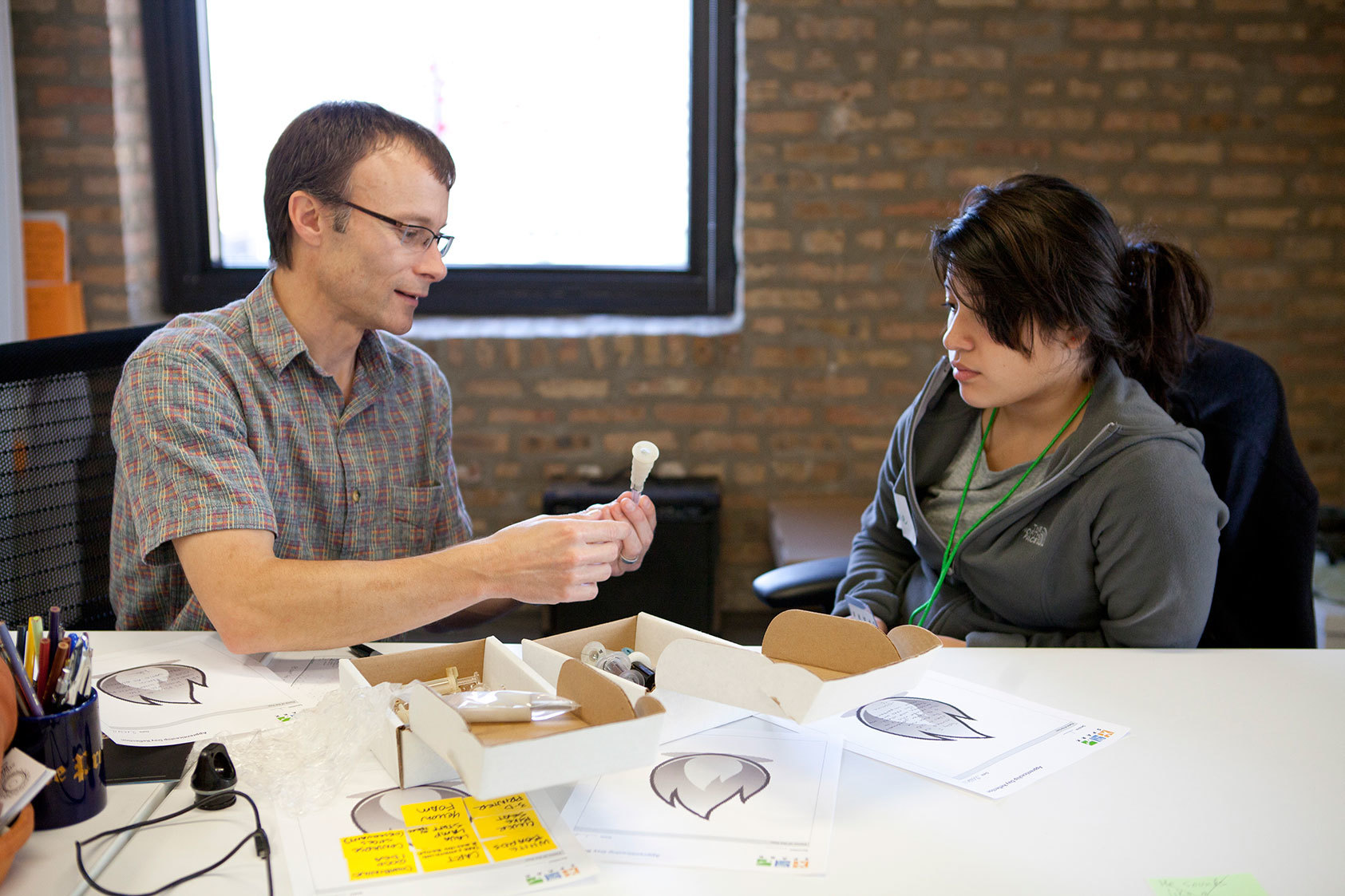
When you're fresh out of school, your career possibilities can seem endless. So endless, in fact, it can be hard to know where to start. We feel you. We’ve been there. To help you enter the brave new world of design feeling a bit more surefooted, we asked a few of our most senior creatives—even our CEO (!)—what piece of advice they’d share with their younger selves. With over 75 years of professional experience between them, we think they know a thing or two.
Finding Beauty in Potholes
Chicago’s Jim Bachor puts the "street" in street art
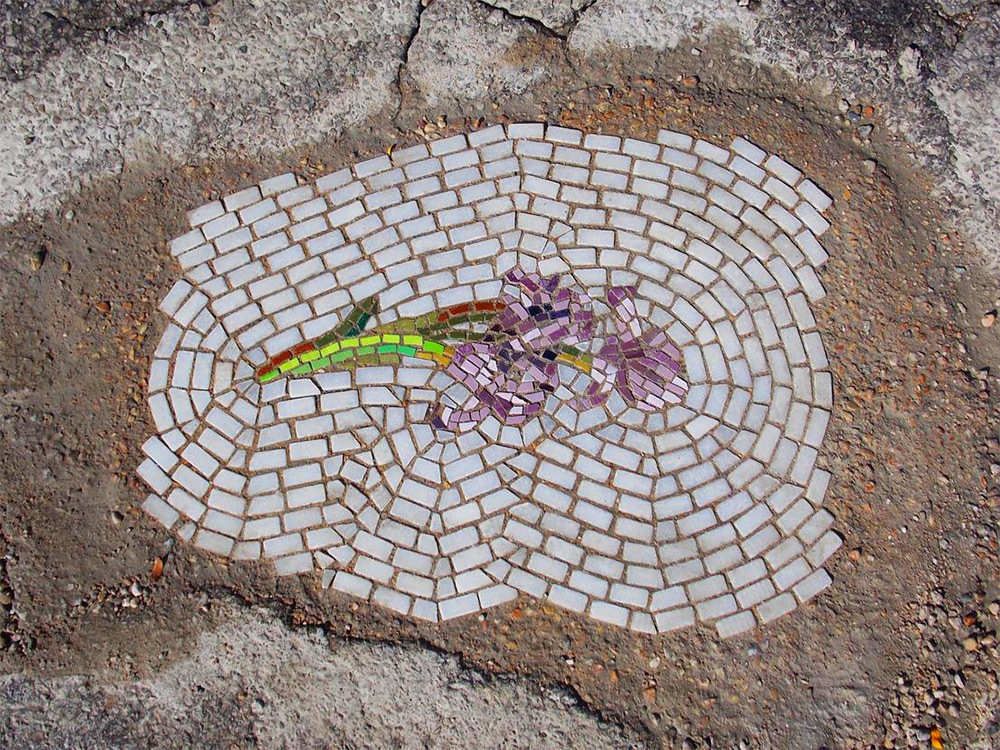
I went back and stared: Inside what had been a pothole the size of a dinner plate, someone had constructed a beautiful mosaic of an iris.
The symbolism hit me hard: Here was an example of how someone could take a bad thing and turn it into something of transcendent beauty. Instead of complaining about my bad day, I should be looking for an opportunity to make something great. Or as the slogan goes, “When things fall apart, make art.” Once I’d spotted this one transformed pothole, I noticed more of them around Chicago, and resolved to track down the mysterious mosaic artist who was seeding the city’s broken streets with beauty. I’d like to tell you that my quest was long and heroic, but, in reality, all I did was type “Chicago pothole art” into Google.
The name it threw back at me was Jim Bachor. I emailed him, and soon we were chatting.
How did you get into mosaics?
I went to Europe in the late '90s, and saw Paris, London, and Rome. That trip changed my life: It gave me a passion for ancient history. I started traveling in Greece and Turkey, checking out ancient sites, and saw that the art that survives is the sculpture and the mosaics. The mosaics got me going, particularly in Pompeii. I saw that glass and marble do not fade. That thought has driven my work ever since. I took a course in Ravenna, near Venice, and learned how to make mosaics in the ancient, tedious, and expensive way. Back in Chicago, I started making them on the side as a hobby, while working as a designer at an ad agency. Then, in August 2011, I was laid off and I decided to pursue art full-time.
What led you to potholes as sites for art?
The street outside my house was beat up. There was this one pothole that refused to stay fixed. I thought it might be funny to solve this problem. So I did it one night. I was very paranoid: I felt like I was too old to get arrested. And it wouldn’t be a good example for my kiddies. So I didn’t even claim ownership of it, at first. But then, a buddy of mine started spreading the word. And from there, it went viral.
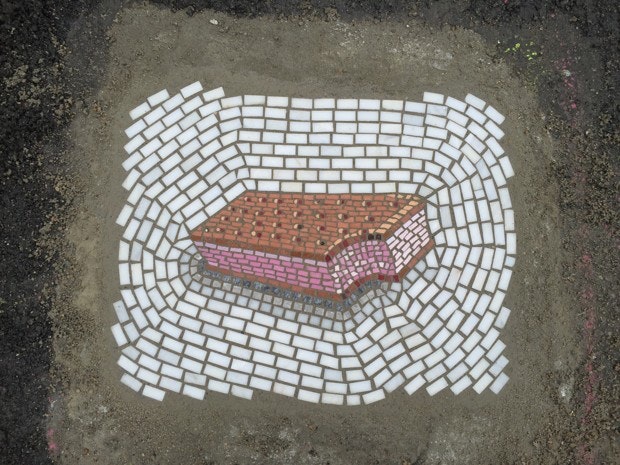
All photos courtesy of Jim Bachor.
Do you do it during daytime now?
Yes. I wear orange reflective gear. And have cones. I started off with my boys’ orange soccer cones. Now I have industrial, two-foot-tall cones. I look like a city worker who's spending way too much time on one pothole. I’m not trying to fool anyone: I’m just trying not to be hit.
What about passers-by?
I don’t really make eye contact with people and they mostly ignore me.
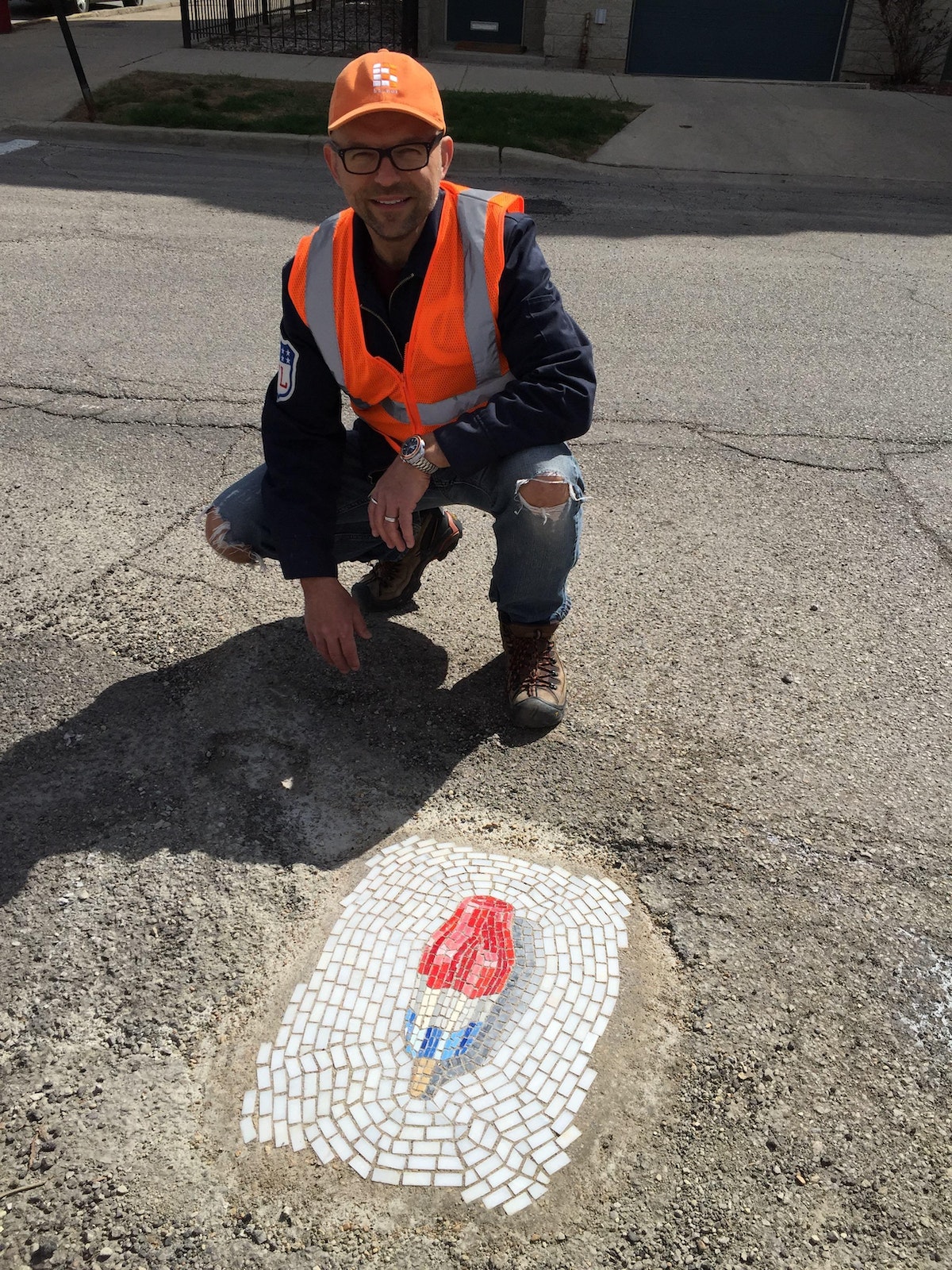
I look like a city worker who's spending way too much time on one pothole.
JIM BACHOR
What else have you done with the mosaic form?
I did a super realistic "Snack Chip" series. It’s kind of funny to see a snack chip rendered in an ancient medium. For the Cheetos one, I carbonized some Cheetos, and then mixed the black powder into the mortar. The artwork truly has essence of Cheeto in it.
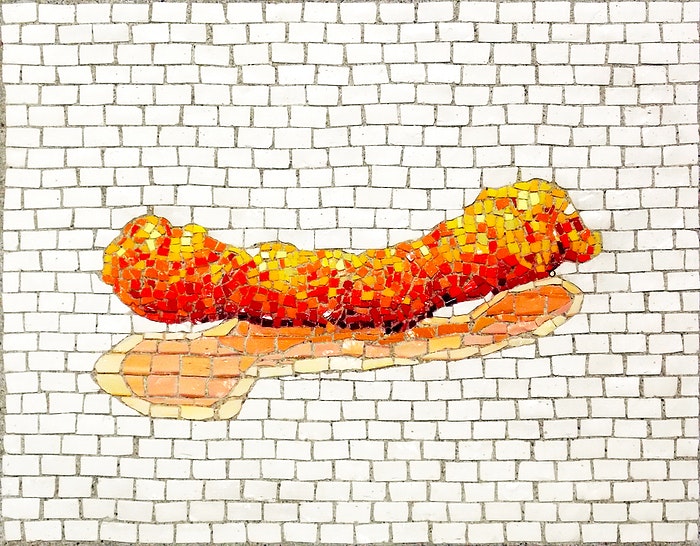
See more of Jim Bachor’s mosaic art at bachor.com.
One afternoon, I got on my bike to leave our Chicago office after a really bad day. It was one of those times when it feels like everything you touch falls apart, and I was in a hurry to get home and lie down in the dark. I rode through the West Loop neighborhood and turned right to head north on Green Street. But then something passed by beneath my front wheel that caused me to stop and turn around.

Lindsey Turner
I’m passionate about building brands, products, and experiences that help organizations show up with meaning and momentum.
I help organizations cut through complexity by shaping how they show up, through brand strategy, identity, and storytelling.
Working at the intersection of brand and business, I bring an editorial eye and a bias toward making—turning ideas into tangible experiences that people can understand, trust, and believe in.
My work spans government, healthcare, financial services, media, and consumer goods, from launching Gen Z-focused ventures to building innovation labs and reimagining legacy brands. I relish moments of ambiguity and enjoy translating across teams, perspectives, and priorities to move ideas forward.
I started my career in editorial and digital design, shaping cross-platform experiences and identity systems in publishing and agency environments. That foundation still shapes how I work today: I’m detail-oriented, collaborative, and overreliant on the Oxford comma. I hold a BFA in Visual Communication from the School of the Art Institute of Chicago.

Rachel Young
My work helps organizations see who their products aren't working for—and build the will and the tools to do something about it
For 25 years, I've asked the same question: Who does this design exclude—and what are we going to do about it?
My work spans human-centered strategy, inclusive design, and qualitative research, with clients ranging from Microsoft, Google, and Verizon to the National Science Foundation, and San Francisco Unified School District.
Before IDEO, I taught elementary school in East Palo Alto and spent a decade doing design work with social service organizations—where I learned firsthand what it costs people when systems are built without them in mind.
I am currently writing User Error, a nonfiction book about digital access and the design decisions behind it. I live in Oakland, California.

Brian Pelsoh
I lead with craft, ensuring our work is creatively excellent: rooted in deep human insight and imagination, while also grounded in the realities of business and technology.
My expertise spans brand, communication, and product design across tech, education, the arts, and social impact.
I believe great work demands both high-level vision and obsessive attention to detail, and only happens through collaboration.
I bring an inclusive, hands-on approach and a deep understanding of business, which enables me to consistently deliver excellence while always asking why.
Before joining IDEO, I worked at the brand firms Pentagram and VSA Partners. I began my career as a designer, leading teams at the School of the Art Institute of Chicago and the Milwaukee Art Museum. I hold an MFA in graphic design from Maryland Institute College of Art and a BFA in communication design from the Milwaukee Institute of Art & Design, and have taught at some of the best design schools in the US.

Tony Wong
I am responsible for IDEO’s long-term success in China and working with clients to use design as a tool to enable growth.
I am responsible for IDEO’s long-term success in China and working with clients to use design as a tool to enable growth. Specifically, I have helped Chinese companies design holistic brand solutions through the development of their products, communication, services, and innovation teams, and I have helped multinationals expand their presence and influence in China.
I advise global leaders on developing China-led innovation and capabilities.
In over 15 years in IDEO Shanghai, I have worked on projects that use design to elevate the quality of the experience of healthcare products and services, streamline processes that increase productivity, create spaces and programs that promote and enable inclusive communities, and build next generation mobility solutions that are planet-positive.
Before joining IDEO, I worked at Philips Electronics and the Electrolux Group in Italy, the Netherlands, and Singapore on a number of breakthrough commercial products. I am a member of the Young President Organization in Shanghai.

Building a personal AI for the messiness of life: Sida Li
Most AI products today are built for work—a space with clear problems and established systems. One founder noticed a gap: personal life is messier, harder to systematize, and mostly left behind by the AI boom. So she built Cue, a personal AI that lives inside iMessage and group chats, to go where the other tools haven't.
In this episode, Becca Carroll, IDEO's Chief Strategy Officer, talks with Sida Li, co-founder and CEO of Shared Context Lab, about staying anchored to a human need while the technology around her keeps changing shape, why she treats her business model with the same rigor she'd bring to a product, and what it feels like to build a company at this particular, disorienting moment in AI.
The conversation also gets into how Sida makes design decisions: the language Cue uses to describe itself, the tradeoffs behind building inside iMessage instead of a new app, and a real story about a business idea that didn’t pan out.
This is the second in a two-part series profiling founders from IDEO's Startups-in-Residence program. The first conversation is with Johannes Seemann, founder of Sooner, on designing GenAI for the emotional side of money.

Designing GenAI for the emotional side of money: Johannes Seemann
Most personal financial tools are built to run the numbers and optimize towards a budget. While that works for some, most people experience money as a lived relationship that does not neatly fit into a spreadsheet. Johannes Seemann and Becca Carroll discuss why money is emotional before it is mathematical, and what a human-centered approach to building a generative AI financial product looks like in practice.

The curious leader's edge in uncertainty: Scott Shigeoka
Mina Seetharaman talks with Scott Shigeoka, author of Seek and Head of Curiosity Cultivation at the Eames Institute, about what distinguishes genuinely curious leadership from performative curiosity, how power dynamics shape curiosity, and why practicing curiosity can restore energy rather than drain it.

How constraints make us more creative: David Epstein
Mina Seetharaman talks with David Epstein, author of Inside the Box and Range, about why total freedom often produces average work, how leaders can design useful limits on purpose, and what organizations such as General Magic and Pixar reveal about the relationship between boundaries and creativity.
Looks like you might be in search of something very specific?
Or reset the filters above and try another angle.
Here’s some random inspiration

Podcasts about creative leadership

Articles about the power of prototyping
