
.svg)


“Building the last piece of software"

“To design at the frontier of AI, you need to invert your perspective."
Tucked away behind the brightly-colored restaurant fronts of East London’s Brick Lane is Second Home, a co-working space housing the design team of “vibe coding” company Lovable, one of the fastest-growing start-ups in history.
Founded in 2023 by Swedish software engineers Anton Osika and Fabian Hedin, and currently valued at $6.6 billion, Lovable’s mission is to make software development accessible to everyone, not just the 0.6 percent of the planet who are professional developers. The firm talks about their goal as “building the last piece of software.”
Nad Chishtie, Head of Design at Lovable, discovered his passion for building through his childhood obsessions with music, online gaming, and computers. Initially drawn to coding at the age of 8, he later “fell into design by accident” when he discovered he preferred problem-solving to programming. After stints at two hypergrowth companies, Cmune and Element, he had an epiphany. “With the launch of OpenAI’s GPT-3, I was able to do 70 percent of the coding work of seven full-time developers. I thought, ‘Everything's going to change.’” This realization led Chishtie to seek out the most ambitious people in this space, which ultimately led him to Lovable co-founder Anton Osika.
I spoke with Chishtie at Second Home about the skills people need to design with AI, Lovable’s unique culture, the pros and cons of collaborating with agents, and why humans—and optimism—will always matter.
Ed White (EW): We’re increasingly hearing about a newer discipline called “design engineering” at companies like Lovable. What does that mean in practice?
Nad Chishtie (NC): It's essentially applying design thinking to code. Depending on your technical skills, design engineering could focus more on front-end development, microinteractions, or the architecture needed to support multiple initiatives.
An interesting example of a design engineer is Niklas, who joined us as the team’s second designer and has a background in industrial design. Until last year, he hadn’t written code professionally. Now, he’s the third-largest contributor to the Lovable codebase. That’s because today there are two paths: Path A involves ideation, creating comps, and managing stakeholders, while Path B is about directly translating ideas into code with 100 percent fidelity. Path B wins a lot. It’s why Niklas’ learning curve was just a couple of months.
It’s difficult to find people with this skill set, but a single person with this shape can be as valuable as an entire team.
Path B also means that, in design, we can drive initiatives forward without needing technical support or advocating for inclusion in the engineering roadmap. We can just implement ideas directly.
Initially, some of the engineering leaders questioned why the design department was hiring engineers. But after we became productive, their response changed. Now, it's one of the most requested roles within our company.
EW: What mindsets or skills are required to be a successful design engineer?
NC: You need to be a very strong systems thinker. Instead of focusing on a specific solution, you’re developing the system that enables that solution to exist.
In classic lean startup methodology, the focus has been on specializing both people and products. With AI, you need to do the inverse and adopt a generalist mindset—for two reasons. First, it’s more challenging to constrain AI models than to let them operate freely. Second, by allowing models to evolve and get better without constraints, your product improves, too. By thinking like a generalist, your product expands its footprint in tandem with AI’s growth. To design at the frontier of AI, you need to invert your perspective.

EW: What’s different about designing with LLMs?
NC: When you design software as a service (SaaS), the main task is to design constraints that make the system more deterministic. With AI, the goal is to develop something that is somewhat deterministic and also truly generative. Because if it isn’t generative, then it’s not truly intelligent; it just mimics patterns or picks templates in the background. This marks a shift in design from focusing on hard constraints to providing a broader design direction, while maintaining certain guardrails.
EW: How is working with these models changing design?
NC: From a technological perspective, we’re ruthlessly trying to reduce the time between having an idea and making it tangible. This applies to Lovable as a product and also to our internal practices. For instance, in our development pipeline, we’re trying to streamline processes as much as possible. If someone here has an idea and is curious about its viability, they can quickly tag an agent and receive immediate feedback. Today, it’s standard for a tech company to spend minutes, hours—even days—testing out a single part of their code base. Our goal is to reduce that time to zero.
In terms of people’s time here at Lovable, there are no sunk costs with LLMs. We can adopt a more experimental mindset and go from a customer insight to a tangible iteration within a few minutes. Then, we can share that with more people, gather feedback, and decide whether to double down on the idea or delete it. It's totally acceptable to pivot because the turnaround cycle was minutes.
EW: Lovable is one of the organizations that’s early to work with agents on a daily basis. What’s that experience like?
NC: We try to think of agents as if they were people. They need to have the proper context about how our team works, what’s important to us, the principles and philosophies behind our decisions, and what constitutes a good or bad decision. We have banks and banks of knowledge and skills that codify our thought processes for ourselves and for agents. They’re like a human employee onboarding Wiki, but for agents.
EW: What do agents do in practice, and what roles do they play in design?
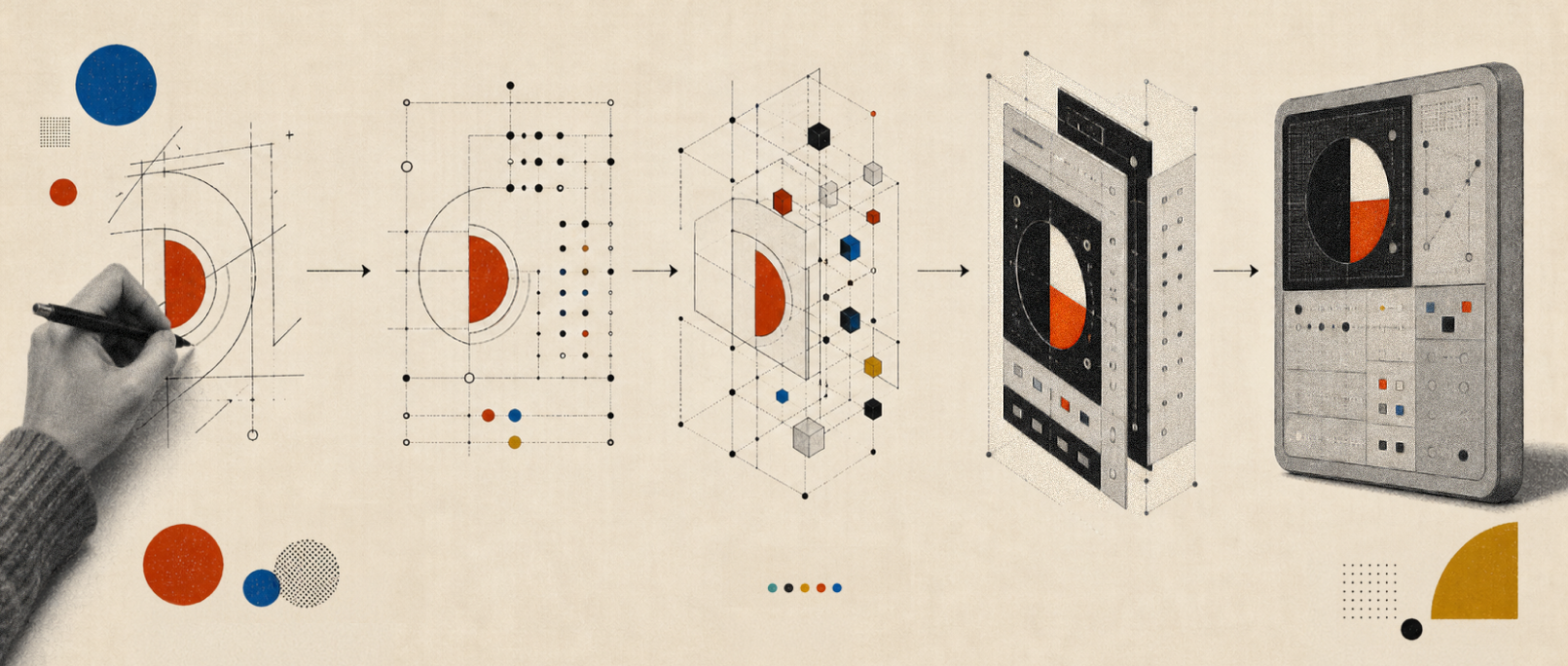
NC: One role is called a “Linter.” You write some code, and then a Linter will dynamically check it against our codebase. A simple example is keyboard focus. Imagine you have an application with 20 different features that need to be added at various times. Keyboard focus can be quite invisible, making it challenging to maintain coherence. We have a skill bank dedicated to keyboard focus. If you’re designing or implementing a feature, a Linter might review your work and say, “With my end-to-end view of the application, this is how we think about keyboard focus. In the specific view you’re working in, you definitely should do it this way.”
Another role is a “Sweeper.” Whenever you propose changes in a pull request, Sweepers conduct a variety of checks. For example, a Sweeper agent might say, “You’re introducing a new mental model for the user here. Here’s a list of related mental models that you should consider. Should we extend an existing mental model instead of adding a new one?”
The final role we’ve found very helpful is the “Critic.” These agents critique your implementations as thoroughly as possible. You can even ask them to imitate experts. For instance, you could prompt, “You are [Danish usability pioneer] Jacob Nielsen. I want you to critique this from a purely UX perspective.” The models are trained on Nielsen’s entire body of work, so you’ll gain insights that reflect Nielsen’s expertise.
EW: What’s been particularly effective for you when you use these agents?
NC: Prompting Critics to ask questions rather than make statements. General-purpose AI is overly sycophantic. Having Critics ask questions flips that dynamic. It keeps you in control, which is crucial since humans are ultimately responsible for the outcomes of these systems, and it encourages you to continuously critique your thinking.
EW: As you work more often with powerful agents, what do you think the role of humans is?
NC: Human designers must be held accountable. We must create usable, desirable products that feel cohesive. I believe that across all mediums—be it film, TV, music, food, etc.—we have an innate ability to sense whether the people behind them genuinely care and what values guide their work. Do they value speed, a sense of luxury, quality, or something more experiential? I think the same applies to software. For Lovable, the experience of using our product is always the responsibility of the humans on our team; we don’t delegate that responsibility to AI.

EW: How are team structures changing?
NC: I keep coming back to the word “asymmetry.” We used to build teams in very symmetrical ways at tech companies: you’d have a product manager, engineers, a designer, and possibly a data analyst. This cookie-cutter approach was easy for hiring and HR purposes, but it didn’t necessarily lead to the best products or user experiences.
Today, team dynamics are evolving. Generalists can manage the entire design process—from user insights and analyzing data to building an initial product and testing it with users. A single generalist can deliver 20 times the value of someone focused on just one part of the process.
EW: What does that mean in terms of the people you look for?
NC: The “K-shaped” economy is an apt analogy for what we look for in design engineers. We’re seeing a split between those who are “AI native” and driven, and those who are more cautious about AI and hesitate. These two types of people are diverging significantly, with compounding effects in both directions. We hire people who are optimistic about AI’s potential and are eager to learn.
We also focus heavily on the slope of someone’s career trajectory—not just where they are today, but where they could be in this quickly evolving environment. During my introductory calls with designers, I spend time discussing their motivations for entering design, major influences from past roles, and self-initiated projects rather than just work history.
Ultimately, a company’s success comes down to its teams and the products they build. The best team is the one with the highest learning aptitude.
EW: How do you create an environment or culture of experimenting and learning?
NC: One of our core values—“våga vara annorlunda”—means “dare to be different” in Swedish. We encourage our employees to challenge norms and embrace innovation by fostering an environment where failure is acceptable. We encourage rapid experimentation and urge individuals to continually challenge their own workflows.
Many companies believe they need to adopt a single AI tool to write more code and then deploy it organization-wide. In contrast, at Lovable, we allow everyone to choose their own tools. It’s not only fun, but as the tools evolve and our understanding of how to use them expands, our organization adapts and grows as well.
We have a few helpful rituals, too. Every Friday, we host open demos to showcase what we’ve been doing during the week. Someone might share, “I figured out this new approach that required overhauling our development environment. If we use agents in this new way, we could be 20 times more productive.” We celebrate these achievements as part of our onboarding process, in our Monday morning meetings, and during our internal company awards.
EW: What’s important to remember when designing with LLMs?
NC: First, the models themselves are incredibly idiosyncratic; it's almost like having different children, each with their own strengths and weaknesses. To produce truly great outcomes, you need to understand these idiosyncrasies and build around them.
Second, you need to consider the entire system. You can't evaluate models, core product architecture, and user experience in isolation. You have to understand them all and integrate them to create a cohesive user experience.
EW: Any parting thoughts for designers?
NC: Be optimistic. Every door is open right now. I feel like a kid again, discovering technology for the first time.
“Design in the Age of AI” is a series of conversations with designers and makers from across industries and disciplines, building the future with AI, today.
Words and art

.webp)
Subscribe