
.svg)


Shattering the echo chamber

Success can create its own echo chamber. The more a company achieves, the easier it is to rely on familiar ways of seeing the market—often without even realizing it.
For leading fast-moving consumer goods (FMCG) companies, one way to escape the echo chamber is to adopt a human-centered approach—to actively listen to consumers and reconnect with the realities of their lives. It’s about more than bringing them in at a certain stage of the project. Their needs have to be considered from the very beginning.
What follows is a story from IDEO Shanghai about what happens when a prominent consumer company returns to its customer-centric roots and discovers new growth in one of its most established categories.
What happens after a company hits the category ceiling?
China’s FMCG sector is known for its intensity. Even the most established companies cannot afford to relax; the competition is genuinely fierce.
In China’s major metropolitan cities and regional hubs, competitors launch new products at a rapid pace, all in pursuit of increasingly diverse consumer needs. Beyond these cities, smaller and lesser-known brands are making moves, constantly experimenting, and fighting hard for consumer attention through social media platforms.
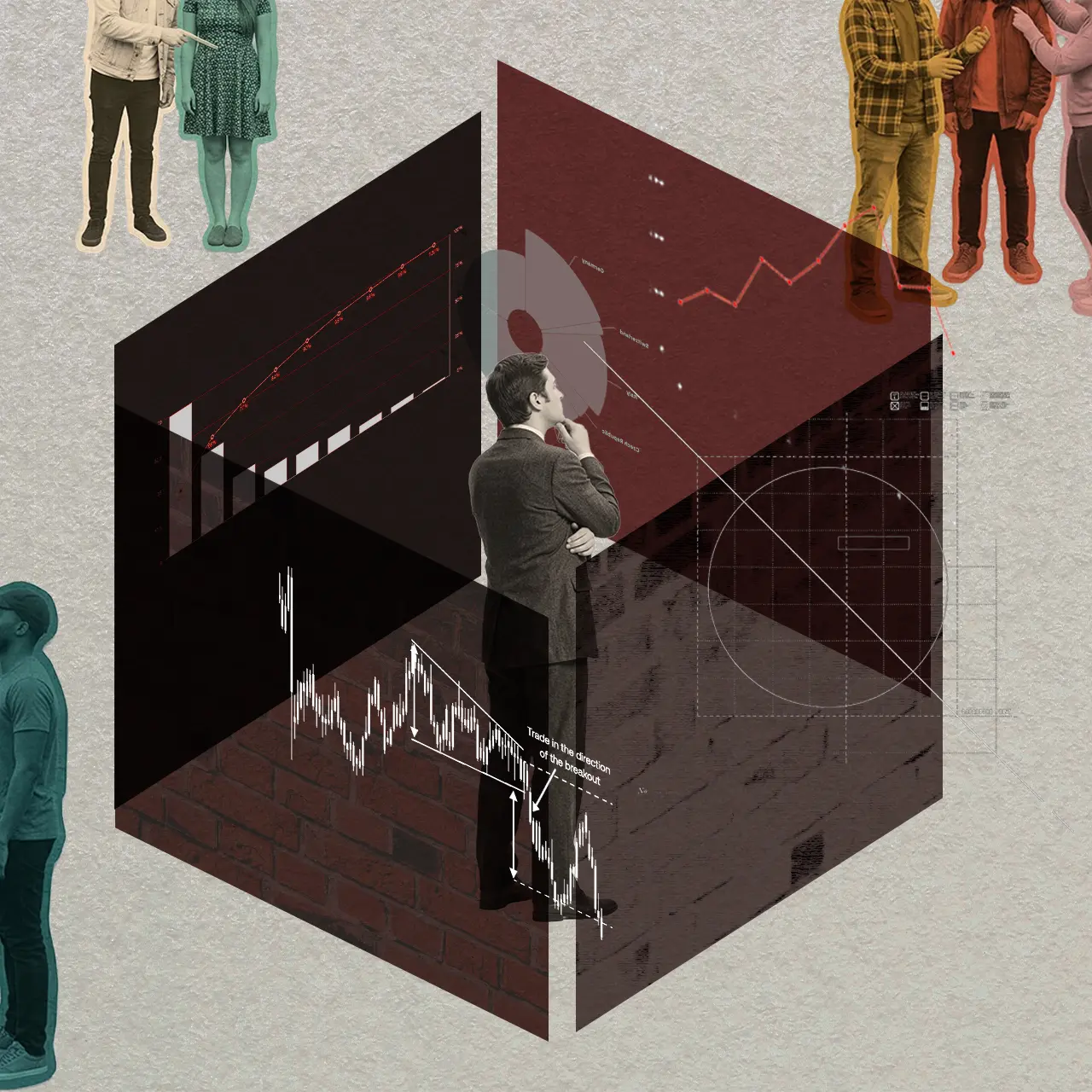
Before coming to IDEO, our client had already made significant investments in consumer research to maintain its competitive edge. After the project started, its leaders showed us an elaborate chart filled with rows of consumer identity tags, behavioral patterns, and usage preferences, all organized by data dimensions and densely packed across different quadrants. Years of accumulated consumer insights had informed their product development and marketing strategies, helping them achieve significant commercial success.
And yet, despite all these efforts, they seemed to have hit a wall. To spur new growth in one of their flagship categories, for example, they had tried various strategies, such as conducting research in smaller cities, launching new products aligned with mass-market trends, and attempting to keep consumers engaged by offering more choices. None of it was enough to break through.
What else could they try? That question prompted the company’s senior leadership to come to IDEO. They were looking for a perspective that differed from their usual approach—one that could reveal new possibilities on top of everything they had built.
A revelation from consumers
Even though the client already had detailed data, we decided to conduct in-depth consumer interviews during our design research phase. Our goal was to start from a more fundamental place—to understand how people lived day to day and the role these products played in their lives.
From the client’s perspective, this seemed like a wasted effort. They struggled to understand why we wouldn’t simply begin with their assumed starting point: “Why do consumers choose our brand, and what do they expect from our flagship category?”
But the way consumers actually choose products revealed the “why” behind that question.
Whether they were “core consumers” who already frequently purchased the brand’s products, or “extreme consumers” whose preferences were well outside the mainstream, the decision-making process for buying these products was the same.
It started with a broad desire, for instance, “I want to try something different.”
From there, their life stage, immediate circumstances, and emotional state shaped that desire into a more specific need: “This is the type of product I’m looking for.”
Only then did consumers consider: “Which brand should I buy?”
In contrast, the client’s original framing—“Why do consumers choose our brand?”—treated the endpoint of the consumer’s decision journey as the starting point.
From a consumer’s perspective, this might seem obvious; it’s something we all do instinctively every time we shop.
But what is intuitive to the consumer is rarely intuitive to the brand.

Mapping out a consumer’s actual decision-making process provides significant value for a brand. It establishes a consumer-centered through line that helps leaders navigate innovation in a mature category with greater precision.
Several elements naturally align along this through line: the deeper needs of various consumer types, the moments and motivations that trigger a purchase, the opportunity areas where a mature category can effectively meet specific consumer needs, and the competitive strengths the brand should build on to fulfill those needs. Not only do these components become clearer, but they also create interconnections among them.
The core insights from our design research defined those triggering moments and illustrated the map of how consumers actually make decisions. This clarity, in turn, helped the brand’s leaders determine where to focus their efforts in order to revive a mature category.
Building system-wide alignment from a human-centered insight
We took everything we’d heard from consumers, distilled the decision-making processes behind them, and translated everything into visuals on a series of boards, which we then brought into the client’s meeting room.
Step by step, we walked through the consumer’s chain of logic, highlighting what each need meant for the brand’s approach to category innovation. When we finished, a C-level executive at the company looked at the boards and said, “This is a billion-dollar idea.”
The insight disrupted the default reflex of category leaders, who often claim to prioritize consumer needs while unconsciously starting every decision from their brand’s own business priorities.
At first glance, taking a human-centered route may seem like a detour. In practice, it helps companies avoid the wasted investments that come from acting on incorrect assumptions. A clear understanding of what consumers truly need allows a brand to recognize which of its existing strengths to double down on, and which emerging opportunities are genuinely worth pursuing.

After that meeting, the direction for category innovation quickly took shape. The key insight regarding consumer needs and decision-making became a powerful anchor. The insight unified early-stage product development, mid-to-late-stage packaging design and manufacturing, and the marketing communications that followed the launch.
Beyond charting a new course for the client’s flagship category, the project established a framework for cross-functional teams to build a shared understanding and work toward a common goal.
In the end, the collaboration was successful because everyone involved in the project maintained a primary focus: human-centered thinking.
“The Making of...” is a series of behind-the-scenes articles written by IDEO Shanghai designers about our innovation methods and work with major clients across industries in China.
Words and art

Subscribe