
.svg)


How to lead with confidence in 2026
.webp)
For many of the world’s companies, big and small, 2025 brought significant uncertainty—from tariffs and supply chain challenges to shutdowns and unexpected market changes.
But it also brought great inspiration, as leaders we admire moved forward with confidence, embracing change as an opportunity to innovate and succeed throughout the year. As Michelle Lee, Co-Managing Director of our San Francisco studio, says, “There will always be things outside of our control, but that also means there's always something new to learn or something unexpected that's waiting to surprise us.”
Here is advice for leading with confidence in 2026 from many of the partners and leaders we admire. Want even more leadership advice? Head over to IDEO U's Creative Confidence Podcast or blog to hear from more partners of IDEO U.
Get out of the scarcity mindset
One of the biggest obstacles I had to overcome in the last year was keeping myself away from a scarcity mindset. There's a lot of fear in the environment, and it's really easy to think that there's not enough: there aren't enough jobs, there aren't enough corporate contracts, etc. And the truth is, there are. I like to tell myself, “I just need one.” I just need one good corporate contract. I just need one good job. I find that mindset to be really, really powerful because it puts me in an energy of openness, creativity, curiosity, and abundance.
—Amy Bonsall, Founder, Collective

Embrace strategic flexibility
It’s time to stop treating uncertainty as a temporary disruption and start treating it like the complex operating environment that it is. Leaders don't need perfect predictions. They need the ability to hold multiple plausible futures in their minds at once, and make smart but very flexible bets on those futures. The organizations that will thrive will be those that can stay focused above the noise of ever-changing emerging technologies and stay close to real human needs. They’ll need to fail smart, learn fast, pivot quickly, and build strong capabilities and nimble adaptations to a shifting world. And to do this, they’ll need to hire leaders and frontline employees with the right skills to make that level of strategic flexibility happen. It’s my guess that most organizations don't have those people yet. If not, it’s time to invest in building that capability.
—Jennifer Lo, Futurist-in-Residence and Senior Director of Organizational Design, IDEO
Psychological safety should be a KPI
AI can't break the rules like creative people can. Not yet anyway. But AI is great at collecting inputs, which makes it an amazing brainstorming partner. I would use this to motivate my team and to embrace AI, not as a threat, but as a value add. But to do that, leaders need to reskill their team members. Which brings us to the next point.
Instead of instilling fear, talent re-skilling can be a confidence builder. Leaders must actively train their team to be expert prompters, whether on LLMs or diffusion models. The more they know how to use and play with the tools, the better it is for their confidence and sense of safety. I experimented with this at LEGO. One of my reports, an editor, felt lost. Partly due to a reorg, partly due to the fact that he had been there for almost two decades without moving up. Around the same time, there was a project that required us to create bespoke music. I saw it as an opportunity to experiment. I asked him to use his editing background and legacy knowledge of the brand as a kind of training data and generate a bunch of different songs using Suno. I could see how that whole exercise gave him a new sense of purpose. He's not just the “editor guy” who's tasked with making sizzle reels all day. He's now a member of the creative team, contributing ideas and prototypes using AI.
—Rudi Anggono, Global Head of Creative, Snap

Revisit your roots
I’d encourage leaders to resist the temptation of chasing every shiny new object. AI and innovation are powerful, but they should amplify what has always been true about your brand, not reinvent it. It’s important to stay grounded in what’s real to you, your brand, your leadership style, even in times of uncertainty. It’s a good time for organizations to revisit their company roots, history, and purpose. Remember what made your brand trusted in the first place. Then ask, “How can AI help us supercharge that?”
—Joelle Park, SVP, Chief Marketing Officer, BWH® Hotels
Slow down to take action
One of the most crucial things for leaders to keep in mind as they head into 2026 is this: slow down to speed up. Slowing down means: observe more. Listen better. Seek evidence-based reasoning. Ask good questions. Suspend judgment. All of this is in the service of more quickly eliciting rich, multivalent perspectives and making new discoveries to drive your work forward. Another way to put this: reframe your bias toward action. Include thinking deeply together with your teams, clients, and colleagues before you solve, decide, and execute. Thinking together is action. Being curious in this way is a gift to yourself and to everyone you have the privilege of working with.
—Dabney Hailey, Founder and Principal, Hailey Group, and lecturer at MIT’s Sloan School of Management
There’s always something new to learn
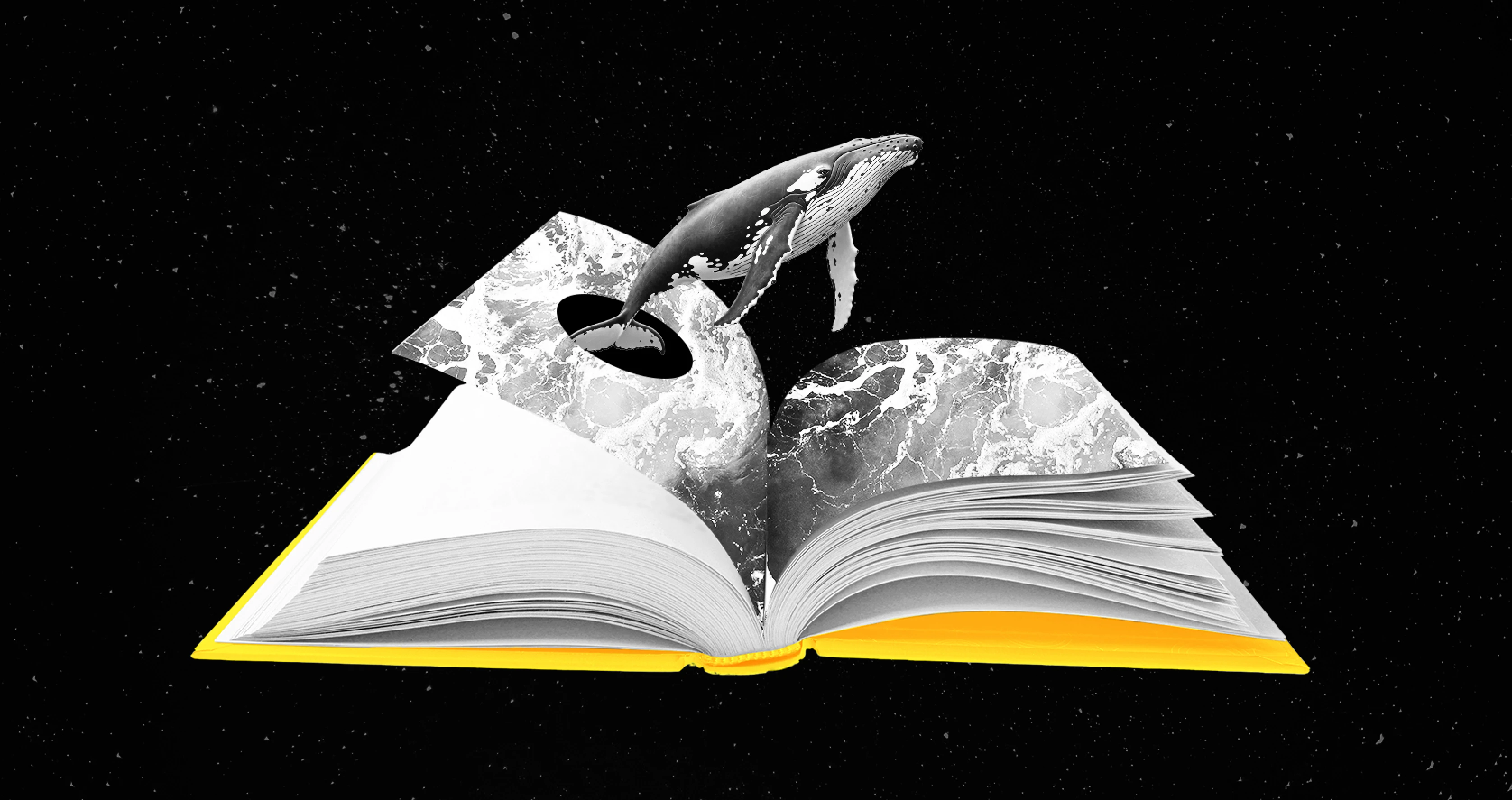
Maintaining creativity in uncertain times really comes down to how we choose to meet the unknown. And I say “choose,” because it really is a choice. We can either shrink away from uncertainty or embrace it with a sense of awe, excitement, and wonder at being part of something that's bigger than ourselves. There will always be things outside of our control, but that also means there's always something new to learn or something unexpected that's waiting to surprise us. And that, frankly, is really fun. When we meet uncertainty with curiosity instead of fear, it flips the script. The unknown stops being something to avoid and becomes something we're eager to explore. That openness is what fuels creativity. On my team, I try to nurture a culture where questions, experimentation, and healthy risk-taking are all welcome.
—Michelle Lee, Co-Managing Director, IDEO San Francisco
.webp)
Make space for human creativity
It's more important than ever to cultivate a culture of creative taste. A lot of creative technology tools are becoming more impressive and seemingly more magical, and getting really close to mimicking the human hand—especially when it comes to generating video and art. There’s that temptation to use it across the entire board for every single task. But it’s really important to look at AI tools critically, and understand what they are best used for, while keeping space and time for human creativity to do what it does best.
—Takashi Wickes, Founding Designer, OpenStudio
Champion daring concepts
Playing it safe is anathema to my understanding of creative leadership. When your primary responsibility is to do things differently, you have to be stubbornly committed to the cause. Stripping the ease and comfort of familiarity creates uncertainty, and there’s a very human impulse to avoid the unknown by clinging to the way it’s always been done.
As a creative leader, it’s my responsibility to lean all the way into the audacity of delightfully unprecedented ideas. To champion concepts so daring, it feels like a fever dream to pitch them. To encourage willful weirdness and silly side quests as vehicles for creative disruption. More than anything, my job is to set a working example that refusing to play it safe isn't for the faint of heart—but the reward makes the risk well worth it.
—Ellen Foord, Chief Creative Officer, City of Boston

Imagine starting over
In 2025, the LA fires completely derailed my life right at the beginning of the year, when I had all the best-laid plans. We were really fortunate not to lose our home, but we were displaced for a really, really long time, and we had to live in extreme uncertainty. Would we lose everything? How would we rebuild? What would we do in a landscape where everything had changed?
What got me through was leaning into that uncertainty—asking myself what might open up if I had a radically new landscape to explore and build upon. That might sound like deluded optimism, but it was actually a genuinely powerful tool that helped me enter that imaginative landscape where everything had to be built anew. It became both a creative challenge and an opportunity.
—Catherine Connors, Co-Founder, StoryQuo
Build your own confidence
Confidence doesn't show up before you act. It shows up because you act. So every morning, before I checked my email or picked up my phone, I started asking myself a very simple question. “If I choose fear today, what possibility will I miss?” It didn't make the fear disappear, but it gave me back my agency.
The second thing that helped me came from a conversation with Robert Waldinger from Harvard University. He leads the longest study on human happiness and how to live a good life. And he told me something simple and profound. The quality of your relationships is one of the strongest predictors of well-being.
—Dr. Frederik G. Pferdt, Google's first Chief Innovation Evangelist, formerStanford d.School lecturer and author of What’s Next Is Now
Get hands-on
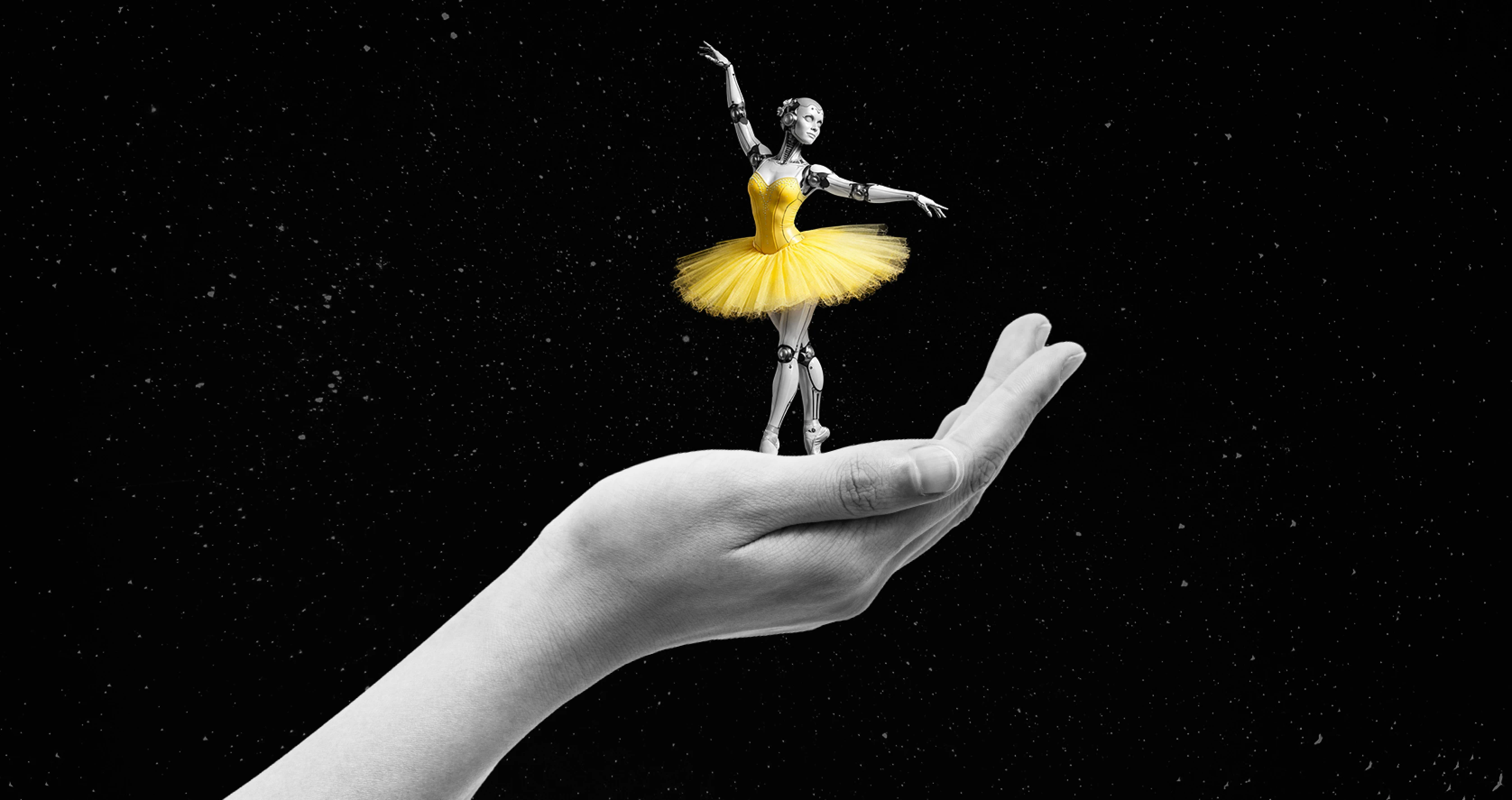
One of my biggest challenges this year was staying focused amid a relentless stream of new technologies—especially AI—and separating what’s transformative from what’s simply trending. I relied heavily on a trusted network of peers to bounce ideas off of and sharpen my perspective, which was crucial. I also made it a point to get hands-on again—something many senior leaders of large organizations tend to drift away from over time. Continuing to stay in touch with the technical details by playing around with the technology myself or inviting my team to walk me through demos and new ways of building things proved invaluable. It has kept me grounded in reality and equipped to make confident decisions in an unpredictable environment.
—Artem Fishman, CTO, Dow Jones

Build your knots
I had an interesting start to 2025—a number of my senior people left for competitors. I thought it was going to be an extremely challenging year, despite all the wins we had in our business. I couldn't quite understand their reasons for leaving. But I decided to shift my attention, focus on supporting my clients and my team, and deliver really good work.
I couldn't have done it without a good network of relationships. I view them as knots in a net. You don't know when you're gonna need them, but they need to be reinforced. I've been able to build and grow a team that I wouldn't have thought possible. So I'll take this moment to thank everybody who has been there for me. And I think as leaders, we need to take the time to build our knots and to thank them for everything they have done for us. I couldn't have done it alone.
—Wardah Malik, Chief Executive Officer, BEworks
(Additional contributors: Heather Boesch, Jenna Fizel, Leah Marcus, and Lindsey Turner)
Words and art
.jpg)

.webp)

Subscribe