The Latest News
Tim Brown and IDEO Visit the Annual Meeting of the World Economic Forum
Davos, Switzerland
Every year, the World Economic Forum gathers the world’s political, cultural, and industry leaders in Davos, Switzerland to address most crucial global issues. With The Creative Imperative as its theme, the 2006 conference opened with a call to “harness creativity to provide new answers to the world’s problems.” The WEF invited Tim Brown and IDEO to participate in a number of sessions on innovation.
The Innovation and Design Strategy session, which Survivor at Davos,” asked eight panel members to describe their vision of the keys to creativity.
Last to be voted off the island was IDEO’s Tim Brown, who suggested that creativity is spurred by approaching problems with a beginner’s mindset, and by exploring ideas through the use of rapid prototyping. And the winner is: Google’s Marissa Mayer, who argued for “a healthy disrespect for the impossible” combined with the virtues of constraints.
The Financial Times’ John Gapper caught this comment from Tim, “Everyone should go out and try to solve a problem they have never thought about before.” Other notable sessions Tim attended that touched on the power of design thinking were Healthier Partnerships for HIV/AIDS, TB, and Malaria and another on Mobile Entertainment (which included the CEOs of Motorola, Sony BMG, EMI Music, Qualcomm, and Orange).
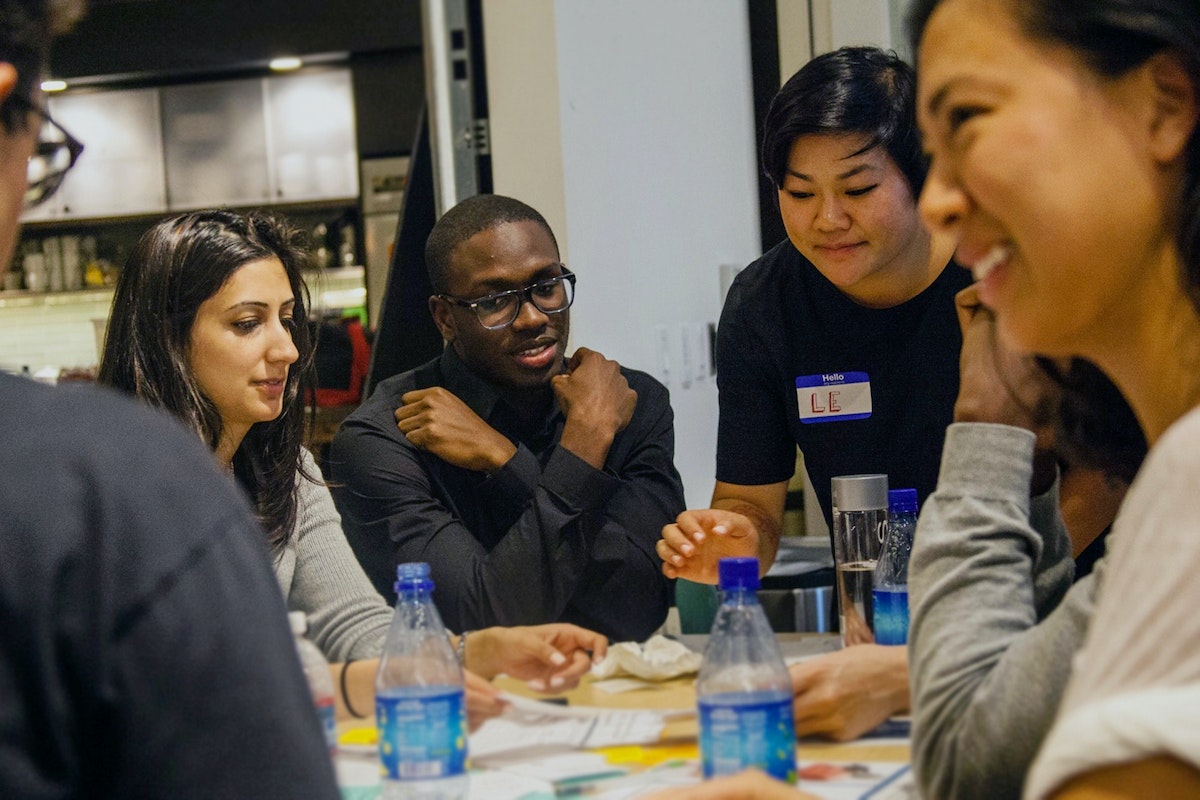
With assistance from IDEOers Kate Canales, Chris Flink, and Charles Warren, Tim led a workshop titled Building a Culture of Innovation, which was covered extensively by John Thornhill of the Financial Times (sub req’d):
Design can be used for many things, or so designers say. “Design is about more than making things look cool and pretty. You have companies that use design thinking as a way of creating their future,” according to Tim Brown, president of Ideo, a US-based design firm, who is running this workshop that stretches late into Friday evening… “Design thinking is an approach to innovation,” he says.
According to the design gospel, it is a way of looking at the world through other people’s eyes: it draws inspiration from empathy…
Just before the participants headed out to Davos’s bars, they were left with one sobering thought. There are 4,000 industrial design students in the US. There are 200,000 in China. “It would be interesting to think about how we could unlock that talent over the next few years,” Brown suggested optimistically. That’s design thinking for you.
Finally, Tim participated in the Closing Plenary session with the chairs of the event and other luminaries. Asked to sum up, he said, in part, “it’s going to take really strong leadership from the leaders of companies and the leaders of institutions—because institutions need to innovate, too—in order to directly support a growth in innovation.” An edited video of the plenary is available on the WEF site (in Windows Media and RealPlayer versions); Tim’s excerpt begins about six minutes in.
Bruce Nussbaum of BusinessWeek attended and filed his report on Monday night, saying:
...two things, at least, are clear. First, top managers of global corporations are convinced that innovation and creativity are critical to the future success of their companies. Second, to make that happen, a massive hunt for creative talent around the world is under way.
Creative people want to be part of a great, creative team and culture. Community is very important to them. Shaping and managing that organization is critical. Creative people need compelling problems they can feel passionate about. These are problems that can change markets, solve social ills, and build new product categories.
This kind of talent also needs to do other things, often outside the corporation. They need validation within their own peer group and often within a global set of like-minded people. And they often like to be personally branded—identified with innovations. The grey corporate organization man/woman is gone.
Compostmodern
San Francisco, CA
From documentaries to design strategy: The Compostmodern conference explores the growing opportunities for sustainable business practices.
Kicking off 2006 was Compostmodern, a one-day interdisciplinary green design conference in San Francisco, sponsored by the American Institute of Graphic Arts and the Industrial Designers Society of America.
Speaking at the event were leading-edge representatives from industries of design, retail, publishing, printing, and media, among others. Together, these figures represent a growing collective of change agents, who, as the Compostmodern website aptly described, are beginning to “embrace the responsibilities of dealing with larger marketplace issues and engage in a quest for business practices and resources that allow you to make a difference in your day-to-day business lives.”